
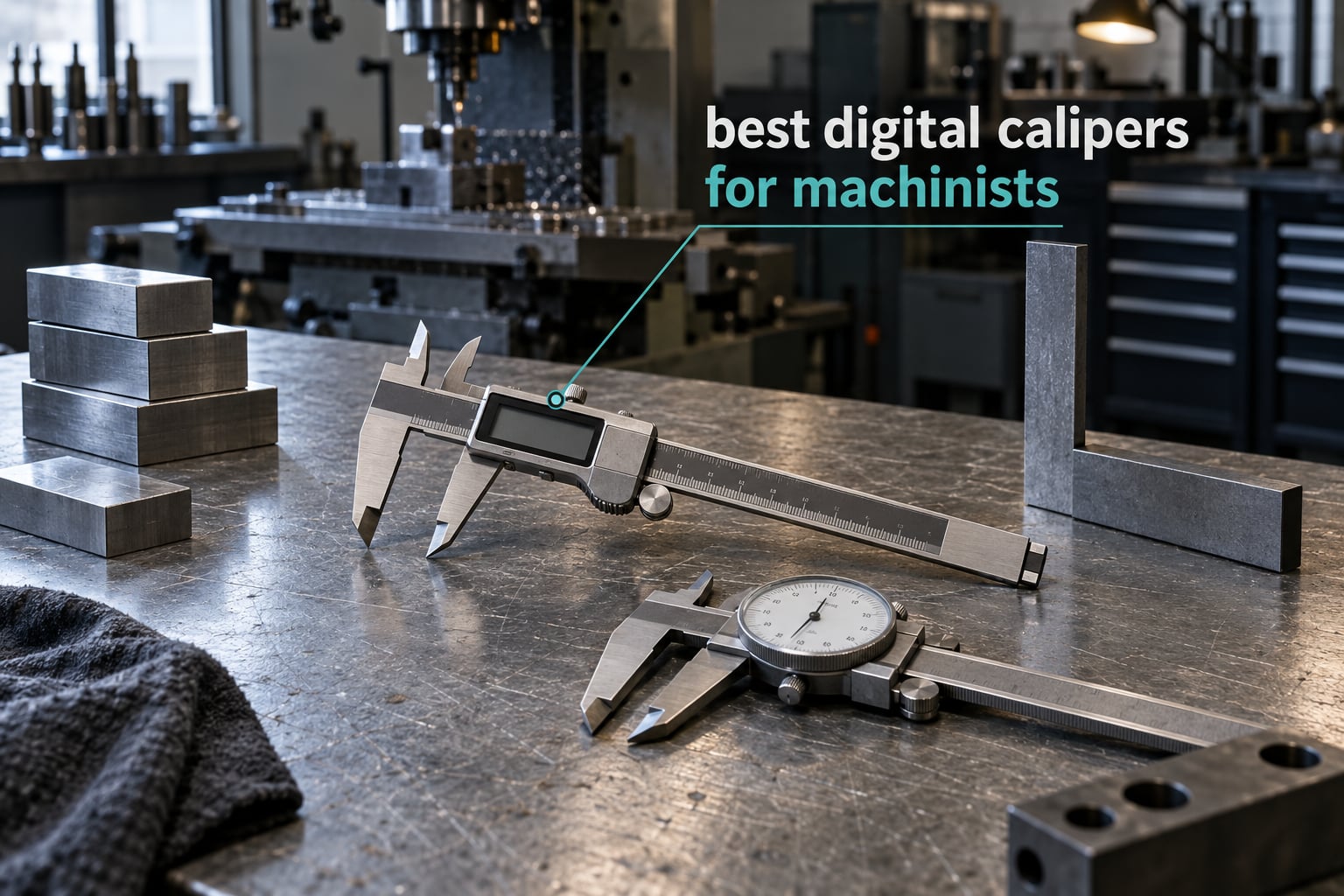
Last updated October 2026. Every accuracy figure, resolution figure, ingress rating and power source below was checked against the manufacturer specification for that exact model number rather than against retail listing copy, which frequently contradicts itself on this category.
If you are searching for the best digital calipers for machinists, the honest short answer is this: start with a caliper that holds absolute zero, takes standard cells, and is rated 0.001 inch accuracy or better. Everything else is preference. The reason cheap calipers frustrate people is rarely the slide or the display. It is that the unit loses its zero reference, drains a cell while it sits in a drawer, and quietly gives you bad numbers on a part you already cut.
That failure mode is the most repeated complaint in machinist forums, and it is worth naming up front. The top-ranking thread for this question on r/Machinists is a short post from someone who bought an inexpensive caliper, used it five times over six months, and found the display had gone haywire. The other recurring theme is battery drain. On Canadian Hobby Metalworkers, one poster credits Mitutoyo with battery management so good that cheaper cells get used up several times faster in comparison. Practical Machinist regulars describe the same behaviour in their own words: calipers that die even when you do not touch them.
We put 12 of the strongest options available now through that filter, and every pick below has a full steel beam and a real accuracy spec. We also cover the accuracy versus resolution distinction that separates a working instrument from a reading toy, how to verify a caliper on a known dimension before you trust it, and the frame size question that shop operators argue about constantly. If your work is wood rather than metal, our digital caliper picks for woodworking cover a different requirement set entirely.
Quick answer: the iGaging 0-6 inch Super Large LCD is the best overall digital caliper for machinists because it combines a 0.001 inch accuracy spec, a super large display, IP54 sealing and fractional readout at a price that suits a tool bag rather than a budget conversation. The iGaging Absolute Origin is the pick when you need zero retention and data logging. The INSIZE 1108-150 is the value route to a tight 0.0008 inch spec with a serial number and proof-of-accuracy certificate. For a 12-inch frame the NEIKO 01409A is the one to look at. For the lowest-cost route, the Adoric is fine for layout and non-ferrous work and is not a measurement instrument.
Table of Contents
Top 3 Best Digital Calipers for Machinists in 2026
iGaging 0-6 inch Super…
- 0.001 inch accuracy
- 0.0005 inch resolution
- Inch
- metric and fraction readout
- IP54 splash
- oil and dust resistant

iGaging Absolute Origin IP54
- Absolute origin zero retention
- 0.001 inch accuracy
- SPC and USB data output
- IP54 sealed housing

INSIZE 1108-150 Electronic
- 0.0008 inch accuracy
- 0.0005 inch resolution
- Data output port
- Serial number and accuracy certificate
All 12 Picks Side by Side in 2026
| Product | Specs | Action |
|---|---|---|
| iGaging 0-6 inch Super Large LCD |
|
Check Latest Price |
| iGaging Absolute Origin IP54 |
|
Check Latest Price |
| INSIZE 1108-150 |
|
Check Latest Price |
 General Tools 147 General Tools 147 |
|
Check Latest Price |
 HARDELL 8 Inch Rechargeable HARDELL 8 Inch Rechargeable |
|
Check Latest Price |
 NEIKO 01409A 12 Inch NEIKO 01409A 12 Inch |
|
Check Latest Price |
 Adoric 0-6 Inch Plastic Adoric 0-6 Inch Plastic |
|
Check Latest Price |
 LOUISWARE 6 Inch Stainless LOUISWARE 6 Inch Stainless |
|
Check Latest Price |
 Starrett EC799A-6/150 Starrett EC799A-6/150 |
|
Check Latest Price |
 Fowler 54-101-150-2 Fowler 54-101-150-2 |
|
Check Latest Price |
 werka 0-6 Inch werka 0-6 Inch |
|
Check Latest Price |
 ACEMETER 531-219 6 Inch ACEMETER 531-219 6 Inch |
|
Check Latest Price |
1. iGaging 0-6 Inch Super Large LCD: The Best Overall Digital Caliper for Machinists
iGaging IP54 Electronic Digital Caliper 0-6″ Display Inch/Metric/Fractions Stainless Steel Body
0.001 inch accuracy
0.0005 inch resolution, 1/128 inch
2-3/8 inch by 7/8 inch LCD
IP54 splash, oil and dust
Pros
- Super large display reads fast under shop lighting
- Inch
- metric and fraction readout from one tool
- IP54 sealing against splash
- oil and dust
- Hardened stainless body with precision lapping finish
- Foam case
- spare cells and spare tray screws included
Cons
- Thumb wheel has some play to get used to
- Battery tray tab is thin and fragile
- Fraction mode rounds up to 64ths
This is the caliper we hand a new hire, and the reason is unglamorous. It is a hardened stainless steel body with a precision lapping finish, a 0.001 inch accuracy spec and 0.0005 inch repeatability, and it comes with a foam-fitted case, spare cells and spare compartment screws in the box. That spare hardware detail matters more than it sounds, because the small screws on a caliper battery tray are the single most common item to go missing.
The display is the standout. At 2-3/8 inch by 7/8 inch it is large enough to read at arm’s length with safety glasses on, which is when you are actually using it. Owners coming off cheap calipers describe the jump in readability as the first thing they notice. The unit reads inch, metric and fractional inches, with a decimal equivalent reference shown alongside.
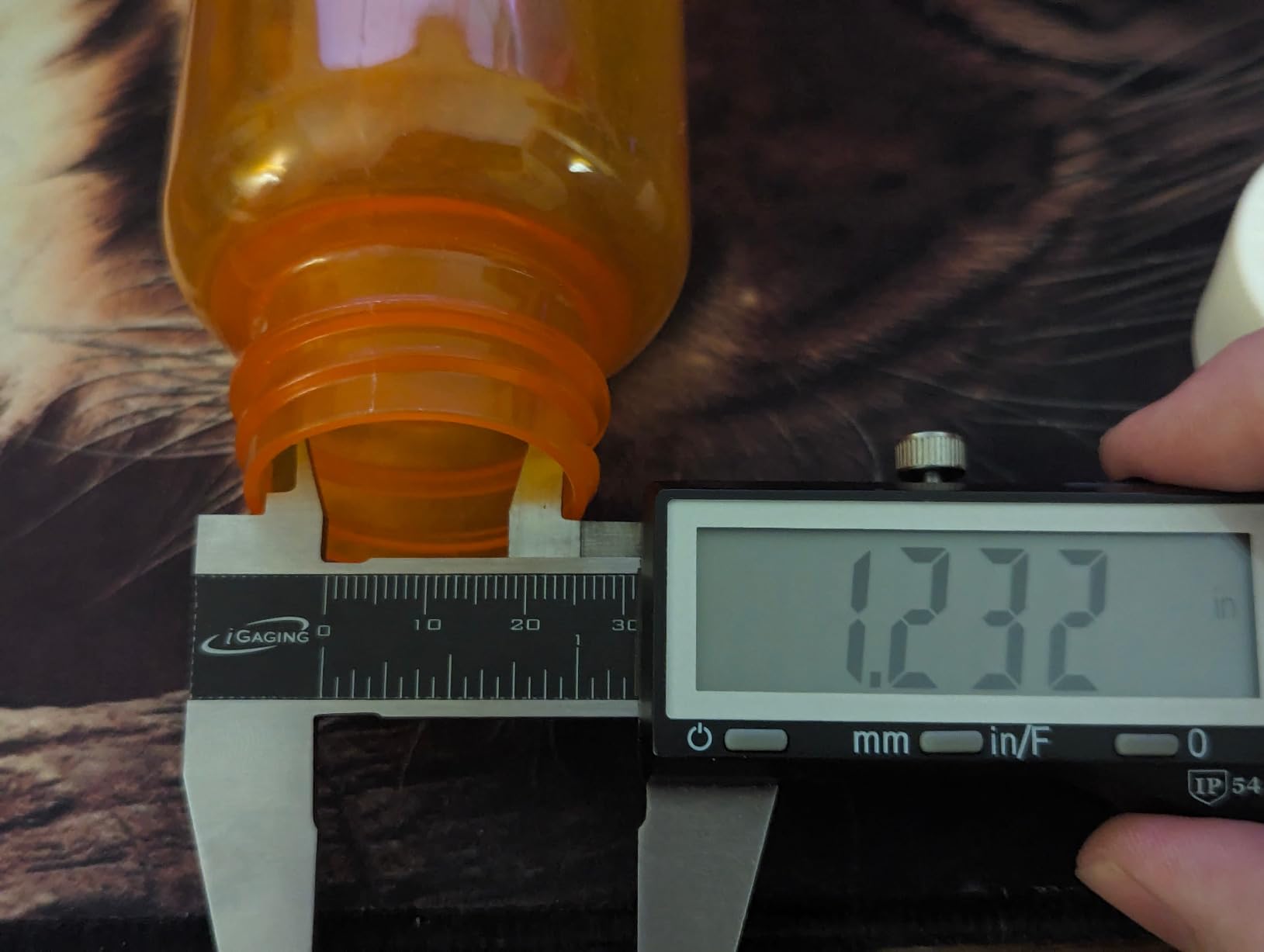
One Practical Machinist poster described the shop practice of ordering an 8 inch Mitutoyo for anyone who arrives without one. This is the same logic at a different budget point. This caliper will not outlast a Mitutoyo, and it is not trying to. It is a hardened steel instrument that measures to its stated tolerance, survives being dropped in a cart, and costs less than a single shop coffee order over a month of use.
Verified accuracy in the field is the interesting part. Reviewers with metrology backgrounds report checking this caliper against a 1-2-3 setup block and against a Mitutoyo Digimatic and getting matching readings. IP54 protection covers splash, oil and dust, which in most shops means it survives a coolant wipe-down and a chip bath without complaint.
What you should check before trusting any caliper
Close the jaws fully and confirm the display reads zero. If it does not, zero it before use rather than working around it. On a caliper with no absolute encoder, that zero is a stored value that a battery change can erase, which is why the next step matters.
Then close it again, open it, and close it a second time. If the number changes between closures, the beam or jaws have wear and the caliper needs service. Repeatability on this model is specified at 0.0005 inch, so a reading that jumps by a full thousandth on repeat closure is a real fault, not a technique problem.
Where this caliper will disappoint you
The thumb wheel has a little play in it, and it takes a week of daily use to stop noticing. The battery tray uses a thin negative contact tab that reviewers describe as fragile, so lift the cells straight up rather than prying at the corner.
The fraction mode rounds up to 64ths with no selectable decimal place, so it is a quick field reading rather than a precision fractional measurement. If your parts are specified in 32nds or finer, work in decimal inches and check the fraction display as a sanity check rather than a source of truth.
2. iGaging Absolute Origin IP54: The Best Caliper for Zero Retention and Data Logging
iGAGING Absolute Origin 0-6″ Digital Caliper, IP54 Stainless Steel, SPC/USB Output Port, Inch & Metric Modes, Case, Manual
Absolute origin zero retention
0.001 inch accuracy
SPC and USB data output
IP54 sealed housing
Pros
- Absolute origin holds the zero reference after power off
- SPC and USB port logs readings into software
- IP54 dust and moisture sealing
- Heavy solid stainless feel with a smooth slide
- Large high-contrast LCD
Cons
- Repeatability shifts with how you hold the part
- No backlight and no rechargeable cell
- USB cable is a separate purchase
The defining feature here is absolute origin calibration. The caliper remembers the zero reference point even when it is powered off, so you can close the jaws, walk away, come back, and the reading is still correct without re-zeroing. For a machinist that is not a convenience feature, it is the difference between a measurement you can trust at the end of a setup and a measurement you have to verify every time.
It also has an SPC and USB data output port. Readings export into CAD software or a spreadsheet, which makes this the pick for first-article inspection, incoming QA and anyone logging a run of parts against a tolerance. The cable is sold separately, and buyers should budget for it because the port alone does not get you a data feed.
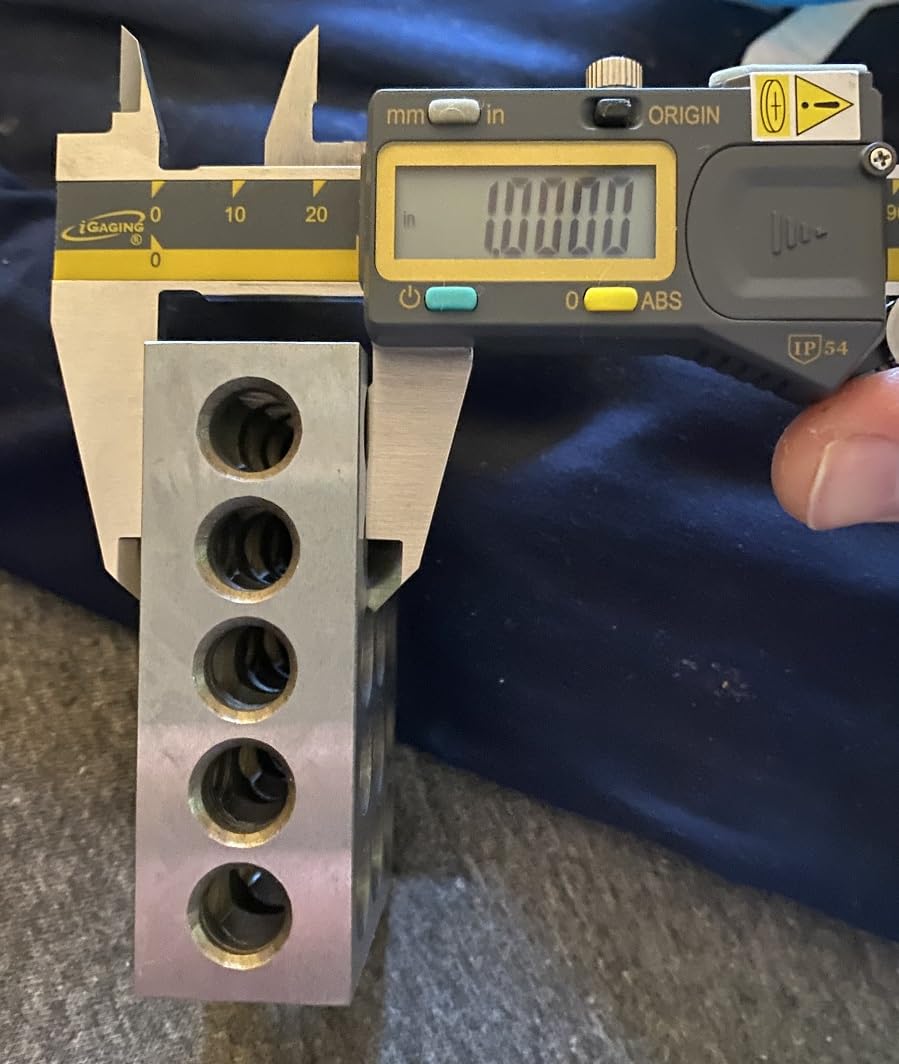
Reviewers with metrology backgrounds verified this caliper against feeler gauges, gage blocks and 1 to 5 inch standards with no drift from zero, which is the test that matters for a tool with an absolute encoder. The build has a heavy, solid feel with a smooth slide, and the IP54 rating seals it against the dust and moisture of a working shop.
One Practical Machinist comment is worth repeating here because it describes most of the complaints in this category: 90 percent of users do not know how to use the zero and origin buttons properly. An operator who fumbles zeroing produces a caliper that reads wrong, and then blames the caliper. Learn the buttons on this model and half the complaints about accuracy disappear.
When data output is worth paying for
Data output earns its place when you measure the same feature repeatedly and want a record rather than a memory. QA work, incoming inspection and CNC setup checks all benefit, because the reading lands in a file you can attach to a job packet instead of a number you retype from memory.
For one-off shop checks it is largely wasted capability. If you measure four dimensions on a bracket and move on, the port adds nothing. Judge it against how many parts you log per week, not against how accurate the caliper is.
The limit you need to know about
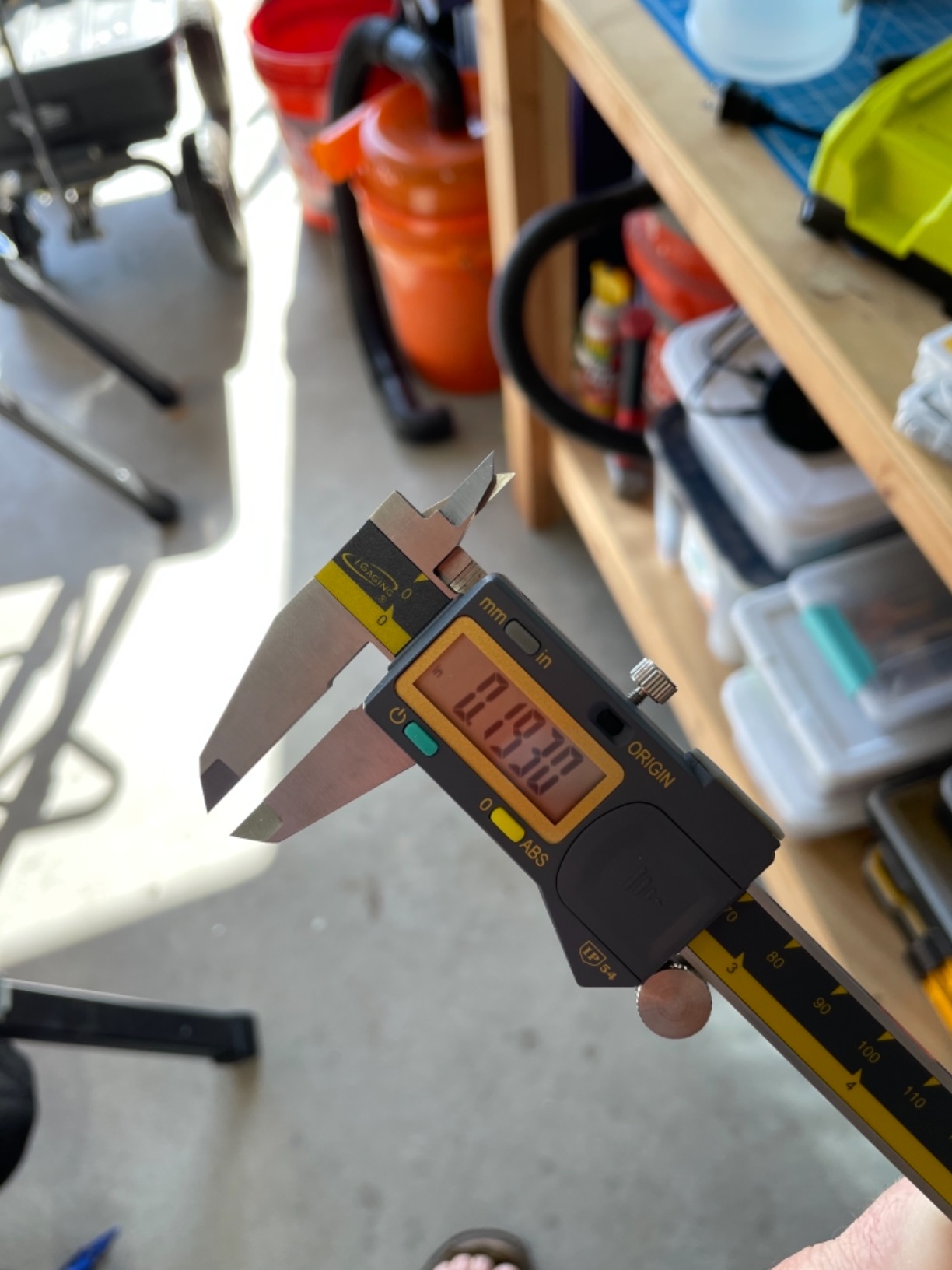
Repeatability can vary by roughly 0.1mm depending on how the part and the caliper are held. That is handling, not a defect, and it applies to every caliper in this roundup. Calipers are approximators; when a tolerance is tighter than the tool can physically repeat, the correct instrument is a micrometer.
There is no backlight and no rechargeable cell, and the separately sold USB cable carries a notable cost. Neither is a defect, but both are reasons to buy this one for a specific job rather than as a general shop issue.
3. INSIZE 1108-150: The Best Value Caliper With the Tightest Accuracy Spec
INSIZE 1108-150 Electronic Caliper, 0″ – 6″
Plus or minus 0.0008 inch accuracy
0.0005 inch resolution
Data output port
Serial number and certificate
Pros
- Tightest published accuracy in this roundup at 0.0008 inch
- Data output port for spreadsheets and software
- Serial number and proof-of-accuracy certificate included
- Removable and replaceable thumb wheel insert
Cons
- No fractional inch readout mode
- Slide feels tight out of the box
- Must be re-zeroed after a battery change
The headline number here is plus or minus 0.0008 inch accuracy, which is tighter than every other caliper in this roundup. Resolution is 0.0005 inch and 0.01mm. For a shop that wants a spec sheet tighter than 0.001 inch without moving up a tier, this is the pick.
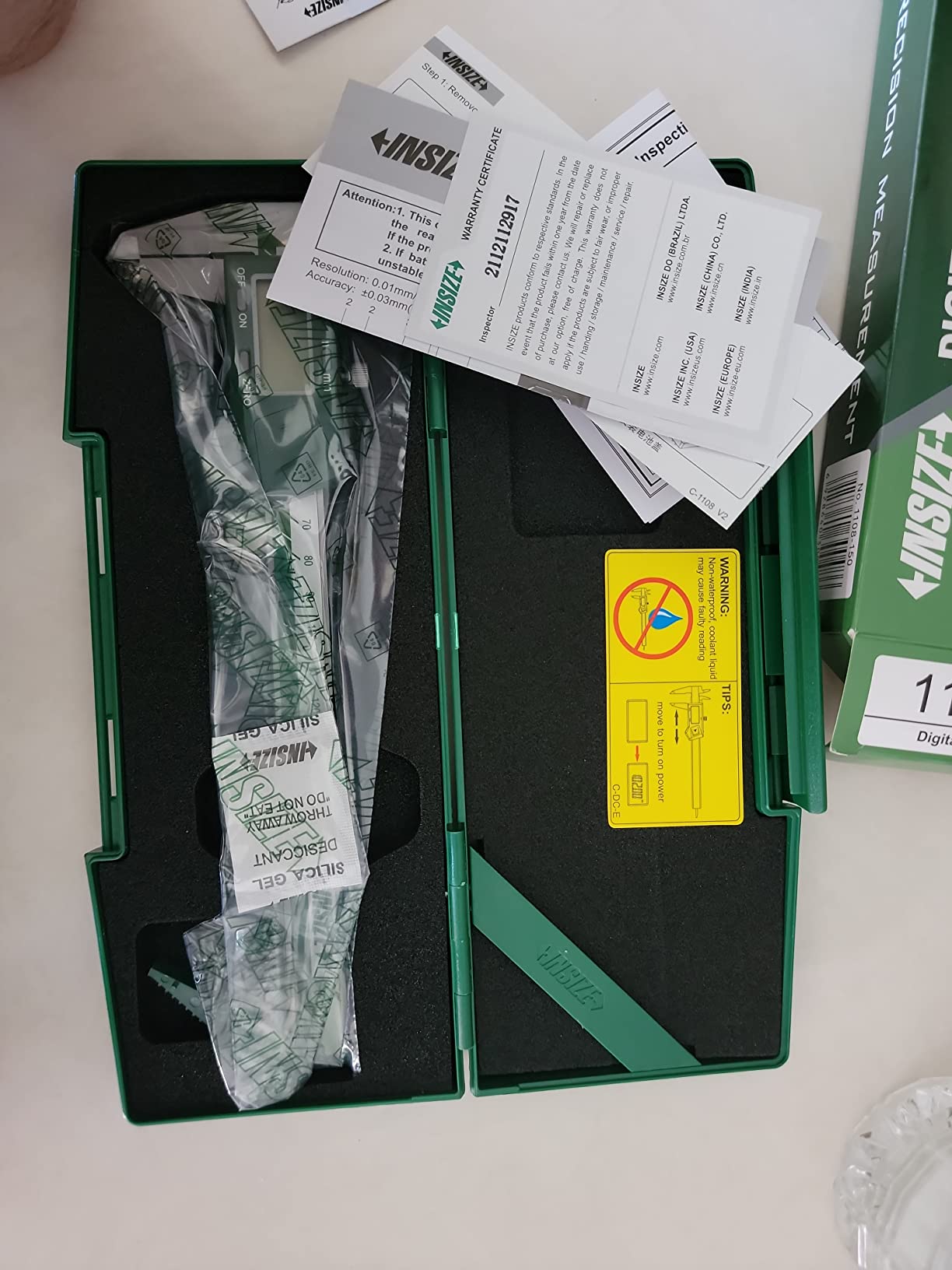
The second thing that separates it from the pack is documentation. It ships with a serial number and a proof-of-accuracy certificate, and the caliper carries a data output port with optional cables for spreadsheet or software export. Very few competitors in this price class include either the certificate or the port. Note that buyers report the certificate itself is described as NIST-traceable but is not included in the box, so request it from the seller rather than expecting it in the packaging.
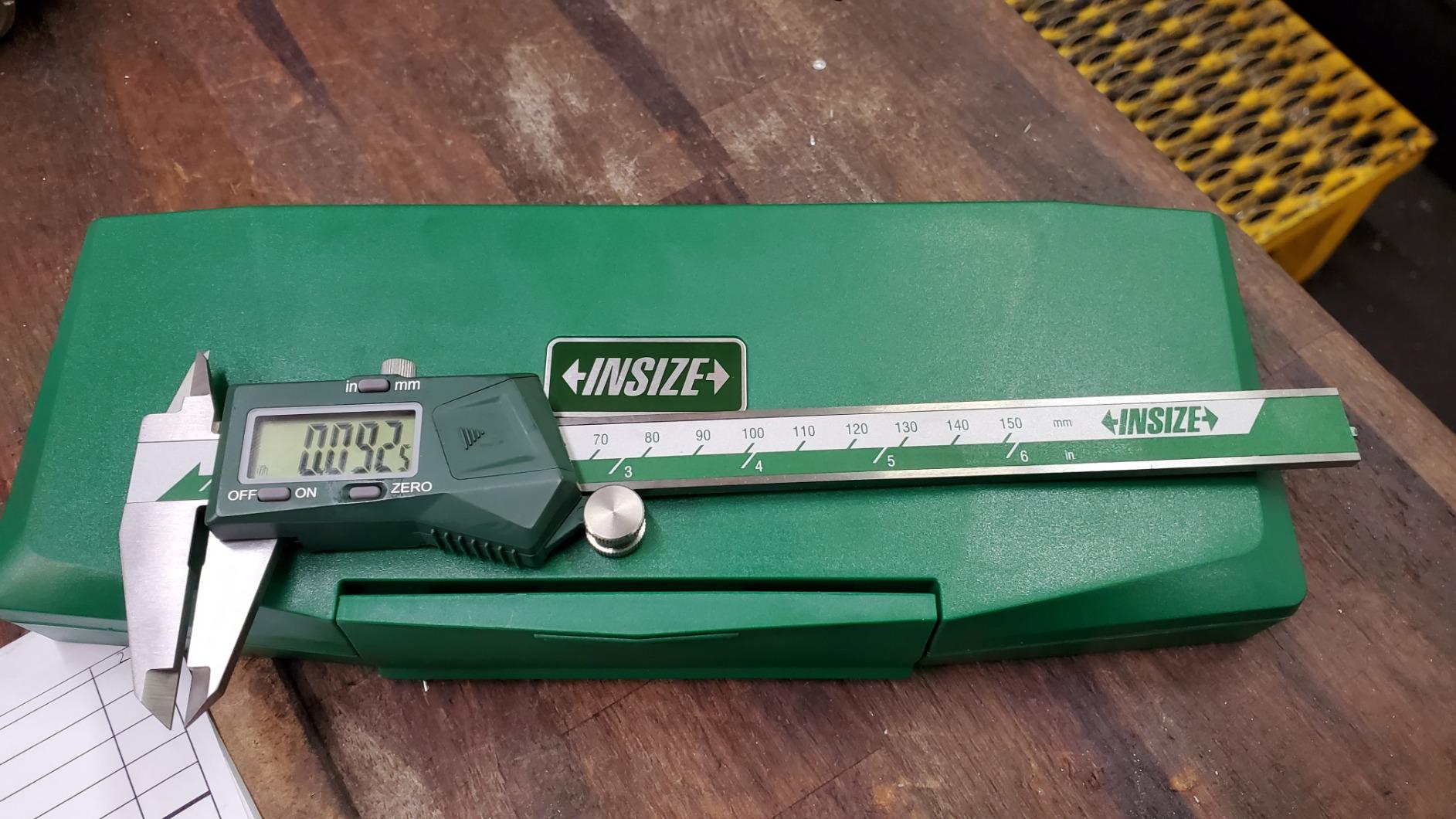
Machine shop owners report two-plus years of daily use with no loss of accuracy, and they consistently single out the battery cover design as a small but real improvement over screw-down covers that strip. The cover uses a thumb slide, and the thumb wheel itself is removable and replaceable with an insert, so a worn wheel is a five-minute fix rather than a return.
On the Practical Machinist thread about calipers other than the default brand, Insize comes up repeatedly as a legitimate contender. That forum consensus matches what the review data shows: accuracy in the same class as the established names, less shop ubiquity, and a thinner service network.
Why a data port on a value caliper matters
Most shops do not need it. The ones that do, need it badly, because a logged reading is evidence and a typed number is a claim. If you run incoming inspection or log first-article results, a port plus a certificate turns a handheld tool into part of a quality system.
The port needs the optional cable, which is a separate accessory rather than an included item. Check that the cable model matches before you commit, because there are two listed accessory types and they are not interchangeable in every software package.
The break-in period nobody mentions
Owners describe the slide as tight and less smooth than a Japanese-brand caliper straight out of the box, and note it needs an initial period of use before it settles. That is normal for a fresh steel beam and it improves with handling.
There is no fractional inch mode, and the caliper may need re-zeroing after the battery is removed and reinstalled. Set aside a minute for that when the cell goes, and treat it as part of the routine rather than a fault.
4. General Tools 147: The Best All-Metal Caliper With True Fraction Readout
General Tools Digital Caliper #147-6″ Precision Measuring Tool – Stainless Steel Ruler
0.001 inch accuracy, 0.02mm
Fractional inch to 1/64 inch
All metal construction
7.5 ounce weight
Pros
- Fractional inch readout to 1/64 inch at this tier
- Fully metal construction with no plastic housings
- Three display modes including decimal inch and millimeter
- Foam-lined case
- spare cell and cover screwdriver included
Cons
- Battery cover screw is not captive and gets lost
- Brief cold-condition offset when fully closed
- Made in China despite US-style branding
This is the highest-rated tool in the roundup at 4.7 across 896 reviews, and the rating is easy to understand. It is a fully metal caliper with no plastic housings, which gives it a solid, weighty feel at 7.5 ounces, and it reads decimal inch, fractional inch and millimeter in three modes. Fractional readout down to 1/64 inch at this price point is genuinely rare.
Owners who moved up from cheap knockoff calipers describe this one as substantially more accurate and more durable, and shop users report reliable daily service. One reviewer checked it against Starrett micrometer calibration rods and read dead on. The box includes a foam-lined protective case, a spare battery and a small screwdriver for the battery cover, which is a nicer kit than most competitors manage.
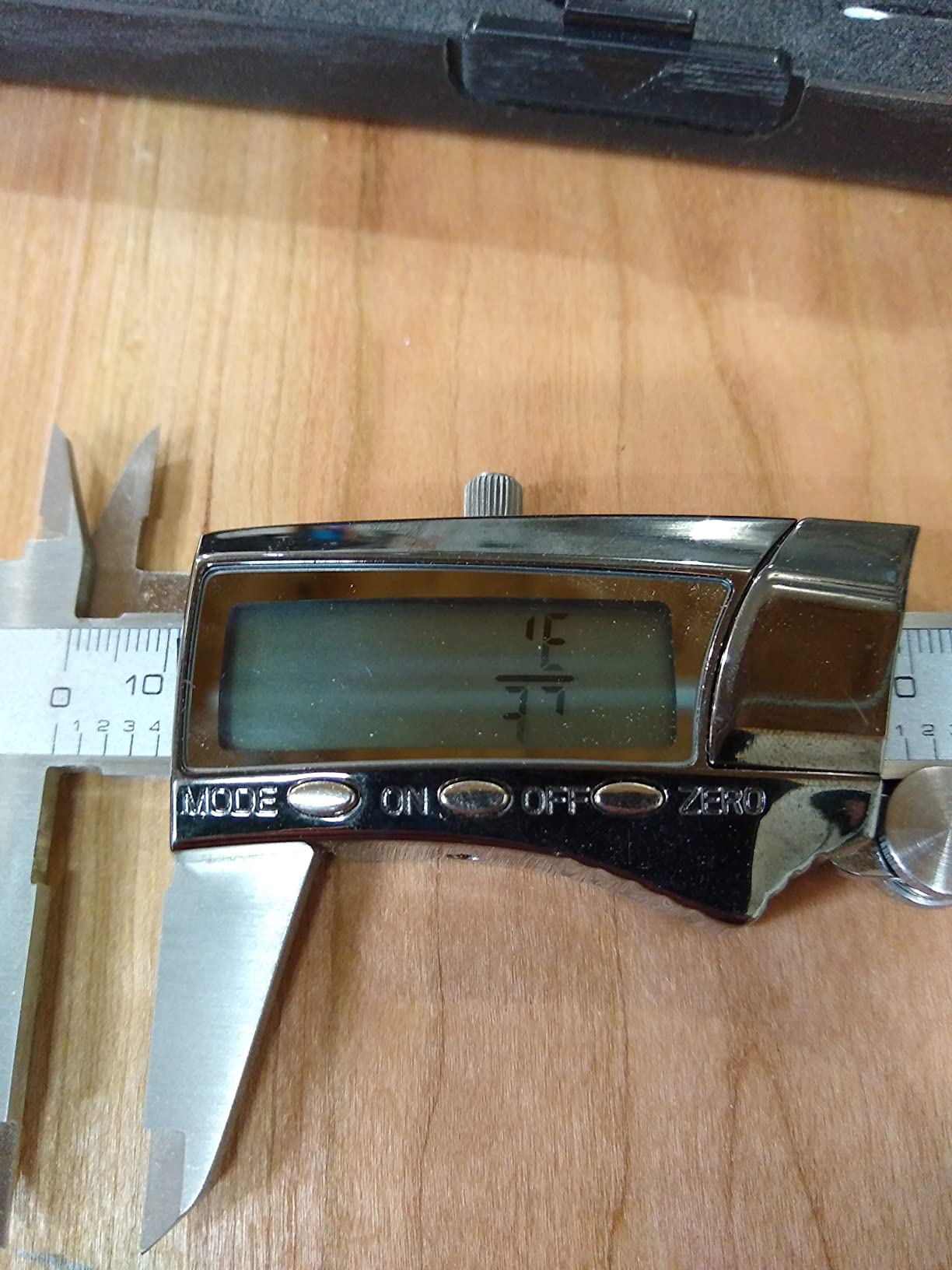
Auto on and off preserves the single AAA cell, and the conversion chart with instructions is included, which matters more than it sounds when a new machinist is handed the tool at the end of a shift. The same family is available in 0-8 inch and 0-12 inch ranges if the 6 inch model is not the frame size your work needs.
Our honest note is the manufacturing origin. Despite the US-style branding this is made in China, and there is no published warranty description beyond the one-year designation on the listing. That is normal for the tier and not a reason to skip it, but it is the reason to buy from a seller who will stand behind returns.
When fractional readout actually helps
Fraction display is most useful when the drawing is in fractions and you are trying to read the part the way it was specified. Woodworkers, pattern work and older American drawings all benefit. The 1/64 inch resolution here is coarser than the 1/128 inch you get on the iGaging, so it is a reading aid rather than a metrology mode.
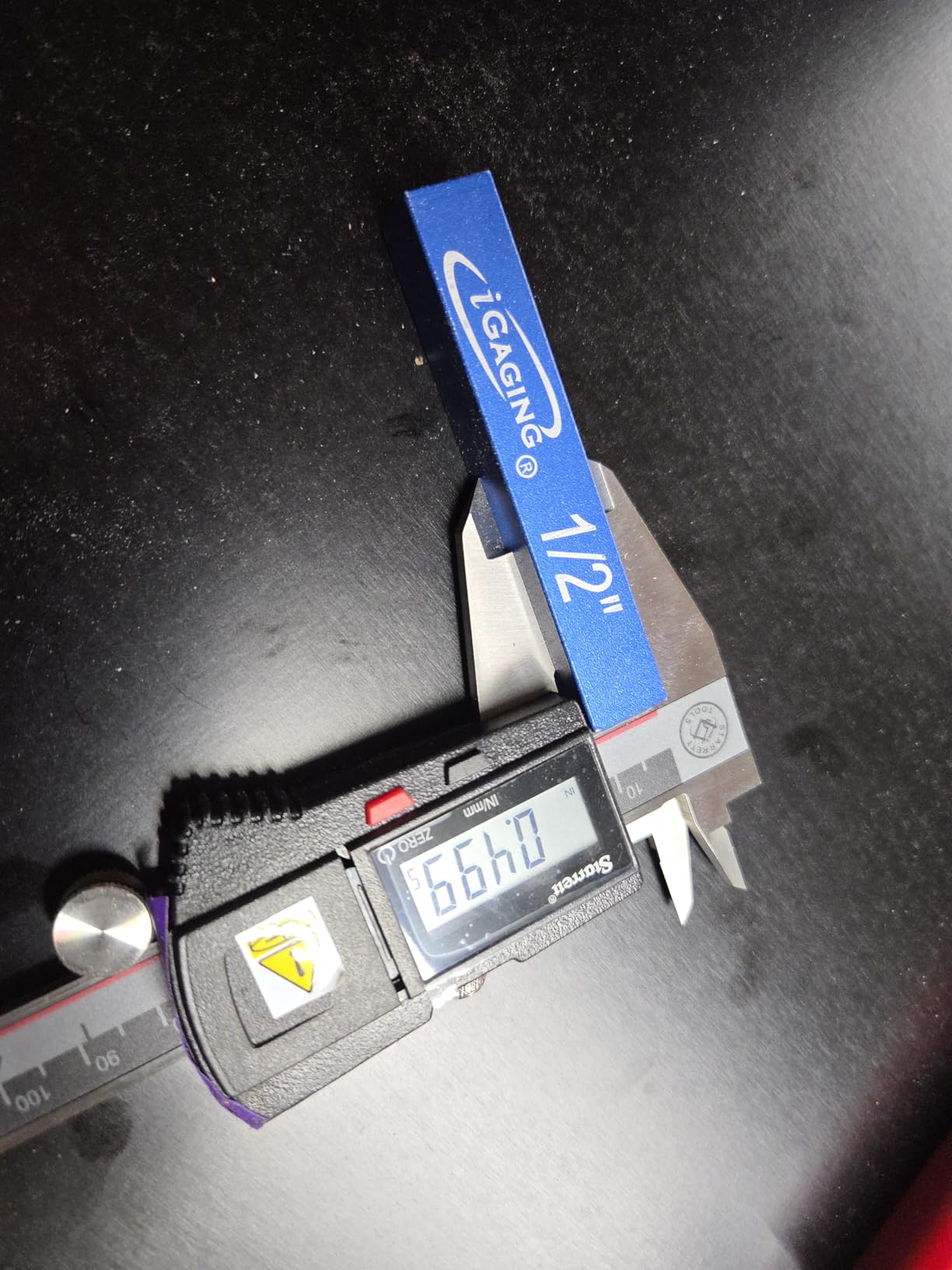
If your tolerance is expressed in thousandths, set the caliper to decimal inch and ignore the fraction display. Mixing modes mid-job is how an operator ends up reading 0.4990 as 1/2 and moving on.
The offset you might see in a cold shop
One reviewer measured a brief minus 0.0005 inch offset when the caliper was fully closed in cooler conditions, and it resolved after zeroing. In a shop that swings temperature between a loading door and a coolant bath, that is worth knowing about rather than panicking over.
The battery cover door and its screw are not captive, so the screw disappears. The included cover screwdriver is not decoration; keep it with the case. Plan on re-zeroing at the start of a shift in a cold shop rather than assuming the closed-jaw reading is the true zero.
5. HARDELL 8 Inch Rechargeable: The Best Caliper With a Backlit Screen and No Battery Hunting
HARDELL Digital Caliper 8 Inch, Rechargeable All Metal W/Backlight Screen
0.0015 inch accuracy, 0.03mm
0.0005 inch resolution
8 inch frame
Backlit LCD, rechargeable cell
Pros
- Built-in rechargeable cell removes disposable battery hunting
- Usable while charging so the tool is never dead on the bench
- Backlit LCD readable in dark and bright conditions
- All-metal body resists magnetic interference near motors
Cons
- Loosest accuracy spec of the metal-bodied picks at 0.0015 inch
- Needs a 5V adapter and a plain USB-C cable
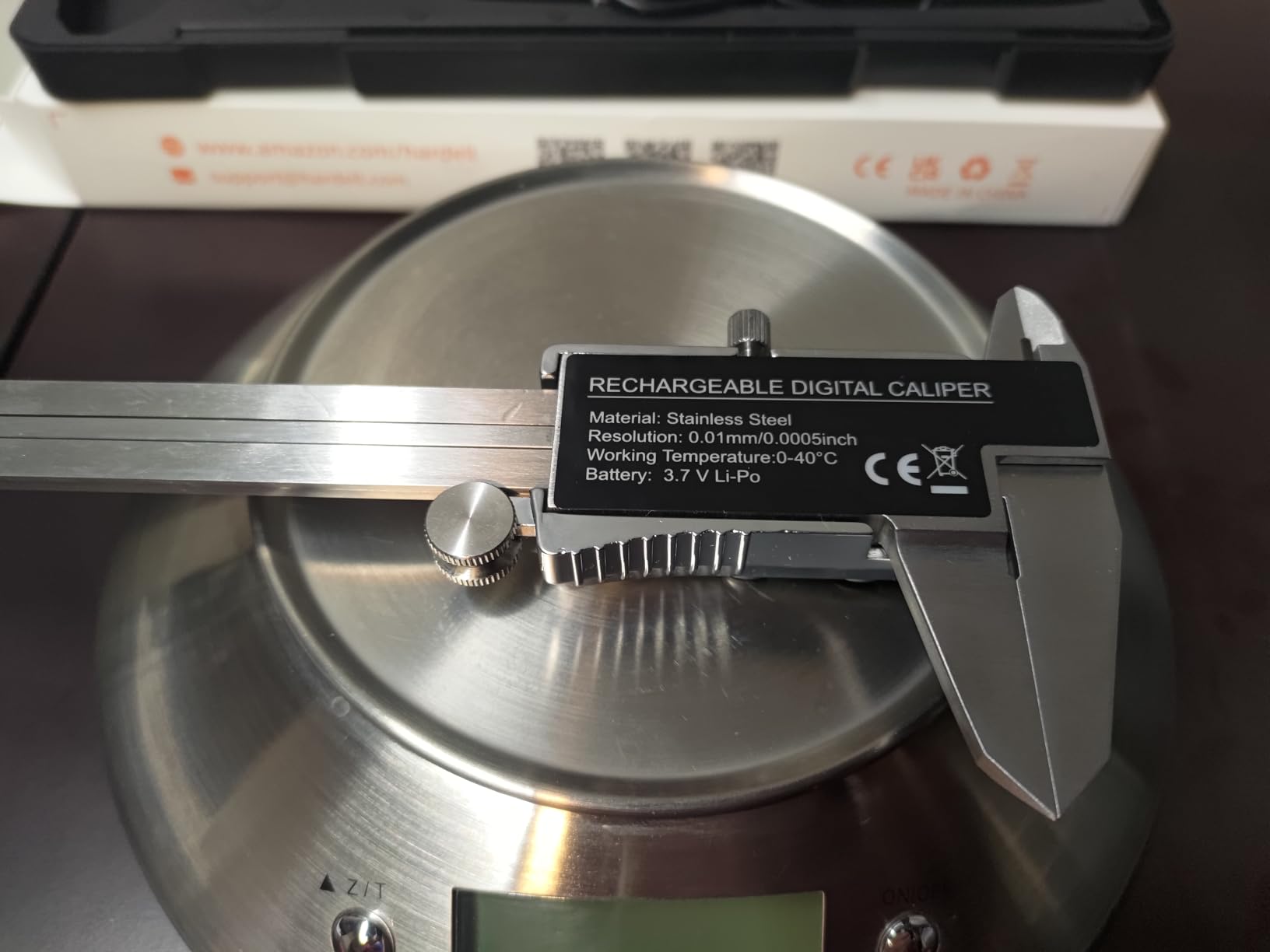
The reason to buy this one is simple and it is not accuracy. It has a built-in rechargeable cell charged over USB-C, and it works while charging. That removes the single most common reason a digital caliper fails in the field, which is a dead cell discovered halfway through a setup.
Battery life is listed at up to four months per full charge with a 20 minute charge time, and the backlit LCD has a five-second backlight auto-off with a full power down after five minutes of inactivity. The backlight is the reason this earns a place in a dim shop or a field service van, where every other caliper on the list becomes unreadable.
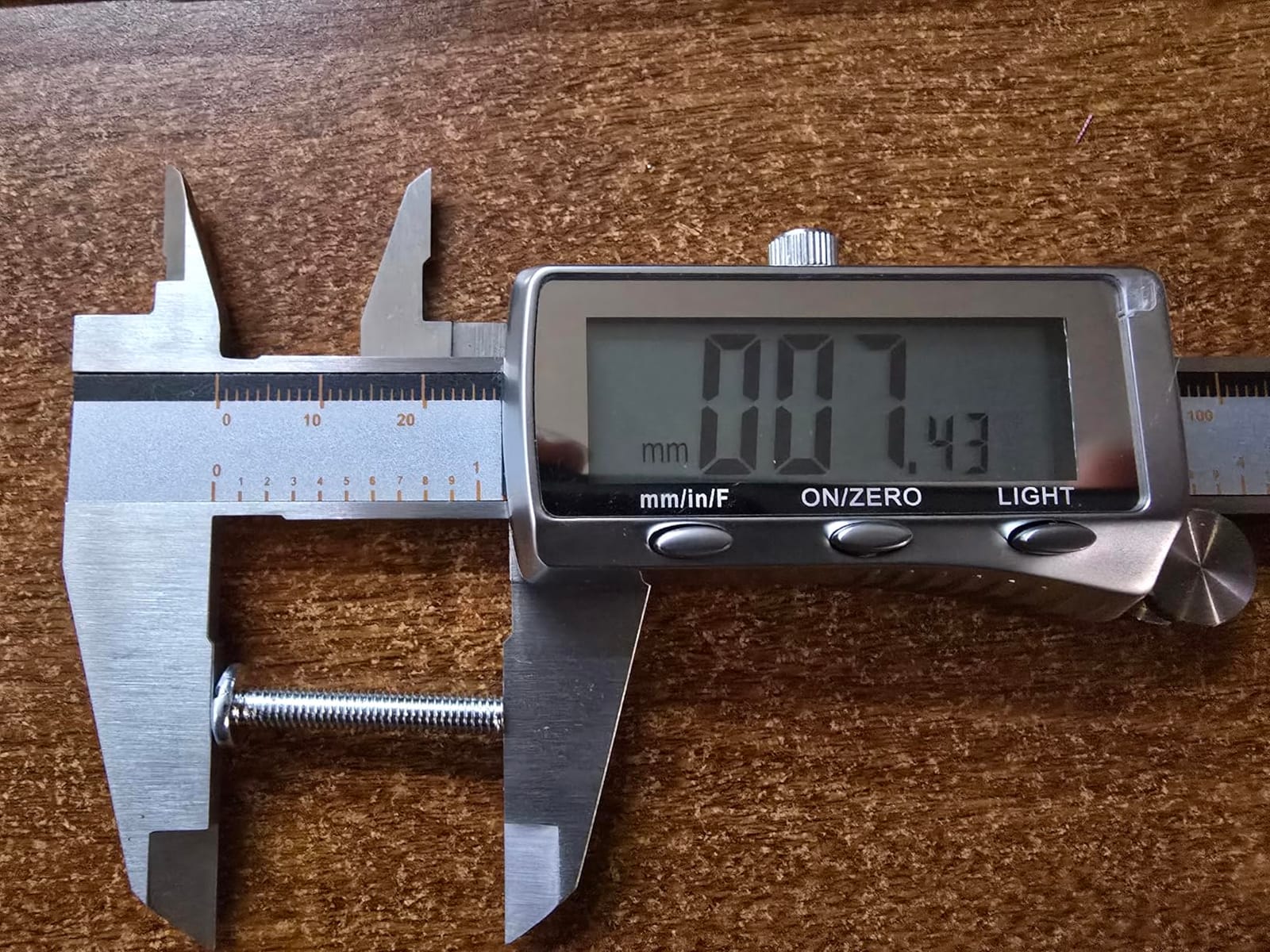
The body is all metal, including the screen housing, which reviewers note holds its precision after drops where plastic-bodied tools bend. It also resists magnetic interference near electric drills and motors, a real consideration in a shop with a spindle running a few feet away. It reads inch, millimeter and fractional inch, and measures internal, external, depth and step.
It comes in 6 inch, 8 inch and 12 inch variants. The 8 inch frame is the one most machinists ask for, and Practical Machinist posters consistently describe 8 inch jaws as feeling less fragile and engaging parts more squarely than a 6 inch frame on larger work.
How the rechargeable cell changes shop routine
Once the tool is charged, battery management stops being a task. There is no cell to lose, no tray screw to strip, and no question about which chemistry goes in. For a caliper that lives in a tool cart and gets grabbed a dozen times a day, that removes a recurring irritation.
The convenience only holds if you actually recharge it. Put a USB-C cable in the caliper case, and treat a bench-top charge once a month as part of the tool’s maintenance rather than an event.
Where the spec gives ground
Accuracy is plus or minus 0.0015 inch, which is the loosest tolerance among the metal-bodied picks in this roundup. That is fine for layout, general shop work and inspection within a few thousandths. It is not fine if your parts are held to a 0.001 inch tolerance, in which case the 0.001 inch picks are the correct choice.
Charging needs a 5V adapter and a plain USB-C cable. Adapters over 7V and dual USB-C cables can fail to charge it, which is a hardware limit rather than a fault, so keep the original cable with the tool.
6. NEIKO 01409A 12 Inch: The Best 12 Inch Caliper for Large Parts and Long Reach
NEIKO 01409A 12” Electronic Digital Caliper | Extra Large Display | 0-12 Inches | Inch/Fractions/Millimeter Conversion | Polished Stainless Steel
0-12 inch and 0-300mm range
0.001 inch accuracy, 0.02mm
0.0005 inch and 1/128 inch resolution
Fraction mode
Pros
- 12 inch range at a price that undercuts the steel alternatives
- Holds shape without flexing at full extension
- One-button inch
- fraction and millimeter conversion
- Form-fitted foam case with a spare battery spot
Cons
- Heavy and bulky at 1.5 pounds
- Instant-on from slide movement drains cells in roughly 9 to 10 months
- Some units report readout failure after about a year
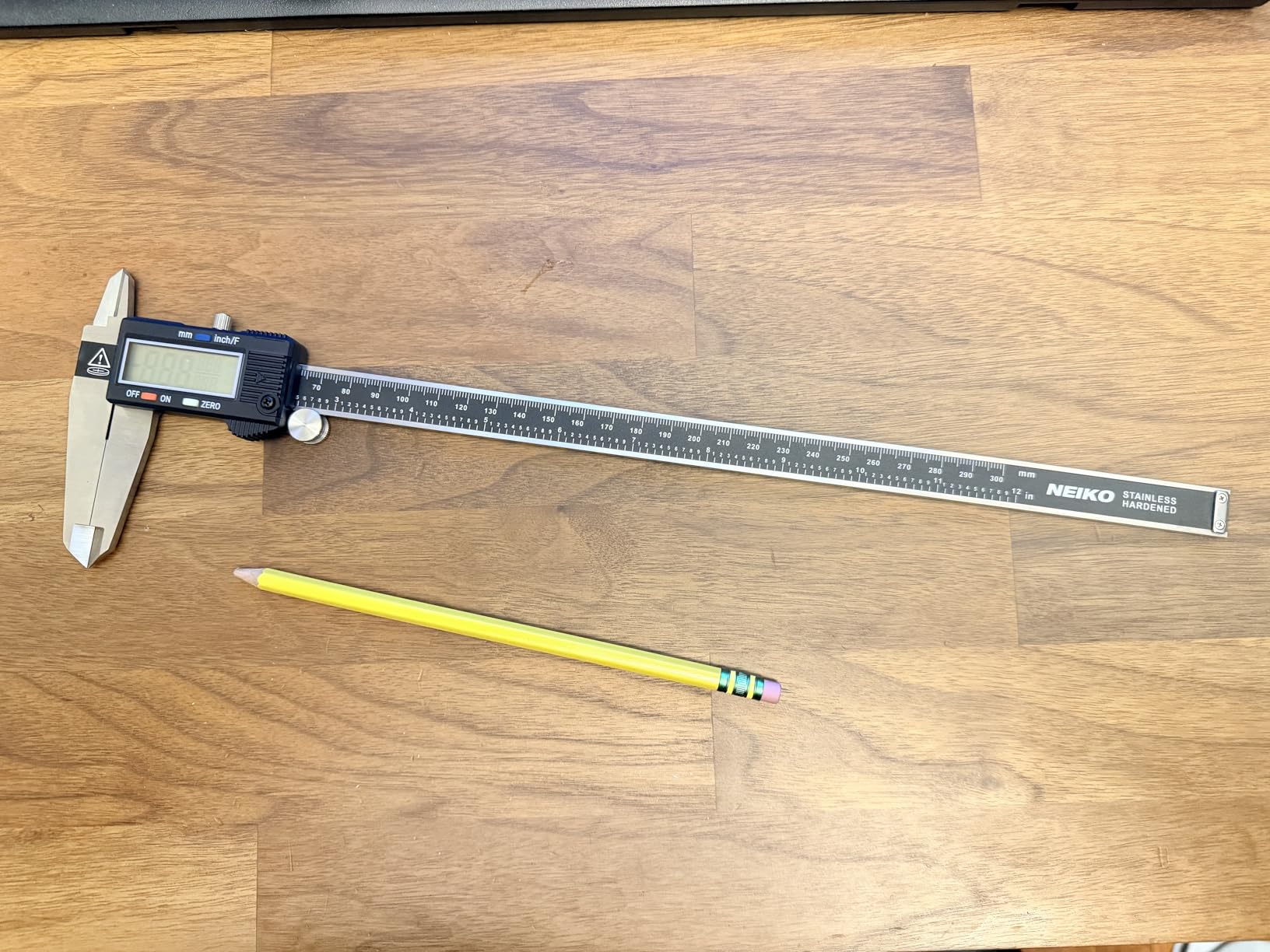
A 12 inch frame is rare outside the expensive tier, and this is the one to look at if your work includes large stock, long parts or awkward geometry that a 6 inch jaw will not reach. It covers 0-12 inch and 0-300mm with 0.001 inch accuracy and 0.0005 inch, 1/128 inch and 0.01mm resolution. Owners report that the frame holds its shape without flexing even when fully extended, which is the failure mode that makes long calipers useless.
The one-button conversion between inch, fractions and millimeter is the feature owners single out most. Several report reaching for this caliper instead of their own 6 inch tool because the fraction readout is convenient. On the hobby-machinist thread, the 12 inch Neiko is generally described as a good budget-friendly option for hobbyists, woodworkers and general-purpose work.
It includes a rugged form-fitted foam case with a storage spot for the spare cells, and one owner reports customer service replacing a lost battery cover free within an hour of contact. That kind of response is worth more than the case itself when you are buying a tool you intend to keep.
The readout also returns to zero exactly and holds calibration across sessions, which is the behaviour you want from a long-reach caliper used intermittently. The rating of 4.3 across 1431 reviews reflects real satisfaction mixed with genuine gripes, which we will get to.
Why reach for 12 inch instead of 8 inch
Reach for 12 inch when the feature you need to check is longer than your current jaw span, or when the part is too heavy to hold square in a short frame. Outside those two situations, a longer frame is only a bigger object to carry, and it costs you accuracy you might need more.
Two years from now, if you are buying your first serious caliper, the 8 inch frame is the more useful default. Many shops issue an 8 inch model to new hires precisely because it covers more stock without becoming unwieldy.
The weight and battery complaints are real
At 1.5 pounds and 17 inches long, this is more than twice the size of a 6 inch caliper in every dimension, and the balance is not good. The thumb wheel is loose, and moving the slider quickly rather than through the wheel produces noticeable slippage. Use the wheel for anything you intend to write down.
Instant-on from slide movement drains the cells in roughly 9 to 10 months, and some units report the digital readout failing after about a year of use. That is the cheapest-in-the-list reliability margin of any pick here, and it is why this sits at position six rather than higher despite the range.
7. Adoric 0-6 Inch Plastic: The Best Budget Caliper for Layout, Not for Measurement
Digital Caliper, Adoric Calipers 0-6 Inch, Inch/mm Conversion, Large LCD
0.01 inch resolution, 0.1mm
Plus or minus 0.01 inch accuracy
Plastic non-marring jaws
0-6 inch range
Pros
- Over 38000 reviews and the top sales rank in Digital Calipers
- Plastic jaws will not scratch razors or finished surfaces
- Four measurement modes from two jaw sets and a probe
- Lightweight and portable
Cons
- Plastic body does not return perfectly to zero at full close
- 0.01 inch resolution is not enough for precision metalwork
- No thumb wheel
- no locking screw
- no fraction mode
Let us be direct about where this one belongs. With a resolution of 0.01 inch and an accuracy of plus or minus 0.2mm or 0.01 inch, this is not a measurement instrument for metalwork. It is a layout tool. The 0.01 inch resolution is a full order of magnitude coarser than every other caliper in this roundup, and no amount of careful handling changes that number.
What it does have is a plastic body and plastic jaws, and that is the reason to own one. Reviewers consistently position it as the budget pick for makers, woodworking, 3D printing and layout, and several explicitly note that the plastic jaws protect delicate finishes. If you work around razors, finished panels or soft alloys, a steel jaw will mark them and this will not.
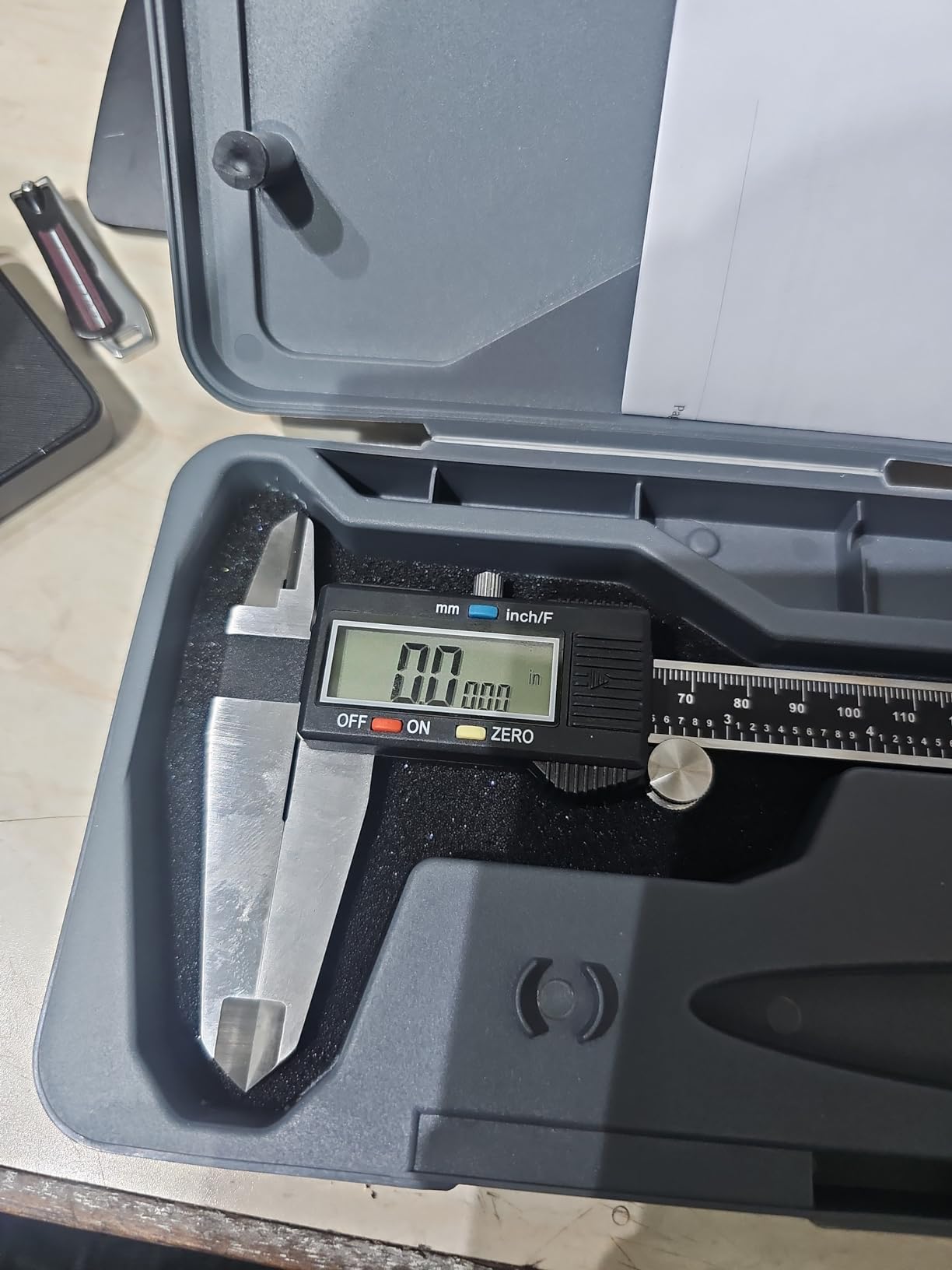
The review volume is the largest in this roundup by a wide margin at over 38000 reviews, and it holds the number one sales rank in Digital Calipers, which tells you how much field history exists behind it. Four measurement modes come from two jaw sets plus a depth probe, and the large LCD shows both metric and imperial with one-button conversion. A spare LR44 cell is included.
One practical note from the manufacturer listing: remove the white insulation film from the battery compartment before first use, and re-zero by sliding the display to the zero end if readings drift. Both are normal first-day steps, not faults.
What it is genuinely good at
Layout, rough sizing, checking that a part is roughly where you think it is, and measuring anything non-metallic where a 0.01 inch increment is good enough. In those jobs it is light, portable and hard to argue with, and the auto-off after five minutes protects the single LR44 cell.
It also works as a shop door buster or a loaner. A tool that costs little and survives being handed around is a reasonable thing to keep in the bottom of a cart.
Why we would not put it on a machined part
The plastic body does not return perfectly to zero when the jaws are fully closed, which means the zero drifts depending on how it is stored and handled. On a steel caliper that behaviour indicates a problem. Here it is simply what a plastic body does.
There is no thumb wheel, no locking screw and no fraction mode, so you cannot fine-tune the reading or hold a position while you mark the part. For any tolerance tighter than 0.01 inch, use one of the stainless picks earlier in this list.
8. LOUISWARE 6 Inch Stainless: The Best-Selling Stainless Caliper Under Forty Dollars
Digital Caliper, Caliper Measuring Tool with Stainless Steel, Electronic Micrometer Caliper with Large LCD Screen, Auto-Off Feature, Inch and Millimeter Conversion (6 Inch/150 mm)
0.001 inch accuracy, 0.02mm
0.0005 inch resolution, 0.01mm
0-150mm range
2 CR2 cells, 4 minute auto-off
Pros
- Top sales rank in Caliper Gages with over 2400 reviews
- Stainless steel body described as waterproof
- stain-proof and oil-proof
- Thumb roller and locking screw for fine adjustment
- Measures internal
- external
- height and depth
Cons
- No fractional inch readout
- No carrying case listed
- Listing data for weight and included items is inconsistent
This is the volume seller in the group, holding the number one sales rank in Caliper Gages with more than 2400 reviews. The spec sheet is the interesting part: 0.001 inch accuracy, 0.0005 inch resolution and a 0-150mm stainless steel body, which puts it in the same accuracy class as the picks costing several times more.
Owners draw the right conclusion from that. With that review volume, the consistent feedback is approval for build quality and everyday accuracy, with fractions and a carrying case named as the main missing features. The thumb roller and locking screw give smooth sliding and fine adjustment, which is more than several picks in this list manage.
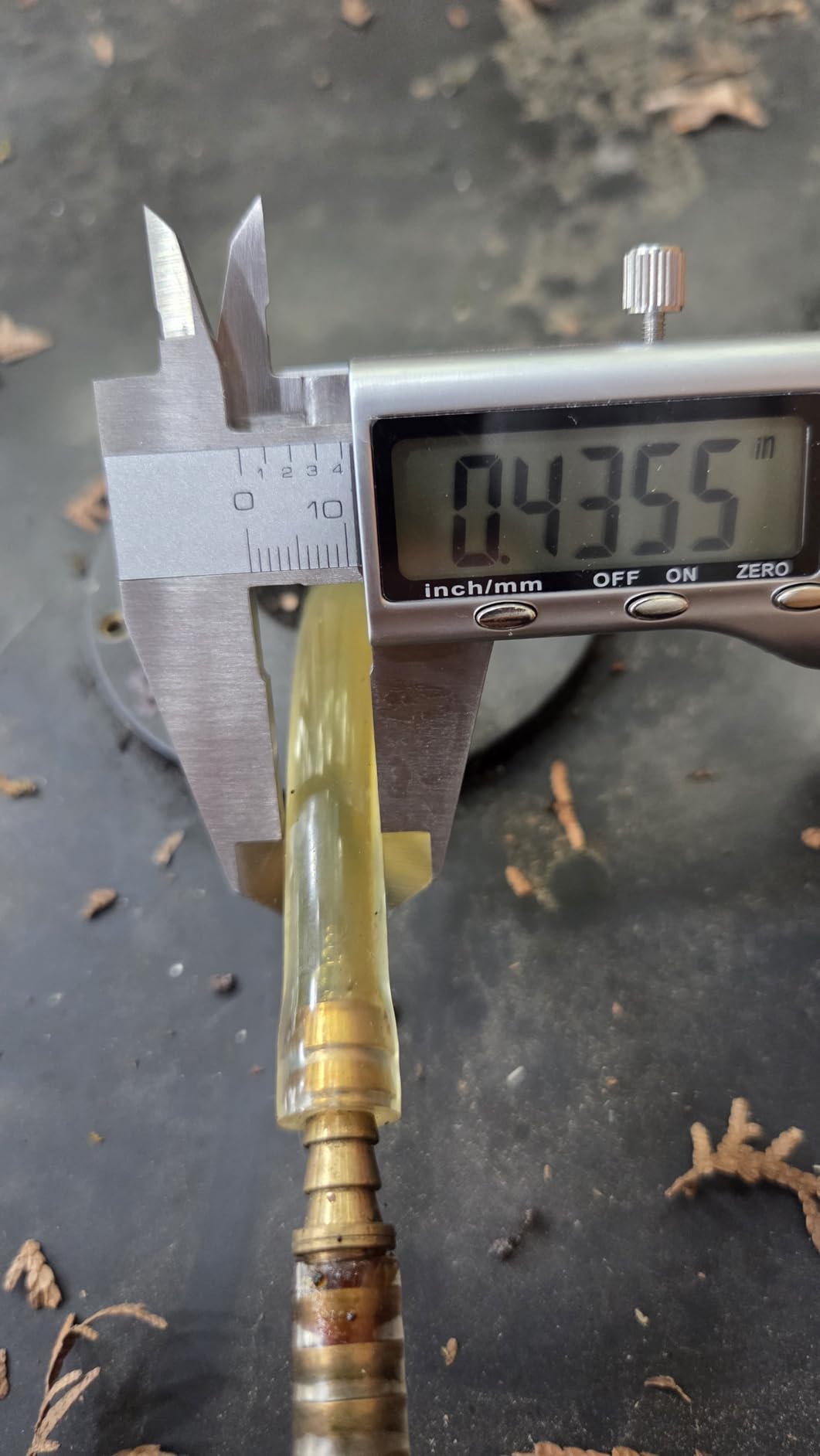
One-button inch and millimeter conversion with a large clear LCD, and auto shutoff after four minutes of inactivity to conserve the two included CR2 cells. Reviewers describe the body as waterproof, stain-proof and oil-proof, which in practice means a coolant wipe-down and a chip rinse are not a crisis.
It measures internal, external, height and depth dimensions, so it covers the four measurement types a machinist actually reaches for. The absence of fraction readout is the one specification gap, and buyers moving to it from a metal caliper with fractions notice immediately.
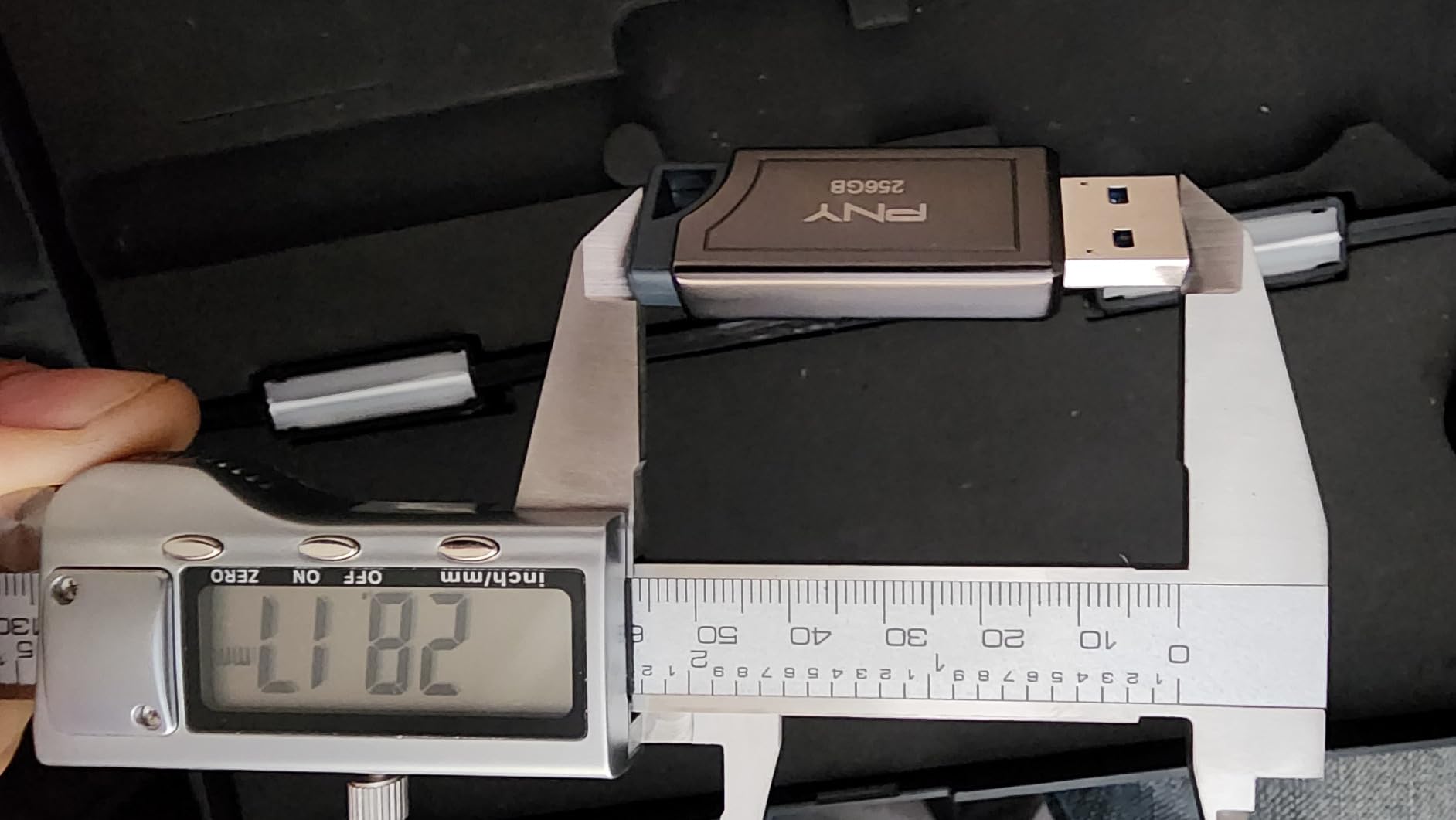
When this is the right buy
It is the right buy when you need a steel-bodied, 0.001 inch caliper for a first bench, a second caliper so nobody shares, or a tool for a new hire who will lose it. At this accuracy and this build, a shop can issue several without thinking twice, which is a different kind of value entirely.
It is also the right buy for anyone who keeps breaking plastic calipers. Reviewers who came from cheap composite tools describe the switch to a stainless body as the point where the tool stopped feeling disposable.
The gaps worth knowing
No fractional inch mode means inch work is decimal only, and no carrying case is listed, so plan on sourcing one if the tool will live in a cart rather than a drawer. Keep it away from the bench edge and a case becomes optional.
Some unit listings show inconsistent weight and included-item data, so confirm on delivery that the caliper, cells and any case you ordered actually arrived. That inconsistency is a listing problem rather than a product problem, but it is worth the thirty seconds.
9. Starrett EC799A-6/150: The Best Pro-Grade American-Built Caliper in This Roundup
Starrett Stainless Steel Electronic Slide Caliper, 0-6″ Range, .0005″ Res
Plus or minus 0.001 inch, 0.02mm
0.0005 inch and 0.01mm readout
30 minute auto-off
Hardened stainless surfaces
Pros
- Hardened stainless measuring surfaces with corrosion resistance
- Large high-contrast LCD for quick readings
- Auto-off after 30 minutes with instant reactivation and no loss of position
- Fine adjustment thumb wheel for controlled closing
Cons
- Highest price point in this roundup
- Some reviewers find the slide less smooth than premium Japanese brands
Starrett built its reputation on slide calipers, and that shows in the EC799A-6/150. The measuring surfaces are hardened stainless steel with strong corrosion resistance, the readout is a large high-contrast LCD, and the accuracy spec is plus or minus 0.001 inch over 0-6 inch or 0-150mm. It reads 0.01mm and 0.0005 inch, with inch and millimeter conversion.
The auto-off behaviour is set at 30 minutes of no slide movement, and the readout reactivates with one second button press or any slide motion with no loss of position. In a shop that is the right setting, because a 30 minute timeout means the caliper is still on the bench when you come back to it, while still protecting the cell overnight.
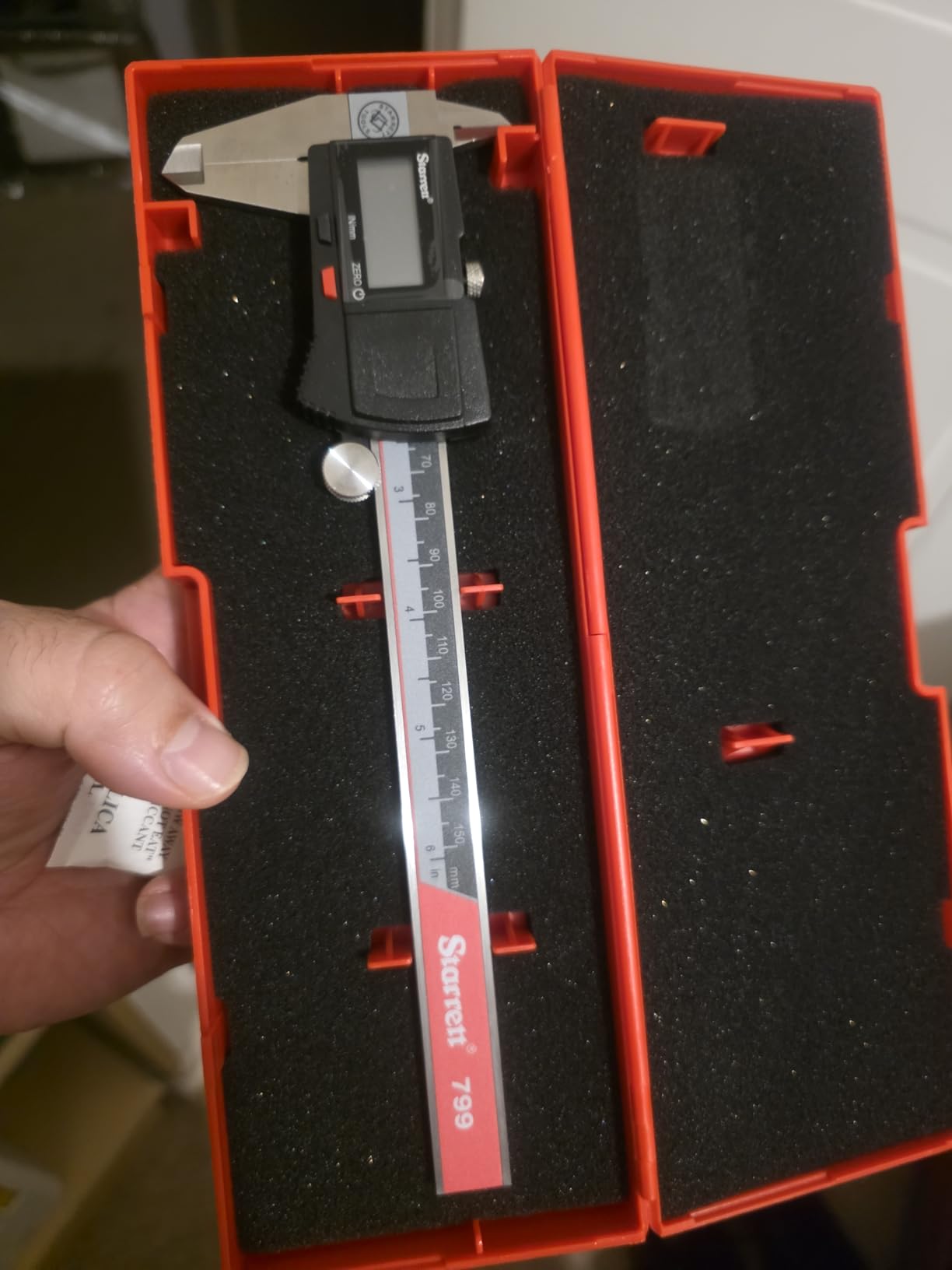
Machinists rate this highly for build quality, readability and dependable accuracy, with the main reservation being cost and slide smoothness relative to Mitutoyo. At 11.2 ounces it is light for a 6 inch steel caliper, and the dimensions are listed at 10.1 inch long by 5 inch wide. The model number is EC799A-6/150, so you can match it to a specific part number when ordering a replacement.
On the Practical Machinist thread about what to buy besides the default brand, Starrett is named alongside Mitutoyo, Fowler and Insize as a legitimate shop choice. It is the answer most US shops give when they want domestic availability and a name their machinists already trust.
Why the 30 minute timeout is the right default
Auto-off is a battery protection feature, and every extra minute is a minute of cell life. Thirty minutes is long enough to survive a coffee break, a walk to the crib and a longer setup check, and short enough that a forgotten caliper does not drain overnight.
The reactivation behaviour matters just as much. Because it comes back on a slide movement without losing position, you do not have to re-zero it after it wakes up. A shorter-timeout caliper that forgets its position every time is worse than one that never sleeps.
Where the money goes
This is the highest price point among the picks here, and the slide action is the specification reviewers question most, with some finding it less smooth than premium Japanese-brand calipers out of the box. If you are used to a Japanese slide, that difference is real and it does not wash out entirely.
The thumb wheel is the answer to it, and it is the reason this caliper gets a fine-adjustment badge. Use the wheel for final closure on any reading you intend to trust, and the slide feel becomes far less relevant.
10. Fowler 54-101-150-2: The Best Four-Way Jaw Set With a One-Year Warranty
Fowler 54-101-150-2, Xtra-Value Cal Digital Caliper With 0-6″/150MM Measuring Range,Blue
Plus or minus 0.001 inch, 0.02mm
0.0005 inch and 0.01mm resolution
Two jaw sets plus depth rod
1 year warranty, case included
Pros
- Four measurement types from two jaw sets and a depth rod
- Two CR2032 lithium cells included and widely available
- Repeatable readings verified against dial calipers
- Holds up to drops in a working shop
Cons
- No fraction readout mode
- Battery compartment can admit fluid with wet hands
- Slide is stiffer than a Mitutoyo out of the box
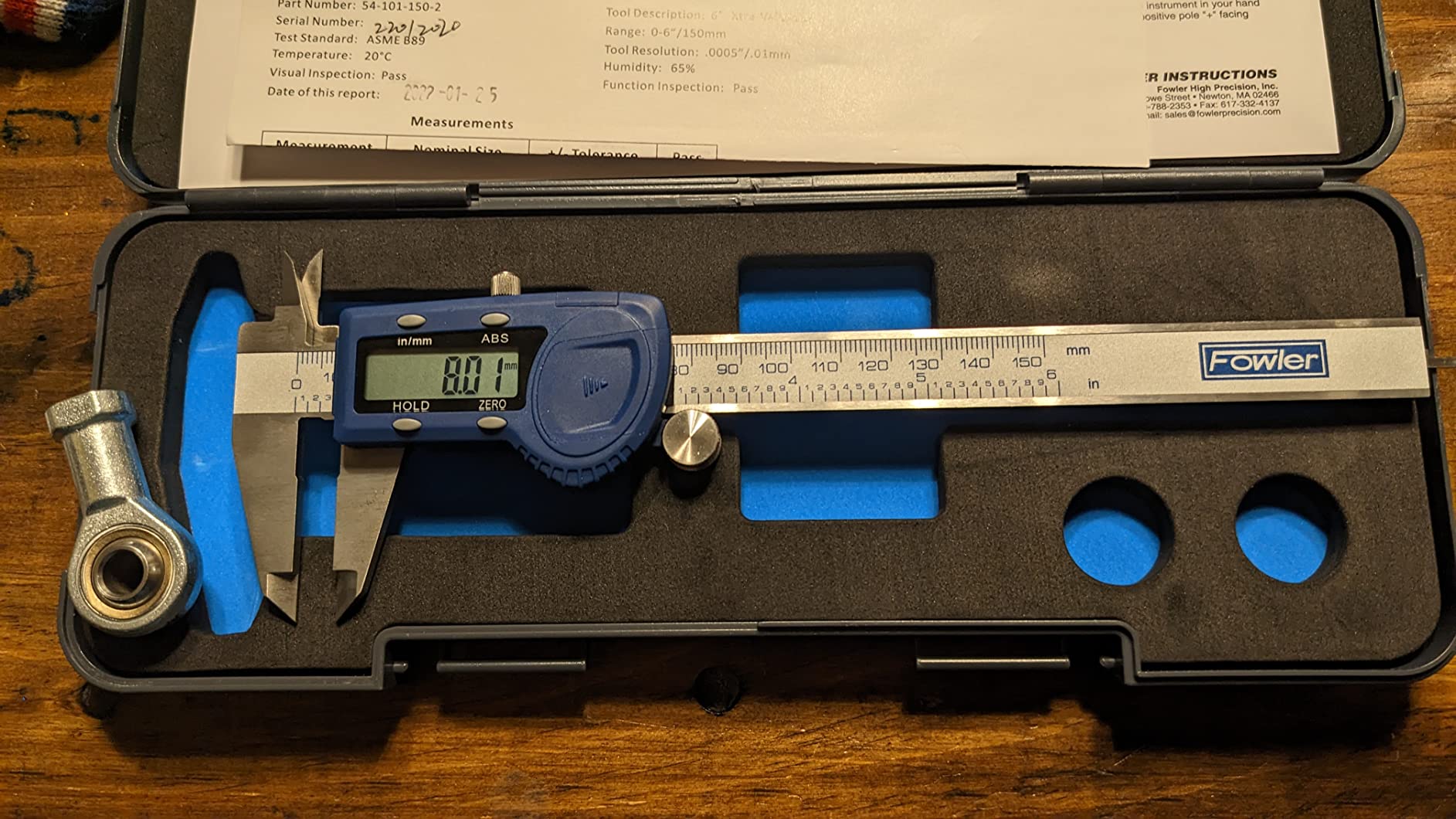
The Fowler Xtra-Value Cal covers four measurement capabilities from two jaw sets plus a depth rod, which makes it the most versatile tool on this list for step and depth work. Accuracy is plus or minus 0.001 inch and 0.02mm with 0.0005 inch and 0.01mm resolution, over a 6 inch and 150mm range, on a stainless steel body with a smooth slide and a clear LCD.
It runs on two standard CR2032 lithium cells, which are the most widely available and long-lasting coin cells there are. That sounds trivial until you are in a shop at 11pm looking for a battery. The box also includes a protective case, an instruction manual and a one-year warranty on material and workmanship, which is the only published warranty in this roundup.
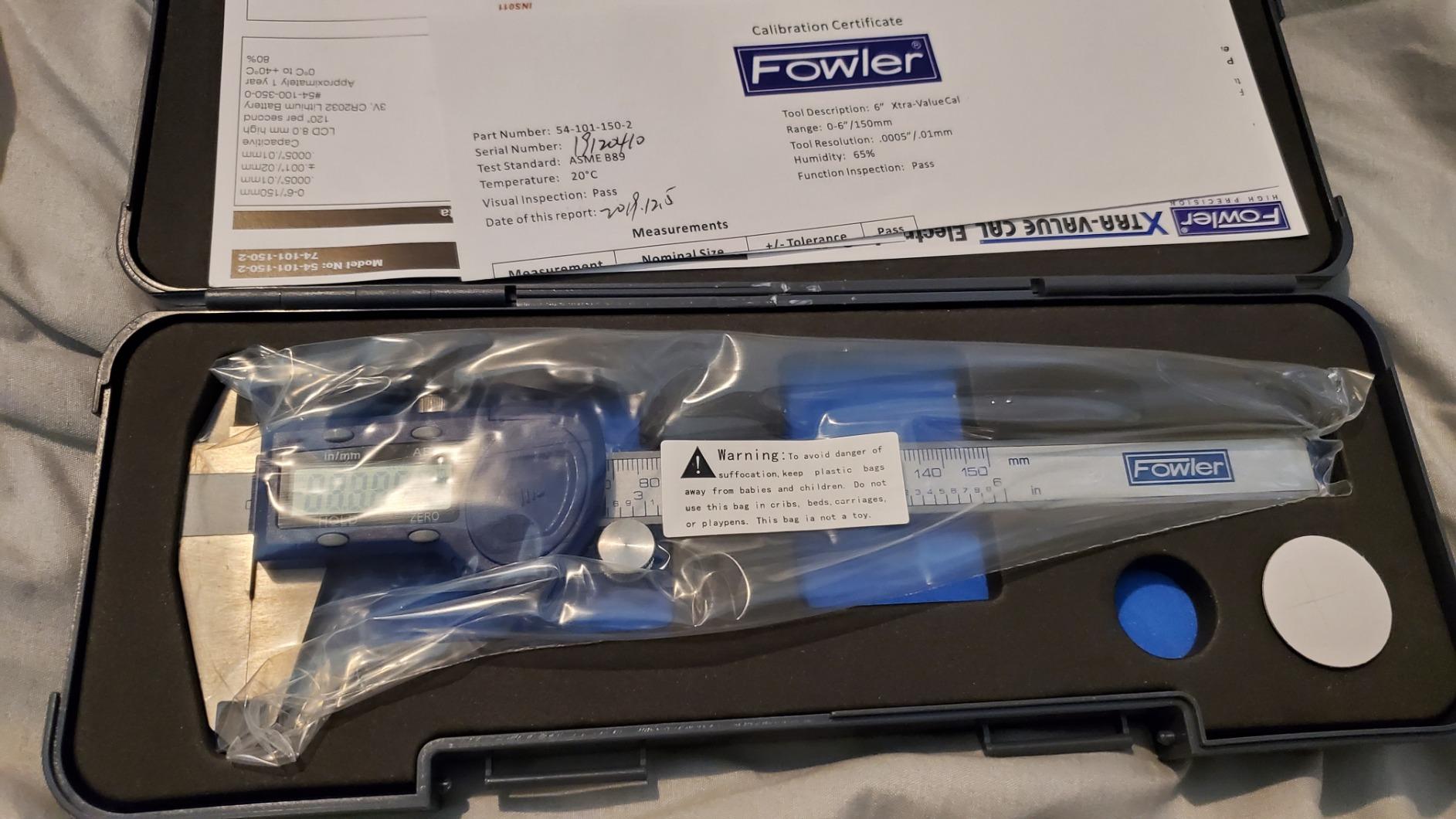
Fowler owners consistently praise accuracy, repeatability, build quality and battery life, describing the caliper as a durable shop-grade value that is not quite as smooth as a Mitutoyo. Reviewers report repeatable, accurate readings verified against dial calipers, and that it holds up to drops in a working shop. At 13.6 ounces it has real heft, listed at 10 inch long by 4 inch wide.
One Practical Machinist poster describes an extremely worn out Fowler 12 inch caliper that still works and still measures accurately, saying it feels like a quality instrument despite looking like a public bathroom. That is the durability case for this brand better than any spec sheet: the tool is judged on years of ownership, not purchase-day impressions.
Why two jaw sets and a depth rod matter
Two jaw sets give you a larger inside-measuring capability than a standard frame, which is what makes step and depth work possible on the same tool. If you check shoulder heights and step dimensions regularly, this avoids owning a separate depth or step gauge that will end up in a drawer.
The depth rod also makes it useful for bore depth verification after boring, which is a common job-shop task where a caliper with a proper depth rod saves a dedicated gauge.
The fluid issue and the missing mode
The battery compartment can admit fluid when your hands are wet with coolant or oil, which is the most common real complaint on this caliper. Wipe the hands before opening the tray, and dry the compartment before closing it. On a tool with a slide-down battery door this is an easy habit to build.
There is no fraction readout mode, and the slide is slightly stiffer than a Mitutoyo out of the box. Owners describe readings as repeatable, so the stiffness costs you feel rather than accuracy, and it loosens with use.
11. werka 0-6 Inch: The Best Straightforward Stainless Caliper for a Single Bench
Werka Digital Caliper 0-6 Inch, Stainless Steel Measuring Tool
0.001 inch accuracy, 0.02mm
Inch, fraction and millimeter
Stainless frame with roller and lock
Large LCD with auto-off
Pros
- Polished stainless steel frame with thumb roller and locking screw
- Measures inside
- outside
- depth and step at 0.001 inch
- Switch between inch
- fractional inch and millimeter
- Hard plastic case with sponge insert included
Cons
- Fewer published long-term durability reports than higher-review picks
- Manufacturer lists no included components
- so verify contents
This is a straight, well-executed 6 inch stainless steel caliper with a 4.7 rating across 495 reviews, and the sentiment behind it is unusually clean. Very few negative reviews, and the recurring praise is for the stainless feel, the smooth slide and a fraction mode that owners describe as better than expected for the money.
It measures inside, outside, depth and step at 0.001 inch and 0.02mm, and switches between inch, fractional inch and millimeter. The polished body comes with a thumb roller and a locking screw, which is the hardware combination that makes a caliper usable one-handed while you mark the part.
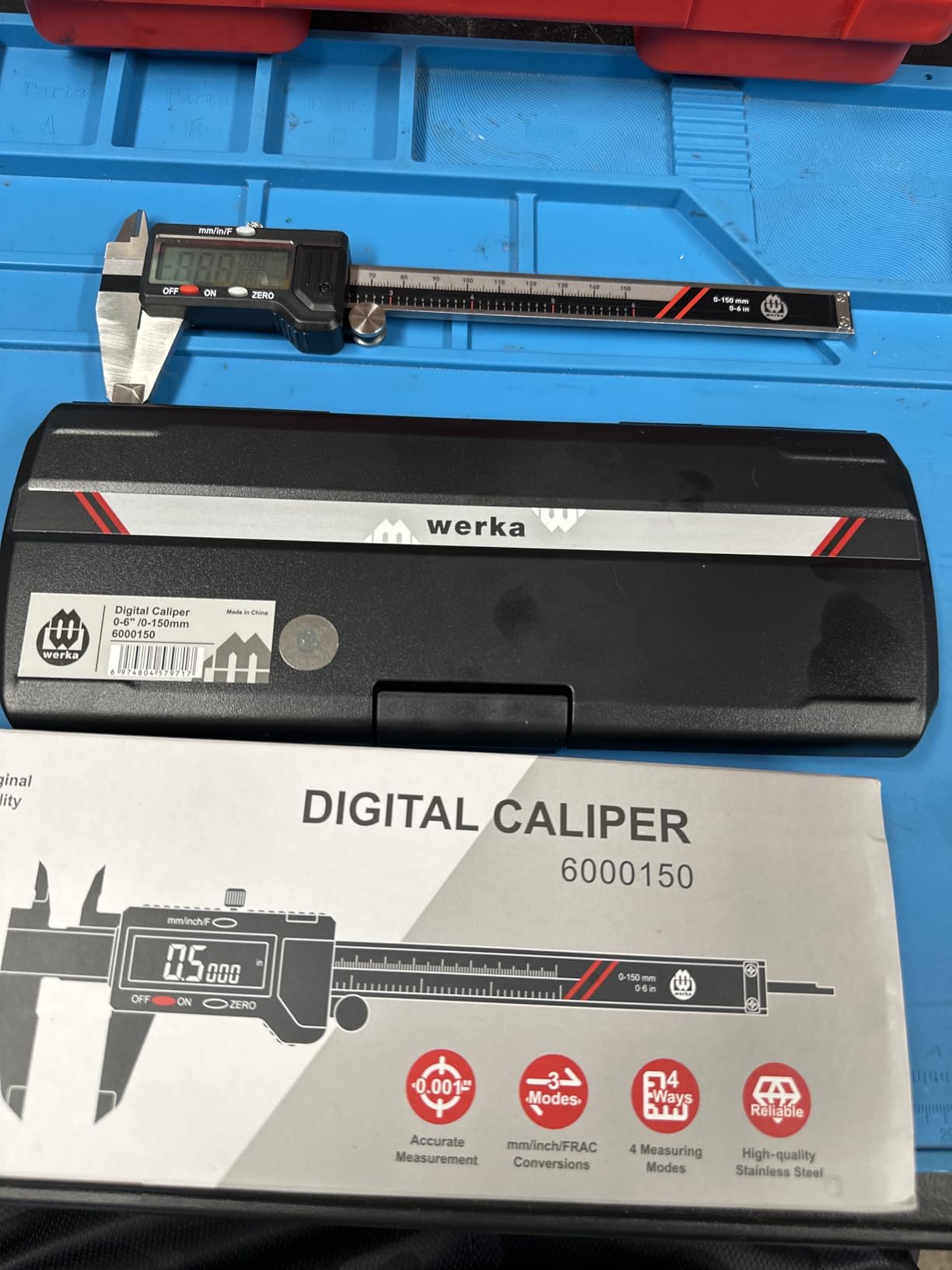
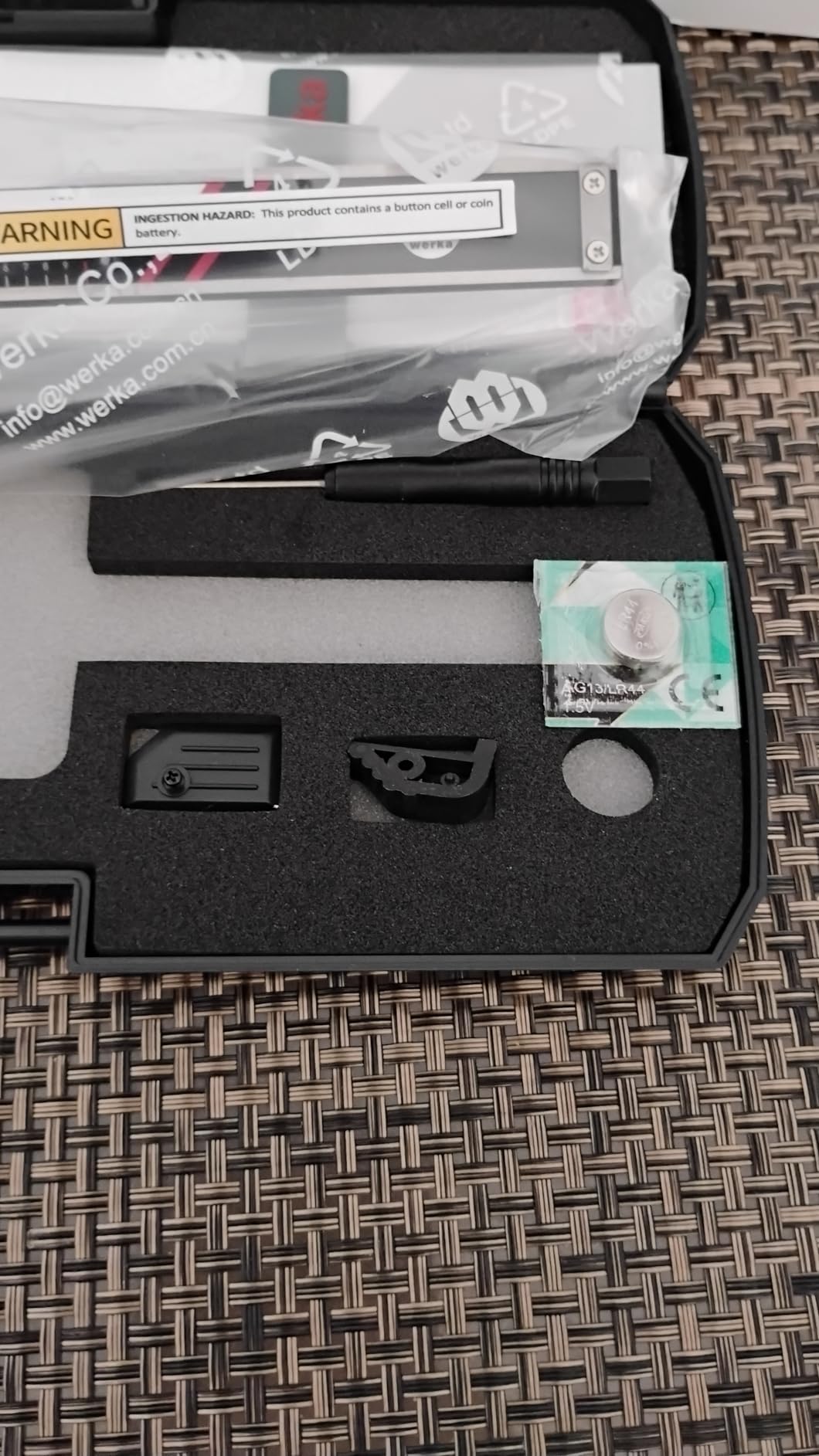
The large LCD includes auto-off and a low battery warning, and the two included LR44 cells are a common, cheap cell type. A hard plastic case with a sponge insert is included, which is a real convenience for a tool that will move between a bench and a cart. Overall dimensions are listed at 6 inch by 6 inch for the packaged item.
Our reservation is the evidence base rather than the tool. With 495 reviews it has fewer published long-term durability reports than the picks carrying two or three thousand, so we would treat it as a solid bench caliper rather than an assumption of decade-long service.
Why a locking screw matters more than it looks
A locking screw holds the slider where you put it, so you can transfer a reading to a scribe or a layout mark without the jaw creeping as your grip changes. On a caliper without one, every marking operation is a two-handed operation and a chance to lose the number.
The thumb roller handles the fine adjustment, so the screw and the roller together cover the two things that slow you down: closing smoothly and holding position. This caliper has both, which is why it punches above its position in this list for daily bench work.
What to confirm when it arrives
The manufacturer field lists no included components, so verify the batteries and the case on delivery. The listing shows 2 LR44 cells included, but that is worth checking rather than assuming when the only consumable in the tool is the cell you cannot find a spare of.
Fractional readout on this caliper rounds the same way other non-adjusting fraction displays do, so treat it as a reading aid. For anything held to a stated thousandth, work in decimal inch and record what you will actually be held to.
12. ACEMETER 531-219: The Best Spec Sheet Per Dollar With a Glass Sensor
Digital Caliper,ACEMETER 0-6″ Vernier Calipers Measuring Tool-Electronic Micrometer with Large LCD Screen,Metal Metric Measure Caliper for Engineer Carpenter,Auto-Off Feature,Inch/Fraction/Millimeter
0.001 inch accuracy, 0.02mm
0.0005 inch resolution
Glass capacitive sensor
3.5mm stainless frame
Pros
- Glass capacitive sensor resists drift from temperature
- humidity and magnetism
- Thickened 3.5mm stainless frame with knurled thumb roller
- One-button switch between inch
- fraction and millimeter
- Auto-on when slid and auto-off after 5 minutes
Cons
- Lowest review volume in this roundup at 149 reviews
- Lowest sales rank of the picks
- Box contents list only a user manual
The specification sheet here is unusually strong for the price, and the reason is the sensor. It uses a glass material linear capacitive measuring system, which resists drift from temperature, humidity and magnetic interference better than the copper sensors used in cheaper calipers. In a shop that swings between a hot coolant bath and a magnetic chuck, that is a meaningful difference in measurement stability.
Accuracy is plus or minus 0.001 inch and 0.02mm, resolution is 0.0005 inch and 0.01mm, and repeatability is plus or minus 0.0005 inch and 0.01mm. Those are the numbers of a proper shop caliper. The frame is a thickened 3.5mm stainless steel with a knurled thumb roller and a lockable head, and one button switches between inch, fraction and millimeter.
It auto-ons when the rail slides and auto-offs after five minutes, measures inside, outside, depth and step from two jaw sets and a depth probe, and the splash-proof stainless construction resists rust. An extra-large LCD is readable in bright sunlight or low light, and zero reset at any position supports differential measurement. Variants exist in 6 inch and 8 inch frames. It runs on a single included LR44 cell, and the box contents list only a user manual, so verify the cell and any case you ordered on delivery.
Why a glass capacitive sensor is worth looking for
Most cheap caliper sensors drift with temperature and humidity, and some are sensitive to magnetic fields. If you measure near a spindle motor, a magnetically chucked setup or an induction heater, that drift shows up as a reading that is not repeatable between morning and afternoon.
A glass capacitive sensor is a hardware fix rather than a firmware trick. It does not make the caliper more accurate on paper, but it makes the paper accuracy hold up under shop conditions for longer.
The honest limitation is the review base
With 149 reviews this has the lowest review volume in the roundup and the lowest sales rank, which means fewer real-world longevity reports. A strong spec sheet tells you what a tool should do. A large review base tells you what it actually does after two years of drops.
Verify the cell is included, and if the caliper is going to be your primary shop instrument rather than a secondary one, buy it from a seller with an easy return path so you can run your own zero and repeatability check before you depend on it.
How to Choose a Digital Caliper for Shop Work
Choose by the job you measure, not by the spec sheet. If you are checking parts at 0.001 inch, accuracy is the first filter and everything else is secondary. If you are logging inspection data, data output matters more than fraction readout. If you work in a van or a dim shop, a backlight or a rechargeable cell removes a daily annoyance that costs nothing to solve.
Frame size is the choice most buyers get wrong. A 6 inch frame is compact and light. An 8 inch frame has larger jaws that machinists consistently describe as feeling less fragile and engaging parts more squarely, which is why many shops issue an 8 inch model to new hires. A 12 inch frame is for stock you cannot otherwise reach, and it is heavy enough that you will notice it every day.
Cell chemistry is worth ten seconds of thought. CR2032 and LR44 coin cells are cheap and available anywhere. Rechargeable cells remove the problem entirely but tie you to a charging cable and a voltage limit. Soldering nothing and hunting nothing is worth more than it sounds at the end of a long shift.
If your setup work flows into software, take a look at our CNC software bundle guide next. A caliper with a data port is only useful if something on the other end is ready to receive it.
Accuracy vs Resolution: The Spec That Actually Governs Your Parts
Resolution is the smallest step the display can show. Accuracy is the tolerance the manufacturer commits to on the reading. They are different numbers and they are both printed on the box, which is why retail listings for this category so often list 0.001 inch in the bullet points and 0.0005 inch in the table.
A caliper resolving to 0.0005 inch and accurate to 0.001 inch will show you four decimal places that are not all true. Two thousandths apart is invisible on the display and very visible on a finished part. The accuracy figure is the one that governs your work.
A second factor nobody explains is that a caliper measures by closing two jaws on a surface, and the closing force is applied by your hand. A reading can be correct and repeatable while still deflecting under thumb pressure on a thin or flexible part. When the tolerance is tighter than the tool, the answer is a micrometer, not a better digital caliper.
How to Check If Your Digital Caliper Is Still Accurate
Check it before you trust it, and check it periodically after that. The routine takes about two minutes and needs a known dimension: a gage block, a 1-2-3 setup block, or any dimension you have verified with something better.
First, clean the jaws and the measuring faces, then close them fully and confirm the display reads zero. A caliper that will not return to zero has either drifted or been zeroed somewhere it should not have been, and both need attention.
Second, close the jaws, reopen them, and close again. A reading that changes between closures means wear in the beam or jaws, and the caliper needs service. Third, measure your known dimension at several points along the beam, not just near the origin, because a worn or misaligned beam often reads correctly at one point and drifts at another.
Fourth, repeat the known dimension three times without re-zeroing. If the numbers agree within the stated accuracy, the caliper is doing its job. If they wander, you have a repeatability problem, and repeatability is what actually limits your process capability.
Why Cheap Digital Calipers Fail in a Working Shop
Battery drain is the loudest complaint in the forums, and it is not a myth. Calipers with poor cell management draw power in the drawer, and the Canadian Hobby Metalworkers consensus is that cheaper cells get used up several times faster than the well-managed brands. A tool that is dead when you pick it up teaches you to distrust it.
Cells of the wrong chemistry accelerate this. A nominal 1.5 volt alkaline coin cell in a caliper designed for a 1.5 volt lithium cell is a common cause of erratic readings, and a lot of calipers ship without clear cell chemistry labelling. Match the chemistry printed on the holder, not the size printed on the packaging.
Sealed housings matter more than buyers expect. A caliper with an unsealed battery tray and a plastics housing will admit coolant and oil over months, and the corrosion that follows kills the contacts long before it kills the display. The IP54 and IP54-plus sealing on the picks in this list is the difference between a tool that survives a wipe-down and one that does not.
Finally, neglect is the most common failure path of all. The r/Machinists poster who used a caliper five times over six months and watched the display go wrong was not abusing the tool. Electronics that sit unused develop bad solder joints and capacitor behaviour. A caliper that gets picked up weekly is a caliper that keeps working.
Alternatives to Mitutoyo and the Brands Machinists Actually Buy
Mitutoyo is the default in most machine shops, and the Practical Machinist consensus is blunt about it: posters describe ordering an 8 inch model for any new hire who does not already own one, and one user reports five of them with no failure of any kind. That is the brand to match if your budget allows it.
What are the alternative brands to Mitutoyo? The short answer from the same forums is Starrett, Fowler, Insize, iGaging and Sylvac, plus an enthusiast tier of Kanon/Bestool, SK and TESA that rarely shows up in US buying guides. Every one of Starrett, Fowler and Insize appears as a pick in this roundup, and the iGaging models here match the Japanese accuracy class on paper at a much lower cost.
Are Insize calipers any good? Machine shop owners report two-plus years of daily use with no accuracy loss, and they like the included serial number and accuracy certificate. The balance is a thinner service network and less shop ubiquity, which matters when a caliper needs to be bought again tomorrow.
Are Starrett or Mitutoyo calipers better? Mitutoyo for accuracy, battery management and the fact that every shop on the floor already has one. Starrett for US availability, domestic brand recognition and build. The answer flips toward Starrett at 8 inch frames, at 12 inch capacity, and when the purchase is a single unit rather than a fleet.
One word on buying. Forum buyers flag that certain marketplace listings are rebranded or mislabelled, and that retail listings contradict themselves on accuracy versus resolution. Buy from a seller that publishes a model number, and match that model number against the specification before you order.
When a Dial or Vernier Caliper Is Still the Better Tool
A dial caliper needs no battery, cannot lose its zero, and cannot show you a wrong number because a cell died. That is why the r/Machinists poster keeps one alongside their digital tool, and why many machinists deliberately maintain both. For setup work done in five-minute bursts, a dial caliper is simply faster to pick up.
On the Practical Machinist dial thread, users name the Mitutoyo 505-675 as the best of the many they have tried, and Etalon as a personal favourite. Both are analog, and both are cited by people who own plenty of digital calipers already.
A vernier caliper has the same virtue in a different form. No power, no encoder, no tolerance on a display, and it reads to 0.001 inch by sight. The complaint about verniers is speed, not accuracy, and for a dimension you check twice an hour, speed is not the deciding factor.
Our practical advice is to keep one of each. Use the digital caliper for anything you record, anything with a data port, and anything you need a fraction readout for. Keep the dial or vernier in the cart as the tool that cannot let you down when a cell dies mid-job.
Frequently Asked Questions
Who makes the most accurate digital calipers?
Among the picks in this roundup, the INSIZE 1108-150 has the tightest published accuracy at plus or minus 0.0008 inch. The iGaging 0-6 inch Super Large LCD, the iGaging Absolute Origin, the Starrett EC799A-6/150 and the Fowler 54-101-150-2 are all rated at 0.001 inch accuracy. Accuracy is not resolution: a caliper can display 0.0005 inch steps and still be only accurate to 0.001 inch, so the accuracy figure is the one that governs your parts.
Are Starrett or Mitutoyo calipers better?
Mitutoyo wins on accuracy reputation, battery management and shop ubiquity, which is why most machine shops stock it and why posters describe ordering one for every new hire. Starrett wins on US availability, build quality and domestic brand recognition. The answer flips toward Starrett for 8 inch frames, for 12 inch capacity, and for single-unit purchases. Both are rated at 0.001 inch accuracy, so on paper the two are equivalent.
What are the alternative brands to Mitutoyo?
The most common alternatives named by machinists are Starrett, Fowler, Insize, iGaging and Sylvac. Forum regulars also rate a metric-only enthusiast tier that rarely appears in US buying guides, including Kanon/Bestool, TESA and SK. Of those, Starrett, Fowler, Insize and iGaging all appear as picks in this roundup, and the iGaging models match the 0.001 inch accuracy class at a much lower cost.
Are Insize calipers any good?
Yes, and they are among the strongest value picks available. The INSIZE 1108-150 carries plus or minus 0.0008 inch accuracy with 0.0005 inch resolution, tighter than most of the field, plus a data output port, a serial number and a proof-of-accuracy certificate. Owners report two-plus years of daily shop use without accuracy loss. The trade-offs are no fraction readout, a slide that is tight out of the box, and a thinner service network than the default shop brand.
What are the best dial calipers for machinists?
A dial caliper has no battery, cannot lose its zero and cannot fail mid-job, which is exactly why machinists keep one alongside a digital tool. On the Practical Machinist thread, the Mitutoyo 505-675 is named as the best of many tried, and Etalon as a personal favourite. For setup work done in short bursts, a dial or vernier caliper is faster to pick up and never needs charging.
The Best Digital Calipers for Machinists: Final Verdict
The best digital calipers for machinists are the ones that hold their zero, take standard cells and meet a real accuracy spec. Our top pick, the iGaging 0-6 inch Super Large LCD, does all three at 0.001 inch accuracy with IP54 sealing, a super large display and fractional readout, and it is the caliper we would put in a new hire’s hand. Go to the iGaging Absolute Origin if you need zero retention and data logging, and to the INSIZE 1108-150 if the tightest accuracy spec and a certificate matter more to you than a fraction mode.
Run the zero and repeatability check in the first week you own whichever one you pick, and keep a dial or vernier caliper in the cart as backup. That combination is the working answer to this question for 2026, and it will still be next year.