
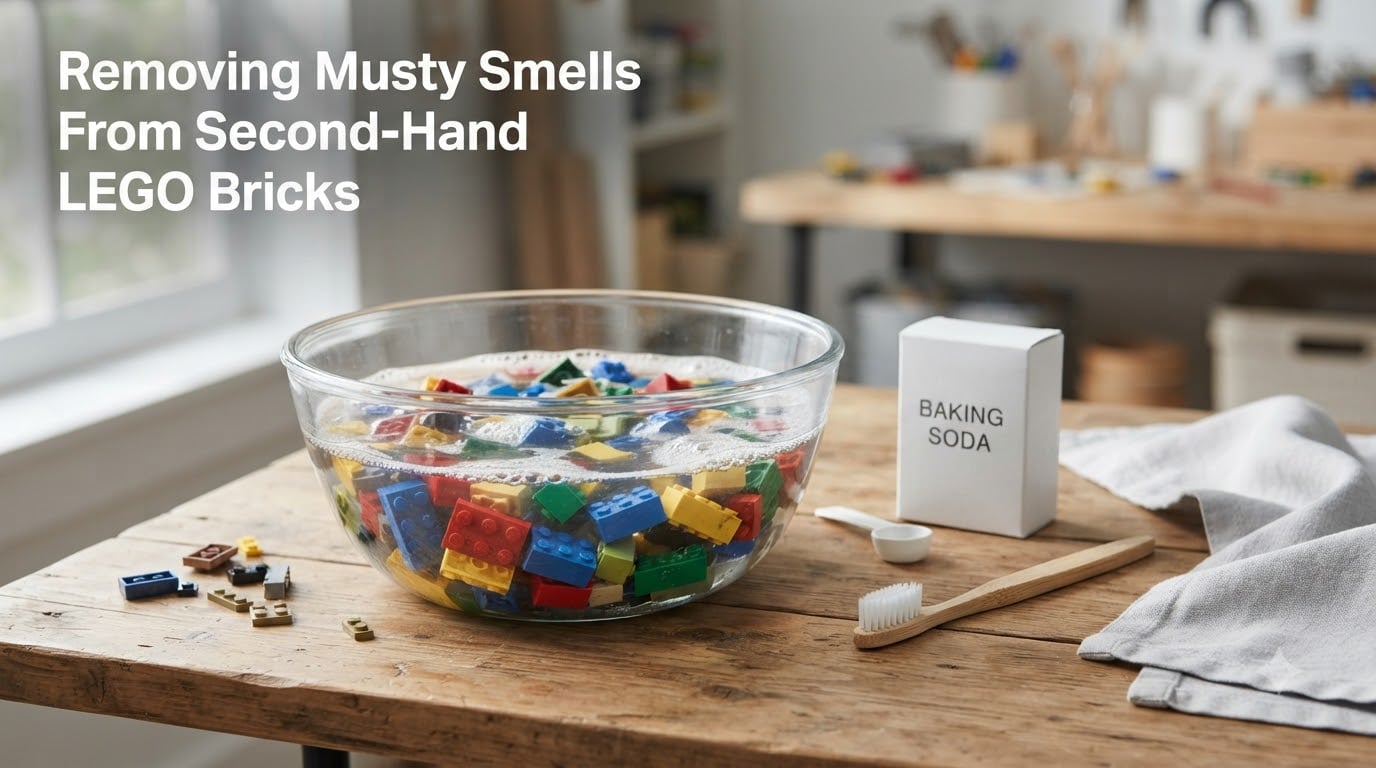
There is nothing quite like the thrill of opening a bulk bin of second-hand LEGO bricks from a yard sale, eBay lot, or thrift store. The possibilities feel endless. Then you take a deep breath and catch that unmistakable musty smell radiating from the pile. Removing musty smells from second-hand LEGO bricks is something every collector and parent deals with eventually, and the good news is that nearly every odor can be eliminated with simple household supplies.
LEGO bricks are made from ABS plastic, a durable material that unfortunately absorbs odors from its surroundings. Whether your bricks spent years in a damp basement, a stuffy attic, or a smoker’s home, the smell molecules work their way into the plastic over time. That means surface-level cleaning alone will not cut it for stubborn odors.
Our team has cleaned thousands of second-hand bricks over the years using methods tested and refined by the LEGO community on Reddit, Eurobricks, and Bricks StackExchange. This guide walks through every major cleaning method, odor type, and safety warning you need to know to make your bricks smell fresh again.
Table of Contents
Why Second-Hand LEGO Bricks Smell
The reason second-hand LEGO bricks hold onto odors comes down to the nature of ABS (acrylonitrile butadiene styrene) plastic. While ABS is incredibly durable and impact-resistant, it is also slightly porous at a microscopic level. Over months or years of exposure, odor molecules from the surrounding environment seep into the plastic and cling there.
Musty smells specifically come from microbial volatile organic compounds, or MVOCs. These are gases produced by mold and bacteria growing in damp environments. When LEGO bricks sit in a humid basement, a sealed plastic tub with trapped moisture, or a cottage stored for winter, mold spores settle on the surface and begin producing that characteristic earthy, damp smell.
The most common odor sources we encounter include damp storage areas, cigarette and tobacco smoke, pet urine from animals that had access to stored bricks, food residue from snacks eaten near collections, and general dust accumulation that traps moisture. Each type requires a slightly different approach, which we cover in detail below.
It is also worth addressing health considerations. Musty-smelling bricks likely had mold exposure, which can trigger allergies or respiratory irritation in sensitive individuals. Smoke-saturated bricks carry thirdhand smoke residue. Cleaning second-hand LEGO thoroughly before giving it to children is not just about smell but about safety.
The Official LEGO Cleaning Guidelines
Before diving into specific odor removal methods, let us start with what the LEGO Group itself recommends. LEGO’s official cleaning guidance provides the baseline that all community-tested methods build upon.
LEGO recommends cleaning bricks by hand using water no hotter than 104°F (40°C) and a soft cloth or sponge. They explicitly advise against using washing machines, dishwashers, ovens, microwaves, or hair dryers to clean or dry bricks. The 104°F temperature limit is the single most important rule to remember because higher temperatures can warp the ABS plastic and permanently alter the clutch power between bricks.
For electronic components including motors, battery boxes, and light bricks, LEGO recommends wiping them with a slightly damp cloth only. Never submerge electronic elements in water under any circumstances.
LEGO also recommends against using cleaning agents stronger than mild detergent. This rules out bleach, rubbing alcohol, acetone, and nail polish remover, all of which can damage the plastic surface, degrade printed details, or dissolve stickers. Every method in this guide stays within these safe boundaries while still effectively neutralizing stubborn odors.
Method 1: Warm Water and Mild Detergent (The Standard Wash)
The warm water and mild detergent method is the starting point for cleaning any second-hand LEGO haul. For light musty smells, this alone may be all you need. A mild dish soap like Dawn works perfectly because it cuts through grease and residue without containing harsh chemicals that could damage ABS plastic.
Here is the step-by-step process our team uses:
Step 1: Sort your bricks and remove any electronic components, battery packs, or motors. Set stickered pieces aside for separate gentle cleaning.
Step 2: Fill a clean basin, sink, or plastic tub with warm water at or below 104°F (40°C). Test the water with a thermometer if you are unsure. If the water feels hot rather than pleasantly warm, it is too hot.
Step 3: Add a few drops of mild dish soap per gallon of water. Mix gently to create a light sudsy solution. Avoid using too much soap because excessive suds leave residue on the bricks.
Step 4: Submerge the bricks in batches of 20 to 30 pieces. Let them soak for 10 to 15 minutes so the warm water can soften grime and the detergent can break down odor-causing oils.
Step 5: Gently scrub each brick with a soft-bristled toothbrush or a soft cloth. Pay special attention to the inside of each brick and the stud channels where dirt and mold spores accumulate.
Step 6: Rinse each brick thoroughly under clean, cool running water. Make sure no soap residue remains because dried soap film can leave a cloudy appearance and a slight chemical smell.
Step 7: Place rinsed bricks on a clean towel in a single layer to air dry. Do not use heat to speed up drying.
For most light to moderate musty smells, this standard wash removes 60 to 70 percent of the odor. For deeper or more stubborn smells, move on to the vinegar or baking soda methods below.
Method 2: White Vinegar Solution for Musty Odors
White vinegar is one of the most effective natural deodorizers available, and it works exceptionally well on the musty, earthy smell caused by mold and damp storage. The acetic acid in vinegar neutralizes the MVOCs that cause musty odors while also killing surface mold spores and bacteria.
The community-standard vinegar solution ratio is one part white vinegar to three parts water. Here is how to use it:
Step 1: Mix one cup of white vinegar with three cups of water in a clean basin. The water should be lukewarm, well below the 104°F limit.
Step 2: Submerge the musty bricks in the vinegar solution and let them soak for 20 to 30 minutes. For particularly strong musty smells, a longer soak of up to one hour is safe.
Step 3: Remove the bricks and gently scrub them with a soft toothbrush to remove any loosened residue.
Step 4: Rinse thoroughly with clean water to remove the vinegar smell. The vinegar scent will dissipate completely as the bricks dry.
Step 5: Air dry on a clean towel for 24 to 48 hours.
Vinegar works best for musty and moldy odors from damp storage environments. The LEGO community on Reddit consistently reports that a vinegar soak followed by air drying eliminates 80 to 90 percent of musty storage smells. One important note: do not mix vinegar with bleach or bleach-based products, as this creates toxic chlorine gas.
Method 3: Baking Soda Treatment for Stubborn Smells
When vinegar alone does not fully eliminate an odor, baking soda is the next line of defense. Baking soda, or sodium bicarbonate, works through a process called adsorption where odor molecules chemically bond to the baking soda particles, effectively pulling them out of the plastic.
There are two approaches to using baking soda on LEGO bricks. The first is a baking soda paste, which is ideal for spot-treating individual heavily soiled pieces. Mix two tablespoons of baking soda with a small amount of water to form a thick paste. Apply the paste to each smelly brick, working it into the stud channels with a soft toothbrush. Let the paste sit for 15 to 20 minutes, then rinse thoroughly with clean water.
The second approach is a baking soda soak, which works better for bulk cleaning. Dissolve half a cup of baking soda in a gallon of warm water (under 104°F). Submerge the bricks and let them soak overnight, or for 8 to 12 hours. The extended soak gives the baking soda time to pull deep-set odors out of the ABS plastic. After soaking, rinse each brick thoroughly and air dry.
Baking soda is particularly effective for smoke odor and pet urine smell. For extremely stubborn odors, combine methods: start with a vinegar soak, follow with a baking soda soak, and finish with a mild detergent wash.
Removing Smoke Smell From LEGO Bricks
Cigarette smoke is one of the toughest odors to remove from LEGO bricks because tar and nicotine residue physically coat the plastic surface and seep deep into the material over time. A Bricks StackExchange user who dealt with smoke-saturated bricks found that a single standard wash was not enough and required a more aggressive multi-step approach.
The most effective community-tested method for smoke odor combines laundry detergent with extended soaking. Laundry detergent is stronger than dish soap and contains enzymes that break down the tar and nicotine compounds.
Here is the process: Fill a basin with warm water under 104°F and add a small amount of unscented liquid laundry detergent. Submerge the bricks and soak for one to two hours. Scrub each piece with a soft toothbrush. Rinse thoroughly, then transfer the bricks to a baking soda soak for another 8 hours. Rinse again and air dry for 48 hours.
After this multi-step treatment, place the dried bricks in a sealed container with an open box of baking soda or a pouch of activated charcoal for 3 to 5 days. The baking soda or charcoal will absorb any remaining smoke molecules that worked their way out during the drying process. This final airing step makes a noticeable difference for heavily saturated bricks.
Handling Moldy LEGO Bricks
If you can see visible mold growth on your LEGO bricks, the situation requires extra care. Mold spores can cause allergic reactions and respiratory issues, so handle moldy bricks with gloves and work in a well-ventilated area.
Start by taking the bricks outside and brushing off any loose mold with a dry soft-bristled brush. This prevents spreading spores around your home. Once the loose mold is removed, soak the bricks in the vinegar solution described earlier. The acetic acid in vinegar kills most common household mold species on contact. Use a soft toothbrush to scrub any remaining visible mold from stud channels and brick interiors.
For severe mold contamination, follow the vinegar soak with a mild detergent wash to remove any remaining residue. Rinse extremely thoroughly and air dry for a full 48 hours. Mold cannot survive on completely dry surfaces, so thorough drying is your final defense.
In rare cases where bricks have been soaking in standing water for extended periods and have deep mold penetration into cracks, the safest option is to discard those individual pieces. No LEGO brick is worth potential health risks from deeply embedded mold.
Cleaning Special LEGO Elements
Not all LEGO pieces can handle the same cleaning process. Several types of elements require special care to avoid permanent damage.
Stickered and Printed Pieces
Stickered elements and printed pieces should never be submerged in water or soaked. The adhesive on stickers degrades when wet, and printed details can fade or rub off with prolonged exposure to water and detergent. Clean these pieces by wiping them gently with a slightly damp cloth and a tiny amount of mild soap. Avoid scrubbing the printed or stickered surfaces directly. For stickered pieces with odor, place them in a sealed bag with baking soda for several days to absorb the smell without liquid contact.
Electronic Components
Motors, battery boxes, light bricks, and any element with a metal contact must never be submerged in water. Wipe these pieces with a barely damp cloth and dry immediately. For odorous electronic pieces, seal them in a container with baking soda or activated charcoal for several days to absorb smells without any liquid exposure.
Chrome and Metallic Pieces
Chrome-plated and metallic-finish bricks are particularly vulnerable to damage. The thin metallic coating can rub off with scrubbing or react with acidic solutions like vinegar. Clean these pieces only with a soft dry cloth. For odor removal, use the baking soda in a sealed container method rather than any liquid treatment.
Minifigures
Minifigures combine multiple sensitive elements: printed torsos, painted faces, and sometimes electronic components in the case of light-up figures. Clean minifigures individually with a damp cloth, avoiding the printed areas. Disassemble figures for cleaning so water does not get trapped inside the torso or legs, which can lead to new mold growth.
Proper Drying Techniques
Drying is arguably the most important step in the entire cleaning process, and it is also where most people make mistakes. Incompletely dried bricks will develop new musty smells within days, undoing all your cleaning effort.
After rinsing, place your bricks on a clean microfiber towel or paper towels in a single layer. Do not stack them on top of each other because stacked bricks trap moisture inside. Leave them in a well-ventilated room with good air circulation. A ceiling fan or small room fan on low speed helps significantly.
One excellent community tip from the LEGO subreddit: use a clean salad spinner to remove excess water from small pieces before air drying. A few spins removes most of the water from inside the bricks, cutting drying time substantially. Just make sure the salad spinner is clean and has not been used for food with strong odors.
Expect drying to take 24 to 48 hours depending on humidity and air flow. Shake the bricks gently every few hours to redistribute them and help trapped water escape from inside the bricks. Do not rush drying with heat. LEGO explicitly warns against using hair dryers, ovens, microwaves, or direct sunlight to dry bricks. Heat above 104°F can warp bricks permanently, and direct sunlight causes discoloration and fading over time.
What NOT to Do When Cleaning LEGO Bricks
Knowing what to avoid is just as important as knowing the right methods. These are the hard rules for cleaning LEGO bricks:
Do not use a dishwasher or washing machine. The heat and agitation will warp bricks, scratch surfaces, and permanently damage clutch power. Even on cold settings, the mechanical action can cause serious damage.
Do not use water hotter than 104°F (40°C). Higher temperatures soften and warp ABS plastic. Warped bricks will not connect properly with other pieces.
Do not use bleach or bleach-based cleaners. Bleach degrades ABS plastic over time, causes brittleness, and can discolor bricks. It is also unnecessary for odor removal when vinegar and baking soda work effectively.
Do not use rubbing alcohol, acetone, or nail polish remover. These solvents dissolve the surface of ABS plastic, leaving a cloudy, sticky, or permanently damaged finish. They also destroy printed details and stickers instantly.
Do not dry bricks with heat or in direct sunlight. Heat dryers warp bricks and sunlight causes color fading, especially in white, yellow, and light gray pieces.
Do not use abrasive scrubbers or steel wool. These scratch the smooth plastic surface and create micro-abrasions that trap future dirt and odors more easily.
Do not spray Lysol or disinfectant sprays directly on bricks. The propellants and chemicals in aerosol disinfectants can leave residue and may degrade certain plastic colors over time. If disinfection is needed beyond what vinegar provides, wipe bricks with a cloth lightly dampened with a mild soap solution instead.
Quick Reference: Odor Type vs Best Cleaning Method
Different odors respond best to different treatments. Here is a quick reference based on community testing and our own experience cleaning thousands of bricks:
Light musty smell (dusty storage): Warm water and mild detergent wash. One standard cleaning cycle is usually sufficient.
Strong musty or moldy smell (damp basement, cottage): Vinegar soak for 30 minutes, followed by mild detergent wash and thorough drying.
Cigarette smoke smell: Laundry detergent soak for 1 to 2 hours, followed by baking soda soak for 8 hours, then mild detergent wash. Finish with 3 to 5 days in a sealed container with baking soda or activated charcoal.
Pet urine smell: Vinegar soak to neutralize the ammonia compounds, followed by baking soda paste treatment on heavily affected pieces, then mild detergent wash.
General stale or plastic smell: Baking soda soak overnight, then air dry for 48 hours.
Food or beverage residue smell: Warm water and mild detergent with thorough scrubbing, followed by brief vinegar rinse.
Preventing Musty Smells in the Future
Once your bricks are clean and fresh, proper storage prevents odors from returning. The key factors are moisture control, air circulation, and appropriate containers.
Store LEGO bricks in airtight plastic containers with desiccant packets to absorb any trapped moisture. Avoid cardboard boxes, which absorb humidity and can themselves develop mold. If you live in a humid climate, consider running a dehumidifier in the room where your LEGO collection is stored.
Air out your collection periodically. Every few months, open storage containers and let the bricks breathe for a day in a dry room. This prevents stale air from building up inside sealed containers. If you buy second-hand LEGO frequently, clean new acquisitions before adding them to your existing collection to avoid cross-contaminating clean bricks with musty odors.
For long-term storage of vintage or collectible sets, acid-free archival containers provide an extra layer of protection. Keep stored bricks away from direct heat sources, exterior walls that may have condensation, and areas prone to humidity like basements and attics.
Frequently Asked Questions
How to get smells out of legos?
Soak the bricks in warm water (under 104F) with mild dish soap for 15 minutes, scrub gently with a soft toothbrush, rinse thoroughly, and air dry for 24 to 48 hours. For stubborn odors, follow with a white vinegar soak (1 part vinegar to 3 parts water) or a baking soda soak (half cup baking soda per gallon of water) overnight.
What neutralizes musty odor?
White vinegar is the most effective household product for neutralizing musty odors on LEGO bricks. The acetic acid in vinegar kills the mold spores and breaks down the microbial compounds that cause the musty smell. Baking soda is also highly effective because it absorbs and neutralizes odor molecules through adsorption.
How to clean secondhand legos?
Sort the bricks and remove electronics and stickered pieces. Soak in warm water under 104F with a few drops of mild dish soap per gallon. Scrub each brick with a soft toothbrush. Rinse under clean running water. Air dry on a towel in a single layer for 24 to 48 hours. For odors, add a vinegar or baking soda soak before the detergent wash.
Is Dawn dish soap safe for legos?
Yes, Dawn dish soap is safe for cleaning LEGO bricks. It is a mild detergent that cuts through grease and residue without damaging ABS plastic. Use just a few drops per gallon of warm water under 104F. Avoid dish soaps with added moisturizers or strong fragrances, as these can leave residue on the bricks.
Can I spray Lysol on Legos?
It is not recommended to spray Lysol or other aerosol disinfectants directly on LEGO bricks. The chemicals and propellants can leave residue and may degrade certain plastic colors over time. For disinfection, use a white vinegar soak instead, which naturally kills bacteria and mold without harsh chemicals.
How to clean smelly bricks?
For smelly LEGO bricks, start with a warm water and mild detergent wash. If the smell persists, soak the bricks in a 1:3 white vinegar and water solution for 30 minutes. For the toughest odors like smoke, use a laundry detergent soak followed by an overnight baking soda soak, then finish with 3 to 5 days in a sealed container with activated charcoal or baking soda.
What is the LEGO 5 2 rule?
The LEGO 5 2 rule refers to the clutch power design specification where each stud connection should provide enough friction to hold firmly but still separate with reasonable force. This relates to cleaning because harsh chemicals and hot water above 104F can warp the bricks and permanently reduce clutch power, making the 5 2 ratio fail and bricks fit poorly together.
Should you clean second hand LEGO?
Yes, you should always clean second-hand LEGO bricks before using them. Used bricks may carry dust, mold spores, bacteria, smoke residue, or chemical contaminants from previous storage environments. Cleaning with mild detergent and warm water removes these health hazards and eliminates odors, making the bricks safe and pleasant to handle, especially for children.
Enjoy Your Fresh LEGO Collection
Removing musty smells from second-hand LEGO bricks takes patience, but the results are absolutely worth it. With nothing more than mild detergent, white vinegar, baking soda, and some time, you can transform a smelly yard sale haul into a collection that looks and smells like new.
Remember the three golden rules: keep water under 104°F, never use bleach or solvents, and give bricks plenty of time to air dry. Follow these steps and your freshly cleaned bricks will be ready for their next build adventure.