
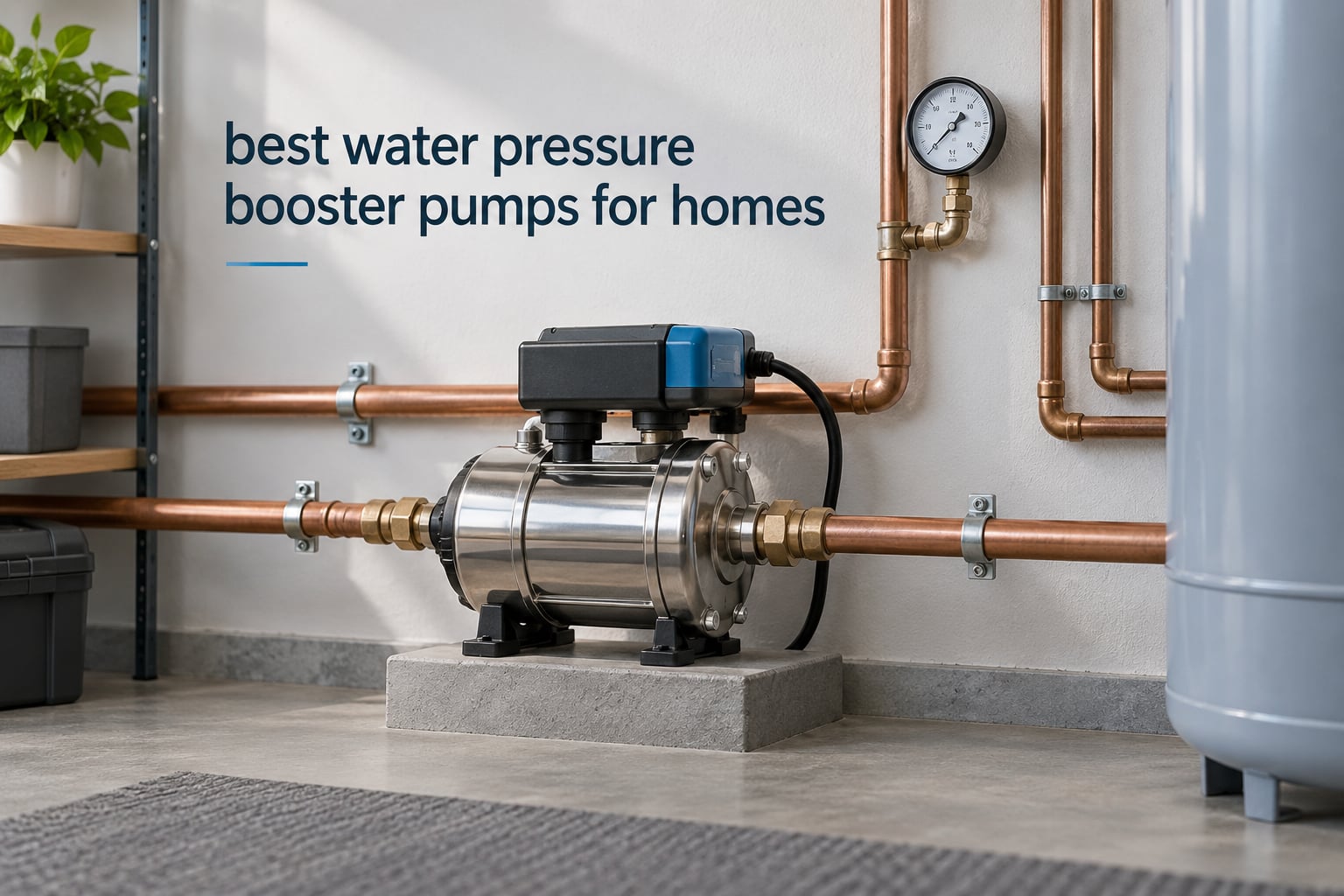
Low shower pressure gets blamed on the city, the well pump, or old pipes, when most of the time the fix is one inline pump bolted to the main. A water pressure booster pump does exactly what the name says: it draws water from your incoming line, senses the pressure on the far side, and pushes harder until the fixtures get what they were designed for. It is not a pressure gauge, which only measures, and it is not a pressure-reducing valve, which only lowers incoming pressure.
Do home water pressure boosters work? Yes. On a home that tests low at the main, a booster typically adds somewhere between 20 and 50 PSI and holds it steady while fixtures open and close. A variable-speed constant-pressure unit ramps its motor up and down to match demand, so one faucet running and six fixtures running feel nearly the same. A fixed flat-boost pump just adds a preset amount on top of whatever is already arriving, which is cheaper and far less predictable.
This roundup covers the best water pressure booster pumps for homes in 2026 across all four pump mechanisms you will actually find: variable-speed constant pressure, fixed flat boost, multistage centrifugal with an external tank, and off-grid demand pumps. Every pick below is matched to a water source and a measured pressure range, because a booster sized to the wrong problem is the single most common reason these systems disappoint.
One note before the list. If only one shower is weak and the rest of the house is fine, the problem is local, not at the main, and no pump on this page will fix it. We cover those cases later in our guide to high-pressure shower heads for low water pressure, which is a far cheaper test than a booster pump.
Table of Contents
Top 3 Best Water Pressure Booster Pumps for Homes in 2026
If you want the short answer, the Aquastrong Smart 45 is the strongest all-rounder we tested, the Davey BT20-30T2-USA is the pick for a professional-grade installation, and the Simer 4075SS-01 is the one most homeowners can actually install on a weekend. Here they are side by side.

Aquastrong Smart 45
- Variable speed constant pressure
- 22-80 PSI adjustable
- 55 dB(A) quiet
- Integrated tank

Davey BT20-30T2-USA
- Torrium II controller
- 50 PSI boost
- Stainless steel wet end
- Dry-run protected
All 8 Booster Pumps at a Glance in 2026
Every pump in this roundup, with the specs that actually decide the purchase. Flow, pressure ceiling, noise and tank requirements come straight from the manufacturer data for each model.
| Product | Specs | Action |
|---|---|---|
| Aquastrong Smart 45 Variable Speed Booster |
|
Check Latest Price |
| Simer 4075SS-01 Pressure Booster Pump |
|
Check Latest Price |
| Davey BT20-30T2-USA with Torrium II |
|
Check Latest Price |
 BACOENG Auto ON/OFF Stainless Steel Booster BACOENG Auto ON/OFF Stainless Steel Booster |
|
Check Latest Price |
 DAB E.Sybox Mini 3 Pressurisation System DAB E.Sybox Mini 3 Pressurisation System |
|
Check Latest Price |
 Flotec Cast Iron Multistage Booster 3/4 HP Flotec Cast Iron Multistage Booster 3/4 HP |
|
Check Latest Price |
 CHB Multistage Centrifugal CHB2-3 CHB Multistage Centrifugal CHB2-3 |
|
Check Latest Price |
 GWANZI 1HP 90PSI Variable Speed Booster GWANZI 1HP 90PSI Variable Speed Booster |
|
Check Latest Price |
1. Aquastrong Smart 45 – Best Overall Variable-Speed Booster
Aquastrong Whole House Water Pressure Booster Pump 80 PSI, 115V Automatic Variable Speed, Constant Pressure, Integrated Design, Self-Priming, for Home, Apartment, Shower, Garden, Shallow Well,Smart 45
22-80 PSI adjustable
1500 GPH max flow
55 dB(A)
Self-priming to 26 ft
115V
Pros
- Variable speed constant pressure control
- Permanent magnet motor with 50%+ energy savings
- 55 dB(A) quiet operation
- Dry-run overheat block and leak protection
- Integrated maintenance-free pressure tank
Cons
- Costs more than the fixed units in this roundup
- Newer model with fewer long-term reviews
- Warranty length not stated
The Aquastrong Smart 45 is the pump we recommend to most households. Its permanent magnet motor runs at up to 5200 RPM and the controller adjusts output continuously, so the pressure at your shower head stays put whether you are rinsing one dish or running a shower and a laundry machine together. The target is set anywhere from 22 to 80 PSI and comes preset to 44 PSI, which is the right starting point for most homes.
What sets it apart from the fixed-boost units is the behaviour under changing incoming pressure. Municipal supply rises overnight and collapses at dinner time, and a flat-boost pump pushes that variation straight into your house. The Smart 45 reads the outlet sensor and compensates, which is exactly the behaviour plumbers on r/Plumbing describe wanting for city water.
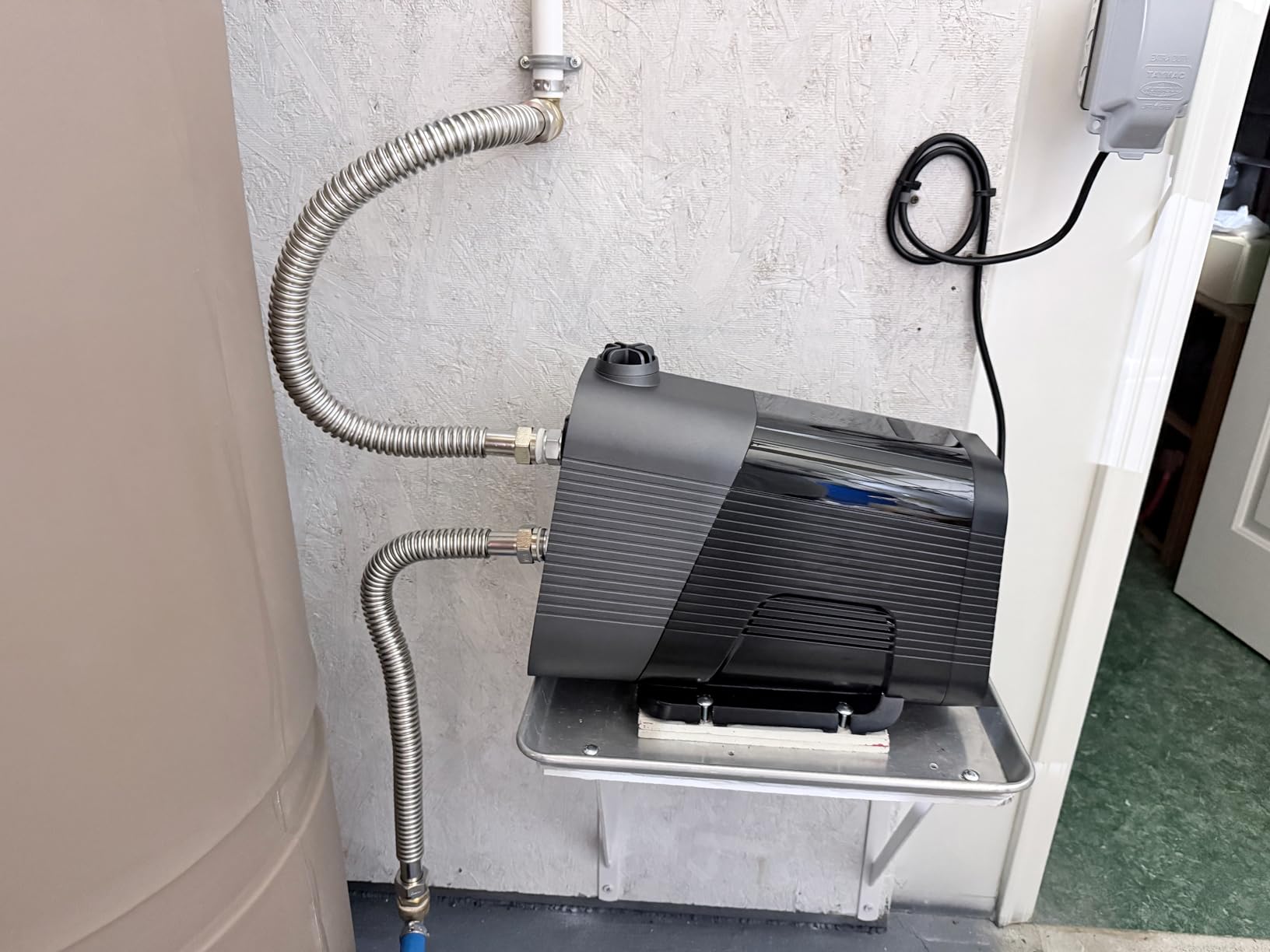
The protection package is unusually complete for this category. Dry-run, overheat, blockage, leak and pressure-sensor-failure protection all sit in the controller, and the self-priming capability reaches 26 ft, so the same unit works on a shallow well, a roof tank or a city main without a rebuild. There is a check valve on the outlet and a maintenance-free pressure tank built into the body, which removes the single most common DIY install mistake.
At 55 dB(A) it is quiet enough to sit inside a conditioned mechanical room, It is the loudest of the variable-speed units here, and reviews repeatedly single out the wireless app as a genuine convenience for changing the setpoint without walking to the pump. The unit is 17.2 inches long, 7.95 wide and 13.07 tall, so it fits in most utility spaces where a 43-pound cast iron pump will not.
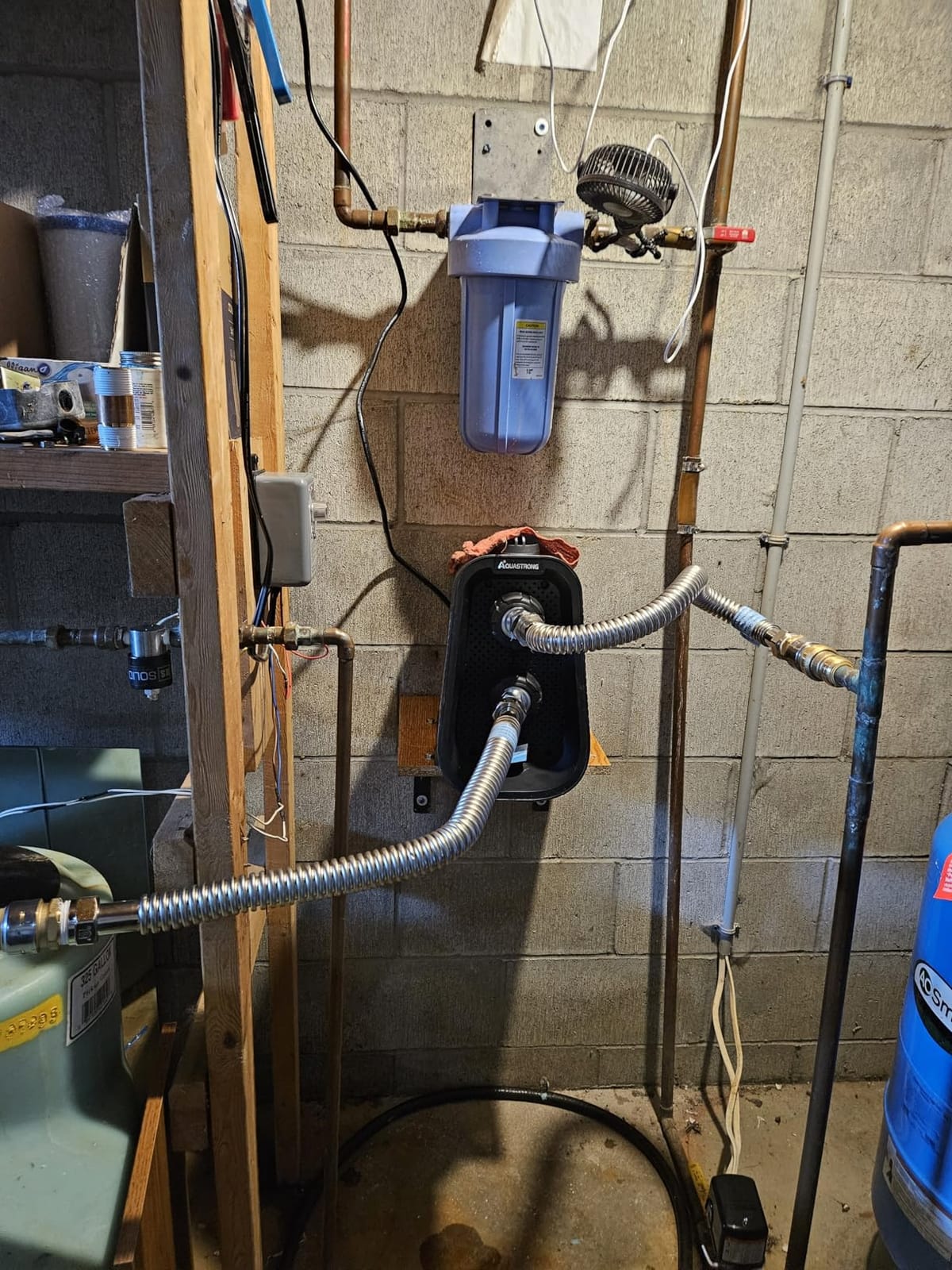
Who the Aquastrong Smart 45 suits
It fits a home on municipal water that measures low or swings wildly, especially with two or more bathrooms, a dishwasher and a washing machine on the same run. It is also a clean fit for a shallow well or roof tank setup where you need a target pressure rather than raw boost.
If your problem is a single weak shower and everything else is fine, this is far more pump than you need. It also costs more than a fixed unit, so a house already sitting at a solid 55 PSI has nothing to gain here.
Who should skip the Aquastrong Smart 45
Skip it if you need raw boost with no electronics wanted, or if your available space cannot take a 17-inch inline body with unions on both ends. Owners who need a warranty length they can read on the paperwork should look elsewhere, since the manufacturer warranty is not stated for this model.
It is also not the right tool for a 12V off-grid or boat system, where there is no mains supply to run an inverter-driven motor from.
2. Simer 4075SS-01 – Best Plug-and-Play Stainless Steel Booster
Simer 4075SS-01 3/4 HP Pressure Booster Pump
0.75 HP motor
24 GPM flow
Up to 40 PSI boost
115V with 6 ft cord
3 year warranty
Pros
- Auto-activates when water runs
- Stainless steel resists rust and corrosion
- Ready for installation out of the box
- Up to 40 PSI of additional pressure
- 3-year manufacturer warranty
Cons
- Costs more than the smaller fixed units
- Needs an electrical outlet near the install point
The Simer 4075SS-01 is the one we hand to a homeowner who wants a straight bolt-in unit with no configuration decisions. It arrives set up, self-activates whenever water flows through it, and adds up to 40 PSI on top of incoming supply. The pressure switch does the on and off work, which is simpler and cheaper than an inverter but also less refined.
At 0.75 HP with a 24 GPM rated flow, it has real headroom for a two or three bedroom house with a garden hose and an irrigation zone. The stainless steel casing and wet end are the reason it is a repeat seller, and the 3-year manufacturer warranty is the longest stated coverage in this roundup.
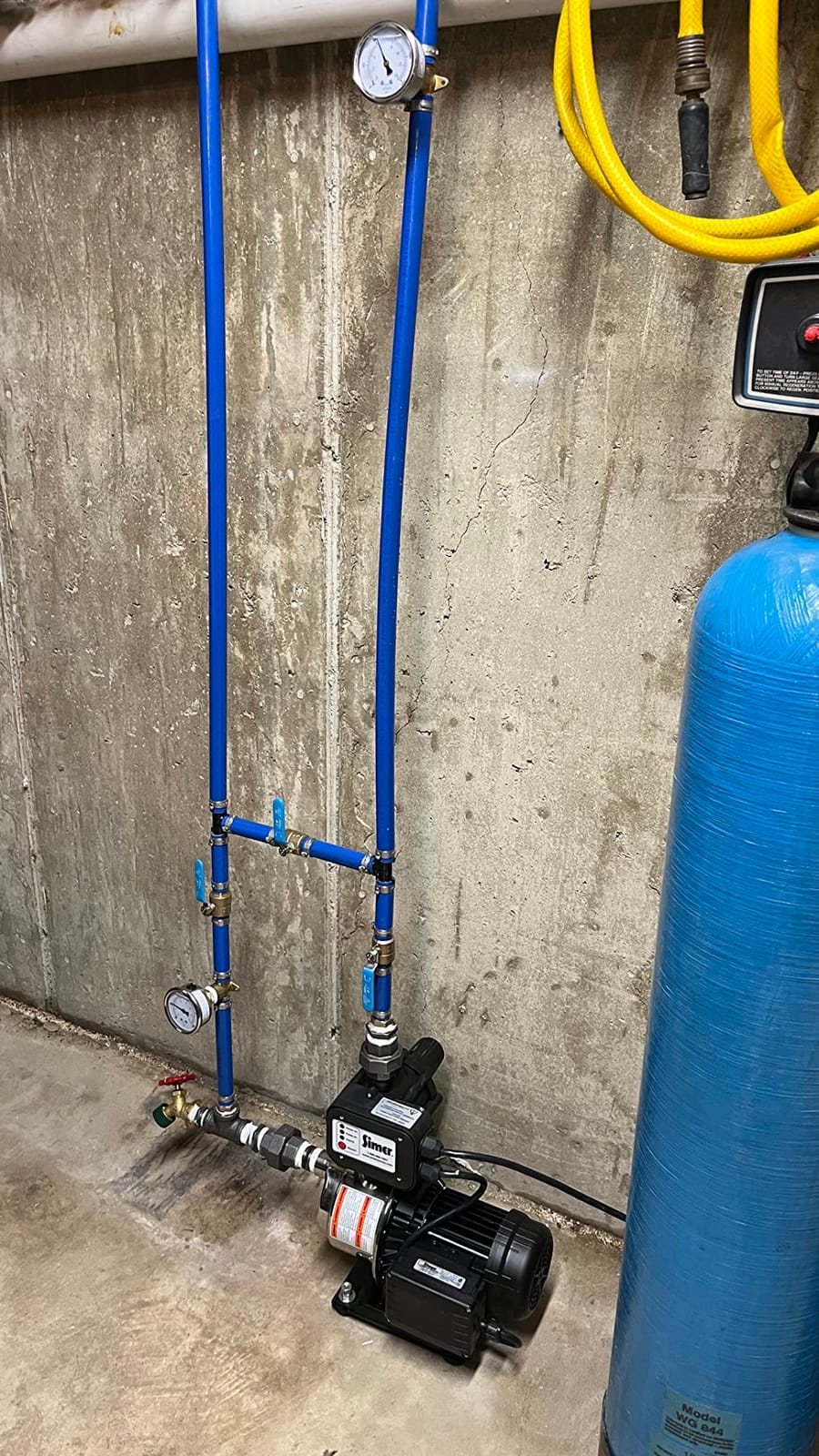
Two details matter for planning the install. The 6-foot 115-volt cord is short, so the receptacle has to be within reach of the pump rather than on the far wall, and the unit weighs 22.2 pounds, which is manageable solo but awkward above a finished floor. Dimensions are 18.1 by 10 by 17.3 inches, so plan unions on both sides rather than trying to thread it into a tight coupling.
Reviewers rate the automatic operation and the stainless build most highly, with 69% of reviews at five stars. The recurring complaint is not performance but what it costs, which several buyers weighed against smaller units before deciding the build was worth it. That is a reasonable read for a pump that will sit next to a water heater for a decade.
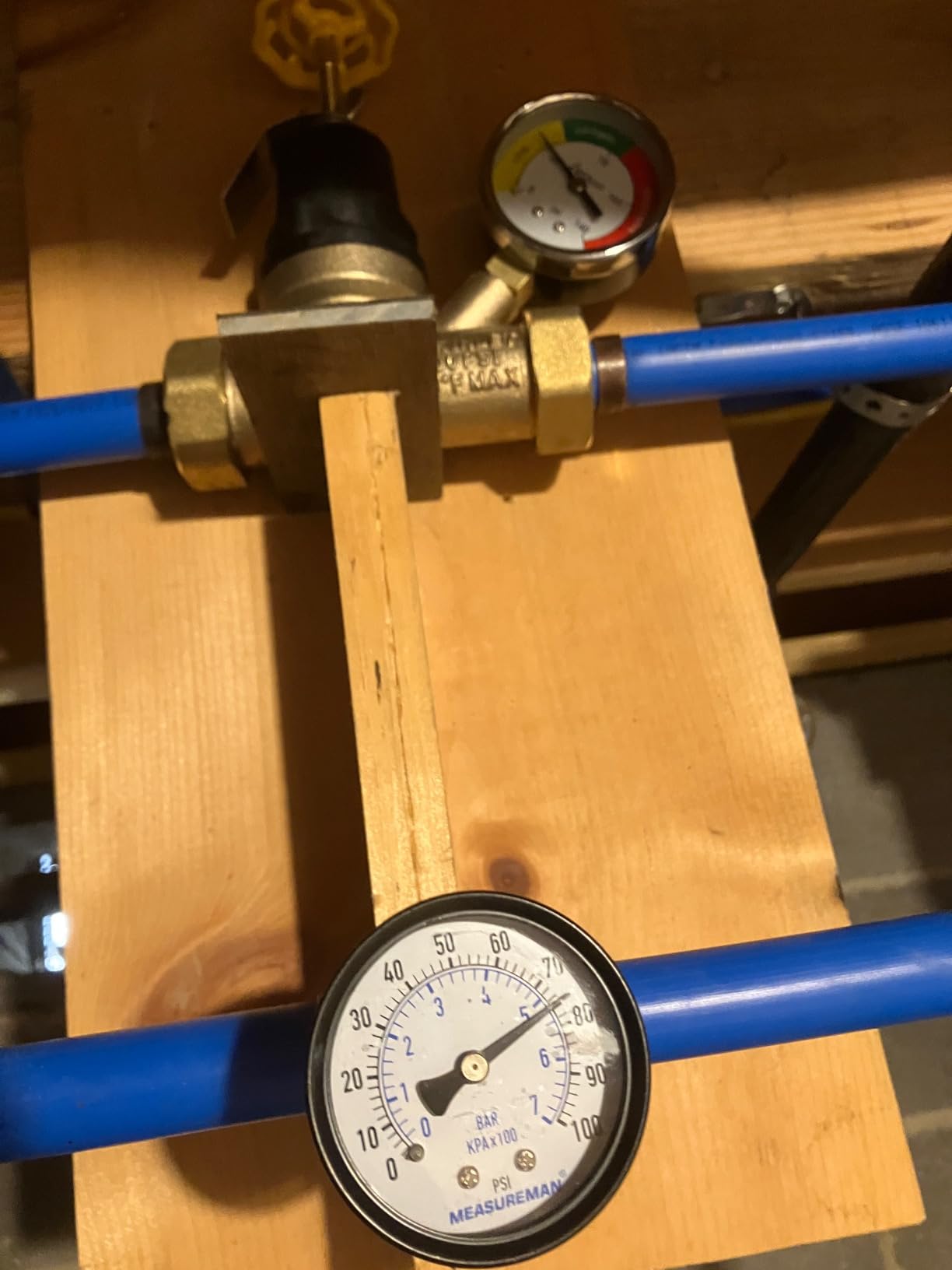
Who the Simer 4075SS-01 suits
It suits a home on city water that is a bit low but not collapsing, and an owner who wants a set-and-forget unit with a readable warranty. It is also a solid choice for a small business or a rental where nobody wants to fiddle with an app.
It works well where the incoming pressure is steady. The moment the street pressure swings hard at peak hours, a fixed boost delivers that swing straight through to the taps.
Who should skip the Simer 4075SS-01
Skip it if you need constant pressure under heavy simultaneous demand, or if your supply already delivers strong pressure that sometimes spikes overnight. A fixed boost unit on a high-pressure street is exactly how you end up with a water heater relief valve weeping.
It is also the wrong shape of product for a well system where the pump’s real job is moving water to a pressure tank rather than boosting a live main.
3. Davey BT20-30T2-USA – Best Pro-Grade Boost with the Torrium II Controller
Davey Water Products BT20-30T2-USA Home Pressure Booster Pump with Torrium II Controller
50 PSI boost (30 PSI at 20 GPM)
20 GPM
120V
31.7 lb
2 year warranty
Pros
- Torrium II intelligent controller
- Stainless steel impellers and casing
- Power surge protected TEFC motor
- Dry-run protection
- Flexible stainless discharge hose included
Cons
- Costs more than most units here
- Heaviest portable unit at 31.7 lb
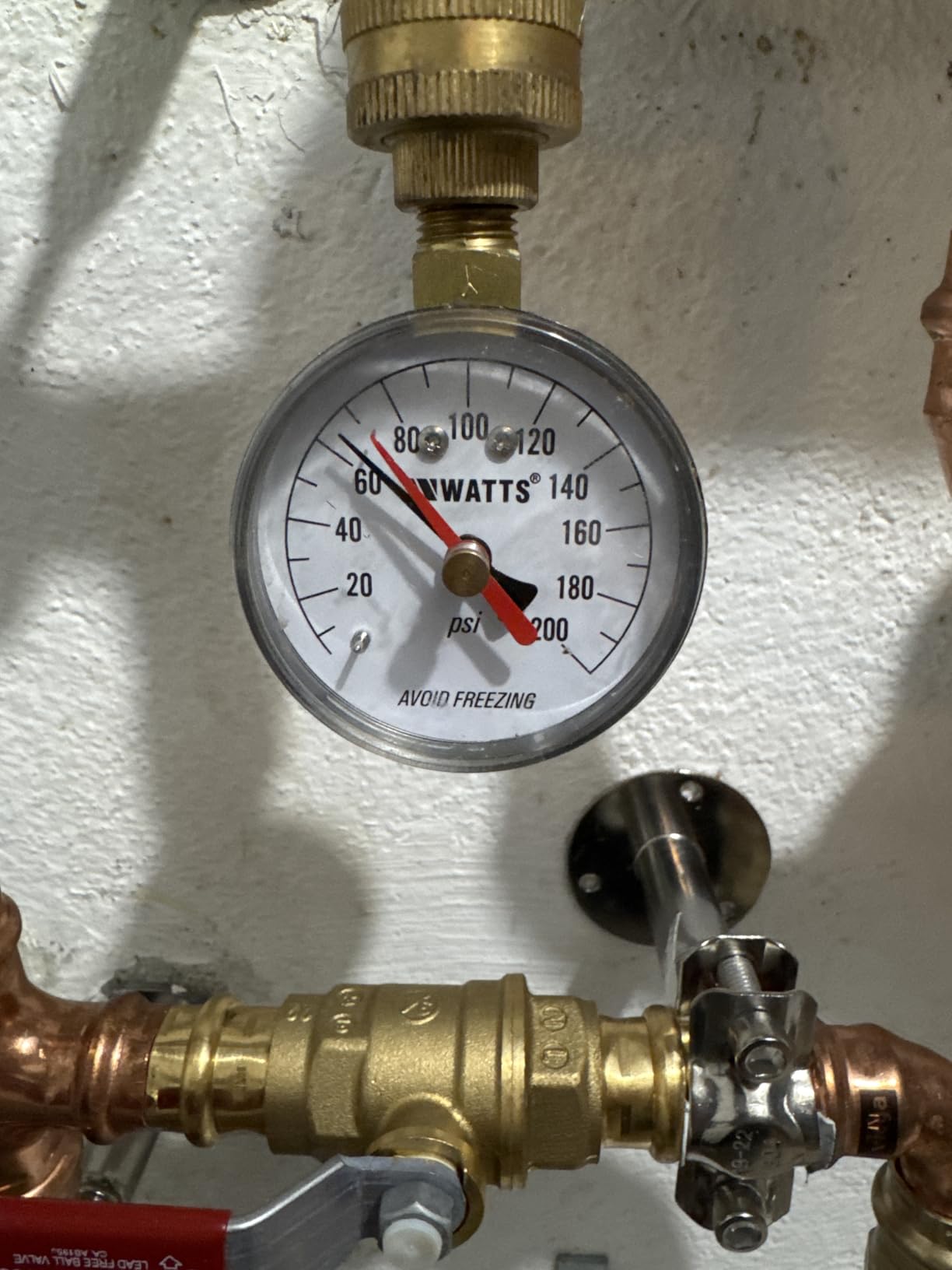
The Davey BT20-30T2-USA is the pick when a plumber is already on the invoice. It delivers a 50 PSI boost, and 30 PSI while still moving 20 GPM, which is the honest number that matters once two showers and a laundry machine are open at the same time. Most boosters advertise boost at zero flow; this one is quoted at load.
The Torrium II controller is the reason pros reach for it. It manages cut-in and cut-out pressure, protects against dry running, and handles the pressure switch logic so the pump does not chatter on and off. The motor is TEFC with power surge protection, and the impellers and casing are stainless steel throughout the wetted path.
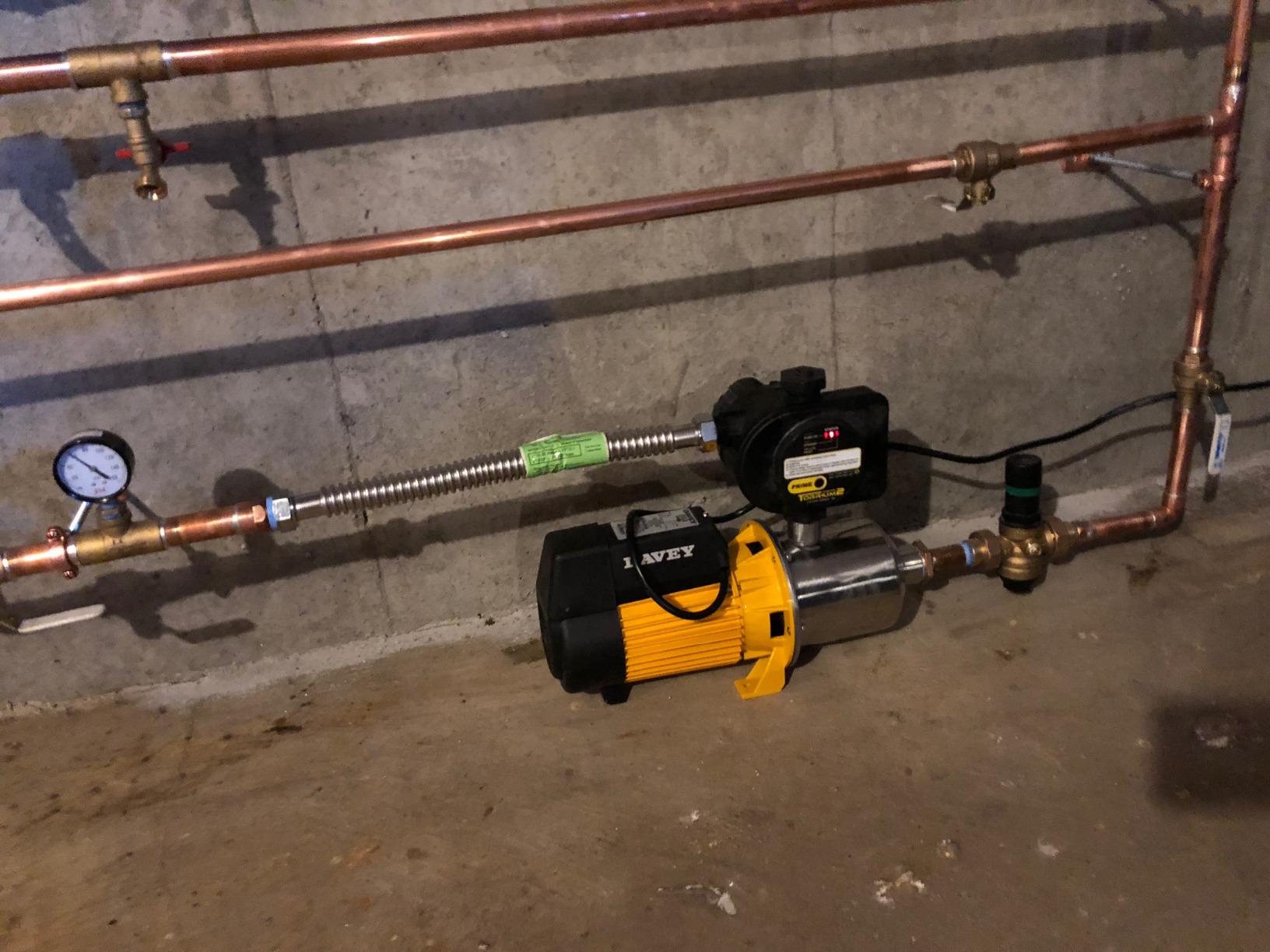
Everything about the physical design assumes a proper mechanical room. It weighs 31.7 pounds, measures 20 by 8 by 16 inches, and comes with a flexible stainless steel FIP discharge hose, which is the piece most installers end up sourcing separately. Plan a dedicated circuit and a real mounting surface rather than a shelf.
At 4.4 stars across 104 reviews with 77% at five stars, the satisfaction rate is the highest in this roundup. Buyers consistently treat what it costs as the trade-off for build quality rather than complaining about it, and the 2-year warranty is the one place it trails the stainless fixed units on paper.
Who the Davey BT20-30T2-USA suits
It suits large homes, three and four bathroom houses, and small commercial spaces where simultaneous demand is normal rather than occasional. It is also the right choice for anyone who would rather solve pressure once, properly, than re-buy a cheaper unit in a few years.
Choose it when a qualified installer is handling the work and the mechanical room has space for a 32-pound pump on a permanent mount.
Who should skip the Davey BT20-30T2-USA
Skip it for a modest pressure problem in a small house. A controller-grade pump in a home that needs 15 PSI is money spent on capability you will never use, and the same result can be had from a smaller variable-speed unit.
It is not suited to a wet, exposed or unheated location, and it is far too heavy to move into a crawl space without planning the route first.
4. BACOENG P0097 – Best Budget Booster Pump
BACOENG Auto ON/OFF Stainless Steel Water Pressure Booster Pump w/Smart Controller for Tankless Water Supply Pressurization
0.6 HP
12 GPM max flow
6 bar max pressure
115V
1 inch NPT
Pros
- Strong value for the money
- Food-grade stainless steel 304 wet end
- Tankless design saves space
- Built-in check valve slows cycling
- Thermal overload motor protection
Cons
- Thread sealing needs quality PTFE tape
- Some reports of leaks at connection points
- Can be noisy during operation
The BACOENG P0097 is the answer for a household that needs a real boost without spending on a controller-grade system. It is a 0.6 HP stainless 304 unit rated to 12 GPM and 6 bar max pressure, with 29.5 ft of suction lift and 1-inch NPT ports on both sides. That is enough to fix a marginal main in a small to mid-size house.
The wetted components are food-grade 304 stainless, which matters more than most buyers realise when the pump sits on the same line as drinking water. The smart controller turns the pump on and off as pressure drops, stops it if the inlet runs dry, and the built-in check valve is what keeps it from rapid-cycling when a faucet closes.
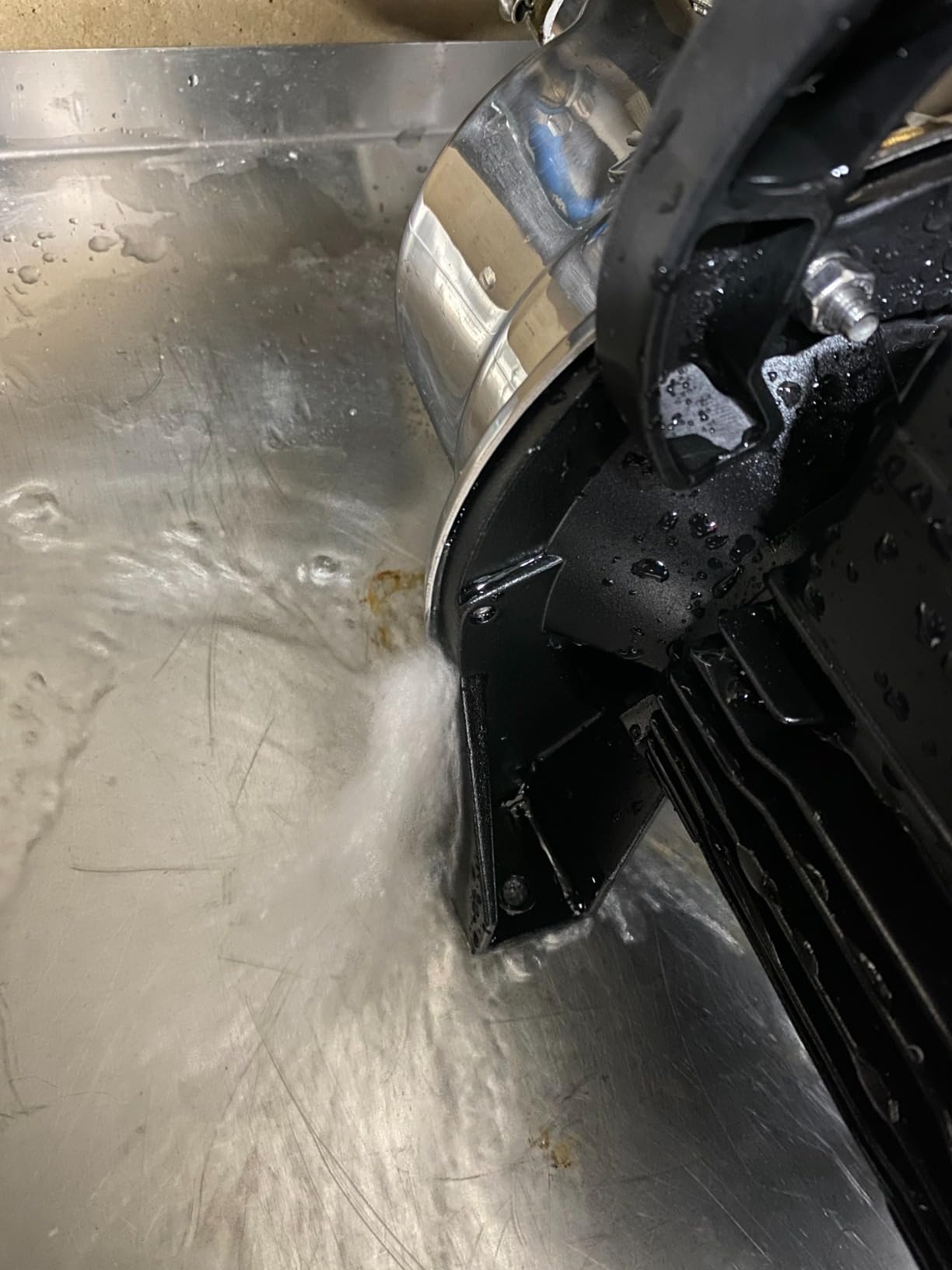
Reviews are the most useful thing here: 237 of them, averaging 4.0 stars, with 64% at five stars. Multiple owners report it matching or beating pumps costing several times more, and several note it outperformed a far pricier stainless booster in their own home. That is the honest picture of this tier, and it is why it is on this list.
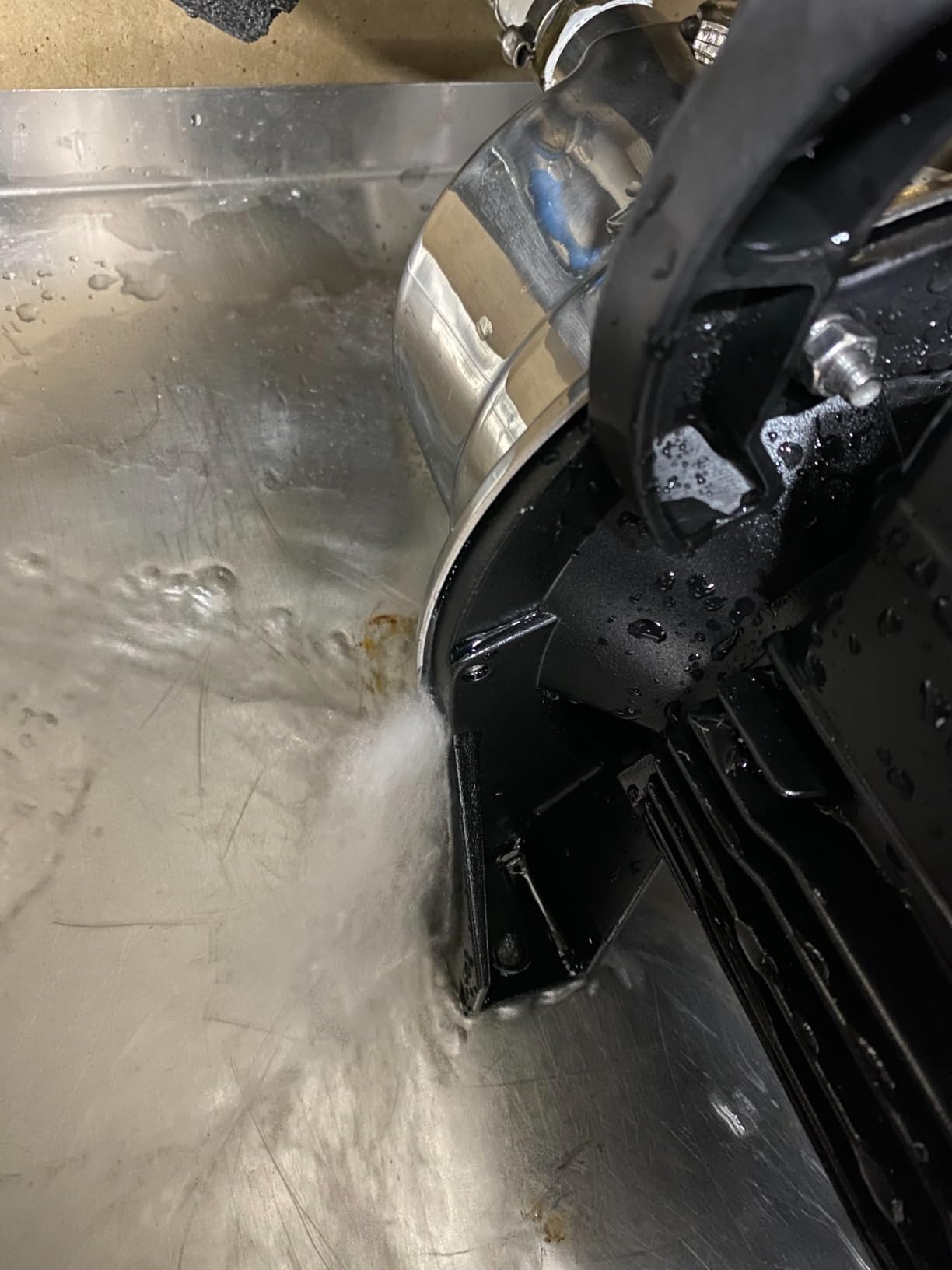
The recurring theme in the complaints is installation sealing rather than performance. Users report that it needs generous PTFE tape on the threads, and some have seen weeping at connections after months. The controller screen can also end up oriented awkwardly if the switch is tightened hard, so fit the tape before you torque it down.
Who the BACOENG P0097 suits
It suits a first-time owner with a modest low-pressure problem, a rental or small cottage, or anyone who wants a booster without a controller-grade budget. The tankless footprint of 16 by 8 by 14 inches is a genuine advantage in a small mechanical closet.
It is a good fit when you have one or two fixtures to fix rather than a whole house running at once.
Who should skip the BACOENG P0097
Skip it if you have several large fixtures running at the same time. At 12 GPM the pump reaches the edge of its curve quickly, and past that you get noise and short-cycling rather than more pressure.
Skip it if noise is the primary complaint in your household, and skip it if you are not willing to take care with the threaded connections. The leak complaints in the reviews are installation issues, not failures of the pump, but they are still the first thing a neighbour will hear about.
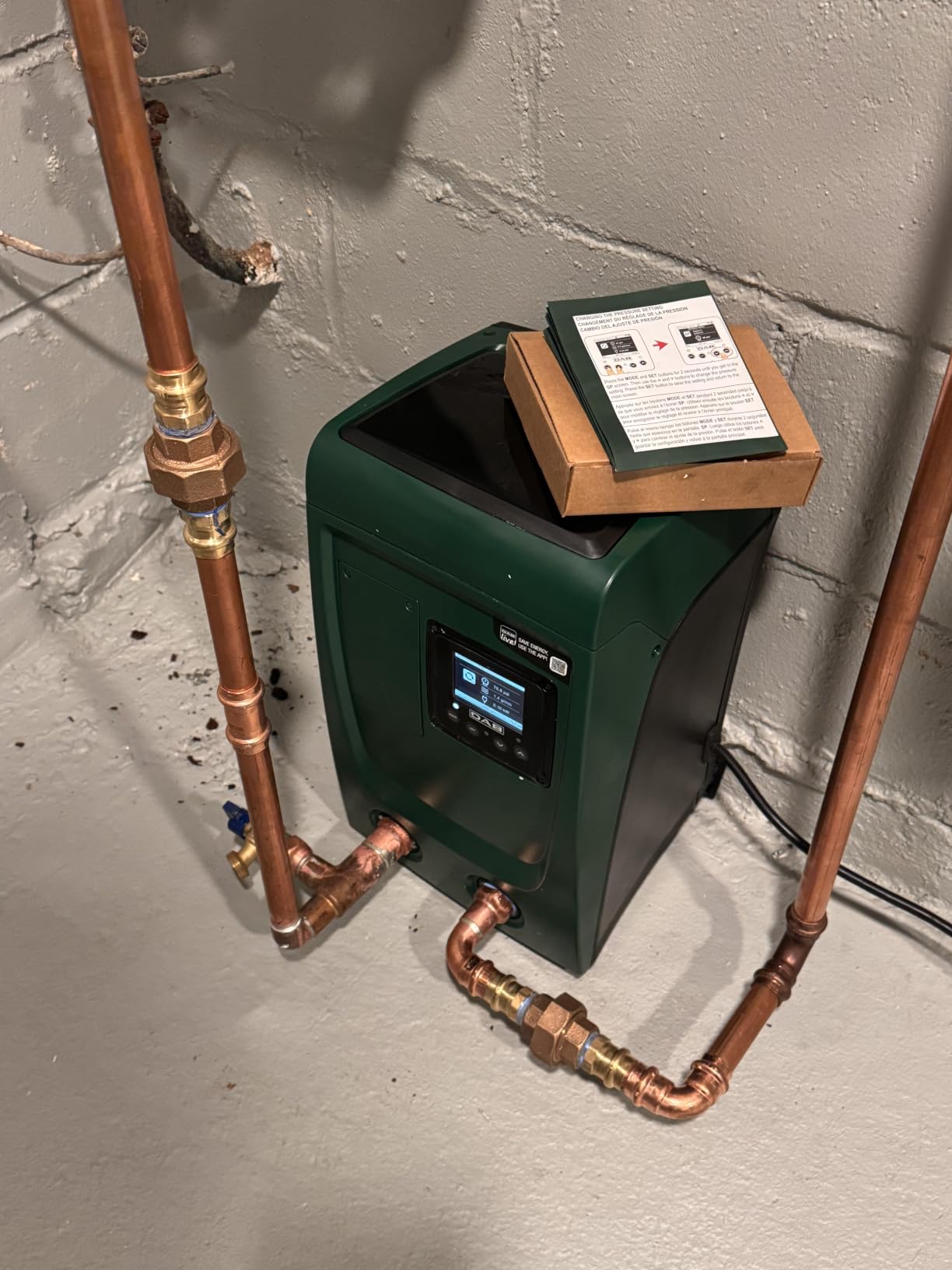
5. DAB E.Sybox Mini 3 – Best for Quiet Operation
DAB E.Sybox Mini 3 Electronic Pressurisation System, Constant Pressure, Ultra Low 45db(A) Noise, 2.7″ X 1.5″ High-Resolution Screen, Compact, Wireless Capability, 1.1 Horsepower, 7.5 Bar, 80 l/min
1.1 HP
15-80 PSI adjustable
45 dB(A)
80 l/min flow
115V
Pros
- Ultra-quiet 45 dB(A) operation
- Pump controller sensors display and tank in one unit
- VFD permanent magnet efficiency
- Mounts vertically or horizontally
- Drinking water certified
Cons
- The most expensive pump reviewed here
- Fewer reviews than most picks
At 45 dB(A), the DAB E.Sybox Mini 3 is among the quietest pumps in this roundup, and that is the reason to buy it. If your pump has to live inside the house, near a bedroom wall, or under a floor where structure-borne sound travels, the gap between 45 and 55 dB(A) is the difference between noticing it and not.
It is a complete system in one box: a 1.1 HP pump, the VFD electronics, sensors, a 2.7 by 1.5 inch high-resolution display, an expansion tank and a check valve. Output is 80 l/min, roughly 21 GPM, and pressure is adjustable from 15 to 80 PSI. There is no separate tank to plumb and no controller to source.
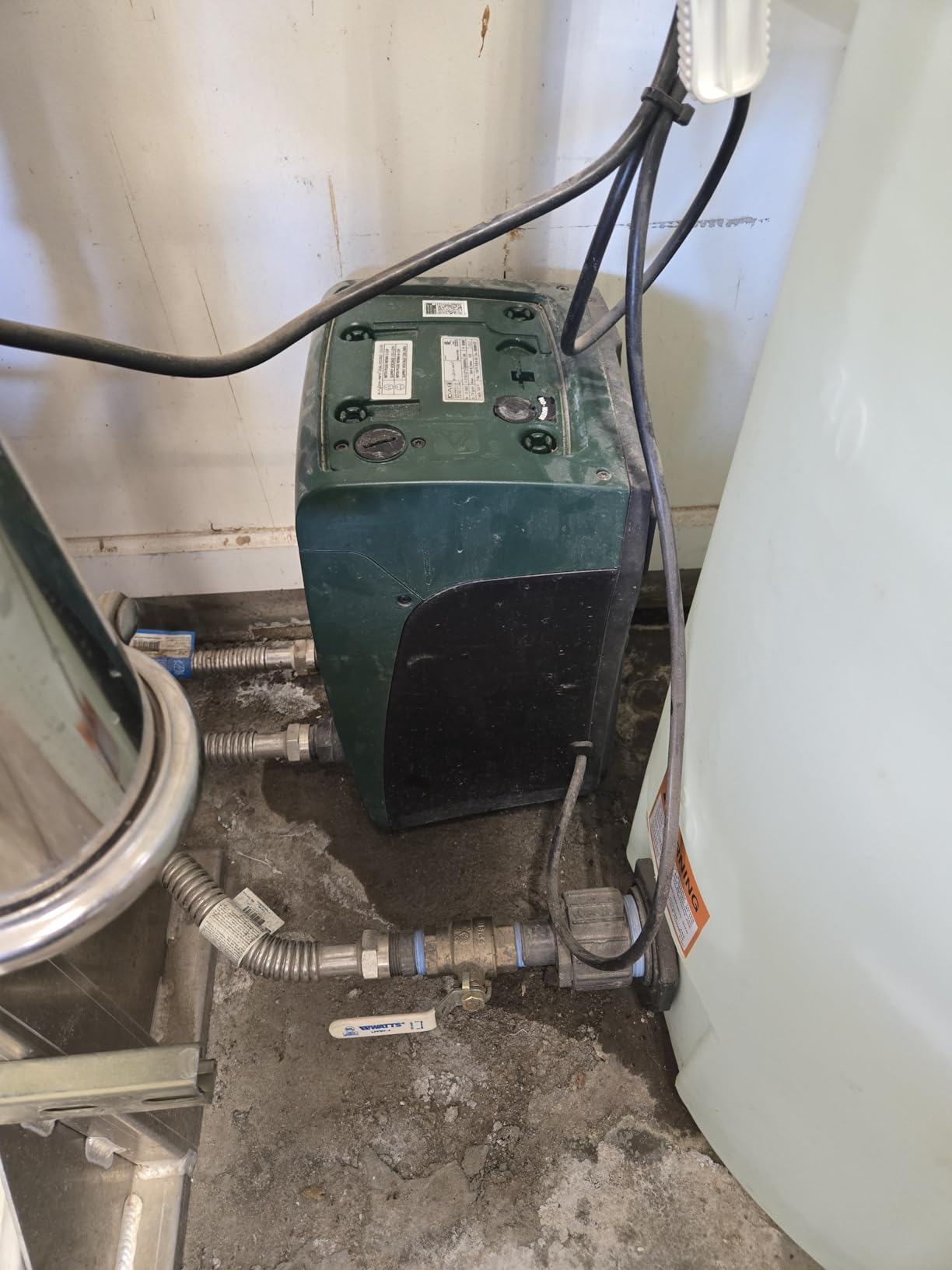
Mounting flexibility is the underrated feature. It runs vertically or horizontally, so a shallow under-stair cupboard or a wall cabinet becomes viable, and at 19 by 11 by 11 inches it is compact for a 1.1 HP machine. It is drinking water certified and offers wireless monitoring for remote checks.
Users on r/OffGrid single out this family specifically, describing the EasyBox Mini 3 as efficient and comparable to a premium Grundfos booster, and pointing to it as the modern replacement for old demand pumps. At 4.1 stars across 102 reviews with 63% at five stars, satisfaction is solid, though the cost is the clear barrier for most buyers.
Who the DAB E.Sybox Mini 3 suits
It suits indoor installs, apartments and penthouses, noise-sensitive homes, and anyone who would rather own one integrated unit than assemble a pump, a controller and a tank separately. It is also a strong fit for clean water transfer from a storage tank.
Choose it when the installation space is awkward and every inch of clearance matters, because the all-in-one design removes most of the piping a conventional setup needs.
Who should skip the DAB E.Sybox Mini 3
Skip it for a mild pressure shortfall. This is the most expensive pump in the roundup and a 15 PSI problem does not need a 1.1 HP VFD system with a colour display.
Skip it if you are installing outdoors in freezing conditions without a rated enclosure, and skip it if parts availability years from now matters more to you than noise performance.
6. Flotec FP5722 Cast Iron Multistage – Best Heavy-Duty Pump
FLOTEC CAST Iron MULTISTAGE Booster Pump 3/4 HP
3/4 HP cast iron multistage
43 lb heavy build
Model FP5722
Needs switch tank and regulator
Pros
- Cast iron multistage build for high pressure
- Reviews spanning more than a decade of service
- Pushes water 750 ft or more
- Powers multiple sprinklers at once
- No electronics to fail
Cons
- Requires a pressure switch and pre-charged tank not included
- 43 lb cast iron needs two people to move
- Needs a regulator and heavy-gauge wiring
The Flotec FP5722 is the traditional multistage centrifugal answer, and it is the one in this roundup that owners report running for more than ten years. The multistage wet end stacks several impellers in series to build pressure without the high rotor speed a single-stage pump would need, which is why it is quieter per unit of pressure and why it can push water a long way.
Reviewers report pushing water more than 750 feet and running multiple sprinklers simultaneously, which is a duty cycle a domestic booster rarely sees. The cast iron body at 43 pounds is not a casual install. Plan two people for the lift, a permanent mount, and 10-gauge wiring as recommended by owners on this model.
Here is the part that catches people out. This is a bare pump, part FP5722-01, with no pressure switch, no pressure tank, no regulator and no controller. Reviewers are explicit that it is not a plug-and-play product and that it needs electrical and plumbing expertise to bring online correctly. A pressure-reducing valve on the discharge is effectively mandatory to protect house fixtures.
At 4.4 stars from 44 reviews with 74% at five stars, the satisfaction among people who installed it properly is very high. The low review count reflects the specialist nature of the product rather than a quality problem, and that is exactly why it should not be judged head to head with a consumer booster.
If the tank and pre-charge are the missing link in your own system, the forum consensus on garagejournal.com is blunt about it: the well pump’s job is getting water to the pressure tank, and the pressure tank is what actually supplies pressure. A multistage pump without a correctly pre-charged tank will cycle and hammer instead of solving anything.
Who the Flotec FP5722 suits
It suits long pipe runs, outbuildings, irrigation systems, and anything where the distance between source and outlet is measured in hundreds of feet. It is also the right pick for a skilled installer who wants a mechanical design with no electronics to fail.
Choose it when you already have, or will buy, a pressure switch, a properly pre-charged tank and a regulator, and you have the electrical service to feed it.
Who should skip the Flotec FP5722
Skip it if you want a weekend install. The full system around it is a project, and skipping any of those three components is how this pump ends up sounding like a jet engine.
Skip it for a small house with a modest pressure gap. A 43-pound cast iron pump and the supporting hardware is disproportionate to a problem a smaller inline unit solves.
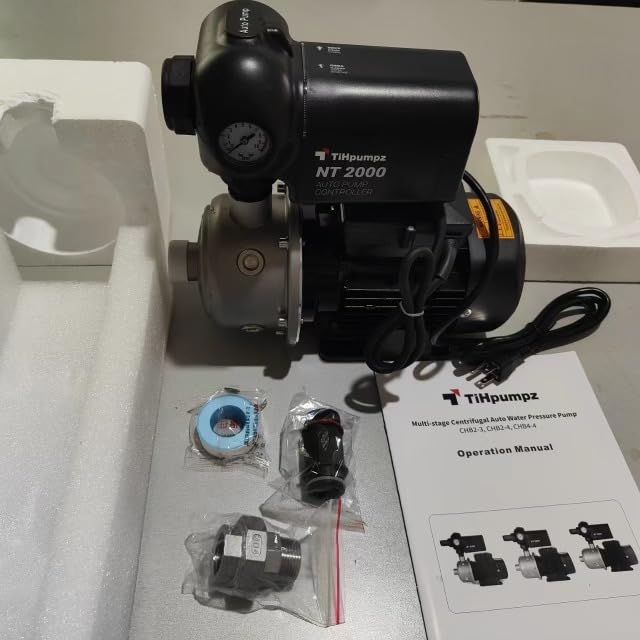
7. CHB CHB2-3 Multistage – Best for High Flow and Many Bathrooms
TiHpumpz CHB Multistage Centrifugal Water Booster Pump for Whole House – 2/3HP, 110V/60Hz, Max Flow 78 GPM, High Flow for Multiple Bathrooms, Commercial & Farm Use(CHB2-3)
2/3 HP multi-stage
78 GPM max flow
130 ft max head
110V
304 stainless
Pros
- 78 GPM max flow covers many fixtures at once
- Multi-stage wet end runs quiet with less vibration
- 360 degree swivel unions fit any angle
- 304 stainless housing resists corrosion
- No circuit boards or sensors to fail
Cons
- Fitting leaks without generous PTFE tape
- Plastic outflow nut can fracture
- Thin long-term durability record
The CHB CHB2-3 is built for a different problem from most of this list: flow, not boost. Its 78 GPM maximum and 130 foot maximum head mean it can serve several bathrooms, a laundry and a kitchen at the same time, where a 12 GPM domestic booster would be swimming far past its curve.
It is a 2/3 HP unit on 110 volts with a 304 stainless housing, and the multistage wet end runs quietly with less vibration than a single-impeller pump at the same output. The simple mechanical structure, with no circuit boards and no sensors, means there is very little that can fail electronically. An auto switch is included in the box.
The 360-degree swivel union connectors are genuinely useful. Most people install a booster in a spot where the existing pipes do not line up, and swivels turn a two-hour job into a shorter one without re-cutting anything.
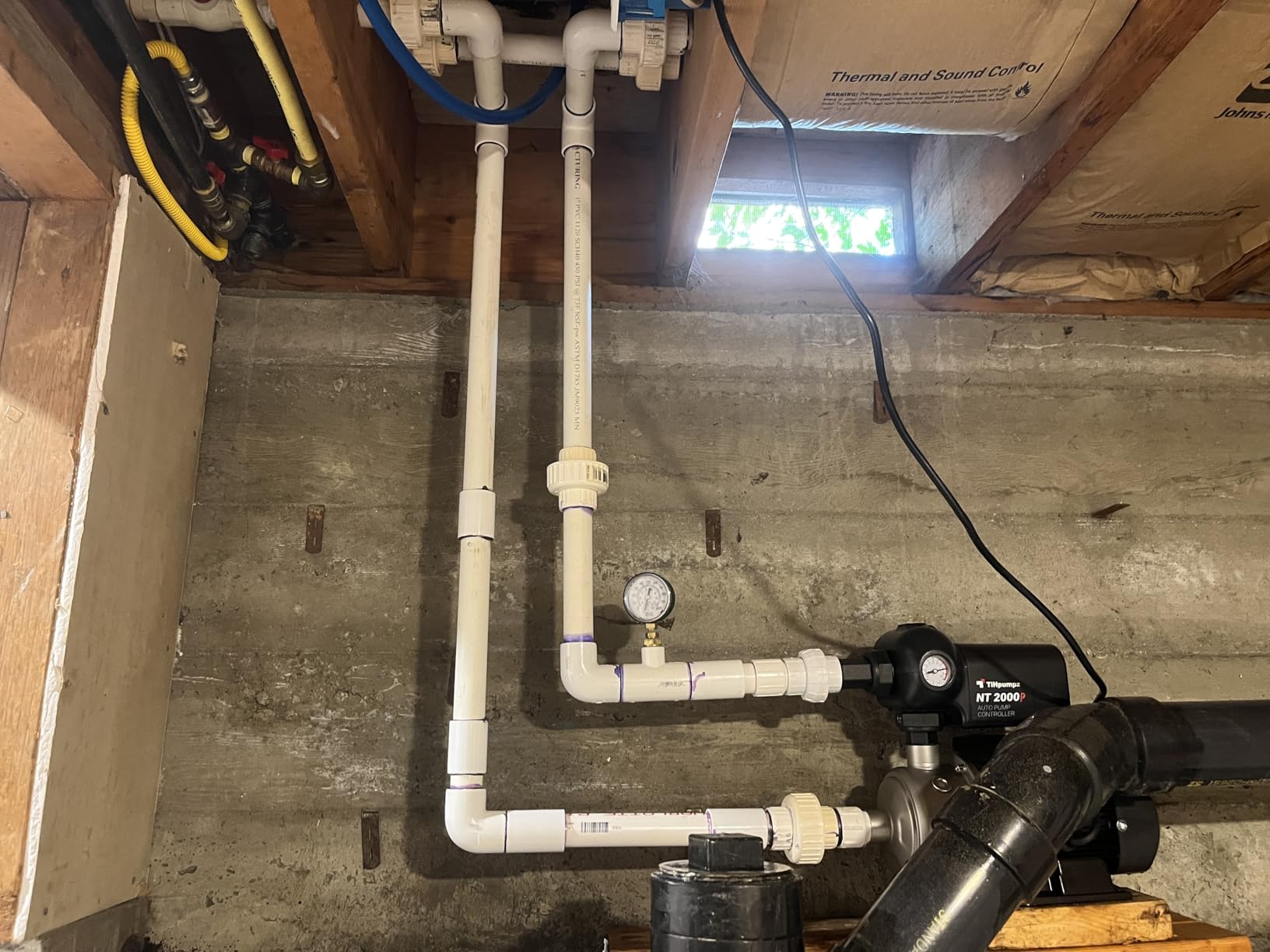
Be aware of what the reviews say, because they are unusually split. Of 39 reviews averaging 3.9 stars, around 70% are five stars and roughly a quarter are one star. The successful installs report quiet operation and strong multi-fixture pressure. The failures are almost entirely connection problems: leaking fittings and a plastic outflow nut that can fracture after a few weeks.
The critical success factor owners identify is generous PTFE tape on every threaded connection. Treat that as a requirement rather than a tip, and re-check the joints after the system has run through a full pressure cycle.
Who the CHB CHB2-3 suits
It suits multi-bathroom homes, small apartment or duplex units, and small commercial spaces where many fixtures run at once. It is a good fit for a long pipe run inside a building, where the 130 foot head gives you margin.
Choose it if you want high flow and quiet running and you have no appetite for a smart controller or an app.
Who should skip the CHB CHB2-3
Skip it if you need precise constant pressure rather than volume. A mechanical multistage pump delivers flow, not a flat target pressure, so fixtures at the far end of the house will still see a drop.
Skip it if you are not confident with threaded plumbing joints, and skip it if you want a long service life with a warranty behind it. The warranty is not stated for this model, and the long-term durability record is thin compared with the fixed units in this roundup.
8. GWANZI K90S600L – Best Compact Booster for Tight Spaces
1HP Whole House Water Pressure Booster Pump 90PSI 115V Automatic Variable Speed Penmanent Mangnet Motor Constant Pressure Wireless App Control Compact Design for Home House Villa Apartmen
1 HP 800W motor
15-90 PSI adjustable
22 GPM max
120V
1 year warranty
Pros
- Variable speed constant pressure in a compact body
- Water cooling keeps noise near 30 dB
- App control with OTA firmware updates
- 11 x 3.5 x 3.5 inch inline body
- 50% energy savings from permanent magnet motor
Cons
- 1-year warranty is the shortest in this roundup
- Needs a dedicated circuit and plumber-grade install
- App range limited to about 30 feet
The GWANZI K90S600L is the most interesting unit in this roundup on a spec-to-size ratio. A 1 HP 800 watt permanent magnet motor with variable speed constant pressure from 15 to 90 PSI, in a body measuring 11 by 3.5 by 3.5 inches. It is roughly a third of the volume of most 1 HP inline pumps.
Because the inlet and outlet sit on the same axis, it drops into a straight run of pipe without the unions and offsets a conventional pump needs. That compactness is what makes it viable under a sink, in a wall cavity, or inside a standard utility closet where a 20-inch body simply will not go.
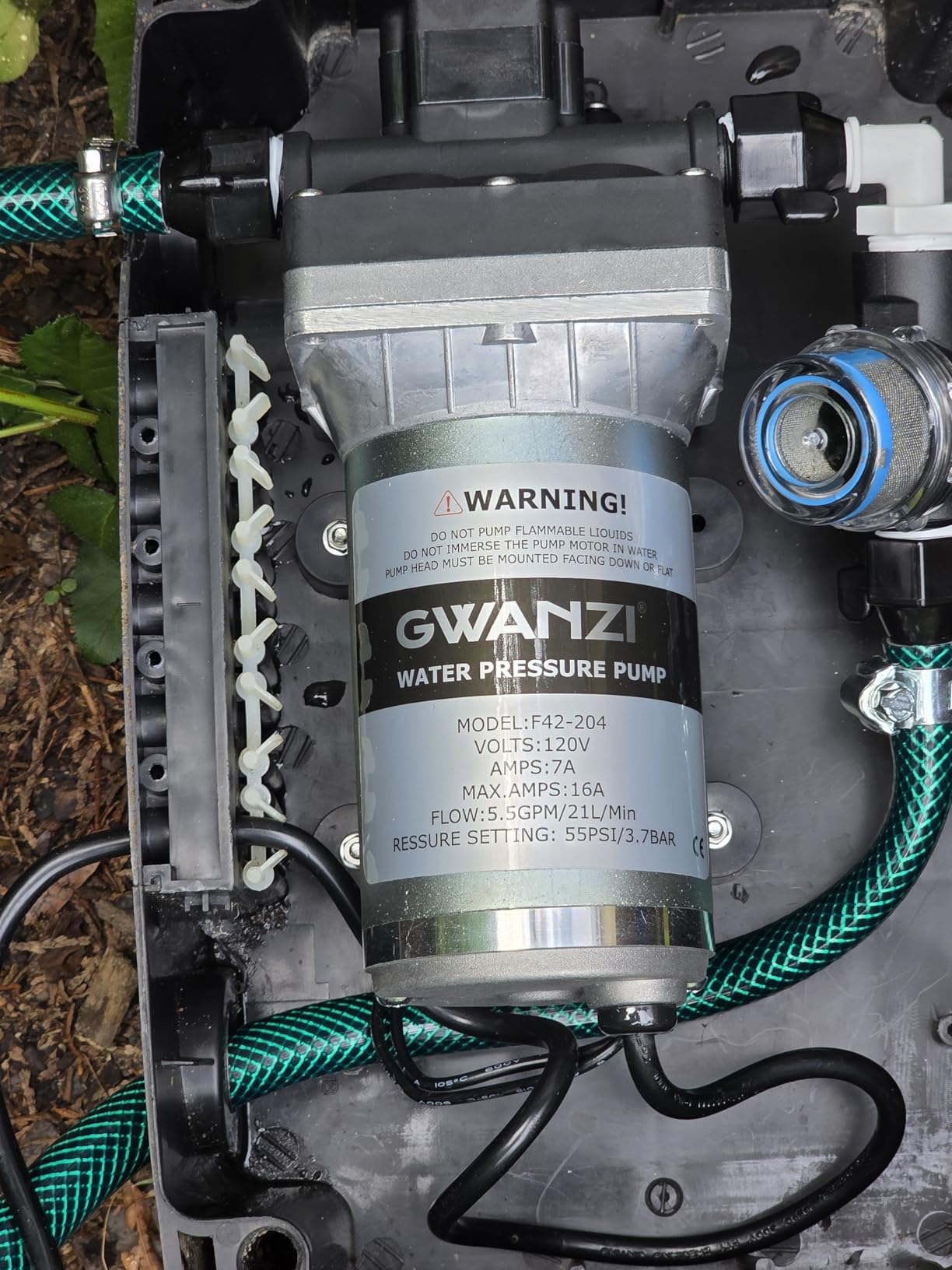
It is also the quietest running pump here by the published figure. Water cooling holds noise near 30 dB, and a permanent magnet motor delivers up to 50% energy savings against a conventional pump of the same output. Maximum flow is 22 GPM, or 1320 GPH, with 150 feet of head, and output is capped at 80 PSI on mains water and 58 PSI from a tank.
The protection set is comprehensive, covering dry-run, overheat, blockage, leak, pressure sensor and power failure, with an auto thermal switch that cuts power if the rotor is blocked. Firmware updates over the air through the app, which is a nice touch on a product category that usually has none.
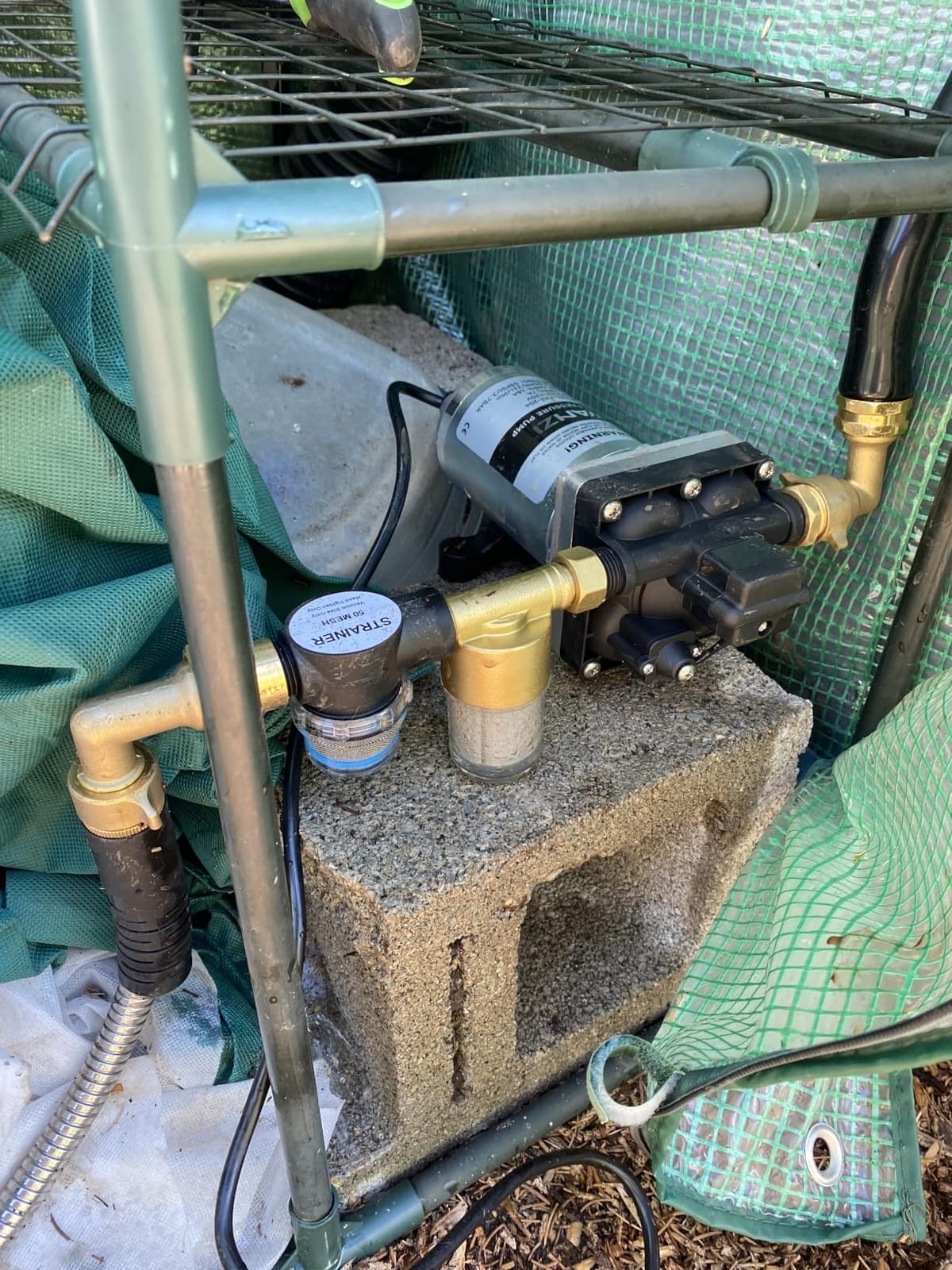
Two things temper the 4.6-star rating, and both matter more than the star score. First, the 1-year warranty is the shortest stated coverage of any pump on this list. Second, installation is genuinely demanding: it needs 1-inch NPT connections, a dedicated circuit and breaker, and several buyers needed professional plumbing help involving PEX tools and crimping.
At 39 reviews the sample is still small, though notably there are no one or two star ratings yet, with 69% at five stars and 26% at four. Treat the headline score as promising rather than proven.
Who the GWANZI K90S600L suits
It suits small homes and apartments with a cramped install point, anyone who is upgrading from a fixed pump and wants variable-speed comfort, and households that run off a roof or storage tank rather than a live main.
Choose it when noise is the main worry and the space is the main problem, and you are comfortable commissioning a pump with help.
Who should skip the GWANZI K90S600L
Skip it if warranty length is a deciding factor, since a single year is thin against the 3-year coverage on the Simer and the 2 years on the Davey.
Skip it if you want a self-contained install. The dedicated circuit, the crimped connections and the app setup make this a job for a plumber unless you already work with PEX and have a spare breaker.
Measure Your Water Pressure Before You Buy
Measure before you spend. Fit a pressure gauge to an outside hose bib, close every fixture inside, and read static pressure. That number is the ceiling your pump is working against. Then open a shower and a cold tap and read again. The difference between the two is dynamic pressure, and it is the number that actually predicts how your shower will feel.
The ranges map cleanly onto pump choices. Below 40 PSI static, you want a variable-speed constant-pressure unit or a substantial multistage. Between 40 and 55 PSI static with a drop under 10 PSI on demand, a smaller fixed or automatic booster handles it. Above 60 PSI static, you probably do not need a pump at all, and adding one pushes you toward the 80 PSI ceiling where fixtures start to fail.
Two minutes of measurement routinely saves a wasted purchase, and it is the step most skipped. A booster chosen on a guess is either too small to matter or large enough to over-pressurise the house.
Which Type of Booster Pump Do You Need?
Four mechanisms cover almost every home, and picking between them comes down to your water source and how badly the pressure moves.
Variable-speed constant pressure. A permanent magnet motor with a variable frequency drive reads outlet pressure and adjusts output to hold a target. It is the right answer for city water with fluctuating supply, and it is the mechanism plumbers on r/Plumbing converge on instead of fixed-boost units. The Aquastrong Smart 45 and the GWANZI K90S600L are both in this family.
Fixed flat boost. A pressure switch turns the pump on and off, and the pump adds a set amount of pressure regardless of what the line is doing. It is simple, serviceable with hand tools, contains no electronics to fail, and is the right pick when incoming supply is steady and the shortfall is small. The Simer 4075SS-01 and the BACOENG P0097 sit here.
Multistage centrifugal with an external tank. Several impellers in series build pressure without high rotor speed, and the external pressure tank supplies flow between pump starts. This is the traditional answer for long runs, irrigation and higher-demand homes. The Flotec FP5722 and the CHB CHB2-3 are the examples here. The tank is not optional; a multistage pump without a pre-charged tank will cycle and hammer.
Off-grid and demand pumps. Small 12V diaphragm pumps run from a battery or solar supply, switching on a low-pressure threshold. They are the right tool for a cabin, a boat or a gravity tank feeding a house, and they are not a substitute for a mains booster. If your supply has no reliable power, nothing on this list will help.
One rule worth memorising: do not bolt a city-water booster downstream of a well pump. The two pumps will fight each other, short-cycle, and age quickly. Fix the well system with a proper pressure tank, or replace the whole arrangement with a constant-pressure unit, but do not stack them.
Brand matters less than sizing. Veterans on Terry Love Plumbing make the point that pumps across the board have been cheapened over the years, so the difference between competing brands is often smaller than the difference between a correctly sized pump and an oversized one. Measure first, then choose.
Noise: Why Booster Pumps Get Loud and How to Fix It
A booster pump that sounds like a jet engine is nearly always one of four things, and the order below is the order to check.
1. The pump is oversized for the demand. A pump with far more capacity than the house needs will surge and hunt rather than settle. Plumbers on plumbingtalks.com describe the noise as a sign the pump is too big or set up wrong, and that diagnosis is right most of the time.
2. The pressure tank is missing, undersized, or uncharged. Plumbers on the same forum note that people routinely skip the tank or never bother setting the pre-charge, and a booster without a correctly pre-charged tank has no buffer. It cycles on and off and each start is a noise event.
3. Water hammer in the existing plumbing. Boosters amplify whatever noise is already in the system, because the pump forces flow into pipes sized for a lower pressure. If the knock is present before installation, the pump will make it louder rather than fix it.
4. Vibration transmitted through the piping. Unsecured pumps and unsupported pipework carry motor noise through the structure. Isolation feet and proper pipe hangers cost very little and remove most of what people describe as a rattling house.
If you want quiet by design, read the published noise figure. The DAB E.Sybox Mini 3 at 45 dB(A) and the GWANZI K90S600L at around 30 dB are the quietest in this roundup, and the Aquastrong Smart 45 sits in the middle at 55 dB(A). Retail ratings in the 3.5 range for popular premium booster models frequently trace back to noise complaints, not to failed pumps, which is worth knowing before you dismiss a model.
Over-Pressure Safety and the 80 PSI Ceiling
Residential plumbing is rated to 80 PSI, and that is a code limit, not a suggestion. Above it, faucet cartridges, shower valve seals, appliance inlet valves and the water heater relief valve all start to fail, and a weeping relief valve is the most common and most expensive symptom.
Fixed flat-boost pumps are the risk here, because they add a set amount regardless of incoming pressure. If street pressure climbs overnight, the home can be pushed past 80 PSI while everyone is asleep. This is the single strongest argument for a variable-speed unit with a settable ceiling, or for fitting a pressure-reducing valve downstream of any fixed pump.
Whatever you install, set a maximum pressure, confirm it with a gauge at the highest fixture in the house, and re-check after a week of operation. If the reading at that fixture is above 80 PSI, the answer is a reducing valve, not a bigger pump.
When You Do Not Need a Booster Pump
Most low-pressure complaints we see are local problems, and buying a pump for one of these wastes money and adds a failure point to your plumbing.
A clogged aerator or a scaled shower head reduces one fixture only. A half-closed supply stop or a kinked flexible connector reduces everything downstream of it, and both are visible in a five-minute inspection. A failing thermostatic or pressure-balancing mixing valve can present as falling pressure that appears and disappears. A pressure-reducing valve set too low caps the whole house at a level you never chose.
On well and gravity tank systems, the usual cause is a pressure tank that has lost its air pre-charge or a switch that is not cycling correctly. Adding a second pump to that arrangement makes the short-cycling worse, and forum veterans on garagejournal.com are blunt that the tank, not the pump, is the component supplying pressure.
One more check before you buy: ask your water utility about the pressure at your address and whether they have a rebate or a specific requirement for booster installations. Some utilities have rules about backflow protection and about what pressure you may deliver back into the system.
Installation: DIY or Call a Plumber
A booster pump goes on the main, after the shutoff, and every install needs the same four things: a full-port shutoff you can reach, a union on each side so the pump comes out without cutting pipe, a check valve to stop backflow, and a nearby electrical supply. Without unions, a failed pump means cutting copper. Without a check valve, the pump fights the mains.
On plumbing code, the check valve and a means of isolation are required, and a reducing valve is required where static pressure is high. If the pump is installed where it could flood a finished space, an electrician is the right call for the circuit, and you do not need one if you are plugging into an existing appropriately rated receptacle on a proper breaker.
The honest answer on hiring a plumber is that it depends on the pump. A single fixed or automatic inline booster on 1-inch pipe is a straightforward job for a confident DIYer with a tube cutter, two unions and PTFE tape. A multistage pump with a new switch, tank, regulator and dedicated circuit is not. Our advice is to buy the DIY pump for the DIY install, and to budget a professional for anything with a controller, a tank, or more than 40 pounds of cast iron.
One last note for anyone on a private supply or a recreational vehicle. Line pressure outdoors and on a hookup is a different problem entirely, and it is solved with a regulator rather than a booster, which is covered in our guide to RV water pressure regulators.
Frequently Asked Questions
Can a booster pump increase water pressure?
Yes. A booster pump adds pressure to a supply that is already live, typically gaining 20 to 50 PSI, and a variable-speed unit holds that pressure steady as fixtures open and close. It works on city water, on a well system and on a tank-fed line, as long as there is a reliable power source and the pump is sized to your flow demand.
Can you put a booster pump on city water?
Yes, boosting municipal supply is the most common use for these pumps. Install it on your side of the meter after the shutoff, with a check valve to stop backflow and a pressure-reducing valve if static pressure is already high. Check your utility’s rules first, since some require backflow protection or a permit.
Do home water pressure boosters work?
They do, provided the low pressure starts at the main rather than at one fixture. If every tap in the house is weak and a gauge reads low at the outside spigot, a booster resolves it. If only one shower is weak, the cause is a local fixture or valve problem and a pump will not help.
Why is my booster pump so loud?
Four causes account for most noise: an oversized pump, a missing or uncharged pressure tank, water hammer in existing pipes, and vibration transmitted through unsecured pipework. Check the tank pre-charge first, then confirm the pump is not far larger than your demand. Reading the published noise figure, 30 to 45 dB(A), is the simplest way to avoid the problem at purchase.
What are the downsides of using a water booster pump?
The real drawbacks are noise, electricity use, over-pressurisation risk and installation complexity. Fixed flat-boost pumps can push a home past the 80 PSI plumbing code limit when incoming pressure rises, damaging fixtures and water heater valves. Variable-speed units are quieter and safer but cost more, and any pump adds a mechanical failure point to your supply.
Which Booster Pump Should You Buy?
Start with a gauge, not a list. If static pressure at the outside spigot is low and drops further when you open fixtures, the Aquastrong Smart 45 is the pick most homes end up with, because it holds pressure flat through the daily swings of municipal supply. If your incoming pressure is steady and simply a bit light, the Simer 4075SS-01 gets you a working boost with a three-year warranty and a weekend install. If a professional is doing the work and you have several bathrooms, the Davey BT20-30T2-USA is the most capable unit here.
For tight spaces and quiet operation, look at the DAB E.Sybox Mini 3 or the compact GWANZI. For long runs, irrigation or many fixtures at once, the multistage Flotec and CHB units are the right mechanism, and neither of them works properly without a pressure switch and a pre-charged tank.
Whatever you choose in 2026, measure first, size second, and set a maximum pressure. That last step protects your faucets, your water heater and your budget far better than any model choice.