
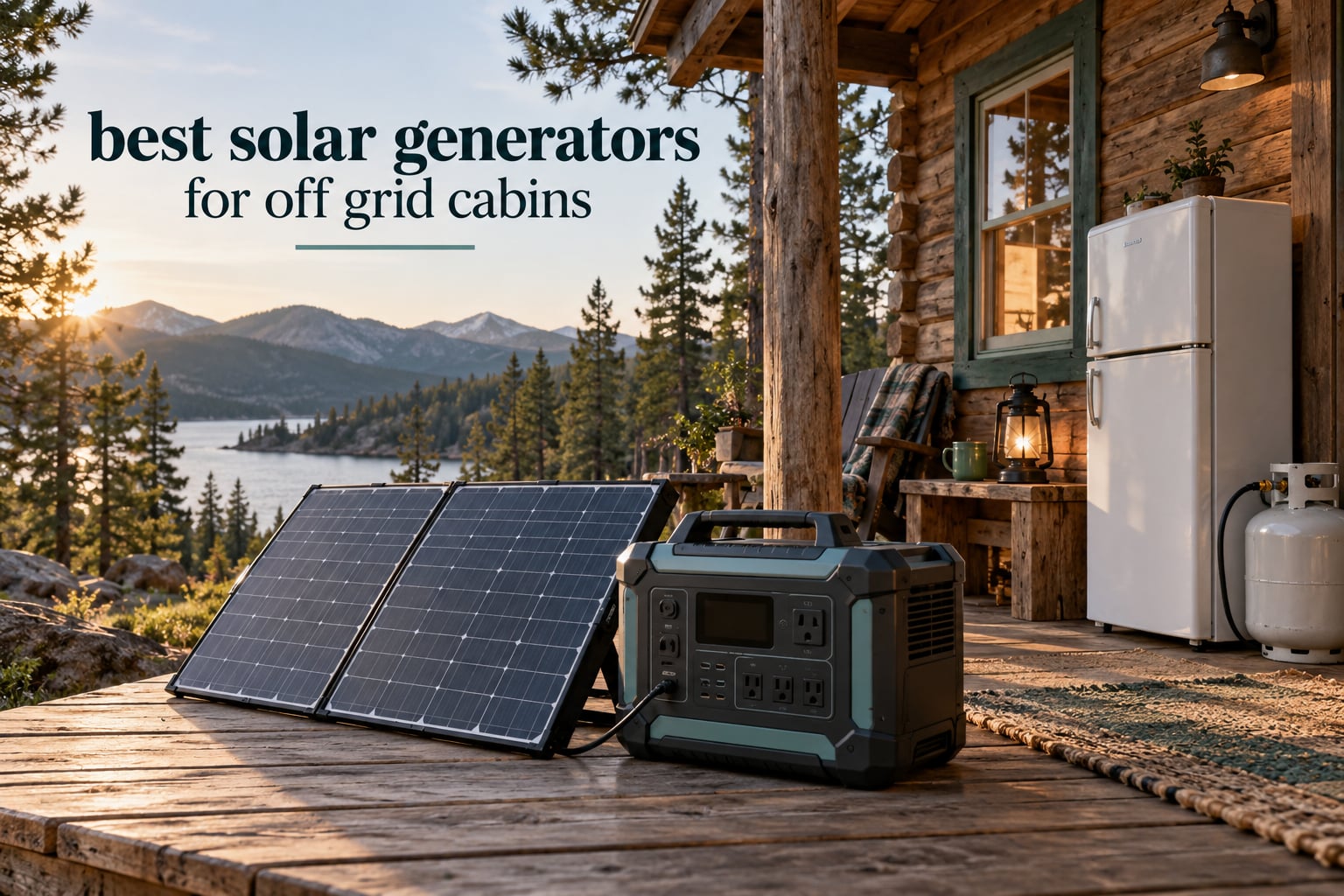
A solar generator is a battery-backed portable power station paired with solar panels. It stores sunlight as energy, inverts it into ordinary wall power, and runs a cabin fridge, lights, router, laptop and CPAP machine with no combustion, no fumes and no noise. Picking the best solar generators for off grid cabins comes down to one question: how much energy does your cabin actually burn in a day, and how many cloudy days can you ride out without a wall outlet?
That is where most buying guides go wrong. They are written for campers charging phones between trailheads, not for people who live at a remote cabin and need a well pump to start at dawn. So we built this roundup around how cabins are actually used, split into three tiers. A weekend cabin needs roughly 1 to 1.5 kWh of storage and a single 200W panel. A part-time retreat needs about 2 to 3 kWh and 400 to 600W of panels. A full-time off-grid residence realistically starts at 3.6 kWh and pairs with 800W or more of solar.
One more thing up front, because it changes every number in this article. A power station does not deliver its full rated watt-hours through the inverter. In practice you get somewhere in the range of 60 to 93 percent of the claimed capacity, depending on the unit and the load. The BLUETTI Elite 100 V2 below is the clearest example: 1024Wh on the box, closer to 768Wh in real use. Size against the usable number, not the label.
All ten power stations here were compared on the same five things: continuous AC output, usable capacity, solar input ceiling, weight you can carry through a cabin door, and whether expansion batteries actually exist for the model. Last updated for October 2026, and the lineup reflects current 2026 models only.
Table of Contents
Top 3 Solar Generators for Off-Grid Cabins in 2026

BLUETTI AC180 Solar Generator
- 1152Wh LiFePO4
- 1800W continuous
- 2700W surge
- 200W panel included
Best Solar Generators for Off Grid Cabins (October 2026)
Every station below runs LiFePO4 chemistry, which is the only battery type we would consider for a cabin. NMC lithium-ion cells degrade faster under heat and deep discharge, and cabin attics get hot. Prices shift constantly, so use the buttons to check current figures rather than relying on any number printed here.
| Product | Specs | Action |
|---|---|---|
| BLUETTI AC180 Solar Generator |
|
Check Latest Price |
 BLUETTI Elite 100 V2 BLUETTI Elite 100 V2 |
|
Check Latest Price |
 Jackery Solar Generator 1000 v2 Jackery Solar Generator 1000 v2 |
|
Check Latest Price |
 BLUETTI Elite 200 V2 BLUETTI Elite 200 V2 |
|
Check Latest Price |
 EF ECOFLOW DELTA Pro 3 Solar Generator EF ECOFLOW DELTA Pro 3 Solar Generator |
|
Check Latest Price |
 EF ECOFLOW DELTA Pro 3600Wh EF ECOFLOW DELTA Pro 3600Wh |
|
Check Latest Price |
 EF ECOFLOW Delta 3 Classic EF ECOFLOW Delta 3 Classic |
|
Check Latest Price |
 Jackery HomePower 3000 Jackery HomePower 3000 |
|
Check Latest Price |
 Jackery Explorer 2000 v2 Jackery Explorer 2000 v2 |
|
Check Latest Price |
 Dabbsson 2000L Power Station Dabbsson 2000L Power Station |
|
Check Latest Price |
If you are still undecided between these and a combustion unit, our guide to portable generators for home use covers the cases where fuel power still wins.
1. BLUETTI AC180 Solar Generator – The Most Complete Cabin Package
BLUETTI AC180 Solar Generator with 200W Solar Panel Included, 1152Wh 1800W
1152Wh LiFePO4
1800W continuous
2700W power lifting
200W panel
37.4 lbs
Pros
- Reaches 80 percent charge in roughly 45 minutes on AC
- 1800W continuous plus 2700W surge covers fridges microwaves and tools
- LiFePO4 pack rated 3000+ cycles
- 10ms UPS keeps routers and NAS alive
- Owners run a mini fridge for 16-17 hours
Cons
- Heavy at 37.4 pounds for a carry-in unit
- Bundled 200W panel needs constant repositioning
- Cooling fan becomes audible under sustained heavy load
The AC180 is the station we keep coming back to, because it is the rare unit that is genuinely good at two jobs: running a cabin’s essential loads and being small enough that one person can move it. 1152Wh of LiFePO4 with 1800W continuous output covers a refrigerator, a router, a lamp or two, and a laptop simultaneously without straining.
What makes it our top pick is the combination of recharge speed and build quality rather than either one alone. It hits 80 percent from a wall outlet in about 45 minutes, which means a stormy afternoon on the porch is enough to top it up before dinner. The three-button interface and the clearly readable display also mean you do not need the app for the basics.
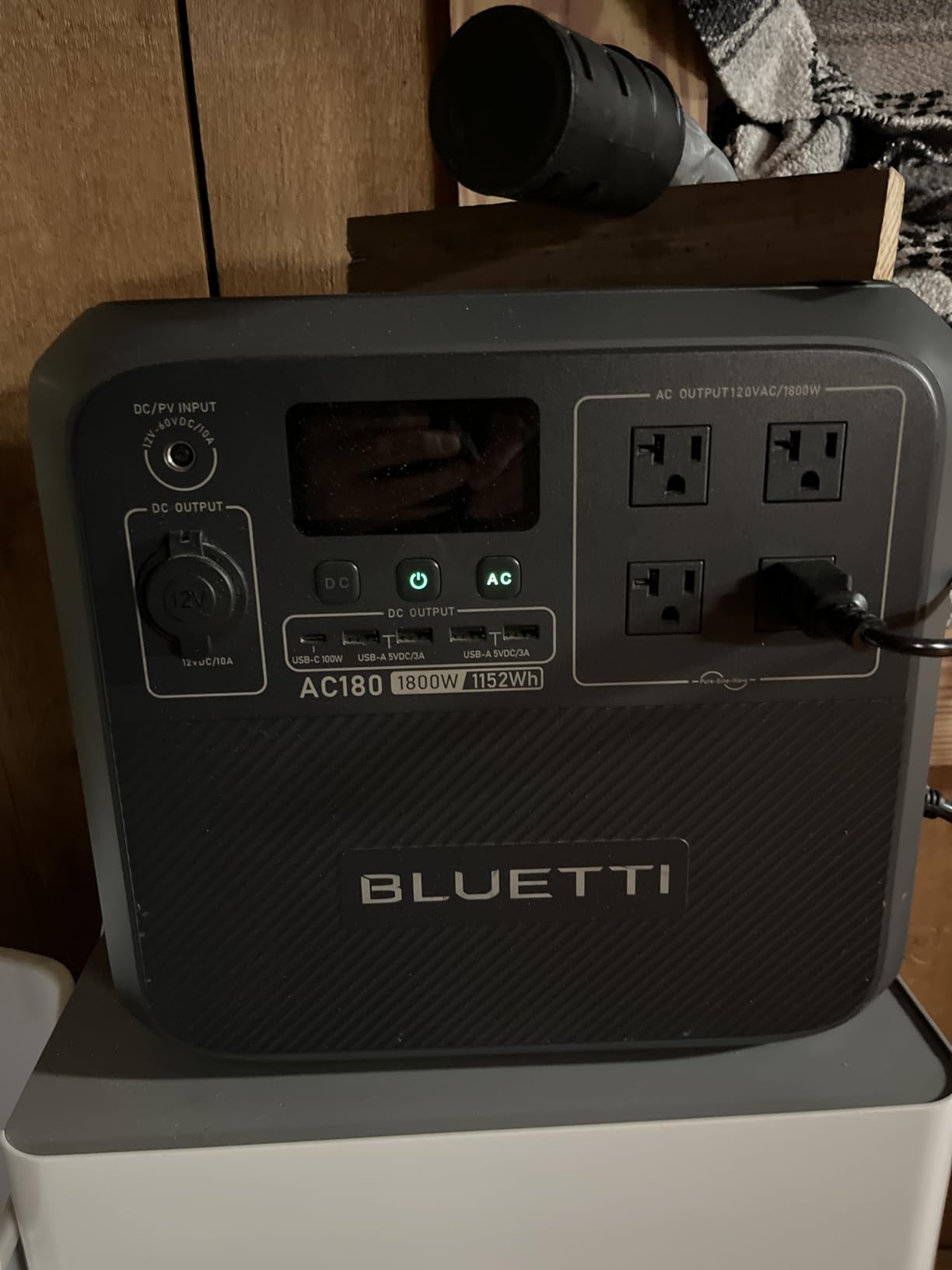
The 10ms UPS switchover is the sleeper feature for cabin residents. A router, a NAS or a home office does not notice the transition, so a power station can sit beside a home network and act as a small uninterruptible supply without anyone thinking about it. The app adds remote monitoring and lets you push output to 2700W when a power tool asks for it.
Owner testing is where the AC180 earns its reputation. People report a mini fridge running 16 to 17 hours on a charge and a 5000 BTU window AC unit running about 7.4 hours on low. For a weekend cabin in shoulder season, that is a full trip without touching a generator.
What size cabin the AC180 actually fits
This is a 1 kWh-class station, so think weekend and part-time rather than full-time. Budget roughly 700 to 900 usable watt-hours after inverter losses, which is a fridge running about a day plus lights, a router and phone charging. It is also the right size for a medical device overnight, since the fan stays quiet at moderate draw.
If you want to run a small well pump, check the surge rating carefully. A 1/2 HP submersible pump can pull well above its running wattage at startup, and the AC180’s 2700W power lifting mode is the difference between starting and tripping.
Where the AC180 falls short
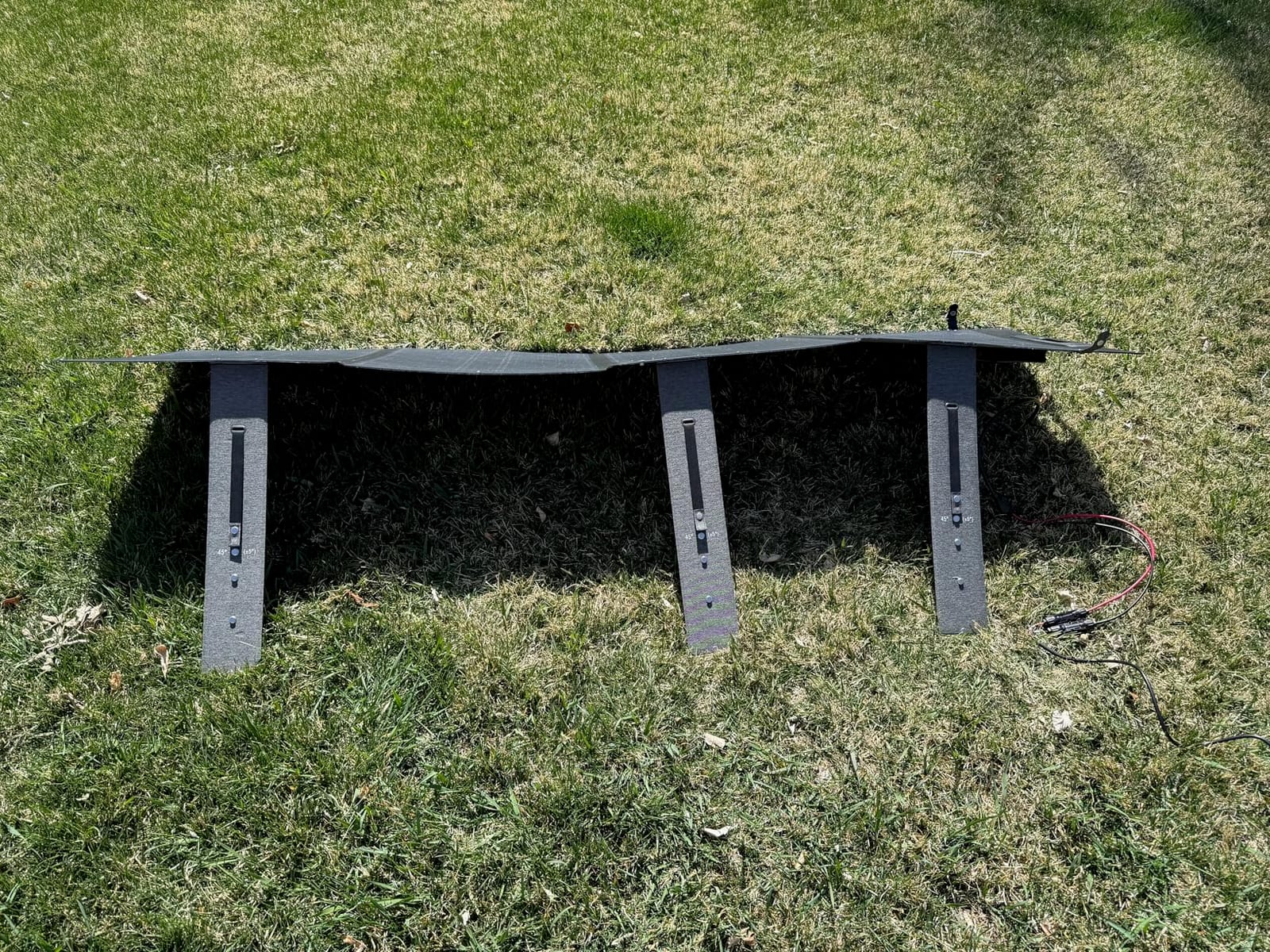
At 37.4 pounds it is a two-hand carry, and getting it up cabin steps is a real chore. The bundled 200W panel is a single small unit that needs repositioning every couple of hours and drops off sharply in cloud or shade, which makes three cloudy days hard math.
BLUETTI also advises against pairing the bundled panel in series or parallel with third-party panels. If you already own a larger array, this kit will not simply accept it, and that limitation has drawn plenty of criticism from cabin builders used to rolling their own.
2. BLUETTI Elite 100 V2 – The Best Carry-In Station
BLUETTI Solar Generator Elite 100 V2 with 200W Solar Panel Included, 1024Wh
1024Wh LiFePO4
1800W rated output
2700W power lifting
25 lbs
30dB silent
Pros
- Exceptionally light at 25 pounds for a 1kWh station
- 1800W output with 2700W power lifting handles space heaters and coffee makers
- Full AC recharge in about 70 minutes and 0-80 percent in 4 hours from 200W
- 10ms UPS with true pass-through charging
- LiFePO4 pack rated 4000+ life cycles
Cons
- Usable capacity closer to 768Wh in testing
- App needed for the best monitoring and charge rate control
- Solar input is current limited so low-voltage arrays underperform
Twenty-five pounds changes the conversation. That is roughly a case of water, and it means the Elite 100 V2 can be carried one-handed from a truck bed, up a set of porch steps, into a loft or a closet, without recruiting help. For seasonal cabins that sit shut between visits, that portability is worth more than raw capacity.
It is also the highest-rated station in this roundup at 4.7 across a large review base, and the reason is straightforward. Owners get 1800W rated output, 2700W of power lifting, 30dB silent mode and a 10ms UPS, which is more capability than most units twice the size.
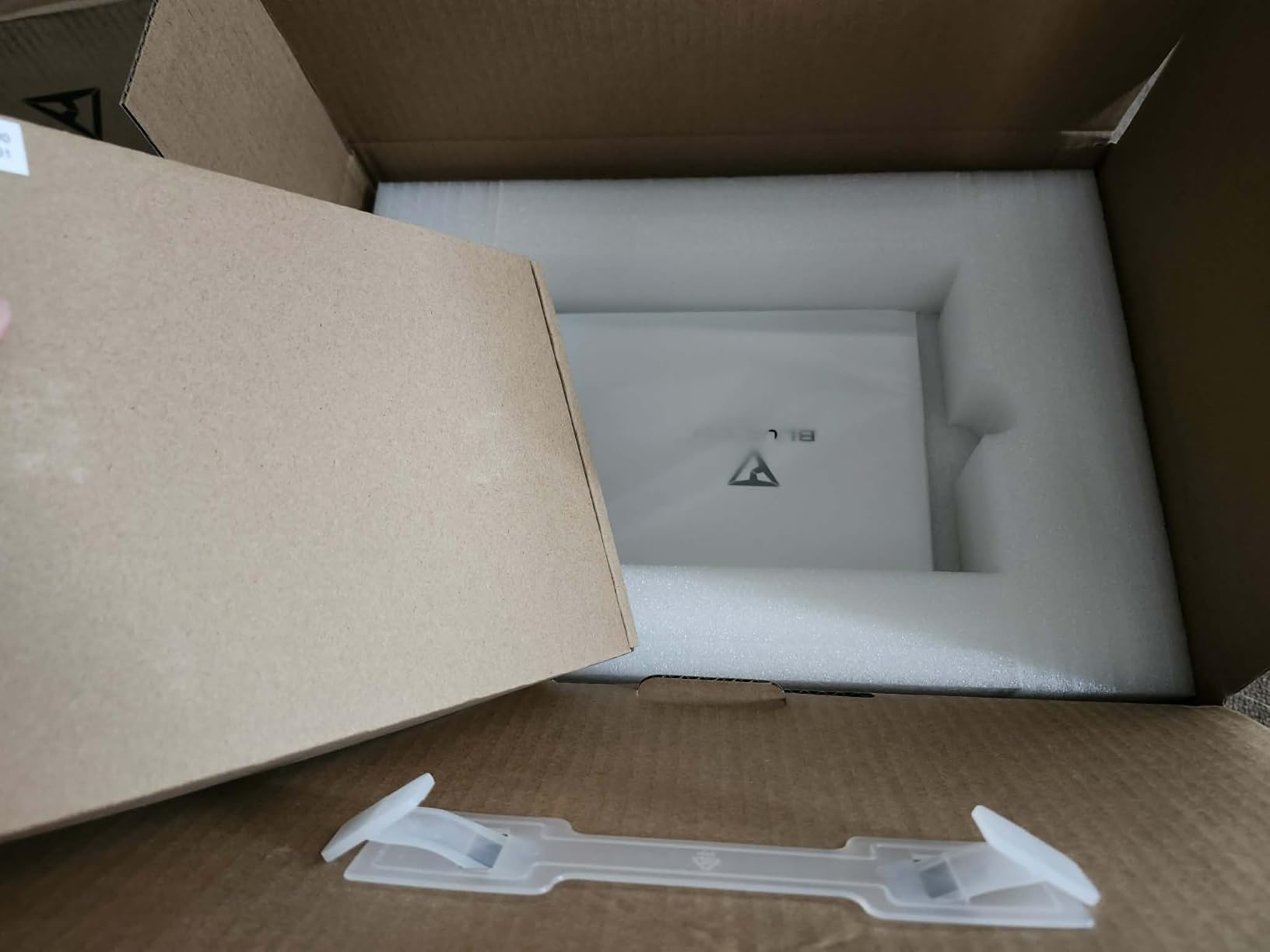
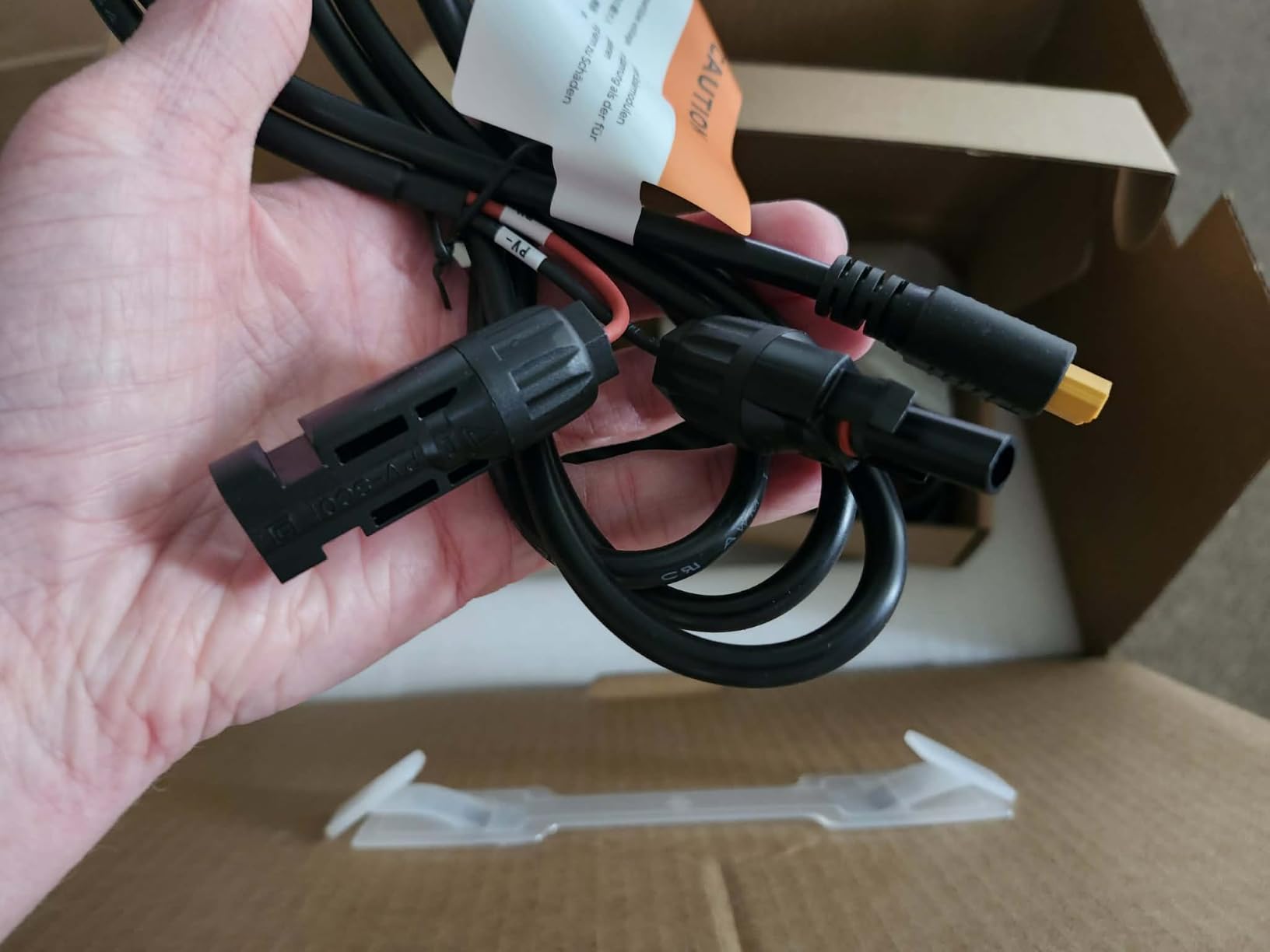
The display deserves a mention. It shows exact wattage going in and coming out, which is the single most useful number when you are trying to work out whether your panels are actually keeping pace. The XT-60 DC connectors are also far more robust than the proprietary plugs some brands use, and the app works over Bluetooth without an internet connection.
For a cabin, pass-through charging matters more than it does for camping. You can run a fridge directly off the AC outlets while the station tops itself up from solar, so the fridge never sees an interruption.
Where the Elite 100 V2 earns its rating
It is the pick for a weekend cabin where weight and silence beat capacity. Someone sleeping nearby with a CPAP machine will find 30dB silent mode genuinely usable, and the 10ms switchover keeps networking gear stable through an outage. It also handles small resistive loads like a coffee maker or a space heater on low without complaint.
It is an excellent overnight medical and backup station because 768Wh of usable capacity still covers a night of CPAP plus a phone or two without any generator noise at all.
Why it is not our overall winner
That 768Wh effective capacity is the whole problem for multi-day autonomy. Two cloudy winter days will eat it. Buyers who already know they want more storage should look at the Elite 200 V2 further down rather than planning to add panels and hope for the best.
There are smaller annoyances too. The app is required for the best monitoring and to adjust the AC charge rate, and there is no real-time temperature display, which is exactly what you want to check on a cold January morning. The 15A-style solar current ceiling also means low-voltage panel arrays charge below the 500W maximum.
3. Jackery Solar Generator 1000 v2 – The Known Brand for a Reason
Jackery Solar Generator 1000 v2 and 200W Solar Panel,1070Wh,1500W AC
1070Wh LFP
1500W continuous
3000W surge
23.8 lbs
200W SolarSaga panel
Pros
- Lightest and most compact 1kWh kit here at 23.8 lbs
- Reaches full charge in about an hour on wall power
- LiFePO4 chemistry with 4000+ cycles and a 10 year service life
- Able to run a full-size side-by-side fridge for 9 hours overnight
- Three pure sine wave AC outlets plus 100W USB-C
Cons
- Bundled 200W panel is heavy sags in wind and needs frequent repositioning
- One-hour charge requires enabling emergency mode in the app
- 1500W is the lowest continuous rating in this roundup
Jackery is the brand most first-time buyers ask about, and for a weekend cabin the Explorer 1000 v2 is a defensible answer. 1070Wh of LFP chemistry, 1500W continuous, 3000W surge, and a weight of 23.8 pounds with a foldable handle. The pure sine wave inverter is the right choice for a fridge compressor and for sensitive electronics.
It also has the largest review base of anything in this list, which matters when you are buying something you will depend on in January. Owners frame it as the best balance of portability and capability in the 1 kWh class, and the most-cited real test is powering a full-size refrigerator through a multi-day grid outage for nine hours overnight.
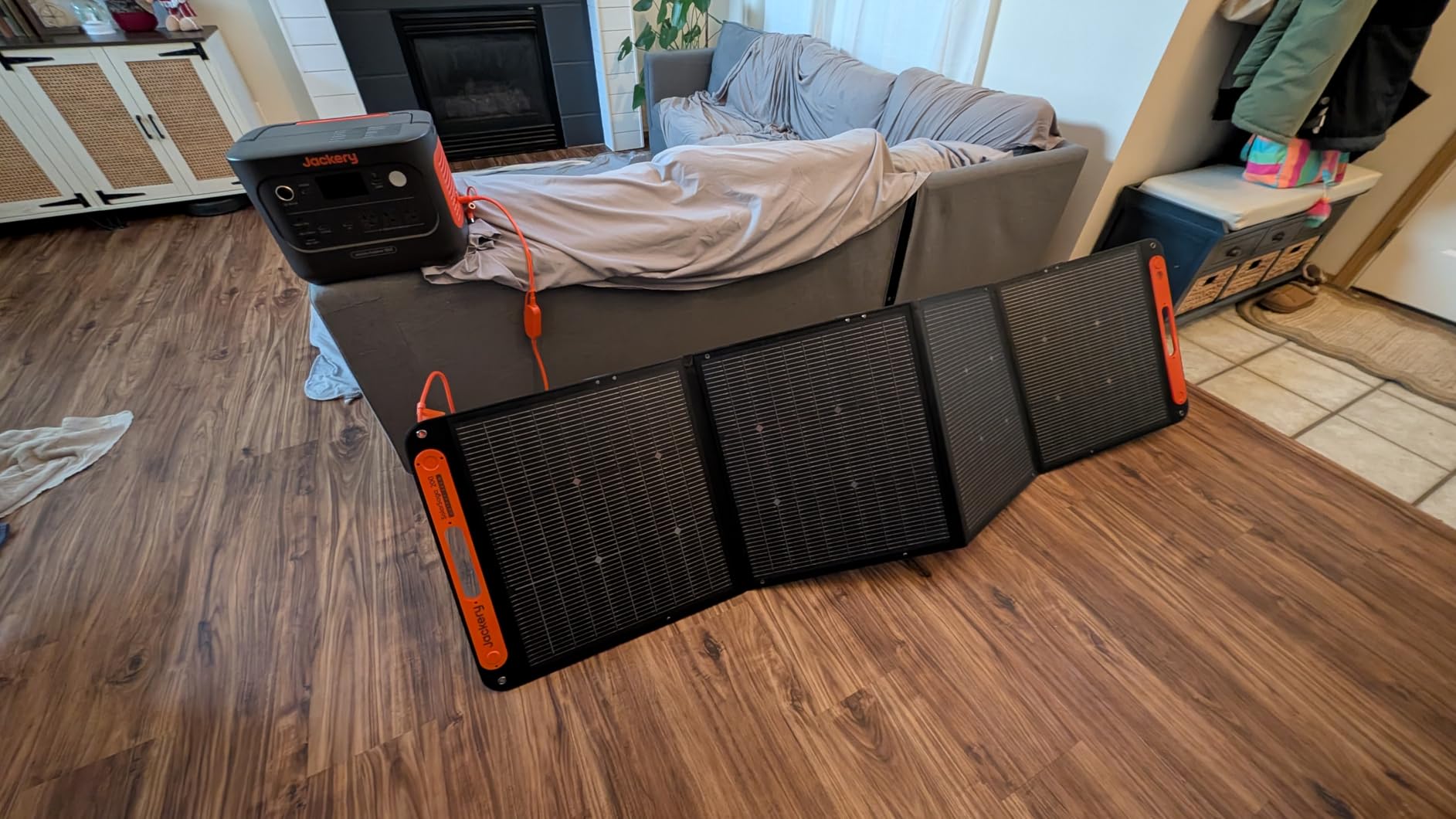
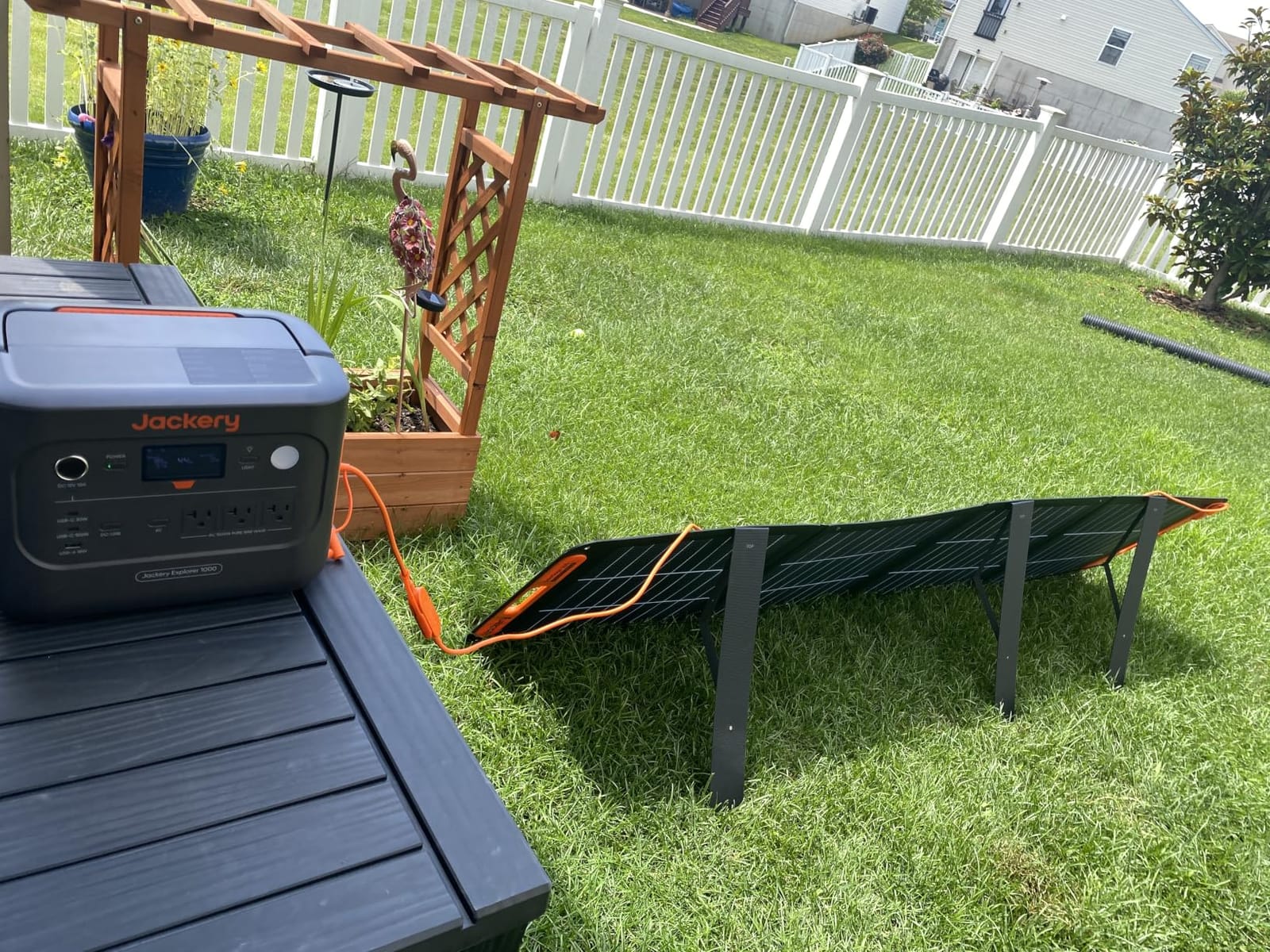
Charging is the standout. Zero to full in about an hour on wall power, or 0 to 80 percent in six hours from the bundled 200W SolarSaga panel. The panel kept the battery level while simultaneously powering a portable fridge in owner testing, which is the exact use case for a weekend cabin with a weak grid tie.
The warranty is five years from the manufacturer, and the LFP pack is rated at 4000 cycles with more than 70 percent capacity retained, which works out to a decade of daily use before you start losing meaningful runtime.
Why weekend cabin owners keep buying it
This is the unit to buy if you open the cabin on a Friday, run lights, a fridge, a router and a laptop, and close it up Sunday. The 23.8-pound weight means you can stage it in the cabin rather than hauling it back to the truck each visit, and the pure sine wave output is safe for anything with a compressor or a sensitive board.
It is also the easiest of the ten to set up. No app is required for normal operation, and the charging modes are exposed in the app as a simple choice between fast charging, a 30dB quiet mode and an efficiency mode.
The panel and the port count are the catch
The bundled 200W panel is the most common complaint in the reviews. It is unwieldy, sags in the middle, blows over in wind and needs frequent repositioning, and the short included cable forces the panel and the station to sit close together. Budget for a second, sturdier panel or a proper mounting solution.
Two smaller things worth knowing. The advertised one-hour charge only happens if you turn on emergency mode in the app, and the default full charge is about 1.7 hours. There are also only three AC outlets and one USB-A port, which gets tight if you are running a fridge plus a router plus a lamp plus a coffee maker.
4. BLUETTI Elite 200 V2 – The Best 2 kWh Build for a Part-Time Retreat
BLUETTI Elite 200 V2 Solar Generator & 2x200W Solar Panel Included 2073.6Wh
2073.6Wh LiFePO4
2600W continuous
3900W power lifting
6000+ cycles
53.4 lbs
Pros
- 2073.6Wh in a footprint close to the smaller 1152Wh AC180
- 6000+ cycle automotive-grade LiFePO4 rated for a 17-year lifespan
- 2600W continuous runs fridges freezers microwave and air fryer together
- Measured 95 percent inverter efficiency with roughly 10W standby draw
- 0-80 percent in 50 minutes on dual AC and DC charging
Cons
- Not expandable with BLUETTI external battery modules
- Solar input capped at 60V so 1000W of panel input is hard to reach
- App criticized for lacking temperature monitoring and charge limits
This is the station we would put in a part-time retreat cabin. 2073.6Wh of automotive-grade LiFePO4 in a package barely larger than the much smaller AC180, so the energy density is genuinely unusual. Most of the class gives you a bigger box for more watt-hours; this one barely changes footprint.
The battery spec is the headline for a cabin with a long life ahead of it. Six thousand cycles is roughly double what most competitors in this roundup offer, and BLUETTI rates it for a 17-year lifespan. The standby draw of about 10W is three times lower than comparable stations, which matters enormously on a cabin that sits empty for weeks, because that idle draw is pure loss you never get back.
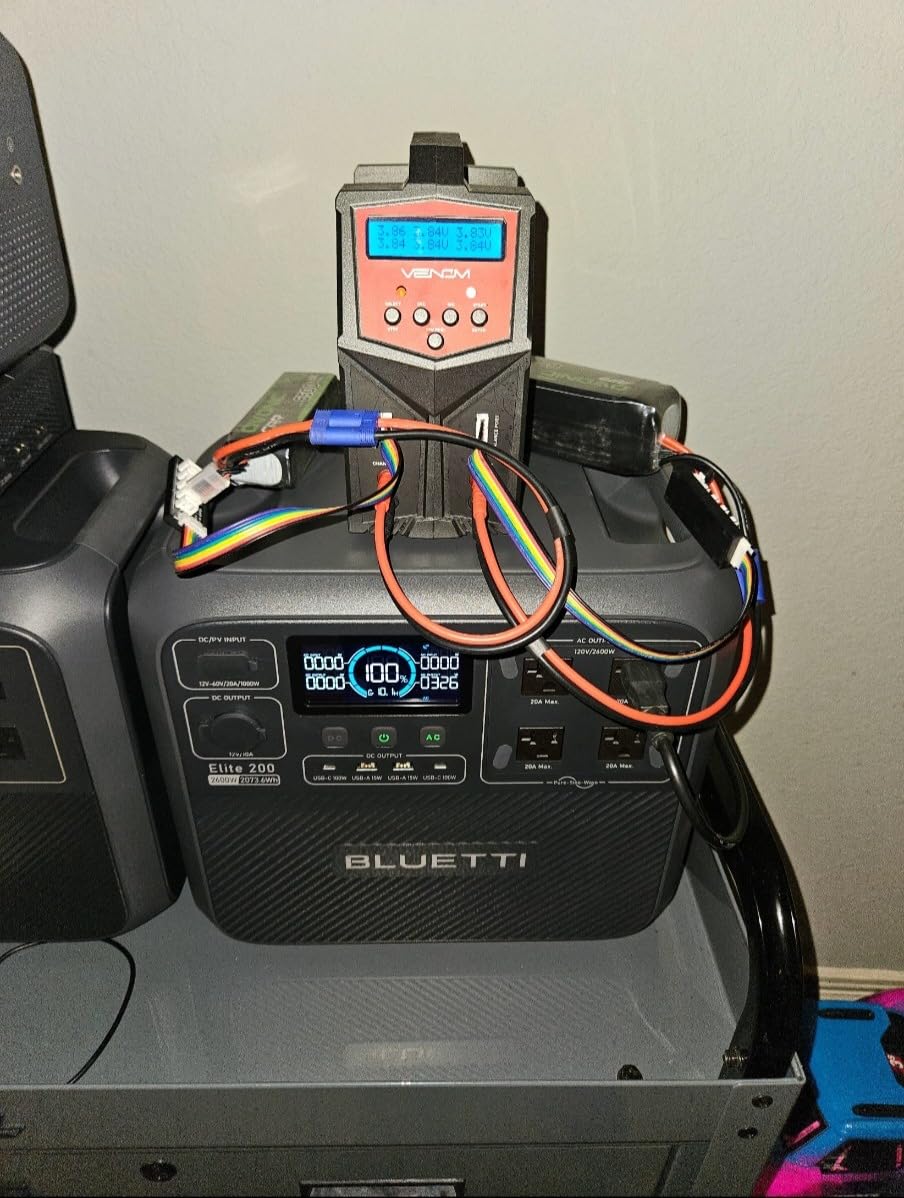
Inverter efficiency measures above 95 percent in testing, which means less of your stored energy is wasted as heat. Combined with the low standby figure, that is the difference between a battery that quietly drains over a two-week absence and one that arrives ready to run. Owner testing shows a 29 cubic foot refrigerator running more than 24 hours on a single charge, and 2600W continuous is enough to run a fridge, chest freezers, fans, a microwave and an air fryer at once.
Recharging is quick. Zero to 80 percent in 50 minutes on dual AC and DC charging, or a full charge in about 2 hours on 1200W alternator charging. The kit ships with two 200W panels, so your starting solar array is already 400W.
Why this is the part-time retreat pick
At roughly 1500 usable watt-hours after conversion losses, this is the first station in the list that comfortably covers a full day of realistic cabin life with margin. A refrigerator cycling all day, LED lighting, a router, a laptop, a coffee maker and an hour of a small space heater still leaves headroom at the end of the day.
It also has the lowest idle loss in the roundup, so leaving it installed through a cold shoulder season costs less than it would on any other 2 kWh unit here. For a cabin that is visited but not heated in winter, that is the number that actually decides the purchase.
No expansion path is a real limit
Unlike the comparable AC200L, this unit does not take BLUETTI external battery modules. If your needs grow beyond roughly 2 kWh, you are replacing the station rather than adding to it, and that is a genuine dead end in a category where most buyers eventually want more capacity.
Two other limits. Solar input is capped at 60V, so reaching the 1000W maximum in practice requires careful panel voltage matching, and the 12V DC side is sparse with no 30A output and no 5521 ports, which hurts if you run RV-style DC loads. The app is also the weakest part of the package.
5. EF ECOFLOW DELTA Pro 3 – The Most Whole-Cabin Power
EF ECOFLOW DELTA Pro 3 Solar Generator 4096Wh with 2X400W Solar Panels
4096Wh LFP
4000W continuous
6000W X-Boost
240V output
expands to 48kWh
Pros
- 4096Wh expandable to 48kWh for 2-4 days of whole-home backup
- 4000W continuous on both 120V and 240V circuits
- Seven unique and eighteen combined charging methods
- 10ms switchover suited to NAS and server loads
- Automotive-grade LFP cells with an IP65-rated battery pack
Cons
- Very heavy at 115 pounds so it stays where you put it
- Station and 400W panels ship in separate packages
- Only 91 reviews on this configuration so the feedback base is thin
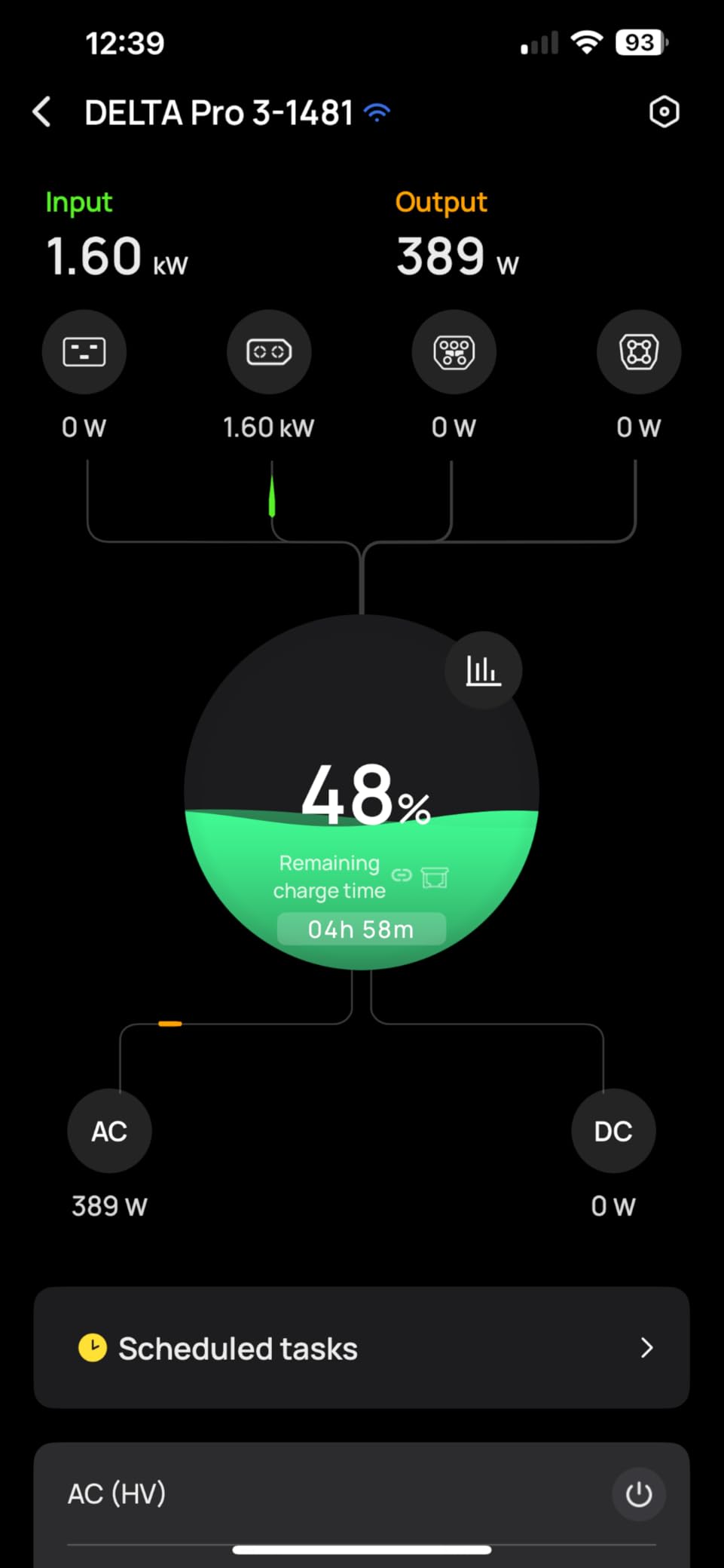
The DELTA Pro 3 is the only station here that outputs 240V, and that single fact changes what you can run. A 3-ton central air conditioner, a 1 HP water pump, a well pump with a hard start, electric heat: none of these are reachable from a 120V-only inverter, and all of them are on the list of things cabin residents actually need.
At 4096Wh of LFP storage expandable to 48kWh, this is the most genuinely whole-cabin-capable unit we looked at. EcoFlow claims two to four days of whole-home backup from the base configuration, and the 4000W continuous output can reach 6000W with X-Boost or scale to 12000W when paired.
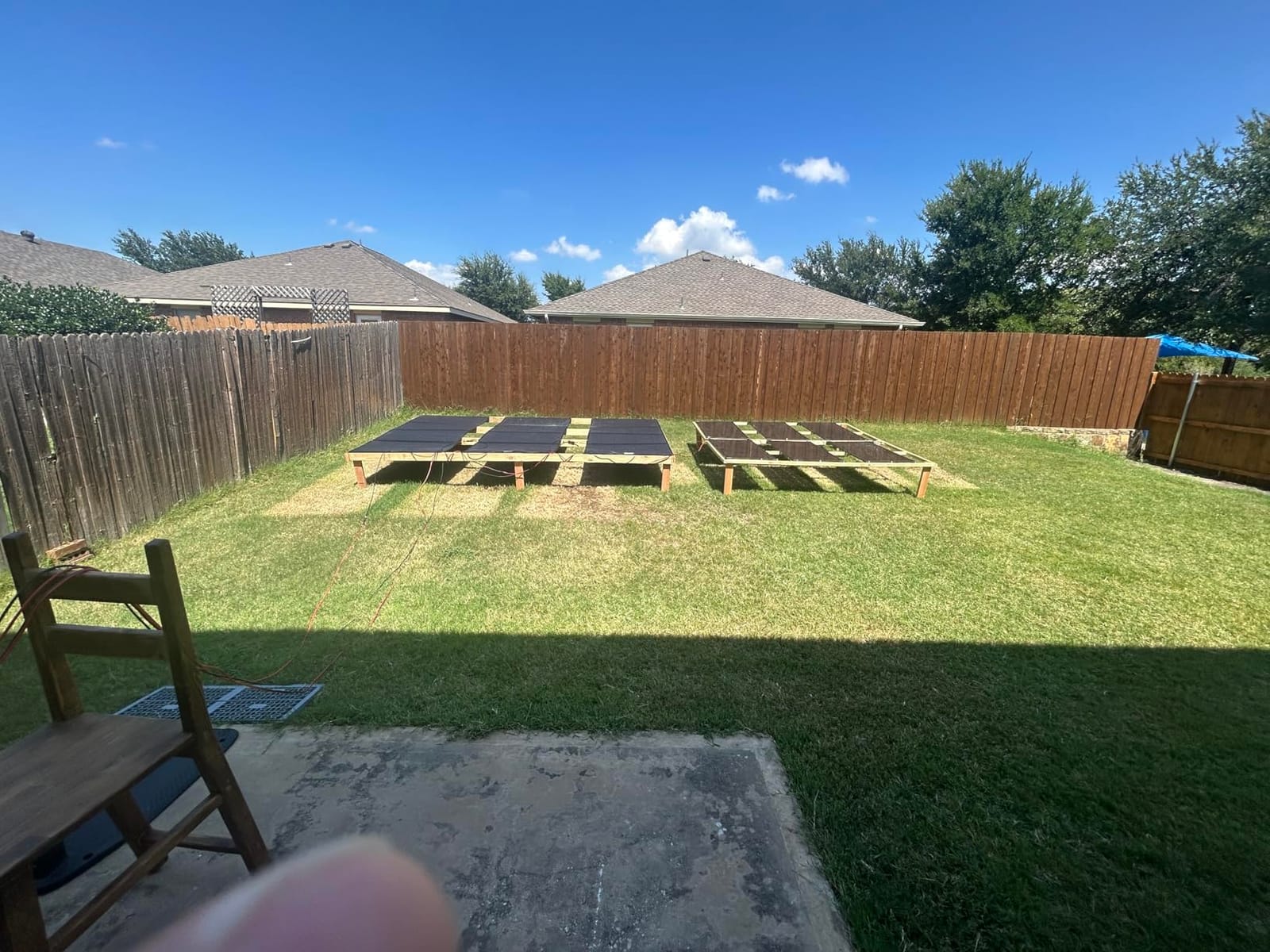
The charging flexibility is the underrated part. Seven methods and eighteen combinations, covering AC wall, solar, a gas generator, an EV charging pile and the Smart Home Panel 2. For a remote cabin that already has a generator someone occasionally runs, the ability to charge the battery from that generator is a real advantage during a long storm.
It also runs quietly, down to 30dB with X-Quiet technology, which matters if the station is installed inside the living space rather than in a shop. The 10ms switchover keeps servers, NAS units and medical refrigerators running without a blink.
What kind of cabin needs this one
A full-time residence with electric heat, a well pump, or a cabin that also serves as an office with a server closet. The 240V output and 4000W continuous rating are the reasons to save up for it, and the expansion path to 48kWh means you can grow into rather than replace.
It is also the closest thing here to a fixed installation. That is a feature for a full-time cabin where the unit lives in a utility room on a shelf, and a problem for anyone who wants to move it.
Weight and a thin review base
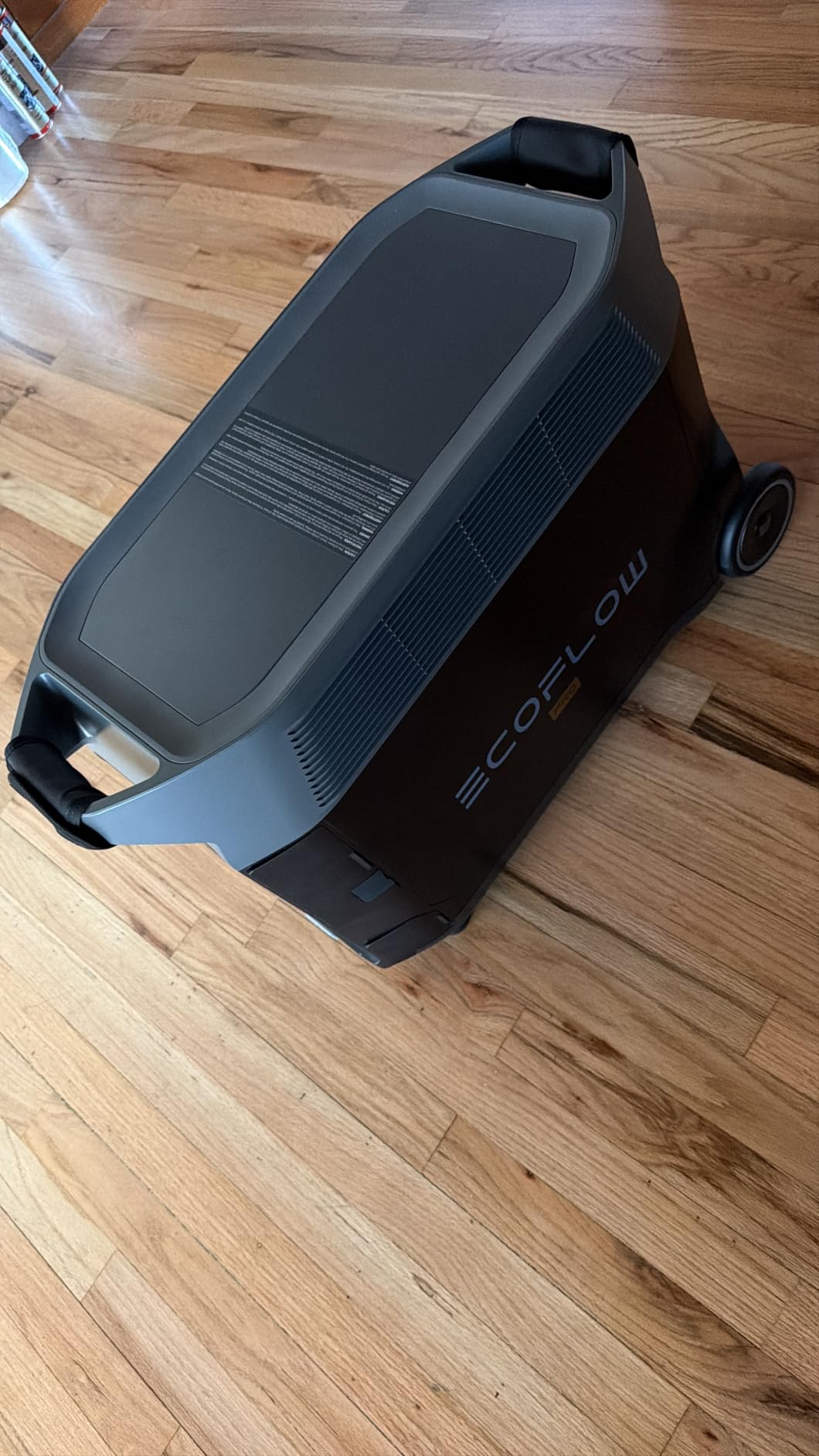
At 115 pounds this is not portable. Two people and a dolly is realistic, and you would choose where it lives before the day it arrives. The 400W panels and the station also arrive in separate packages, which means planning the delivery date around both.
The bigger caution is evidence. Only 91 reviews exist on this specific configuration, far fewer than anything else here, so we are relying on the spec sheet and a small owner sample for the verdict. Some of the published spec metadata for this listing is also internally inconsistent, which is a reason to verify the final numbers on the unit itself.
6. EF ECOFLOW DELTA Pro 3600Wh – The Best Semi-Permanent Install
EF ECOFLOW Portable Power Station 3600Wh DELTA Pro, 120V 3600W AC Output
3600Wh LFP
3600W continuous
4500W X-Boost
15 output ports
expands to 25kWh
Pros
- 3600Wh expandable to 25kWh for genuine multi-day autonomy
- Fifteen output methods including five AC outlets
- 2.7 hours on an 1800W wall outlet or 2.8 hours on four 400W panels
- Owners use it as a gas generator replacement and report major fuel savings
- App control over battery limits and charge settings
Cons
- Very heavy at 99 pounds
- Solar input limited to 15A which constrains realistic panel input
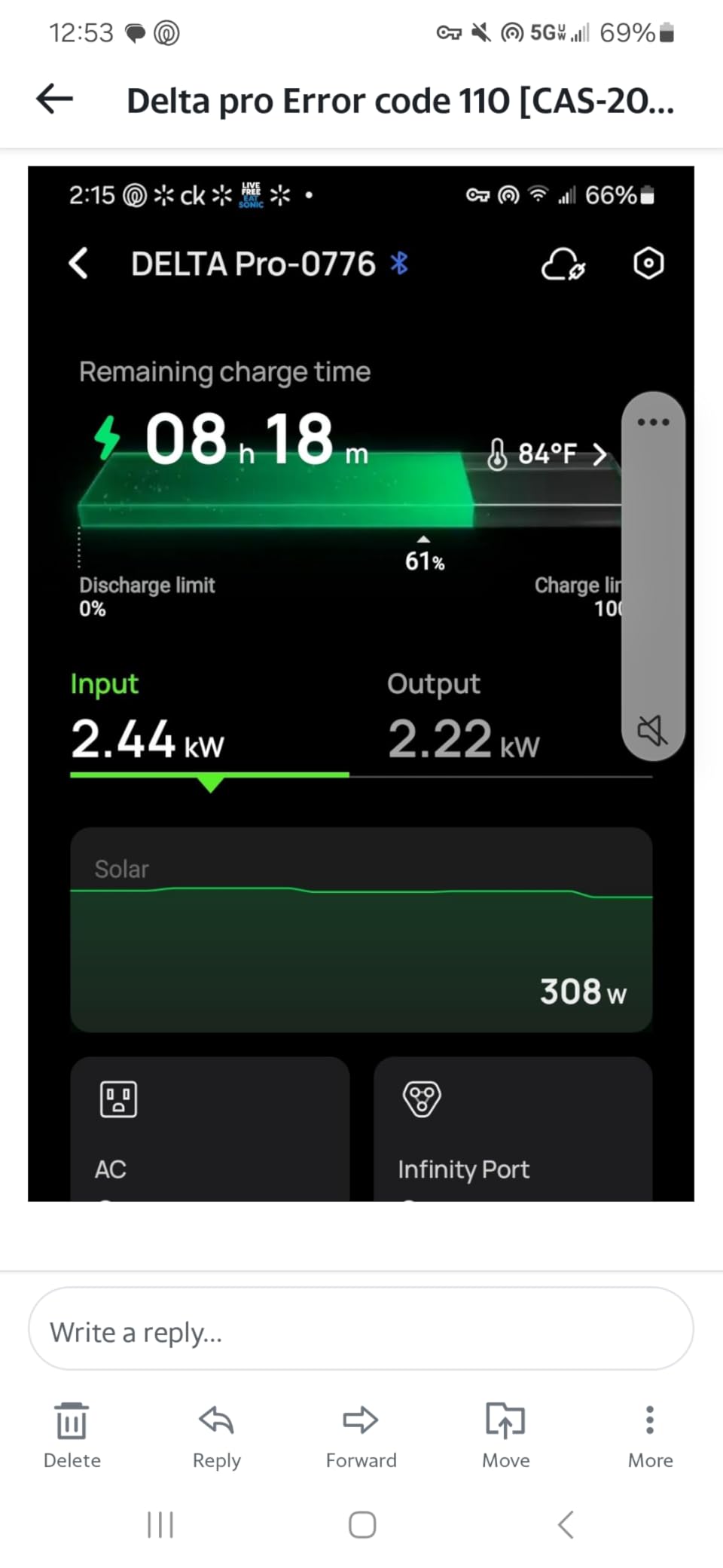
- Some owners report error 121 and OVERLOAD faults with thin support
The DELTA Pro 3600Wh is what most full-time off-grid residents in our research described as the semi-permanent choice. At 3600Wh expandable to 25kWh, it is big enough that a fridge, a furnace, internet and a computer can all run through a multi-day outage, and small enough that it stays in one room with a wheeled handle.
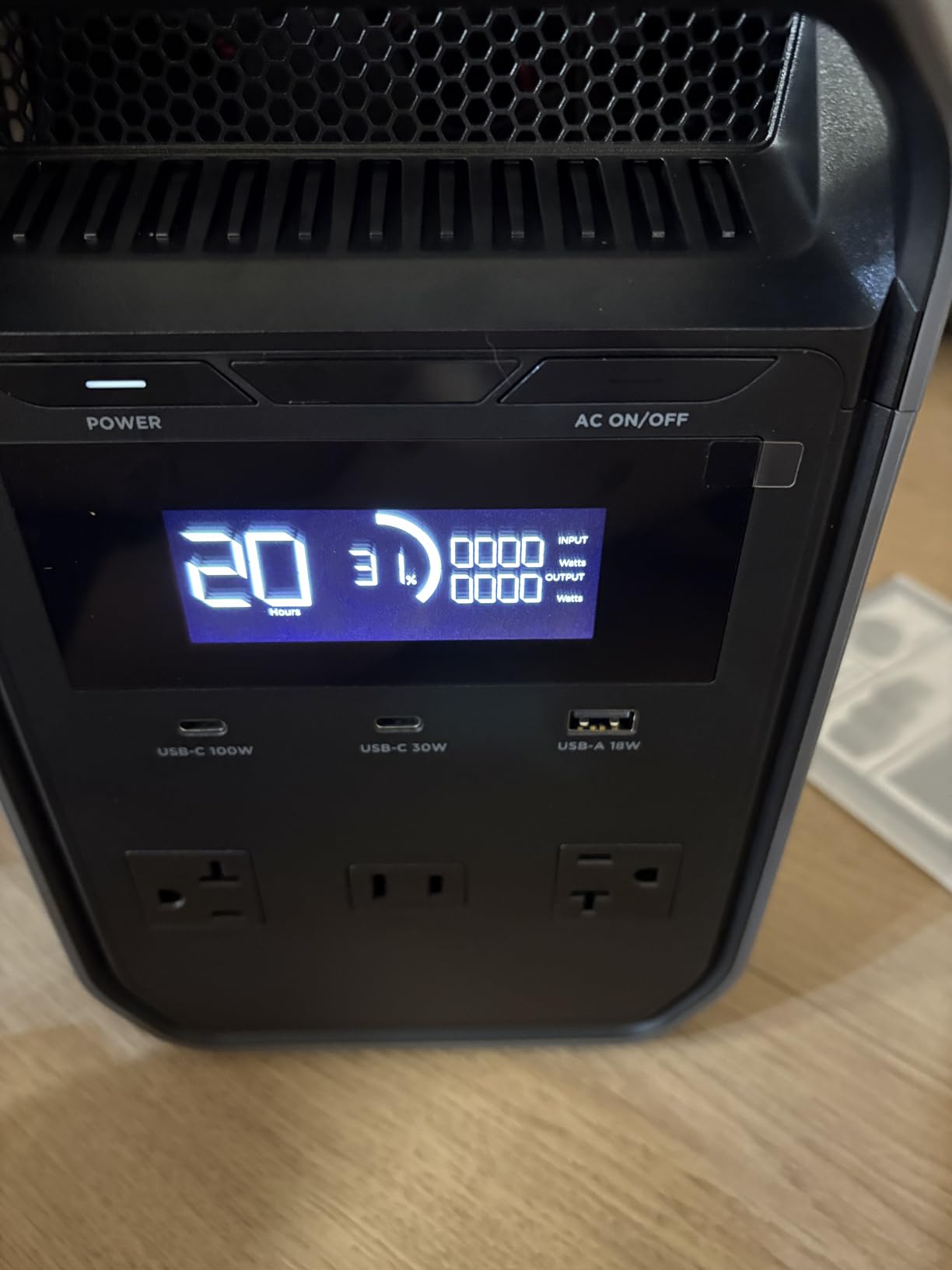
Fifteen output methods is by far the most here, with five AC outlets, two 100W USB-C ports, DC outlets and a car power output. That means you can run several appliances at once without stringing extension cords across a cabin floor, which is a safety improvement as much as a convenience one.
Recharging is quick in every configuration that matters. Full in 1.8 hours on a 240V outlet, 2.7 hours on an 1800W wall connection, or 2.8 hours from four 400W solar panels at up to 23 percent conversion efficiency. Owners also report it holding up through sustained commercial loads with no voltage drops, and one heat-press vendor describes the output as smooth and consistent.
Several users in areas with frequent multi-day outages describe it as a straight replacement for a gas generator, with the savings in fuel and maintenance becoming obvious within the first season.
Why full-time residents end up here
It is the sweet spot between the 2 kWh part-time class and the 4 kWh fixed-install class. Roughly 2500 usable watt-hours after losses is enough for a real day of essential living, and the expansion path to 25kWh means you never have to buy a second system.
App control over battery limits and charge settings is what turns it into an install rather than a product. Set a charge ceiling for seasonal storage, monitor temperature remotely, and check state of charge from town before driving three hours to check on the place.
Support and the solar ceiling are the drawbacks
The 99-pound weight is real, and one owner reported it blowing a breaker on first charge, so give it a dedicated circuit. The 15A solar input limit is the more annoying constraint, because it caps how much panel array you can actually bring in regardless of what you mount on the roof.
There is also a persistent tail of error 121 and OVERLOAD faults reported by owners who feel technical support response is inadequate, and at least one account of a unit failing within weeks. Budget for support contact as part of the purchase decision if you live far from a service center.
7. EF ECOFLOW Delta 3 Classic – The Best Panel in the Box
EF ECOFLOW Solar Generator Delta 3 Classic with 220W Solar Panel, 1024Wh
1024Wh LiFePO4
1800W continuous
2600W X-Boost
220W bifacial panel
45min to 80%
Pros
- Zero to 80 percent AC charge in 45 minutes and full solar recharge in 5.8 hours
- 220W bifacial N-Type panel measured at 190-200W even in partial shade
- Panel folds with magnetic clasps and includes a sun-angle dial and adjusters
- Bright display with per-port output readout and firmware updates
- 3-year warranty plus 2 extra years on registration
Cons
- Noticeable weight for its size
- 15A solar input limit means low-voltage arrays charge below 500W
- X-Boost above 1800W appears limited to a single AC outlet at a time
The Delta 3 Classic ships with a 220W bifacial N-Type panel rated for up to 25 percent conversion, and that panel is the standout. Owners measured it delivering 190 to 200W in partial shade, which is far better than the 200W portable panels most kits include and which tend to fall apart in exactly the conditions a cabin endures.
Full solar recharge in 5.8 hours from that panel means a full day of usable cabin power per sunny afternoon, which is the whole game for someone without a grid tie. Zero to 80 percent from a wall outlet takes 45 minutes.
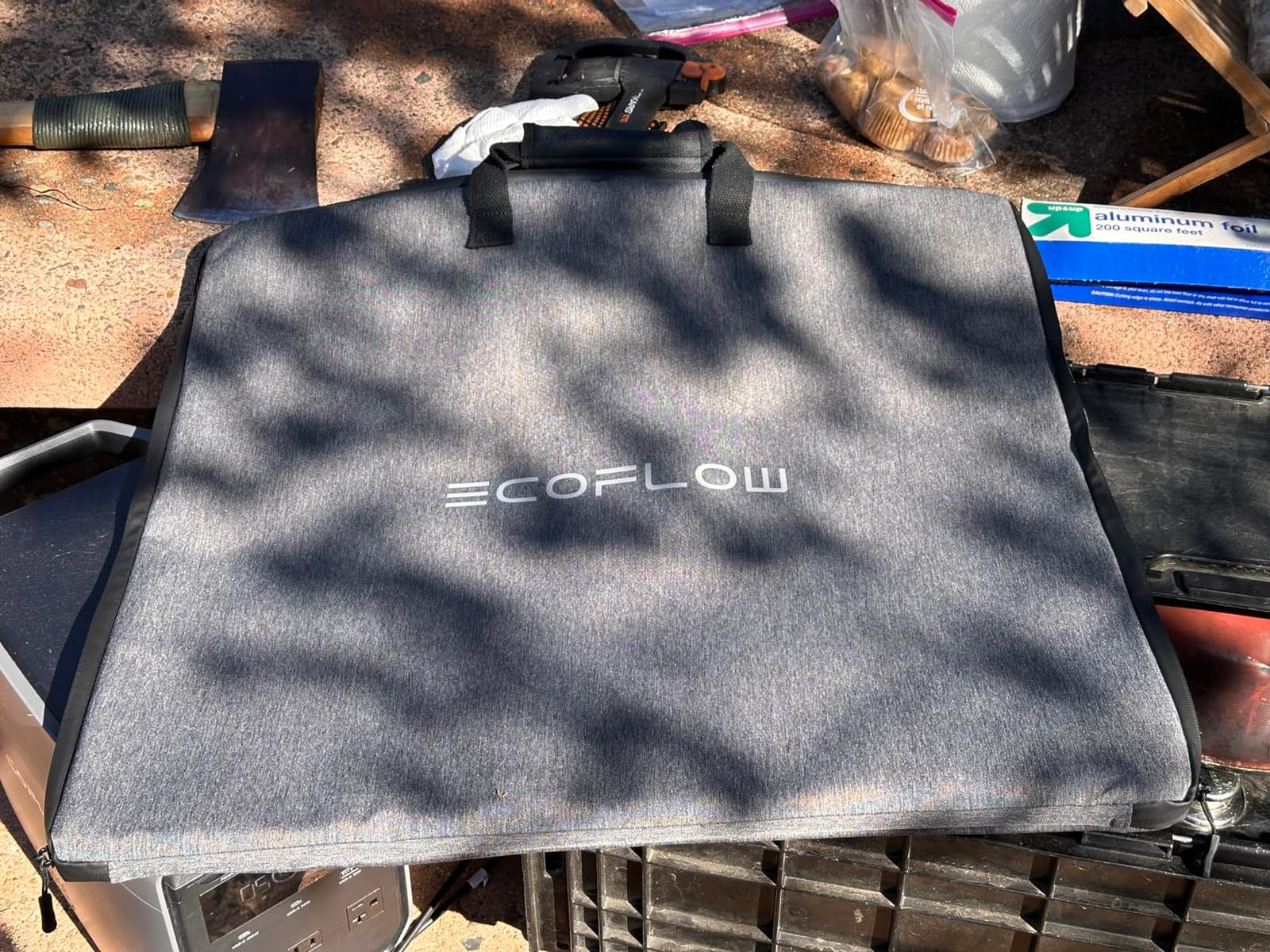
Other details that show care. The panel folds shut with magnetic clasps and comes with a sun-angle dial, angle adjusters and a carrying bag, so getting good production out of it does not require building a rack. The display shows per-port output with app-adjustable brightness, and the app lets you lower the AC charge rate to 500W to reduce fan noise and protect cell longevity.
Output is 1800W continuous with 3600W surge, expandable to 2600W with X-Boost, and the UPS switches over in under 10ms. Owners report running lights, fans, a sump pump and a fridge or freezer, with one keeping lights and fans going for about six hours through an outage.
Why cabin owners pick this one
Panel quality decides autonomy more than most buyers expect, and this is the kit where the panel is better than the competition. If your cabin has a south-facing roof or a clear southern horizon, a bifacial panel that works in partial shade is worth more to you than an extra 200Wh in the battery.
It is also a solid weekend-cabin and part-season backup choice, with a warranty of three years plus two more on registration, claimed straightforwardly through the app.
Solar input limits and single-outlet boost
The 15A solar input current limit means panel arrays producing under 33V charge below the 500W maximum, so you are limited in how you string panels if you outgrow the included one. Adding a second array to reach the full ceiling is not straightforward.
X-Boost above 1800W appears to apply to a single AC outlet at a time, which means a 2000W coffee maker and a kettle cannot both borrow the boost. And the station and panel ship separately, so parts can arrive days apart.
8. Jackery HomePower 3000 – Best for RV-Style DC Loads
Jackery HomePower 3000 and 2x200W Solar Panels, 3072Wh, 3600W AC Output
3072Wh LFP
3600W continuous
7200W surge
built-in TT-30 RV port
59.5 lbs
Pros
- 3072Wh runs a refrigerator for 1-2 days with other loads alongside
- 3600W output runs an RV air conditioner and a microwave simultaneously
- Lightest and smallest 3kWh-class unit at 59.5 lbs
- UL-certified 20ms UPS for cameras and medical refrigerators
- Quiet in normal indoor use
Cons
- Not expandable so the battery cannot be extended
- Only two 200W panels included which take around 9-11 hours to reach 80 percent
- Minimum UPS load requirement is undocumented so it can shut down on light loads
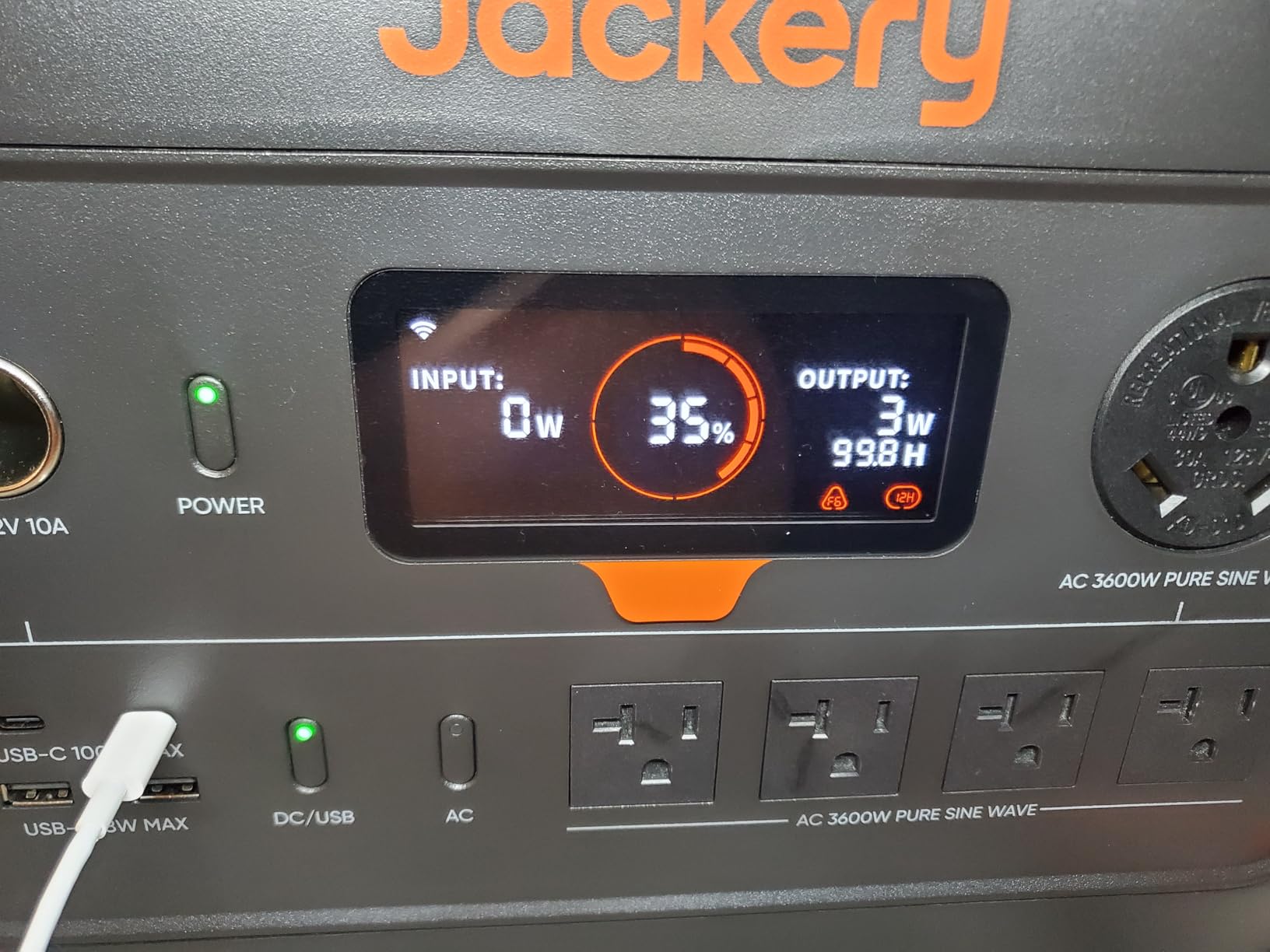
The HomePower 3000 is the one to look at if your cabin came with an RV or a trailer on the property, or if you want to charge an e-bike. The built-in TT-30 RV port is the detail that separates it, and it is rare in this class. 3072Wh with 3600W continuous and 7200W surge is otherwise a full-home backup package.
Its CTB cell-to-body packaging makes it 47 percent smaller and 43 percent lighter than comparable 3 kWh units, which translates to 59.5 pounds. That is still a two-person lift, but it is meaningfully better than the alternative and it fits through a standard doorway without a remodel.
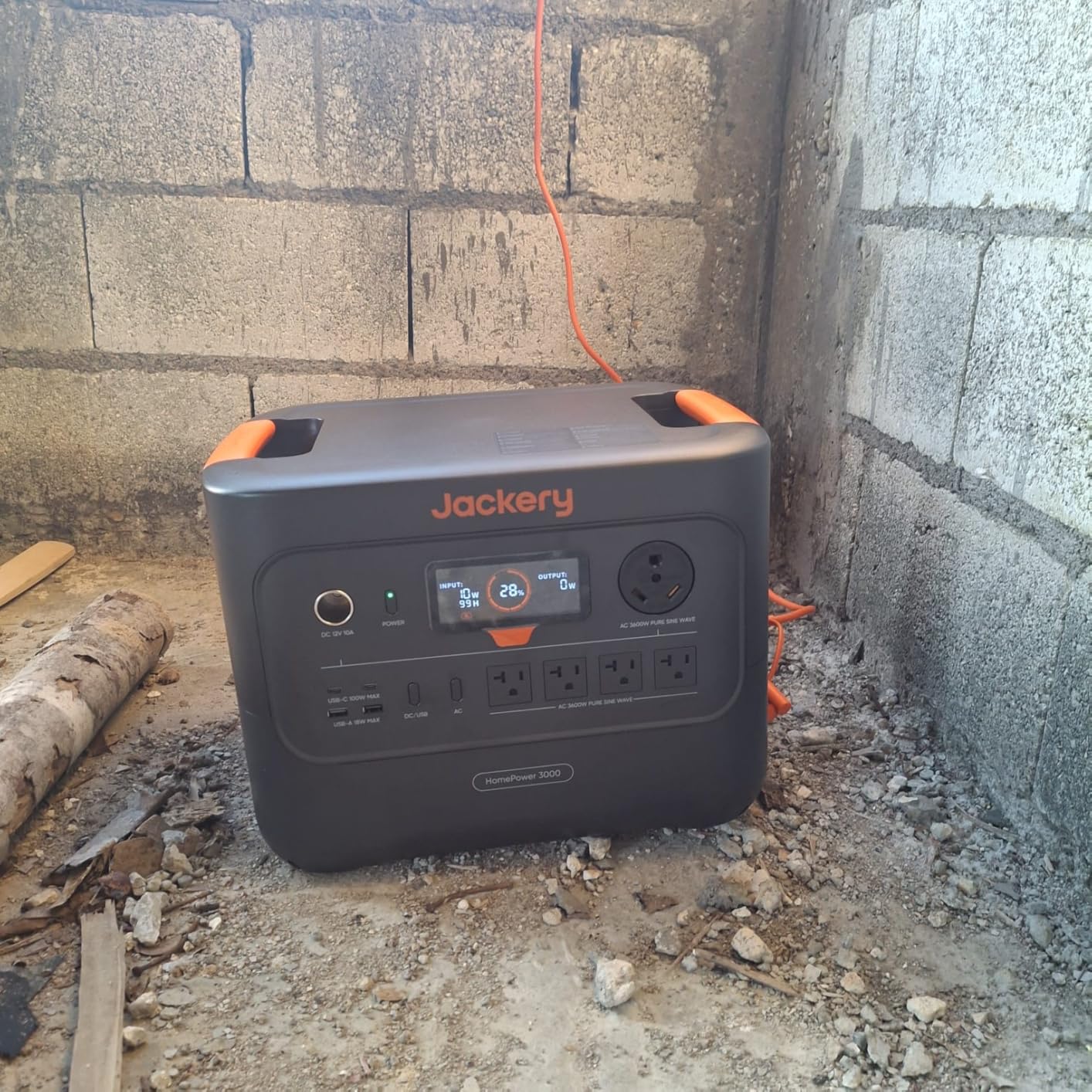
Owner testing is where it separates from the pack. One owner ran a refrigerator for two days while simultaneously charging two e-bikes, phones, a television and internet. The 3600W output comfortably runs an RV air conditioner and a microwave at the same time, which is precisely the combination that trips smaller inverters.
Recharging is flexible: full in 1.7 hours on hybrid AC and DC, 2.2 hours on AC alone, and about 6 hours of full solar charge on a good day. The UL-certified 20ms switchover is the right spec for security cameras, medical refrigerators and remote work calls.
What this one covers well
A part-time retreat that also needs tools, a workshop, or an e-bike. 3072Wh gives roughly 2000 usable watt-hours, which is a full day of refrigerator, lighting, internet, laptops and a few hours of heavier appliance use, plus a real shot at riding through one bad weather day.
The quiet operation is genuinely useful indoors. Many owners describe running it in the main living space without it drawing attention, which is what allows it to serve as a UPS for a home network rather than a garage-only device.
It cannot grow and its panel array is thin
The battery is not expandable. Owners with larger rigs have no path forward except buying a bigger station, which is the same dead end the Elite 200 V2 has and worth weighing before you buy.
Two 200W panels reaching 80 percent in around nine to eleven hours is slow for multi-day autonomy, and most owners add panels. The undocumented minimum UPS load is also a real quirk, since a station can shut itself down with only a modest load attached. On support, owners report an unresolved internal flashing light and a broken support page, so register the unit and keep the serial number somewhere safe.
9. Jackery Explorer 2000 v2 – The Lightest 2 kWh Option
Jackery Explorer 2000 v2 and 2x200W Solar Panels, 2042Wh, 2200W AC Output
2042Wh LiFePO4
2200W continuous
station 39.5 lbs
20ms UL1778 UPS
Pros
- Station weighs only 39.5 lbs
- the lightest 2kWh unit in this roundup
- 0-80 percent in 66 minutes on AC and full in 102 minutes in emergency mode
- 20ms UL1778-certified UPS switchover
- Silent charging mode at 30dB for overnight replenishment
- Runs silently with no fumes so it is safe indoors
Cons
- Listed kit weight of 66.8 lbs includes both 200W panels
- Only three AC ports for a 2kWh unit
- Solar hookup requires swapping between two different DC plug types
The number that matters here is 39.5 pounds. That is the station on its own, without panels, and it is the lightest 2 kWh unit in this roundup by a wide margin. Jackery achieves it with the same CTB cell-to-body packaging used in the HomePower 3000, and for a cabin with a loft, a narrow stair or a second floor, that difference decides whether the battery lives in the cabin or in the truck.
Everything else is strong too. 2042Wh of LiFePO4, 2200W continuous output, 20ms UL1778-certified UPS switchover and a 30dB silent charging mode that lets you refill overnight without waking the house.
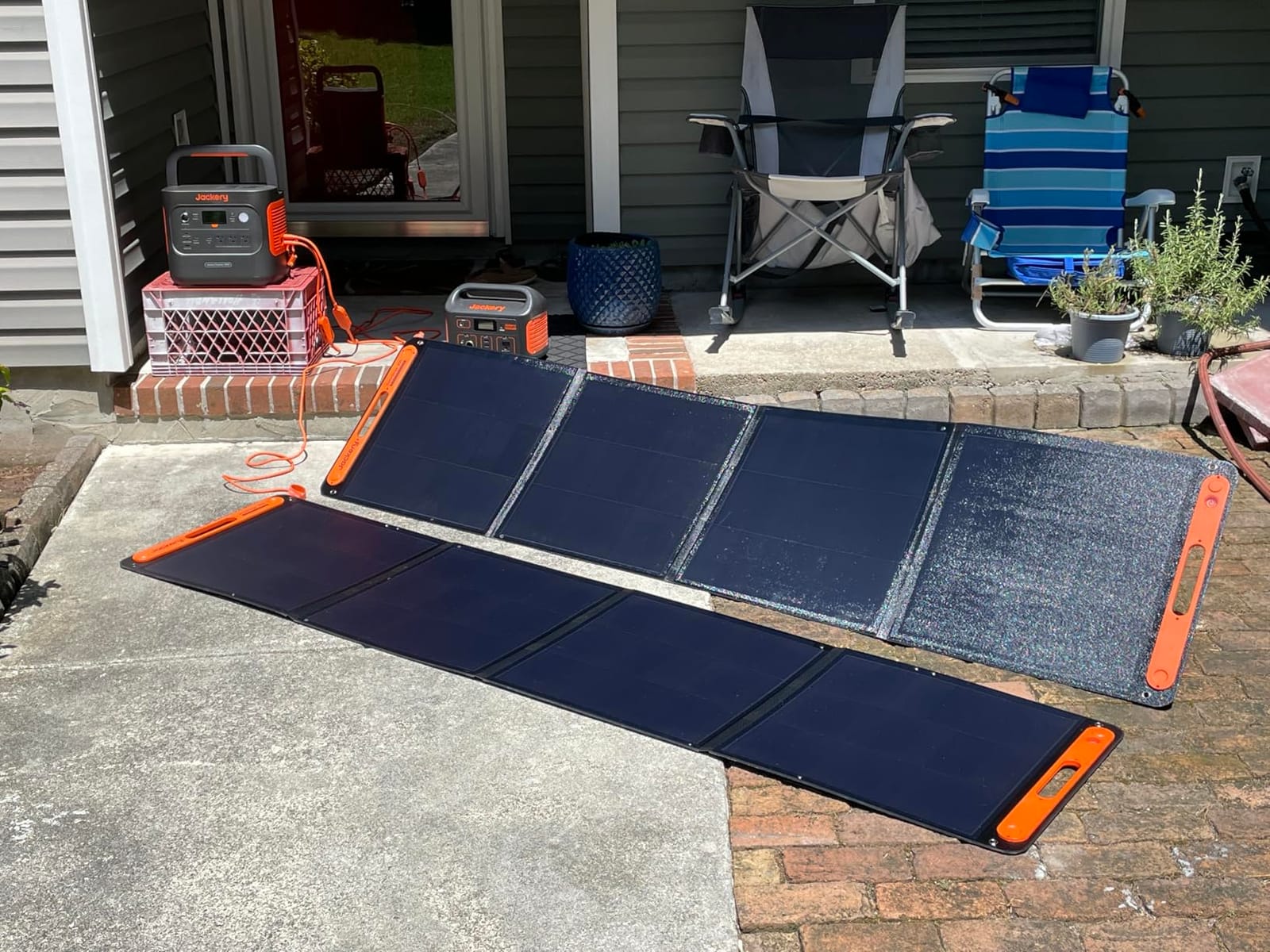
Charging is fast: zero to 80 percent in 66 minutes on AC, or a full charge in about 102 minutes with app-activated Emergency Super Charging. From 400W of panels, a full solar recharge takes roughly six hours. There are three AC outlets plus 100W USB-C PD, so a phone, a laptop and a fridge can all be fed at once.
The chemistry is rated for up to ten years of performance, and the temperature control system is what cuts fan noise in normal use. Running it indoors with no fumes is the reason many cabin owners will never go back to a combustion unit for backup.
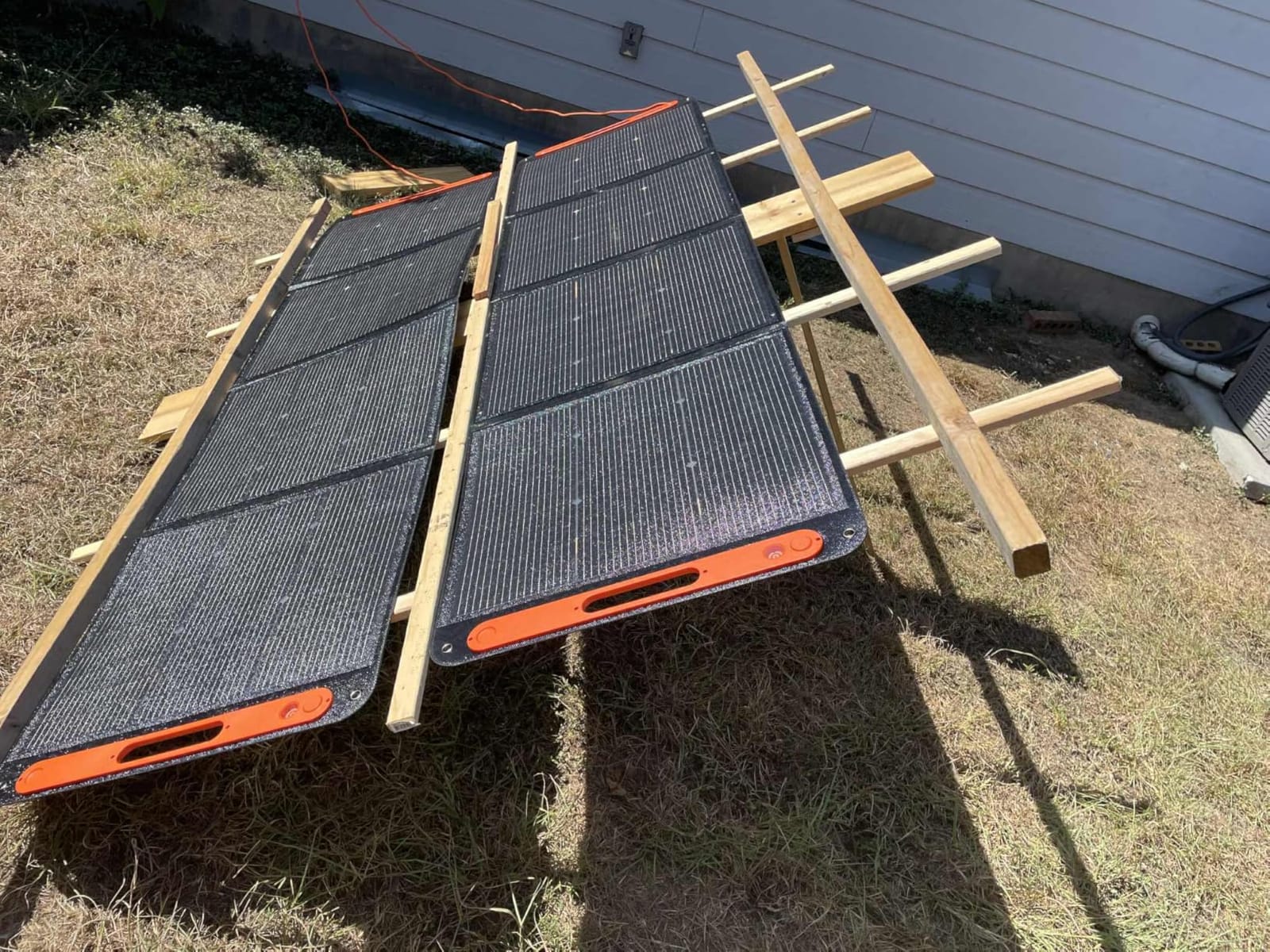
Why cabin builders like this one
It is the practical answer for a part-time retreat where you want genuine 2 kWh of storage without a 60-pound unit. 1400 or so usable watt-hours covers a refrigerator overnight, lights, a router, a laptop and a couple of hours of a coffee maker with room to spare.
The UL1778-certified 20ms switchover is also the right standard if you run anything that dislikes a power interruption, and the silent mode means you can top it up while sleeping in a cabin with the unit in the same room.
Watch the listed weight and the port count
The 66.8-pound figure on the listing covers the full kit including both 200W panels. Judge the 39.5-pound station weight, and budget for the panels separately, because a full solar setup at this capacity is a two-trip job.
Three AC outlets is modest for a 2 kWh unit, so simultaneous high-draw appliances can exhaust them. The solar connection also requires swapping the L-shaped DC7909 plug for the straight DC8020 plug, which is easy to get wrong on a dark roof, and the unit and panels may ship in separate packages.
10. Dabbsson 2000L – The Budget Pick with the Most Outlets
DABBSSON Portable Power Station 2000L, 2048Wh Semi-Solid LiFePO4 Battery, 2200W AC Output 6, 3300W Power Boost, 1 Hr Fast Charge, Solar Generator for Home Backup, Camping & RVs (Solar Panel Optional)
2048Wh semi-solid LiFePO4
2200W continuous
3300W power boost
6 AC outlets
41 lbs
Pros
- Semi-solid LiFePO4 cells rated for 4000+ deep cycles to 80 percent capacity
- 2200W continuous with 3300W boost handles air fryers and 1500W kettles
- Six AC outlets is the most on any station in this roundup
- Full recharge in one hour on AC plus 800W MPPT solar and 12V car input
- 41 pounds and a UL94-V0 flame-retardant housing
Cons
- App Wi-Fi pairing often fails and must be set up over Bluetooth
- Cooling fan cycles audibly every few minutes even at zero load
- Charge limit settings in the app do not persist
The Dabbsson 2000L is the value pick of this roundup, and it is not a close call. 2048Wh of semi-solid LiFePO4 rated for 4000+ deep cycles, 2200W continuous, 3300W of power boost and 800W MPPT solar input, in a 41-pound housing. Owners who own power stations in their dozens consistently recommend it on value.
Two things stand out. Six AC outlets is the most of any station here, which solves the extension-cord sprawl problem better than any competitor, and the semi-solid cell chemistry is claimed to deliver about 1.3 times the runtime of a standard LFP pack at the same capacity. One owner ran four refrigeration units for 7.5 hours and a double-door fridge for 20 hours and 40 minutes.
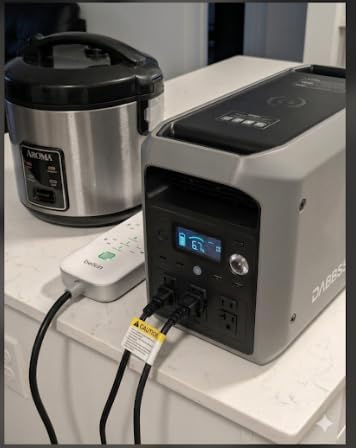
The 3300W boost handled peaks above 4000W in testing, which is what lets it start an air fryer, a microwave or a 1500W kettle without a separate soft-start box. It is the cheapest way here to cover a workshop, and the one-hour full recharge on AC keeps turnaround short.
Warranty is three years plus two extended years on registration, and owners repeatedly describe Dabbsson support as prompt and reliable, which is more than several larger brands manage.
Who this is right for
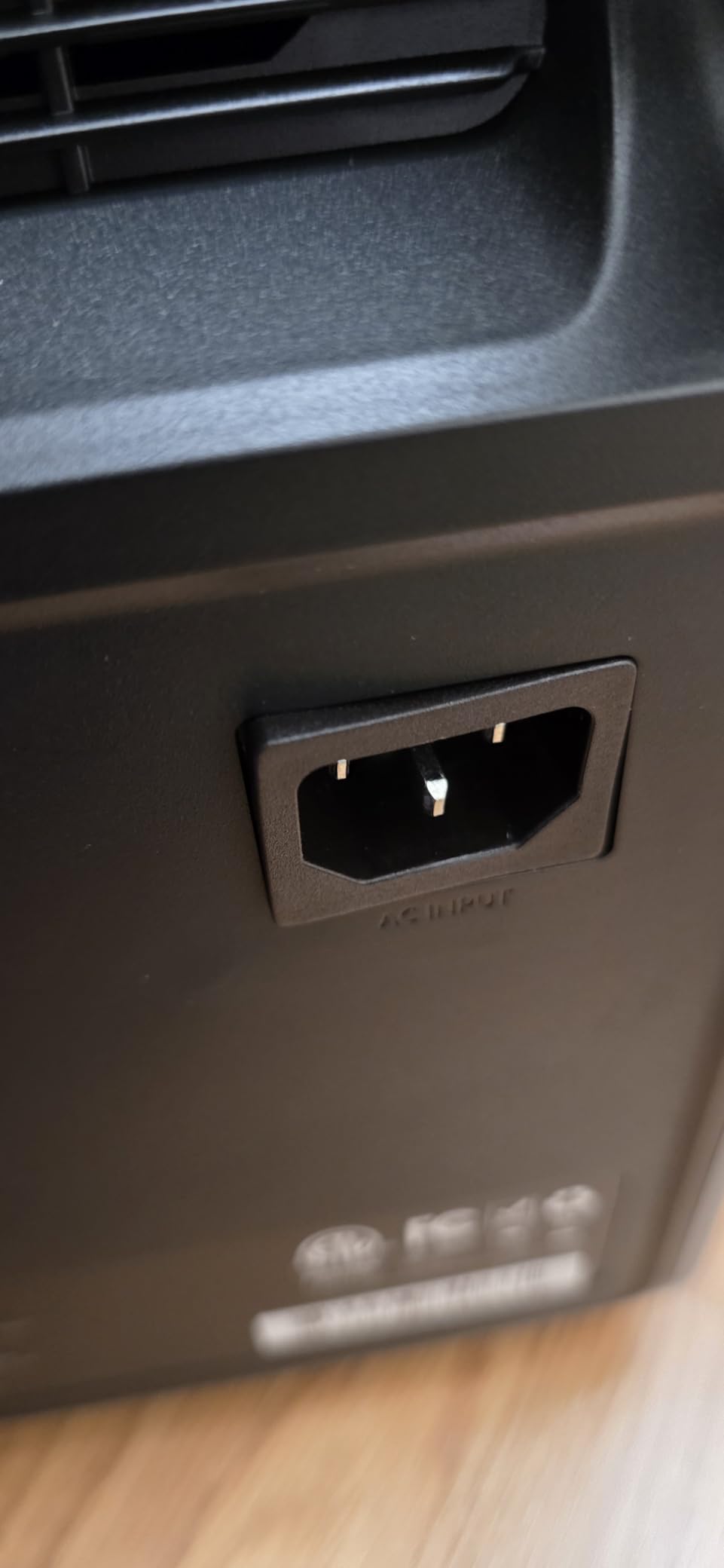
A part-time retreat or a backup plan for a cabin that still has a weak grid tie, where you want more outlets and more capacity per dollar than anything else offers. 1400 or so usable watt-hours with pass-through charging and a sub-15ms EPS switchover means it can act as a UPS for a router, NAS or desktop while solar keeps it level.
It is also the one to consider if you are still deciding whether a power station is right for your cabin at all, because it is a realistic entry into the class without a major commitment.
Software and acoustics are the weaknesses
The app is the weak point. Wi-Fi pairing frequently fails on 2.4GHz networks and has to be configured over Bluetooth, and many settings are inaccessible without it, so a failed pairing leaves you with limited control of a device you own.
Acoustically, the cooling fan cycles on audibly every few minutes even with zero load and is noticeable from about 20 feet, which is a real drawback for a unit sitting in a sleeping space. Charge limits set in the app also fail to persist. It has only two USB-C ports and cannot be charged from them.
What Size Solar Generator Does an Off-Grid Cabin Need?
Size for your worst week, not your average day. A weekend cabin generally needs 1 to 1.5 kWh of storage and about 200W of panels. A part-time retreat needs 2 to 3 kWh with 400 to 600W of panels. A full-time residence needs 3.6 kWh or more with 800W of solar as a starting point, and realistically a fixed array plus a generator for sustained heating.
The calculation is straightforward. List every load you intend to run, multiply watts by hours per day, and add up the total. Then multiply that figure by 1.2 to 1.3 for the inverter losses, depth-of-discharge limit and weather margin every cabin needs.
A realistic part-time retreat load looks like this. A 12V propane refrigerator drawing about 50W runs 16 hours a day, so 800 watt-hours. Ten LED bulbs at 8W each for five hours is 400 watt-hours. A router and a laptop at 60W for six hours is 360 watt-hours. A CPAP machine at 40W for eight hours is 320 watt-hours. A 1500W kettle used twice a day for ten minutes is 500 watt-hours. That totals roughly 2380 watt-hours, and after your 25 percent buffer you are looking at about 3000 watt-hours of stored capacity, which is where the Elite 200 V2 or the HomePower 3000 starts to make sense.
Now the loads that sizing advice usually leaves out. A 1/2 HP well pump can pull several times its running wattage at startup, so the surge rating matters more than the continuous number. A 1 HP pump is the reason the EcoFlow DELTA Pro 3 exists. A propane water heater is a 1500W resistive load that will drain a 2 kWh station in about an hour, and a wood stove blower is a small load that must not be interrupted while a fire is burning. Add Starlink, a freezer, and a second refrigerator if you have one, and you will see why part-time and full-time cabins diverge so sharply.
Do not skip the buffer. Every station here gives you less than its label claims through the inverter, and cold mornings reduce it further. The Elite 100 V2 is the textbook case at roughly 768Wh usable from a 1024Wh label, a 25 percent shortfall.
How to Match Solar Panel Wattage to Your Battery
Solar recharge is what turns a limited battery into effectively unlimited energy, so the panel math is the part worth doing properly. Most cabin locations deliver four to six peak sun hours a day, and panel output in real conditions is roughly 75 to 80 percent of nameplate after temperature, angle and wiring losses.
Start with your daily consumption in watt-hours, add 30 percent, and divide by your peak sun hours to get the panel wattage. A cabin drawing 1500 watt-hours a day needs about 1940 watt-hours of daily production, which at five peak sun hours and 80 percent efficiency means roughly 490W of panels. Round up to 600W.
Then check the receiving end, because this is where most plans break. Several stations here cap solar input at 15A, which limits you to about 500W regardless of what you mount. The Elite 200 V2 caps input voltage at 60V, making 1000W difficult to reach in practice. Check the station’s input voltage and current limits before you buy panels, not after.
Winter changes the arithmetic. Yield drops with sun angle, and a three-day cloudy stretch in December can cut production to a small fraction of your July figure. That is the reason to build in the 30 percent buffer rather than sizing to a perfect summer day.
Winter and Cold-Weather Performance at a Remote Cabin
Cold is the most repeated concern in off-grid forums and the least covered by buying guides. Lithium-ion cells charge slowly or refuse to charge below freezing, and a cabin in January can sit well below the operating range for weeks. Expect a real loss of usable capacity in cold conditions, and check the manufacturer published operating range before you buy rather than after the first freeze.
All ten stations here use lithium iron phosphate chemistry, which handles cold better than the older NMC lithium-ion packs some competitors still list, and none of them should be left in an unheated cabin or shed through a freeze. Bring a unit into the living space for the winter, or accept that it will protect itself and produce less.
Forum users repeatedly name Goal Zero, Yeti and Bluetti as the three brands that perform acceptably in cold temperatures at a remote cabin, which is a useful signal that BLUETTI models like the AC180 and the Elite 200 V2 are a defensible cold-region choice.
If the cabin is only used seasonally, a simple maintenance calendar keeps the battery healthy. Charge to around 50 to 60 percent, store it somewhere between freezing and warm, top it up every two or three months, and do not leave it plugged in at full charge indefinitely.
When a Solar Generator Is the Wrong Choice
If you need sustained electric heat, a power station is the wrong tool and a propane unit is the right one. A 1500W space heater running eight hours a day wants 12000 watt-hours before losses, which is more than five full cycles of a 3 kWh station, and the panels to recharge it would be substantial. Electric resistance heating is simply not a battery application.
Heavy continuous tools are the second case. A table saw, a welder or a pressure washer pulls far more than any portable inverter delivers comfortably. If your cabin is primarily a workshop, a gas generator or a fixed 240V inverter with a proper battery bank serves you better.
The third case is a full-time residence with a genuine heating load, where the honest answer is usually a fixed solar array with a grid-tied or hybrid inverter and a generator for backup. That conversation comes up constantly in off-grid forums, and the honest consensus is that portable power stations trade cost per watt-hour for portability. You pay more per stored watt-hour, and you accept that you can move it. If you never intend to move it, a fixed system is usually cheaper per kilowatt-hour over a decade.
Two questions decide it. If you want to carry power between the cabin, a truck and a job site, buy a power station. If the battery is going to sit in one corner forever and run serious loads, build a fixed system.
Frequently Asked Questions
What type of backup generator is best for an off-grid solar system?
A battery-backed portable power station paired with solar panels is the right answer for most cabins, sized by occupancy tier. It runs silently with no fumes, so it is safe inside a living space. Propane remains the better option only for sustained high-draw heating loads, which drain any battery faster than panels can restore it.
What size solar generator do you need to run a house?
For a small cabin, 1 to 1.5 kWh covers a refrigerator, lights, a router and a laptop. A part-time retreat needs 2 to 3 kWh, and a full-time residence starts at 3.6 kWh with 800W or more of solar. Budget for 20 to 30 percent above your calculated daily load for inverter losses and cloudy days.
How big of a solar system do I need for off-grid living?
Multiply your daily watt-hour consumption by 1.3, divide by your peak sun hours, then divide by roughly 0.8 for real-world panel losses. Most cabin locations deliver four to six peak sun hours. A cabin drawing 1500 watt-hours a day needs close to 500W of panels before you round up.
What size generator do I need for off-grid?
Match capacity to how often you occupy the cabin. A weekend cabin needs roughly 1 to 1.5 kWh and 200W of panels, a part-time retreat needs 2 to 3 kWh and 400 to 600W, and full-time off-grid living starts at 3.6 kWh with 800W of solar plus a generator for heating.
What is the best portable power station for off-grid use?
The BLUETTI AC180 is our top pick for most cabins. It pairs 1152Wh of LiFePO4 storage with 1800W continuous output, recharges to 80 percent in about 45 minutes on wall power, and weighs 37.4 pounds, which is light enough for one person to move between rooms.
How much battery capacity do I need to go off-grid?
Add up watts times hours for every load, total the result, then add a 20 to 30 percent buffer for inverter losses and cloudy weather. A realistic part-time retreat load of a refrigerator, lights, a router, a laptop and a CPAP works out to about 2380 watt-hours before the buffer, or roughly 3000 watt-hours of storage.
Is there a better brand than Jackery?
It depends on what you value. Jackery leads on ecosystem and ease of use, EcoFlow leads on output speed and 240V capability, BLUETTI leads on capacity density and expandability, and Goal Zero is often recommended for cold-weather behaviour and US-based support. There is no single winner for every cabin.
What size portable power station should I get?
Start with 1 to 1.5 kWh for a weekend cabin, 2 to 3 kWh for a part-time retreat, and 3.6 kWh or more for full-time living. Choose a model with an expansion path so you are not stuck, and confirm the station accepts third-party solar panels if you already own an array.
Do solar generators work in cold weather?
They work, with reduced performance. Lithium-ion cells charge slowly or not at all below freezing, and cold conditions cut usable capacity. Choose lithium iron phosphate chemistry, keep the unit inside the heated living space rather than a shed, and check the published operating range before buying.
How long can a portable power station run a refrigerator?
A 12V propane refrigerator drawing about 50W runs roughly 20 to 24 hours on a 1 kWh station such as the BLUETTI Elite 100 V2, and a full-size side-by-side ran about nine hours on the Jackery 1000 v2. A 2 kWh unit extends that into a second day comfortably.
Our Verdict for Off-Grid Cabins
Pick by how often you occupy the place, not by which brand is loudest. Weekend cabin: the BLUETTI Elite 100 V2 at 25 pounds, or the Jackery 1000 v2 if you want the largest review base and fastest refill. Part-time retreat: the BLUETTI Elite 200 V2 for its 6000-cycle battery and low standby draw, or the Dabbsson 2000L if outlet count and value matter more than software. Full-time off-grid: the EcoFlow DELTA Pro 3600Wh, and the DELTA Pro 3 if you need 240V for a well pump or electric heat.
Our single best pick remains the BLUETTI AC180, because it handles the widest range of cabin scenarios without being too heavy to move. Whatever you choose, verify the expansion battery exists for that exact model, keep it above freezing, and size against usable watt-hours rather than the number on the box. If you want a shorter version of this decision, our picks for the best solar generators for camping cover lighter, more portable kits, and our wood stove guide covers the heating option these batteries cannot replace.