
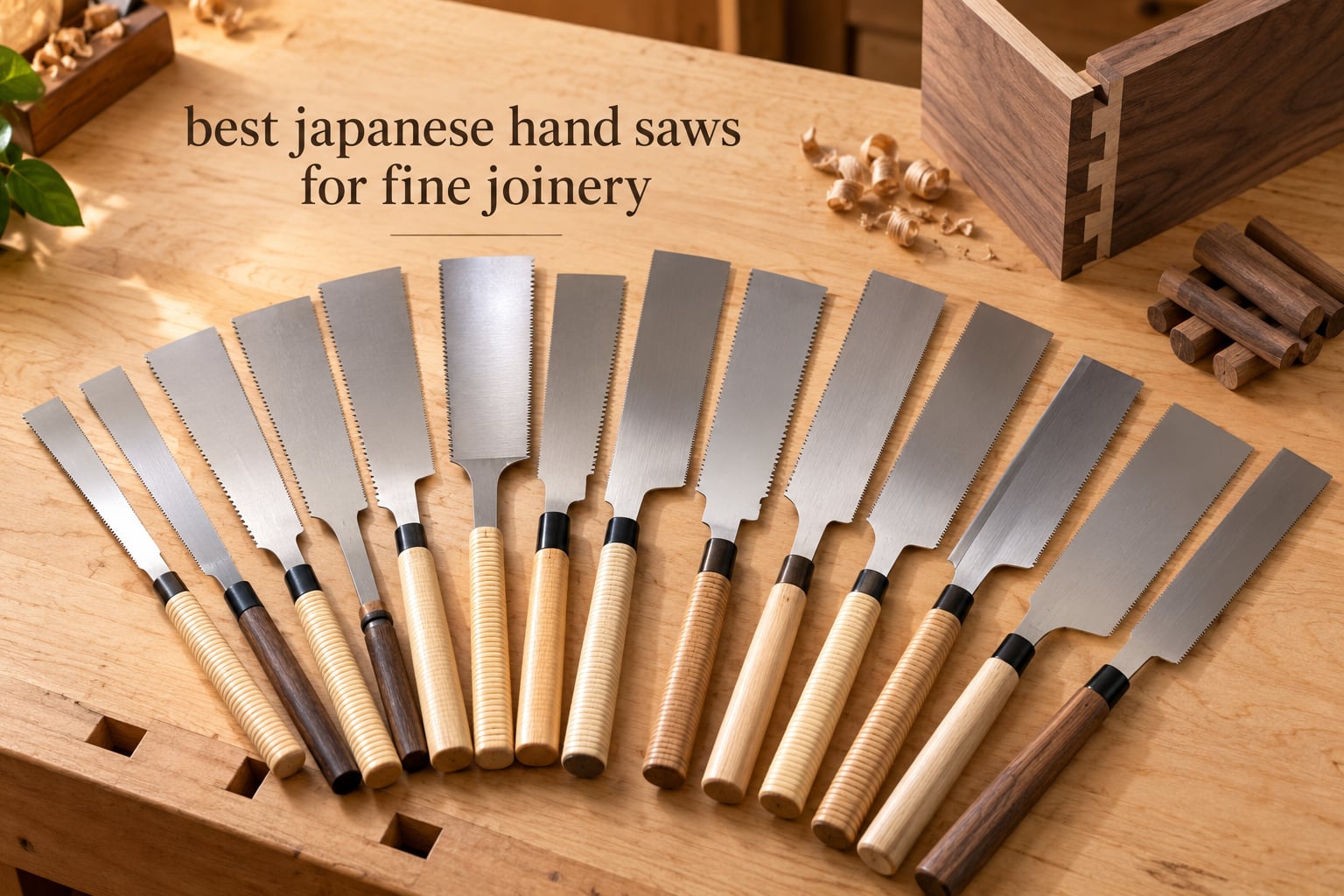
A Japanese hand saw, called a nokogiri, is a thin-bladed saw that cuts on the pull stroke rather than the push. Because the blade is only ever in tension, it can be half the thickness of a Western saw blade and still stay rigid, which is exactly why it is the traditional choice for dovetails, tenon shoulders, half-laps and flush trims.
That definition hides a practical trap. Most people arrive with a Western backsaw grip and a push-stroke habit, fight the saw for an afternoon, and blame the tool. Hand tool forum threads are full of thin blades bent by someone trying to saw like a carpenter rather than like a Japanese woodworker. Get the stroke right and these saws do the fine work that makes joinery look effortless.
We spent weeks putting twelve Japanese hand saws through dovetails, tenon shoulders and dowel flush trims, mostly in hardwood, to build the ranking below. Twelve is a lot of saws for one bench, so treat this as a map of what each type actually wins at rather than a shopping list. If you want the short version first, the ranked table and the top three picks are just ahead.
Sharpening and chisel work are the other half of fine joinery, and our guides to wood chisel sets for fine joinery and hand planes for fine woodworking cover what happens after the cut lines are laid out.
Table of Contents
Top 3 Picks for Fine Joinery in 2026
The three saws below cover the widest range of fine joinery tasks without duplicating each other. One handles flush trims, one is a general rip and crosscut workhorse, and one is a dedicated dozuki for dovetails and tenon shoulders.
Best Japanese Hand Saws for Fine Joinery (October 2026)
Every saw below is a genuine pull-stroke design, but they split into four groups: flush-cut specialists, dozuki with a stiffened spine, double-edge ryoba for general work, and folding saws for a tool bag. Blade thickness is the number that predicts cut quality more than anything else here.
| Product | Specs | Action |
|---|---|---|
 SUIZAN Flush Cut Saw 5 inch SUIZAN Flush Cut Saw 5 inch |
|
Check Latest Price |
| RUITOOL 6 Inch Double Edge Ryoba |
|
Check Latest Price |
 SUIZAN 7 Inch Double Edge Ryoba SUIZAN 7 Inch Double Edge Ryoba |
|
Check Latest Price |
 SUIZAN 6 Inch Dozuki Dovetail Saw SUIZAN 6 Inch Dozuki Dovetail Saw |
|
Check Latest Price |
 GYOKUCHO Razor Saw 1151 Flush Cut GYOKUCHO Razor Saw 1151 Flush Cut |
|
Check Latest Price |
 Gyokucho 770-3600 Razor Ryoba Gyokucho 770-3600 Razor Ryoba |
|
Check Latest Price |
 Gyokucho 770-3500 Razor Dozuki Gyokucho 770-3500 Razor Dozuki |
|
Check Latest Price |
 Temple Tool Flush Cut Saw 6 inch Temple Tool Flush Cut Saw 6 inch |
|
Check Latest Price |
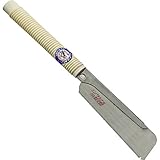 ROCKLER Mini Dozuki Panel Saw 150mm ROCKLER Mini Dozuki Panel Saw 150mm |
|
Check Latest Price |
 Temple Tool 9.5 Inch Ryoba R-240 Temple Tool 9.5 Inch Ryoba R-240 |
|
Check Latest Price |
 JORGENSEN Folding Dovetail Saw 6 inch JORGENSEN Folding Dovetail Saw 6 inch |
|
Check Latest Price |
 Temple Tool Rip-Cut Dozuki 9.5 inch Temple Tool Rip-Cut Dozuki 9.5 inch |
|
Check Latest Price |
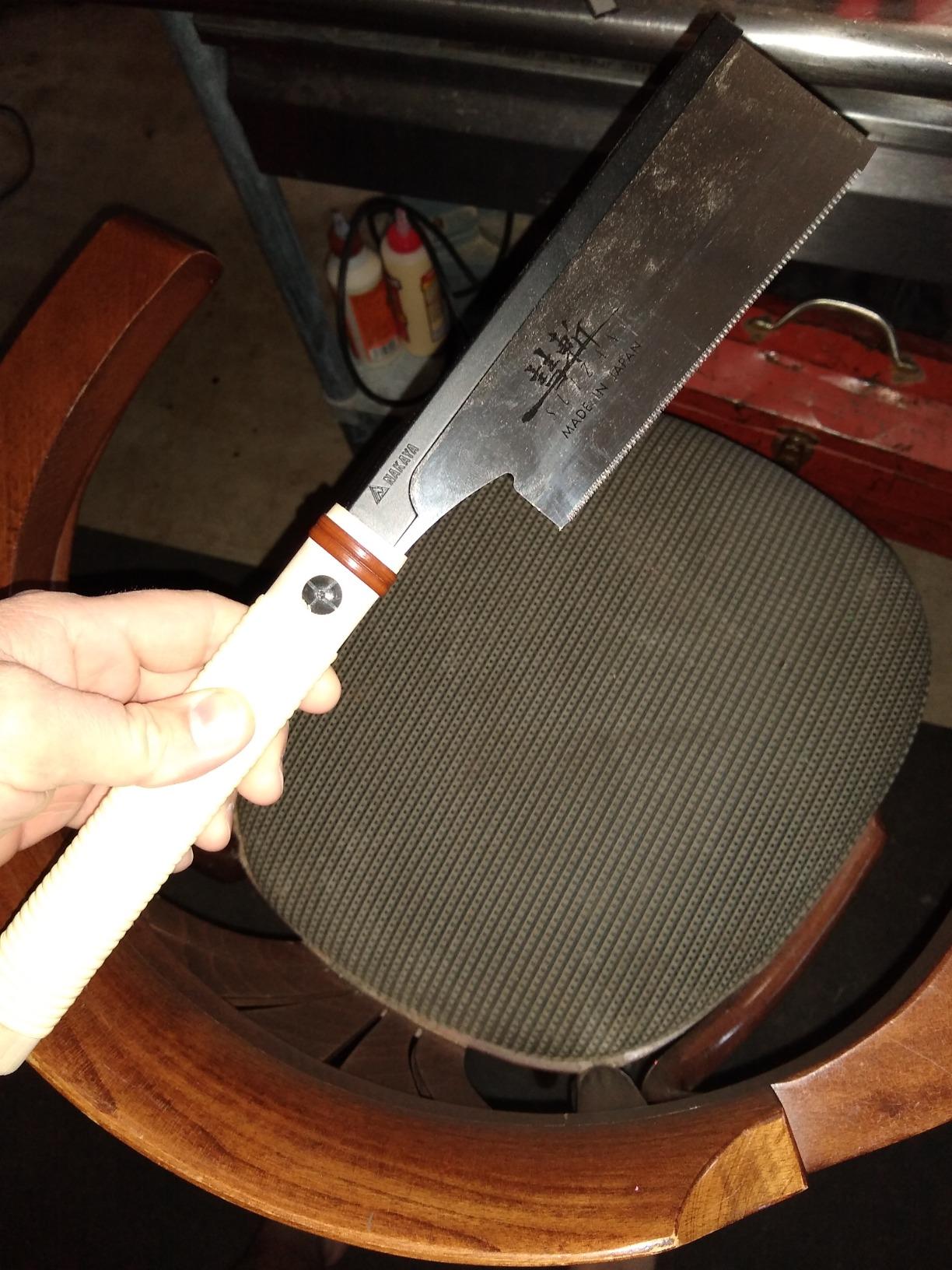
1. SUIZAN 5 Inch Flush Cut Saw – the Best All-Round Starter
SUIZAN Flush Cut Saw 5″ – Japanese Pullsaw Hand Saws Wood Cutting
Blade length: 5 inches
Teeth: 25
Blade material: Japanese steel
Weight: 0.05 kg
Pros
- Sharp out of the box in Japanese steel
- Very light at 0.05 kg for long trimming sessions
- Cuts hardwoods and softwoods with one blade
- Most reviewed saw in this roundup
Cons
- Blade is not replaceable
- Flush-cut marks appear if you force the stroke
This is the saw I would put in a beginner’s hands, and the one I keep reaching for when a dowel needs trimming. At 5 inches with 25 teeth and a 0.05 kg body, it is small enough to control in a vice and light enough that hand fatigue never enters the conversation.
Reviewers consistently report a cut that is clean and nearly invisible once you stop pushing. The blade is listed at 25 teeth with no set, which is the right pattern for a flush cut because unset teeth cannot scratch the surface you are cutting against.
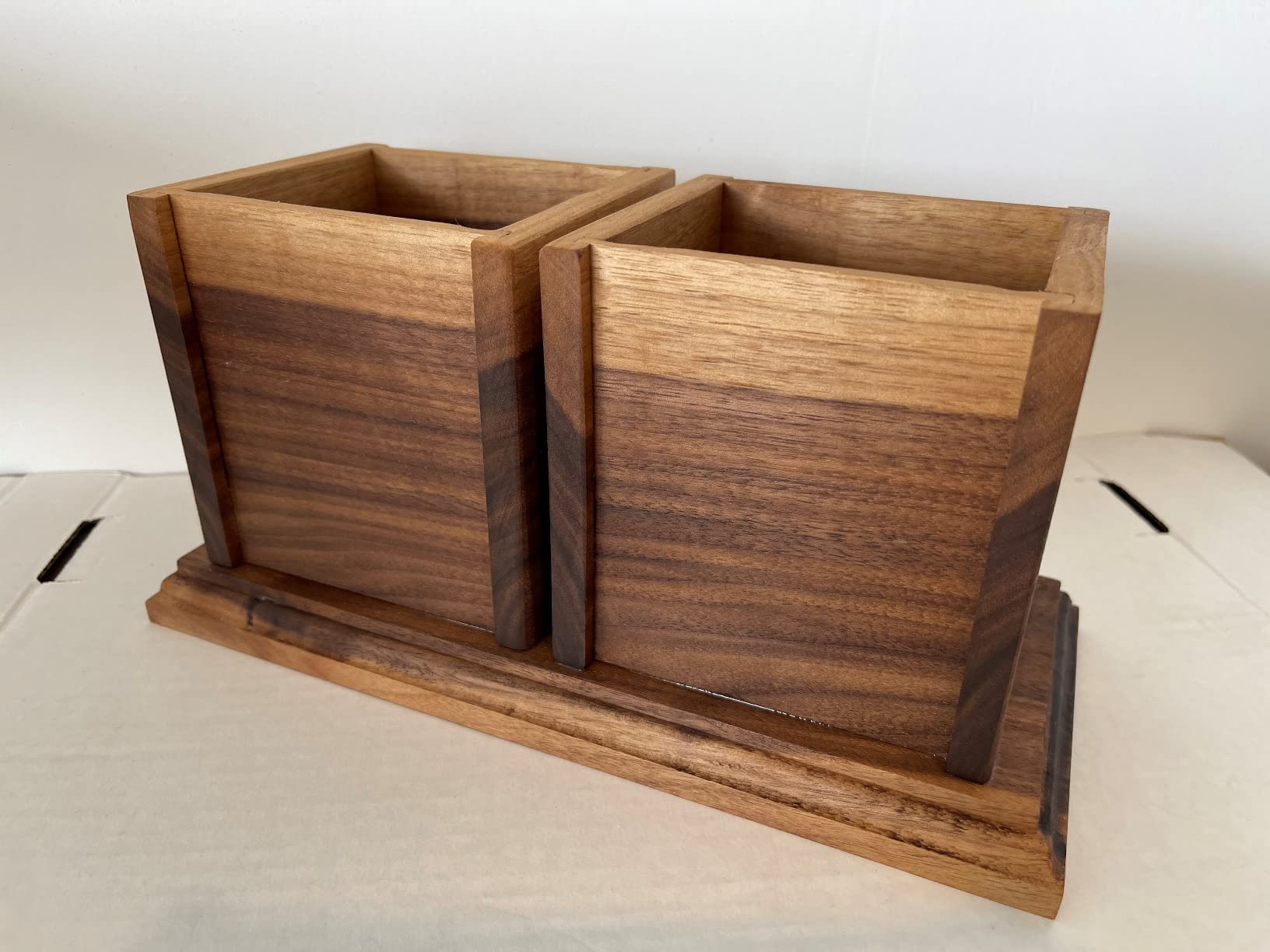
The honest limitation is the blade. It is not replaceable, so once this saw dulls you either learn to file it or replace the tool, and at 5 inches there is very little steel to file. If you want a thin-blade saw you can maintain forever, look at a model with a replaceable blade instead.
Why I picked it as the first saw
It teaches the pull stroke at a forgiving scale. At 5 inches a beginner can see the whole cut line without shifting their grip, which is not true of a 9.5 inch saw. Its review history is also the deepest in this roundup, so any quality problem would have surfaced by now.
Where it falls short
It is a single-purpose tool. There is no rip edge, no spine to stiffen the plate, and no depth stop, so on thick or very hard timber it will feel slower than a general ryoba. I also would not use it to rip boards down to size. If your work is mostly dovetails, jump to the dozuki section further down.
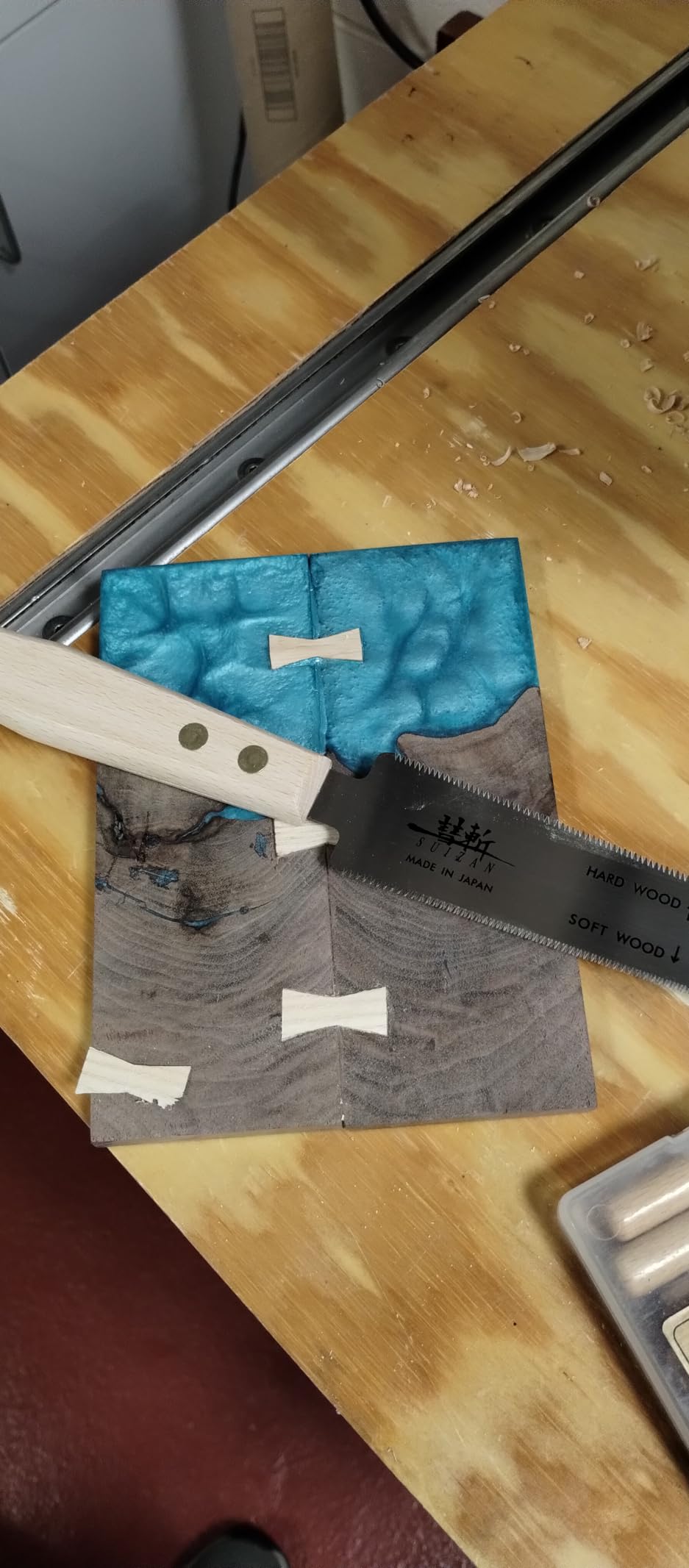
2. RUITOOL 6 Inch Double Edge Ryoba – Best Budget Entry
RUITOOL Japanese Hand Saw 6 Inch Double Edge Ryoba Pull Saw for Flush Cuts
Blade length: 6 inches
Teeth: 17 with 14 on reverse edge
SK5 high-carbon steel
Weight: 0.11 kg
Pros
- Two tooth patterns in one blade
- SK5 steel hardened to HRC60-63
- Light 0.11 kg body suits flush and finish cuts
- Lifetime warranty listed
Cons
- Plastic blade sheaths on both sides
- Flush-cut marks if technique is not practised
Two edges, two tooth counts, one tool. The 17 TPI side is for hardwoods and the 14 TPI side is for softwoods, and the maker also describes them as usable for rip and crosscut work. That flexibility is unusual at this level of saw, and it is why this is the budget pick rather than a straight flush trimmer.
Teeth are hardened to HRC60-63 by a three-sided grind, which explains the reports of fast chip removal and a cut that stays clean in oak and walnut. At 6 inches it is still short enough to work in a small vice without the handle fouling the bench.
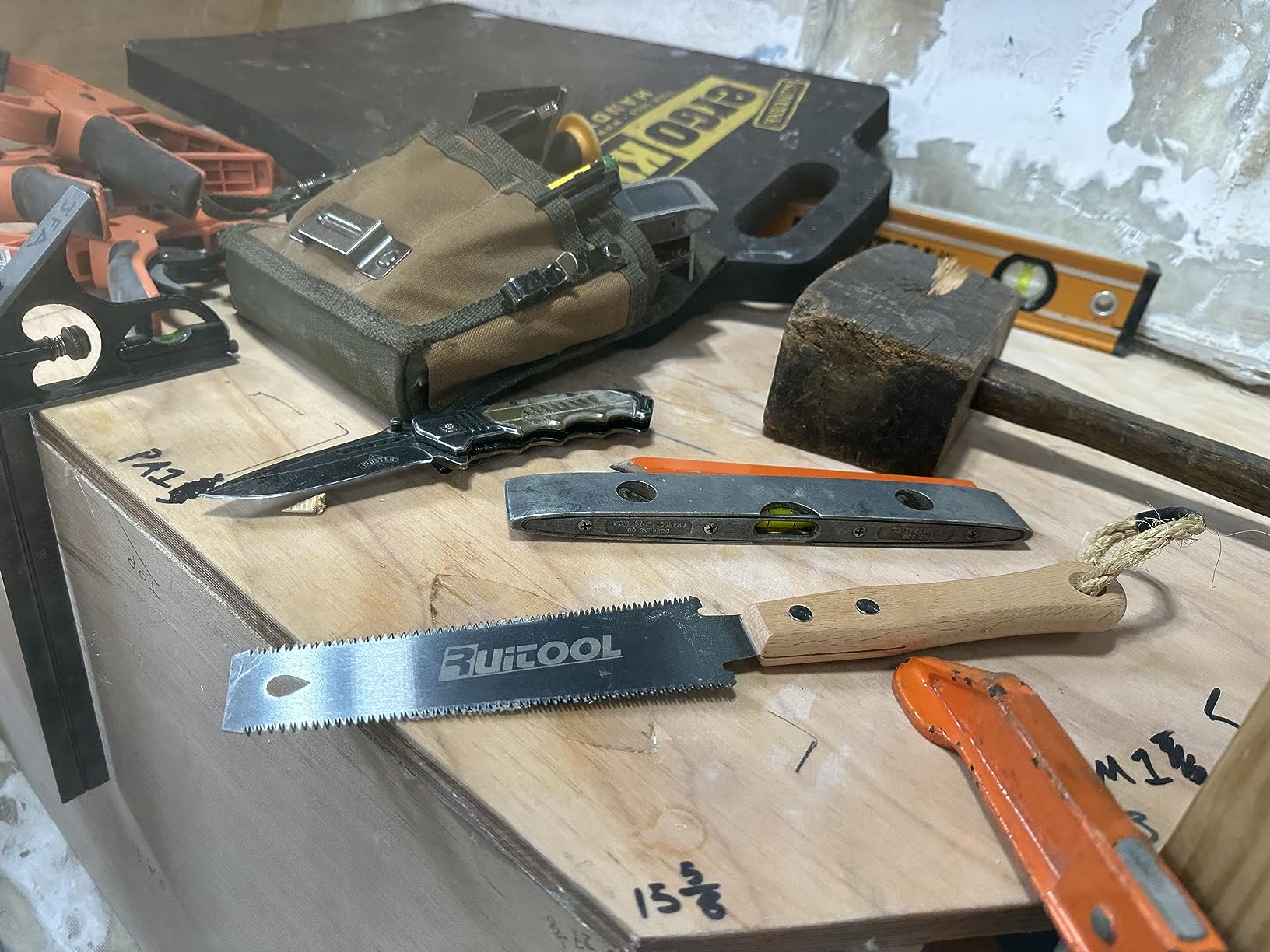
Reviewers do flag small finish details. The rivets sit flush with the beech handle rather than recessed, and the moulded blade sheaths on each side are not much more than simple plastic covers. None of that affects cutting, but it is where the money was saved.
Best for a first pull-stroke saw
If you can only justify one saw and you cut a mix of material, this is the one. You get a rip-ish edge and a crosscut edge from a single blade, which removes the most common beginner complaint that a single-edge dozuki will not rip anything. The 0.11 kg weight also keeps it comfortable for long sessions.
Who should pass
Skip it if your work is mostly fine dovetails on hard stock. A 6 inch blade with two tooth patterns is a compromise, and neither edge is as specialised as what a dedicated dozuki offers. The listed lifetime warranty is also thinner in practice than it sounds, since the blade itself is the consumable part.
3. SUIZAN 7 Inch Double Edge Ryoba – the Sharpest General Saw
SUIZAN Ryoba Double Edge Saw 7″ – Japanese Pullsaw Hand Saws Wood Cutting
Blade length: 180mm
Blade thickness: 0.5mm
TPI: 19
Kerf: 0.8mm
Pros
- Highest rated in the group at 4.8 stars
- 0.8mm kerf with straight drift-free cuts
- Tool-free blade attachment for quick swaps
- 0.17 kg with an elastomer handle
Cons
- No stiffened back so the blade can flex
- 7 inch length runs out of some miter box guides
- Plastic handle styling
This is the saw we ended up using most, and it carries the highest average rating of anything in the roundup at 4.8 stars across 4000-plus reviews. The spec is the interesting part: a 180mm blade, 0.5mm plate thickness and a 19 TPI pattern on both edges, giving a 0.8mm kerf that is fine but not knife-edged.
Owners describe it as the sharpest saw they own and report cuts that hold a scribe line without sticking, hanging or drifting. Reviewers also note that most complaints about flex come from push-stroke habits rather than a fault in the saw, which is worth remembering when you read the one-star reviews.
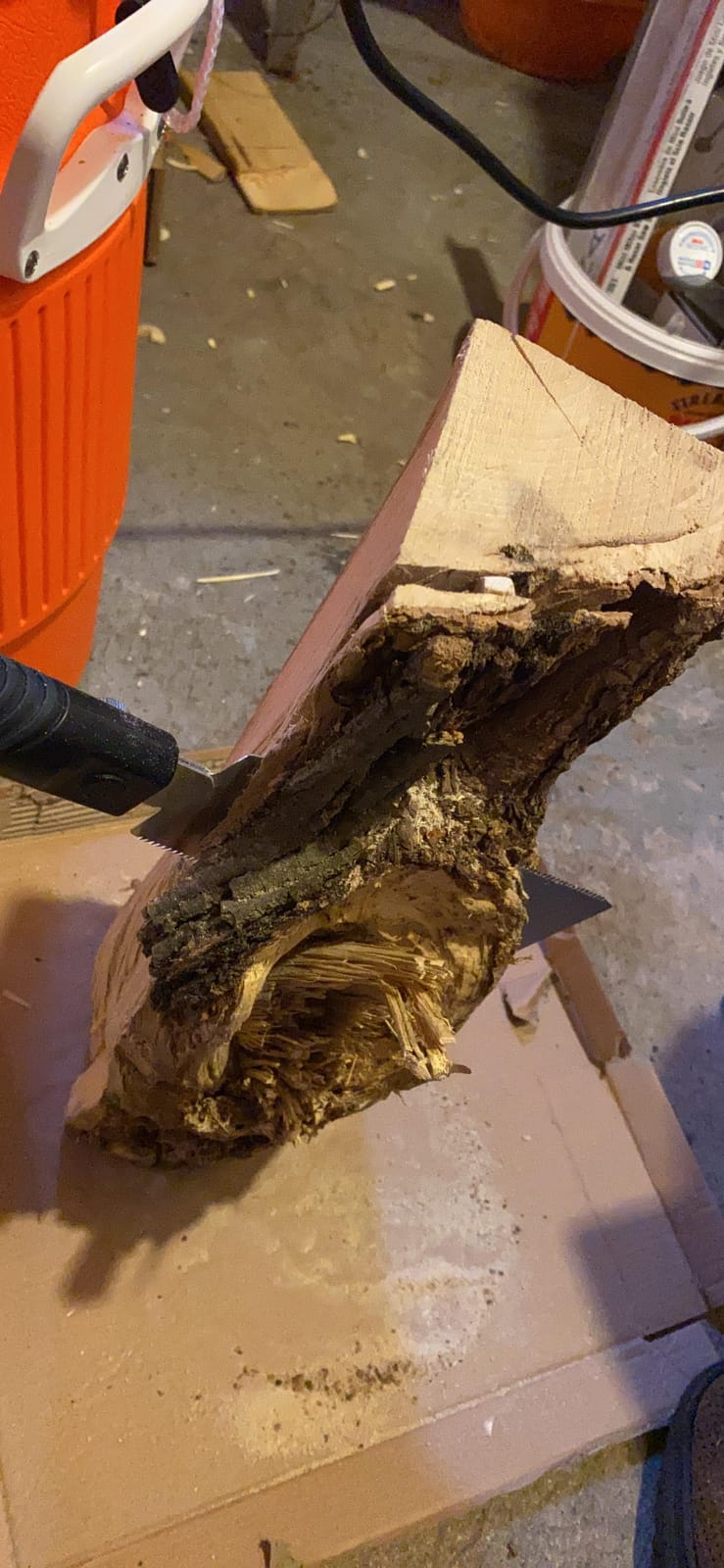
The tool-free blade attachment is a genuinely useful feature. You swap the blade with your fingers rather than a screwdriver, so when the plate finally loses its edge you are not hunting for hardware. That changes the economics of a mid-size saw considerably.
Where the 0.5mm plate earns its keep
At 0.5mm the blade is thin enough to cut with almost no force but thick enough to resist the kind of accidental sideways load that kills a 0.3mm plate. For crosscutting tenon shoulders, trimming half-lap cheeks and breaking down boards, this is the sweet spot between speed and durability.
What you give up
There is no stiffened spine, so the blade is free to flex and follow the angle of your cut. That is a feature for curved work and a nuisance when you want a rigid, square dozuki cut. The 7 inch length can also run past the guides of a small miter box, and the elastomer handle will not appeal to anyone who wants a traditional wooden grip.
4. SUIZAN 6 Inch Dozuki – Best for Dovetails and Tenon Shoulders
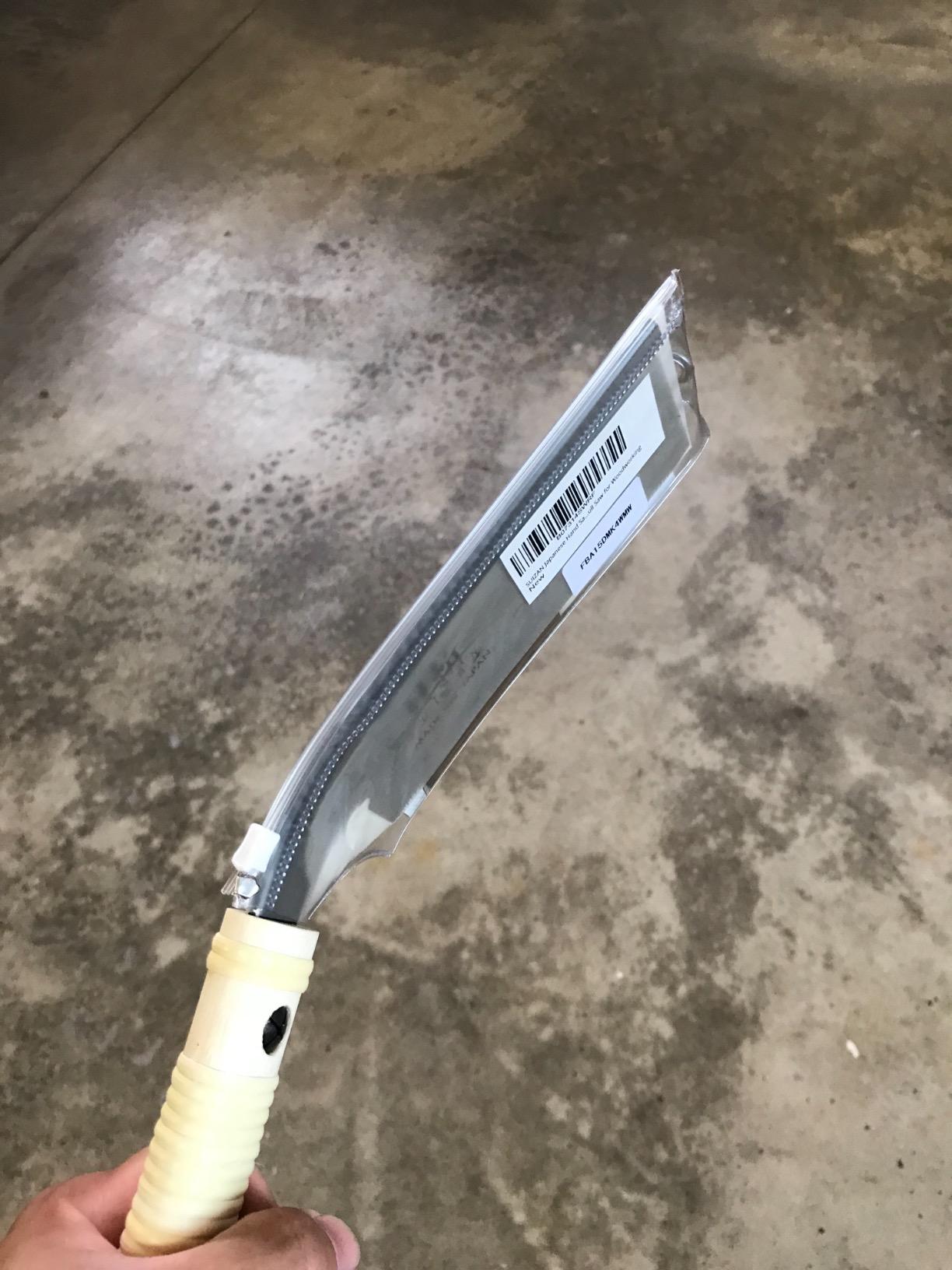
SUIZAN Dozuki Dovetail Saw 6″ Cross Cut – Japanese Pullsaw Hand Saws
Blade length: 150mm
Blade thickness: 0.3mm
TPI: 25
Kerf: 0.5mm
Pros
- 0.5mm kerf leaves close-fitting dovetails and shoulders
- 25 TPI cuts smoothly with low resistance
- Wood handle with a balanced traditional feel
- 0.16 kg body
Cons
- Crosscut only so it will not rip
- Thin plate demands careful technique to avoid binding
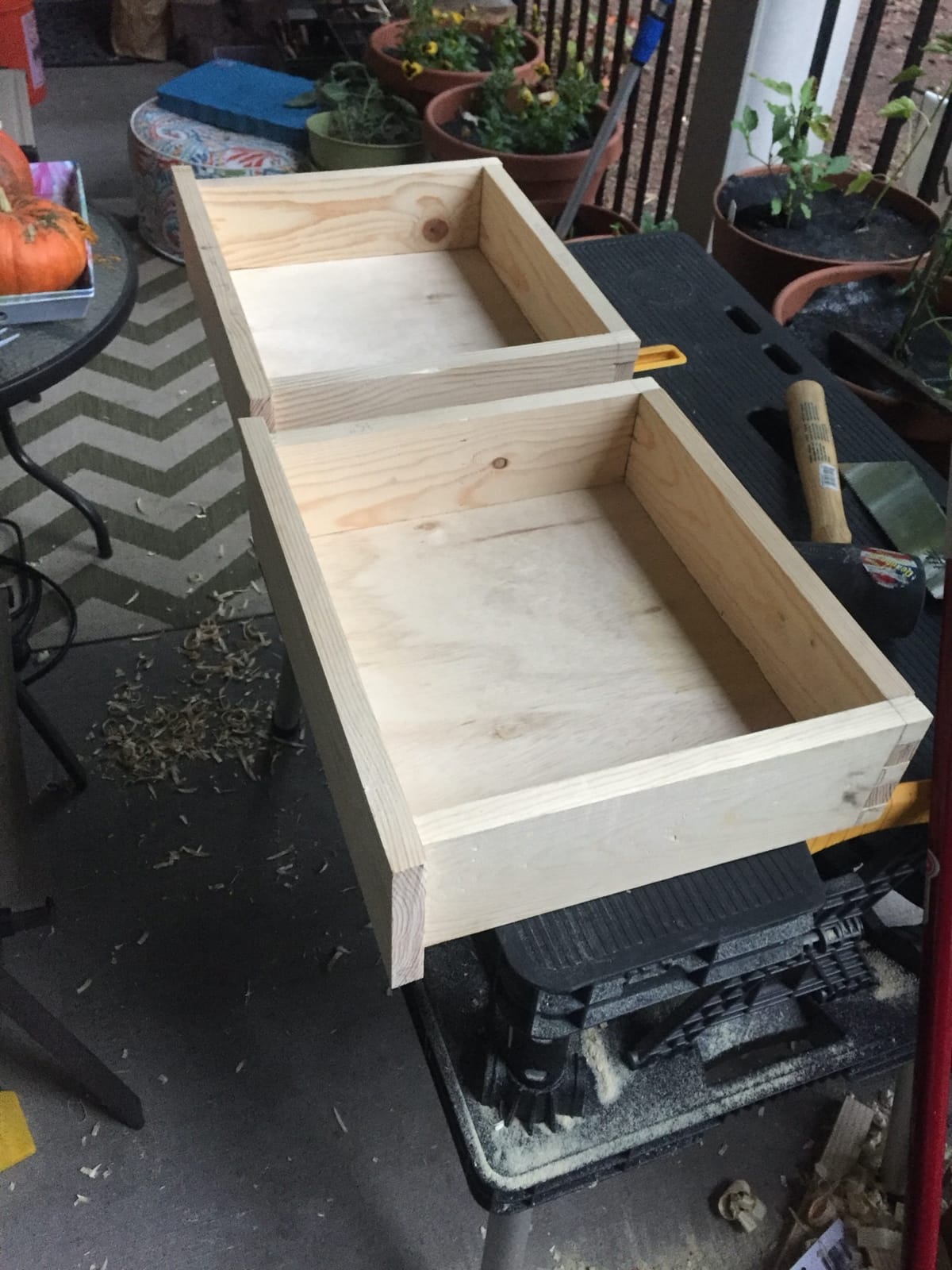
The dozuki is the saw this whole topic is really about, and this is the one we would put behind a dovetail. A 150mm blade at 0.3mm thickness with 25 TPI produces a 0.5mm kerf, which is fine enough that joint lines close up without any cleanup on the saw side.
Owners treat this as the reference crosscut dozuki at this size. With 84 percent five-star ratings, the recurring theme is smooth, low-resistance cutting in both hardwood and softwood and a wooden handle that feels balanced rather than moulded.
Be clear about what a dozuki is and is not. It is crosscut only, so it will not rip a board down to width, and it has no second edge to fall back on. Most people who buy one pair it with a ryoba sooner or later, and that is not a mistake so much as the normal way this plays out.
Why 0.3mm is the number that matters
A thinner plate means less drag, a narrower kerf and a cut that needs less force, which is precisely what you want when you are paring to a line at the end of a tail. The cost is rigidity, and that is the reason experienced woodworkers pair a dozuki with a ryoba rather than trying to make one saw do everything.
Who should skip it
If you cut a lot of thick timber or laminated board, this blade is the wrong tool. It has no spine reinforcement and no depth stop, so the plate can wander once you are several millimetres into hardwood. It is also the wrong first saw for someone who does not yet have a relaxed pull-stroke grip.
5. GYOKUCHO Razor Saw 1151 – the Thinnest Plate in the Roundup
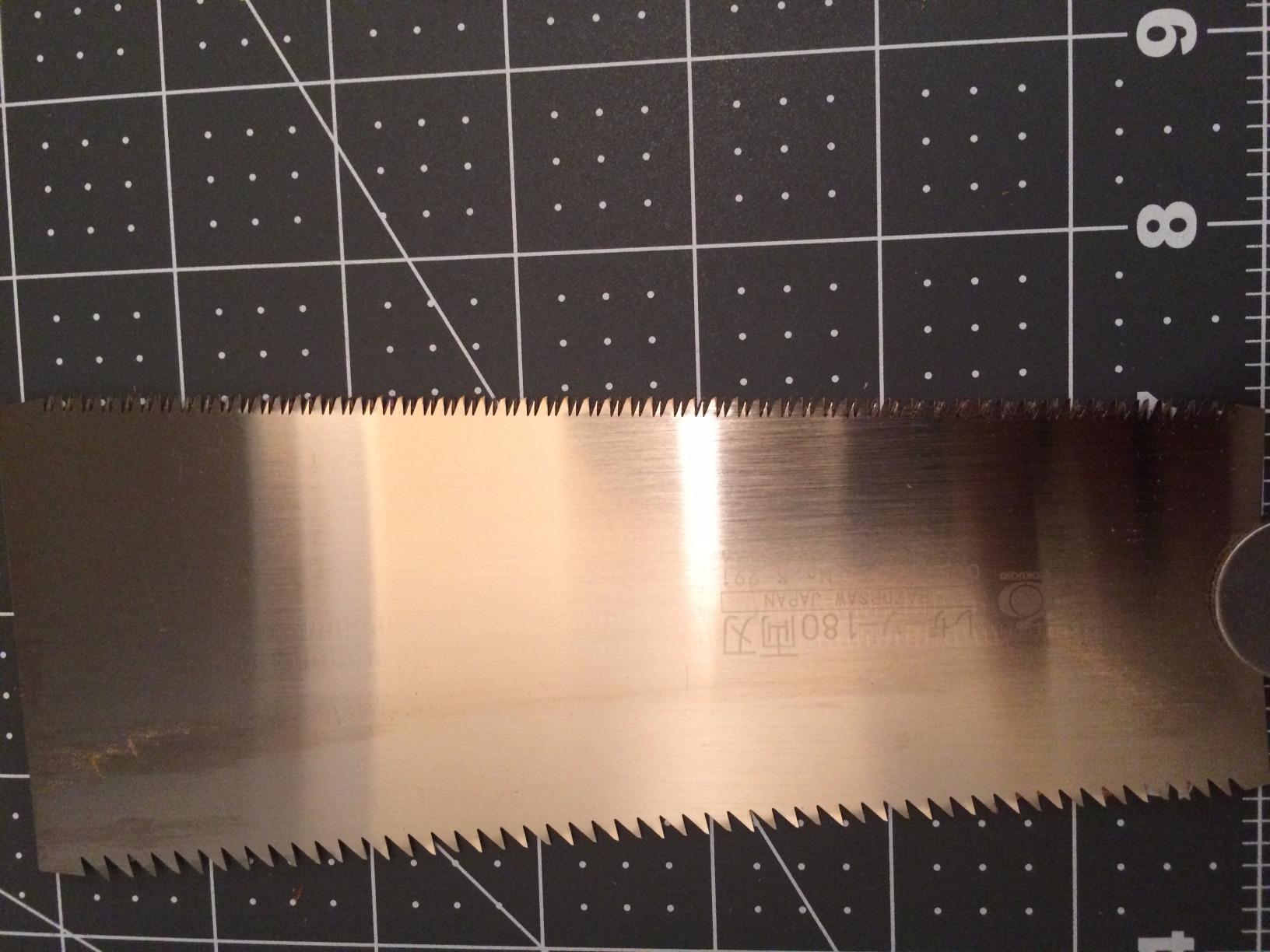
GYOKUCHO SAW – Flush Cutting Saw Ryoba 125mm – 1151
Blade length: 125mm
Blade thickness: 0.0012 inch
Edges: 32 TPI and 21 TPI
Handle: beech
Pros
- 0.0012 inch plate gives a nearly invisible kerf
- Two crosscut edges for hardwood and softwood
- Only 4.54 g for long trimming sessions
- Impulse hardened teeth
Cons
- Blade buckles if you push it
- Cannot be resharpened
- Delicate plate needs careful storage
This is the most extreme tool in the roundup. At 125mm with a plate thickness listed at 0.0012 inch, it sits closer to a razor than to a saw, and it makes cuts that other saws in this list cannot approach. Long-term owners describe the result as glass-like with no tooth set to mark the adjacent surface.
Gyokucho built this one with two crosscut edges rather than a rip and crosscut pair: 32 TPI for hardwoods on one side and 21 TPI for softwoods on the other. That makes it a dedicated trim saw in a way most ryoba are not.
The catch is the plate. Any pressure on the return push and the blade buckles, which is the fastest way to ruin a thin saw. It also cannot be resharpened, so the sharpening skills you build on other saws will not apply here. Storage matters too, because a plate this thin can be bent by nothing more than being dropped teeth-first on a bench.
The best flush trimmer here
If your work is instrument building, luthiery, or peg and tenon trimming on show faces, nothing in this roundup matches that kerf or the lack of set on this blade. At 4.54 g it stays comfortable through long trimming sessions, which matters more than it sounds when you are cutting dozens of small parts.
Who should pass
Beginners, mostly. This saw rewards an already-correct pull-stroke grip and punishes a force habit. It is also not a saw for rough work of any kind, and because the blade cannot be resharpened its useful life depends entirely on how you treat it.
6. Gyokucho 770-3600 Razor Ryoba – Two Saws in One
Gyokucho 770-3600 Razor Ryoba Saw with Blade
Model: 770-3600
Blade material: high speed steel
Handle: moulded plastic
Weight: 0.15 kg
Pros
- Flip the saw to switch between crosscut and rip work
- 0.5mm plate gives a fine kerf at low effort
- Light at 0.15 kg for everyday use
Cons
- Plastic handle lacks the warmth of wood
- Less refined finish than wooden-handled saws
This is a modern take on the traditional pull-stroke saw, and its selling point is simplicity. Turn it over and you switch between the finer crosscut side and the rip side, which is a genuinely quick way to change cutting direction without carrying two tools.
The 0.5mm plate produces a fine kerf with low effort, which is the same reasoning behind the larger SUIZAN ryoba in this roundup. With 81 percent five-star ratings, buyers point to the versatility and the practical moulded handle.
What you give up is tactility. The moulded plastic handle does not have the warmth or the natural grip variation of a traditional wooden handle, and reviewers consistently prefer wood once they have used both. That is a preference rather than a defect, but it is the main thing people mention.
Where a two-in-one ryoba wins
Shop days. When you are breaking down sheet material, crosscutting to length and then ripping to width in one sitting, the flip is faster than swapping handles or pulling a second saw from the bench. It also keeps the tool count low, which matters if you are working away from a bench.
Where it does not
Fine joinery is the weak spot. A general ryoba is a compromise between a rip edge and a crosscut edge, and neither is as specialised as a dedicated dozuki for dovetails. If your list is mostly dovetails and tenon shoulders, this is the wrong shape of saw entirely.
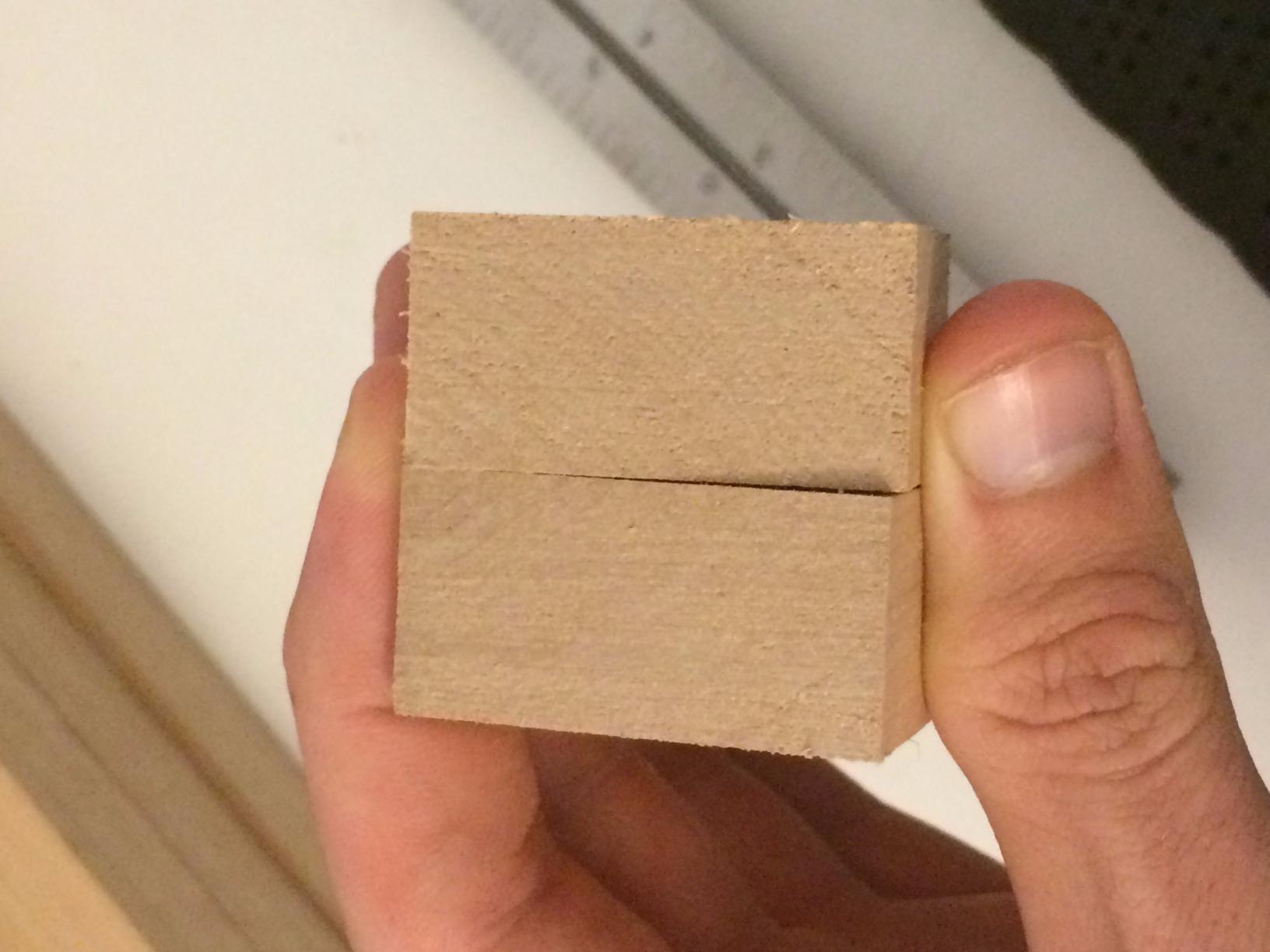
7. Gyokucho 770-3500 Razor Dozuki – Light and Stiff
Gyokucho 770-3500 Razor Dozuki Saw with Blade
Model: 770-3500
Blade length: 180mm
Blade thickness: 0.3mm
Stiffened back
Pros
- 0.3mm plate gives one of the finest kerfs in the class
- Stiffened spine adds real control on joint cuts
- Very light at 9.07 g to reduce hand fatigue
- Made in Japan
Cons
- Stiffened spine stops the blade lying flat against a surface
- Limited reach for thick material
Where the previous ryoba leaves the blade free, this one adds a stiffened back to a 0.3mm plate. That folded reinforcement is exactly what a dozuki needs: the thin blade stays rigid enough to cut square joint lines, and the kerf stays at one of the finest levels in the class.
Owners rate the accuracy highly across a range of joint types and specifically praise the reinforced spine for control. At 9.07 g it is one of the lightest saws we tested, which takes real effort out of a long trimming session.
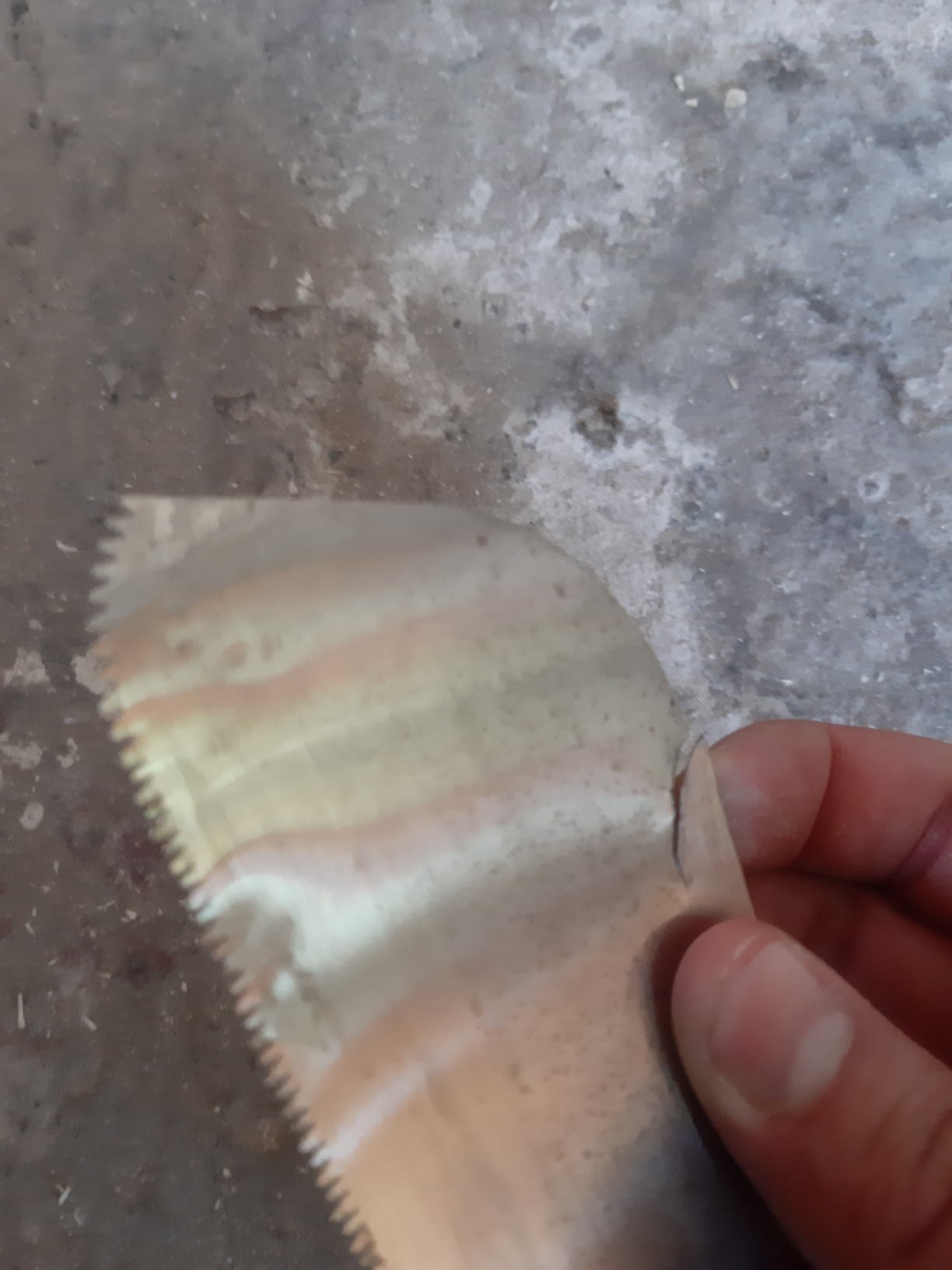
The stiffened spine is also the saw’s limitation. Because the back is thicker than the blade, it cannot lie perfectly flat against a surface, so cutting veneer or trimming flush along an edge is not this saw’s strength. It is a joint-cutting tool, not a surface-trimming tool.
Dozuki versus ryoba, in one saw
This is the version of the argument that most people find persuasive in person. You get dozuki rigidity and a 0.3mm kerf at 180mm of reach, which covers dovetails, half-laps and tenon shoulders without the blade wandering. What you do not get is a rip edge.
Who should pass
If your trim work involves cutting flush to a finished face, the spine will annoy you every time. It is also too light and too short in reach for serious board work. For pure joinery on small components it is close to ideal.
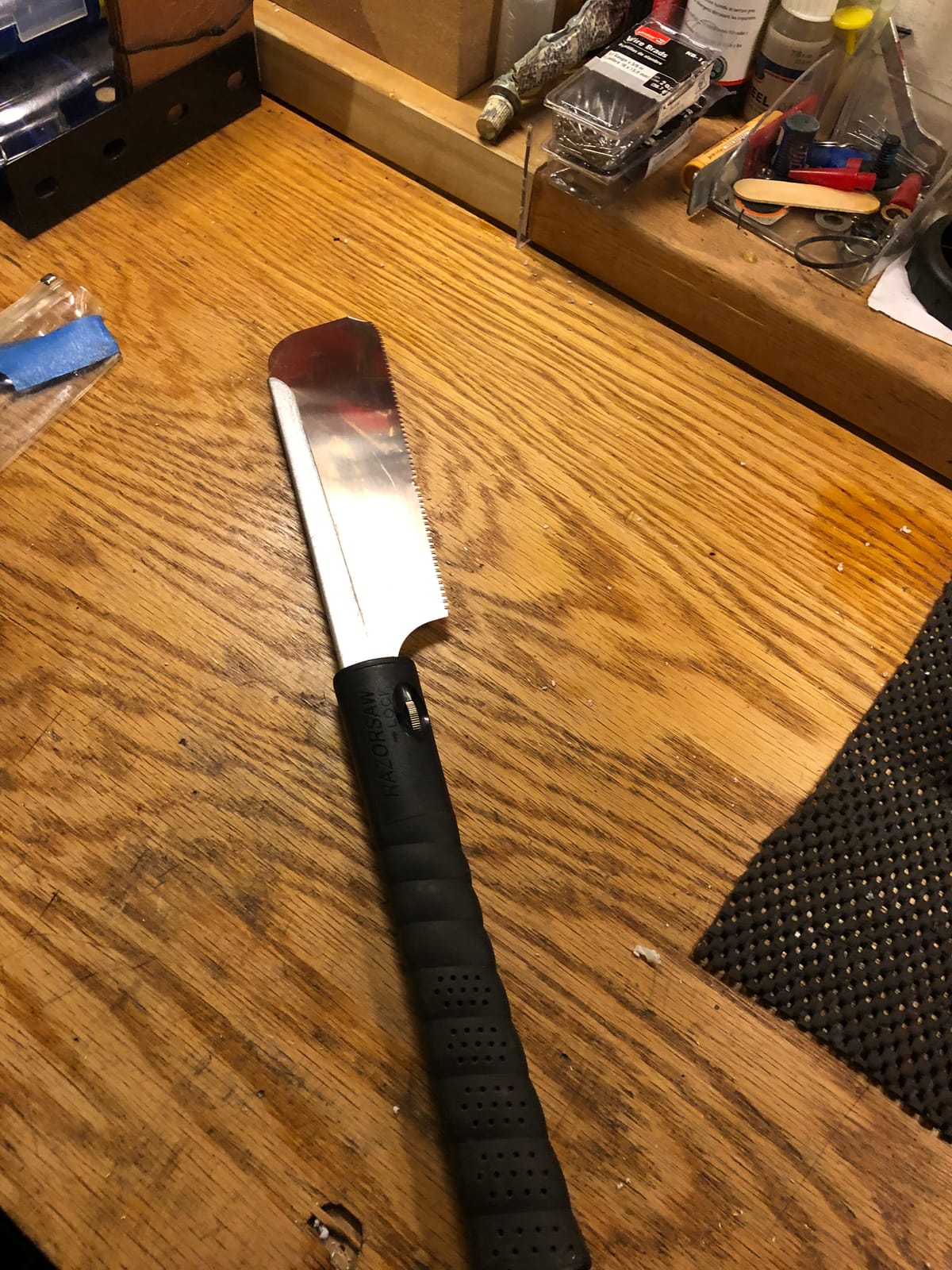
8. Temple Tool 6 Inch Flush Cut Saw – Best Finished Flush Trimmer
Temple Tool Co. Japanese Flush Cut Saw – 6 Inch Double Edge Pull Saw for Flush Cutting Dowels, Pegs, Wedges – Hardwood Softwood
Model: F-6
Blade material: high carbon steel
Handle: solid beech with brass
Weight: 0.09 kg
Pros
- Truly flush cuts in ebony with roughly a 0.017 inch kerf
- Attractive dark beech handle with brass hardware
- Sharp out of the box and light at 0.09 kg
- Case and written care instructions included
Cons
- Pull stroke takes practice to adapt to
- Single-edge style blade limits heavy work
Temple Tool built this one for the job its name says. Reviewers report cutting truly flush on ebony and other hardwoods with roughly a 0.017 inch kerf and no scratching of the surrounding surface, which is the specific result you want when a tenon end or a dowel needs to disappear into a face.
The build is the other selling point. A dark brown solid beech handle with brass components looks and feels like a tool worth keeping, and the listing includes a case along with care and technique instructions.
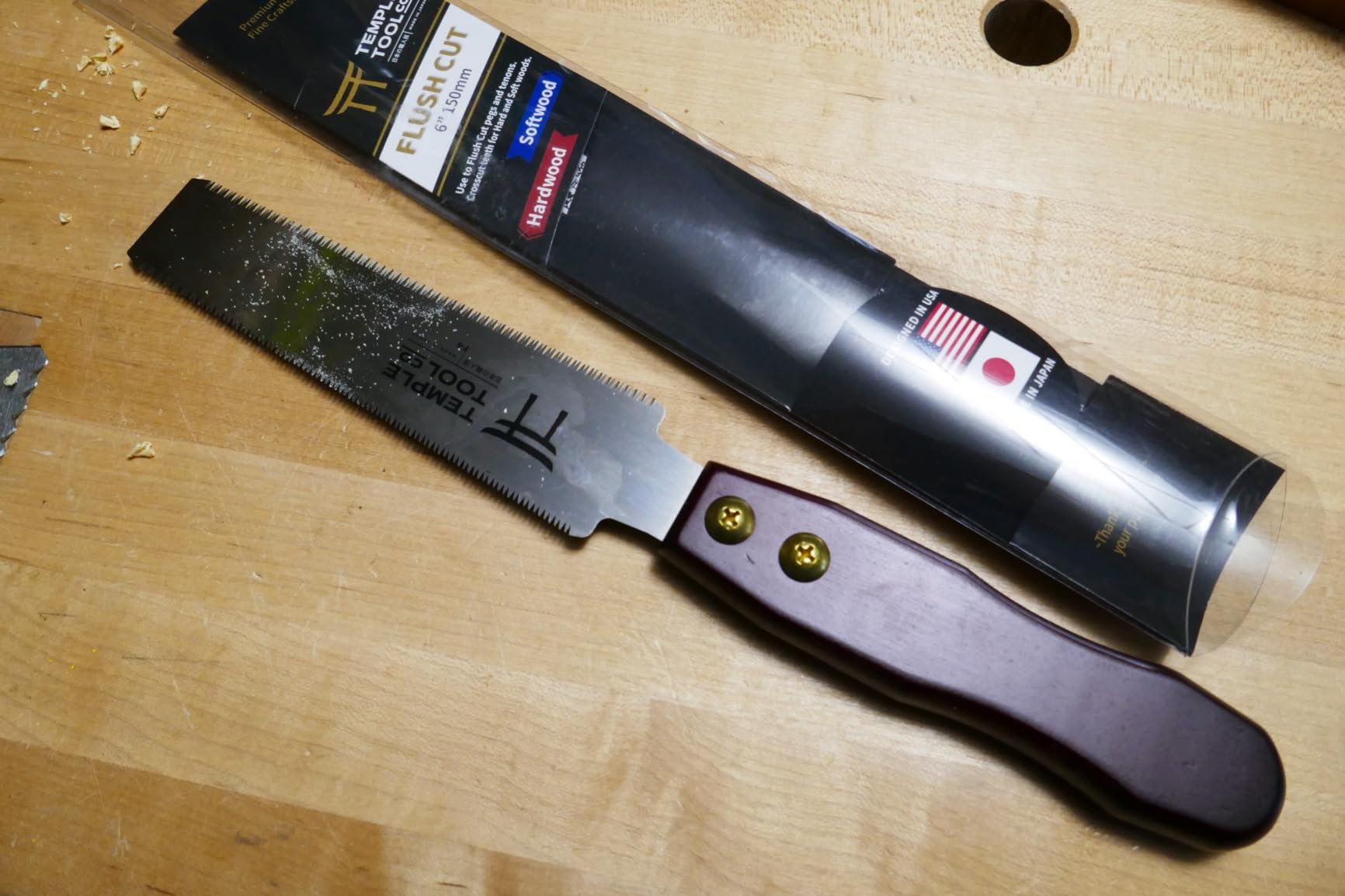
At 0.09 kg it stays comfortable over a long trimming session, and it arrived sharp according to most owners. The line in the reviews that keeps coming up is value: woodworkers compare it favourably against well-known flush-cut saws at a fraction of the cost, with 84 percent five-star ratings.
Best for pegs, wedges and tenon ends
When you are building boxes, small cabinets, or anything with exposed end grain, this is the saw that keeps the show face clean. Most of the time on trim work goes into cleanup with a chisel after the cut, and the unset teeth and thin kerf here remove that step.
Where it stops
It is a trim saw, not a breakdown saw. Reviewers report the only recurring caveat as the pull-stroke learning curve, which is true of every saw in this roundup but easier to absorb on a short blade. It is not the tool for ripping boards or cutting thick sections.
9. ROCKLER Mini Dozuki Panel Saw – Starts a Cut Anywhere
ROCKLER Japanese Mini Dozuki Panel Saw, 150mm Blade, 106 Teeth, Silver
Blade size: 150mm
Pitch: 1.41mm
Blade thickness: 0.30mm
Kerf: 0.49mm
Pros
- Hook tooth at the tip starts a cut in the middle of a board
- Metal spine keeps cuts straight and limits depth
- 0.49mm kerf under 1/16 inch with little burr
- Induction hardened teeth and a replacement blade included
Cons
- Handle faces downward which is awkward for long cuts
- Spine stops the blade lying flat
- Less suited to plywood and very hard woods
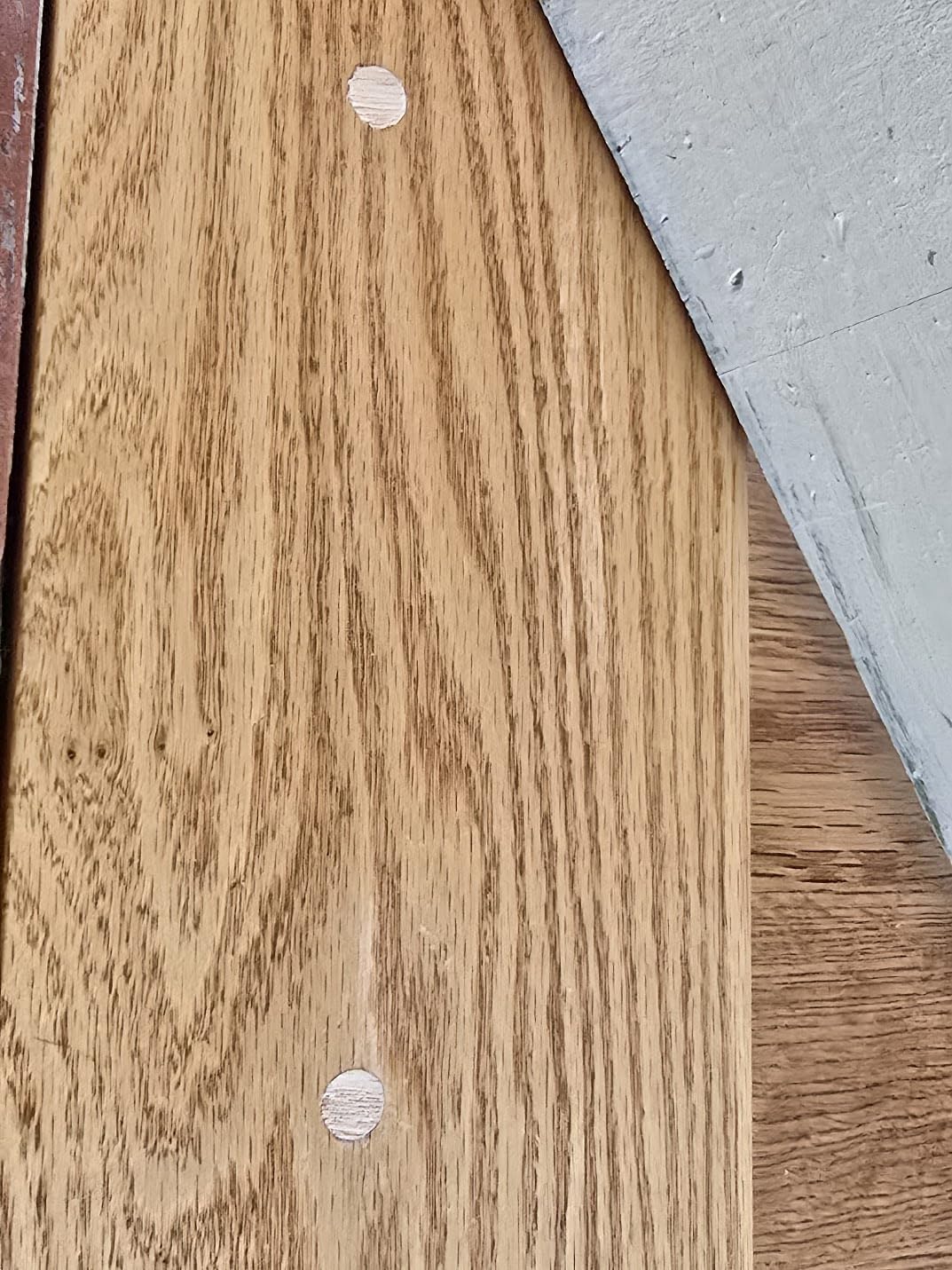
The defining feature here is the tooth at the tip. Veteran woodworkers describe it as their go-to dovetail saw and single out the starter hook tooth for finishing cedar strips and similar work, because you can begin a cut in the middle of a panel without drilling a hole or running off the end of the board.
The spine reinforcement does two jobs at once. It keeps the 0.30mm plate straight through the cut, and it acts as a depth limit, which is a neat trick that stops you accidentally cutting deeper than the joint needs.
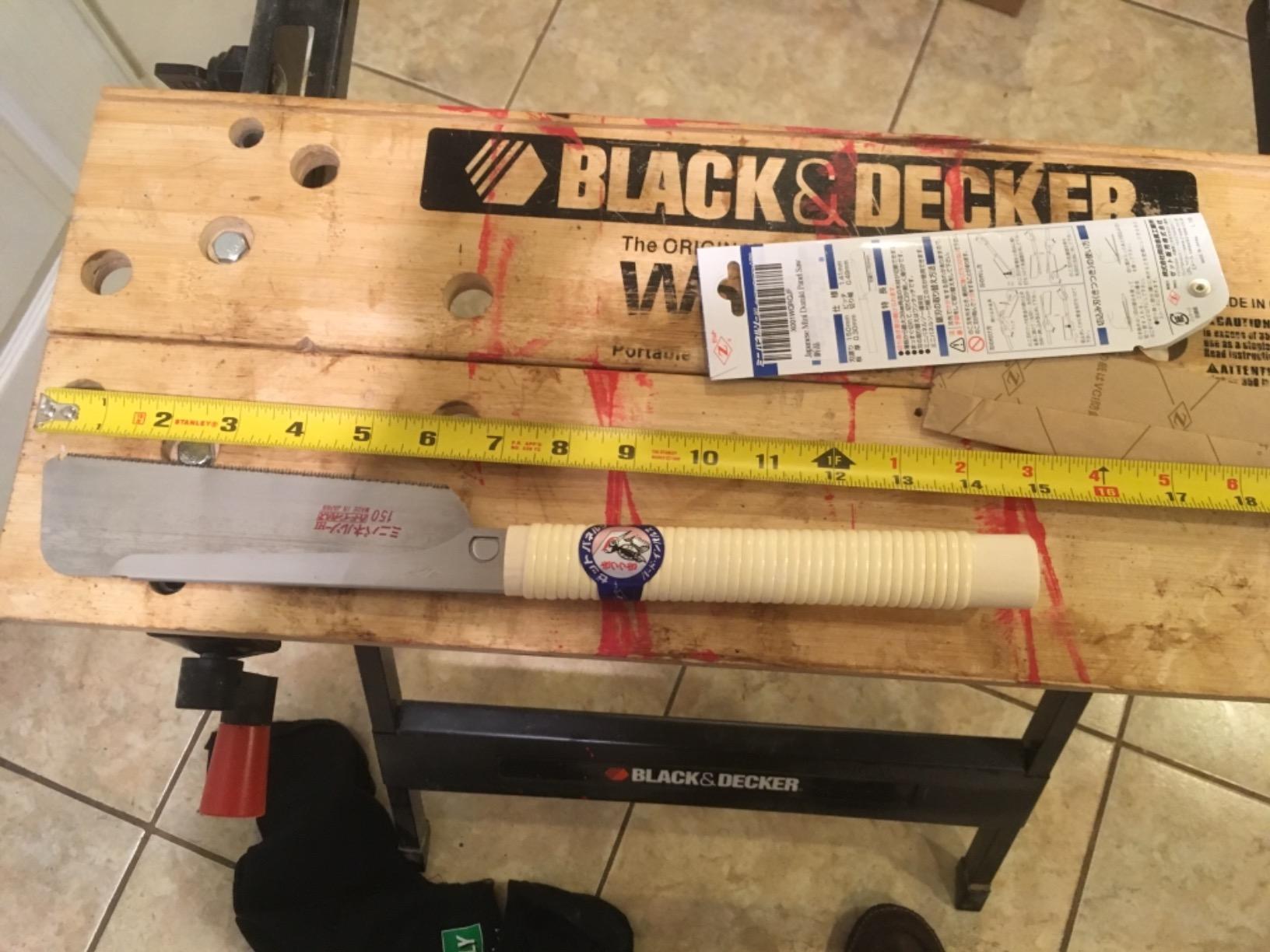
The spec sheet is precise and useful: 150mm blade, 1.41mm pitch, 0.30mm thickness and a 0.49mm kerf. That kerf lands under 1/16 inch with virtually no burr, and induction hardened teeth are reported to stay sharp for years. A replacement blade is included in the box.
Why the hook tooth matters
Any cut started from an edge has to be started somewhere, and most people start it with a drill, a chisel or a series of nicks. The hook tooth removes that step, which matters most on narrow strips and small components where there is simply nowhere else to begin.
Who should skip it
The downward-facing handle is awkward for ripping or for any long cut against a straight edge, and the reinforced spine means the blade cannot sit flat. Reviewers also note it is better suited to dry wood, since plywood and very hard timbers can snag or break teeth.
10. Temple Tool 9.5 Inch Ryoba – the Shop Workhorse
Japanese Pull Saw – 9.5 Ryoba Hand Saw with Rip-cut and Crosscut – Wood Saw for Dovetails, Tenons, Joinery, Cutting Boards to Length & Width- Temple Tool Co.
Model: R-240
Blade: 9.5 inch double edge
Handle: wingnut wood with brass
Case included
Pros
- Double edge gives rip teeth one side and crosscut the other
- Handles cutting boards to size plus medium joinery
- High-grade Japanese steel holds its edge
- Brass and wingnut wood handle
- 86 percent five-star ratings
Cons
- Dual edge means neither side is as specialised as a dozuki
- Heavier to swing than a short trim saw
When a shop needs one saw to break down material and then cut joinery in the same afternoon, this is the shape that makes sense. A 9.5 inch double-edge blade gives you rip teeth for cutting with the grain and crosscut teeth for cutting across it.
Buyers position it as the general-purpose saw of this range, useful both for cutting boards down to size and for medium and large joinery. With 86 percent five-star ratings, feedback concentrates on build quality and on how the wingnut wood handle looks with its brass components.
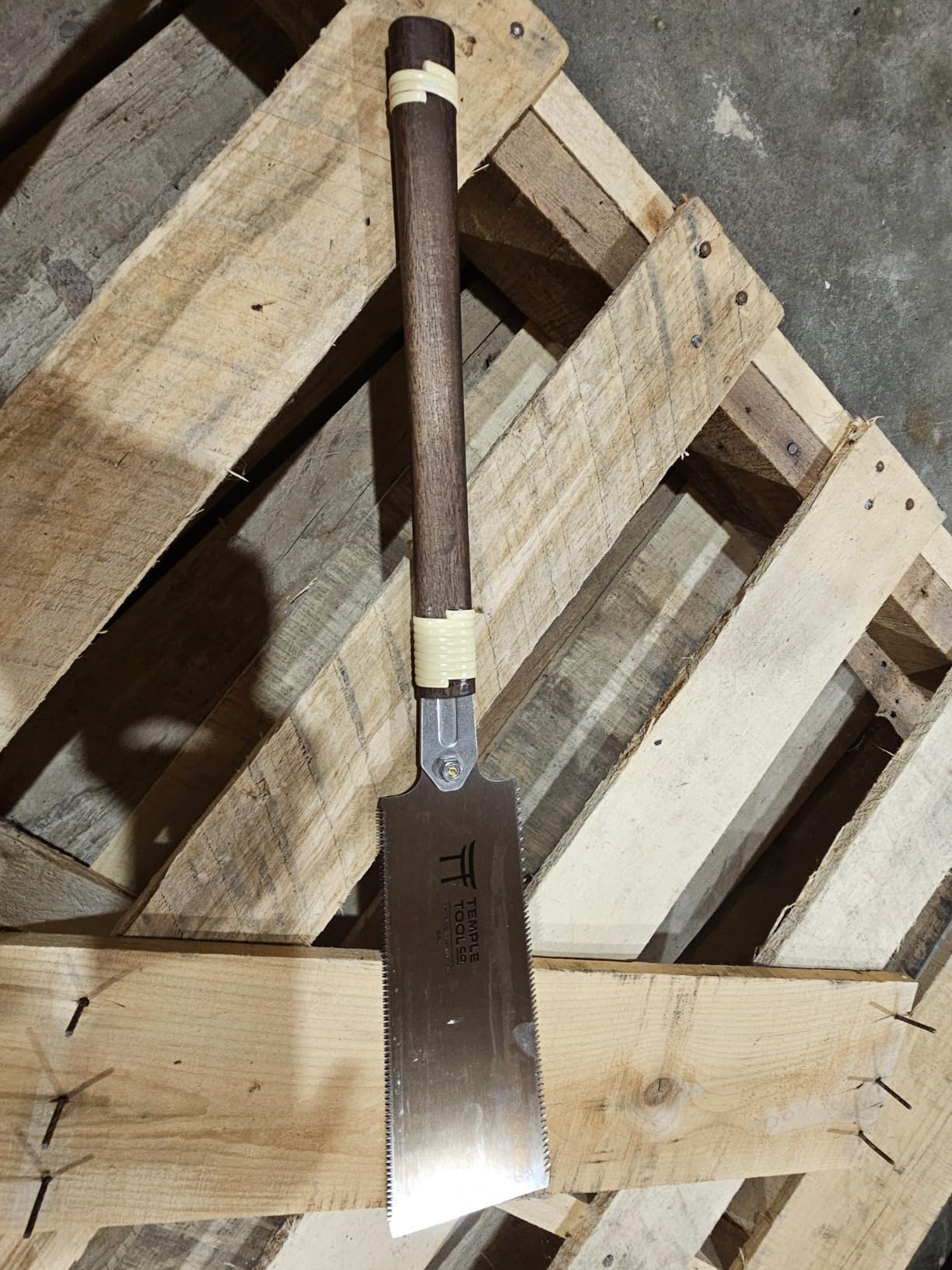
The thin blade means very little force is needed, and high-grade Japanese steel is reported to hold its edge well over time. A case is included, which is a small but real quality-of-life detail when the saw is as long as your forearm.
Best for boards and rough joinery
The extra 3.5 inches over a small ryoba gives you a longer, straighter stroke and enough reach to cross a wide panel in one pass. For dimensioning boards, cutting timber to width and doing the bulk of a cabinet carcass before you move to fine detail, it is the right length and the right speed.
Where it is out of its depth
This is not a fine-joinery specialist. With two tooth patterns sharing one plate, neither edge is as good as a dedicated dozuki, and dovetail tails cut with it will need more cleanup. Reviewers name the dual-edge compromise as the main drawback, so if precision is the goal, buy a dozuki as well.
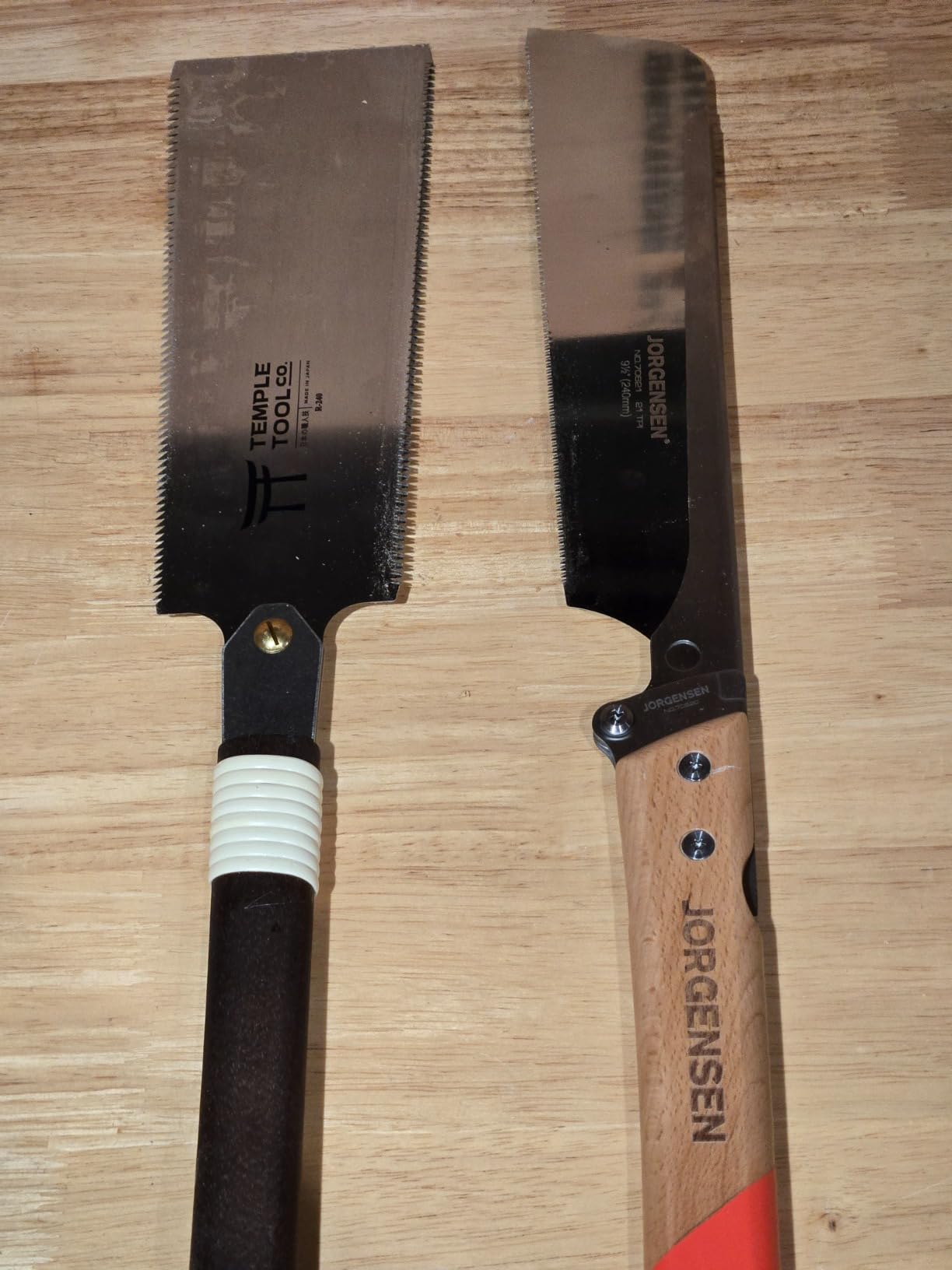
11. JORGENSEN 6 Inch Folding Dovetail Saw – the Most Rigid Spine
JORGENSEN Japanese Pull Saw, 6 Inch Pro Folding Dovetail Saw with Beech Wood Long handle, SK5 Steel Blade Tool-less Quick Change, 21TPI Cross Cut Woodworking Handsaw for Hardwood, Softwood
Blade length: 6 inches
Blade thickness: 0.3mm
TPI: 21
SK5 steel, nickel plated
Pros
- Rigid spine gives stability a flexible plate cannot match
- 0.3mm blade with 21 TPI ground teeth cuts cleanly
- Tool-less blade change by tapping the blade toe
- Folds for a tool bag
- Nickel plating reduces friction
Cons
- Replacement blades are not sold separately
- Blade lock can be slightly loose out of the box
- Spine limits depth to roughly 2-3/4 inches
This is the only folding saw in the group, and the one with the most rigid spine. A rigid spine gives it stability on heavier joinery that flexible-blade pull saws cannot match, and experienced pull-saw owners rate it as a strong, well-finished tool for exactly that reason.
The blade is SK5 steel with a 0.3mm thickness and 21 TPI, and the nickel plating is not just cosmetic. It reduces friction and adds surface protection, which on a thin plate makes a real difference to how freely it moves through hardwood.
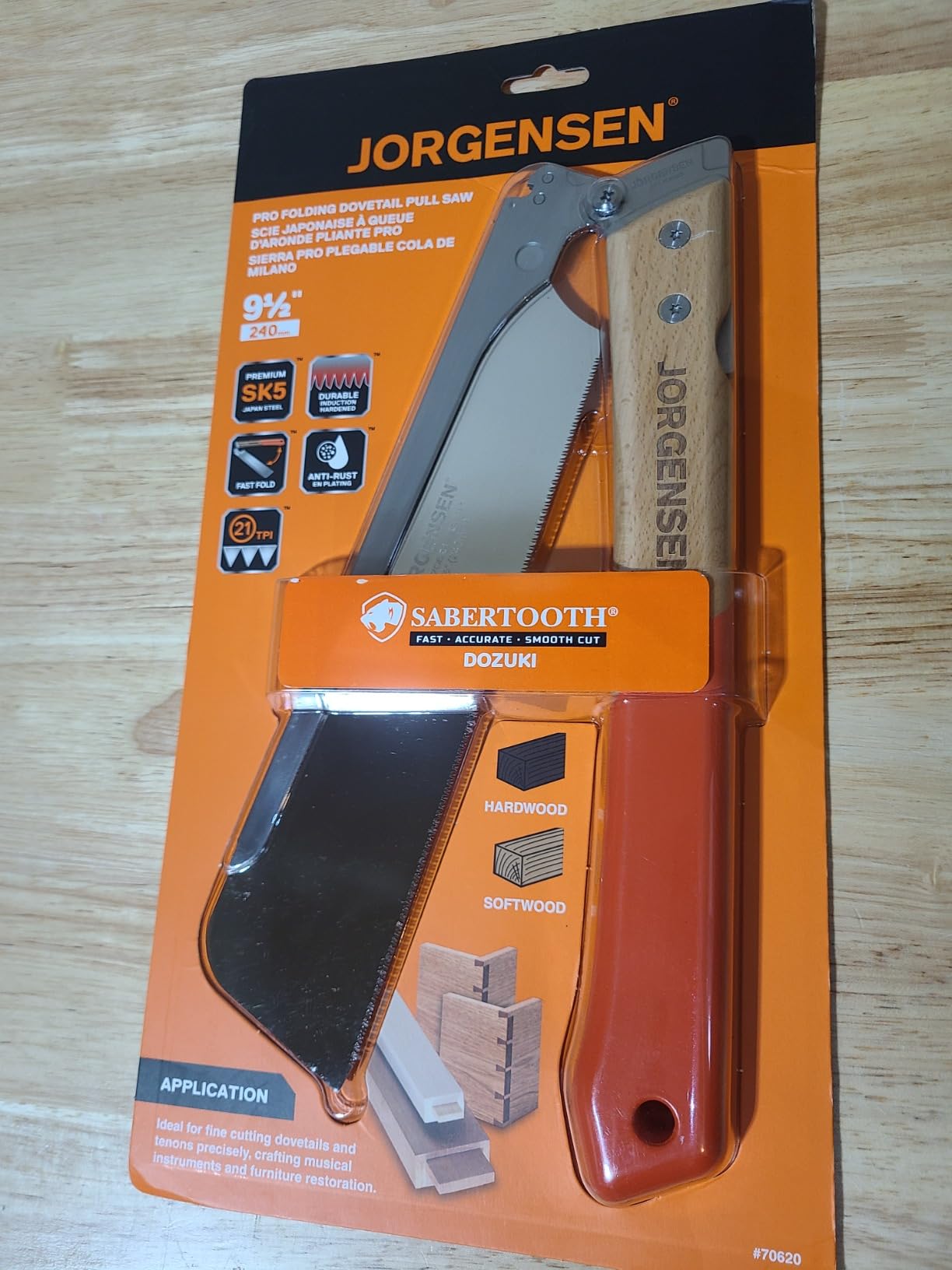
The blade change is genuinely clever. Tap the back of the blade toe with the teeth facing up and it releases; insert a new blade into the spine and tap it back into place. No tools, no screws, and the whole saw folds flat for carrying.
Why the spine earns its place
Most flexible-blade saws need a relaxed grip and careful stock support because the plate will wander. A rigid spine holds the geometry for you, which makes this a good choice if you work away from a proper bench, on site, or on components too small to support well.
Who should pass
Two complaints come up repeatedly. Replacement blades are advertised as changeable but are not sold separately, which undercuts the main advantage of a tool-less system. The blade lock can also arrive slightly loose and needs a small tightening before the first cut. Depth is limited to roughly 2-3/4 inches.
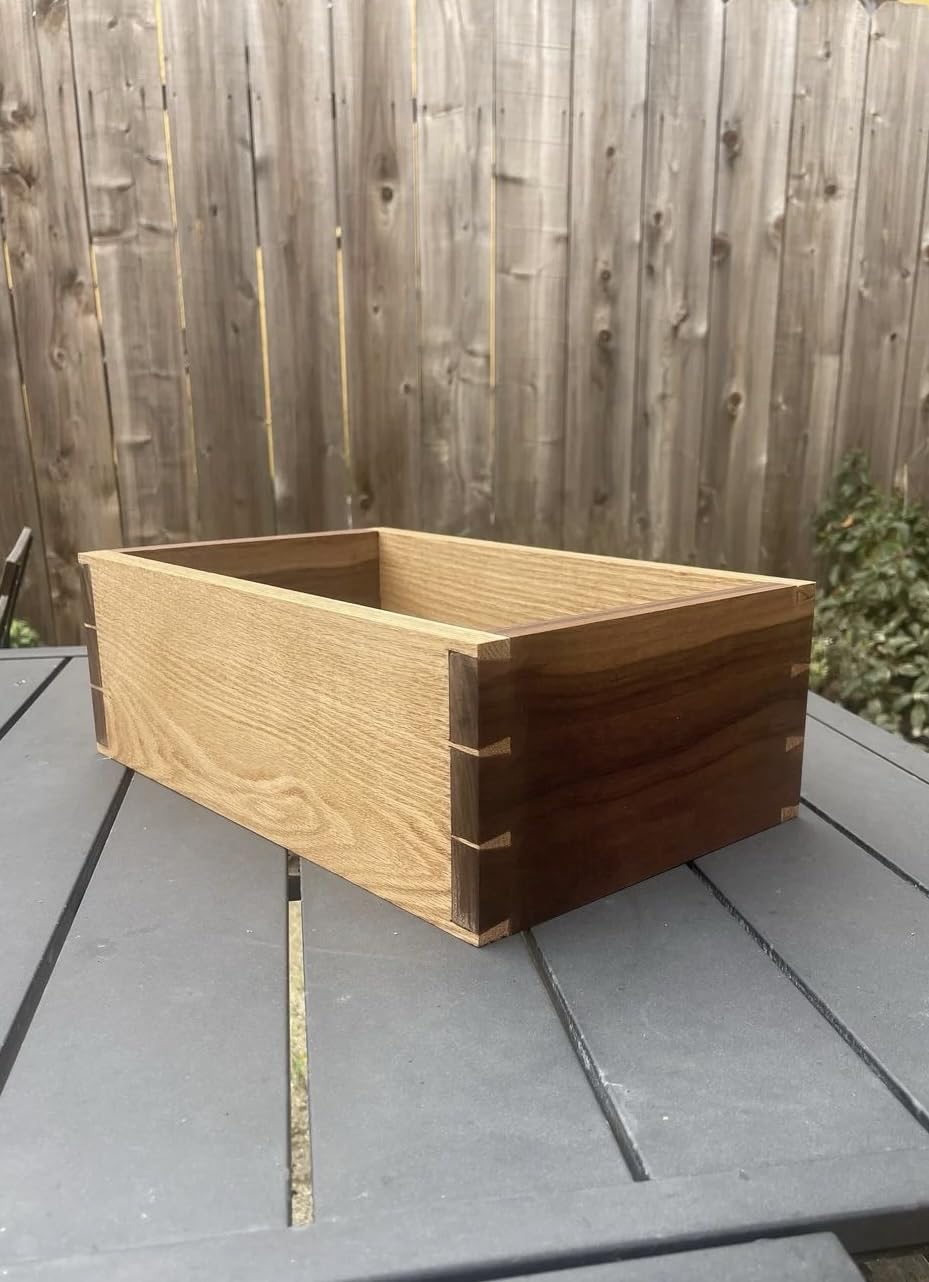
12. Temple Tool 9.5 Inch Rip-Cut Dozuki – Rip Teeth for Joinery
Temple Tool Co. Japanese Pull Saw – Rip-Cut 9.5 – Hand Saw for Dovetails, Tenons, Fine Joinery
Model: D-240-R
TPI: 18 rip teeth
Blade: 9.5 inch
Handle: wingnut wood with brass
Pros
- 18 TPI rip teeth proportioned for dovetails and tenon checks
- Cuts oak and maple quickly with a thin kerf
- Solid build rated well by shop users
- Blade tolerates occasional abuse
Cons
- Symmetrical handle is not comfortable for every grip style
- Short tang feels cramped in some holds
- Handle-only cost is high
This is the rarest configuration in the roundup: a long dozuki with rip teeth instead of crosscut teeth. At 18 TPI and 9.5 inches, it is aimed squarely at with-the-grain joinery work, including dovetails, small tenon checks and other cuts made along the grain.
Fine joinery woodworkers report that it measurably improved the fit of their joinery, cutting smoothly with minimal cleanup. Eighty-four percent of reviews are five-star, and the blade is reported to handle occasional abuse without damage.
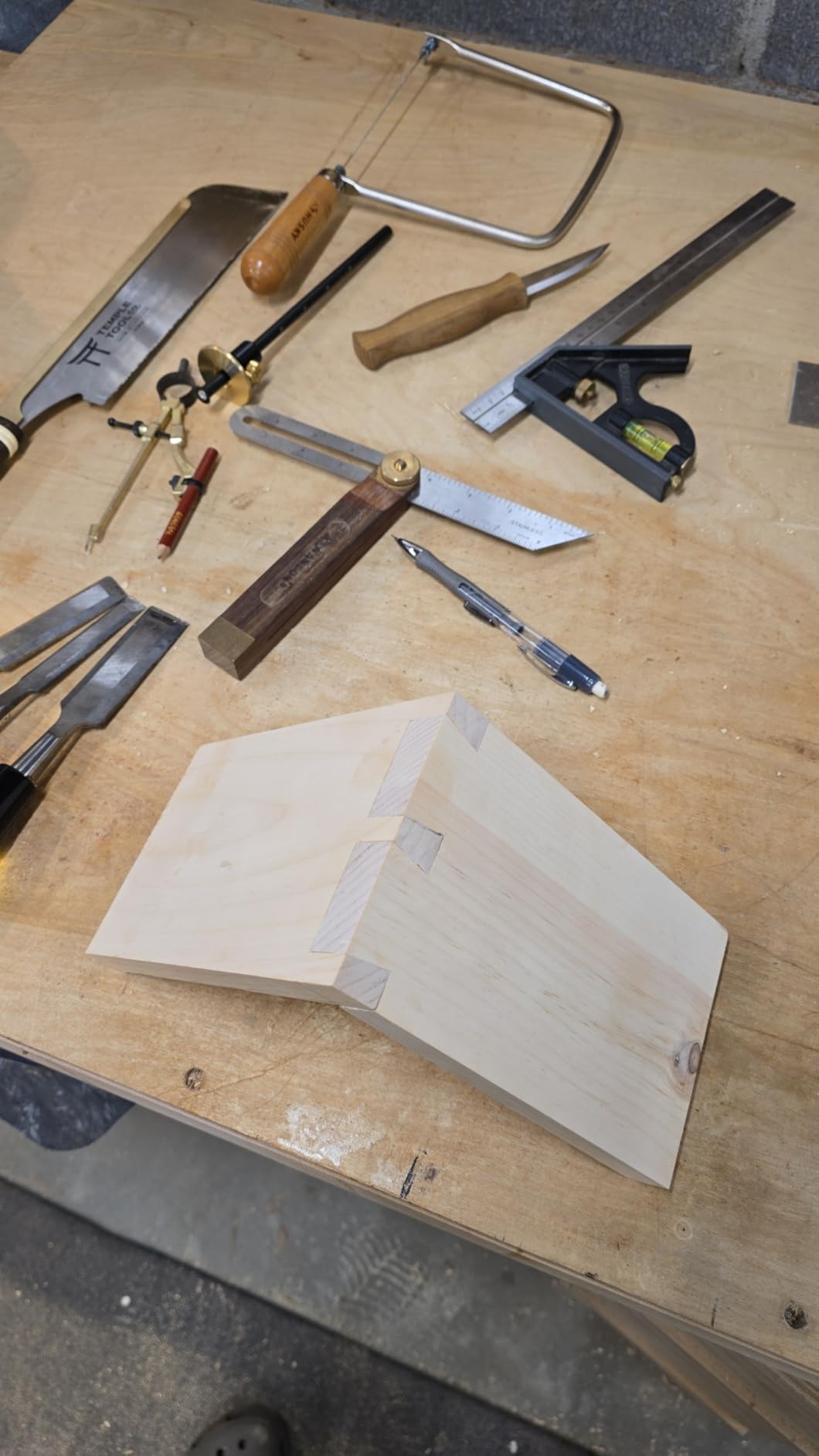
The criticisms here are almost entirely about the handle rather than the blade. Owners mention the symmetrical shape as not suiting every grip style, and a short tang that can feel cramped in certain holds. The handle-only cost is also high relative to what you would pay for replacement blades.
When rip teeth are the right call
Crosscut teeth cut across the grain and rip teeth cut with it, and on a dovetail layout the two edges of the tail are not the same cut. For through-dovetails where both sides run with the grain, a rip dozuki leaves a cleaner cut and a tighter fit than a crosscut pattern.
Who should pass
If you cut mostly across the grain, this is the wrong pattern. It also carries the least user feedback in the group, so the handle complaints are harder to weigh against long-term experience. Check the grip in store if you can.
Which Japanese Saw Type for Which Joint
Match the saw to the joint, not the other way around. The four types that matter for fine joinery are the dozuki, the ryoba, the kataba and the kugihiki, with the azebiki covering a specific starting-cut problem.
Dozuki. A single-edge saw with a reinforced spine and a very thin plate. This is the dovetail saw, the tenon shoulder saw and the half-lap saw. It cuts across the grain only, and the spine is what keeps a plate as thin as 0.3mm square in the cut. If you own one Japanese saw for fine joinery, this is it.
Ryoba. A double-edge saw with rip teeth on one side and crosscut teeth on the other. It is the workhorse: cutting boards to size, breaking down material and doing general joinery. A 6 to 9.5 inch ryoba with a 0.5mm plate covers most of what a Western backsaw would do in a hand-tool shop.
Kataba. A single-edge saw with a rip pattern and a spine, roughly the equivalent of a Western panel saw. It is the one to reach for when you need a long, straight rip with a rip tooth pattern and no crosscut edge to weight the plate down.
Kugihiki. A flush-cutting saw with unset teeth and usually no spine reinforcement, so the blade can lie flat. This is the specialist for trimming a dowel, tenon or peg flush to a finished surface without marking it.
Azebiki. A saw with a convex back, used to start a cut in the middle of a panel. The ROCKLER panel saw in this roundup covers the same need with a hook tooth at the tip instead of a curved back.
Choosing by task: dovetails want the dozuki, tenon shoulders want either a dozuki or a fine ryoba, half-laps work well on either, kumiko and thin lattice work wants a fine crosscut plate, and flush trimming wants a kugihiki-style unset blade.
Japanese Saw vs Western Dovetail Saw for Fine Joinery
A Japanese dozuki wins on thin material and narrow kerfs; a Western dovetail saw wins on rigidity and on sawing across the grain without fuss. Most fine joinery woodworkers end up owning both, and that is not indecision.
The Western saw has a thick plate and a heavy folded spine. That mass means it resists twisting, so if your stroke is not perfectly vertical the saw simply refuses to follow it. On hard hardwood and on the tail board of a dovetail where you are cutting the full height of the joint, that stubbornness is a real advantage.
The Japanese dozuki gets the same result from a much thinner plate, because a stiffened spine at 0.3mm does the work that sheer mass does on a Western saw. The result is a kerf around 0.02 inch, roughly half the plate thickness of a typical Western blade, and a cut that needs very little force.
Where the Japanese saw genuinely loses is in rip-cutting and in crosscutting thick hardwood with a heavy stroke. Some experienced users prefer a Western dovetail saw for exactly that reason. The trade-off is honest in both directions: the Japanese saw is the better tool for small, precise, crosscut joinery, and the Western saw is the better tool when the cut is heavy or the joint is wide.
How to Use a Pull Saw Without Drifting
Cutting off the line is the single most common problem new pull-saw owners report, and it is a technique problem rather than a tool problem. Six steps fix most of it.
Support the workpiece high. Set the work on a trestle or a bench so the cut line sits roughly six inches above the surface. A pull saw cuts best when the blade can move straight down into open air.
Grip like a pool cue, not a trigger. Wrap your fingers around the handle with the thumb along the spine of the handle. A death grip forces the blade off line.
Let gravity pull. The cutting stroke is the stroke that moves the saw toward you, and gravity works with it. Start each stroke from the top and let the weight of the saw do the work.
Use the full length of the blade. Long strokes cut straighter than short ones. Beginners who saw only a few inches at a time are the ones whose cuts wander.
Keep the blade vertical, not rigid. Do not fight the saw by pushing the cut back on line. Nudge the start of each stroke instead, which is far more effective.
Cut a scribed line twice. A second light pass along the same line removes the wandering you already made instead of chasing it with a chisel.
The other half of the answer is not pushing. Any pressure applied as the saw returns toward the workpiece buckles a thin plate and bends it permanently. If a saw keeps coming out of the tool bag slightly bent, that is what happened.
How to Choose a Japanese Hand Saw
Choose on three numbers first, then on feel: blade thickness, teeth per inch, and whether the blade is replaceable. Everything else is preference.
Blade thickness. This is the clearest differentiator in the whole roundup. A 0.7mm saw is a workhorse. A 0.5mm saw is the balance point for most joinery, cutting fast with a 0.8mm kerf. A 0.3mm saw is a specialist dozuki with a 0.5mm kerf and much better control. A plate thinner than 0.1mm is trim-saw territory that will bend if you look at it sternly.
Teeth per inch. Higher TPI means slower, finer cuts with more control, which is what you want on a tail cut you have to hit precisely. Lower TPI means faster chip clearance and more aggressive cutting, which is what you want in hardwood. Between 19 and 25 TPI covers most fine joinery, and anything above 25 TPI is trim work.
Replaceable blades. A saw with a tool-free or simple clamping attachment that accepts replacement blades costs more up front and much less over its life. Several saws in this roundup have non-replaceable blades, which is fine if you enjoy sharpening and painful if you do not.
Handles. Wood absorbs oil, warms up and grips well; plastic stays consistent and survives knocks. Neither is wrong, and reviewers consistently report satisfaction with both. Try to hold the saw before you buy if you can.
Rip teeth versus crosscut teeth. Crosscut teeth are shaped to push chips away from the cut on a push saw; on a pull saw the geometry runs the other way. Rip teeth cut with the grain and are faster; crosscut teeth cut across it and are cleaner. Dozuki are usually crosscut, ryoba usually carry both, and kugihiki have no set at all so they will not mark a show face.
Brand tiers. Handmade smith-made saws from named houses such as Besso Jiro or Mitsukawa Juntaro sit at the top, with thinner plates and more careful finishing. Machine-made Japanese saws from Gyokucho, SUIZAN and Z-Saw sit in the middle and represent most of what we tested here. Off-brand saws sold in big-box stores imitate the shape without the steel, the hardening or the tooth geometry, and they cut and flex differently.
The authenticity question comes up constantly on tool forums, and it is worth answering plainly. A genuine Japanese-made saw is made from Japanese steel, is hardened by machine or by hand at a consistent standard, and is sold by a brand with a name you can trace. A Japanese-style copy may share the handle shape and nothing else. The practical tell is behaviour: a real pull saw cuts with almost no pressure and stays on line, while a copy usually needs pushing and wanders.
Care, Sharpening and Blade Replacement
A pull saw needs less maintenance than almost any other hand tool, but it needs the right maintenance. Five steps cover it.
Wipe the blade after use. Sap and moisture are what cause rust on thin steel.
Oil the blade lightly. Camellia oil is the traditional choice and will not gum up the teeth the way some heavier oils do.
Store it dry and flat. Do not store a thin blade teeth-down on a bench where something can land on it.
Watch the handle screws. If the saw was resharpenable when new, the screws loosen over years of use.
Swap the blade, do not force it. Once a thin plate loses its edge, replacing it is cheaper and faster than restoring it.
On the sharpening question, the honest answer is that most people replace rather than file. Blades at 0.3mm and thinner cannot be sharpened flat on a file without thinning them unevenly, and the special razor files sold for the purpose are a genuine skill of their own. If you enjoy sharpening and your saw has a thicker plate, a file is worthwhile. If you do not, a replaceable-blade saw is the rational choice.
Frequently Asked Questions
What is the best Japanese hand saw for woodworking?
The best all-round choice is a Japanese pull saw with a 0.5mm blade and a double edge, which covers rip and crosscut work at the same time. For pure fine joinery, choose a dozuki with a 0.3mm plate and a stiffened spine. Our first pick is the SUIZAN 5 inch flush cut saw because it teaches the pull stroke at a forgiving scale and cuts pegs and tenon ends cleanly.
What is the best hand saw for fine woodworking?
For fine woodworking, a Japanese dozuki with a 0.3mm blade and a 0.5mm kerf is the standard answer, because the thin plate cuts with almost no force and stays precise on small components. Add a kugihiki-style unset blade for flush trims and a ryoba for general work, and you have a complete hand-tool saw kit.
Are Japanese handsaws better than Western saws?
Neither is better in every case. A Japanese saw wins on thin stock, narrow kerfs and crosscut joinery because its blade can be much thinner. A Western backsaw wins on rip cuts and heavy crosscut hardwood because its plate and spine resist twisting. Fine joinery woodworkers often own one of each.
Who makes the best Japanese hand tools?
For saws specifically, the most established names are Gyokucho, SUIZAN, Z-Saw and Takagi, with handmade smith-made saws from houses such as Besso Jiro and Mitsukawa Juntaro at the top of the range. Machine-made Japanese saws from these brands use hardened Japanese steel and consistent tooth geometry, which is the practical difference from off-brand copies.
Dozuki or ryoba, which should I buy first?
Buy a ryoba first if you break down material and cut boards to size, because it handles rip and crosscut work with one blade. Buy a dozuki first if your work is dovetails, tenon shoulders and half-laps, because the stiffened spine on a thin plate is what makes those cuts accurate.
How do you keep a Japanese saw from drifting off the line?
Support the workpiece about six inches above the bench so the blade cuts into open air, grip the handle lightly like a pool cue, use long full-length strokes, and let gravity pull the saw toward you on the cutting stroke. Never push against the returning blade, and correct drift at the start of each stroke rather than forcing the blade back on line.
How many teeth per inch do I need for fine joinery?
Between 19 and 25 teeth per inch covers most fine joinery. Around 25 TPI gives a slower, finer cut that is easier to hold on a line for tail cuts, while lower counts clear chips faster in hardwood. Anything above 25 TPI is trim-saw territory rather than joinery.
Can Japanese saw blades be resharpened?
Thicker plates can be filed, and special razor files are made for very thin ones, but most owners replace blades instead. Blades at 0.3mm and thinner cannot be sharpened flat on an ordinary file without thinning them unevenly, so a replaceable-blade design is usually the more practical choice for regular use.
Final Verdict: the Best Japanese Hand Saw for Fine Joinery in 2026
If you buy one Japanese hand saw for fine joinery in 2026, buy the SUIZAN 5 inch flush cut saw. It carries the deepest review history of anything here, and at 0.05 kg it is one of the lightest saws on the bench. It also teaches the pull stroke at a size where a beginner’s mistake does not cost you a blade.
Add a second saw based on the joint you actually cut. For dovetails and tenon shoulders, the SUIZAN 6 inch dozuki at 0.3mm and a 0.5mm kerf is the sharpest answer, and for general material work the 7 inch ryoba at 0.5mm is the fastest. If you only trim plugs and pegs, the GYOKUCHO Razor Saw 1151 makes cuts nothing else in this list can.
Whatever you buy, spend more time learning the pull stroke than you do comparing blades. The best Japanese hand saws for fine joinery are the ones whose technique you have not fought yet, and none of the twelve above will let technique make up for a forced push stroke.