
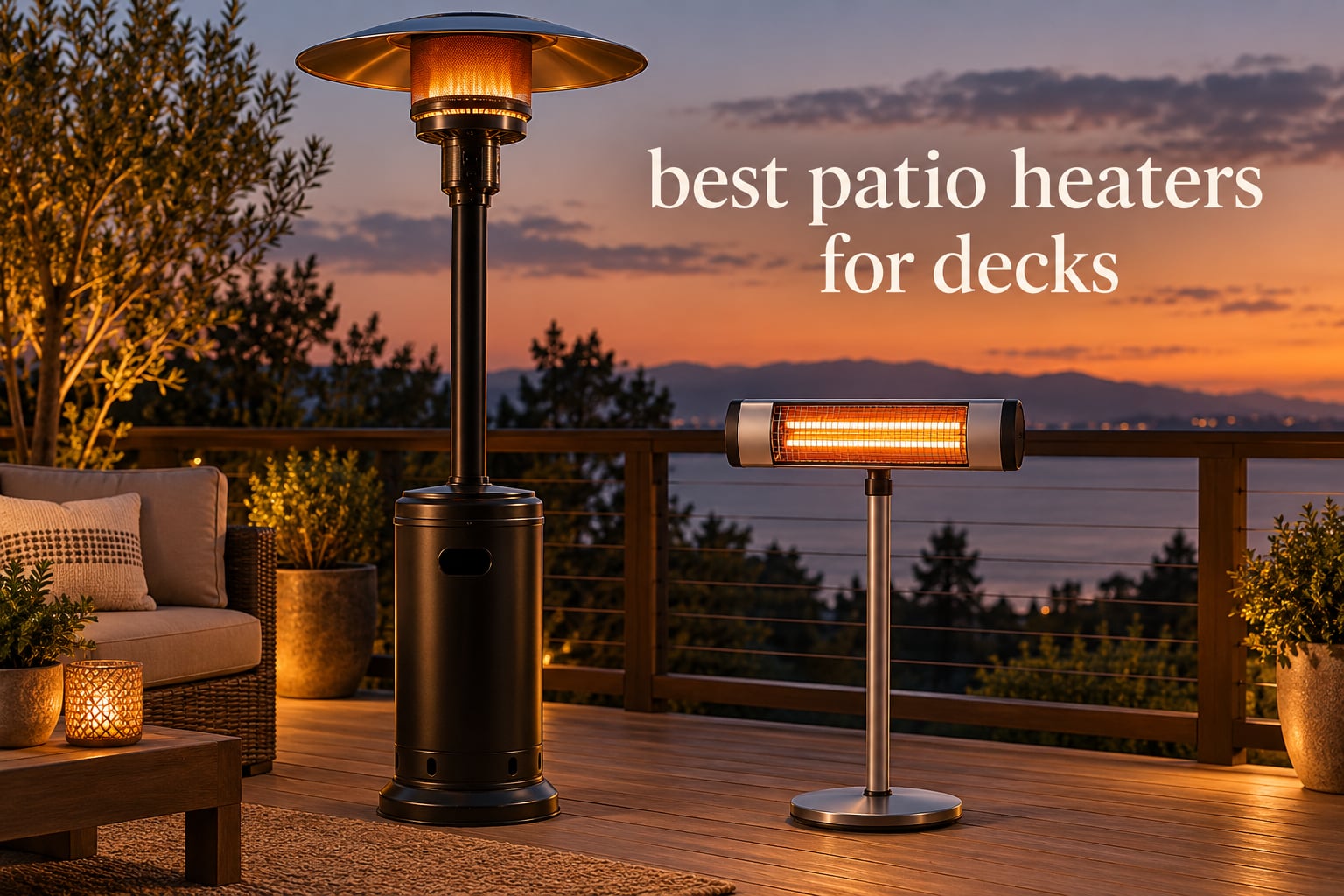
A deck is the first room in your house to become useless when the temperature drops, and the first one most people give up on entirely. If you are searching for the best patio heaters for decks, the difference between a good night outside and a cold one usually comes down to three things: whether the unit is tall enough to clear your railing, whether it holds its heat when wind comes off the yard, and whether your deck surface can take the radiant output underneath it.
Those three questions are exactly what generic patio heater roundups skip. They list units by BTU and leave you to work out the deck math yourself. We went through the current lineup of propane towers, pyramid glass-tube heaters and infrared electric units, then sorted them against the things that actually decide whether a heater works on a deck: unit height, overhead clearance, base weight, weather rating, circuit load and the size of the space you are trying to warm.
Set expectations early. Independent testing of patio heaters found that they lift the temperature in the immediate range around the unit by roughly 5 to 10 degrees, and that the useful results show up in 50 to 60 degree evenings rather than genuinely cold nights. Treat any manufacturer claim of a 20-foot heat radius as a best case in still air, because in practice people report feeling heat at 4 to 12 feet once a breeze is involved.
What follows is a 10-pick lineup built around deck conditions: open and windy, covered with a low ceiling, small balconies, and larger dining decks. Every unit below includes its fuel type, output, published heat radius, weather rating and the specific deck situation it suits best. We also cover the clearance rules, the composite-decking question, the propane restrictions that block apartment and condo owners before they buy, and the running-cost math per hour.
Table of Contents
Top 3 Best Patio Heaters for Decks
If you want the short answer first, these three cover the widest range of real deck situations. The Amazon Basics tower is the all-rounder, the Pamapic pyramid handles wind and looks the part, and the Dr. Infrared unit is the answer when your deck has a roof and a wall to mount to.

Amazon Basics 46,000 BTU Propane Heater
- 46K BTU propane
- 9-foot claimed radius
- Wheels and water-box base
- Tilt auto shutoff

Pamapic 89 Inch Pyramid Propane Heater
- 48K BTU propane
- Quartz glass flame column
- Triple safety shutoffs
- Weighted pyramid base

Dr. Infrared 1500W Wall Mount Heater
- 1500W infrared
- IP55 weather rating
- Wall and ceiling mounting
- Remote control
Best Patio Heaters for Decks at a Glance in 2026
All ten units, side by side. Output is the manufacturer’s published figure, and heat radius is their claimed figure rather than an independently verified distance.
| Product | Specs | Action |
|---|---|---|
| Amazon Basics 46,000 BTU Propane Patio Heater |
|
Check Latest Price |
| Dr. Infrared 1500W Wall and Ceiling Heater |
|
Check Latest Price |
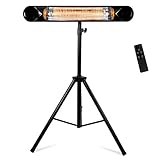 Briza 1500W Wall Ceiling or Tripod Heater Briza 1500W Wall Ceiling or Tripod Heater |
|
Check Latest Price |
| Pamapic 89 Inch Pyramid Propane Heater |
|
Check Latest Price |
 Haimmy 42 Inch Infrared Tower Heater Haimmy 42 Inch Infrared Tower Heater |
|
Check Latest Price |
 Hykolity 50,000 BTU Propane Heater with Table Hykolity 50,000 BTU Propane Heater with Table |
|
Check Latest Price |
 FOOWIN 48,000 BTU Bronze Quartz Heater FOOWIN 48,000 BTU Bronze Quartz Heater |
|
Check Latest Price |
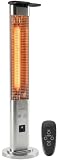 SereneLife 900W IP65 Infrared Tower Heater SereneLife 900W IP65 Infrared Tower Heater |
|
Check Latest Price |
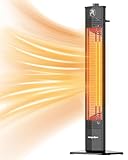 Encyclpo 1500W IPX5 Infrared Tower Heater Encyclpo 1500W IPX5 Infrared Tower Heater |
|
Check Latest Price |
 Paraheeter 1500W IP65 Infrared Patio Heater Paraheeter 1500W IP65 Infrared Patio Heater |
|
Check Latest Price |
1. Amazon Basics 46,000 BTU Propane Patio Heater Review
Amazon Basics 46,000 BTU Portable Outdoor Propane Patio Heater with Wheels, Commercial & Residential with Water Tank, Adjustable Heat Output, 9-Foot Radius, Slate Gray, 32.1″L x 32.1″W x 91.3″H
46,000 BTU propane
9-foot claimed radius
91.3 inch tall
Water box and wheels
Pros
- 11000+ reviews with a 4.4 average
- One-touch ignition and wheels for repositioning
- Adjustable output knob
- Tilt safety auto shutoff
- Water box adds ballast to the base
Cons
- 20 lb propane cylinder not included
- Radial heat falls off fast on exposed decks
The Amazon Basics 46,000 BTU tower is the unit we recommend to most people reading this. It is a straightforward mushroom-dome heater with a 46,000 BTU burner, a claimed 9-foot heating radius and a height of 91.3 inches, which puts it firmly in the band where you need roughly 7.6 feet of overhead room plus the manufacturer’s required clearance above the top of the unit.
At 16.78 kg it is one of the heavier units in this group, and that mass is the point on a raised deck. The water box that clips onto the base gives you a way to add ballast without sand, and the tilt safety valve cuts the gas the moment the unit goes past its lean angle. One-touch ignition means you are not holding a lighter in November wind every time you want heat.
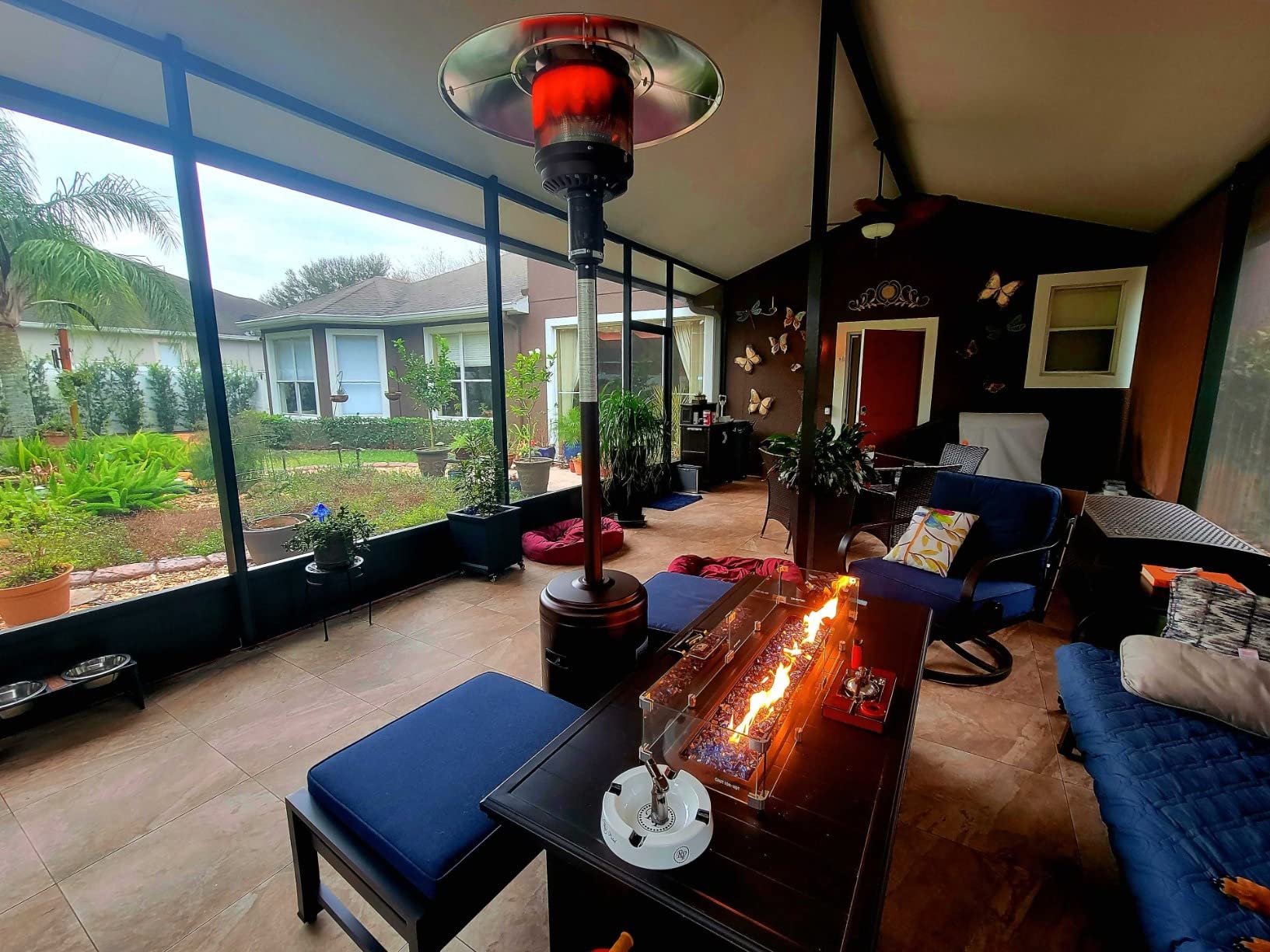
Owners consistently report the two things that matter on a deck: it warms a sheltered seating area for real, and it moves easily enough to follow the sun as the afternoon fades. The adjustable temperature knob means you can run it lower for a mild evening and higher when the temperature drops after dark.
Two limitations are worth being straight about. The propane cylinder and regulator are bought separately, which adds a step and a cost most first-time buyers do not expect. More importantly, the output radiates outward in a cone from the burner, so on a fully open deck with wind across it, the useful warmth is concentrated much closer than 9 feet.
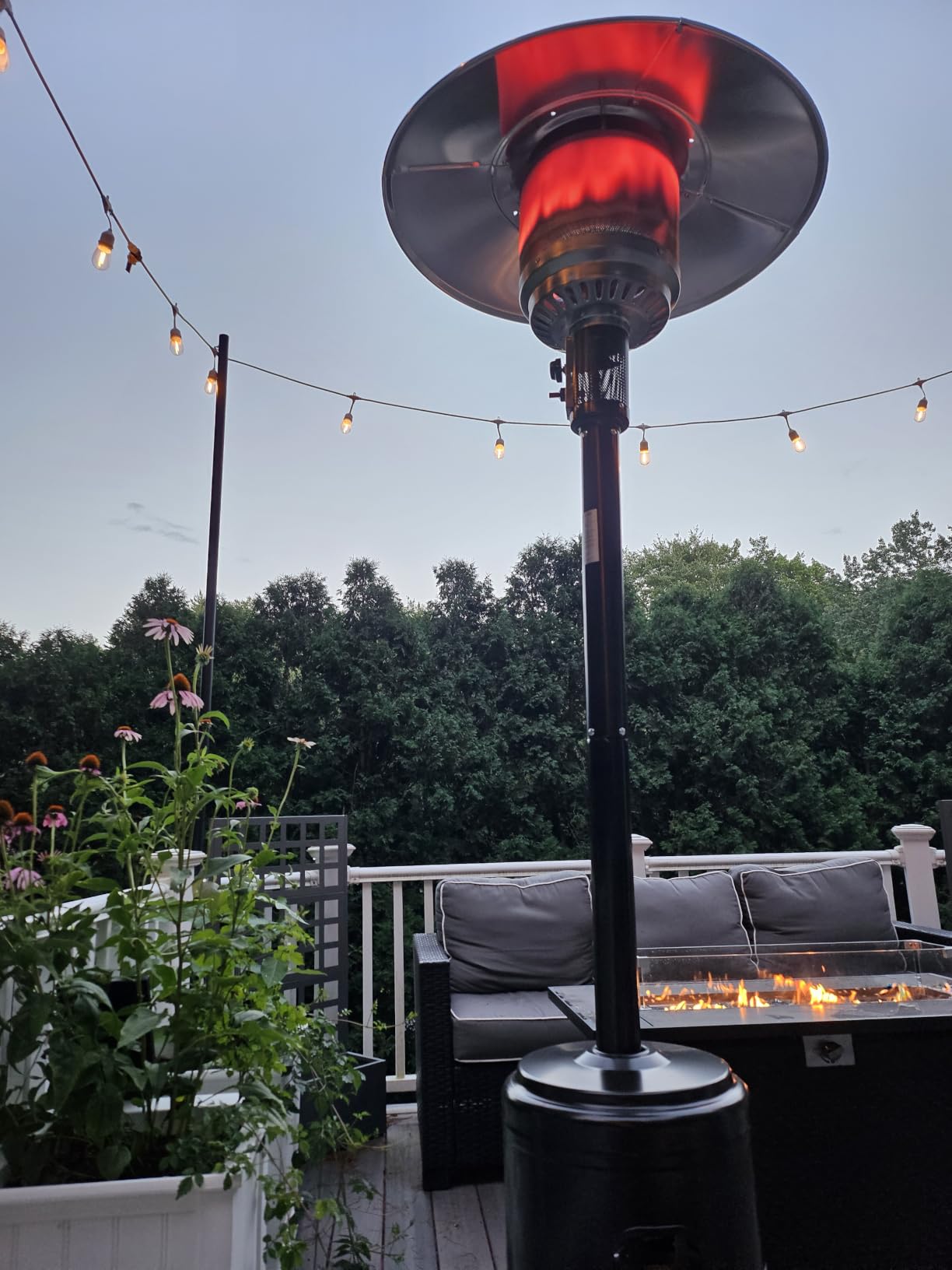
Will it fit your deck and your ceiling?
Measure before you buy. At 91.3 inches tall, this heater needs a deck with no roof overhead, or a roof at least 7.6 feet plus your local required clearance above the top of the unit. Under a typical covered deck with a 7 to 8 foot ceiling, it simply will not work.
Leave the manufacturer-specified clearance from any railing, wall or overhead structure, and keep it well away from the deck edge. If you want a patio umbrella over the table, the umbrella pole and canopy need the same clearance treatment as any other combustible surface.
What it costs to run for an evening
A standard 20 lb propane cylinder typically runs a heater of this class for roughly 8 to 11 hours depending on the setting and the ambient temperature, which covers several long deck evenings before a refill. Owners also report filling the water box and using the wheels as the two things that make this unit practical to own rather than a one-night curiosity.
Because it is a combustion appliance, it belongs in open air. It is not appropriate under a roof that traps combustion gases, and it is not permitted on many apartment balconies and condo terraces where building codes restrict propane storage.
2. Dr. Infrared 1500W Wall and Ceiling Patio Heater Review
DR. INFRARED HEATER Portable Infrared Indoor and Outdoor Space Heater for Patio, Garage, Commercial & Residential With Remote Control, Without Thermostat, Black
1500W infrared
IP55 rated
Wall or ceiling mount
120V corded with remote
Pros
- IP55 indoor and outdoor rated
- Mounting hardware included in the box
- Remote control for three power levels
- 90 percent reflectivity mirror reflector
- Only 8 pounds to handle
Cons
- Highly directional so you must sit in front of it
- Does not remember settings after a power cut
- Mounting hole spacing can be awkward
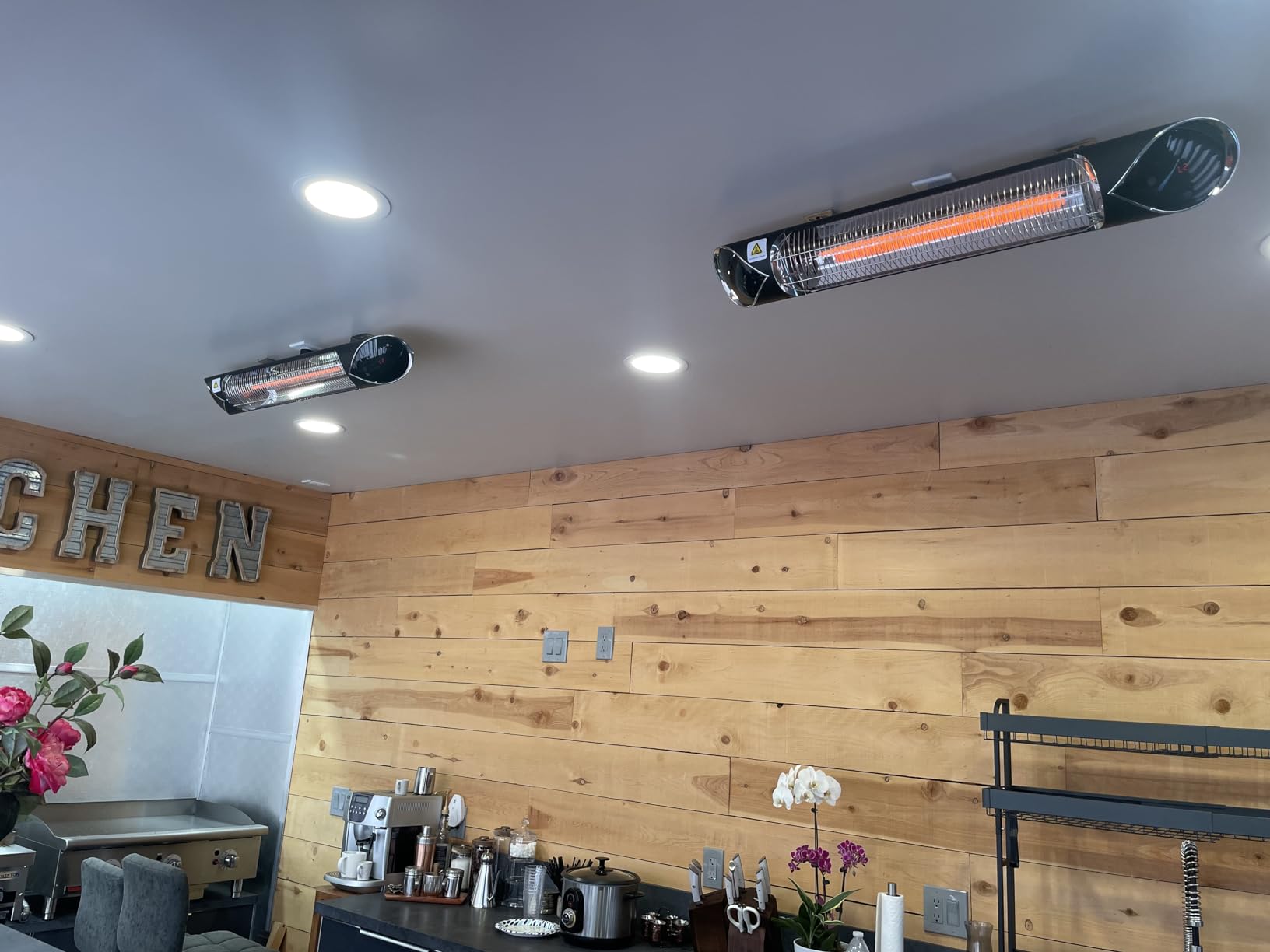
This is the pick for a covered deck, a gazebo or a screened porch, and it is the second unit in our lineup by review volume. It is a 1500W infrared heater rated for both indoor and outdoor use at IP55, supplied with wall and ceiling mounting brackets and a remote control, and it weighs just 8 pounds.
Infrared works differently from the propane towers. It does not heat the air, it heats the surfaces and skin in its line of sight, which is why you feel it within seconds of switching it on. The three power settings at 900W, 1200W and 1500W let you match output to the evening, and the high-level mirror aluminum reflector at 90 percent reflectivity pushes more of that output in the direction you aim it.
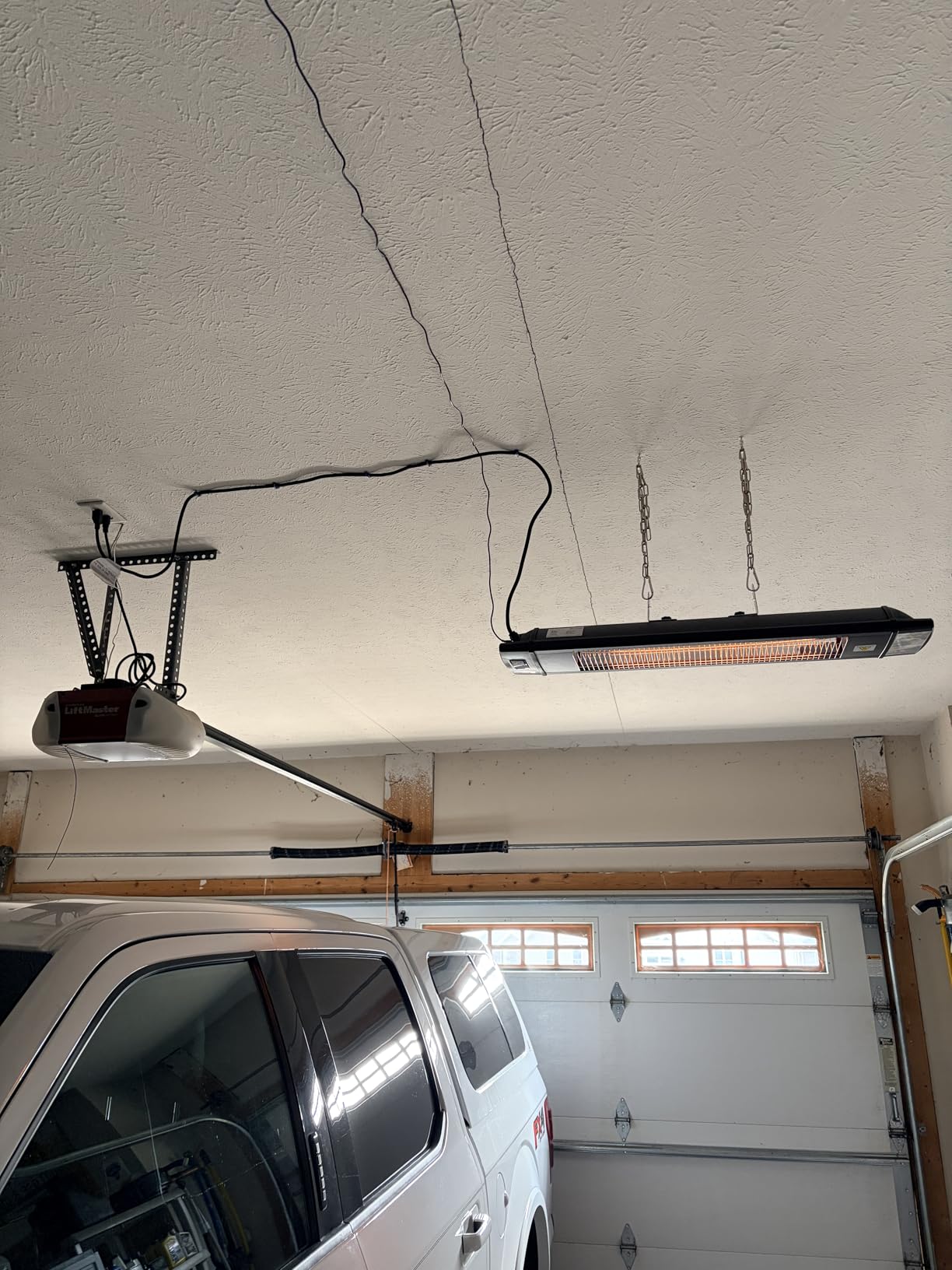
The practical advantage on a deck is that mounting takes it out of the walkway entirely. Bolted to a wall or hung from a ceiling joist, it heats a seating area without taking up floor space on a deck that is already tight, and there is no cylinder to haul down the stairs.
The catch is directionality. Owners describe warmth falling off sharply as you move away from the cone, so this works best aimed at a table or a bench where people sit relatively still. A second common note is that the unit does not restore its previous setting after a power interruption, and some buyers report failures after several months of use.
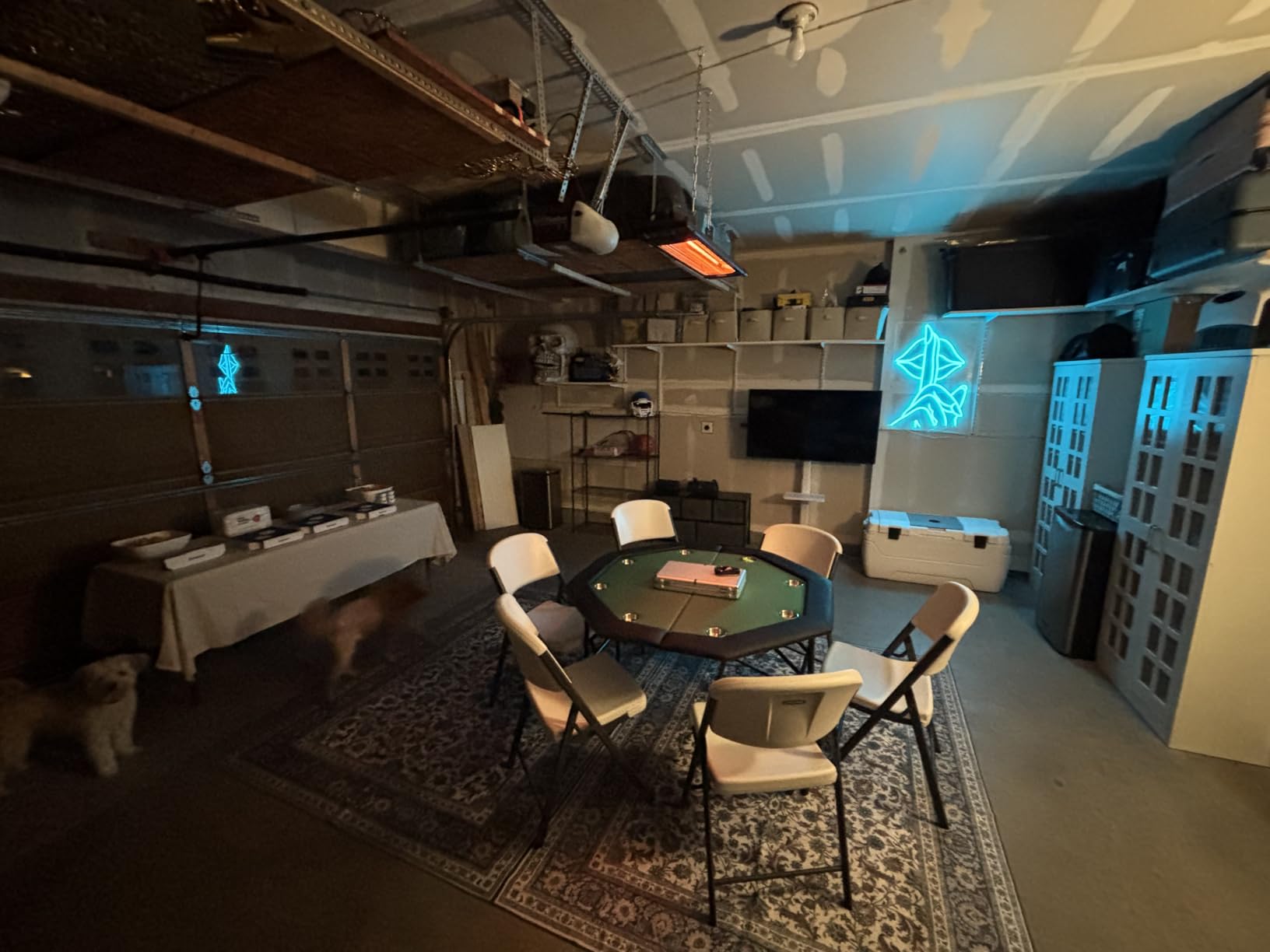
Does your deck circuit have room for it?
It runs on 120V at 12.5 amps through a standard outlet, which is the friendliest electrical spec in this roundup. But most decks are fed by a single breaker that also handles the deck lights, and a 1500W heater on that circuit is close to the limit for a 20 amp branch circuit. Running it at 900W or 1200W is the sensible setting if anything else is on the same circuit.
Extension cords are the weak link here. A long run of household-rated cord outdoors on a damp deck is a poor idea, so plan on mounting it close to a properly rated outdoor outlet rather than trailing cable across the boards.
What IP55 actually means for a wet deck
IP55 means the unit is protected against dust and water jets from any direction, which covers rain exposure on an open-air deck. It does not mean you can leave it running in a storm, and it does not mean you should leave it uncovered through a wet winter. A fitted cover when it is not in use will do more for its lifespan than the rating alone.
Because there is no combustion, this is also the only category in our lineup that is genuinely suitable for a semi-enclosed space such as a screened porch or a gazebo with partial walls, where a propane heater would be the wrong and potentially unsafe choice.
3. Briza 1500W Wall, Ceiling or Tripod Patio Heater Review
Briza Infrared Electric Patio Heater – Indoor/Outdoor Heater – Portable Wall/Garage Heater – 1500W – use with Stand – Mount to Ceiling/Wall)
1500W carbon infrared
Wall, ceiling or tripod
IP55 rated
84 inch cord
Pros
- Only pick that includes mounting hardware and a tripod stand
- Assembles in about five minutes
- Three heat levels plus a 1-9 hour remote timer
- IP55 rating has held up through snow
- Silent with no hot blowing air
Cons
- Heat only reaches you at close range
- Cannot raise the temperature of an open space
- Tripod height needs adjusting to aim down
The Briza is the most flexible infrared unit in the group, and on a deck that flexibility is worth more than raw output. It ships with hardware for wall or ceiling mounting and an adjustable tripod stand, so you can start with it on the deck floor, then move it to a wall or overhead once you know where people actually sit.
It runs at 900W, 1200W or 1500W, carries an IP55 rating that reviewers say has survived snow and spills, and includes a remote with a 1 to 9 hour timer so you can set it and walk away. The tip-over sensor shuts the unit down if it is knocked, which matters more on an uneven deck than it does on a flat patio.
Owners like that it assembles in about five minutes with no tools, and that operation is silent with no fan and no drying airflow. Carbon infrared elements heat objects rather than air, so there is no dust or odour to deal with on a deck where people are eating.
Expect a lower rating than some of the propane units here for a structural reason: a 1-star share of 12 percent reflects buyers who wanted room heating and got person heating. The manufacturer rates 800 to 1,000 sq ft for indoor use and about 100 sq ft outdoors, and that outdoor figure is the honest one to plan around.
Where to aim it on your deck
Direction is the whole game with this unit. Point it at a dining table from roughly 6 to 8 feet and it is very effective; point it at the middle of an empty deck and it does almost nothing. If your deck has a seating cluster and a walkway, aim at the cluster and let the walkway stay cool.
The tripod extends to around six feet, which means you will usually want to raise it and angle it downward at seated guests. That takes a minute of adjustment and is the single setup step that changes the experience most.
Can it handle a shared electrical circuit?
It draws 12.5 amps at 120V and ships with an 84 inch cord. That is convenient for reaching an outlet, but it is still a 1500W load on a deck that usually has one breaker shared with lighting. If your deck circuit is already carrying lights and an outlet or two, step down to 1200W or plan on having an electrician add a second circuit.
Because it runs clean with no fuel and no exhaust, it is also the safer pick for a rental or a covered structure where propane is restricted. Check your lease or building rules before assuming either type is allowed.
4. Pamapic 89 Inch Pyramid Propane Patio Heater Review
Pamapic 89″ Pyramid Patio Heater Outdoor, Propane Flame Tower with Quartz Glass Tube, Outdoor Heaters with Wheels & Cover for Deck, Porch, Backyard, Garden, Black
48,000 BTU propane
Quartz glass flame column
89.4 inch tall
61.7 pounds
Pros
- Weighted pyramid base holds up far better in wind
- Flame column doubles as deck ambiance
- Assembly reported as clear with no missing parts
- Wheels and a fitted cover included for storage
Cons
- Propane regulator and hose sold separately
- Some units arrived with a pilot that would not light
- Assembly takes about an hour
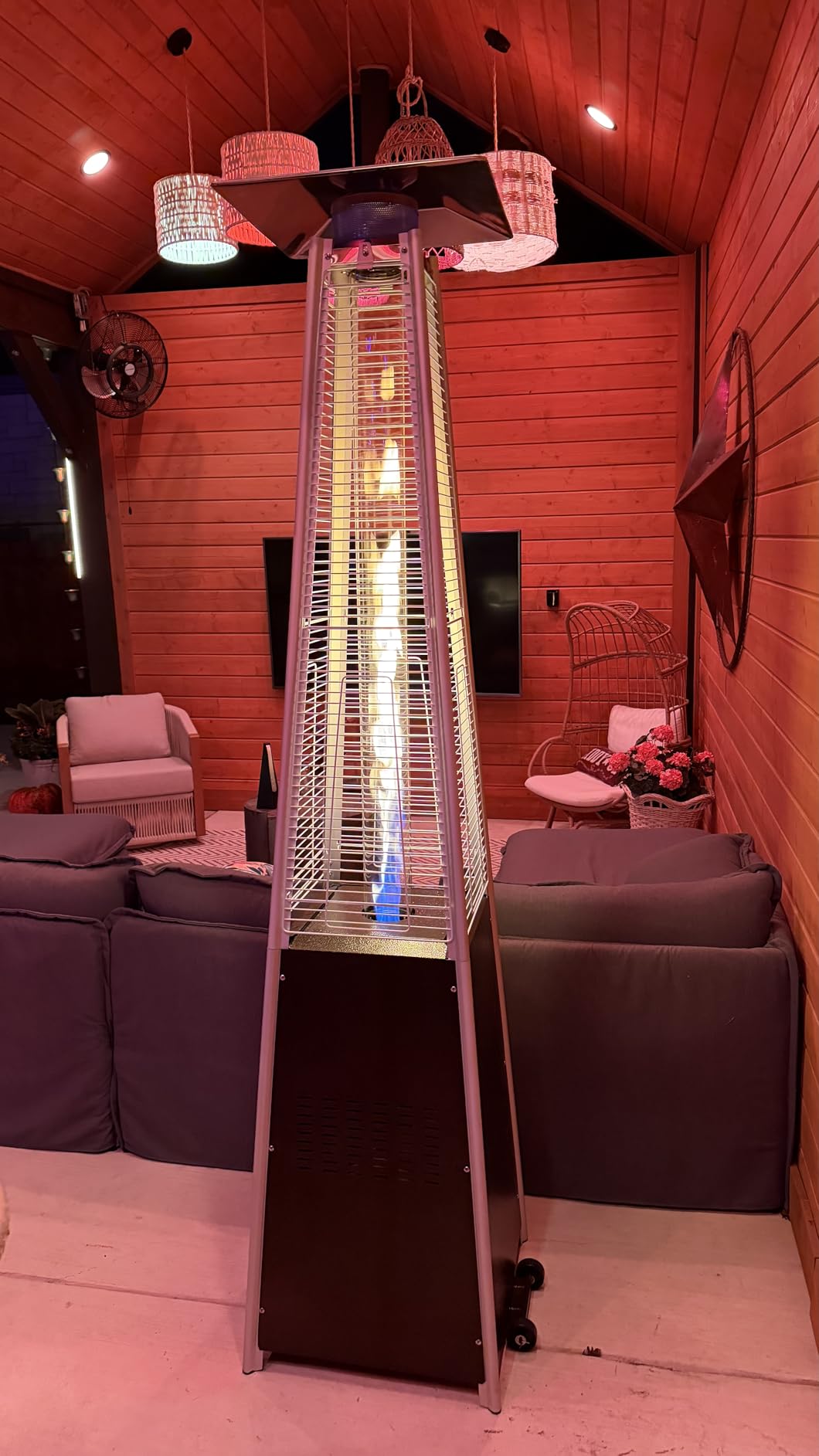
The Pamapic pyramid is the one we recommend for an uncovered deck, and the reason is its base rather than its burner. At 61.7 pounds with a wide weighted pyramid footprint, it is far more stable in a gust than a pedestal dish heater on a small base, and stability is the first thing that fails on an elevated open deck.
Output is 48,000 BTU from a quartz glass tube flame column with claimed coverage up to a 15-foot diameter. That visible flame does something the mushroom domes do not: it becomes the centrepiece people gather around, and owners frequently describe it as having a campfire on the deck. Three safety systems are built in, a tip-over auto shutoff valve, flame-failure protection and an overheat guard.
Ignition is pulse-based, so there is no electricity to run to the deck and no battery to maintain. Wheels are included for moving it, and a custom-fit fade-resistant cover comes in the box, which is the part most people skip and later regret when the finish degrades over a wet winter.
The quality-control complaints are the reason this sits below our first pick: some units shipped with a pilot that failed to light or with missing or mismatched wheels, and a few reports mention bent panels and soft screws on arrival. Support has been responsive once contacted, which is worth knowing before you order.
How tall is too tall for your deck?
At 89.4 inches, this is a tall tower, roughly 7.5 feet. That is the same clearance problem as the first pick: it needs open air above and no low roof. On a covered deck with a 7 to 8 foot ceiling, look at a wall-mounted or hanging electric unit instead of a pyramid.
The footprint is 21 by 21 inches, so it needs a clear standing area of roughly two feet square plus the manufacturer’s clearance from any railing, post or wall. On a small deck that is often the binding constraint, not the heat output.
Why it handles wind better than a dish heater
A wide, heavy base resists the tipping moment that catches a narrow pedestal, and the glass tube column is shielded in a way that tolerates moving air better than an exposed dome. That said, wind still removes the warm air. On a heavily exposed deck, plan on this heater warming a defined zone of seats rather than the whole footprint.
The forum consensus among deck owners is that wind is the real limit, not BTU. Many owners on open decks report the practical answer is a windbreak panel on the windward rail, which does more for comfort than a larger burner would.
5. Haimmy 42 Inch Infrared Tower Patio Heater Review
Outdoor Electric Patio Heater, Haimmy 42in Infrared Heater with Remote, 9 Heat Levels, 9H Timers, 1500W Instant Heating, Safety Lock, Tip-Over & Overheat Protection, IPX5 Waterproof Tower Space Heater
1500W carbon fiber
42 inch tower
Nine heat levels
IPX5 rated
Pros
- Nine heat levels from 620W to 1500W
- 1-9 hour timer plus child and pet lock
- Tip-over and overheat auto protection
- Fanless so it runs silently
- Element covers two-thirds of the height
Cons
- Floor-standing only with no mount hardware
- Directional warmth felt most when close
- Replacement remote needs your own batteries
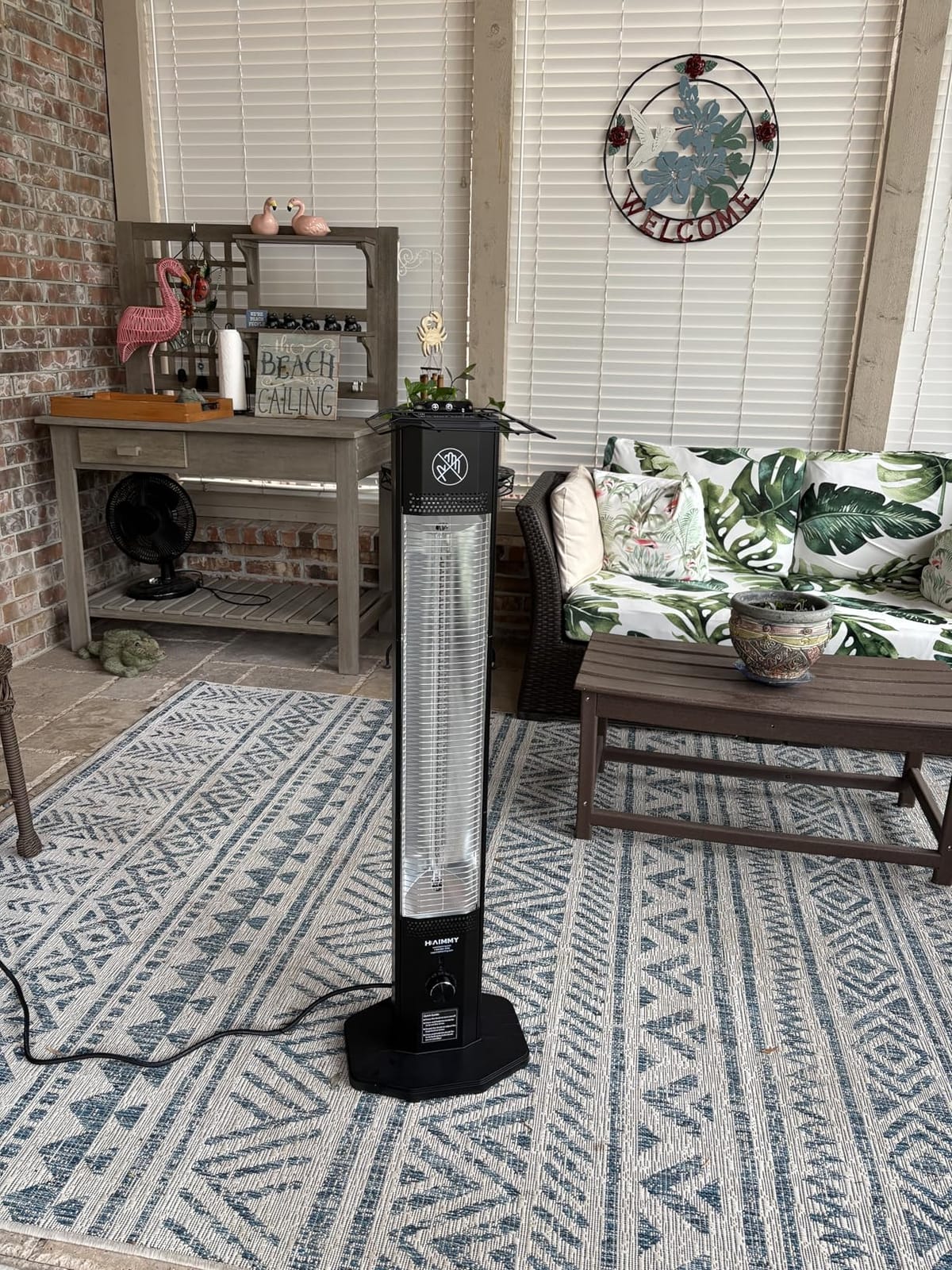
The Haimmy is a 42-inch floor tower, which makes it the tallest electric unit in this lineup on the published dimensions and the one that most closely mimics the coverage pattern of a propane tower. The carbon fiber heating wire runs about two-thirds of the height, so it aims warmth at your legs and torso as well as your shoulders instead of only at head height.
Control is where it beats its electric rivals. Nine heat levels from 620W up to 1500W give you far finer adjustment than the three-step units, and there is a 1 to 9 hour timer on the remote or on the knob. A child and pet lock with a memory function is a small detail that matters on a deck where kids are running around a hot grille.
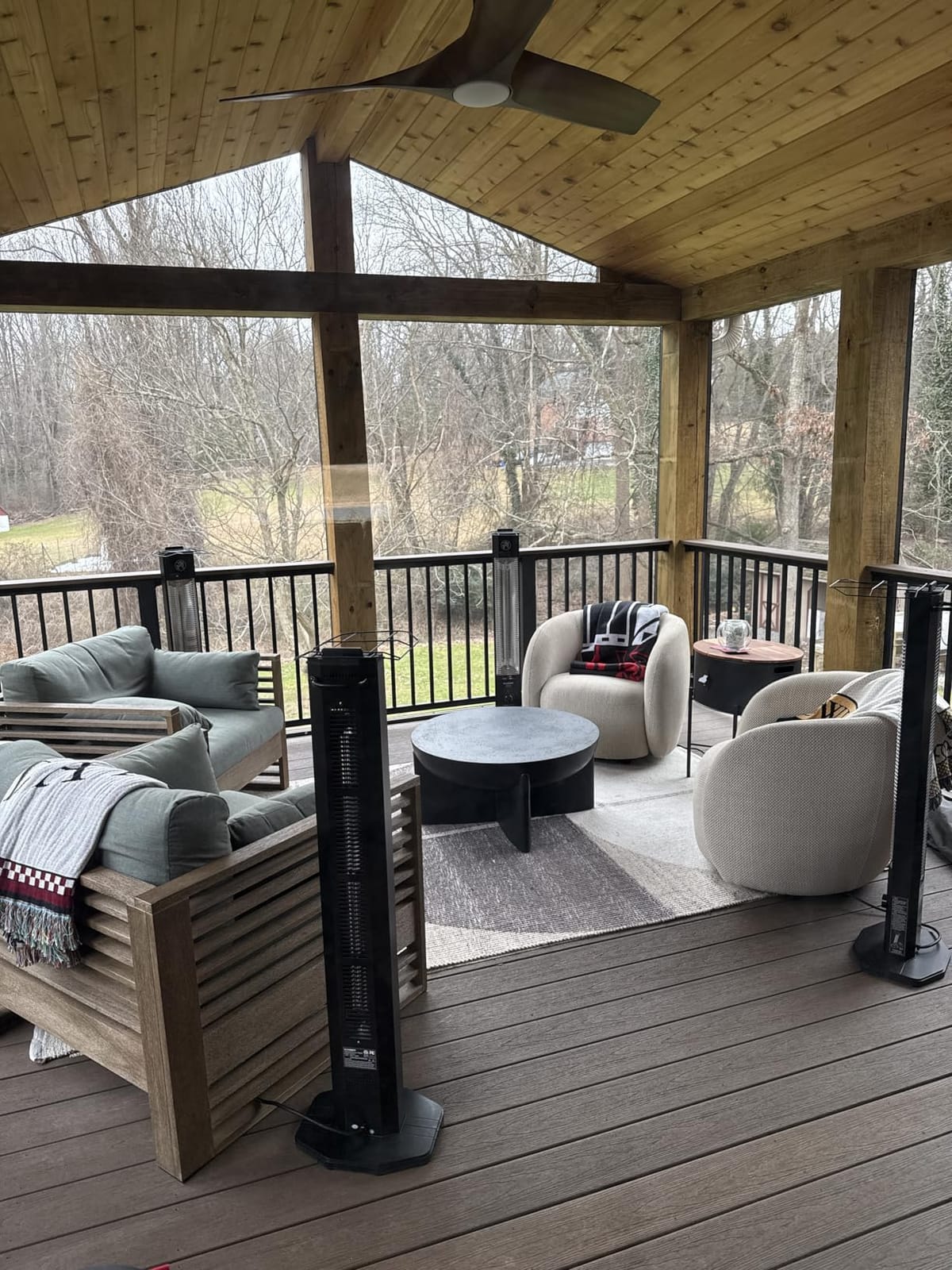
It is IPX5 rated for outdoor use, stands 8.8 pounds, and runs fanless, so it is silent and does not dry the air. Reviewers point out that it works well in gazebos, on porches and in garages as well as on open decks, which broadens its use well beyond a single season of outdoor seating.
The trade-off is flexibility. This tower configuration has no wall or ceiling bracket, so it lives on the deck floor where it becomes an obstacle in a tight space, and its infrared output is directional, meaning it warms you well when you are close and in front of it rather than filling a room.
How close do you need to sit?
Plan on sitting within roughly 4 to 8 feet, centred in front of the tower. The manufacturer rates it for 500 sq ft, but as with every infrared unit in this roundup, that figure describes the space the element can influence rather than the space you will feel warm in.
The nine levels are what make this usable across a whole evening. Run it at 620W for a mild drink on the deck, step up to 1200W as the temperature falls, and reserve 1500W for the coldest hour rather than burning the top setting from the start.
Is it safe around children and pets?
It has automatic shutoff when tilted or knocked over plus overheat protection, and the safety lock disables the controls. That combination is why it suits decks where a propane tower’s hot surfaces and open flame would be a concern.
Keep it on a stable, level part of the deck rather than on a step or a loose board, and remember that the exterior grille still gets hot during operation. Position it away from the walkway, not beside it.
6. Hykolity 50,000 BTU Propane Patio Heater with Table Review
Hykolity 50,000 BTU Patio Heater for Outdoor Use, Propane Patio Heater
50,000 BTU propane
200 sq ft claimed coverage
87.25 inch tall
Built-in table
Pros
- Highest average rating in the lineup at 4.5 stars
- Largest heat output of any pick here
- Built-in table gives a place for drinks
- No battery needed with piezo ignition
- Rainproof umbrella-style top reflector
Cons
- Propane tank and regulator bought separately
- Pedestal base is less stable in strong wind
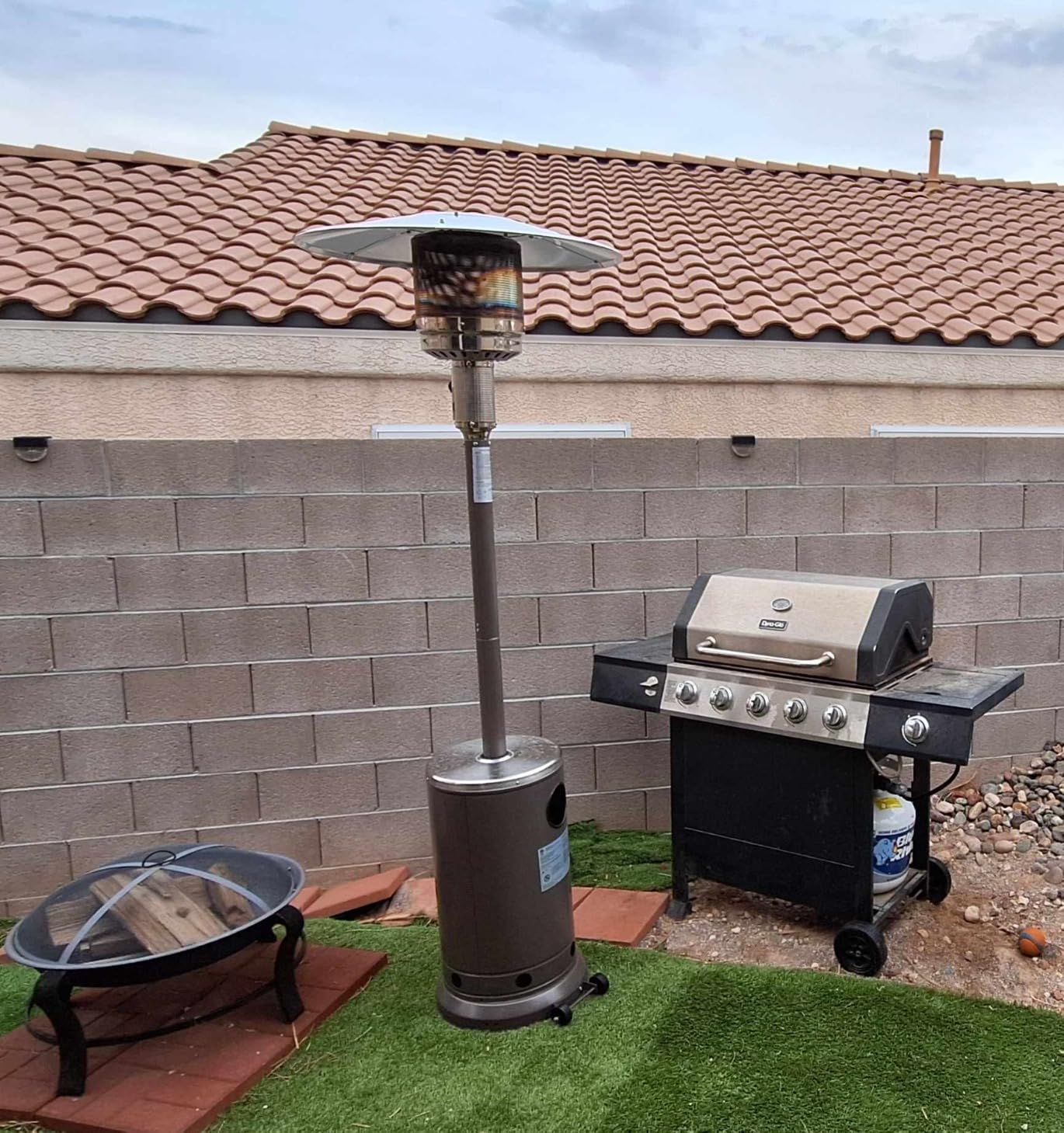
The Hykolity has the highest average rating of anything we list, at 4.5 stars, and the largest burner output at 50,000 BTU. The stainless steel burner sits under an umbrella-style top reflector rather than a flat dome, which owners say spreads the heat more evenly across the seating area instead of concentrating it overhead.
What makes it interesting for a deck is the built-in table around the base. It gives guests somewhere to set a drink that is at hand and at a sensible height, and it turns the heater into the centre of a seating arrangement rather than something shoved against a wall to stay out of the way. It also heats a claimed 200 sq ft, the widest coverage figure in the group.
Piezoelectric ignition means no battery and no electrical connection, so it is as simple to run as a garden barbecue. The design is described as waterproof and rainproof, and rolling wheels let you move it between the cooking area and the seating area as the evening goes on.
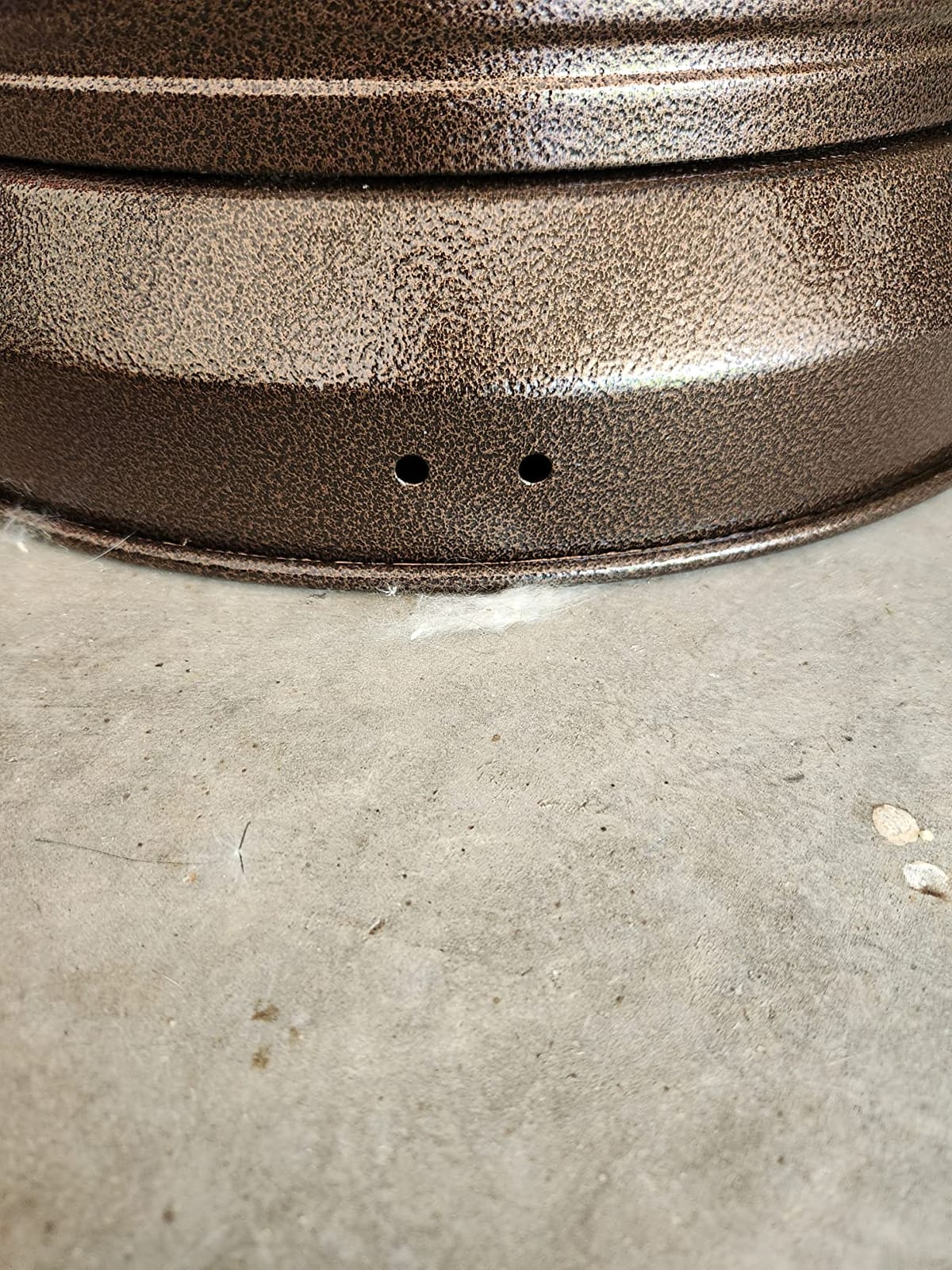
The honest weakness is the base. A pedestal design on wheels is lighter and narrower-footed than the weighted pyramids, so it is the least stable of the propane units here in a strong wind, and the table ring raises the effective centre of gravity. On a fully exposed elevated deck, that matters.
Is 50,000 BTU more than your deck needs?
As a rule of thumb for decks, 46,000 to 50,000 BTU covers a seating area of roughly 100 to 200 sq ft comfortably in 50 to 60 degree conditions. The Hykolity sits at the top of the deck-appropriate range, so it makes sense for a larger dining deck with eight or more people and is overkill for a small balcony.
Its 87.25 inch height again means open air overhead. A seven-foot covered deck is a hard no, and a pergola with a low beam will limit where you can place it even if there is no full roof.
How long does one propane tank last?
For a heater of this output class, a standard 20 lb cylinder typically runs about 8 to 11 hours at normal settings, less if you run it on maximum in cold weather. Owners typically get several long evenings from one fill, but the refill is the part people underestimate when budgeting.
Both the tank and the regulator are purchased separately, and a good regulator matters more than most buyers expect. A low-quality regulator is the source of many of the flame-out complaints that show up in reviews across this entire category.
7. FOOWIN 48,000 BTU Bronze Quartz Patio Heater Review
FOOWIN Patio Heater 48,000 BTU Outdoor Propane Heater with Wheels
48,000 BTU propane
Bronze quartz glass
81.4 inch tall
50.7 pounds
Pros
- Bronze quartz design looks better than a dish heater
- 48K BTU with a five-minute warm-up
- Aluminium and stainless steel resists corrosion
- Waterproof cover and gloves included
- Support sends replacement burners quickly
Cons
- Assembly takes 45 to 60 minutes
- Heat concentrates high on the tall tower
- Printed manual text is small
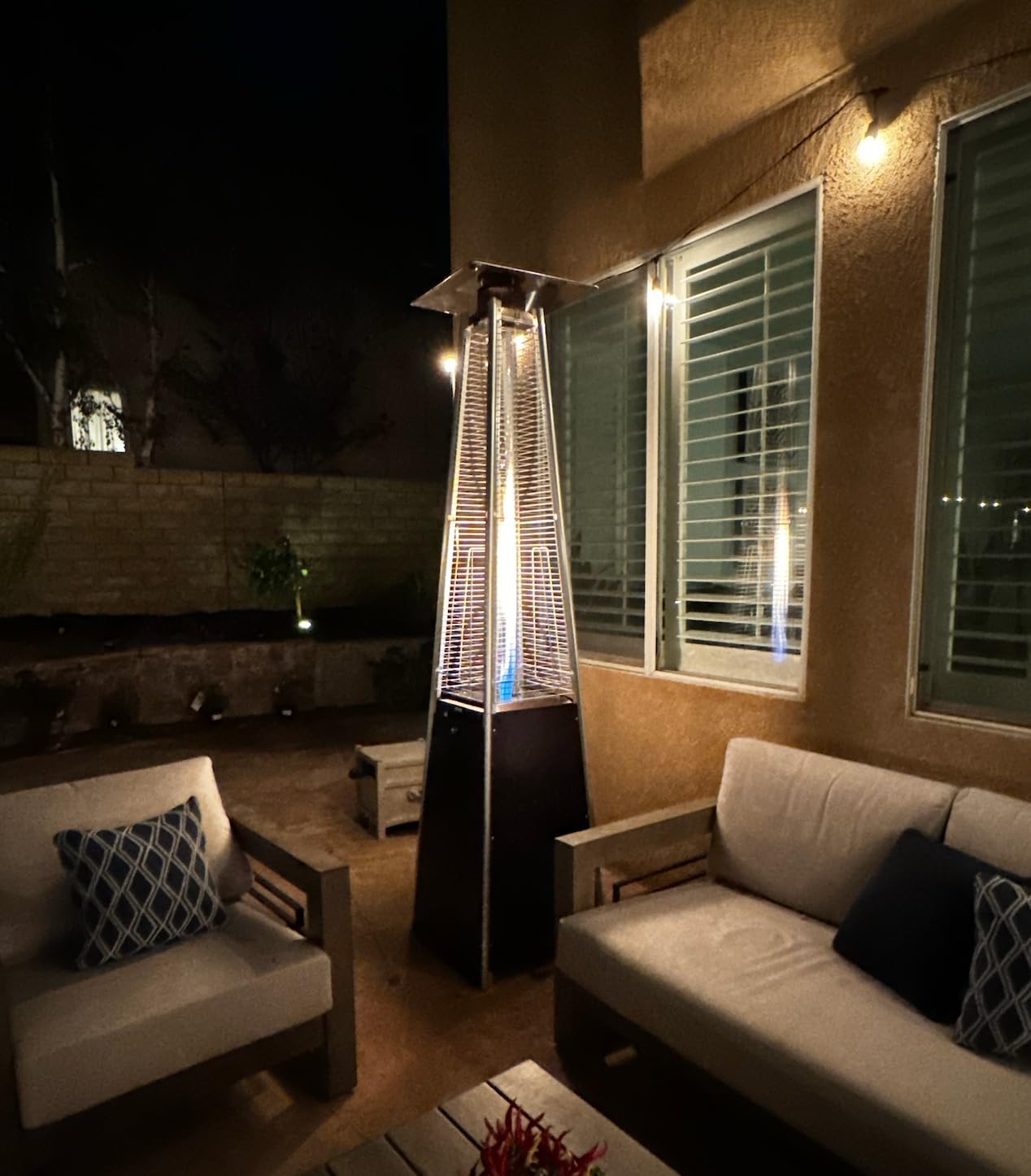
The FOOWIN is the most attractive propane unit in the lineup, and that is not a throwaway observation on a deck where the heater becomes part of the scenery for four months of the year. The bronze finish and quartz glass tube give it a finished look that a black powder-coated dish heater does not, and reviewers single out the appearance as much as the performance.
Output is 48,000 BTU spread over a claimed 130 sq ft, a 10-foot radius, with one-touch ignition through a control valve and a warm-up the company describes as about five minutes. Construction is aluminium and stainless steel with a quartz glass tube, and the listed weight is 50.7 pounds, which is substantial for a portable unit.
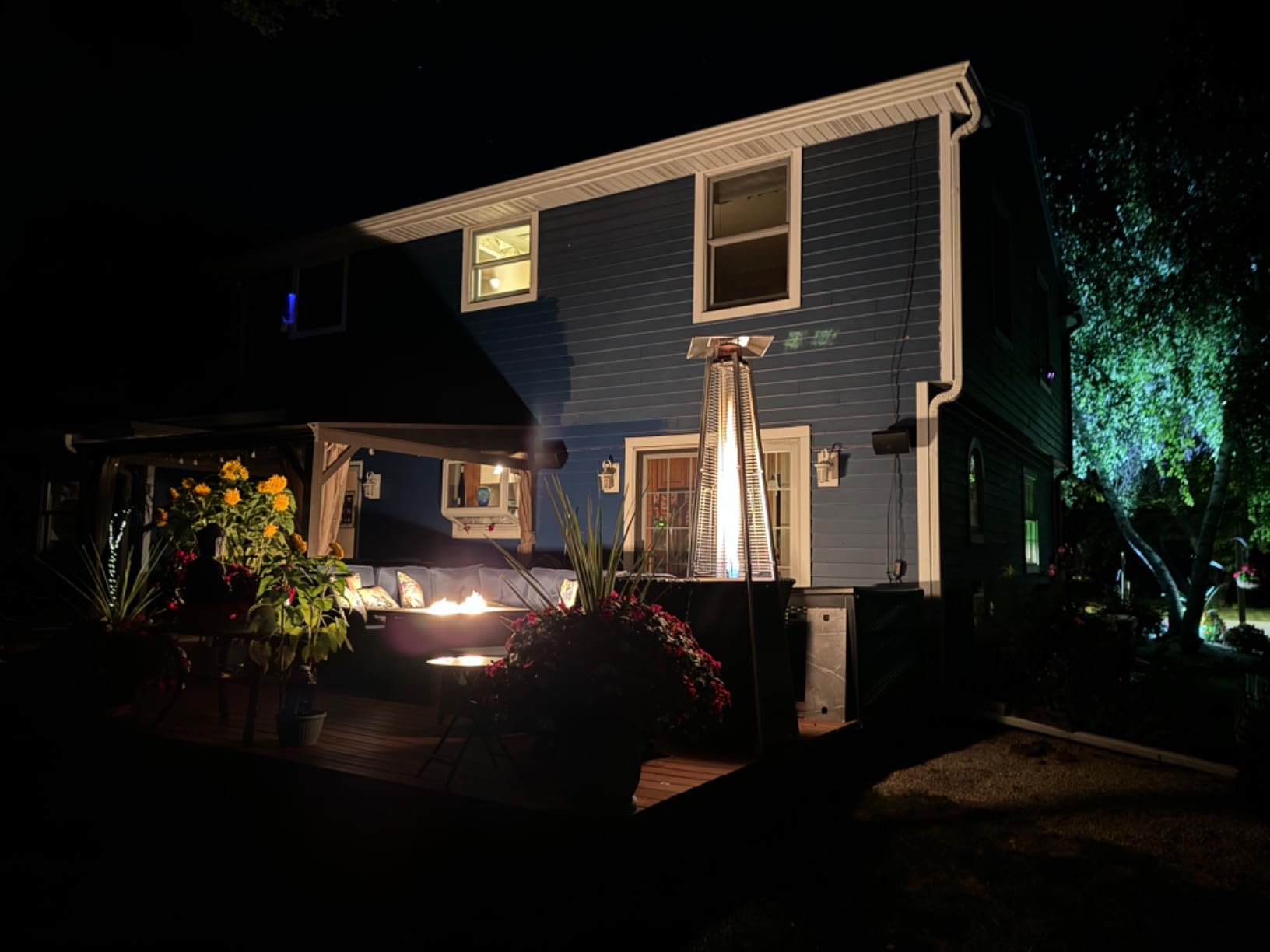
Safety is thorough for a tower: auto shutoff if it tilts more than 45 degrees, an explosion-proof pipe and protective nets. The box also includes a waterproof cover and a pair of operating gloves, which is a more complete package than most competitors ship, and support is reported as responsive when replacement burners are needed.
Two things come up repeatedly in reviews. Assembly takes between 45 and 60 minutes and some buyers report bent or stripping screws, and because the unit is tall, the heat concentrates at the upper portion, so seated guests may need to sit closer than the claimed radius suggests.
Does it earn its premium over a basic tower?
It costs more than the entry-level propane towers in this list, and what you are paying for is materials and finish rather than more heat. At 48,000 BTU it is close to the top of the range, not above it, so choose it for looks and corrosion resistance rather than for output.
If appearance matters to you and you are on an exposed deck, this is a better emotional fit than a utilitarian dish heater. If you only care about heat per dollar, the same class of output is available for less without the bronze pyramid.
Spacing it away from a deck railing
At 81.4 inches tall with a footprint of roughly 18 by 20 inches, it needs open air above and the manufacturer’s clearance on every side from railings, posts and walls. A deck rail with a spindled or glass panel is a combustible or fragile surface, so treat the clear zone as larger than feels necessary.
For deck surfaces, put it on a heat-resistant pad or pavers rather than directly on composite or vinyl planks, and check the radiant temperature under the unit after the first hour. That is the number that decides whether your decking is fine.
8. SereneLife 900W IP65 Infrared Tower Patio Heater Review
SereneLife Outdoor Electric Patio Heater – 900W Infrared Heater with Remote, Aluminum Reflector, Waterproof Design, IP65 Approved, Quiet Operation, Standing Porch Heater for Patio & Backyard
900W infrared
IP65 aluminum frame
37.4 inch tall
7.7 pounds
Pros
- Entry-level pick that warms one spot
- IP65 frame with aluminum alloy for corrosion resistance
- ETL certified with 88 percent efficient elements
- Lightest build at 7.7 pounds
- Two heat levels plus a remote
Cons
- Smallest output at 900W and 15 sq ft rated
- Warms a single spot rather than a whole deck
- Directional radiant heat felt only when close
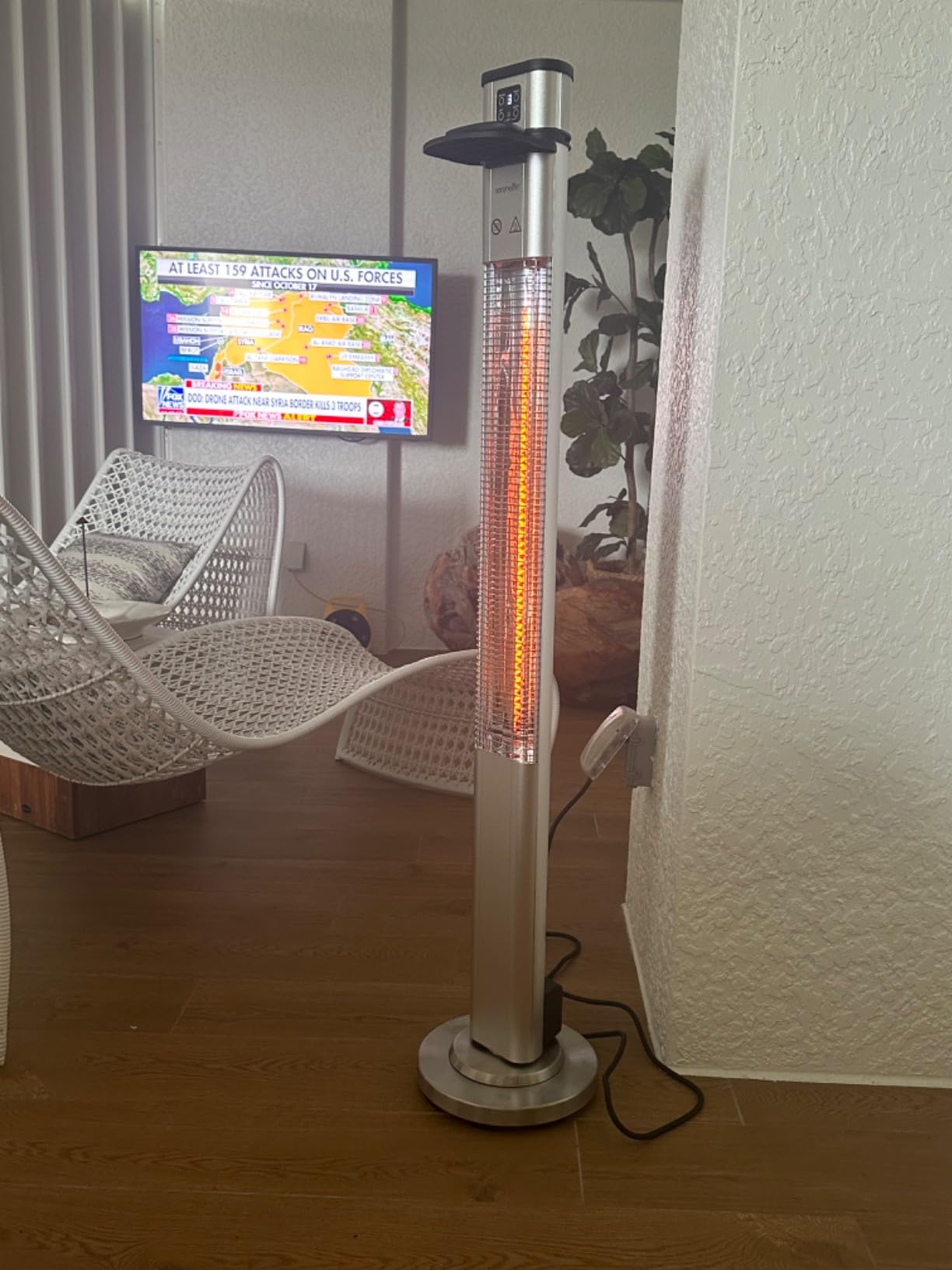
The SereneLife is the entry-level heater we list and the one to buy if you have a specific corner to warm rather than a whole deck to rescue. At 900W with a stated 15 sq ft heating range and a 37.4 inch height, it runs well below the 1500W units in this list, and reviewers set that expectation clearly.
What it does have is build quality in the places that matter outdoors. The IP65 rating on an aluminum alloy frame is among the highest weather ratings on the electric models here, alongside the Paraheeter, and the element is ETL certified at 88 percent efficiency. Safety features include a 360-degree tip-over switch, overheat protection and a mesh guard, which is a more complete suite than many higher-priced units include.
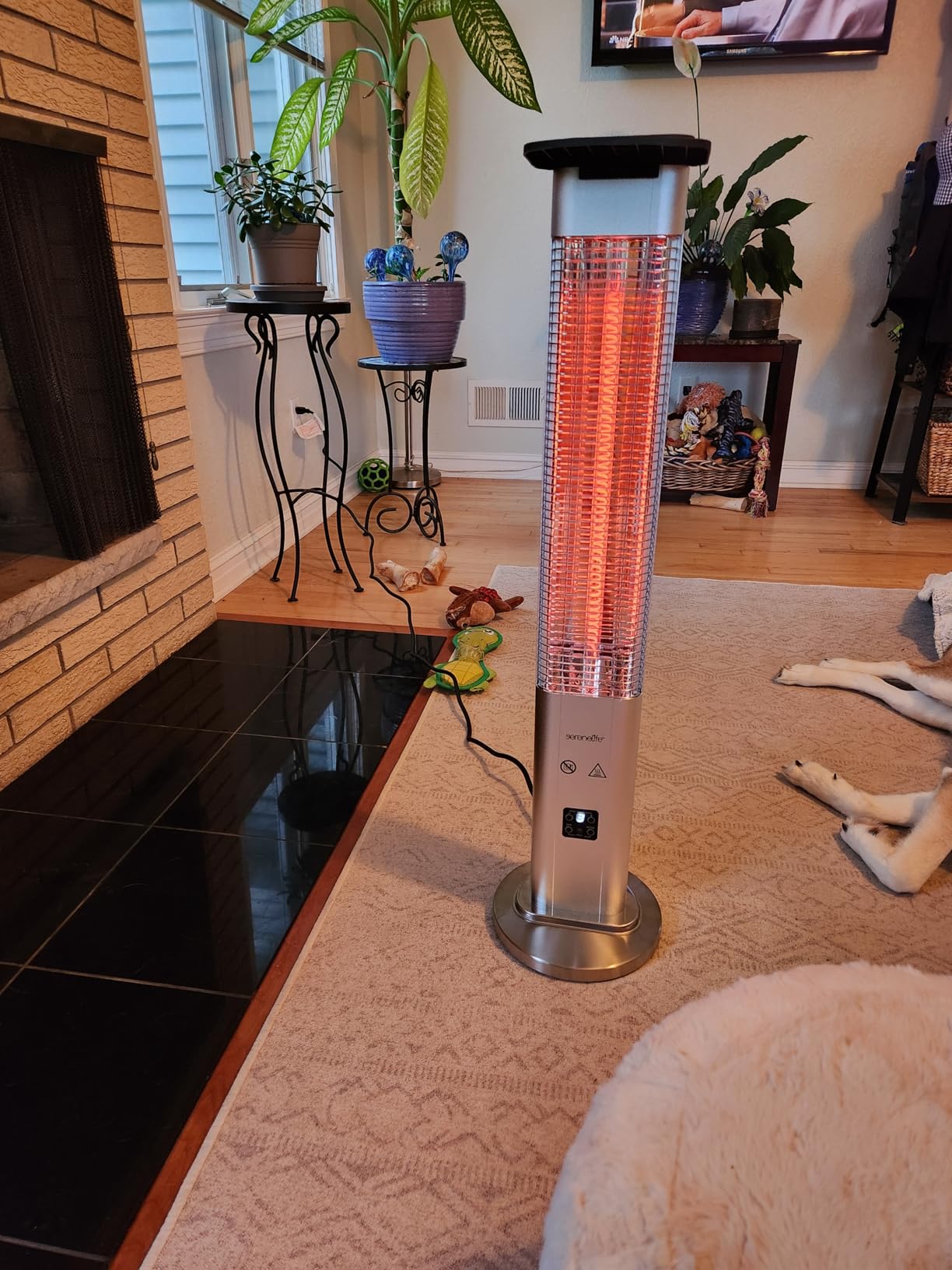
At 7.7 pounds it is the easiest unit here to carry from the house to the deck, reposition when the sun moves, or bring in at the end of an evening. The remote lets you turn it on without walking back across a dark deck, and the two heat levels are enough for a small seating nook or a spot near a door.
Be clear-eyed about the limit. Fifteen square feet of rated coverage means one chair, one table, one conversation spot. Buying this expecting it to take the chill off a 200 sq ft deck is the single most common complaint pattern in the reviews, and it is a positioning problem rather than a defect.
Where does a 900W unit actually make sense?
Small balconies, a covered porch nook, the end of a deck where one person sits with coffee in the morning, or a spot near an outdoor door so people are not crossing cold air to get inside. In those cases the low cost and the 7.7 pound weight are genuinely useful traits.
It is also a good second heater for a larger setup, placed at the far end of a seating area while a propane tower handles the main group. Two small units aimed at two separate spots can outperform one large unit aimed at a table.
Can you leave it out in the weather?
An IP65 rating means dust-tight and protected against water jets, which is more than enough for a deck that gets rained on. It is not a licence to run it uncovered through a wet winter, so fit a cover or bring it inside when the season ends.
Do not, however, rely on the IP rating for anything structural. It is a small freestanding tower with a narrow base, so place it on a level surface away from the deck edge and away from foot traffic, and leave the mesh guard in place if children or pets use the deck.
9. Encyclpo 1500W IPX5 Infrared Tower Patio Heater Review
Encyclpo Patio Heater for Outdoor Use,1500W Infrared, 36 in Portable Tower Heater, 3 Levels, IPX5 Waterproof, Tip-Over&Overheat Protection for Garage, Indoor, Large Room, Backyard, Home
1500W infrared, about 5000 BTU
36 inch tower
IPX5 rated
7.5 pounds
Pros
- Dual carbon fiber elements heat in about a second
- Controls at the top so no crouching
- Tip-over and overheat auto shutoff
- Quiet and odorless fanless operation
- Slim enough for a small deck
Cons
- No remote control
- Tip-over sensor triggers on light contact
- Effective radius is tight
- Some reports of the control knob cracking
The Encyclpo is a 36-inch tower with two high-efficiency carbon fiber heating wires, rated at 1500W or about 5,000 BTU, which puts it at the top of the electric output range in this roundup. It is a floor-standing design with three settings at 600W, 900W and 1500W and an IPX5 rating for indoor and outdoor use.
The detail we like most is where the controls are. They sit at the top of the tower, so you adjust it while standing rather than crouching, and there is a stated temperature range from 40 to 140 degrees F that gives a clear readout of what you have set. It weighs 7.5 pounds, has a handle, and runs silently with no fan.
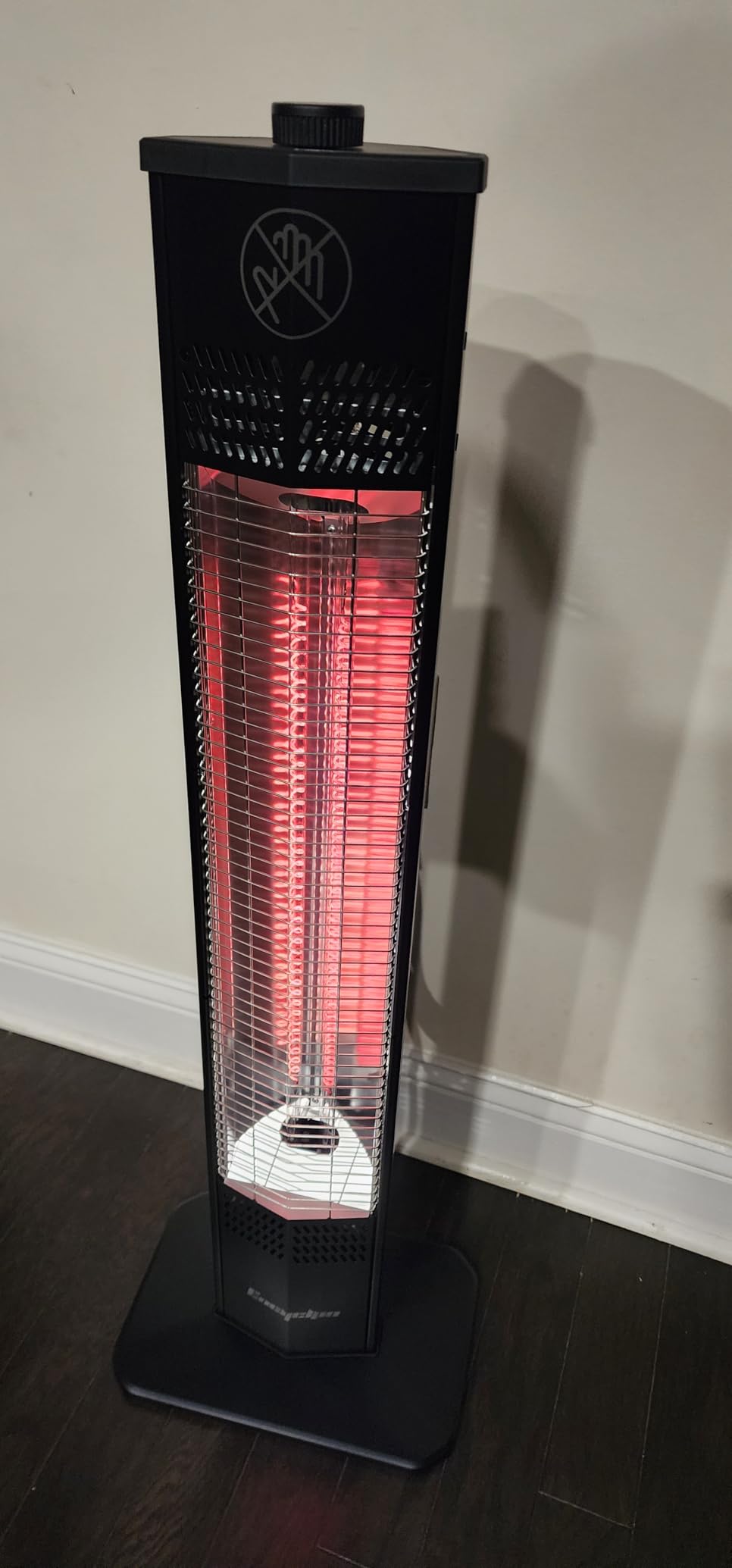
Owners rate it highly for screened porches, pool houses and garages, with a 74 percent five-star share in the reviews. Flame-retardant materials, auto shutoff on tilt and overheat shutdown form a solid safety package for a space where the heater is close to people and furniture.
Two cautions recur. There is no remote, which on a dark deck means getting up to change settings, and the tip-over sensor is sensitive enough that a slight nudge or a brush from a pet can cut it off. A handful of buyers also report the control knob cracking after a few weeks.
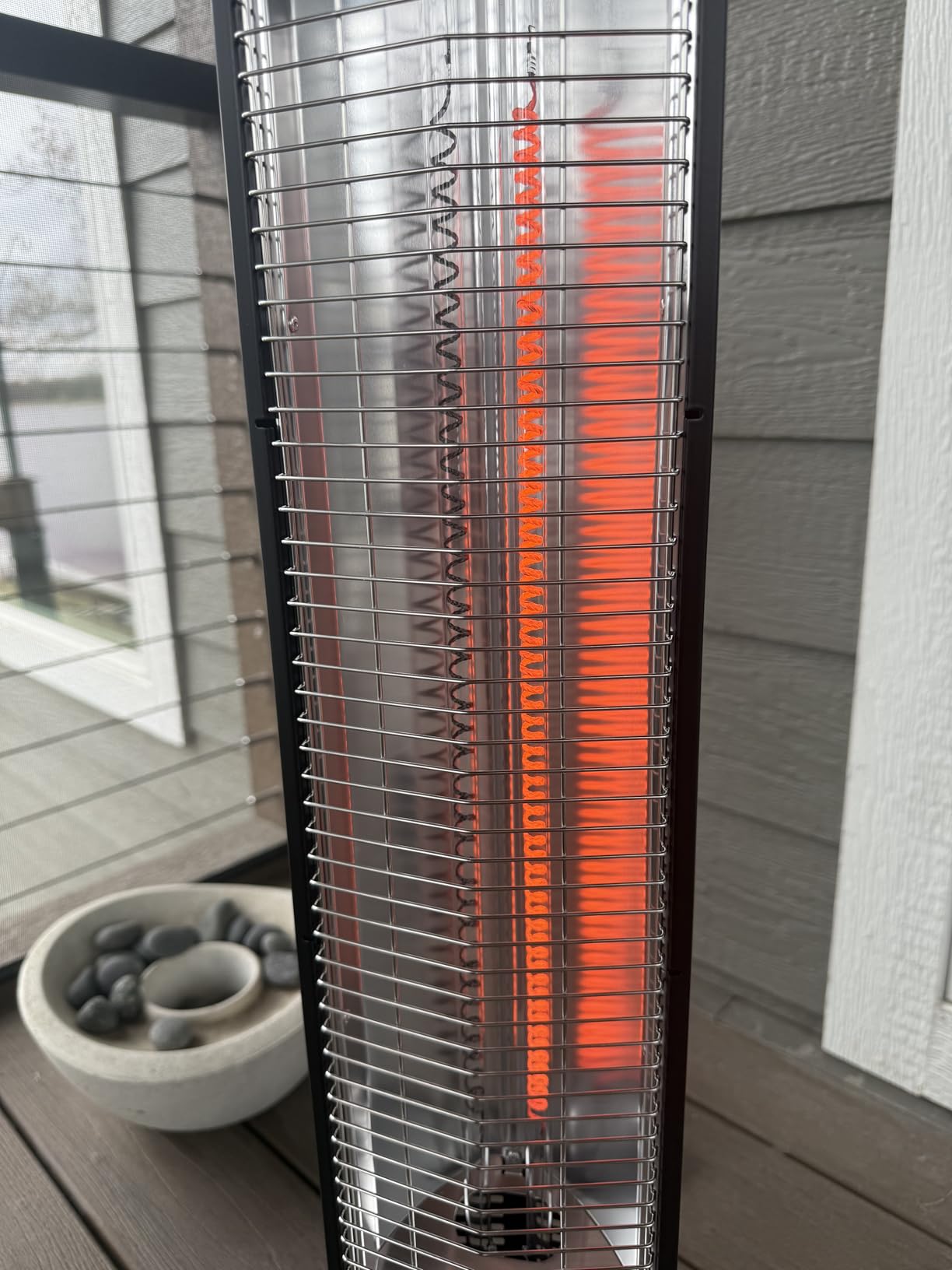
Is 5,000 BTU of electric comparable to propane?
No, and the gap is worth understanding before you buy. A 1500W electric heater produces roughly a tenth of the radiant output of a 48,000 BTU propane tower. The electric units win on convenience, instant response and zero fuel handling, not on raw heat for a large open space.
What they do well is warmth on your skin in a fixed spot. For a seated dining area on a covered deck, a 1500W unit aimed correctly can feel entirely sufficient even though the number is far lower, because you are not trying to heat a volume of air.
Living with a sensitive tip-over switch
On an elevated deck with an uneven surface or a walking route nearby, place the unit where it will not be brushed. Set it in position before people arrive rather than dragging it into place later, and check that the surface is level and the base fully seated.
It also has no remote and no timer, so it is less suited to long unattended evening use than the Briza or the Haimmy. For a screened porch where you sit in one place, that trade is usually worth making.
10. Paraheeter 1500W IP65 Infrared Patio Heater Review
Paraheeter Outdoor Electric Infrared Patio Heater, 1500W
1500W carbon infrared
IP65 weatherproof
CSA certified
18.8 pounds
Pros
- Heaviest and most solidly built electric unit here
- Carbon fiber tube rated for 10000 hours
- IP65 rating and CSA certification
- Wall
- ceiling or tripod mounting in one box
- Low running cost relative to propane
Cons
- Foam pad must be removed from the tube before first use
- Heat throws in a radial pattern so aim matters
- Only one heat level listed
The Paraheeter is the most substantial electric unit here, at 18.8 pounds, and it carries the specifications we would want to see on a permanently mounted deck heater: a carbon fiber heating tube rated for a 10,000 hour lifespan, an IP65 weatherproof rating and CSA certification with a one-year warranty.
It covers a claimed 10 to 15 feet of radius, the longest reach listed for an infrared unit here, and it mounts three ways from the same package: on a wall, on a ceiling, or on an adjustable tripod stand. A safety metal grille and a grounded three-prong plug are included, plus tip-over auto shutoff.
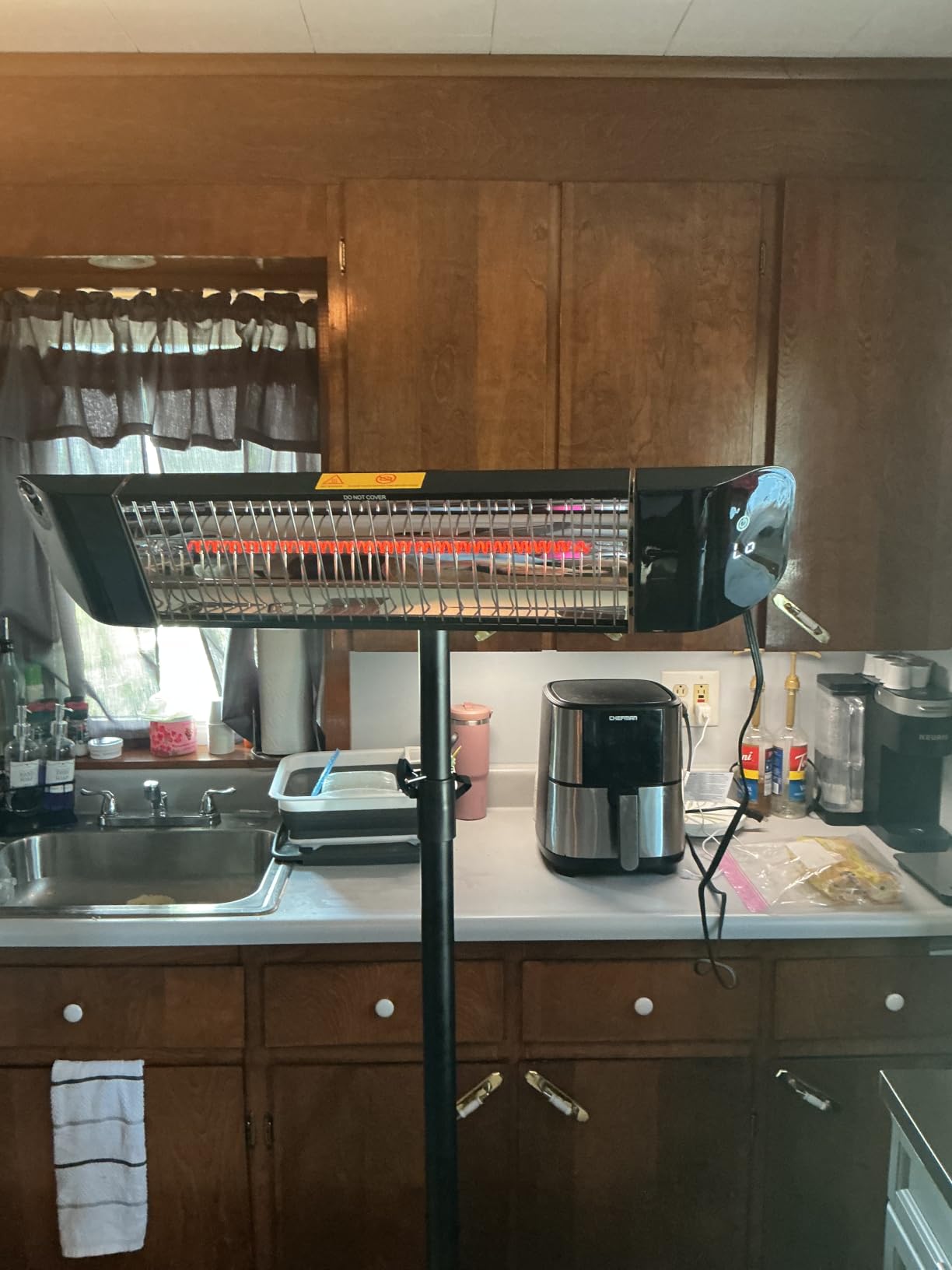
Reviewers highlight build quality and running cost, with several noting that the operating cost is a fraction of what a propane heater costs per hour. The picture-based installation manual and video reduce the assembly frustration that is the most common complaint in this category overall.
One instruction is critical and gets repeated in almost every review: remove the foam protective pad from the heating tube before the first power-up, or the unit can overheat. Second, the heat throw is radial rather than conical, so warmth depends on where you are standing or sitting relative to it.
Which mounting style suits your deck?
Use the wall or ceiling mount if the deck has a structure to attach to, because that removes the unit from the floor and the walkway and points heat straight at a seating area. Use the tripod if you want to move it between the dining end and the lounge end of a deck as the evening moves around.
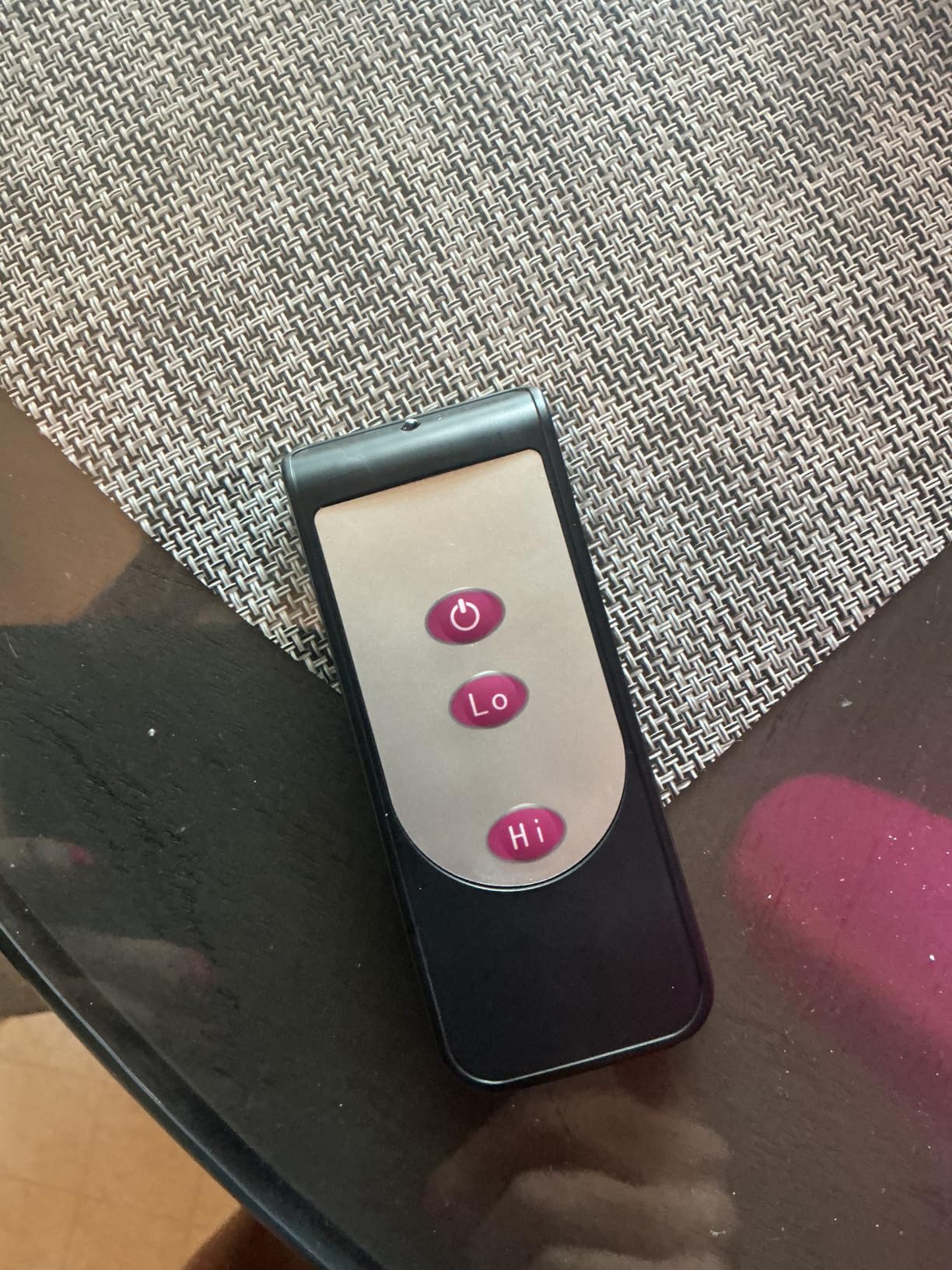
Given the 18.8 pound weight, this is not a unit you want to reposition constantly. Decide where the seating is, mount it once, and aim it. The remote makes fine adjustment possible without getting up.
How does 10,000 hour tube life affect ownership?
Rated life is a real advantage over units whose emitters degrade in a couple of seasons, and a heater with a replaceable or long-lived element is far more likely to still work in year three. It is one of the reasons the burner or emitter is the part worth checking before buying any patio heater in this category.
Wirecutter made the same point from a different angle, reporting that a burner screen from a cheaper brand turned solid black from soot after less than 30 minutes of use while a better screen resisted the same treatment. Element and screen quality is the best available predictor of whether a cheap heater survives more than one or two seasons.
How to Choose a Patio Heater for Your Deck
Start with the deck, not the heater. Five measurements decide almost everything: your deck’s square footage, the height from the deck surface to the nearest overhead structure, the distance to the nearest usable outdoor outlet, how exposed the deck is to wind, and what your building or HOA rules permit.
Match output to deck size
For propane, the deck-appropriate band is 46,000 to 50,000 BTU. That covers a seating area of roughly 100 to 200 sq ft in 50 to 60 degree evenings, which is where a patio heater genuinely helps. Below about 40 degrees, no deck heater makes a space comfortable, and buying a bigger burner will not change that.
For electric, think in terms of where people sit rather than how big the deck is. A 1500W unit effectively warms a zone of roughly 4 to 10 feet in front of it, so a 300 sq ft deck with three separate seating areas needs three units or one unit plus a propane tower, not one larger electric heater.
If your deck is 400 sq ft in a genuinely cold climate, the honest answer is two propane units placed at opposite ends rather than one very large one. Heat spreads and thins; coverage is easier to fix with placement than with output.
Clearance rules that decide most purchases
Propane tower heaters in this roundup stand between 81.4 and 91.3 inches tall. Leave at least 3 feet between the top of any heater and an overhead surface, and follow the full manufacturer clearance from railings, walls, posts and structures. A 7 to 7.5 foot unit therefore needs a ceiling of roughly 10.5 feet, which rules out most covered decks.
That is the single most common reason buyers return these products. If your deck has a roof, a pergola with beams, or a canopy you plan to close, a wall-mounted or ceiling-mounted electric unit is the correct category, not a tower.
Shade and shelter are the other half of the deck equation. If your deck gets direct sun all afternoon, a roof over part of it extends the usable season noticeably; our guide to retractable patio awnings for decks covers the mounting options that work on a typical framed deck.
Deck surfaces and composite decking
You can run a patio heater on composite decking, but not directly on the planks indefinitely. Radiant output concentrated under the base can discolor or soften some composite and vinyl surfaces over time, especially under a unit that runs for many hours at once.
Put the unit on a heat-resistant pad, a paver, a tiled section or a purpose-made deck heater mat, and keep it away from the deck edge. The same caution applies to pressure-treated wood, though wood tolerates brief radiant exposure far better. Concrete and stone are the easiest surfaces to run on.
Wind on an open deck
Open decks act as wind tunnels, and this is the honest limit of every heater on this page. Warm air rises and moves; a cross-breeze strips the heated air away before it pools around your guests. No BTU figure solves that, which is why forum owners on open decks report that a windbreak panel on the windward rail does more for comfort than a larger burner.
A screen does the job without closing the deck in, and our picks for freestanding outdoor privacy screens for decks cover the taller windbreak-style panels that work best along an exposed rail.
Within the heaters themselves, weighted pyramid bases hold their ground better than narrow pedestals, and pyramid or glass-tube designs shield the flame better than an exposed dish dome. For anything under 50 degrees with wind, plan on a screen or an enclosure project, not a heater upgrade.
Propane, electric and the rules that block them
Propane is the stronger heat source and the only option that does not depend on an outlet, but it needs tank refills roughly every 8 to 11 hours, it cannot be used in a fully enclosed space, and many apartment, condo and rooftop buildings prohibit propane storage outright. Check your building management or HOA before you buy, because that rule ends the conversation regardless of the product.
If the seating itself needs replacing before the heater will get used, our guide to patio swivel rocker chairs for decks covers the outdoor-rated frames that tolerate a damp season better than indoor furniture.
Electric runs clean, starts instantly, needs no fuel handling and is far safer for a covered or semi-enclosed space, but the reach is narrow. The constraint most people miss is electrical: decks are usually on a single breaker shared with the lights, so a 1500W heater plus deck lighting can overload it. Electric wins on cost per hour at low usage; propane wins when you run several hours across several days.
Safety features worth paying for
Look for a tip-over switch, overheat protection and flame-failure shutoff on any gas heater, and check the thermocouple behaviour in the manual. On electric units, a tip-over sensor, overheat cutoff and a safety grille cover the main risks, and an IP rating of IPX5 or higher is the threshold for anything that lives on an uncovered deck.
For electric towers, also check the circuit capacity and the cord length before you buy, and prefer a unit with a remote so you are not adjusting it in the dark. For propane, the items people forget are a proper regulator, a chain to secure the cylinder, and a cover for winter storage.
Frequently Asked Questions
Are patio heaters safe on decks?
Yes, when clearance rules are met. Propane heaters need open-air placement, roughly 3 ft of minimum overhead clearance, and the full manufacturer-specified clearance from railings, walls and overhead structures. Electric heaters are the safer choice for covered and semi-enclosed decks because they produce no combustion gases.
Can you use a patio heater on composite decking?
Yes, but place it on a heat-resistant pad or pavers rather than directly on composite or vinyl planks. Radiant output concentrated beneath the unit can soften or discolor some composites over time. Keep the unit clear of the deck edge and railing, and never run a combustion heater in a fully enclosed space.
What is the recommended overhead clearance for a propane patio heater?
At least 3 ft between the top of the heater and any overhead surface, and always check the manual for the figure specific to your model. Most propane tower heaters are 7 to 7.5 ft tall, so a covered deck typically needs a ceiling of at least 10.5 ft. That is why tower heaters rarely fit under a standard covered deck.
Which patio heater gives off the most heat?
Among deck-appropriate units, high-BTU propane models in the 46,000 to 50,000 BTU range give the most radiant heat, and the Hykolity at 50,000 BTU leads that band. Electric units top out near 5,000 BTU, roughly a tenth as much, so they warm a seated zone rather than a whole deck.
Do infrared patio heaters actually work outdoors?
Yes, with narrower reach. Infrared heat hits your skin and clothing directly, so it feels warm within seconds and uses no fuel, but a 1,500W unit produces only about 5,100 Btu and comfort falls off beyond 4 to 10 feet depending on mounting and aim. Wind and anything blocking the cone reduces it further.
Is it cheaper to run a gas heater or an electric heater?
It depends on how long you run it. Electric is cheaper per hour and wins at low usage, while propane is cheaper across several hours on several days. A standard 20 lb propane cylinder runs a patio heater roughly 8 to 11 hours, and electric running cost is commonly cited at about one-tenth of a propane heater.
Best Patio Heaters for Decks: The Final Verdict
For most decks, the Amazon Basics 46,000 BTU propane tower is the right starting point: the highest review volume in the group, a stable base with a water box for ballast, one-touch ignition, and a claimed 9-foot radius that holds up on a deck with any wind protection at all. It is the pick we would put on a covered-but-open dining deck without hesitating.
For a fully uncovered deck where wind is the problem, choose the Pamapic 89-inch pyramid instead. its weighted pyramid base is the most wind-stable propane design here and the flame column gives you a centrepiece as well as a heat source. For a deck with a roof and a wall, the Dr. Infrared 1500W wall or ceiling unit is the only sensible category, and among electric options the Paraheeter is the one built for a permanent mount.
Two habits will decide whether any of these work as well as the spec sheet suggests. Check your HOA or building rules on propane before you buy, and put a heat-resistant pad under whichever tower you choose if your deck is composite. Between September and April 2026, a covered heater on a sheltered deck will do more for your evenings than a bigger burner on an exposed one, and pairing it with wind-rated furniture and a screen from our freestanding outdoor privacy screen guide keeps the warmth where you are sitting.