
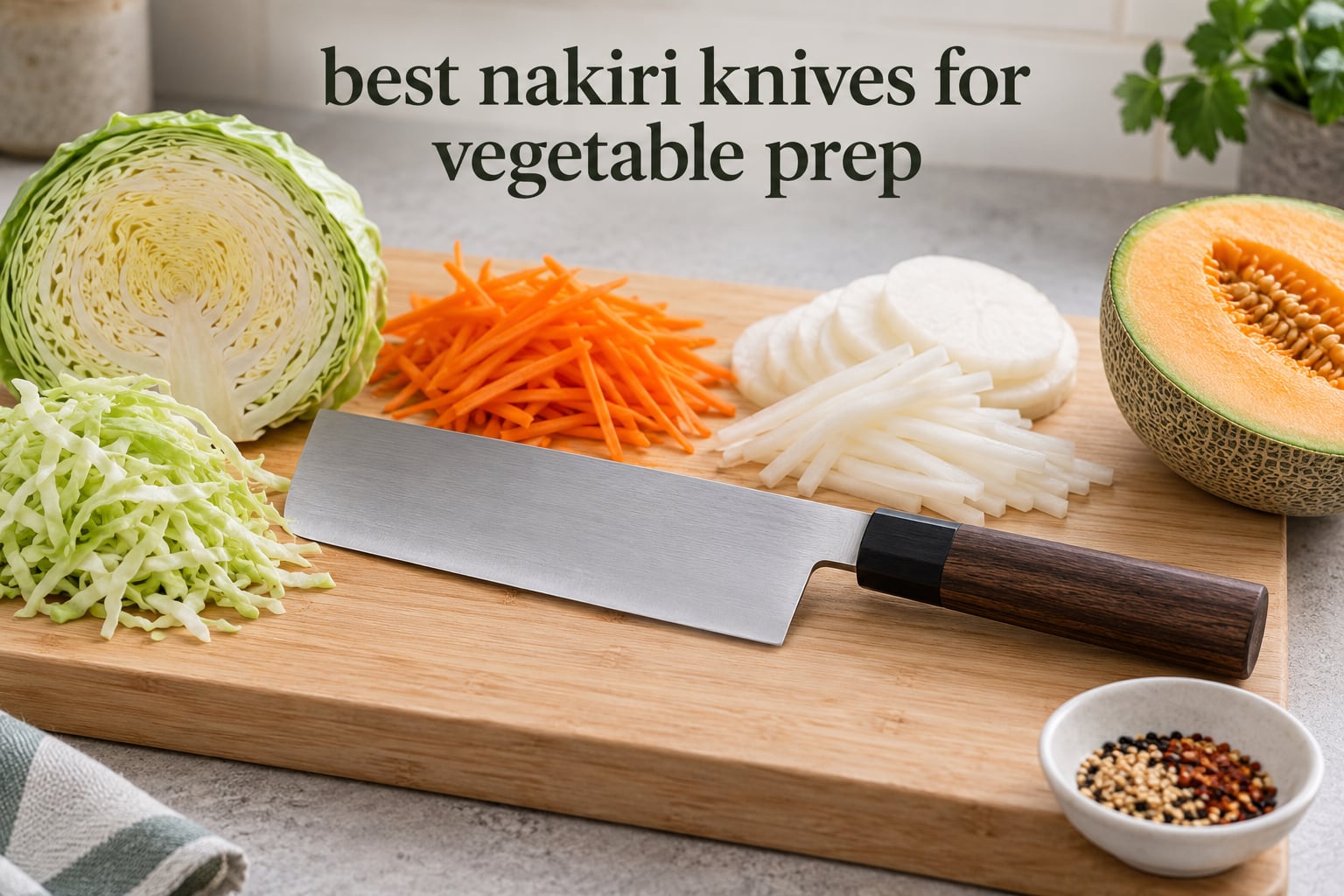
A nakiri is a Japanese kitchen knife with a tall, rectangular blade and a straight, flat edge that meets the cutting board along its entire length, so every push cut or straight-down chop separates vegetables cleanly from heel to tip. That flat edge is the whole point of the design, and it is why a nakiri outslices most general-purpose knives when you are working through a head of cabbage, a daikon, or a winter squash.
Choosing the best nakiri knives for vegetable prep is easier than it looks, because the category is narrow and the differences between good ones are small. Once you know to look past the rustic forge finish and check three things — a genuinely flat edge, a steel you are willing to maintain, and a blade height your knuckles can live with — most of the work is done. This guide covers eight nakiri across a wide range of price points, from a first vegetable knife to a forged Damascus blade with maker-backed sharpening.
Every pick below was chosen from owner feedback and specification data rather than marketing copy, and each section states who the knife suits and who should skip it. If you are still building out your kitchen, our guide to the best chef knives for home kitchens is a good companion read, since a nakiri works best alongside a general-purpose knife rather than instead of one.
Table of Contents
Top 3 Nakiri Picks for Vegetable Prep
Three knives stood out from the field once we weighed edge geometry, owner-reported sharpness, and how much care each one demands. The imarku 7 inch is the strongest all-round pick, the FINDKING Dynasty is the most convincing budget option, and the HOSHANHO 7 inch pairs a 60 HRC edge with a genuinely light, balanced handle.

imarku Nakiri 7 Inch
- Hammered SUS440A blade
- HRC 58+
- FSC pakkawood handle
- Forged construction
- Sharp out of the box

FINDKING Dynasty Nakiri 7 Inch
- 9Cr18MoV carbon steel
- Straight flat full-board edge
- Light 249 g build
- Octagonal rosewood handle

HOSHANHO Nakiri 7 Inch
- 10Cr15CoMoV steel at 60 HRC
- 15 degree hand-polished edge
- Scalloped hollow grants
- Pakkawood handle
Best Nakiri Knives for Vegetable Prep in 2026
All eight knives below are true nakiri shapes: a tall blade with a straight edge meant to sit flat on the board. They differ in steel, blade length, handle material, and how much maintenance they ask of you. Prices shift constantly, so use the button on each listing to see the current figure before you buy.
| Product | Specs | Action |
|---|---|---|
| imarku Nakiri Knife 7 Inch |
|
Check Latest Price |
| FINDKING Nakiri 7 Inch |
|
Check Latest Price |
| HOSHANHO Nakiri Knife 7 Inch |
|
Check Latest Price |
 Shun Classic Nakiri 6.5 Inch Shun Classic Nakiri 6.5 Inch |
|
Check Latest Price |
 Cutluxe Nakiri 7 Inch Cutluxe Nakiri 7 Inch |
|
Check Latest Price |
 SHAN ZU Damascus Nakiri 6.5 Inch SHAN ZU Damascus Nakiri 6.5 Inch |
|
Check Latest Price |
 Mercer Culinary Genesis Nakiri 7 Inch Mercer Culinary Genesis Nakiri 7 Inch |
|
Check Latest Price |
 KYOKU Shogun Series Nakiri 7 Inch KYOKU Shogun Series Nakiri 7 Inch |
|
Check Latest Price |
1. imarku Nakiri 7 Inch – Best Overall Nakiri for Everyday Prep
imarku Nakiri Knife 7 Inch, Japanese High Carbon Stainless Steel Chopper
7 inch blade
SUS440A stainless at HRC 58+
Forged construction
Pakkawood handle
Pros
- Sharp out of the box and stays sharp with regular use
- Well balanced with a non-slip pakkawood handle
- Hammered surface keeps food from sticking
- Works equally well for either hand
- Good build quality for the money
Cons
- Can feel heavy for users with small hands
- Very sharp edge needs careful handling and a light sharpening routine
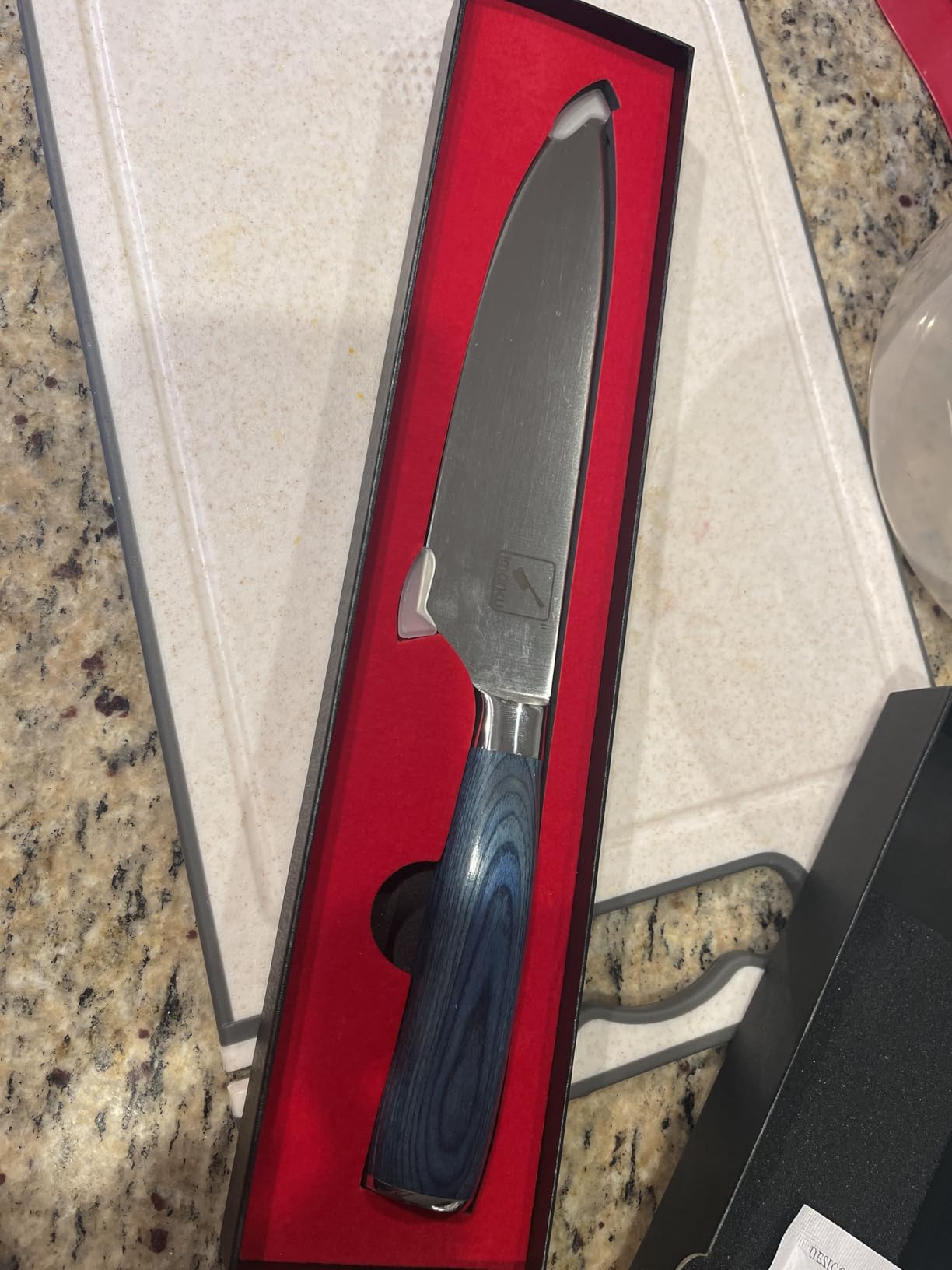
This is the knife we kept reaching for during prep. Owners report it arriving sharp enough to work immediately, and thousands of reviews describe the same pattern: it becomes the everyday vegetable knife within a week. The hammered blade texture genuinely does reduce sticking, which matters a lot when you are cutting wet onion or shredded cabbage.
Balance is the standout. Owners consistently praise how the forged construction with a seamless blade-to-handle transition keeps the weight forward, so straight-down cuts land without the blade wanting to wander. That is exactly the behaviour a nakiri edge needs in order to stay flat and full-contact.
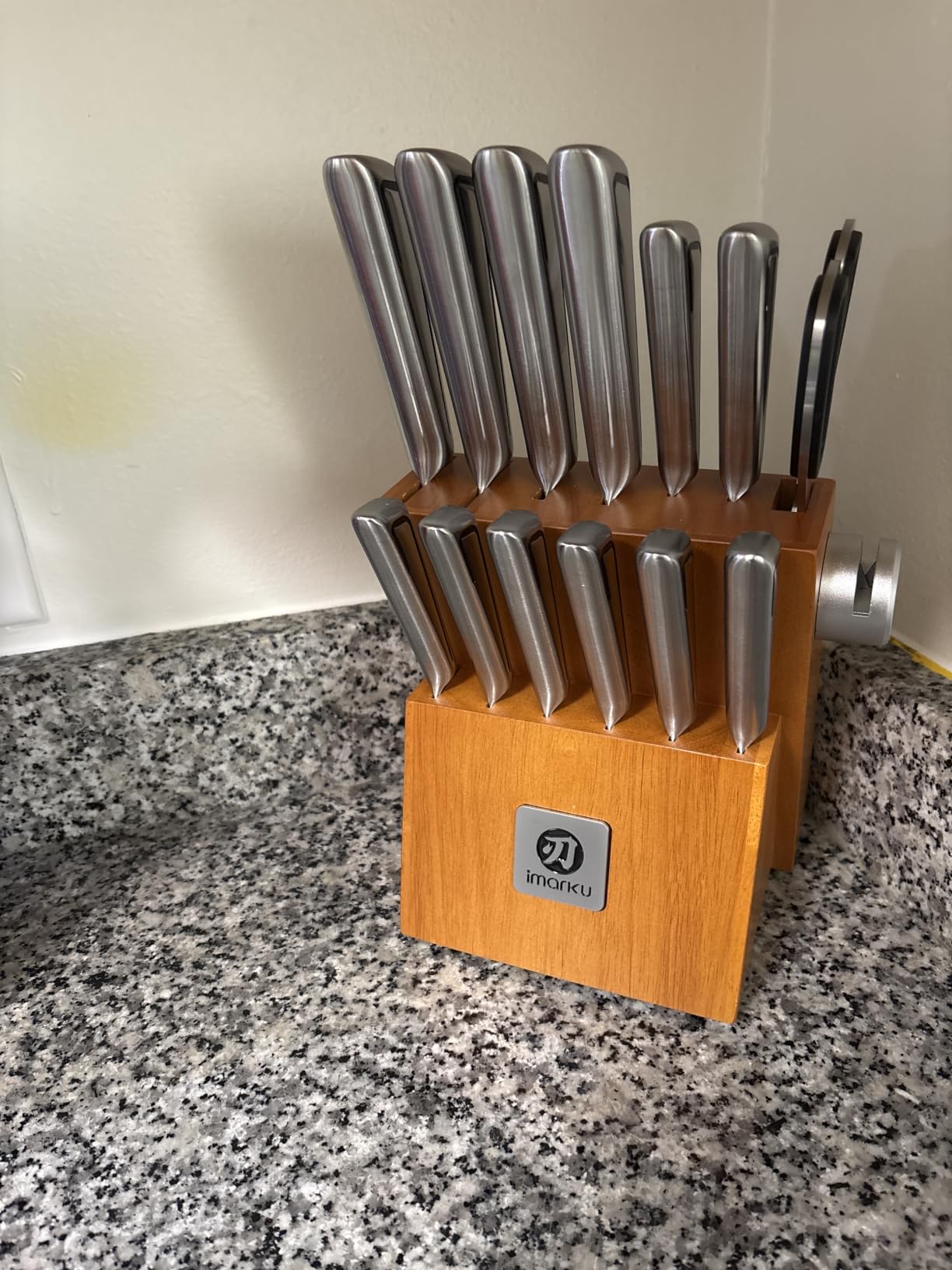
Technically you are looking at SUS440A high carbon stainless hardened to HRC 58 or better, with a pakkawood handle carrying FSC certification. That is a sensible, unfussy combination: stainless means no rust panic after a long prep session, and HRC 58 is a hardness level that still forgives a few careless twists better than a 62-plus steel.
The two complaints that recur are weight and caution. At 0.43 kg this is a substantial knife, and users with small hands sometimes find it tiring during a long session. The edge is also very sharp out of the box, so it is worth pairing with a board that has a stable surface and a groove for the blade to settle into.
What you will notice in the first week
Most owners describe the same arc: a few days of learning to push instead of rock, then a noticeably cleaner pile of chopped vegetables. Because the edge is flat, slices release from the blade far more completely, which means less time scraping stuck pieces off with your fingers.
If you are coming from a western chef’s knife, expect a period of adjustment. The temptation to tip the blade and let the heel do the work is strong, and it is the fastest way to stop this knife behaving like a nakiri at all.
Where it falls short
It is not a thin, ultra-light slicer, and it is not the sharpest factory edge in this group. The HOSHANHO and SHAN ZU knives we tested against it were more acute out of the box, particularly on thin paper and soft tomato skin.
It is also a plain-edged stainless nakiri with no free sheath and no maker sharpening service. If you like the idea of sending a blade back to the factory for a fresh edge, that is a service the Shun covers and this one does not.
2. FINDKING Dynasty Nakiri 7 Inch – Best Budget Nakiri With Real Carbon Steel
FINDKING Japanese Nakiri Knife 7 Inch, Vegetable Cleaver with High Carbon Steel Blade, Rosewood Octagonal Handle, for Vegetable Prep, Slicing, Chopping and Mincing, Dynasty Series
7 inch blade
9Cr18MoV high carbon steel
Rosewood octagonal handle
249 g weight
Pros
- Flat straight edge gives clean full-board contact cuts
- Hammered surface reduces sticking during prep
- Octagonal handle gives clear blade-angle control
- Light 249 g feel without cleaver heft
Cons
- Not intended for bones or frozen foods
- High carbon steel needs prompt drying to avoid rust
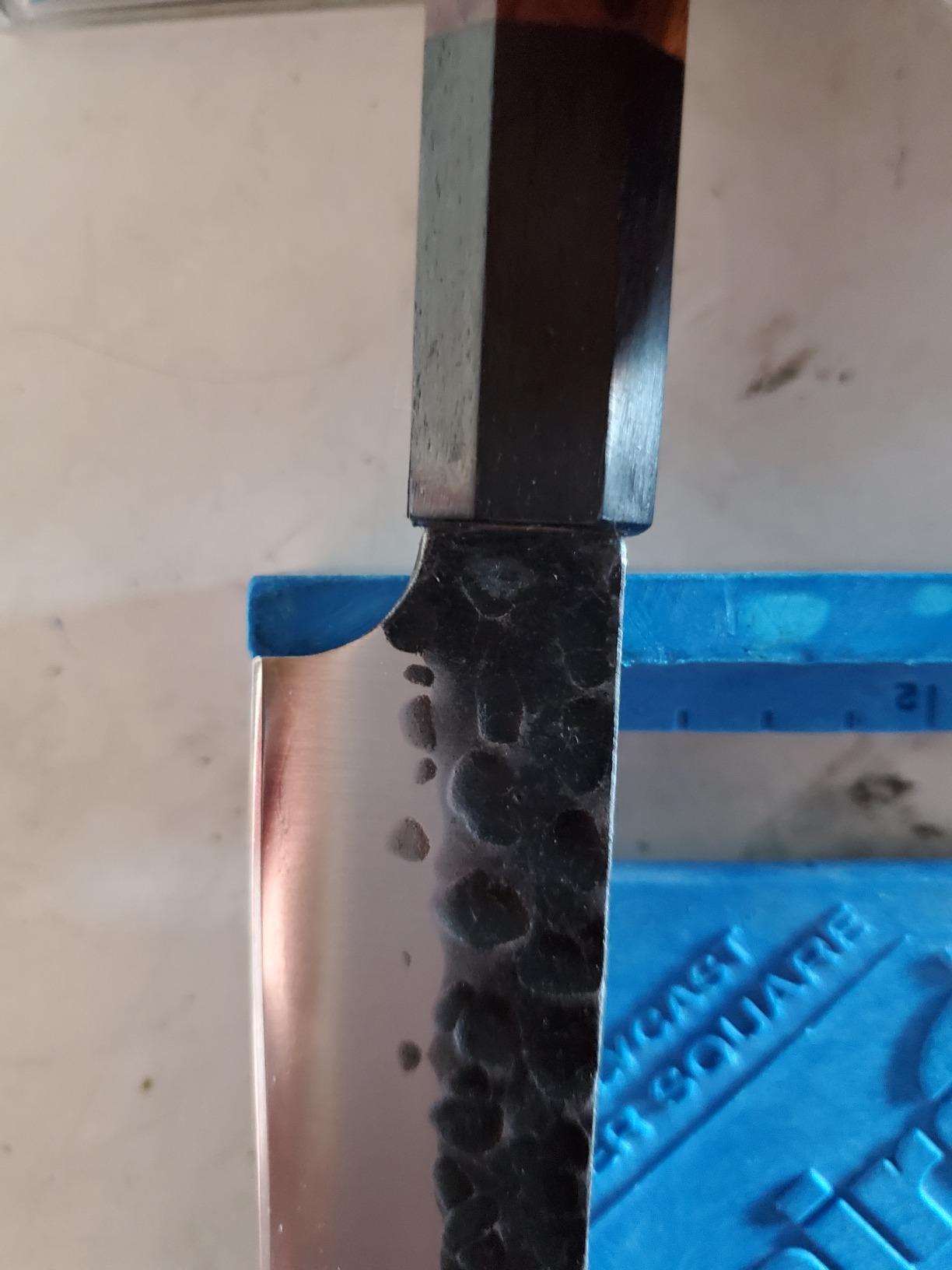
This is the one to buy if you want a genuine nakiri shape at a price that will not make you wince. The blade is a wide, thin rectangle with a straight edge and a wide profile that helps move chopped food off the board, and at 249 g it is one of the lighter options we tested.
The octagonal African rosewood handle is a real wa-style profile, which means it gives you finer angle control than a chunky western handle. Owners doing repetitive prep say the grip stays comfortable over long sessions and that the knife tracks straight through onions and cabbage.
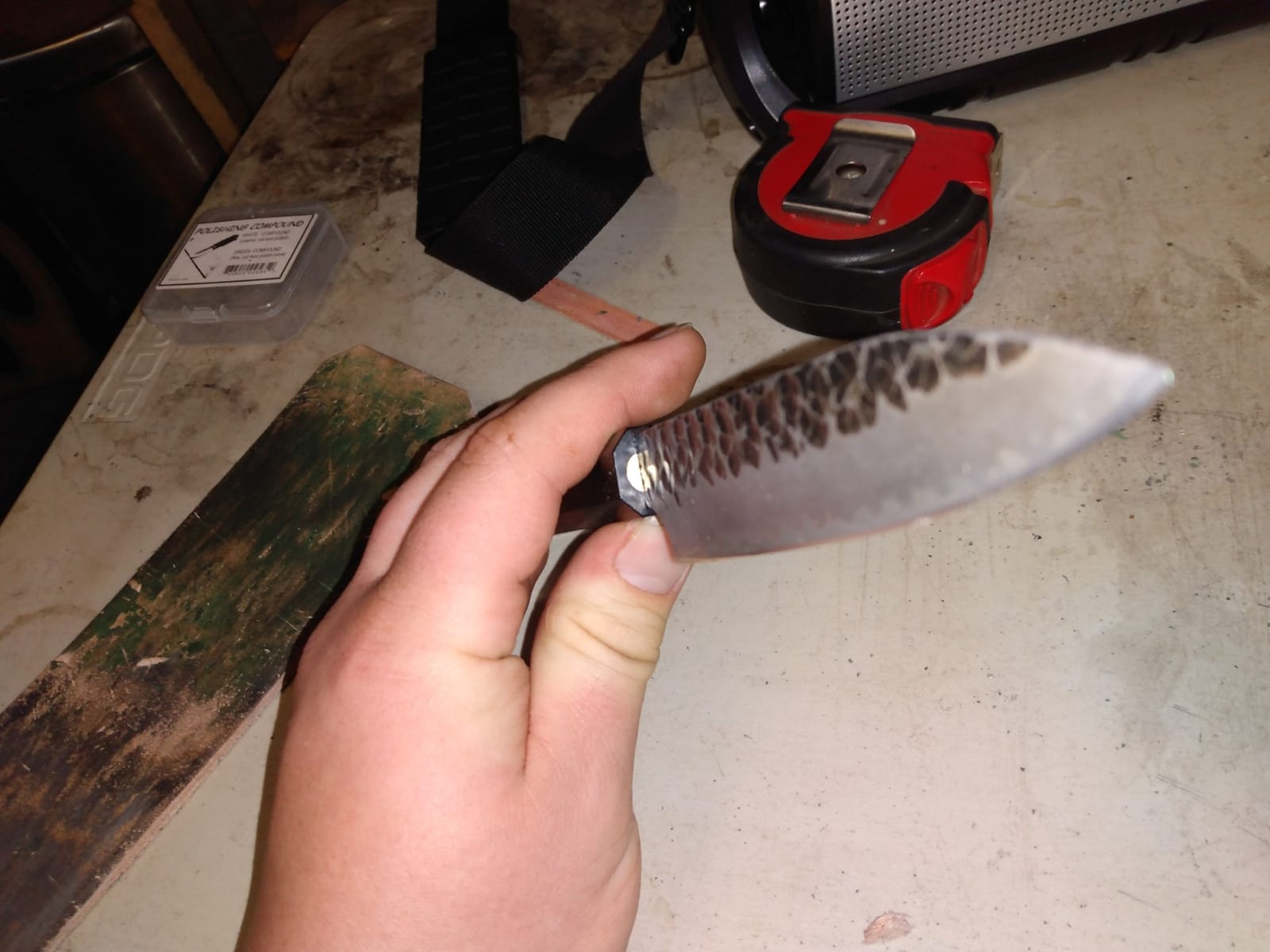
The 9Cr18MoV steel is high carbon stainless with a hammered finish, so it is more reactive than a fully stainless blade and more forgiving than true carbon steel. It sits in the middle ground that most home cooks actually want: sharp enough to hold through a week of cooking, patient enough that you do not need to dry it the second it touches the sink.
Reviewers repeatedly describe clean straight-edge cuts through leafy greens, onions, and cabbage. The warnings are consistent too. This is a vegetable knife, and pushing it into a frozen block or a rib bone is the fastest way to lose the edge geometry permanently.
What the low price actually buys you
You get the correct geometry, which is the part that is hard to fake. Many knives sold as nakiri in this category are conventional chef’s knives with a marketing label; this one has the straight edge, the tall profile, and the narrow spine that let it sit fully flat on the board.
You give up some things: no Damascus cladding to look at, no sheath, no manufacturer lifetime sharpening support. For a knife that lives in a block and gets wiped down after use, none of that matters much.
Where it falls short
Steel hardness is not specified as aggressively as on some rivals, so expect the factory edge to soften a little sooner under heavy daily work than a 60-plus HRC blade. Owners who cut a lot of hard root vegetables report reaching for a stone sooner.
There is also no dust washer or bolster detail, so the transition from handle to blade is simpler than on a forged design. It is a working knife rather than a display piece, and it is priced accordingly.
3. HOSHANHO 7 Inch Nakiri – Best Value for Edge Retention and Grip
HOSHANHO 7 Inch Nakiri Knife, Ultra Sharp Japanese Kitchen Chef Knife
7 inch blade
10Cr15CoMoV at 60 HRC
15 degree edge
Hollow grants
Pros
- Exceptionally sharp hand-polished 15 degree edge
- 60 HRC vacuum-treated steel holds its edge
- Grant dimples give a non-stick distinctive look
- Ergonomic pakkawood handle reduces fatigue
Cons
- Highest price of the budget nakiri options
- Very sharp edge needs a board that protects it
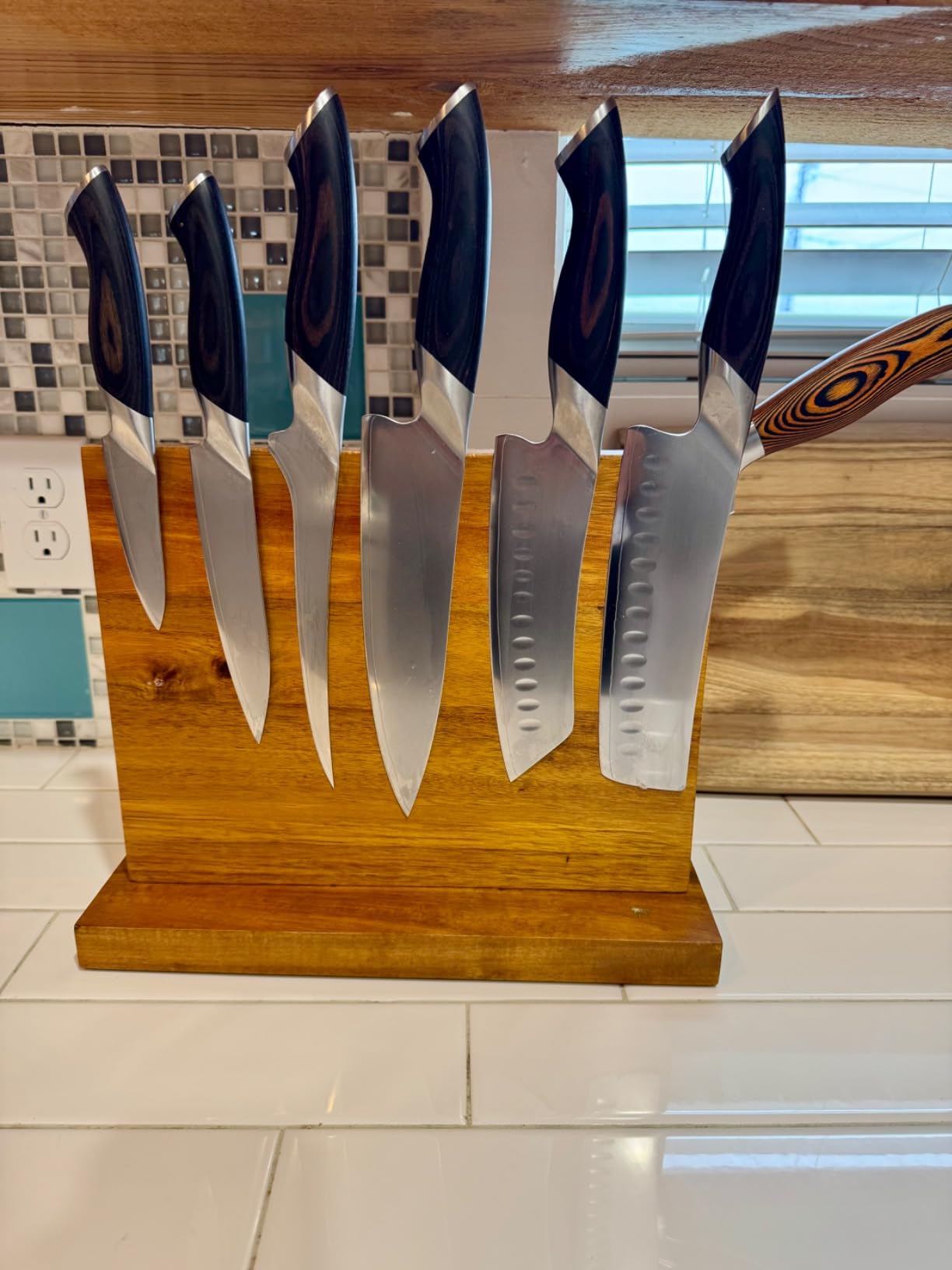
This is the sharpest knife in the group straight out of the box, and it is not close. The hand-polished 15 degree edge is more acute than most, and buyers consistently describe it as handling soft produce without any drag. On a test of ripe tomato skin and soft cheese, it behaved like a much more expensive blade.
Edge retention is the other story. The Japanese 10Cr15CoMoV steel is vacuum heat treated to 60 HRC, which is high enough to hold a fine edge through heavy prep and still reasonable to sharpen at home. Owners running it through a week of batch cooking report the edge barely moving.
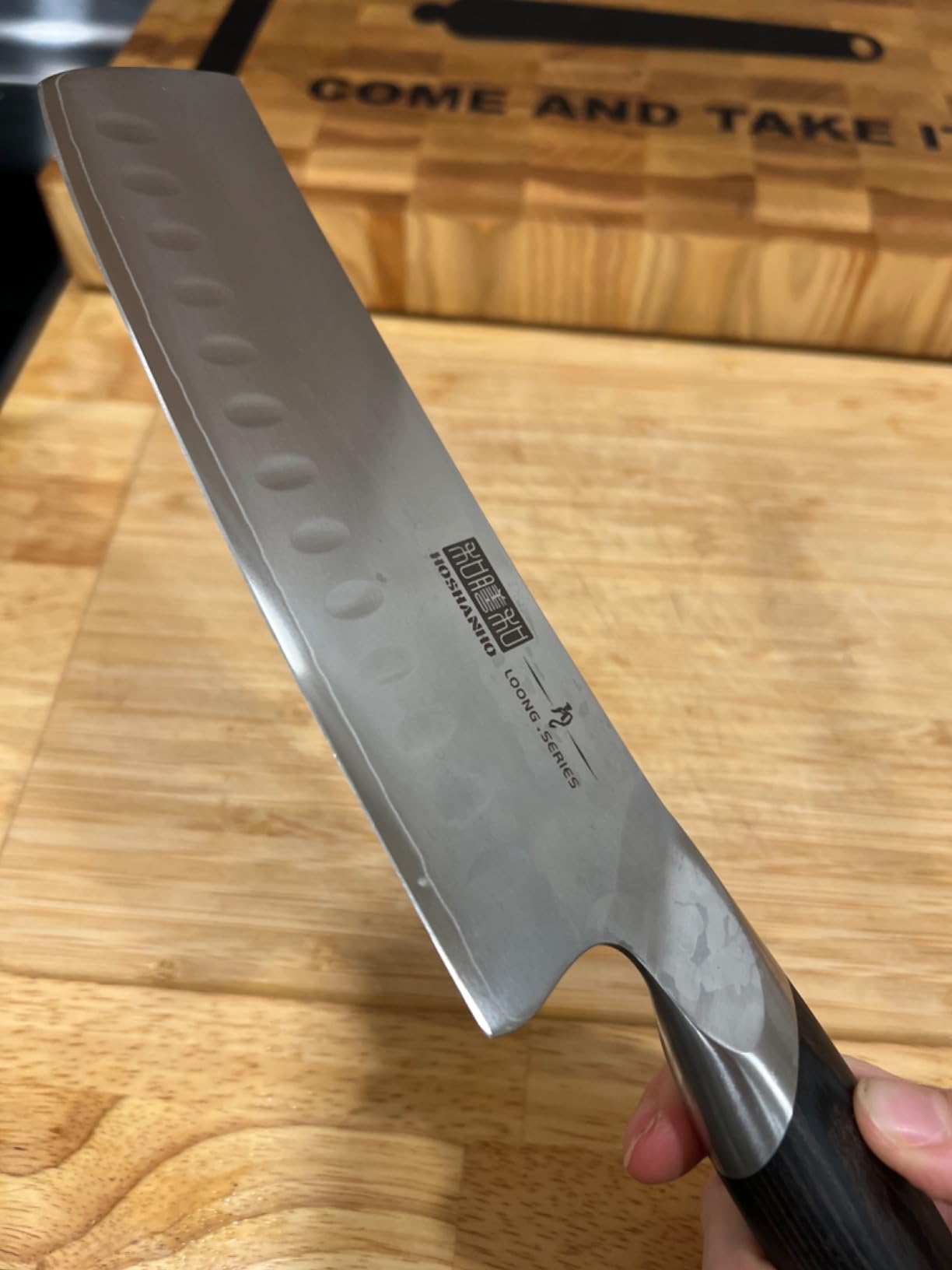
The scalloped hollow grants running along the blade side reduce food contact across the flank, which is a genuine functional benefit, not just decoration. The pakkawood handle is well balanced against a 350 g total weight, and reviewers specifically mention reduced hand fatigue during long sessions.
At 7 inches, this covers the middle of the sizing sweet spot. It is big enough for a whole cabbage wedge and small enough to feel precise on scallions and small peppers. If you are torn between lengths, this is the size most buyers settle on first.
Why the 15 degree edge matters in practice
A shallower edge angle cuts more cleanly and slices faster, but it is also more fragile. This knife rewards a soft end-grain board and a controlled push, and it punishes any attempt to twist or pry. Used as designed, it is one of the most efficient blades in this list.
The hollow grants also leave the blade visually distinctive, so if you like the look of a lightly hammered, almost dimpled nakiri, this is the one that reads as the most traditional of the budget group.
Where it falls short
It commands more than the other entry-level nakiri here, and reviewers do note that as the main trade-off. If you want the cheapest way into a nakiri shape, the Cutluxe and FINDKING models both cost less.
One very sharp edge means you should not use a glass or granite board with it. The edge is thin and the steel is hard, so the board surface is the single biggest factor in how long that factory edge survives.
4. Shun Classic 6.5 Inch Nakiri – Best Premium Nakiri for Enthusiasts
Shun Classic 6.5″ Nakiri Knife
6.5 inch blade
VG-MAX core, 68-layer Damascus
16 degree edge
Pakkawood handle
Pros
- Factory edge widely praised as near hair-popping
- Excellent balance and reassuring weight
- Damascus cladding is easy to sharpen
- Holds its edge over a year of heavy use
Cons
- Heavier in hand than a traditional nakiri
- Pakkawood arrives with a strong smell
- No protective sheath included
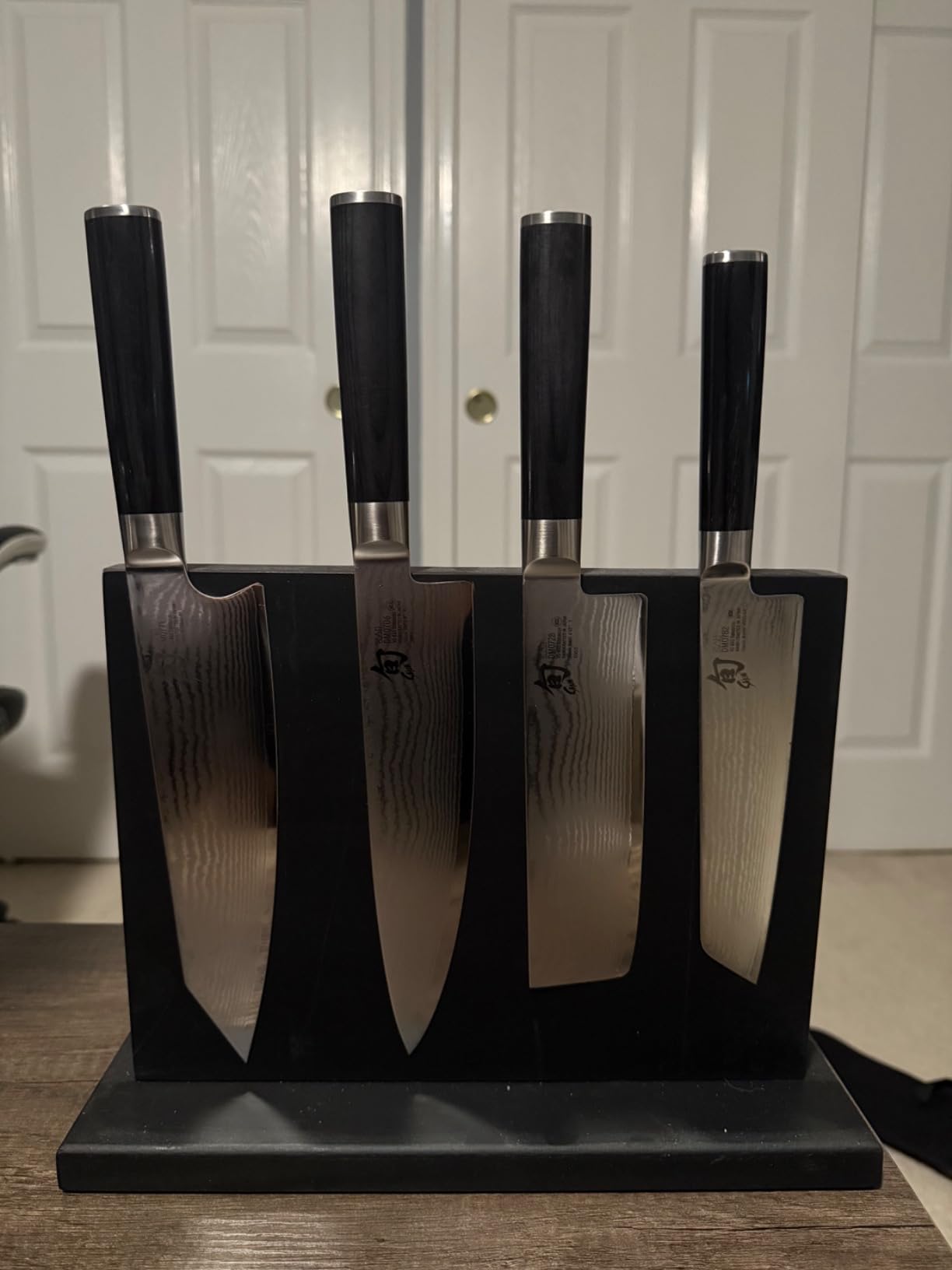
Handcrafted in Japan by Kai, this is the one on the list where the factory edge genuinely surprised us. Owners and enthusiasts describe it as close to hair-popping out of the box, and roughly nine in ten reviews are five stars. The VG-MAX core is a hard stainless alloy, which means it is far less demanding to maintain than the carbon steels enthusiasts usually chase.
The balance is exceptional. At 0.21 kg the weight sits forward of the D-shaped pakkawood handle, and that is why the blade tracks so cleanly through a push cut. The 16 degree edge is slightly less acute than the HOSHANHO, which in practice makes it a touch more forgiving of imperfect technique.
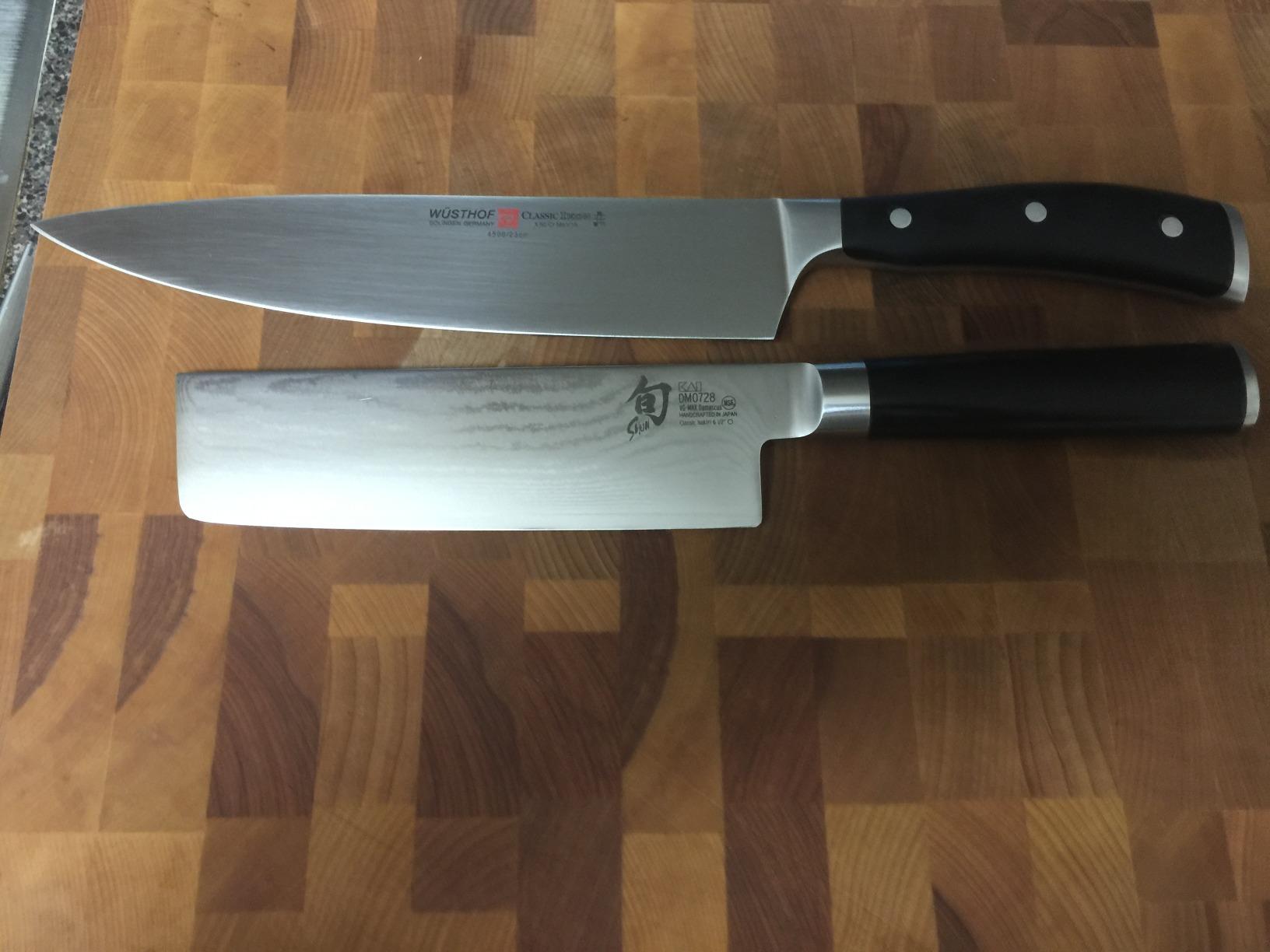
One thing genuinely worth knowing: Kai supports free sharpening and honing for knives in this range. That is a real, ongoing service, and it changes the economics of an expensive blade. If you do not already own whetstones and do not want to learn whetstone sharpening, this is a meaningful advantage over every other pick here.
Edge retention is the strongest we saw. Owners report a year of heavy vegetable use before the blade needed serious work, which is roughly double what most stainless nakiri in this price bracket deliver.
Why the 6.5 inch size suits home kitchens
At 6.5 inches, this is the smaller of the two mainstream nakiri sizes, and it is closer to 165 mm in nakiri terms. That makes it easier to control for a cook who is new to pushing rather than rocking, and it is large enough for a wedge of cabbage or a medium melon.
The D-shaped handle is unusual for a nakiri and worth flagging. It is a western-influenced grip rather than an octagonal wa handle, so it feels familiar immediately but gives slightly less fine angle control for julienne work.
Where it falls short
It is heavier in the hand than a traditional nakiri should be, and reviewers who expected a light vegetable knife notice that immediately. If you spend hours of prep a day, that weight adds up faster than you would expect.
The pakkawood also gives off a noticeable artificial smell on arrival, and no sheath is included. For a premium knife, the missing sheath is the most surprising omission.
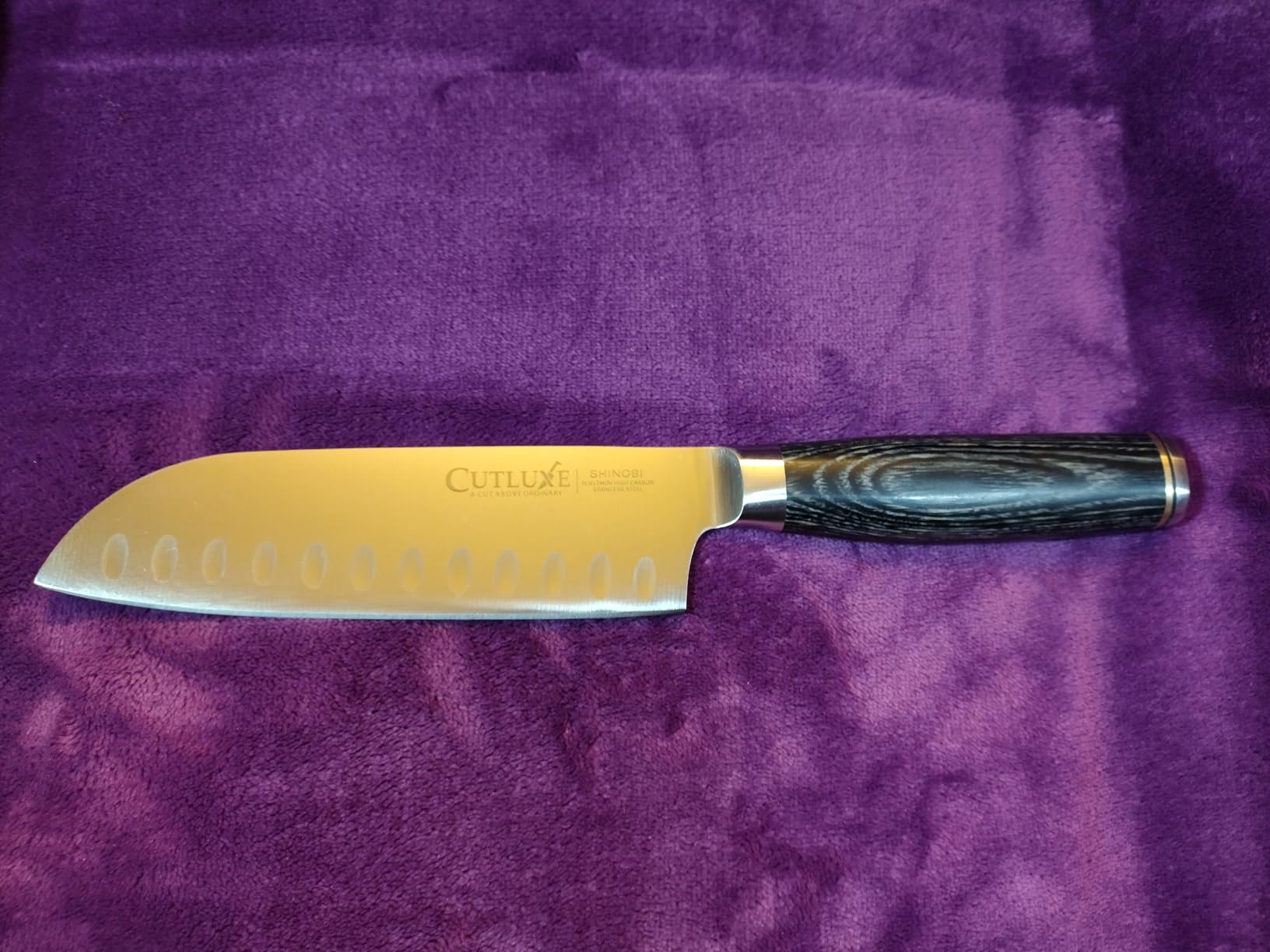
5. Cutluxe Nakiri 7 Inch – Best Nakiri for a First Vegetable Knife
Cutluxe Nakiri Knife 7″ – Japanese Vegetable Knife for Chopping, Full Tang
7 inch blade
High carbon stainless steel
Full tang construction
Pakkawood handle
Pros
- Sharp capable blade at the lowest entry point
- Full tang construction for strength and balance
- Comfortable pakkawood handle with a secure grip
- Edge holds up with daily use
Cons
- Edge may need light honing right out of the box
- Surface rust if left wet after washing
- Rounded handle may not suit a pinch grip
If you have never owned a vegetable knife, this is the least risky way to find out whether the shape works for you. The full tang construction is the detail that matters most here: the steel runs the full length of the handle, which is why it feels solid and balanced rather than wobbly at the front.
Reviewers describe a sharp, well-balanced knife that holds a factory edge over months of daily cutting, and the 7 inch blade size is genuinely the most versatile on the list. It handles a head of cabbage and still feels precise on peppers and scallions.
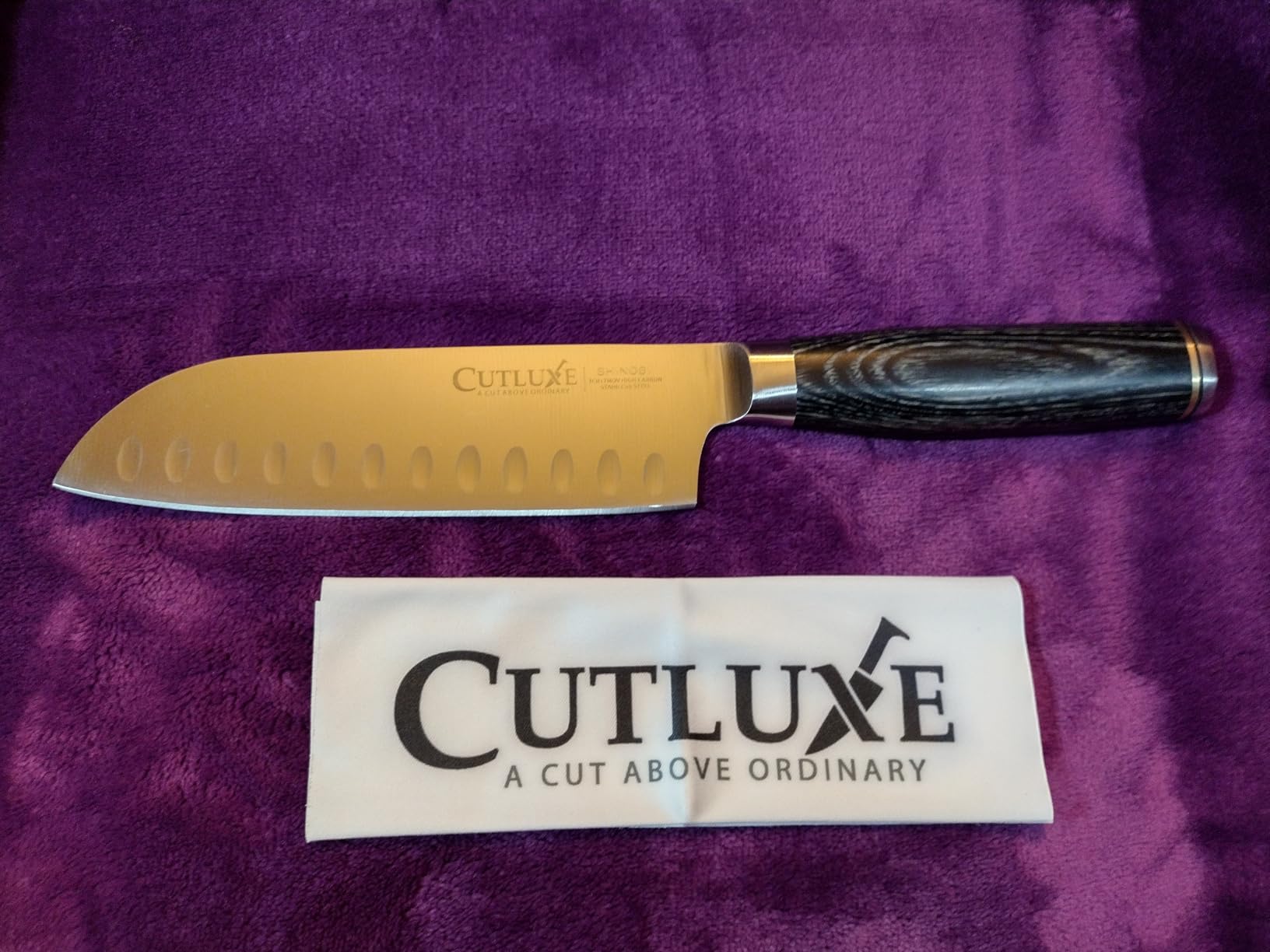
High carbon stainless here means a good balance of sharpness and low maintenance. There is no patina to worry about and no rust anxiety, which is exactly what you want from a first knife. It also means less forgiveness if you are heavy-handed, so a light push is worth learning early.
What you are not getting is refinement. There is no stated hardness figure, no Damascus cladding, and no sheath. It is a straight, honest workhorse in a Shinobi-series design, and that simplicity is part of why it works.
Where it fits against the other entry options
Against the FINDKING, you get stainless convenience and full tang strength instead of a lighter rosewood-handled carbon blade. Against the HOSHANHO, you get a much lower entry point in exchange for a less acute factory edge and no stated HRC figure.
That makes it a good first purchase with a clear upgrade path later. If you discover you love vegetable prep, moving up to a 60 HRC blade afterwards is a natural step rather than a replacement.
Where it falls short
A recurring note in reviews is that the edge sometimes needs light honing before the first serious session, so do not plan on it being ready for a dinner party the day it arrives.
The handle is rounded rather than angular. If you use a pinch grip, that shape is less precise than an octagonal wa handle, and owners who prefer that style tend to move up a tier.
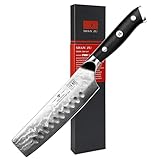
6. SHAN ZU Damascus Nakiri 6.5 Inch – Best for Long Intervals Between Sharpening
SHAN ZU Damascus Nakiri Knife, 7 In Professional Extra Sharp Kitchen Knife
6.5 inch blade
10Cr15Mov at 62 HRC
67-layer folded Damascus
G10 full tang
Pros
- Extremely sharp out of the box
- Edge held a full year for heavy daily users
- Real folded 67-layer Damascus construction
- Balanced full tang feel aids downward cutting
Cons
- Heavier than some users expect for the size
- Scalloped handle grooves can feel sharp
- Handle wood-grain print is somewhat pixelated
This is the one to buy if sharpening is the thing you least want to think about. The core is 10Cr15Mov Japanese steel at 62 HRC, wrapped in 67 layers of genuinely folded Damascus, and multiple owners running it twice a day report going a full year before needing to sharpen.
That hardness is a double-edged promise. You get exceptional retention and a very acute 15 degree edge, and in exchange you have less margin for abuse. A twist in dense produce, a glance off a granite board, or a dropped tip will mark it faster than a softer steel would.
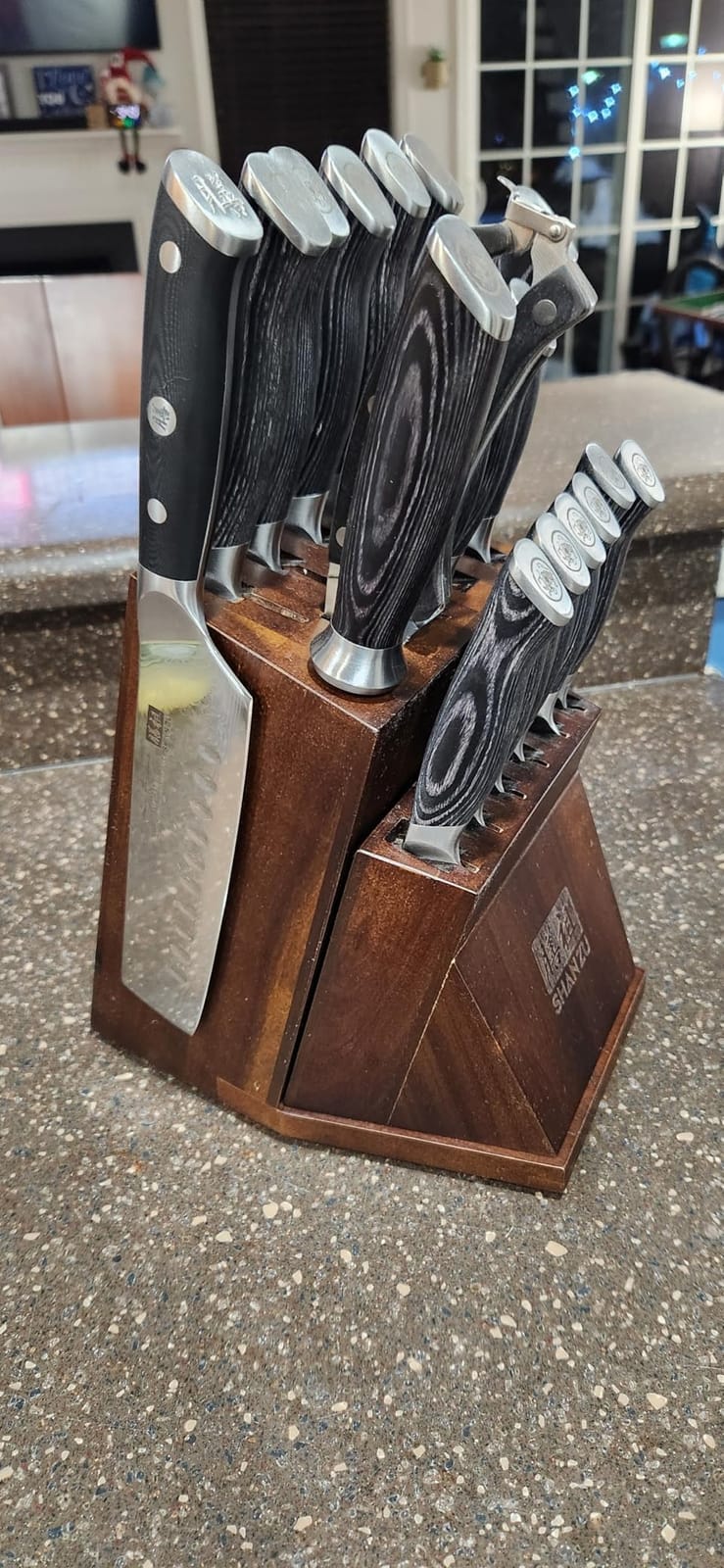
At 270 g the weight is well distributed through the full tang, and that forward balance is genuinely helpful for straight-down cutting. The 2.2 mm blade thickness behind the edge is thin enough to move through onions and cabbage without resistance.
The G10 glass fiber handle is riveted and full tang, and it is a bigger, more substantial handle than most nakiri in this group. Owners with larger hands rate it highly; owners with small hands should know this before buying.
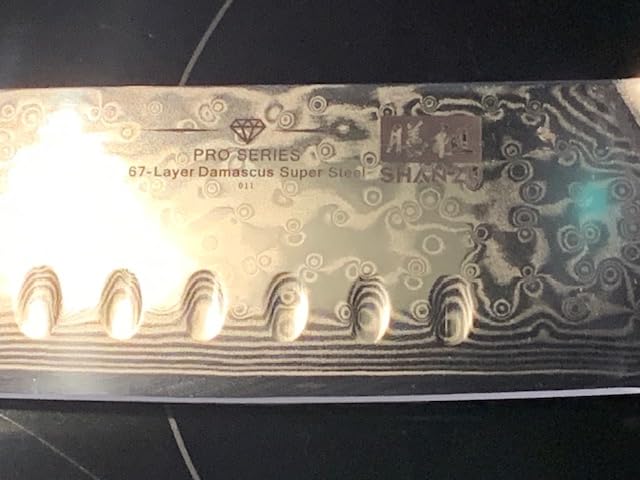
What 62 HRC actually changes day to day
You will not notice the hardness rating during a single session. What you notice is that the knife still cuts the way it did in week one, in month three, and in month six. For a cook who uses the same tool every night, that consistency is the entire value proposition.
It also means the sharpening stone matters more here than elsewhere. A softer stone and lighter pressure will preserve that thin edge far better than a hard stone used enthusiastically.
Where it falls short
Weight is the most common surprise, with reviewers noting it feels heavier than expected for a 6.5 inch blade. The scalloped grooves on the handle also bother some users, who find the texture sharp under a wet hand.
And the handle print, while cosmetic, is the kind of detail that stands out on an otherwise serious blade. It is a purely visual gripe, but on a knife this sharp, some buyers notice.
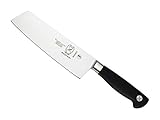
7. Mercer Culinary Genesis 7 Inch Nakiri – Best Lightweight Nakiri for Small Hands
Mercer Culinary M20907 Genesis 7-Inch Nakiri Vegetable Knife,Black
7 inch blade
Forged high carbon German steel
Taper-ground edge
Santoprene handle
Pros
- Very light 4 ounce weight
- easy to maneuver
- Non-slip handle that grips with wet hands
- Taper-ground edge stays sharp over time
- Lifetime warranty
Cons
- Synthetic handle offers less warmth than wood
- Hand wash only
- not dishwasher safe
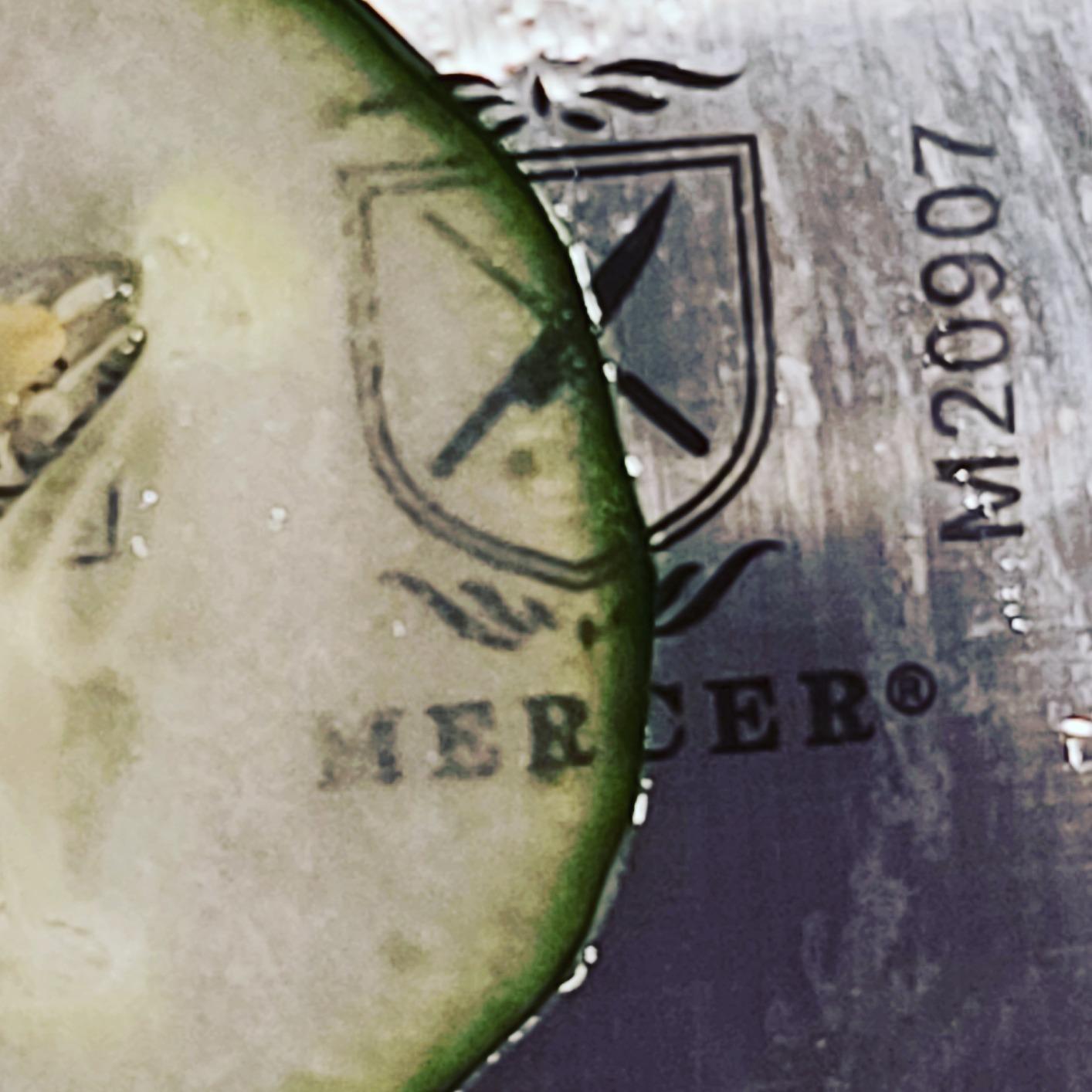
Weight is the whole story with this one. At four ounces it is the lightest nakiri in the group by a wide margin, and if you have ever found a tall blade tiring or clumsy in your grip, this is the correction. For smaller hands, it removes the most common complaint we heard about nakiri ownership.
The Santoprene handle is a soft synthetic, and it grips reliably even when your hands are wet. That sounds minor until you are halfway through a large batch of onions and need to rinse and keep going. Reviews call the grip one of the most secure in the category.
The blade is precision-forged high carbon German steel with a taper-ground edge, which is a sensible combination for a knife aimed at general home use. It stays sharp through ordinary prep without demanding a specific sharpening routine, which matches the light, easy-care character of the design.
There is also a lifetime warranty, which is unusual in this category. It does not cover edge damage from misuse, but it does mean the handle and construction failures that do show up on inexpensive knives are covered.
Where the light weight changes the result
Because the knife is so light, you can drive the blade with less force. That is not just comfort. A heavy blade landing hard on a thin edge is a common cause of chipping, so a lighter knife with a flat edge is inherently a little kinder to that edge.
For a cook who prepares a few vegetables a night rather than doing large batches, that is usually the right trade. You are not maximising throughput, you are making dinner without your hand aching at the end.
Where it falls short
The synthetic handle does not have the warmth or the moulded-in-hand feel of pakkawood or rosewood. If you prefer a wa-style octagonal grip for precise angle control, this is a different shape of handle entirely.
It is also hand wash only, which is normal for the category but does rule it out for anyone who puts knives in a dishwasher. Plan on a quick rinse and a towel dry straight after use.
8. KYOKU Shogun Series 7 Inch Nakiri – Best Nakiri to Give as a Gift
KYOKU Nakiri Knife – 7″ – Shogun Series – Japanese Style VG10 Steel Core Damascus Blade – with Sheath & Case
7 inch blade
VG10 Japanese steel core
Forged full tang
Includes sheath and case
Pros
- Sharp out of the box and stays sharp after weeks of use
- Solid weighty feel reads as premium construction
- Protective sheath and hard case included
- Attentively packaged and gift ready
Cons
- Subtle Damascus pattern may not satisfy buyers
- Handle can become slick when wet
- Will not fit a standard knife block slot
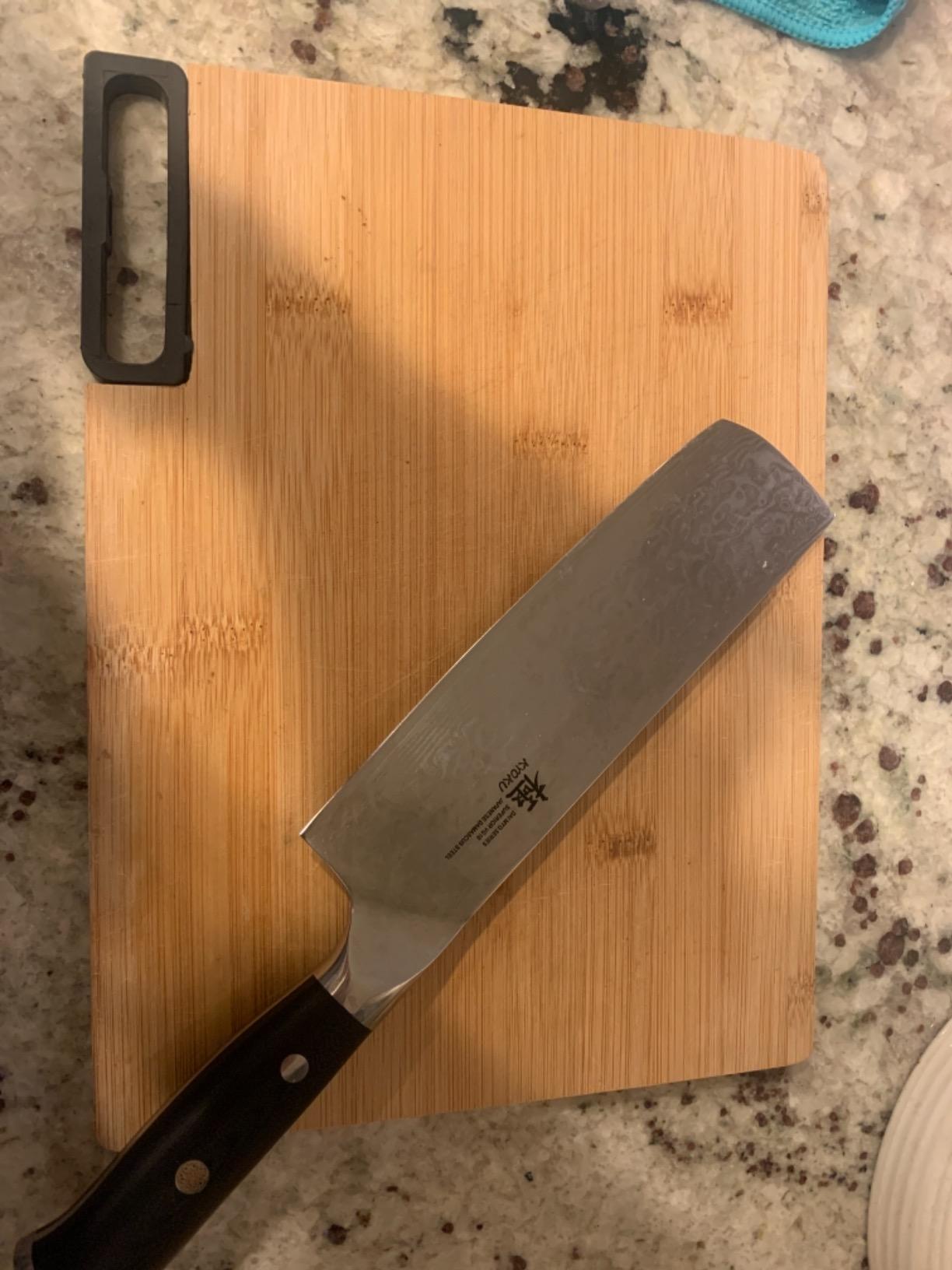
This is the safest knife in the group to hand to someone else. It arrives in a hard plastic sheath with a velveteen lining, inside a hard carrying case, in packaging that reviewers repeatedly single out as gift-worthy. Nothing is missing, and there is no assembly or care kit to explain.
Underneath, it is a 7 inch nakiri with a VG10 Japanese steel core and Damascus cladding, forged as a full tang. Owners report it arrives sharp and stays sharp through weeks of use, and the weighty, substantial feel reads as a more premium object than the specification list suggests.
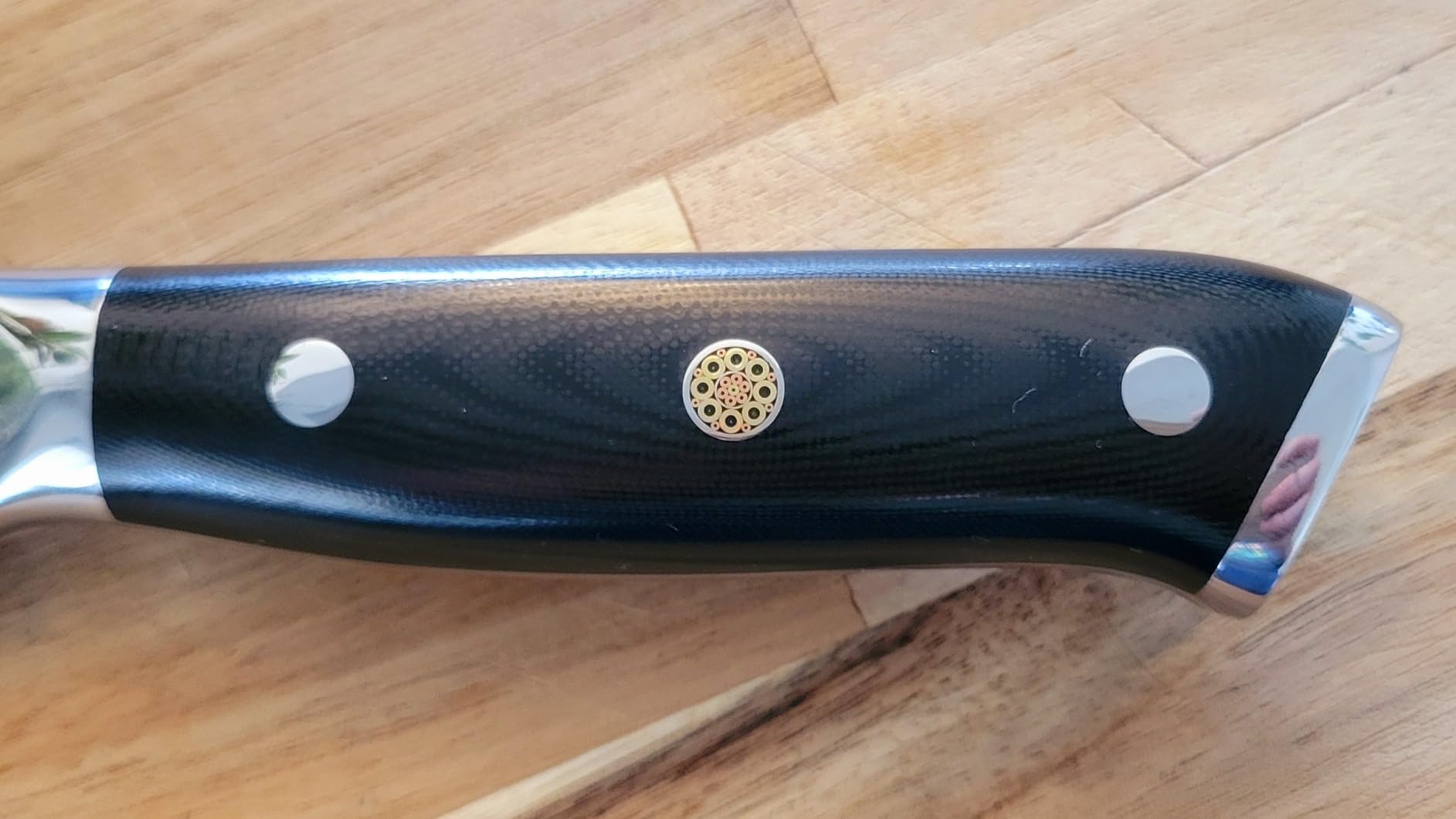
The G10 handle is sized for larger hands and is comfortable over longer prep sessions, though it is one of the bigger handles in this roundup. At 0.3 kg the knife has enough mass to feel solid without being tiring.
It is a double-bevel style nakiri, which is what most home cooks actually want. Japanese professionals would use a single-bevel usuba for this work, and plenty of community sources confirm that a double-bevel nakiri is the correct substitute for a home kitchen.
Why the included case changes the recommendation
For a gift, the case removes the usual problem. A bare nakiri blade stored loose in a drawer is how good knives get dull or damaged, and owners of this model frequently mention the sheath as the reason their edge survived.
It also means a new owner can keep it in a drawer safely between sessions, which is probably how it will be used most weeks. That alone is worth more than an extra layer of handle refinement.
Where it falls short
The Damascus pattern is deliberately subtle, and buyers who ordered expecting bold, visible layering are disappointed. The steel is layered, but the finish is understated rather than showy.
Two practical notes: the handle can get slick when wet, and the blade edge can sit slightly proud of the sheath, so it is worth sliding it in rather than pushing hard. It also will not fit a standard two inch knife block slot.
How to Choose a Nakiri You Will Actually Be Happy With
Most disappointment with nakiri knives comes down to one of five things: the wrong length, the wrong steel for your habits, an edge that was never truly flat, a blade too tall for your hands, or a knife you did not know how to use. Here is how to avoid each one.
Pick the length to match the produce you actually buy
Sizing language causes more mis-purchases than anything else in this category, so the translation matters. A 165 mm nakiri is sold in the US as a 6.5 inch knife, and 165 mm is roughly the same measurement. Retailers round in both directions, so always check the millimetre figure if the sizing feels off.
Cabbage, melons, and winter squash want the full length of a 180 mm blade, because the longer edge means fewer strokes and more contact per push. Small peppers, scallions, herbs, and shallots suit a 165 mm blade, where the shorter length gives you more control and less risk of overrunning the food.
Most home cooks should start at 165 or 180 mm. A 210 mm nakiri is a serious tool for large batch prep, and it is demanding in the hand. If you are prepping a few vegetables a night, you will use a 180 mm blade more often than you will use a 210 mm one.
Choose the steel by how much care you will actually give it
Stainless steels on this list, including SUS440A, 10Cr15CoMoV, 10Cr15Mov, and VG-MAX, are forgiving. They will not rust if you leave them near the sink for an hour, they take a casual honing routine, and they are a sensible first purchase.
Carbon steels such as Aogami #2, Blue Paper #2, and SG2 take a finer edge and reward real maintenance, but they will patina and they will spot if you leave them wet. For most home cooks, we would start stainless and only move to carbon if sharpening becomes a hobby.
Hardness is the other axis. Around 58 to 60 HRC is forgiving and easy to maintain. Above 61 HRC, as on the SHAN ZU, you get far better retention and a finer edge in exchange for a thinner margin for error. Aogami #2 sits around 63 to 65 HRC and behaves the same way.
One more practical note about buying Japanese knives online: grey-market imports are the single most common worry in community discussions. Buy from a retailer that lists the forge, the city, and the maker so you know what is in your hand.
Knuckle clearance matters more than buyers expect
Knuckle clearance is the factor almost no buying guide covers, and owners complain about it more than any other handling issue. A tall blade gives you clearance over a mound of chopped vegetables, which is the whole point, but the same height can hit your knuckles if you grip low on the handle or use a small hand.
The practical test is simple. Hold the knife in a normal pinch grip, index finger and thumb on the blade just behind the heel, and cut a few strokes. If the spine sits close to your knuckles, step down to a shorter blade or a lighter model such as the Mercer Genesis.
Wa-style octagonal handles also give you finer angle control than D-shaped or western handles. If your plan involves a lot of julienne, an octagonal handle is a real upgrade, and if you mostly dice, the difference matters much less.
Check for a genuinely flat edge before you buy
A nakiri that is not flat is just an expensive cleaver. There is a test that works at home, and a simpler version that works in a store at a distance.
In a store, hold the knife on its side on a flat surface and sight down the edge line. The edge and the spine should sit in the same plane, with no wobble. At home, rest the knife on a flat counter and press very lightly on the middle of the spine: if it rocks, the edge is not flat.
For sharpeners, the definitive check is to lay the knife on a coarse stone and look at the contact line. It should run the full length of the edge as one continuous mark. Two contact patches means the belly or the tip is off, and the knife will not behave like a nakiri.
Care, chipping, and when a nakiri is the wrong tool
Hand washing is the rule for every knife here. Rinse, towel dry immediately, and do not leave any of them sitting in a sink of water. The dishwasher cycle is the fastest way to dull a fine edge and, on any of the higher-carbon steels, to start corrosion.
Chipping is the complaint that comes up most often in community threads, and the cause is almost always one of three things: twisting the blade in dense produce, striking a hard board surface, or hitting a seed. Winter squash skin, sweet potato, and hard-skinned daikon are the usual triggers. A push cut with the spine lifted clear of the board and a stable end-grain board prevents most of it.
To repair a chip at home, start on a coarse whetstone around 400 grit and work the missing section out with a steady, nearly flat angle, then move to 1000 grit and finish on 2000 or finer. Even a pull-through sharpener will take the roughness off a small nick, but it will not reshape a damaged edge. Expect to lose a little blade length fixing a large chip.
Finally, there are four situations where a nakiri is the wrong purchase. Skip it if you plan to break down meat or cut bone, if you want a rock-and-chop motion, if your primary cutting is frozen food, or if you need one knife to do absolutely everything. If you only want one knife, start with a general-purpose blade like the ones in our best chef knives for home kitchens guide and add a nakiri later.
Shaping the food is the other half of prep. For large batch jobs, our picks on the best food processors for meal prep cover the chopping you would rather hand off, and pairing the outcome with our large glass food storage sets keeps it all in the fridge. For knife-adjacent gift sets, the premium cheese boards with knives roundup covers the board side.
Frequently Asked Questions
What is the best Japanese knife for chopping vegetables?
For most home cooks, a double-bevel nakiri is the best Japanese knife for chopping vegetables. Its straight edge sits fully on the board, so every push cut separates the whole length at once instead of tearing through. A santoku is the better general-purpose choice, and a single-bevel usuba is a professional tool with a steeper learning curve.
Which knife is better for cutting vegetables, nakiri or Santoku?
A nakiri is better for dedicated vegetable prep, especially cabbage, onions, daikon, and squash, because its flat edge gives full board contact and a tall blade that clears your knuckles. A santoku is better as an all-rounder, handling meat, herbs, and general slicing in one tool. Many cooks own both and reach for the nakiri on produce nights.
Is usuba better than Nakiri?
A usuba is single-bevel, thicker, and heavier, with a tip designed for katsuramuki and fine julienne work. It slices faster and purer, but it is demanding and unforgiving. A double-bevel nakiri covers almost all the same vegetables for a home kitchen at a fraction of the learning curve, which is why most cooks choose it as the practical upgrade.
Can you cut meat with a nakiri knife?
You can cut boneless meat with a nakiri, and several picks here are marketed for mixed use. But the thin spine and straight edge are built for produce, so bone, frozen food, and prying will chip or damage the edge. Keep your chef’s knife for meat and use the nakiri for vegetables, which is where its geometry actually pays off.
Which nakiri knife did America’s Test Kitchen recommend as the best?
Our research did not surface a single named America’s Test Kitchen nakiri recommendation, so we will not invent one. The picks on this page come from owner feedback and specification data instead. If you want the most-tested option in the group, the imarku 7 inch has by far the largest owner base, and the Shun Classic is the one with factory sharpening support.
Why don’t chefs use Cutco?
Professional kitchens tend to choose knives with harder, more refined steel, a genuinely thin distal taper, and edges that hold an acute angle through service. Cutco knives are well made and easy to maintain, but they use softer steel and thicker edges, which is why working chefs reach for Japanese or German brands instead.
The Best Nakiri Knives for Vegetable Prep in 2026
For most people, the imarku 7 inch is the right first nakiri. It is sharp on arrival, well balanced for straight-down cuts, built from stainless steel that will not punish an imperfect drying routine, and it has the largest owner base of anything here, which means you will find plenty of people who have used it through real prep.
If your budget is tighter, the FINDKING Dynasty gives you real nakiri geometry and a light rosewood-handled carbon blade for very little, and the Cutluxe is the easiest way to find out whether you like the shape before spending more. If you sharpen stones or already own a set, the SHAN ZU Damascus holds its edge longer than anything else in this group.
Whichever you pick, check for a genuinely flat edge before you commit, match the length to the produce you buy, and give it a hand wash and an immediate dry. Those three habits will do more for the knife than anything written on the packaging. Use the buttons above to see current pricing, and read our other prep guides for the rest of the workflow.