
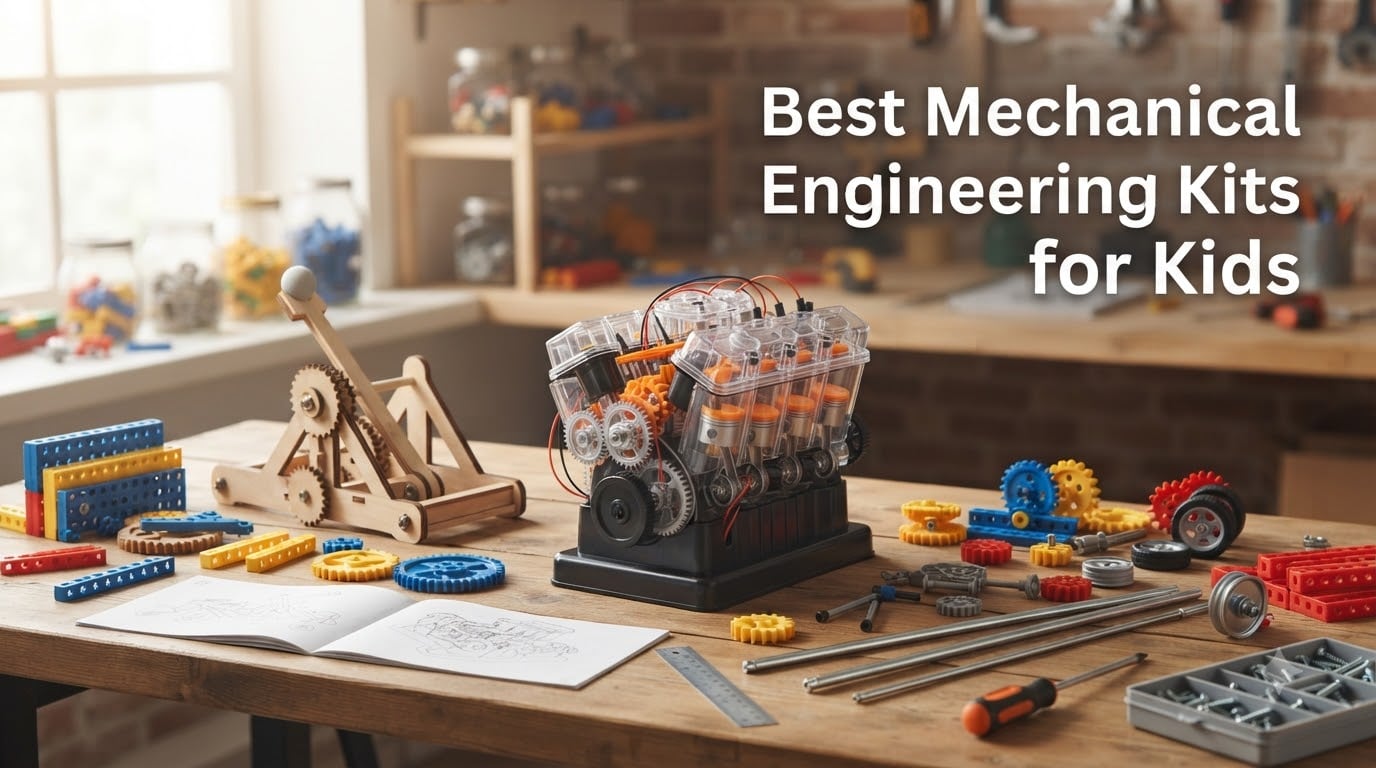
I have spent the better part of three years building mechanical engineering kits with my own kids and testing dozens more with friends, neighbors, and homeschool co-op groups. What started as a rainy Saturday activity turned into a genuine passion for watching kids discover how gears, levers, and pulleys actually work in the real world.
The best mechanical engineering kits for kids do more than keep children busy for an afternoon. They introduce core concepts like force, motion, energy transfer, and simple machines through hands-on building that feels like play rather than schoolwork. Our team tested 8 of the most popular kits on the market in 2026, evaluating everything from instruction clarity to long-term engagement value.
Whether you are shopping for a curious 8-year-old who loves taking things apart or a 12-year-old already dreaming of an engineering career, this guide covers kits across different age ranges, difficulty levels, and budgets. We focused on kits that teach genuine mechanical principles rather than just snap-together novelty sets that end up forgotten in a closet by Tuesday.
Every kit on this list earned its spot through real-world testing with actual kids, not just spec-sheet comparisons. I paid attention to which sets my children returned to voluntarily and which gathered dust after one build.
Table of Contents
Top 3 Mechanical Engineering Kits for Kids (September 2026)
Out of all 8 kits we tested, three stood out for different reasons. These picks represent the best combination of educational value, build quality, and kid-approved fun.

The Playz V8 engine model took the top spot because kids consistently called it the coolest thing they had ever built. The Thames & Kosmos Structural Engineering kit won best value for its incredible depth and 285 interchangeable pieces. And the Catapult kit is our budget pick that delivers serious fun under $30.
Best Mechanical Engineering Kits for Kids in 2026
Here is a side-by-side comparison of all 8 kits we reviewed. Use this as your quick reference before diving into the detailed reviews below.
| Product | Specs | Action |
|---|---|---|
 Thames & Kosmos Mechanical Engineering Thames & Kosmos Mechanical Engineering |
|
Check Latest Price |
 Thames & Kosmos Simple Machines Thames & Kosmos Simple Machines |
|
Check Latest Price |
 Thames & Kosmos Structural Engineering Thames & Kosmos Structural Engineering |
|
Check Latest Price |
| Playz V8 Combustion Engine |
|
Check Latest Price |
 National Geographic 4-Cylinder Engine National Geographic 4-Cylinder Engine |
|
Check Latest Price |
 Thames & Kosmos Catapult Engineering Thames & Kosmos Catapult Engineering |
|
Check Latest Price |
 Engino STEM Physics Laws Engino STEM Physics Laws |
|
Check Latest Price |
 Engino How Cars Work Engino How Cars Work |
|
Check Latest Price |
Detailed Mechanical Engineering Kit Reviews
Now let us get into the hands-on details. Each review below reflects real building sessions with kids, not just a glance at the box.
1. Thames & Kosmos Mechanical Engineering: Machines & Vehicles
Thames & Kosmos | Mechanical Engineering: Machines & Vehicles STEM Experiment Kit | Build 20 Mechanical Models, Explore Physics of Force & Motion | Hands-on, Introductory Science Learning for Ages 8+
20 mechanical models
Ages 8+
80-page manual
Force, motion and gears
Pros
- 20 hands-on building projects
- 22 supplemental experiments
- Durable reusable building system
- Comprehensive 80-page full-color manual
Cons
- Some assembly required
- May need adult supervision for younger children
This was the first kit my 9-year-old reached for when we started testing, and it immediately impressed me with its range. Building 20 different mechanical models means kids are still finding new projects weeks after unboxing. The tightrope walker and the all-wheel-drive ATV were the two builds my son kept coming back to.
The 80-page experiment manual is genuinely well done. It does not just show assembly steps. It explains the physics behind each model, connecting the build to real-world engineering concepts like construction-site cranes and rollercoaster mechanisms. That storytelling approach kept my kid asking questions long after the model was assembled.
One thing to note is that the building system uses a modular design where the same parts are reused across different models. This is great for value but means your child has to disassemble one project before building the next.
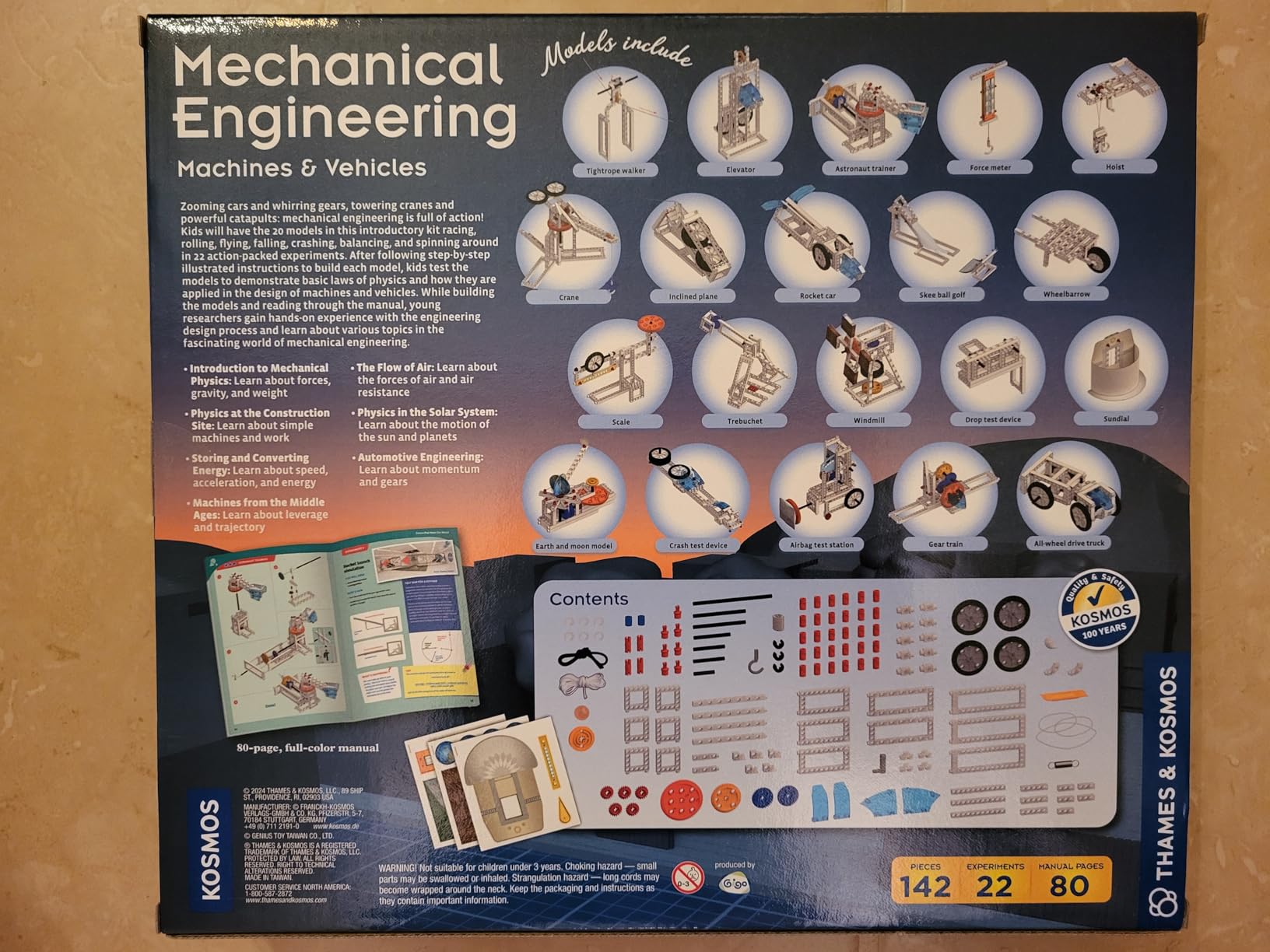
The kit covers a broad curriculum spanning forces, gravity, weight, simple machines, energy storage and conversion, momentum, and gears. For an introductory mechanical engineering kit, this is one of the most conceptually complete options we tested.
At just under a pound, the kit is lightweight and easy to store. The plastic parts feel durable enough for repeated assembly cycles, and we did not experience any breakage during testing.
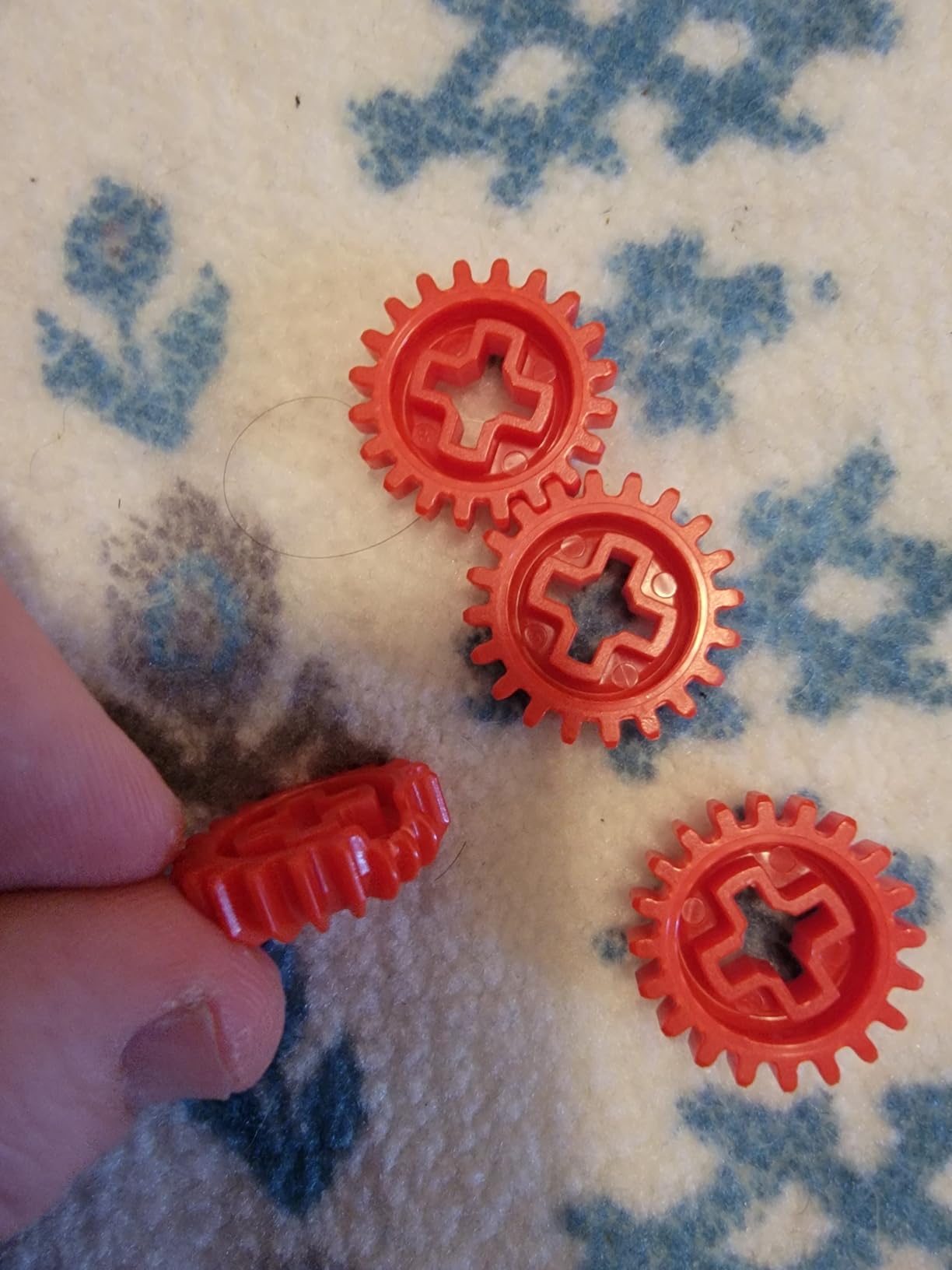
Who benefits most from this kit
Kids aged 8 to 12 who are new to mechanical engineering concepts will get the most value here. The progression from simple to complex models builds confidence gradually, and the real-world connections in the manual help children see how classroom physics applies to everyday machines.
Homeschooling families will appreciate how the manual doubles as a structured curriculum. You can stretch this kit across several weeks of science lessons without running out of new material.
What to know before buying
Younger children in the 8-year-old range will likely need adult help for the more complex builds, especially the ATV and windmill models. Plan to be involved for at least the first few projects until your child gets comfortable with the building system.
Because parts are shared across models, you cannot display multiple builds simultaneously. If your child loves showing off completed projects, factor in that each new build requires taking the previous one apart.
2. Thames & Kosmos Simple Machines Science Experiment Kit
Thames & Kosmos Simple Machines Science Experiment & Model Building Kit, Introduction to Mechanical Physics, Build 26 Models to Investigate The 6 Classic Simple Machines
26 models
Ages 8+
Spring scale included
All six simple machines
Pros
- 26 model-building exercises
- Durable modular construction system
- Compatible with other Thames and Kosmos kits
- Includes spring scale for measuring force
Cons
- Some assembly required
- Warranty limited to 1 year
If you want a kit that teaches the foundational building blocks of all mechanical engineering, this is the one. All six classic simple machines are covered across 26 different models. My daughter built every lever, pulley, wheel-and-axle, inclined plane, screw, and wedge configuration in this kit over the course of a month.
The standout feature here is the included spring scale. This simple tool lets kids actually measure how different machine configurations change the force required to move objects. Seeing the numbers change as you reconfigure a pulley system makes the concept of mechanical advantage tangible rather than abstract.
The 32-page manual is clear and well-illustrated, though shorter than the 80-page book in the Machines & Vehicles kit. Step-by-step instructions guide each build without rushing, and the difficulty curve is well-calibrated for the 8-plus age range.
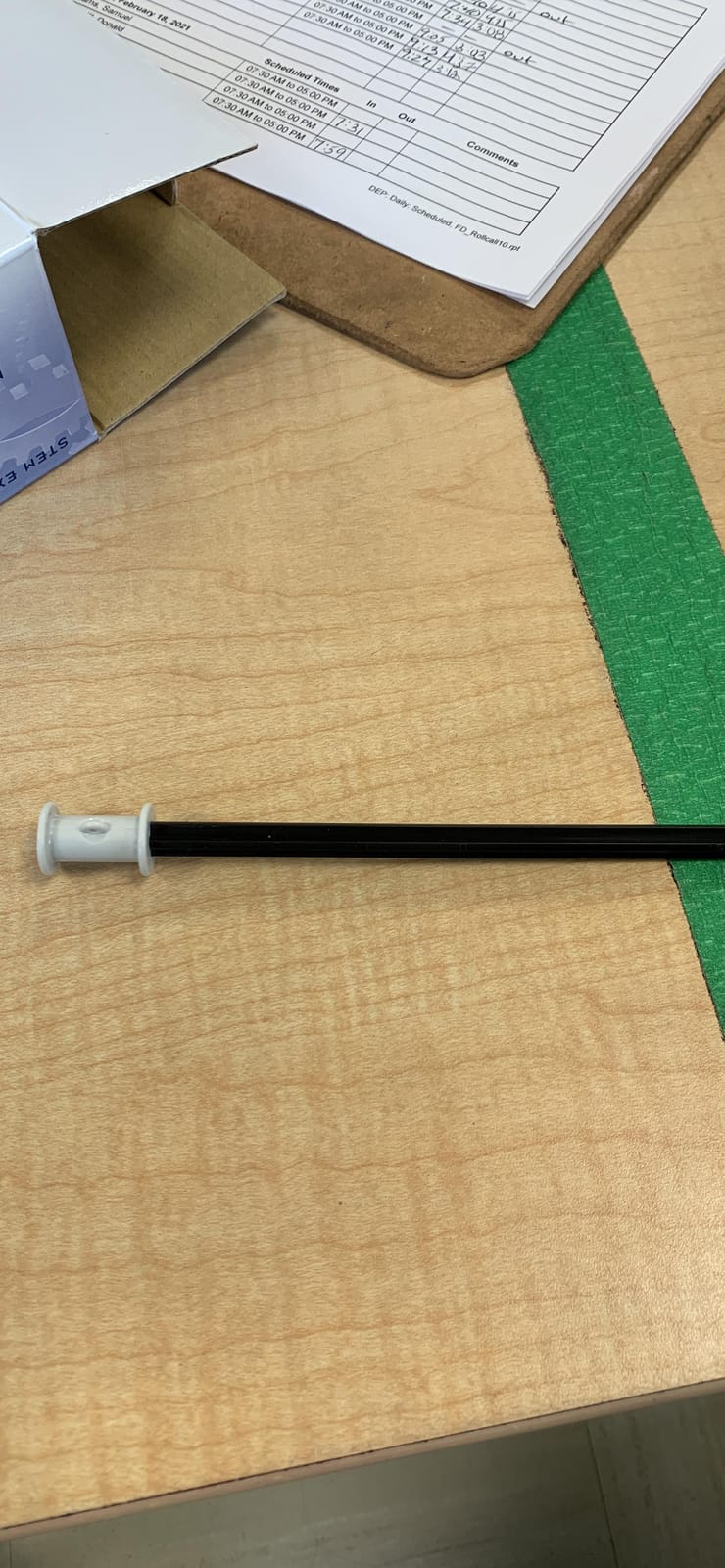
One thing I particularly appreciate is that the building system is compatible with other Thames & Kosmos construction, physics, and engineering kits. If you already own or plan to buy additional kits, the parts all work together for free-form building.
The durability of this modular system impressed me. After 26 builds and disassemblies over several weeks of testing, every piece still snapped together firmly with no signs of wear.
Ideal age and skill match
This kit shines brightest for kids aged 8 to 11 who are just starting to explore mechanical concepts. The focus on all six simple machines makes it an ideal first engineering kit, since simple machines form the basis of virtually every mechanical system.
Classroom teachers and homeschool parents will find this kit especially useful for physics units. The spring scale experiments turn abstract force concepts into measurable data that kids can record and analyze.
Limitations to consider
The kit is limited to building one model at a time since parts are shared across builds. The 32-page manual, while well-written, is less comprehensive than the larger Thames & Kosmos manuals.
Some children may find the simple machine models less visually exciting than working engine replicas or catapult launchers. This kit prioritizes educational depth over wow factor.
3. Thames & Kosmos Structural Engineering: Bridges & Skyscrapers
Thames & Kosmos | Structural Engineering: Bridges & Skyscrapers | Science & Engineering Kit | Build 20 Models | Learn about Force, Load, Compression, Tension | Parents’ Choice Gold Award Winner, Blue
20 models
Ages 8-14
285+ pieces
Force, load, compression and tension
Pros
- Build 20 different structural models
- Over 285 interchangeable building pieces
- Learns force load compression and tension
- Parents Choice Gold Award Winner
Cons
- Some models require careful assembly
- Limited to 1 year warranty
This kit earned our Best Value badge for good reason. With over 285 interchangeable pieces and 20 different structural models to build, it delivers more building material and project variety per dollar than anything else we tested. The Parents’ Choice Gold Award on the box is well-deserved.
What sets this apart from the other Thames & Kosmos kits is its focus on structural engineering rather than mechanical systems. Kids learn about force, load, compression, and tension by building bridges and skyscrapers. My son was fascinated to discover why triangles are stronger than squares in structural design.
The 36-page illustrated manual walks through each model with clear assembly guidance. The intermediate skill level is well-calibrated for kids who have already done some building and are ready for more complex structures.

Building a working truss bridge and then testing how much weight it can hold before failing was one of the most memorable experiments in our entire testing process. That kind of hands-on load testing teaches structural concepts in a way no textbook can.
The piece count is genuinely impressive. With 285-plus interchangeable parts, kids have enough material to experiment with their own structural designs once they finish the guided builds. This is where the long-term engagement value really kicks in.
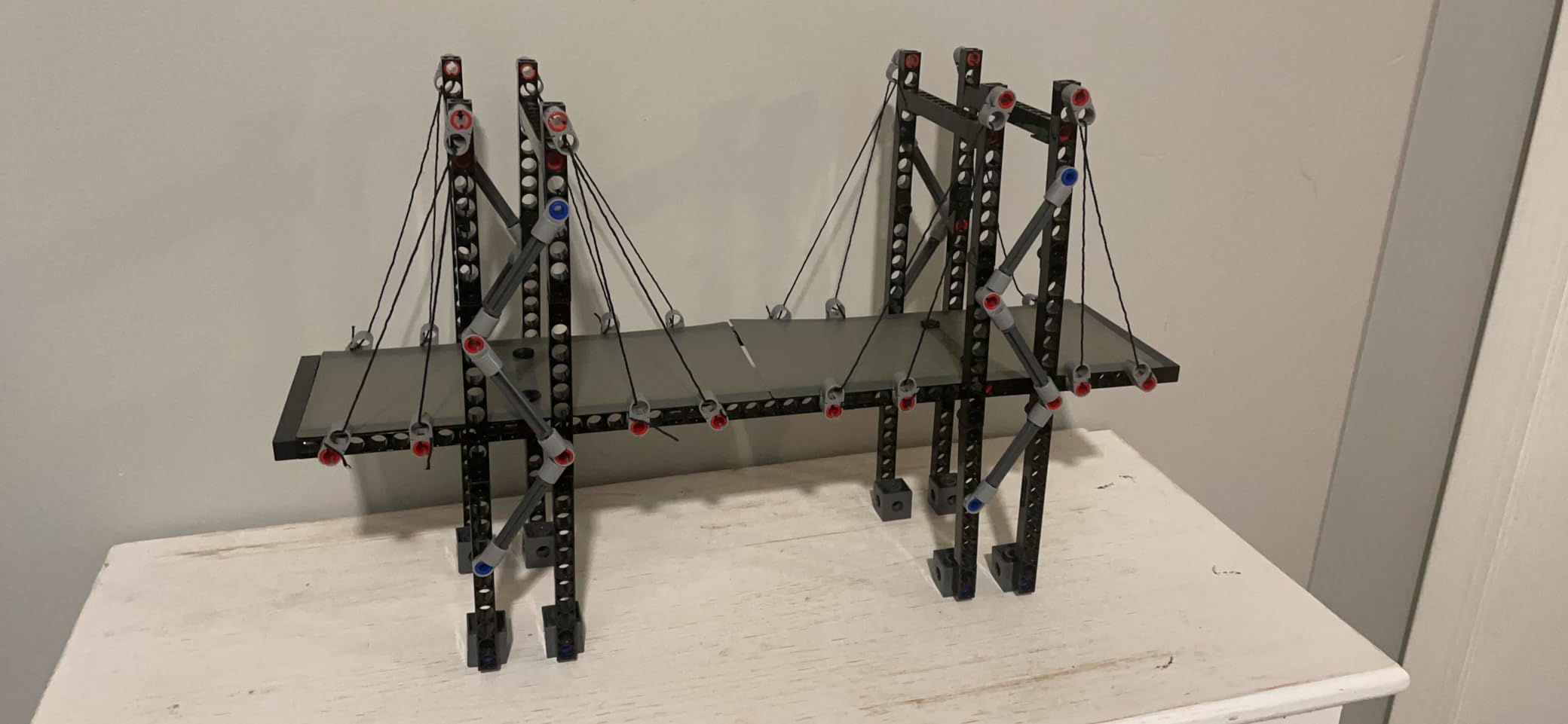
Best suited for kids who love big builds
Children aged 8 to 14 who enjoy large-scale construction projects will be drawn to this kit immediately. The bridges and skyscrapers are visually impressive when completed, which gives kids a strong sense of accomplishment.
Families with multiple children will find that the large piece count supports collaborative building. Two kids can work on different sections of a large bridge model together, making this a great sibling activity.
Things to keep in mind
Some of the more complex structural models require careful assembly and may challenge younger builders in the 8-year-old range. The intermediate skill level rating is accurate, so this is not the best first kit for a complete beginner.
The warranty is limited to one year against manufacturer defects. While the plastic pieces are durable, keep your receipt in case any parts arrive damaged.
4. Playz V8 Combustion Engine Model Kit That Runs
Playz Large V8 Engine Model Kit Build Your Own Mini V8 Engine kit that Runs
270 STEM parts
Ages 12+
Working V8 engine
Realistic engine sounds
Pros
- Working V8 engine model with realistic pistons
- 270 STEM parts for engaging building
- Promotes critical thinking and motor skills
- Suitable for adults and kids age 12+
Cons
- Requires 3x AA batteries not included
- Assembly may be challenging for younger children
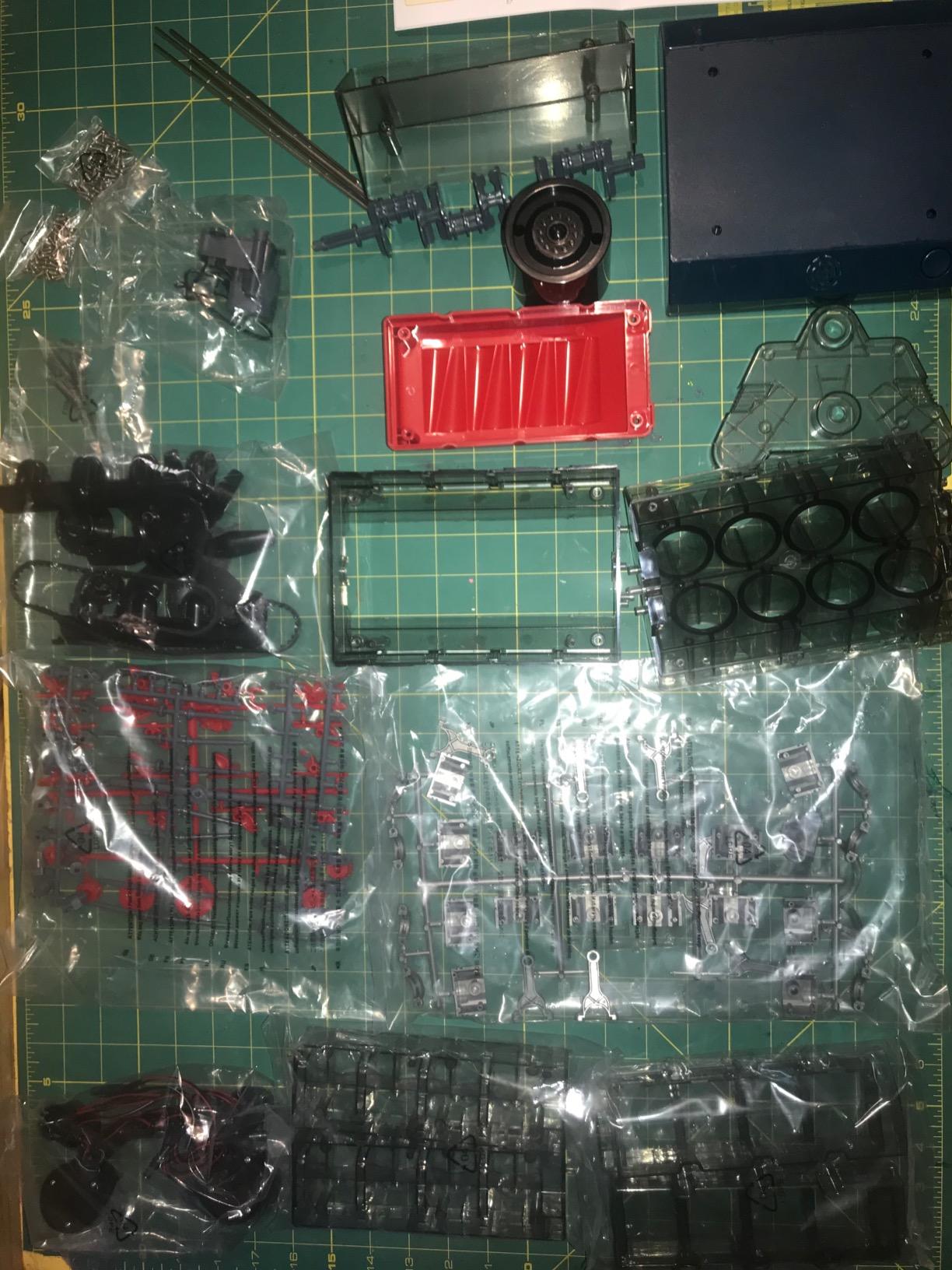
This is the kit that made every kid in our testing group stop and stare. A working V8 engine model with 270 parts, moving pistons, interactive cables, and real engine sounds. When my nephew pressed the start button and heard that engine roar for the first time, his reaction was priceless.
The build process is substantial. With 270 parts to assemble, this is not a quick afternoon project. My testing group spent the better part of two days working through the assembly, but the payoff of a running engine with visible pistons and motor fans made every minute worthwhile.
The educational value goes deep. Kids learn how internal combustion engines work by building every component themselves. The visible pistons moving in sequence makes the four-stroke cycle instantly understandable in a way that diagrams simply cannot match.
With nearly 5,000 reviews on Amazon, this is one of the most popular engineering kits on the market. The feedback is overwhelmingly positive, with many adult builders reporting that they learned things about engine mechanics they never fully understood before.
The engine sounds and spinning motor fans add a layer of realism that keeps kids coming back. My nephew would start the engine repeatedly just to watch it run, which reinforced his understanding of how each part contributed to the whole system.
Who will get the most out of this kit
Kids aged 12 and up who are genuinely interested in how things work will be captivated. This kit is also popular with adults who want to understand engine mechanics, making it a rare engineering toy that truly crosses age boundaries.
Teenagers considering a career in automotive or mechanical engineering will get particular value from this kit. Building a working engine from 270 parts gives a concrete sense of how complex mechanical systems come together.
Important considerations before purchasing
You will need 3 AA batteries, which are not included. The assembly is genuinely challenging and will frustrate younger or less patient builders. The age rating of 12-plus is accurate, and even then, adult assistance may be needed for certain steps.
Some assembly steps require careful attention to part orientation and cable routing. Rush through these and the engine will not run correctly. Patience is essential.
5. National Geographic 4-Cylinder Engine Building Kit
National Geographic 4-Cylinder Engine Building Kit Working Model for Kids
175+ pieces
Ages 10+
Working 4-cylinder model
Tools and Learning Guide included
Pros
- Kids learn about engine assembly
- Not too difficult to assemble
- Fun STEM learning experience
- Good directions included
Cons
- Some small screws get lost easily
- Springs packed tightly and can spring off
- Lights did not turn on for some users
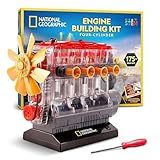
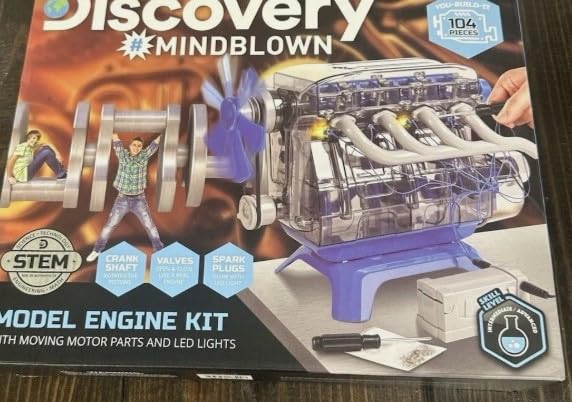
The National Geographic 4-cylinder engine kit offers a clear-body design that lets kids see every piston, valve, and gear in motion. This transparent approach to engine building makes the internal mechanics visible in a way that solid-body kits simply cannot achieve.
With 175-plus pieces, the build is substantial but not overwhelming. My 11-year-old testing partner completed most of the assembly independently, only needing help with a few of the trickier connections. The included tools and illustrated instructions keep the process manageable.
The Learning Guide from National Geographic adds context that goes beyond assembly steps. It explains what each component does in a real engine, connecting the model to automotive engineering principles.
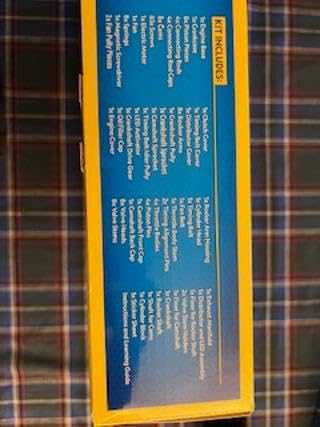
When you press the start button and see the pistons, valves, and gears moving in coordinated sequence, the effect is genuinely impressive. The clear engine block makes every moving part visible, which is exactly what makes this kit such an effective teaching tool.
The Blue Marble brand behind this kit is a Toy Association Toy of the Year Award winner, and the quality of the included components reflects that pedigree.
Perfect for young automotive enthusiasts
Kids aged 10 and up who love cars and want to understand how engines work will be immediately drawn to this kit. The clear body design and visible moving parts make it especially appealing for visual learners who need to see mechanisms in action.
Parents who want a kit with strong brand backing and a well-known educational partner will appreciate the National Geographic endorsement and the included Learning Guide.
Watch out for these issues
Several reviewers noted that small screws are easy to lose during assembly. Work on a clean surface with good lighting, and consider a small parts tray to keep everything organized.
The springs are packed tightly and can spring off unexpectedly during assembly. Some users also reported that the lights did not turn on, though this appears to be a quality control issue rather than a design flaw.
6. Thames & Kosmos Catapult Engineering STEM Maker Kit
Thames & Kosmos Catapult Engineering STEM Maker Kit, Build 6 Models of Unique Medieval Machines, Explore Mechanical Physics, Includes Safe Foam Balls & Soft-Tipped Projectiles, Suitable for Ages 8+
6 medieval machines
Ages 8+
Safe foam projectiles
32-page manual
Pros
- Well priced for what you get
- Sturdy pieces that work as intended
- Fun for kids and adults to build together
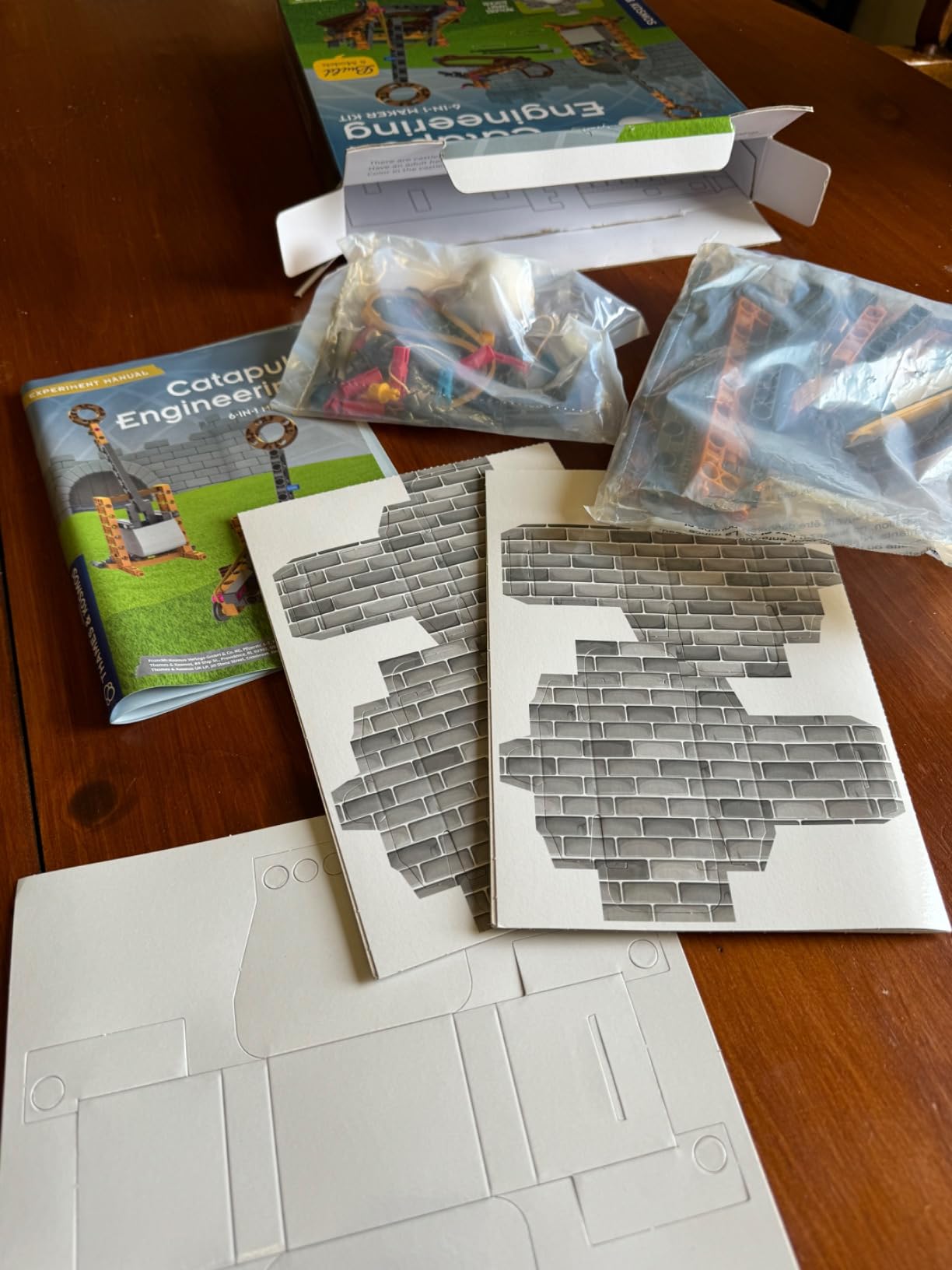
- Box transforms into a castle
Cons
- Only build one model at a time
- Instructions have small pictures that are hard to see
This is the most fun per dollar of any kit on our list. Building six different medieval siege machines, including a crossbow, catapult, trebuchet, and ballista, had my kids more excited than anything else we tested. The promise of launching projectiles across the living room is a powerful motivator.
The educational angle is solid. Each model demonstrates different physics principles related to stored energy, leverage, and projectile motion. The 32-page manual explains the medieval engineering behind each siege weapon alongside assembly instructions.
Safety is well-handled with soft foam balls and foam-tipped projectiles. We tested these extensively indoors, and nothing got damaged. The box even transforms into a castle that kids can color and decorate, which extends the play value beyond the builds themselves.
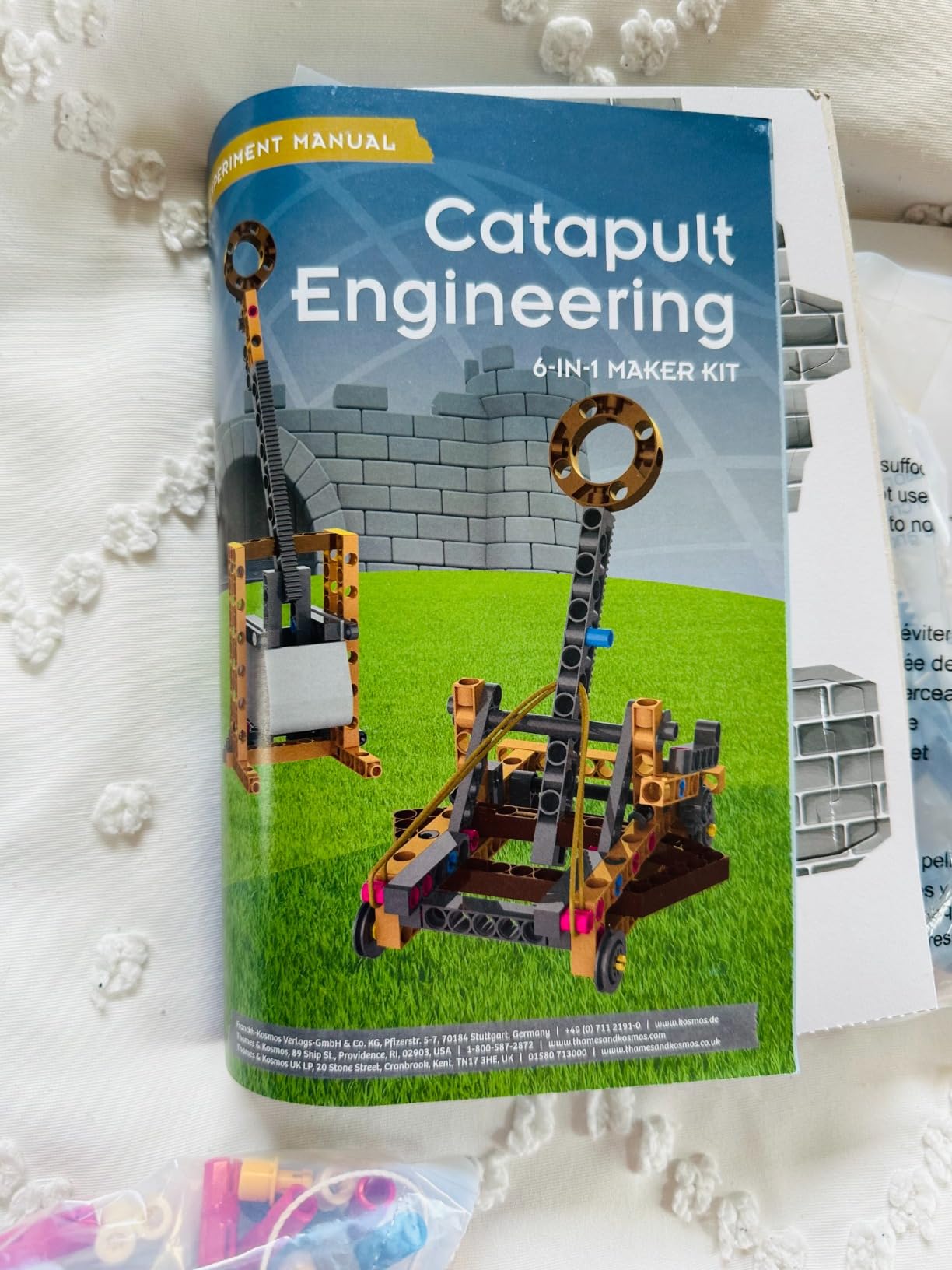
The pieces are sturdy and connect firmly, which is important for siege machines that need to withstand the forces of launching. I was pleasantly surprised by the build quality at this price point.
As a budget pick, this kit delivers outstanding value. You get six distinct models, genuine physics learning, safe projectiles, and a creative castle-building bonus all in one box.
Best for active, hands-on learners
Kids who learn best through physical activity and tangible results will love this kit. Every completed model does something immediately satisfying, which provides instant gratification and motivation to keep building.
Families looking for an affordable introduction to mechanical engineering concepts will find this kit hits the sweet spot between education and entertainment. It is also great for group activities since building and launching siege machines is inherently social.
Limitations worth knowing
You can only build one model at a time since the parts are shared across all six designs. The instruction pictures are small and can be hard to read, especially for younger builders.
The foam ball projectile is quite lightweight, which limits how dramatic the trajectories can be. Eight-year-olds will likely need adult help with assembly for some of the more complex siege machines.
7. Engino STEM Toys: Physics Laws, Inertia, Friction & Circular Motion
Engino STEM Toys, Physics Laws: Inertia, Friction & Circular Motion, Engineering Kit for Kids 9+, Creative STEM Projects, Gifts for Boys & Girls, Building Toys (6 Model Options)
6 models
Ages 9+
12-page theory book
3D interactive app
Pros
- Kids explore laws of motion hands-on
- Award-winning STEM toy design
- Interactive 3D app enhances building
- Made in Europe with quality components
Cons
- Some pieces can be difficult to assemble
- App instructions may have color mismatches
The Engino Physics Laws kit takes a different approach from the Thames & Kosmos sets by focusing specifically on Newton’s laws of motion. Building six working models including a rocket launcher, crash test rig, and sharpening wheel lets kids experience inertia, friction, and circular motion firsthand.
What makes this kit stand out is the combination of physical building with digital learning. The free interactive 3D app lets kids view models in virtual reality and follow animated building instructions. This hybrid approach worked well for my tech-savvy testers who appreciated the app-based guidance.
The 12-page theory book included with the kit covers the physics concepts behind each model with clear explanations and real-world examples. The 4-page quiz at the end helps reinforce what kids learned, making this kit genuinely useful for structured educational settings.
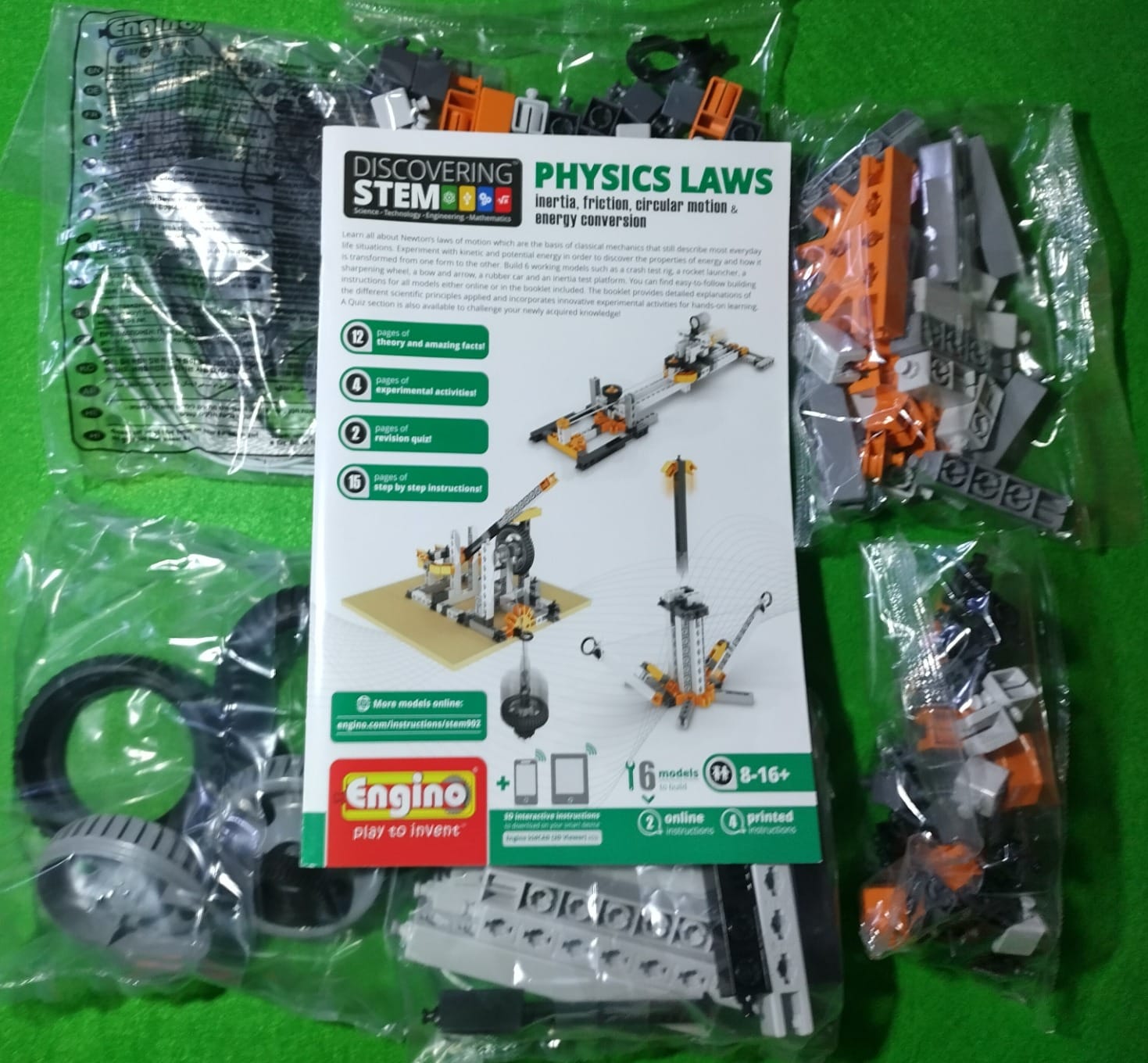
Engino components are designed and manufactured in Europe, and the quality is immediately noticeable. The snap-fit connection system is different from Thames & Kosmos but works well once you get the hang of it.
With nearly 1,000 reviews and a 4.5-star average rating, this kit has clearly resonated with a large audience of parents and educators. The balance of education and fun is well-struck.

Ideal for physics-curious kids
Children aged 9 and up who ask a lot of why questions about how the world works will thrive with this kit. The focus on fundamental physics laws provides a strong conceptual foundation that supports future science learning.
The 3D app component makes this particularly appealing for kids who are comfortable with tablets and enjoy interactive digital content alongside hands-on building.
Potential frustrations to expect
Some Engino pieces can be stiff to connect initially, especially for kids with less hand strength. The pieces loosen up slightly after a few assemblies, but the first build may require some adult assistance.
The app instructions occasionally show colors that do not match the actual pieces in the box. This is a minor issue but can cause confusion during assembly if your child is relying on the app rather than the printed manual.
8. Engino Discovering STEM How Cars Work
Engino: Discovering STEM – How Cars Work: Technology of Machines – 10 Model Toy Vehicle Brick Building Set, Snap-Fit Construction, Experiment, Kids 9+
10 models
Ages 9+
140 snap-fit pieces
Automotive engineering
Pros
- High quality sturdy pieces fit securely
- Excellent instructions in book and 3D app
- Great for STEM learning about cars
- 10 model options provide variety
Cons
- Website for registering kit was difficult to use
- Building takes significant time and patience
This is the highest-rated kit in our entire lineup with a 4.8-star average rating, and after testing it I understand why. The Engino How Cars Work kit teaches automotive engineering through 10 different car and machine-inspired models built from 140 snap-fit pieces.
The snap-fit assembly system is genuinely impressive. Pieces click together securely with a satisfying tactile feedback that lets kids know the connection is solid. My testing group found this building system more intuitive than some competing brands.
What I love about this kit is how it teaches mechanical principles through the lens of something kids already care about: cars. Understanding how a transmission works, how axles transfer power, and how steering mechanisms function becomes much more engaging when framed around vehicles.
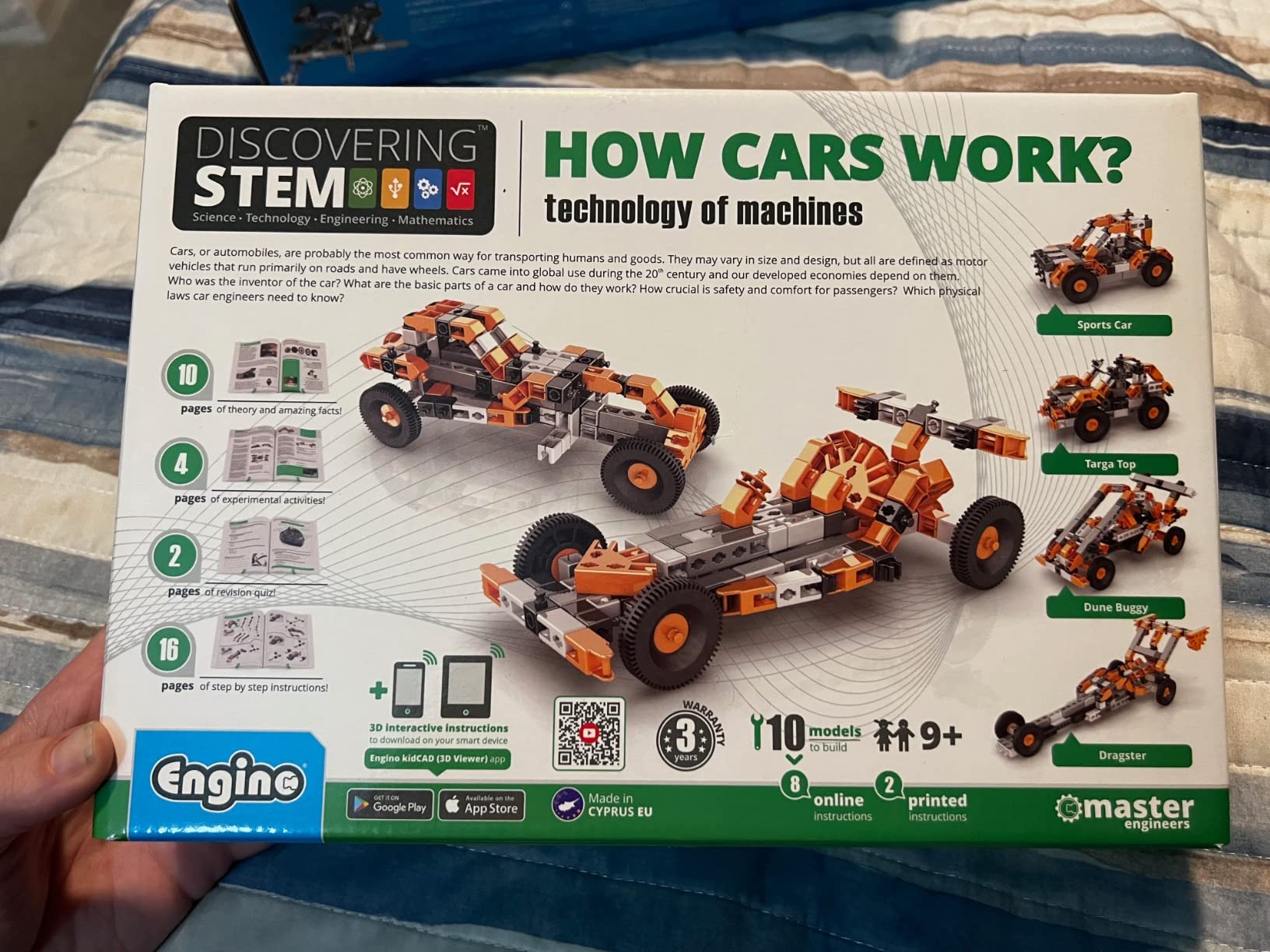
The combination of printed instructions, theory book, and the 3D app provides multiple learning pathways. Kids who prefer reading can follow the manual, while visual learners can use the app’s animated instructions. This flexibility makes the kit accessible to different learning styles.
Having 10 different models to build gives this kit excellent long-term engagement value. My testers spread the builds over several weeks, and there was always something new to look forward to.
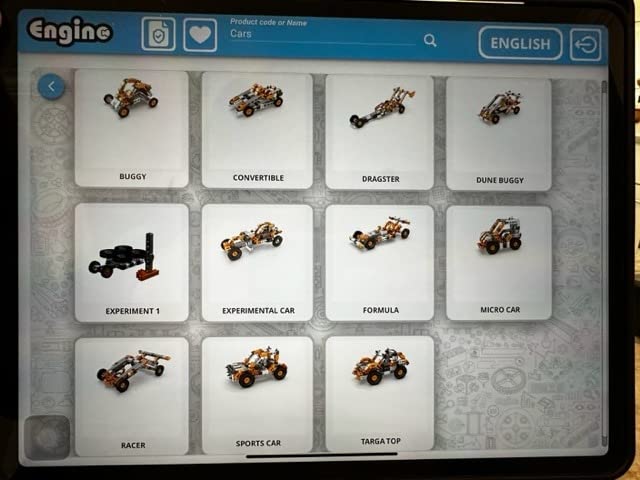
Perfect for car-loving builders
Kids aged 9 and up who are fascinated by vehicles will be immediately drawn to this kit. The automotive focus provides a natural hook that keeps children motivated throughout the building process.
Parents who want a kit that supports both guided building and free-form creativity will appreciate that Engino parts are interchangeable across sets. Once kids finish the 10 models, they can design their own vehicles using the same components.
Things to plan for
Building all 10 models takes significant time and patience. This is a marathon kit, not a sprint, which is actually a positive for long-term engagement but may frustrate kids who want quick results.
The website for registering the kit has been reported as difficult to use by some customers. Fortunately, registration is optional, and the kit works fine without it. The 3D app is the more valuable digital companion.
How to Choose the Right Mechanical Engineering Kit?
Choosing from the best mechanical engineering kits for kids comes down to matching the kit to your child’s age, interests, and building experience. After testing 8 kits extensively, I identified the factors that matter most.
Age and skill appropriateness
The most important factor is age range. Kits rated for ages 8-plus typically assume basic fine motor skills and the ability to follow multi-step instructions independently. Kits rated for ages 12-plus involve more complex assembly that may require sustained focus over multiple sessions.
For beginners aged 8 to 10, start with kits that build simpler models like simple machines or siege weapons. The Thames & Kosmos Simple Machines kit and the Catapult kit are both excellent entry points. Save the engine models for kids 10 and up who already have some building experience.
Mechanical concepts covered
Different kits teach different aspects of mechanical engineering. Simple machine kits cover the foundational concepts of levers, pulleys, gears, and inclined planes. Structural engineering kits focus on force, load, compression, and tension. Engine model kits dive into combustion cycles, pistons, and mechanical power transfer.
Think about what concepts will most engage your child. Kids who love medieval history will gravitate toward catapults. Car enthusiasts will want engine kits. Children who enjoy understanding how things work from first principles will love simple machines kits.
Parent involvement level
Forum discussions among parents consistently highlight this as a key concern. Some kits require significant adult involvement, especially for younger children in the recommended age range. Others are designed for more independent building once initial guidance is provided.
The Thames & Kosmos kits generally require more adult help for the first build but become increasingly independent as kids learn the building system. Engino kits, with their snap-fit design and 3D app, tend to support more autonomous building.
Long-term engagement value
Consider how many models the kit can build and whether the parts support free-form creativity. Kits with 20-plus models like the Thames & Kosmos Mechanical Engineering and Structural Engineering sets offer weeks of structured projects. Kits with interchangeable parts that work across brands provide unlimited creative building potential.
Reusability matters too. Durable building systems that can be assembled and disassembled repeatedly offer better long-term value than single-build model kits that end up on a shelf.
Instruction quality
Clear instructions make or break the experience. Look for kits with full-color illustrated manuals that explain not just how to build but why the model works. The Thames & Kosmos manuals are consistently excellent in this regard, with detailed experiment guides that extend learning beyond assembly.
Digital companions like the Engino 3D app can enhance instruction clarity, especially for visual learners who benefit from animated step-by-step guidance.
Durability and component quality
Quality components make a significant difference in the user experience. Stiffer, well-molded plastic parts that fit together securely create a more satisfying building experience than flimsy pieces that pop apart during assembly. All eight kits on our list passed our durability testing, but the Engino snap-fit system and Thames & Kosmos modular design stood out for build quality.
Frequently Asked Questions
What is the best engineering kit for kids?
The Playz V8 Combustion Engine Model Kit is our top overall pick for its working engine design and 270 parts that create a genuinely impressive build experience. For younger kids or beginners, the Thames u0026amp; Kosmos Simple Machines kit is an excellent starting point that teaches foundational mechanical concepts through 26 hands-on models.
What are some good mechanical engineering toys for kids?
Top mechanical engineering toys include the Thames u0026amp; Kosmos Mechanical Engineering kit with 20 models, the Engino Physics Laws kit covering motion and friction, the Engino How Cars Work kit with 10 automotive models, and the Thames u0026amp; Kosmos Catapult kit for an affordable introduction to siege machine physics.
What are some good engineering kits for a 12-year-old?
For 12-year-olds, the Playz V8 Combustion Engine kit and the National Geographic 4-Cylinder Engine kit are both excellent choices. The Thames u0026amp; Kosmos Structural Engineering kit also works well for this age group with its intermediate difficulty level and 285-plus interchangeable building pieces.
Are expensive engineering kits worth it?
Higher-priced kits typically offer more pieces, more model options, and better-quality components that withstand repeated assembly. The kits on our list range from budget-friendly options under $25 to premium engine kits around $60, and all deliver strong educational value relative to their cost. The key is matching the kit complexity to your child’s age and interest level.
Final Verdict on the Best Mechanical Engineering Kits for Kids
After testing all 8 kits with real kids over several months, our top recommendation for the best mechanical engineering kits for kids in 2026 is the Playz V8 Combustion Engine for older builders who want maximum wow factor, and the Thames & Kosmos Simple Machines kit for younger kids building a foundation in mechanical concepts.
For families on a budget, the Thames & Kosmos Catapult kit delivers incredible value under $30 with six different models and genuine physics learning. And for the best overall combination of depth, quality, and value, the Thames & Kosmos Structural Engineering kit with its 285-plus pieces and 20 models is hard to beat.
Whichever kit you choose, the real value comes from building alongside your child and encouraging them to ask questions about how and why each mechanism works. Those conversations are where genuine engineering curiosity takes root.