
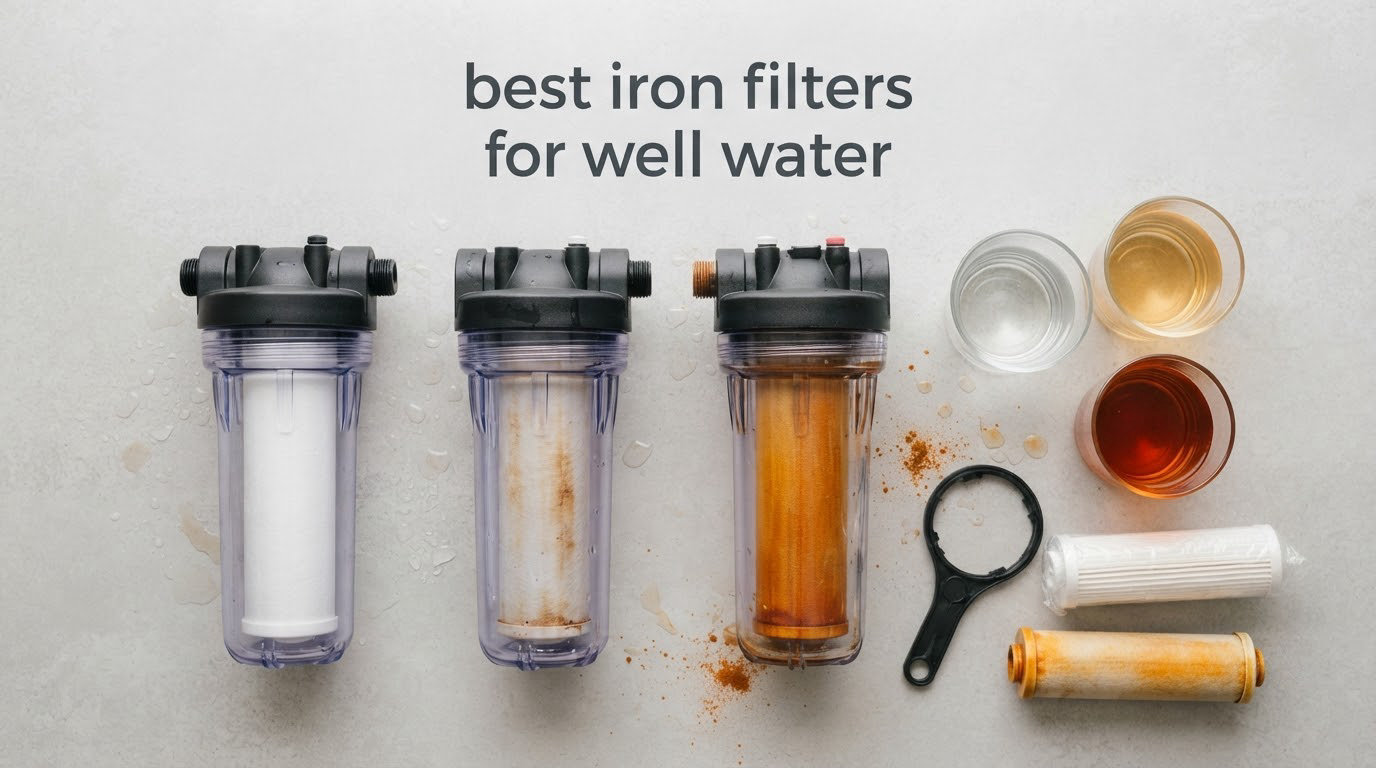
The best iron filters for well water are backwashable whole house systems that oxidize dissolved iron and trap it in a media bed, and the right one depends almost entirely on two numbers from your own water test: how many parts per million of iron you actually have, and how many gallons per minute your well pump delivers. Iron type matters just as much as iron level, because a filter that handles clear-water ferrous iron can sit useless against bacterial or colloidal iron.
We spent weeks reading through owner reports on all ten systems below, comparing the published iron and manganese capacities, the control valves, the flow ratings, and the failure modes owners described in detail. What we found is a market split into three distinct tiers, and the mistake almost everyone makes is buying a cartridge system for water that needs a true oxidation filter, or paying contractor prices for a well that only needed a spin-down prefilter.
Here is the direct answer before the details. For iron under 3 ppm, a cartridge-based whole house filter handles it and costs a fraction of a tank system. Between 3 and 7 ppm, you want an air injection oxidation or catalytic media unit on a Fleck control valve. Above 7 ppm, or if your water smells like rotten eggs, you need a properly sized backwashable tank with a serviceable valve and enough media capacity to survive seasonal swings. Our testing and reading covered whole house iron removal, and if you want the wider picture on filtration first, our guide to the best whole house water filters covers the other contaminant categories too.
Table of Contents
Top 3 Picks for Well Water Iron Filtration
These three earned the top spots because they combine published capacity with the deepest body of real owner feedback, and because each one answers a distinct version of the problem rather than repeating the same cartridge design.


Best Iron Filters for Well Water in 2026
Every product below is a whole house unit rated in gallons per minute, and the single most important column to read is the iron capacity. Anything rated to 3 ppm is a cartridge system that will load up on heavy well water, while anything rated above that runs on a backwash cycle with its own drain line.
| Product | Specs | Action |
|---|---|---|
| iSpring WGB21BM 2-Stage |
|
Check Latest Price |
 Express Water 3-Stage Express Water 3-Stage |
|
Check Latest Price |
| iSpring WGB32BM 3-Stage |
|
Check Latest Price |
 AFWFilters Iron Pro 2 AFWFilters Iron Pro 2 |
|
Check Latest Price |
 PUREPLUS 1-Stage PUREPLUS 1-Stage |
|
Check Latest Price |
 DuraWater Iron Blaster 48K DuraWater Iron Blaster 48K |
|
Check Latest Price |
 Home Master 3-Stage Home Master 3-Stage |
|
Check Latest Price |
 iSpring WCFM400K iSpring WCFM400K |
|
Check Latest Price |
 PUREPLUS 2-Stage PUREPLUS 2-Stage |
|
Check Latest Price |
| DuraWater Fleck 5600 SXT 48K |
|
Check Latest Price |
1. iSpring WGB21BM: Best Overall for Most Well Water
iSpring WGB21BM 2-Stage Whole House Water Filtration System, 10” x 4.5” Carbon Block and Iron & Manganese Reducing Filters, 1″ Ports
Flow: 15 GPM
Iron: 3.0 ppm to 0.01 ppm
Manganese: 1.0 ppm to 0.01 ppm
Capacity: 50000 gallons
Pros
- Reduces iron from 3.0 ppm down to 0.01 ppm and manganese from 1.0 ppm to 0.01 ppm
- Coconut shell carbon block removes over 90 percent of chlorine along with tastes and odors
- 15 GPM flow with 1 inch ports keeps pressure impact low
- Pre-assembled on a mounting bracket with a filter wrench in the box
- Catalytic media rated to outlast greensand by up to three times
Cons
- Does not reduce TDS
- Plastic 1 inch NPT fittings need generous Teflon tape and can leak if overtightened
- Cartridges load with fine solids and add real pressure drop on heavy sediment wells
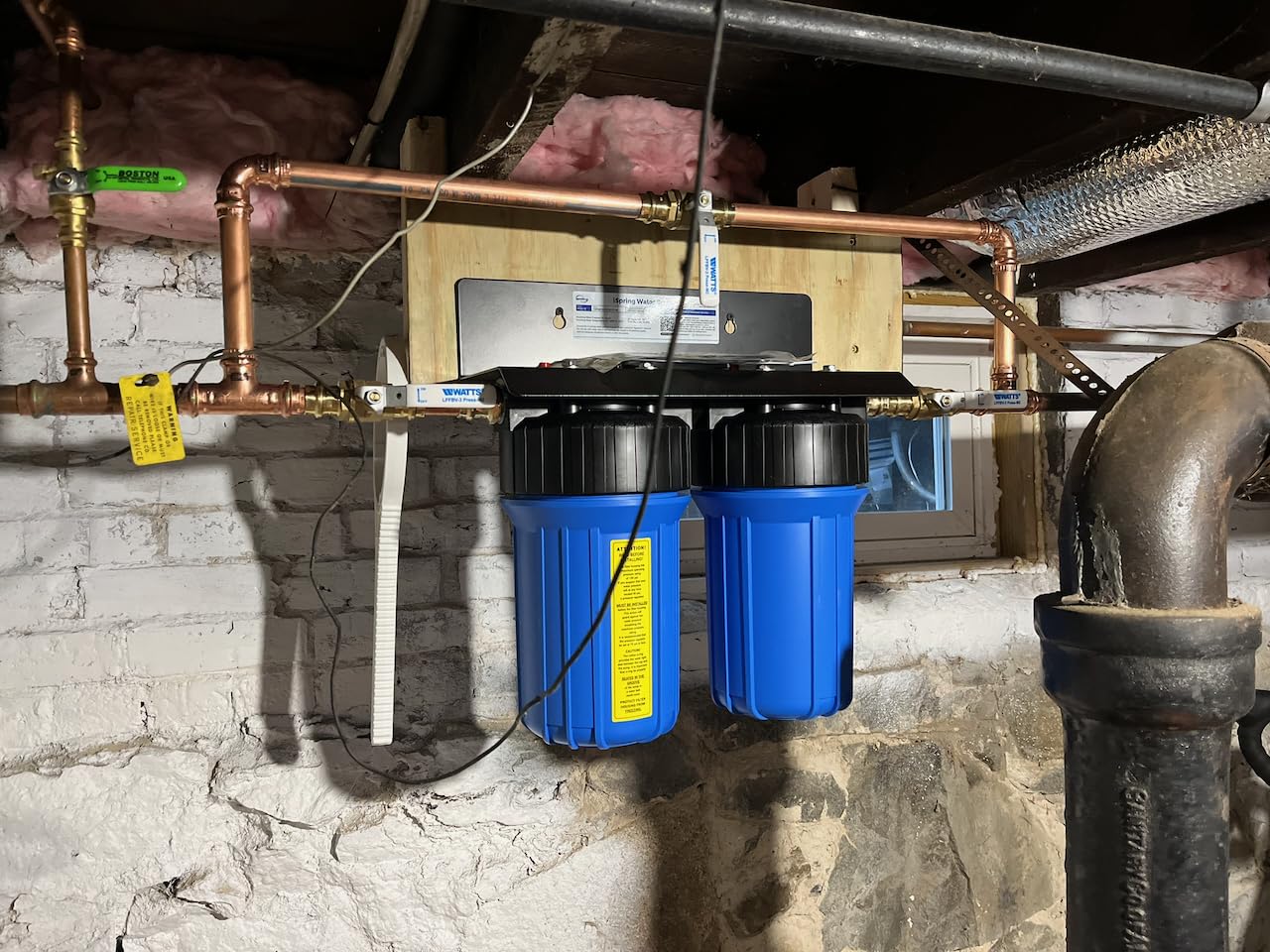
This is the unit we kept coming back to while comparing the field, and the reason is simple: it has the deepest owner record in the group by a wide margin, with more than four thousand reviews averaging 4.6 stars. Owners consistently report clear water and fading orange staining on dishes and fixtures within days or weeks of putting it in, and the second stage publishes a before-and-after number rather than a vague claim.
The first stage is a coconut shell CTO carbon block, which handles chlorine, taste, odor, herbicides, and industrial solvents. The second stage is a 10 x 4.5 inch Big Blue iron and manganese cartridge. Running carbon ahead of the iron media is genuinely useful on a well, because organic load and chlorine interfere with oxidation, and this arrangement takes that load off the stage that matters.
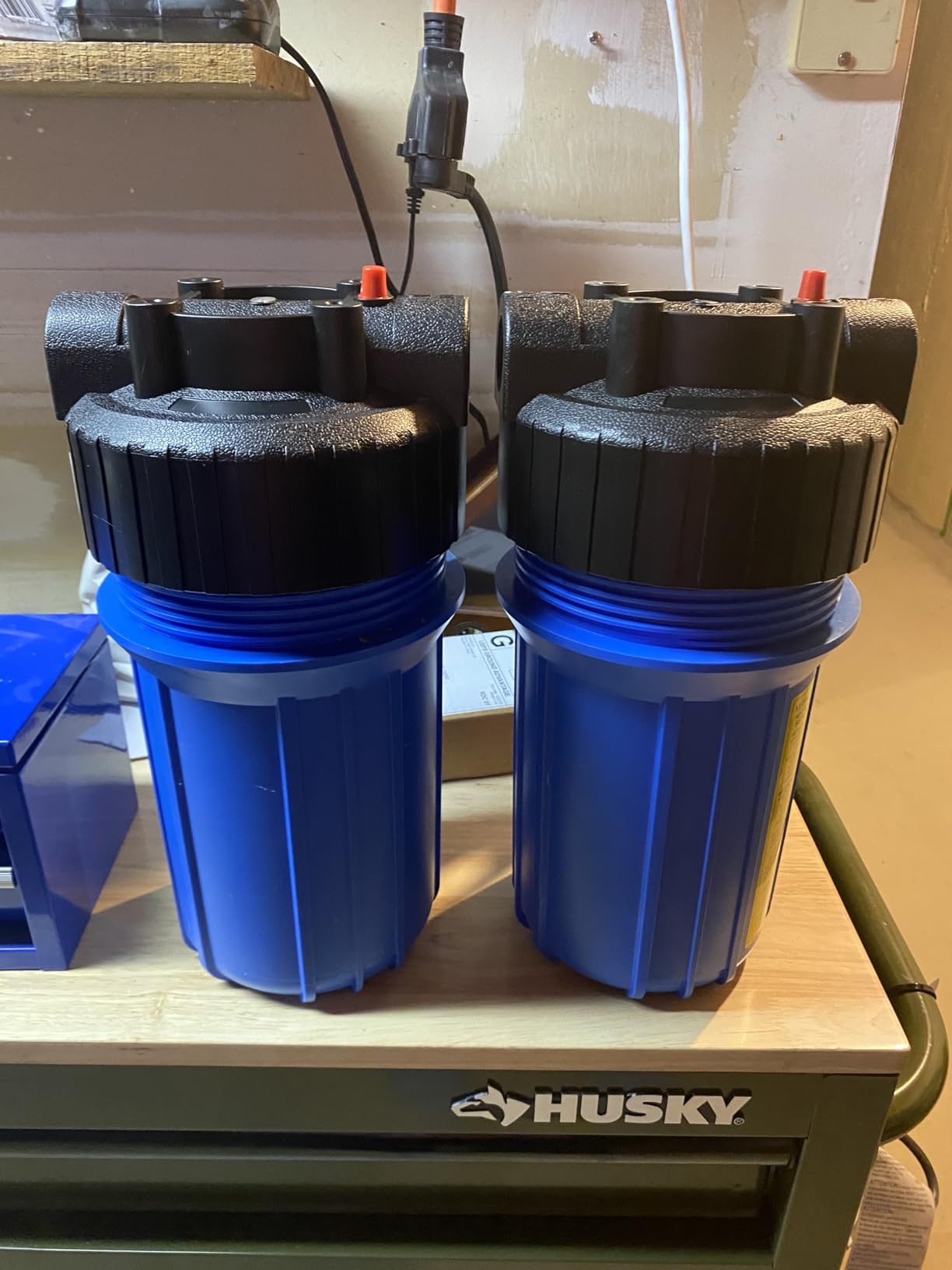
At 15 GPM and 50000 gallons of rated capacity, this is sized for a family of four on roughly a year of service between cartridge changes. The real limitation is the one the spec sheet implies and most shoppers miss. This is a cartridge system with a 3 ppm ceiling, so it is a mistake to install it on a well that tests 8 ppm and expect it to keep up.
Owners also report a specific install detail more than any other. The plastic 1 inch NPT inlet and outlet fittings are leak prone if you crank them down, and the fix that reviewers landed on is heavy Teflon tape, silicone grease on the O-rings, and plastic connectors rather than metal. iSpring customer support gets called out repeatedly as responsive when replacement parts and O-rings are needed.
What the test data should look like after install
With a well under 3 ppm iron, you should see the tap water run clear within a day and the orange ring in the toilet bowl stop growing. Laundry staining is the slowest to improve because the iron is already embedded in fabric, so give it several wash cycles before you judge the result. If the water clears but a metallic taste remains, the carbon stage is the one doing the work and you can swap to a carbon-only element later and save money.
Watch the differential, not the calendar. A clean system on clean well water can run close to the rated year, but a well with grit will load the cartridges much earlier, and reviewers who had a pressure drop were the ones on higher-sediment wells. This is the reason our silty-well pick below has a dedicated sediment stage in front.
Where it is the wrong purchase
Do not buy this for iron above 3 ppm, and do not buy it expecting it to help with sulfur odor or hydrogen sulfide. Carbon does not remove dissolved gas, and no review describes this unit solving a rotten egg smell on its own. It is also the wrong choice if you have hard water and need a softener, because it softens nothing.
It is the wrong choice for anyone unwilling to swap cartridges annually and accept that the media goes in the waste stream. There is no backwash, so every dollar of iron you remove is a cartridge you replace, and on a heavy well that cost compounds faster than most people expect when they calculate it against a tank system.
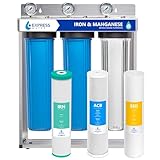
2. Express Water 3-Stage: Best Value for Flow and Monitoring
Express Water Whole House Water Filter System, Iron & Manganese, 3-Stage
Flow: 17 GPM
3 stages plus gauges
Freestanding stainless frame
Capacity: 100000 gallons
Pros
- Three stages built specifically for dissolved iron and manganese staining
- Highest flow rating in the group at 17 GPM with 1 inch connections
- Stainless steel bracket and free-standing stand so no wall mounting is needed
- Pressure release buttons and gauges on each housing simplify monitoring and changes
- 100000 gallon rated capacity with 6 to 12 month filter service life
Cons
- Does not reduce TDS
- At 57 pounds the freestanding system needs real floor space
- Replacement cartridges are proprietary and sold as a matched set
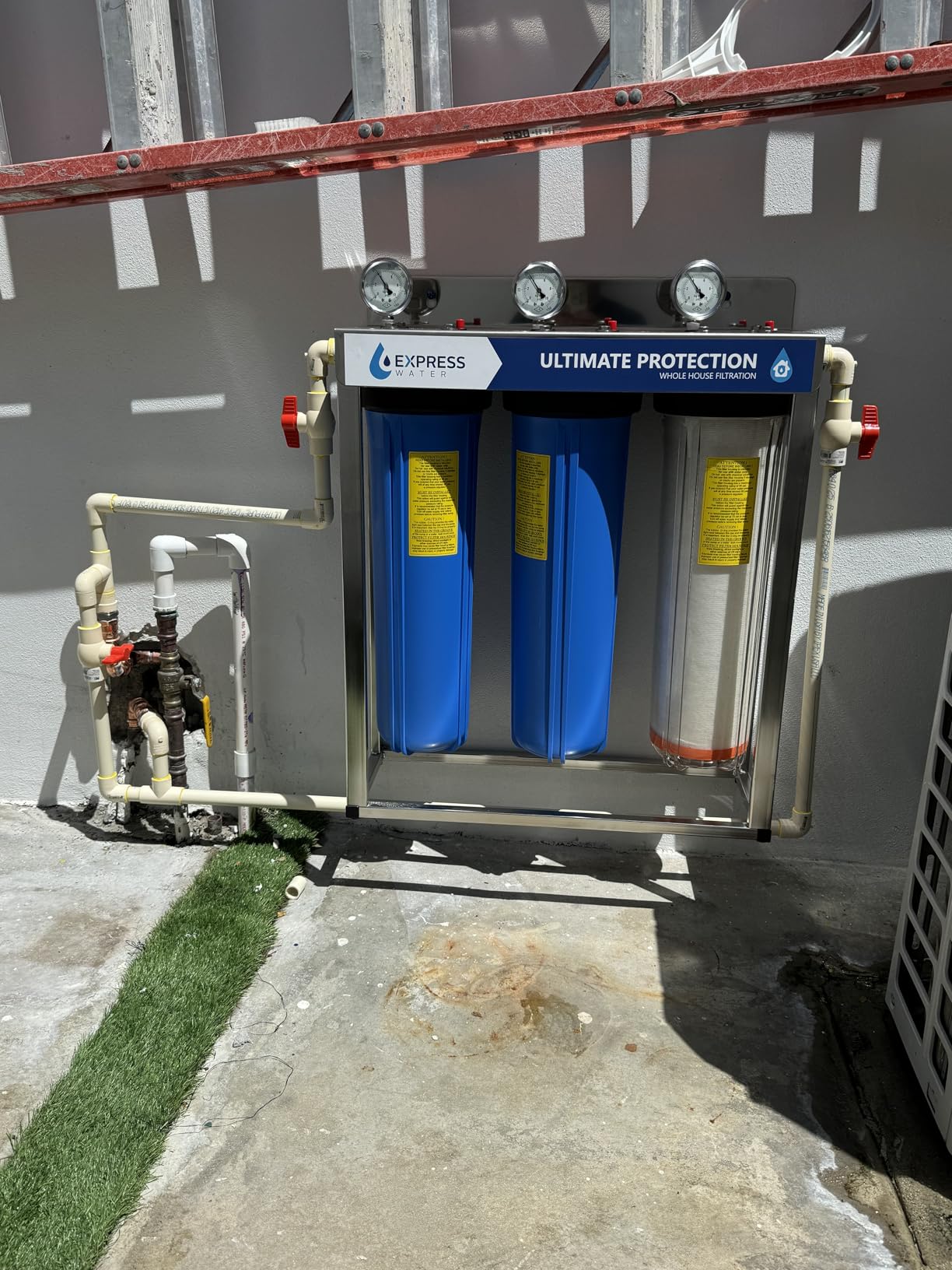
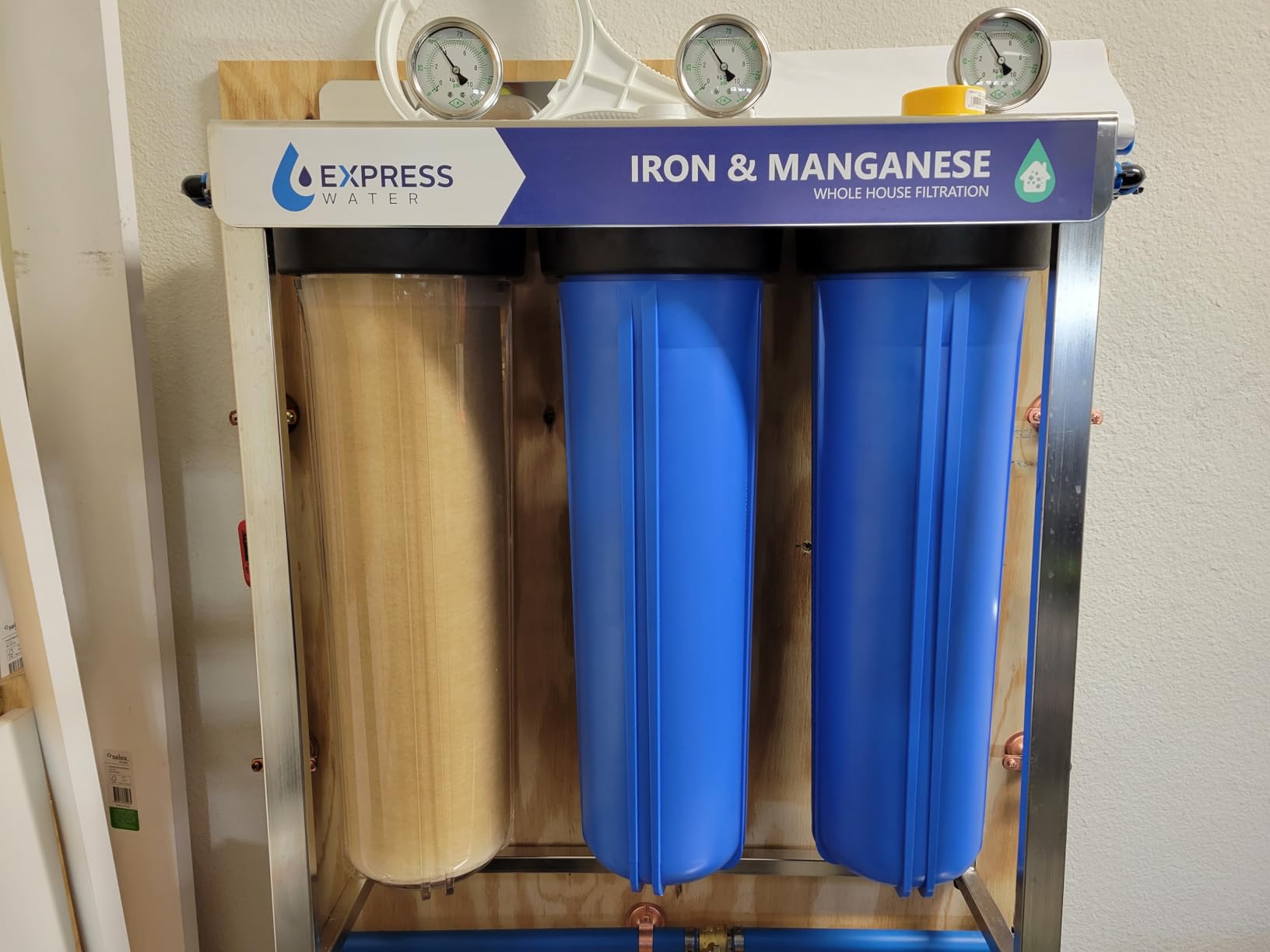
This is the pick for anyone whose well is pushing toward the top of the cartridge range and who wants to see what the water is doing instead of guessing. The three-stage layout and the pressure gauges on every housing are the features that come up again and again in the reviews, and the 17 GPM rating is the highest in this roundup.
The freestanding stainless frame is a small detail that saves real headaches. Most cartridge systems want wall mounting, which means finding studs or buying a shelf, and the stainless stand here means you can put it in a mechanical room floor and move it later. Operating pressure range is 20 to 80 psi and the system supports up to 800 ppm TDS.
Reviewers put this unit ahead of a water softener, which is the right order, and the ones who did that report the clearest results on staining. At 100000 gallons of rated capacity with filters rated at 6 to 12 months, the ongoing cartridge spend is higher than a single stage system, and that is the recurring criticism: owners like the performance but note the replacement cost adds up.
There is a fit and finish learning curve here. A small number of one-star reviews describe fitting leaks during a first DIY hookup and confusion over which replacement cartridge belongs to which stage. The housings have pressure release buttons, so bleed pressure through the bypass before you separate anything, and grease the O-rings while you are at it.
How it performs on a mid-range well
On a well between 1 and 3 ppm, this is the system we would pick without much deliberation. The three stages give you a place for sediment protection and a place for carbon ahead of the iron cartridge, and the gauges let you watch pressure drop develop across the manifold rather than waiting for visible staining to come back.
Expect a staged improvement rather than a single dramatic one. Owners describe the shower stains and the glassware changing within days, and the water clarity settling in over a couple of weeks as the cartridges fully condition. On higher iron the last stage becomes the bottleneck, and that is the signal to move up to a backwashable tank rather than buying the same cartridges more often.
Where it is the wrong purchase
It is the wrong choice for a sulfur well. The system is not designed for hydrogen sulfide, and owners with rotten egg odor report that the odor simply stays. It is also the wrong choice if your total dissolved solids are the actual concern, because it does not reduce TDS at all.
Skip it if floor space is tight. At 57 pounds with a 23.5 by 8.5 by 29.25 inch footprint, it needs a real corner, and it is heavier than the polypropylene manifolds people are used to handling on a wall. If you have very hard water, a softener is still the correct primary device and this belongs ahead of it as pretreatment.
3. iSpring WGB32BM: Best for Silty, Grit-Laden Wells
iSpring WGB32BM Iron, Manganese Whole House Water Filter System
Flow: 15 GPM
5 micron sediment stage first
Iron: 3.0 ppm
Capacity: 100000 gallons
Pros
- 5 micron sediment stage sits ahead of the carbon and iron media to protect it
- Fine mesh cartridges rated at 100000 gallons each
- Service life indicator printed on the sediment filter core
- 15 GPM with 1 inch NPT ports and 25 to 80 psi operating range
- iSpring technical support described as knowledgeable and quick to ship parts
Cons
- Instructions understate how tightly the blue housings need to be tightened
- 20 inch cartridges are heavy and there is no drain port so changes spill water
- Does not reduce TDS
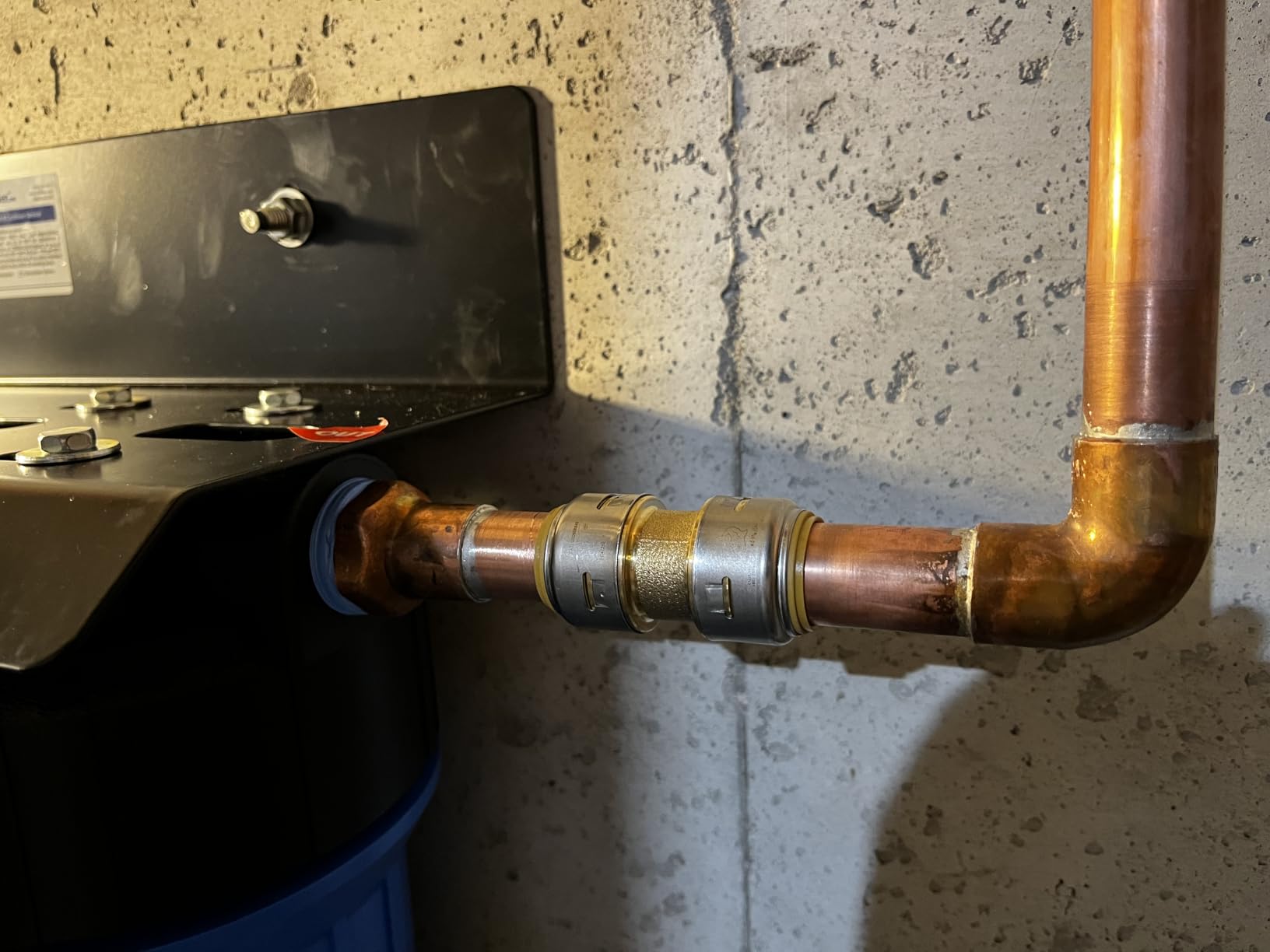
This is the same engineering idea as our top pick with one important addition: a 5 micron polypropylene sediment stage in front. On a well that runs cloudy after a heavy rain, that first stage is the difference between iron media that lasts years and iron media that clogs in a season, and it is why this is our pick for grit-heavy wells.
Rated to 15 GPM with 1 inch NPT ports, a 25 to 80 psi operating range, and 100000 gallon capacity per stage, this covers a family of four comfortably. The iron and manganese stage handles up to 3.0 ppm iron and 1.0 ppm manganese on catalytic media that the manufacturer rates at up to three times the life of greensand.
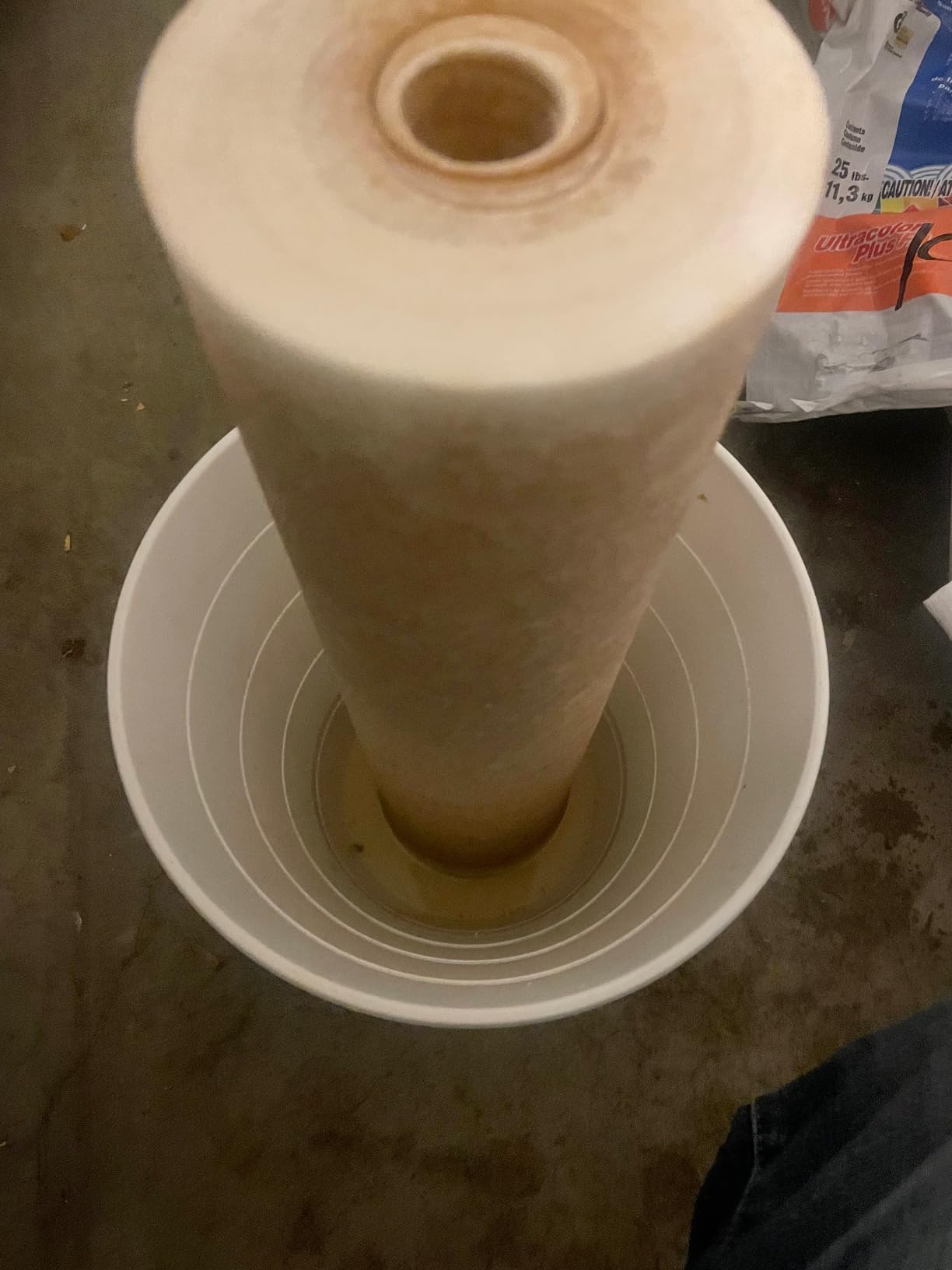
Owners report that this three-stage configuration clears rust-colored and sulfur-smelling well water quickly, and the most common configuration in the reviews pairs it with a spin-down prefilter and a UV stage. The sediment core printing its own service life indicator is a small touch that removes the guesswork from replacement timing, and it is the detail we liked most in the whole group.
There is one real install trap. The instructions do not make clear how much torque the blue housings need, and getting it wrong either cracks the plastic or leaves a slow leak at the top. Reviewers consistently recommend greasing the O-rings, using plastic connectors instead of metal, and bleeding system pressure through the bypass before you tighten anything down.
What to check on a sediment-heavy well
On a well with visible sediment, run the first stage on a shorter cycle than the manufacturer suggests and the second and third stages on the longer schedule. The sediment cartridge is doing the sacrificial work, and the whole point of the stage order is that you protect the expensive media by letting the cheap one take the abuse.
Set a baseline after the first month. Note the pressure gauge reading and take a clean water sample, then compare every ninety days. When the first stage differential climbs noticeably, replace it alone. Owners who do this report media lasting well past the point where they were replacing everything at once, which is where the cost savings of a staged system actually come from.
Where it is the wrong purchase
This is the wrong unit for iron above 3 ppm, and at 20 inch tall cartridges with no drain port, the physical weight and the mess of a change are real drawbacks for anyone working in a tight mechanical space. The cartridge changes spill water by design, so plan where the water goes before you need it.
It is also the wrong choice if you have never plumbed 1 inch NPT plastic before. The fittings can be cross-threaded or damaged by metal connectors, and a cracked housing means a wet mechanical room. If you are unsure, a spin-down sediment prefilter that you can service with a wrench is a far more forgiving first project.
4. AFWFilters Iron Pro 2: Best for Iron and Hard Water Together
AFWFilters Iron Pro 2 Combination Water Softener Iron Filter Fleck 5600SXT Digital Metered Valve 64,000 Grain – High Flow for Whole House Use – Removes Hardness, Iron, Manganese, Sediment, Rust
Fleck 5600SXT valve
Iron up to 6 ppm
64k grain softener and filter
5 year warranty
Pros
- Softener and iron filter combined in one tank
- Iron up to 6 ppm and manganese up to 6 ppm which is well above the 3 ppm cartridge limit
- Fleck 5600SXT digital metered valve is a serviceable control head with a wide parts supply
- Metered regeneration fires only when usage requires it
- Resin tank arrives pre-loaded and ready to plumb
Cons
- Programming the Fleck valve is the hardest part of setup
- Requires a 1/2 inch drain line bought separately
- At 119 pounds the resin tank is a two-person move
This is the only system in the group that softens and filters iron in a single tank, and for a well that is hard and iron-laden at the same time, that is the whole argument. The iron and manganese rating of 6 ppm each sits well above what any cartridge system here can handle, and the Fleck 5600SXT valve is the control head that every serious installer names first.
The 64,000 grain capacity is far more than a typical family needs for hardness, and the reviews say so directly. Owners are deliberately oversizing for the iron removal capability rather than the hardness capacity, which is the right instinct, because the iron is the constraint that will end the system early if you undersize it.
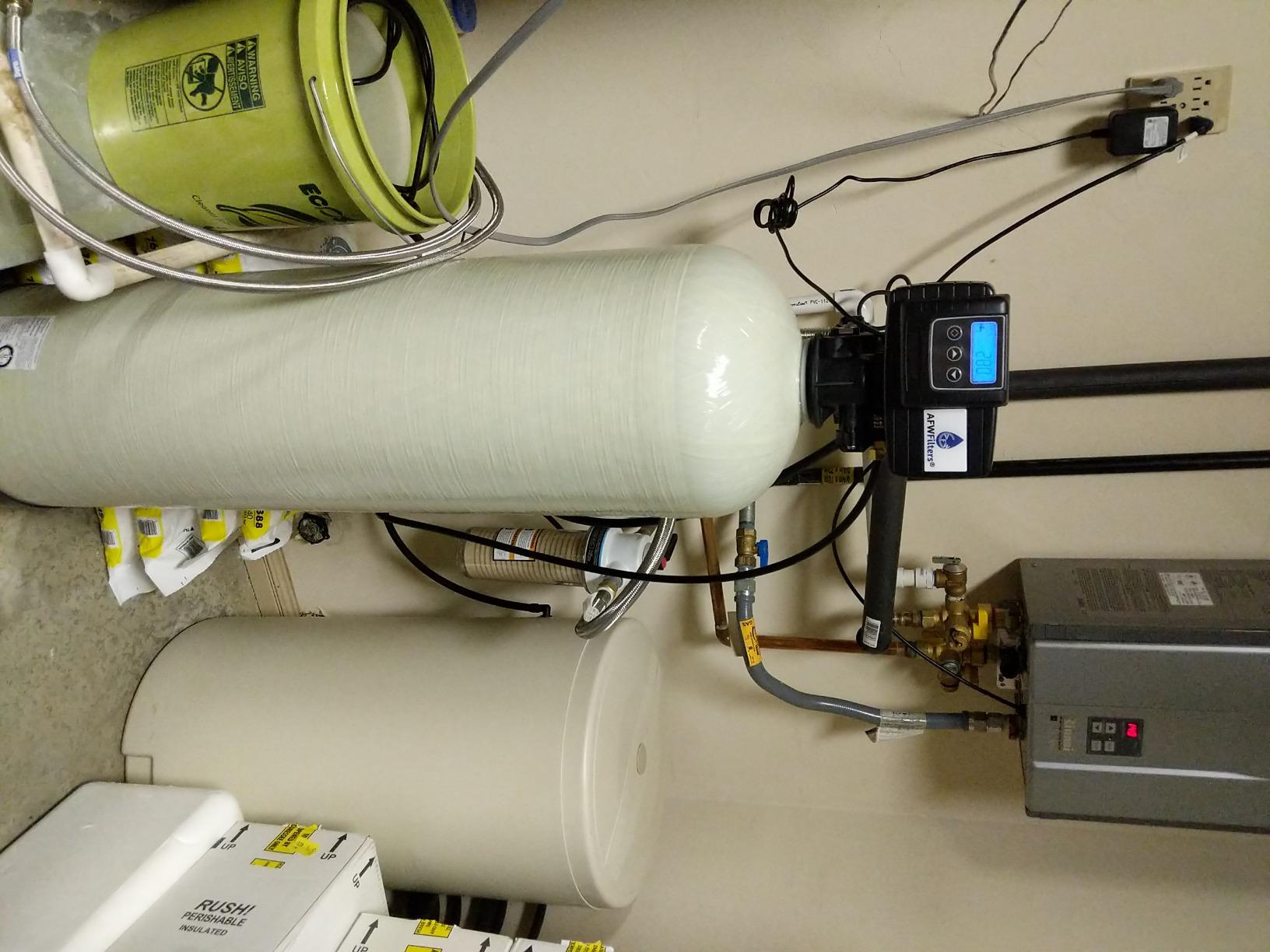
Owners on very hard well water report visible results almost immediately: clear water, no rotten egg smell, no red staining, and softer hair and skin. The metered valve only regenerates when usage demands it, which cuts both salt consumption and the volume of iron flushed to the drain, and that matters more on a well with a finite drain capacity.
Setup is the hard part, and the Fleck valve programming is where most people get stuck. Advanced programming options only become available when the clock is set to 12:01, which trips up first-time owners. You also have to source a 1/2 inch drain line separately, and that hose has to route to an approved discharge point without pushing back against the bypass valve.
Whether the control valve is worth paying for
The Fleck 5600SXT is the single most important durability spec on this list, and it is worth understanding why. It is a mechanically serviceable valve with a large parts supply and a five-year warranty, and a failed valve can be repaired rather than replacing the entire unit. Off-brand valves are the opposite, and on well forums they are a recurring source of three-year failures with no path to parts.
Programming it takes about fifteen minutes if you have a manual in front of you. Set the clock, set the capacity based on hardness and usage, set the regeneration time for a period when nobody is home, and let it run. Owners who do this the first time report that the afterbackwash iron flush in the drain is a normal event rather than a malfunction.
Where it is the wrong purchase
It is the wrong choice for a low iron well with soft water, because you would be paying for capacity you will never use and taking on salt and a brine tank you do not need. It is also the wrong choice if you are not prepared to service a softener, since brine tank salt and resin exhaustion are ongoing ownership costs rather than a one-time install.
Skip it for bacteria or colloidal iron. A softener resin coated in iron biofilm will not recover, and putting this unit on a bacterial well without shock chlorination first guarantees a replacement purchase. At 119 pounds the tank is a two-person move, and the arrival can be damaged, so plan your help before delivery day.
5. PUREPLUS 1-Stage: Best Budget Single-Housing Filter
PUREPLUS 1-Stage Whole House Water Filter System, Iron & Manganese Reduce
Universal 10 x 4.5 inch housing
Brass port junction
Pressure gauge and relief valve
Pros
- Simplest possible install with one housing and one cartridge
- Universal 10 x 4.5 inch housing accepts standard sediment and pleated cartridges from other brands
- Brass threaded port junction and heavy steel bracket feel sturdier than plastic competitors
- Clear housing lets you see the cartridge loading without opening anything
- Pressure release valve makes swaps without fighting housing pressure
Cons
- Single stage only so chlorine taste and odor are not addressed
- Several reviewers received leaking units or housings that split at normal pressure
- O-rings are a non-standard size and can be hard to source
This is the entry point, and the pitch is simplicity rather than capacity. One housing, one cartridge, one wrench, and a universal 10 x 4.5 inch body that will accept standard sediment, sediment-carbon, pleated, or carbon elements from any brand you already trust. For a well that runs barely under the iron limit, that flexibility is worth more than stage count.
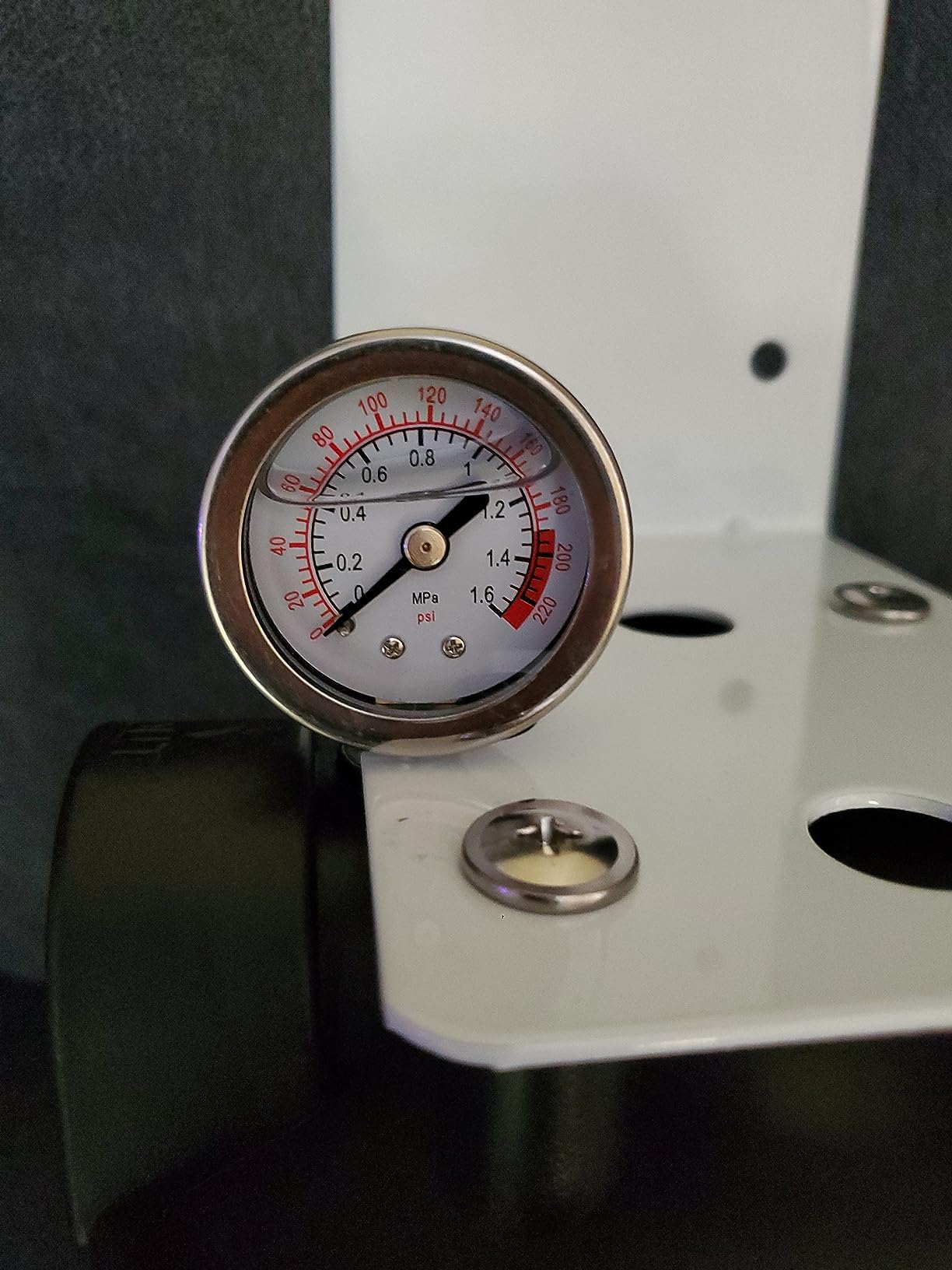
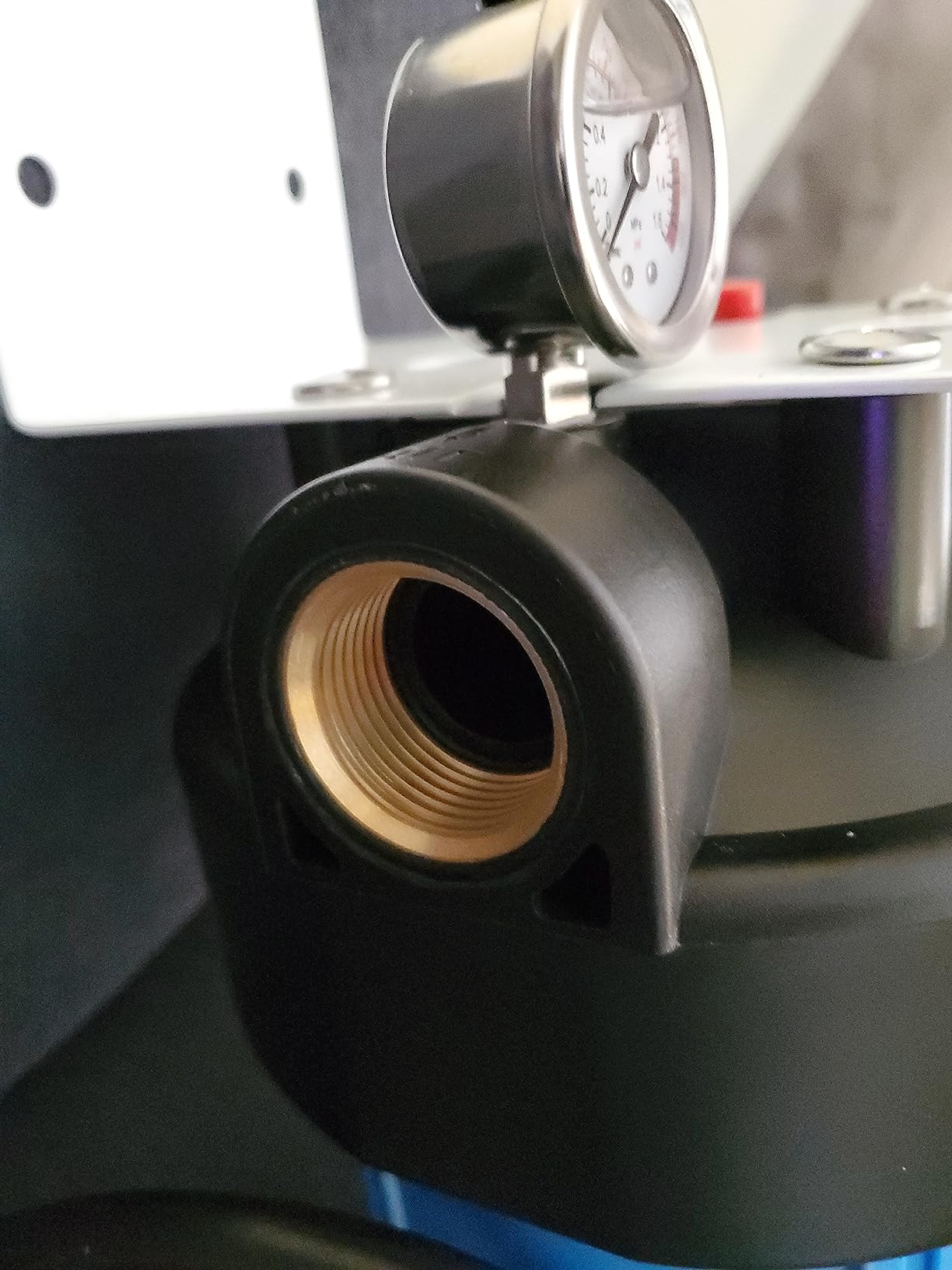
The build details are better than the price tier suggests. It has a brass threaded port junction instead of plastic threads, a heavy steel bracket, a pressure gauge, and a pressure release valve on the red button. The gauge is the practical part, because it turns replacement timing into a reading rather than a guess.
Where the rating drops is quality control, and the reviews are unusually clear about it. A noticeable share of the one-star reports describe housings leaking out of the box or splitting at the bottom within weeks, which several buyers attribute to an extrusion defect rather than install error. Others found the port fitment needed liquid thread sealant instead of standard Teflon tape.
So this is a system where you should inspect on arrival and keep the box. If the housing is sound, owners are enthusiastic about the thick walls, the clear body for visual monitoring, and the brass threads sealing better than plastic. If it is cracked, that is a defect, not your plumbing.
When a single stage is genuinely the right answer
Single-stage cartridge systems make sense in three situations. The first is a well under 3 ppm iron with no other problem, where you want a cheap first piece of equipment and a ten-minute install. The second is a rental or a cabin where a tank system and a drain line are more than the job needs. The third is as a prefilter ahead of a larger backwashable unit, where catching grit before it reaches the oxidation media matters.
Because the housing is universal, you can start with an iron-reducing resin cartridge and move to a carbon or sediment element later as your test results change. That flexibility is the argument for this one over a sealed two-stage system with proprietary cartridges.
Where it is the wrong purchase
It is the wrong choice for anything above 3 ppm iron, and with a single stage it does nothing for chlorine, taste, or odor unless you swap the element. It also will not help with sulfur odor, since nothing in a sediment-grade housing removes dissolved gas.
There is a real risk of buying a listing that arrives without the cartridge, and reviewers report that explicitly. Confirm what is in the box before you commit, and treat the non-standard O-ring size as a reason to keep a spare on hand. If you need something that works unattended for years, this is not that.
6. DuraWater Iron Blaster 48K: Best Fleck Valve Serviceability
DURAWATER Fleck 5600 SXT Iron Blaster 48,000 Grain Water Softener
Fleck 5600 SXT valve
48k grain fine mesh resin
10 x 54 inch tank
60 month warranty
Pros
- Fleck 5600 SXT digital metered valve is serviceable with a wide parts supply
- Upgraded fine mesh resin is chosen for well water with higher iron alongside hardness
- Metered regeneration reduces both salt and water use
- Owners report six-plus years of continuous service with no iron taste
- Large 14 inch square brine tank holds roughly 250 lbs of salt with a safety float
Cons
- Does not remove iron or sulfur odor on its own
- Installation is not beginner level and is often billed by a dedicated installer
- Resin can be exhausted by heavy iron and needs periodic replacement
- One reviewer reported a brine draw failure and a warranty process that bounced between three companies
This is the Fleck 5600 SXT in its fine mesh configuration, and the theme across several hundred reviews is longevity. Owners on heavy-iron well water report this specific unit running six to eight years without the iron smell or taste returning, which is longer than most marketing claims and closer to what forums describe as realistic.
Fine mesh resin is the deliberate choice here. Standard resin is a coarser bead that catches rust particulate but lets finer iron through, while fine mesh holds more iron and more sediment at the cost of needing more frequent backwashing. On a well with iron, that trade is worth making, and the reviews consistently credit the resin for holding the iron rather than fouling quickly.
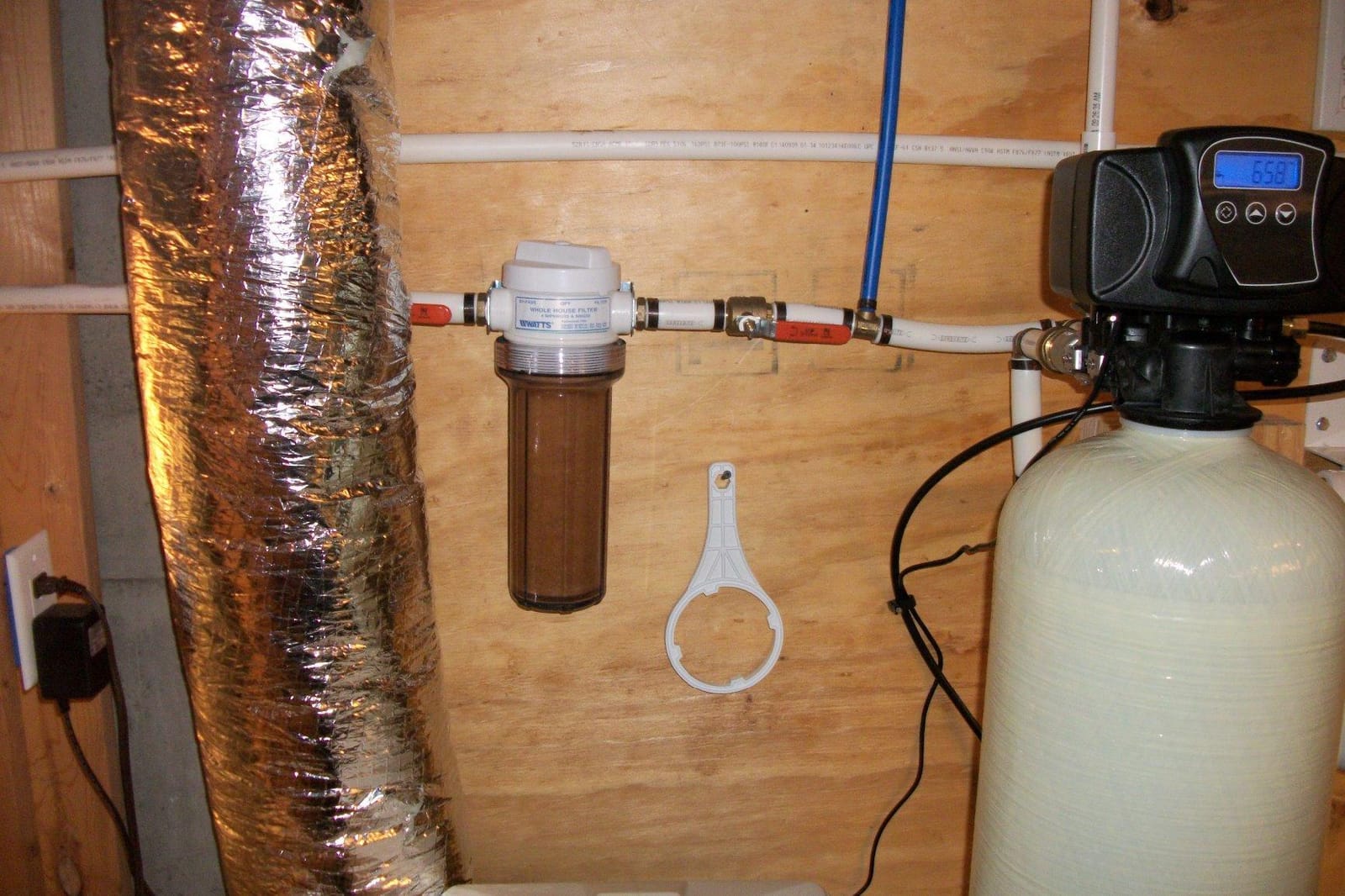
The recurring maintenance note in the reviews is useful and specific: resin exhaustion shows up as a returning iron smell, and a regeneration cycle clears it. That is a normal, recoverable symptom rather than a failure, and knowing it in advance stops owners from replacing a working unit.
Setup is the honest weakness. This is not a beginner-level install, and buyers from third-party sellers frequently had a dedicated softener installer handle it. You also need connector and drain hoses, and one detailed review describes a warranty claim being passed between the seller, Pentair, and the distributor, so buy from a source that has a clear warranty process.
Why valve serviceability matters more than media brand
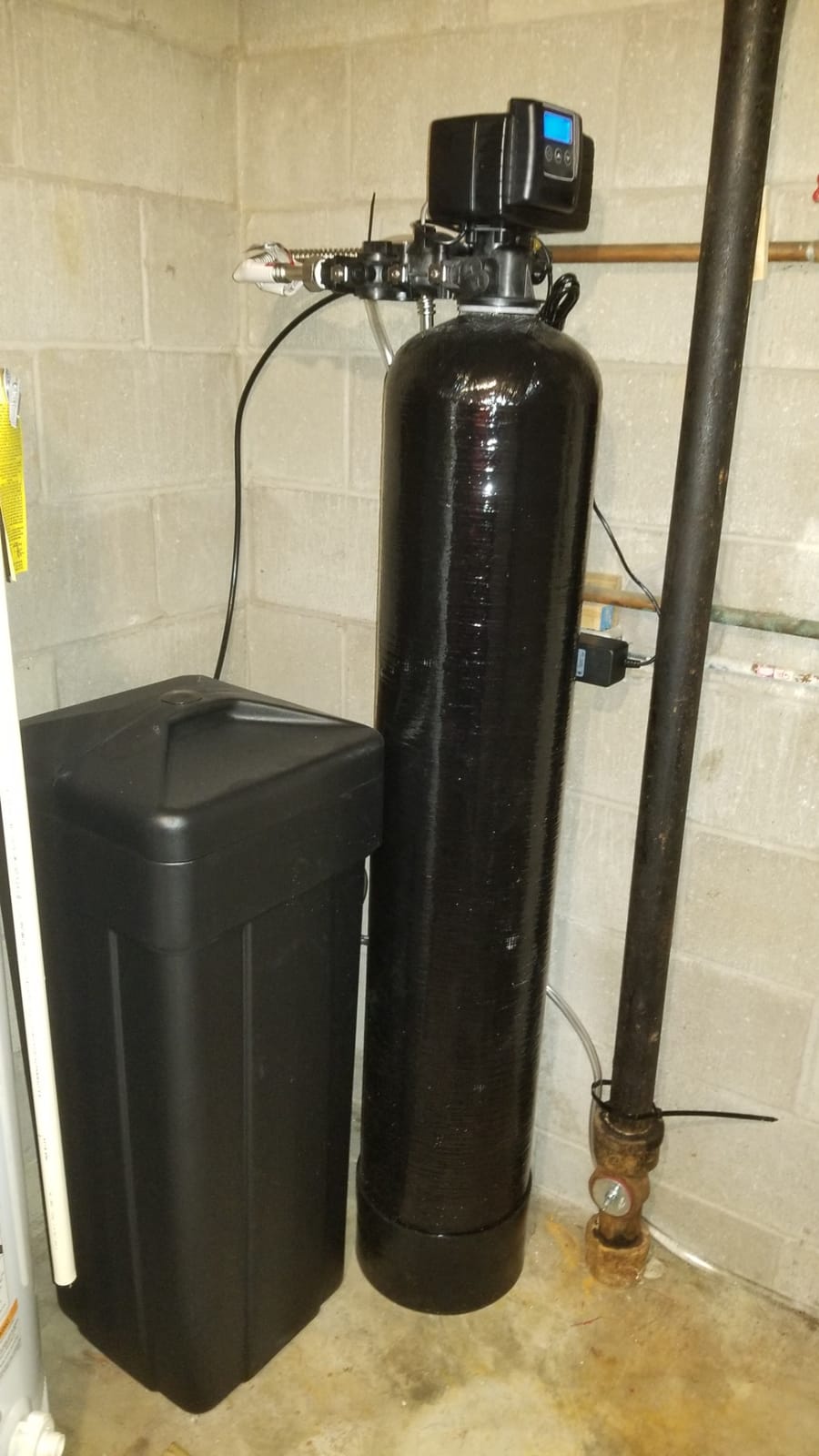
Media gets the attention, but the valve is what ends systems. A Fleck 5600 SXT is a mechanical, serviceable control head with an enormous parts supply, and when something eventually fails you can replace a component instead of the whole unit. That single fact changes the ten year ownership calculation more than any media decision on this list.
The 14 inch square brine tank with a safety float and overflow drain protection is another longevity detail. It holds roughly 250 lbs of salt, which means long service intervals and a lower chance of running out during a vacation. The 60 month warranty also outlasts the five-year coverage common on this class of unit.
Where it is the wrong purchase
It softens and it filters iron, but it does not fix odor on its own. Several owners had to add a prefilter upstream to get odor-free water, so if hydrogen sulfide is your main complaint, this is a component of a solution rather than the solution. It is also the wrong tool for a very hard well that needs more than 48,000 grains.
It is the wrong choice for anyone who wants a project-free install, and it is the wrong choice on a bacterial well. Resin coated in iron biofilm does not recover, and the reviews are clear that resin needs periodic replacement or a brine additive when the iron load is heavy. Plan on owning brine salt and, eventually, resin.
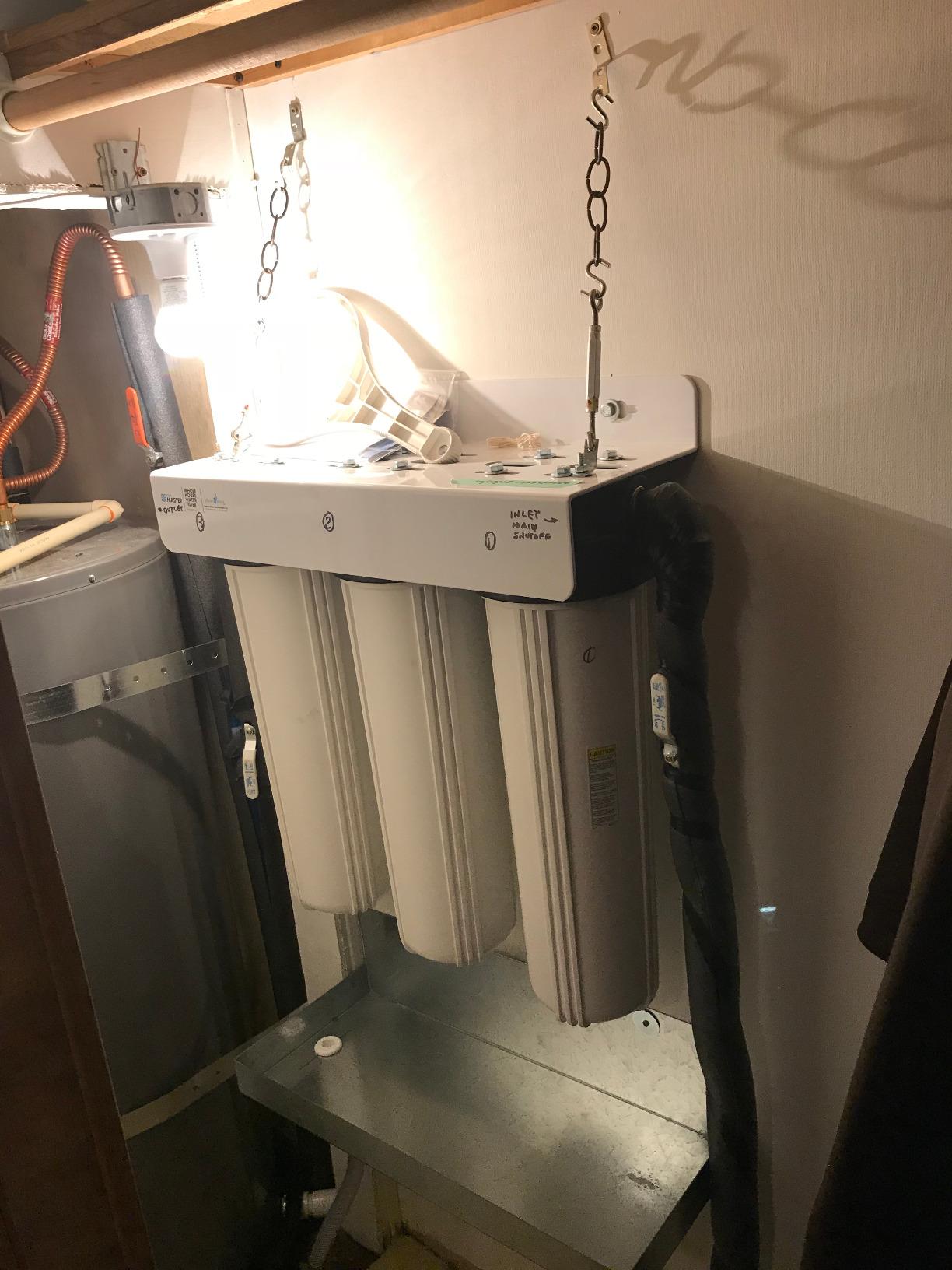
7. Home Master 3-Stage: Best for Sulfur Odor and Fine Sediment
Home Master Whole House Three Stage Water Filtration System with Fine Sediment, Iron and Carbon, Blue
Flow: 15 GPM
95 percent removal to 3 ppm combined
4 layer 1 micron final stage
2 year warranty
Pros
- Engineered for well water with up to 95 percent removal of iron
- manganese
- sediment
- and chemicals
- 4 layer 25-10-5-1 micron cartridge gives finer filtration and higher dirt holding
- Oversized housings with 1 inch ports deliver up to 15 GPM
- 100000 gallon rated capacity and the highest TDS support in the group
- Manufacturer praised for proactive annual check-ins and quick cartridge replacement
Cons
- No drain ports on the housings so you cannot bleed pressure before a change
- O-rings lose diameter and pop out of the housing groove during tightening
- Plastic-to-copper transitions can melt during soldering
- Replacement cartridge selection is confusing and the listing does not clarify the stages
This is the one to look at when a rotten egg smell is driving the decision, because the manufacturer rates it for high-flow iron, manganese, and sulfur filtration to 3 ppm combined, and owners consistently report the sulfur smell disappearing soon after installation. The 4 layer 25-10-5-1 micron sediment cartridge is the other headline, since a 1 micron final stage filters far more than a standard 5 micron element.
It supports up to 2000 ppm TDS, the highest rated in this group, operates between 20 and 95 psi, and runs at up to 15 GPM on 1 inch ports. At 48 pounds and 24 by 9 by 27 inches it is a manageable wall mount, and one owner on well water reports that pressure actually increased after installation.
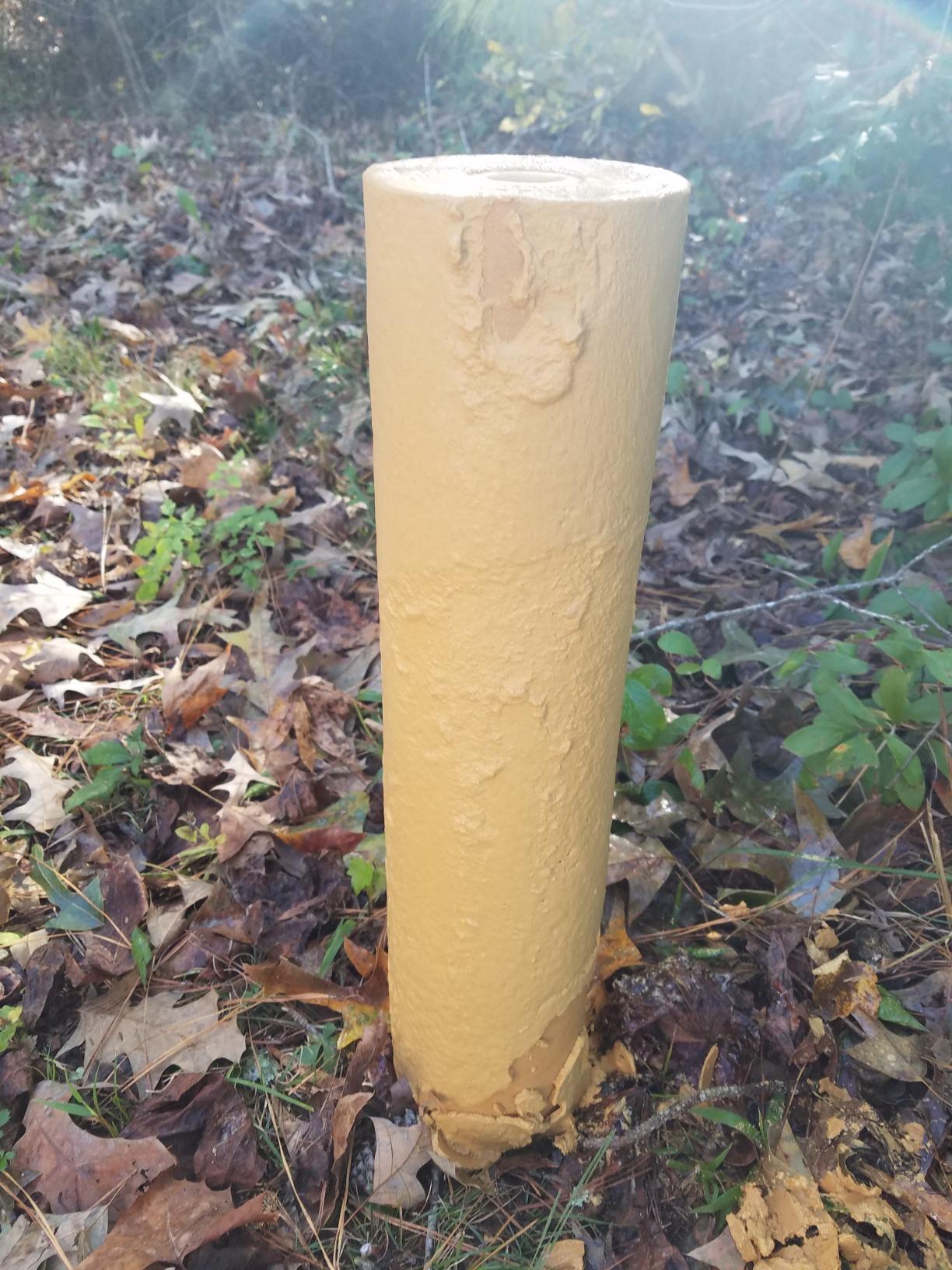
The single most useful piece of advice in these reviews is that filter order matters and a separate spin-down sediment prefilter should go first. Several buyers say that prefilter is the difference between the system working and not, which matches what we saw across every iron category in this roundup: media that gets protected upstream lasts.
The recurring complaint is the O-rings. They stretch, lose diameter, and pop out of the housing groove during tightening, which is the most cited issue in the reviews by a wide margin. Vaseline on the O-rings is the workaround owners settle on, and it works, but plan on it as a step rather than a surprise.
What the sulfur rating does and does not mean
The 3 ppm combined load is the number to hold in mind, and it is a combined figure across iron, manganese, and sulfur rather than a per-contaminant allowance. If your lab report shows 3 ppm iron on its own, this system is already at its ceiling before you account for manganese or sulfur. We would size for the test number plus a 25 to 50 percent margin, because well iron commonly swings with the water table.
Where it genuinely shines is the final filtration quality. Owners with hard water and visible sediment see clearer water at the tap than most cartridge systems deliver, and the 1 micron stage catches fine particles that a 5 micron element passes. If your problem is partly aesthetic clarity rather than only staining, that stage earns its place.
Where it is the wrong purchase
It is the wrong choice above 3 ppm combined load, and it is the wrong choice if your well has colloidal iron, since a finer filter makes colloidal iron harder to pass. The lack of drain ports on the housings is a genuine inconvenience, because you cannot bleed pressure or water before a change without adding a valve and a bypass of your own.
Skip it if you solder copper. The plastic-to-copper transitions can melt during soldering, and that damage is not reversible without replacing the housing. A few owners also reported brown or cloudy water for a period after startup, and one rated it down for exactly that reason, so give it a week before you judge the result.
8. iSpring WCFM400K: Best for Severe Iron Above Cartridge Range
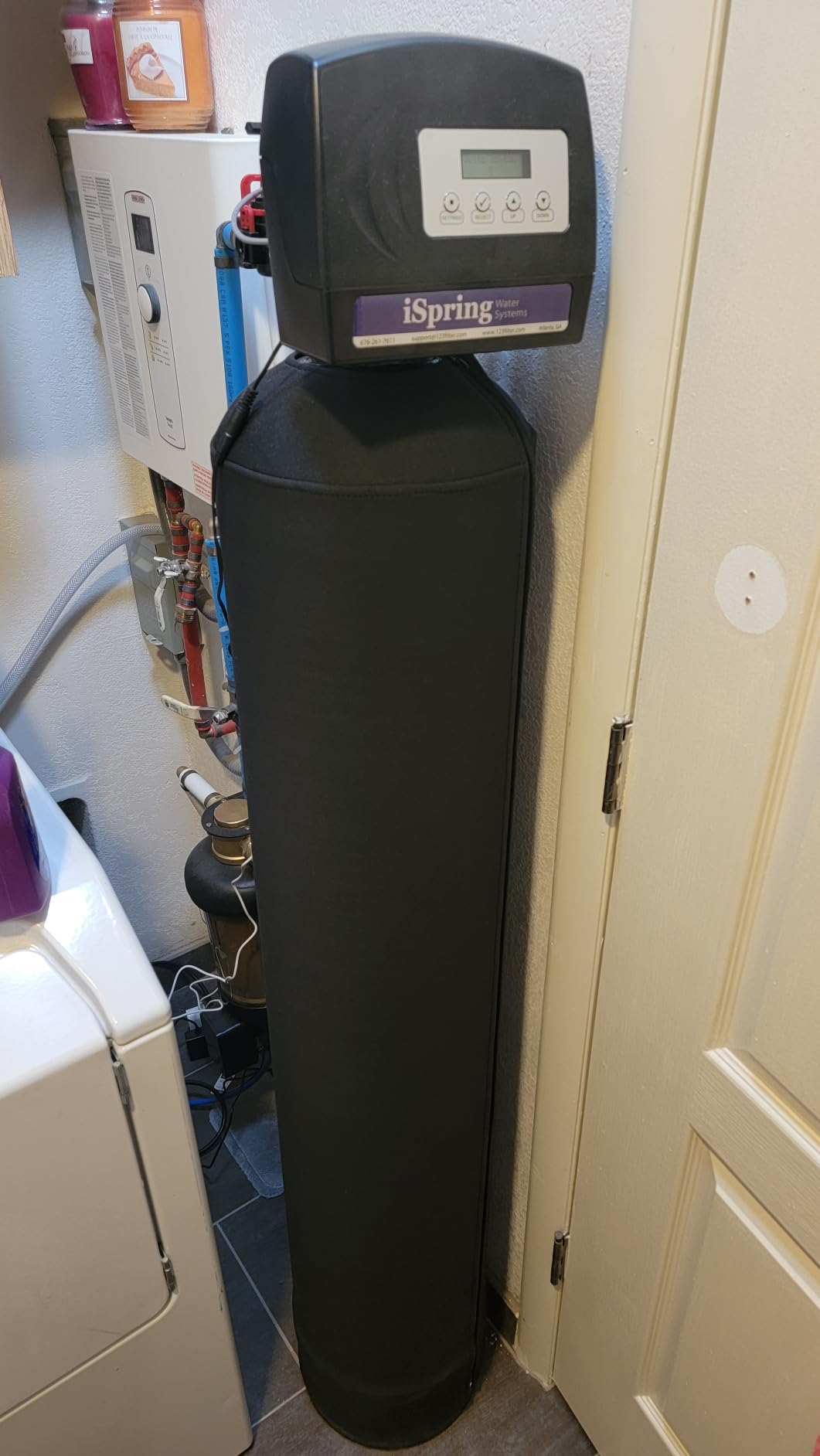
iSpring WCFM400K Whole House Iron and Manganese Water Filter System, Digital Control with Automatic Regeneration & Air Injection, Set & Forget Design
Air injection with auto regeneration
Flow: 12 GPM
Media capacity 400000 gallons
1 year warranty
Pros
- Automatic air injection regeneration with no chemical oxidant feed and no salt
- 400000 gallon media capacity
- roughly ten times the cartridge systems in this group
- Digital control valve with customizable auto-flush intervals for set-and-forget operation
- Narrow 14 by 16.4 inch footprint takes less wall space than a three-stage manifold
- Media certified to NSF/ANSI Standard 61 and rated to 140 degrees F
Cons
- Does not remove hydrogen sulfide and can be damaged by it
- The digital control head is the main failure point with several reports of cracked heads
- At 104 pounds and 66.8 inches tall it is a two-person install
- Lowest flow rate in the group at 12 GPM
This is the only true backwashable oxidation system in the roundup, and the reason it earns a place is the 400000 gallon media capacity, roughly ten times what the cartridge systems offer. Media that regenerates itself on air means nobody hauls salt or chemicals, and after setup there is genuinely nothing to do on a daily or monthly basis.
It uses air injection with automatic regeneration, a digital control valve with customizable auto-flush intervals, and a digital valve that lets you set the schedule rather than guessing. It reduces iron, manganese, solids, and turbidity, runs up to 12 GPM, supports up to 500 ppm TDS, and the media is certified to NSF/ANSI Standard 61.
Owners with the worst well water in this dataset describe dramatic before-and-after changes in bathtub water and immediate odor removal. The narrow footprint is also worth noting, since at 16.4 by 14 inches it takes less wall space than the three-stage cartridge manifolds, and that matters in a tight mechanical room.
The honest weakness is the control head, and it is the same weakness across every electronic valve in this category. Several owners report a cracked or faulty head after two or three years, once with a crack in the head threads and once within days of installation. In both cases iSpring support shipped a replacement and got the owner running again, which is a real mitigant, but the head is the part most likely to need attention.
How to size a backwashable oxidation system
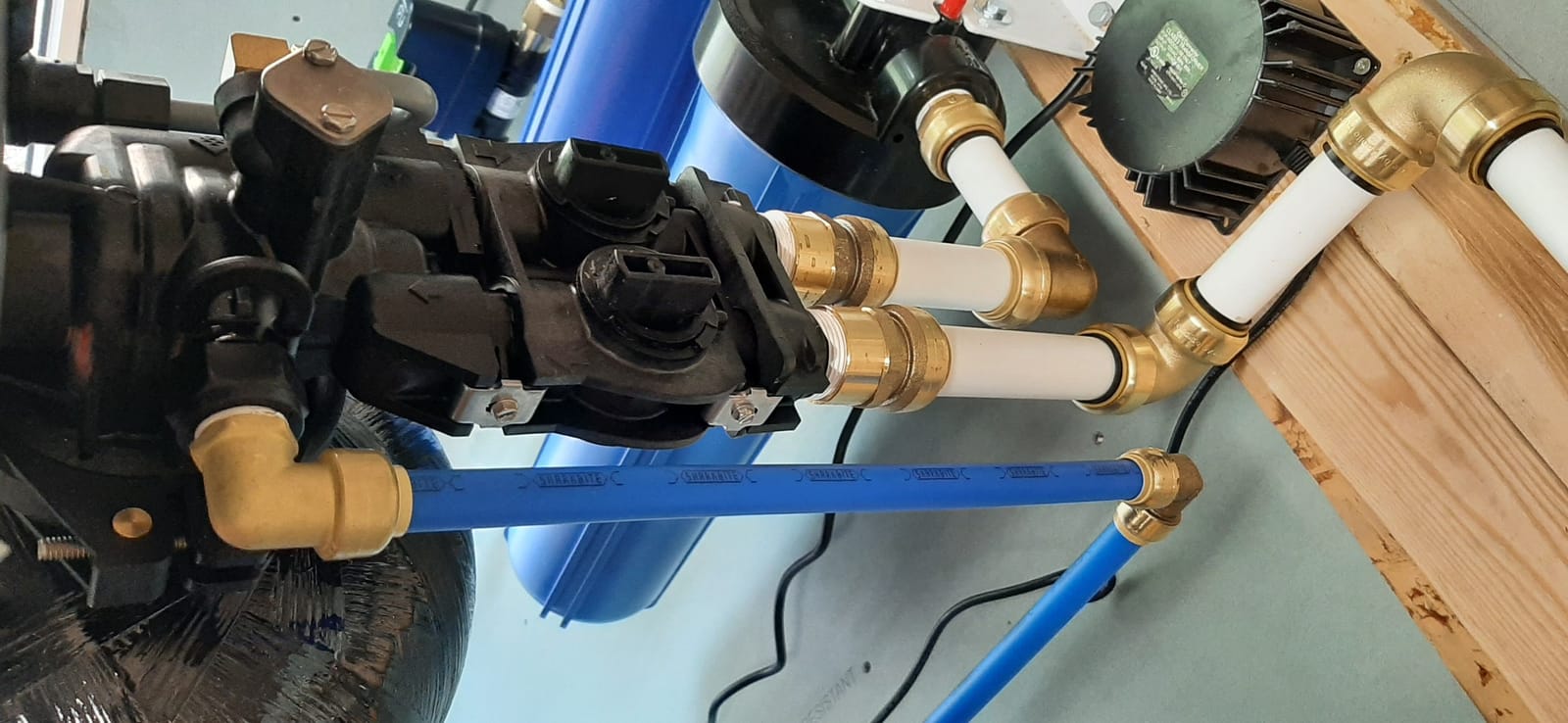
Two numbers decide this, and the first is your tested iron level. Add a 25 to 50 percent margin on top, because iron concentration in well water commonly rises with the water table in wet seasons and a system sized exactly to a single test result loses capacity within about a year. The second number is your well pump flow rate, and the unit has to pass that rate without a pressure drop that starves your fixtures.
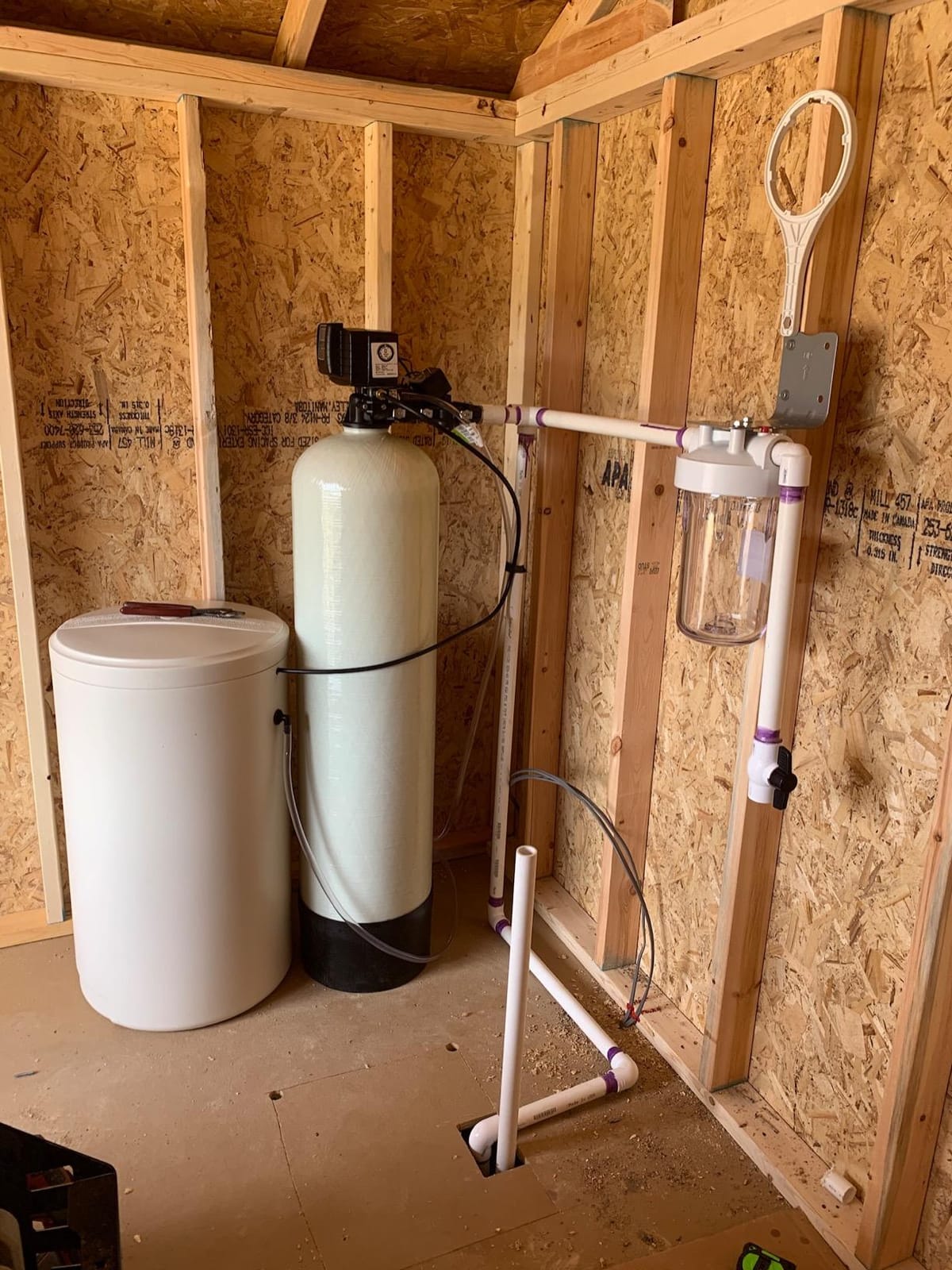
Then check the drain. A backwashable system discharges water on a schedule you set, it needs a 120 volt circuit, and it needs a properly sloped drain line. Get those three things right before the tank arrives, because a unit that cannot complete a backwash loses capacity quietly and the first sign is usually a return of staining.
Where it is the wrong purchase
It is the wrong choice for a sulfur well. This specific model does not remove hydrogen sulfide and can be damaged by it, and the manufacturer requires a higher-spec variant for sulfur water. It is also the wrong choice for a large household on peak flow, since 12 GPM is lower than the cartridge manifolds above it.
Skip it for low iron. Nobody needs 400000 gallons of media capacity and a drain line for a well under 3 ppm, and a cartridge system will do the same job for a fraction of the effort. The one year warranty is also the shortest here, so weigh that against the maintenance advantage of air regeneration before you commit.
9. PUREPLUS 2-Stage: Best for Differential Pressure Monitoring
PUREPLUS 2-Stage Whole House Water Filter Reduces Chlorine, Iron, Manganese
Iron: 3.0 ppm to 0.01 ppm
Dual pressure gauges
Capacity: 30000 gallons
First stage NSF 42 certified
Pros
- Dual pressure gauges on both housings give an objective replacement signal
- IAPMO R&T certified first stage removes up to 99 percent of chlorine
- taste
- odor
- and sediment
- Second stage reduces iron from 3.0 ppm to 0.01 ppm and targets manganese
- Complete DIY kit includes the steel bracket
- wrench
- and both gauges
- Replacement dual-cartridge set is sold separately and inexpensive
Cons
- Lowest rated capacity in the group at 30000 gallons
- roughly 3 to 6 months
- Iron reduction is capped at a 3.0 ppm ceiling
- Does not reduce TDS
- Sediment stage loads first on high-silt wells and needs the most frequent replacement
The reason this one is worth a spot is the pair of pressure gauges. It is the only system in the group that puts a gauge on both housings, and the drop across the two gives you an objective number for when to swap a cartridge instead of a calendar guess. For a first-time well owner who does not yet know what normal pressure looks like on their own system, that is genuinely useful.
The first stage is certified by IAPMO R&T to NSF/ANSI 42 and removes up to 99 percent of chlorine, taste, odor, sand, rust, and sediment. The second stage reduces iron from up to 3.0 ppm down to 0.01 ppm and also works on manganese. Two 10 x 4.5 inch blue housings on 1 inch ports handle the whole house.
Owners report visible improvement in water clarity and rust staining within days, and several call out the published before-and-after number on the iron stage as a reason they trusted the listing. Rated life is 3 to 6 months depending on water quality, so budget for two change cycles a year on a typical household.
The limitation buyers accept is capacity, not performance. At 30000 gallons and a 3.0 ppm ceiling, this is positioned for moderate well water rather than severe. On a high-silt well the sediment stage is the first thing to load, which is another reason to keep a spin-down prefilter ahead of it and to read the gauges monthly rather than waiting.
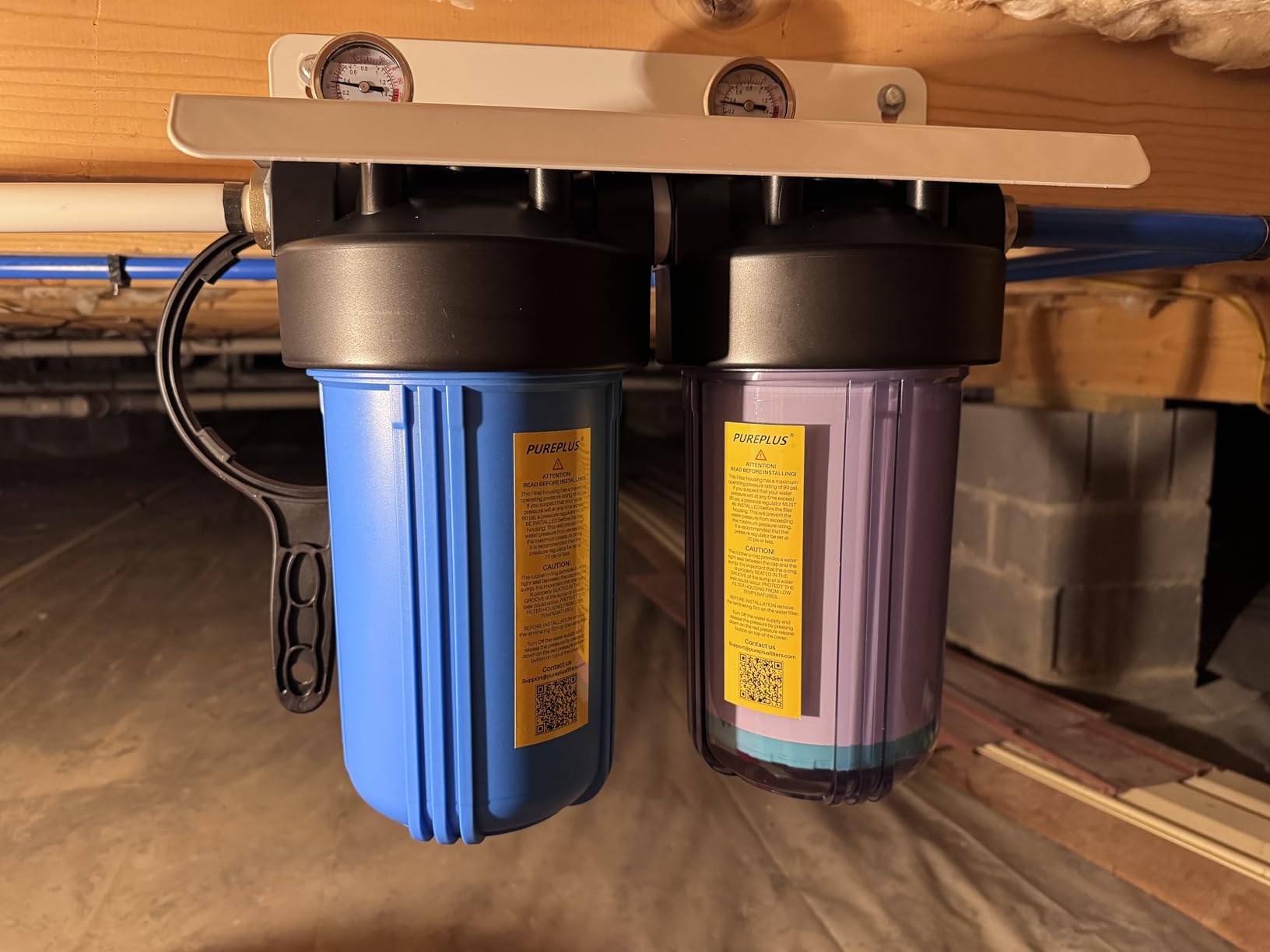
How to read the two gauges properly
Write down both readings the day you install, while the cartridges are new. Every month after that, subtract the clean reading from the current readings and you have a differential. When one side climbs faster than the other, that side is the loaded stage, and you replace that element alone rather than the pair.
In practice the sediment and carbon stage usually climbs first on a well with any silt, and the iron stage holds longer. That ordering is exactly what you want, because it means the cheap stage protects the expensive one. A 5 to 8 psi change is a reasonable trigger point to start watching closely, and beyond that the replacement is protecting your plumbing.
Where it is the wrong purchase
It is the wrong choice for heavy well water. A 3.0 ppm ceiling and a 30000 gallon rating mean constant cartridge spending on a well that tests higher, and the cost of disposable media at that rate exceeds what a backwashable tank costs to own. It is also the wrong choice if you want odor treatment, since carbon does not remove dissolved hydrogen sulfide.
Do not expect it to touch dissolved solids. Nothing in this technology reduces TDS, and if that is your concern you need a different category of device entirely. Our guide to the best under sink water filters covers the reverse osmosis side of that problem if you are dealing with taste and mineral content rather than staining.
10. DuraWater Fleck 5600 SXT 48K: Best for Homes of Two to Five People
DuraWater Fleck 5600 SXT 48K Water Softener/Iron Filter, 3/4″ Bypass, Black
Fleck 5600SXT valve, 5 year warranty
48k grain fine mesh resin
Flow: 14 GPM
3/4 inch bypass
Pros
- Fine mesh resin is specified for iron removal alongside hardness in one tank
- Fleck 5600SXT digital metered valve with a five year warranty and five year parts availability
- Metered regeneration conserves both salt and water versus timer controls
- 14 GPM suits homes with two to five people and two to three bathrooms
- Owners on high-iron well water report rust staining stopping almost immediately
Cons
- Discharge hose and clamp are not included and must be bought separately
- Instructions are photocopies with photos that are hard to read
- Two reviewers report orange water for several dozen gallons after each backwash
- Fine mesh resin needs periodic replacement on very high iron water
This is the same Fleck 5600SXT control head and fine mesh resin formula as our sixth pick, in a 1.5 cubic foot configuration with a 3/4 inch bypass. That makes it the more practical choice for a household of two to five people with two or three bathrooms, where a 48,000 grain tank and 14 GPM flow is a sensible match rather than an overshoot.
Owners on high-iron well water are emphatic that this unit worked where cheaper ones had not, reporting that rust stains on tubs and toilets stopped almost immediately and that laundry, dishes, and even silverware polishing improved noticeably. The value comparison comes up constantly too, with several buyers noting they had been quoted several times this amount by softener dealers.
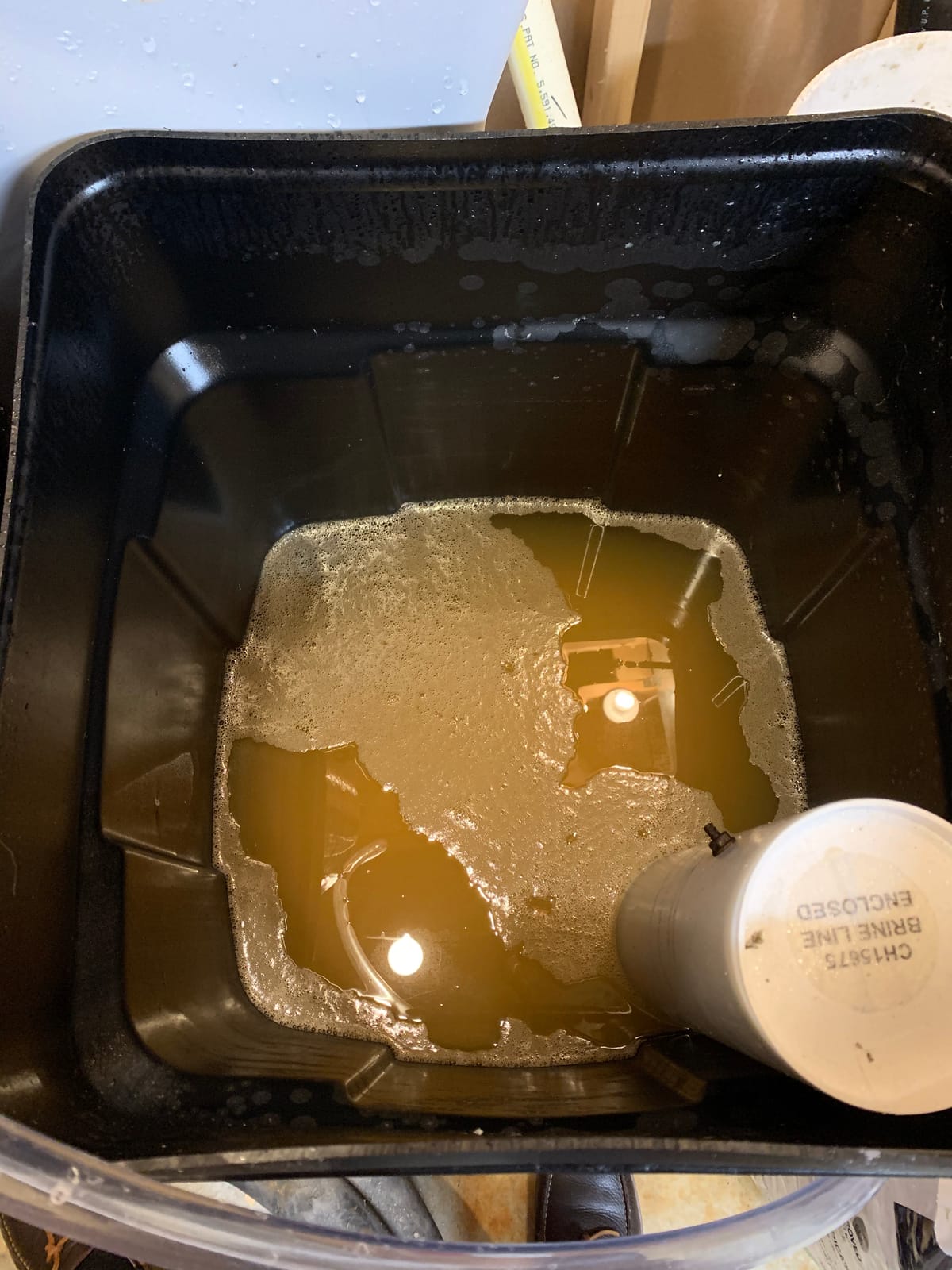
Two practical notes from the reviews will save you confusion. First, the discharge hose and clamp are not in the box, which several buyers did not expect, so add them to your parts list before the unit arrives. Second, orange water for several dozen gallons after each backwash is normal regeneration iron flushing, not a failure, and the owners who knew that stopped worrying about it.
The documentation is the weak point. The instructions are described as barely legible photocopies with no paper manual, so plan to spend an evening learning the valve programming on a phone before you need it. That is a solvable problem, but it is a solvable problem you should know about in advance.
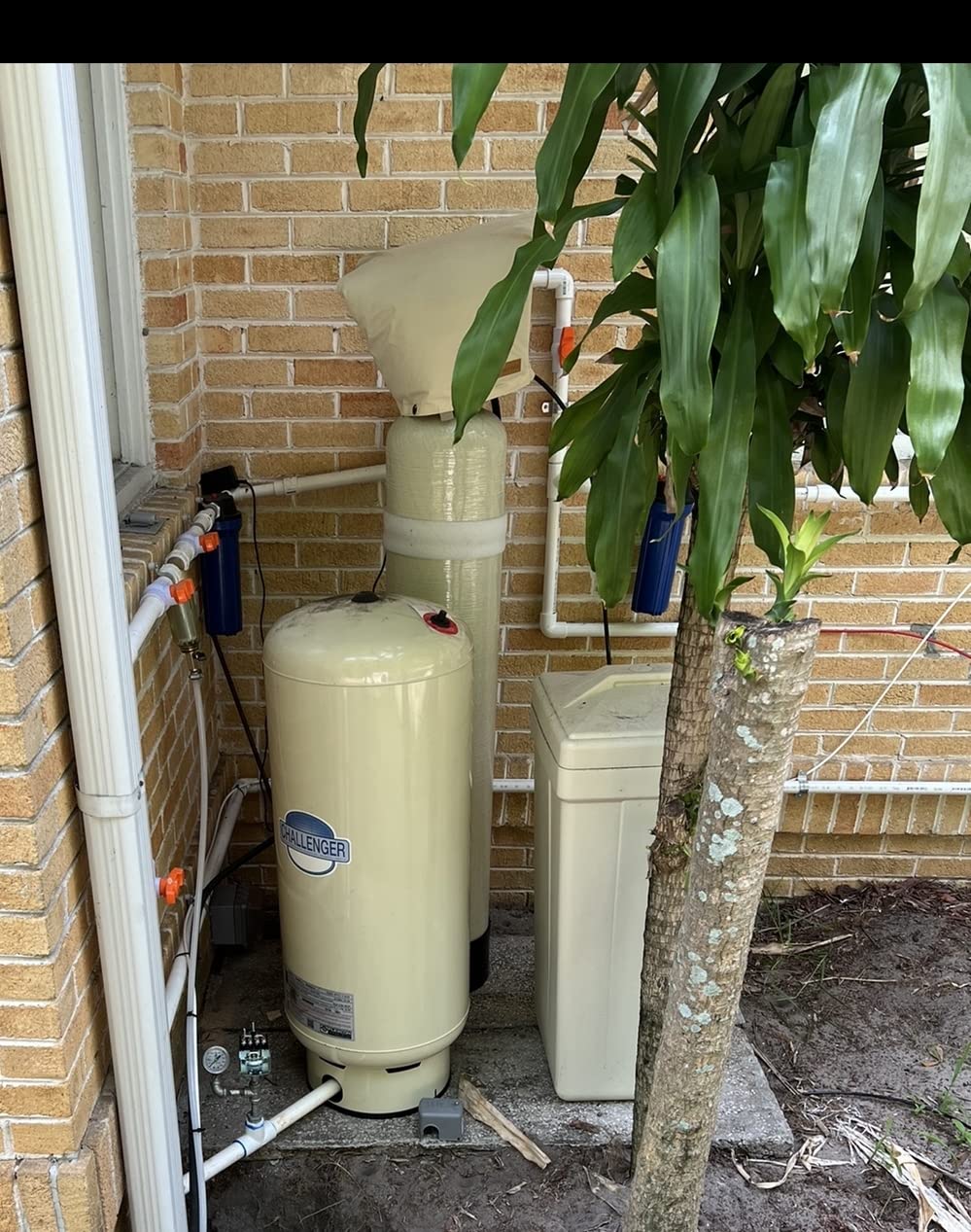
Whether to choose this over the 48,000 grain version
Choose the 1.5 cubic foot unit when your hardness and your household size are modest and iron is the real problem. Choose the larger 48,000 grain tank when hardness is high, when you have four or more people, or when you want more salt capacity between service visits. Both use the same valve, so the parts supply and repair story is identical either way.
On a 3/4 inch bypass you will see a small pressure difference compared with a 1 inch line on a large home, and 14 GPM is the ceiling here. If your household runs multiple fixtures and a lawn irrigation line at the same time, upgrade to the 1 inch bypass variant rather than discovering the limitation in the shower.
Where it is the wrong purchase
It is the wrong choice for a very hard or very high iron well, since fine mesh resin on a heavy iron load exhausts and needs periodic replacement. It is also the wrong tool for bacteria, and the resin will not recover from an iron biofilm coating. One reviewer at 5 ppm iron found that ongoing backwash iron never fully resolved despite repeated support contact.
It is the wrong choice for a well with serious sediment, because there is no fine stage ahead of the resin here. Add a spin-down prefilter or a sediment cartridge upstream. And if you are not comfortable with valve programming, factor in the cost of having a softener installer do the work before you compare the total.
How to Choose an Iron Filter: Four Questions
Ask these four questions in order, because each answer eliminates options for the next one. Buying out of order is how people end up with a beautiful backwashable tank sized for a well that only needed a spin-down prefilter.
First, what is your tested iron concentration and what form is it in? Under 3 ppm with clear water points to a cartridge system such as the iSpring WGB21BM or a PUREPLUS housing. Between 3 and 7 ppm of ferrous iron points to an air injection oxidation or catalytic media unit. Above 7 ppm, or with any ferric contribution on top of the ferrous, points to a backwashable tank on a Fleck valve. Bacterial iron means shock chlorination first, and colloidal iron means a lab report before you spend anything.
Second, does iron come with hardness? If hardness is significant, you want a combination unit with fine mesh resin and a Fleck 5600SXT, and you need it ahead of any other treatment. If the water is soft and only iron is a problem, a dedicated oxidation filter does the job without the salt and the brine tank.
Third, what is your well pump flow rate and how many fixtures run at once? Cartridge manifolds here run 15 to 17 GPM, the backwashable oxidation unit runs 12 GPM, and the softener combinations run 14 GPM. A family of four with two or three bathrooms fits anything on this list. A home with five or more people and irrigation needs the highest rated flow available, and that may rule the backwashable unit out.
Fourth, what is your pH, and is there a sulfur odor? Below about 5.5 you need an acid neutralizer upstream or the oxidation will not hold capacity. A rotten egg smell means hydrogen sulfide, which excludes several systems on this list outright and points you toward media rated for sulfur. Neither of those is optional, and both are cheaper to add during the original install than to retrofit later.
Then apply a sizing margin. Add 25 to 50 percent above your tested iron figure before you choose a tank, because well iron commonly swings 20 to 30 percent across the year with the water table. A system sized to the exact test result loses capacity within about twelve months, and the owner replaces media early and concludes the filter does not work.
Why Iron Filters Fail on Well Water
Almost every iron filter failure we read about comes down to one of six causes, and most of them are preventable before the system is plumbed in.
Bacterial iron coating the media is the first. The bacteria produce a slime sheath that fouls the bed and the drain, and no filter type solves it until the well is shock chlorinated. If your glass test showed a slime film or a rotten egg smell, that is the cause and it needs treatment first.
Undersizing is the second. Owners buy a system sized to a single test result, then a wet season pushes iron above the rated capacity and the bed fouls before its expected life. The fix is a margin, not a bigger system later.
Media channeling is the third. When the control valve does not backwash properly, fine particles cut channels through the bed and water takes the path of least resistance instead of through the media. Blocked or improperly sloped drain lines are a common trigger, and a drain that does not run clear leaves debris in the tank.
Resin fouling from iron is the fourth, and it belongs to the softener-style units. Putting a softener upstream of the iron filter means raw iron reaches the resin, and resin coated with iron no longer exchanges hardness. The order is always iron filter first, softener second.
Control valve failure is the fifth. Off-brand valves are the recurring forum complaint, with failures in the three to five year range and no parts availability. A Fleck 5600SXT or 2510SXT is a serviceable part with a real supply chain, and that is the entire argument for paying more for the head.
Exhausted or wrong media is the sixth. A carbon-only stage on an iron problem, or a sediment stage doing an iron stage’s job, produces a clear system that treats nothing. And one recurring complaint has a simple answer: brown or cloudy water for a period after a new filter is installed is normal, because you are seeing the particles you have been filtering out finally get flushed.
Maintenance, Backwash Water and Septic Safety
Maintenance depends entirely on the type. Cartridge systems need no electricity and no drain, but the media goes to waste and you replace it on a schedule or a pressure reading. Backwashable systems need a 120 volt circuit, a sloped drain line, a bypass valve, and periodic media checks, and in exchange the media cleans itself indefinitely.
For backwashable systems, forum estimates put a typical backwash at roughly 14 minutes of 7 to 10 GPM, which works out to somewhere around 100 to 140 gallons per cycle. Multiply that by cycles per day over a year and you have a real number to plan for, which matters on a rural property with a septic system that has a limited hydraulic load.
Media lifespan is where marketing and reality diverge most. Owners across the forum reports describe 6 to 8 years in a typical household and 8 to 10 years in a low-usage home, rather than the 15 to 20 years some listings claim. Plan your replacement budget on the realistic figure, because a 2 to 3 year media life turns an affordable system into an expensive one.
What iron filters do not remove is worth stating plainly. They are not arsenic removal, not lead removal, not nitrate treatment, and not disinfection. Iron bacteria require shock chlorination or another disinfection step, and a filter that improves taste and staining is not making unsafe water safe. If your well has any of those concerns, treat them as separate projects with separate equipment.
And if your goal is drinking water quality rather than protecting fixtures, whole house filtration is the wrong layer. Our picks on the best countertop water filters and the under sink options handle the final polish once the iron is already out of the water.
Frequently Asked Questions
Do iron filters work on well water?
Yes. Iron filters are specifically designed for private well water, where dissolved iron is common. They oxidize ferrous iron into particles that a media bed traps, then flush those particles to a drain on an automatic backwash cycle. They work best on clear-water ferrous iron, and they are far less effective against bacterial or colloidal iron without additional treatment.
What is the best whole house iron filter for well water?
It depends on your tested iron level and your water’s pH. Under 3 ppm, a cartridge system such as the iSpring WGB21BM is the practical choice. Between 3 and 7 ppm, an air injection oxidation unit such as the iSpring WCFM400K handles the load without chemicals. Above 7 ppm, or with sulfur odor, you need a backwashable tank with a serviceable Fleck control valve.
What is the most effective way to remove iron from well water?
The most effective approach is oxidation followed by mechanical filtration. Air is introduced into the media tank so dissolved ferrous iron converts to solid ferric particles, the media bed captures those particles, and a control valve reverses flow to backwash them to a drain. Chemical oxidation systems do the same job with peroxide or hypochlorite, but they add a pump, a replenishment schedule, and a recurring cost.
What are common problems with iron filters?
The most common problems are bacterial iron fouling the media, a system sized too close to the tested iron level, media channeling from an incomplete backwash, a blocked or poorly sloped drain line, resin fouling when a softener is placed upstream of the iron filter, and control valve failure. Low pH below about 5.5 also stops the oxidation reaction from working at all.
What is the difference between ferrous and ferric iron?
Ferrous iron is dissolved iron that has not yet oxidized. It is invisible in a glass of water and it is the most common form on private wells, so the water looks clear until it stains a fixture. Ferric iron has already met oxygen and formed solid particles, which is why the water looks orange or brown and settles out. The glass test is the fastest way to tell them apart.
Do iron filters remove bacteria?
No. An iron filter is not a disinfection device and it does not remove bacteria, arsenic, lead, or nitrates. Iron bacteria in particular produce a slime sheath that fouls media and generates hydrogen sulfide, and the well needs shock chlorination before the filter can work. Treat those as separate projects with separate equipment.
Is an iron filter safe for a septic system?
A backwashable iron filter is generally safe on a properly sized septic system, but the discharge volume matters. A typical cycle runs about 14 minutes at 7 to 10 GPM, which is roughly 100 to 140 gallons per cycle. On a small system or a property with high water use, confirm the hydraulic load before you install, or choose a cartridge system that discharges nothing.
Conclusion: Choosing the Right Iron Filter in 2026
For most well owners the answer is the iSpring WGB21BM, because it publishes a real before-and-after iron number, carries the deepest owner record of anything we reviewed, and installs in an afternoon without a drain line or an electrical circuit. If your well runs silty or you want the highest flow in the group, the Express Water 3-Stage adds gauges and a stainless frame that will outlast a plastic manifold.
Move up to a backwashable system when your test result puts iron above the 3 ppm cartridge ceiling, and treat bacterial iron and colloidal iron as separate problems that have to be solved first. Whatever you choose, size it with a margin above your test number, put the iron filter ahead of the softener, and get a serviceable control valve. That is the best iron filters for well water advice we can give: match the technology to the number, and the number to the form the iron takes.