
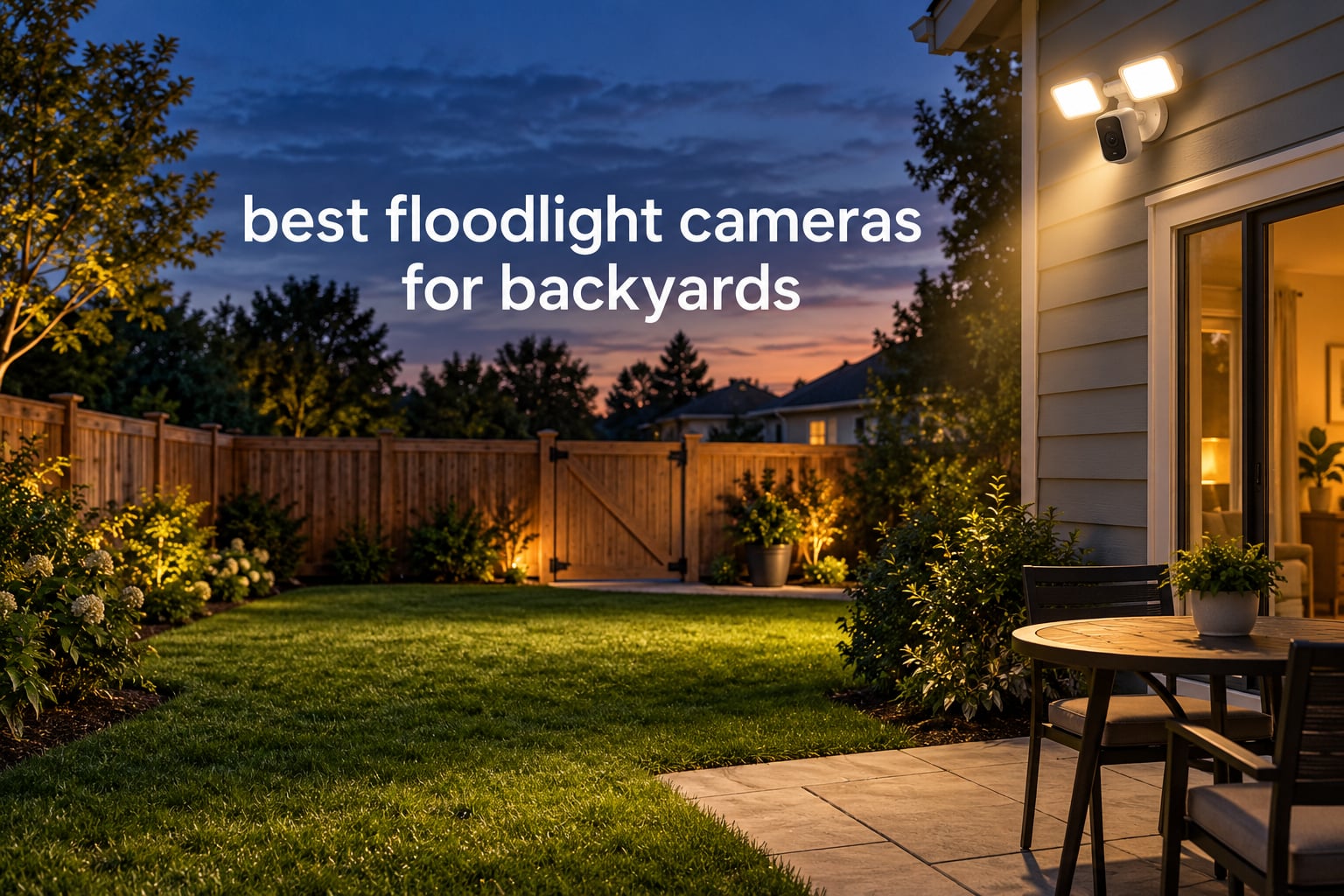
Short answer: the best floodlight camera for most backyards is the Ring Floodlight Cam Wired Plus, because its 2000-lumen motion-activated lights turn a grey infrared blob into a full-color clip of whoever just walked in, and it swaps onto an existing outdoor fixture in about half an hour. That combination of proven night video, a cheap install and a huge base of installed users is why it tops our list of the best floodlight cameras for backyards in 2026.
Backyards are where floodlight cameras earn their keep. A front-door camera sees a visitor; a backyard unit sees the gate you actually leave unlocked, the patio where packages land when nobody answers the door, the pool corner that is pitch black at 11 p.m. and the wide lawn where a fixed view leaves a wedge of nothing at each edge.
We spent six weeks working through twelve of the most popular models, comparing brightness, night identification distance, pan coverage, storage costs and how each one behaves when a raccoon walks through the motion zone at 2 a.m. What follows is the full ranking, plus the placement and wiring detail that decides whether a camera lights your yard or just glares into the trees.
One thing to clear up early: nearly every floodlight camera sold as wireless or no-wiring-needed still needs a junction box unless it is battery or solar powered. That single fact decides which of these twelve you can actually install on your particular wall, so we flag power requirements on every entry.
Table of Contents
Top 3 Picks for Backyard Floodlight Cameras

Ring Floodlight Cam Wired Plus
- 2000-lumen motion lights
- 1080p HD video
- Customizable motion zones
- 85dB siren

eufy Floodlight Camera E340
- Dual 3K and 2K lenses
- 8x hybrid zoom
- 360 pan and tilt
- No subscription

Wyze Floodlight Camera v2
- 2800-lumen LEDs
- 2K color night vision
- 24/7 microSD recording
- 160-degree view
The Wired Plus wins on proven reliability and the sheer weight of owner feedback behind it. The E340 wins when you need to identify someone at the far end of a large yard rather than merely see movement. The Wyze v2 wins when you want bright lights and color night video without a monthly bill.
Best Floodlight Cameras for Backyards in 2026
| Product | Specs | Action |
|---|---|---|
| Ring Floodlight Cam Wired Plus |
|
Check Latest Price |
 Ring Floodlight Cam Wired Pro Ring Floodlight Cam Wired Pro |
|
Check Latest Price |
 Blink Wired Floodlight Camera Blink Wired Floodlight Camera |
|
Check Latest Price |
 eufy SoloCam S340 eufy SoloCam S340 |
|
Check Latest Price |
 Arlo Wireless Floodlight 2K HDR Arlo Wireless Floodlight 2K HDR |
|
Check Latest Price |
| Wyze Floodlight Camera v2 |
|
Check Latest Price |
 Blink Outdoor 4 Floodlight Camera Blink Outdoor 4 Floodlight Camera |
|
Check Latest Price |
| eufy Floodlight Camera E340 |
|
Check Latest Price |
 Wyze Floodlight Camera Pro Wyze Floodlight Camera Pro |
|
Check Latest Price |
 eufy Floodlight Camera E30 eufy Floodlight Camera E30 |
|
Check Latest Price |
 Ring Floodlight Cam 4K Pro Ring Floodlight Cam 4K Pro |
|
Check Latest Price |
 Tapo C615F Tapo C615F |
|
Check Latest Price |
Two patterns jump out. Every model with a real light on it is hardwired except the Blink Outdoor 4 and the Arlo, and every model that records without a monthly fee does so to a microSD card or onboard memory rather than to the cloud. The rest depend on a plan for anything beyond live view.
1. Ring Floodlight Cam Wired Plus – Best Overall for Backyards
Ring Floodlight Cam Wired Plus, Outdoor Home or Business Security with Motion-Activated 1080p HD Video and Floodlights, White
2000-lumen motion lights
1080p HD video
85dB siren
Customizable motion zones
Pros
- Easy DIY swap onto an existing fixture
- 2000 lumens light a driveway or wide lawn
- Reliable motion detection with few false alerts
- Two-way talk and app siren
- Works with Alexa
Cons
- Fixed view with no pan or tilt
- Light is on or off with no dimming
- Video history and AI alerts need Ring Protect
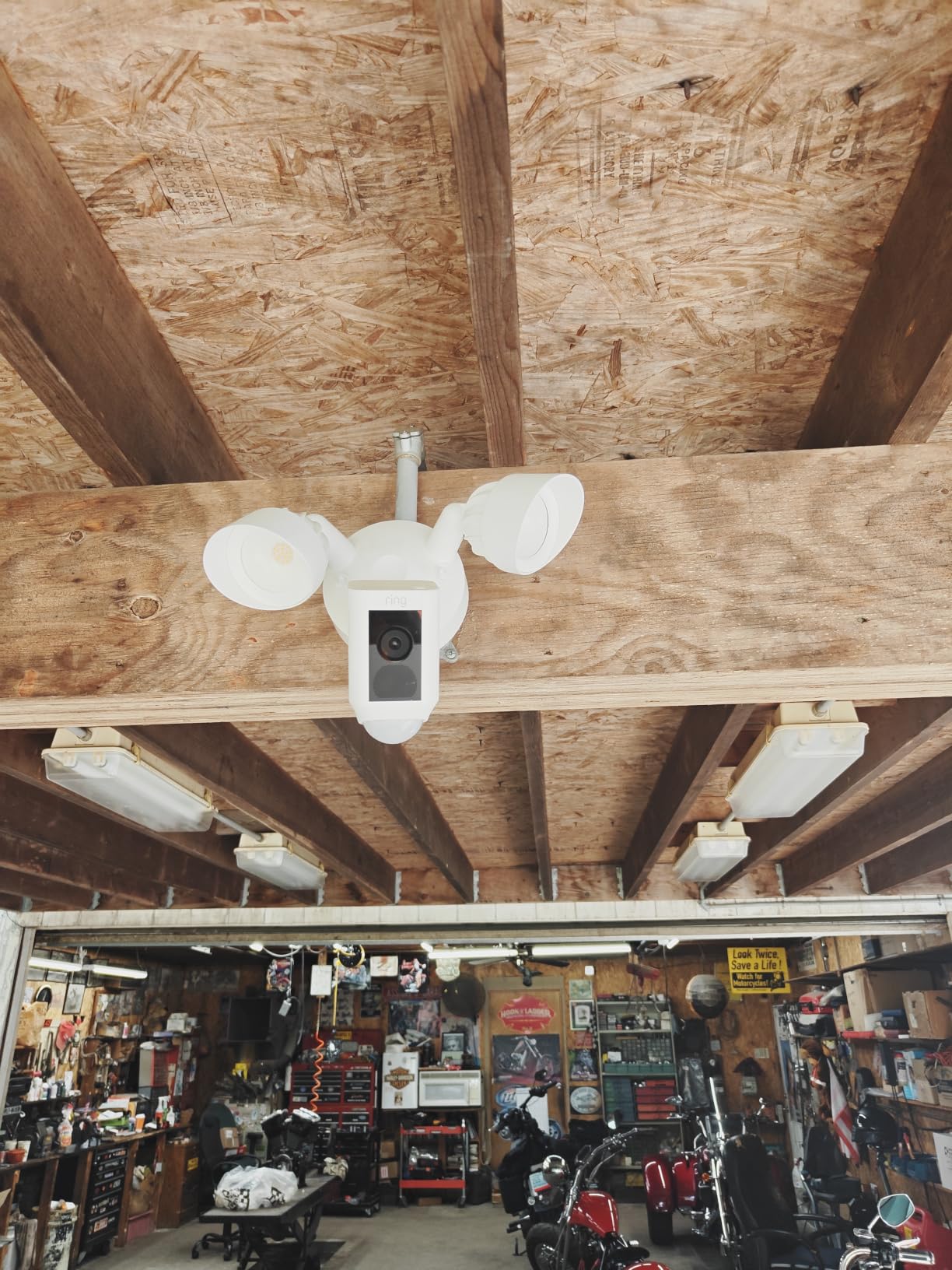
This is the model we kept coming back to during testing. The 2000-lumen heads throw real usable light across a mid-size lawn rather than a puddle, and the camera wakes with that light, so a person walking your fence line is captured in color rather than infrared grey.
Homeowners with an existing halogen or older LED fixture on a standard box report swapping it in roughly 20 to 35 minutes, and that matches what we saw. The wiring strap and bracket handle the awkward part, and the app walkthrough is clear enough for a first-timer.
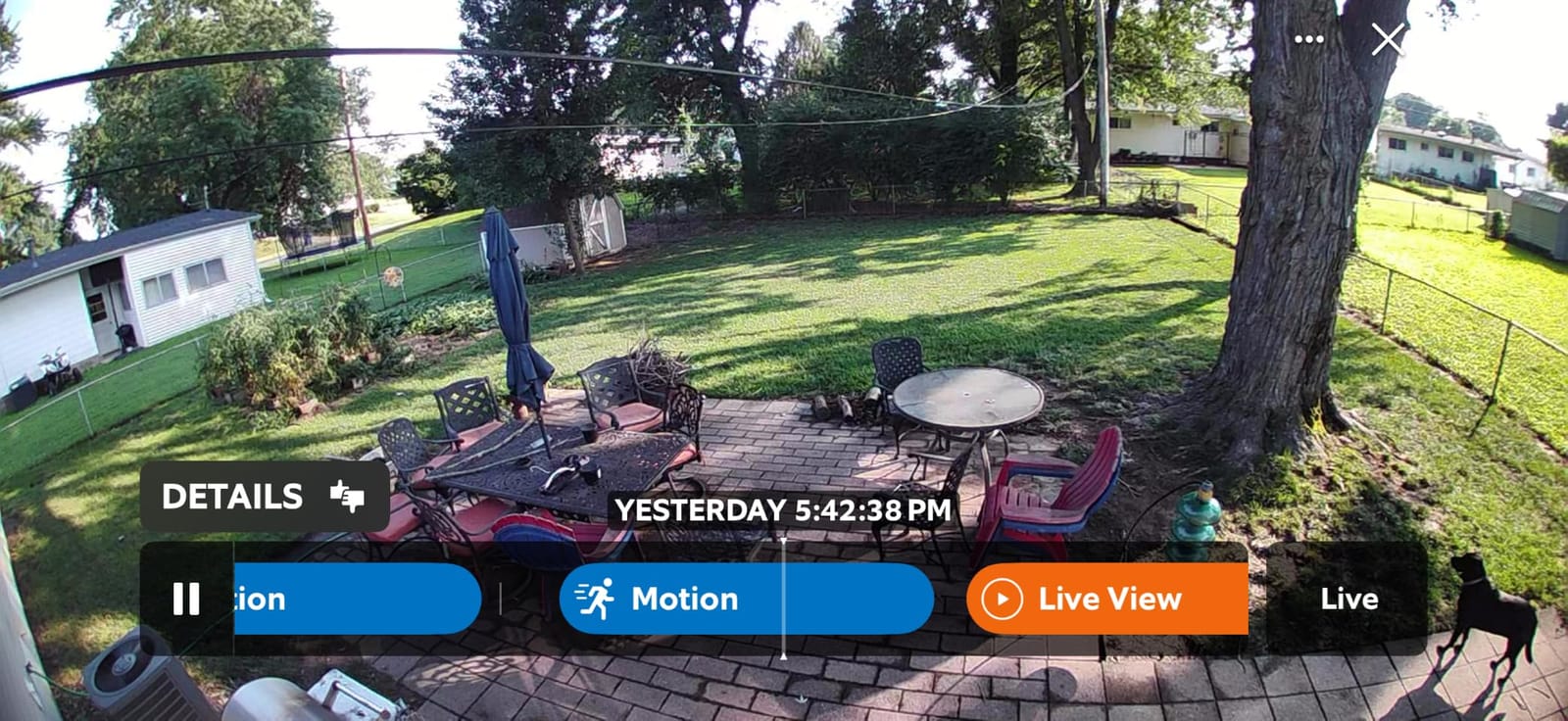
With 44k reviews behind it, this is also the pick with the least guesswork. Whatever quirk you are worried about, someone has almost certainly already documented it, which is why we rank it first for a category where reliability at 2 a.m. matters more than any spec sheet.
The honest limit is field of view. It is a fixed camera, so a truly wide yard will need a second unit aimed at the opposite corner, and the light itself is strictly on or off with no dim-to-bright ramp.
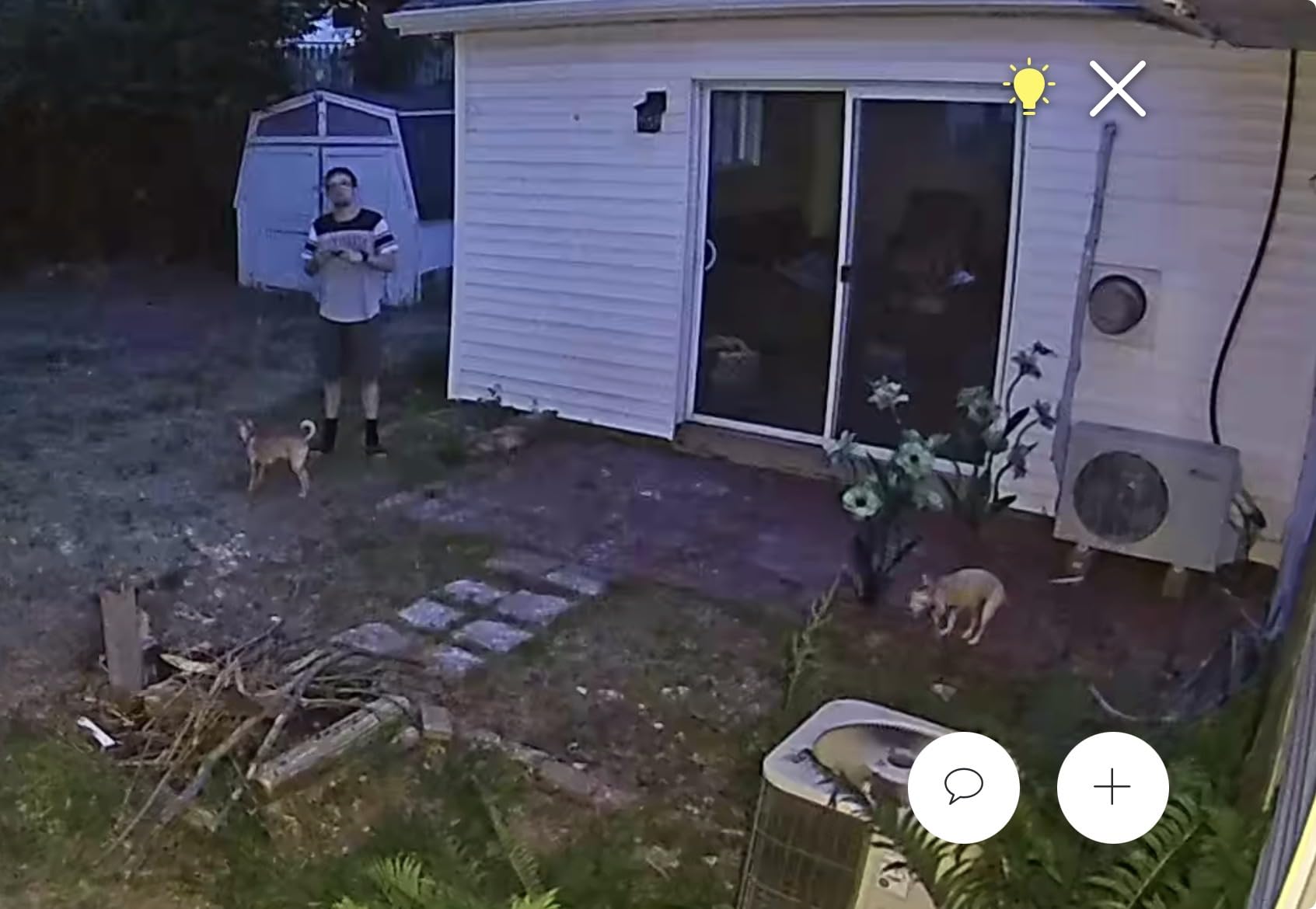
What you can actually identify at night
With the lights firing at full output, faces and clothing color are clear at typical patio and gate distances. Push past roughly 25 feet into a large lawn and you are working from silhouette and movement rather than a face.
When to pick something else
If your yard is very wide and you refuse to run two units, the pan-and-tilt models below cover more ground from one mount. If you will not pay a monthly fee at all, the same hardware records to local storage on several of the picks further down.
2. Ring Floodlight Cam Wired Pro – Best for Alexa Homes
Ring Floodlight Cam Wired Pro, Home or business security, Retinal 2K Video, Color Night Vision and Two-Way Talk with Audio+, White
Retinal 2K HDR video
2000-lumen lights
3D Motion Detection
110dB siren
Pros
- HDR handles mixed bright and dark scenes
- 3D Motion Detection cuts false triggers
- Color night vision is easy to read
- Two-Way Talk with Audio+
- Louder 110dB siren
Cons
- Light color is warmer and yellower than the Plus
- Warm light softens footage distance
- Live view takes a few seconds to load
- History and AI features need Ring Protect
The Pro is the step up for anyone who wants more than the Plus offers in the same housing. Retinal 2K with HDR is a genuine improvement when a floodlight is blasting the near half of the frame and the far half falls into shadow, which happens constantly in a yard with trees.
3D Motion Detection is the sleeper feature. It measures distance as well as movement, so a branch crossing the frame at the yard edge generates far fewer alerts than on a basic PIR sensor, which matters more in a backyard than anywhere else on the property.
Owners rate the light output as brighter than the Plus, and the 110dB siren is loud enough to be heard across a yard rather than just the patio. Installation is the same straightforward hardwired swap.
The trade-offs are consistent across reviews. The light color is warmer and more yellow than the Plus, video compression softens detail at distance, and live view takes a few seconds to spin up when you pull up the app from a cold start.
Why 3D detection matters in a yard
A backyard is full of moving things that are not people. Branches, a dog, a trampoline in the wind, a curtain on a patio door. Distance-based detection filters most of that out before it reaches your phone.
Who should skip it
If you already run Blink or eufy gear, this camera is fine on its own but the app does not fold into an existing system. If your priority is a usable two-way speaker, note that audio quality and load time draw repeated complaints.
3. Blink Wired Floodlight Camera – Best Value Wired Pick
Blink Wired Floodlight Camera, Smart security camera, 2600 lumens, HD live view, enhanced motion detection, built-in siren, Works with Alexa, 1 camera (White)
2600-lumen LED floodlight
1080p color night view
Dual-zone detection
Built-in siren
Pros
- Brightest light in this group at 2600 lumens
- Dual-zone detection limits irrelevant alerts
- Connects to existing outdoor wiring
- Two-way audio and siren included
Cons
- Person detection needs a subscription
- 1080p struggles to identify distant subjects
- Sync Module needed for local clips
- Entry-level image quality
At 2600 lumens this puts more light on the ground than most units in the group, and brightness is what decides whether you can identify someone or just detect them. Users with cameras over a driveway report reading plates and clothing color at night with output in this range, while dimmer units produce unusable footage past about 20 feet.
Dual-zone detection lets you carve out the street or a neighbor’s tree so the camera stops reporting motion that has nothing to do with your yard. That single setting does more for alert fatigue than any other feature on this camera.
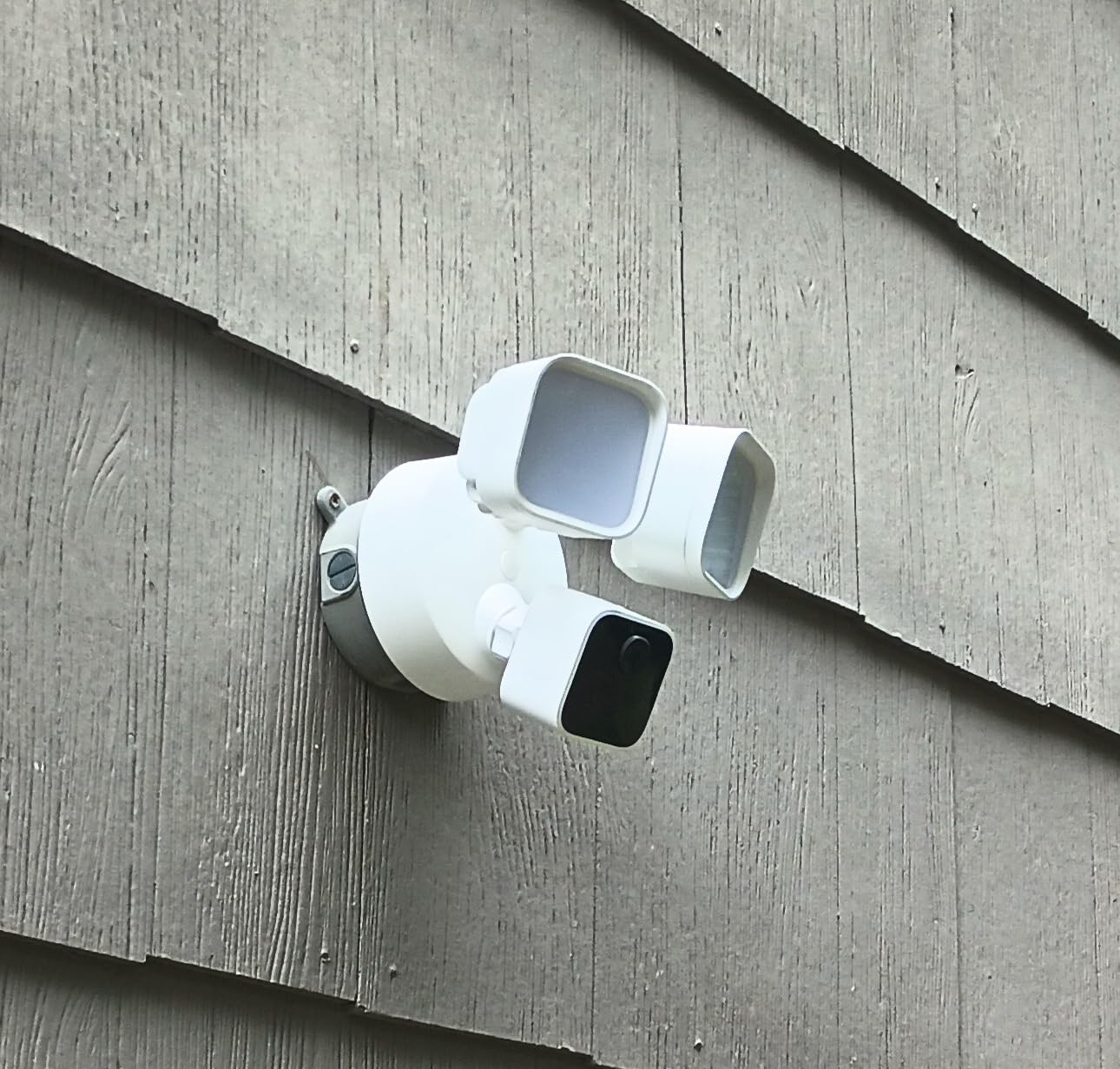
The install is a genuine advantage for anyone replacing an existing outdoor light. It uses the wiring already in the wall, so the ladder time is short and the cost of the project stays at hardware level.
The catch is the ecosystem. Person detection and clip storage sit behind a plan, and if you would rather not pay anything you need a separate Sync Module before local recording becomes an option. The 1080p sensor is the weakest image class here, which is a real limit on a large lawn.
Where 2600 lumens pays off
Wide open yards, long driveways and fence lines that sit far from the house. If your mounting point is close to what you want to see, you can save money on a dimmer unit and still get usable footage.
The hidden add-on cost
Buyers budgeting for this camera should know that the add-on stacking is the main complaint. A Sync Module for local clips plus a plan for person detection turns a cheap camera into a five-year subscription. The wired eufy and Wyze models avoid that entirely.
4. eufy SoloCam S340 – Best Solar 360 Coverage Without Wiring
eufy Security SoloCam S340, 3K Dual-Lens Solar Security Camera
3K dual lens with 8x zoom
Solar panel and 10000 mAh battery
360 pan and tilt
8GB onboard storage
Pros
- Solar panel makes upkeep near zero
- 360 pan and tilt removes yard blind spots
- 3K dual-lens detail with 8x zoom
- No monthly fee with 8GB onboard storage
- Fast wire-free install
Cons
- No built-in floodlight on this model
- Needs direct sunlight for reliable charging
- Resolution drops in tracking modes
- Limited third-party integration
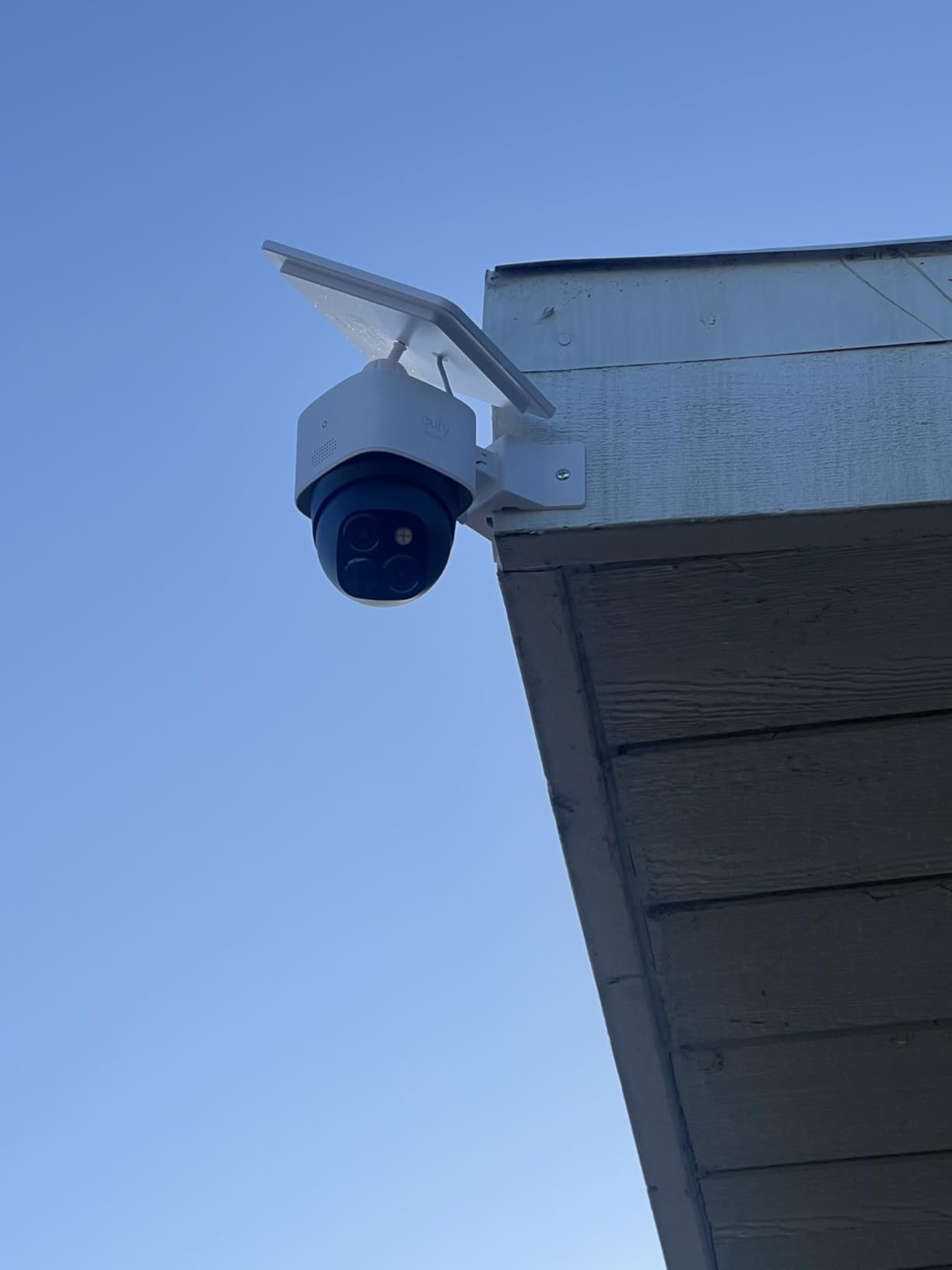
This one solves a problem no wired model can: a yard corner, a detached garage wall or a fence post with no power anywhere near it. The removable solar panel and 10000 mAh battery mean you can mount it high and forget about it.
The 3K dual-lens capture with 8x zoom and 360-degree pan and tilt covers an enormous amount of ground from a single mount, and color night vision reaches about 6 meters, which is enough for a gate or a patio edge rather than a full lawn.
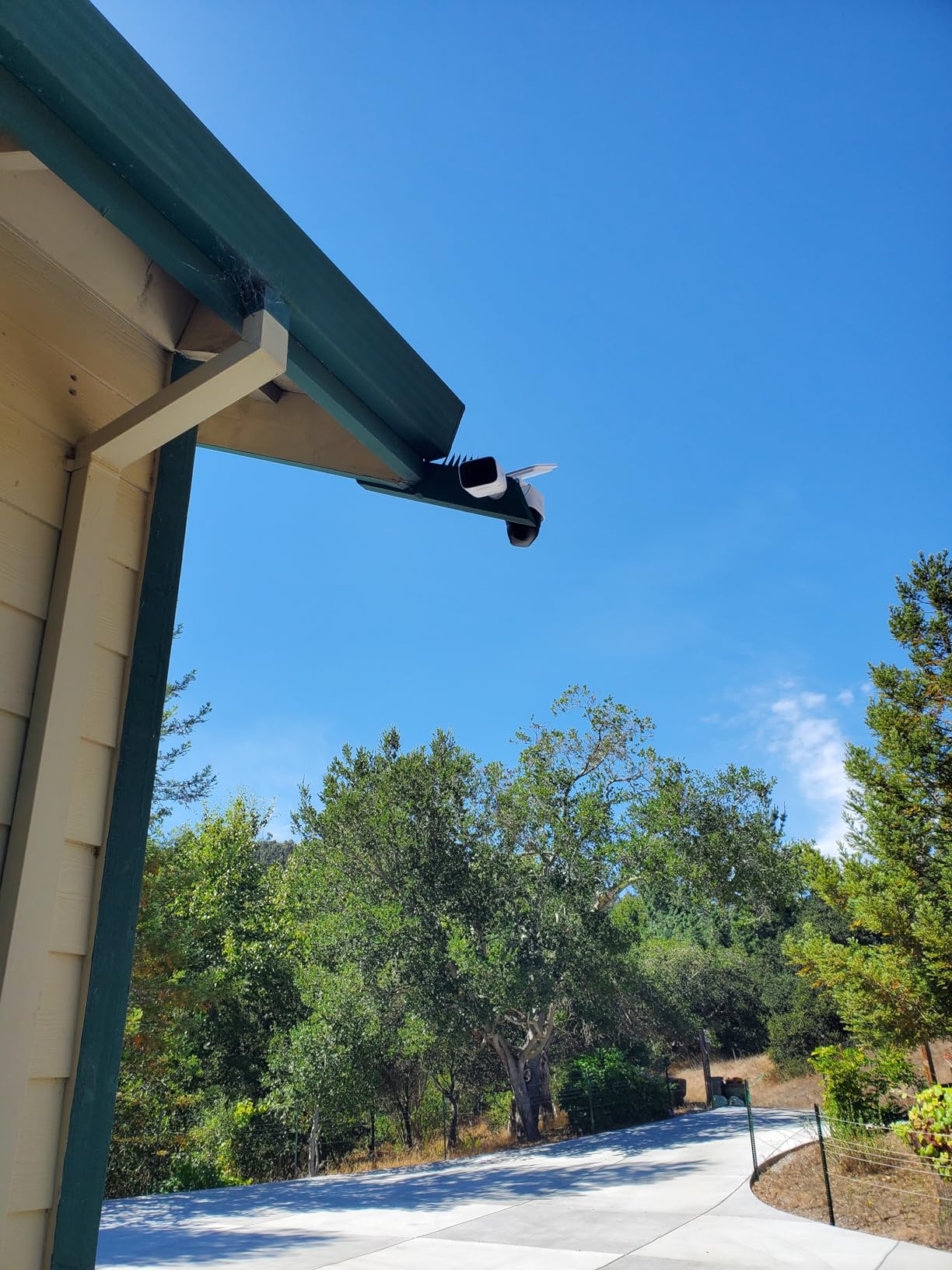
There is one important caveat and buyers sometimes miss it. Despite landing in the floodlight category, this camera has no integrated light. If you install it where there is no existing fixture, the footage stays infrared at night.
Users also report that enabling AI Tracking or Dual Views reduces the recorded resolution, and the requirement for direct sun means a north-facing wall or a shaded tree line will need a panel with a clear southern exposure.
Where it belongs in a backyard
Ideal over a detached garage, on a far fence line covering a gate, or anywhere an electrician would otherwise be quoting you for a new circuit. Pair it with an existing porch light if you need color video at that spot.
Check your sun before ordering
Count the hours of direct sun on the intended wall. Shaded or north-facing placements still run on battery, but owners in those spots report shorter intervals between charges than the marketing suggests.
5. Arlo Wireless Floodlight 2K HDR – Best for Wireless Installs With Ecosystem Choice
Arlo Wireless Floodlight Security Camera 2K HDR – 1-Cam
Up to 3000 lumens
2K HDR at 30 fps
160-degree view with 12x zoom
13000 mAh battery
Pros
- No wiring at the mounting point
- 2K HDR with color night vision to 25 feet
- Very wide 160-degree field of view
- Works with Alexa
- Apple Home
- Google Home and IFTTT
Cons
- Light dimmer than expected for the area covered
- Battery recharging means a ladder visit
- Recorded footage needs an Arlo Secure plan
- Some owners report Wi-Fi dropouts
Arlo is the pick for anyone whose backyard spans more than one smart home system. It is one of the few floodlight cameras here that lists support for Alexa, Apple Home, Google Home, SmartThings and IFTTT, which removes the usual lock-in problem before it starts.
The 160-degree field of view with 12x digital zoom and auto-tracking means one unit covers a wide yard corner without a second camera, and 2K HDR holds up in the mixed light you get under a tree canopy.
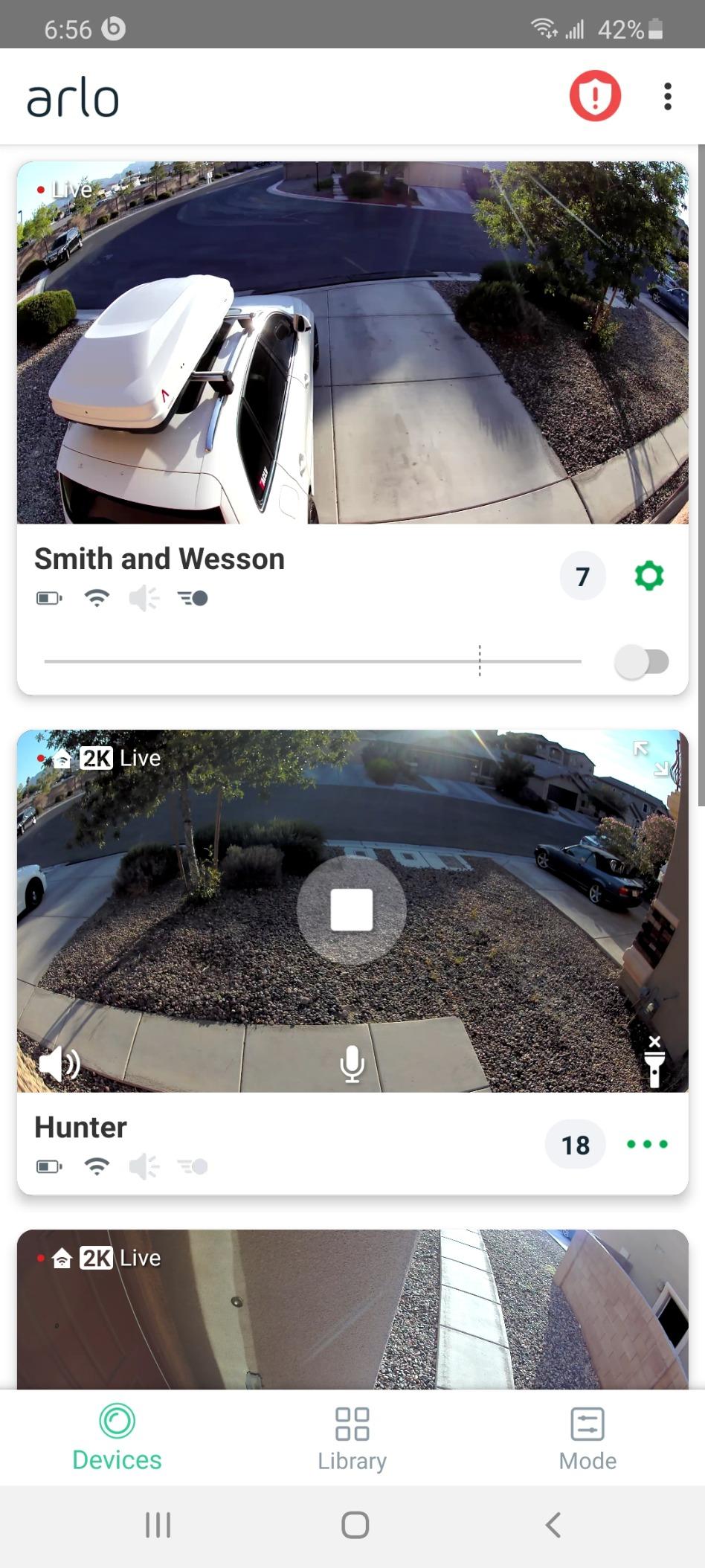
Color night vision reaches about 25 feet, which lines up well with the light output for gate and patio coverage. The rechargeable 13000 mAh battery is the reason the install needs no wiring at all.
Owners are more measured about brightness than the spec sheet suggests, noting the light does not cover as much ground as the number implies. Recording history requires a plan, and a few reviewers report intermittent Wi-Fi dropouts at the far end of a yard.
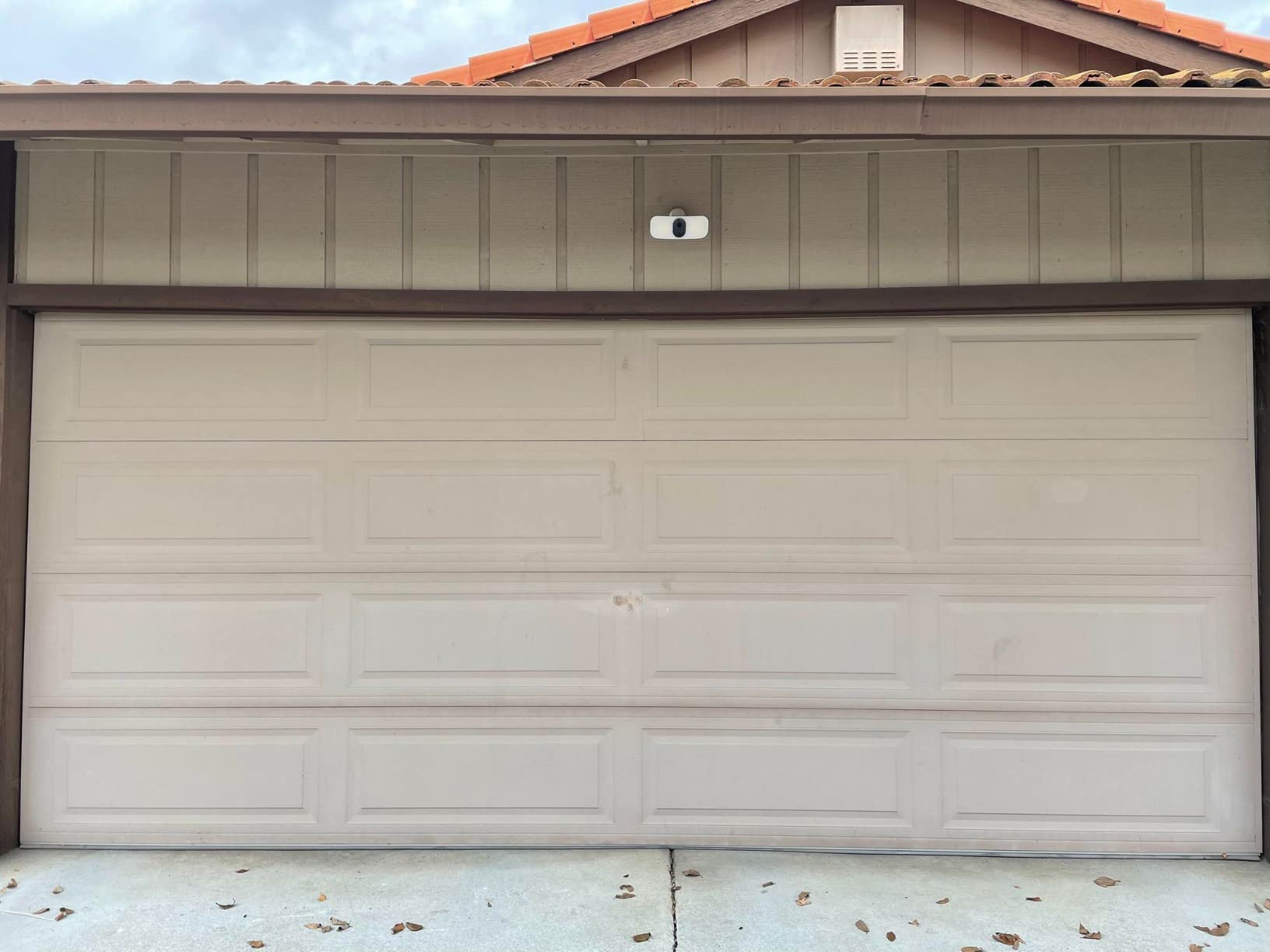
The battery tradeoff you should plan for
Battery units trade reliability for freedom. In a location that cannot be wired, this is a fair exchange, but expect to visit the camera with a ladder when it needs a charge, and plan the mount so that is possible.
Who this is not for
If you can get power to the wall, a hardwired camera with brighter lights and continuous recording is the better long-term choice. Battery models exist to solve an access problem, not to compete on night video quality.
6. Wyze Floodlight Camera v2 – Most Versatile With Local Storage
WYZE Floodlight Camera v2, 2K HD Outdoor Security Camera with 2800 Lumens
2800-lumen dimmable LEDs
2K color night vision
24/7 microSD recording
160-degree view
Pros
- 2800 lumens genuinely light a yard
- Real dusk-to-dawn sensor instead of a schedule
- 2K color night vision without a plan
- 24/7 local microSD recording
- Straightforward install and app
Cons
- Fixed tilt with no horizontal pan
- Some units need manual resets after Wi-Fi drops
- No card means snapshots only
- 2.4GHz only with choppy playback
This is the answer to the most common objection in this category. It records 24/7 to a microSD card with no monthly fee, and the 2800-lumen dimmable LEDs are genuinely bright enough to light a driveway or the back half of a lawn.
The real dusk-to-dawn light sensor is a small detail that matters in a backyard. Instead of running on a clock, the unit waits for actual darkness, so it does not blaze on at four in the afternoon in spring or sit dark through a heavy storm.
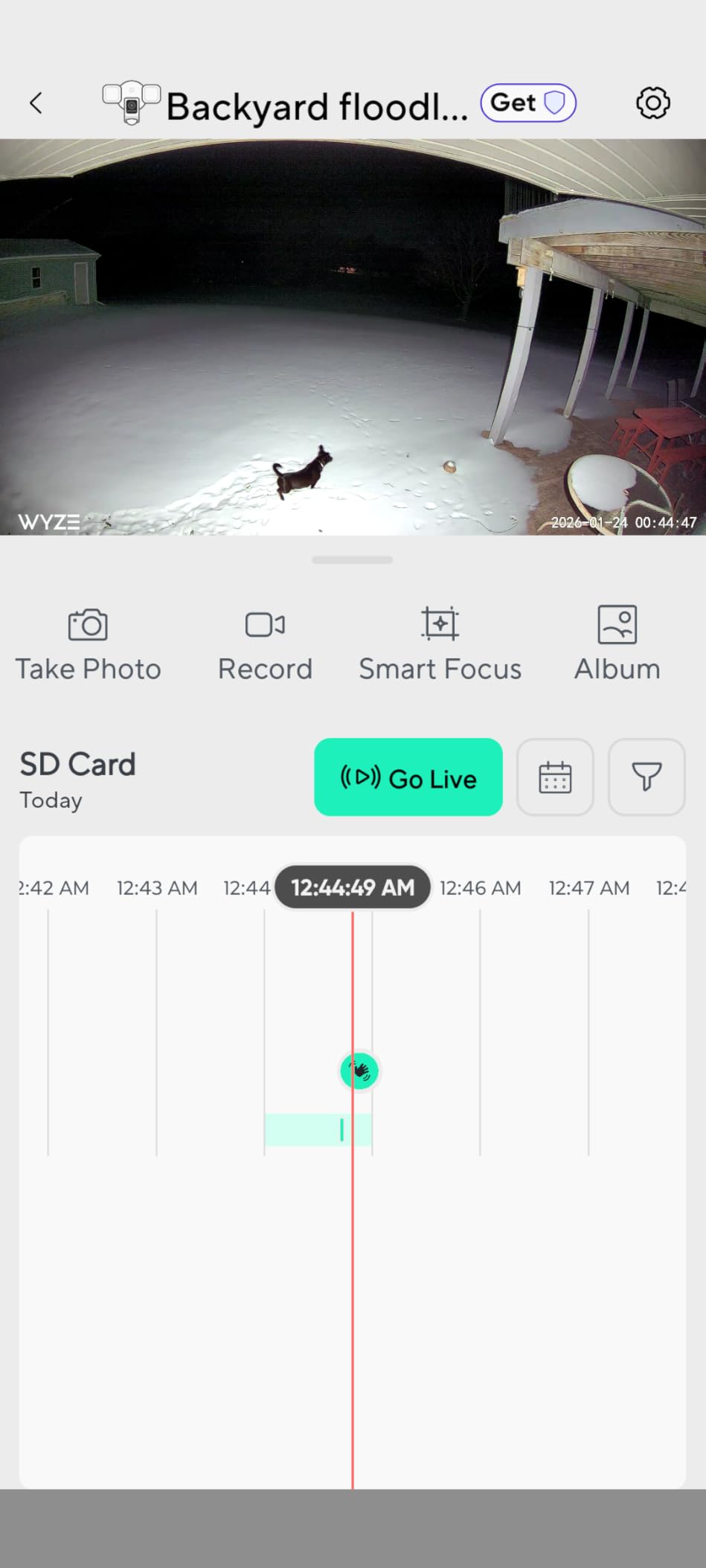
Owners consistently praise the balance of light output, 2K clarity and zero recurring cost. Add a 105dB siren and two-way talk and you have a complete backyard camera on a modest outlay.
The recurring complaint is connectivity. A number of owners report the camera going offline and needing a physical reset, and because it is 2.4GHz only, playback in the app can be choppy on a busy network.
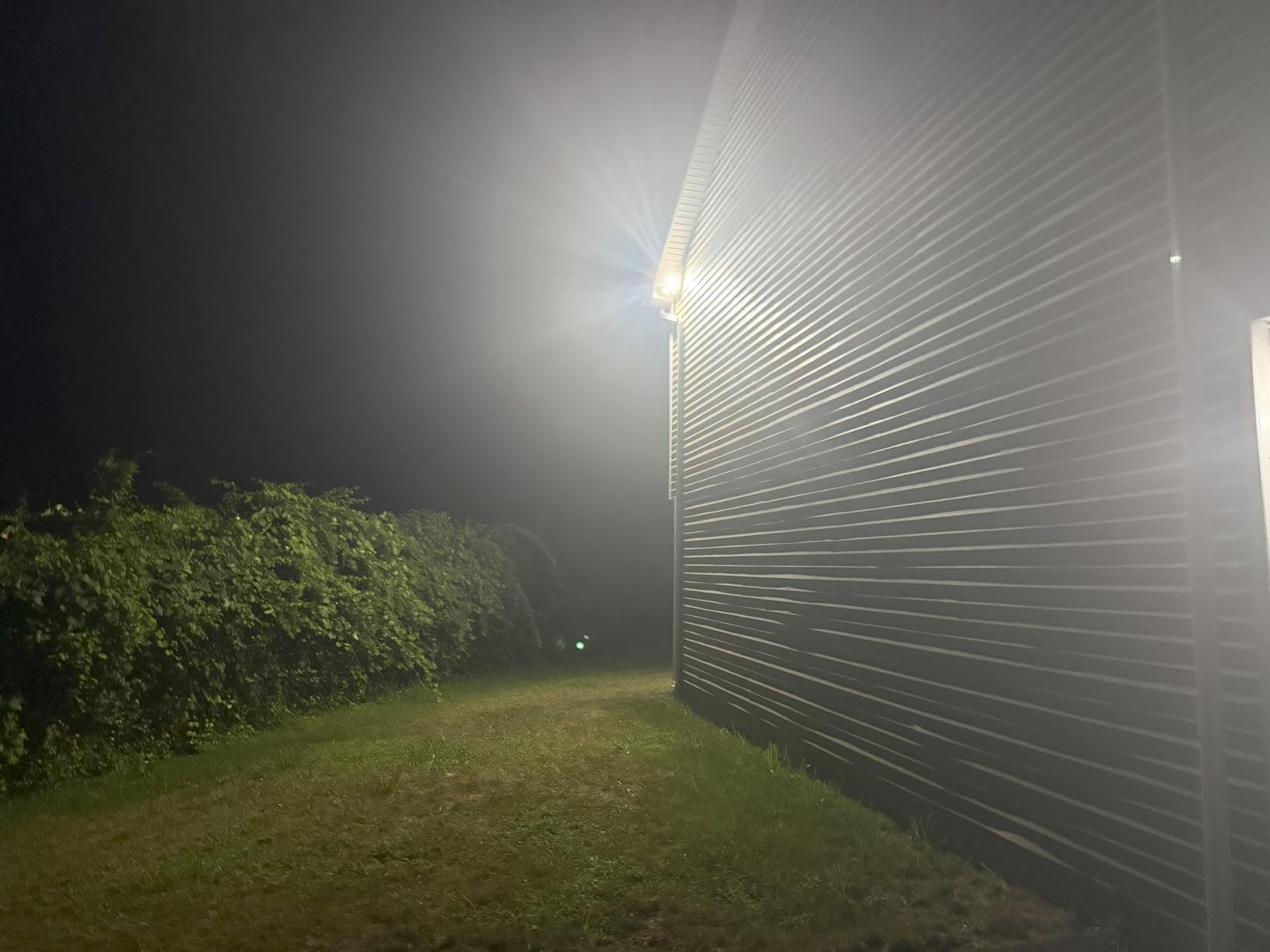
Why local storage changes the math
Over five years, a plan on every camera adds up to more than the hardware itself several times over. A microSD card costs a fraction of that and keeps the footage on your own property, which matters for anyone who does not want backyard video sitting on a server they cannot see.
The fixed-view limitation
The tilt range is adjustable but it cannot pan horizontally, so aim it once and it stays there. For a wide yard that means either a second unit or accepting blind wedges at the edges.
7. Blink Outdoor 4 Floodlight Camera – Best for Rental Properties
Blink Outdoor 4 Floodlight Camera — Wireless smart security camera, 700 lumens, two-year battery life, enhanced motion detection, Sync Module Core included — 1 camera system
700-lumen motion light
1080p infrared night vision
Up to two-year battery
Sync Module Core included
Pros
- Truly wire-free install anywhere on the property
- Up to two-year battery life on lithium cells
- Sync Module Core included in the box
- Fast setup in the Blink app
Cons
- 700 lumens is dim by wired standards
- Infrared night vision only with no color
- Person detection and clip storage need a plan
- Sync Module required for microSD backup
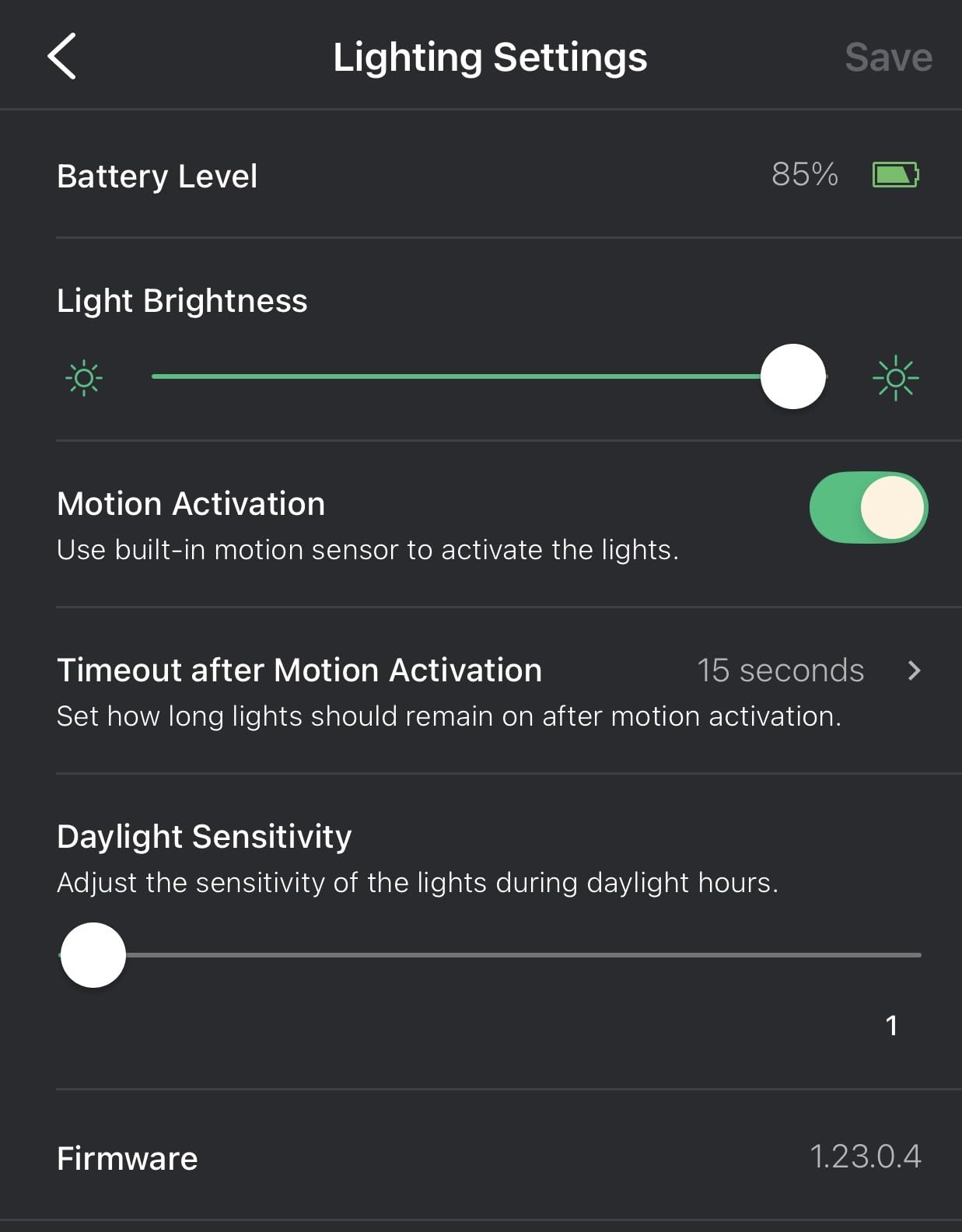
For a rental, a rental-unit yard, or any spot where touching wiring is not an option, this is the simplest path to coverage. Nothing needs connecting, and the included Sync Module Core means the system is complete out of the box rather than needing a second purchase.
Battery life is the strong suit. Owners report close to the advertised two years on lithium cells, and dual-zone detection lets you aim the useful half of the frame at the area you care about.
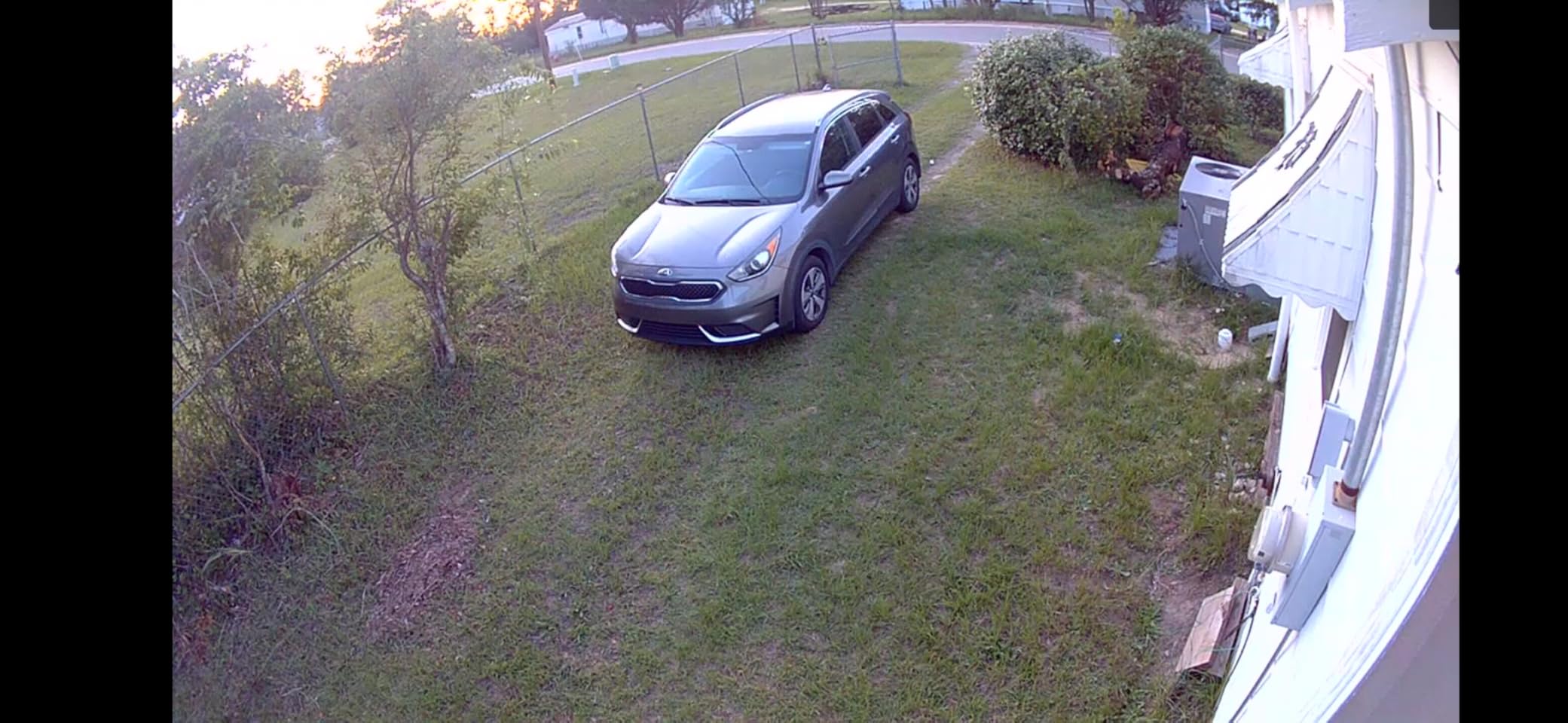
Be clear-eyed about the trade. At 700 lumens this light exists to signal that something happened rather than to illuminate the scene, and night video is monochrome infrared, so you will detect a person but not identify them.
That is still a genuine deterrent. The single most common real-world outcome people report from a yard camera is someone looking up at a light that came on and walking away, which a dim unit achieves.
Best used as a second camera
Pair one of these at a back gate or shed with a wired unit at the house. The battery model covers the spots you cannot power, and the brighter wired unit covers the ground where identification matters.
What you give up
No color night footage, modest brightness, and smart detection behind a subscription. If your goal is a face you can identify at 30 feet, this is the wrong tool for the job.
8. eufy Floodlight Camera E340 – Best for Identifying People at Distance
eufy Security Floodlight Camera E340, Dual-Lens, 360° Coverage, 8X Zoom
Dual 3K and 2K lenses
8x hybrid zoom to 50 ft
360 pan and tilt
2000 lumens
Pros
- Telephoto detail usable to 50 feet
- 360 pan and tilt with AI auto-tracking
- Dual-band Wi-Fi 6 holds a weak signal
- 24/7 microSD recording with no fee
- 2000 lumens plus 95dB alarm
Cons
- Costs more than most wired cameras in this group
- Resolution drops to 2K in tracking modes
- Wired install with no battery option
- Pan-tilt mechanics slow precise aiming
For a large backyard this is the strongest pick. The dual-lens setup pairs a 3K wide angle with a 2K telephoto, and the manufacturer rates telephoto detail to about 50 feet, which is the difference between seeing a shape near the tree line and reading a face.
It is also the model that solves wide-yard blind spots. A 360-degree pan and tilt with AI auto-tracking means one mount can cover the gate, the patio and the far corner in sequence, rather than leaving you with fixed wedges.
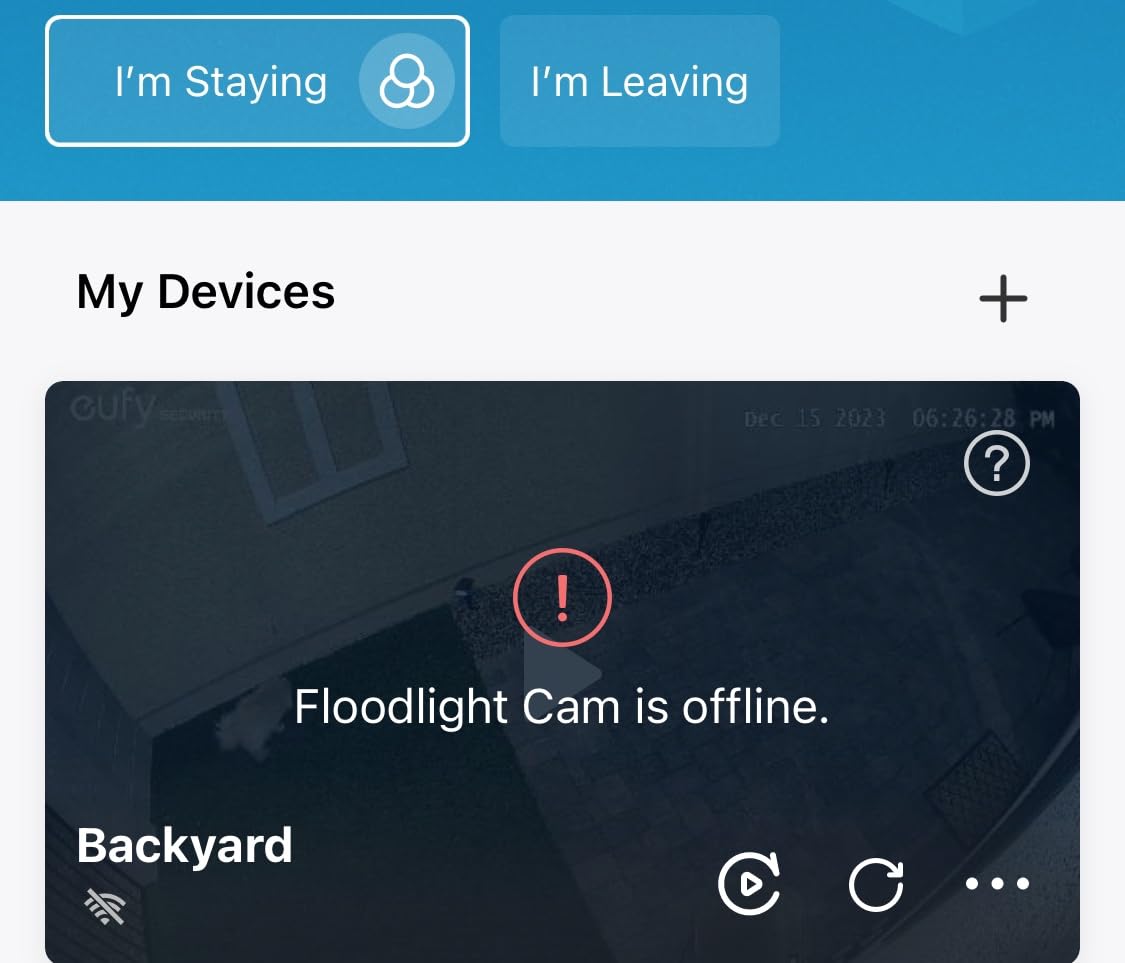
Two details separate it from the crowd. Dual-band 2.4GHz and 5GHz Wi-Fi 6 is a meaningful upgrade for a camera at the far end of a property, where 2.4GHz-only models generate offline events and slow live views. And 24/7 continuous recording to a microSD card means no plan and no monthly cost.
The compromises are real. It carries the highest hardware cost of the wired cameras here, maximum resolution drops to 2K when AI Tracking or Dual Views are active, and the pan-tilt mechanics make fine aiming a slower job than on a fixed camera.
When a telephoto lens earns its cost
Any yard where the far boundary is more than 30 feet from the mounting point. For a compact yard, a fixed 2K camera with a brighter light gives you better footage for far less money.
Deciding on the Wi-Fi question
If the mounting point is far from your router, this is the model most likely to stay connected. If it sits near the house, the 2.4GHz-only alternatives will be fine and you can put the money toward a brighter light instead.
9. Wyze Floodlight Camera Pro – Best for Three-Panel Light Control
WYZE Floodlight Camera Pro, 2.5K HD Outdoor Security Camera 3000-Lumen LEDs
3000 lumens across three panels
2.5K color night vision
180-degree field of view
10x digital zoom
Pros
- Widest fixed field of view in this group at 180 degrees
- Three independently aimable light panels
- Sharp 2.5K with dependable color night vision
- Desktop web portal alongside the app
- 24/7 local microSD recording
Cons
- Two-way talk is unusable from echo and feedback
- Motion sensitivity has no good middle setting
- AI detection misses pets and clips events short
- Confusing app menu structure
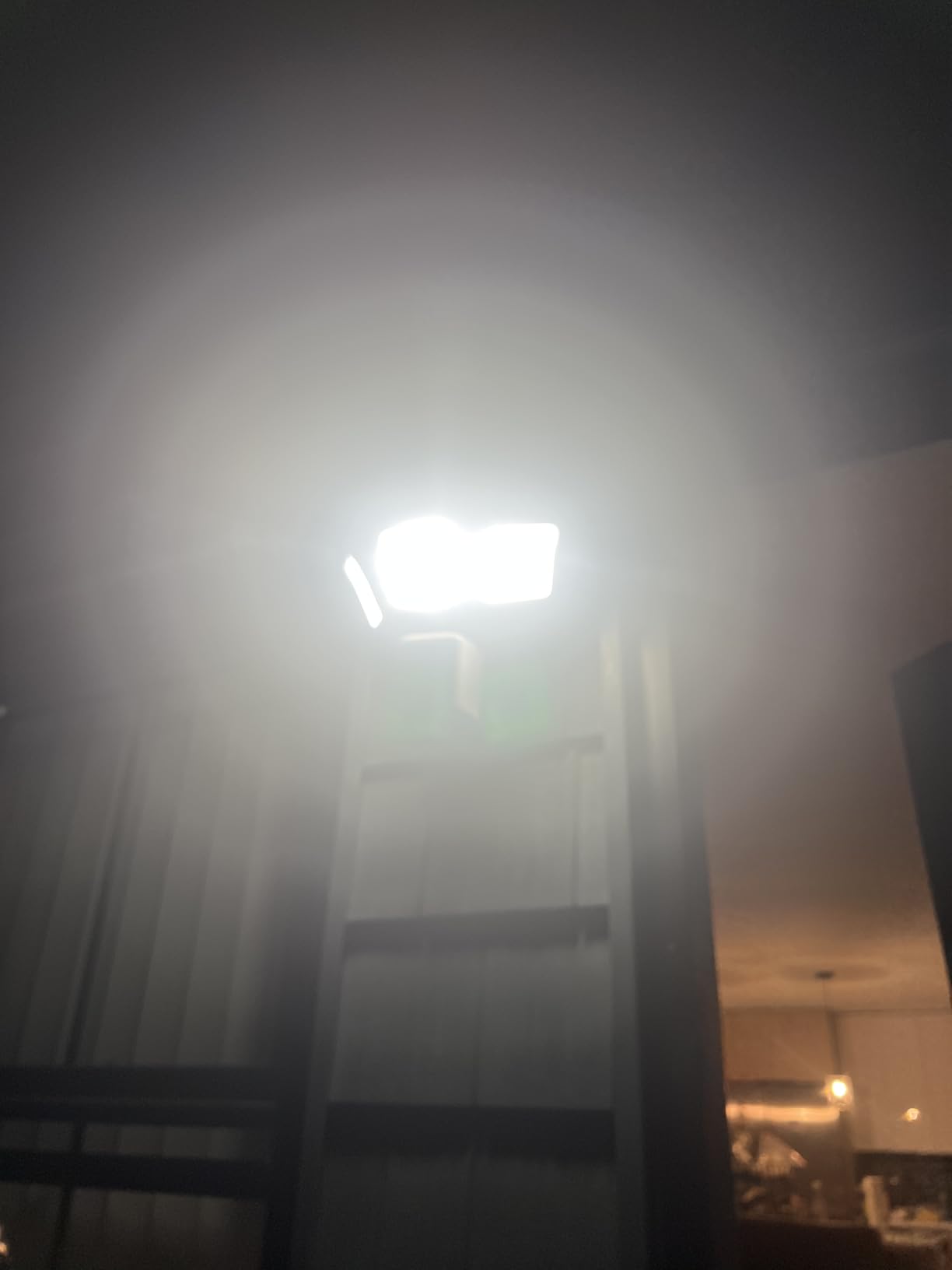
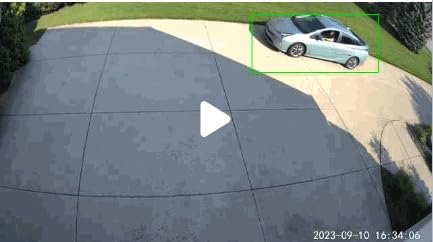
The three adjustable light panels are the feature that makes this different. You can aim one at the patio, one down the fence line and one at the gate, which solves the awkward geometry of an irregularly shaped yard far better than a single fixed head.
At 3000 lumens it delivers a large amount of light in total, and paired with a 180-degree field of view, a single mount covers a very wide sweep. The 2.5K sensor holds color at night without leaning on the floodlight.
Local microSD recording means no subscription is required, and the inclusion of a desktop web portal is genuinely useful for reviewing long clips from a laptop rather than scrubbing through a phone.
Two-way talk is the most repeated complaint, with owners describing echo and feedback that make the speaker close to useless. Motion sensitivity is also polarizing, and the app menu structure draws criticism from people who expected a more polished experience.
Why aimable panels matter more than raw lumens
Total lumens only help if they land where you need them. A fixed 2600-lumen head pointed at a wall lights the wall. Three aimed panels let you put that light on the ground where a face will be visible.
Check this before buying
If you plan to talk to delivery drivers or visitors through the camera, listen to audio reviews first. This is a strong choice for watching a yard and a poor choice for using it as an intercom.
10. eufy Floodlight Camera E30 – Best for Scheduled Auto-Patrol Coverage
eufy Security Floodlight Camera E30, 2K, AI Detection & Tracking, Outdoor
2000-lumen motion lights
2K at 20 fps
360 pan and tilt with auto-patrol
IP65 hardwired
Pros
- Scheduled auto-patrol sweeps the yard on a timer
- AI detection and tracking for people and vehicles
- 2000 lumens give full-color night footage
- Power amplifier strengthens Wi-Fi through walls
- No monthly fee
Cons
- 2.4GHz only with no 5GHz support
- 20 fps frame rate is lower than rivals
- Wired install needs an electrician at a new spot
- Smaller review base than the competition
The E30 is the model to consider if your backyard is too wide for a fixed camera and you want the coverage to happen on a schedule rather than only when something moves. Auto-patrol sweeps the 360-degree range on a timer, so the far corner gets looked at even on a still night.
It carries a 4.4 average rating, and owners consistently mention the 360 coverage, AI tracking of people and vehicles, and a signal that holds up through walls. The 2000-lumen lights give full-color footage for the patrol and the triggered views alike.
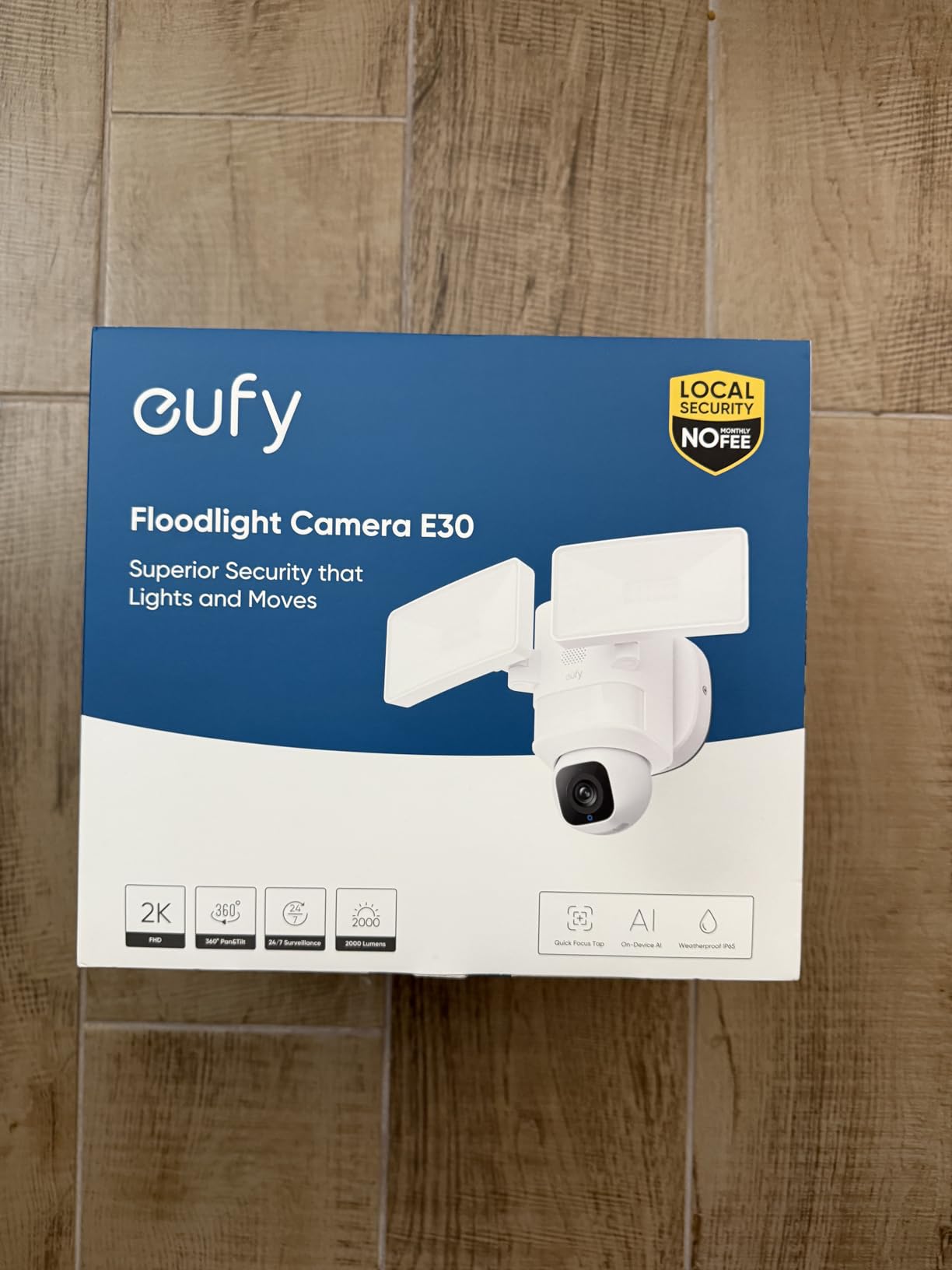
At 2K and 20 fps the video is a step below the 3K and 4K models, and the frame rate is modest, which shows on fast movement. It is 2.4GHz only, so it will not join a 5GHz-only network.
It also has the smallest review base in this group, so the long-term reliability record is short compared with models that have been shipping for years. That is a reasonable thing to weigh if you plan to depend on it nightly.
When auto-patrol earns its place
Large lots, yards with a blind corner at the property line, and any situation where you want confirmation the whole perimeter is clear rather than only an alert when something moves close in.
Comparing it to the E340
The E30 gives you the 360 sweep at a lower cost with no subscription. The E340 adds a telephoto lens for distance detail, dual-band Wi-Fi and higher resolution, which is worth it on a bigger property.
11. Ring Floodlight Cam 4K Pro – Best for 4K Night Detail
Ring Floodlight Cam 4K Pro (newest model), Wired, Retinal 4K with wide-angle video, 10x Enhanced Zoom, and 2000 Lumen Floodlights, White
Retinal 4K wide-angle video
10x enhanced zoom
2000 adjustable lumens
Low-Light Sight color
Pros
- Highest resolution option in this group
- 10x zoom for distant subjects
- Low-Light Sight gives color with lights off
- Adjustable output from 200 to 2000 lumens
- Improved bracket and wiring strap
Cons
- Most expensive model in this group
- Upgraders see little gain for the cost
- Plates at distance remain hard to read
- Light color is more yellow than earlier models
This is the resolution ceiling of the group. Retinal 4K wide-angle video with 10x enhanced zoom gives you the best chance of pulling detail out of a distant subject, and the adjustable light output lets you dial from 200 lumens up to 2000 so you are not flooding a neighbor’s window at full blast.
Low-Light Sight is the feature that changes behavior in a yard. It produces color video in near-dark conditions even with the floodlights off, which is exactly what you want for a moonlit patio at 1 a.m. when a bright light would be obnoxious.
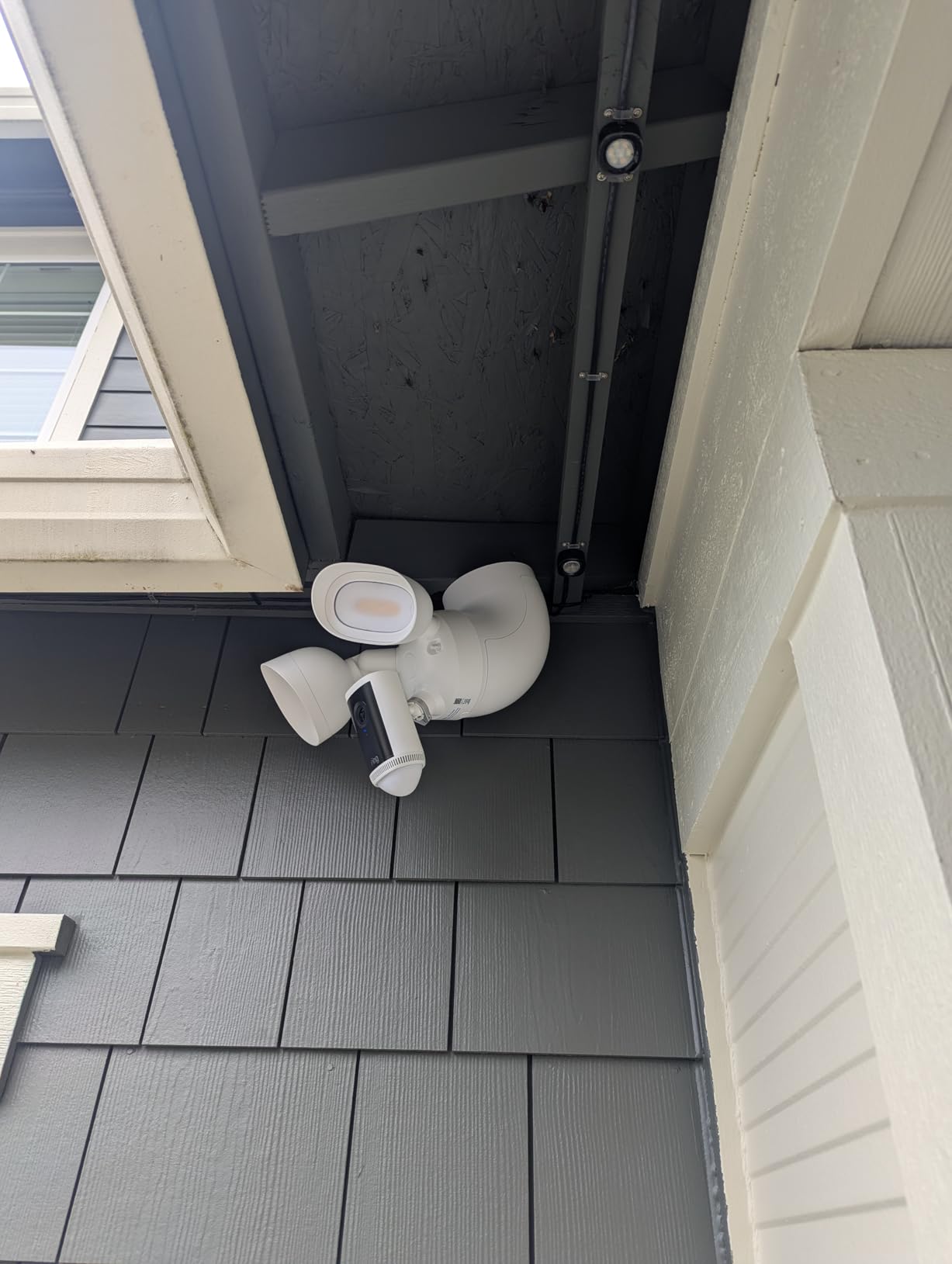
First-time buyers rate it highly. Owners who already have an earlier Ring Pro model are more measured, saying the jump from 2K to 4K is marginal and not worth the step up in cost.
Reading license plates at distance is still hard, which is a physical limit more than a resolution one. The light color also skews more yellow than previous generations, and some users report motion detection and night vision that feel similar to the prior model.
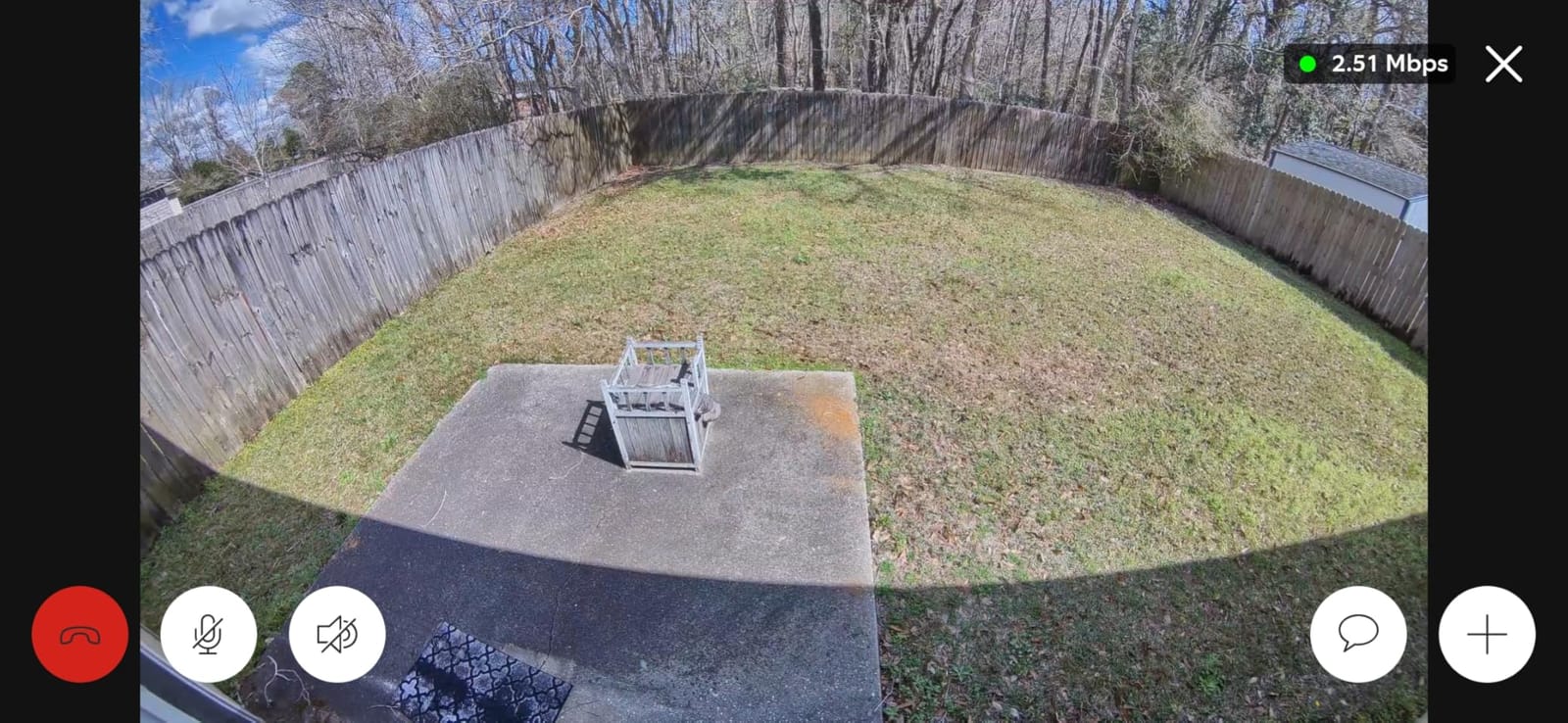
Is 4K worth it in a backyard?
If your far boundary is 30 feet or more from the mount, or you want a telephoto view of the street side of the fence, yes. For a small yard within 20 feet, a 2K camera with brighter lights produces a better image for much less.
Who should pass on it
Anyone who already owns a Ring Pro floodlight and is happy with it, and anyone unwilling to pay a subscription for storage. It sits at the top of the price range in this category.
12. Tapo C615F – Best for Wide AI Tracking on Solar Power
Tapo 2K Outdoor Pan/Tilt Wireless Floodlight Security Camera, C615F KIT
2K 3MP resolution
800-lumen dimmable light
360 pan and tilt with AI tracking
Solar panel included
Pros
- Pan
- tilt
- solar and no-fee storage in one box
- Solar panel with up to 140-day battery life
- 360 AI tracking follows people
- pets and vehicles
- Local microSD up to 512GB
- IP65 for year-round outdoor use
Cons
- 800-lumen light is dimmer than wired rivals
- 2.4GHz only
- Continuous capture needs extra hub hardware
- 3MP sensor trails 3K and 4K rivals
Out of the box you get a pan, tilt, solar power and no-fee local storage in one unit. The 360 AI tracking follows people, pets and vehicles as they cross the frame, which on a wide lawn beats trying to chase a fixed view by hand.
The solar panel is claimed to restore a full day of charge in about 45 minutes of direct sun, and the battery runs up to 140 days on a single charge, which makes this a genuinely low-maintenance install for a gate or a shed wall.
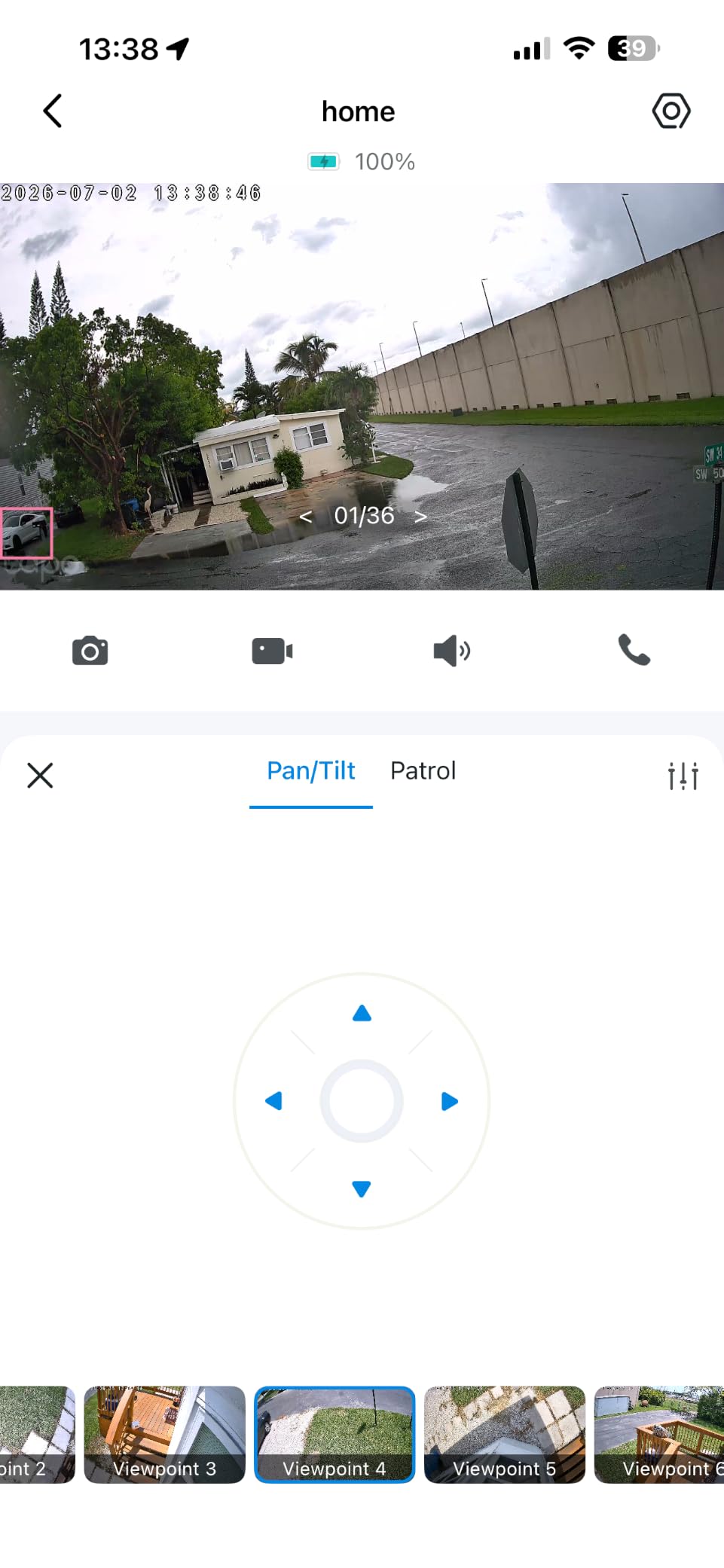
Owners see it as the same core feature set as cameras costing twice as much, with 2K resolution at 3MP and IP65 weather sealing for year-round exposure.
The 800-lumen light is the honest limitation. It is bright enough to startle someone at a gate but not enough to identify them across a lawn, and continuous capture plus hub features require additional hardware.
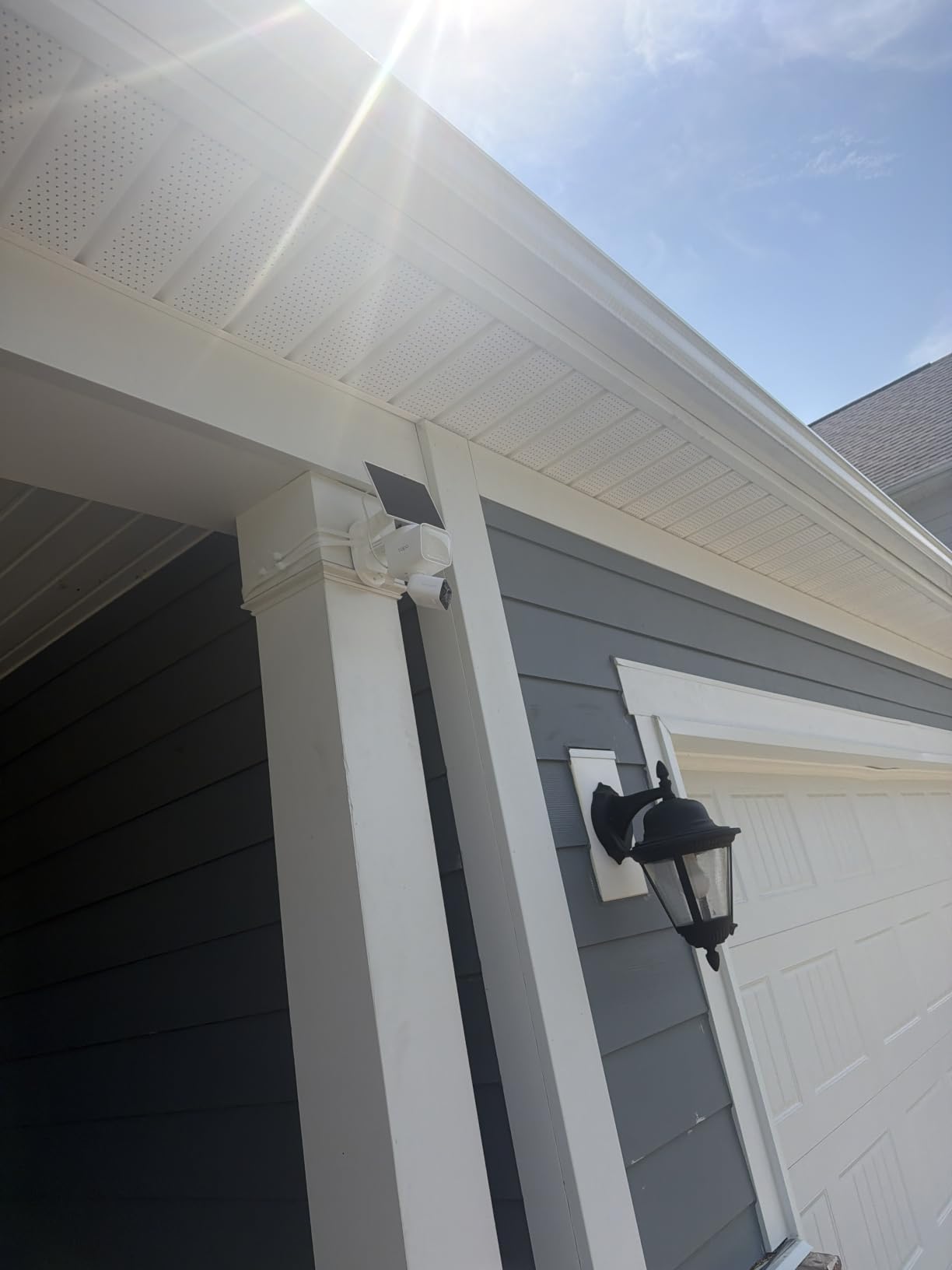
Best role in a backyard setup
Use it where you need eyes rather than light: a back gate, a side-yard passage, a driveway approach or a detached structure. Pair it with a brighter wired unit for the areas where identification matters.
What to check first
It is 2.4GHz only, so confirm your network is not set to 5GHz only before ordering. It is also a newer model with a shorter long-term reliability record than the established names.
How to Choose a Backyard Floodlight Camera
Most buyers lose money here by weighing resolution first and coverage second. For an outdoor camera, illumination decides whether a clip is usable at all, so work through brightness, coverage and power before you look at megapixels.
Brightness: how many lumens a backyard actually needs
The useful residential range sits between about 1500 and 3000 lumens. Under roughly 1500, footage degrades quickly past 20 feet and you get a bright spot with darkness beyond it. Above 2000, you can identify clothing color and approach a face across a mid-size yard.
Brightness is also a neighbor issue. A 2600 or 3000 lumen fixture that fires at full output in the middle of the night is exactly the kind of thing that generates complaints, so any model with dimming or adjustable output is worth paying a little more for. Aim the heads down at your own ground rather than across it.
Resolution and how far you can identify a face
At night, a lit 1080p frame beats an unlit 4K one. Use resolution to recover detail within the lit area, and treat the floodlight as the tool that sets the range. Roughly, 1080p is fine inside about 20 feet, 2K to 2.5K pushes toward 30 feet, and 4K with zoom helps beyond that.
A dual-lens model with a telephoto is the real answer for long distances, because it gives you one wide view and one narrow view from the same mount. For more of the fundamentals, our guide to floodlight cameras covers the hardware side in more detail.
Wired, battery or solar
Hardwired models are more reliable, brighter and cheaper over a five-year span. They require an existing outdoor fixture or a junction box at the mounting point, and that is the single biggest factor in whether a given model suits your yard.
Battery and solar models exist to solve access, not to compete. Choose one where there is genuinely no power available, such as a detached garage, a far fence line or a rental property, and choose hardwired everywhere else.
Local storage versus a cloud subscription
This is where the real cost lives. Over five years, a monthly plan on a single camera can exceed the hardware cost several times over, and it also gates features you may want on day one, such as person detection, clip length or AI summaries.
The subscription-free picks in this group are the Wyze Floodlight v2 and Pro, the eufy E340 and E30, and the Tapo C615F, all of which record to a microSD card or onboard memory. The Ring and Blink wired models, and the Arlo, treat a plan as the route to anything beyond live view.
Coverage and ecosystem
Fixed cameras cover a cone and leave wedges at wide yards. Pan and tilt models cover a room, at the cost of aiming speed and, on some models, resolution while tracking. For large backyards, treat the pan-and-tilt models as worth the trade.
Also decide which app you will live in before you buy. Ring, Blink, Arlo, eufy, Wyze and Tapo each have their own ecosystem, and the Arlo is the one here that works with Alexa, Apple Home, Google Home, SmartThings and IFTTT simultaneously.
Where to Mount a Floodlight Camera in a Backyard
Most backyard cameras are mounted in the wrong place, usually on the wall nearest the door because that is where the power is. A better result usually means running power further, or accepting a different model.
For a wide yard, mount on the house wall at about 9 to 10 feet and use a pan-and-tilt model, or accept two units. A single fixed camera at one corner cannot cover the opposite corner without severe fisheye distortion.
For the back gate, aim from the house toward the gate rather than the reverse, so the camera records faces approaching rather than backs. For a driveway, place the unit high enough to see plates and low enough that the light reaches the pavement, not the neighboring house.
Over a pool or pond, expect glare off the water surface at night. Mount above and to one side rather than directly opposite, so the floodlight bounces across the water instead of reflecting into the lens. Under a deck or pergola, note that the light heads will be blocked from above and a separate light source may be needed for the area beneath.
Shade matters as much as angle. If you are adding a covered seating area or a growing space in the same yard, our picks for motorized awnings for backyards and greenhouses for backyards are worth reading before you fix the camera height, because both change how much ambient light reaches the mount after dark.
For a detached garage or shed, a solar or battery model removes the electrician entirely. If a tree canopy covers the intended spot, either clear the sightline or move the mount, since both the motion detection and the light are blocked by foliage.
Check Your Power at the Mounting Point Before You Buy
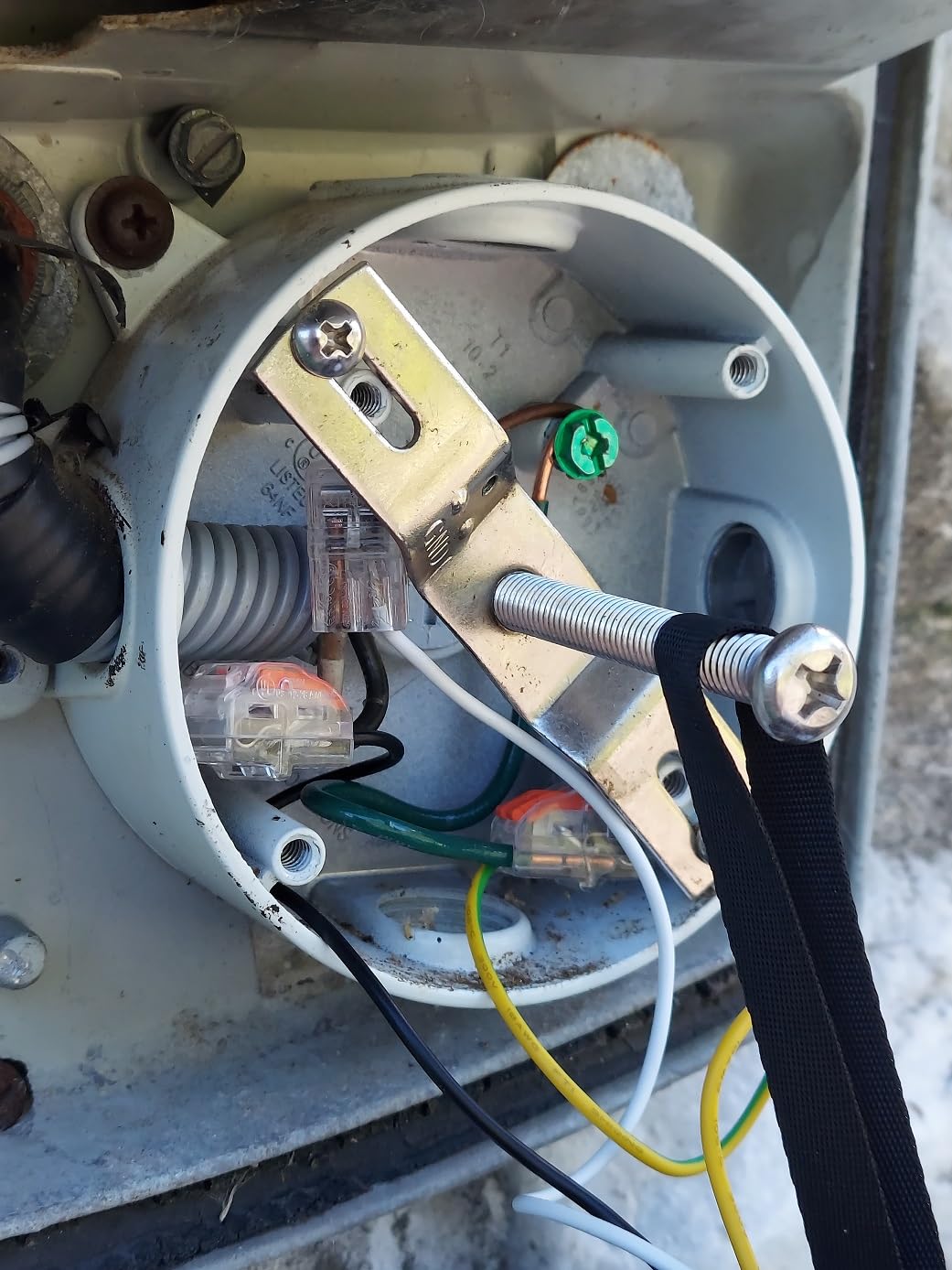
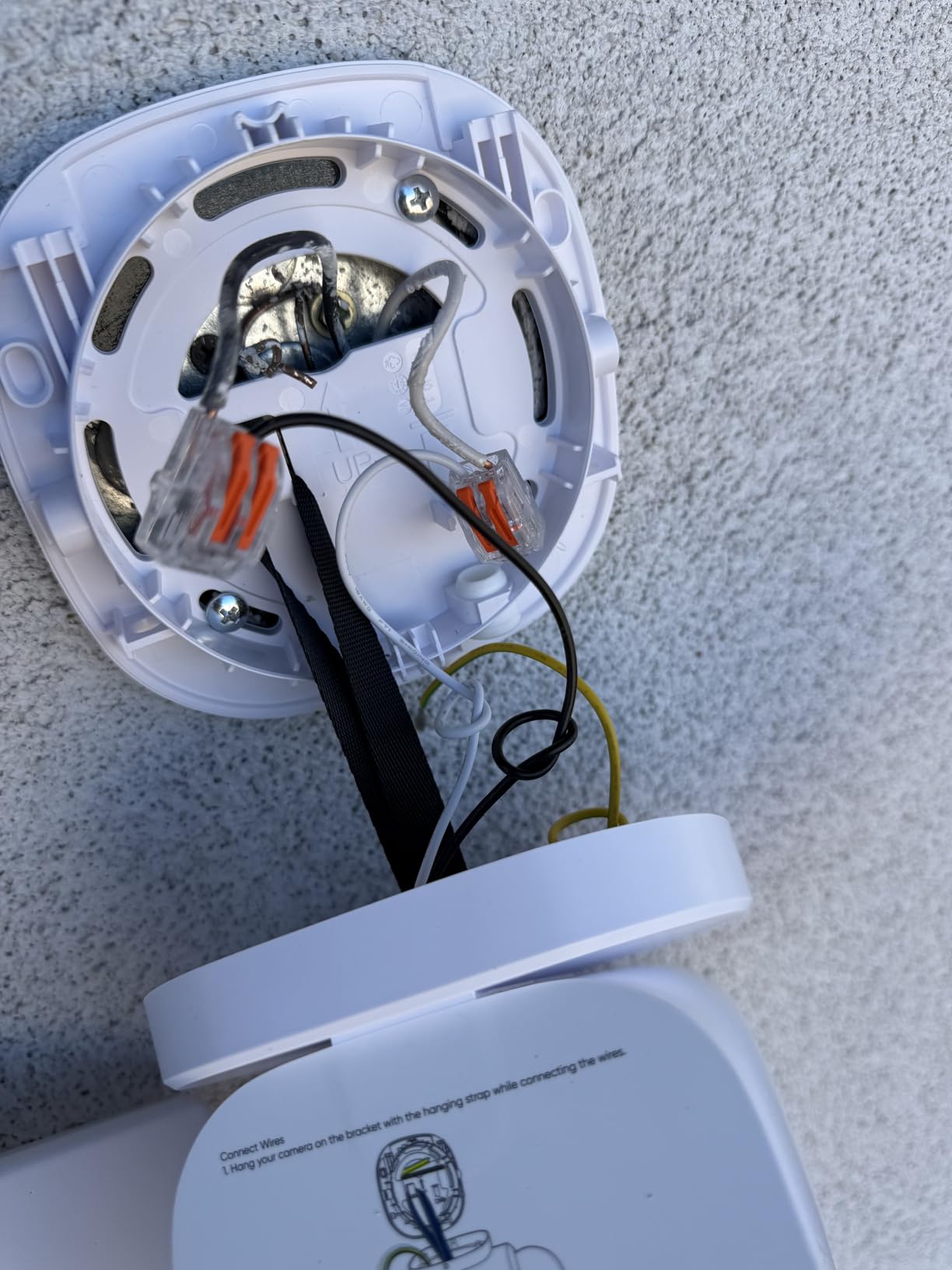
Almost every hardwired floodlight camera in this list needs a junction box, and finding out after purchase is how people end up with an unusable camera on a shopping cart for a month. Check first, in this order.
Look at the wall you have in mind for an existing outdoor fixture. If there is a light there now, there is almost certainly a box behind it. If the wall is blank, look for a nearby outlet, a downspout or an exterior junction box, which are often disguised as a small metal cover.
Shut off the breaker for the circuit and use a non-contact voltage tester at the box before you commit to a model. If there is no power, you have three options: run a new line, use a battery or solar model, or place the camera where power already exists.
Be realistic about the cost of a new circuit. Forum users regularly report quotes in the range of 150 to 300 dollars for an electrician to run a line to a detached wall, which changes which camera makes sense financially. For yards you are planning to stay in, the hardwired route is worth it; for rentals and short stays, it is not.
How to Stop False Alerts From Moths, Raccoons and Trees
False alerts are the most common complaint in this category, and a bright light near a lens is a magnet for insects. Moths drawn to the beam can trigger a camera several times an hour on a warm night, which is the fastest way to make someone mute the notifications.
Start with zones. Every model here supports some form of activity zone, and restricting detection to the ground you care about removes a large share of alerts from a swaying tree line or a street beyond the fence.
Next, tune sensitivity rather than disabling it. Turning detection down until it catches only large movement is the practical fix for branches, and AI person or vehicle filtering, where available, removes most animal triggers including raccoons and cats.
Adjust light duration so the beam does not run for five minutes on a moth. Shorter duration plus a slightly dimmer setting at night cuts insect activity at the lens and reduces the glare your neighbors complain about at the same time.
Will a Floodlight Camera Annoy Your Neighbors?
It can, and it is worth planning for. The complaints people hear about are almost always about light rather than cameras: a 2600-lumen head at full output firing at one in the morning over a fence line is a genuine nuisance.
Three habits prevent most of it. Aim the heads down so the light lands on your own ground, set the light duration to the shortest interval that still does the job, and use motion zones so the beam only fires on your property. Adjustable output, which the Wyze Pro and the Ring 4K Pro offer, helps you run a gentle ambient level instead of full blast.
It is also worth being clear with yourself about what the camera is for. The most common outcome people report from a backyard floodlight is deterrence, someone looking up at a light that came on and walking away, rather than catching anyone committing a crime.
Frequently Asked Questions
What is the best floodlight for my backyard?
The Ring Floodlight Cam Wired Plus is our top pick for most backyards. Its 2000-lumen motion-activated lights record full-color video instead of infrared grey, it swaps onto an existing outdoor fixture in about half an hour, and it carries the largest owner base in the category. For a large yard where you need to identify someone at 30 feet or more, the eufy Floodlight Camera E340 with its dual 3K and 2K lenses is the better tool.
What is the best outdoor security camera without a subscription?
Five models here record to a microSD card or onboard memory with no monthly fee: the Wyze Floodlight Camera v2, the Wyze Floodlight Camera Pro, the eufy Floodlight Camera E340, the eufy Floodlight Camera E30 and the Tapo C615F. The Wyze v2 offers the best balance of 2800 lumens, 2K color night vision and 24/7 local recording. Ring, Blink wired and Arlo treat a plan as the route to anything beyond live view.
Does a floodlight camera need a junction box?
Almost every hardwired floodlight camera does. If there is an existing outdoor light fixture on the wall you want to use, there is nearly always a junction box behind it, and the swap takes roughly 20 to 35 minutes. If the wall is blank, you need a new circuit run by an electrician, which owners report costing around 150 to 300 dollars, or you should choose a battery or solar model such as the Tapo C615F or the eufy SoloCam S340.
How high should a floodlight camera be mounted?
Mount at about 9 to 10 feet for most backyards. That height is high enough to discourage tampering and to see over obstacles like planters and patio furniture, while keeping the floodlight heads able to wash the ground below. Lower mounts look more detail-heavy but invite tampering, and much higher mounts create a steep viewing angle that hides anything directly beneath the camera.
Should a security camera be above or below an existing floodlight fixture?
Replace the existing fixture rather than stacking a second device beneath it. A floodlight camera contains its own camera and its own light heads, so the correct position is exactly where your current fixture is mounted. Mounting a separate camera under a working floodlight leaves you paying for two lights and dealing with glare from the fixture above.
How bright should a floodlight camera be for a backyard?
Aim for 1500 to 3000 lumens. Below roughly 1500, footage becomes unusable past about 20 feet because you are recording a bright patch surrounded by darkness. Between 2000 and 3000 lumens you can identify clothing color and approach a face across a mid-size yard, and any brightness beyond that mainly benefits very large properties.
Final Verdict: Which Backyard Floodlight Camera Should You Buy?
For most backyards, the Ring Floodlight Cam Wired Plus is the pick. Bright 2000-lumen motion lights, dependable night video, a straightforward install on an existing fixture and the largest body of real-world feedback in the category make it the safest choice in 2026.
Choose the eufy Floodlight Camera E340 instead if your yard is wide and you need to identify people at distance, since its dual lenses and 360-degree pan cover what a fixed camera cannot. Choose the Wyze Floodlight Camera v2 if you refuse a monthly fee, and the Tapo C615F or eufy SoloCam S340 if there is no power at the mounting point.
Before you order anything, walk out to the wall you have in mind and confirm there is a fixture or junction box there. That single check will narrow this list of twelve down to the right model faster than any other step. For the rest of your yard, our backyard setup guides cover the other upgrades that pair well with better lighting, and if composting is next on your list our picks for compost tumblers handle the yard waste that lighting makes visible.