
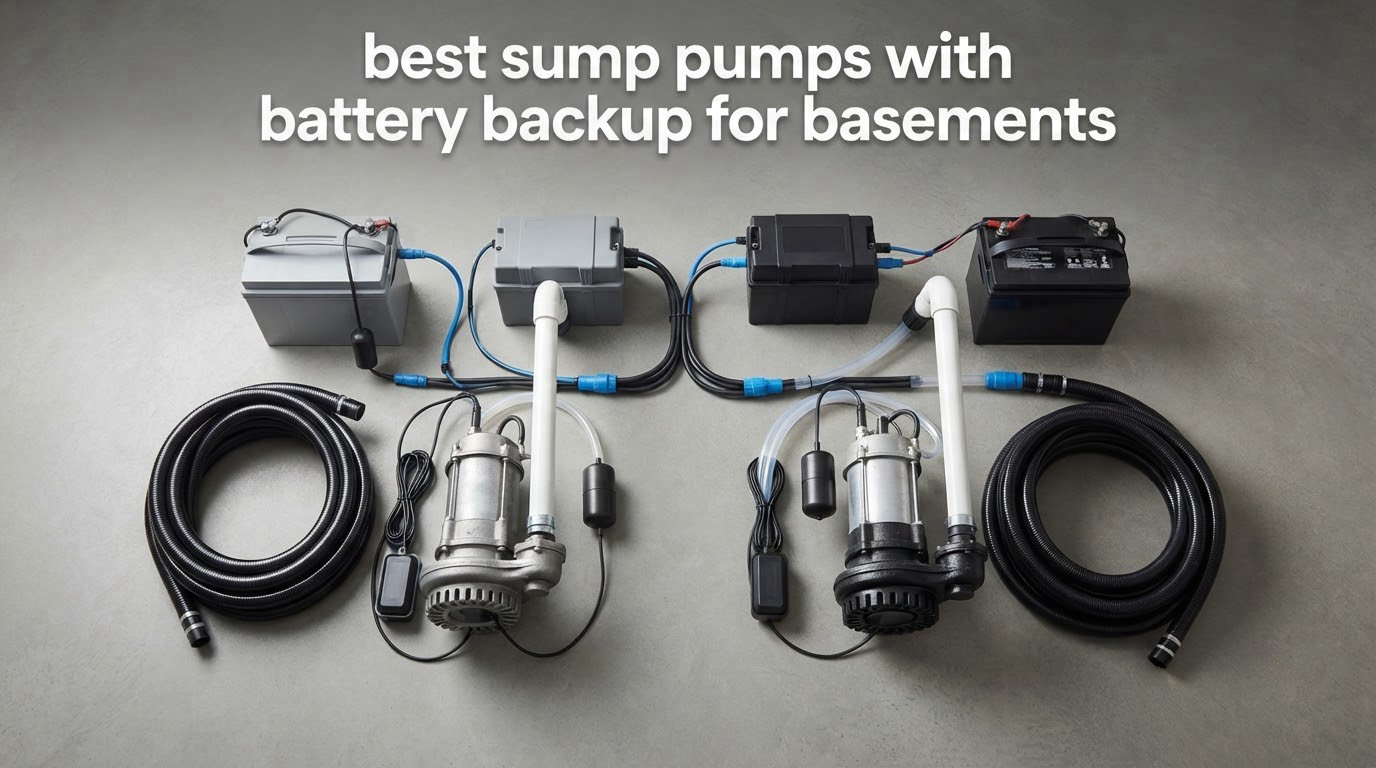
Short answer: if your basement has a sump pump and you have ever lost power during heavy rain, you need a battery backup. Sump pumps fail most often in exactly the storms that flood basements, because those are the storms that cut power. A backup gives you extra pumping hours when the primary goes quiet.
That is the whole argument for spending money here. The rest of this guide is the detail: which backup actually protects you, how long each one runs on a real battery, and which problems show up in the first three years.
We compared 10 battery backup sump pump systems across four brands, weighing published flow rates, lift ratings, float switch design, charger type and warranty coverage, then cross-checked against what homeowners report after a few seasons of storm duty. These are the best sump pumps with battery backup for basements in 2026 — from pre-assembled combo systems you drop into the pit to compact backup-only units that pair with the pump you already own.
If you have not chosen a primary pump yet, start with our guide to the best sump pumps for basements first. It covers the main pump types and sizing, which matters because your backup only performs as well as the pit and primary it shares.
Table of Contents
Top 3 Picks for Basements With Outage Risk
These three cover the situations we see most often: a standard residential basin with a reliable primary, a tight pit where floor space is the constraint, and a high-inflow area where the water arrives faster than a small backup can move it.
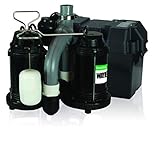
Wayne WSS30VN Combo
- 1/2 HP primary with 5100 GPH output
- Drop-in base for 16 inch and larger basins
- Audible power-failure and activation alarms
- 3 year manufacturer warranty
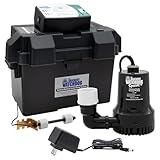
Watchdog Special CONNECT
- Compact quarter HP backup pump
- 2500 GPH at zero feet of lift
- Fits narrow or small sump pits
- Battery fluid level sensor included

Watchdog Big Combo CITS-50
- Cast iron half HP primary at 4400 GPH
- Backup rated 2890 GPH at zero feet
- Self-diagnosing 24 hour monitoring controller
- Two batteries can be paralleled
The Wayne system is the one we would install in our own basement. Its 1/2 HP primary is the highest rated in this group and the base is designed to drop straight into a standard basin. If your pit is cramped, the Watchdog Special CONNECT takes up almost no room. If your water table is high, the Big Combo has the primary capacity to keep the water level down so the backup only has to handle the overflow.
10 Best Sump Pumps With Battery Backup at a Glance (October 2026)
This table lists every system in the guide with its core rating. Two of them are combo units with both pumps in one base, and six are backup-only designs that sit alongside a primary you already own.
| Product | Specs | Action |
|---|---|---|
| Wayne WSS30VN Preassembled Combo |
|
Check Latest Price |
| Basement Watchdog Special CONNECT BWSP |
|
Check Latest Price |
| Basement Watchdog Big Combo CITS-50 |
|
Check Latest Price |
 SEC America 822PS Pump Sentry SEC America 822PS Pump Sentry |
|
Check Latest Price |
 Basement Watchdog Combo CITE-33 Basement Watchdog Combo CITE-33 |
|
Check Latest Price |
 Zoeller Aquanot 508 Battery Back-Up Zoeller Aquanot 508 Battery Back-Up |
|
Check Latest Price |
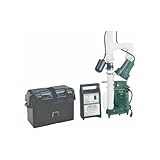 Zoeller Basement Sentry 507 Zoeller Basement Sentry 507 |
|
Check Latest Price |
 Westinghouse WH50BBU Combo Westinghouse WH50BBU Combo |
|
Check Latest Price |
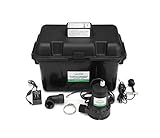 Star Basement Sentry STBB100 Star Basement Sentry STBB100 |
|
Check Latest Price |
 Liberty Pumps 441 Backup System Liberty Pumps 441 Backup System |
|
Check Latest Price |
Note that eight of these ten systems do not include a battery. That is normal for this category and it is the single most common surprise for first-time buyers.
1. Wayne Preassembled Primary and Battery Backup Combo — Best Overall
Wayne Preassembled Primary & Battery Backup Sump Pump Combo System
1/2 HP primary at 5,100 GPH
Standby 12V backup pump
44 pounds, 13.5 by 9 by 15.5 inch
3 year warranty
Pros
- Preassembled drop-in design installs in about 15 minutes
- Very quiet operation including the check valve
- Half HP primary clears heavy inflow fast
- Loud audible alarms for power loss and backup activation
- Assembled in the USA with a 3 year warranty
Cons
- Backup pump runs a preset 20 second cycle instead of stopping when the pit empties
- Fixed voltage charger can shorten unsealed battery life
- Backflow valve nuts may need tightening after install
- Wide base may barely clear an 18 inch round pit
The Wayne WSS30VN is the only unit here that pairs a genuinely powerful primary with a standby pump in a single molded base. The primary is a 1/2 HP motor rated to move 5,100 gallons per hour, and the manufacturer claims the backup can evacuate up to 10,000 gallons on one charge. In our comparison of published specs, that is the highest primary output of any combo unit in this guide.
Installation is where this system really separates itself. Owners consistently report a drop-in install of roughly 15 to 20 minutes because the discharge plumbing, check valve and union are already assembled. A r/HomeImprovement user in Wisconsin reported installing a comparable pre-plumbed combo from the same category in about 20 minutes with no complications. That matters because new discharge plumbing is the expensive part of any sump pump job.
Noise is the second surprise. Reviews describe the pump as extremely quiet, including the check valve, which is usually the rattle source in a finished basement. If you have a finished ceiling directly over the pit, this one will not keep you awake.
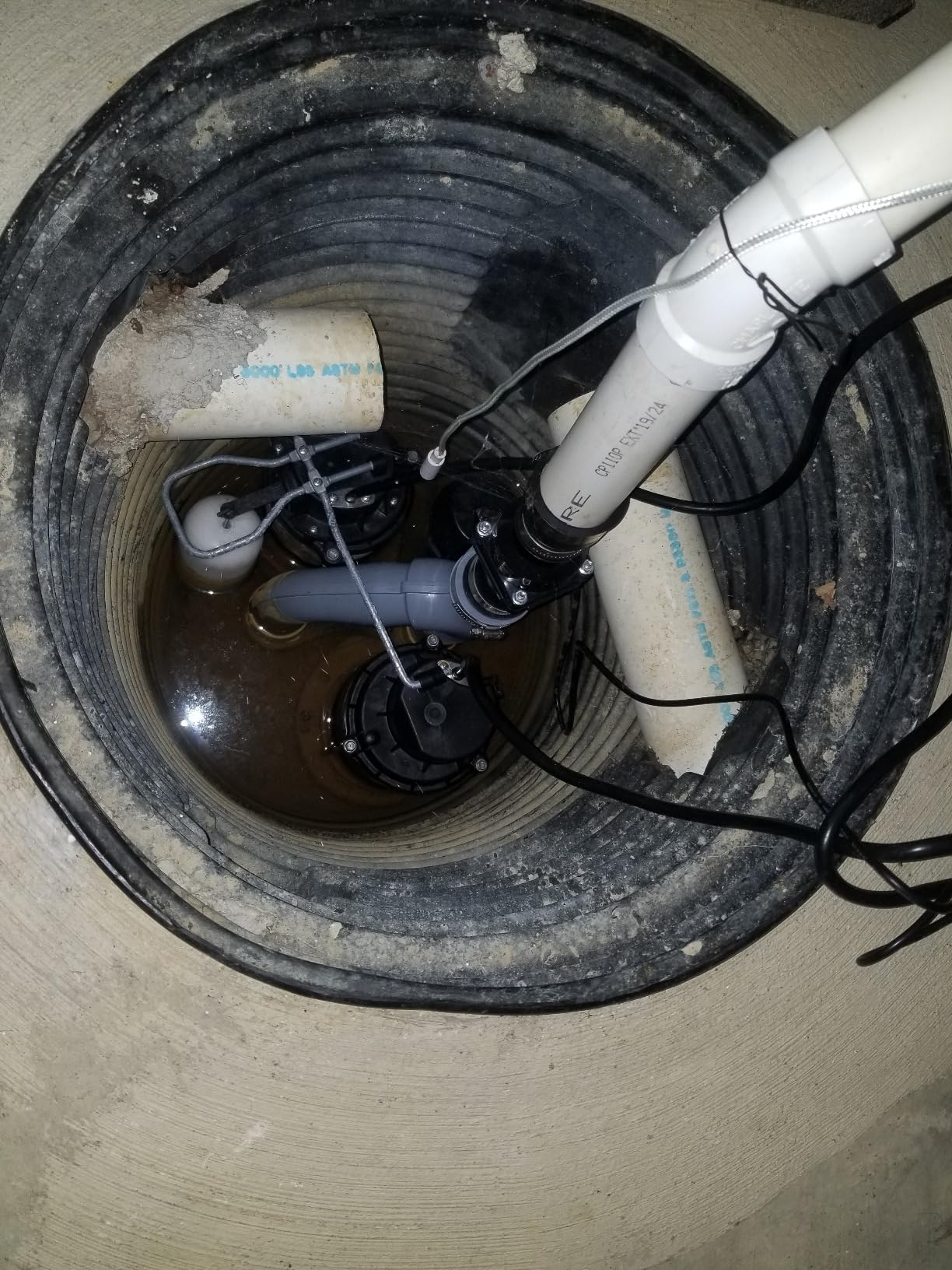
The design detail worth understanding before you buy is the backup run cycle. The DC pump runs for a preset period and does not stop when the water level drops, which means the float has to be set high enough that the pump stops before it runs dry. Set it wrong and the pump cycles continuously, which drains the battery faster and shortens battery life.
The charger is a fixed voltage unit, and Wayne recommends sealed batteries only. An unsealed battery on a fixed voltage charger will lose water and die early. Owners also report that the backflow valve nuts are not tightened at the factory and can weep until you snug them yourself, which is a five-minute fix worth doing before the first storm.
Is the pit footprint a problem?
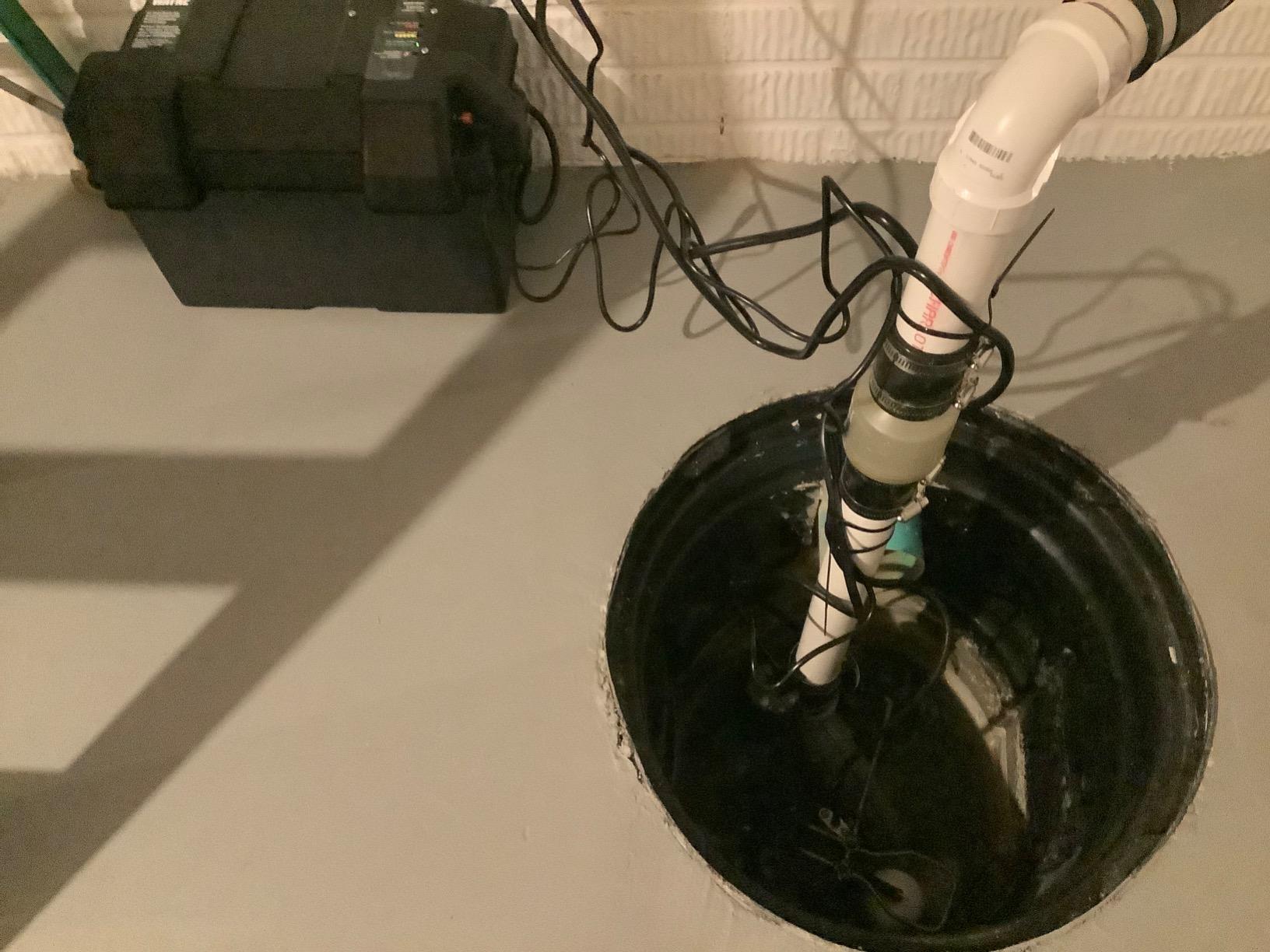
The base measures 13.5 inches long by 9 inches wide and is designed for basins 16 inches in diameter or larger. Several owners with older 18 inch round pits report it fits, but only just. If your existing pump sits in a 14 inch basin, this is the wrong unit.
Two pumps sharing one basin needs roughly 16 inches of diameter before you factor in the discharge lines and float switches. Measure the inside diameter and the vertical distance from the basin floor to the incoming drain line before you order anything.
Who should skip this combo?
Skip it if your current primary pump is still young and working well. You would be discarding a functioning pump and the discharge line to gain a preassembled base you could achieve with a standalone backup added to what you have.
Also skip it if you insist on remote monitoring. This system has audible alarms and lights but no WiFi module, so you find out about a problem when you are standing in the basement, not on your phone.
2. Basement Watchdog Special CONNECT — Best for Tight Basement Pits
The Basement Watchdog Special CONNECT Battery Backup Sump Pump System w/Copper-Wound Motor, 2,890 GPH (BWSP); WiFi-Capable w/Add-on Module
Backup only, quarter HP, 2500 GPH at 0 ft
9 by 5 by 7.63 inch body
12 pounds
2 year warranty
Pros
- Compact body fits small and narrow sump pits
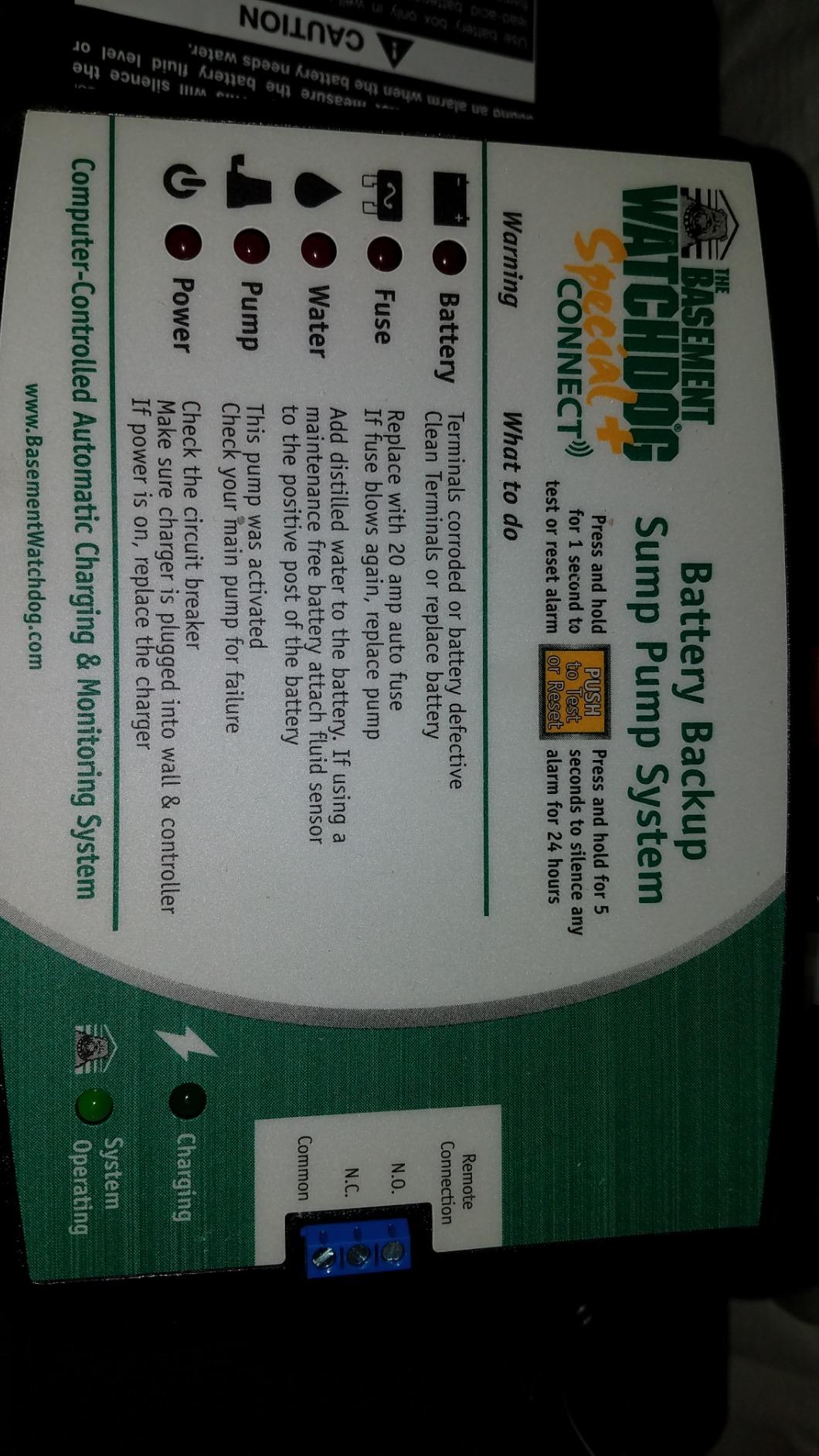
- Control panel lights up with a written warning on what to do
- Sensor monitors battery fluid levels
- WiFi capable with an add-on module
- Controller charger dual float switch and battery box included
Cons
- Battery sold separately and must be added to the order
- Backup-only design needs an existing primary pump
- Limited to 10 feet of maximum lift
The Special CONNECT is a backup-only system, which is exactly what many basements need. It measures 9 inches long by 5 inches wide and weighs 12 pounds, so it drops into a pit alongside almost any existing primary pump without the clearance problems that hit wider combo bases.
Its output is 2,500 gallons per hour at zero feet of lift, falling to 1,730 gallons per hour at 10 feet. That drop-off matters more than the headline number, so size against the vertical lift in your installation rather than the zero-lift rating.
The control panel is the part owners mention most. It lights up with a warning and tells you what to do rather than showing a code you have to decode. A sensor also watches the battery fluid level, which gives you an early signal on a battery that is losing water, the failure mode that catches most owners by surprise.
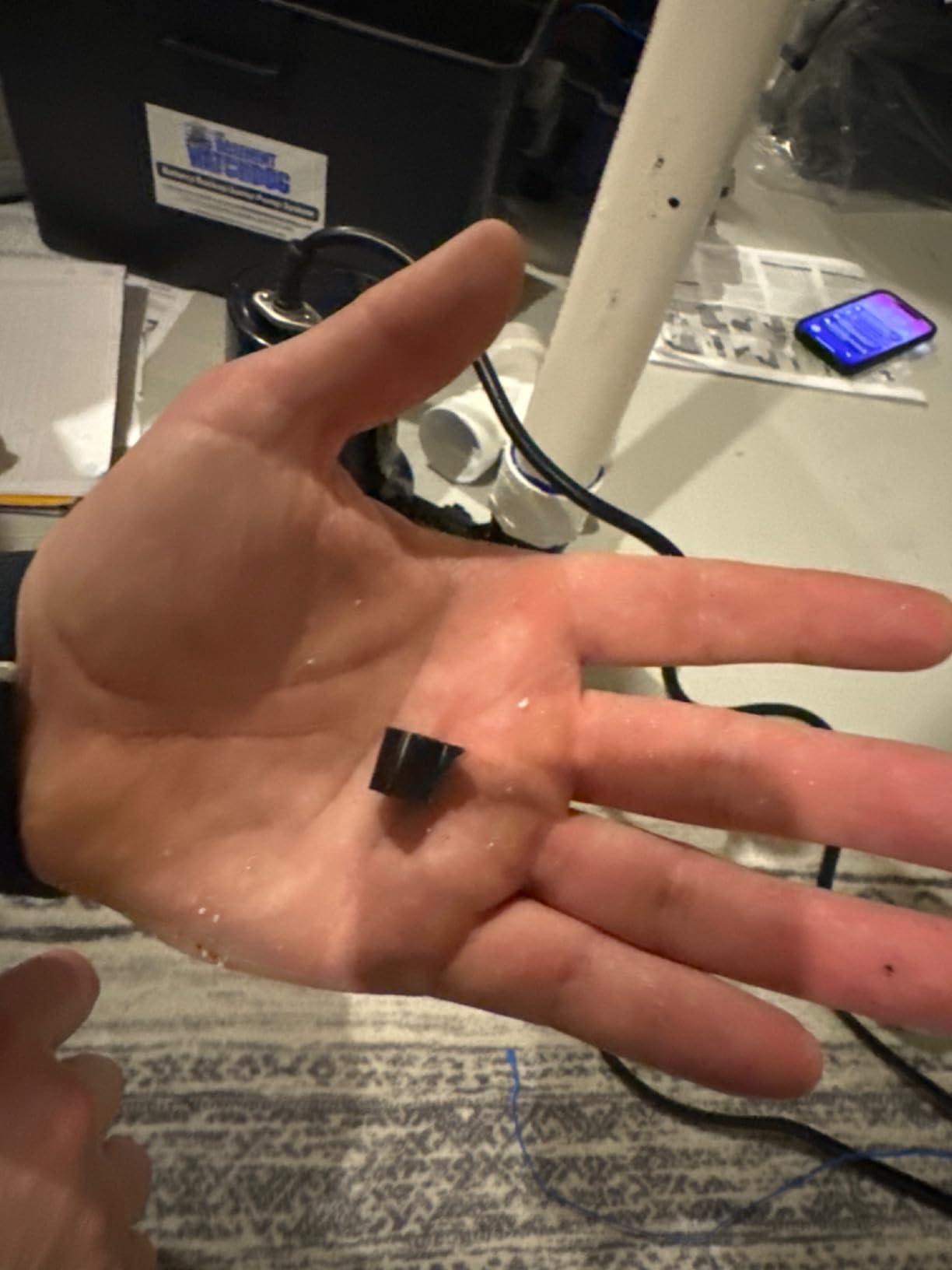
This is also the one unit in the group that is WiFi-capable through an add-on module. The module costs extra and is a separate purchase, but it turns the system into something that can send alerts to your phone. For a rental, a second home or a finished basement you are not in every day, that is worth the extra spend.
Basement Watchdog has been building battery backup systems for decades, and a Bogleheads thread describes the system as reasonably priced and pretty reliable. The same thread puts realistic battery system run time at one to four hours, which is a useful expectation to set before you buy any of these.
Does it work with any existing pump?
Yes, and that is the main argument for it. The controller, charger, dual float switch, pump and battery box all come in one kit, so you are adding protection to a primary you already own. You supply the deep-cycle battery and the plumbing connection.
The one limit is lift. This unit is rated to 10 feet of maximum lift. If your pit is deep or your discharge line runs uphill a long way, look at a higher-output unit like the Aquanot 508 instead.
Who should skip this unit?
Skip it if you want a single purchase that also replaces a tired primary. This is a second line of defense, not a replacement, and you still need a working main pump for it to matter.
Skip it if you are on well water and hoping for a water-powered alternative later. This is a battery design with no municipal supply requirement, which is actually the reason to buy it in that situation.
3. Basement Watchdog Big Combo CONNECT — Best for Heavy Inflow
The Basement Watchdog Combo Preassembled Primary & Battery Backup Sump Pump System w/Monitoring Controller (CITS-50); Copper-Wound PSC Motor; WiFi-Capable w/Add-on Module
Cast iron 1/2 HP primary at 4400 GPH
Backup at 2890 GPH at 0 ft
25 foot lift rating
27 pounds
Pros
- Preassembled and preplumbed for a fast install
- Cast iron 1/2 HP copper-wound PSC primary motor
- Monitoring controller explains the required maintenance
- Accepts two batteries in parallel for double runtime
- Works with AGM or wet-cell batteries
Cons
- WiFi module is a separate purchase
- Backup output is well below the primary output
- Warranty terms are less specific than some competitors
The CITS-50 is built for basements where water arrives faster than a small pump can handle. The cast iron primary is rated to 4,400 gallons per hour at zero feet of lift and 3,540 gallons per hour at 10 feet, with a lift rating to 25 feet.
Its backup is rated at 2,890 gallons per hour at zero feet and 2,150 gallons per hour at 10 feet. That is the highest backup figure in this guide, so when the primary fails under a hard storm this system still moves meaningful water.
The real differentiator is the monitoring controller. Rather than just lighting a red LED, it identifies the condition and describes the maintenance needed. For a homeowner who does not know whether a fault means a stuck float, a dead battery or a tripped motor, that removes most of the diagnostic work.
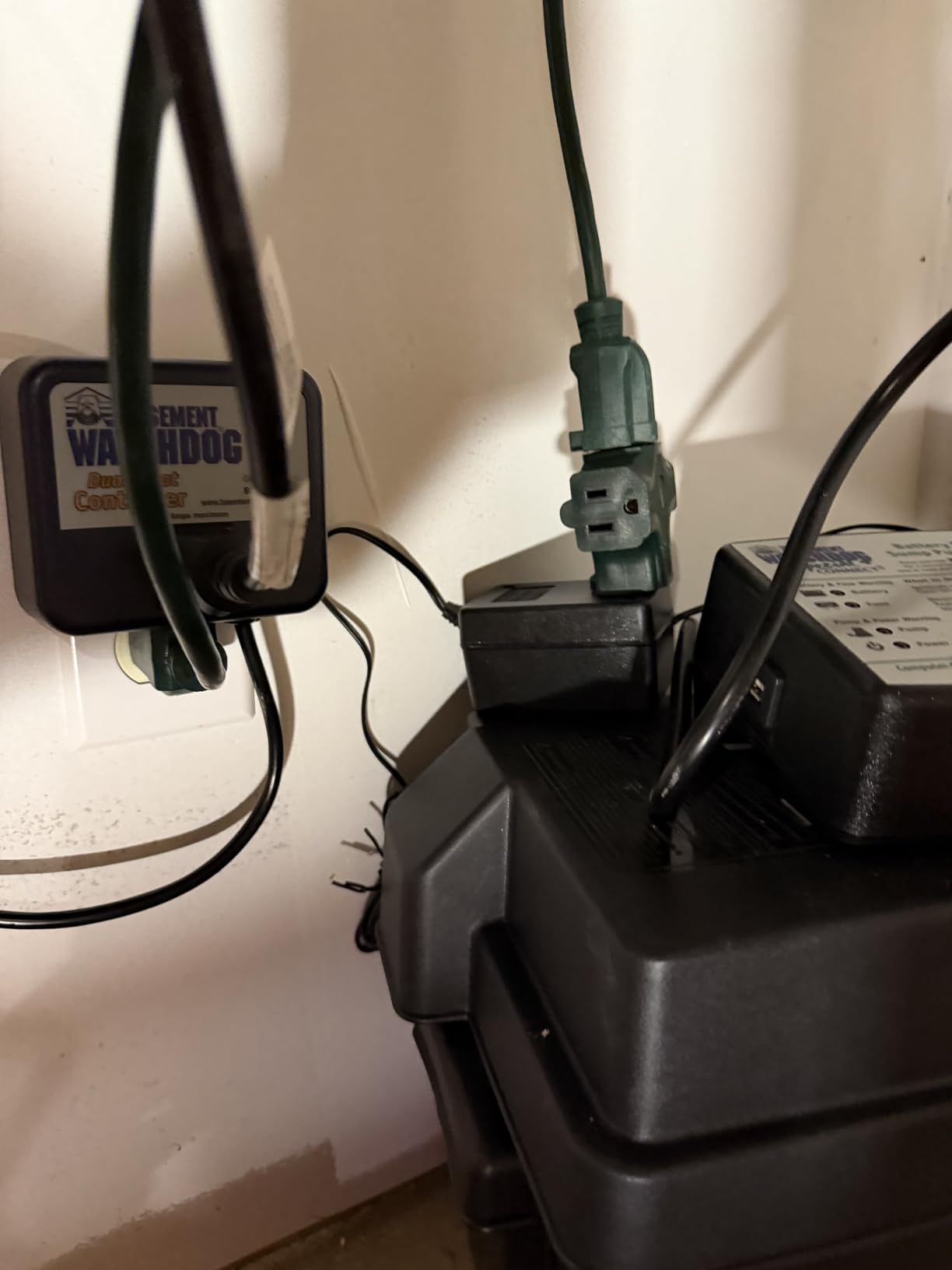
You can run two batteries in parallel to roughly double run time, which is the single most effective way to extend outage coverage. You can also use either AGM or wet-cell batteries, so you are not locked into one chemistry.
Owners like the preassembled plumbing. The recurring complaint is that the WiFi add-on module for text, email and push alerts costs extra, and that the gap between primary and backup output feels larger than expected. Both are accurate, and neither is a reason to skip it if your inflow is high.
Is a cast iron primary worth the extra weight?
At 27 pounds this is a heavy unit, and that weight is cast iron on the primary housing. Cast iron resists corrosion and handles abrasive water better than thermoplastic, which matters on a high water table where sand and grit ride in with the groundwater.
If your water is relatively clean, a thermoplastic system will serve you fine. If you have never had to replace a pump from corrosion wear, cast iron buys you time.
Who should skip this combo?
Skip it if your primary pump is new and your pit has plenty of room. Adding a compact standalone backup to a good primary is cheaper than replacing a working pump plus base.
Skip it if phone alerts are non-negotiable and you are not willing to buy the module separately. Read the WiFi language carefully, because the system itself is WiFi-capable rather than WiFi-equipped.
4. SEC America 822PS Pump Sentry — Best for Keeping Your Current Pump
822PS – Sump Pump Backup System
Runs an existing pump up to 9 amps
1,200 watt transfer unit
17 by 6 by 3 inch
2 year warranty
Pros
- Keeps your existing pump running at full output during an outage
- Handles pumps up to 9 amps at full capacity
- UL and CSA accredited transfer unit
- Silent aluminum housing with status indicators
- Made and serviced in the USA
Cons
- Requires a separate 12V deep cycle marine battery of 90 to 200 amp hours
- Not compatible with pedestal pumps
- Battery choice limits run time more than most buyers expect
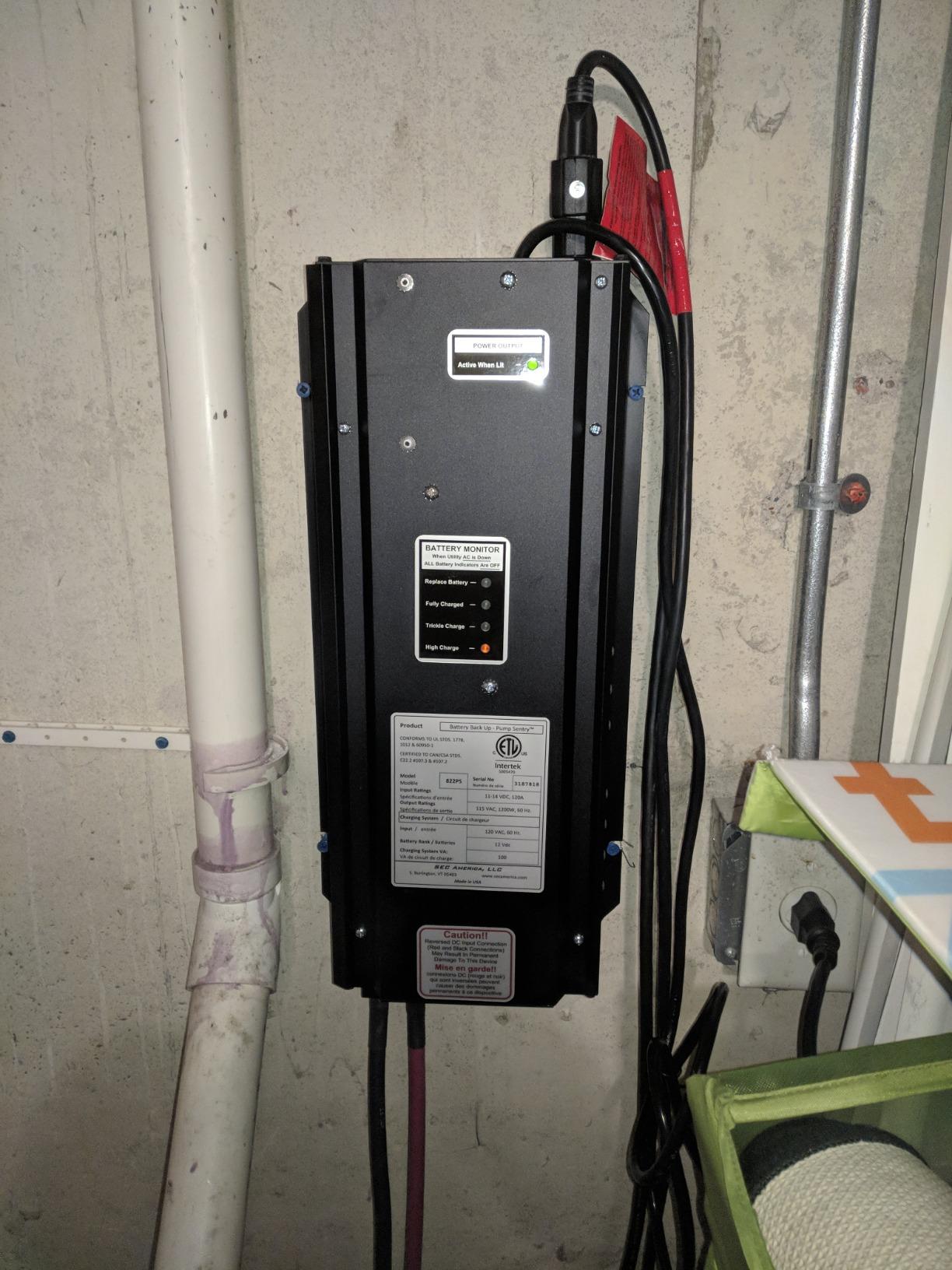
This is the only design in the guide that does not add a second pump. The 822PS is an inverter-style transfer unit that senses when AC power fails, switches your existing primary over to battery power, and recharges when power returns. Your pump keeps running at whatever output it was designed for.
That changes the sizing question entirely. Instead of asking whether a small backup can keep up with inflow, you are asking whether your existing pump draws within the 9 amp limit. A 1/3 HP submersible pump typically does. That is why this approach appeals to anyone with a known-good pump they refuse to replace.
The enclosure is only 17 by 6 by 3 inches, so it mounts beside the pit or on a basement wall without stealing basin space. Reviewers describe the operation as silent and clean, with indicators for power output, battery charge and a battery replace warning.
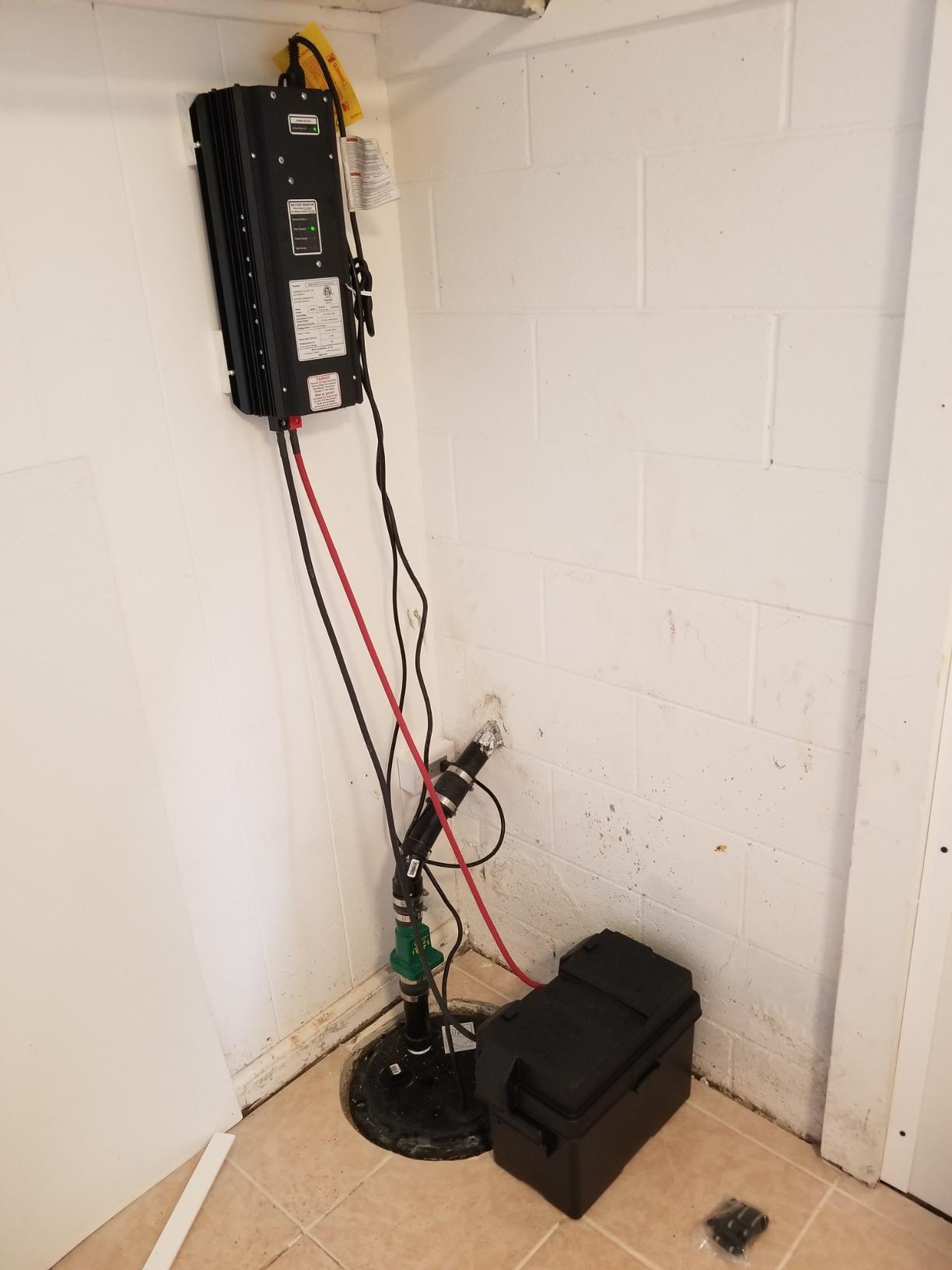
The battery requirement is the part to plan for. You need a 12V deep cycle marine battery between 90 and 200 amp hours, sold separately. A large battery is not a cost saving here, it is the difference between an hour of protection and a night of protection.
Pedestal pumps are not compatible. If your primary is a pedestal unit, this unit is not an option and you need one of the dedicated standby pump designs instead.
The unit is UL and CSA accredited and carries a 2 year factory warranty with service handled in the USA. Multiple r/Plumbing commenters recommend inverter-style systems specifically because they preserve full pump output rather than substituting a smaller pump.
How much does a bigger battery actually buy you?
A great deal. Run time scales directly with the amp-hour rating you install, and because your full-capacity pump is running rather than a reduced backup, bigger batteries matter more here than on a small standby system. Plan the battery compartment before you buy, since a 200 amp-hour battery needs real space and ventilation.
Choose an AGM or a deep cycle marine battery, not a standard starting battery. Starting batteries are designed for a burst of current and will fail quickly under a long pumping draw.
Who should skip this approach?
Skip it if your primary is pedestal mounted, if your pump draws more than 9 amps at full load, or if you would rather add independent redundancy. A second pump means one failure does not become two, and this unit offers no backup of the backup.
Skip it if you want remote alerts. The indicators are local only, so you learn about a switchover from the alarm, not your phone.
5. Basement Watchdog Combo CITE-33 — Best for Compact Pits
The Basement Watchdog Combo Preassembled Primary & Battery Backup Sump Pump System w/Monitoring Controller (CITE-33); Copper-Wound PSC Motor
1/3 HP primary at 3720 GPH
Backup at 2500 GPH at 0 ft
Fits pits as small as 12 inch
27 pounds
Pros
- Preassembled and preplumbed for quick installation
- Fits pits as small as 12 inches in diameter
- Dual float switches on both pumps give four-fold protection
- Monitoring controller with lights and alarms
- Days of intermittent pumping on one charge
Cons
- Charger is sized for a single maintenance-free AGM battery
- Backup drops to 1500 GPH at 10 feet of lift
- 0.4 amp charger is not sized for a second battery
The CITE-33 answers the single most common installation blocker: fitting two pumps into a small basin. It is designed for pits as small as 12 inches in diameter, which covers older homes where the basin was undersized from the start.
The primary is a 1/3 HP copper-wound PSC motor rated to 3,720 gallons per hour at zero feet and 3,100 gallons per hour at 10 feet. The backup handles 2,500 gallons per hour at zero feet and 1,500 gallons per hour at 10 feet, so if your lift is deep the backup capacity falls off a cliff. Check your vertical lift before assuming the headline number applies.
Both pumps carry dual float switches, giving four float switches across the system. Float switch failure is the most commonly reported backup failure mode, so the redundancy is meaningful rather than decorative.
Owners report days of intermittent pumping power on a single battery charge, which is a much more useful framing than a headline runtime number. A sump pit does not flood continuously, so the battery spends most of its time idle.
The main limitation is the 0.4 amp charger. It is sized for one maintenance-free AGM standby battery, which is fine for intermittent duty but rules out the parallel-battery trick some larger systems allow. If you want extended runtime here, the answer is a larger single battery the charger can handle rather than two batteries.

Is 1/3 HP enough for a finished basement?
For most residential pits with a normal municipal drainage connection, yes. A 1/3 HP submersible pump is the standard residential size and moves more water than most basements generate. The reason to move up is inflow rate, and you can estimate that from how quickly water accumulates during a storm.
If your pit fills from a yard drain or a wall that takes on groundwater directly, you are looking at a much higher inflow and a larger primary. That is a case for the Wayne or Westinghouse combos.
Who should skip this combo?
Skip it if your pit is deep, because the backup capacity falls to 1,500 gallons per hour at 10 feet of lift. Skip it if you want to run two batteries in parallel for extended runtime.
Also skip it if you are replacing a perfectly good 1/3 HP primary and only need redundancy. A standalone backup to your existing pump is the more economical path.
6. Zoeller Aquanot 508 — Best for Corrosion Resistance and Plumber Confidence
Zoeller 508-0005 Aquanot 508 Battery Back-Up System
1/3 HP 12V backup at 40 gpm
Integrated check valve
10.5 by 7.75 by 10.25 inch
10.5 pounds
Pros
- Highly efficient noncorrosive 12 volt pump construction
- Integrated check valve simplifies installation
- Quick disconnect discharge for faster servicing
- Aluminum seal pocket and cooling plate
- Hand built and tested in the USA
Cons
- Battery not included and full warranty requires a Zoeller Aquanot battery
- Backup-only unit that needs an existing primary pump
- No wireless monitoring built in
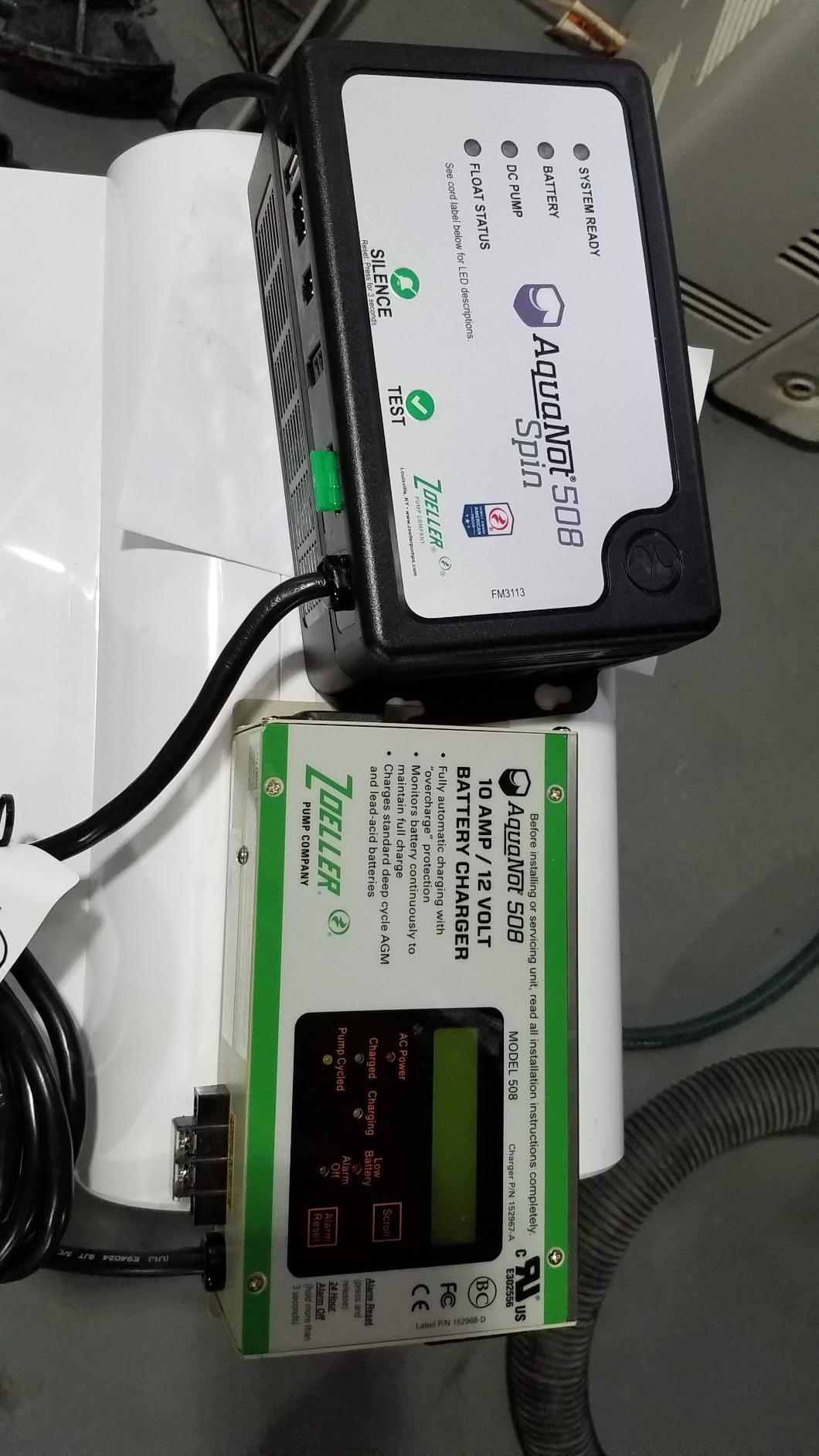
Zoeller is the name that comes up most often when plumbers are asked directly, and multiple r/Plumbing commenters single out this 508 series as the best choice specifically because of its superior monitoring. It is a 1/3 HP 12V backup rated at 40 gallons per minute.
The build details are what set it apart. An aluminum seal pocket and cooling plate protect the motor in the wet environment, and the housing is noncorrosive plastic that will not pit the way a cheaper thermoplastic can. Hand built and 100 percent tested in the USA, which is the kind of detail that matters more than it sounds.
Installation is straightforward because the check valve is integrated and the discharge uses a quick disconnect. You do not have to plumb a separate check valve, and later servicing is faster because the discharge separates without tools.
Read the warranty language before you buy. Coverage runs 12 months from installation or 18 months from manufacture, extended to 36 months when you purchase a Zoeller Aquanot battery and use it as part of a complete system. That is an unusually specific condition and it is a genuine reason to buy the branded battery rather than a generic one.
A Facebook group poster made the point that sometimes doing the right thing means talking yourself out of a sale. On a backup pump that runs in water all day, that reasoning holds.
Why do plumbers keep recommending this one?
Three reasons show up consistently in homeowner forums. The integrated check valve removes a common leak point, the quick disconnect makes servicing simple, and the monitoring capability tells you what is wrong instead of only that something is wrong.
There is also field history. Zoeller has built sump pumps for a long time, and a brand with decades of installed base is easier for a plumber to diagnose quickly than an unfamiliar name with a better spec sheet.
Who should skip this unit?
Skip it if you are not willing to buy a Zoeller Aquanot battery. Without it you give up the extended warranty coverage that most of the value rests on.
Skip it if you need WiFi or app alerts out of the box. This system is local only, and adding remote monitoring means a different product.
7. Zoeller Basement Sentry 507 — Best for Text Alerts and System Feedback
Zoeller 507-0005 Basement Sentry Battery Backup Pump
Backup only with solid state controller
Front panel display with cycle tracking
10 amp built in recharger
7 by 7.75 by 12.5 inch
Pros
- Solid state controller with alarms and light indicators
- Newer version has a front panel display showing cycles
- Can connect to hardware that sends text alerts
- Built in 10 amp recharger with battery burn out and overcharge protection
- Lock strap on a noncorrosive polyethylene battery case
Cons
- Sump pump and battery both sold separately
- Supplied check valve is below standard quality
- Instructions suggest drilling a weep hole that can spray water
- Lower flow at higher lift heights in some installations
The 507 is a backup-only system with the most informative local display in this group. The newer version of the controller has a front panel display and tracks pump cycles, so you can see at a glance whether the pump has been running when you thought it was idle.
It also connects to hardware that sends text alerts, which makes it a reasonable middle ground between a purely local system and a full WiFi module. You are not dependent on a phone app or a cloud account, which some people prefer.
Everything about the controller is solid state, with alarms, light indicators and warning systems for battery burn out and overcharge. The built in 10 amp recharger is unusually strong for a backup controller, and the polyethylene battery case includes a lock strap.
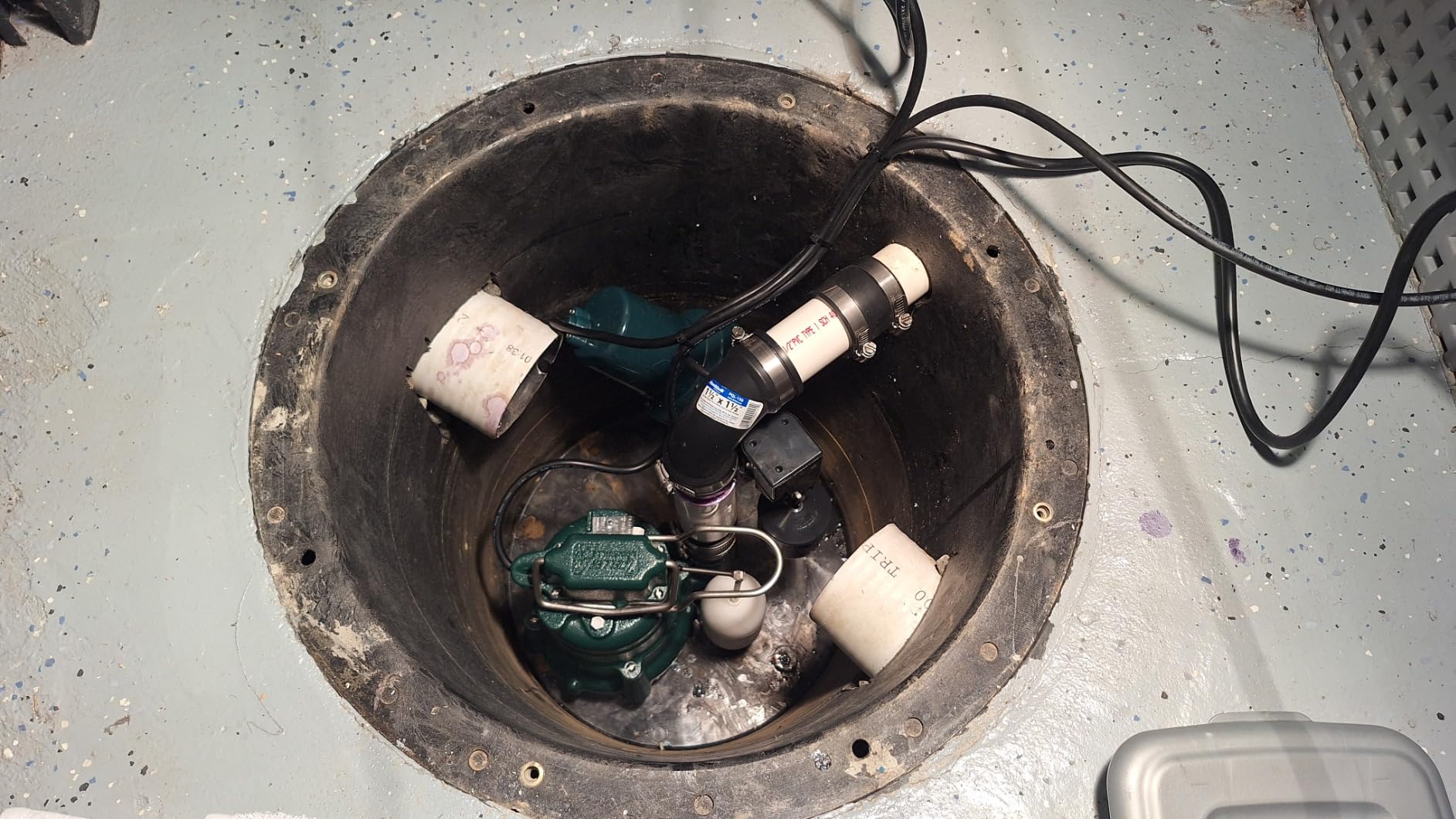
Two practical notes before you install. The supplied check valve is of below-standard quality and many owners substitute a quieter, better valve. And the instructions suggest drilling a weep hole, which can spray water out of the pit, so think about where that discharge lands before you follow them literally.
Some owners also report lower flow at higher lift heights in their particular installations. Verify your lift against the pump you choose rather than relying on the model name alone.
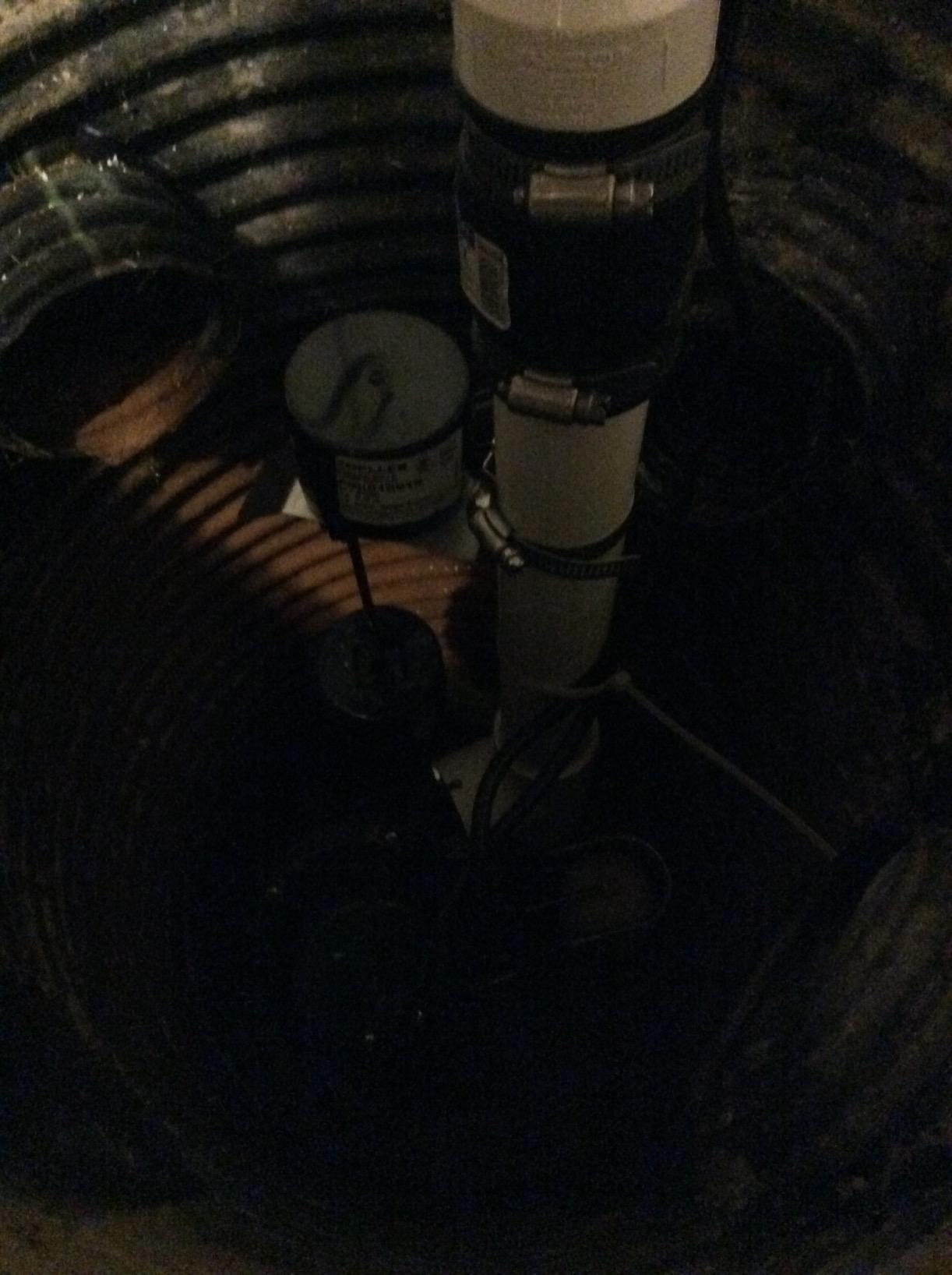
Is a stronger charger worth anything?
Yes, mainly in recovery. A 10 amp charger replenishes a deep cycle battery faster after an outage than a 0.4 amp standby charger, which means less time after the power returns with a partially depleted battery sitting in the pit waiting for the next storm.
It also makes the unit more tolerant of a larger battery. Check the battery manufacturer guidance before pairing a big amp-hour battery with a strong charger.
Who should skip this unit?
Skip it if you want a turnkey purchase. Both the pump and the battery are separate items here, so you are assembling the system rather than unboxing it.
Skip it if you plan to use the supplied check valve as-is. Buy a better valve while you are ordering, it is inexpensive relative to the pump.
8. Westinghouse WH50BBU — Best for Deep Lifts and Stainless Construction
Westinghouse – 1/2 HP Sump Pump with Integrated Vertical Float Switch and 12 Volt Battery Back Up Capability, Up to 5,200 Gallons Per Hour – Heavy Duty Battery Backup Sump Pump System
1/2 HP dual pump at 5200 GPH
Stainless steel housings
Rated to 30 foot lift
14.4 by 9.3 by 15 inch
Pros
- Highest published capacity in this group at 5200 GPH
- Stainless steel housings on both pumps for corrosion resistance
- PSC motor with thermal overload and sealed shaft
- Top suction intake reduces airlock and debris buildup
- Compact footprint for tight residential pits
Cons
- Battery not included and must be purchased separately
- Newer listing with a smaller review base than established brands
- No monitoring controller on the base
The WH50BBU posts the highest capacity figure in this guide at up to 5,200 gallons per hour, and it is the only unit rated for a 30 foot lift. If your pit is deep or your discharge line runs a long vertical run, those two numbers are the reason to look here first.
Both pumps use stainless steel housings, which is a step up from the thermoplastic used on most batteries-and-plastic systems in this category. The PSC motor includes thermal overload protection, lubricated ball bearings and a sealed shaft, and the motor is encased in dielectric oil for cooling.
The top suction intake is a nice detail. It helps prevent airlock and debris buildup, both of which show up on pumps that draw from the bottom of a pit where sediment settles.
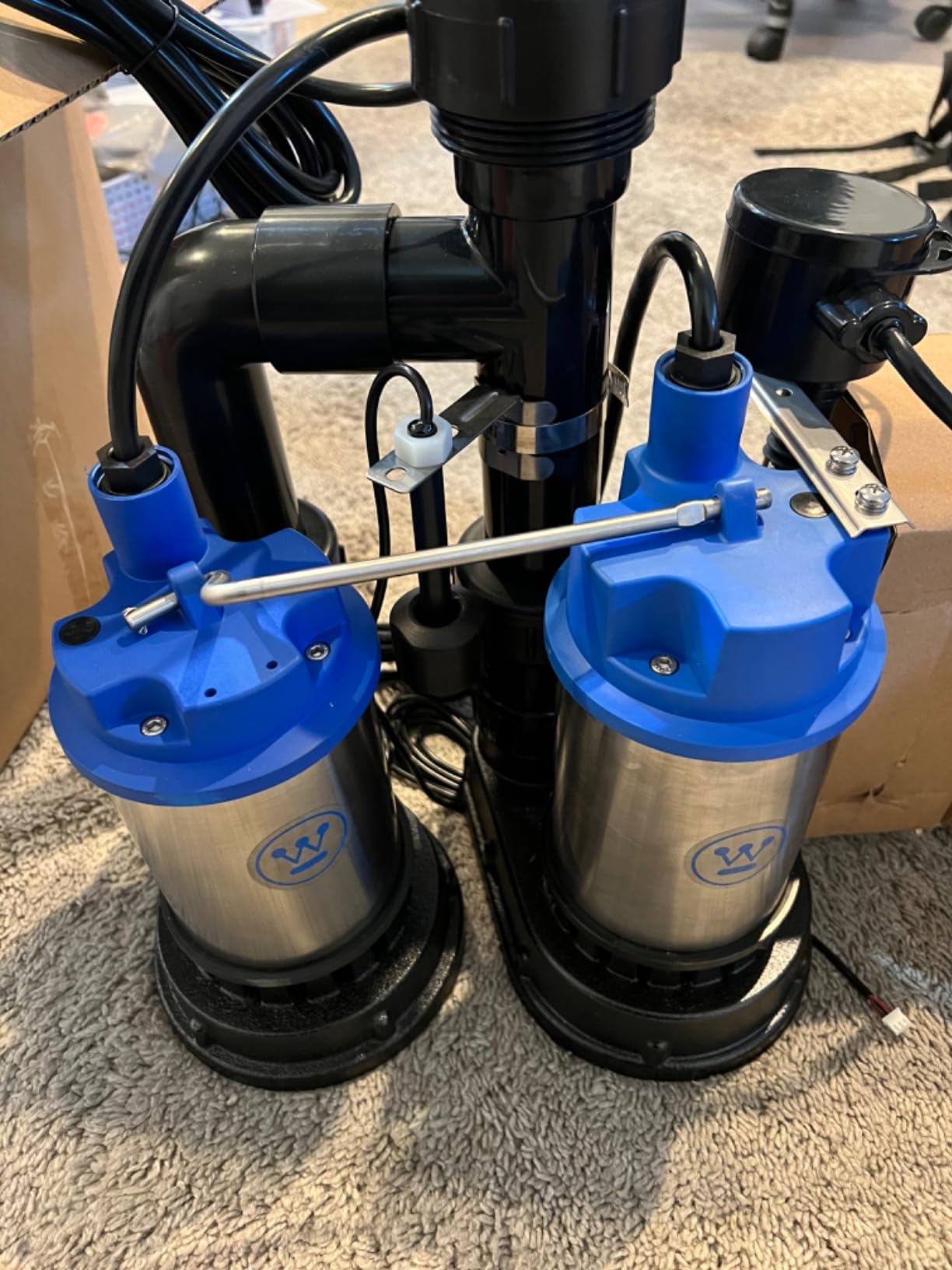
Because the system includes a battery controller, charger, alarm system and both pumps, this is a full combo package that only needs the battery added to the order. Buyers report the compact footprint works in tight residential pits even with the heavier construction.
The honest limitation is the review base. This is a newer listing with 50 reviews, against 300 or more for the established names. That is normal for a newer product and it is not a defect, but it means you are buying on published specs rather than on a long field history.
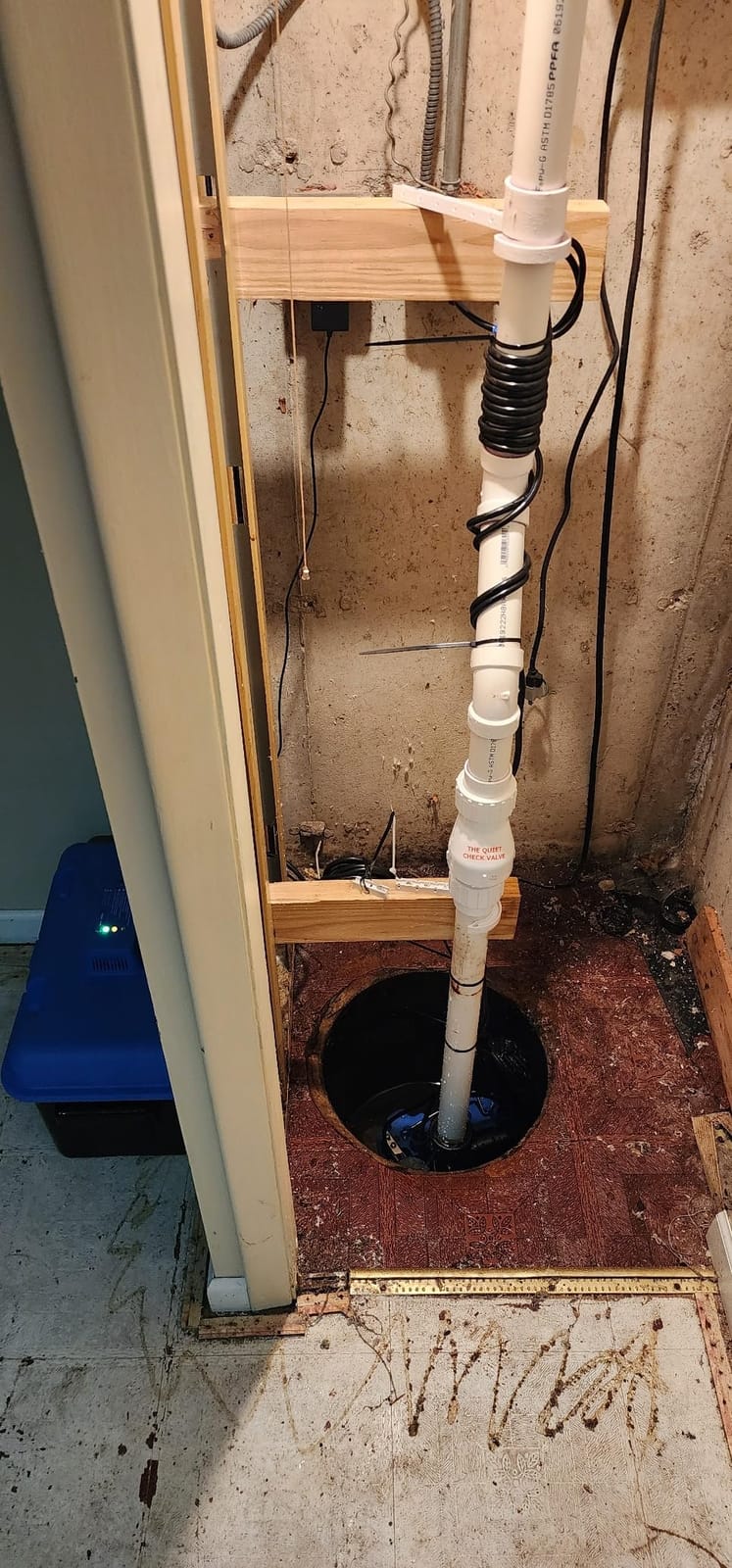
Do you actually need that much lift capacity?
Most residential basements need far less than 30 feet, so this rating mostly matters if your pit rim sits well below grade or if your discharge line exits high on a wall. Measure the vertical distance from the pump to the discharge point and add fittings.
If your lift is modest, the stainless construction and top suction design are still reasons to consider it, and the extra headroom means it will clear a future basement layout change.
Who should skip this combo?
Skip it if you want proven long-term field history. Five dozen reviews is not much to lean on when water damage is the outcome.
Skip it if you are adding backup to a healthy primary, because this replaces the whole system rather than supplementing it. There is no remote monitoring on the base, so alarms are local only.
9. Star Basement Sentry STBB100 — Best Budget Add-On Layer
Basement Sentry Automatic Emergency Backup Sump Pump System (12V Battery Powered) Provides Additional Protection Against Basement Flooding When Power Goes Out
Backup only, 12V pump at 29 gpm
9.9 pounds
Controller alarm charger and battery box included
Pros
- Low cost way to add a second pump to an existing primary
- Kit includes 12V pump controller alarm charger float switch and battery box
- Installs alongside a standard 115V primary in the same basin
- Makes sense as a third layer of protection
Cons
- 29 gpm flow rate is well below most competing backup pumps
- Primary sump pump and battery both sold separately
- Smallest review base in this guide
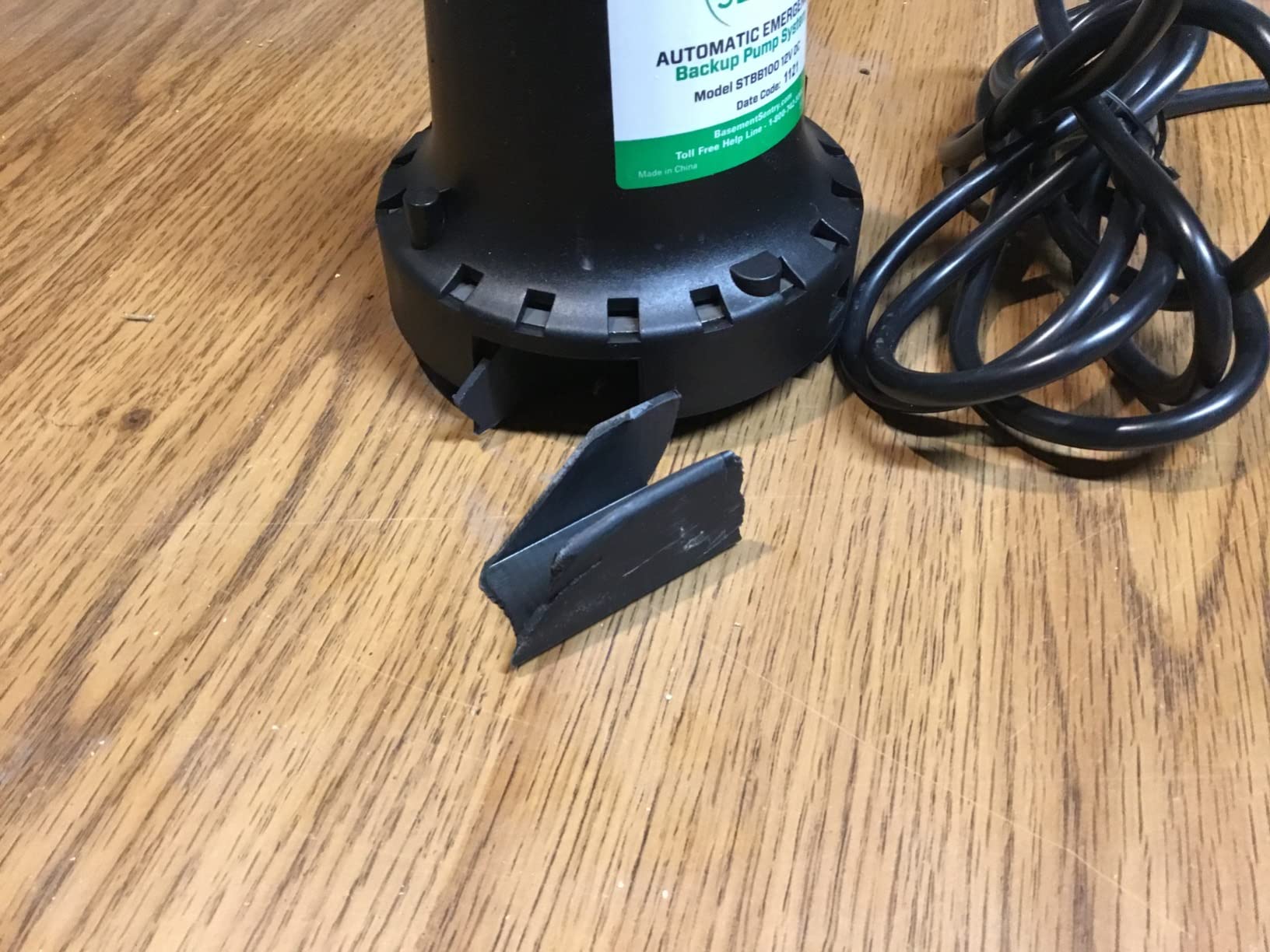
The STBB100 is the straightforward option. It is a 12V backup pump with a controller, alarm system, charger, float switch and battery box in one kit at 9.9 pounds. You add it to a standard 115V primary and it gives you a second pump that runs when the power goes out.
Its 29 gpm flow rate is modest. That is fine for slow groundwater intrusion and marginal for a hard storm on a high water table. Think of it as insurance that stops a slow rise from becoming a standing puddle, not as a pump that can outrun a flooded basement.
Owners describe it as an affordable add-on rather than a high-capacity system. That framing is fair and it is also the argument for it if your goal is a simple second layer of defense.
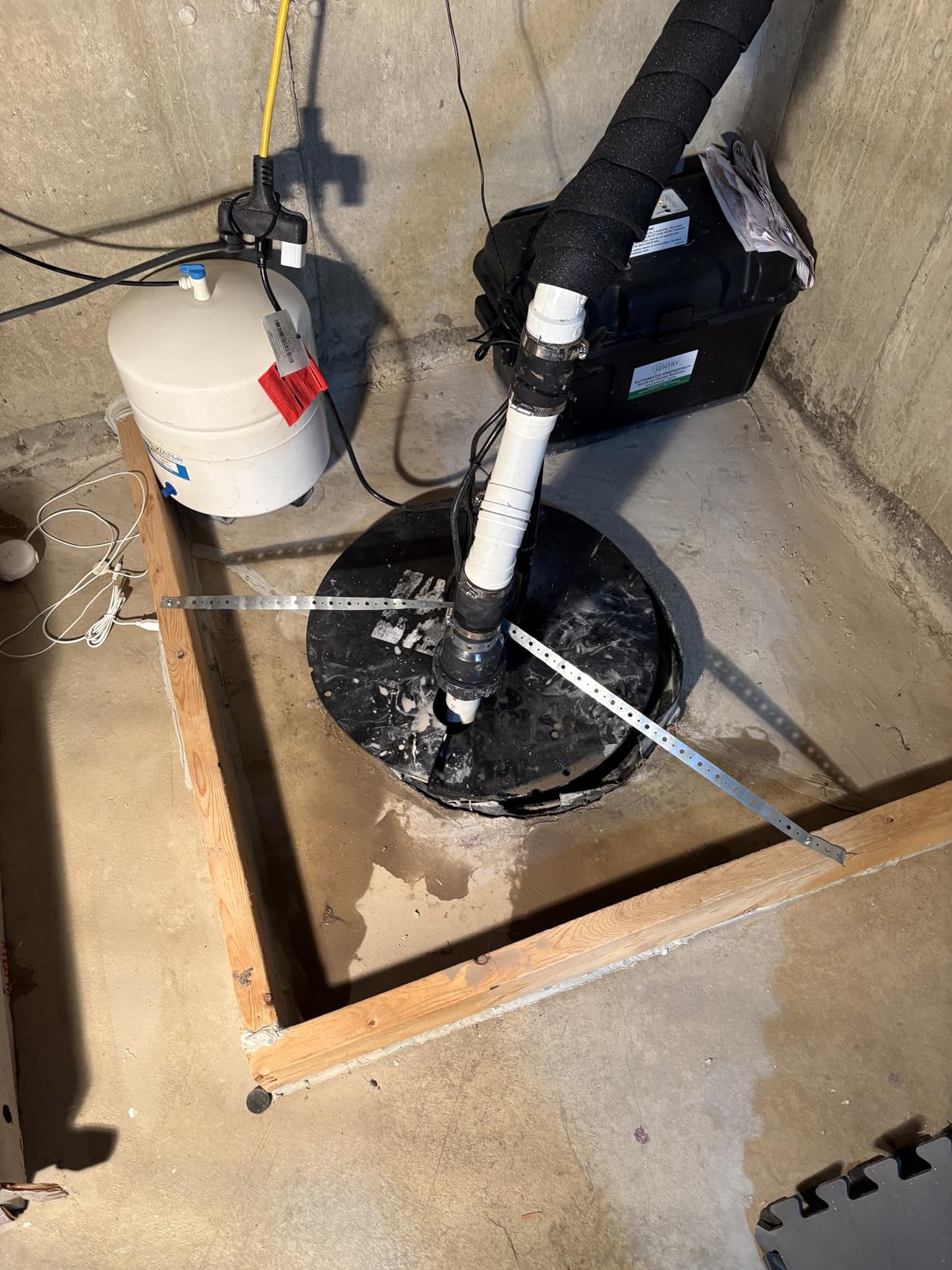
The kit is complete apart from the battery and the primary pump. It works with a deep-cycle battery, and Basement Sentry batteries are the recommended match, sold separately. Plan the battery location in a ventilated area that a young child cannot reach.
With 43 reviews this is the thinnest field history in the guide. If your basement is unfinished and the stakes are lower, that may be an acceptable trade. If you have finished flooring and finished walls below grade, the risk calculus changes.
Is a second pump really better than a bigger battery?
It depends on the failure you are protecting against. A bigger battery on an inverter-style system helps when the power is out and your good pump still works. A second pump helps when the primary has failed outright and no amount of stored energy helps.
For basements that flood during storms, both failure modes happen. If you can only do one, a second pump covers the more common failure, which is the primary stopping.
Who should skip this unit?
Skip it if your pit fills quickly. At 29 gpm this pump loses badly against a 1/2 HP primary, so a hard inflow will outrun it.
Skip it if you want a system you will still be happy with in ten years. The small review base makes that harder to judge, and replacement parts for a lesser-known controller can be harder to source.
10. Liberty Pumps 441 — Best Mercury-Free Switch Backup
Liberty Pumps 441 Battery Back-Up Emergency Sump Pump System
12V submersible backup pump
Automatic mercury-free switch
10 by 10 by 13 inch
13 pounds
Pros
- High output 12 volt submersible pump
- Automatic mercury-free switch for reliable operation
- Complete system includes control panel battery box and 12 volt charger
- Conventional design with straightforward wiring
Cons
- Battery not included
- Limited review volume compared with major sump pump brands
- No remote monitoring capability
The Liberty 441 is a conventional battery backup system with a mercury-free automatic switch. Mercury-free switches matter for two reasons: no mercury to break if the switch is damaged, and no annual disposal question about the component.
The kit includes the control panel, battery box and 12V charger along with a high output submersible 12V pump. At 13 pounds and 10 by 10 by 13 inches, it is compact enough for a standard basin without dominating the space.
Installation is conventional: the pump sits in the basin on a raised block, the float switch hangs at the correct level, and the controller and battery box mount outside the pit. Nothing about this design is unusual, which is a strength when you want a plumber to service it.
The limitation is the review base at 61 reviews, which is thin relative to the Basement Watchdog and Zoeller options with 300 or more. There is no remote monitoring, so failures are local.
Why does mercury-free matter here?
A float switch is the part of the system most likely to be handled during installation, and it is also the part that fails most often. If a housing cracks during that handling, a mercury-free switch has nothing to release. It also avoids the disposal paperwork that a mercury switch creates.
Beyond that, a good mechanical float design matters more than the chemistry. A switch that sticks partially closed causes short cycling, and short cycling is the fastest way to drain a backup battery.
Who should skip this unit?
Skip it if you want app-based monitoring or a self-diagnosing controller. This is a lights-and-alarm design with no diagnostics.
Skip it if you are replacing a system rather than supplementing one. A backup-only unit is the wrong shape of product when your primary also needs replacing.
How to Choose a Sump Pump With Battery Backup
Most buying decisions come down to four questions: how much water arrives, how far does it have to travel, how long might the power be out, and how much room do you have in the pit. Answer those first and the model choice becomes obvious.
Choosing between 1/3 HP and 1/2 HP
Horsepower determines how fast a pump clears the pit, and the number that matters is inflow, not pit volume. A 1/3 HP submersible pump is the residential standard and handles typical groundwater intrusion. A 1/2 HP pump earns its place when water arrives quickly from a yard drain, a window well, or a wall that is taking on direct water.
Two guides on this question come up constantly. First, flow rate figures are quoted at zero feet of lift, and every foot of vertical lift reduces output, so always compare figures measured at your actual lift height. Second, a pump cycling constantly at short intervals is a sign the pit is undersized or the pump is oversized for the job, and short cycling shortens battery life.
For battery backup specifically, there is a third consideration. The backup pump is almost always smaller than the primary, so the primary’s job is to keep the water level low enough that the backup never has to run continuously.
Working out how much battery you need
Run time depends on three variables: the amp-hour rating of the battery, the current the backup pump draws, and how often it cycles. Homeowner reports consistently put realistic runtime somewhere between one and four hours, and a DoItYourself poster described years of use with the only complaint being roughly an hour and a half counting pump time and standby.
The Bogleheads thread makes the same point, noting that battery systems can work for one to four hours. Treat any manufacturer maximum as a laboratory figure under light intermittent load. Real storms are heavier duty.
There are two ways to increase coverage. Buy a larger amp-hour battery within your charger’s limits, or, on systems that support it, run two batteries in parallel. The Basement Watchdog Big Combo accepts two batteries for roughly double runtime. Note that the smaller CITE-33 ships with a 0.4 amp charger sized for one maintenance-free AGM battery, so paralleling is not an option there.
Match battery size to your storm region. In an area with frequent multi-day outages during heavy rain, runtime matters far more than peak flow capacity.
Whether two pumps fit in one basin
This is the most common installation blocker and the reason the CITE-33 exists. A standard residential basin is often 16 inches in diameter for older homes and 18 inches or larger for newer ones. Two side-by-side pumps plus two discharge lines plus two float switches needs real diameter.
Measure three things before you order: the inside diameter of the basin, the depth from the basin floor to the top rim, and the vertical distance from the pump inlet to where your discharge line exits. Products designed for compact pits state their minimum basin diameter, and it is worth taking those numbers literally rather than hoping.
Alarms, monitoring and WiFi
Every system here has an audible alarm. The difference is how much you learn when it sounds. Basic designs sound an alarm and light an indicator. Better designs tell you what condition triggered it. Self-diagnosing controllers that describe the required maintenance, as on the Basement Watchdog combos, remove most of the diagnostic guessing.
WiFi modules add phone alerts but cost extra and add a cloud dependency. For a basement you check daily, a loud alarm and a good panel are enough. For a rental, a second home or a finished basement in an area you travel from, remote alerts are worth the extra spend.
The failure mode homeowners worry about most is a battery dying silently. Systems with a battery fluid sensor or a battery replace indicator address this directly, and that is a small feature that meaningfully changes how you maintain the system.
Battery backup versus water-powered backup
Water-powered backups use municipal tap pressure to run a second pump, so they need no electricity and no battery. That is their entire appeal and also the reason they are a poor fit for many homes.
They require a municipal water supply. If your home is on well water, they are a hard disqualifier, and homeowners regularly discover this only after ordering. They also draw real water during an outage, and most codes require a backflow preventer on that line.
Battery backups work everywhere including on well water, need no water supply, and give you an alarm. For most homeowners they are the better default, and for well water they are often the only real option short of a generator.
Does a generator replace a battery backup?
Not reliably. A whole-home generator takes time to start, has a fuel and exercise cycle, and may be sized for essential loads only. A sump pump backup starts the instant the primary stops moving water, with no start-up delay and no fuel dependency. They also serve different failure modes, since a generator does nothing about a pump that has mechanically seized.
If you have a generator that covers the sump circuit, a small backup adds a cheap layer that covers the gap between the outage and the generator starting. Many homeowners in this category end up with both.
Combo system or standalone backup
A combo system replaces your primary and adds a backup in one pre-plumbed base. That is the right choice when your primary is old, when you are rebuilding the pit anyway, or when you want the shortest installation. If your primary is a known-good 1/3 HP pump with a clean discharge line, adding a standalone backup is less disruptive and less expensive.
Homeowners raise this confusion constantly because a good pump gets discarded in the name of a tidy system. Our view is that redundancy beats tidiness. A working primary plus a compact backup is a stronger outcome than a new combo that depends on both halves being right on the same day.
What warranty coverage actually means
Warranty terms in this category are unusually conditional, and the conditions are the point. The Zoeller Aquanot 508 extends to 36 months only when a Zoeller Aquanot battery is used as part of a complete system, and defaults to 12 months from installation otherwise. Read those terms before you choose a battery, because a generic battery can cost you the extended coverage.
Typical warranty lengths in this group run from two years on controllers to three years on the Wayne combo, with pumps and controllers often covered differently from batteries. Batteries themselves are usually the shortest-lived component in the system, which is why replacement intervals matter more than the warranty sheet.
How much noise should you expect?
A finished basement makes pump noise part of your daily life, so it is a real criterion. The Wayne combo is described as extremely quiet, including its check valve, and the check valve is often the actual noise source because it rattles as the flow stops.
On the Zoeller 507, the supplied check valve is of below standard quality and many owners substitute a quieter valve. That single swap resolves most complaints about pump noise. Basement finishing materials also matter, which is why our guide to the best vinyl flooring for basements covers acoustics as well as moisture resistance.
Maintenance Schedule for Battery Backup Sump Pumps
A sump pump is unattended for months at a time and then asked to work during the worst storm of the year. Twenty minutes of maintenance twice a year is what stands between a working pump and a flooded floor.
Every quarter
Lift the float switch manually and confirm the backup pump starts. If it does not, you have found a problem on a sunny afternoon rather than at 2am during a storm. Listen for the alarm to sound and confirm you can hear it from a normal room in the house.
Run water into the pit until the primary engages, and confirm the primary shuts off cleanly rather than continuing to run. Then run the pit dry enough to watch the backup stop. Short cycling is the fastest route to a dead backup battery, so a pump that does not shut off needs attention now.
Check the battery terminals for corrosion and clean them. Check the water level in a wet-cell battery if you have one, and top it off with distilled water.
Once a year
Disconnect AC power before any work in the pit. Remove the pump and inspect the impeller for gravel, silt and other debris, which is the most common cause of a primary that runs but does not pump.
Flush the discharge line with a garden hose to clear sediment that reduces flow. Inspect the check valve for a leak, since a leaking check valve causes continuous cycling and is a leading cause of battery failure.
Clean the float switch itself and confirm it moves freely through its full range without sticking. Float switches that stick partially closed cause short cycling, and float switch failure is the most commonly reported backup failure mode.
When to replace the battery
Replace standby batteries on a three to five year cycle regardless of how they appear. Batteries fail without warning, which is why the monitoring features on the systems above are worth having.
Pick a replacement with the same or a higher amp-hour rating within your charger’s limits, and choose AGM or deep cycle chemistry rather than a standard starting battery. If your system supports two batteries in parallel, matching the pair matters.
When to call a plumber
Handle float switch testing and battery replacement yourself. Call a licensed plumber for anything involving new discharge plumbing, a backflow preventer, a check valve in a hard-to-reach location, or anything touching the municipal supply for a water-powered backup. Discharge line work and backflow work are code-sensitive and a mistake there can move the problem from your basement to your neighbor’s.
One more caution worth stating plainly: a backup pump does not fix drainage. An r/AskEngineers poster described a repeat flood that turned out to have nothing to do with the sump pump itself. If water is entering through a wall, a window well or a foundation crack, address the source. After the flooding is sorted, our guides to the best dehumidifiers for basements and the best whole house dehumidifiers for basements handle the residual moisture that follows any flood.
Frequently Asked Questions
Do I need a backup sump pump?
If your basement floods, stores anything below grade, or has flooded during a power outage before, yes. Sump pumps fail most often in the storms that cut power, so a backup gives you hours of extra pumping when the primary goes quiet. You need one most if you are on well water, since water-powered backups are not an option for you.
How long can a sump pump run on a battery backup?
Homeowners consistently report one to four hours of real-world runtime, with one long-term user describing about an hour and a half including standby time. Manufacturer maximums assume light intermittent load. Bigger amp-hour batteries extend runtime, and some systems accept two batteries in parallel for roughly double the coverage.
What’s better, 1/3 HP or 1/2 HP sump pump?
A 1/3 HP pump is the right standard for typical residential groundwater intrusion and is what most basements need. Choose 1/2 HP when water arrives quickly from a yard drain, window well or wall taking on direct water. Always compare flow figures at your actual vertical lift, since every foot of lift reduces output.
Which battery backup system is best for a sump pump?
The Wayne WSS30VN is our top pick because it pairs a 1/2 HP primary rated at 5,100 gallons per hour with a standby backup in one preassembled base that installs in about 15 minutes. For tight pits, the Basement Watchdog Special CONNECT is more compact. For keeping an existing good pump, the SEC America 822PS runs it at full output during outages.
What is the most reliable basement sump pump available?
Among the battery backup systems, the Zoeller Aquanot 508 comes up most often in r/Plumbing recommendations, valued for its integrated check valve, quick disconnect discharge and monitoring that identifies the fault rather than only signalling one. Reliability comes from field history and simple diagnostics as much as from specifications.
Are sump pump battery backups worth it?
For a finished basement or anything stored below grade, yes. A backup only matters during an outage or a primary failure, which are precisely the conditions that accompany the storms causing the flood. The main cost is the battery and, on several systems, an add-on WiFi module.
What are the four types of sump pumps?
Submersible pumps sit in the pit and switch on when water lifts a float. Pedestal pumps sit above the water on a standpipe, which avoids debris and allows service without entering the pit. Battery backup or standby pumps are a second DC pump on a deep-cycle battery. Water-powered backups use municipal tap pressure to run an additional pump.
How do I maintain a sump pump?
Quarterly, lift the float to confirm the pump starts, run water into the pit to check the primary starts and stops cleanly, and clean battery terminals. Annually, disconnect power, pull the pump and clear debris from the impeller, flush the discharge line, and inspect the check valve for leaks. Replace standby batteries every three to five years regardless of appearance.
Our Verdict for 2026
The Wayne WSS30VN is the system we would put in our own basement. It has the highest primary output in this group, a preassembled base that installs in about 15 minutes, audible alarms that actually work, and a three year warranty with USA assembly. For a standard residential basin it simply has the fewest ways to disappoint you.
If your situation is different, the guide narrows fast. Tight pit means the Basement Watchdog Special CONNECT. High inflow means the Big Combo CITS-50 with its cast iron primary. A good primary you want to keep means the SEC America 822PS, provided your pump is not pedestal mounted and your pit is not on well water restrictions.
Whichever you choose, the battery is the part most likely to be missing from your order, and it is the part that determines whether the system works when you need it. Buy the deep-cycle battery at the same time, set a three to five year replacement reminder, and test the float switch twice a year before a storm does it for you.