
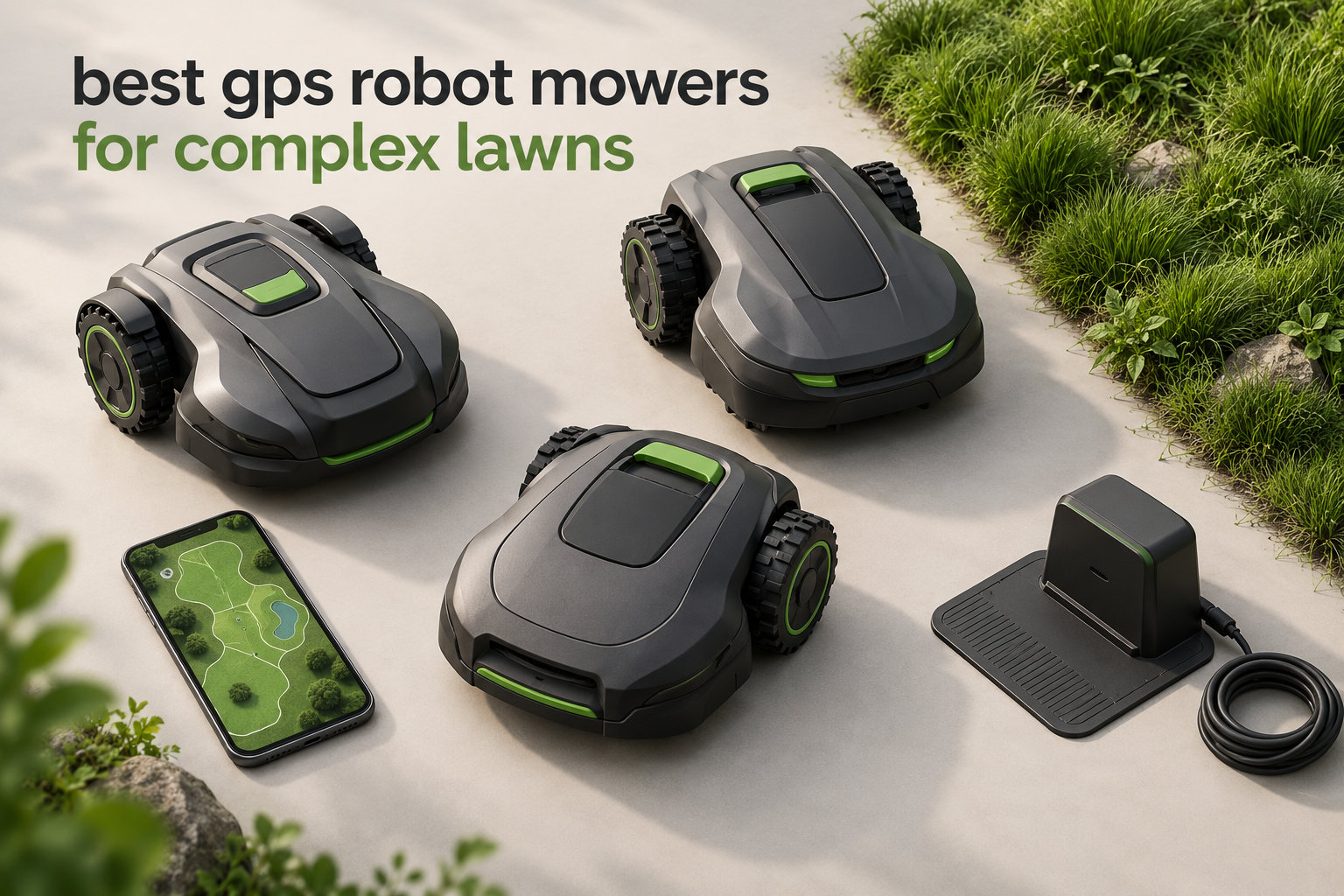
A lawn is not complex because it is large. It is complex because the grass is broken into separate areas, pinched by fences, tilted on hills, shaded by trees and littered with the things a family actually leaves outside. If you want the best GPS robot mowers for complex lawns, the satellite positioning is only half the story. We compared eight wire-free mowers on the specs that decide success or a mower stuck in a corner at dusk.
Our team spent weeks reading owner reviews and mapping the published specifications for every machine in this guide, focusing on the numbers that matter on a difficult property: maximum slope, narrowest passage width, number of mowing zones, whether the navigation stack survives tree cover, and how long the battery lasts per charge. We did that because the category is full of marketing language and very little owner-level detail.
What follows is a guide built around the eight strongest candidates in the 2026 GPS robot mower class, with an honest note on where each one falls short. Several of these machines need work on a flat open lawn before they earn their keep on a tangled one, and we say which.
Table of Contents
Top 3 Picks: Best GPS Robot Mowers for Complex Lawns (October 2026)
The three below are the strongest balance of navigation hardware, terrain capability and owner feedback in this group. Each one is reviewed in full further down.

Mammotion LUBA 2 AWD 5000HX
- All-wheel drive to 80% slope
- 50 mowing zones
- RTK plus AI vision
- 200+ obstacle types

How We Picked the Best GPS Robot Mowers for Complex Lawns
Every machine here cleared the same seven filters, and each filter exists because a real owner complained about it.
Navigation stack — RTK positioning alone, RTK plus vision, or RTK plus LiDAR. We wanted a machine with a documented plan for weak satellite conditions.
Terrain numbers — published maximum slope, all-wheel or track drive, and a stated ability to step over roots and curbs.
Zone and map capacity — whether the advertised zone count maps onto a property split into real, separate lawn areas.
Passage width and obstacle handling — the narrowest corridor the machine claims to enter, plus the number of recognised object types.
Owner reliability — volume and consistency of customer reviews, and how many complaints cluster around software or getting stuck.
Setup and maintenance reality — time to first map, what has to be bought separately, and what wears out.
Quiet operation and support — noise level for early-morning schedules, warranty length and where the support team sits.
We also read the manuals critically. On a complex lawn, the number of times you have to physically pick the mower up and carry it to a new lawn matters more than any headline spec, so we tracked that alongside everything else.
All 8 GPS Robot Mowers Compared Side by Side
Every entry below is a wire-free machine with satellite positioning. Coverage figures are the manufacturer claims, and the narrowest-passage column is the single most useful number for a difficult property.
| Product | Specs | Action |
|---|---|---|
| Mammotion LUBA 2 AWD 5000HX |
|
Check Latest Price |
| Segway Navimow i105N |
|
Check Latest Price |
 ANTHBOT M9 ANTHBOT M9 |
|
Check Latest Price |
 YARBO Robot Lawn Mower Pro YARBO Robot Lawn Mower Pro |
|
Check Latest Price |
 Mammotion LUBA 3 AWD 3000 Mammotion LUBA 3 AWD 3000 |
|
Check Latest Price |
 Segway Navimow i210 AWD Segway Navimow i210 AWD |
|
Check Latest Price |
 Sunseeker X3 Plus Sunseeker X3 Plus |
|
Check Latest Price |
 ECOVACS GOAT O1000 RTK ECOVACS GOAT O1000 RTK |
|
Check Latest Price |
1. Mammotion LUBA 2 AWD 5000HX: Best Overall for Complex Lawns
Mammotion LUBA 2 AWD 5000HX Robot Lawn Mower with 4G, Reception 1.25 Acres, Max. 1.48 Acres, All-Wheel-Drive for 80% Slope, UltraSense AI Vision & RTK Automatic Edge Mapping, 2.2″-4.0″ Cutting Height
165W four-wheel drive to 80% slope
50 mowing zones
RTK plus AI vision, 200+ objects
Pros
- All-wheel drive handles steep slopes
- ditches and rough ground
- AI vision covers tree-shaded areas where signal is weak
- Up to 50 mowing areas with no-go zones
- Very quiet so it can run at night
- Even striped finish that owners consistently praise
Cons
- Narrow cut width means long mow times and recharging
- Blade discs wear quickly and need regular replacement
- RTK base or roof mount may need buying separately
This is the machine we would put on the most demanding lawn in this guide. The 165W four-wheel motor is not a marketing flourish. Owners consistently describe it climbing steep ground, running through ditches and carrying on across uneven terrain where two-wheel-drive mowers stop and wait for a human.
The 15.7 inch cutting deck is the trade-off you accept for that traction, and on a big property you will feel it. A full mow takes many hours with recharges in the middle, so schedule it for a free day rather than expecting an evening job.
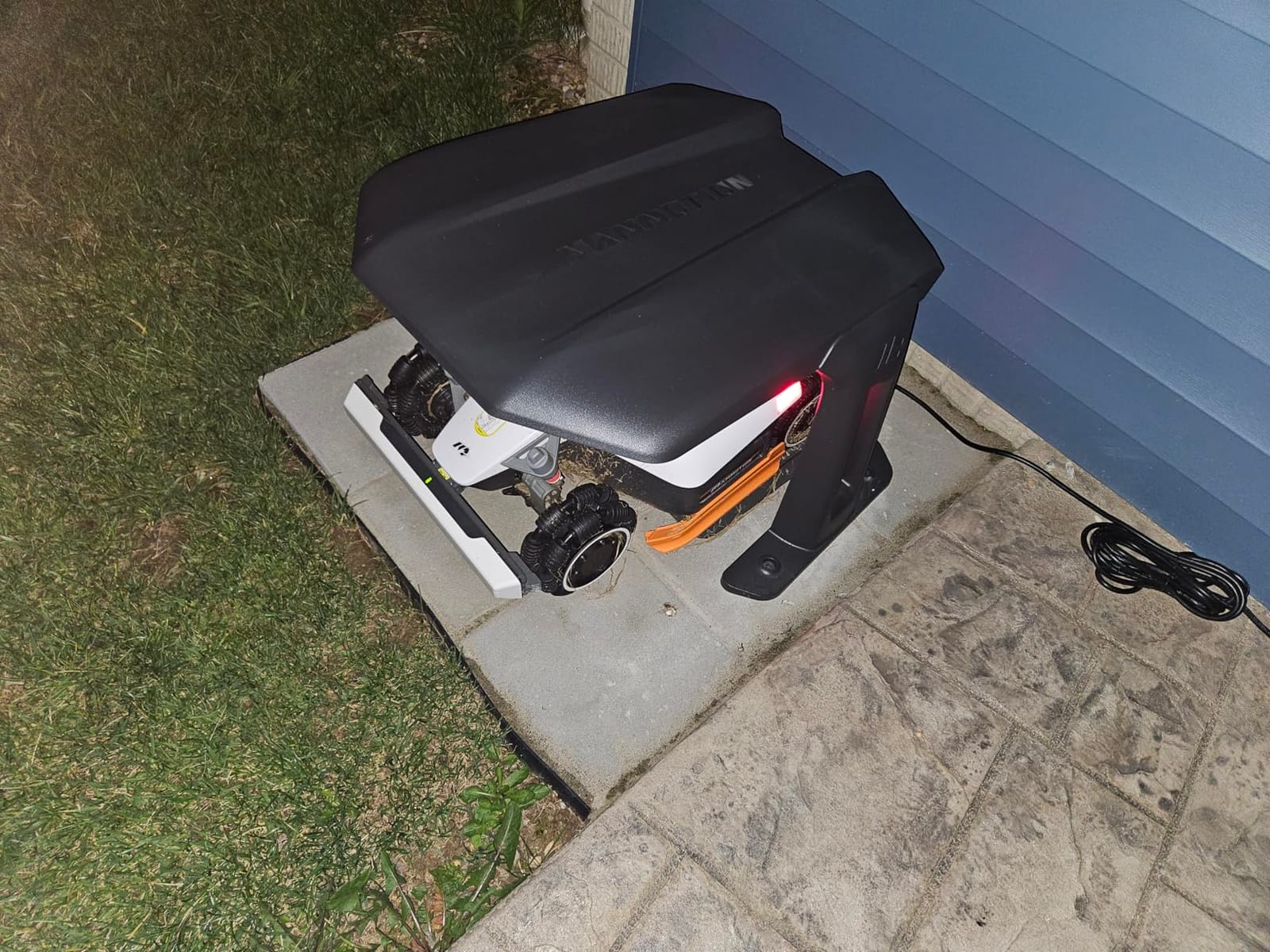
Where it genuinely outshines the field is zoning. Up to 50 mowing areas with no-go zones lets you run a front lawn on a weekday schedule and a back lawn on a weekend one, and the app lets you connect areas with corridors rather than forcing one giant boundary.
UltraSense AI vision recognises 200+ object types, which is what makes it usable in a yard with kids’ toys and a dog. RTK plus 4G, Bluetooth and Wi-Fi gives anti-theft lock and tracking, and the built-in lights let it work a night schedule when the household is asleep.
What you should check before buying
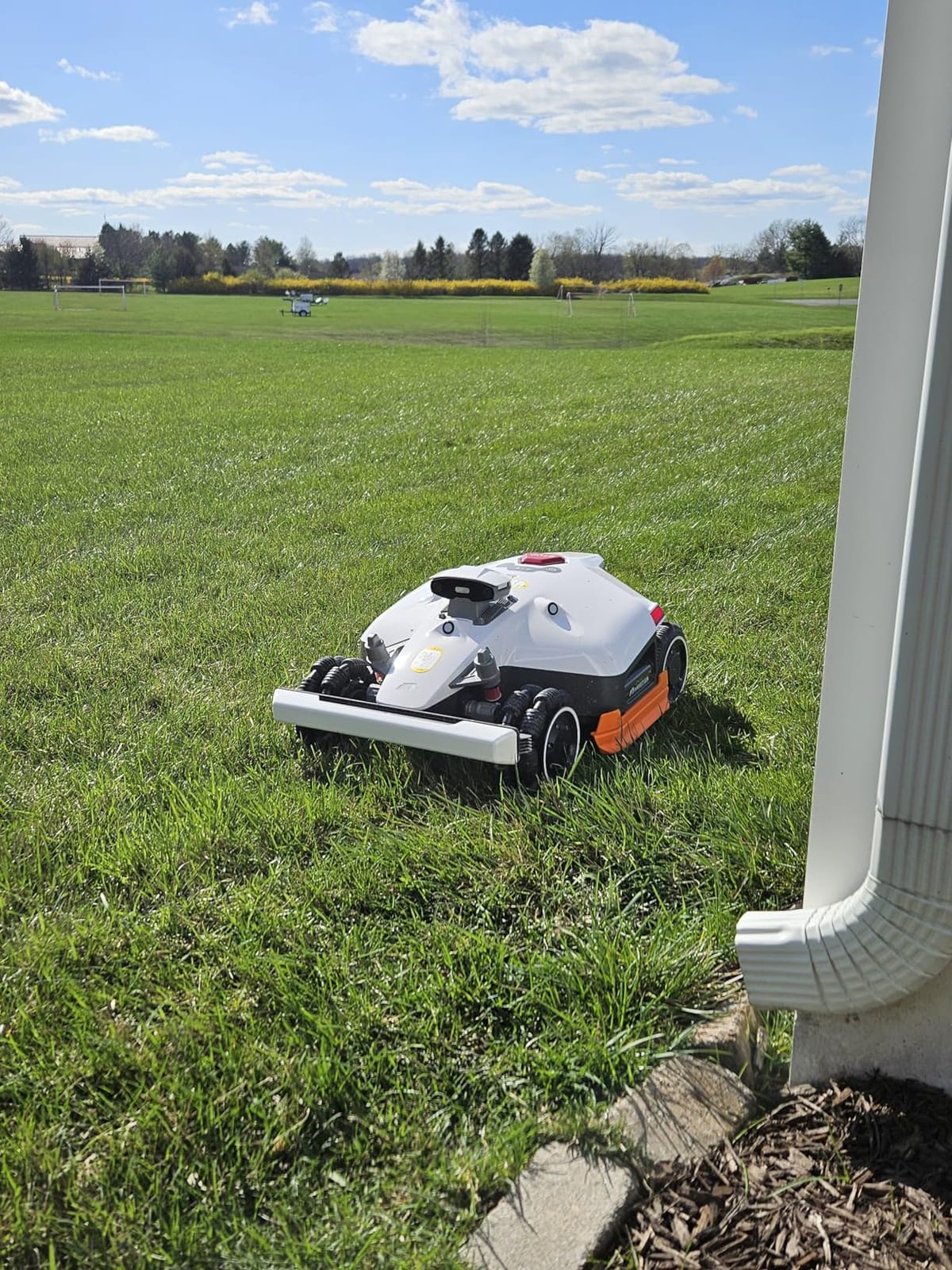
Do count the hours. The deck is 15.7 inches wide, so a one-acre property is a long job and you will be recharging at the dock mid-session more than once.
Check your RTK mounting situation. Some owners had to buy a base or roof mount when the supplied hardware would not clear a wall, and that support delay is the one service complaint that recurs.
Who it is not for
Skip it if leaf clearance matters to you. Reviewers report it does not shred fallen leaves well, and blade disc wear is a recurring maintenance line rather than a rare event.
It is also the wrong pick for someone who wants a hands-free app with no learning curve. Owners describe the initial setup as real effort that needs the long manual, and the app error messages as unclear.
2. Segway Navimow i105N: Best Value Entry Into RTK Mowing
Segway Navimow i105N Robot Lawn Mower Perimeter Wire Free 1/8 Acre RTK+Vision Robotic Lawnmower, AI-Assisted Mapping, Virtual Boundary, APP Control, 58dB(A) Quiet, Multi-Zone Management
RTK plus Vision with EFLS 2.0
140 degree camera, 150+ objects
Up to 12 zones
58 dB(A)
Pros
- Centimetre-level accuracy holds under trees and in corridors
- Very quiet at 58 dB(A) for night schedules
- Smooth parallel striping
- Self-unstick routines recover from ruts
- 3-year warranty with OTA updates
Cons
- Fitted wheels have weak traction on slopes
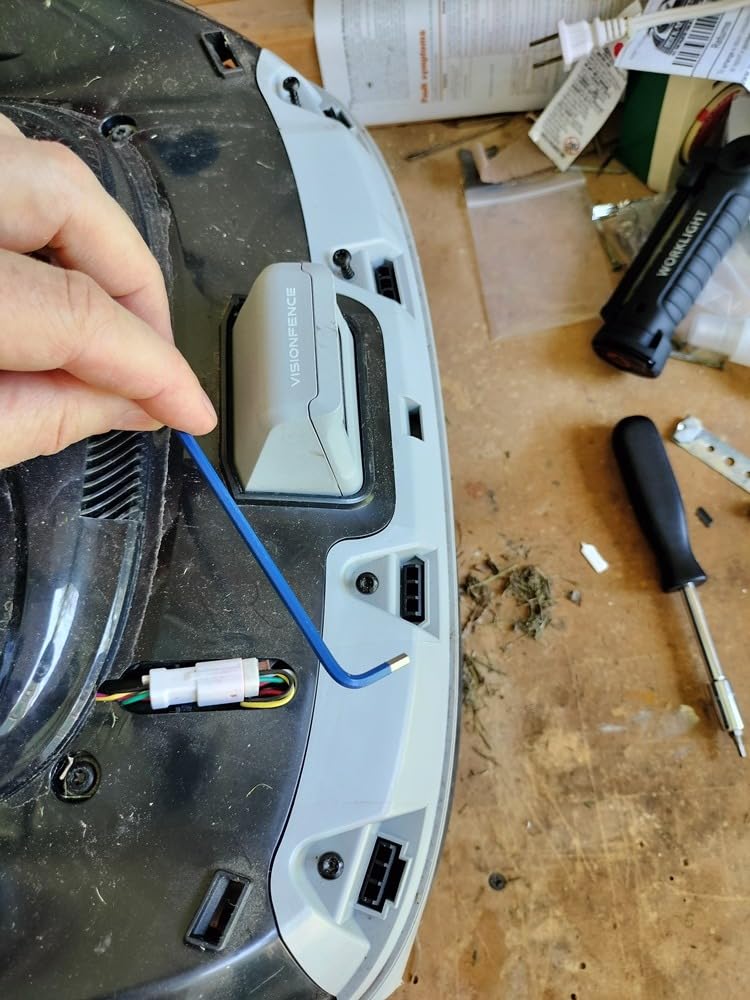
- VisionFence misses low obstacles like hoses and gates
- Editing small no-go zones means driving the mower there
- Optional 4G anti-theft module costs extra
If you want satellite-accurate mapping without a large price jump, the i105N is the entry point most owners recommend. The EFLS 2.0 RTK plus vision combination holds centimetre-level positioning in tree-shaded lawns and narrow corridors, which is precisely the situation that defeats a basic GPS unit.
It is also the quietest machine we recommend here at 58 dB(A), and owners note that the parallel striping pattern visibly improves the finish on an ordinary lawn.
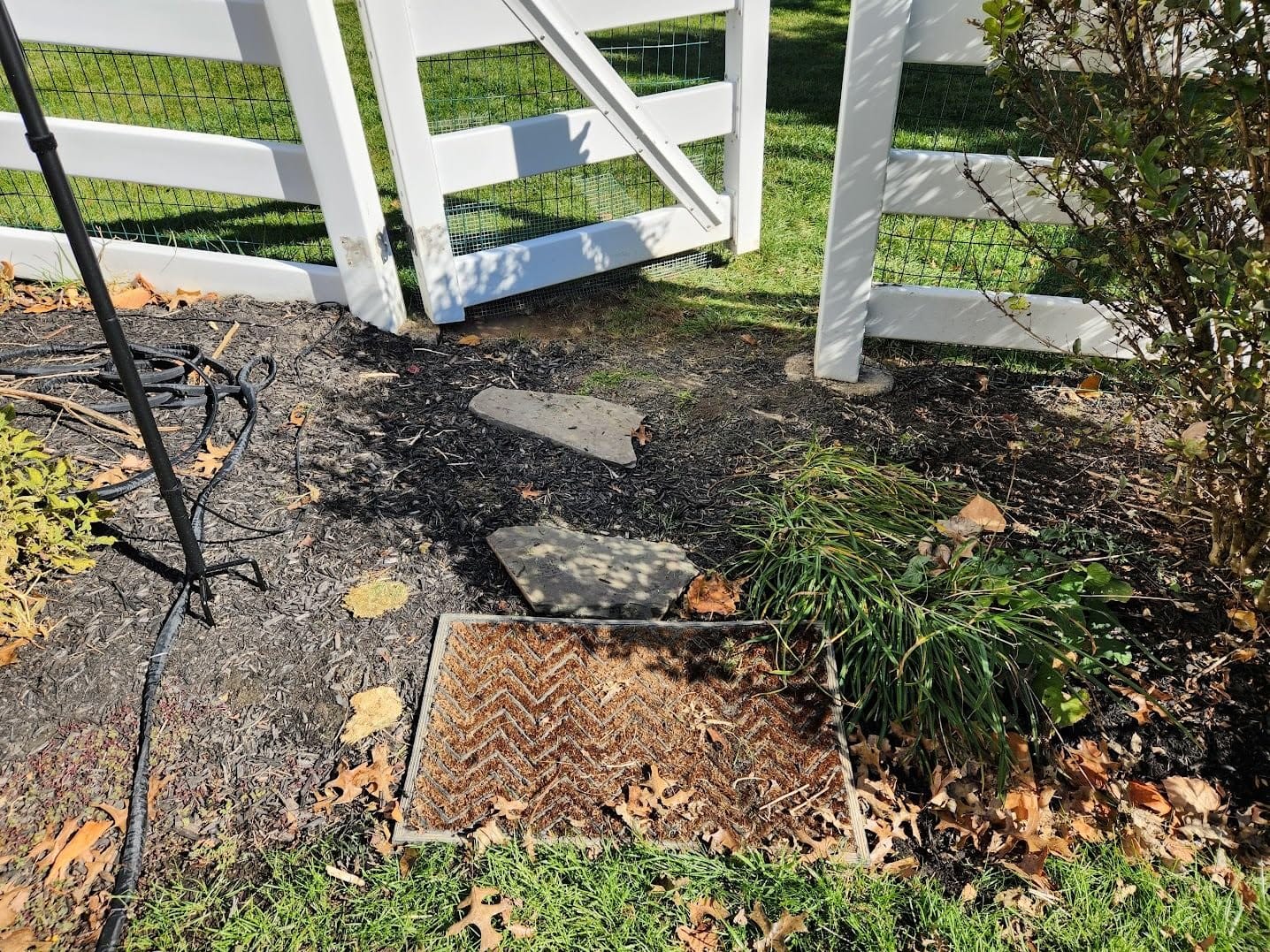
The 140-degree camera recognises 150+ obstacle types, so toys and garden furniture get logged into the map rather than discovered by touch. Battery life of roughly 90 to 95 minutes per charge means dock returns are normal on anything but a small lawn.
Owners treat it as a solid value entry point rather than a flagship. The 1,200 square metre coverage ceiling and 12-zone limit mean you are buying for a real property, not an estate.
What you should check before buying
Plan the wheel upgrade. The most common owner modification is the optional off-road wheel and spike set, which owners say transforms traction on slopes and hard surfaces. It is the single change that turns this into a machine for rough ground.
Look at your sky. The antenna and base station need a clear southern view, and a roof or wall mount is sold separately, so factor the install into your first weekend.
Who it is not for
VisionFence misses some low obstacles, including hoses, sprinklers, gates and mailboxes, and it can also invent obstacles inside navigation channels. Owners who plan to run this in a busy side yard should expect a few manual rescues.
Map editing is clunky. Creating a small no-go zone means driving the mower to the spot, which is tedious when you have several of them.
3. ANTHBOT M9: Best for Fast Setup and Busy Family Lawns
ANTHBOT M9 Robotic Lawn Mower with Garage, 1/4 Acre Wire-Free NRTK & Vision
Dual 150 degree cameras, 1000+ objects
NRTK with Adaptive Cruise
30 work zones
Garage included
Pros
- AI auto mapping builds a usable map in about 10 minutes
- Steers cluttered backyards without hitting children's toys or garden furniture
- 45% slope capability
- Quiet at 58 dB or under
- Self-charging and resume is genuinely hands-off
Cons
- 7.9 inch deck means many passes and dock returns
- Some users report difficulty on steep hills
- Manual mode and edging are considered mediocre
- In-app support can take around 48 hours
The M9 wins on commissioning speed. Owners report the app generating a usable map in about ten minutes with no perimeter wire and no manual boundary driving, which is the fastest path from unboxing to first mow in this group.
Its dual 150-degree HDR cameras recognise more than 1,000 object types, the largest catalogue here. On a lawn with a trampoline, a vegetable patch and a dog, that breadth is the difference between a map and a mess.
Adaptive Cruise Control on the NRTK positioning holds centimetre-level precision through clutter, and 30 work zones with connecting paths let you service a front yard and a back yard as separate areas. The garage shelter in the box is a genuine bonus for a machine you will keep outdoors year-round.
Cutting height adjusts 1.2 to 2.7 inches, and owners report roughly half an acre covered per charge with a consistent, carpet-like finish.
What you should check before buying
Measure your total area and be honest about recharging. The 7.9 inch deck needs several passes and returns to the dock, so a large lawn means long running times.
Test your hilliest corner during the first week. Some users report difficulty on steep slopes, and the 45% rating is not the same as unlimited grip.
Who it is not for
Edging is mediocre, and manual mode is not a selling point. If crisp border lines are the goal, look at a machine with a dedicated ride-on-edge blade.
Documentation is thin on multi-zone setup. The printed manual does not clearly explain adding a second zone, and in-app support responses can run around 48 hours.
4. YARBO Robot Lawn Mower Pro: Best for Large Acreage
YARBO Robot Lawn Mower Pro, Wire-Free for 6 Acres, Four Seasons Yard Care
Rated for 6 acres, four-season use
RTK-GPS plus binocular vision
Tracked chassis, 70% gradient
Pros
- Handles very large
- hilly and irregular properties
- Cut quality comparable to a zero-turn riding mower
- Triple-fusion navigation works on complex layouts
- Track chassis copes with muddy and stony ground
- Modular platform takes snow blower and patrol attachments
Cons
- Setup and mapping take many hours under tree cover
- Map drift and telemetry dropouts need manual intervention
- Data Center mount is unstable
- Limited ground clearance on rough ground
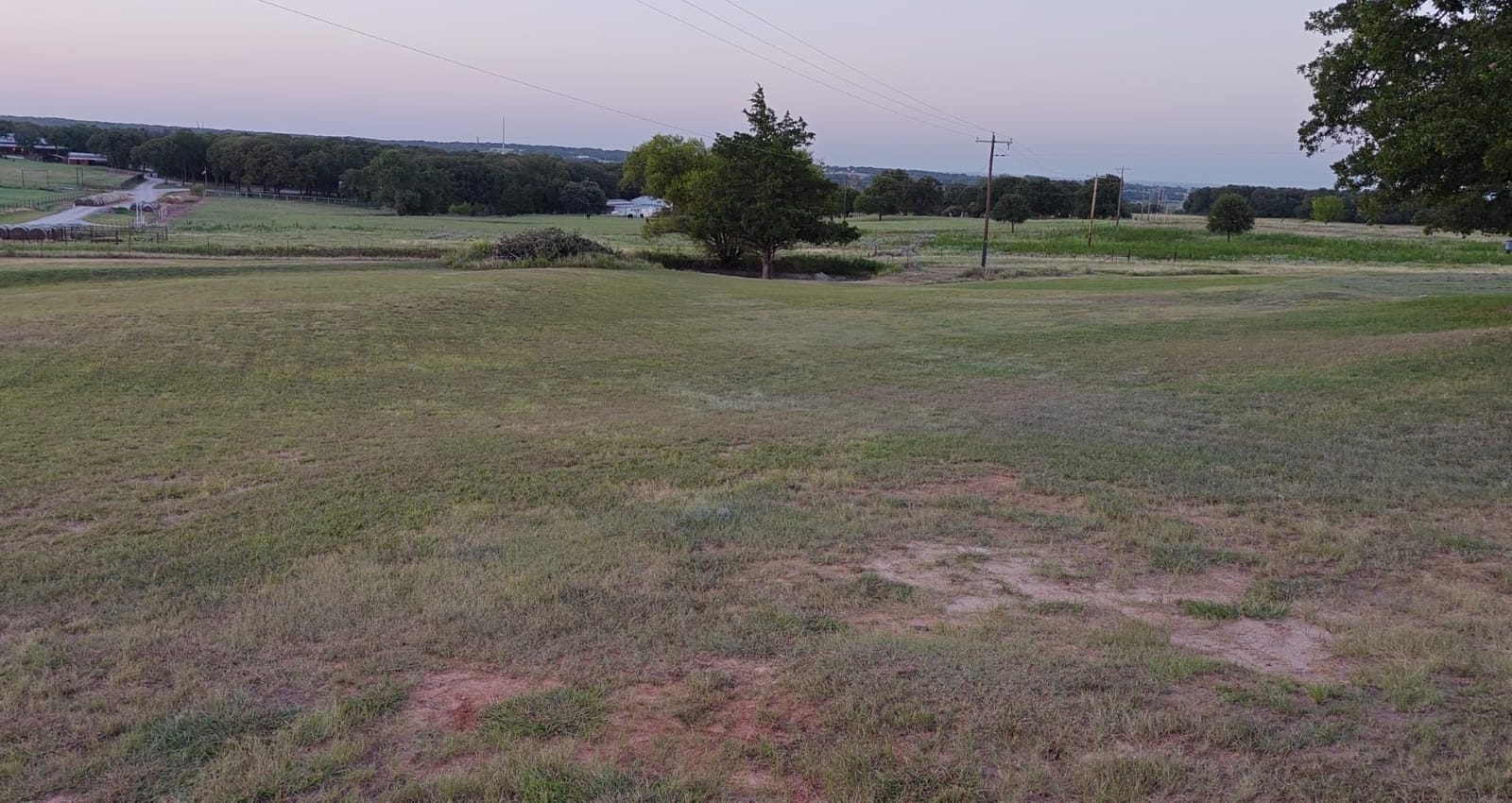
YARBO is the only machine here sized for acreage. Rated for up to six acres with 20 inch cutting width and a 300W dual-motor system, it produces a ride-on-mower finish that smaller wire-free units cannot match on a large property.
Its triple-fusion navigation combines RTK-GPS, binocular vision and multi-sensor PPVS, which is a sensible answer to a wooded estate where satellites disappear under canopy. The patented multi-terrain tracks with all-steel skid shoes handle ground that would bog a wheeled mower.
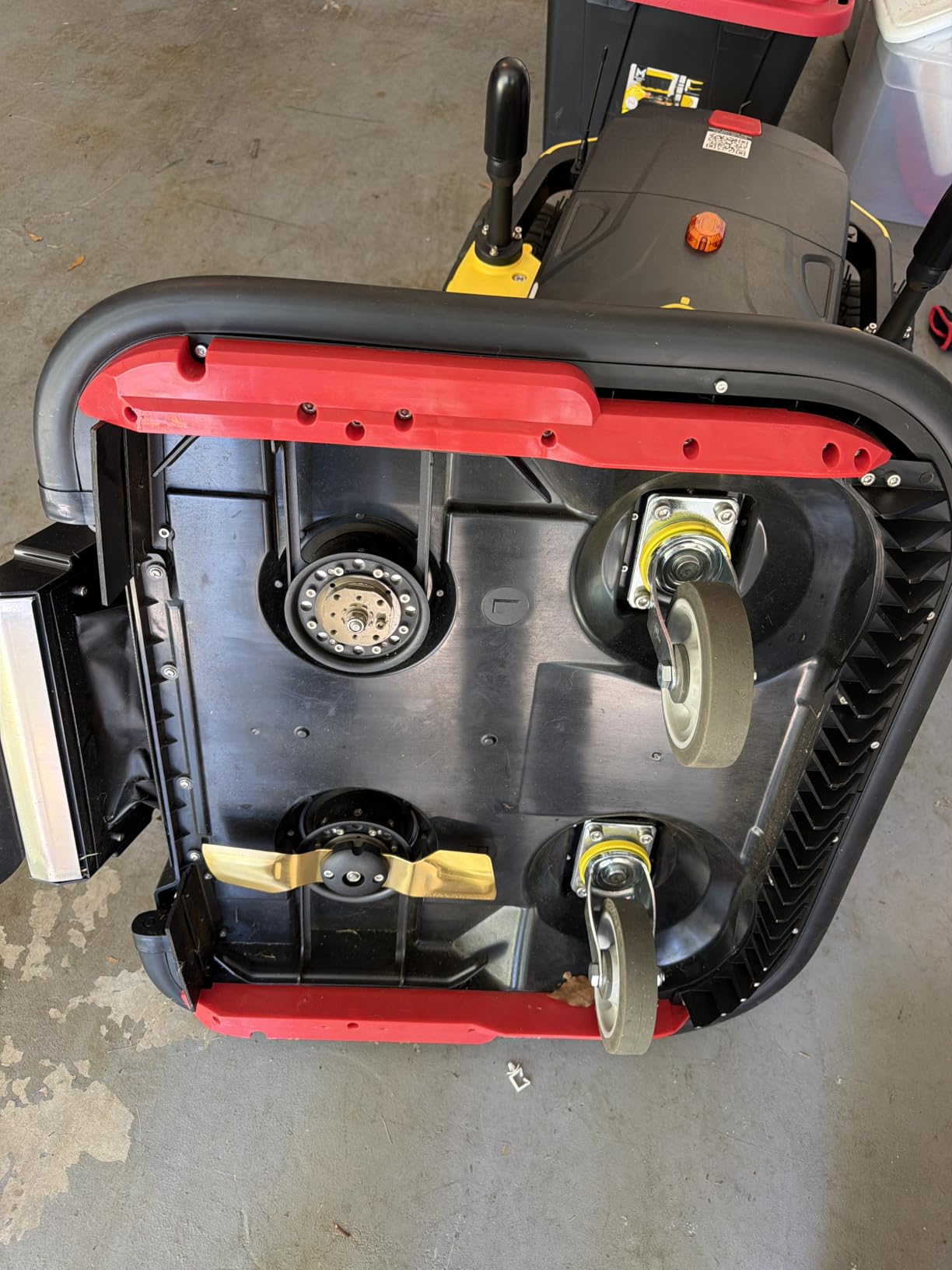
It is also modular, with a hitch for carts, a snow blower and a security patrol module, and the app cameras let you watch and drive it remotely. Battery life of about 120 minutes and IPX6 weather protection cover year-round use.
The two blade options are worth noting. Swapping razor blades for straight blades changes the finish depending on whether you want a clipper-clean look or a softer cut on uneven ground.
What you should check before buying
Budget the commissioning time. One owner spent roughly six hours mapping a large wooded property, and others describe days of trial and error with map drift and lost telemetry.
The Data Center Set needs a 120-degree unobstructed sky view and its mount is reported as unstable enough to need a custom bracket.
Who it is not for
It needs two adults for assembly, arriving in four heavy boxes, and limited ground clearance is a problem on genuinely rough terrain.
Support quality varies sharply between owners. Some name individual agents who replaced failed modules outright, while others describe a ticket backlog running for days.
5. Mammotion LUBA 3 AWD 3000: Best for Tree Cover and Cluttered Lawns
Mammotion LUBA 3 AWD 3000 Robot Lawn Mower, Perimeter Wire Free for 0.75 Acre, 360° LiDAR+NetRTK+AI Vision, All-Wheel-Drive for 80% Slopes, 30 Multi-Zone Management, Cutting Height 1.0″-2.7″
360 degree LiDAR 230 ft range
Four motors, 80% (38.6 deg) slope
Steps over 50 mm
Pros
- LiDAR removes the blind spots that RTK-only units hit in tree cover
- Adaptive suspension steps over curbs
- roots and thresholds
- Omni-wheel turning keeps turf damage low
- Recognises 300+ obstacle types
- 175 minute runtime with intelligent coverage planning
Cons
- Costs more than smaller wire-free RTK mowers
- LiDAR hardware carries a premium over the RTK-only LUBA 2 line
- Owner reports on this listing are limited so durability data is thin
The LUBA 3 adds 360-degree LiDAR to the Mammotion RTK platform, and that single addition changes how the machine behaves where satellites struggle. The 230 foot range sweeps from ground level to tree canopy, so boundaries stay accurate under heavy cover.
Mechanically it is the most sophisticated chassis here. Four independent motors deliver 80% slope capability, adaptive suspension steps over obstacles up to 50 mm, and omni-wheel zero-point turning avoids the turf tearing that skid-steer turns cause on soft ground.
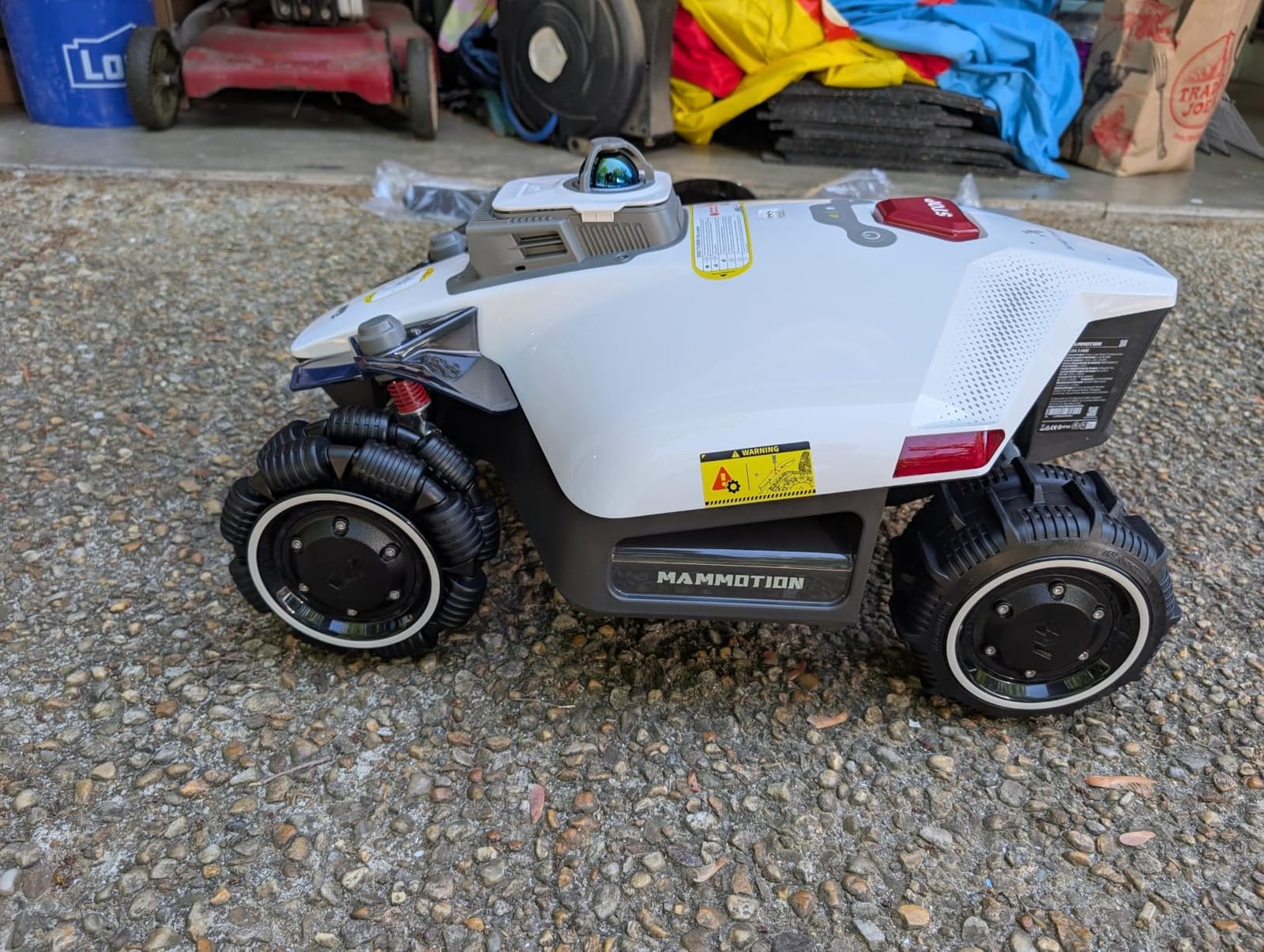
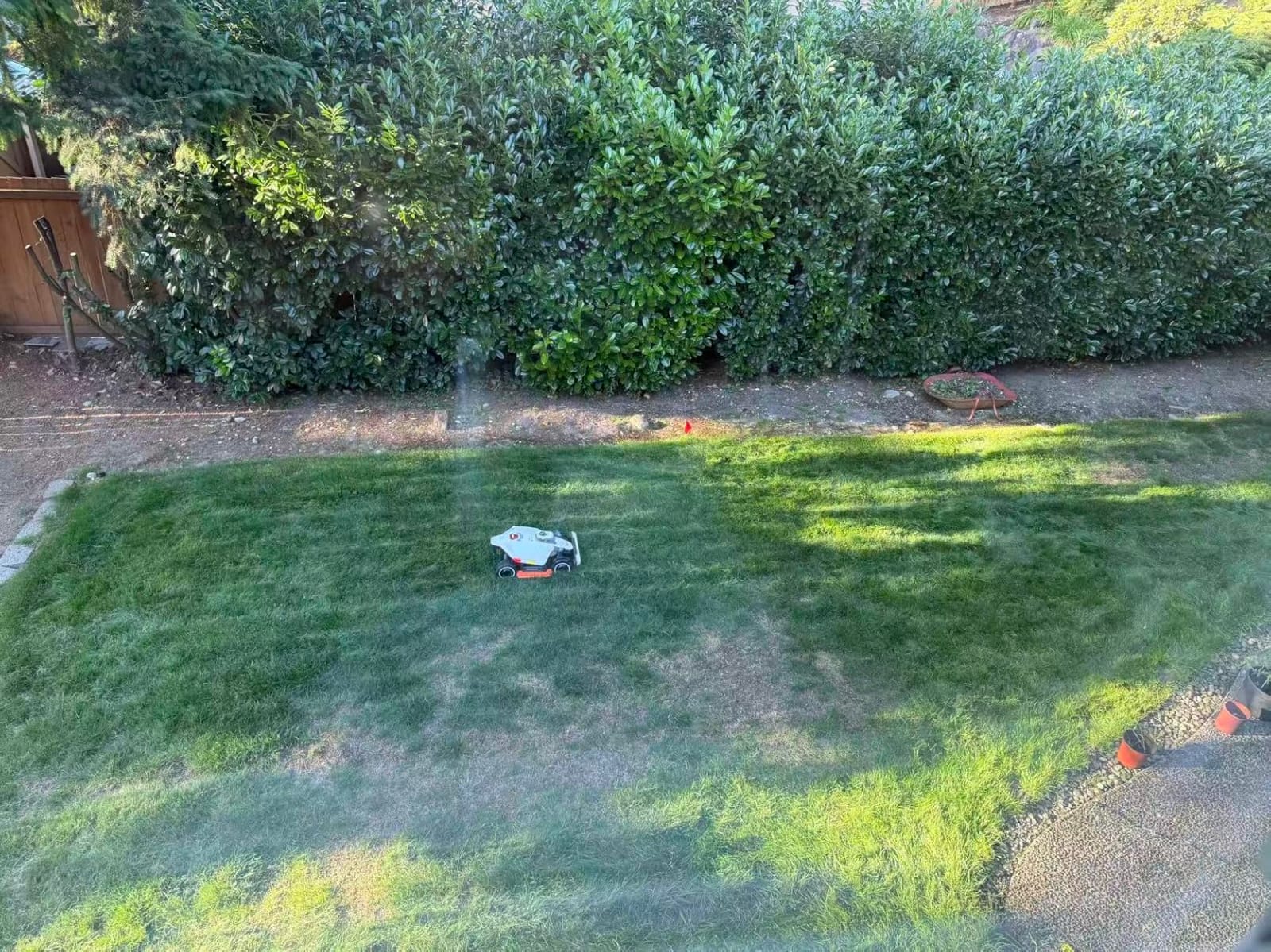
Coverage planning is efficient, with dual 165W high-torque motors, 6-blade discs and a 12Ah battery giving up to 175 minutes per charge and up to 500 square metres per hour. The AI processor identifies 300+ obstacle types and computes safe paths in real time.
Thirty mowing zones plus no-go areas and four mowing patterns give you real control over a divided property, and cutting height adjusts 1.0 to 2.7 inches.
What you should check before buying
Long-term durability data is thin on this listing, with 173 reviews against a much larger field for the LUBA 2 line. Read recent owner comments before committing to the LiDAR premium.
Compare carefully against the LUBA 2 AWD below. On smaller, less obstacle-dense lawns, the two achieve broadly similar results for materially different money.
Who it is not for
It is the wrong pick for a small, simple lawn where the hardware premium buys nothing you can see. The 5000HX covers the same job in most yards for less.
It is also heavy equipment to relocate between lawns, so a split property that needs two mowers is a more sensible answer here.
6. Segway Navimow i210 AWD: Best for Hilly Yards
Segway Navimow i210 AWD Robot Lawn Mower Wire Free, 0.25 Acre, 45% Slopes
All-wheel drive with stability control
45% (24 deg) max slope
EFLS RTK plus Vision
20 mowing zones
Pros
- AWD and stability control handle slopes and uneven terrain confidently
- Wire-free mapping produces a usable zone in about half an hour
- Efficient parallel passes instead of random wandering
- Rarely gets stuck
- Real-time GPS lift and exit alerts
Cons
- The 0.25 acre rating assumes flat square ground
- Grass wraps around the blade deck and needs clearing
- GPS can drift a few inches so edge settings need care
- Some firmware updates moved the mower outside mapped zones
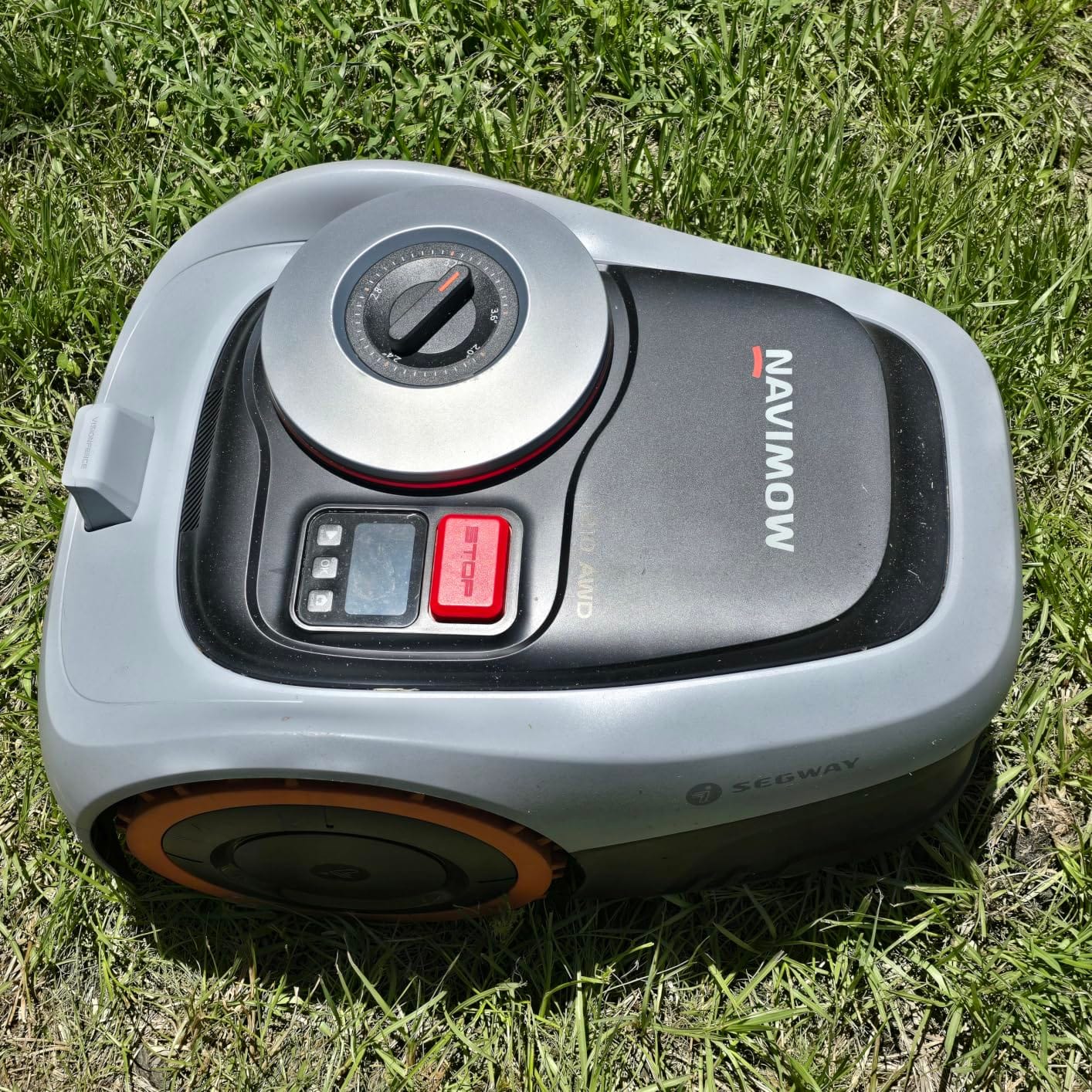
This is the highest-rated machine in our group at 4.4, and owners attribute it to traction rather than software. Electronic Stability Control on all-wheel drive is the feature that keeps it planted on a lateral slope while cutting.
The concentric third-wheel design gives true zero-turn steering, which matters on a complex lawn full of islands. The mower pivots in place instead of scuffing a half-circle through your grass.
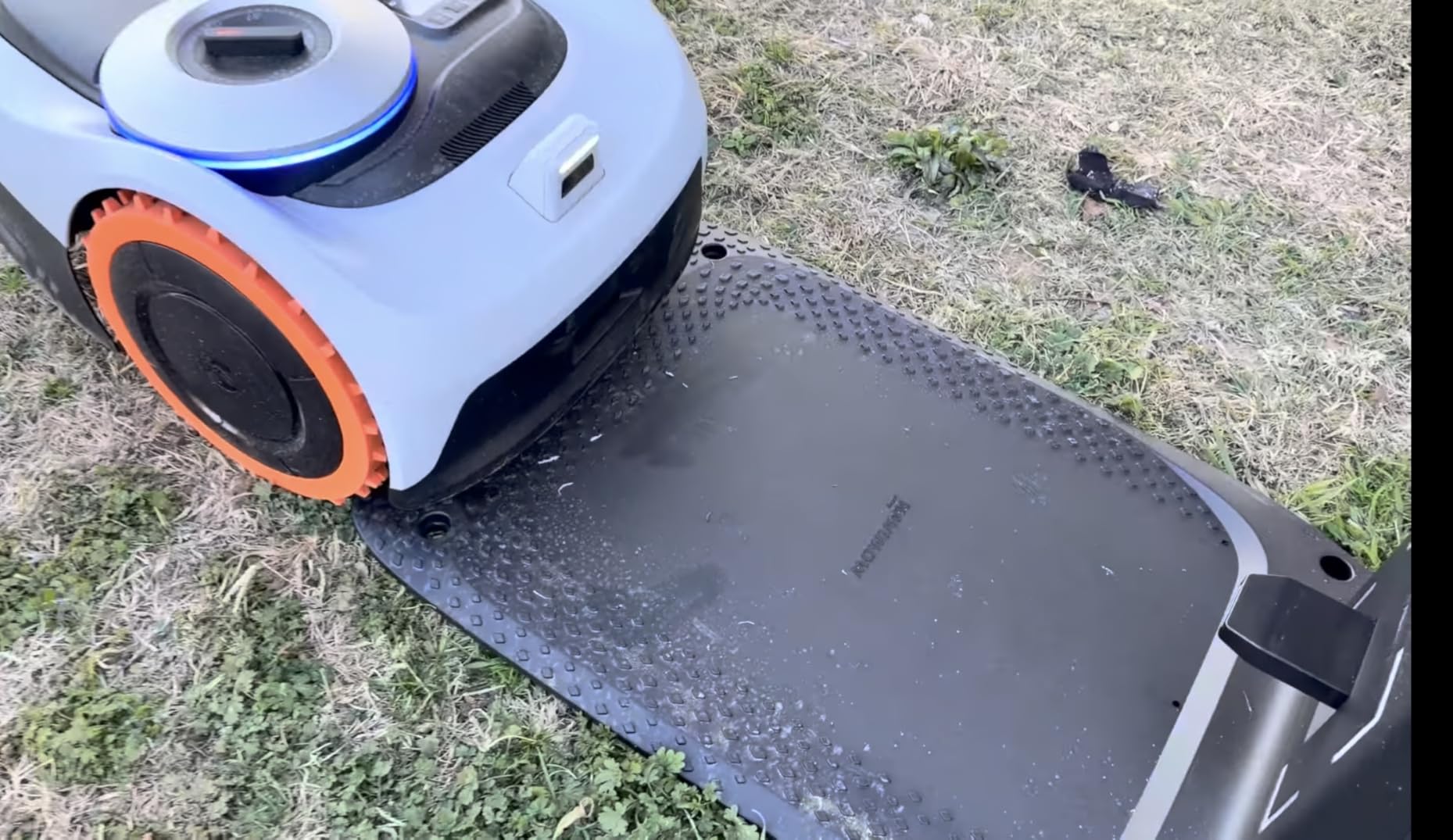
Setup speed is a genuine selling point. Owners contrast roughly half an hour of RTK mapping against a full day of installing and adjusting a boundary wire, and up to 20 mowing zones with optimised paths suit a divided property.
Real-time GPS alerts fire if the machine is lifted or leaves designated areas, which is the practical anti-theft feature on a property with a side gate.
What you should check before buying
Do not trust the acreage figure blindly. The 0.25 acre rating assumes flat, square ground, and on sloped or irregular lawns you will need more charges and a longer schedule.
Watch the deck underside. Grass wraps around it and needs regular clearing, which is a ten-minute job every week or two.
Who it is not for
It is not the right pick if your lawn is larger than a quarter acre with real slope. You will be dock-bound most of the weekend.
Note the firmware caveat. One owner reports an update sending the mower outside its mapped boundary and into flower beds, so check release notes before installing updates.
7. Sunseeker X3 Plus: Best for Carrying Between Two Lawns
Sunseeker X3 Plus Robot Lawn Mower, RTK, Vision AI, 0.3 Acre, Wire-Free
19.9 lb body, RTK plus VSLAM
Up to 6 saved maps
Ride-on-edge 8 inch floating blade
60 dB
Pros
- Light enough to carry between front and back lawns by hand
- Clean edge cutting from the ride-on-edge offset blade
- Steady navigation under trees and along fence lines
- Easy to clean and simple to set up
- Handles thick native grass and uneven ground
Cons
- App and satellite reliability draw heavy criticism
- Reported to leave mapped boundaries without warning
- Error and update messages appear in Chinese
- Antenna mounting hardware is not sold by the brand
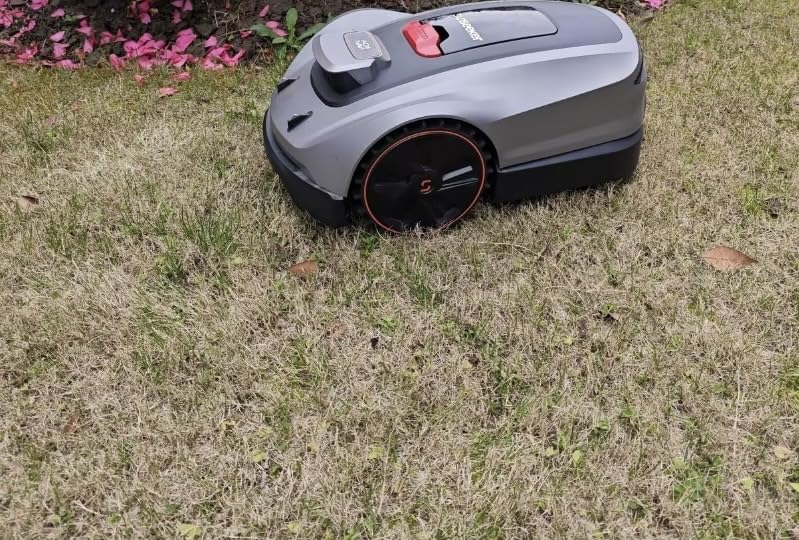
At 19.9 pounds, the X3 Plus is the machine you can move between a front and back lawn by hand, which no other mower in this guide offers. For owners who mow two separate areas on different schedules, that changes the whole calculation.
The AONavi RTK plus VSLAM navigation holds steady under trees and along fence lines for most users, and the ride-on-edge offset 8 inch floating deck produces a genuinely clean border with much less touch-up trimming.
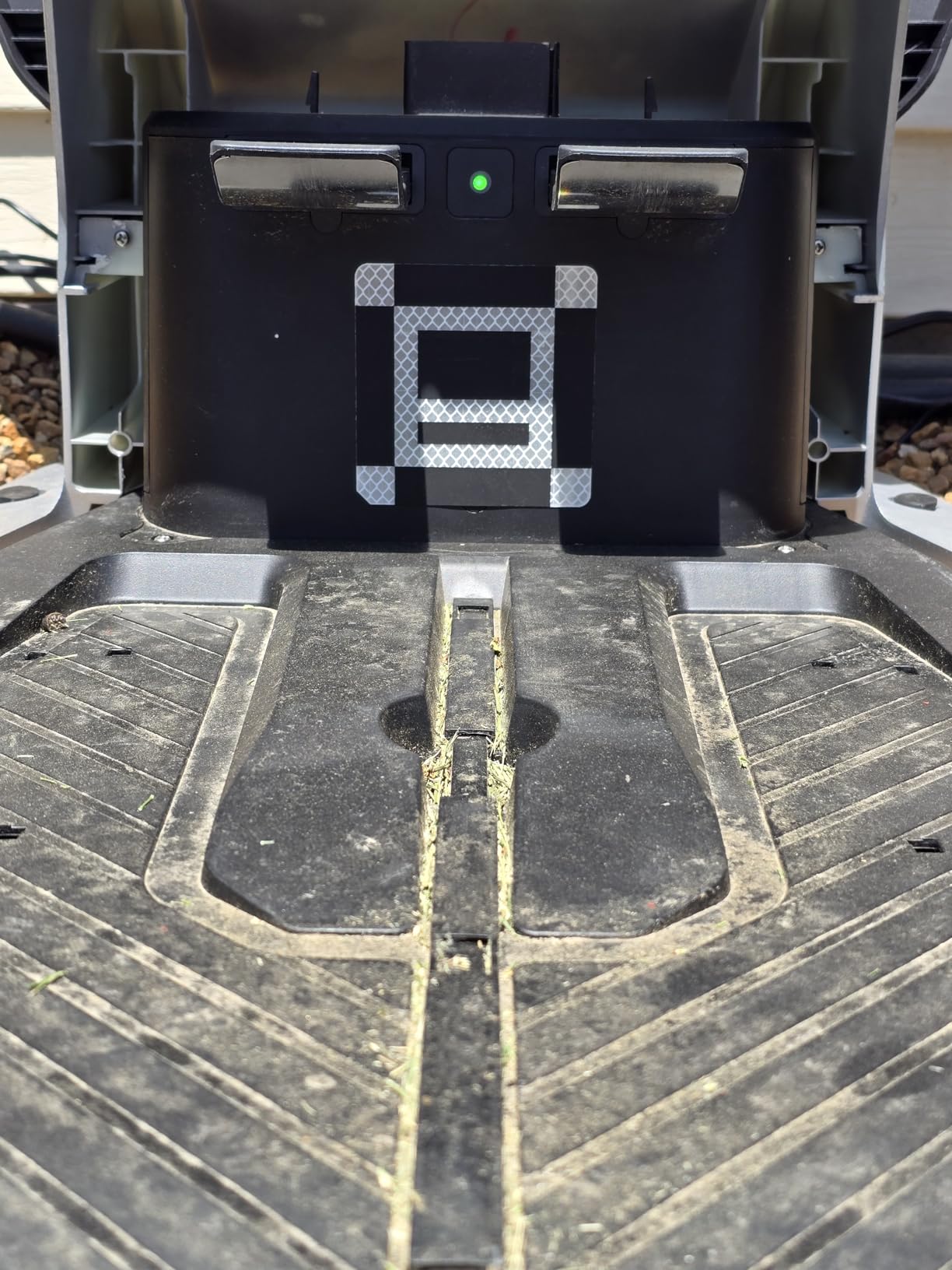
Up to six saved maps with multi-zone and no-go control is enough for most split properties, and the cutting height adjusts 1.6 to 3.2 inches. It runs at 60 dB and supports voice control alongside Wi-Fi and Bluetooth.
Warranty is two years with US-based support, which is shorter than the three years on the Segway machines but more explicit than most in this category.
What you should check before buying
Read recent owner reviews carefully, because they split sharply. Users with a stable satellite lock and a working app describe a capable machine, while others report repeated calibration failures and false stuck states.
Note that reviews on this listing also cover the newer X7, so the 3.8 average blends two models rather than reflecting one machine’s consistency.
Who it is not for
It is the wrong pick for a lawn that grows fast. Deep or two-day grass growth causes navigation failure and repeated stuck reports, so a neglected lawn defeats it.
Some users also report the mower leaving mapped boundaries without warning and deleting hazard zones reappearing after updates. Plan on checking the map after any software change.
8. ECOVACS GOAT O1000 RTK: Best for Narrow Passages
ECOVACS Goat O1000 RTK Robot Lawn Mower, Wire-Free Robotic Lawnmower for Up to 1/4 Acre, RTK + Vision Navigation, Auto Mapping, TruEdge Edge Cutting, AIVI 3D Obstacle Avoidance, APP Control
Passages down to 2.3 ft
RTK plus Vision plus 3D ToF
LiDAR auto map in 5 min
Pros
- Narrowest passage capability we found at 2.3 ft
- Setup in about 5 minutes using LiDAR-enhanced RTK mapping
- TruEdge cuts close enough to cut trimming time substantially
- Very quiet
- effectively inaudible beyond about 10 to 15 feet
- Stable on slopes without skidding
Cons
- The supplied RTK pole is too short for many installs
- Hillside properties lose satellite reception at certain times of day
- Nighttime mowing is impractical on an RTK unit
- Aggressive edge settings can push it past the boundary
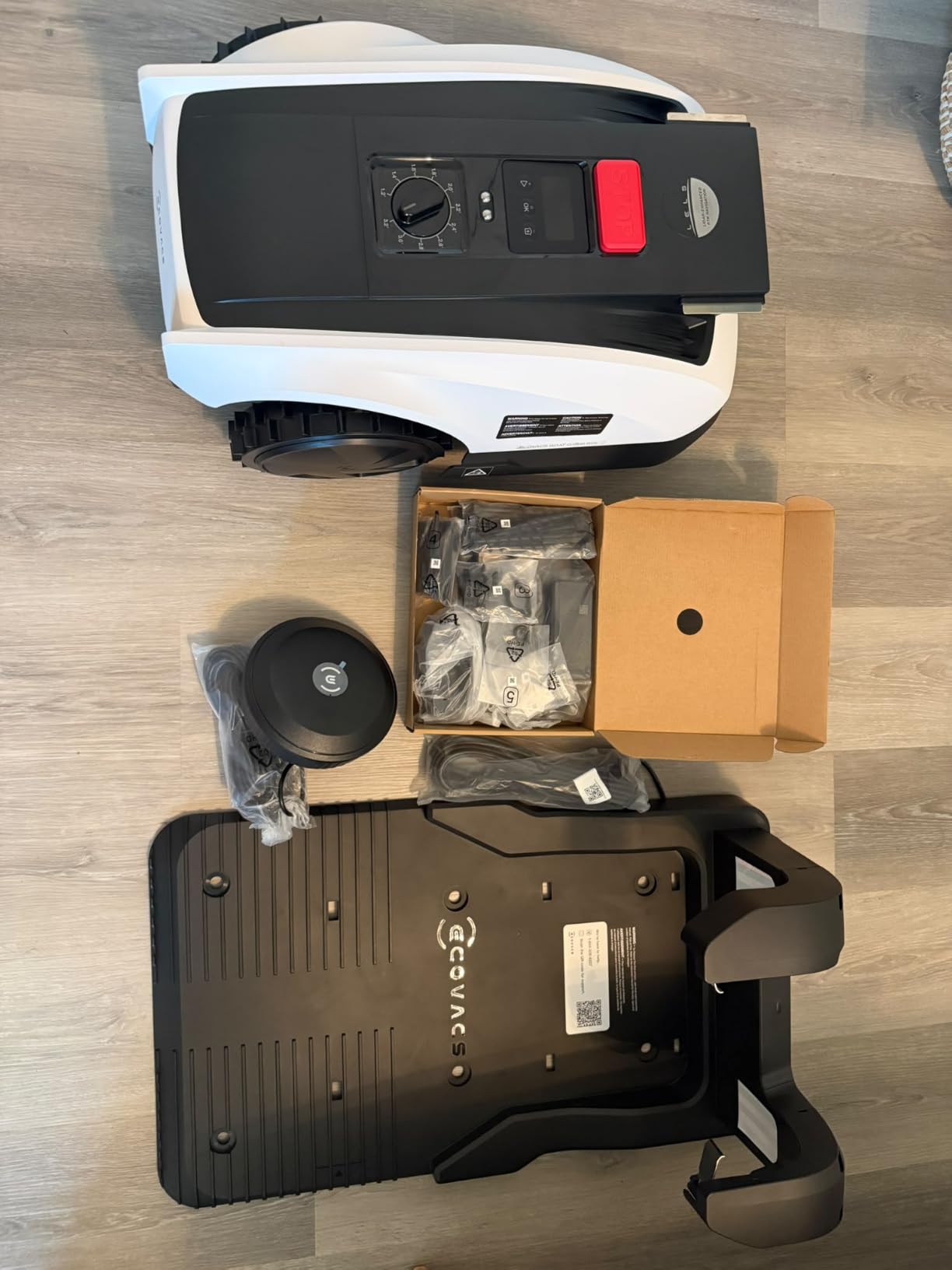
The GOAT O1000 RTK is the pick when corridors are the defining problem. It handles passages down to 2.3 feet, narrower than anything else we found, which makes it the machine to buy if your property has tight side-yard gates.
Setup takes about five minutes using LiDAR-enhanced RTK auto mapping, and the app experience transfers directly from the ECOVACS robot vacuum line if you already own one of those.
Positioning combines RTK, vision and 3D ToF for centimetre-level accuracy, while AIVI 3D handles furniture, toys, trees and pets. TruEdge cuts close to borders and, in owner reports, cuts trimming time substantially.
It is also fast for its size. Reviewers report a 1,200 square foot lawn finished in around 32 minutes, and the quarter-acre ceiling covers 10,890 square feet with cutting height adjustable 1.2 to 3.2 inches.
What you should check before buying
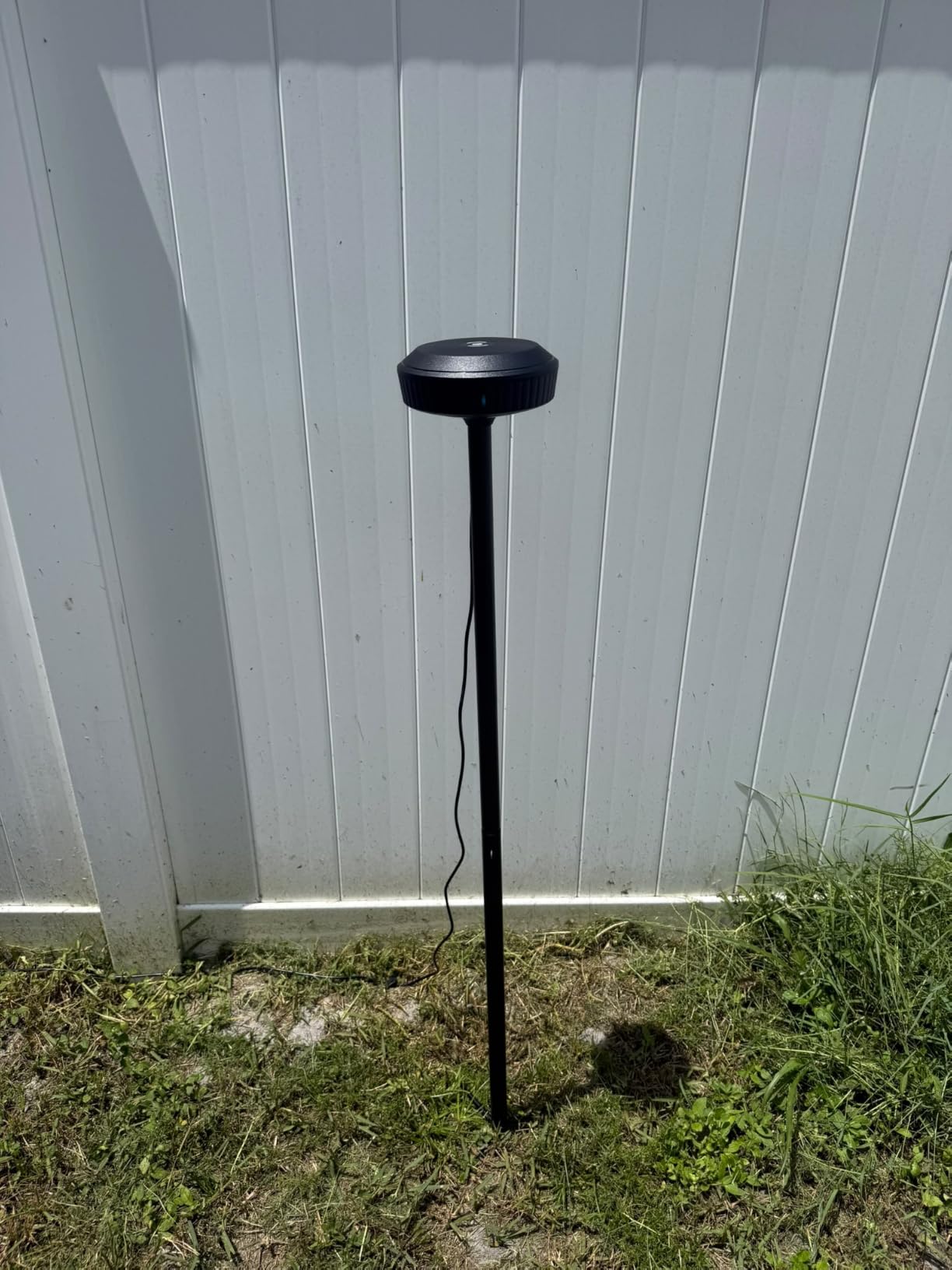
Plan the antenna install before you buy. The supplied RTK pole is too short for many yards, so roof or fence mounting is often required, and that is an extra job on a weekend.
Check satellite coverage across your day on a hillside. Owners report losing reception at certain hours, which forces schedule changes, and strong outdoor Wi-Fi may be required too.
Who it is not for
It is the wrong pick for night mowing. An RTK-based unit cannot run after dark in practice, so plan daytime schedules only.
With just 27 reviews, this is the thinnest owner record in the group, and some users find assembly and app operation difficult for older family members.
Buying Guide for GPS Robot Mowers on Difficult Lawns
Does your lawn need GPS, LiDAR, or vision?
GPS is the right answer when your lawn has open sky. If your property is ringed by tall trees, walled garden or buildings, plain RTK will drift at the edges and a camera or LiDAR has to cover the gap. Our wider guide to robot mowers without perimeter wire covers the installation side in more detail.
The practical test is to watch your phone’s satellite reading at the worst point of your lawn. Consistent lock means RTK alone will do. Erratic lock means you need the LUBA 3 AWD’s 360-degree LiDAR or the ANTHBOT M9’s dual cameras in the mix.
How many zones do you actually need?
Zone counts are the most inflated number in this category. Twelve zones does not mean twelve separate lawns, and one hundred zones does not mean it will service a hundred areas without you driving the mower to each one. What matters is whether the app lets you create a corridor between two areas and give them separate schedules.
On the Navimow i105N, editing a small no-go zone means driving the mower to the location, so plan your no-go zones before you commit to a layout.
Slope ratings: percent versus degrees
Brands quote slope in percent and in degrees, sometimes in the same sentence, and the numbers do not always line up. As a reference, 30% is about 17 degrees, 45% is about 24 degrees, 70% is about 35 degrees, and 80% is about 39 degrees. Read the figure you are given in the unit your lawn’s slope is measured in.
Also read past the headline. A published 80% figure says nothing about wheel type, suspension travel or traction on wet grass, and owners on r/automower point out that off-road wheels matter as much as motor power.
Narrow passages and obstacle density
Passage width is the number most often left out of comparisons and the one that ends debates. The GOAT O1000 RTK manages 2.3 feet, the rest of this group are wider. Measure your tightest gate twice, then measure the mower including its wheel width, because the advertised figure is a navigation claim rather than a dimensional one.
For obstacle density, treat the object catalogue as a rough guide. A 1,000-type vision system on the M9 is more reassuring in a toy-strewn yard than a 150-type system, but no camera reliably spots a garden hose lying flat, so check your own yard before you rely on it. Our general robot lawn mower guide covers the basics every buyer needs before narrowing to wire-free models.
Real owner problems worth planning around
The r/automower threads raise a set of problems that rarely appear in product copy. Owners report mowers declaring themselves trapped in wide-open areas and needing manual retrieval, a few meters of positioning drift at turn points, and maps that take up to a week to settle on a new lawn.
Multiple users in the same threads also mention theft anxiety and adding trackers or physical deterrents, and TheLawnForum discussion notes the trade-off owners accept when they install a perimeter wire, which removes GPS dependency entirely but means a day of installation.
When not to buy a robot mower
Skip an autonomous mower if your lawn is a small flat rectangle with no obstacles. You will pay for capability you never use. Also skip it if the grass grows faster than you can mow, since deep growth causes navigation failure on several of the machines here.
Be realistic about relief mowing. Every wire-free unit in this guide still needs a string trimmer along fences and under decks, and a property of two acres or more may honestly need two mowers rather than one expensive unit. If you are still weighing the wider category, our best robot lawn mower roundup sets out the wired and non-GPS options in the same format.
Frequently Asked Questions
What is the best robotic lawn mower for uneven ground?
For uneven ground, prioritise all-wheel drive with published slope capability over cutting width. The Mammotion LUBA 2 AWD 5000HX climbs 80% slope with a 165W four-wheel motor, and the Navimow i210 AWD adds Electronic Stability Control for lateral stability. Adaptive suspension, as on the LUBA 3 AWD 3000, helps it step over roots and curbs up to 50 mm.
Can a robot mower mow multiple zones?
Yes, every wire-free mower in this guide supports multiple zones. The LUBA 2 AWD handles up to 50 mowing areas with no-go zones, the ANTHBOT M9 and LUBA 3 AWD manage 30 each, and the Navimow i210 AWD offers 20. Zone counts are generous, so the useful question is whether the app lets you create corridors between areas and run them on separate schedules.
Do I need perimeter wires for a complex lawn?
Usually not, but the mower still needs a clear view of the sky for RTK positioning. On tree-covered or hillside properties, satellite reception can drop at certain times of day, so plan antenna placement carefully and expect to mount it higher or on a roof. A perimeter wire removes the GPS dependency entirely, which is why some owners on r/automower still prefer it for low-stress operation.
What navigation system is best for shaded areas?
LiDAR or vision-assisted RTK wins in shade. The Mammotion LUBA 3 AWD 3000 adds 360-degree LiDAR with a 230 foot range that maps from ground level to tree canopy, and the ANTHBOT M9 uses dual 150-degree cameras with more than 1,000 recognised object types. RTK-only units such as the Navimow i105N rely on vision to hold centimetre-level accuracy under cover.
Why does my GPS robot mower get stuck?
Common causes are high wheels without traction, a passage narrower than the turning circle, deep unmown grass, and drift near boundaries after a firmware update. Owners on r/automower also report mowers reporting they are trapped in wide-open areas, which usually points to map edits or a lost fix rather than a physical obstruction. Check the deck underside for wrapped grass and confirm your zone map after every update.
Which robot mower is best without cable?
All eight picks here are wire-free. The best overall for a difficult lawn is the Mammotion LUBA 2 AWD 5000HX, and the fastest to commission is the ECOVACS GOAT O1000 RTK at about five minutes. For the narrowest corridors, the GOAT O1000 RTK reaches passages down to 2.3 feet. If you want a simpler overview of the category, see our guide to the best robot lawn mowers.
Conclusion
For most complex lawns, the Mammotion LUBA 2 AWD 5000HX is the one to buy. All-wheel drive to 80% slope, 50 mowing zones and 200+ recognised object types cover the three complexity factors that cause the most failures. Add the LUBA 3 AWD 3000 if tree cover is severe, or the ECOVACS GOAT O1000 RTK if your corridors are the real problem.
Match the machine to your worst lawn feature, not your average one. That single decision, made against the 2026 picks above, is the difference between a robot mower that quietly handles a tangled property and one that spends its life asking for help.