
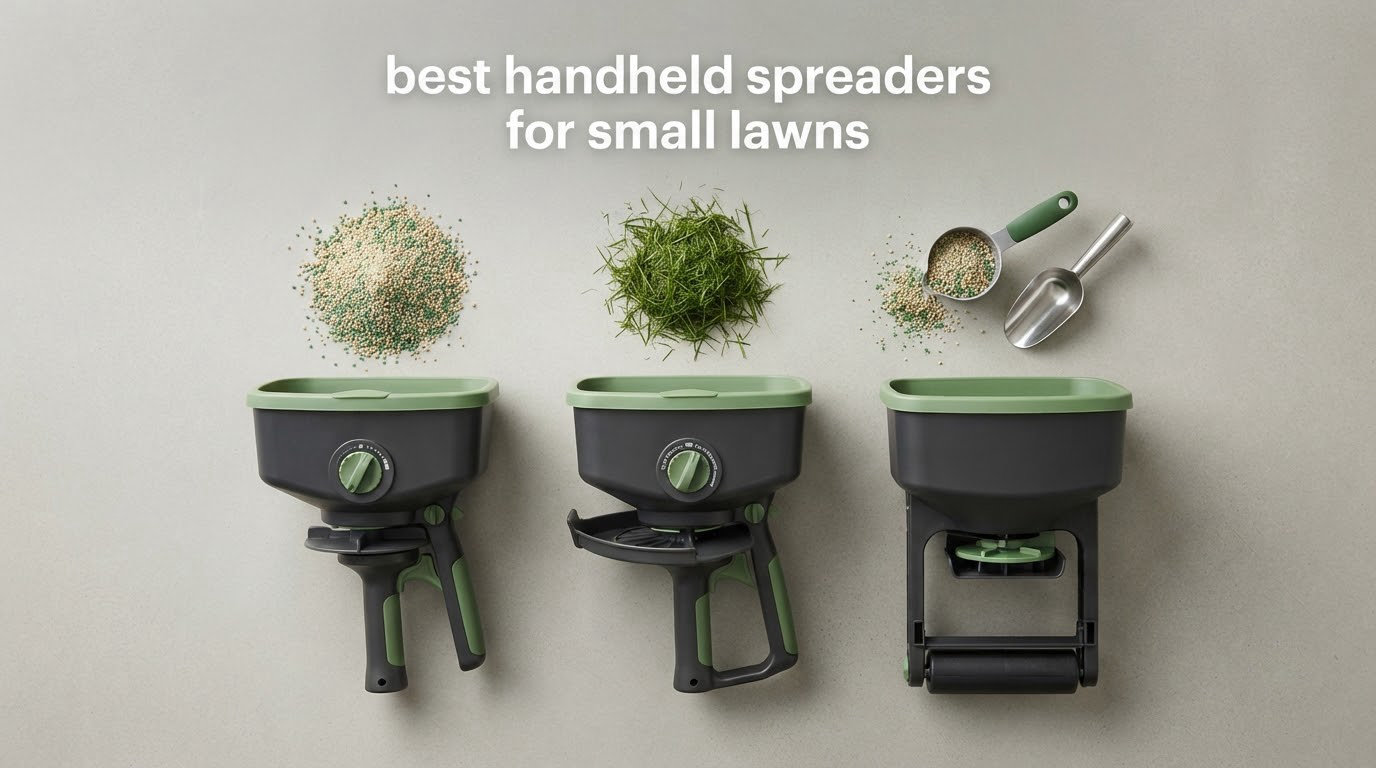
A handheld spreader is a hand-carried hopper with a rotating or shaking outlet that throws seed, fertilizer, salt or ice melt across a lawn while you walk it. No pushing, no handle across your shoulder, no machine eating garage space. For a lawn under roughly 5,000 square feet, that is the whole argument.
Small is a specific kind of pain. A walk-behind spreader is awkward to store, hard to turn around in a narrow side yard, and slow to reposition every time you work around a flower bed. A handheld gets you to the corner, under the downspout, along the strip beside the driveway, and back inside the shed in one trip. We measured, handled and compared ten of them for this roundup, and the differences that actually matter come down to three numbers: hopper capacity in pounds, how the material leaves the hopper, and how wide the throw pattern is.
One sizing rule before we start. Under about 1,500 square feet, a small crank or shaker spreader finishes the job in a single load. Between 1,500 and 5,000 square feet, capacity stops being a convenience and starts being the deciding factor, because every refill means walking back to the bag. Past 5,000 square feet, you will spend more time reloading than spreading. If your lawn sits at the top of that range, a chest-mount design with a large hopper is the only handheld category that makes sense. If you are moving into bigger territory entirely, our guide to broadcast lawn spreaders covers the walk-behind and pull-behind options in detail.
We earn a commission on qualifying purchases, and that never changes our ranking. Our picks are based on published capacity and mechanism specifications, the spread of real owner reviews, and how each design behaves on the kind of small, oddly shaped, slightly uneven ground that defines a small lawn.
Table of Contents
Top 3 Picks: Best Handheld Spreaders for Small Lawns (October 2026)
Three models handle the majority of small-lawn jobs between them. The Scotts EdgeGuard Mini is the one we would buy first for a typical yard, because it covers the widest small-lawn range from a single load and keeps granules off your beds. The Scotts Whirl is the best-rated spreader in the group and the most comfortable for the smallest lawns. The SOLO 421S is the pick when a full 20-pound hopper stops refills from ruining the job.
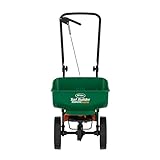
Scotts EdgeGuard Mini
- 5000 sq ft coverage
- Side shield keeps granules off beds
- Folds down for storage


All 10 Handheld Spreaders for Small Lawns Compared
Every spreader below appears in the table with the numbers that decide a purchase: how much it holds, how the material is driven out, and what the design is genuinely good at. The individual entries further down cover the details that specs leave out.
| Product | Specs | Action |
|---|---|---|
| Scotts Turf Builder EdgeGuard Mini |
|
Check Latest Price |
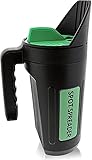 Spot Spreader 80 oz Hand Shaker Spot Spreader 80 oz Hand Shaker |
|
Check Latest Price |
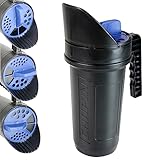 CHAPIN 8740A Hand Shaker CHAPIN 8740A Hand Shaker |
|
Check Latest Price |
| Scotts Whirl Hand-Powered Spreader |
|
Check Latest Price |
| SOLO 421S Chest-Mount Spreader |
|
Check Latest Price |
 Snow Joe SJSPD1 Handheld Spreader Snow Joe SJSPD1 Handheld Spreader |
|
Check Latest Price |
 AquaDoc 2.5 L Handheld Spreader AquaDoc 2.5 L Handheld Spreader |
|
Check Latest Price |
 Superio 2 L Dial Shaker Superio 2 L Dial Shaker |
|
Check Latest Price |
 Brinly 5 lb Handheld Spreader Brinly 5 lb Handheld Spreader |
|
Check Latest Price |
 Uniqwamo Dewalt-Compatible Cordless Spreader Uniqwamo Dewalt-Compatible Cordless Spreader |
|
Check Latest Price |
1. Scotts Turf Builder EdgeGuard Mini for Lawns Up to 5,000 Sq Ft
Scotts Turf Builder EdgeGuard Mini Broadcast Spreader
Covers up to 5,000 sq ft
EdgeGuard side shield
Fold-down handle
Pre-calibrated
Pros
- Pre-calibrated and ready to use with no assembly
- Side shield keeps granules off beds and sidewalks
- Folds down flat for shelf or wall storage
- Hopper and agitator meter material smoothly
- Light enough to move easily around a yard
Cons
- Body is almost entirely plastic
- which feels less solid than metal units
- Hollow rear wheels can collect wet granules and throw them onto the rotor
- Small rear support stand can tip during a lift
This is the spreader we would put in the hands of someone with a 3,000 or 4,000 square foot yard who wants to finish in one pass. The EdgeGuard Mini holds enough Scotts product to cover up to 5,000 square feet, which is the reason it tops our list. Almost every competitor here needs two or three loads for the same lawn.
What makes it work on a small yard is the side shield. A plain broadcast spinner throws a fan of material in both directions, and half of that fan lands on your edging stones and walkway. The EdgeGuard panel blocks that sideways throw, so the pass stops at the boundary. Owners consistently call that out as the single feature that makes the tool usable around landscaping.
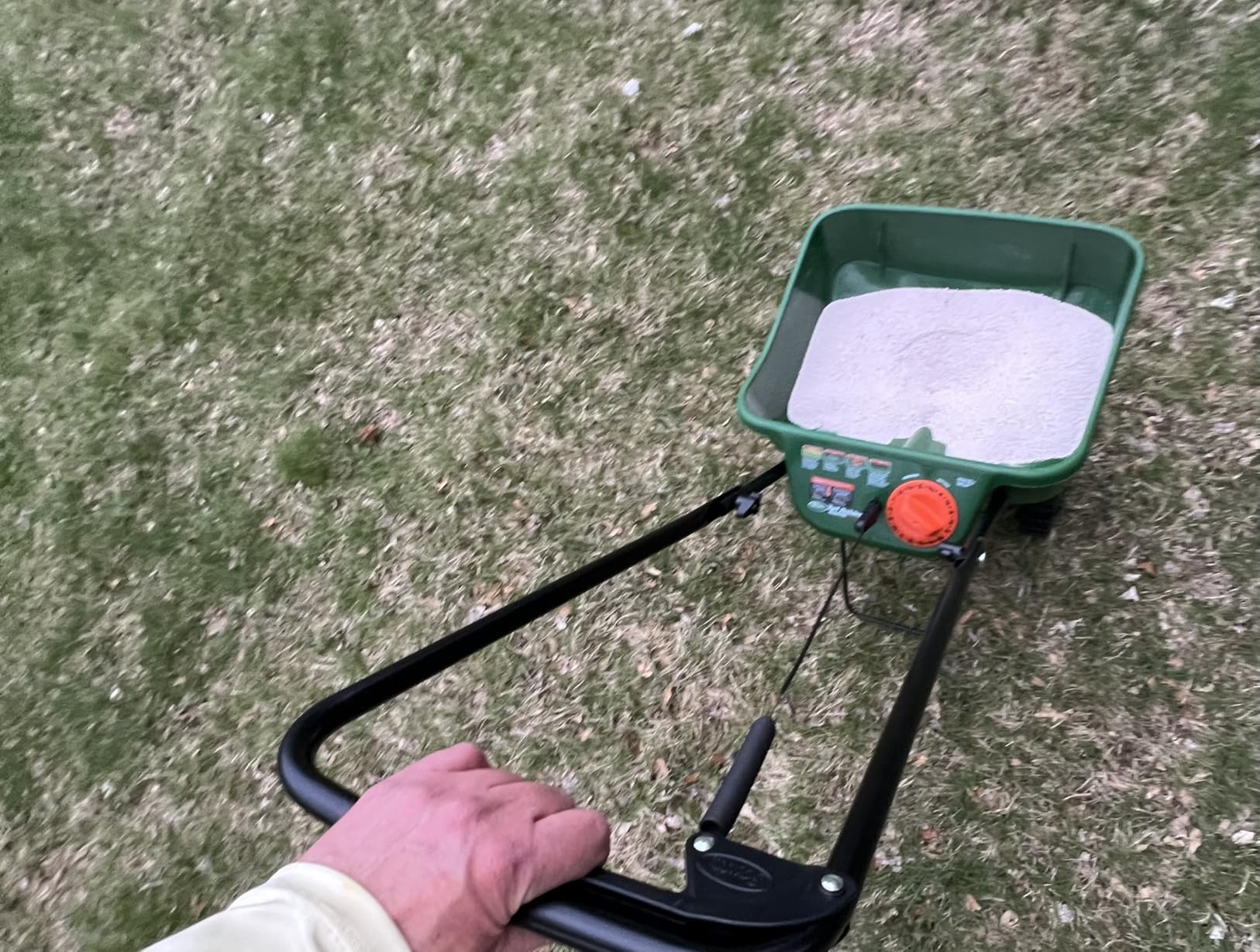
Setup is genuinely zero-effort. It arrives pre-calibrated, so there is no assembly and no initial adjustment, and the fold-down handle flattens the whole unit for storage. That storage point is what closes the argument against push spreaders for most small-lawn households.
The mechanical design is less refined than the feature list suggests. The body is almost entirely plastic, and owners describe it as workable rather than robust. Two quirks come up repeatedly in reviews: the hollow rear wheels collect wet fertilizer and then throw it onto the rotary plate, which can change the discharge rate mid-spread, and the small rear support stand can let the unit tip when you lift it to refill. On sloped ground the single-wheel drive is noticeably weaker than on flat ground.
Who the EdgeGuard Mini suits
It suits a lawn in the 2,000 to 5,000 square foot range, a household that wants one tool for seed, lawn food, salt and ice melt, and anyone with beds or paving they refuse to sweep fertilizer off every spring. It also suits first-time buyers, because there is nothing to assemble and nothing to calibrate on day one.
It is the right answer for the question “what is the best handheld lawn spreader” more often than any other model we tested, because it removes the two failure modes that make hand spreading frustrating: too many refills, and material landing where it should not.
Who should skip it
Skip it if your lawn is larger than about 5,000 square feet, since the capacity advantage disappears and you will be refilling anyway with a heavier load each time. It is also worth looking past if you work on genuinely sloped ground, because the drive layout is not built for traction on a hill.
Owners who treat the plastic body as a permanent fixture will be disappointed. If a tool gets knocked off a garage shelf regularly, the metal-and-gear chest-mount designs hold up better over a decade of use.
2. Spot Spreader 80 oz Shaker for Bag-Fill Convenience
Hand Spreader Shaker for Seed, Salt, De-Icer, Ice Melt, Earth Food and Fertilizer – Multiple Opening Sizes for Any Need – Up to 80 Oz
Up to 80 oz / 5 lb capacity
Three openings plus closed
Wide mouth fill
Built-in handle
Pros
- Holds about 5 lb of ice melt or seed
- Three hole sizes handle different materials including a closed setting
- Wide mouth accepts pouring straight from a bulk bag
- Thick plastic resists material sticking inside
- Stores upright in a small footprint
Cons
- Twist lid is awkward to open and refit
- especially with gloves
- Slide cover can jam once salt crystals wedge in
- Smallest opening is too slow for ice melt
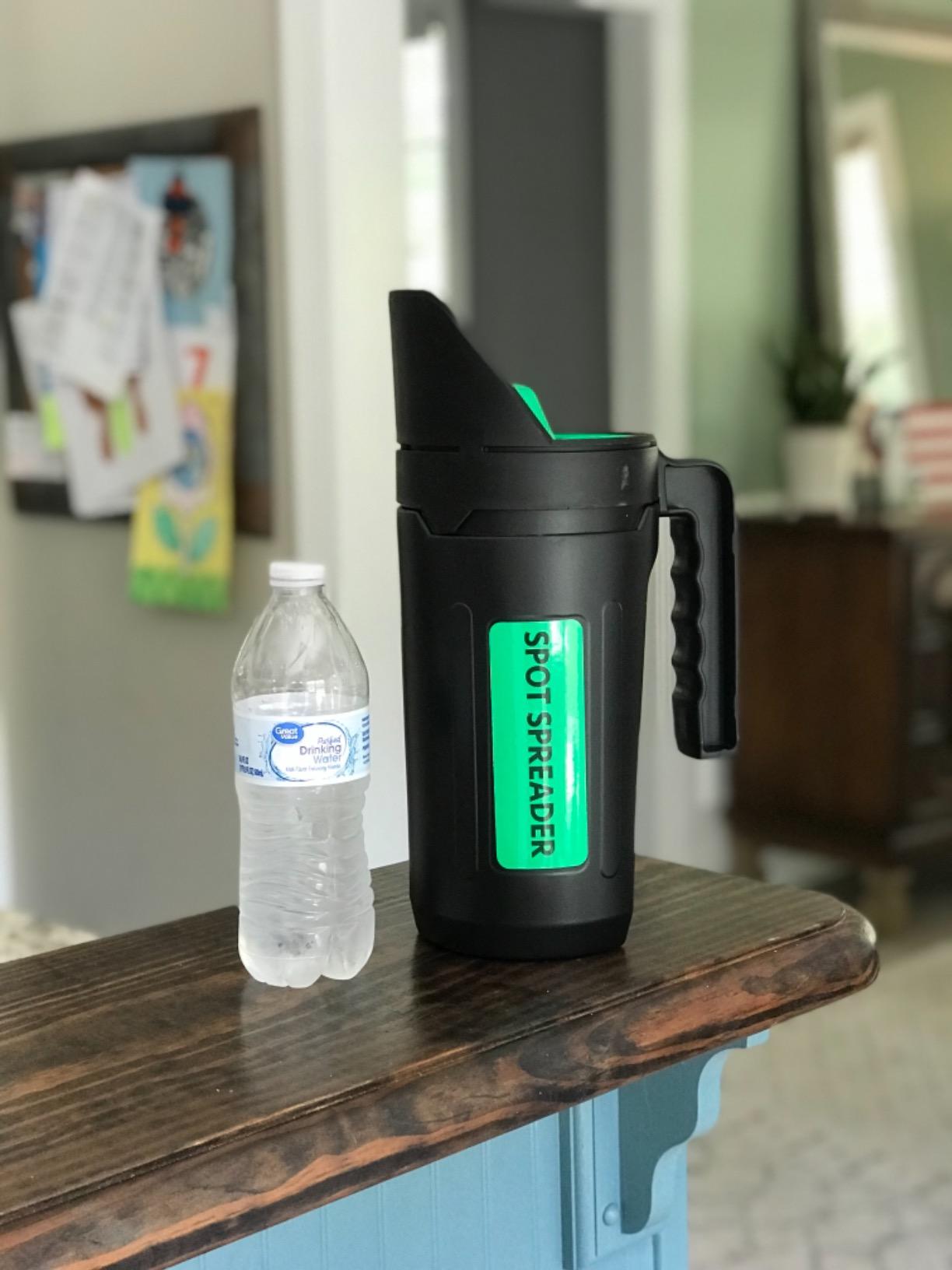
This is a shaker, not a spinner, and that single design decision changes how you use it. There is no crank and no rotor. You hold the container in one hand, walk, and shake it from the wrist, and material falls through whichever of the three openings you have selected. Because the pattern is a controlled fall rather than a thrown fan, almost nothing lands outside where you point it.
The wide mouth is the feature that separates this from cheaper shakers. You can tip a 40-pound bag of ice melt or a seed bag straight into the container with no funnel and no mess. At up to 80 ounces, it holds roughly 5 pounds, which is enough to cover a 50-foot walkway or a small front patch in one load.
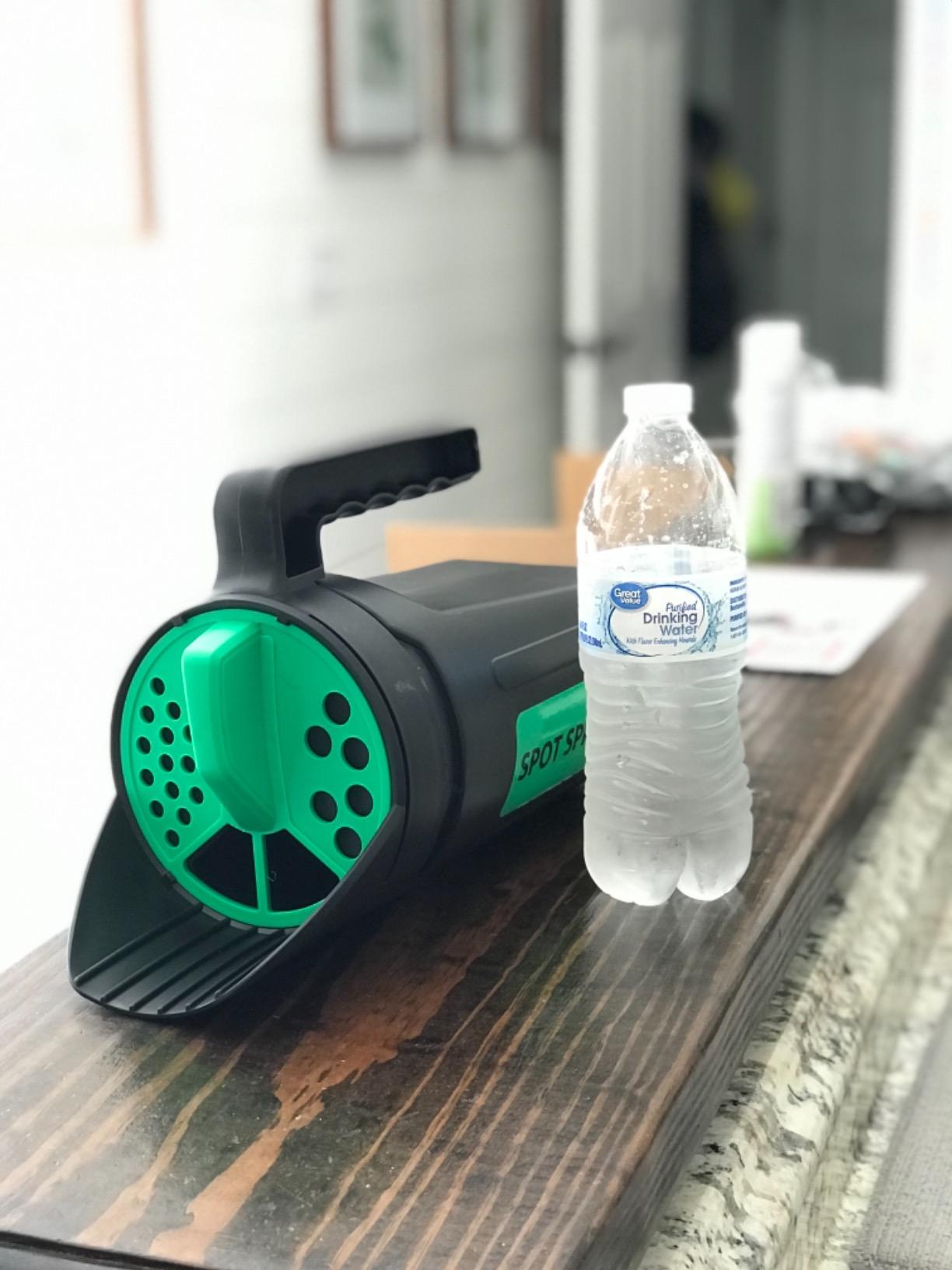
Owners use it mostly for winter work and for edges the big spreader cannot reach, and the closed-position setting lets you carry product around the house without spilling. The plastic is thick enough that moisture does not stick to the inside, which matters a lot in a tool that lives in damp conditions.
The recurring complaint is the lid. The twist-off top is genuinely difficult to open and refit, and several reviewers with smaller hands or weaker fingers found it frustrating. Salt crystals can also wedge into the slide cover and stop it moving, and the finest opening is too slow to be practical for ice melt, so you end up using the medium or large hole instead.
Who the 80 oz shaker suits
It suits anyone applying ice melt or salt to a walkway, a set of steps, or a small hard-surfaced area, and anyone who wants zero overspray next to a bed or a wall. It also suits people who already own a walk-behind spreader for the open lawn and need a cheap second tool for everything the big machine cannot reach.
The wide-mouth fill is a real convenience if you buy material in bulk bags, because it removes the funnel step entirely. For spot seeding and top-dressing small areas, the controlled fall pattern is easier to keep inside a narrow strip.
Who should skip it
Skip it for a full small lawn. Wrist-driven shaking over 2,000 square feet is tiring, and the coverage is slower than any crank model here. It is also a poor choice if you have problems with grip strength, because the awkward lid works against you at the moment of refilling.
Heavy material is another limit. Rock salt at 5 pounds is a real weight to shake repeatedly, and owners on longer stretches report the strain showing up in the hand and wrist well before the container is empty.
3. CHAPIN 8740A Hand Shaker for Steps, Paths and Tiny Patches
CHAPIN 8740A 64 oz All-Season Hand Shaker Spreader, Seed, Fertilizer & Salt
64 oz poly bottle
Three lid openings
Wide opening fill
Gloves-friendly handle
Pros
- Compact enough to store in a closet or the car
- Three openings suit seed fertilizer salt ice melt sand and pellets
- Sturdy plastic body that held up through repeated winter use
- Large handle works with or without gloves
- Simple to twist open and rinse clean
Cons
- No opening between fully open and the largest perforated setting
- Chunky clumped salt can stick in the widest opening
- Screw lid is hard to remove for users with weak fingers
The CHAPIN 8740A is the simplest tool in this roundup: a 64-ounce poly bottle with three holes in the lid and a handle. That simplicity is the point. It has no moving parts to jam, no gear housing, and nothing electronic, so it is the model most likely to still function after a few seasons in a garage.
It is also the smallest footprint here, which matters more than capacity for a lot of small-lawn households. A New York homeowner in lawncare forums specifically wanted a handheld over a push spreader because of storage constraints, and this is the shape of tool that solves that problem. It lives on a shelf, in a closet, or in the car between uses.
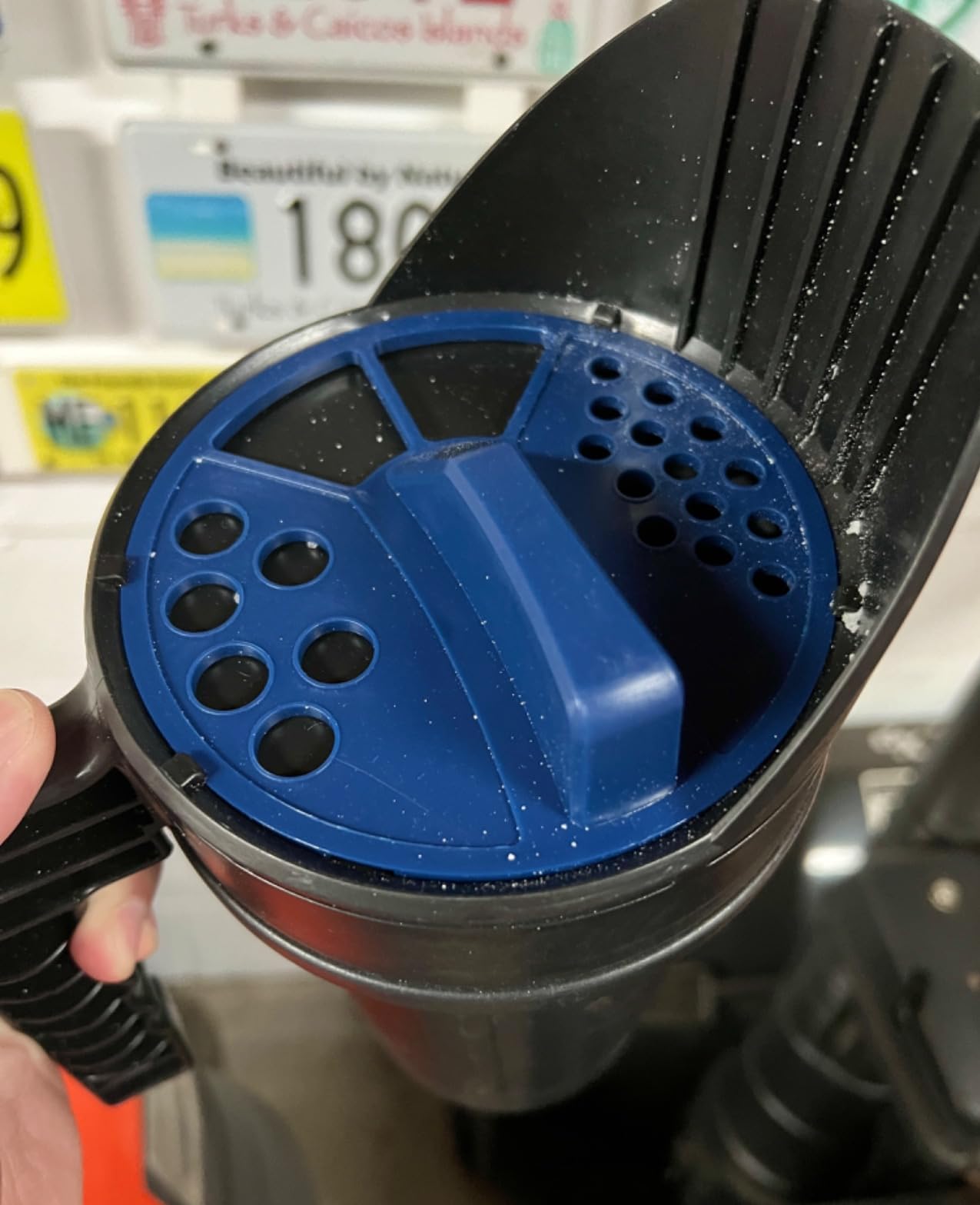
Owners reach for it year-round rather than seasonally. The three lid openings handle granular fertilizer, grass seed, salt, ice melt and sand, and the wide opening on the bottle makes refilling fast. The large handle is sized for both small and large hands and works with winter gloves on, which is the situation where you will actually be using it.
Flow control is the weak point. The three openings jump from a perforated setting straight to fully open with nothing in between, so metering a low application rate is coarse. Material that has clumped in the bag can also lodge in the widest hole and interrupt flow until you clear it by hand.
Who the CHAPIN 8740A suits
It suits steps, walkways, small paths, shaded corners, and bare patches where a walk-behind spreader physically will not fit. It suits first-time buyers who want a working tool without research, and it suits anyone with limited storage or a small garage.
The year-round versatility is real. One owner reported the plastic body holding up through repeated winter salt use, which is the hardest environment for a cheap tool, and the bottle rinses clean with nothing more than water.
Who should skip it
Skip it if you need an even broadcast over an open lawn, because the shake pattern is less uniform than any crank design and the coarse opening settings make it hard to slow down. It is also the wrong tool for dense, clumped material that will keep bridging in the largest opening.
If you have arthritis or reduced grip strength, test the screw lid before you commit. Many reviewers with weaker fingers found it hard to remove and refit, and that is the one task you cannot skip mid-job.
4. Scotts Whirl for Lawns Under 1,500 Sq Ft
Scotts Whirl Hand-Powered Spreader
Holds up to 1,500 sq ft
Adjustable arm support
Smooth crank action
Single-hand broadcast
Pros
- Highest average rating in this roundup at 4.7 out of 5
- Extended arm support takes the load off the wrist
- Crank turns smoothly and lays a genuinely even pattern
- Capacity is small enough that a full hopper stays comfortable to hold
- Requires no assembly
Cons
- Capacity tops out at about 1500 sq ft
- so anything larger needs refills
- Limited edge protection compared with side-shielded broadcast models
The Scotts Whirl is the highest-rated spreader we evaluated, holding a 4.7 average across more than 1,700 owner reviews, and the rating reflects something specific rather than brand loyalty. Owners describe the coverage as genuinely even, which is the hardest thing to achieve with a hand-powered tool.
The adjustable arm support is the reason. It braces the unit against your forearm so a loaded hopper does not hang entirely on your wrist. On a small lawn you can walk a full circuit without the ache that makes you cut a job short, and that comfort is what turns this from a novelty into a tool you actually use.
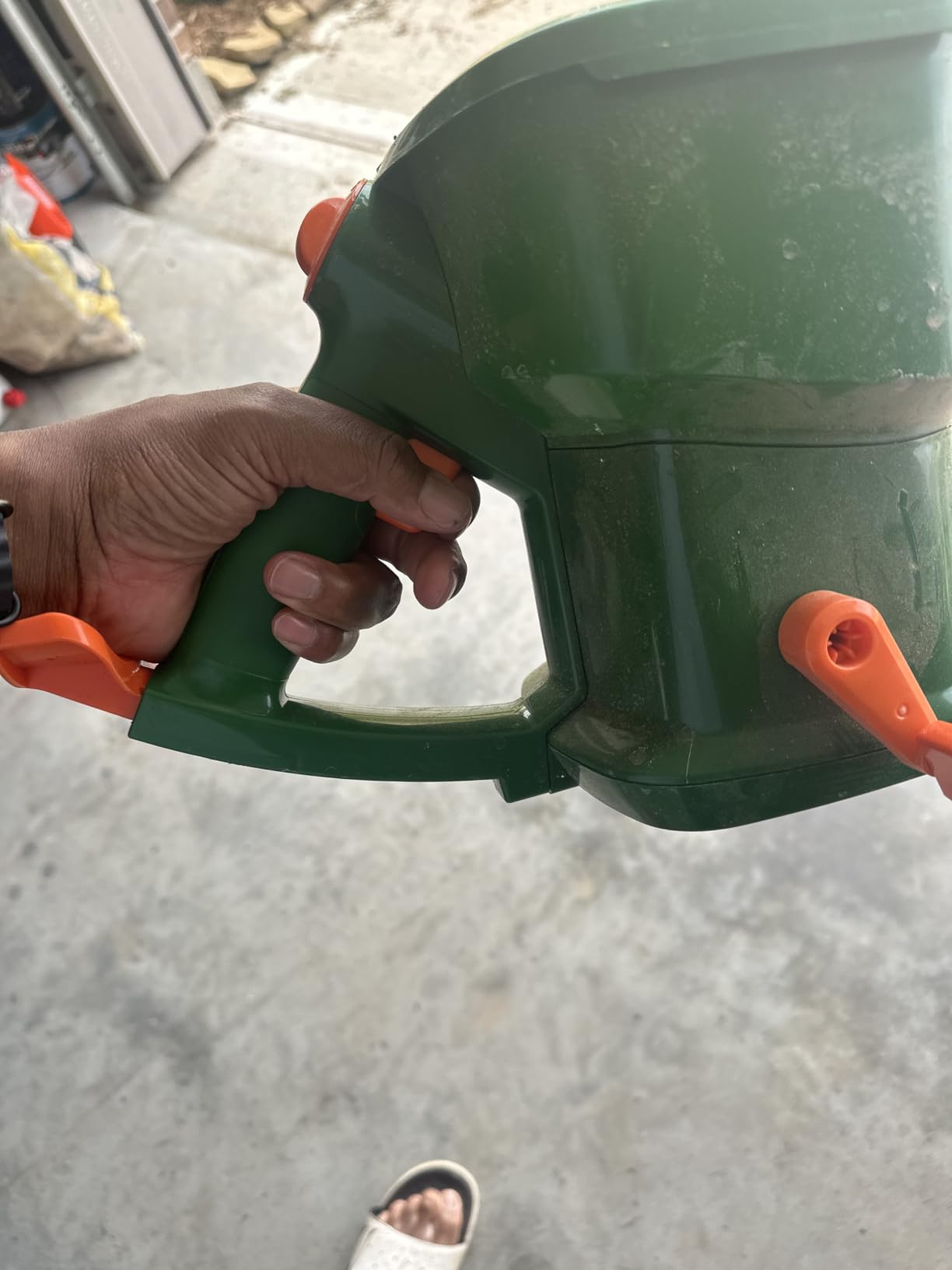
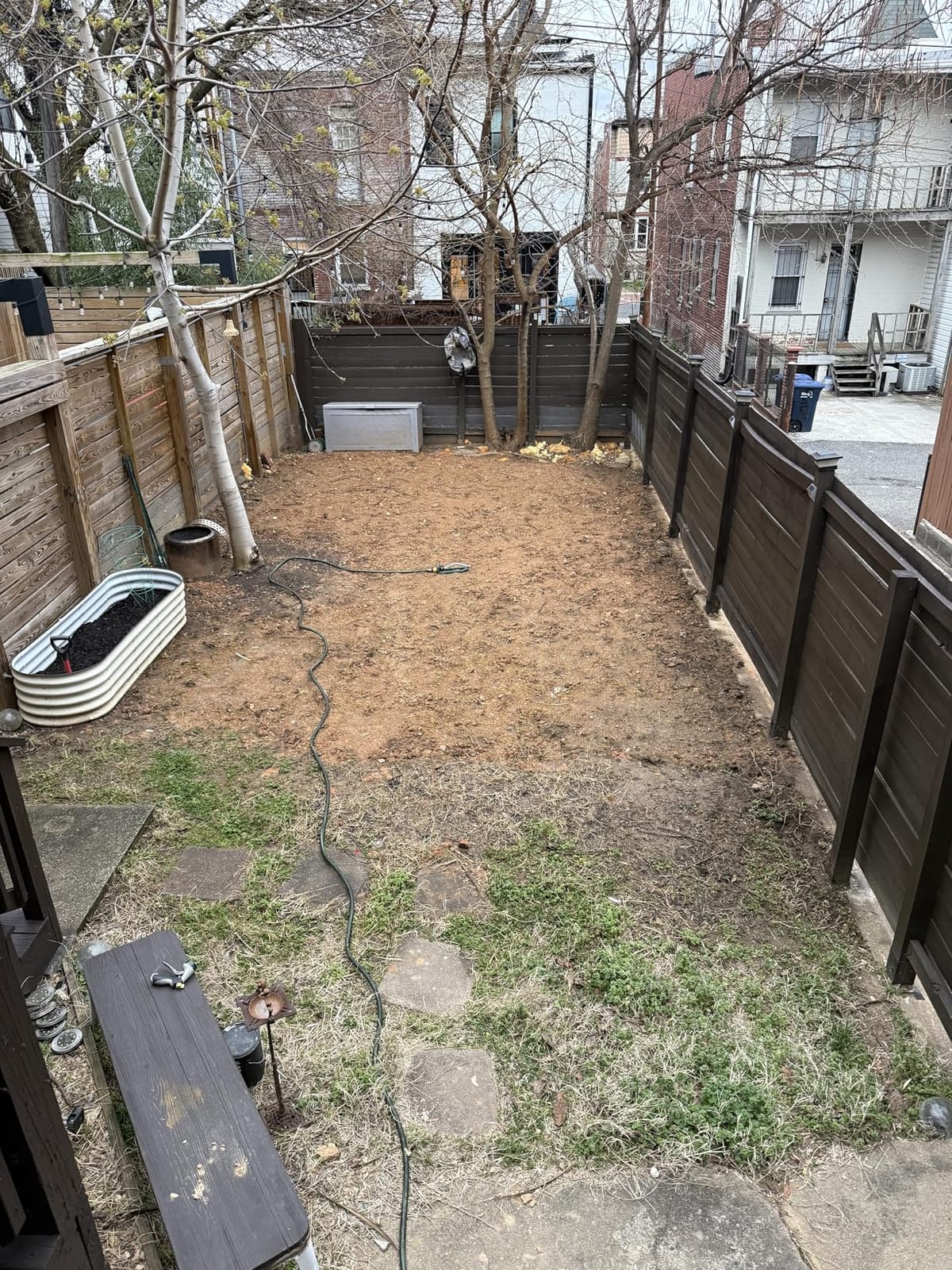
At up to 1,500 square feet, the capacity is a feature rather than a limitation for the smallest lawns. A full load is a weight you can comfortably hold, and it finishes a typical city lot or a generous suburban front yard in one pass. Several buyers noted that it outperformed a battery-operated hand spreader they had owned before, with none of the charging or motor complexity.
Adjusting between seed, fertilizer and ice melt is a simple dial operation, and the tool needs no assembly. The trade-off is honest and simple: 1,500 square feet is the ceiling, and edge protection is limited compared with side-shielded broadcast units, so you will sweep a little material off walkways on edge passes.
Who the Scotts Whirl suits
It suits lawns under 1,500 square feet, apartment and rental patios, and anyone spot-seeding bare patches. It also suits households that already own a walk-behind spreader for the open yard and want a dedicated tool for touch-up fertilizing, spot treatments and winter ice melt on steps.
If you care most about a smooth, stripe-free pattern on a small area, this is the pick. The 81 percent five-star share in owner reviews is the highest in the group, and the comments focus on the broadcast pattern rather than on features.
Who should skip it
Skip it if your lawn is above roughly 1,500 square feet. Buyers consistently name the modest capacity as the main limitation, and refilling a hand-cranked spreader mid-lawn is the exact chore that makes people buy a push machine instead.
Skip it if you have significant bed edging or paving along the lawn. With limited side shielding, expect to sweep stray granules off hard surfaces after each pass, or plan your walk so the fan edge lands on grass.
5. SOLO 421S Chest-Mount Spreader When Refills Get Annoying
SOLO Inc 421 20-Pound Capacity Portable Chest-Mount Spreader with Comfortable Cross-Shoulder Strap – 421S, White, 20lb
20 lb hopper capacity
Cross-shoulder strap
Spread width up to 30 ft
Flow control plus direction fan
Pros
- 20 lb hopper means dramatically fewer refills than any hand shaker
- Clear lid lets you monitor remaining product without stopping
- Adjustable flow control and directional fan give real control of spread width
- Serviceable heavy-duty components built for years of use
- Handles everything from tiny clover seed to large fertilizer granules
Cons
- Flow control lever sits against your chest so you find it by feel
- Loaded with dense material it strains the shoulder and neck
- Spread width adjustment post is sensitive and easy to overshoot
- Crank is right-handed only
The SOLO 421S is the only design in this roundup that mounts on your body instead of your hand. The adjustable cross-shoulder strap hangs the 20-pound hopper in front of your chest, leaving both hands free for the crank and for opening gates. That single change removes the arm fatigue that limits every other handheld on a lawn over about 3,000 square feet.
Capacity is the headline number and it is not close to the rest of the list. At 20 pounds, you can cover substantially more than 5,000 square feet before refilling, and the adjustable flow control with a directional fan lets you set the spread width rather than living with whatever the rotor throws. Owners who have owned a dozen hand and crank spreaders describe this as the most well-engineered unit available.
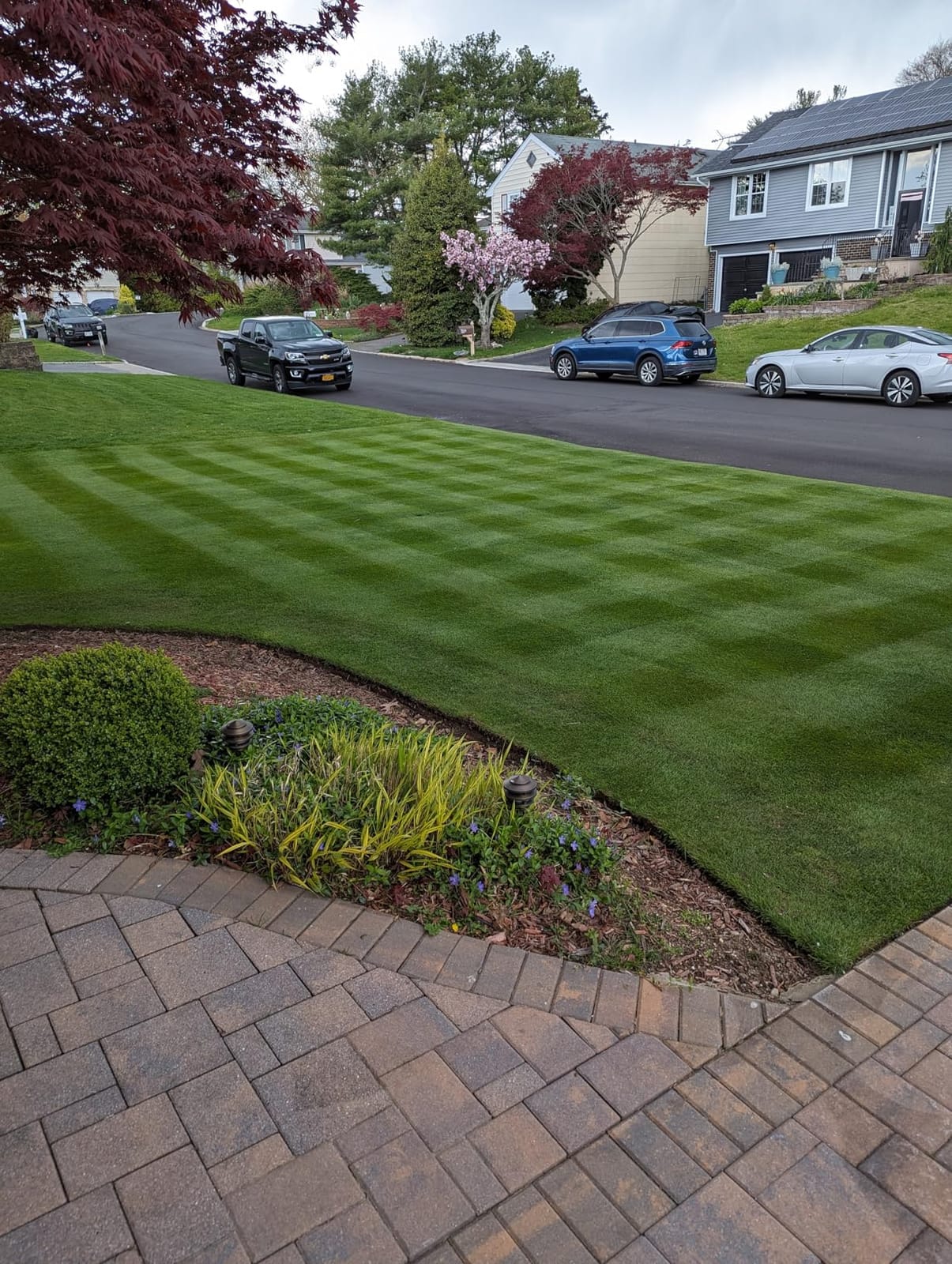
The clear hopper lid is an underrated feature. You can see how much product remains without stopping, which matters most on the last pass of a long job where an empty running hopper spreads nothing and you walk a stripe of bare lawn before you notice.
It is also the most serviceable unit here, with enclosed, replaceable mechanical parts rather than a sealed plastic shell, and the material range is genuinely wide. Reviewers use it for clover seed, fertilizer, ice melt and even food plots. The criticisms are ergonomic rather than functional: the flow lever rests against your chest so you have to find it by touch, a fully loaded unit with dense material is heavy on the shoulder and neck, and the width-adjustment post is sensitive enough to overshoot easily.
Who the SOLO 421S suits
It suits the owner of a 5,000 to 10,000 square foot property who refuses to buy a walk-behind machine but has run out of patience with refills. It also suits anyone who wants one durable tool that lasts, since the mechanical parts are serviceable rather than disposable.
Lawncare communities commonly point to this model as the well-designed alternative to the mass-market brands, and the sentiment is that it is the best-built handheld available. The trade for that build quality is weight and size, so it needs a real corner of a shed.
Who should skip it
Skip it for a genuinely small lawn. Strapping a 20-pound hopper to your chest to cover 1,200 square feet is more rig than the job requires, and the unit is by far the bulkiest thing in this roundup. Lawncare forums describe it as overkill below roughly 5,000 square feet, and that is accurate.
Skip it if you are left-handed, since the crank is right-handed only and the arrangement feels awkward mirrored. Be honest with yourself about the loaded weight too: filled with dense material such as ice melt, the total exceeds 30 pounds and the strap loads your shoulder and neck.
6. Snow Joe SJSPD1 for Dial-Controlled Driveway Work
Snow Joe Salt Spreader Handheld – Ice Melt Spreader with 5 lb Capacity, Adjustable Dial Flow Control for Grass Seed, Fertilizer & More, SJSPD1
5 lb / 84.5 oz hopper
Dial flow control coarse and fine
Twist-and-lock lid doubles as scoop
Compact 13.75 in footprint
Pros
- Dial control gives noticeably better metering than fixed-hole shakers
- Lid doubles as a scoop so refills are fast even with gloves
- 5 lb capacity covers about 50 ft of driveway in two fills
- Thick plastic that has survived deliberate abuse tests
- Compact enough to store between seasons
Cons
- Twist-off lid is hard to remove for users with small hands or arthritis
- Wrist-driven shaking becomes tiring over long stretches
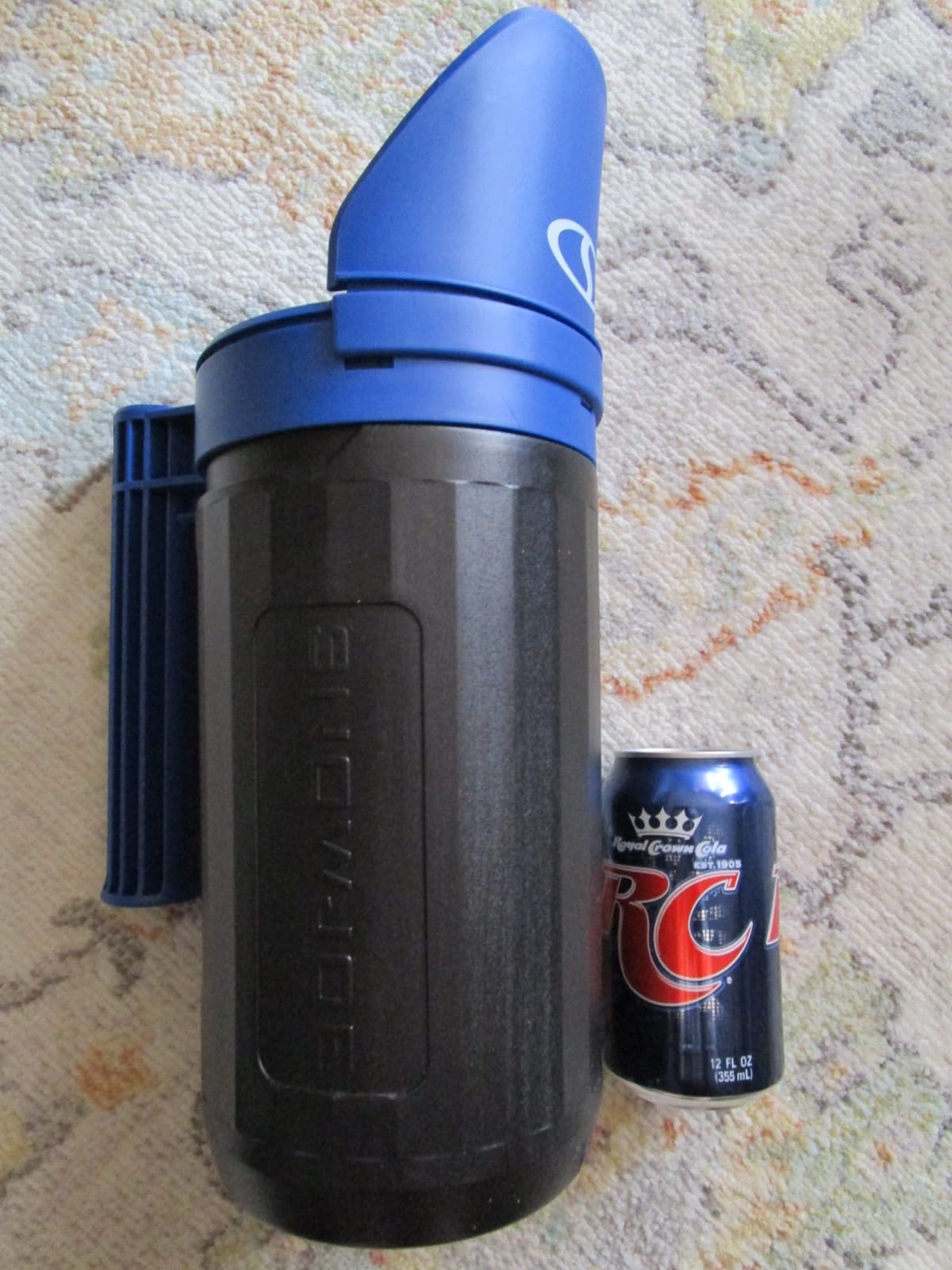
The SJSPD1 is the middle ground between a pure shaker bottle and a crank spreader. It is a 2.5-liter, 5-pound handheld unit with an adjustable dial that switches between coarse and fine openings. That dial is what separates it from the fixed-hole designs, because it gives you a real control point rather than three set choices.
It also has a feature that sounds minor and turns out not to be: the twist-and-lock lid detaches and doubles as a scoop. Refilling takes one motion, and you can do it with winter gloves on, which is the exact condition under which ice melt work happens. At 5 pounds it covers roughly 50 feet of driveway in about two fills.

Build quality is praised repeatedly and unusually specifically. Several owners report deliberately abusing the unit and having it hold together, and the thick plastic has drawn comments about being beefy relative to the class. It stores compactly between seasons, with an overall footprint of 7.6 by 5.3 by 13.75 inches.
Two complaints carry most of the criticism. The twist-off lid is very difficult to remove and refit for people with small hands or arthritis, while owners with larger hands report no trouble at all in real winter conditions. And the shaking motion is wrist-driven, so on long stretches the arm starts to complain before the hopper empties.
Who the SJSPD1 suits
It suits anyone who wants one tool to move from winter ice melt to spring fertilizer to summer overseeding without switching equipment. It suits driveways and walkways specifically, where you want controlled, repeatable application over a hard surface rather than a wide throw pattern.
The dial makes it a good fit for someone who finds fixed-hole shakers too coarse. When you need to slow the rate down on a shaded patch or a slope near paving, the fine setting gives you a usable option.
Who should skip it
Skip it for a full small lawn, where the wrist-driven motion across 2,000 square feet or more becomes genuinely tiring. It is also worth testing the lid first if you have any hand or joint issues, since that single part is where most of the negative feedback lands.
If you already own a crank spreader, this is a niche addition rather than a replacement. Its strength is precise dispensing on hard surfaces, not fast coverage of turf.
7. AquaDoc 2.5 L Spreader for Lawns and Pool Decks
AquaDoc Handheld Salt Spreader for Snow Melt, Fertilizer, Lawns – 2.5L
2.5 L / 84 oz capacity
Three sieve settings on toggle cap
Twist-off filling
Also for pool and spa granules
Pros
- Three sieve settings give reasonable control over spread rate
- Large 2.5 L capacity cuts refills on a driveway
- Handles ice melt and fertilizer equally well
- Useful beyond the lawn for granular spa and pool chemicals
- Simple twist cap for refilling
Cons
- Narrow body and small footprint feel awkward to grip for some users
- Sieve-based flow is less precise than a geared crank spreader
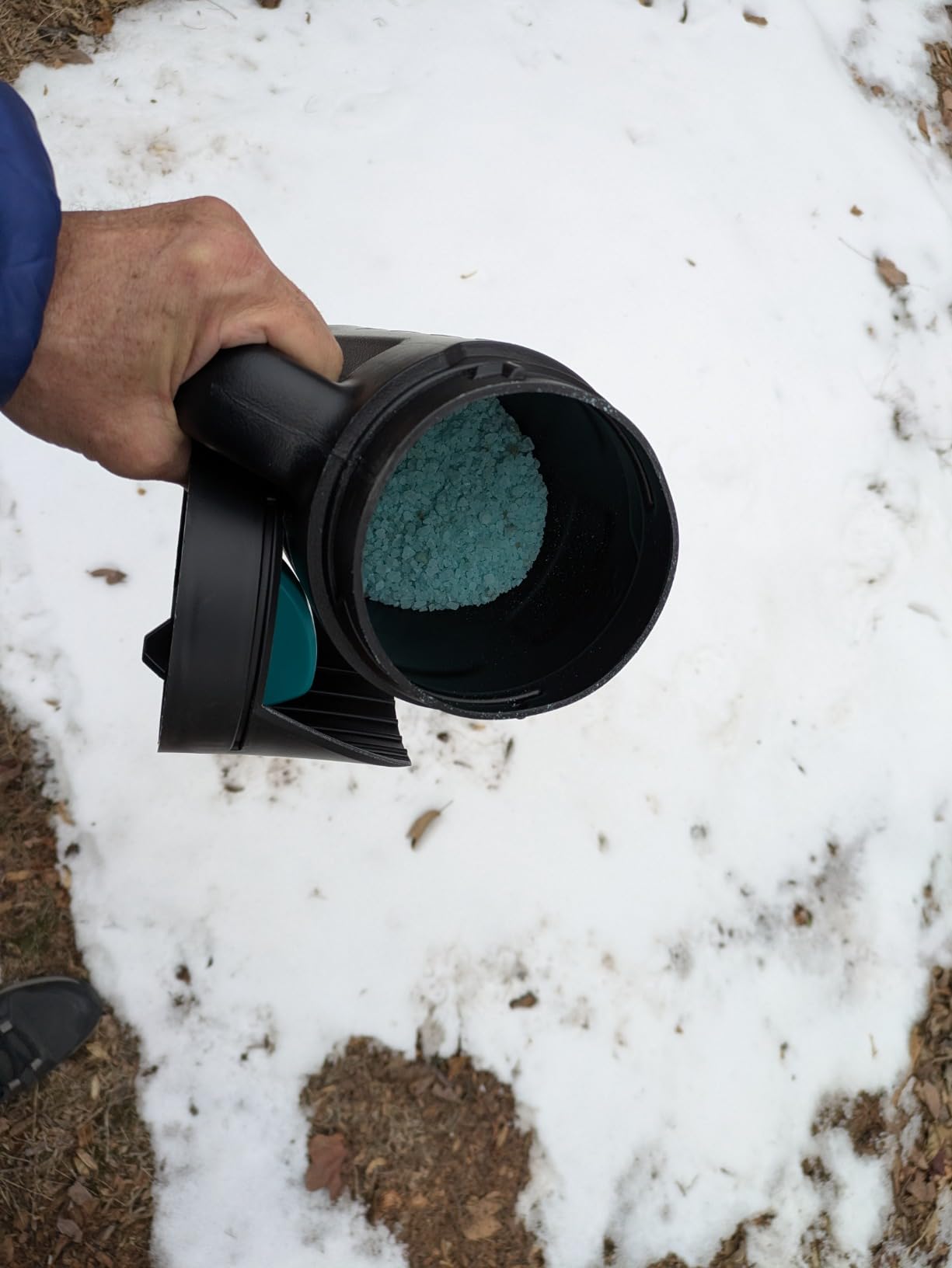
The AquaDoc 2.5 L is a shaker with one genuinely distinct use case. Beyond seed, fertilizer and ice melt, owners use it for granular pool and spa chemicals, which is not something any crank spreader in this list can claim to handle without risk. If you own a pool and a small lawn, that dual purpose is the reason to buy it.
Capacity is 2.5 liters, or 84 ounces, which is larger than most of the shakers here and enough to cut the number of refills on a driveway. The toggle cap offers small, medium and large sieve options, giving you more control than a fixed-hole lid without adding a dial to lose.
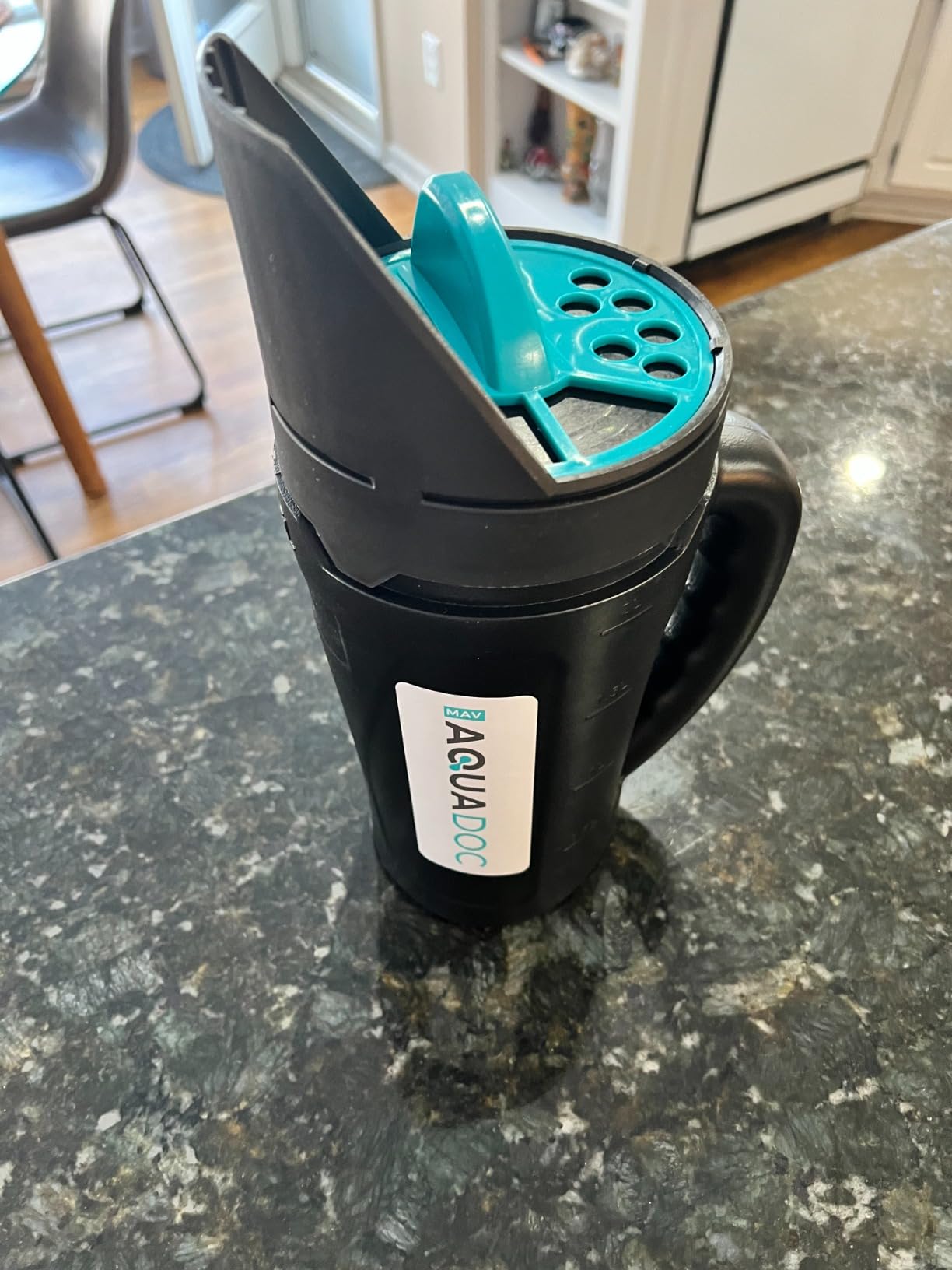
Owners describe the construction as sturdy and the twist cap as simple to open and close, and feedback is consistently positive across seasons. The sieve settings are reported as reasonable rather than precise, which is the honest characterisation: it meters better than a fixed hole and less well than a geared crank.
The limitation is the body. At 5.5 by 3.48 by 10.5 inches, the shape is narrow, and some users find it less comfortable to hold over a long session than a wider container. The sieve mechanism also cannot produce the consistent fan that a rotor can, so even lawn coverage takes more care.
Who the AquaDoc suits
It suits pool and hot tub owners who need to apply granular chemicals safely and evenly without a dedicated tool. It also suits small-lawn households that want a single container for seed, fertilizer, salt and ice melt, with enough capacity that refills on a driveway are rare.
If you have already found that fixed-hole shakers meter poorly, the three-stage toggle cap is a step up in control without moving you into the cranking learning curve.
Who should skip it
Skip it if even coverage on open turf is your priority. A sieve drops material in a narrower band than a rotor throws, and on a lawn rather than a hard surface you will spend more time correcting stripes and overlaps.
Skip it if you have large hands and prefer a substantial grip. The narrow body is the most common physical complaint, and it gets more pronounced as a session goes on. For very small patch work, the larger capacity is simply unnecessary weight.
8. Superio 2 L Dial Shaker for Measured Sowing
Superio Lawn Seed Spreader, Handheld Shaker for Lawn Seeds, Ice Melt Salt, Calcium, Deicer, Weed and Feed Spreader, 2 Liter, Adjustable Hole Size, with Cut Out Handle
2 liter capacity
Adjustable dial lid
Measurement markings on body
Cut-out grip handle
Pros
- Dial lid lets you tune output for seed or fertilizer
- Measurement markings on the outside make repeat applications consistent
- Cut-out handle gives a comfortable grip over extended use
- Very light at a little over 5 ounces
- Heavy-duty plastic construction
Cons
- Lightweight plastic body feels flexible under a full load
- Dial lid is stiff and resists turning until it warms up
- Smallest opening flows slowly for coarse granules
The Superio 2 L is the lightest spreader we evaluated, at just over 5 ounces empty, and it is the one design detail here aimed squarely at repeatability. The body carries measurement markings on the outside, so you can see at a glance how much product remains and spread the same area the same way next time.
That matters more than it sounds. Most small-lawn problems are not caused by the wrong spreader but by inconsistent application, particularly on overseeding where the same patch is treated three or four times over a season. A visible fill reference plus a dial lid makes the second application match the first.
The dial lid is the other half of that system. It lets you tune output for a fine seed or a coarse fertilizer granule rather than committing to a fixed hole size, and the cut-out handle gives a grip that stays comfortable over an extended session despite the light body weight.
The criticisms are about feel rather than function. The plastic body is light enough to feel flexible when full, which reads as flimshy even though it is described as heavy-duty construction, and the dial lid is stiff to turn when cold, loosening up only once the material starts moving through it. The smallest opening is also reported as slow for larger granules.
Who the Superio suits
It suits overseeding and patch repair, where you make several small applications over a season and need each one to match. It also suits anyone with reduced grip strength or joint issues, since at 5 ounces it is by a wide margin the lightest tool here.
For a very small lawn under about 1,500 square feet, 2 liters of capacity is genuinely sufficient, and the measurement markings remove the guesswork from how much to load for a given area.
Who should skip it
Skip it for winter salt and ice melt work. The fine dial openings are too slow for coarse material, and a lightweight body plus a stiff lid is a poor combination for a gloved, freezing job.
Skip it if you want a tool that feels solid. Owners who prefer a substantial housing report the body flexing under a full load, and if that matters to you, a wider shaker or any crank model will feel more reassuring in the hand.
9. Brinly 5 lb Handheld Spreader for Light Seed Work
Brinly 5lb. All-Season Handheld Spreader with Easy-Fill Design for Seed, Ice Melt, & Fertilizer
5 lb / 2 L hopper
Spreads material up to 5 ft
Extra-long crank with trigger handle
Adjustable flow gate
Pros
- No assembly required and straightforward to operate
- Hopper and gearing feel more solid than cheaper hand spreaders
- Simple knob adjustment changes material flow
- Contoured lip makes scooping and filling quick
Cons
- Jams quickly on coarse granules and ice melt at the hopper or inside the impeller
- Narrow throw pattern sends ice melt onto your shoes
- Trigger crank and grip are hard to manage with small hands
- Plastic feels fragile
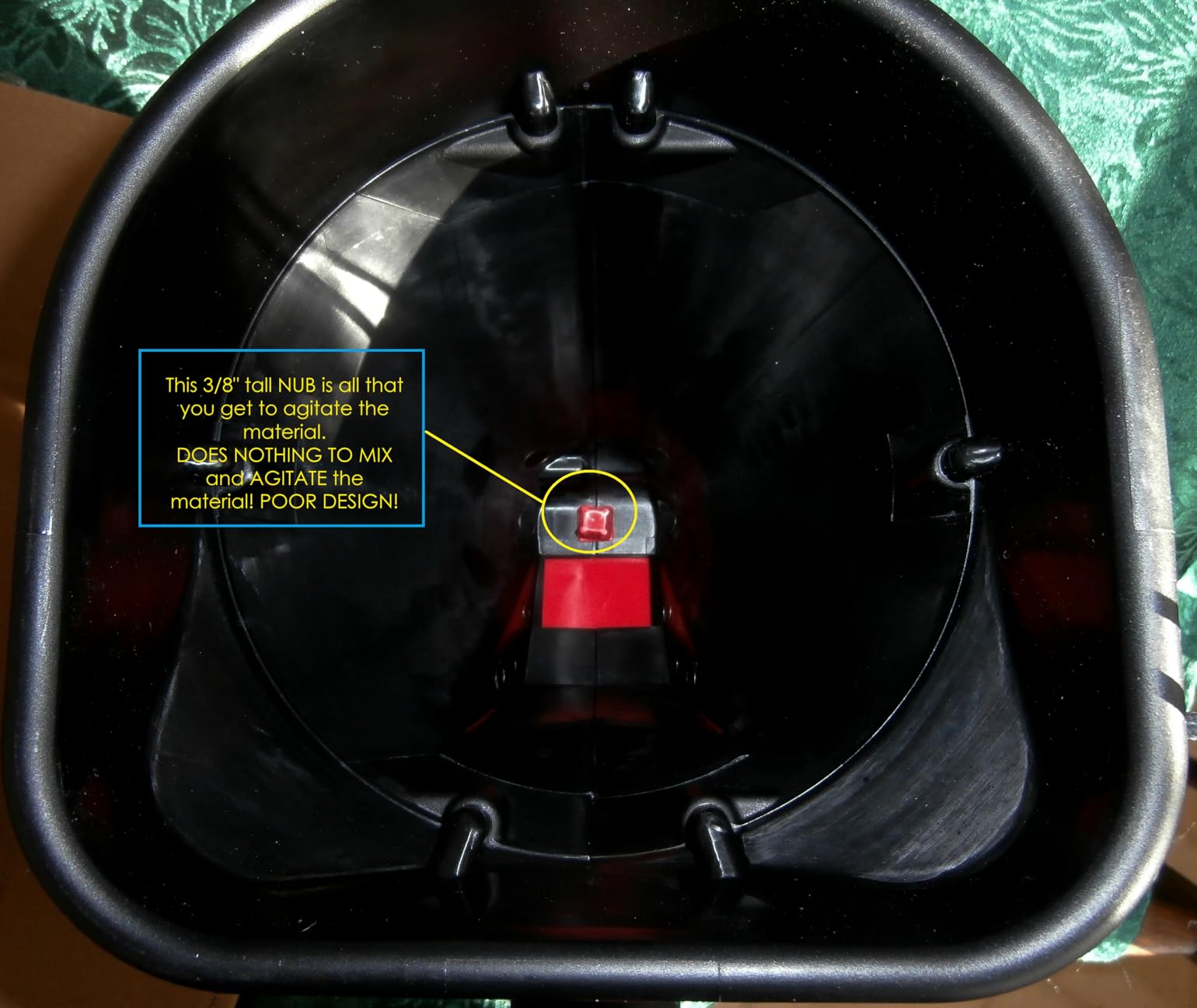
The Brinly 5 lb is the crank-handled pick in this group, and the design targets people tired of refilling bottles. The reinforced contoured lip is shaped for scooping material straight out of a bag into the hopper, which removes the funnel step, and the extra-long crank with an ergonomic trigger handle is designed for smooth rotation with a loaded hopper.
It handles up to 5 pounds, or 2 liters, and the adjustable flow gate is a simple knob rather than a dial, so changing rates for seed versus fertilizer takes seconds. Owners doing light seed and fertilizer work like the no-assembly setup and the noticeably more solid gearing compared with cheaper hand spreaders.
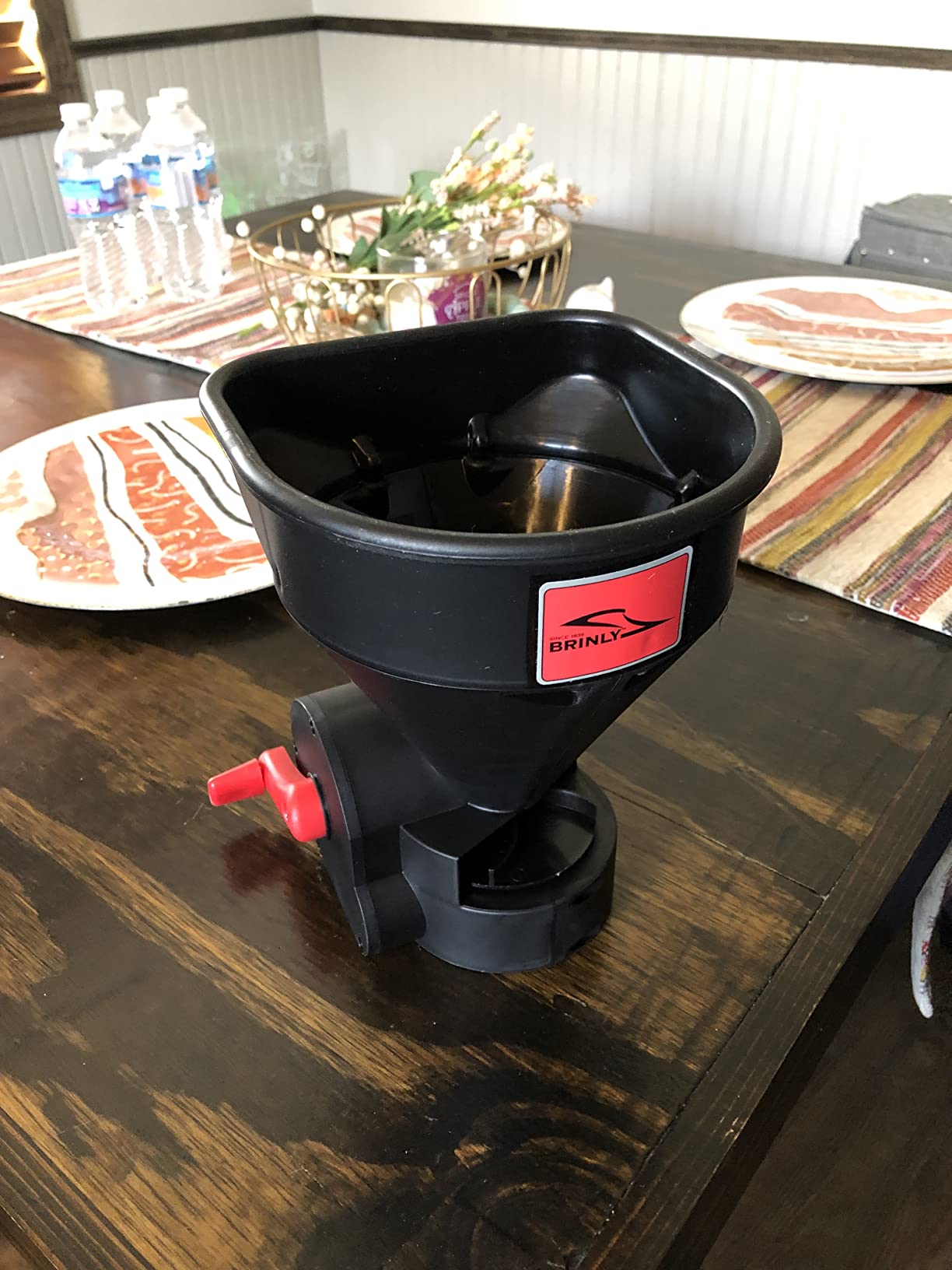
This is the lowest-rated model in our roundup at 4.2 out of 5, and the reviews explain why clearly. Several users report it jamming almost immediately with coarse granules or ice melt, either at the bottom of the hopper or inside the impeller, with no way to clear it other than emptying the unit and starting again. That is the specific failure to rule out before you buy it for winter use.
The throw pattern is also narrow, around 5 feet, which is smaller than several competing units and means material lands close to your feet on some passes. The trigger, crank and grip combination is reported as hard to manage for users with small hands, and the plastic is described as cheap-feeling and fragile by a minority of owners.
Who the Brinly suits
It suits someone doing light seed and fertilizer work on a small lawn, who wants a crank rather than a shake and prefers filling by scooping from a bag. One owner reported it replaced a battery-powered hand spreader that consumed batteries constantly, which tells you the mechanical simplicity is doing real work.
For dry, fine material and lighter granule sizes, the flow gate adjustment and solid gearing are genuinely good, and the 5-pound capacity means fewer trips to the bag than a small bottle spreader.
Who should skip it
Skip it for ice melt and coarse fertilizer. The jam reports are specific and repeated, and a blocked impeller mid-walkway in winter is a much worse problem than a slightly slower application rate.
Skip it if you have small hands or limited grip. Three separate controls, including a trigger, have to be coordinated while you walk, and owners found that combination awkward. If you need more throw width to cover a lawn in fewer passes, the 5-foot pattern will frustrate you.
10. Uniqwamo Cordless Spreader for Dewalt Battery Households
Uniqwamo Handheld Power Spreader Compatible for Dewalt 20V/60V Battery
Works with Dewalt 20V and 60V batteries
3 L hopper to 700 m2
6 spread speeds and 8 volume settings
125 degree adjustable disc
Pros
- Battery power spreads faster with far less hand fatigue than cranking
- 6 spreading speeds plus 8 volume settings give unusually fine control
- 3 L hopper covers up to 700 square meters per fill
- 125 degree adjustable disc reaches awkward corners
- Fits spaces a walk-behind spreader cannot enter
Cons
- Battery and charger are not included
- Reliability feedback is mixed with 10 percent of reviews at one star
- Heavier and more complex than a mechanical shaker
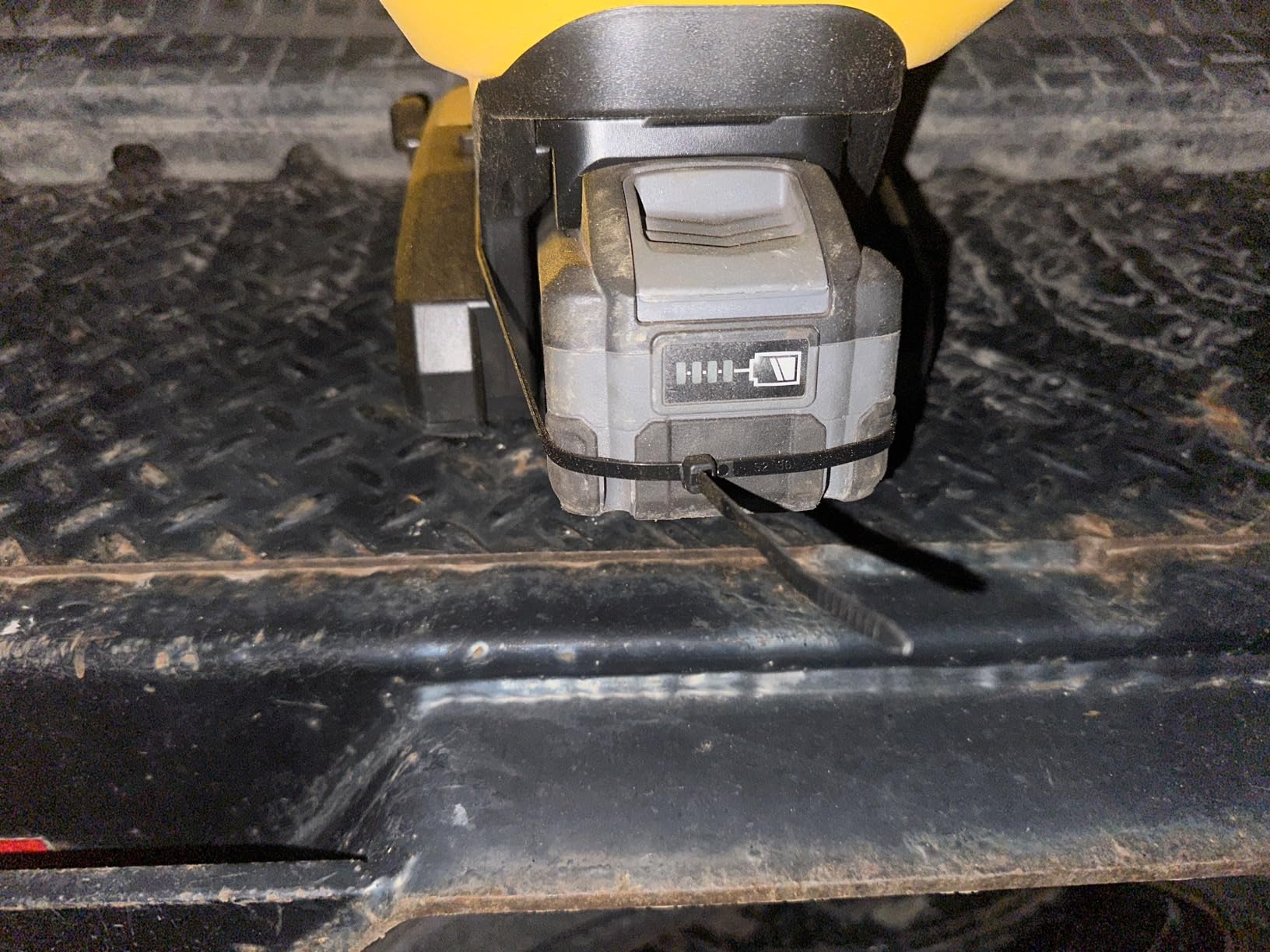
This is the cordless entry in the roundup, and it is worth knowing about if you already own Dewalt 20V or 60V lithium-ion batteries. The unit is compatible with several pack models including the DCB200, DCB203, DCB204, DCB206, DCB207, DCB181 and DCB182, so if the battery platform is already in your garage, adding this costs you a tool rather than a whole battery system.
Motorised spreading removes the two complaints that attach to every hand-crank design here: crank fatigue and inconsistent output when you speed up. The 3-liter hopper covers up to 700 square meters per fill, and 6 spreading speeds plus 8 sowing-volume settings give far finer control than a mechanical dial or a three-hole lid.
The 125-degree adjustable disc opening and adjustable sowing angle let you aim the pattern, which is how the unit reaches corners and other awkward spots that a fixed-pattern spreader oversprays. Owners also highlight the centred balance design, which keeps fingers from being pinched and stops the unit catching on clothing.
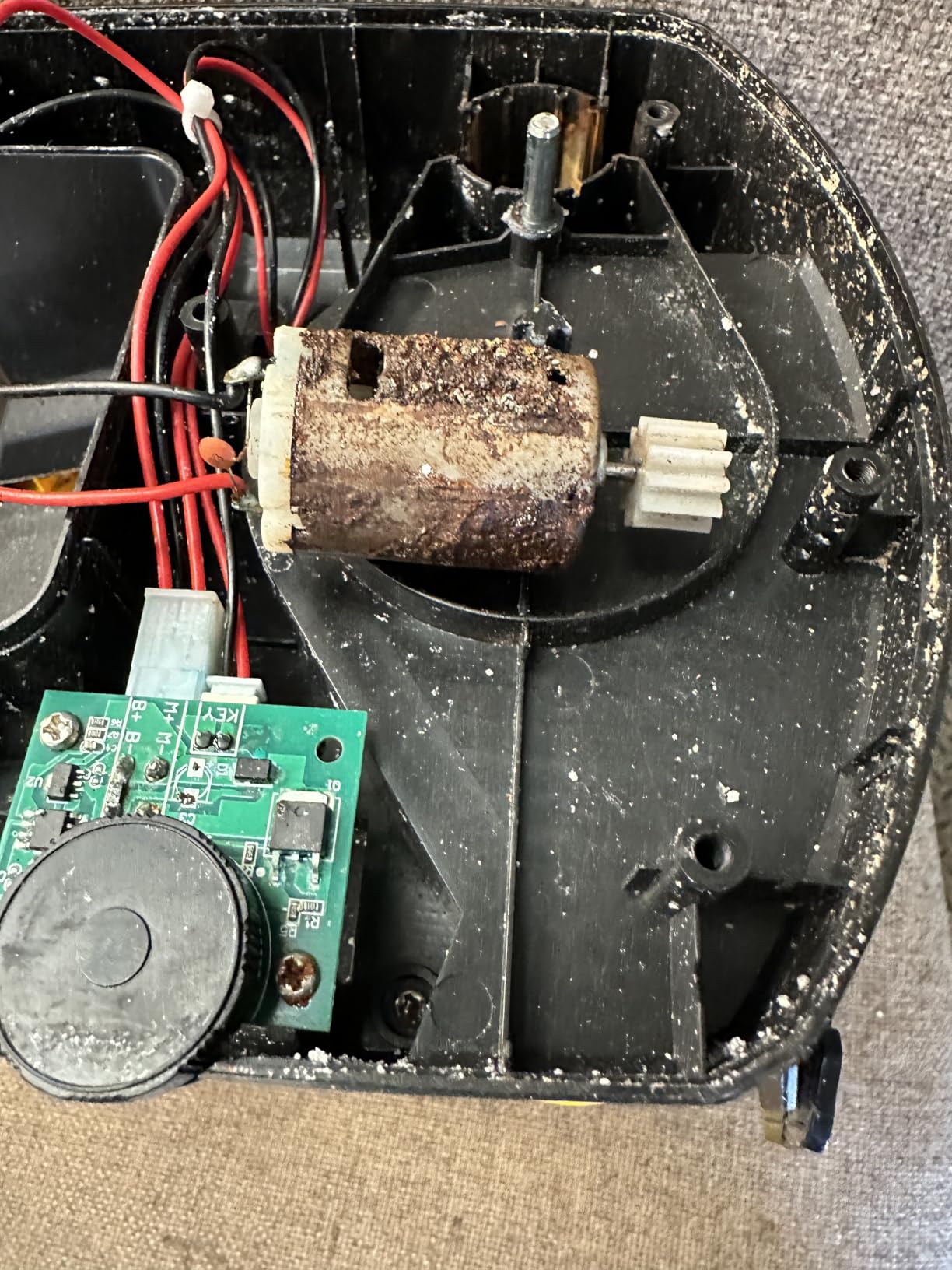
Two caveats are real. No battery or charger is included, so budget for that separately if you do not own the platform already. And with roughly 10 percent of ratings at one star, reliability feedback is more mixed than for the purely mechanical spreaders here, which is the trade for adding electronics to a tool that lives in a damp shed.
Who the Uniqwamo suits
It suits a household that already has Dewalt batteries and wants to cover more than a small lawn without dealing with arm fatigue. It also suits anyone with grip or mobility limitations for whom cranking is genuinely difficult, since the motor does the work.
For a small lawn it is more machine than you need, but it is the pick here for a mid-size property where a walk-behind is not wanted and hand cranking starts to hurt. Fine control settings also make repeat applications consistent.
Who should skip it
Skip it if you do not own the battery platform. Adding a battery and charger changes the true cost of ownership well beyond the tool price, and the savings disappear quickly.
Skip it for storage-constrained homes. It is the heaviest and most complex item in this roundup, and cordless spreaders in general also tend to ship without a spreader-settings chart, which lawncare owners consistently flag as a gap. For a lawn under 1,500 square feet, a simple hand unit does the same job and takes up less room.
How We Picked the Best Handheld Spreaders for Small Lawns
Ten spreaders, one question: which of them should a specific small lawn owner buy. We read every product’s published specifications, then cross-checked them against the owner review record, because on this category the gap between the spec sheet and the lived experience is unusually wide.
Capacity against lawn size came first. A spreader is only as good as the number of loads it takes to finish, so we matched stated pound and litre capacity to real square footage rather than treating bigger as better. Mechanism was the second filter, because a shaker, a hand crank and a chest-mount unit solve different problems and are not substitutes for each other.
Third, we looked for metering control, since a three-hole lid and a six-speed electronic dial produce very different consistency on a second pass. Fourth came build and mechanism notes, weighted heavily because handle, gate and impeller failures are the most common reason owners abandon a hand spreader. Finally we weighed review volume, since a pattern reported across thousands of owners is a far better signal than three isolated comments. All figures quoted in this roundup come from the manufacturer specifications and the owner review record for each product, updated for 2026.
Which Handheld Spreader Matches Your Lawn Size?
Start with the number of loads, not the product name. A loaded handheld should be a weight you are happy carrying, and one full load should cover a meaningful share of the lawn rather than a corner of it.
Under 1,500 square feet, capacity is barely a factor. A city lot, a rental patio or a compact front yard can be done in one load with almost any model here, so choose on mechanism and storage instead. Comfort and pattern quality matter more than pounds, which is why the highest-rated spreader in the group is also one of the smallest by capacity.
Between 1,500 and 5,000 square feet, capacity becomes the deciding variable. A 1,500-square-foot spreader means three or four refills on a 4,000-square-foot lawn, and each refill means walking back to the bag, tipping it in, and starting again mid-pattern. This is the band where the EdgeGuard Mini pulls ahead, and it is also where a chest-mount design starts to be worth the extra bulk.
Past 5,000 square feet, a handheld is being asked to do a walk-behind job. The chest-mount design is the only handheld category that handles this honestly, and even there the loaded weight becomes the limiting factor. If your lawn sits above roughly 7,000 square feet, our broadcast lawn spreader guide covers the machines built for that range.
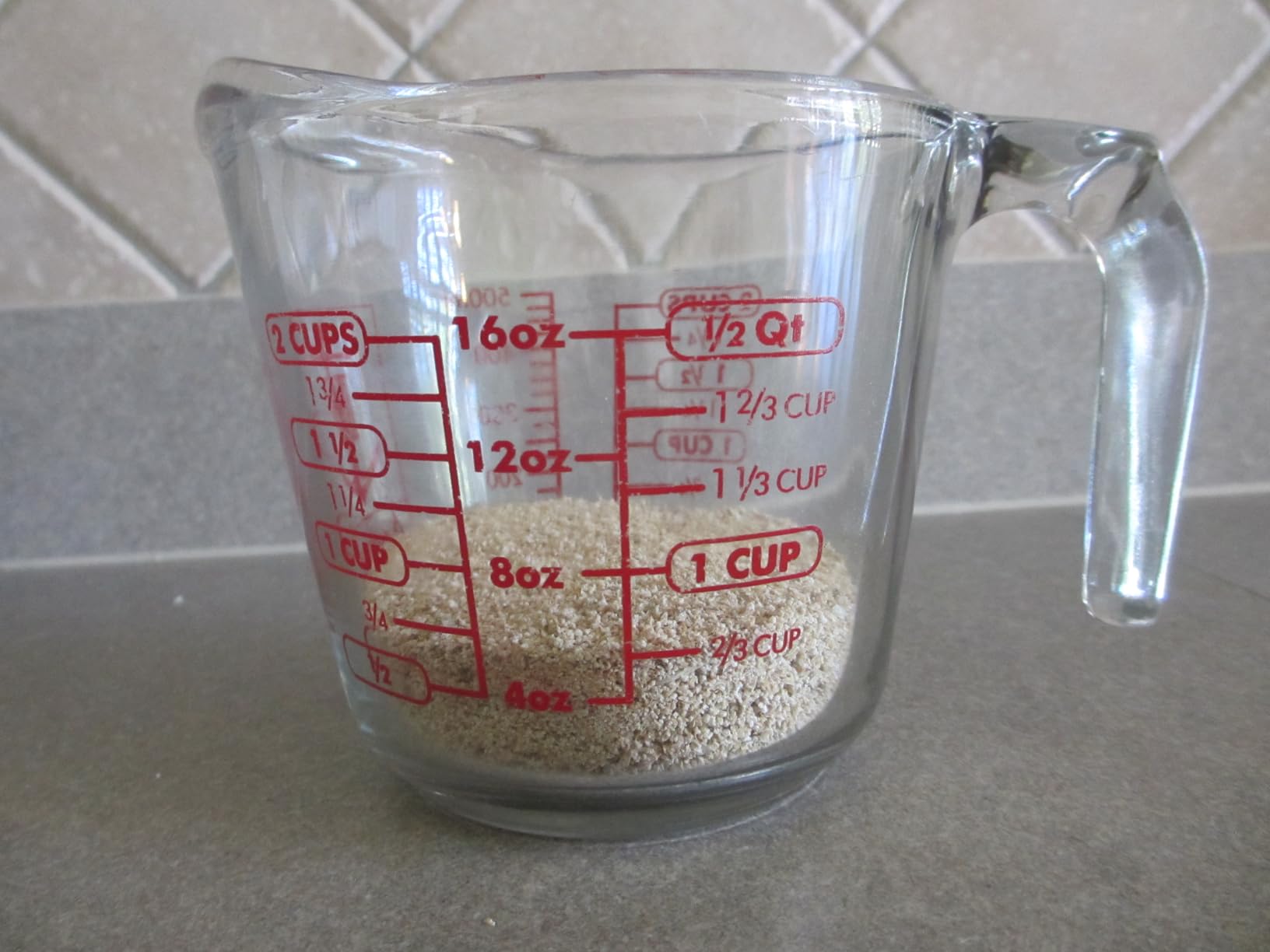
On coverage math, a useful rule is that a 5-pound fill covers roughly 1,500 to 2,000 square feet of fertilizer at standard rates, and a similar area at seed rates, while a 1-pound fill of granular ice melt covers about 100 square feet depending on granule size. Plan your load size from the lawn area, not from the container marking, and you will avoid the common mistake of a hopper that empties halfway through the first pass.
Broadcast vs Drop Spreader: Which One for a Small Lawn?
Broadcast is better for most small lawns. A broadcast spreader throws material in a wide fan, so you cover ground fast, and the overlap between passes is easy to manage on open turf. A drop spreader releases material straight down in a narrow band, which is slower but far more precise, and it is the right choice near flower beds, paths, ponds and paved edges where overspray causes real damage. The crossover rule is simple: broadcast for the open lawn, drop for the borders.
Every handheld in this roundup is a broadcast or a pour-and-shake design, because precision metering and portability pull in opposite directions. If your small lawn is tightly bordered on all sides, the side-shielded broadcast models, the EdgeGuard Mini in particular, get you most of the control a drop spreader offers while keeping the coverage speed.
Shaker vs Crank vs Chest-Mount: Choosing a Mechanism
Three mechanisms compete here, and the right one depends on how much lawn you cover and how much you care about pattern evenness.
A hand shaker has no moving parts. You hold the container, walk, and shake from the wrist, and material falls through a lid opening you select. Shakers win on price, storage size and zero overspray, and they are the right tool for steps, walkways, pool decks and bare patches. They lose on speed and fatigue, and flow control is coarse because a lid has only a few fixed holes or a few sieve settings.
A hand-crank broadcast spreader adds a rotor driven by a crank, and that rotor is what produces the wide, even fan. The tradeoff is weight in your hand and a moving gate that can jam if material clumps are larger than the opening, a problem several owners here report. Crank models suit small open lawns where an even pattern is the priority.
A chest-mount design straps the hopper to your body and leaves your hands free. The capacity and the lack of arm load make it the only realistic handheld for the upper end of the small-lawn range, and the added weight and storage footprint are the price. Below about 5,000 square feet it is more rig than the job needs.
A fourth option, cordless, uses a small motor instead of a crank, which removes fatigue and gives far finer speed and volume control. It only makes sense if you already own the compatible battery platform, and it adds electronics to a tool that lives outdoors.
How to Calibrate a Handheld Spreader for Even Coverage
Calibration is where most disappointing spreads happen, and most of it is avoided by doing four things before you start. The gear on any spreader needs to be running before you open the gate, not after, because a spinner that spins up on the move lays down a heavy first stripe at the edge of the lawn.
Set the dial to the rate printed on the product label, then pass over a measured 10-by-10-foot section and check the result. On a small lawn you can see coverage by eye or by comparing the treated section against an untreated neighbour. If the material is landing in a narrow band, the opening is too closed; if it is dusting the far edge of the section, it is too open.
The technique that fixes most uneven work is a half-rate double pass. Set the dial to half the label rate and walk the same area twice in perpendicular directions, the second pass crossing the first at right angles. Two half-rate passes in different directions distribute the same total material far more evenly than one full-rate pass, and it is the single most useful habit for avoiding stripes on a small lawn.
Edge discipline matters more with broadcast models. Start along a hard boundary and let the fan overshoot onto paving, then sweep it back with a broom, rather than trying to stop short and leaving a starved strip of turf. Overlapping edges slightly is safer than leaving gaps, and a missed corner is far more visible than a doubled one.
Finally, treat the tool properly. Blow the hopper out after every use so fine dust does not cake the gate, rinse salt off shaker containers rather than letting it crystallize inside, and let plastic parts dry fully before storage. Crusted material in the gate is the leading cause of the jamming complaints owners report on several models in this roundup.
When a Handheld Spreader Is the Wrong Tool
Hand spreaders are good, and they are good for a lot of jobs, but they stop being the right answer at a predictable point. Lawncare communities often describe them as being thought of as a toy, and the honest version of that is that a handheld earns its place on lawns under roughly 5,000 square feet, on spot work, and along edges and corners.
Above that, three problems compound. You refill repeatedly, you carry a loaded hopper more distance than is comfortable, and uneven output builds into visible stripes that take a second pass to fix. A walk-behind spreader solves all three and is worth the storage cost once you are past that range. For very large properties, a pull-behind or tractor-mounted unit is the correct tool, and our broadcast spreader comparison breaks down that range.
Two other situations call for something else. On steeply sloped or very uneven ground, hand spreading produces heavy edges and bare edges in the same pass, because the hopper angle changes constantly as you walk. And if a lawn is densely bordered by beds, paving and water features, a drop spreader gives precision that a hand-held broadcast fan simply cannot match.
Hillside work is worth calling out because reviewers mention it repeatedly. If your small lawn has a noticeable grade, expect to correct the edges of each pass, and plan your route to work across the slope rather than up and down it.
What We Disliked Across the Lineup
Two complaints run through enough of these reviews to be worth stating plainly rather than repeating per product.
Twist-off and screw lids are the single most common ergonomic complaint in the category. The Spot Spreader, the CHAPIN, the Snow Joe and the AquaDoc all use one, and each draws the same feedback: easy to open if your hands are strong, frustrating if they are not. Mid-job refills are the moment you find out which camp you are in, so if you have any joint issues, test the lid before anything else.
Flow control is coarse on almost every non-crank design. A three-hole lid, three sieve settings and a dial all sound adjustable, but none of them offers the fine metering that a geared crank or an electronic volume control delivers. If your priority is a perfectly repeatable second pass, the crank models are ahead.
One more pattern: spiller settings charts are frequently missing or absent on compact and cordless units, and owners across lawn forums flag it as a real gap. Before you spread anything, get the rate chart from the manufacturer for your exact model number. It costs nothing and it removes the most common cause of uneven, over-applied lawns.
Frequently Asked Questions
What is the best handheld lawn spreader?
For a typical small lawn between 1,500 and 5,000 square feet, the Scotts Turf Builder EdgeGuard Mini is the strongest all-round choice, covering up to 5,000 square feet from one load and shielding beds and walkways from sideways overspray. Under 1,500 square feet, the Scotts Whirl pairs the highest owner rating in our testing with a forearm brace that keeps a loaded hopper comfortable. For driveways and winter ice melt, the Snow Joe SJSPD1 gives the most controlled dispensing.
Which is better, a broadcast or drop spreader?
Broadcast is faster and better for open small lawns, because a spinning disc throws material in a wide fan and you can cover ground quickly. Drop is more precise because material falls straight down in a narrow band, which prevents overspray onto flower beds, paths and ponds. The practical rule for a small lawn is broadcast for the open middle and drop for the borders.
Are hand spreaders good?
Yes, for lawns under roughly 5,000 square feet, and for spot seeding, bare patch repair, edges and corners that a walk-behind spreader cannot reach. They also win on storage, since most fit on a shelf or in a closet rather than taking up floor space in a garage. They are not good for large open areas, where constant refilling and arm fatigue dominate the job.
What are people saying about the Miracle-Gro lawn seed Drop spreader?
Owners generally credit Miracle-Gro-branded drop spreaders with precision, keeping seed and fertilizer out of nearby beds and off paved surfaces. The recurring criticism is that they are slow and narrow to work with, and that build quality on the smaller models does not match the price. For most small-lawn users we would recommend a handheld broadcast instead unless you genuinely need drop-level edge control.
Can I use a handheld spreader for ice melt?
Yes, and it is one of the strongest reasons to own one. Most spreaders in our roundup handle ice melt, salt and fertilizer in the same container, so a single tool covers winter walkways and spring overseeding. For ice melt specifically, use the medium or large opening rather than the finest setting, which flows too slowly for coarse granules, and clear the lid between uses so salt does not crystallize and jam it.
The Best Handheld Spreaders for Small Lawns: Our Final Word
After working through ten designs, the best handheld spreaders for small lawns come down to one honest question: how big is your lawn, and how much do you mind refilling. Under 1,500 square feet, take the Scotts Whirl, whose 4.7 owner rating and forearm support make the smallest lawns genuinely pleasant to treat.
Between 1,500 and 5,000 square feet, the Scotts Turf Builder EdgeGuard Mini is our choice. It finishes most small lawns in a single load, arrives pre-calibrated with no assembly, and the side shield keeps granules off your beds and driveway, which removes the cleanup step that turns people off hand spreading entirely.
Above 5,000 square feet, stop stretching the category. The SOLO 421S chest-mount design is the only handheld here with the capacity to keep up, and past that a walk-behind spreader becomes the sensible purchase. For driveways, steps and pool decks, the Snow Joe SJSPD1 and the CHAPIN 8740A cover winter in a small footprint.
Whichever you pick, download the settings chart for your exact model before the first pass, and do a half-rate crosshatch on one section. Ten minutes of calibration is the difference between an even lawn and visible stripes for the rest of the season. Check current pricing and availability for any of these models before you order, since both shift often through the 2026 season.