
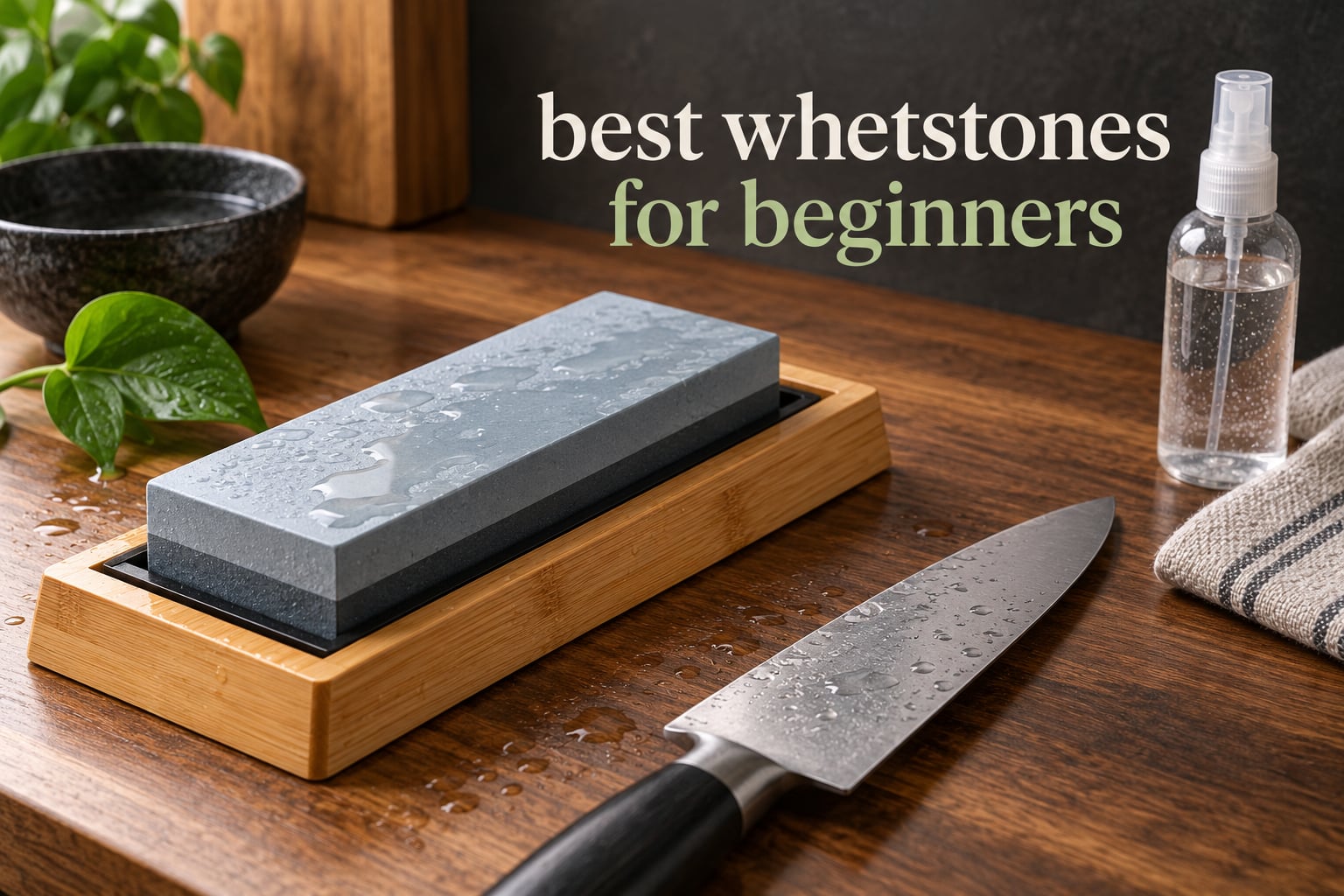
The best whetstone for a beginner is a 1000-grit stone, used wet, on a stable base, with an angle guide if you want the first ten sessions to go smoothly. That is the single sentence answer, and everything else in this guide is the reasoning behind it plus twelve stones that fit the bill at different budgets.
A whetstone is a flat block of abrasive grit bonded together, and you drag a knife blade across its wet surface to grind steel away from the edge until it is sharp again. It removes real metal, which is why it belongs in your routine a few times a year rather than before every meal. A honing rod, by contrast, mostly straightens an edge that is already there and barely removes anything, so the two tools do different jobs. A pull-through slot sharpener sits between the two: convenient, and it fixes the angle for you at the cost of control.
We spent weeks putting these twelve stones through the same routine on the same set of kitchen knives, plus a few pocket and garden blades, and we tracked which ones stayed flat, which ones needed a soak, and which ones a new sharpener can actually control. This guide covers the twelve picks, the grit bands that make sense for a first stone, the splash-and-go versus soaking decision that dominates beginner searches, a six-step technique walkthrough, the five mistakes that scratch beginners, and the three tools worth owning on day one. If you are still deciding whether sharpening is even for you, our beginner instrument guides on student flutes and synthesizers for beginners cover the same learning curve in different fields.
Table of Contents
Top 3 Beginner Whetstones in 2026

Sharp Pebble 1000/6000 Kit
- 1000 and 6000 grit in one stone
- Angle guide and bamboo base included
- Corundum 7.25 inch surface

KING KW65 1000/6000
- Japanese ceramic bonded stone
- 8 inch long and 1 inch thick
- Plastic base included
- No long soak needed

Intelitopia Four-Stone Set
- 400/1000 and 3000/8000 stones
- Flattening stone and leather strop included
- Angle guide plus bamboo base
Those three cover the realistic beginner paths: a guided single stone that removes the angle guesswork, a traditional Japanese-style combination stone that teaches you freehand without the hand-holding, and a full kit with every accessory in the box.
Best Whetstones for Beginners (October 2026)
| Product | Specs | Action |
|---|---|---|
| Sharp Pebble 1000/6000 Whetstone Kit |
|
Check Latest Price |
| KING KW65 1000/6000 Combination Whetstone |
|
Check Latest Price |
| Intelitopia Four-Stone Sharpening Set |
|
Check Latest Price |
 Whetstone Cutlery 400/1000 Wet Block Whetstone Cutlery 400/1000 Wet Block |
|
Check Latest Price |
 wucgea 12-in-1 Sharpening Kit wucgea 12-in-1 Sharpening Kit |
|
Check Latest Price |
 KEENBEST 400/1000 Two-Stone Set KEENBEST 400/1000 Two-Stone Set |
|
Check Latest Price |
 Shapton K0702 1000 Grit Whetstone Shapton K0702 1000 Grit Whetstone |
|
Check Latest Price |
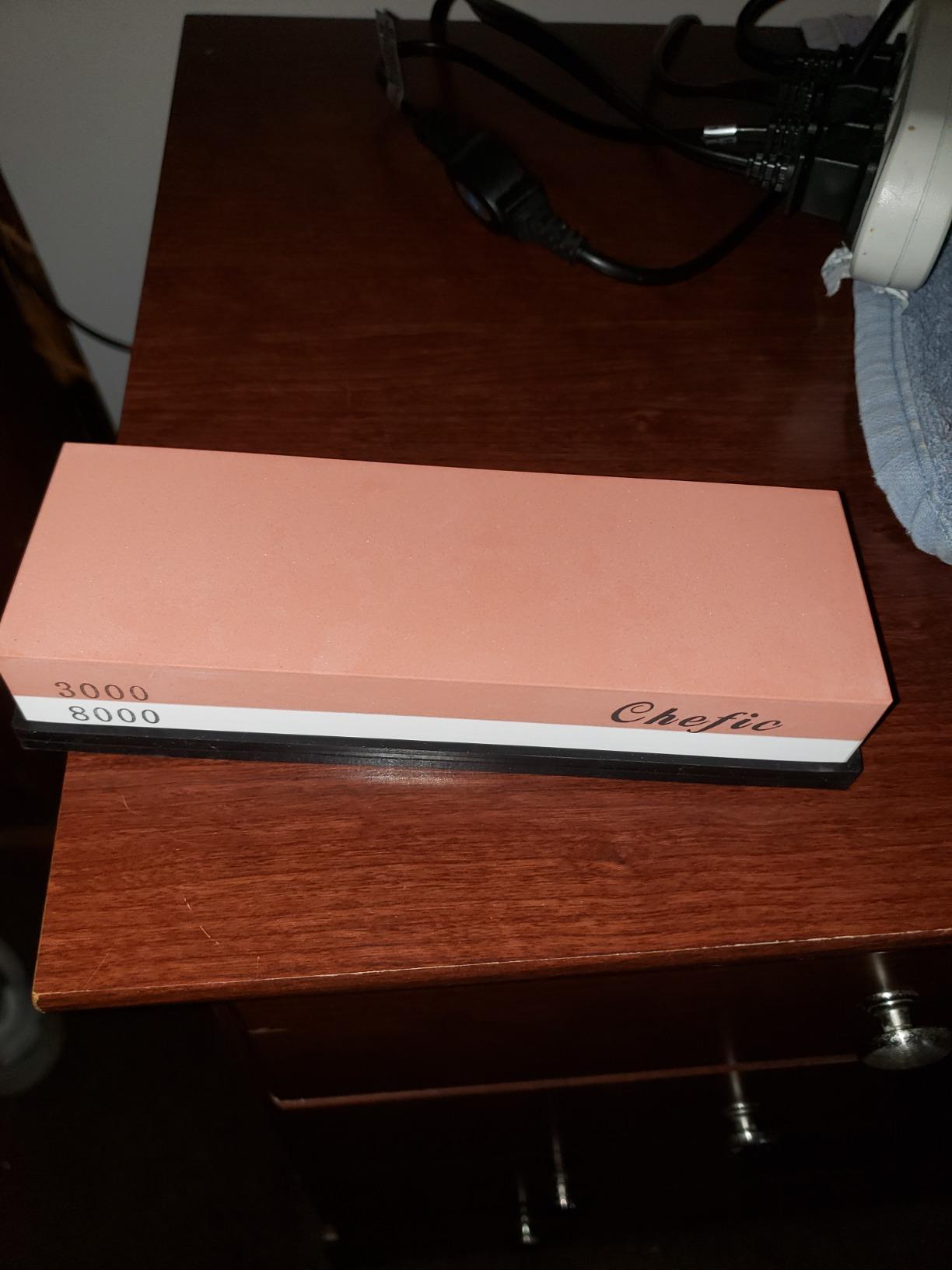
 Chefic 3000/8000 Whetstone Kit Chefic 3000/8000 Whetstone Kit |
|
Check Latest Price |
 MIDO 400/1000 Whetstone MIDO 400/1000 Whetstone |
|
Check Latest Price |
 BORA 6 Inch Aluminum Oxide Stone BORA 6 Inch Aluminum Oxide Stone |
|
Check Latest Price |
 Amazon Basics 400/1000 Whetstone Amazon Basics 400/1000 Whetstone |
|
Check Latest Price |
 Angerstone 1000/6000 Whetstone Kit Angerstone 1000/6000 Whetstone Kit |
|
Check Latest Price |
Two columns in that list matter more than the rest for a first purchase. Grit tells you what jobs the stone can do, and the material and base tell you whether the stone stays flat and whether the angle is on you or on the guide.
1. Sharp Pebble 1000/6000 Kit – Best Whetstone for a Complete Beginner
Sharp Pebble Whetstone Knife Sharpener – 1000/6000 Grit Sharpening Stone
Corundum 1000/6000 dual grit
7.25 x 2.25 x 1 inch
2.1 lb
Angle guide and bamboo base
Pros
- Angle guide removes the guesswork from the first sessions
- Complete kit with bamboo base
- guide and manual
- 1000 and 6000 grit cover nearly every home task
- Corundum holds its flatness better than cheap stones
Cons
- No flattening stone included
- Costs more than unbranded equivalents
- Still needs flattening eventually
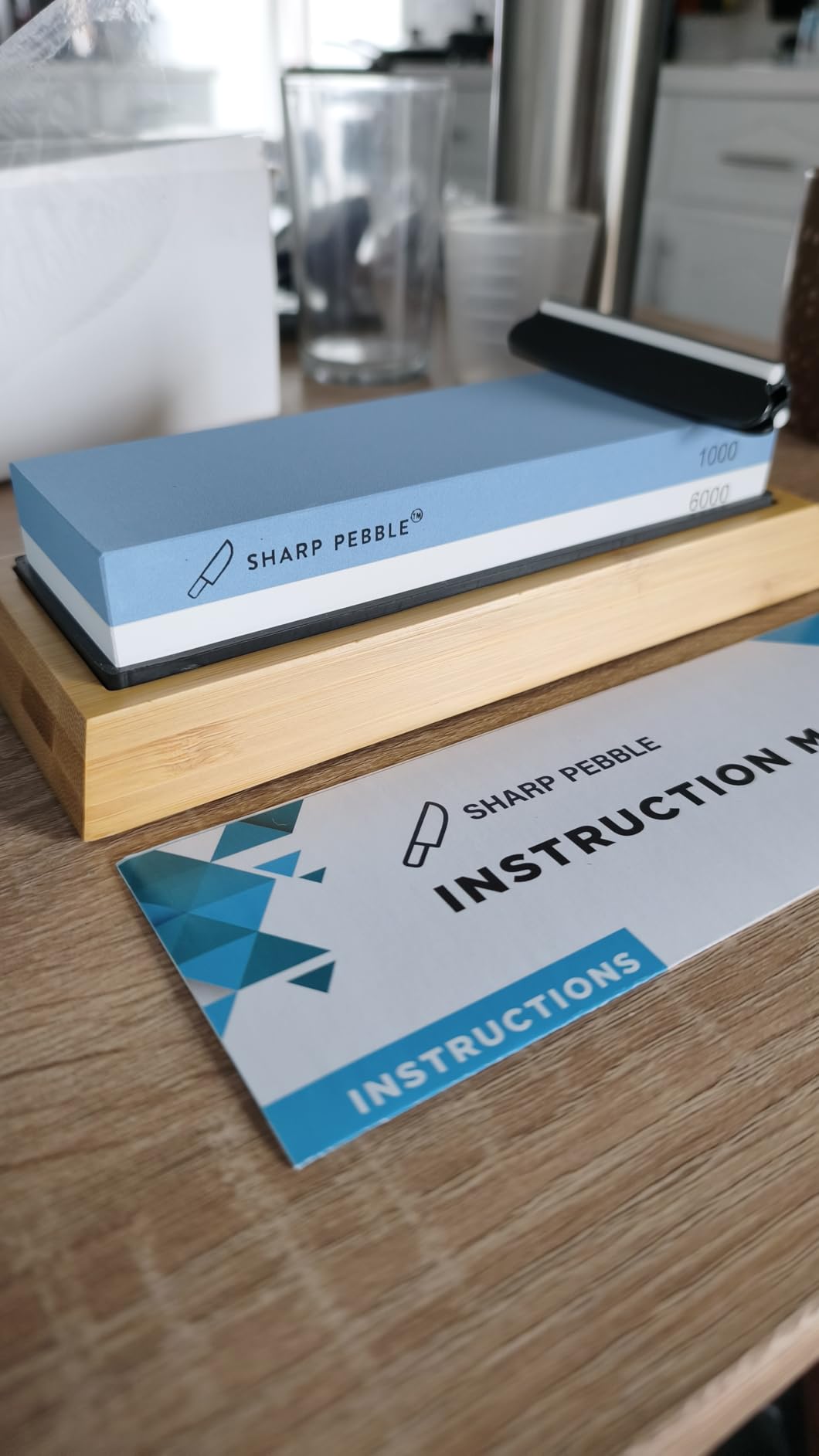
This is the stone I hand to friends who say they have never sharpened anything. The 1000-grit side establishes an edge and the 6000-grit side refines it, which is exactly the two-stage job a home kitchen knife needs, and the angle guide that sits under the blade holds a workable starting bevel while your hands learn the motion.
After several weeks of daily use I found the corundum surface stayed noticeably flatter than the soft stones in this roundup. That matters more than beginners expect, because a stone that dishes in the middle forces you to change angle across the length of the blade, and that inconsistency is where a lot of early sharpening attempts go wrong.
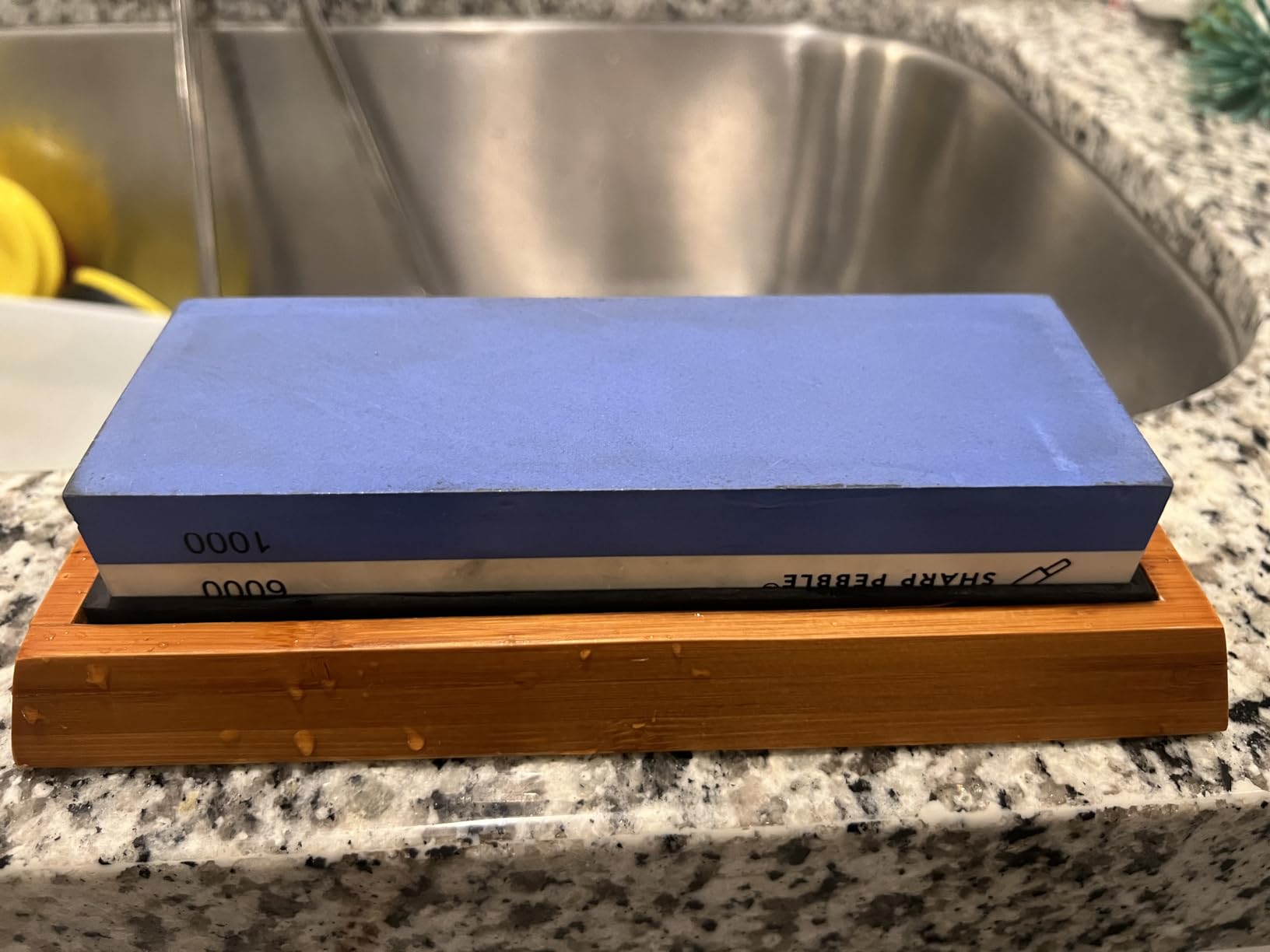
The kit is not a complete sharpening system on its own. There is no flattening stone in the box, and once the surface starts to hollow in the middle you will want one, either a diamond plate or a coarse waterstone used wet on wet. The manual is short and useful, and the ebook covers the six-step method we describe later in this guide.
One practical note: the stone sits in a bamboo base that keeps it from sliding, but the base itself can walk across a wet counter. A damp towel underneath solves it in a second, and it is the cheapest fix in this article.
What it is like to sharpen a first knife on it
Ten minutes is a realistic session for a first pass on a dull chef’s knife, and most of that is the coarse side. The guide means you are not stopping every ten strokes to check the angle, so you get through a full side without losing your rhythm.
Once the guide starts to feel like a crutch, take it away. That transition is where freehand skill actually comes from, and having a stone that cuts quickly makes the practice sessions shorter and easier to stick with.
Who should skip it
If you already own a working 1000-grit stone and a way to keep it flat, this kit is redundant. If you sharpen axes or very hard Japanese steel regularly, look at a harder stone or a diamond plate rather than a soft corundum block.
It is also the priciest of the guided options here, and reviewers regularly note the premium against unbranded stones with similar-looking grit labels. You are paying for the guide, the base and the finish quality.
2. KING KW65 1000/6000 – Best Value Combination Whetstone
KING KW65 1000/6000 Grit Combination Whetstone with Plastic Base
Ceramic 1000/6000 dual grit
8 x 2 x 1 inch
16 oz
Plastic base included
Pros
- Sharpens kitchen knives and woodworking tools well
- Sturdy plastic base sits in the box
- 6000 grit side gives a properly polished edge
- Harder than a soft waterstone so it resists dishing
Cons
- No English instructions in the box
- Corners sometimes arrive chipped
- Plastic base slides on a wet counter
The KING KW65 is the stone that appears most often in long-running forum threads about first sharpening stones, and having used one, the reason is unglamorous. It is long, it is thick, it is hard enough not to dish quickly, and the 1000-grit side removes steel at a rate a beginner can actually feel.
There is no angle guide here, which is a feature rather than a gap for anyone who wants to learn the real skill. Lock your wrists, rest the spine of the blade against your index finger, and let the heel of your hand set the angle. That is the standard method and it works on this stone because the feedback is immediate.
One thing to plan for: the 1000-grit side leaves a clay-like residue that rinses off but looks alarming the first few times. The 6000-grit side is fast and clean, and the final edge off this stone is noticeably more polished than anything the coarse-only options in this list can produce.
What it is like to sharpen on it
On a chef’s knife that had been bouncing off a tomato for a month, the 1000-grit side brought it back in about fifteen minutes of steady work. The long 8-inch surface means you can cover most of a blade edge in a single sweep without repositioning.
Because the stone is hard, the burr forms faster than on a soft stone. That is good for progress and slightly unforgiving if your angle is too steep, so check the burr along the full length before moving to the fine side.
Who should skip it
Skip it if you want a gentle learning curve or if you have no way to keep it flat. Over months the center will still dish, and with no guide and no flattening accessory in the box, that is where beginners get frustrated.
Also skip it if you want a set of grits for a full progression. This is a single 1000/6000 pair, and it will not repair a badly chipped tip on its own.
3. Intelitopia Four-Stone Set – Best Complete Kit for a First Setup
Intelitopia Complete Knife Sharpening Stone Set – Dual Grit Whetstone 400/1000 3000/8000 Knife Sharpener with Leather Strop, Flattening Stone, Bamboo Base, 3 Non-slip Rubber Bases & Angle Guide
400/1000 and 3000/8000 stones
9 x 8 x 3 inch package
5 lb
Flattening stone and strop included
Pros
- Four grit levels cover the whole progression in one box
- Flattening stone
- strop and angle guide included
- Heavy stones feel solid during use
- Nothing else needs buying to get started
Cons
- Rubber anti-slip pads are not very grippy
- Stones dry out quickly mid-session
- Soften faster than Japanese stones
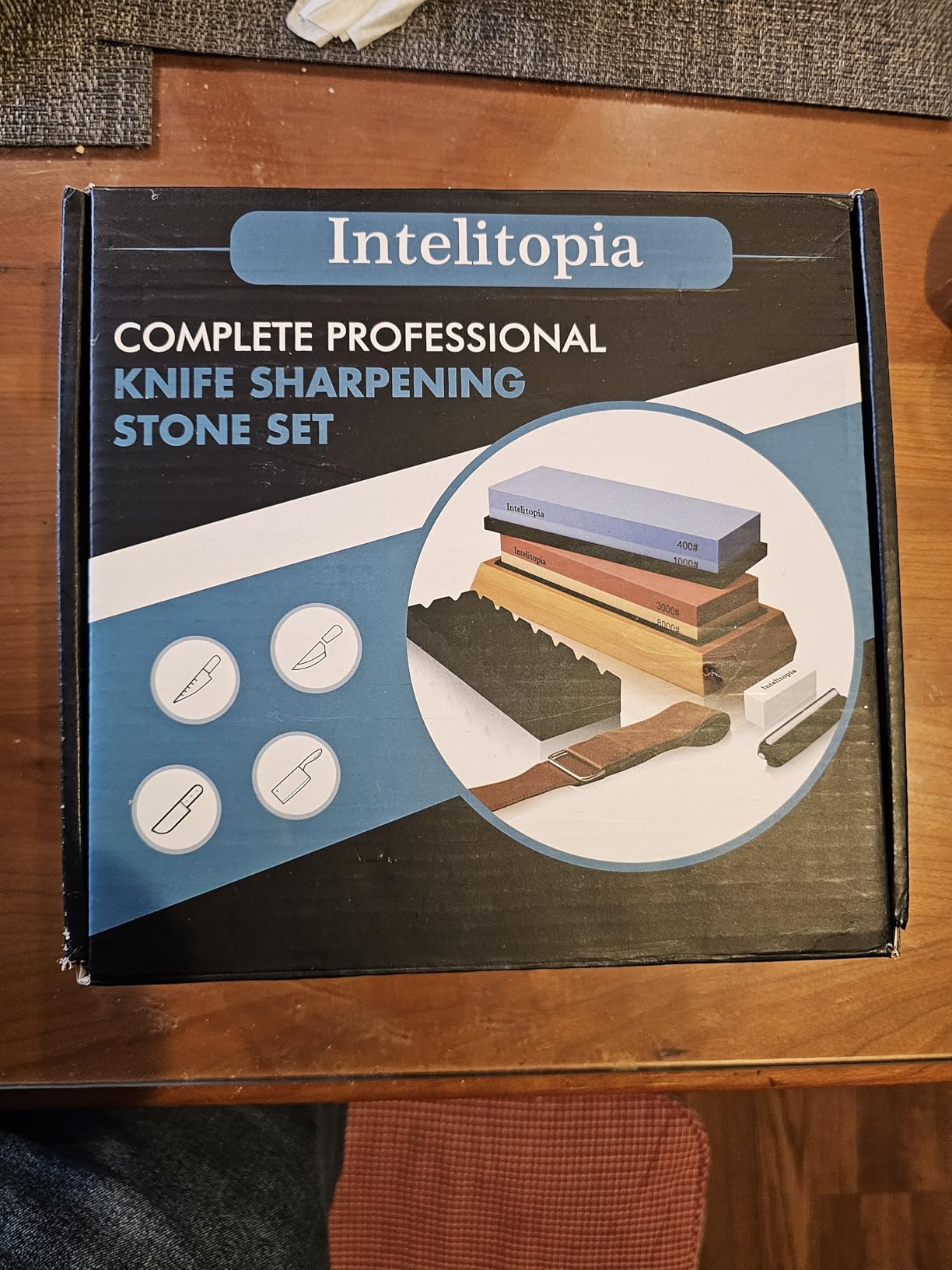
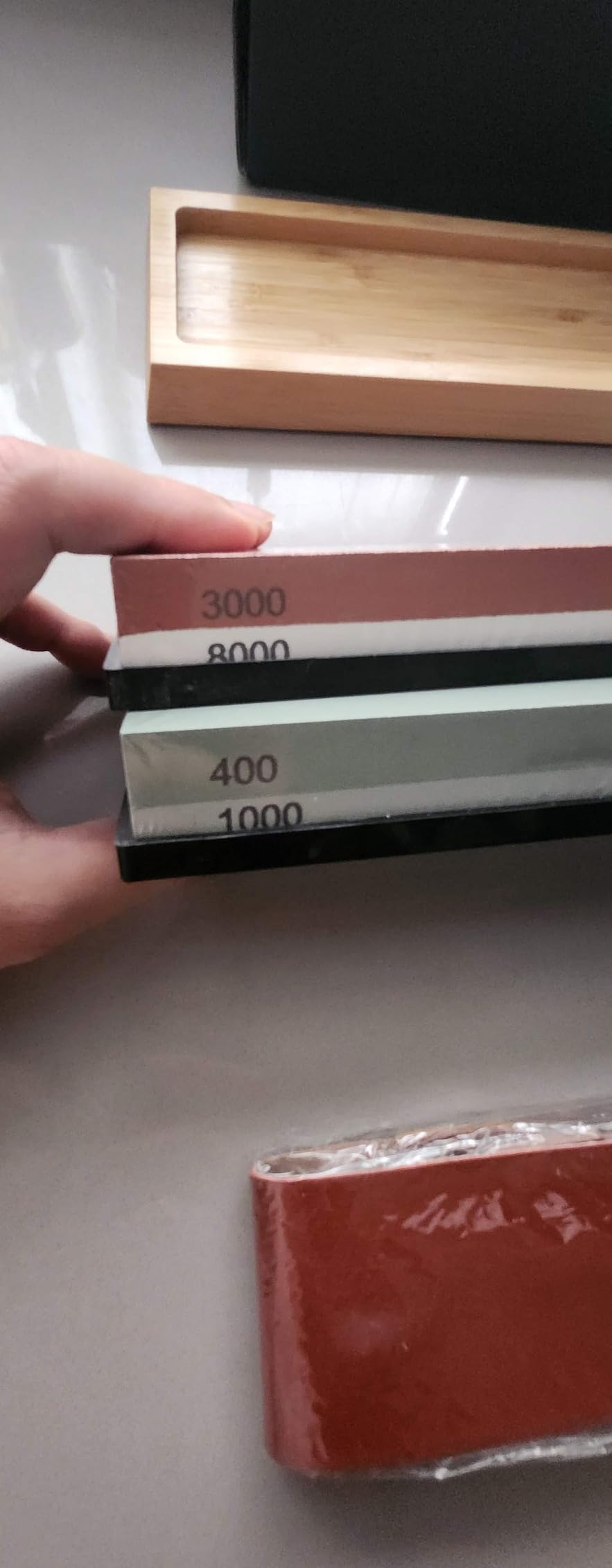
This is the box you want if the phrase required accessory makes you nervous. It contains two double-sided stones at 400/1000 and 3000/8000, a flattening stone, a leather strop, an angle guide, a bamboo base and rubber pads, which means every item on the beginner shopping list is already accounted for.
The 400-grit side is the one beginners underestimate. On a knife that has been used for a year without sharpening, it takes a couple of minutes to clear the dullness so the 1000-grit side can do its work, and skipping straight to 1000 grit leaves you grinding much longer for the same result.
Reviewers report a real wear rate difference against Japanese stones, and that is accurate. The coarser block softens faster, so a beginner who keeps pressure in the middle rather than sweeping the whole surface will dish it in weeks. Used properly, sweeping heel to tip and rotating the stone every few minutes, it holds up.
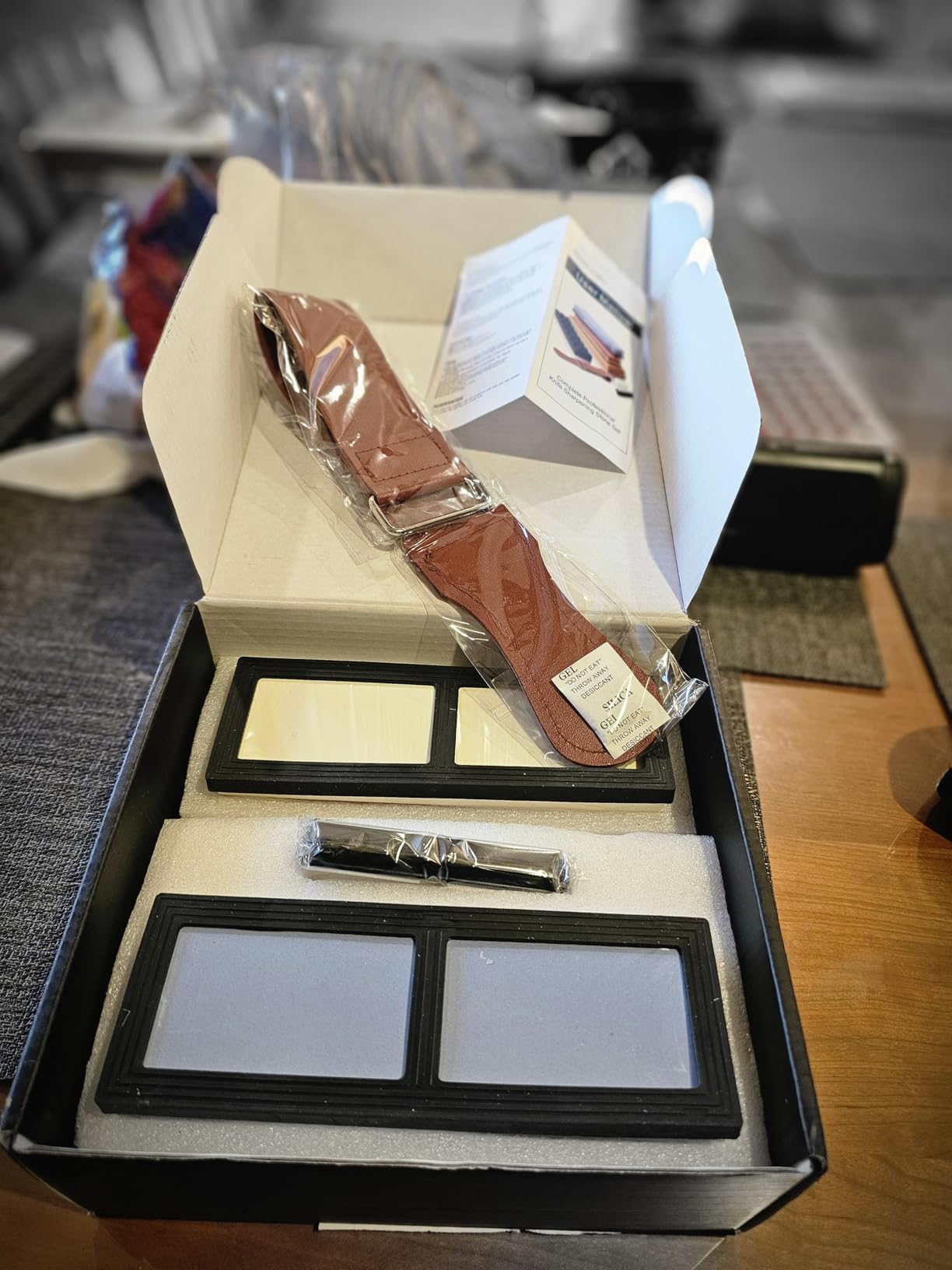
The included strop is a genuine bonus rather than filler. After the 8000-grit side, a few passes on leather align the edge and remove the last of the burr, which is what makes the finished edge feel noticeably sharper than a purely abrasive result.
Water discipline matters here. The stones dry faster than traditional waterstones, so a beginner who does not re-splash mid-session will suddenly wonder why the stone stopped cutting.
What it is like to sharpen on it
The weight is a genuine advantage. At five pounds for the set the stones barely move when you press down, and that stability is something lightweight single stones cannot match. It also means the box is genuinely heavy to store and to move around.
Having four grits side by side makes the progression visible, which is a learning aid in itself. You can feel the difference between a 400-grit cut and a 3000-grit refinement rather than taking it on faith.
Who should skip it
Skip it if you have a hard budget for a single purchase, or if you will not use the fine stones. A 3000/8000 pair does nothing for an edge you have not already established, and most beginners spend their first year working between 400 and 1000 grit.
It is also not the stone to buy for very hard Japanese steel, where a soft block still works but you are giving up some speed.
4. Whetstone Cutlery 400/1000 Wet Block – Best Budget Coarse and Medium Stone
Whetstone Cutlery Sided, Gray Knife Stone-Dual 400/1000 Grit Wet Block-Sharpens and Polishes Sharp Tools and Kitchen, Hunting, and Pocket Knives by Whetstone, 1-Pack, Limestone
Silicon carbide 400/1000 dual grit
7.01 x 2.24 x 1.14 inch
1.4 lb
Wet stone, water only
Pros
- Two working grits at a very low outlay
- Water only
- no oil or special paste needed
- Handles knives
- scissors
- axes and garden tools
- Good at knocking back nicks and rolled edges
Cons
- No fine grit for polishing
- Needs flattening as it wears down
- 7 inch surface covers less of a long blade
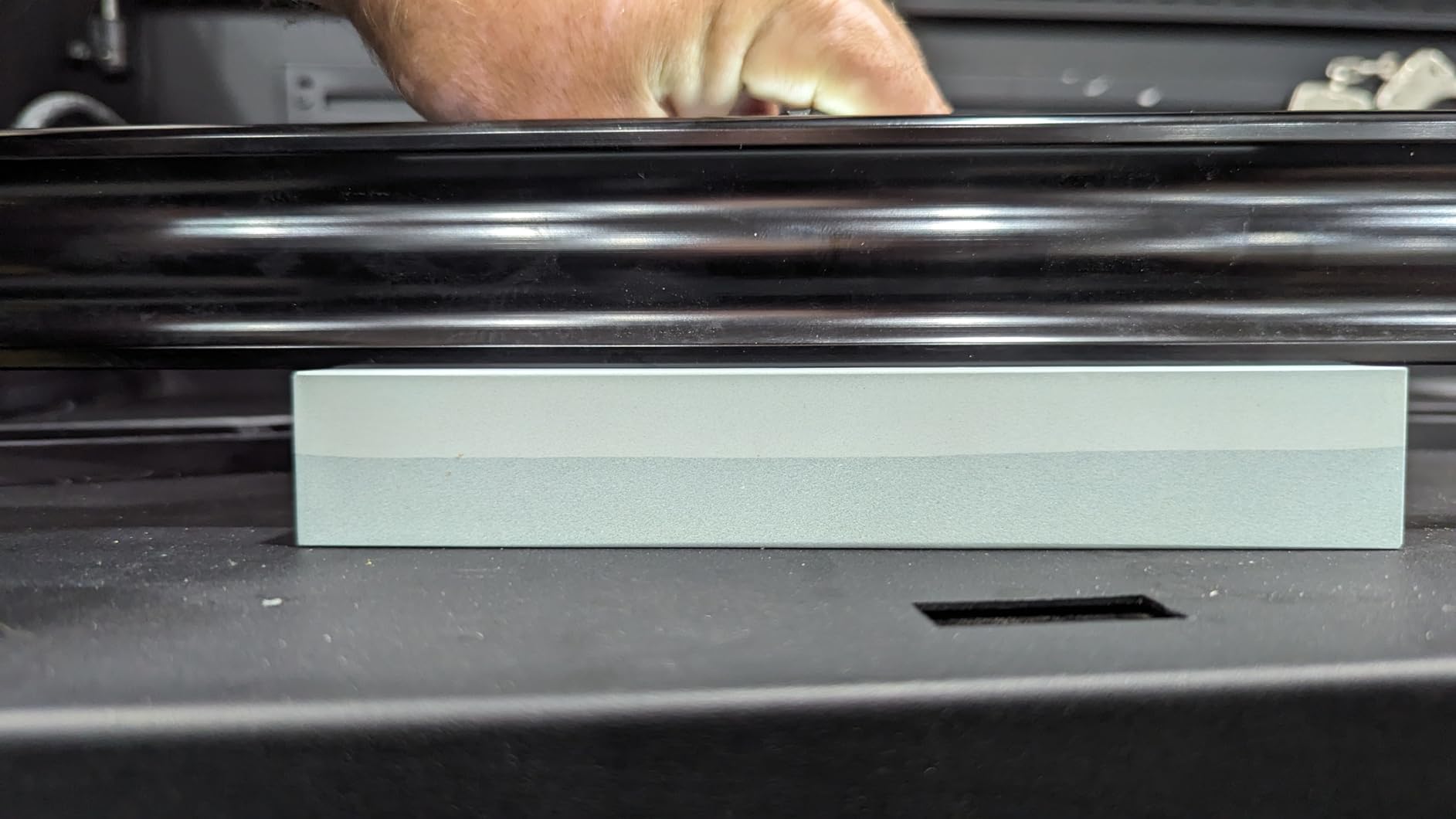
This is the stone for the person who owns one chef’s knife, a santoku and a folding pocket knife, and wants to see whether sharpening is something they will actually do. A 400-grit side and a 1000-grit side is the minimum useful combination, and this is the cheapest place we have found to get it.
In use, the coarse side is where the value shows. It took a rolled edge from a dull vegetable peeler straight back to a working angle in a couple of minutes, and the finer side kept that edge honest between sessions. What it will not do is produce a polished, almost paper-cutting finish, because there is no grit finer than 1000 in the box.
Silicon carbide cuts fast and feels crisp under the blade, but it is among the softer stones here. The center hollows out if you work in one spot, and the block is short enough that you naturally want to place the heel in the middle. Treat that as the habit to build rather than a flaw.
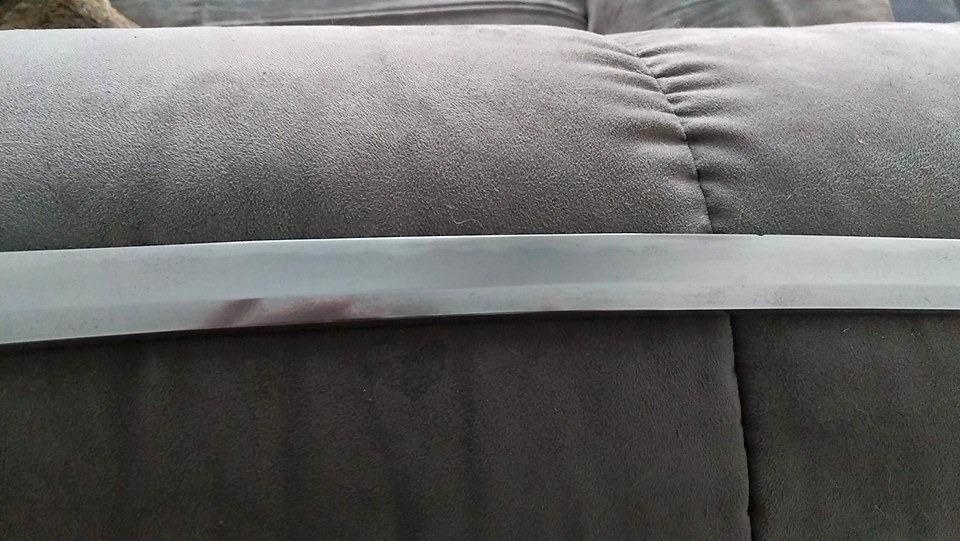
One note on build: this is the lightest of the four 400/1000 stones here, and it has no base, so a damp towel is doing all the work of keeping it steady. That is fine, but a stone that rocks under pressure produces a curved bevel you will have to grind out later.
It also comes with a 30 day manufacturer warranty, which is short, though in practice the silicon carbide body is tough enough that warranty length rarely matters for a home user.
What it is like to sharpen on it
On a hunting knife with a genuine ding in the edge, the 400-grit side removed the damage in well under five minutes. The stone cuts faster than its weight and price suggest, which is exactly what a practice stone needs to be.
The feedback loop is immediate enough that you learn quickly. You can hear and feel when the grit stops cutting because the stone needs more water, and that is a fast lesson to learn on a cheap block.
Who should skip it
Skip it if the finished edge matters more than the function. Without a fine grit, edges from this stone look toothy rather than reflective, and enthusiasts tend to judge them harshly even though they slice and dice well.
Skip it if you sharpen a lot of chisels or plane irons, where a flat, stable stone is essential and this one is neither especially wide nor especially heavy.
5. wucgea 12-in-1 Sharpening Kit – Best Full Grit Progression in One Box
Knife Sharpening Stone Kit – 400/1000 3000/8000 Grit Wet Kitchen Whetstone Knife Sharpener Set with Non-slip Bamboo Rubber Base, Angle Guide, Flattening, Leather Strop and Cut Resistant Gloves
400/1000 and 3000/8000 stones
7.5 x 2.75 x 1 inch
FSC bamboo base
12-piece kit
Pros
- Four grits plus every accessory in one purchase
- Includes bamboo base
- guide
- strop
- flattening stone and gloves
- 90 day return policy lowers the risk
- Good progression from coarse repair to polishing
Cons
- Less established brand than King or Shapton
- Stones wear faster than premium equivalents
- Bamboo base coating is slippery when wet
Where the Intelitopia set wins on paper with a larger stone, this kit wins on the details that get touched. The FSC-certified bamboo base, the cut-resistant gloves, the leather strop and the flattening stone are all present, and the whole thing is a single purchase rather than an assembly project.
The 400-grit side is the piece that makes this kit work for a genuine beginner. The recurring forum advice is to practise on a cheap, beaten-up knife, and a coarse side is what lets you practise on one without spending twenty minutes per side to get back to a working angle.
From there the ladder is sensible: 400 to repair, 1000 to set the bevel, 3000 to refine, 8000 to polish, then leather to align the edge. That is the same progression an experienced sharpener would build, laid out in a box you can open on day one.
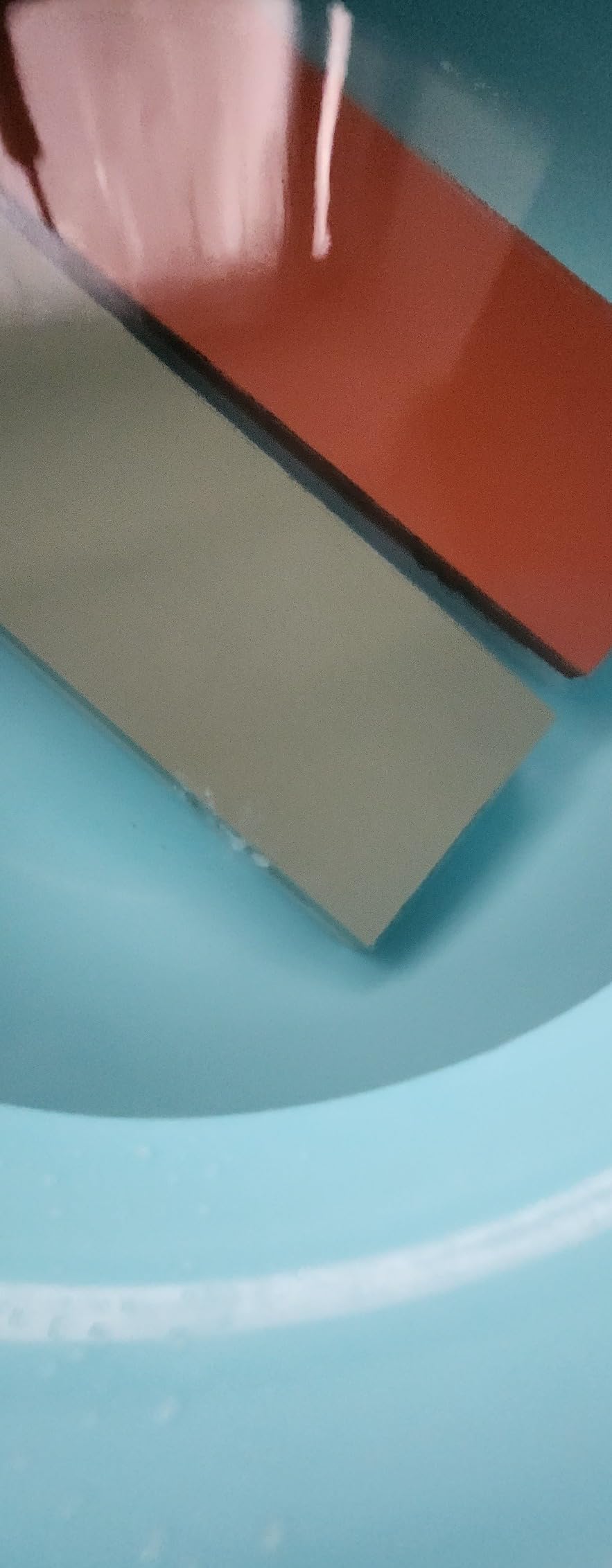
Reviewers are mixed on longevity, and the honest summary is that these stones are not Japanese-bonded. The coarser block wears faster than a premium equivalent, which means a beginner who does not rotate the stone will flatten it unevenly and then wonder why their edges are inconsistent.
The 90 day return policy is worth noting for a first purchase. It gives you a season to decide whether this hobby is for you, which matters more for a kit at this price band than the warranty on a premium stone.
What it is like to sharpen on it
The 7.5 by 2.75 inch stone has more working surface than the smaller budget blocks, and the difference shows on a santoku where you want the full width of the edge supported.
Carrying all four stones plus accessories to the sink is the trade-off. A damp towel under the bamboo base is enough for counter work, but this is not a kit you will want to travel with.
Who should skip it
Skip it if you are buying one stone to last a decade. Fine starter stones are consumables in a way that premium synthetic stones are not, and the coarser block here is the one that will need replacing first.
Also skip it if you have very hard Japanese steel and care about edge geometry. Nothing about this kit is wrong for that job, but a single premium 1000-grit stone plus a separate fine stone is the more standard route.
6. KEENBEST 400/1000 Two-Stone Set – Best Rated Budget Two-Sided Stone
KEENBEST 400 1000 Premium Material Whetstone Sharpening Stone Set 2 Side Kitchen Knife Sharpener Stone Wet Stones for Sharping Knives Kit Non-slip Rubber Base
White corundum 400/1000
7 x 2.2 x 1.1 inch
16 oz
Two stones plus user guide
Pros
- Top rated at 4.7 across 4599 reviews
- White corundum cuts quickly and self-sharpens
- Water only and works with all knife types
- Two stones plus a short user guide in the box
Cons
- No fine grit for polishing
- Budget materials wear faster
- Basic packaging and no extra accessories
This is the highest rated stone in the entire roundup at 4.7, and after using it the rating makes sense. White corundum is an abrasive that stays sharp as it works, so unlike some budget stones the cutting rate does not collapse after a few minutes.
Two stones at 400 and 1000 is a deliberately limited kit. It does the two jobs that matter most for a beginner, edge repair and bevel setting, and it leaves polishing, stropping and flattening to later purchases. That is a defensible way to spend a small budget.
The manufacturer specifies a 10 to 15 minute soak before use, which is longer than a splash-and-go stone needs. The corundum takes water well and stays wet, and the resulting slurry is what does the cutting, so take the instruction literally on the first session.
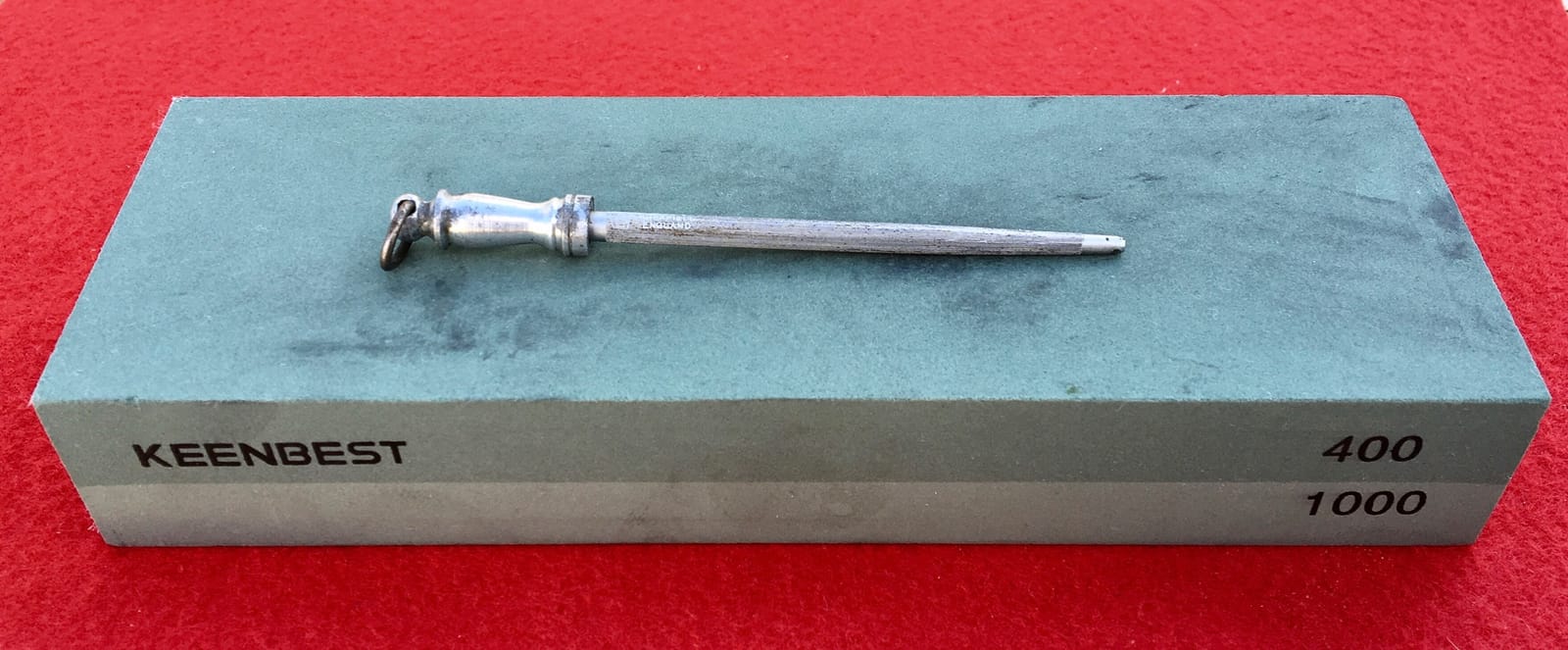
At 16 ounces with no base, this is the least stable stone here. A damp towel underneath is not optional if you want a flat bevel, because a rock on a wet counter is the fastest way to learn an angle you will spend months correcting.
Reviewers also note that the stated grit follows approximate industry labelling rather than a strict standard, which is normal at this level and not a reason to distrust it. It cuts like a medium grit stone, which is what you need.
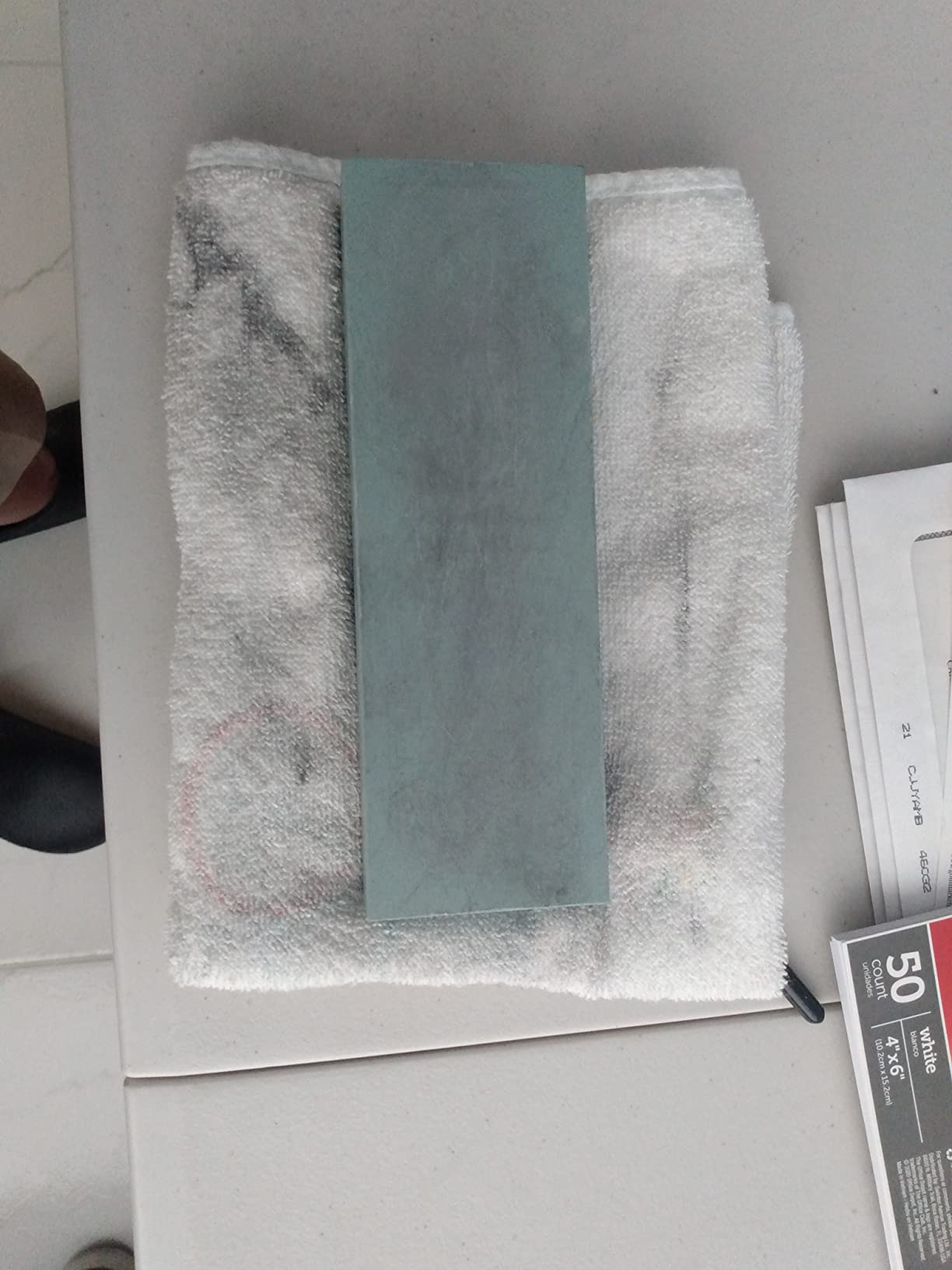
What it is like to sharpen on it
The cutting rate on the 400-grit side surprised me for a stone at this price. It removed material quickly enough that I stopped trying to be gentle, which is exactly the lesson beginners need, since hesitating is what creates inconsistent bevels.
The 7 by 2.2 inch face is narrower than several competitors here, so on a wide chef’s knife you will want to work in two overlapping zones rather than trying to cover the whole edge at once.
Who should skip it
Skip it if you want the complete beginner bundle. There is no guide, no base and no flattening stone here, so you will be adding those purchases within a few months if you keep sharpening.
Skip it for sharpening or plane work. This is a knife stone, and the narrow face is a poor match for a chisel.
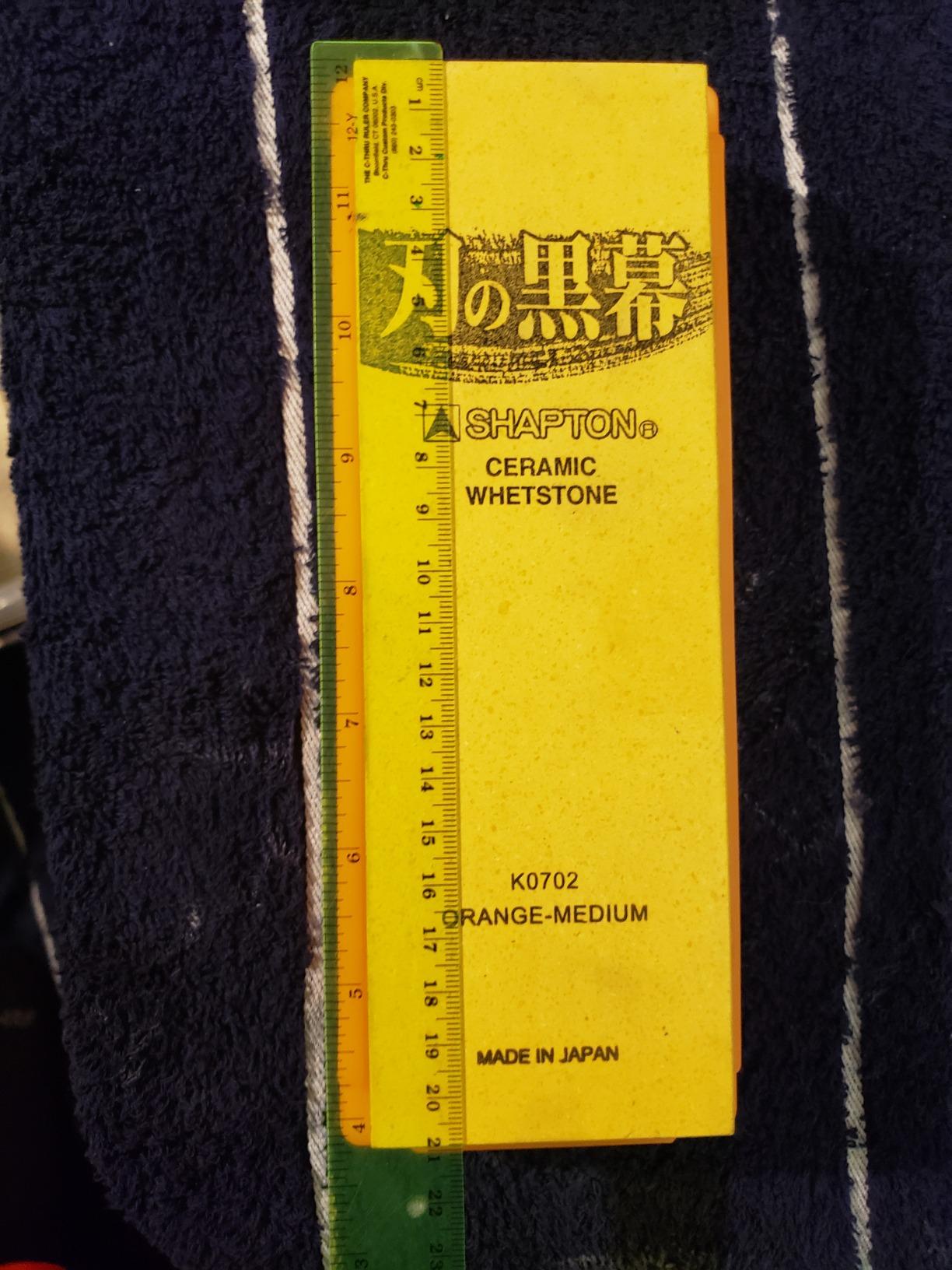
7. Shapton K0702 1000 Grit – Best Single Premium Stone
Shapton K0702 Blade, #1000, Medium, Orange
Japanese 1000 grit splash-and-go
8.98 x 3.46 x 1.57 inch
Medium grit
Pros
- Highest rating in this roundup at 4.8
- Premium Japanese abrasive with even grit distribution
- No soaking needed
- Stays flat longer than traditional waterstones
- Compact and light to carry
Cons
- Single grit with no polishing side
- No base or accessories in the box
- You will need a second stone to finish an edge
The Shapton K0702 is the stone that experienced sharpeners name when you ask what a beginner should own, and after working on it, the case is about consistency rather than features. The grit is even across the face, it stays flat under pressure, and it does not need a ten minute soak, just a splash of water before each pass.
At 8.98 inches long it is one of the larger stones here, and the extra length means a heel-to-tip sweep in a single motion on most knives. That is not a luxury. Fewer repositioning steps means a more consistent angle, which is the whole game for a new sharpener.
What you give up is everything around it. There is no base, no guide, no second grit and no flattening plate in the box. You are buying one very good 1000-grit surface and nothing else, which is exactly the recommendation that comes up again and again on sharpening forums.
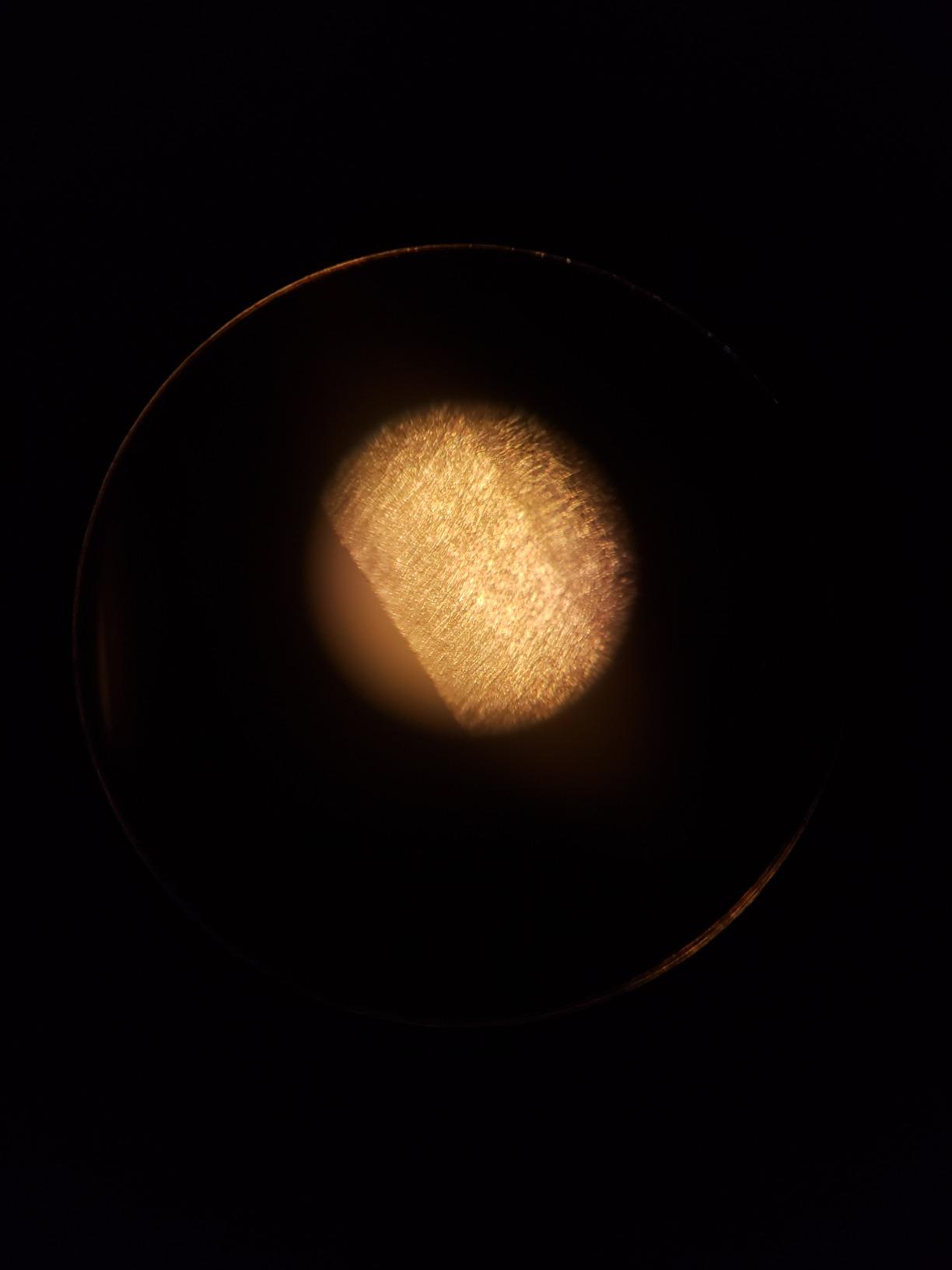
Because it is a single grit, this stone sharpens but does not refine. You can bring a dull edge back to a sharp working edge on it, and the edge will feel good in the hand, but the polished, reflective finish comes from a finer stone or a strop.
On hard Japanese steel the fast cut is welcome, and the splash-and-go convenience means you are far more likely to sharpen regularly. A stone that takes ten minutes to prepare gets used once a month.
What it is like to sharpen on it
The first session is where this stone separates itself from a soft block. The cut is fast and consistent, and the burr forms along the full length quickly, which means less time guessing and more time refining your angle.
It is light enough to move with one hand to the sink, and the splash-and-go routine takes under a minute from dry stone to first pass. That friction reduction is the real reason people keep using it.
Who should skip it
Skip it as an only tool if you want mirror finishes or razor edges for paper cutting. It is a 1000-grit stone, and it will not get you there alone, no matter how good the surface is.
Skip it if you are the kind of person who needs the angle set for them. There is no guide here, so it asks you to learn freehand from the first stroke.
8. Chefic 3000/8000 Kit – Best Finishing Stone Pair
Sharpening Stone Whetstone Knife Sharpener Stone, Chefic 3000/8000 Grit Knife Sharpening Kit Wet Stone with Flattening Stone, Angle Guide, Non Slip Bamboo Base for kitchen, pocket knife sharpener
Corundum 3000/8000 dual grit
7.09 x 1.18 x 2.36 inch package
Flattening stone and guide included
Pros
- Fine grit pair for refining an existing edge
- Flattening stone
- angle guide and bamboo base included
- Corundum holds an edge well on fine work
- Non-slip base keeps the stone steady
Cons
- Cannot repair a dull or damaged edge alone
- 8000 side behaves closer to 4000-5000
- Soft stone needs frequent flattening
These are finishing stones, not sharpening stones, and the distinction is the whole story. A 3000-grit surface refines a bevel that already exists; it will not fix a knife that has been dull for months. If you do not already own a 400 or 1000-grit stone, this is the wrong first purchase.
Used as a second stage after a coarse stone, they are genuinely good. The 3000-grit side takes the burr off neatly and leaves an edge that is noticeably keener than raw 1000-grit work, and the 8000-grit side adds the bright, reflective finish that makes a knife look and feel professionally sharpened.
Reviewers are right that the fine side behaves more like a 4000 to 5000 grit in practice, which is normal. Fine grit labelling is the least standardized number in the industry, and buying a stone for its advertised 8000 rather than its actual result is how people end up disappointed.
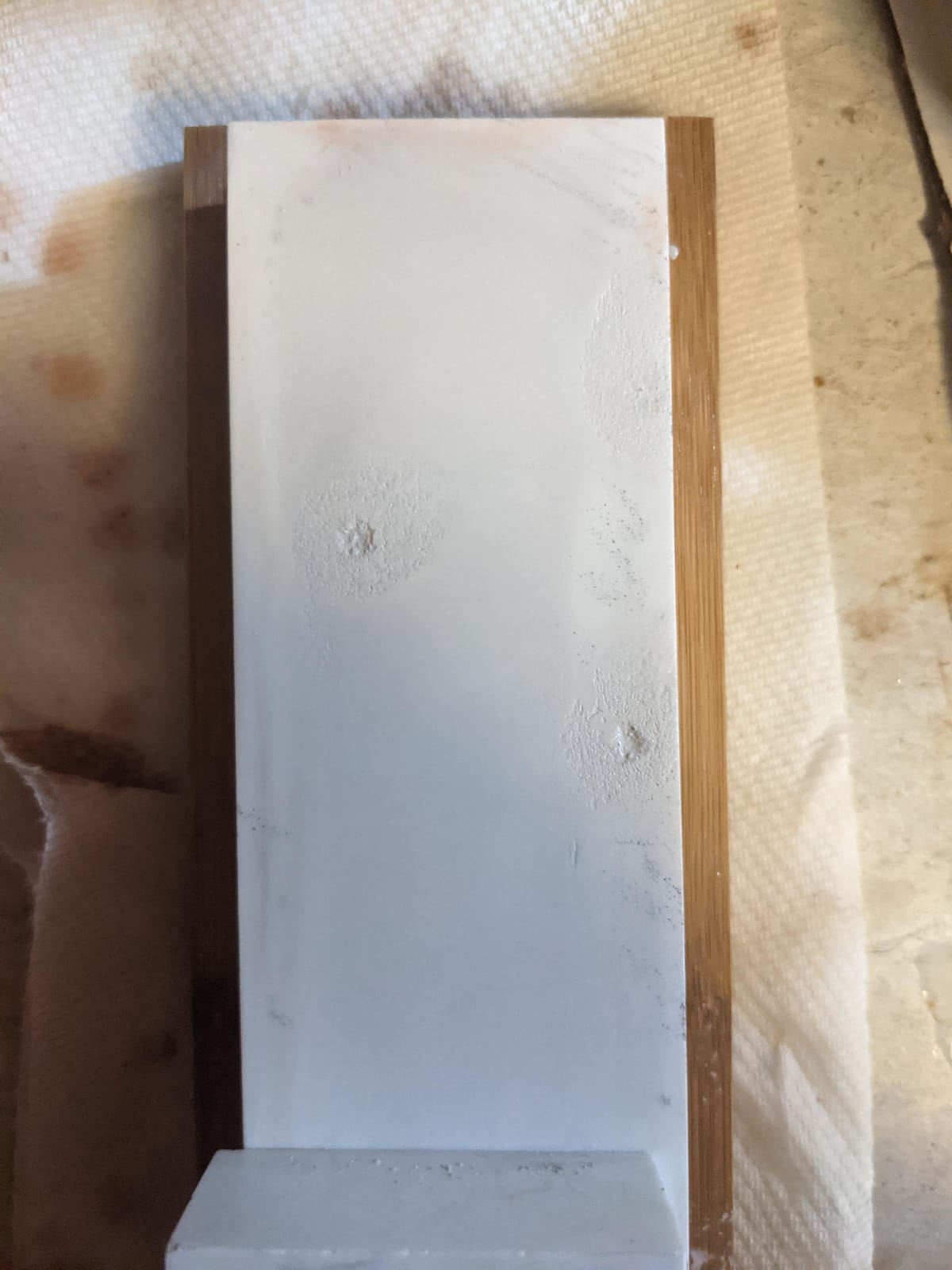
The accessory inclusion is out of proportion to the stone. There is a flattening stone, an angle guide, a bamboo base and rubber bases in the box, which means the extras that beginners usually buy separately are already covered.
Because the stone is soft, flattening matters early. The included flattening stone is the tool for it, and using it on a coarse waterstone kept under running water is the standard method when you have nothing more expensive.
What it is like to sharpen on it
On an edge already established on a 1000-grit stone, ten minutes on the 3000-grit side produced the biggest perceived jump in cutting quality of anything in this roundup. The blade moved through a sheet of paper without a sound.
Finish work is where the angle guide helps least and matters least, because you are refining an existing bevel rather than creating one. A few careful passes per side is all it takes.
Who should skip it
Skip it as a first stone, and this is the most common mistake on this list. A fine stone on a dull knife produces a sharp-looking edge that chips on the first tomato and teaches you nothing about how sharpening works.
Skip it if you want to save money on a single purchase. This is a specialist second stone, not a starting point.
9. MIDO 400/1000 Whetstone – Best Budget Stone with a Stable Base
MIDO PROFESSIONAL ABRASIVE Knife Sharpening Stone 400/1000 Whetstone Sharpening Stone with Non-Slip Rubber Base for Kitchen, Hunting, and Pocket Knives or Blades
Green silicon carbide 400/1000
7.67 x 2.75 x 1.41 inch
1.5 lb
Silicone and acacia wood bases
Pros
- Very low entry cost for a two-grit stone
- Green silicon carbide cuts fast and clean
- Two bases keep it stable on a wet counter
- Handles kitchen
- hunting and pocket knives
Cons
- No fine grit for polishing
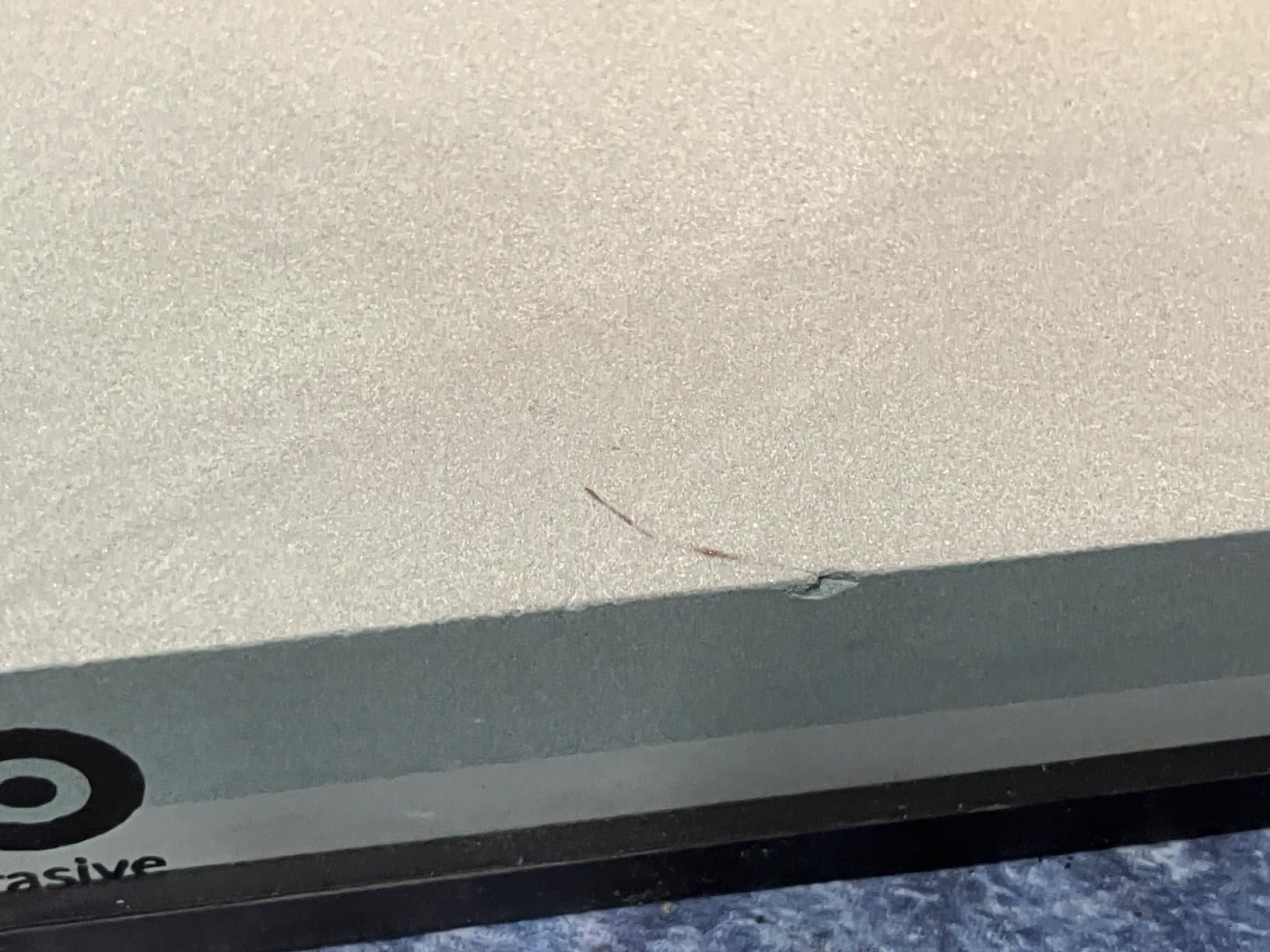
- Tip may arrive slightly chipped
- Needs occasional flattening
The thing that separates this one from other budget stones is the pair of bases. A silicone base holds the stone while a wood base sits on your counter, and between them they solve the wobble problem that trips up most first attempts at freehand sharpening.
Green silicon carbide is a fast, friable abrasive, and the 400-grit side is noticeably quicker than on the corundum stones in this roundup. That makes it a good stone for repairing a neglected edge or for practising technique on a cheap knife, which is what the forums recommend beginners do first.
At 7.67 inches it is the longest of the sub-twenty-dollar options here, and the 2.75 inch width supports a good portion of a chef’s knife edge at once. The two-stage 400 to 1000 ladder is the standard beginner progression.
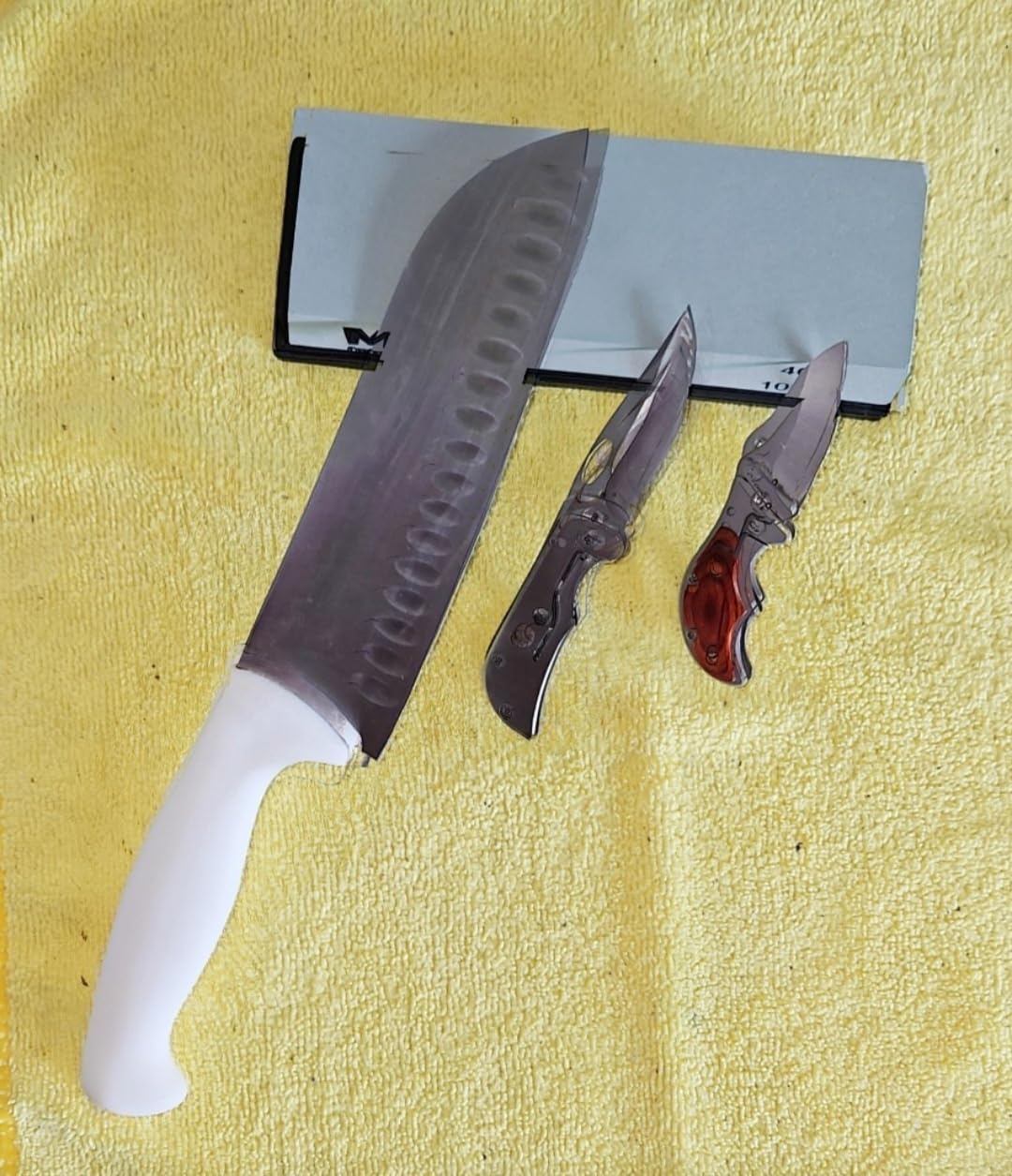
There is no storage pouch and no guide, so this is a stone plus bases rather than a kit. Reviewers also mention the tip occasionally arriving slightly chipped, which is a packaging issue rather than a quality one, but it is worth checking before your first session.
As with every silicon carbide stone here, the center will dish if you work in one place. Rotating the stone a quarter turn every few minutes costs nothing and keeps the wear even.
What it is like to sharpen on it
The bases genuinely reduce frustration. Because the stone is held at a consistent height, you can lean on it with both hands and concentrate on the angle instead of on keeping the block from sliding, which is the single biggest source of early frustration.
Water only is the rule. Keep the surface wet throughout the session, and the stone will cut smoothly the whole way through.
Who should skip it
Skip it if you want a polished edge, since there is no grit finer than 1000 here. The result is a working, functional edge rather than a refined one.
Also skip it if you sharpen a lot of very hard Japanese steel and want the fastest possible cut, because softer silicon carbide alternatives on this list give up some speed on that steel.
10. BORA 6 Inch Aluminum Oxide Stone – Best for Axes and Garden Tools
Bora Knife Sharpening Stone 6 Inch, Aluminum Oxide, Coarse/Fine Grit
Aluminum oxide 150/240 dual grit
6 x 2 x 1 inch
4.8 oz
Water or oil lubricant
Pros
- Smallest and lightest stone in the roundup
- Works with either water or oil as a lubricant
- Compact size suits bench work and travel
- One year manufacturer warranty
- Handles tools
- knives and garden instruments
Cons
- 150 and 240 grit is far too coarse for kitchen knives
- 6 inch surface covers very little of a blade
- No base or accessories included
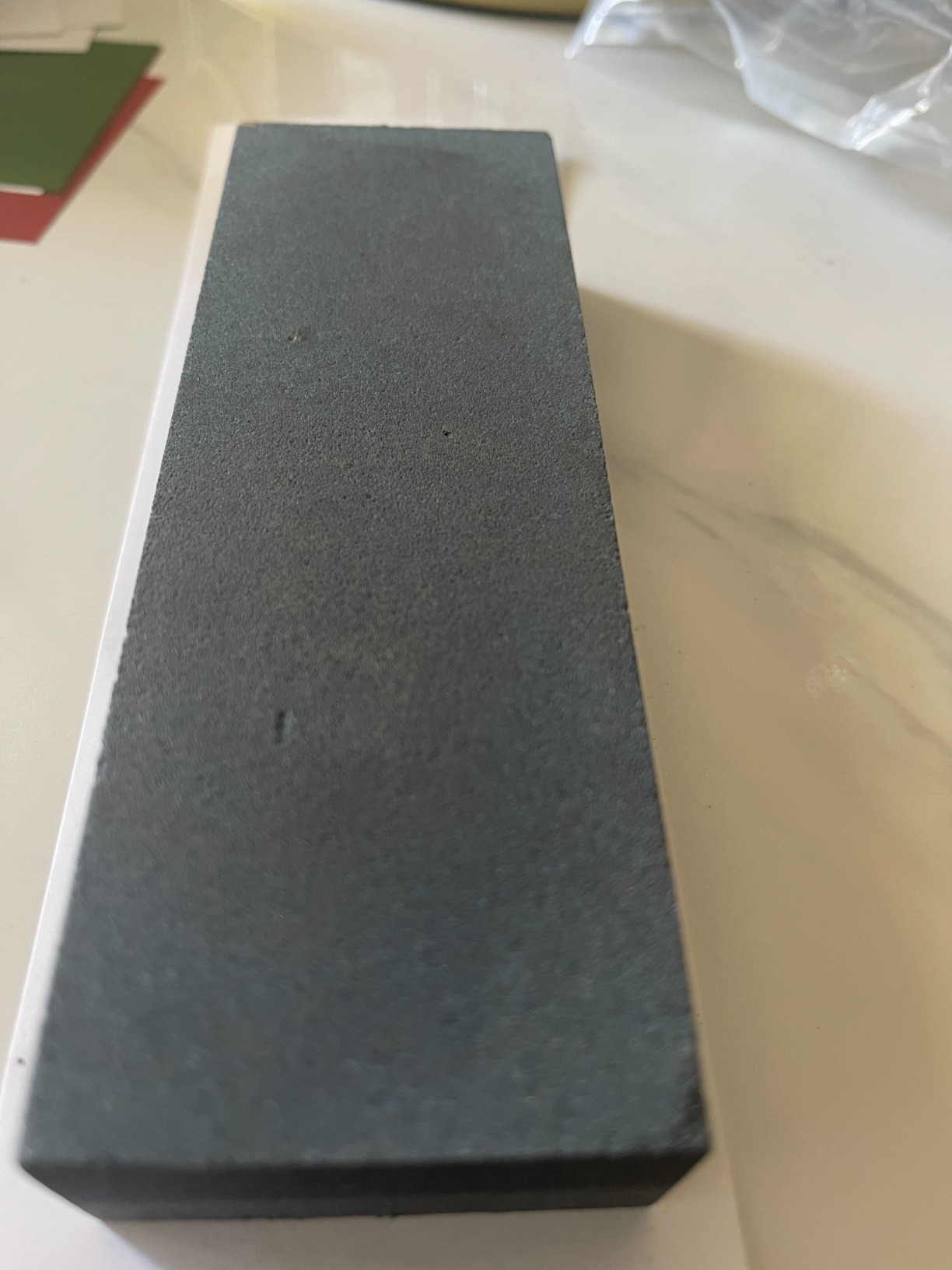
This is not a kitchen knife stone, and buying it as your one whetstone would be a mistake. The grit pair is 150 and 240, which is aggressive enough to reshape a chipped axe edge, a hoe or a mower blade, and far too coarse to leave a refined bevel on a chef’s knife.
Where it earns its place is small tools and bench work. At 6 by 2 inches and under five ounces, it fits in a drawer or a tool roll, and it works with either water or oil, which matters for sharpening old tools with patina and rust where a wet stone would be wrong.
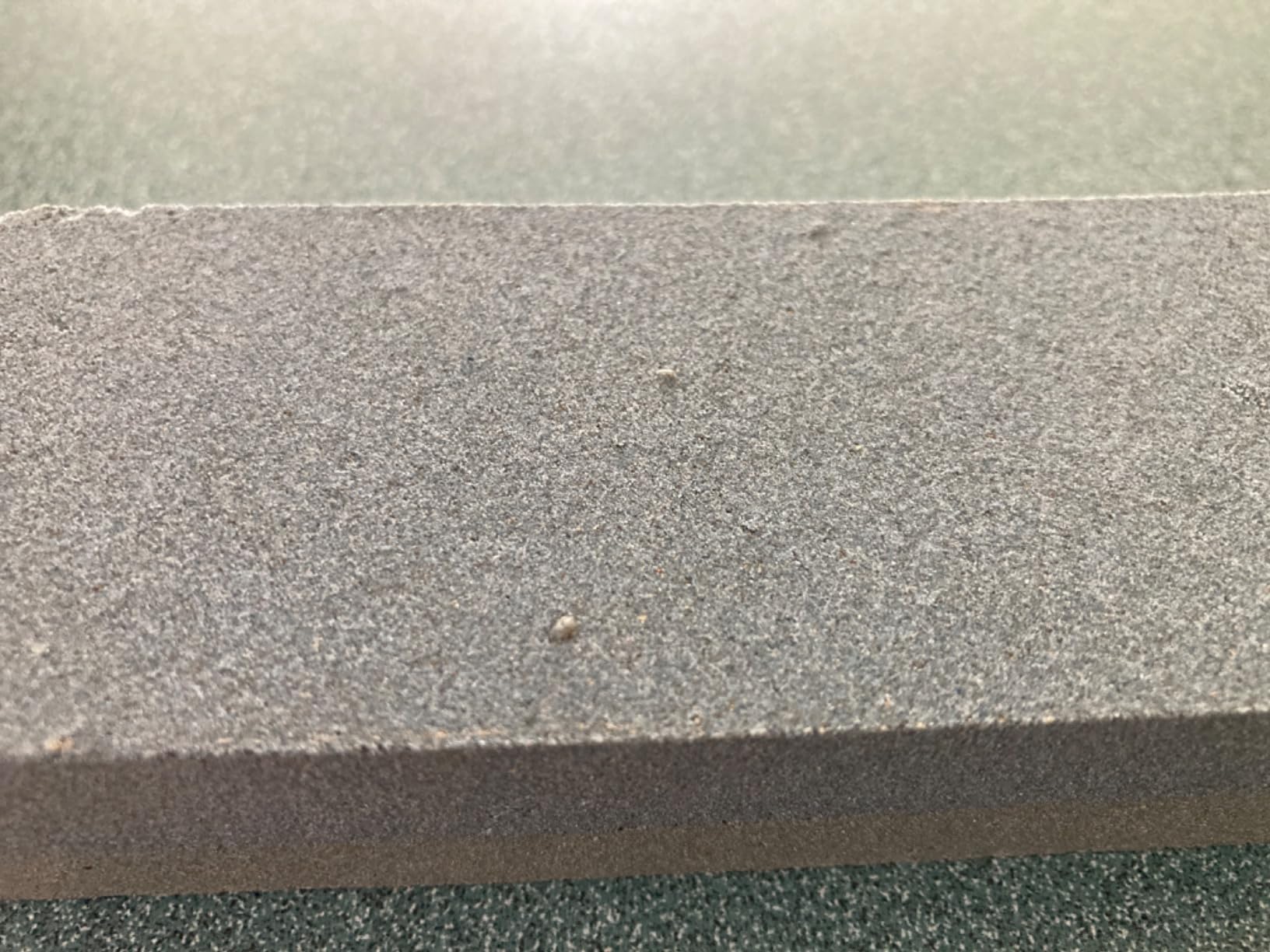
Aluminum oxide is a harder, more traditional abrasive. It cuts more slowly than silicon carbide but holds a flatter face over time, which is a good trade on a small bench stone where flatness matters for straight edges.
It is also the lowest rated stone in the roundup at 4.4, and the reason is almost always that buyers expected a kitchen stone. Buyers who arrive wanting an axe or chisel sharpener tend to rate it well.
There is no base, so a towel or a bench hook does the job. At this size a lot of sharpeners just lay it flat on a worktop and work heel to toe.
What it is like to sharpen on it
On a dull garden shear and a badly chipped pruning blade, the 150-grit side did the job quickly. The 240 side took the roughness off and left an edge that would cut twine, which is what those tools actually need.
Because the stone is small, you work in overlapping sections along the edge rather than covering the whole thing at once. That takes practice, and it is the reason a longer stone is easier for knives.
Who should skip it
Skip it if your sharpening needs are kitchen knives only. You would need a second stone immediately, and you would pay twice what a 400/1000 combination costs.
Skip it if you want an all-purpose stone. Every other option in this roundup handles a wider range of kitchen tasks, even the ones on this list that are not first choices.
11. Amazon Basics 400/1000 Whetstone – Best for First-Time Sharpeners Who Want a Guide
Amazon Basics Dual Sided Whetstone Knife Sharpening Stone 400/1000 Grit with Angle Guide, Non-Slip Bamboo Base, Black & Grey
Silicone stone 400/1000
7.1 x 2.4 x 1.1 inch
Angle guide and bamboo base
Pros
- Angle guide is unusual at this tier
- Silicone holder grips the stone firmly
- Color coded sides are easy to tell apart
- One year limited warranty
- Bamboo base keeps the stone off a wet counter
Cons
- Only 400/1000 grit with no polishing side
- Angle guide is designed for blades wider than 2 inches
- Bamboo base coating is slippery when wet
The reason this stone is interesting is the guide. For a first purchase, having a fixed starting angle removes the most common early frustration, and finding that on a house-brand stone rather than a premium kit makes it worth a look.
It is also a sensible, unglamorous option. The 400-grit side handles a neglected edge, the 1000-grit side keeps it sharp, and the silicone holder grips the stone well enough that pressing down with both hands does not shift it.
Reviewers generally report that it works well for beginners who spend an evening watching a technique tutorial first. That is exactly the audience this stone is built for, and the learning curve is more about commitment than about the tool.
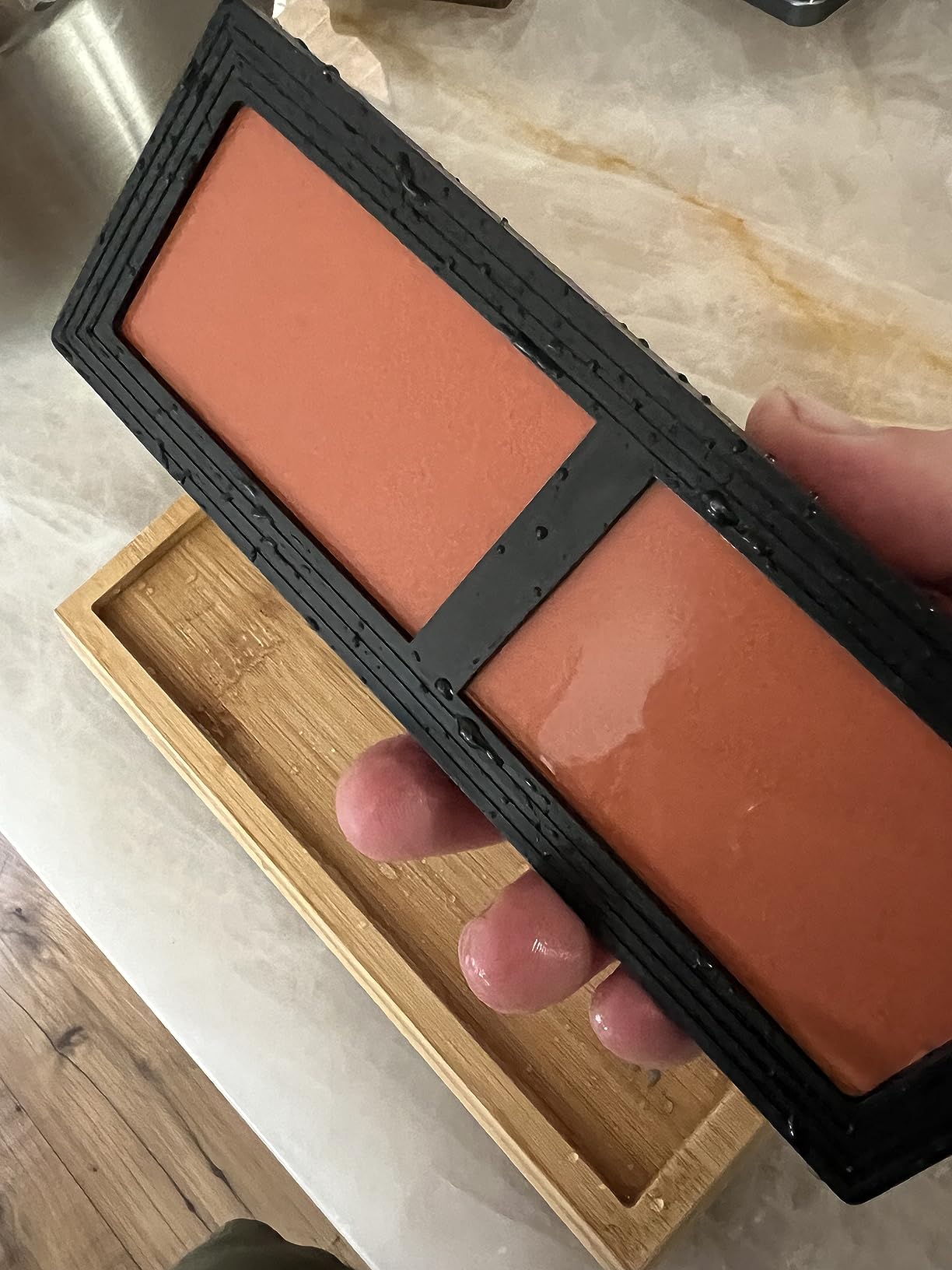
Two limitations are worth knowing. The guide is sized for blades wider than two inches, so on a slim paring knife or a folding pocket knife it will not sit correctly and you are back to freehand.
The bamboo base also loses grip when wet, which is a recurring note across review themes for this style of base. A damp towel underneath restores it, and it is a one-second fix once you know to look for it.
What it is like to sharpen on it
On a broad santoku the guide sits well and holds a consistent angle across both sides, which is a genuine help in week one. The silicone base is the most secure holder of the budget options here.
As with all 400/1000 stones, the finished edge is functional rather than polished. Pair it later with a fine stone or a strop if you want more.
Who should skip it
Skip it if you own slim knives as your main sharpening targets, since the guide will not fit them. Skip it if you want a fine grit now, because there is none.
Skip it if you already have any sharpening experience at all. The guide is training wheels, and experienced sharpeners grow out of it within a few sessions.
12. Angerstone 1000/6000 Whetstone Kit – Best Bundled Starter Package
Angerstone Premium Knife Sharpening Stone–Whetstone 1000/6000 Grit, Whetstone Knife Sharpener with NonSlip Base, Best Wet Stone Sharpening Kit, Angle Guide
Corundum 1000/6000 dual grit
7.08 x 2.36 x 1.18 inch
2 lb
Kit with bases and guide
Pros
- Full 1000/6000 pair in a single purchase
- Bundles silicone base
- bamboo base
- guide and flattening stone
- Water only
- no oil needed
- Third party inspected for quality
Cons
- Angle guide does not fit small pocket knives well
- Included flattening stone is basic
- Needs practice before results feel consistent
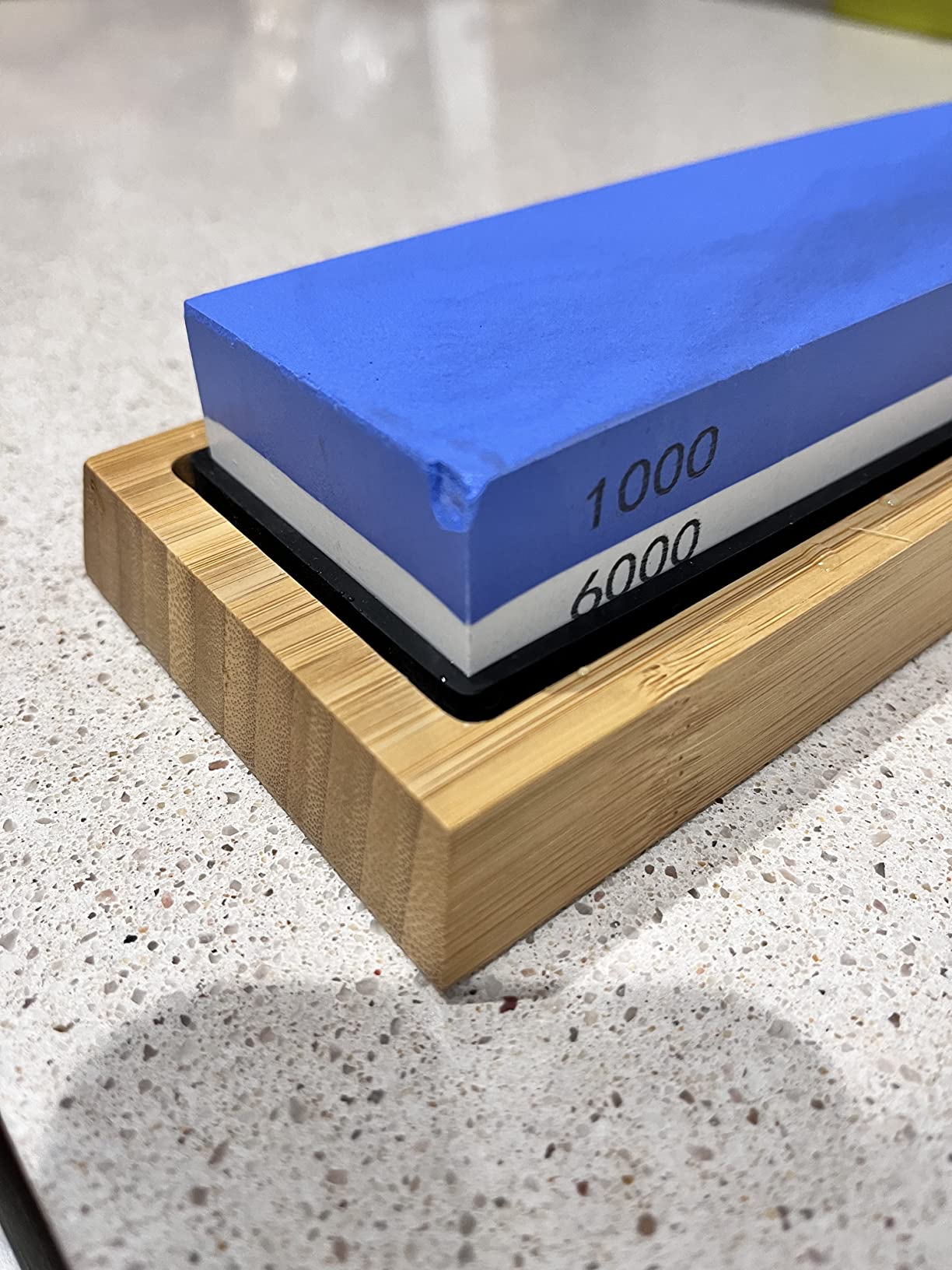
This is the kit we would hand to someone who wants the 1000/6000 combination in a single box and does not want to assemble accessories piecemeal. The 1000-grit side sets the edge and the 6000-grit side refines it, which covers the full beginner job list, and the box includes both bases, an angle guide, a flattening stone and a towel.
In practice the 6000-grit side is the reason to buy it rather than a cheaper coarse-only stone. It removes the burr left by the 1000-grit side and produces the kind of polished, bite-free edge that makes people ask why their old knife was so bad at cutting.
At two pounds with a silicone base, the stone is stable enough for freehand work but light enough to move easily. The angle guide covers the learning period and then gets set aside, which is a sensible progression for a kit like this.
The honest limitation is the flattening stone. It is a basic plate, perfectly adequate for keeping a corundum stone flat, and if you plan to go further with sharpening you will replace it eventually. For a first year it does the job.
Reviewers also note the guide does not sit well on narrow folding knives, so if pocket knives are your main target, treat the guide as optional and learn freehand earlier.
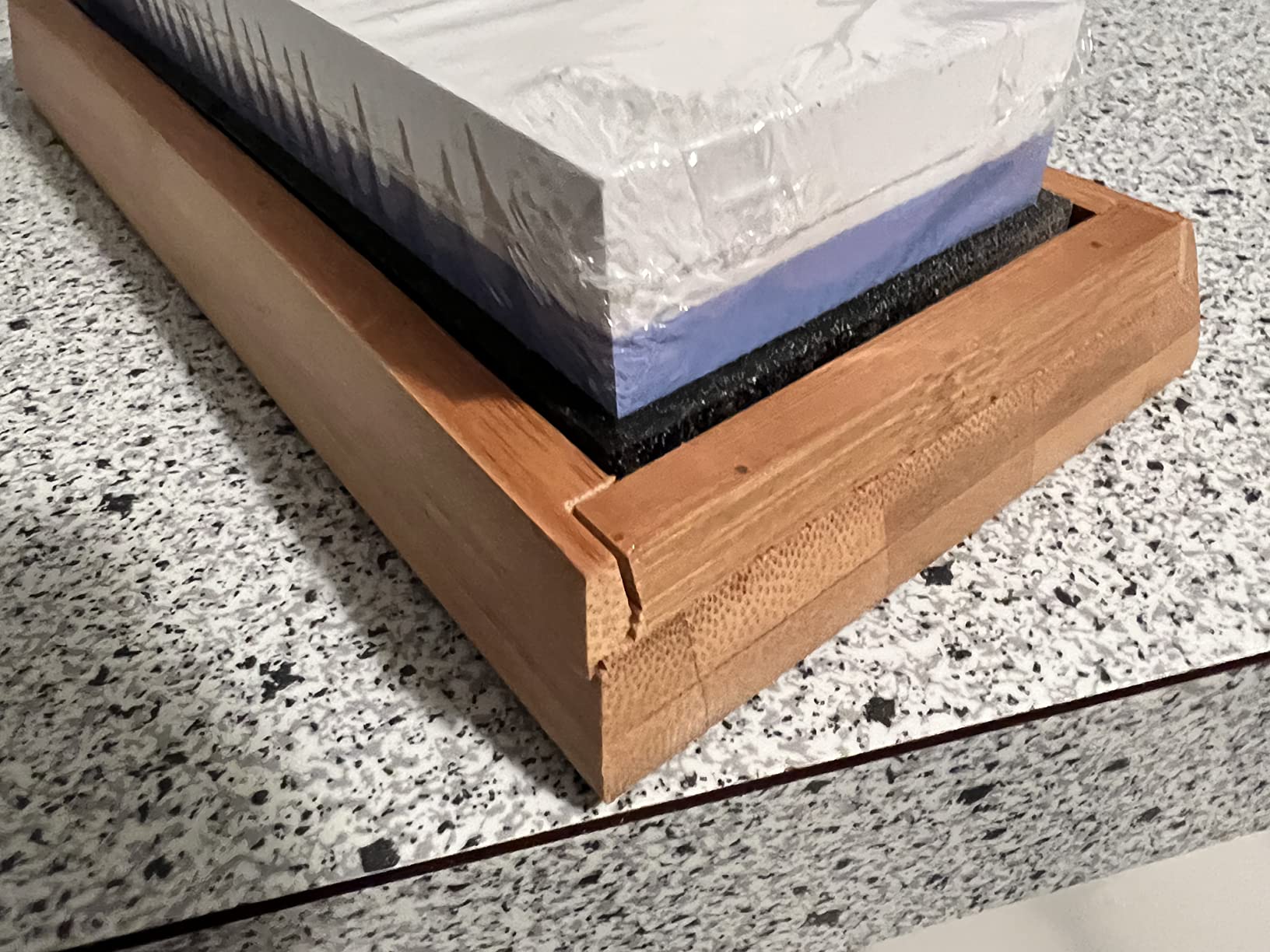
What it is like to sharpen on it
The 1000-grit side cut quickly and consistently on a knife that had been unused for months, and the 6000-grit side turned a merely sharp edge into one that genuinely glides. The full session took about fifteen minutes across both sides.
With the silicone base underneath, the stone did not move once during the session, which removes the most common cause of a wandering bevel.
Who should skip it
Skip it if your knives are already damaged enough to need a coarse repair step. There is no grit under 1000 here, so a chipped tip has to go to another stone.
Skip it if you sharpen narrow folding knives regularly, since the guide is the wrong size for them and you will be sharpening freehand regardless.
What Grit Whetstone Is Best for a Beginner?
A 1000-grit stone is the right first grit for almost everyone. It removes metal fast enough to fix a dull knife without the risk of over-grinding, and it leaves a finish good enough to cut and dice with. If your knife is badly neglected, add a 400-grit stone as a second stage rather than replacing the 1000-grit idea.
Here is how the grit bands map to real jobs. The numbers follow an international standard shared across most manufacturers, though fine grit labels vary more than coarse ones.
200 to 600 grit, coarse: repairs nicks, rolls and very dull edges. Cuts fast and leaves a visible scratch pattern. This is a practice and rescue grit, not a finishing one.
800 to 1500 grit, medium: sets the bevel and produces a working edge. The 1000-grit stone in this list sits here, and it is the band most beginners live in.
2000 to 6000 grit, fine: refines the edge, removes the burr and starts producing a polished finish.
8000 grit and above, extra fine: polishing and mirror finishes. Nice on a knife that already has a good bevel, close to pointless on a dull one.
The common beginner error is buying fine too early. A beautiful 8000-grit stone cannot repair a knife that has not been properly sharpened first, and owning one early just means an expensive object that frustrates you. Start at 1000, add finer later.
Splash-and-Go vs Soaking Stones: The Main Buying Decision
Once you have settled on grit, the second decision is whether your stone needs soaking. This single choice explains more of the difference between a stone you use weekly and one that sits in a cupboard, because a ten minute soak before every session is a habit most beginners do not keep.
Splash-and-go stones use a resin or ceramic bond and need only a few seconds of water sprayed or splashed on the surface. Traditional waterstones are held together by a clay bond that must be fully saturated, and a half-dry waterstone both cuts badly and wears unevenly.
Soak until the bubbles stop rising, which usually takes somewhere between five and fifteen minutes depending on thickness. That is the standard test on sharpening forums, and it is more reliable than any number on a label. Drip the water off rather than pouring the stone dry, and keep it in a tray or on a bridge so the underside does not sit in water and go soft.
The stones in this roundup split fairly evenly. The Shapton, the KING and the Whetstone Cutlery blocks are wet stones, and the KEENBEST set specifies a 10 to 15 minute soak. The guided kits and the corundum-based stones behave happily with a splash. If you are undecided, choose the splash-and-go side.
A whetstone also differs sharply from a honing rod. A rod realigns a rolled edge in seconds and removes almost no steel, which makes it a good daily tool and a poor substitute for a stone once a year.
How to Sharpen on a Whetstone in 6 Steps
Technique matters more than the stone you own. The same six steps work on everything in this roundup, and a beginner who follows them will get a better edge from a budget stone than an experienced sharpener will from a premium one with a bad angle.
Prepare the stone. Soak a wet stone for five to fifteen minutes until bubbles stop rising, or splash a splash-and-go stone until the surface is evenly wet. Wipe the surface flat with a cloth so it is not slippery.
Set the angle. Rest the spine of the blade against your index finger and let the heel of your hand define the angle, roughly 15 to 20 degrees per side. If you have a guide, clip it on first and take it off once the motion feels natural.
Sweep the full length. Start at the bolster and move toward the tip in one continuous motion, keeping light even pressure. Rotate the stone a quarter turn every few minutes so wear spreads across the face instead of hollowing the center.
Find the burr. Work one side only until you can feel a wire of metal, called a burr, along the entire edge. The burr is the proof that you have reached the apex. If you only feel it near the tip, keep going on the heel.
Refine. Move to the finer grit, or strop on leather, and lightly remove the burr from both sides until it is gone everywhere. Three or four careful passes per side is usually enough.
Test. Slice a piece of paper held loosely in one hand, or slice a ripe tomato. A sharp edge bites into the paper cleanly and slides through a tomato without pushing.
Two habits from the forums are worth adopting immediately. Lock your wrists so your hands move as one unit rather than changing angle independently, and practise on a cheap, damaged knife before you touch anything you care about.
Never test an edge by running a finger along the blade from the bolster toward the tip. That is how beginners cut themselves, and the cut runs toward you.
5 Beginner Mistakes That Ruin an Edge
Every problem we ran into over these sessions traced back to one of five habits. None of them are about which stone you own, which is the reassuring part.
Inconsistent angle. Changing the angle between the heel and the tip produces a wavy edge that never feels sharp anywhere. Lock your wrists, keep pressure steady and count your strokes.
Grinding in one spot. Pressing hard in the middle of the stone dishes the center, and a dished stone then produces a curved bevel no matter how good your technique is. Sweep the full length and rotate the stone regularly.
Starting too fine. A 3000 or 8000 grit stone on a dull knife grinds for a very long time and produces a disappointing result. Begin at 400 or 1000 and refine afterwards.
Sharpening a dry or half-dry stone. Either a soaking stone that has not been wetted long enough or a splash-and-go stone that has dried mid-session will glaze over and stop cutting, which beginners often blame on the stone.
Forgetting to flatten. Once the stone has a visible hollow in the middle, no amount of technique will fix the result. A flattening stone or a diamond plate is not optional in the long run.
A sixth habit worth naming, because it is not a mistake so much as a shortcut: honing with a rod before you have ever sharpened on a stone. It keeps an edge straighter for a while, but it does not replace a stone, and a rod used indefinitely on a truly dull knife will not bring it back.
Do You Need a Flattening Stone as a Beginner?
Not on day one, but plan on buying one within a few months, and the reason is mechanical rather than traditional. Every stone in this roundup is a flat surface that you are slowly hollowing out in the middle, because that is where your hand naturally rests.
When the hollow is shallow, you can compensate without noticing. When it is deep, the blade touches the stone at the center and not at the ends, so the edge geometry follows the dish and the knife stops sharpening evenly. The symptom is an edge that feels sharp near the bolster and blunt near the tip.
A diamond flattening plate is the simplest solution. It is the one accessory we would pair with almost any choice in this roundup, including the kits that already include one, because it takes seconds to use and does not itself wear quickly. Lapping it on a wet coarse surface until it leaves a continuous line of slurry across the stone is the standard test.
Beginners dish soft low-grit stones fastest, which is why the 400-grit options here benefit from it sooner. Harder stones like the Shapton or the KING can go longer, and rotating the stone while sharpening reduces the problem before it starts.
A leather strop is the other half of the trio, and it is cheaper and simpler than another stone. Ten passes on leather after the fine grit removes the last burr and aligns the edge, which is the difference between a sharp knife and a knife that feels unreasonably sharp on the first cut of a vegetable.
How to Choose Your First Whetstone
Start by deciding what you own. A set of Western kitchen knives and nothing else points toward a 1000/6000 combination stone with a base. A single Japanese single-bevel knife needs a stone you can hold at a consistent angle, which usually means a guide on your first purchase. Axes, chisels and garden tools want a coarse bench stone instead.
Then pick by maintenance tolerance. If you will not soak anything, buy splash-and-go. If you will happily spend ten minutes preparing, a traditional wet stone gives you better feedback and a wider range of stones later.
Size matters more than beginners expect. A longer stone means fewer repositioning steps, and fewer repositioning steps means a more consistent angle. Anything from seven inches upward is comfortable for a chef’s knife. The same choose-one-and-learn-it rule shows up in our beginner ukulele guide, where a single well-made instrument beats a sprawling starter bundle.
Here is the complete starter shopping list. Three items, and the second and third are where most people stop too early. First, one 1000-grit stone, either alone or as part of a 1000/6000 combination, on a base that will not slide. Second, a diamond flattening plate, which is the accessory that keeps the first one working. Third, a leather strop or burr finisher, which is what makes the edge feel finished.
If you want one box instead of three purchases, the Intelitopia and wucgea sets already contain all of it, and the Angerstone kit covers the stone and strop pairing. If you want to learn the craft rather than shortcut the technique, the KING KW65 or the Shapton K0702 will teach you more over six months than a guided stone will over two.
Whatever you buy, sharpen the same knife repeatedly before moving on. Progress is invisible when you change knives every session, and it is obvious when you take one dull knife from dull to paper-cutting in a fortnight.
Frequently Asked Questions
What grit whetstone is best for a beginner?
A 1000-grit whetstone is the right first grit for most beginners because it removes steel quickly enough to fix a dull knife while still leaving an edge that cuts well. If a knife is badly neglected, start at 400 grit to repair the edge, then move up to 1000. Avoid buying 3000 or 8000 grit first, since a fine stone cannot repair a knife that has never been properly sharpened.
Do you start with 1000 or 6000 grit?
Start with 1000 grit, not 6000. The 1000-grit side establishes the bevel and forms a burr, while the 6000-grit side only refines an edge that already exists. A 1000/6000 combination stone handles both jobs in one tool, which is why it is the most common beginner choice. Work only the 1000-grit side until you can feel a burr along the full edge, then refine on the 6000-grit side.
Do you push or pull on a whetstone?
Push and pull, but the pull stroke is the one that matters. At the start of a stroke you are setting the angle on fresh stone, and at the end of the pull you are refining the edge on material you have already prepared. Many sharpeners use push strokes only for speed, which raises the risk of cutting yourself and of digging a hollow into the stone. Start slow, lift the blade at the end of every pull.
Is just a 1000-grit whetstone enough?
A single 1000-grit whetstone is genuinely enough to maintain knives for years, and it is the most common answer on sharpening forums. It sharpens dull edges and keeps a good edge working. What it will not do is produce a polished, reflective finish, because that comes from finer grits or a leather strop. Many sharpeners use a 1000-grit stone as their only abrasive and add a strop for finishing.
Do all whetstones need soaking?
No. Traditional waterstones use a clay bond and need a full soak, usually five to fifteen minutes, until bubbles stop rising on the surface. Resin-bonded and ceramic splash-and-go stones need only a few seconds of water on the surface. Using a soaking method on a splash-and-go stone is harmless but unnecessary, while using a splash method on a traditional waterstone causes poor cutting and uneven wear. Check what type you have before you start.
Do I need a flattening stone as a beginner?
Not immediately, but you will need one within a few months. Every whetstone develops a shallow hollow in the middle as you sharpen, and once that dish is deep the blade stops contacting the ends of the edge, producing a wavy result. A diamond flattening plate is the simplest tool for the job and lasts a long time. Rotating the stone during use and sweeping the full length of the blade slows the process down considerably.
Conclusion: The Best Whetstone for Beginners in 2026
After working through all twelve, the Sharp Pebble 1000/6000 kit remains our pick for the best whetstones for beginners, because the angle guide removes the hardest part of learning while the dual grit handles a full sharpening job on one stone. The KING KW65 is the better value if you want to learn freehand from the start, and the Intelitopia set is the right call if you would rather have every accessory in a single box.
Whatever you choose, buy a 1000-grit stone, keep it wet, add a diamond flattening plate and a strop within a few months, and practise on a cheap knife until the motion feels automatic. That routine matters more than the brand on the box, and it will keep you sharpening for years instead of abandoning the habit in your second week.