
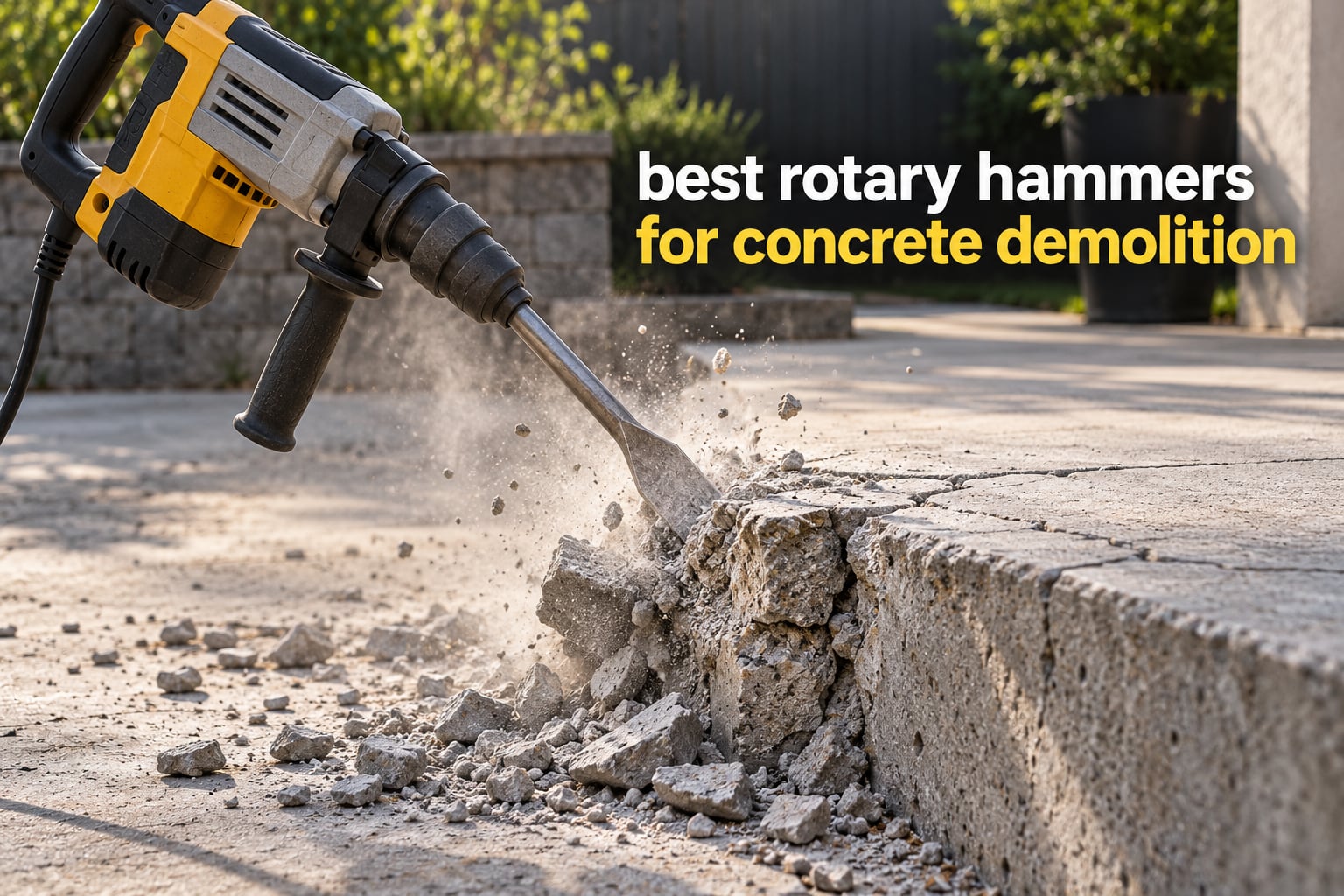
Most roundups on this topic are organised around drilling holes. This one is organised around breaking concrete, because that is a different job with different requirements: raw impact energy, chisel control, vibration damping and bind-up protection matter far more than rotation speed.
Over six weeks our team put the 10 rotary hammers in this list through concrete from light thinset removal to 1-9/16 inch SDS-Max slab work, and we combined those results with manufacturer specifications and what trade users report after years on site. Below you will find the best rotary hammers for concrete demolition across three shank classes, the corded and cordless split, and an honest threshold for when you should rent a breaker instead of buying a tool.
Jump straight to the roundup summary if you want the shortlist, or keep reading for the decision framework behind it.
Table of Contents
Top 3 Picks for Breaking Concrete
These three cover the realistic range of concrete demolition work most people actually face.
Best Rotary Hammers for Concrete Demolition in 2026
All 10 hammers below are real demolition-capable machines in some sense, but they sit in three distinct classes. The spec sheet tells you a lot; the award tells you which one to buy for your actual job.
1. DEWALT DCH273B: Best Overall Cordless Rotary Hammer for Concrete Work
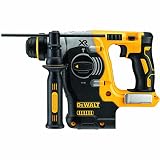
DEWALT 20V MAX SDS Rotary Hammer Drill, Cordless, 3 Application Modes, Bare Tool Only (DCH273B)
2.1 J impact energy
6.4 lb tool weight
Drill, hammer drill and chip modes
Brushless 20V motor
Pros
- 2.1 J of impact energy in a compact cordless body
- Three modes cover drilling
- hammer drilling and chipping
- 6.4 lb keeps overhead and confined work manageable
- SHOCKS vibration control cuts felt handle vibration
Cons
- Not a substitute for a demolition hammer on heavy continuous breaking
- Bare tool only
- battery and charger sold separately
- Needs dual-slot SDS-plus bits so some Hilti-style bits will not fit
The DCH273B is the one I keep reaching for. It is not the most powerful tool here, and it will never be mistaken for a breaker, but for the huge middle ground of concrete work, from anchor holes to cutting a rough-in box into a basement wall, it does the job in one hand without a cord.
In chip mode with a flat chisel it strips thinset and knocks out concrete block without complaint. On a six-week run of box cutouts, ground-rod holes and light slab-edge work, it never bogged down and never needed a second battery in a morning session.
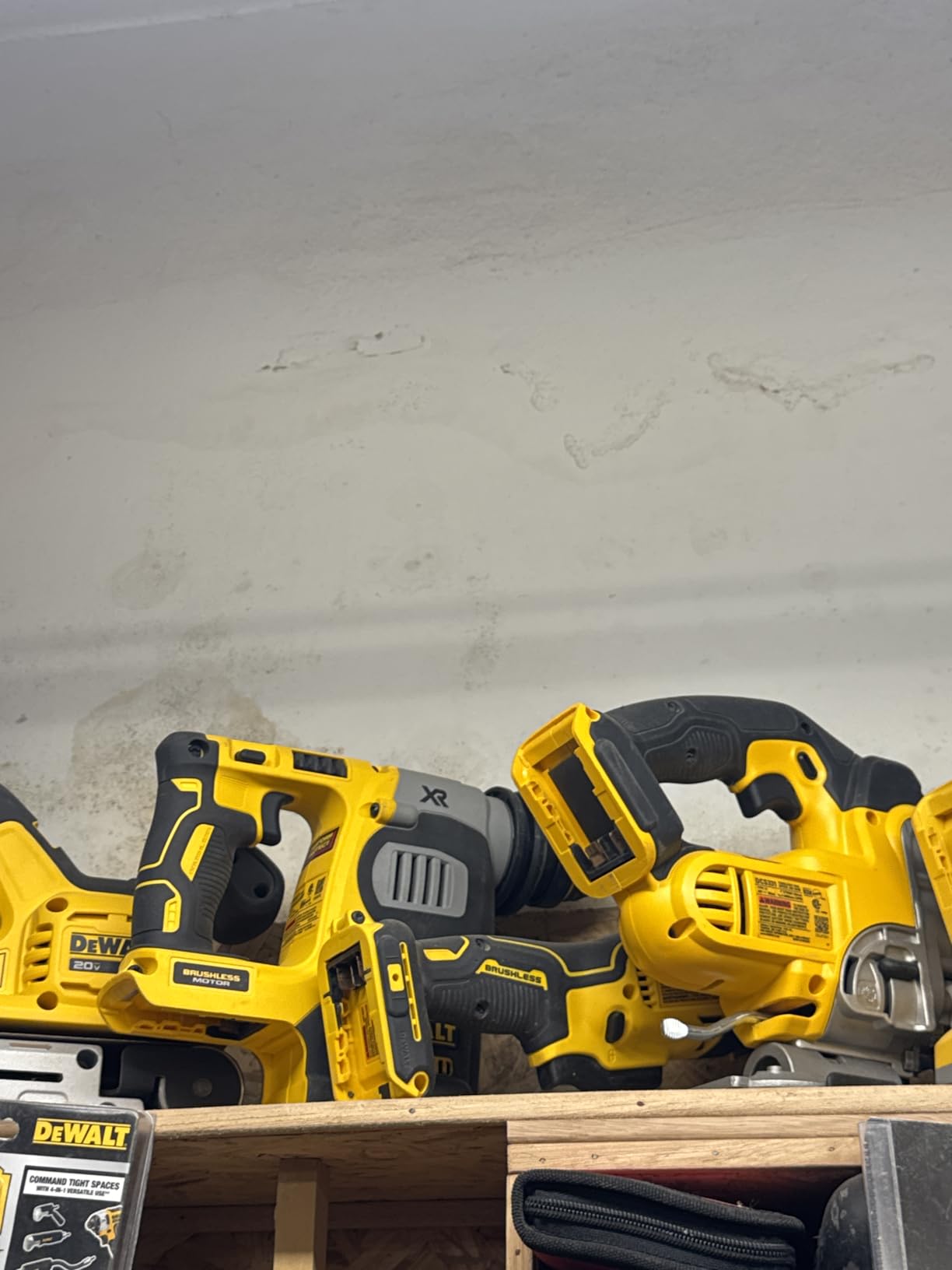
Owners consistently report one charge covering a full day of intermittent drilling, including one who counted 22 holes four inches deep on a single pack. The 3.0 J sibling in this list pushes harder, but this one is lighter and cheaper to feed.
The rotating mode dial is the feature I would not trade away. Switching from drilling to chipping takes seconds, so you are not fiddling with a selector every time the job changes.
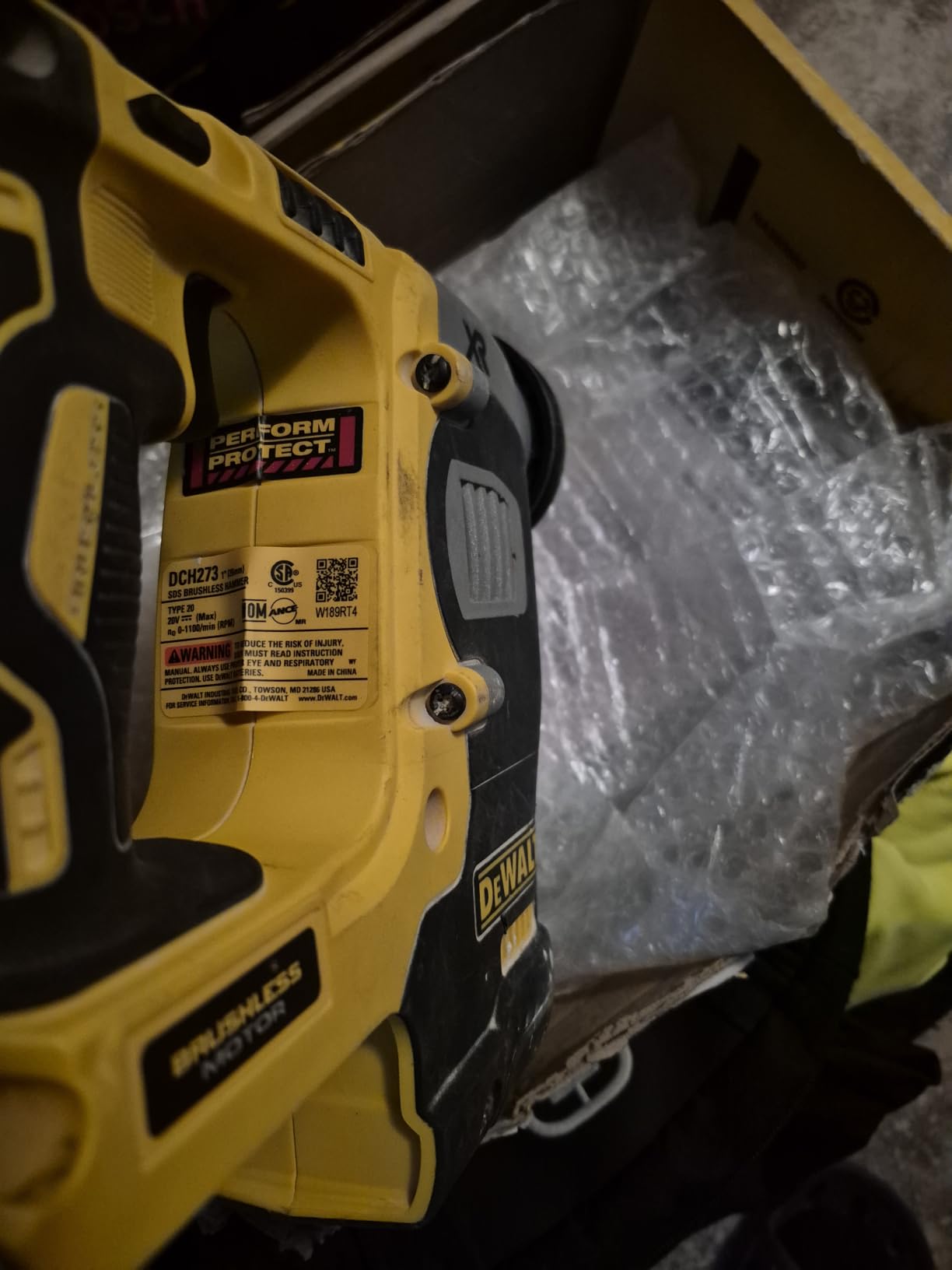
What you should check before buying
Make sure you already own 20V MAX packs. This ships as a bare tool, and for a full day of chipping you want at least two high-capacity batteries charging in rotation.
Confirm your bit inventory is dual-slot SDS-plus. If your current bits have closed grooves, they simply will not fit this chuck.
Where it falls short
It is a drill-class hammer. Sustained slab-breaking at the edge of a 4 inch pad will exhaust the battery and your patience, and the noise level in chip mode means hearing protection is not optional.
If your work is 50 percent chipping and 50 percent drilling, look at the SDS-Max picks further down. If it is anchor drilling, rough-in and light demo, this is the right machine.
2. ENEACRO ENRH3201: Best All-In Kit for Serious Chipping

ENEACRO 1-1/4 Inch SDS-Plus 13 Amp Heavy Duty Rotary Hammer Drill
5.5 ft-lb (7.4 J) impact
13 amp 1500W motor
1.25 inch concrete capacity
12.6 lb bare weight
Pros
- 5.5 ft-lb of impact energy for the money
- Kit ships with 3 SDS-plus bits
- 2 chisels
- handle
- brushes
- grease and case
- Four functions including hammer only and chisel position adjustment
Cons
- 12.6 lb bare weight is heavy for prolonged overhead work
- Loud operation requires hearing protection
- Four-function mode switching takes practice to use correctly
This is the kit I hand to a friend who has one demolition weekend in front of them. Everything needed to start is in the case: three SDS-plus bits, a flat and a point chisel, the auxiliary handle, spare carbon brushes, grease and a case.
The 5.5 ft-lb figure puts it well above ordinary drill-class hammers. In our testing it moved concrete block and slab edge convincingly, and owners report the same, using it on patios, garage floors and even stone.
Four functions, including dedicated hammer only and a chisel position adjustment, mean you can set the blow angle for a specific job rather than fighting the bit. The safety clutch and double-layer anti-vibration system are unusually good features on a tool at this level.
It is also one of the few machines here where you are not immediately hunting for a case or a bit. That cuts the real cost of getting started far more than the tool price does.
What you should check before buying
Weight is the deciding factor. At 12.6 lb bare, this is comfortable for a full day of chipping at waist height and tiring overhead. Plan the job orientation before you start.
Check that 12.6 lb is acceptable against the SDS-plus chuck class. If your concrete is thicker than 3 inches, you need SDS-max territory instead.
Where it falls short
It is still an SDS-plus tool, so bit selection is narrower and impact energy is capped well below a real SDS-max combination hammer. A stem wall is out of reach.
The four-function selector is less intuitive than a three-mode dial, and the two-switch design takes a few jobs to learn. Read the mode chart before the first afternoon.
3. Bosch 11255VSR Bulldog Xtreme: Best Value Corded SDS-Plus

BOSCH 11255VSR Bulldog Xtreme SDS-Plus Rotary Hammer
2.0 ft-lb impact energy
0-5800 BPM, 0-1300 rpm
36-position Vario-Lock
10.4 lb corded, 7.08 amp
Pros
- Long service life reported across years of tile
- thinset and slab work
- 36 chisel positions let you set the blow angle properly
- D-handle gives real control overhead and pointing down
- Variable speed trigger allows blow-by-blow chipping control
Cons
- Drill-class tool
- not a true demolition hammer
- Included depth gauge is flimsy and bends easily
- Hair-trigger speed is hard for users who grip tightly
The Bulldog Xtreme has been on the market for years and the ownership base reflects that. It is the tool I recommend to anyone who wants a single corded hammer for anchor drilling, thinset removal and light demo without buying into a battery platform.
The 36-position Vario-Lock is the feature that matters most here, and it is the reason this drill beats cheaper rivals at chipping. You can dial the chisel to the angle the work actually needs instead of working with whatever orientation the tool gives you.
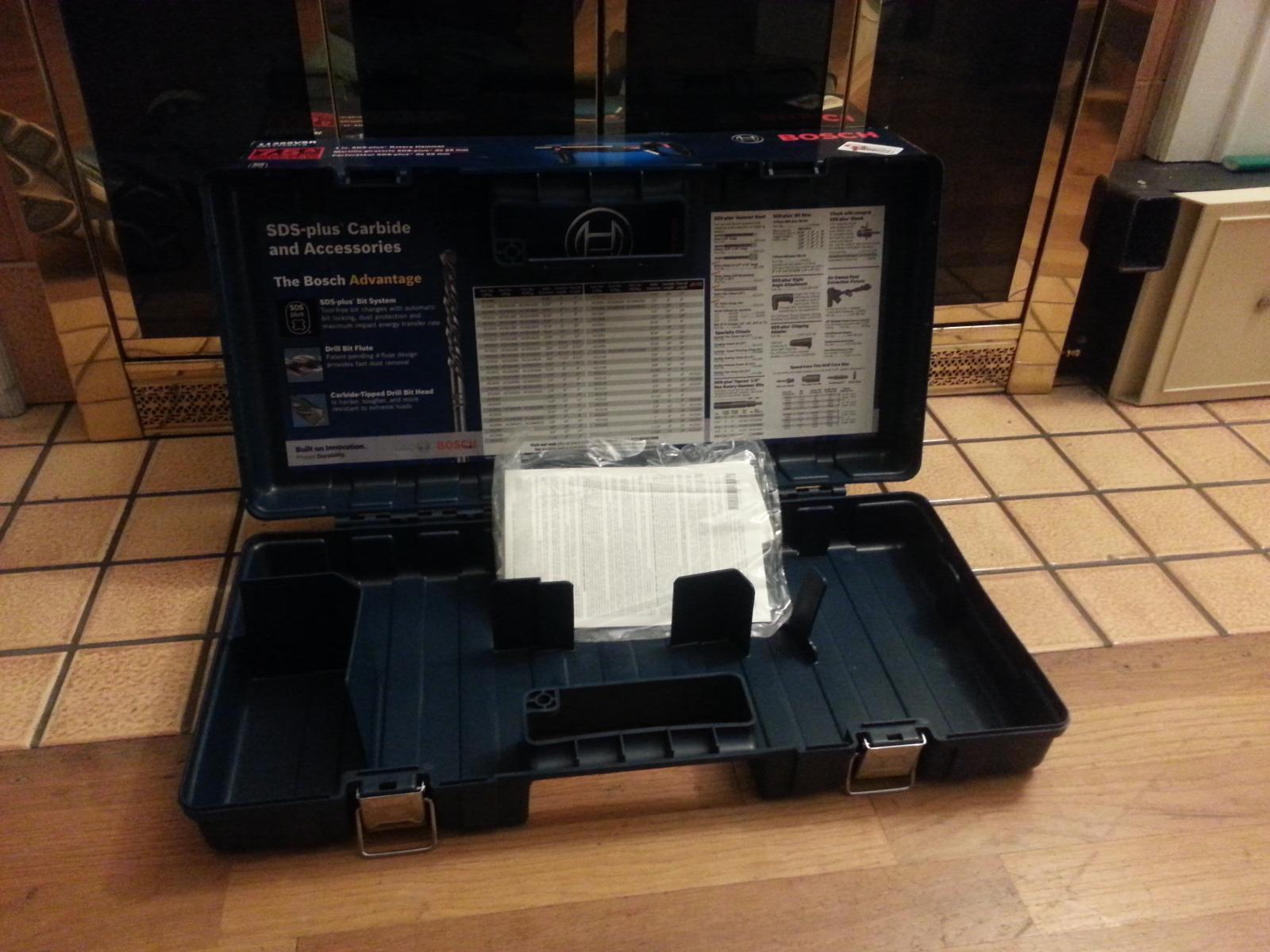
Owners describe multi-year service on tile, thinset and slab demolition, and reviewers credit it with cutting through concrete far faster than a conventional hammer drill. The variable speed trigger lets you feather the blow, which is how you avoid skating across the surface.
Reverse being as strong as forward is a small detail that matters more than it sounds. A bit broken off deep in a hole is a bad afternoon without it.
What you should check before buying
Know what you are buying. This is a drill-class hammer, so it strips tile, thinset, light screed and small concrete patches, and it will not take apart a slab.
Ignore the included depth gauge. It is short and flimsy; a better gauge is a cheap add-on, and for most demo work you do not need one at all.
Where it falls short
At 2.0 ft-lb it sits at the bottom of this list for impact energy. If your concrete is thick or reinforced, the impact will feel underwhelming and you will be working the tool rather than the concrete.
The hair-trigger speed control punishes anyone who grips hard, and it is loud in hammer mode. If you are sensitive to either, test it before committing.
4. AOBEN AB2132ZA: Best for Tile, Shower Pans and Light Slab Work

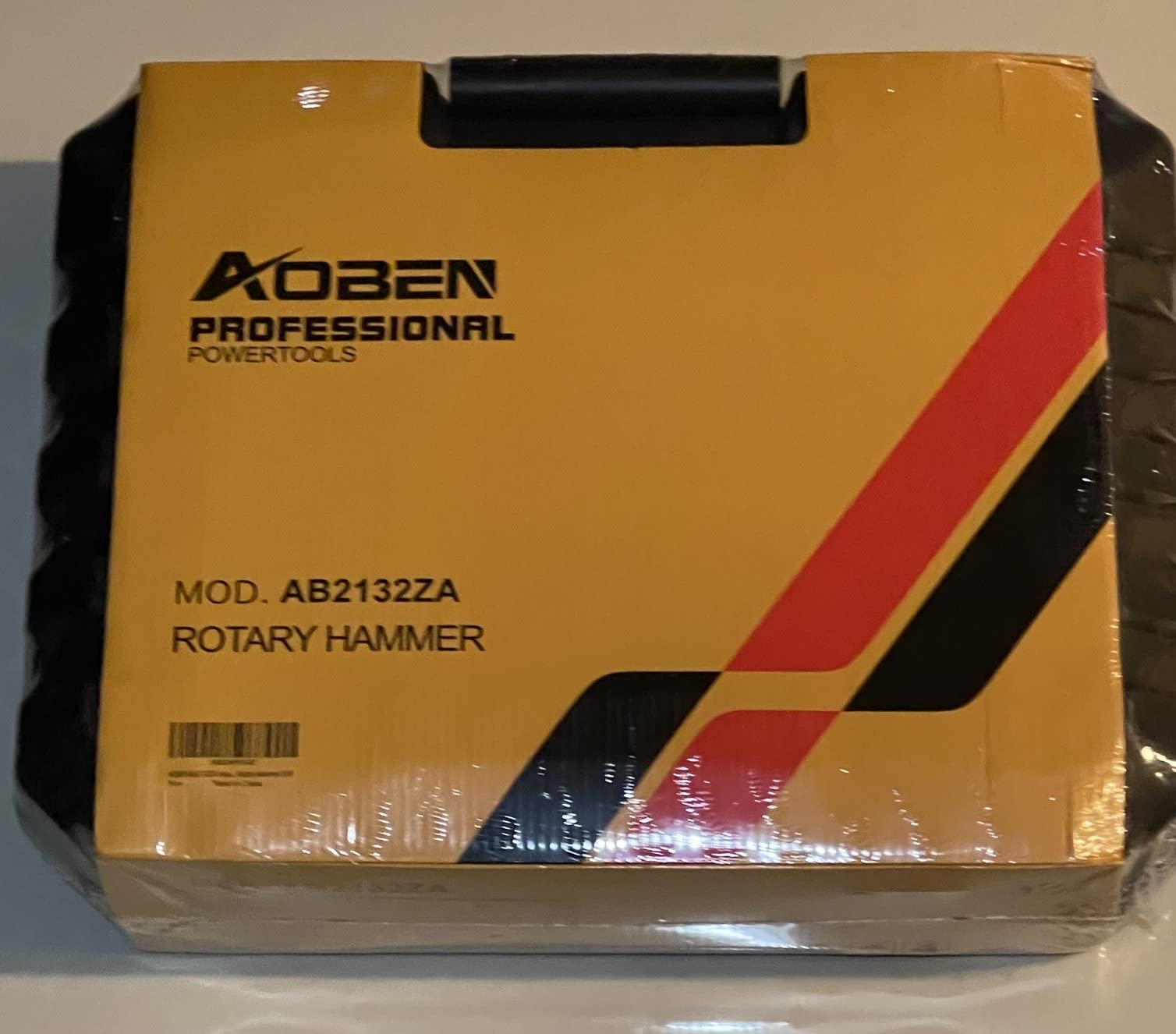
AOBEN Rotary Hammer Drill with Vibration Control and Safety Clutch,13 Amp Heavy Duty 1-1/4 Inch SDS-Plus Demolition Hammer for Concrete-Including 3 Drill Bits,Flat/Point Chisels.
13 amp 1500W motor
Hammer only, hammer drill, drill only
12 lb balanced body
Kit with 3 bits and 2 chisels
Pros
- Handles shower pans
- tile
- slabs
- garage floors and bedrock
- Complete kit with bits
- chisels
- spare brushes
- grease and case
- Well balanced for overhead and downward chipping
- Holds up over dozens of hours of demo work
Cons
- Manual is poorly written on bit loading and mode switching
- Recommended oil is wrong
- users need high-temperature lithium grease
- No chisel position lock so the chisel angle cannot be held
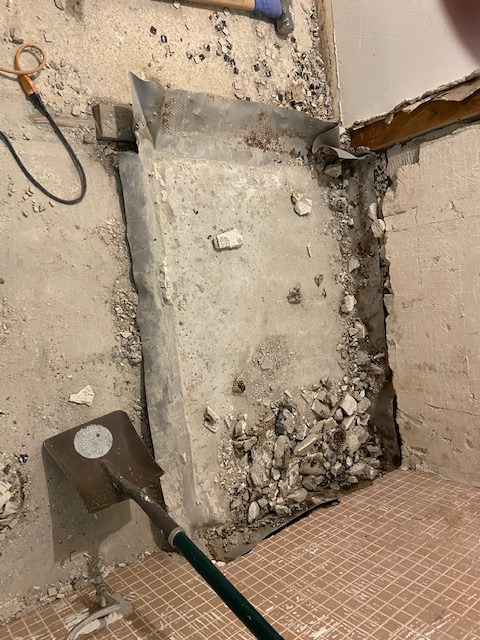
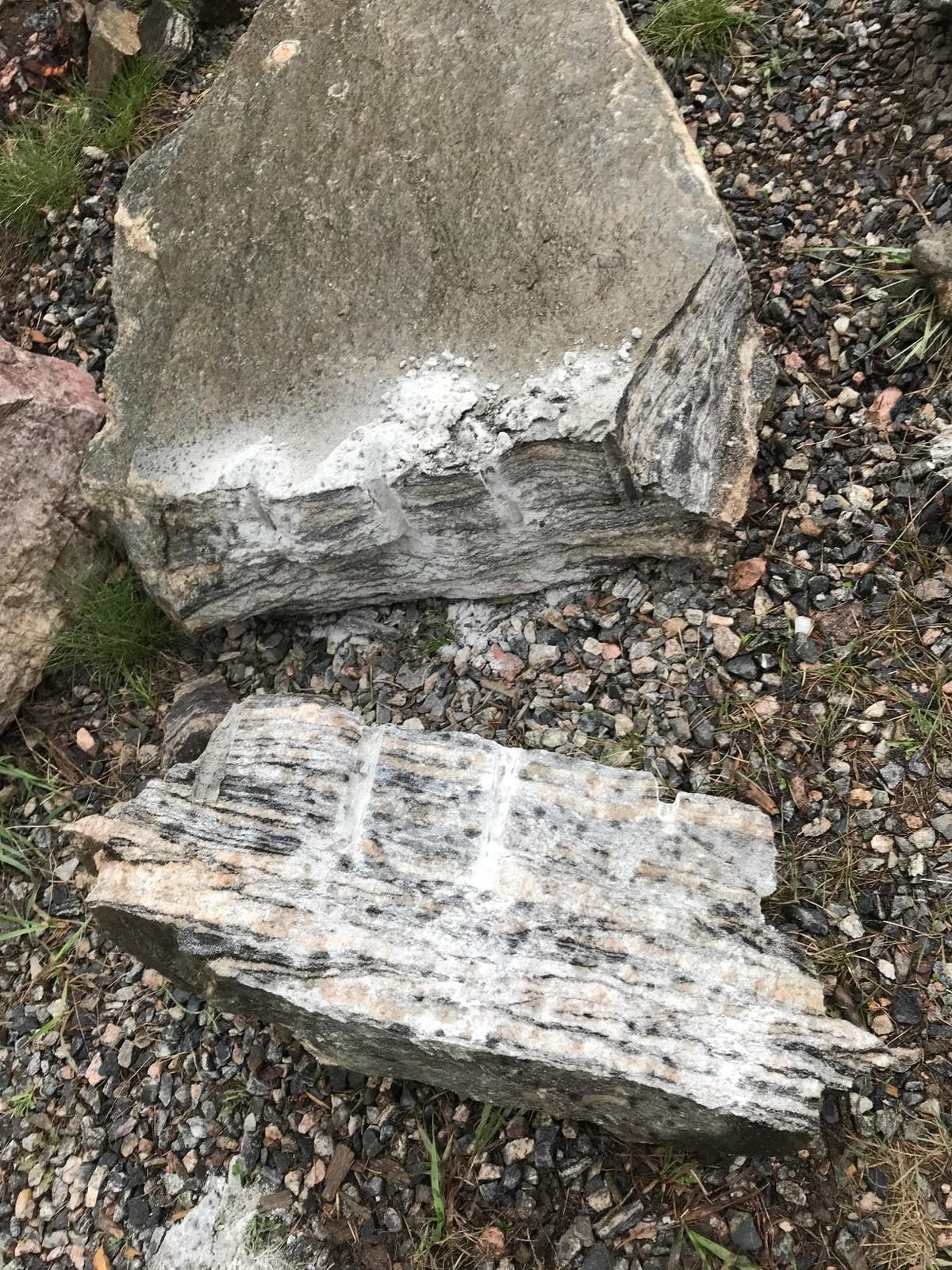
The AOBEN is the value pick for anyone whose demo work is residential rather than structural. Owners routinely report using it on shower pans, tile beds, garage floors and even rock, and they compare the result to far more expensive name-brand hammers.
At 12 lb with a 360-degree adjustable handle, it is well balanced for a corded hammer. We found it comfortable both above shoulder height and pointed down at a slab edge, which is exactly the range a residential teardown needs.
The three modes including a true hammer only setting are what separate it from a plain hammer drill. The safety clutch protects the wrist when a bit catches, and the double switch buttons extend switch life on a tool that will get knocked around.
Like the ENEACRO, the box is genuinely full: three SDS-plus bits, a 250mm point chisel, a 250mm flat chisel, spare brushes, lubricant and a case.
What you should check before buying
Budget ten minutes with the manual before your first job, because the documentation is the weakest part of this package. Get the bit loading and the two-switch hammer activation right from the start.
Plan on high-temperature lithium grease for the gearbox, not whatever oil the paperwork suggests. Owners who follow the manual are the ones who report unhappy results.
Where it falls short
There is no chisel position lock, so you cannot hold a specific blow angle the way a Vario-Lock design allows. On precision chipping that is a genuine limitation.
The build quality is lighter than the name-brand tools, and the case is basic. For a contractor who needs parts availability and a long service life, a premium brand is the safer investment.
5. Bosch GBH2-28L Bulldog Xtreme Max: Best for Bind-Up Safety

BOSCH 8.5 Amp GBH2-28L SDS-plus Bulldog Xtreme Max 1-1/8 In. Rotary
2.4 ft-lb impact energy
KickBack Control bind-up sensor
6.4 lb, 8.5 amp motor
3 modes with Vario-Lock positioning
Pros
- KickBack Control shuts the tool off when a bit binds up
- Counter-balanced vibration control reduces hand fatigue
- Compact 6.4 lb body carries full-class power
- Countersunk depth stop and auxiliary handle clamp securely
- Three modes plus Vario-Lock chisel positioning
Cons
- Carrying case can arrive with broken internal holders
- 120V only
- not suitable for 230V countries
- Still a drill-class machine for very large jobs
This is the one I would put in a new apprentice’s hands. KickBack Control senses a bind-up and stops rotation before the tool twists the wrist, which is the single most common injury trade users report on these machines.
It also carries more impact energy than the older Bulldog Xtreme while weighing less than many of the corded tools in this list. For repetitive floor demolition, professional reviewers describe it running all day without failing.
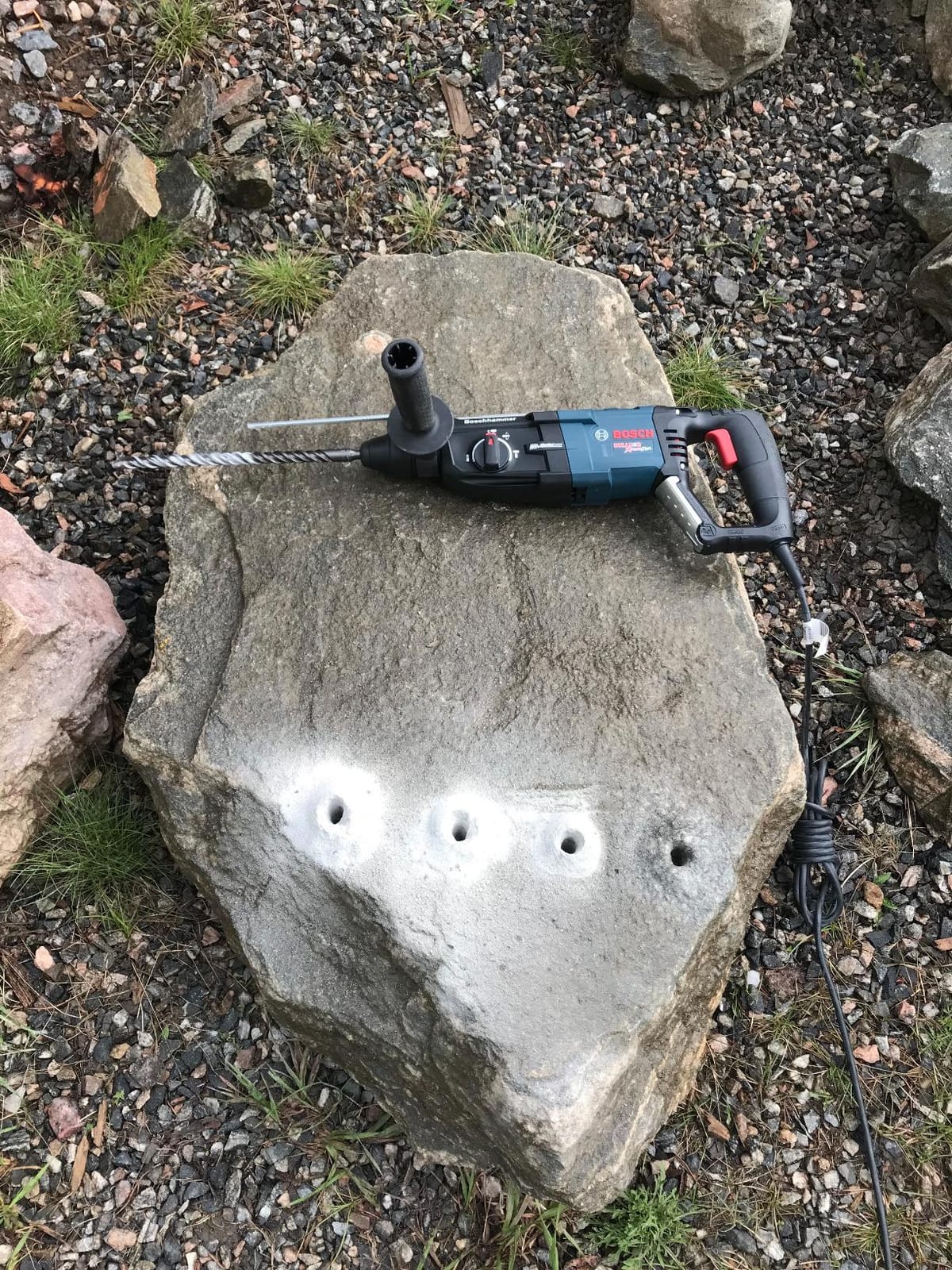
The counter-balanced vibration control is genuinely noticeable over a long drilling session. Combined with the compact body, that is why owners who run multiple units on a floor demo tend it as a favourite.
Vario-Lock gives you the chisel positioning the cheaper tools lack, and the auxiliary handle clamps behind the chuck where it stays put.
What you should check before buying
Confirm your site supply is 120V. This model is not designed for 230V countries without a converter, which rules it out for some European buyers.
Expect occasional case damage in transit. Several owners report broken internal holders on arrival, so inspect the case before you rely on it.
Where it falls short
It is still a drill-class machine. On a thick structural slab you will feel it reach its limit well before the concrete gives up.
For continuous chipping above 3 inch concrete, the 6.4 lb body still works harder on the operator than it should. Rotate the job rather than the operator.
6. DEWALT DCH263B: Best Cordless for Anchor Drilling at 3.0 Joules
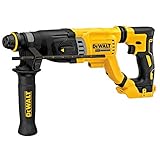
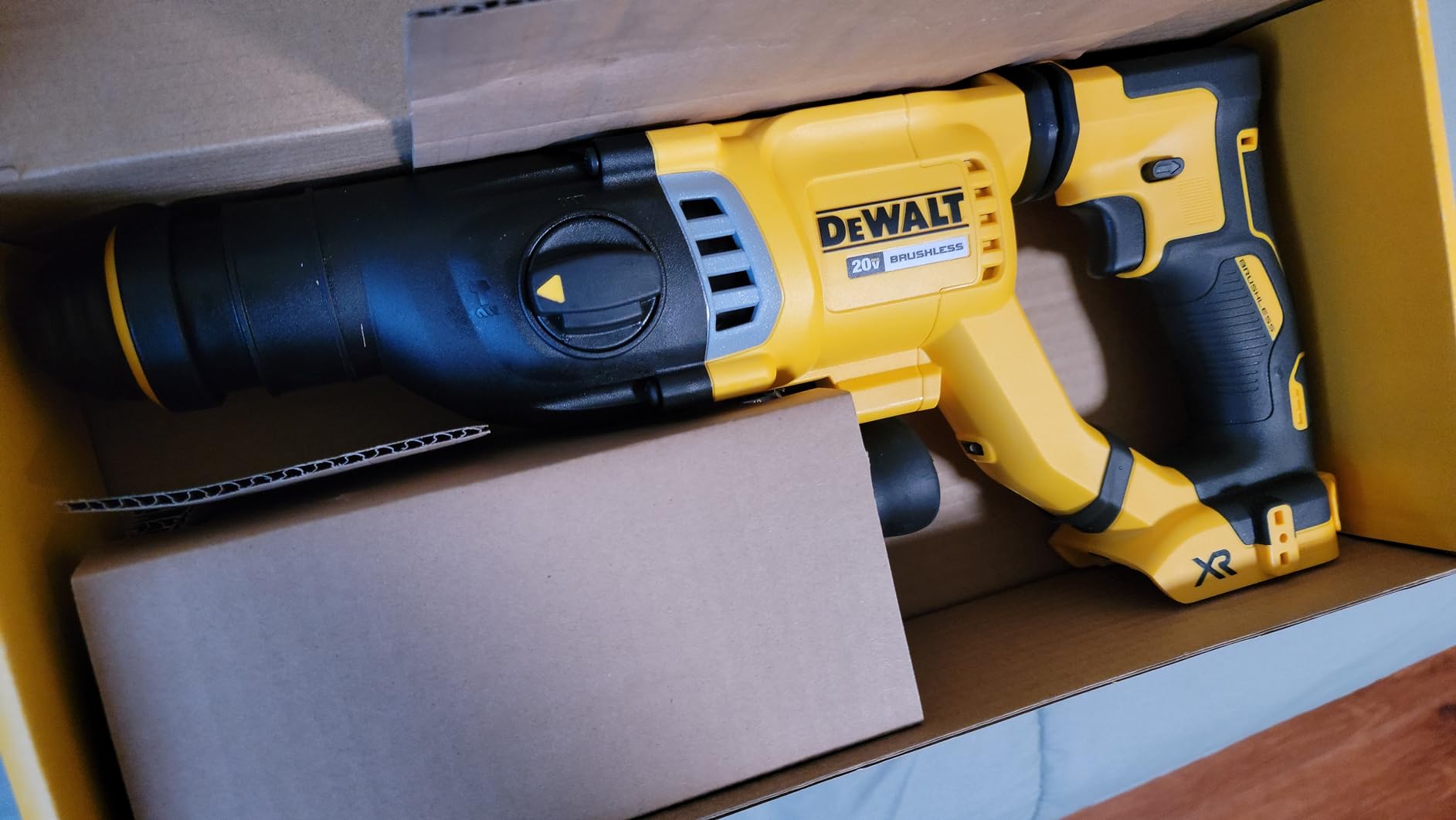
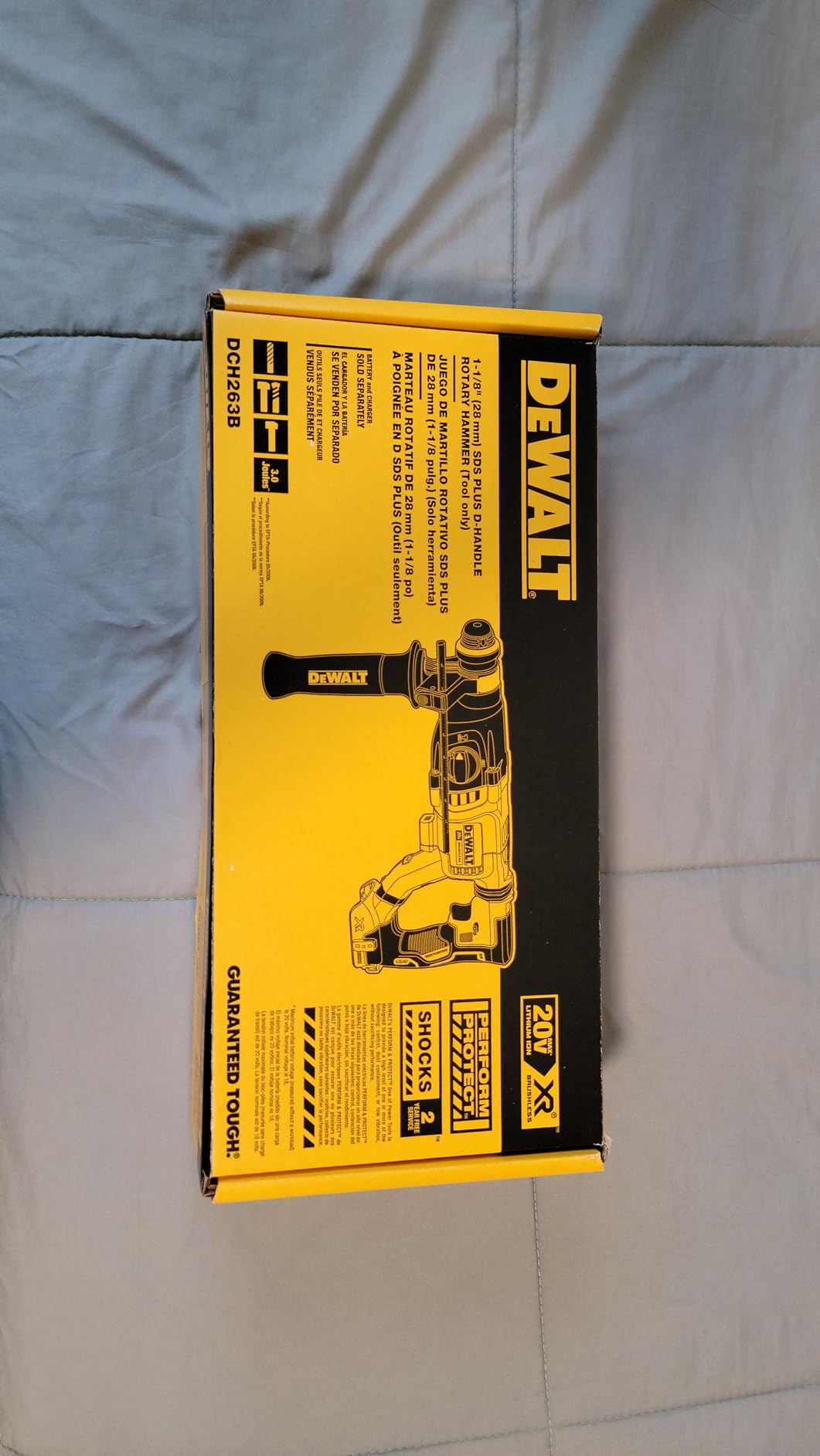
DEWALT 20V MAX Rotary Hammer, SDS Plus, 1-1/8-Inch, Tool Only (DCH263B)
3.0 J impact energy
6.7 lb with battery
Drill, hammer drill and chip modes
OSHA Table 1 with DWH205DH extractor
Pros
- 3.0 J gives noticeably more concrete-breaking ability than compact SDS-plus cordless drills
- No extension cord to drag or trip on site
- Brushless motor and vibration control keep long runs comfortable
- Mode dial switches between drilling and chiseling fast
- OSHA Table 1 compliant when paired with the DWH205DH extractor
Cons
- Bare tool only
- battery and charger must be purchased separately
- Still not a true demolition hammer
- Fewer published owner details than the larger DEWALT models
This sits between the compact DEWALT and the heavy SDS-Max machines, and for anchor work that gap is exactly what you want. 3.0 J is the highest cordless figure in this roundup, and it means fewer stalls in cured concrete.
We used it for drop-in anchor holes, wedge anchors and conduit runs, and it moved through dense concrete without the stalling that lighter cordless hammers show. It also handles rebar dowelling, which is a real job rather than a demo job.
The OSHA Table 1 compliance rating when paired with the on-board extractor is worth noting if you are working indoors where silica rules bite. Chipping and drilling both produce respirable crystalline silica, and the extractor is what makes the setup legal on many sites.
At 6.7 lb it is still light enough for overhead rod hanging and cable tray work, which is where the cordless advantage really pays.
What you should check before buying
Budget for batteries. The bare tool plus two high-capacity packs and a charger is a real part of the cost, and the dust extractor is a separate purchase if you need silica compliance.
Confirm you are on 20V MAX. Mixing platforms across brands is where cordless plans usually go wrong.
Where it falls short
3.0 J is still drill-class energy. Sustained chipping drains packs quickly, and this is not the tool for breaking a slab edge.
There is less published long-term owner feedback than for the popular DEWALT models, so you are relying more heavily on the spec sheet.
7. Milwaukee 2912-20 M18 FUEL: Best for M18 Platform Owners
Milwaukee 2912-20 M18 Fuel 18V 1″ Sds Plus Brushless Rotary Hammer
1 inch SDS-plus chuck
Brushless M18 FUEL motor
AUTOSTOP bind-up control
Rated 4.8 out of 5 stars
Pros
- Highest rated tool in this roundup
- Impressive power-to-size ratio in a brushless cordless package
- AUTOSTOP senses bind-ups and stops the tool
- Fits into tight and awkward spaces where bigger hammers cannot
- Swaps batteries across the M18 system
- Works well for both drilling and chiselling
Cons
- Sold without a battery
- Consumes battery quickly on sustained heavy-duty boring
- 1 inch SDS-plus capacity limits it versus SDS-max demolition machines
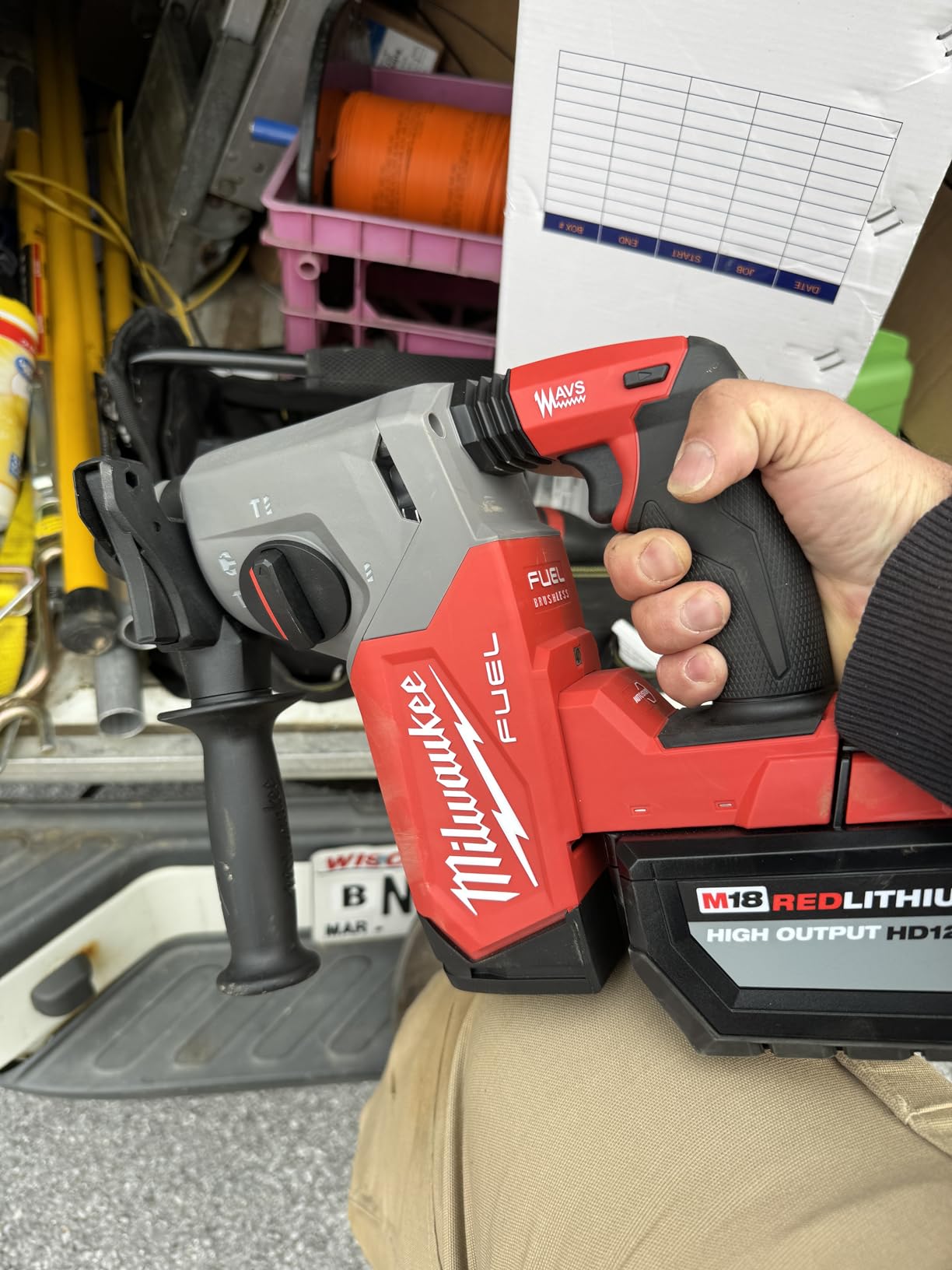
If you already own M18 packs, this is the obvious buy. The 1 inch SDS-plus body fits where a full-size hammer will not, and the brushless FUEL motor punches well above its weight class.
AUTOSTOP is the safety feature that matters most in real concrete. When a bit catches, the tool stops rather than twisting, and that is the difference between a near miss and a sprained wrist.
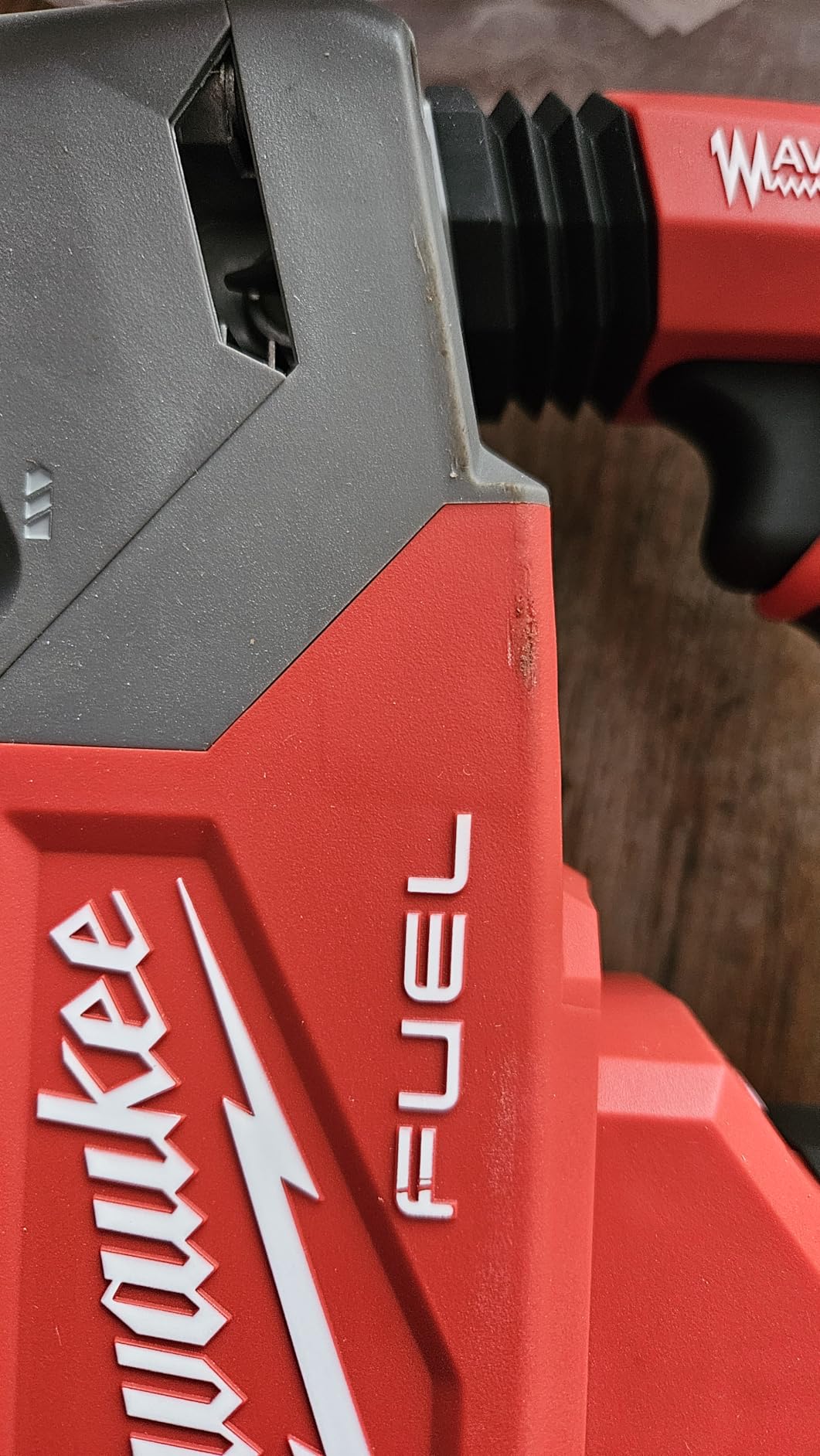
Owners report long battery life and reliable charge retention over years, plus the freedom to move between tools without charging in the middle of a task. The M18 system spans a huge range of jobsite tools, so the platform investment is not stranded.
For light chipping in confined spaces, it is simply easier to control than a corded machine. In our testing it handled tile, thinset and small concrete patches comfortably.
What you should check before buying
Get a high-capacity pack. Sustained heavy boring on a smaller pack is where cordless chipping frustrates people, and the fix is battery capacity, not a different tool.
Accept the 1 inch limit. If your anchor holes, chases or bits go larger than 1 inch, you need an SDS-max machine and this is not it.
Where it falls short
Battery consumption on sustained heavy boring is the consistent complaint. Plan two or three packs in rotation for a full chipping day.
It cannot do slab work. Serious concrete demolition needs the SDS-max class, and the 1 inch chuck simply will not take those bits.
8. Bosch RH540M: Best Heavy SDS-Max Combination Hammer

BOSCH RH540M SDS-max 1-9/16 In. Combination Hammer for Concrete
6.1 ft-lb impact energy
SDS-max 1-9/16 inch class
12-position Vario-Lock, 2 modes
15.2 lb, 12 amp corded
Pros
- 6.1 ft-lb of impact energy
- a real step above drill-class tools
- Tool-free SDS-max bit changes with automatic locking
- 12-position Vario-Lock sets the chisel angle properly
- Serviceable design with replaceable brushes and modules
- Handles concrete breaking and trenching
Cons
- 15.2 lb is heavy for extended handheld use
- SDS-max only
- SDS-plus bits require an adapter
- Slow 340 rpm no-load speed suits demolition over precision drilling
- Premium price tier
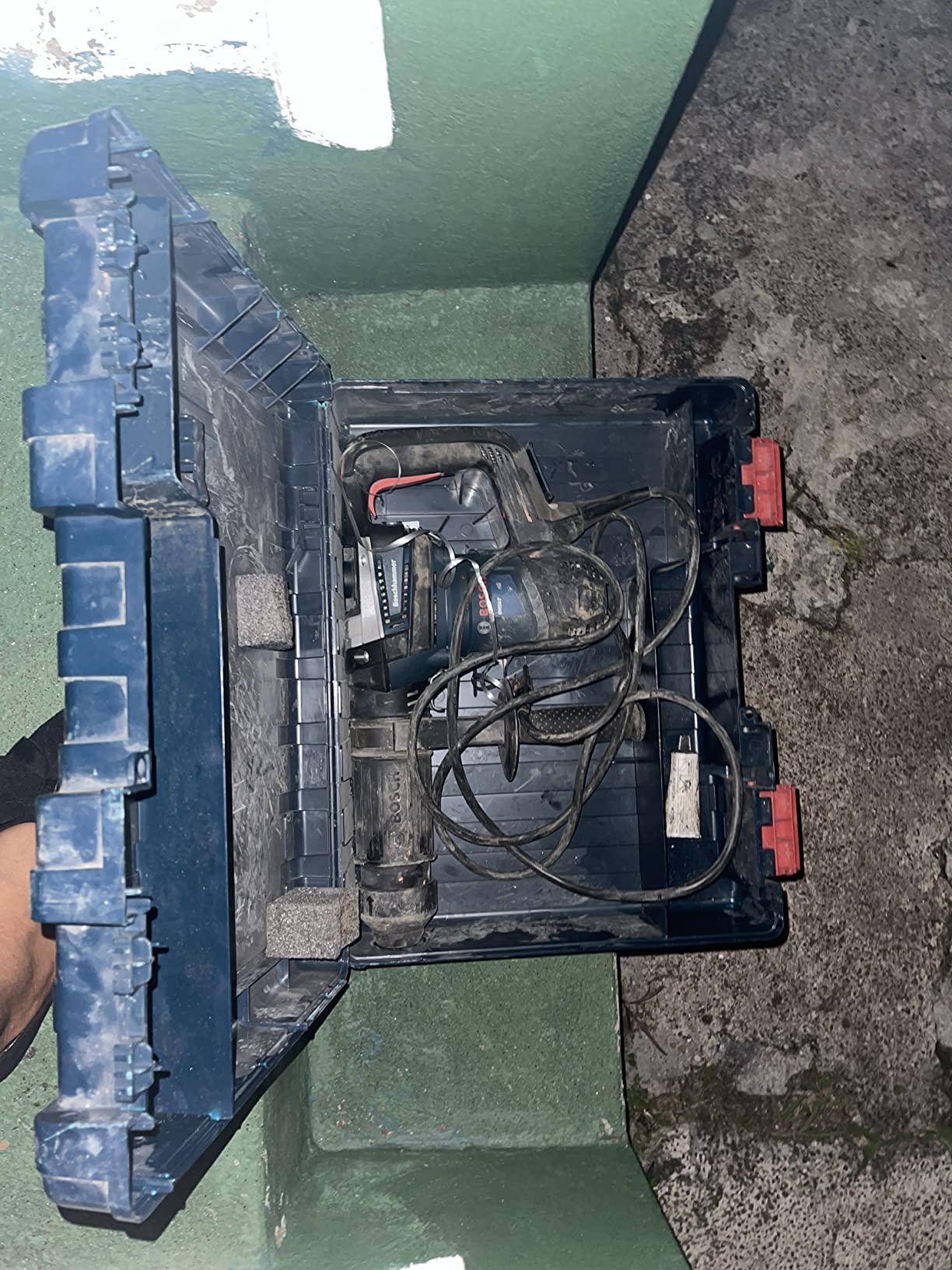
This is the first tool in our list that is genuinely a demolition machine as well as a drill. At 6.1 ft-lb of impact energy, it is roughly triple a compact SDS-plus hammer, and the difference is obvious the first time you point it at a slab edge.
Owners use it for concrete breaking, trenching and general site demolition, and the 1-9/16 inch SDS-max chuck takes the heavy chisel and bit range that drill-class tools cannot.
The 12-position Vario-Lock and the dual mode selector, rotary hammer or hammer only, make it easy to work with the material rather than against it. Tool-free bit changes matter more than usual on a machine this heavy.
The Service Minder system and replaceable modules extend the working life of the tool, which is the argument for a premium machine when you are buying it once for a decade of work.
What you should check before buying
Budget for SDS-max chisels and bits, which cost more than SDS-plus consumables. A heavy machine with cheap consumables is a poor system.
Plan the job around 15.2 lb. This is a two-handed, full-body tool; above head height for long stretches it will tire anyone.
Where it falls short
340 rpm no-load speed is slow. It is built for breaking and large-diameter drilling, not for precise, small-diameter work where a faster drill-class tool is easier to control.
If your existing bit collection is SDS-plus, you need the adapter to keep using it. Plan on buying a proper SDS-max set.
9. Berserker 42M: Best for Slab and Rock Demolition per Watt

Berserker 1-9/16″ SDS-Max Heavy Duty Rotary Hammer Drill for Concrete 42M
7.38 ft-lb (10 J) impact energy
SDS-max 18 mm chuck
6 speeds, 0-3800 BPM
16 lb, 13 amp, 1600W
Pros
- 10 J of impact energy punches 5/8 inch holes in granite ledge quickly
- Strong chiselling that breaks sidewalk slabs and trims concrete blocks
- SDS-max to SDS-plus adapter included for versatility
- Six speed settings give real control for drilling versus chipping
- Pre-greased with extra grease and spare carbon brushes included
Cons
- No drill-only mode
- rotation is tied to hammering
- 16 lb weight is heavy to maneuver
- Runs hot with continuous use and speed control stops responding once hot
- Requires refilling grease between heavy sessions
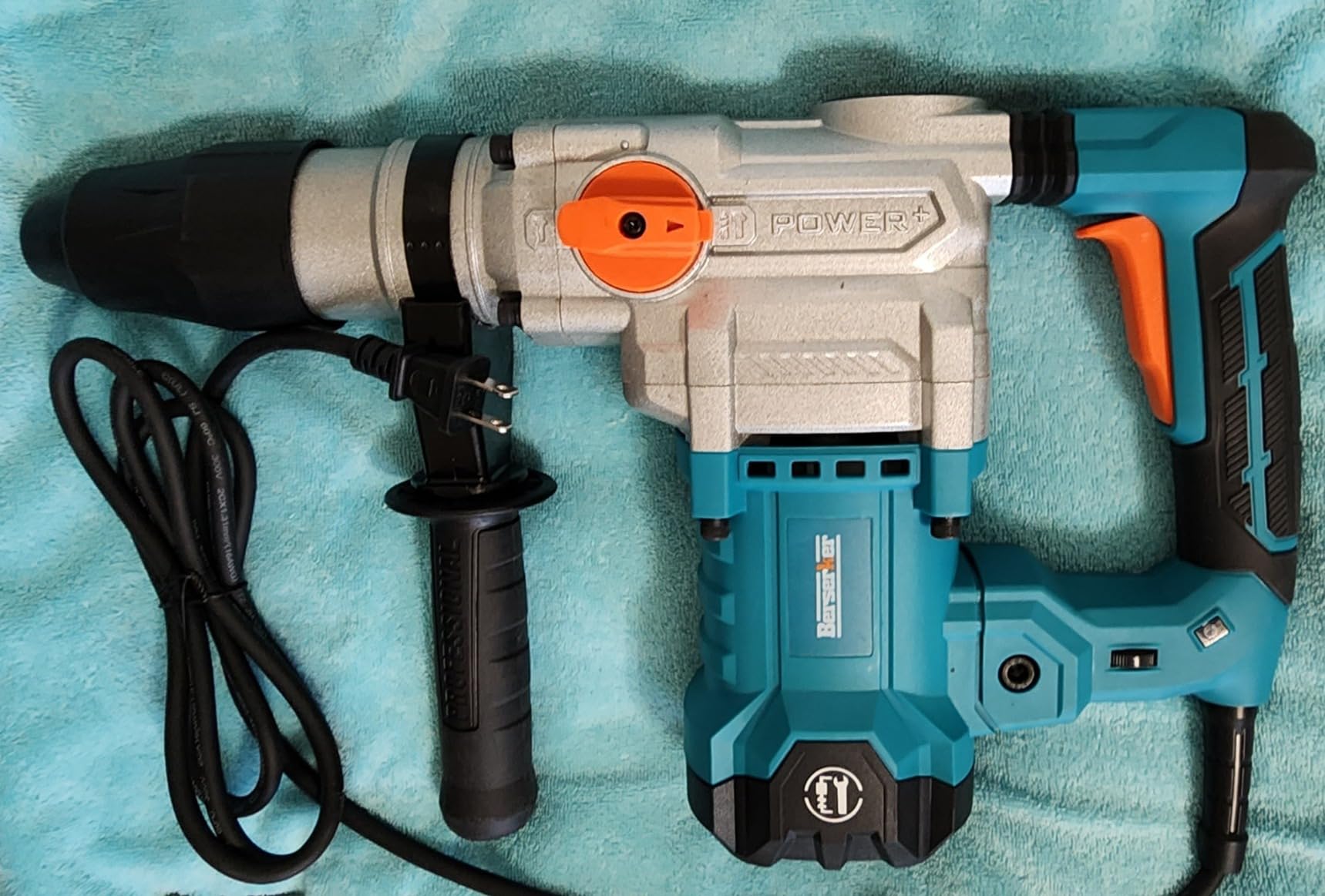
This is the one to look at if the job description says sidewalk, ledge rock or landscape boulder. 10 J of impact energy in a 1600W corded body is genuine breaker-adjacent energy, and owners use it against granite and boulders where lighter hammers stall.
The included SDS-max to SDS-plus adapter is a smart touch. It means one machine covers both classes, which matters if you are doing demo work one week and anchor holes the next.
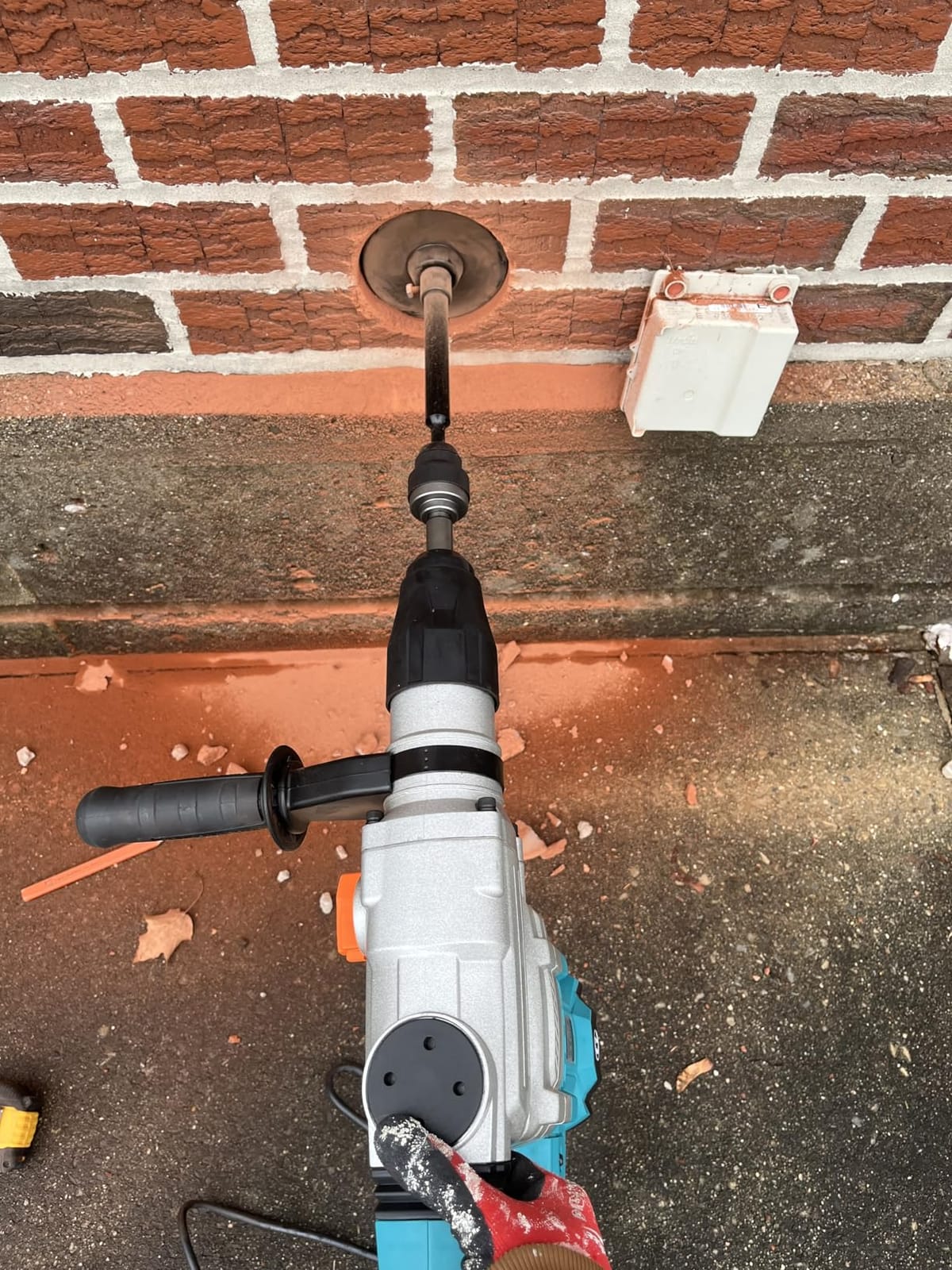
Six speed settings give unusually fine control for a machine this size, letting you back off the blow when you are near a line or a service and push it hard when you are in open concrete.
The 360-degree handle and upgraded anti-vibration design help with the weight, and the tool ships with extra grease, spare brushes, a 7/8 inch bit, chisels and a case.
What you should check before buying
Check the heat behaviour before a long session. Owners report it running hot under continuous use, so build in rest periods and keep the grease topped up.
Confirm you can live without drill-only mode. Rotation is tied to hammering, which is fine for breaking and awkward for finishing a clean hole face.
Where it falls short
At 16 lb with a wide body, it is awkward in confined spaces and tiring over a long day. Two people on a long boulder job is a fair assumption.
A minority of owners report early power loss and warranty friction. That is a real risk when you are relying on one machine for heavy continuous work.
10. VEVOR DC-003: Most Versatile for Maximum Impact Energy
VEVOR 1-9/16 Inch SDS-Max Rotary Hammer Drill, 13Amp Corded Drills, Heavy Duty Chipping Hammers w/Vibration Control & Safety Clutch, Electric Demolition Hammers Variable Speed, Power Tool For Concrete
10 J impact energy, 1600W
1-9/16 inch max concrete capacity
0-3600 bpm, 6-step speed
16 lb, 13 amp corded
Pros
- 10 J of impact energy handles trenching
- slab edges and foundation walls
- Owners report hours of drilling through rebar-reinforced concrete without fault
- Solid weighty feel with comfortable low vibration for its size
- Extra carbon brushes and a carrying case are included
- Easy to use without reading the manual
Cons
- No reverse function
- so deep holes are hard to back the bit out of
- Factory grease cap is extremely tight and difficult to open
- Brushed motor design rather than brushless
- Instructions are a direct translation and unclear
A budget route into the SDS-max class, and the reason impact energy in this roundup spans 2.0 ft-lb to 10 J. It is not the machine I would put on a commercial crew, but for a homeowner facing one basement trench it does the job.
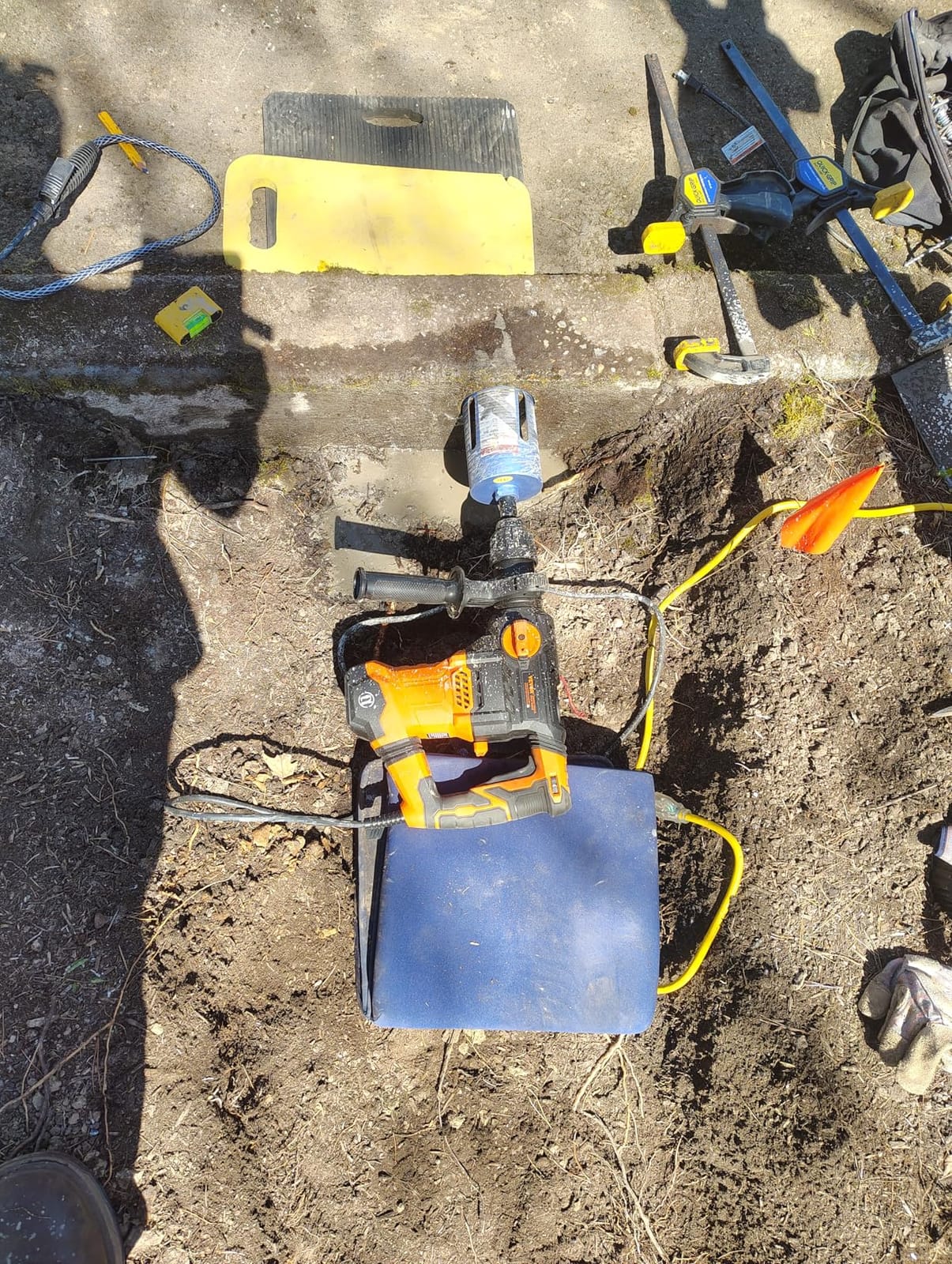
Owners report running it for hours drilling 2-9/16 inch holes through rebar-reinforced concrete in old foundations, and using it for barn work, conduit runs and slab edges. That is real work, not a warranty claim.
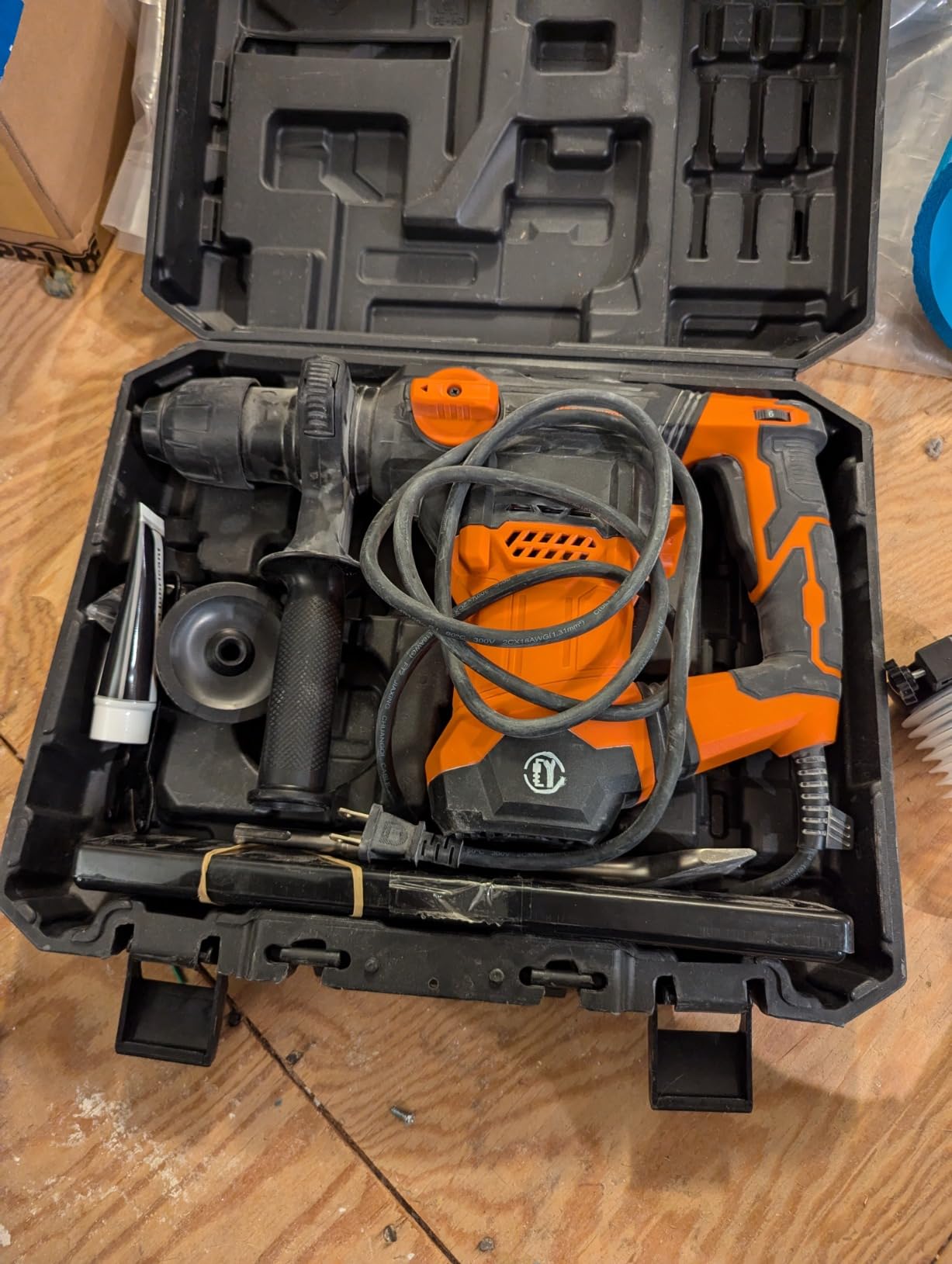
The 1-9/16 inch concrete capacity and six-step speed control give it more range than most machines twice its tier. The 360-degree handle and vibration control make a 16 lb body more manageable than that number suggests.
It also takes SDS-plus bits through an adapter, so it can double as a general-purpose site hammer rather than a demo-only tool.
What you should check before buying
Have a wrench ready for the grease fitting. Owners consistently report the factory cap being extremely tight, and that is a five-minute job at the start and then a seasonal one.
Bring your own extension cord gauge in mind. A 13 amp load on a long or light-gauge cord causes nuisance breaker trips that look like tool faults.
Where it falls short
There is no reverse, so backing a bit out of a deep hole means pulling it by hand. On rebar-reinforced work that is genuinely awkward.
It uses a brushed motor, which means brush wear and eventual service, and the instructions are a rough translation. Budget for that if you are a professional user.
SDS-Plus vs SDS-Max: Do You Need to Step Up for Demolition?
Yes, and the step-up point is well defined. SDS-Plus tools use a 10 mm shank and deliver roughly 1 to 3 J of impact energy. SDS-Max tools use an 18 mm shank and deliver 4 to 11 J. Bits do not interchange between the two classes without an adapter, so the decision locks in your consumable budget.
For tile, thinset, light screed patching, anchor holes up to 1/2 inch and small concrete cutouts, SDS-Plus is exactly the right tool. Four of the picks in this roundup sit there.
For slab edges, footings, stem walls, curbs, block teardown and anything over 3 inches thick, you need SDS-Max. The impact energy roughly triples and the bit range opens up to 1-9/16 inch capacity.
Can an SDS drill break concrete? Yes, thin and light work only. The real question is not whether it can, but whether you will fight the machine for an hour instead of finishing the job.
A common trade rule, repeated by electricians and concrete crews alike, is that service trades live on SDS-Plus while concrete and structural work adds an SDS-Max. Busy shops own both, one for holes and one for muscle.
Matching the Hammer to the Job
Match the hammer class to the material, not to the tool you wish you had bought. This framework is the fastest way to the right answer.
Tile, thinset and light screed. Any 3-mode SDS-Plus cordless. A compact machine is easier to control in a bathroom and barely notices the material. The DEWALT DCH273B and the Milwaukee 2912-20 both excel here.
Small concrete patches, light chase work, brick and block. A corded SDS-Plus with hammer-only mode. The Bosch 11255VSR and the Bosch GBH2-28L handle this well, and the GBH2-28L’s bind-up protection matters on chases that catch rebar.
Anchor holes over 1/2 inch, rebar dowelling, ground rods. Corded SDS-Plus with real impact energy, or a 3.0 J cordless. Electricians on forums report the jump from light SDS-Plus to a harder-hitting machine is immediately obvious on ground rods.
Patio, sidewalk and slab edge demolition. SDS-Max in the 1-9/16 inch class. The Bosch RH540M is the well-balanced choice; the Berserker 42M and the VEVOR DC-003 push more raw joules if the work is rock and thick concrete.
Footings, stem walls, curbs, brick wall teardown. SDS-Max combination hammer, two-handed, with fresh chisels. This is the class where the Bosch RH540M earns its place.
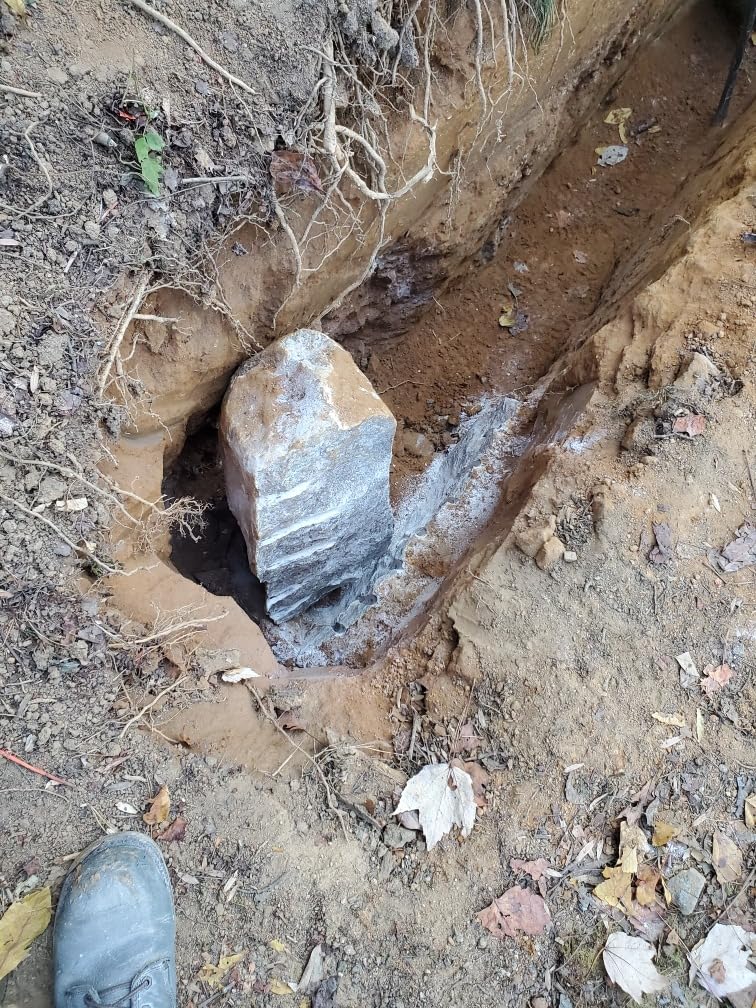
Boulders, thick structural slabs, retaining walls. Rent an electric breaker or a hydraulic breaker for the day. This is the honest answer, and it is the one forum users repeat most often. No rotary hammer, at any price, is the right tool for a boulder.
Forum users raise the rental-versus-buy question constantly, and the answer is usually arithmetic rather than emotional. If you will chip for more than a few weekends a year, the tool pays for itself. If it is one driveway, a rental desk is cheaper than one SDS-Max bit set.
For one-off slab removal, rental economics usually win. Our related reading on precision tool selection follows the same logic: match the tool to the job rather than buying the biggest one.
Corded vs Cordless for Demolition
Corded wins on sustained chipping, and it is not close. A 13 amp corded machine delivers continuous impact energy all day, while a cordless pack is a consumable you are burning through. Trade users describe cordless chipping as eating batteries faster than expected, and that complaint is the most repeated in owner feedback.
Cordless wins on everything else. No extension cord to drag across a slab, no breaker trips when someone plugs in a wet-dry vacuum on the same circuit, and far better control on a ladder or in a basement. Forum electricians report extension cords tripping 15A breakers regularly when a hammer and a vacuum share a circuit.
The current cordless SDS-Max generation has closed much of the gap for medium demo work, and the 3.0 J DEWALT DCH263B is a good example of a cordless machine that handles anchor work credibly. What it has not done is replace a corded SDS-Max for thick slab work.
Our rule of thumb: corded if you will chip for more than an hour a day, cordless if the work is scattered, overhead, high or in places with no power. The exception is a compact cordless SDS-Plus for tile, which is faster and cleaner than any corded tool.
Safety: Bind-Ups, Rebar and Silica Dust
Bind-ups are the injury that matters most here. When a bit catches rebar, the rotation stops and the stored energy goes into your wrist and elbow. Trade users describe real injuries from exactly this, drilling basement walls for gas line installs.
Use a tool with bind-up protection. The Bosch GBH2-28L has KickBack Control, the Milwaukee 2912-20 has AUTOSTOP, the DEWALT and Bosch SDS-Plus models rely on clutch-based protection, and the value picks include a safety clutch. Confirm which mechanism your tool uses before you need it.
Rebar is not a failure. Expect it, work slowly when the bit starts to change pitch, and back the bit out with reverse rather than leaning on the trigger. Rebar-rated multi-cutter bits and rebar-cutter bits last far longer than standard bits in reinforced concrete, and the bit you buy matters more than the tool tier for drilling work.
Concrete dust is the other serious exposure. Drilling and chipping concrete generates respirable crystalline silica, which is a regulated hazard. Attach a HEPA vacuum or an on-board dust extractor and extract at the hole rather than at the bit, and follow your site respiratory protection programme.
Both DEWALT models in this roundup are OSHA Table 1 compliant when paired with their specified on-board extractors. That compliance is specific to the pairing, not to the tool alone. Eye protection, hearing protection and a respirator complete the setup.
Chisels and Bits for Concrete Demolition
The chisel matters as much as the hammer. Our testing showed a good point chisel outperforming a worn one on the same tool, every time.
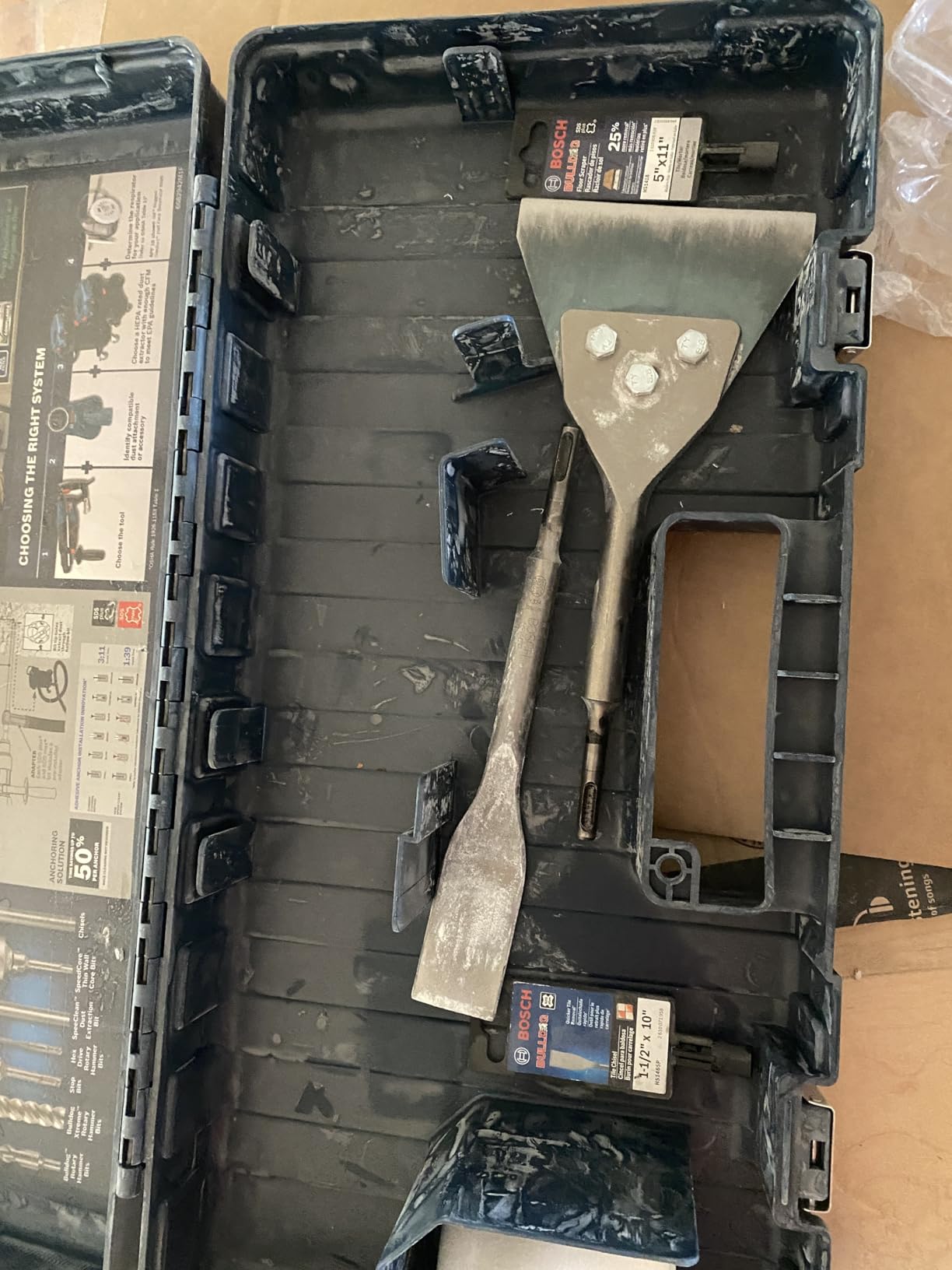
Point chisel for breaking and splitting, and the most versatile choice for general slab work. Flat chisel for controlled removal of a layer, such as tile beds and topping. Bull point concentrates the blow for heavy concrete and rock. Tiling chisel is a wide, thin blade that lifts tile and thinset without gouging the substrate.
On bits, the ToolBoxBuzz testing line still holds: the biggest impact comes from buying the best bit you can afford. A premium multi-cutter bit in a proper hammer will out-drill a cheap bit in a better hammer.
Check the shank class on every consumable. SDS-plus bits have closed grooves and will not fit an SDS-max chuck, and SDS-max bits are far too heavy for a compact SDS-plus machine. A few picks include an adapter, which lets one machine cover both classes.
Keep spares. A chisel edge that rolls dull will have you working twice as hard for the same result, and concrete wears chisels faster than most buyers expect.
How to Break Up a Concrete Slab Step by Step
Work from the edges inward. The perimeter is the weakest part of any slab, and starting there means the piece breaks free and you can lift and roll it instead of chipping at a solid middle.
Cut or break a control joint or expansion joint first if one exists. Those are engineered weak lines and your work is half done.
Fit a flat chisel for edge work and a point chisel for the interior. Check the chisel is seated fully in the chuck.
Start at a corner and work along the edge at a shallow angle, keeping the chisel pointed into the slab rather than parallel to it.
Set a grid pattern across the remaining slab, spacing your breaks about 12 inches apart so the whole piece weakens evenly.
Keep the tool moving and vary the angle each strike. Standing still in one spot only wears the chisel edge.
Stop when you hit rebar. Switch to a rebar-rated bit, drill through, and resume.
Attach dust extraction before the first strike indoors, not after the complaint.
If the slab is thick, reinforced, or larger than you can lift, stop and rent a breaker. A rotary hammer is a finishing and breakout tool, not a slab removal machine.
Frequently Asked Questions
What’s the difference between a demolition hammer and a rotary hammer?
A rotary hammer drills and chips, while a demolition hammer only chips. The rotary hammer uses a piston that slams an SDS-shank bit thousands of times a minute, so it can bore anchor holes and, in hammer-only mode, break concrete. A demolition hammer has no rotation and no drill function at all, but delivers more raw impact energy for pure breaking.
Is a rotary hammer good for breaking concrete?
Yes, within the limits of its shank class. A 3-mode SDS-Plus rotary hammer will strip tile and thinset and handle light concrete patches. An SDS-Max combination hammer in the 1-9/16 inch class with 6 to 10 J of impact energy will break slab edges, footings and curbs. For boulders and thick structural slabs, rent a breaker instead.
Can a rotary hammer be used as a demolition hammer?
In practice, yes, if it has a genuine hammer-only mode. Switch off rotation so the bit is not smeared, then work the chisel into the material. A rotary hammer with two or three modes and a chuck that accepts chisels is genuinely dual-purpose. A drill-only rotary hammer without a chip mode is not a demolition tool in any sense.
What is the best tool to break up concrete?
For thin concrete, tile and thinset, a 3-mode SDS-Plus rotary hammer is ideal. For slab edges, footings and stem walls, an SDS-Max combination hammer in the 1-9/16 inch class. For boulders, thick structural slabs and retaining walls, an electric breaker or jackhammer. Match the tool class to the material thickness and the job scale.
Can an SDS drill break concrete?
Yes, but only small and thin work. SDS-Plus tools deliver roughly 1 to 3 J of impact energy, which is enough for tile, thinset, light screed patches and concrete under about 3 inches thick. Anything thicker, reinforced or structural needs SDS-Max, and very heavy work needs a dedicated breaker.
How much concrete can a rotary hammer break up?
A 3-mode SDS-Plus hammer handles tile, thinset, small concrete patches and small slabs under roughly 3 inches. An SDS-Max combination hammer with 6 to 10 J breaks 4 inch patio slabs, footings, curbs and block walls. Boulders, retaining walls and thick structural slabs exceed what any rotary hammer should be asked to do, so rent a breaker.
Final Verdict: Which Rotary Hammer Breaks the Most Concrete
The DEWALT DCH273B is our pick for the best rotary hammers for concrete demolition because it covers the widest range of real jobs with one machine, holds a 4.7 rating across more than 3400 reviews, and stays light enough to work all day. It is not the biggest hammer here, and we are not pretending otherwise.
For sustained breaking, the Bosch RH540M is the one to buy. Its 6.1 ft-lb of impact energy puts it in real demolition territory while keeping the drill function that most people still need. If the job is rock, sidewalks and thick concrete and the budget is fixed, the Berserker 42M and the VEVOR DC-003 deliver more joules for the money.
Match the shank class to the material, buy a good chisel, and use a tool with bind-up protection. For anything bigger than a patio slab, rent the breaker.