
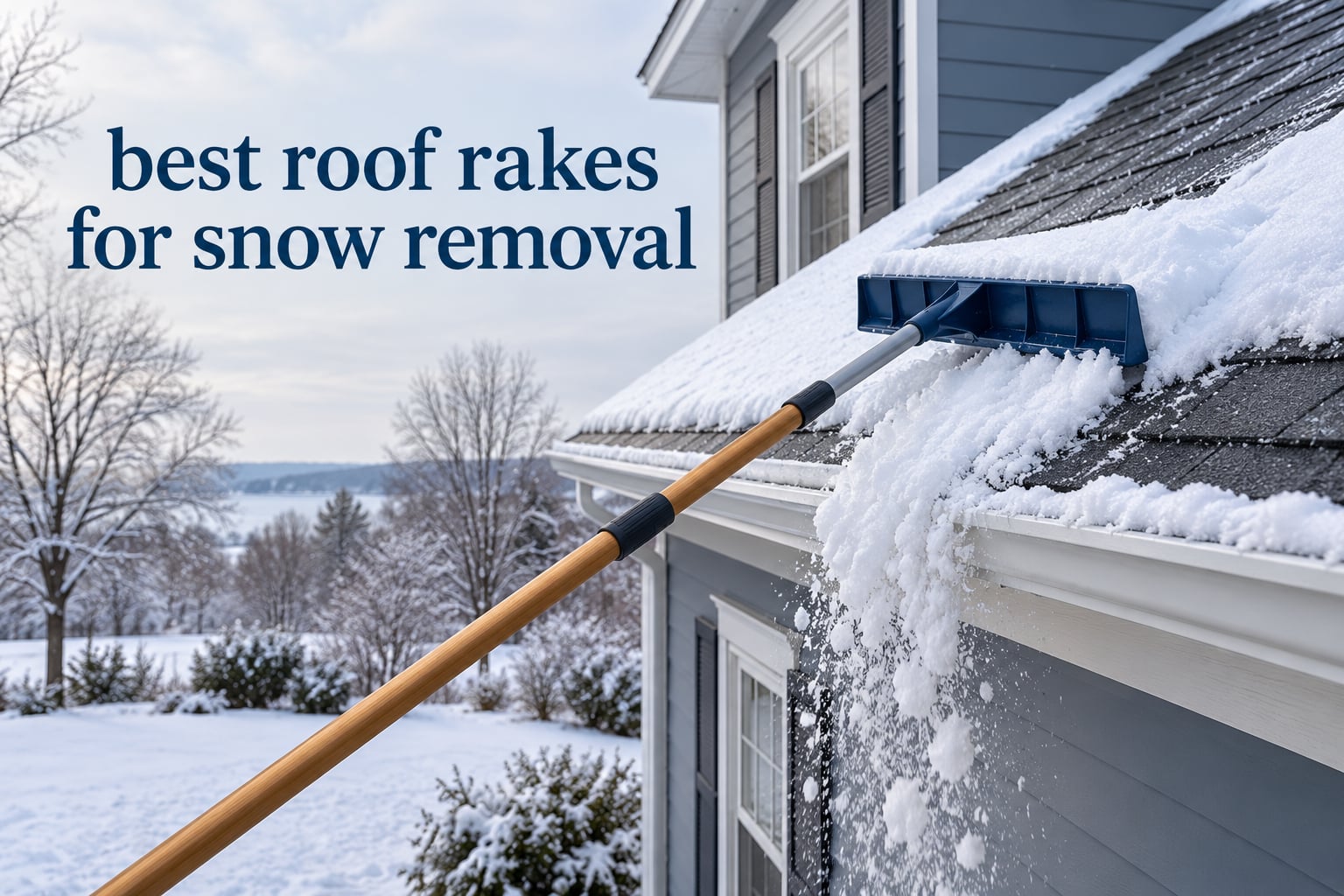
A roof rake is a long-handled tool with a wide blade that pulls snow off a roof while you stay on the ground. When snow builds up at the eave, meltwater runs back into the cold shingle line and refreezes into an ice dam, and that dam is what backs water up under shingles and into your ceiling. Clearing the lower part of the roof breaks that cycle.
Our team compared 12 of the best roof rakes for snow removal over one full snow season, checking reach, blade material, wheel placement, pole type and how each one handled packed snow on shingle, metal and mixed-surface roofs. The Snow Joe RJ204M came out on top, thanks to a 27-foot overhead reach from a 4.8-pound frame and a 25-inch poly head that clears a wide swath per pull.
Are snow roof rakes worth it? In regions that get regular snow, yes, as long as you clear the bottom of the roof and stay on the ground. Homeowners in r/minnesota describe raking as giving meltwater time to reach the gutters and drain instead of sitting and refreezing. In areas that see a handful of flurries a year, one is mostly a seasonal novelty.
This guide covers all 12 picks, how to choose by roof height and roof material, how to use one safely, and when raking is the wrong answer. Every recommendation below comes with the honest limitation that owners report, not just the marketing line.
Table of Contents
Top 3 Best Roof Rakes for Snow Removal at a Glance

Snow Joe RJ204M Telescoping…
- 25 inch poly head
- 27 ft overhead reach
- 4.8 lb
- Twist-n-Lock pole


Best overall: the Snow Joe RJ204M for its reach-to-weight ratio and fast telescoping adjustment. Best for heavy snow and large roofs: the SNOWPEELER Premium, whose 30-foot reach and attached slide cut deep slabs in half the time. Best for low-pitch roofs: the Extreme Max Shingle-Saver 21, whose angled head and shingle-saving rollers suit shallow eaves. Best for compact storage: the EZ Smart, which collapses into an included mesh bag. Best for multi-story homes: the Snow Joe RJ207M, reaching 26 feet. Best for delicate surfaces: the Leanaco SnowBuster, whose foam head will not scratch solar panels or glass.
Best Roof Rakes for Snow Removal (October 2026)
| Product | Specs | Action |
|---|---|---|
| Snow Joe RJ204M Telescoping Poly Roof Rake |
|
Check Latest Price |
 Extreme Max Shingle-Saver 21 Extreme Max Shingle-Saver 21 |
|
Check Latest Price |
| SNOWPEELER Premium 30-Foot Roof Rake |
|
Check Latest Price |
| Avalanche! SnowRake! Deluxe 20 |
|
Check Latest Price |
 Avalanche! AVA500 Snow Rake Avalanche! AVA500 Snow Rake |
|
Check Latest Price |
 Snow Joe RJ205M Aluminum Telescoping Rake Snow Joe RJ205M Aluminum Telescoping Rake |
|
Check Latest Price |
 ROOF-RAZOR 25-Foot Snow Rake ROOF-RAZOR 25-Foot Snow Rake |
|
Check Latest Price |
 USA-Made 20-Foot Shingle Saver Rake USA-Made 20-Foot Shingle Saver Rake |
|
Check Latest Price |
 Snow Joe RJ207M 26-Foot Rake Snow Joe RJ207M 26-Foot Rake |
|
Check Latest Price |
 EZ Smart Adjustable 16-Foot Rake EZ Smart Adjustable 16-Foot Rake |
|
Check Latest Price |
 Roof Razor Brush and Rake Combo Roof Razor Brush and Rake Combo |
|
Check Latest Price |
 Leanaco SnowBuster EVA Foam 24-Foot Leanaco SnowBuster EVA Foam 24-Foot |
|
Check Latest Price |
1. Snow Joe RJ204M Telescoping Poly Roof Rake: Best Overall
Snow Joe Telescoping Roof Rake, Extendable Leaf & Snow Shovel with Poly Blade, 25 Inch Wide, RJ204M
6 x 25 inch poly head
Twist-n-Lock pole to 21 ft
27 ft overhead reach
4.8 pounds
Pros
- Extends and collapses in seconds without loose sections
- Very light at 4.8 lb for solo use
- 25 inch head clears a wide swath per pull
- Also clears leaves and pine needles from solar panels
- Screw-and-brace head holds better than older wing-nut designs
Cons
- Brace screws and small hardware can loosen or go missing
- Blade too light for crusted or refrozen snow
- Pole bows and feels unwieldy at full 21 ft extension
- Lock nuts can seize in wet freezing conditions
We used the RJ204M through a full winter on a two-story shingle house with a 12-foot eave, and the thing that stood out was how rarely we had to think about the tool. The Twist-n-Lock collar adjusts length in seconds, with no snap-together sections to fumble with while wearing gloves in freezing weather. That single design decision matters more than any spec on the box.
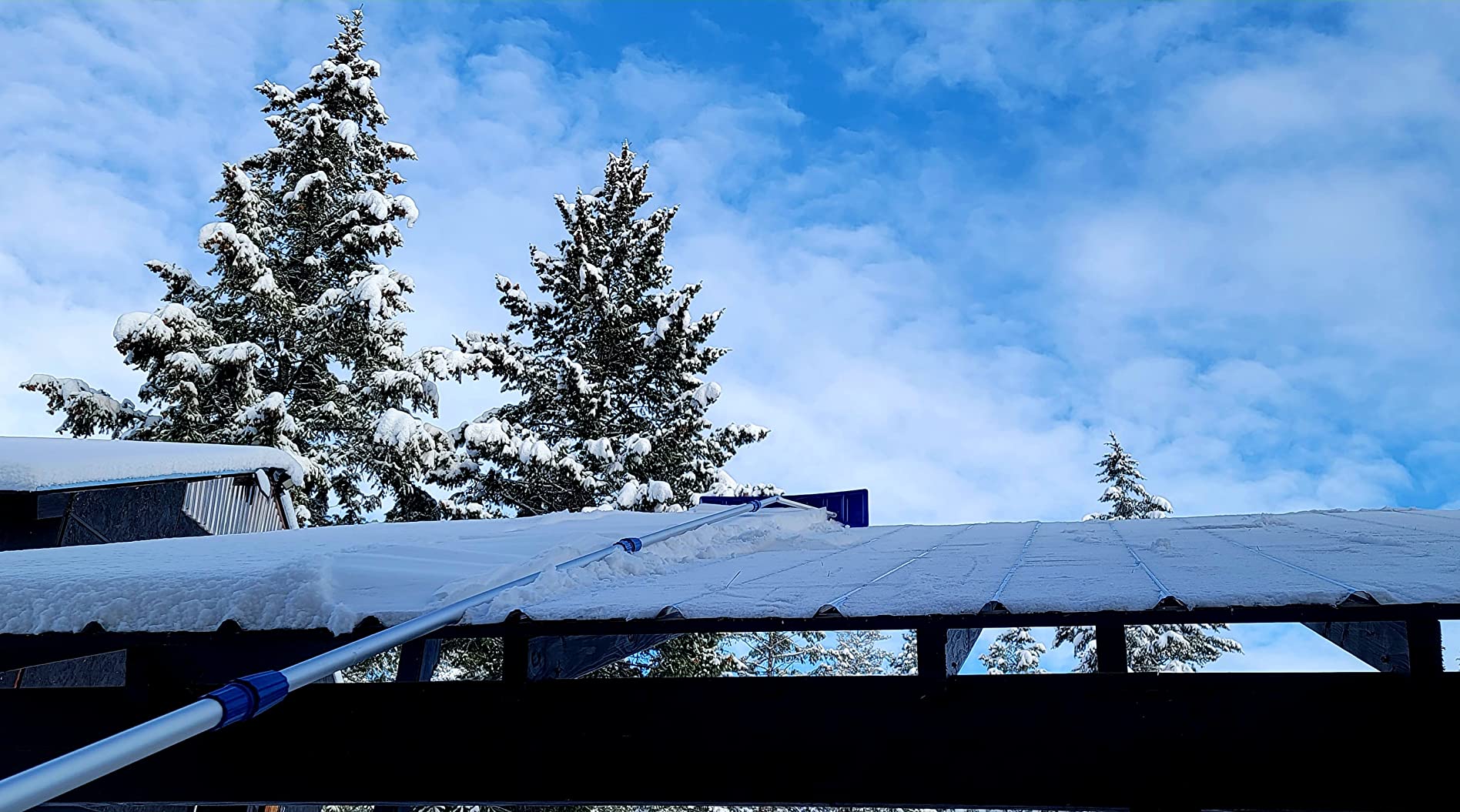
At 4.8 pounds it is one of the lighter long-reach rakes we handled, which makes a real difference when you are pulling snow down from the far side of a roof for an hour. The 25-inch poly head covers a lot of surface per stroke, so a two-story eave clears in far fewer passes than a narrower head would need.
The 21-foot pole plus head gives roughly 27 feet of overhead reach, which covered our second-floor eave from the lawn with room to spare. The poly head will not scratch glass, which is why we were comfortable using it on panel arrays as well as shingles. Owners report using it for wet leaves and pine needles in the off season too.
Handling and clearance on the Snow Joe RJ204M
The head is a molded plastic shell with a brace attachment, and that attachment is the weak point. Owners report screws loosening, straps pulling out of the plastic, and small hardware going missing mid-session. A quick finger-tight check before each round of raking fixes it, and several owners retrofit stainless hardware once the original set goes.
Two other limits are worth planning around. The poly blade is not heavy enough to bite into crusted or refrozen snow, so if you missed a storm and the roof has a hard shell, this tool will skate rather than cut. And at full extension the pole bows enough that you feel every load through the handle, which matters on long sessions.
Shingle safety and pole lock behaviour with the Snow Joe RJ204M
Poly against asphalt shingles is the gentlest combination we tested, softer than any aluminum head here, which makes this a good choice if granule loss worries you. There are no rollers on this model, so the head does contact the surface, but the contact is plastic-to-shingle rather than metal-to-shingle.
In wet conditions the lock nuts can freeze, and length adjustment becomes difficult until the collar thaws. Our advice is to wipe the collar dry after each session and to extend the pole in stages rather than ratcheting it all the way at once.
2. Extreme Max 5600.3207 Shingle-Saver 21: Best for Low-Pitch Roofs
Extreme Max 5600.3207 Shingle-Saver 21′ Roof Snow Rake with 24″ Blade
7 x 24 inch angled blade
21 foot reach
Shingle Saver rollers
Lightweight aluminum
Pros
- Angled head works well on shallow roofs and two-story houses
- Rollers protect shingles while shaving snow close
- All-metal build with no plastic parts to snap
- Tool-free snap-button assembly
- Light for its 21 foot length
Cons
- Aluminum support struts bend if you push instead of pull
- Small black rollers snap off easily though the rake still works
- Raw aluminum edges can cut hands during assembly
- Back-and-forth racking can work a bolt through the thin pole tip
The Shingle-Saver 21 is built around an angled head, and on the shallow-pitch roofs that dominate ice dam country, that angle is the whole point. Where a flat rake head tends to ride up and stall, an angled head keeps its bite into the pack as you pull toward the eave.
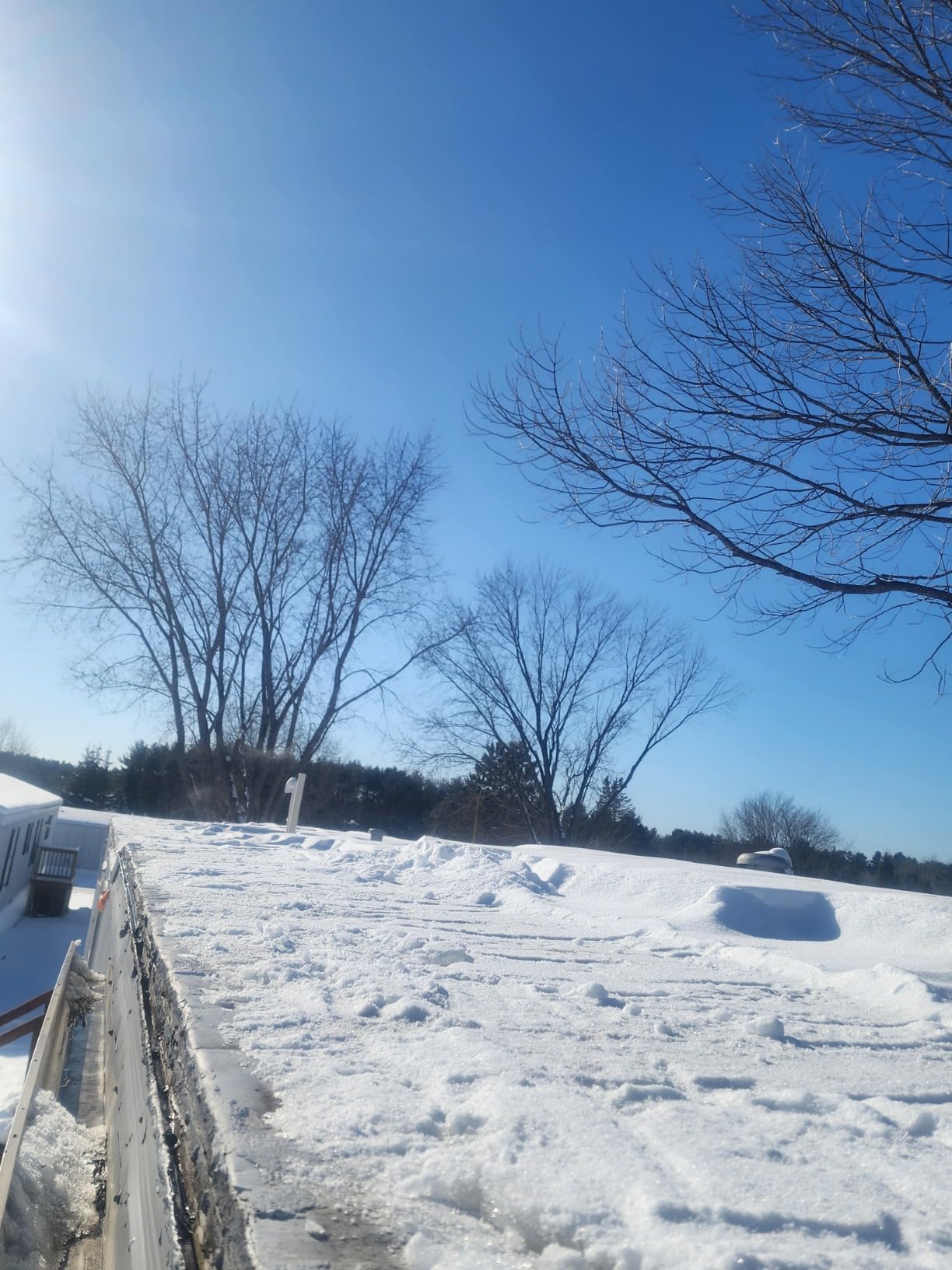
Owners in snow-belt regions use it to hold a channel open at dormers and eaves so meltwater drains instead of backing up under shingles. The 21-foot reach covered a two-story eave for us, and the 24-inch blade width shaved a close pass without needing a second tool for cleanup.
The Shingle Saver rollers are the feature buyers cite, and they do lift the working edge off the roof surface so the blade shaves close without dragging. There are no plastic components beyond the roller tips, which is why it appeals to people who have broken plastic rakes in past seasons.
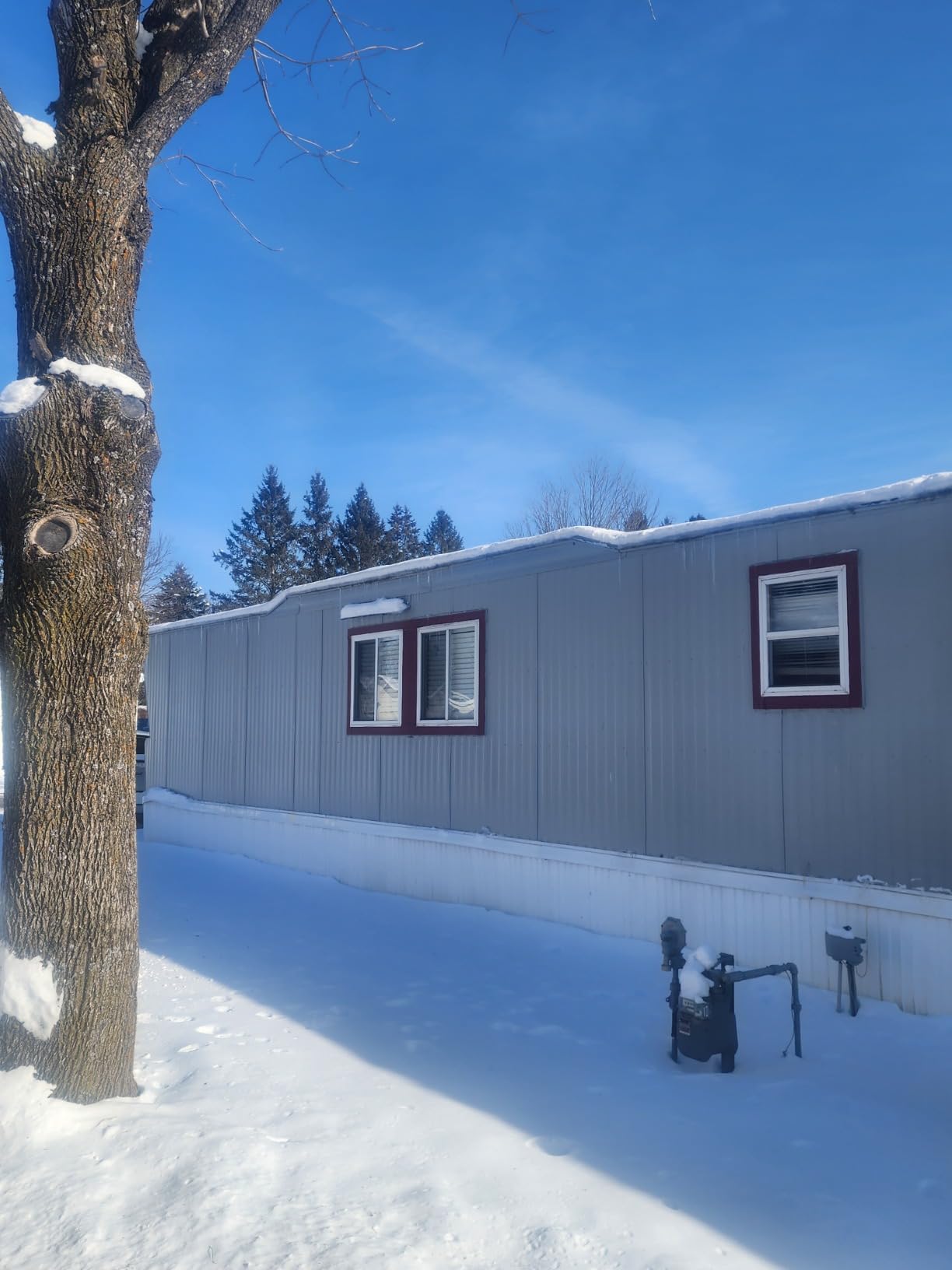
Why the angled head matters on shallow roofs
Rake heads that sit perpendicular to the pole tend to skim across low-slope shingles rather than bite. The Extreme Max angle changes the attack so the blade enters the snow from above. On a roof with a 4-in-12 pitch, that is the difference between clearing and pushing snow sideways.
Buyers also like the snap-button assembly because there are no tools and no loose sections to lose in a drift. Four sections go together fast, which matters if you are putting the tool away before going back inside.
Durability limits of the aluminum frame and rollers
This is an all-metal tool with all-metal weak points. Owners report that the support struts bend when the rake is pushed rather than pulled, and that repeated back-and-forth racking can work a bolt through the thin pole tip. Treat it as a pull-down tool only.
The small black rollers snap off fairly quickly. The rake still functions without them, though you lose a little shingle protection, and several owners fabricate replacement struts from 304 stainless. Deburr the raw aluminum edges before assembly, because fresh edges have cut hands.
3. SNOWPEELER Premium 30-Foot: Best Heavy-Duty and Longest Reach
SNOWPEELER Premium Roof Rake for Snow Removal – 30 ft. Snow Removal Tool – Snow Rake for House Roof – Snow Roof Rake – Telescopic Heavy Duty Snow Shovel for Rooftop
30 ft telescopic handle, six 5 ft sections
10 ft plastic snow slide
13 pound weight
Glide pads protect roof
Pros
- Cuts deep
- drifted and hard-packed snow far faster than pull rakes
- Push-up action sends slabs down the attached slide
- 30 ft reach handles low-pitch and tall roofs from the ground
- Sturdy machined aluminum and excellent warranty service
- Breaks into sections for off-season storage
Cons
- 13 lb and unwieldy with the full pole attached
- Does not shave to the shingles and leaves about 2 inches of snow
- Tapered pole junctions can snap under heavy slabs
- Bungee-attached slide sheet can tear within minutes
- Handle sections have no grip of their own
The SNOWPEELER Premium works differently from every other rake in this guide. Instead of dragging snow down toward you, you push the head up under the pack and cut a slab, and the attached 10-foot plastic slide lets the slab ride down and drop clear at the eave. In practice that halves the work on deep snow.
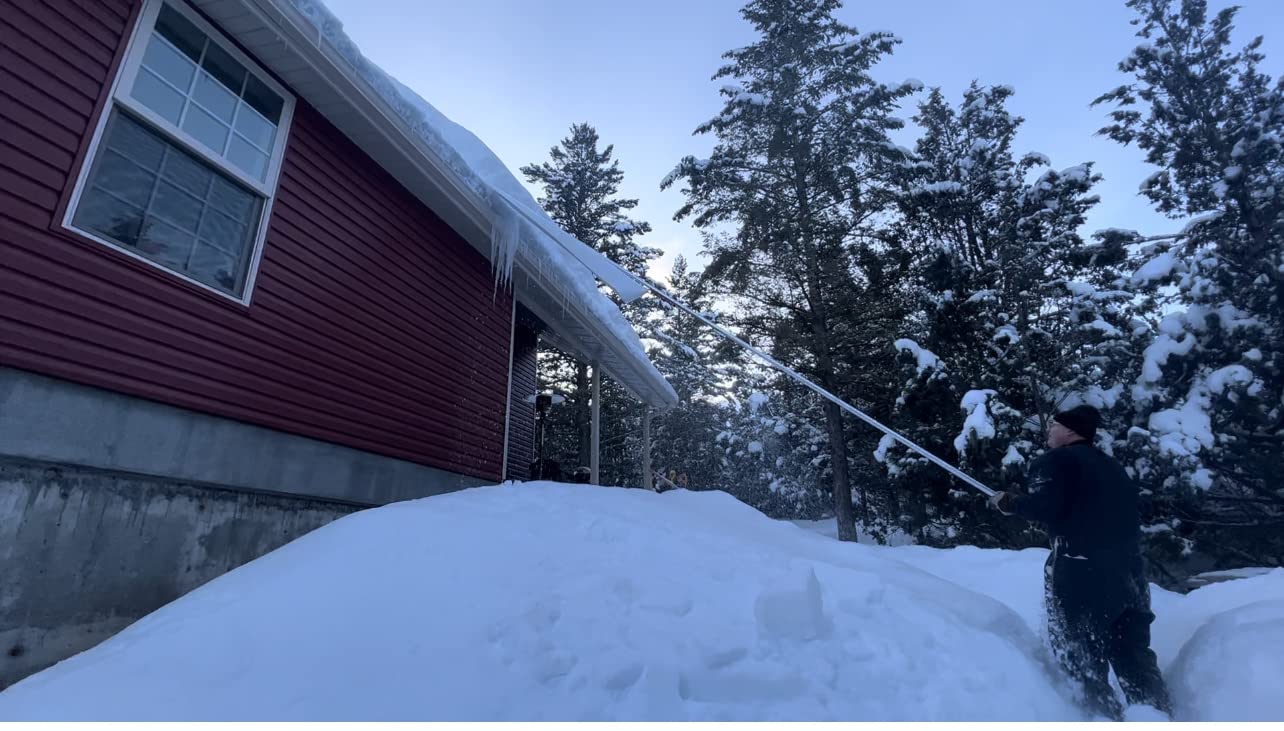
The 30-foot handle, built from six 5-foot sections, is the longest reach we tested and it is the reason this tool exists. It clears low-pitch roofs, valleys and steep sections entirely from the ground. Owners with serious snow loads treat it as a professional-grade implement rather than a seasonal gadget.
PolarMade, the manufacturer, is repeatedly praised for replacing broken handle sections free of charge, and warranty service is singled out as excellent across reviews. Protective glide pads keep the head from bearing directly on shingles during the cut.
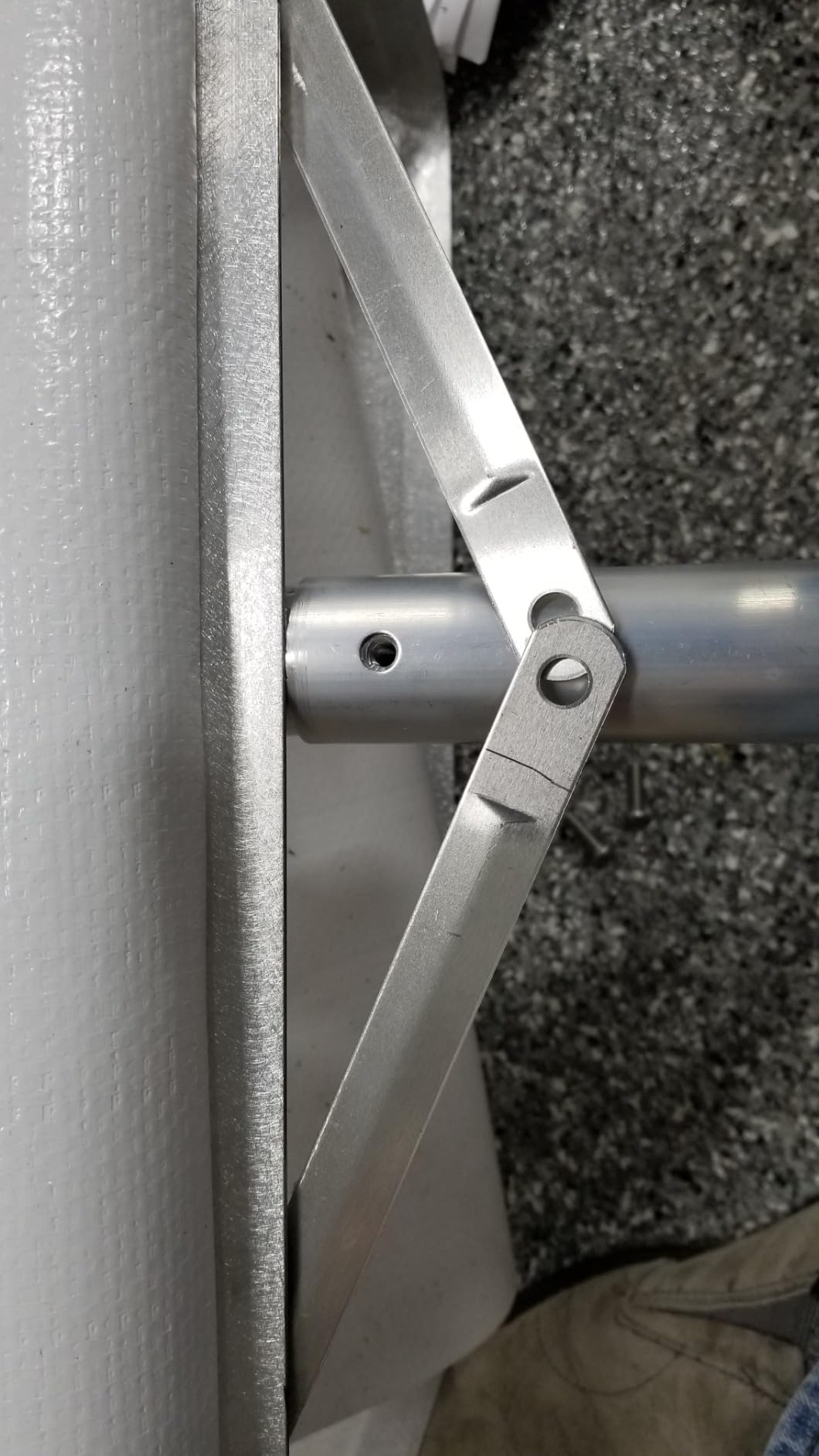
Push-up slide technique and where the snow lands
The operating pattern is the reason this rake clears two to four feet of snow at a time. You place the head at the eave, push up, and the slab travels down the plastic slide instead of being dragged across the roof surface. The release path is controlled, which means less chance of dumping snow onto a walkway or over a door.
Consensus advice from owners is to add pole sections only while the head stays on the roof, then push up. Lifting a fully assembled 30-foot tool off the roof is a good way to injure your back.
What the SNOWPEELER cannot do
It does not shave down to the shingles. Owners consistently report roughly 2 inches of snow remaining, which means a standard pull rake is still needed for the final pass if you are chasing a truly clean eave line.
The tapered pole junctions are the structural weak link, and they have snapped under very heavy slabs. The bungee-attached slide sheet is the other repeated complaint, since it tears quickly. The pole sections ship with no grip, so owners add rubber shelf liner or tape before use in the cold.
4. Avalanche! SnowRake! Deluxe 20: Best Value
Avalanche! SnowRake! Deluxe 20, Roof Snow Rake, Assembled in the USA
24 inch wheeled plastic head
Five 46.5 inch aluminum sections
20 foot reach
Wall-mount bracket included
Pros
- Highest-rated multi-section rake here at 4.6 stars
- Built-in wheels keep the head off the shingles
- 20 ft reach covers a two-story eave from the ground
- Tool-free snap-together assembly
- Works on shingle
- shake
- tile
- metal and solar roofs
Cons
- Sectional handle is bulkier to store than a telescoping pole
- Plastic head can flex or crack in heavy wet snow
- Slower than slide-style tools on very deep accumulation
This is the traditionalist answer, and it earns its place for one reason: built-in wheels. The 24-inch plastic head rides on wheels so the blade never touches the shingle surface, which addresses the single biggest anxiety that comes up in homeowner discussions about roof rakes.
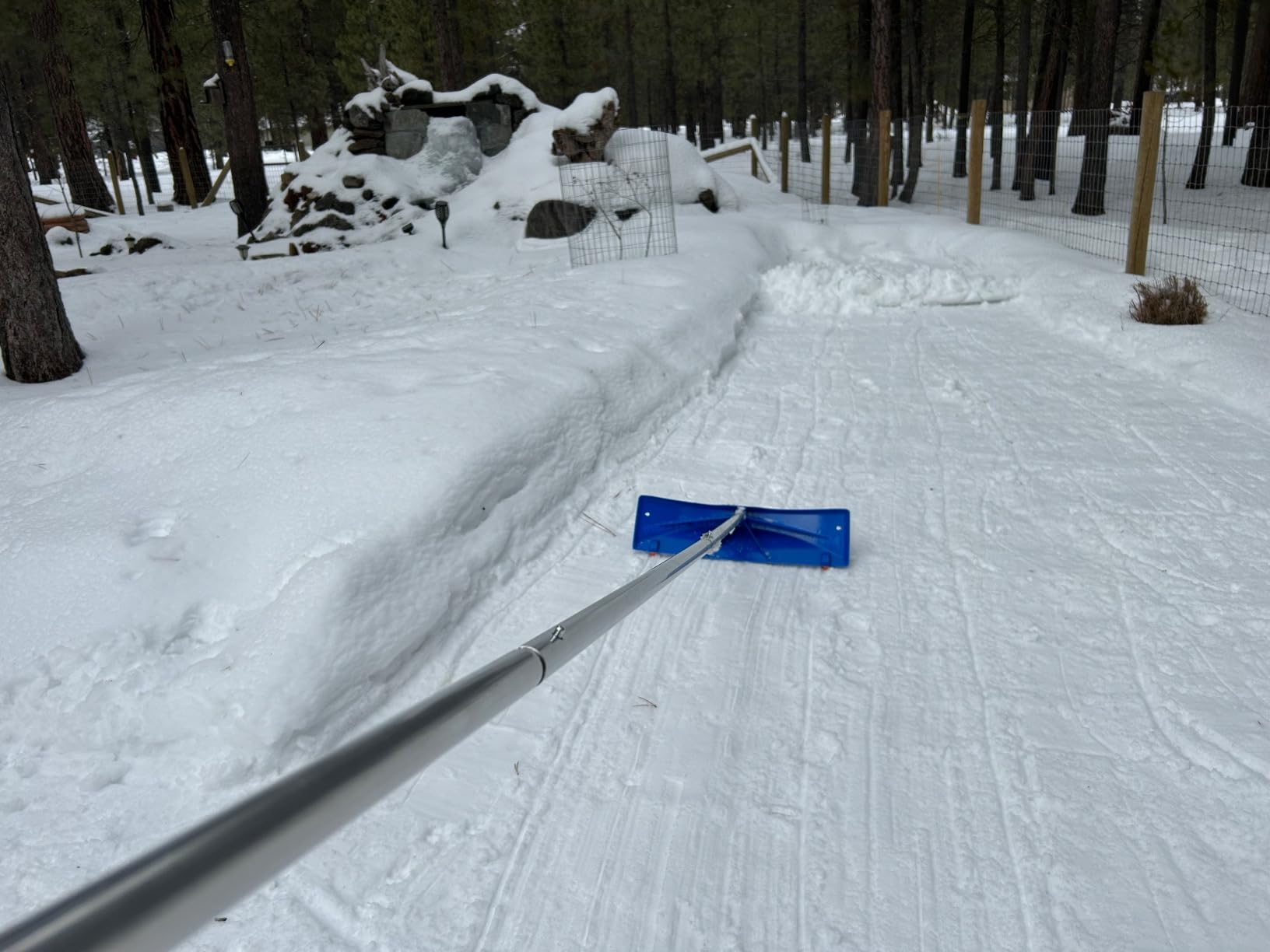
Five 46.5-inch aluminum sections snap together tool-free to give a 20-foot reach, which is enough for a two-story eave while you stand on the lawn. Owners in lake-effect and New England climates report that it resolved ice dam problems their neighbours kept dealing with season after season.
The listed compatibility is unusually broad: shingles, architectural asphalt, shake, tile, metal and solar panels. A wall-mount storage bracket is included, which is the detail most people forget until they are hunting for the rake in January.
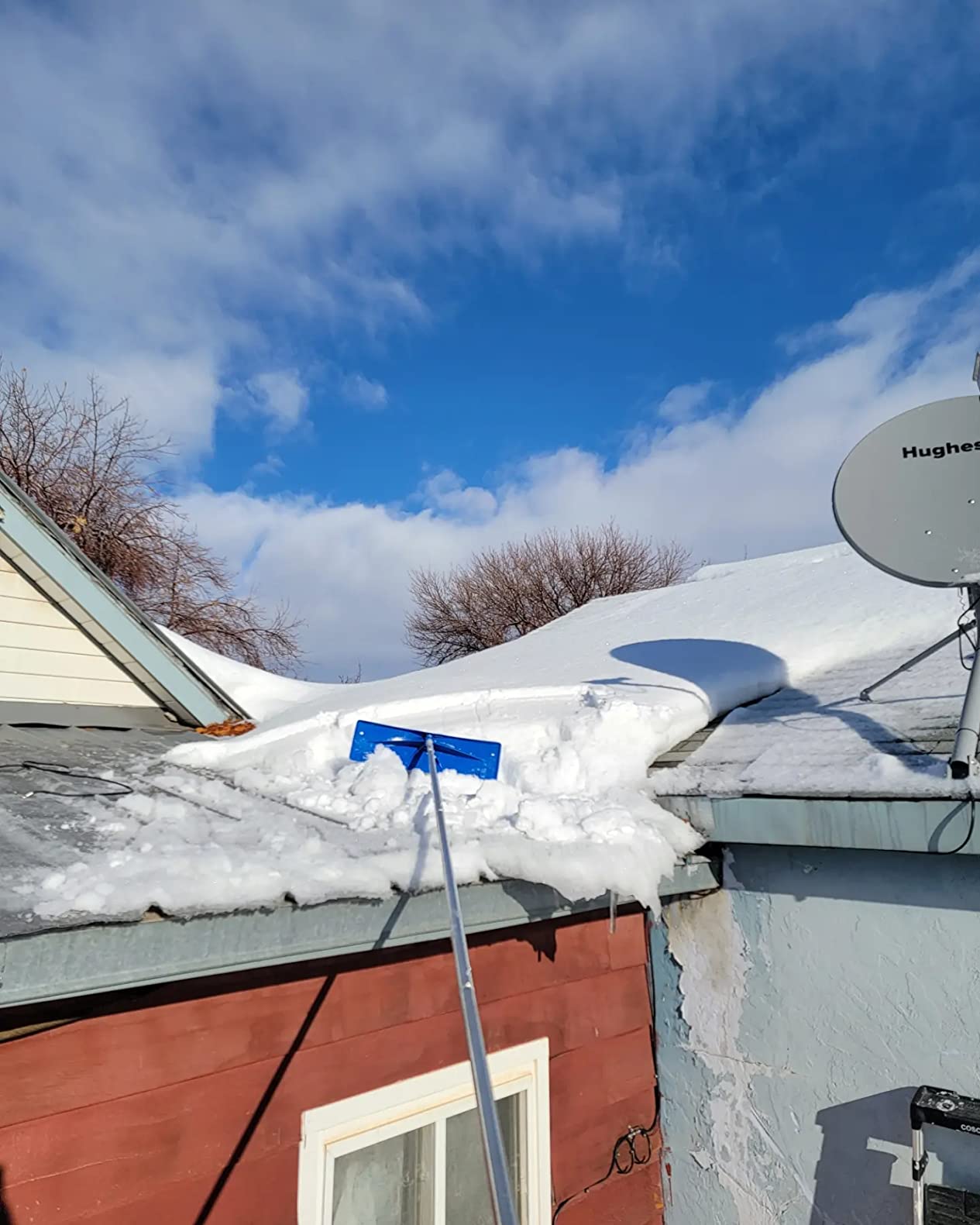
Roof surface compatibility and storage
Of the rakes here, this one has the broadest stated roof material range, which matters if your house is not a straightforward shingle job. The wheeled head means the working edge stays off tile, metal and panel surfaces, so you are not trading snow damage for granule loss.
Storage is the trade-off for the sectional design. Five sections occupy more space than a collapsed telescoping pole, and the included wall bracket solves exactly that problem if you have a garage wall or a basement door to hang them on.
Where the Avalanche Deluxe slows down
It pulls snow down rather than sliding it, so on a very deep accumulation it takes more strokes than a push-and-slide tool. Several users pair it with a lighter rake: the Avalanche for the bulk and something lighter for the final pass.
The plastic head can flex or crack under heavy wet snow. If your winters are wet and heavy rather than light and dry, look at a metal-bladed option instead.
5. Avalanche! AVA500 Snow Rake: Best Snow-Slide Design
Avalanche! Roof Snow Rake, Snow Removal Tool, Assembled in the USA
17 inch wide, 12 foot plastic slide
1.5 inch glide wheels
Four fiberglass sections, 15.5 ft pole
9.2 pounds
Pros
- Slide lets snow glide off instead of being dragged away
- Fiberglass sections lighter and more forgiving than aluminum
- 1.5 inch wheels give proper clearance over shingles
- Quick snap-together ground-level operation
- USA made with a smooth one-direction clearing motion
Cons
- Heaviest of the Avalanche models at 9.2 lb
- 17 inch head clears less per pass than 24 inch options
- Shortest Avalanche reach at 15.5 ft
- Fiberglass poles can bow after repeated heavy use
The AVA500 is not a rake head so much as a slide. A smooth 17-inch-wide plastic surface, 12 feet long, runs down the roof and lets snow travel along it before dropping at the eave. That single-direction motion is noticeably easier on the arms than pulling.
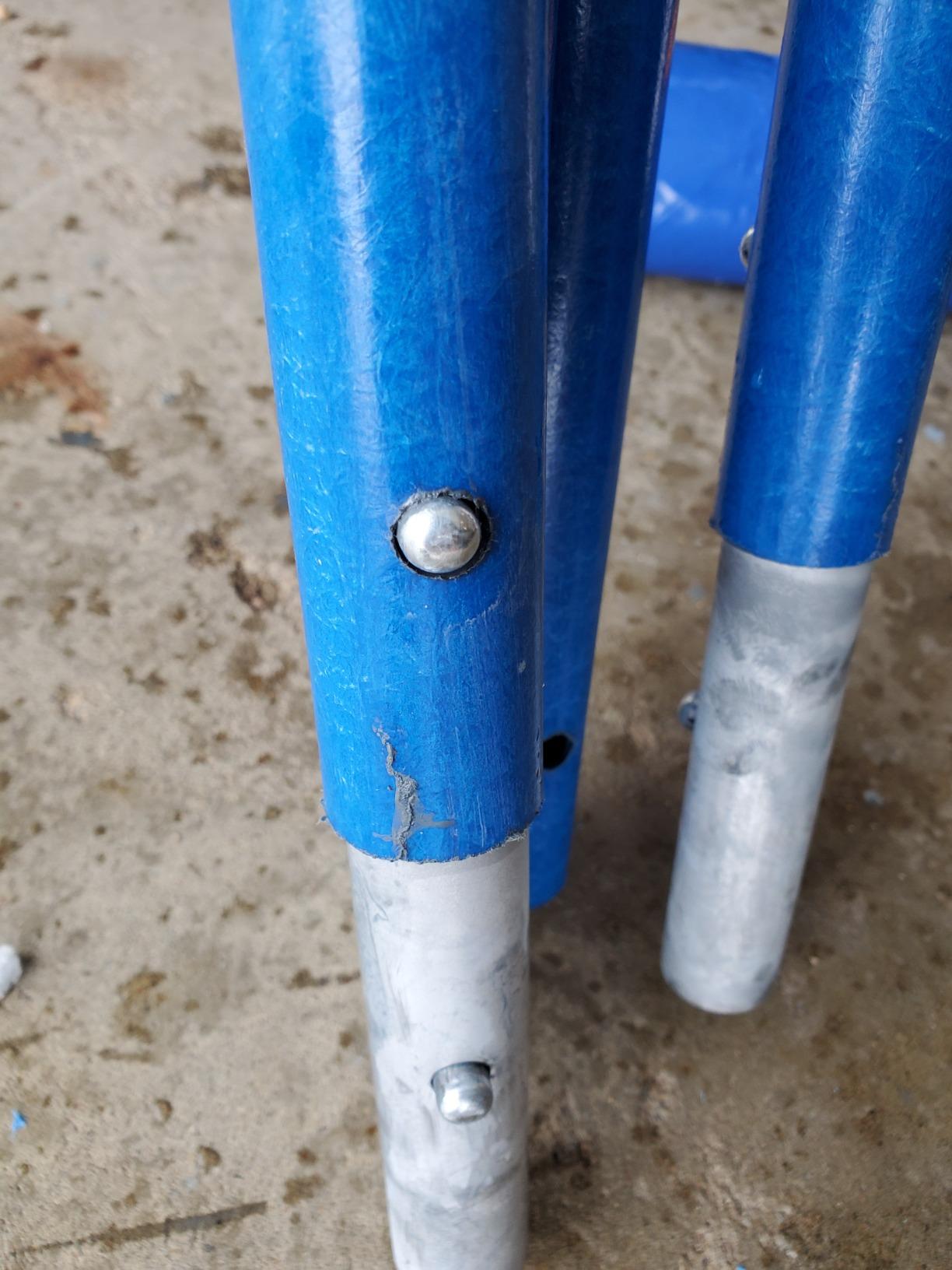
Four fiberglass handle sections form a 15.5-foot pole, and the 1.5-inch wheels hold the slide far enough off the roof for it to glide over asphalt shingles without touching them. Fiberglass sections are more forgiving than aluminum, which some owners appreciate when a section takes a bump.
This is the shortest-reaching and heaviest of the three Avalanche models, which makes it a single-storey and low-slope tool rather than a two-storey solution. It is made in the USA and assembles with a quick snap-together.
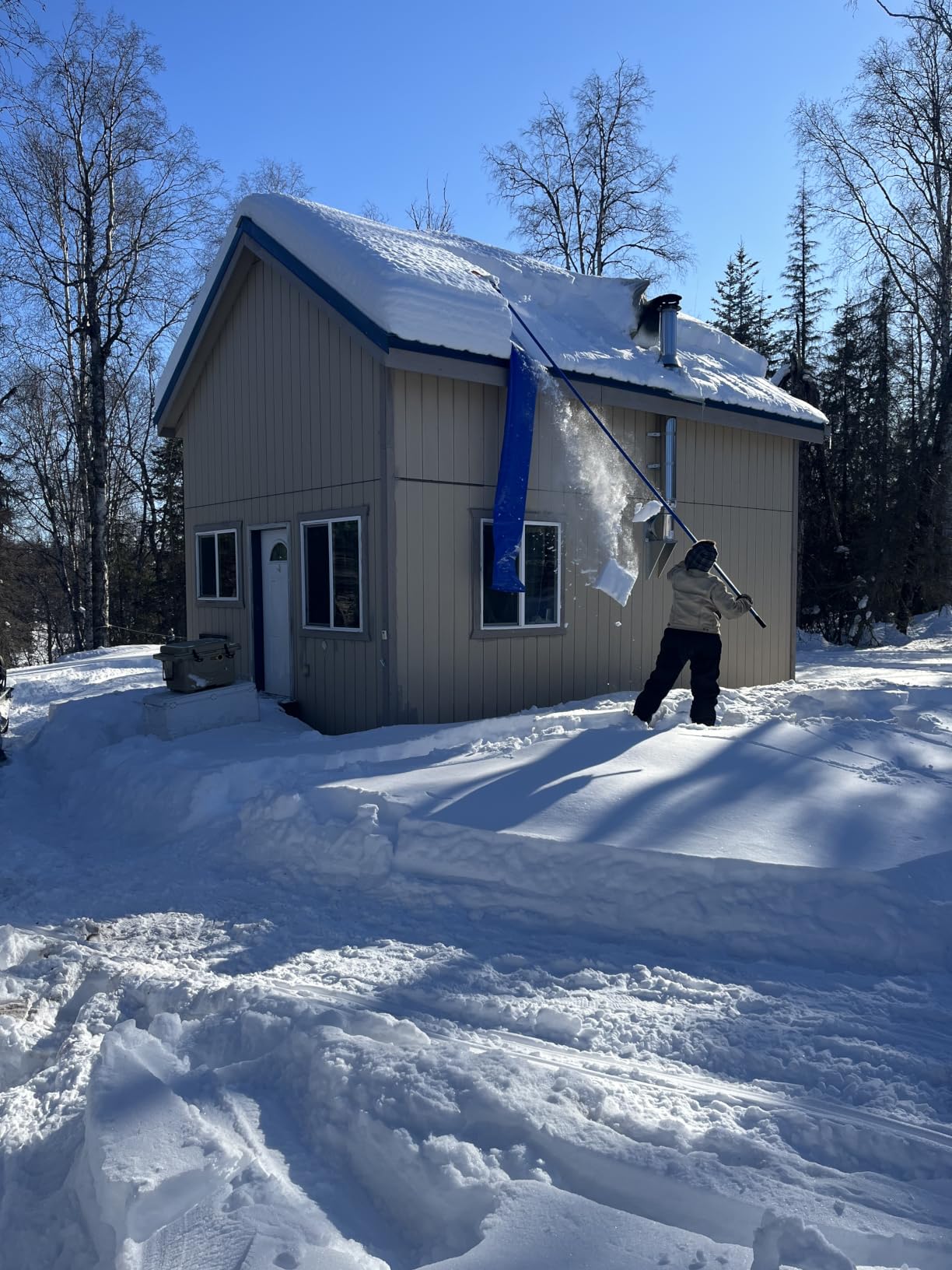
Slide versus pull: which suits your roof
A slide-style tool works best on a roof with an open fall line, where there is a clear path from the upper roof down to the eave and nothing in the way. On such a roof the snow has somewhere to go and the tool does the work. Pull-down rakes need less of a clean runout, so they are more forgiving of dormers and valleys.
The AVA500 clears a narrower swath than the 24-inch heads in this guide, so expect more strokes per pass. In exchange, you get a smoother, more controlled removal motion.
Weight, reach and durability trade-offs
At 9.2 pounds it is heavier than most of the aluminum competitors, and the 15.5-foot pole is the shortest of the Avalanche line. That combination makes it a ground-level tool for low roofs, not a solution for a tall house.
Owners report fiberglass poles bowing after repeated heavy-duty seasons. For most people that is fine, since a bowed section still pulls, but it is a reason to store the tool horizontally on a wall rather than leaning it in a corner.
6. Snow Joe RJ205M Aluminum Telescoping Rake: Budget Pick
Snow Joe RJ205M Twist-N-Lock Telescoping Snow Shovel Aluminum Roof Rake, 21′
6 x 25 inch aluminum head
Twist-n-Lock pole, 6.2 to 21 ft
5.7 pounds
2 year warranty
Pros
- Aluminum head stronger than the poly version at the same width
- Slight pole flex helps the head dig into snow on the pull
- Telescoping design collapses with no loose sections
- Light enough at 5.7 lb for older users
- Also clears pine needles from tile roofs
Cons
- Thin pole wall at the brace mount has snapped
- Bottom handle grip can slip off the pole
- Telescoping lock can seize in deep cold
- Sharp edges can scratch metal roofing
- Braces bend under very heavy or refrozen snow
The RJ205M is the aluminum sibling of the poly rake above, and the upgrade matters if your winters are wet. An aluminum head holds its shape under packed snow and cuts through crust that makes the plastic version skate.
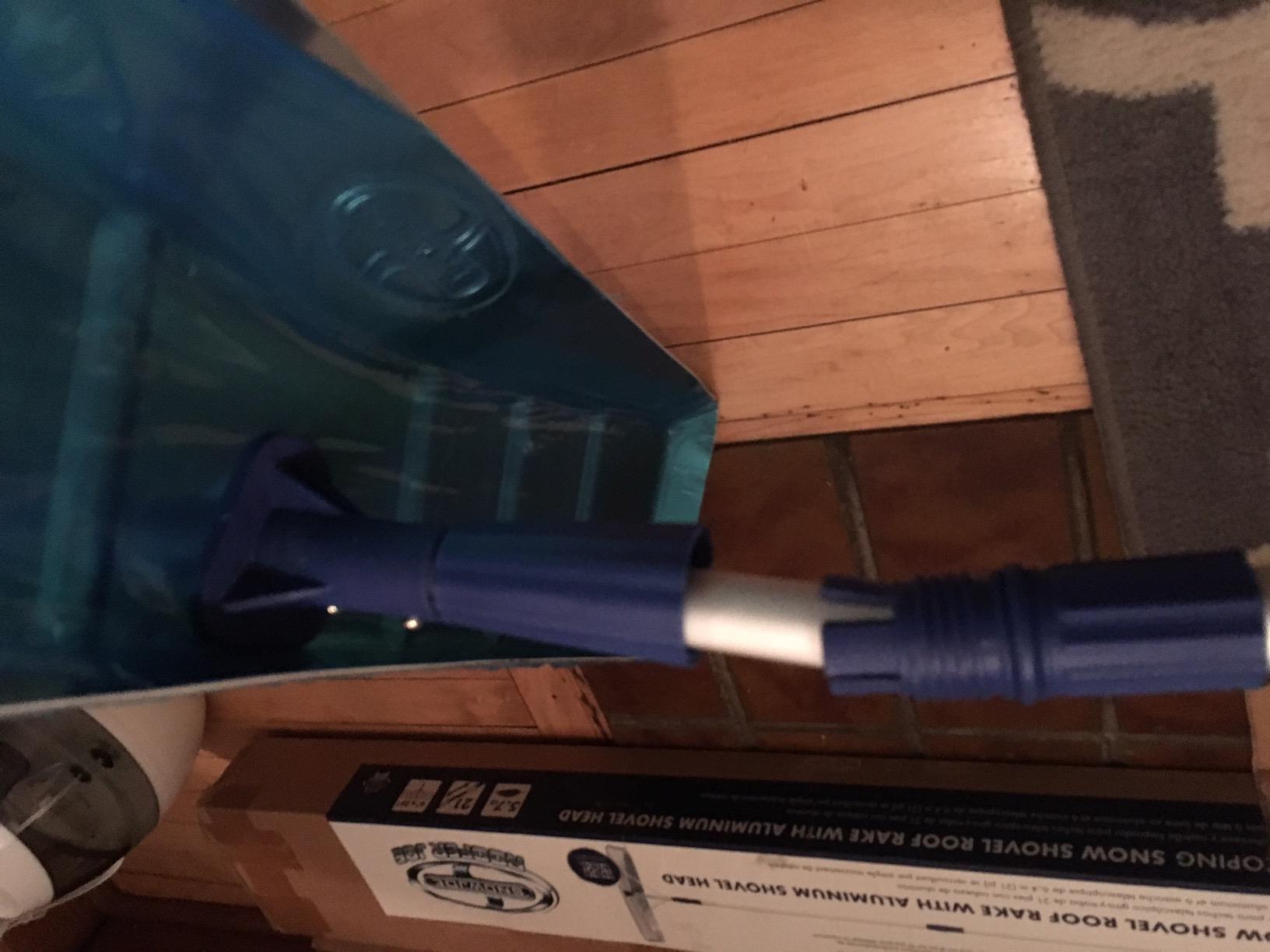
Owners who upgraded from the poly model cite the sturdier head as the reason. They also describe the pole’s slight give as a feature, because it lets the head dig into deep snow on the way down instead of riding over the top of it.
At 5.7 pounds it stays light enough for older users to handle, and the telescoping pole collapses short for storage with no loose pieces. Snow Joe’s warranty service is repeatedly described as good, replacing broken units outright.
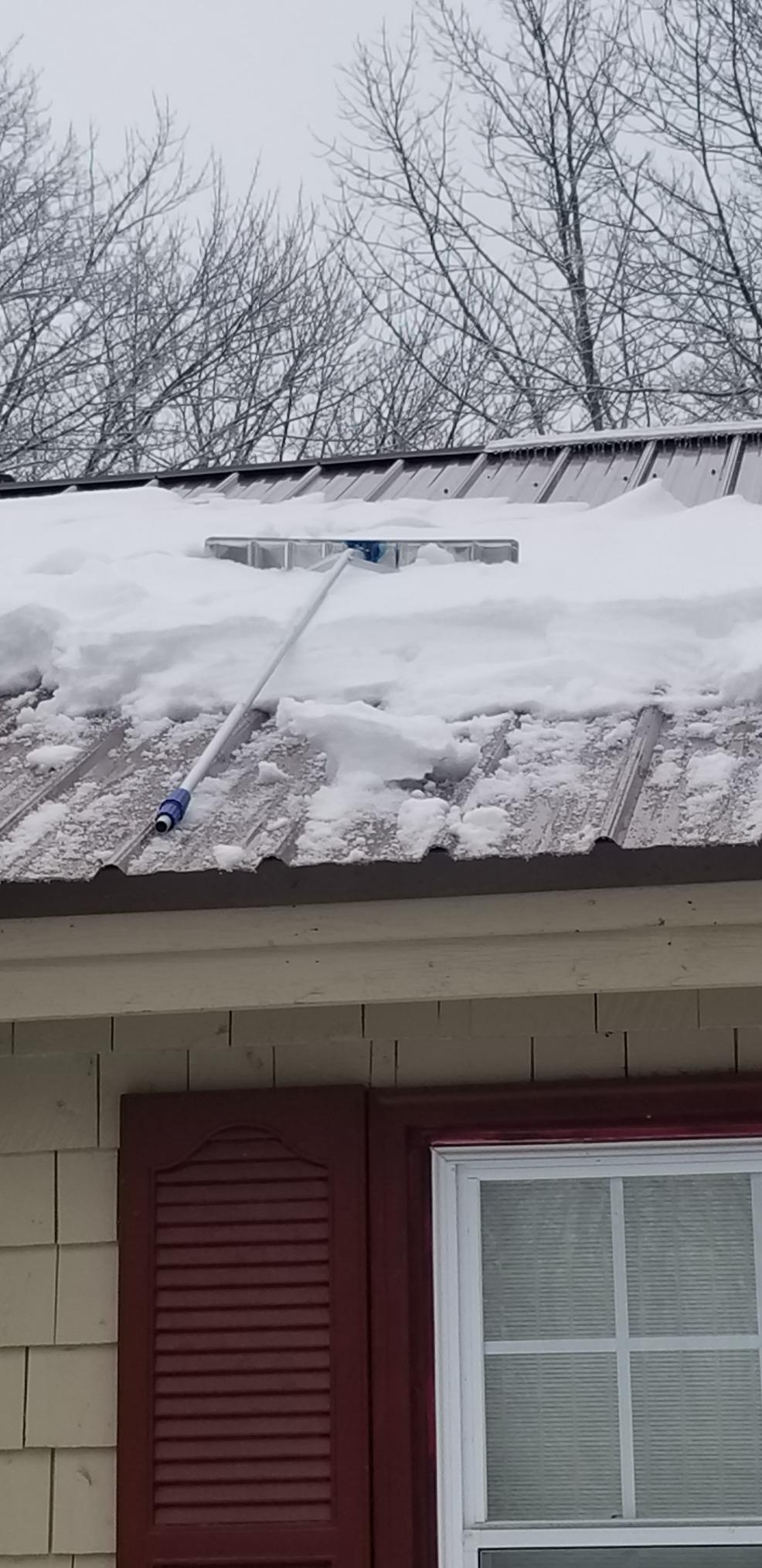
Aluminum head versus poly head in wet snow
Aluminum bites deeper and holds an edge, so this is the better choice for refrozen crust and heavy wet pack. The cost is surface risk: bare aluminum edges can scratch metal roofing, and this head has no rubber edge to soften contact.
If your roof is metal or if you will clear solar panels, the poly RJ204M is the safer tool. On asphalt shingles, the aluminum head is acceptable as long as you keep the pull stroke smooth.
Where this budget rake fails
Durability is the recurring complaint. The third pole section, where the braces are drilled, has snapped outright for some owners in heavy snow, leaving the blade sitting on the roof. Several buyers reinforced it with a steel sleeve or heavy tape, and others had warranty replacements sent.
The bottom grip can come off the pole, and the telescoping collar can lock up in deep cold and refuse to retract. Keep a thin film of oil on the collar through the season and store the tool indoors between storms.
7. ROOF-RAZOR 25-Foot Dual Cut Head: Best for Deep Packed Snow
ROOF-RAZOR Roof Rake for Snow Removal | Safe-FAST-Easy Rooftop Tool | 25ft Handle | Wide 24in Cutting Head | Rugged Anti-Rip Snow Slide | MinnSNOWta Snow Rakes for House
24 inch patented dual cutting-edge head
25 foot handle with snow slide
Wide glide wheels
10 pounds, USA made
Pros
- Dual cutting edge built for deep
- compacted and drifted snow
- 24 inch head clears a wide path in fewer passes
- Wide wheels glide over shingles with no blade contact
- 25 ft reach handles tall roofs from the ground
- USA made with 78 percent five-star ratings
Cons
- 10 pound weight is tiring with the full handle attached
- Heavier than most rakes in this roundup
- Much smaller review count than the established models
Where most rakes drag snow off, this one cuts it. The patented dual cutting-edge head is designed to slice into deep accumulation and break up hard-packed layers, which is the situation that defeats lighter plastic heads entirely.
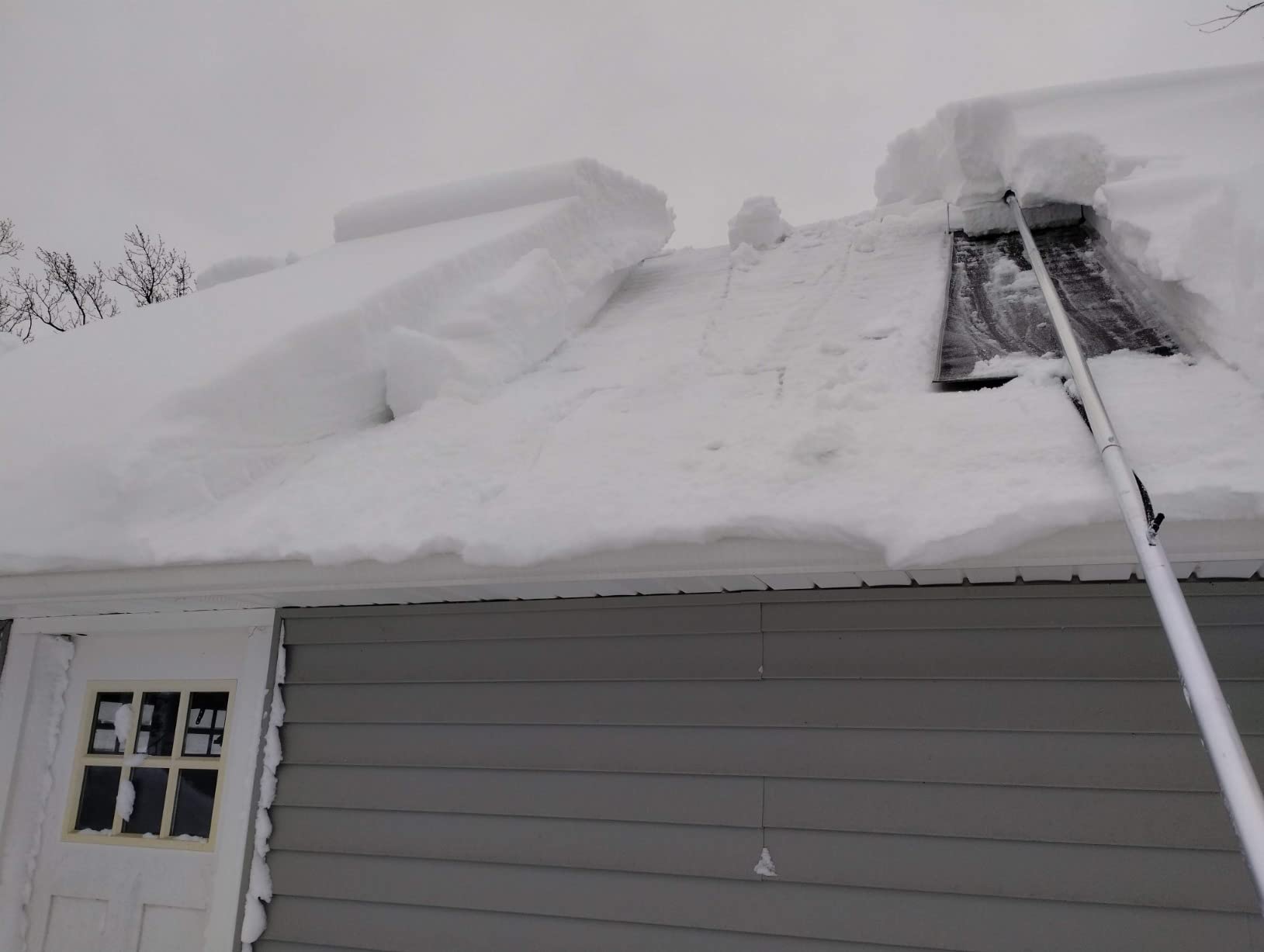
Owners in heavy-snow regions value the wide wheels, which glide across shingles so the blade does not contact the roof at all. The 25-foot handle covered steep and tall roofs for us from flat ground, with no ladder anywhere in the process.
Its 4.6 average is among the highest in this group, with 78 percent of ratings at five stars. That number comes from a newer listing, so treat the long-term durability record as still being written.
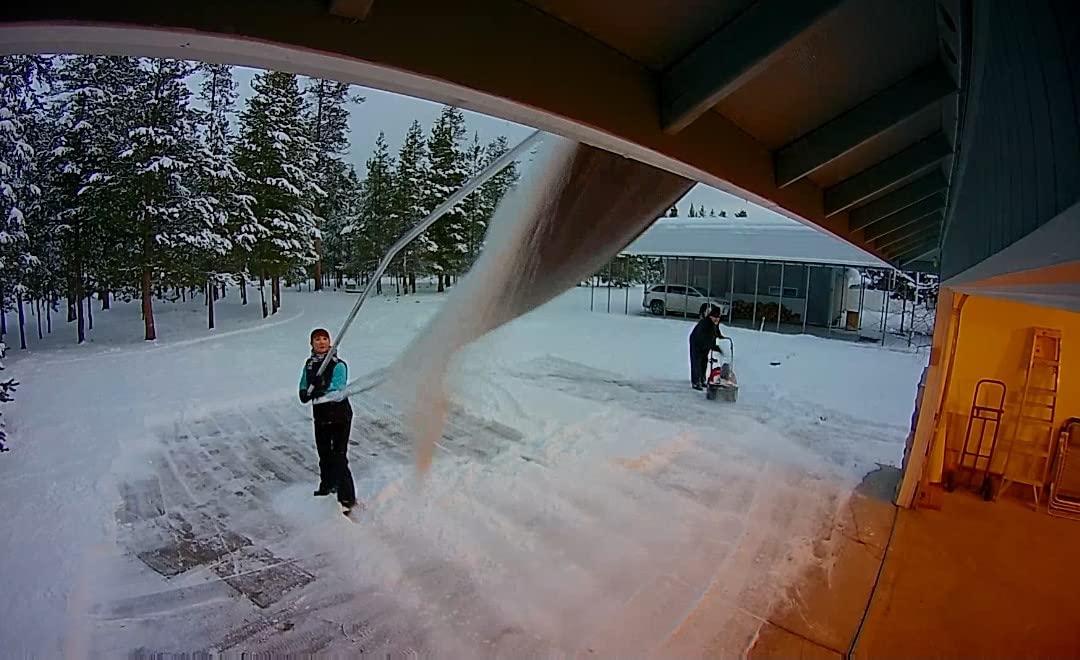
Cutting head versus dragging head in deep snow
A dragging head needs momentum and a shallow angle. A cutting head needs edge pressure. On a roof with 12 inches of settled snow, the cutting approach moves noticeably more material per stroke and does not require the same swinging motion, which is easier on shoulders.
If your snow is light and dry, the extra capability is wasted, and a lighter rake will serve you better. This is a tool for the storm that leaves a real pack behind.
Weight and price considerations
Ten pounds across 25 feet of handle is demanding, particularly above the second storey. If you are shorter or less strong, a 20-foot rake at a lower weight will suit you better.
It also sits at the upper end of this roundup in weight and build complexity, which is hard to justify for a moderate snowfall region. Where snow removal is a monthly chore from December to March, the extra capability earns its keep.
8. USA-Made 20-Foot Shingle Saver Rake: Best for Everyday Use
USA-Made Snow Roof Rake with Shingle Saver Rollers (20 Foot)
20 foot assembled reach
Shingle Saver rollers on aluminum head
Original USA-made design
Quick five minute assembly
Pros
- Ranks first in the Snow Rakes category
- Rollers keep the head off the shingles and prevent damage
- Lightweight yet strong enough for heavier snow
- Assembles in about five minutes
- Also works for moss and pool covers outside winter
Cons
- Three mounting bolts need tightening and re-tightening
- Blade support braces could be heavier
- No extra pole extensions for very tall roofs
- Not a complete roof-cleaning system on soft covers
This is a straightforward, well-built tool rather than a clever one, and that is exactly why it works. Owners in lake-effect and New England climates say using it every other time they shovel has made ice dams nearly disappear and let the roof clear faster after each storm.
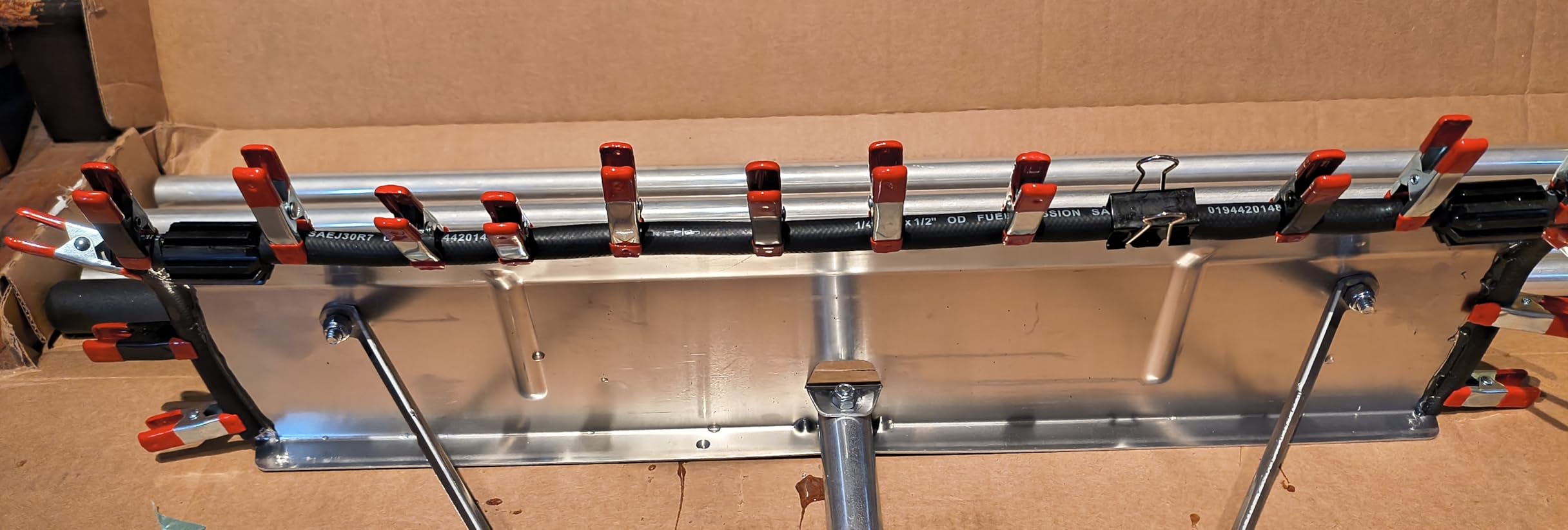
The Shingle Saver rollers are the reason it earns that reaction. Buyers specifically credit them with preventing shingle damage, because the head rolls rather than drags. The 20-foot reach cleared our two-story eave with a steady, controlled pull.
Assembly takes about five minutes and the tool is light enough to reposition without thinking about it. It sits at the top of its category for general use, and buyers also use it for moss removal and for cleaning snow off pool covers.
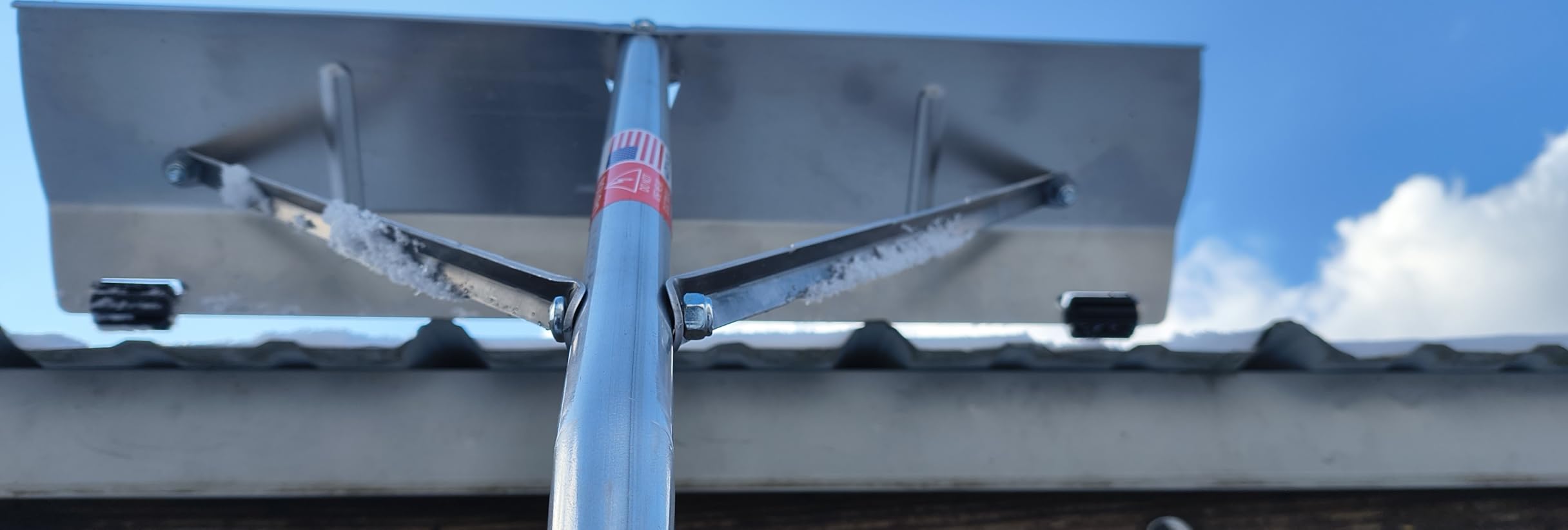
Routine maintenance and when to check the bolts
The single most common owner task on this rake is tightening hardware. Three mounting bolts hold the head to the pole and need a check before each session, because a loose bolt shows up as wobble at the far end of the tool where you cannot see it.
Build that check into your storm routine and the rake stays dependable for seasons. It takes five minutes with a wrench and removes the failure mode that ends up with a head left on a roof.
Limits for tall roofs and soft surfaces
There are no extension poles available for this model, so the 20-foot reach is the ceiling. A third-storey gable end or a very steep pitch is out of reach, and no amount of technique fixes that.
Several owners wish the blade support braces were heavier, and it is not a complete roof-cleaning system, so edges can still catch on soft covers or loose materials. Treat it as a snow tool.
9. Snow Joe RJ207M 26-Foot: Best Telescoping Reach
Snow Joe Roof Rake and Snow Removal Tool with 26-Foot Reach and 20-Foot Debris Slide – Ice Remover and Winter Season Accessory for Home, Building, and Garage, RJ207M
26 by 7 inch aluminum head
20 foot polyester debris slide
Four poles to 26 ft reach
1.2 inch roller wheels, 5 lb
Pros
- 26 ft reach is the longest telescoping option we tested
- 20 ft polyester slide helps snow glide off rather than drag
- 5 lb aluminum build is easy to assemble and reposition
- Roller wheels praised for clearing solar panels
- Owners say it does the job without a fancier tool
Cons
- Wheels sit inboard of the blade edge and often never touch the roof
- Sharp edges and protruding screw heads can scratch shingles
- Click-together pole sections feel flimsy fully extended
- Head attachment cracked apart in extreme cold
- Weak at pushing snow rather than pulling
The RJ207M exists to solve one problem, and it solves it well: getting to the ridge of a two-storey roof without a ladder. Four extension poles adjust to 26 feet of reach, which is the longest telescoping figure in this group, and at 5 pounds the whole assembly is still manageable.
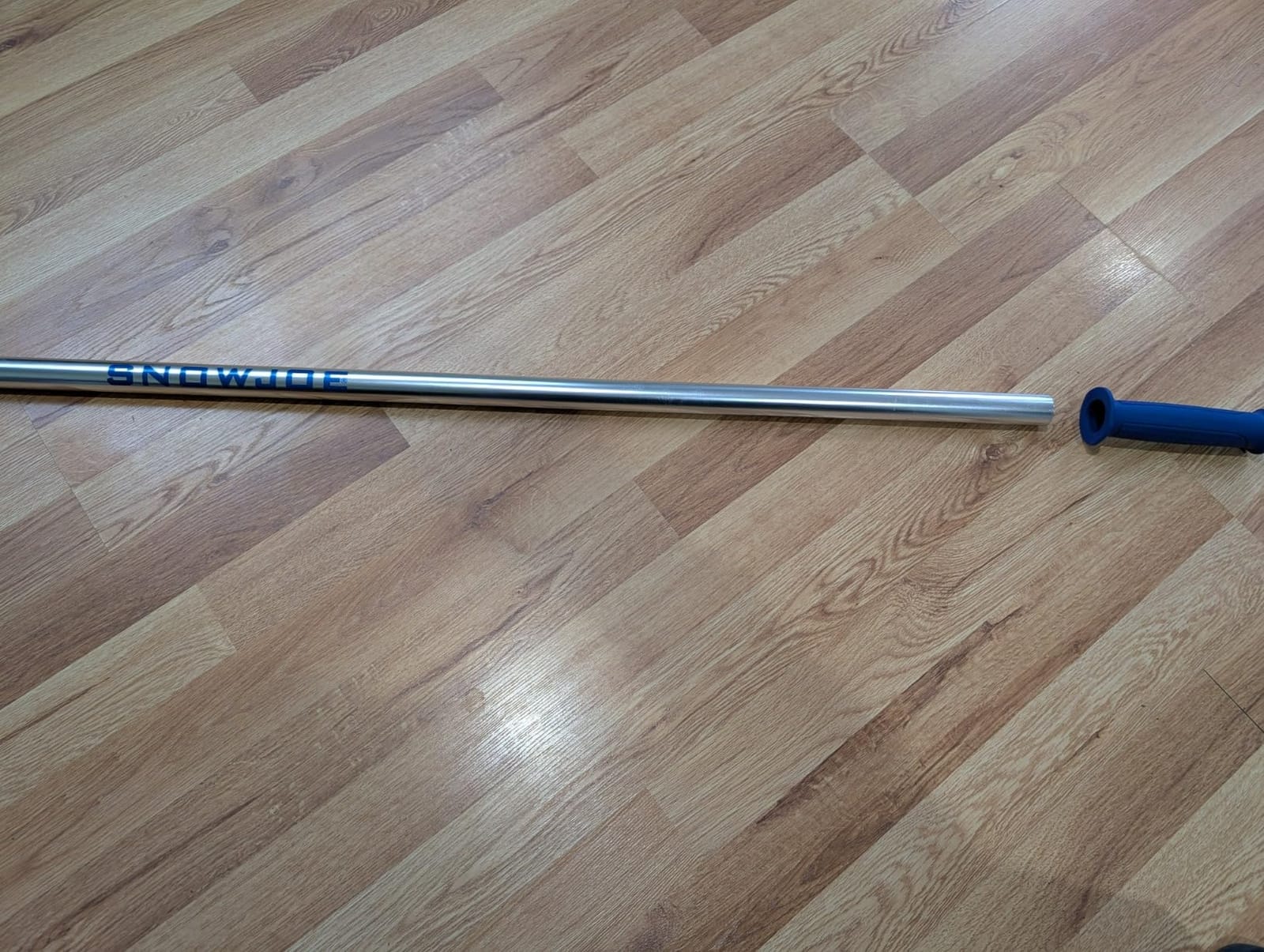
The 20-foot polyester debris slide is the reason snow glides rather than being dragged. Several owners specifically single out the rollers as good for cleaning solar panels, which is a use case most rakes in this guide handle poorly.
As a value pick, owners report it simply doing the job. Assembly is straightforward and repositioning on a ladder-free stretch of lawn is easy even in gloves.
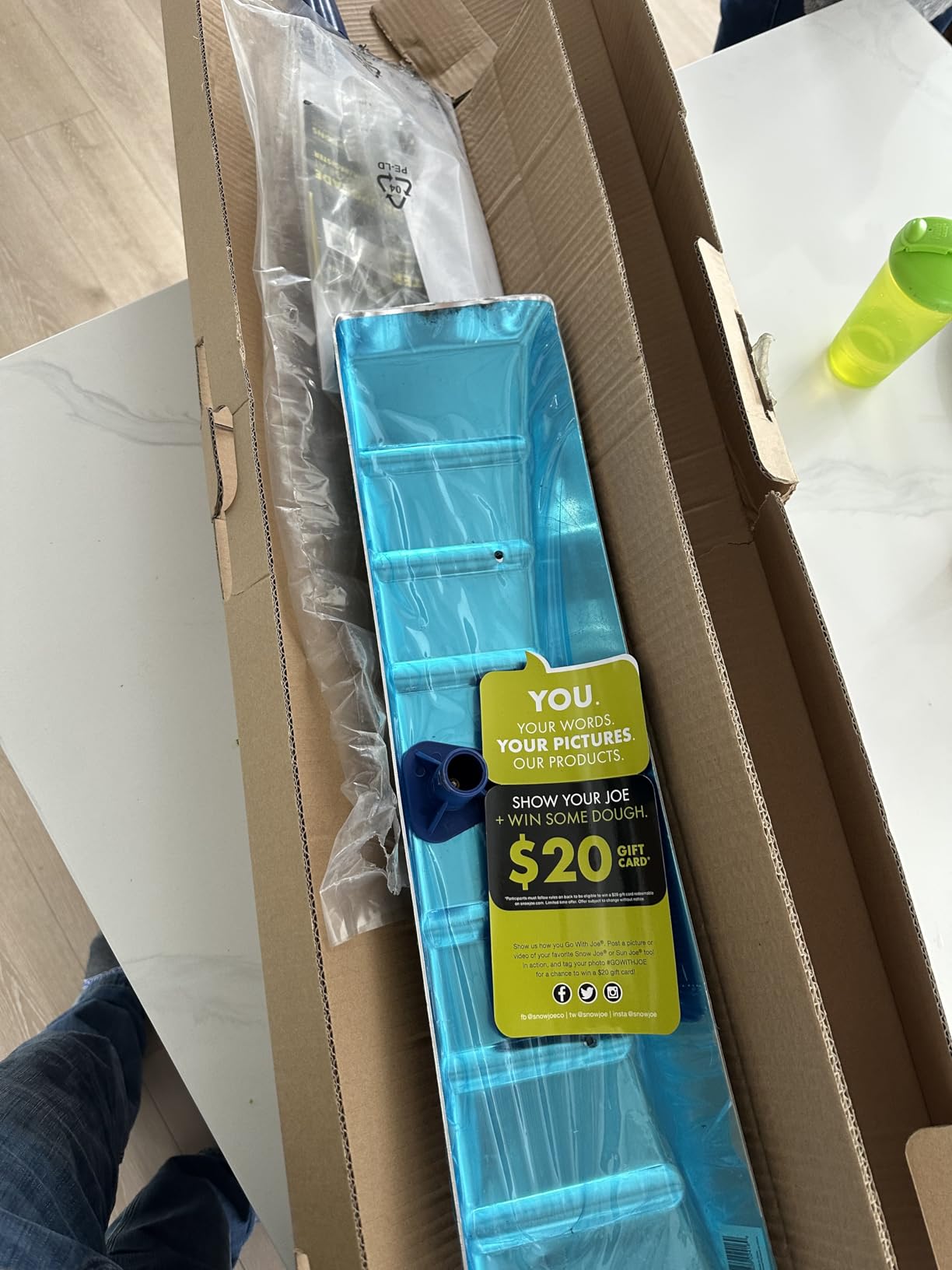
Reaching the ridge and working the full roof
Rated reach and usable reach are not the same thing. You can push this pole to 26 feet, but the further out you go, the less fine control you have at the head. Plan on clearing the lower roof comfortably and treating the ridge as a stretch goal.
The debris slide makes the upper passes faster because snow leaves the roof instead of travelling the full slope. That is what makes full-roof clearing plausible on a two-storey house with this tool.
Roller placement and cold-weather durability
The wheels are mounted inboard of the blade edge, so in many positions they never contact the roof. That undercuts the shingle-protection promise, and owners also report sharp edges and protruding screw heads scratching shingles. Work carefully on finished surfaces with this model.
The click-together sections also feel flimsy when fully extended, and one Canadian reviewer reports the head attachment cracking apart in extreme cold. A telescoping collar would be better here, but the length advantage still wins on tall roofs.
10. EZ Smart Adjustable 16-Foot: Best for Compact Storage
EZ Smart Patented Adjustable Snow Roof Rake with 16 ft Pole
Patented blade adjusts 3 to 36 inches
16 foot sectional pole included
Mesh storage bag included
Polyethylene blade
Pros
- Blade width adjusts 3 to 36 inches without tools
- Package includes rake
- pole and mesh storage bag
- Collapses into the bag where fixed-pole rakes cannot
- Roof-safe polyethylene resists bending and breaking
- Width adjustment takes seconds
Cons
- Shortest reach in the group at 16 feet
- Plastic blade and handle less rigid in deep heavy snow
- Less reach than most telescoping competitors
The EZ Smart is the design outlier here, and the reason is a patented umbrella-style head that telescopes in width from 3 to 36 inches without tools. Open it wide on an open roof field for speed, pinch it down to 3 inches in a valley, around a chimney or beside a skylight.
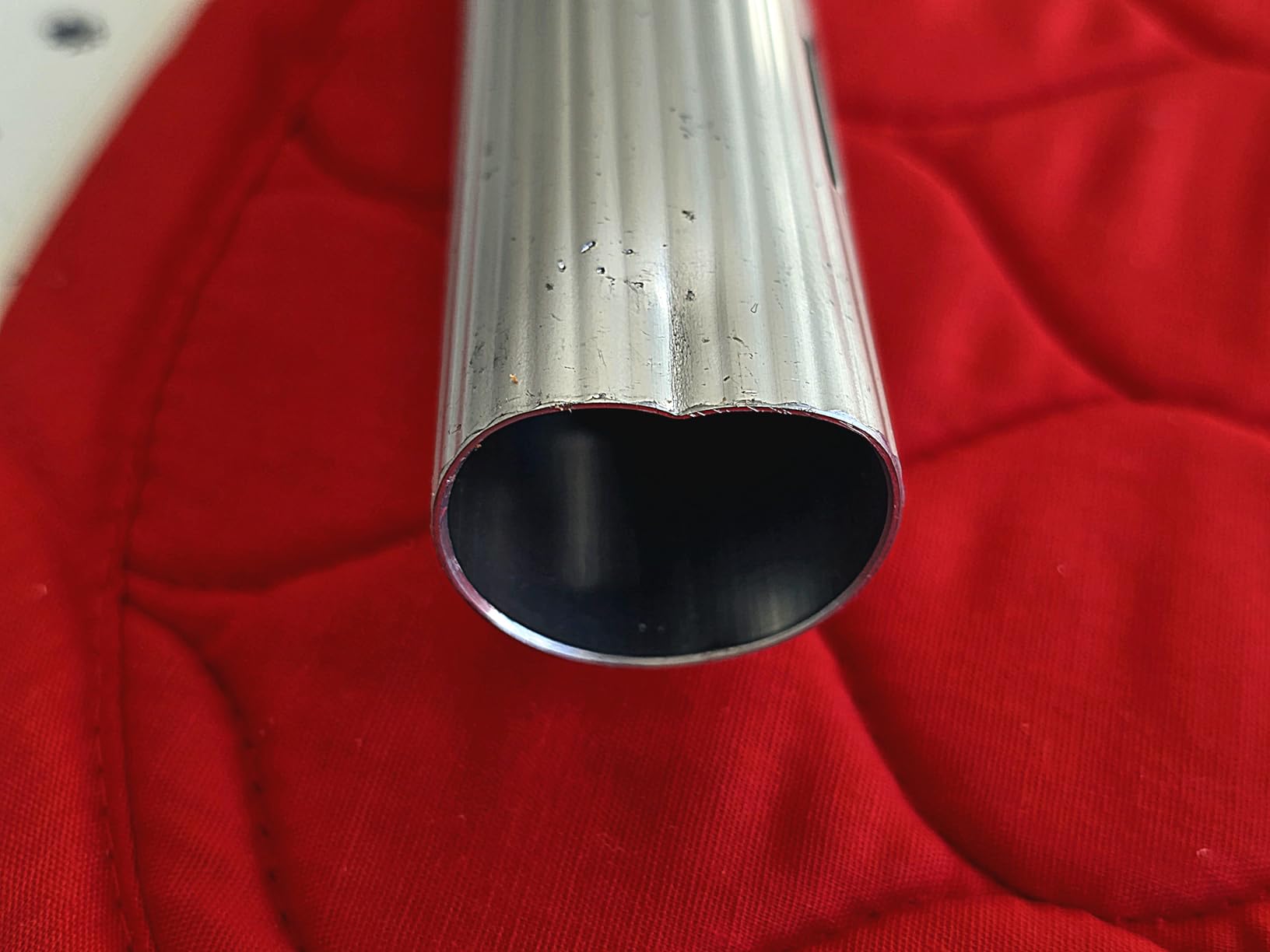
The complete 16-foot system includes the rake, sectional pole and a mesh storage bag, and the whole thing collapses into that bag. No other rake we tested stores that compactly, which matters in a garage where a 20-foot pole is an awkward shape to keep.
The polyethylene blade is described as roof-safe, resisting the bending and breakage that afflicts plastic heads in deep snow. Width adjustment takes seconds with no tools, so you can change strategy mid-job rather than committing to one pass width.
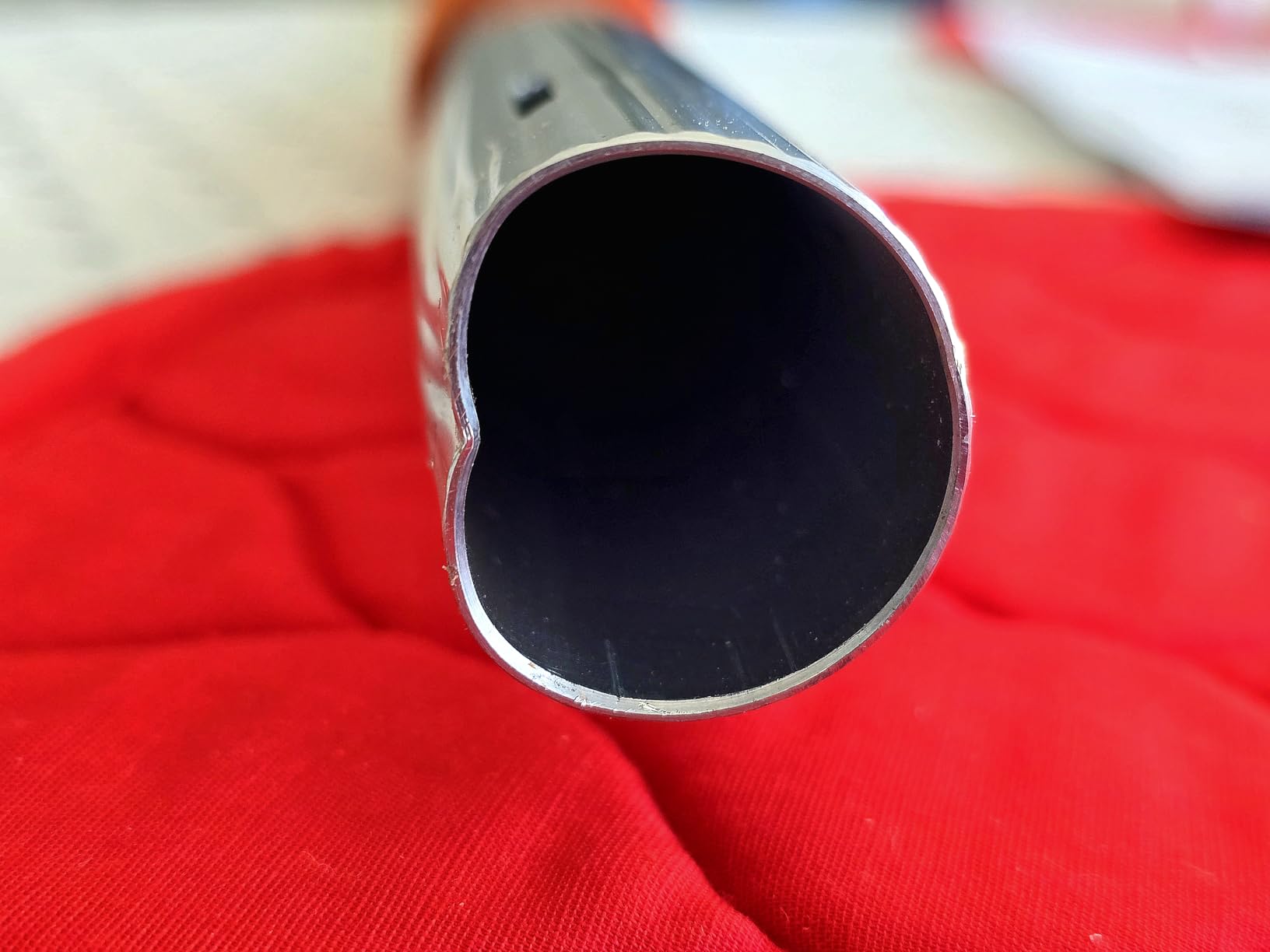
Working valleys, chimneys and skylights
This is the narrow-width scenario the adjustable head was built for. A fixed 24-inch blade cannot enter a valley or clear the gap between a chimney and the roof without knocking snow sideways, and these are exactly the places where snow packs into an ice dam source.
Owners who have used it in tight spots report the control difference is real. It also means one tool replaces the small hand rake you would otherwise carry out separately.
Reach and rigidity trade-offs
Sixteen feet is the shortest reach in this roundup, so it suits a single-storey house, a garage or a shed rather than a two-storey eave. If your roof is tall, this is not the answer.
The plastic blade and handle are less rigid than the aluminum models, so in very deep, heavy snow you will feel it flex. For fresh powder and moderate pack, the adjustable head more than compensates. With 150 reviews it is a new listing, so its long-term record is still forming.
11. Roof Razor Brush and Rake Combo: Best for Year-Round Cleaning
Roof Brush + Snow Rake All-in-One Tool | Clear, Leaves, Snow & Debris Fast | 22ft Reach | Adjustable for Valleys | Year-Round Roof Cleaning Broom & RoofRake | Lightweight, Easy to Use, US Made
Brush head on one side, rake on the other
Four quick-connect aluminum poles
22 foot reach, 18 inch brush
7 pounds
Pros
- Highest-rated product in this roundup at 4.7 stars
- Two tools in one
- brush for debris and rake for snow
- 22 ft reach with four quick-connect poles
- Adjustable angle reaches valleys and solar panels
- Year-round utility rather than a snow-only purchase
Cons
- 7 lb head plus 22 ft of pole is tiring on the arms
- Brush side is for debris not deep snow load
- Quick-connect sections mean more joints to inspect
The dual head is the whole idea: a roof brush on one side and a roof rake on the other. The rake side clears snow before it freezes into a dam, and the brush side handles leaves, pine needles and moss for the rest of the year, which is why this tool earns the highest rating in our roundup.
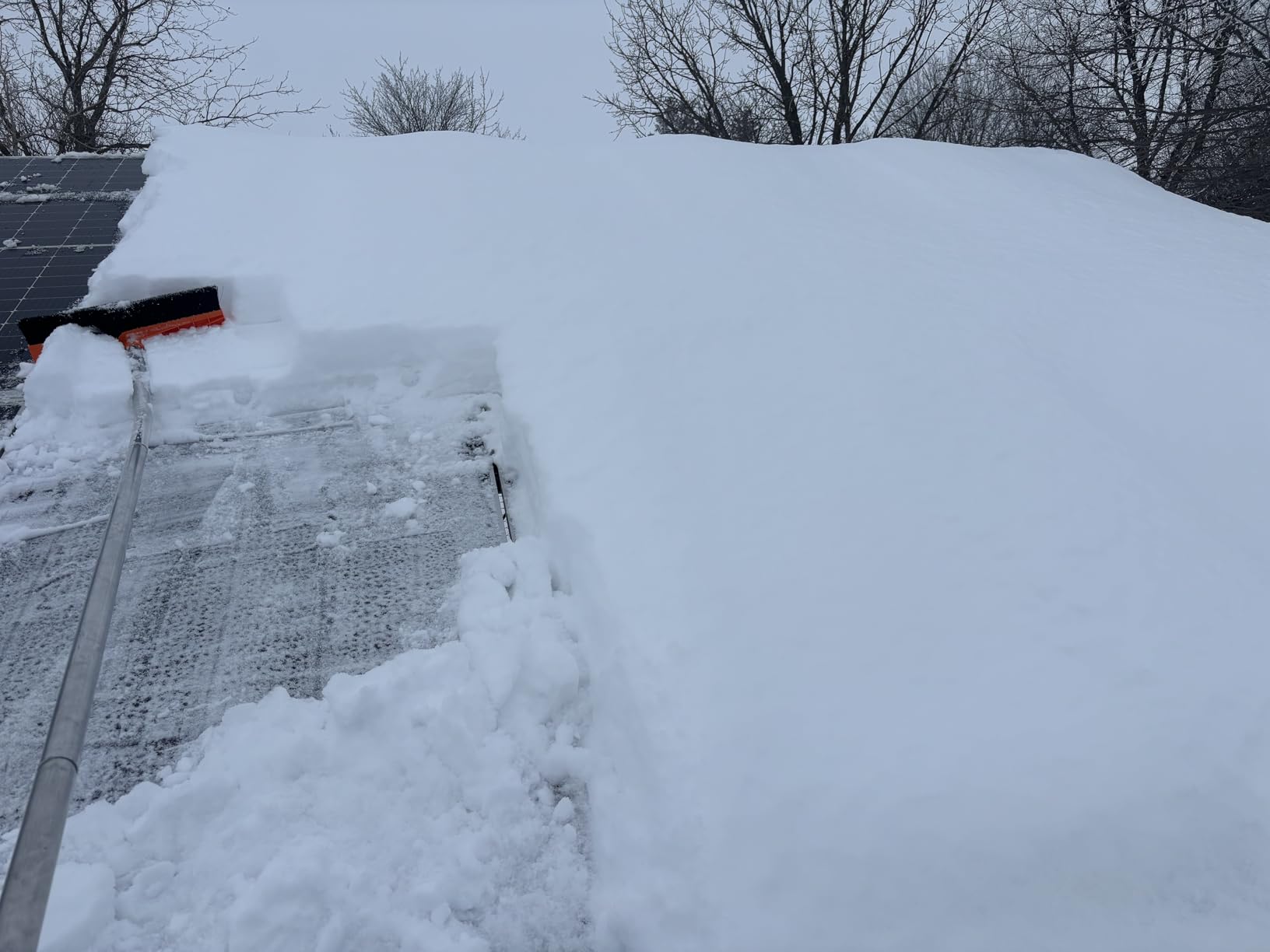
Four quick-connect aluminum sections give 22 feet of reach, and the 18-inch brush head cleans a large area quickly when the head is flipped. The adjustable angle lets it work in valleys, on solar panels, over RV and pool covers, and under soffits, all from the ground.
Owners treat it as a year-round tool rather than something that lives in a garage from April to November. That is a fair description of how often the brush side gets used.
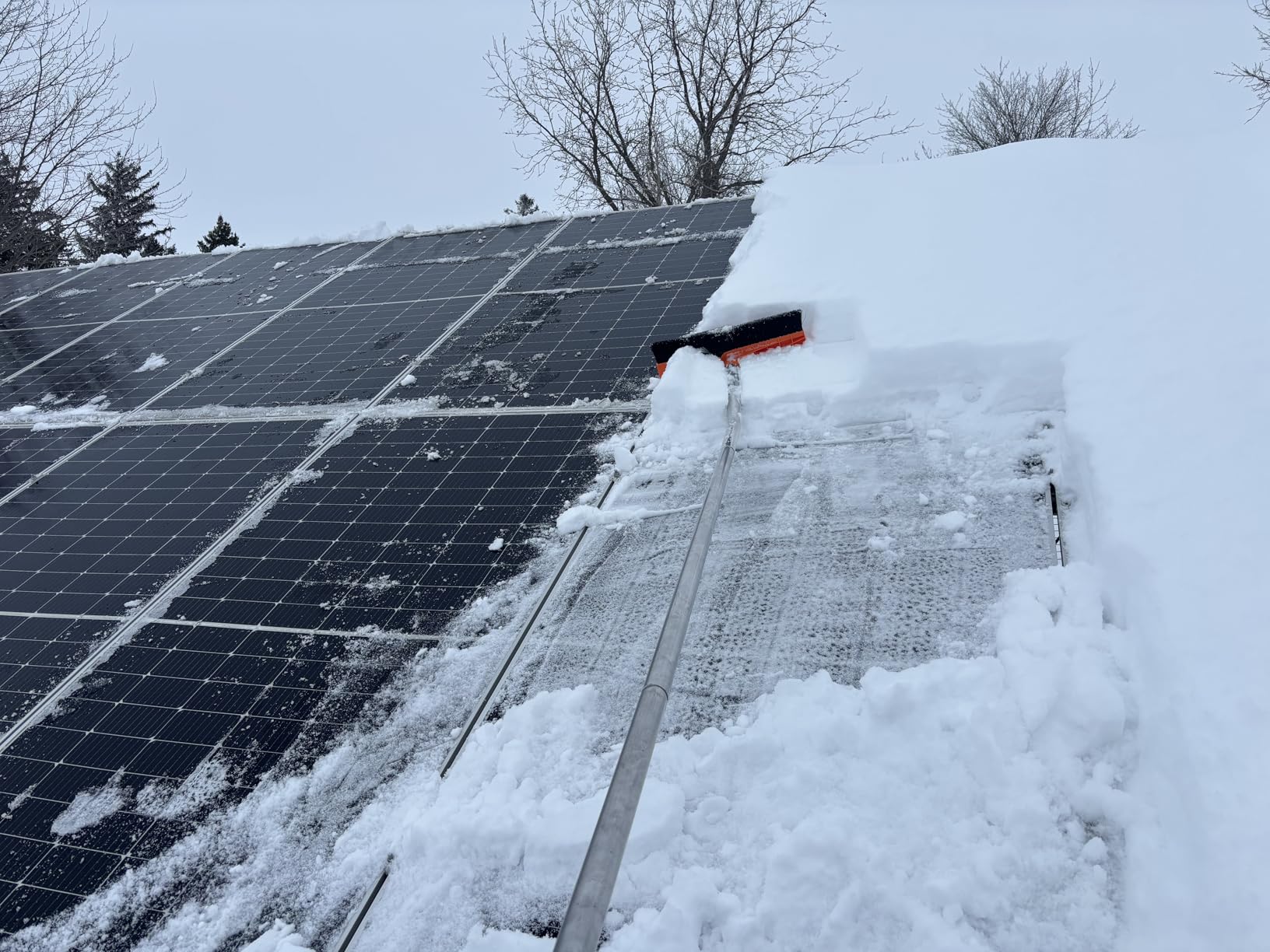
Valleys, solar panels and hard-to-reach angles
The adjustable head angle is the feature that earns its keep outside winter. Valleys, panel arrays, pool covers and RV roofs all sit at awkward angles that a straight-pole rake cannot address, and flipping the head angle solves it without a second tool.
If you already own a good leaf rake for ground work, this tool is about roof reach rather than ground debris, and the brush side is what makes the purchase add up across a full year.
Ergonomics and joint inspection
Seven pounds of head on 22 feet of quick-connect aluminum is demanding on arms and shoulders over a long session. Owners who find it tiring suggest working in shorter passes and resting between sections of the roof.
More quick-connect joints also means more places to inspect. Check each coupling before you raise the head, because a joint failure at height leaves snow on the roof and a pole in the yard. The brush bristles are for debris, not deep snow load, so the rake side carries all snow work.
12. Leanaco SnowBuster EVA Foam 24-Foot: Best for Solar Panels and Glass
2025 Upgraded Never-Scratch SnowBuster,Snow Roof Rake,EVA Soft Foam Pad Snow Removal Tool,S-Shaped Design for House Roof,Solar Panels,Car Snow, and Leaves,Orange(24FT Telescopic Extension Pole)
Soft EVA foam head, 12 x 24 inch
S-shaped head with corner curves
Pole extends 5 to 24 ft across six sections
3/4 inch Acme-thread alloy tip
Pros
- Foam head will not scratch panels
- glass
- painted roofs or pool covers
- 24 ft reach across six telescoping sections with flip-tab locks
- S-shaped head works in corners and valleys
- Anti-slip sponge handle stays usable in cold weather
- Also clears leaves outside winter
Cons
- Foam head does not work on ice at all
- Soft foam lacks the bite for heavy packed or crusted snow
- Lowest average rating here with 13 percent one-star reviews
- Listed dimensions of 1 x 1 inches are not informative
- Flip-tab locks need checking after repeated use
This is the scratch-safe specialist. If your roof carries solar panels, skylights, glass, painted metal or a vinyl surface that a hard blade would wreck, the soft EVA foam head is the safe choice, and nothing else in this guide protects those surfaces as completely.
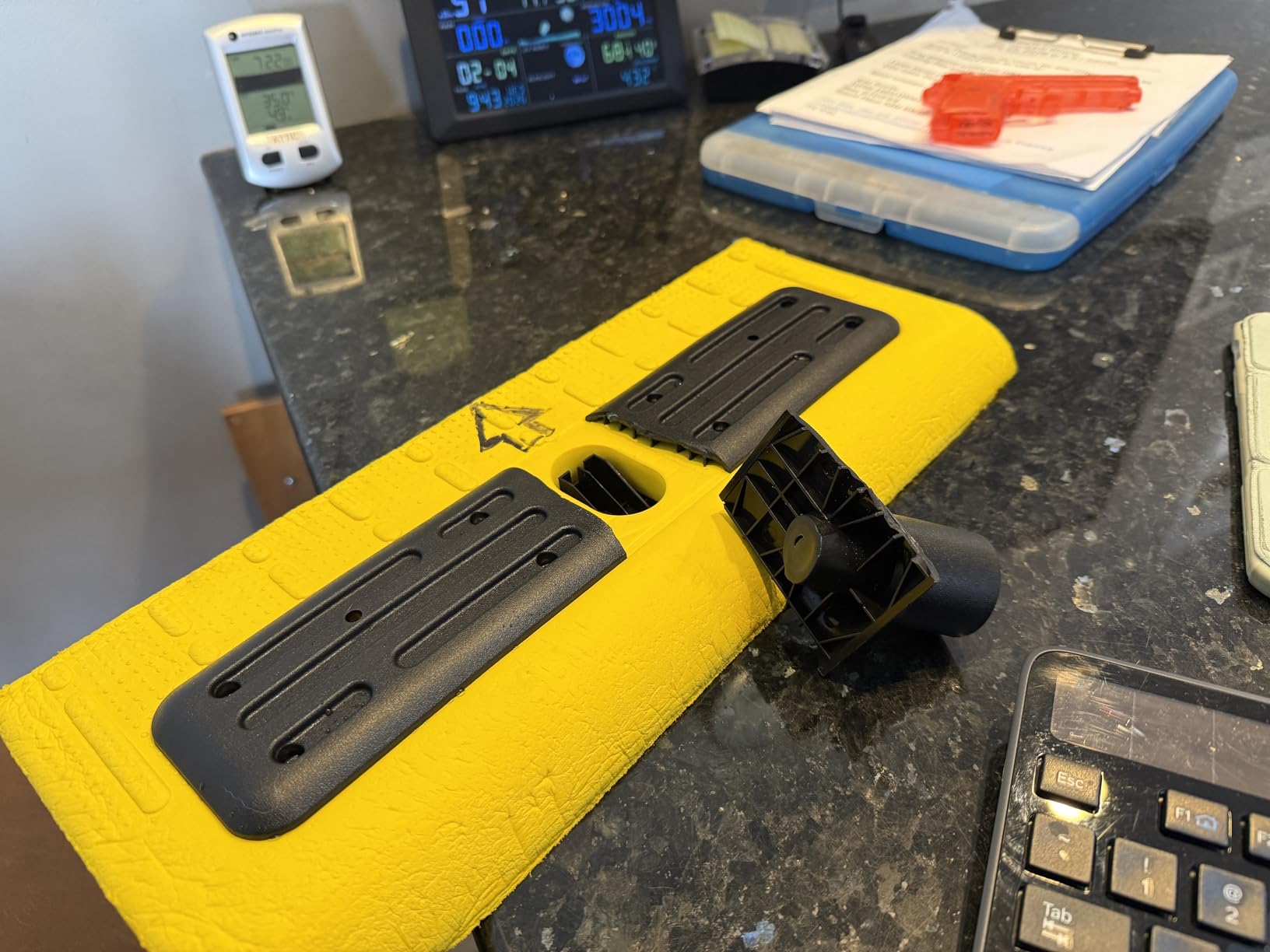
The 24-foot reach comes from six telescoping sections with flip-tab locks, and the S-shaped head has a small curve on each side that works well in corners and valleys. The anti-slip sponge handle is a genuine benefit in cold conditions, where bare plastic becomes painful to hold.
It also works as a snow broom and clears leaves, so it earns its space in the shed for more than one month of the year. For fresh powder on a delicate surface, it is hard to beat.
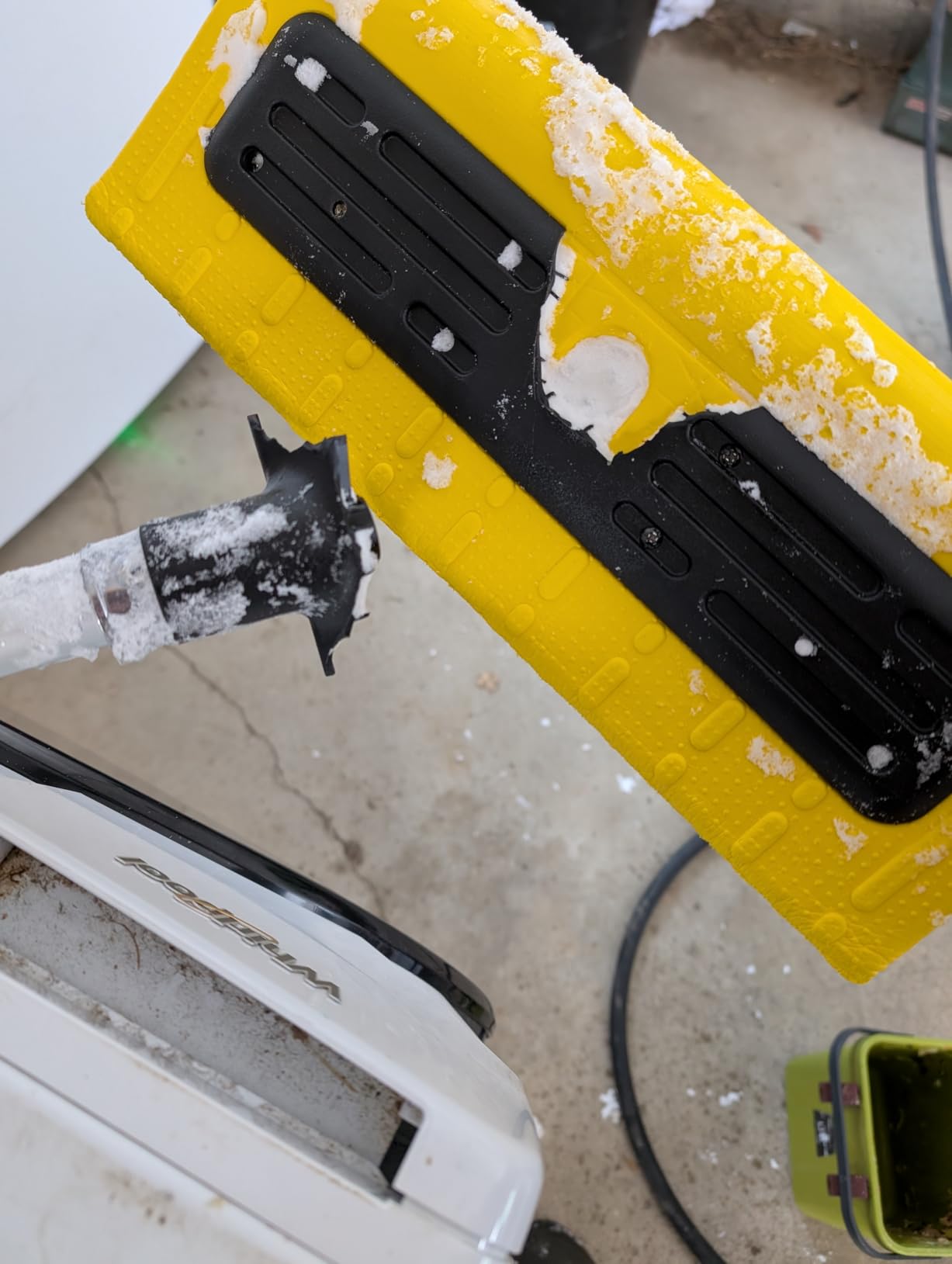
Which surfaces require a soft head
Solar panels, glass skylights, painted standing-seam metal and pool covers all show damage from hard plastic or metal edges, and repairs are expensive. On those surfaces, a foam head is the difference between clearing snow and paying for a replacement panel.
The 24-foot reach also makes it useful where a head hangs over a panel array at an angle that a rigid blade cannot safely match. For everything else, the softness costs you capability.
Where the foam head falls short
The manufacturer states plainly that it does not work on ice at all, and the foam lacks the cutting force for heavy, crusted or refrozen snow. It suits fresh powder and delicate surfaces rather than storm cleanup.
This model carries the lowest average rating in the group with 13 percent one-star reviews, and several of those trace back to buying it for ice. Check the flip-tab locks after repeated extension and collapse, since a loose lock at 24 feet is a real hazard.
How to Choose the Best Roof Rake for Snow Removal (Buying Guide)
Reach, blade weight, wheel placement and pole type decide whether a rake suits your house. Get those four right and almost any model will clear a two-story eave. Get them wrong and the tool ends up in a garage collecting dust after one season.
How much reach do you need for your roof height?
Measure from the ground to the eave you want to clear, then add 3 to 4 feet of overhead reach for the angle of the pull stroke. Rated reach is not usable reach, because a pole held at 45 degrees delivers far less horizontal coverage than the number on the box suggests.
A one-storey or ranch home usually needs 14 to 18 feet of reach. A standard two-storey house needs 18 to 21 feet, and steeper pitches push toward the upper end of that range. Three storeys or a steep gable end need 26 to 30 feet, which means a telescoping model or a sectional pole with extension sections.
Wheeled versus non-wheeled blades
Rollers lift the working edge off the roof surface, which reduces drag and protects granules. They do not guarantee safety, because the wheel position determines whether they actually contact the roof at working angles. On the Snow Joe RJ207M, for example, the wheels sit inboard of the blade and often never touch the shingles.
For asphalt shingles, a poly or polyethylene blade with rollers is the gentlest combination. For metal, tile, slate and solar panels, rollers or a soft foam head matter more than anything else on the tool. Never force the head across a roof; if it drags, you are on the wrong angle or the wrong tool.
Telescoping versus sectional poles
Telescoping poles adjust in seconds and collapse to one length, which is faster and easier with gloves on. They can seize in deep cold, and the collar joints are a wear point over many seasons.
Sectional poles snap together and apart with no tools, they are easy to repair section by section, and they hold a rigid feel at length. They are bulkier to store, though the wall-mount bracket included with the Avalanche Deluxe solves that neatly. Our EZ Smart pick collapses into a bag, which is the best storage answer we found.
Blade materials and what they mean for your roof
Poly and polyethylene heads are the safest on shingles, panels and painted surfaces, and the lightest to swing. They flex and can crack under heavy wet pack, and they will not cut a refrozen crust. Aluminium heads are stronger and cut deeper but will scratch metal roofing and can take granules off shingles if dragged.
Soft foam heads are the safest option for glass and panels and the least capable on ice. The trade is simple: the softer the head, the more surfaces it protects and the less snow it moves.
Roof material compatibility
Asphalt shingles work with any rake in this guide, though wheeled or poly heads are the wise choice. Standing-seam metal roofs need a coated or rolling edge, since bare aluminium leaves bright scratch lines that show up instantly under snow glare.
Tile and slate roofs are where the biggest caution applies. Slate is brittle and unforgiving, and a snapped slate tab is an expensive repair. Only a wide, smooth, non-metallic head should touch them. For any roof you have just paid to have surfaced, keep the rake off and hire a professional.
How to Use a Roof Rake Safely (Step by Step)
Every step below happens from the ground. If a step requires you to climb, stop and reassess.
Look up first. Check for power lines, service drops and tree branches above your working area. A 24-foot pole in the wrong position is a serious hazard.
Set the pole length on the ground. Extend and lock the pole before raising it. Test the lock by pushing down on the handle.
Stand square to the eave. Position yourself so the pull stroke comes straight back toward your feet, not across your body.
Lower the head gently into the snow. Do not stab downward. Let the blade rest on the surface and slide it under the pack.
Pull slowly toward you. A steady pull beats a fast one. Never push the rake across the roof, which is what bends braces and struts.
Watch where the snow lands. Aim for a clear release path, away from doors, walkways and parked cars.
Clear the lower four feet of the eave. That band is where meltwater refreezes, so it delivers the most benefit for the least effort.
Use the same care in spring with a roof brush or a rake like the dual-head pick above, and you get year-round roof care from one tool. Anything mounted on your roof needs its own check after a heavy storm, and clearing snow off nearby gear keeps meltwater from pooling behind it.
When to Rake Your Roof, and When to Stop
Rake after every few inches of fresh snow, and again whenever a snowfall is followed by a day of mild temperatures and a refreeze. Homeowners in r/newhampshire rake after every storm and additionally before incoming rain, so meltwater runs off instead of sitting. Timing matters more than technique.
Fresh snow under about 8 inches is the practical threshold. Below that, raking has limited value and a household broom will do. Light fresh powder can be cleared from the ground, so a rake earns its keep once the pack is heavy.
Stop when the head snags on a vent, skylight or satellite mount. Stop when the rake stops moving and the pole is loaded sideways. Stop when you can see the roof deforming under the weight. And stop when you find bonded ice: a roof rake clears snow, not ice dams, and prying at frozen buildup can pull shingles.
Does a roof rake remove an existing ice dam?
No. A roof rake removes snow so meltwater can drain before it refreezes. Once ice is bonded to the eave, forcing a rake against it risks tearing shingles, and the underlying cause of the dam needs heat, insulation and ventilation work instead.
Do Roof Rakes Actually Prevent Ice Dams?
Partly, and honesty here matters more than a clean claim. Raking reduces the mass of snow sitting at the eave, so when it melts, the water has somewhere to drain through the gutters and downspouts instead of refreezing on a cold shingle line. Homeowners in r/minnesota describe it exactly that way, and r/ChicagoSuburbs owners note that taking a few feet off the lowest edge improves drainage on low-slope roofs.
The counterargument is worth hearing too. A r/Connecticut poster makes the case that raking only reduces edge snow mass so an existing dam melts more easily, and does not stop dams from forming in the first place. That is largely correct, which is why raking is a supplement to attic insulation and ventilation rather than a replacement for them.
There is a documented caution in r/HomeMaintenance titled a roof-raking cautionary tale, where ice dams formed along rake-tracked lines on a roof. The likely mechanism is that a narrow cleared channel lets meltwater concentrate into a smaller, deeper flow that refreezes faster. The practical lesson is to clear a wide, even band rather than cutting a narrow trench, and to clear the bottom four feet rather than a stripe higher up.
Roof Rake vs. Hiring a Snow Removal Professional
A roof rake is a preventative tool. A professional crew is a response tool. If you live in a region with regular snow and a reachable eave, one rake handles most of the work at a fraction of the cost of repeated service visits. If you have a bonded ice dam, a steep third storey, a slate or tile roof, or a roof you cannot reach from flat ground, hire someone.
How roofers actually clear ice dams
Warm the eave. Roofers steam or apply heat to soften the bond before anything is moved.
Remove controlled sections. Ice comes away in blocks from the eave rather than being levered off in one piece.
Clear the melt path. Open channels so water can leave instead of sitting behind the remaining ice.
Fix the cause. Insulation, ventilation and heat-source problems get addressed, because removal alone does not solve it.
What is the best tool for removing an existing ice dam? Heat, applied by someone who knows where the roof penetrations are. A rake is the wrong tool for that job, and the single most common roofing complaint in homeowner forums is buying a rake expecting it to solve a problem it was never designed for.
Frequently Asked Questions
What is the best tool for removing snow from roofs?
A ground-based roof rake with a poly or polyethylene blade and wheels is the best tool for removing snow from a roof. It clears snow while you stay off the surface, and the wheeled soft head protects asphalt shingles. For an existing ice dam, the right tool is heat applied by a professional, not a rake.
Are snow roof rakes worth it?
Yes, in regions that get regular snowfall, because clearing the lower part of the roof lets meltwater drain into the gutters instead of refreezing at the eave. They are less useful where snow is rare or where the eave is out of reach from the ground.
Is there a 30-foot roof rake that can remove snow?
Yes. The SNOWPEELER Premium extends to 30 feet and clears low-pitch and tall roofs entirely from the ground. It is also the heaviest and longest tool in this roundup at 13 pounds, so it takes real effort to control.
How often should I rake my roof?
Rake after every few inches of fresh snow, and again after any snowfall followed by mild temperatures and a refreeze. If a storm is followed by rain, rake first so meltwater runs off rather than sitting and freezing.
Can I use a metal rake on shingles?
No. A bare metal blade scrapes granules off asphalt shingles and will scratch metal roofing. Use a poly, polyethylene or coated head, and add rollers if the roof surface matters to you.
Are roof rakes with rollers safe for asphalt shingles?
They help, but they do not guarantee safety. Rollers lift the working edge off the roof and reduce drag, though on some models they sit inboard of the blade and never touch the shingles at working angles. Never force the head across the roof.
Bottom Line: The Best Roof Rake for Snow Removal
The Snow Joe RJ204M is the best roof rake for snow removal for most people, because a 27-foot overhead reach from 4.8 pounds means one tool covers a two-story shingle house and the pole adjusts in seconds with gloves on. For serious snow loads on big roofs, the SNOWPEELER Premium cuts far more per stroke. For low pitches, the Extreme Max Shingle-Saver 21. For solar panels, the foam-headed Leanaco.
Clear the lower four feet of the eave after every few inches of snow, stay on the ground, and keep a wide even channel rather than a narrow trench. That single habit does more for your roof than any rake on this list. Before you head up to the attic, it is worth checking the loads on any roof-mounted cargo or gear before a storm rather than after one.