
Yes, portable basketball hoops are good, and the best of them put a regulation-height rim on a driveway without anyone pouring concrete. The tradeoff is stability, since a portable system relies on ballast in its base rather than anchors. Our team compared 10 of them side by side on published specs and owner reports, and the Lifetime 44-Inch Pro Court came out on top for most families.
Everything in this guide is scored on the things that actually decide whether a hoop gets used: backboard width and material, how much ballast the base holds, how hard the height adjustment is, and whether one adult can do it. Last updated for 2026.
If you want a wider look at fixed options, our guide to the best basketball hoops for driveways covers in-ground systems, and our picks for indoor adjustable hoops for kids cover the garage and playroom end of the market.
Table of Contents
Top 3 Picks: Best Portable Basketball Hoops in 2026
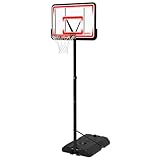
Lifetime 44 Inch Pro Court
- 44 inch polycarbonate backboard
- 7.5-10 ft in 6 inch steps
- 5-year warranty

Silverback NXT 54
- 54 inch Infinity Edge backboard
- Stabili-Frame steel connection
- 26 inch overhang

IGL Dual Base System
- Dual fillable base
- 3-10 ft across three pole sets
- tilt-and-roll wheels
The Lifetime 44-inch earns the top slot on the strength of owner volume: 5407 reviews at a 4.6 average, the highest rating and the largest review pool in this group. The Silverback NXT is the build-quality pick if you want a steel system with a 54-inch board and a notably quiet rebound. The IGL is the value pick, and its two-tier ballast design is the cleverest answer to wind here.
How We Picked
We ranked every system on five measurable criteria rather than on marketing language.
Backboard width and material — width in inches, and whether the surface is polycarbonate, acrylic, or polyethylene, because that decides rebound feel and how the board ages in sun.
Ballast capacity — the stated weight of sand or water the base accepts, because a base that cannot be filled heavy enough will lean in wind.
Height adjustment — the low end of the range, the number of settings, and whether a single adult can operate the mechanism.
Construction — steel grade and gauge on the pole and backboard frame, plus the rim type and its spring design.
Warranty and support — stated coverage length and how owners describe the replacement-parts experience.
We also weighed owner complaints pulled from product reviews and buyer forum threads, because the same three problems show up repeatedly: backboard wobble, awkward height adjustment, and instructions that do not match the hardware in the box.
All 10 Portable Basketball Hoops Compared in 2026
| Product | Specs | Action |
|---|---|---|
| Lifetime 44 Inch Pro Court |
|
Check Latest Price |
 Yohood 4.4 to 10 FT Adjustable Goal Yohood 4.4 to 10 FT Adjustable Goal |
|
Check Latest Price |
| Silverback NXT 54 Inch |
|
Check Latest Price |
| IGL 40 or 44 Inch Dual Base Goal |
|
Check Latest Price |
 Lifetime 48 Inch Speed Shift Lifetime 48 Inch Speed Shift |
|
Check Latest Price |
 DUMOS 10FT Adjustable Hoop DUMOS 10FT Adjustable Hoop |
|
Check Latest Price |
 awii sport 40 or 44 Inch Quick Lift awii sport 40 or 44 Inch Quick Lift |
|
Check Latest Price |
 Lifetime 90061 52 Inch System Lifetime 90061 52 Inch System |
|
Check Latest Price |
 IE Sports 44 Inch Portable Hoop IE Sports 44 Inch Portable Hoop |
|
Check Latest Price |
 TONBUX 44 or 48 Inch Hoop TONBUX 44 or 48 Inch Hoop |
|
Check Latest Price |
Read the ballast numbers first. A 44-inch board on a small base will be fine for shooting practice but will shift in a stiff breeze, while a 54-inch steel system needs a base that can be filled heavily before it will stay planted through a dunk.
1. Lifetime 44 Inch Pro Court — Best Overall Portable Basketball Hoop
Lifetime Portable Basketball Hoop, Adjustable Height 7.5-10 Ft, 44 Inch Shatterproof Fusion Backboard, Base with Wheels
44 in polycarbonate backboard
7.5-10 ft in 6 in steps
48 lb
5-year warranty
Pros
- Highest rating and largest review pool in this group
- Telescoping pole with no tools needed
- Powder coated three piece steel pole
- Built in base wheels
Cons
- Small base filler hole makes sand loading slow
- Backboard feels springy on layups
- Height changes need two strong adults
This is the hoop we keep coming back to. The 44-inch polycarbonate Fusion backboard is paired with a polyethylene frame, and in practice the rebound is livelier than most boards in this price range — not glass-quiet, but firm enough to build a shot on. The telescoping pole moves from 7.5 to 10 feet in 6-inch increments with no tools at all, which is the single feature that makes it the best portable basketball hoop for most families.
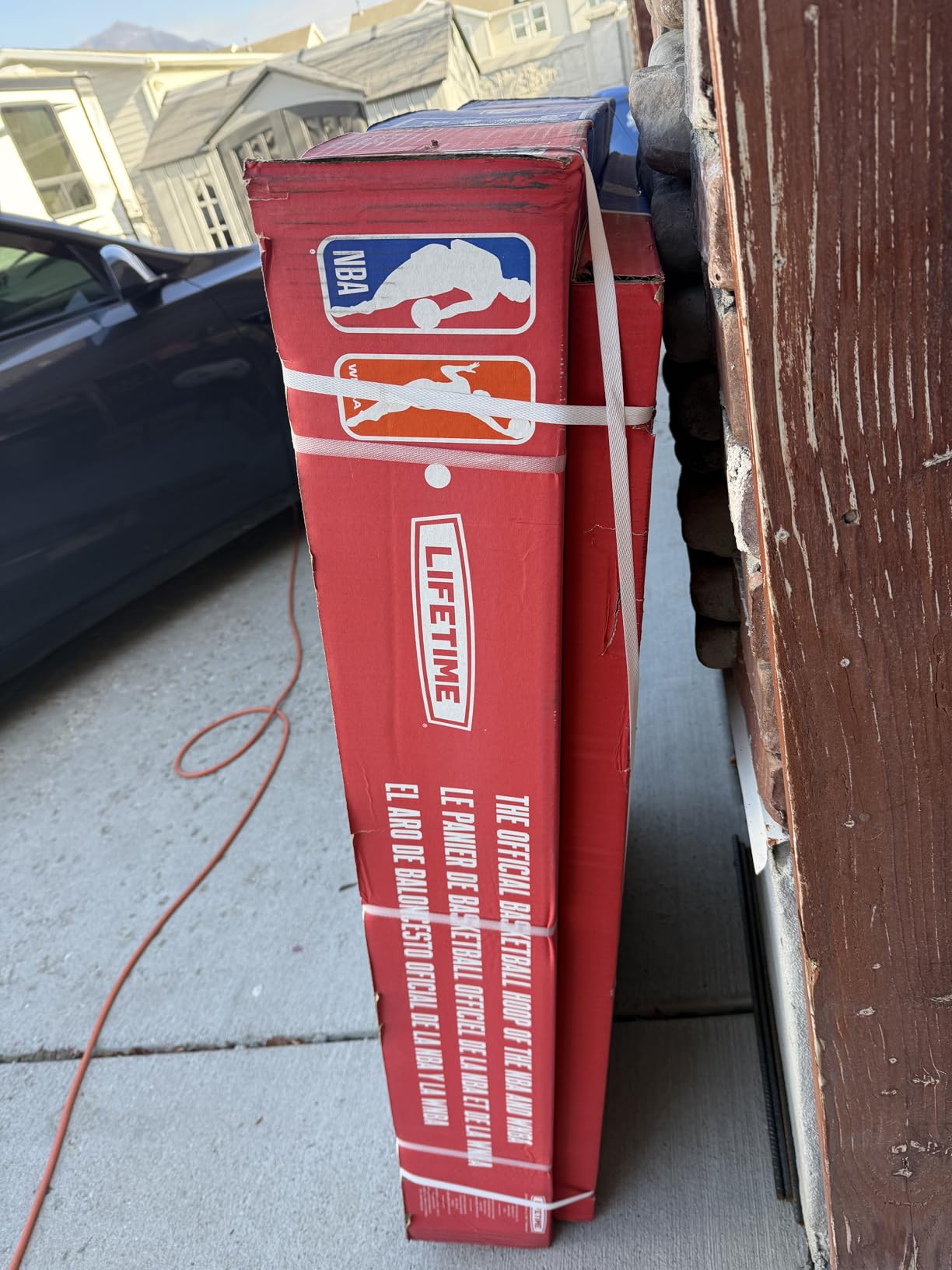
Weighing in at 48 pounds empty, it is light enough to reposition once the base has sand in it, and the built-in wheels on the base handle the roll across a driveway. Owners consistently describe assembly as straightforward when you follow the online video, and manufacturer support gets called out for resolving missing parts quickly.
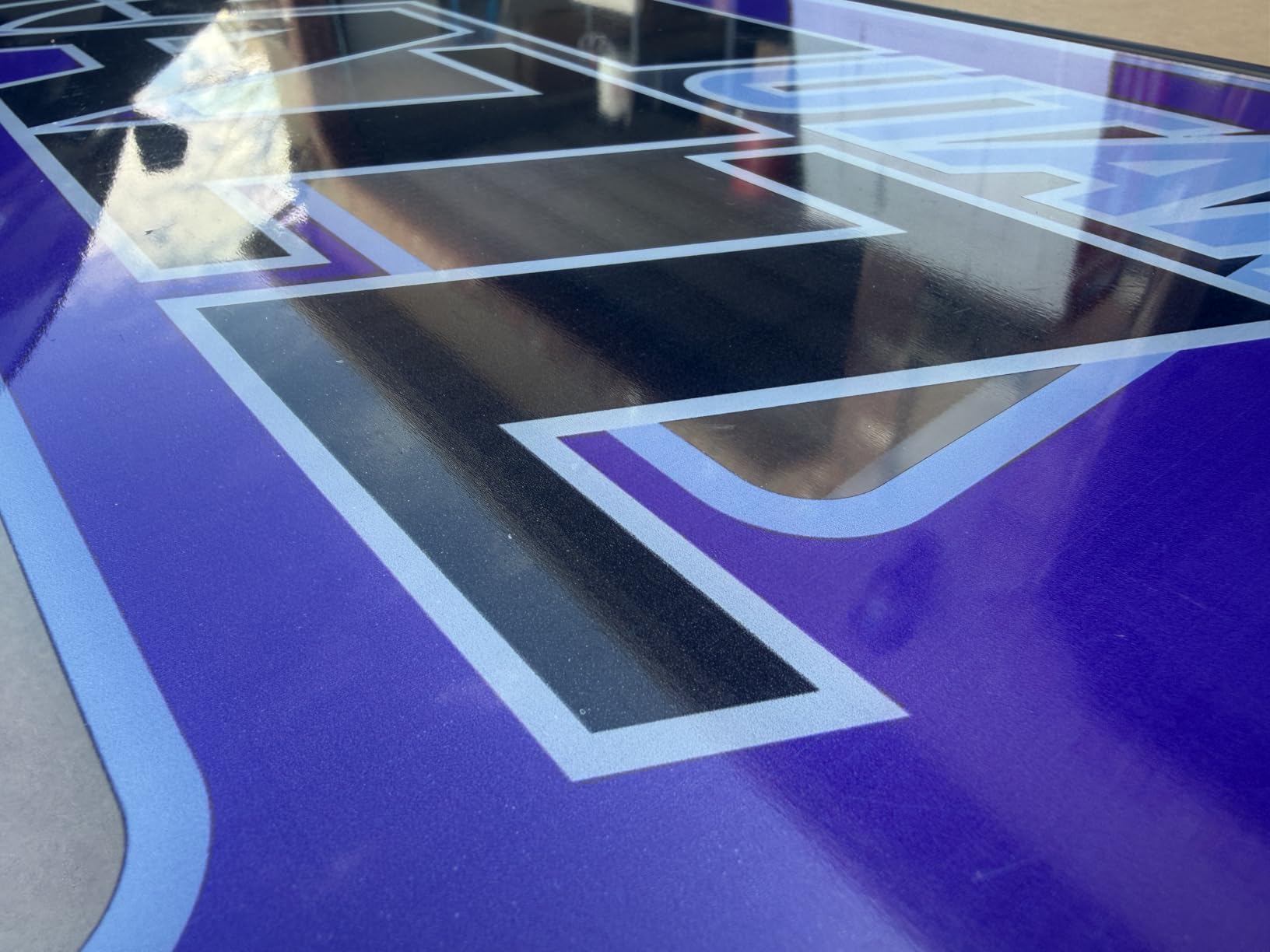
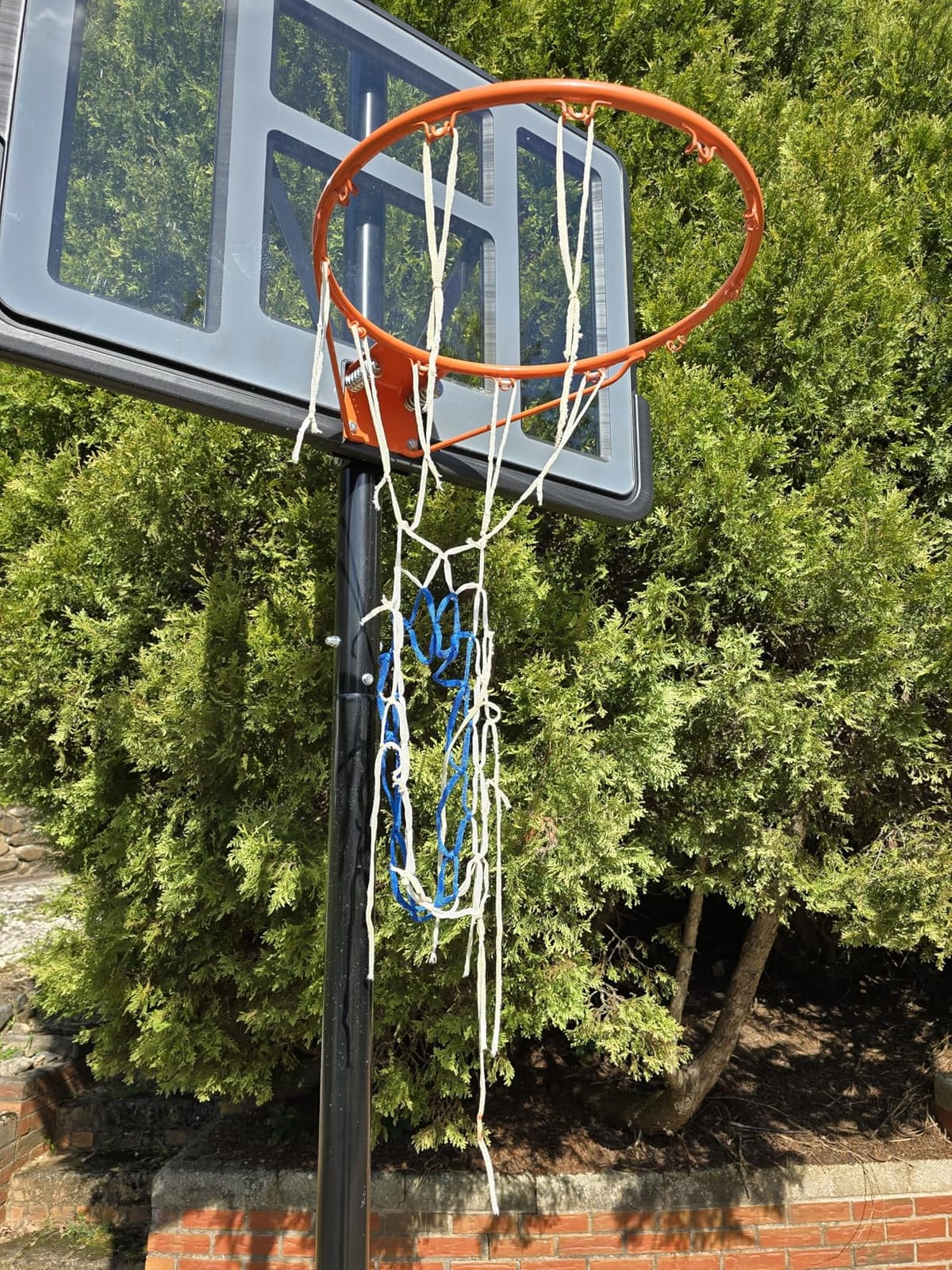
The one real irritation is the base filler hole. It is small, so loading sand takes considerably longer than it should, and water is the faster option in a mild climate. The telescoping pole also needs two adults and a pin pull to change height, which means a parent adjusting the rim alone in the yard is not going to happen.
That springy feel on the backboard is the other recurring note. On layups the board moves a little, which is noticeable if you are used to a rigid system, and it is the reason this is not the pick for a serious player who shoots hundreds of shots a week.
Who this hoop suits
A family with kids roughly 7 and up, on grass or a driveway, that wants one system that a 7-year-old and an adult can both use. A 7.5-foot low end is high for a very young child, but a taller sibling or parent can still shoot at it.
It also suits anyone moving homes or renting, since nothing is cemented and the whole unit rolls on its base wheels.
Who should skip it
Skip it if you want to dunk regularly, since a fixed 5/8-inch steel ring with braces will not survive hanging. It is also the wrong pick if a single person needs to change the height often, or if you plan to load the base with a sand shovel every spring.
2. Yohood Adjustable Goal — Best for Mixed-Age Families
Yohood Basketball Hoop Outdoor 10ft Adjustable, Portable Goal System for Kids Youth and Adults, 44 Inch Shatterproof Polycarbonate Backboard, Black
4.43-10 ft across 11 levels
44 by 28 in base
44 lb
1-year warranty
Pros
- Eleven height settings spanning 4.43 to 10 ft
- Oversized base for a budget model
- Labeled parts with an assembly video
- Responsive replacement-parts service
Cons
- Backboard flexes and gives a dead bounce
- Instructions take a few hours to follow
- Pole sections can ship mismatched
Nothing else in this roundup spreads its height settings as finely. The pole system runs from 4.43 to 10 feet across 11 settings — 7.55 to 10 feet with the three-piece pole, and 4.43 to 6.4 feet with the two-piece configuration. That makes it the pick if you have a toddler learning to shoot and an adult who still wants regulation height from one unit.
The molded 44 by 28 inch base is unusually large for a budget system, and it accepts sand or water. Several owners report the unit withstanding genuinely severe wind once filled, which is a useful counterpoint to the usual budget-hoop complaint.
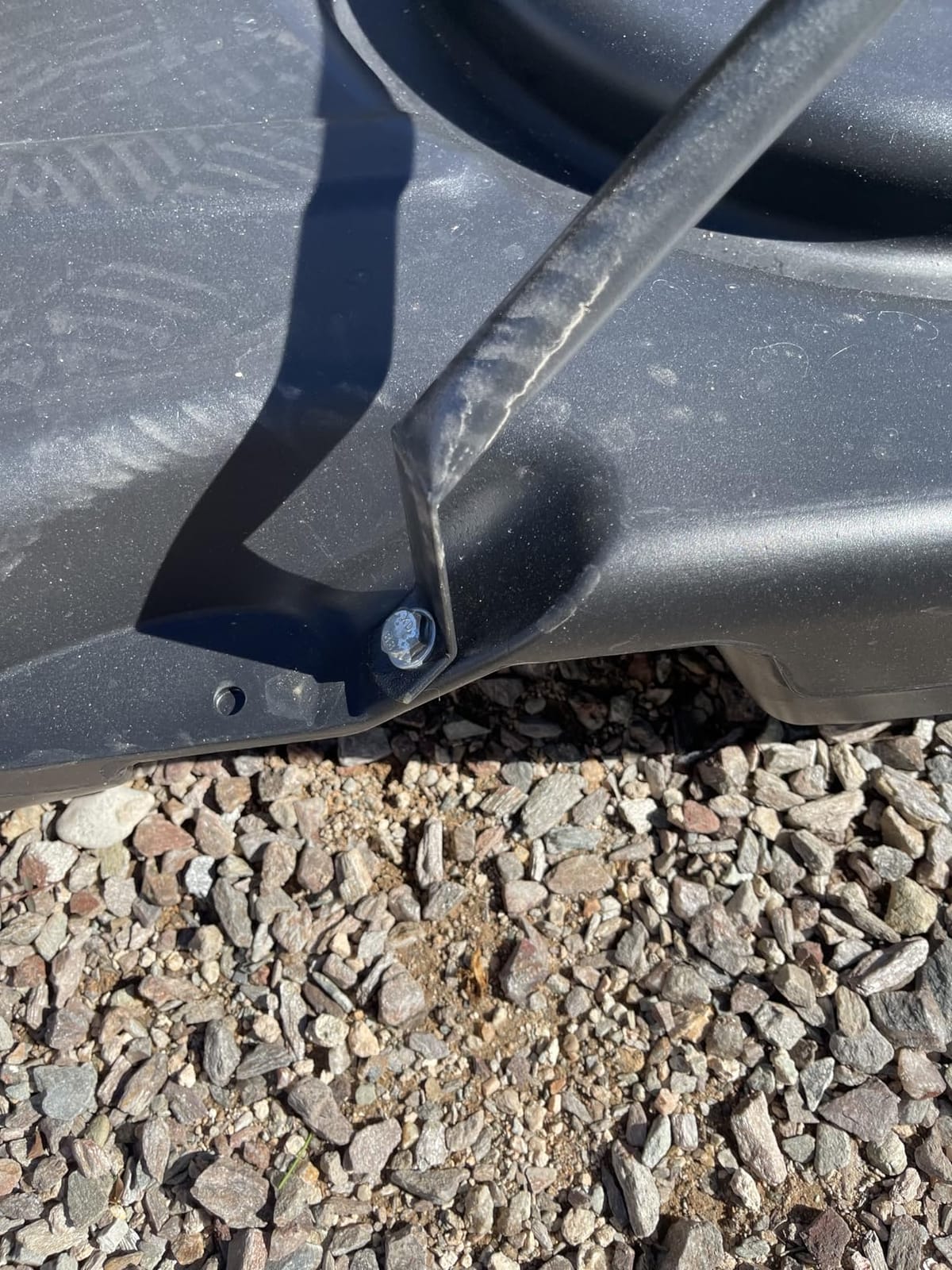
The weakness is the board itself. It flexes on hard shots and returns a dead bounce rather than a springy one, so the rebound feel is the least convincing here. If you are teaching a young child, a dead bounce actually shortens the shot cycle, but anyone developing a shooting touch will feel the difference.
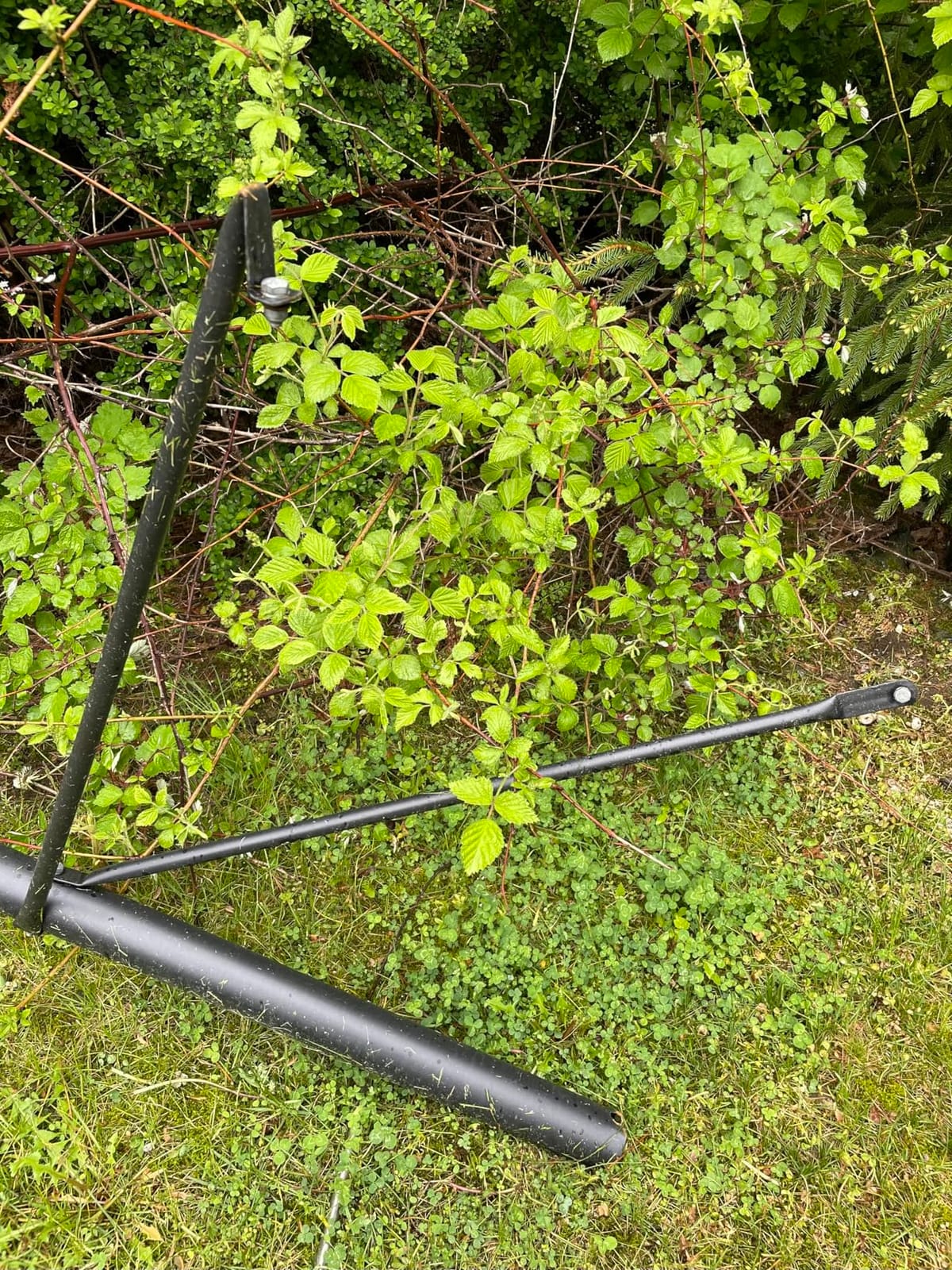
Assembly takes a few hours even with labeled parts, and a handful of buyers received pole sections that did not match each other, which blocked height adjustment until a replacement arrived. The one-year warranty is thin next to the five-year coverage on the Lifetime units.
Who this hoop suits
Families spanning a wide age gap, especially a child under six who needs a genuinely low rim. The 4.43-foot setting is the lowest point this pole configuration reaches, and the reason the system is worth a look for a family with a very young child.
It also suits buyers who want extra ballast capacity without moving up a price bracket.
Who should skip it
Skip it for competitive shooting or any serious ball-handling work, because the flex kills rebound consistency. It is also a poor fit for anyone who wants a five-year warranty on the frame.
3. Silverback NXT 54 Inch — Best Premium Build
Silverback NXT Adjustable 10ft Outdoor Basketball Hoop, 54-Inch Backboad
54 in Infinity Edge backboard
26 in overhang
160 lb
7.5-10 ft
Pros
- Stabili-Frame steel on steel connection
- Quiet rigid 54 inch backboard
- ErgoMove lift and roll wheelbarrow design
- Color coded labeled hardware
Cons
- Replacement backboard costs nearly a whole new system
- Assembly runs hours not the claimed 90 minutes
- Heavy and awkward when full
- No drain plug for winter storage
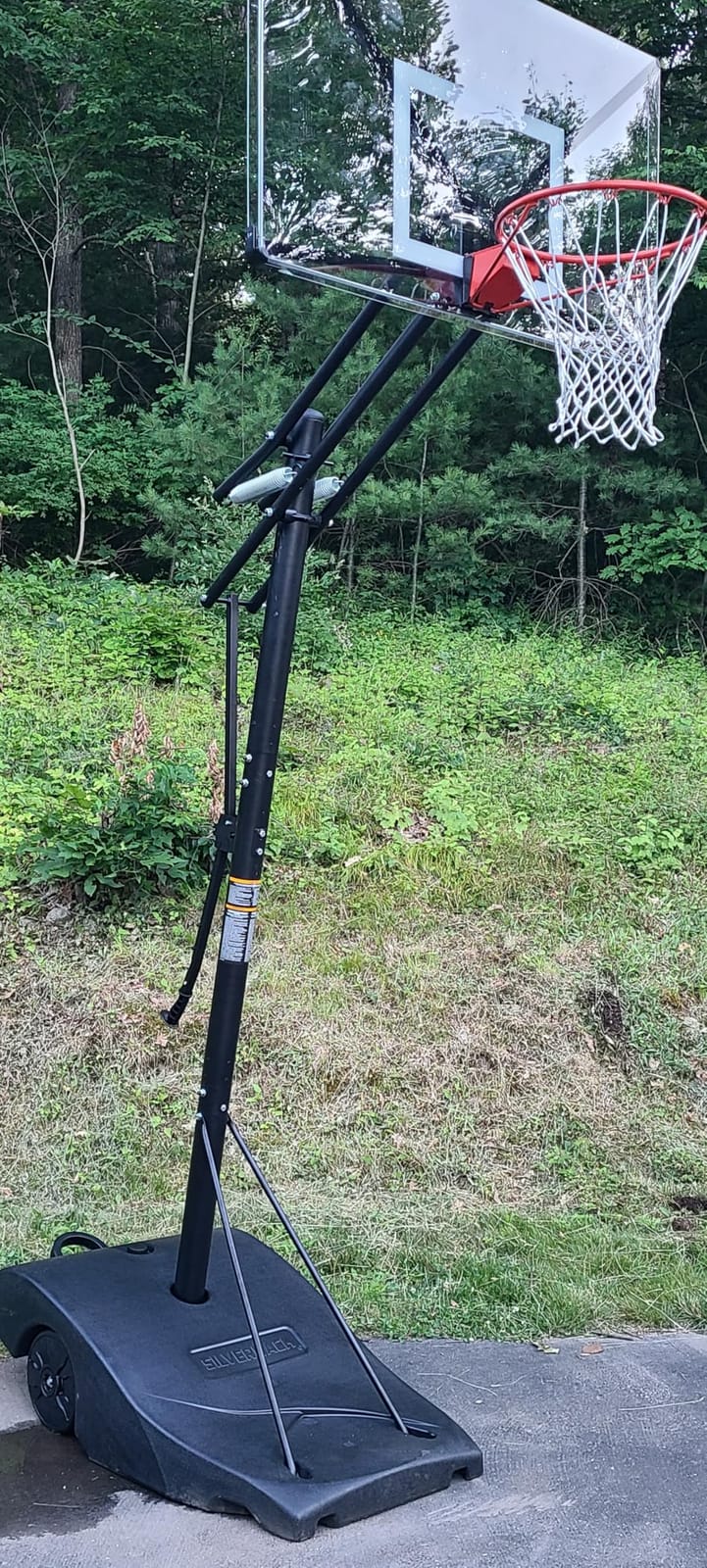
That is a very solid-feeling portable system, and owners describe the ball response and stability as among the best in the portable category. The Stabili-Frame steel-on-steel connection is the difference you feel immediately — the backboard is a 54-inch Infinity Edge panel with folded edges for rigidity, and it is quiet enough that late shots will not wake the house.
Height runs from 7.5 to 10 feet, and the 26-inch overhang gives real separation between the pole and the backboard. That matters for anyone who wants to dunk or lay up hard, because the pole is well out of the landing zone.
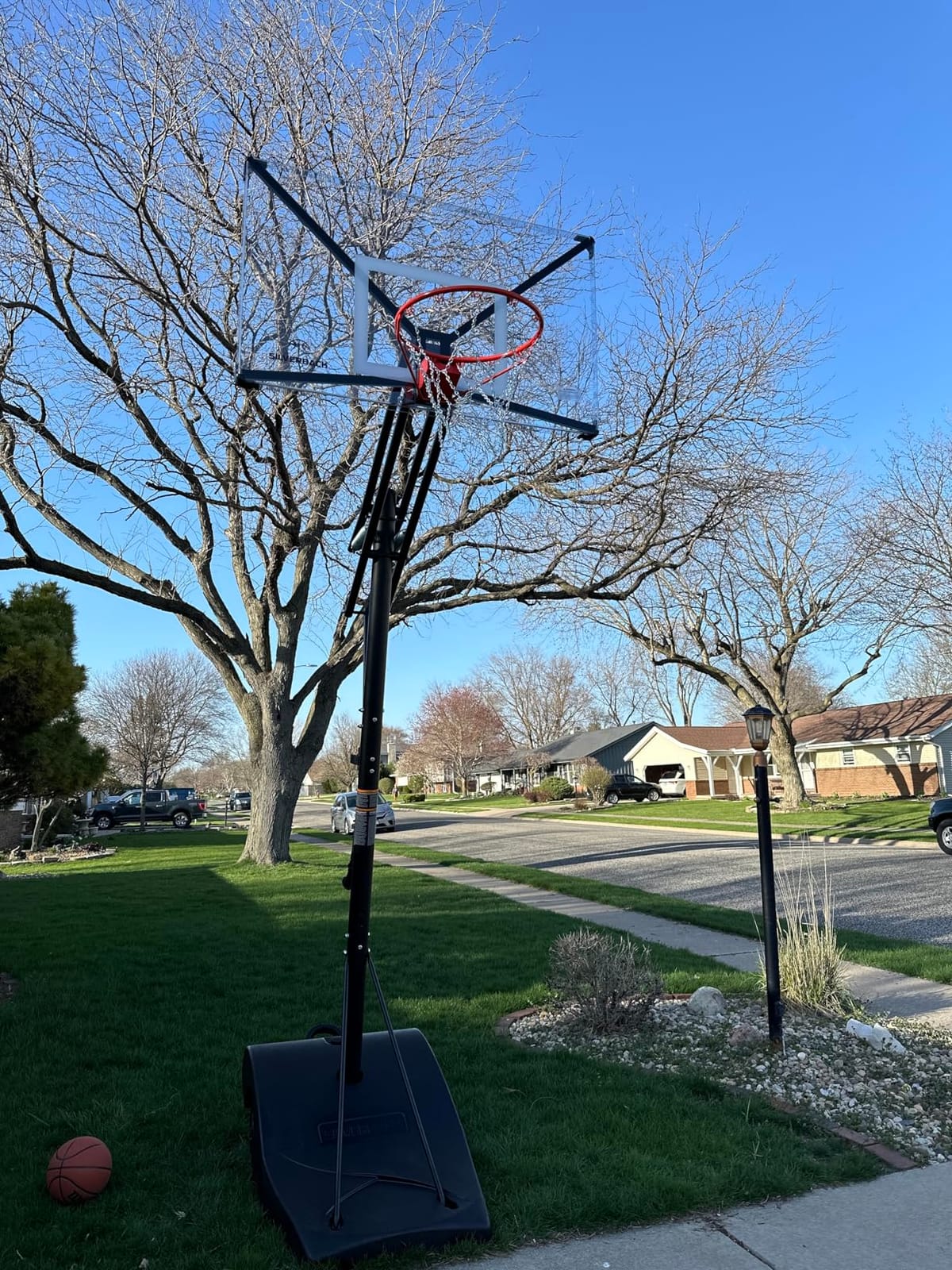
The 160-pound listed weight is the honest number here, and it is a real commitment. The ErgoMove wheelbarrow design makes movement a lift-and-roll action by one person, but once the steel base is full of water or sand, repositioning is a two-person job in anything other than flat ground.
Two other cautions. The 90-minute assembly claim is not realistic — owners describe several hours, even with preassembled parts. And replacement parts are brutally expensive, with a replacement backboard priced close to a whole new system, so storm damage is a genuine financial risk.
Who this hoop suits
Adults and teens who shoot often, and anyone with a big yard who wants a large board without a permanent installation. The quiet backboard and rigid feel make it the closest thing to a real practice setup in this roundup.
It also suits buyers who do not mind assembly time in exchange for steel construction.
Who should skip it
Skip it if you are on a tight budget, if you plan to move the hoop regularly, or if you live somewhere with winter freeze — there is no drain plug on the base, so winterizing means a hose and a lot of patience.
4. IGL Dual Base System — Best Value
IGL Portable Basketball Hoop Outdoor, 3-10ft Adjustable Height, 40″ Shatterproof Backboard, Fillable Base, Basketball Goal System for Driveway Backyard Pool, Fun for Family & All Ages
40 or 44 inch PC backboard
3-10 ft across three pole sets
Dual fillable base
40 lb
Pros
- Dual ballast design keeps it planted in wind
- One unit covers 3 to 10 ft
- Tilt-and-roll wheels for solo moves
- About 45 minutes to assemble
Cons
- One-year warranty on a budget-tier system
- 40 inch board gives a narrow shooting target
- Check hardware against the manual before assembly
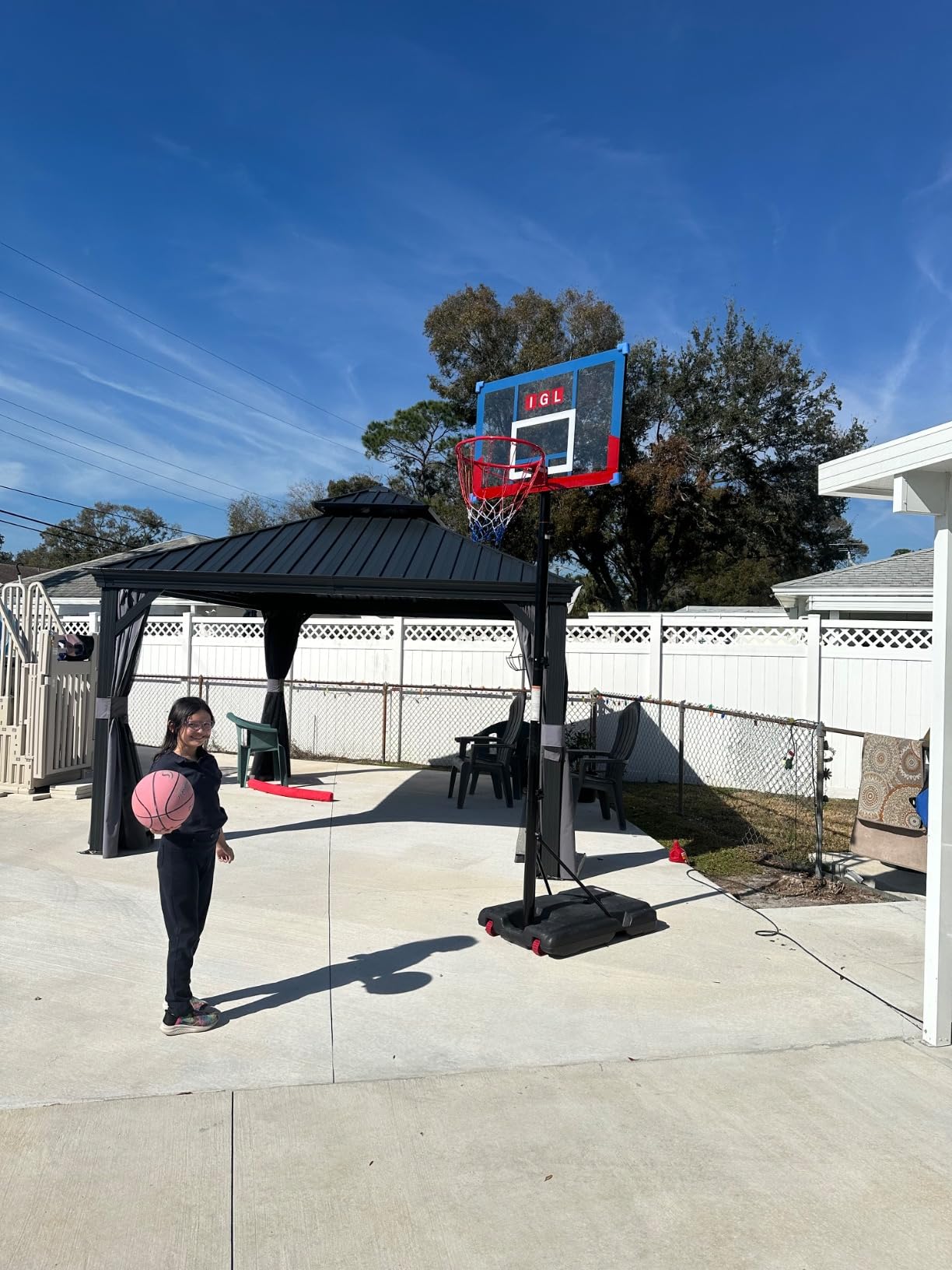
The two-tier ballast design is the most distinctive engineering idea in this roundup. A main base that takes 77 pounds of water or 100 pounds of sand, plus a separate anchor base adding another 30 or 40 pounds, gives this system more planted weight than systems twice its size. Buyers single it out as the reason the hoop stays put in wind.
The modular pole is the second trick. Adding or removing sections gives three height bands: 3 to 5 feet, 5.5 to 7.5 feet, and 8 to 10 feet, so one purchase covers a toddler through a full-height adult shooter. Tilt-and-roll wheels let one person move it without tools, and most families finish assembly in about 45 minutes with labeled hardware.
The backboard is the compromise. At 40 or 44 inches with a 24-inch tall shooting surface, it gives a smaller target than the other boards in this roundup, and a surface that size cannot support real bank shots. If your child is progressing past beginner shooting, plan to outgrow it in a season or two.
The one-year warranty is a real gap next to the five-year Lifetime terms, so it is worth keeping the receipt.
Who this hoop suits
A family with a very young child who still wants a system adults can use at regulation height. The 3-foot setting is the lowest point this modular pole reaches, and it pairs well with the tilt-and-roll wheels for moving it to a garage or patio when play moves indoors.
It also suits anyone on an exposed driveway where wind is the deciding factor. The TONBUX and the IGL both hold up well in wind, and the two have very different mechanisms for it.
Who should skip it
Skip it if your kids are already shooting bank shots or working on form, since the board is too small. Anyone wanting long-term warranty coverage should look elsewhere.
5. Lifetime 48 Inch Speed Shift — Best for a Bigger Backboard
Lifetime Outdoor Portable Basketball Hoop, 48 Inch Backboard, 8-10 Ft Speed Shift Adjustable Height
48 in polycarbonate backboard
8-10 ft Speed Shift
31 gallon base
68 lb
Pros
- 48 inch board gives a consistent rebound
- Speed Shift moves 8-10 ft in 6 inch steps
- Double compression spring Slam It rim
- 31 gallon base for real ballast
- 5-year warranty
Cons
- Narrowest height range here at 8-10 ft
- 50 inch overhang is modest for older players
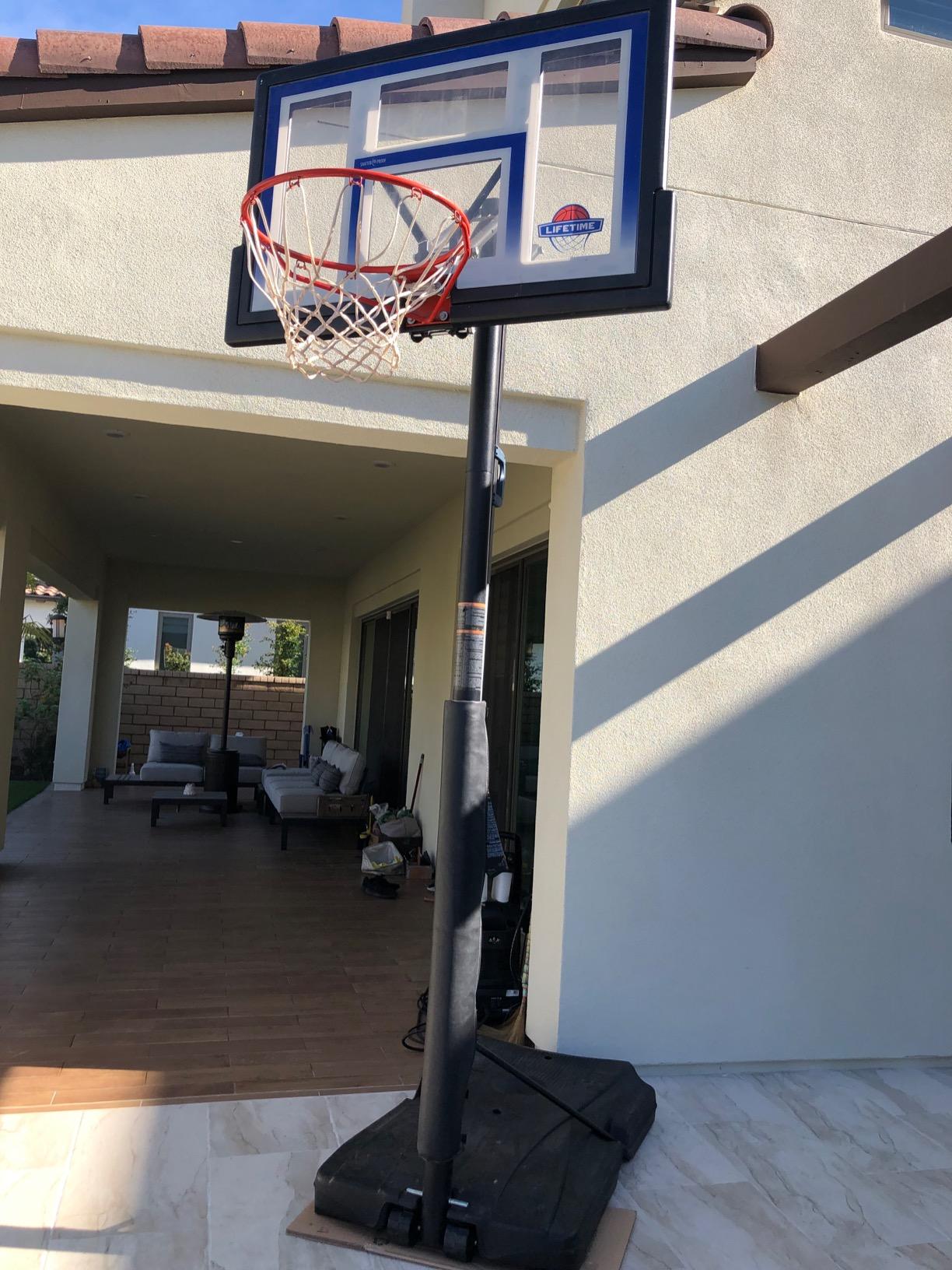
This is the step-up answer for parents whose kids have outgrown a 44-inch board. At 48 inches wide, the polycarbonate backboard finally gives you enough surface to work on bank shots, and owners consistently point to the rebound consistency as the reason to spend more here.
The Speed Shift mechanism moves the rim from 8 to 10 feet in 6-inch increments, and the 31-gallon base is a genuinely useful amount of ballast — you can load it with sand for permanence or water for a lighter seasonal setup. The rim uses double compression springs with welded net hooks, which holds up better to active play than a fixed ring.
The catch is height range. Eight feet is the minimum, so a 6-year-old cannot use this without standing on something, and a growing family will outgrow the low end quickly. If you have younger children in the house, the 7.5-foot floor on the Pro Court is a better starting point.
The 50-inch overhang is also modest next to the Silverback, so the pole sits closer to the shooting line than you would find on a premium system.
Who this hoop suits
Families with kids in the 9-to-14 range who are working on real shooting mechanics. The 48-inch board is the first size in this roundup wide enough to give a bank shot real surface, and the five-year warranty is among the longest terms here.
It also suits anyone who wants a big base they can fill with sand and leave up permanently through summer.
Who should skip it
Skip it for mixed-age households with young children, since it will not go low enough for them. Anyone who dunks should note that the pole position shortens the usable space under the backboard.
6. DUMOS 10FT Adjustable Hoop — Best Budget Entry Point
DUMOS 10FT Adjustable Height Portable Basketball Hoop Outdoor for Adult, 44 Inch Shatterproof Backboard w/Shock Absorbent Rim, Fillable Base, 2 Wheels for Swimming Pool/Indoor, Metal, Classic Black
44 inch shatterproof backboard
6.1-10 ft adjustment
Fillable base with 2 wheels
Pros
- Budget entry point with a 4.5 owner rating
- 6.1 ft low end suits younger children
- Two wheels for poolside and garage use
- Tools and instructions included in the box
Cons
- One-year warranty
- 44 inch board is small for adults
- Plastic-heavy build ages faster in sun
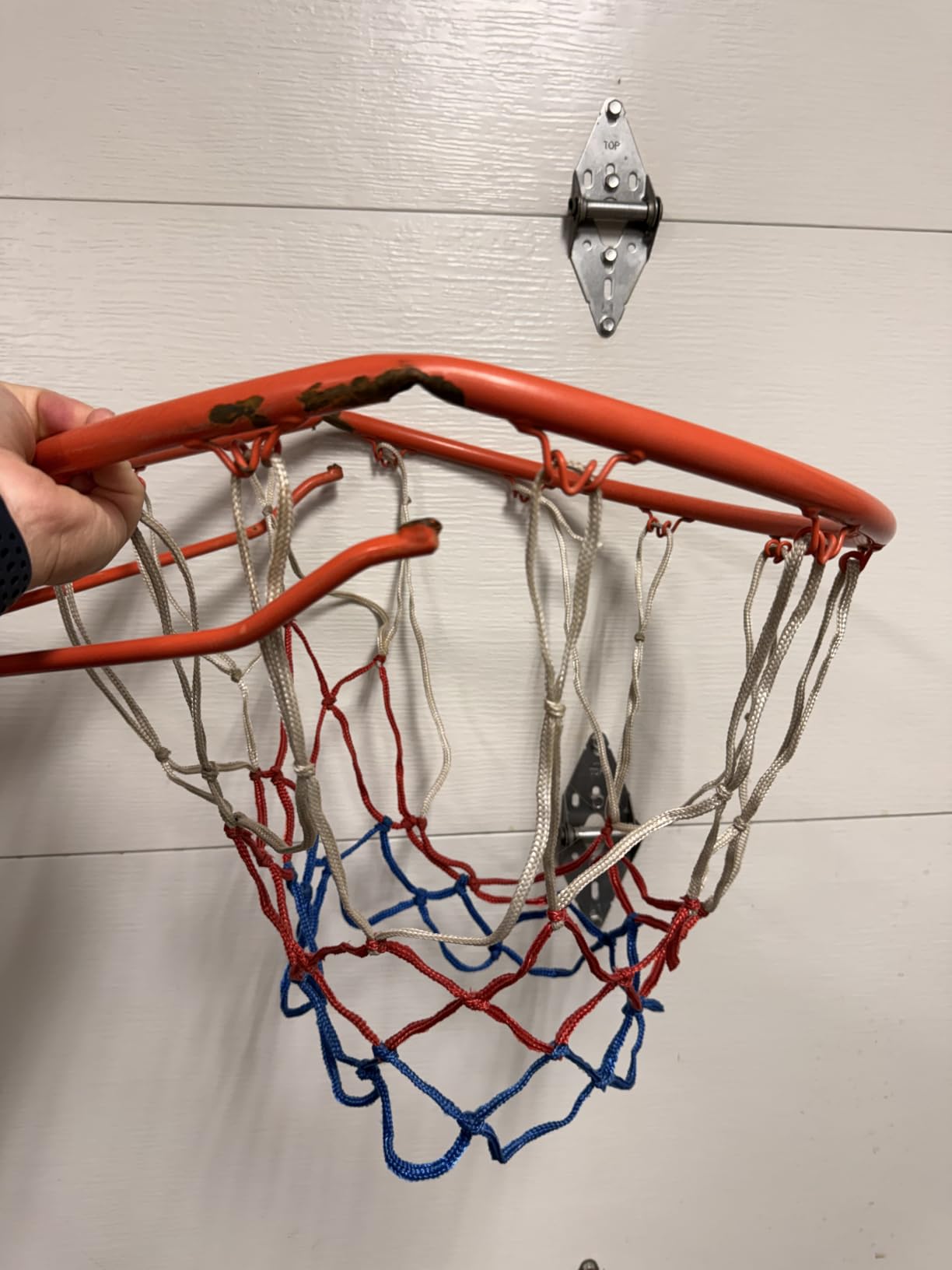
If you need a hoop for a single season without stepping up to a mid-range system, this is the one. The 44-inch shatterproof backboard adjusts from 6.1 to 10 feet, and the fillable base accepts extra water or sand once you find the surface you want it on.
Owners treat it as the budget entry point and report straightforward assembly with all tools included. Two wheels handle the move between garage, yard, and poolside, which makes it genuinely useful for a family that does not want the hoop living outside all year.
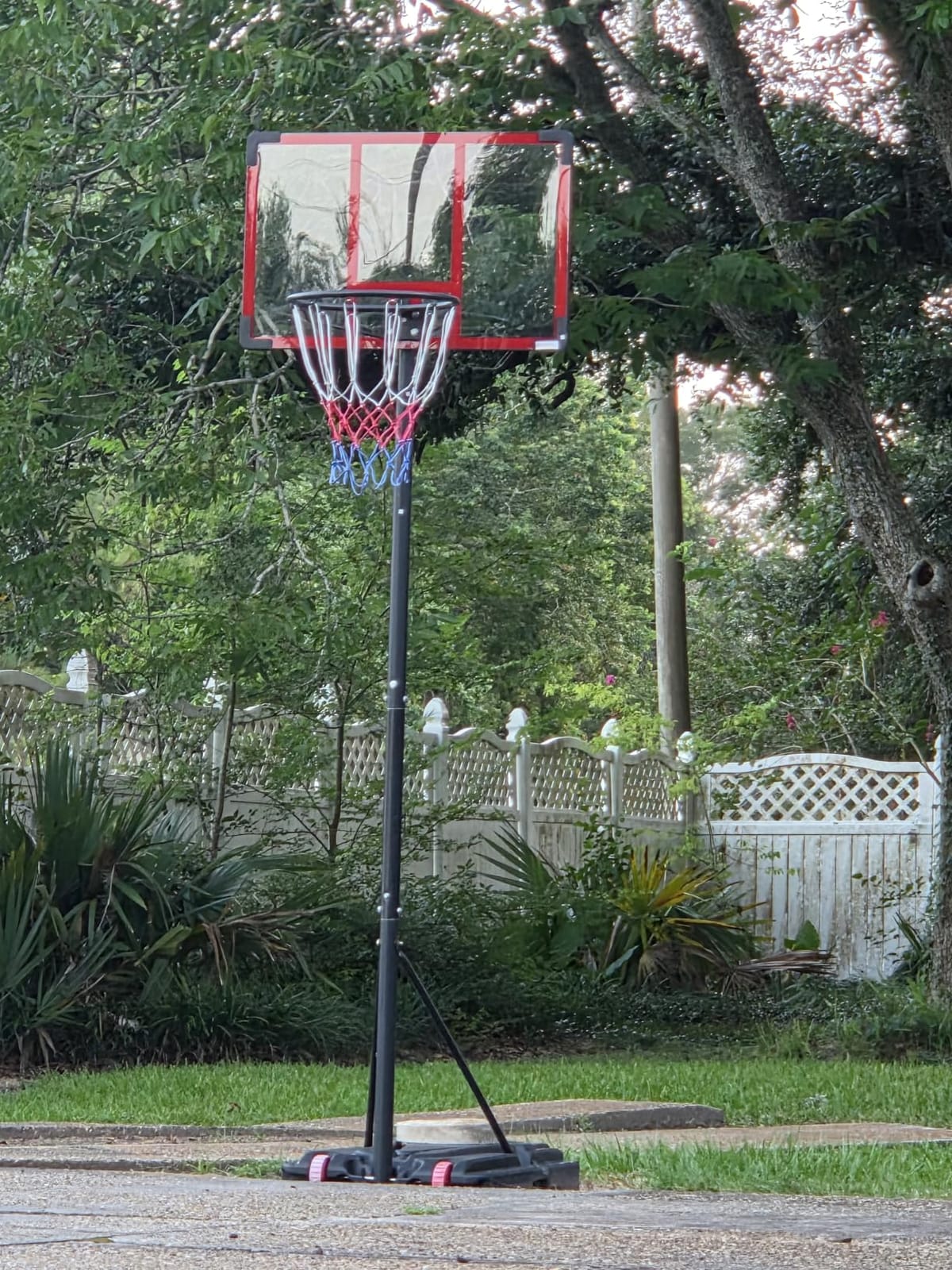
You are trading durability for cost here. The build is metal and plastic with a metal frame material rating, and that is a fair description of the whole structure — it is not designed to be a buy-it-for-life system, and the one-year warranty confirms the manufacturer does not expect ten seasons from it.
The 6.1-foot low end is genuinely good for younger children, closer to a real youth height than most budget units manage. The 44-inch board, however, is not much help for an adult working on form, and the shock-absorbent rim is a comfort feature rather than a performance one.
Who this hoop suits
A family with a young child who wants low shooting height and easy storage, or anyone who wants a poolside hoop that can live in a garage in winter. The wheels and the modest footprint make it straightforward to relocate between garage, yard, and pool.
If you already have a proper outdoor hoop and want a second practice setup, this covers that role well.
Who should skip it
Skip it if you want a large backboard, a dunkable rim, or long-term warranty coverage. It is also a poor fit for a tall player, since 44 inches will not support the shot angles a teenager or adult needs.
7. awii sport Quick Lift — Best for One-Person Adjustment
Basketball Hoop Outdoor 40Inch Impact Backboard 5.5-10FT Height Adjustable
5.5-10 ft one-button quick lift
40 inch glued PC board
Triangular base with wheels
Pros
- Single button lift across 10 levels
- Glued PC backboard resists warping
- Customer service sends free replacement rims
- Assembly in 90 minutes or less
Cons
- Backboard can crack after a year or two outdoors
- Some orders arrive with missing parts
- Very heavy once filled
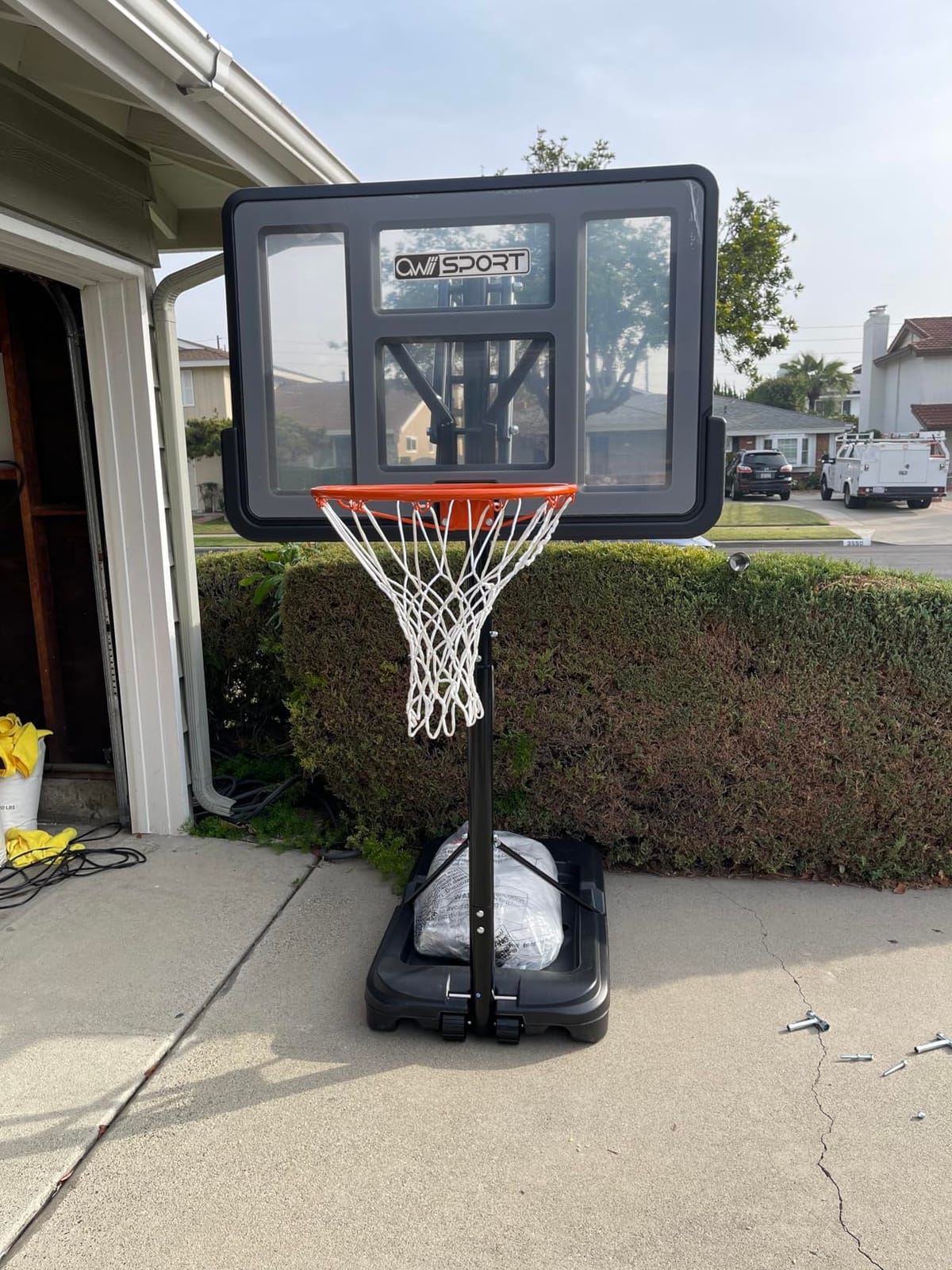
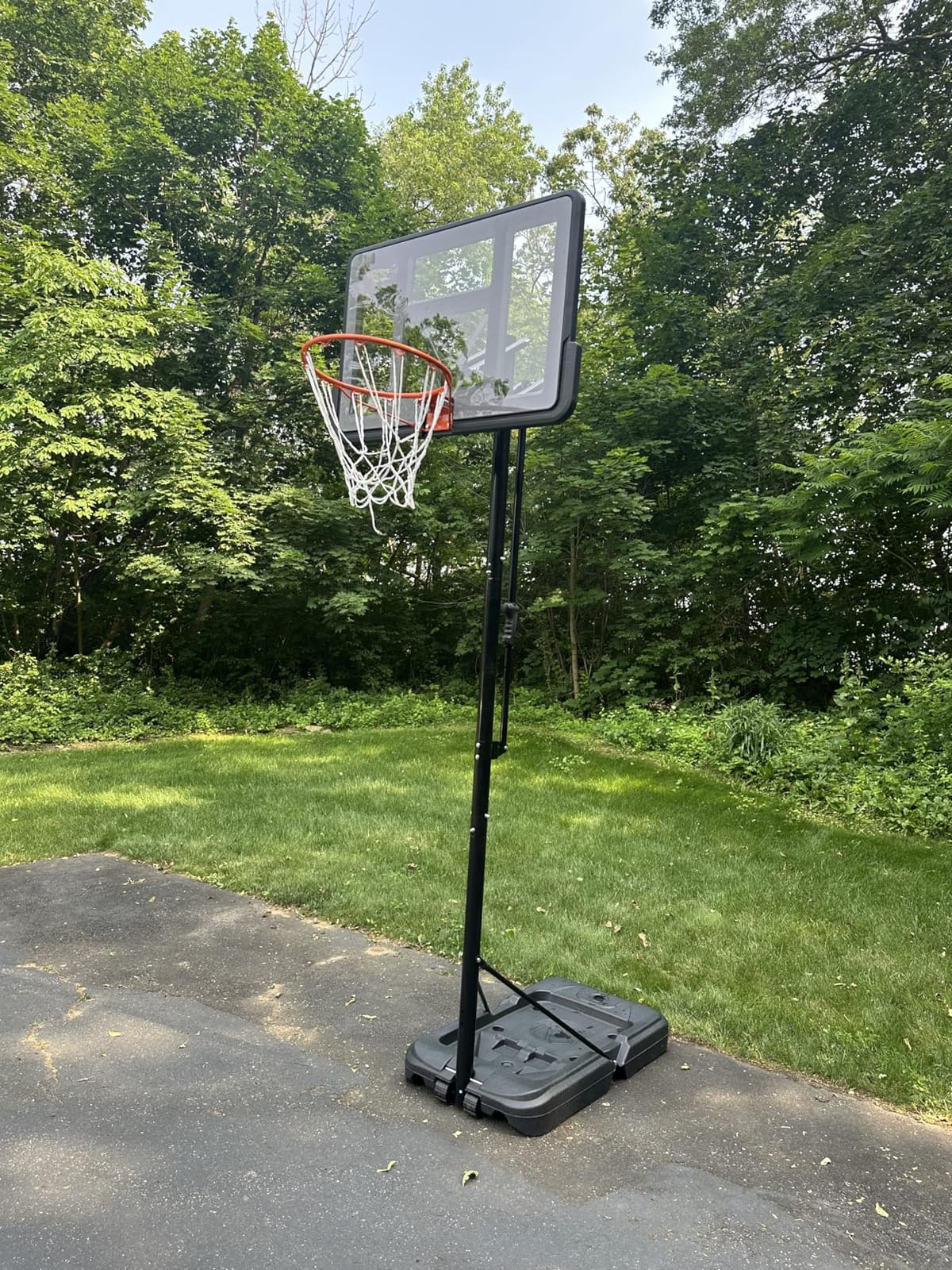
Almost every other system here needs a pin pull, a crank, or a second pair of hands. This one has a single-button quick lift covering 5.5 to 10 feet across 10 levels, which owners consistently call out as the reason it is worth a second look.
The backboard is a 40-inch polycarbonate panel permanently glued to its frame, which is a genuine engineering choice — the glue bond is what resists warping in heat, and it is a real upgrade over boards that are simply screwed to a frame. The Q195 steel support rods carry a weather-resistant coating, and the triangular base keeps the footprint stable.
Durability over multiple seasons is the weak point. Reviewers in some climates report the backboard cracking after a year or two of outdoor exposure, and a handful of orders have arrived with missing or incorrect parts. That is a service problem, not a quality one — the brand sends free replacement rims when they bend, and reviewers repeatedly note the response.
Once filled, the system is genuinely heavy, and moving it takes two people even with the built-in wheels.
Who this hoop suits
A single parent or caregiver who needs to change the rim height without calling for help. The 5.5-foot setting is low enough for a young child while the 10-foot top covers an adult, so one unit handles most of a family’s range.
It also suits anyone who values a rigid, glued board over a larger but springier one.
Who should skip it
Skip it in a harsh climate if you want the board to last more than a couple of seasons, and skip it if you need to move the hoop often. Anyone planning to dunk should look for a breakaway rim instead.
8. Lifetime 90061 52 Inch — Best for a Large Board
Lifetime Outdoor Portable Basketball Hoop, 52 Inch Shatterproof Backboard, 7.5-10 Ft Height Adjustable
52 in shatterproof backboard
Two hand front control 7.5-10 ft
Steel frame
5-year warranty
Pros
- 52 inch board with UV protected graphics
- Easiest front-mounted height control here
- Pro style steel frame with powder coat fillet
- Integrated base wheels
- Slam ready rim with double springs
Cons
- 96 inch overhang eats a lot of driveway
- Costs more than the 44 and 48 inch Lifetimes
- Listed weight figure is unreliable
If you want one of the largest backboards in this roundup without moving to a glass pro system, this is it. At 52 inches with UV-protected graphics, the shatterproof surface gives you a much larger target than the 44- and 48-inch Lifetimes, and it sits just behind the 54-inch premium system in size.
The two-hand front control is the feature buyers praise most. Rather than reaching behind the backboard to find a lever, you stand in front of the pole and raise or lower the rim between 7.5 and 10 feet. The pro-style steel frame carries a powder-coated rust-resistant finish, and the rim uses double compression springs with an all-weather nylon net.
The 96-inch overhang is unusually deep and is the system’s biggest practical drawback. It uses a substantial amount of driveway, and it changes where you park relative to the car door. Measure your available space against that number before committing.
It also sits above the price of the other two Lifetime systems, which means you are paying partly for board size. One oddity worth flagging: the listed weight figure for this item is not credible, so judge the filled weight by the base capacity rather than the specification.
Who this hoop suits
Adults and older teens with driveway space to spare who want a big target and a five-year warranty. The front height control makes it the most pleasant to adjust daily among the large-board options.
It also suits households where the board will be used for more than casual shooting.
Who should skip it
Skip it on a small driveway, because the 96-inch overhang plus the base will not fit a tight parking area. Anyone who needs a low rim for a small child should look at the Pro Court instead.
9. IE Sports 44 Inch Portable Hoop — Best for Dunking
IE Sports Portable Basketball Hoop w/ 44 Backboard & Rebounder
Breakaway rim
44 in polycarbonate board
7.5-10 ft
2-year metal warranty
Pros
- Breakaway rim gives a responsive bounce
- Two-year warranty on metal parts
- 44 inch board holds up to hard use
- Fillable base works indoors and out
Cons
- About one in ten ratings is 1 star
- Included rebounder adds bulk
- Assembly and component durability complaints
This is the system built around a breakaway rim, and that changes what you can do on it. A rim on springs flexes under load and returns instead of tearing out, so hanging on it or slamming it does real damage to the equipment rather than to the hoop. Buyers who dunk cite the bounce as the reason they bought it.
The 44-inch shatterproof polycarbonate board handles hard play, the rim height runs 7.5 to 10 feet, and the fillable base works on a garage floor as well as outdoors. Warranty terms run two years on metal parts and one year on plastic, which is longer coverage than most systems in this price range carry.
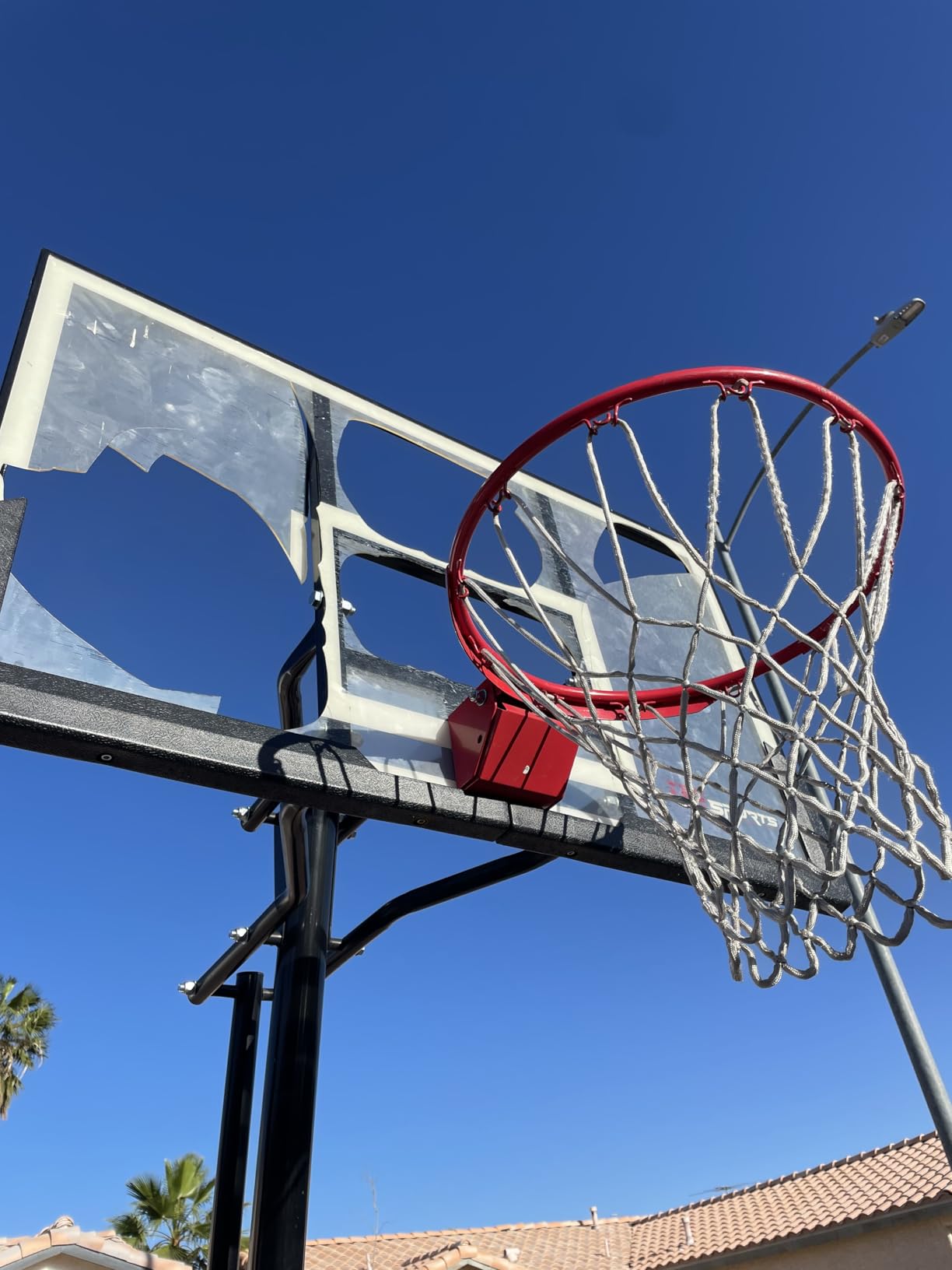
The rating spread is the thing to watch. The 4.4 average comes with roughly a one in ten share of one-star reviews, the weakest distribution among these ten, and those complaints cluster around assembly and component durability. The included rebounder accessory is convenient but adds bulk to something you may have to move.
Also note the pole offset. This is a portable system, not a dunking rig — an adult at full extension on a 44-inch board with a standard portable pole position carries real risk regardless of the rim.
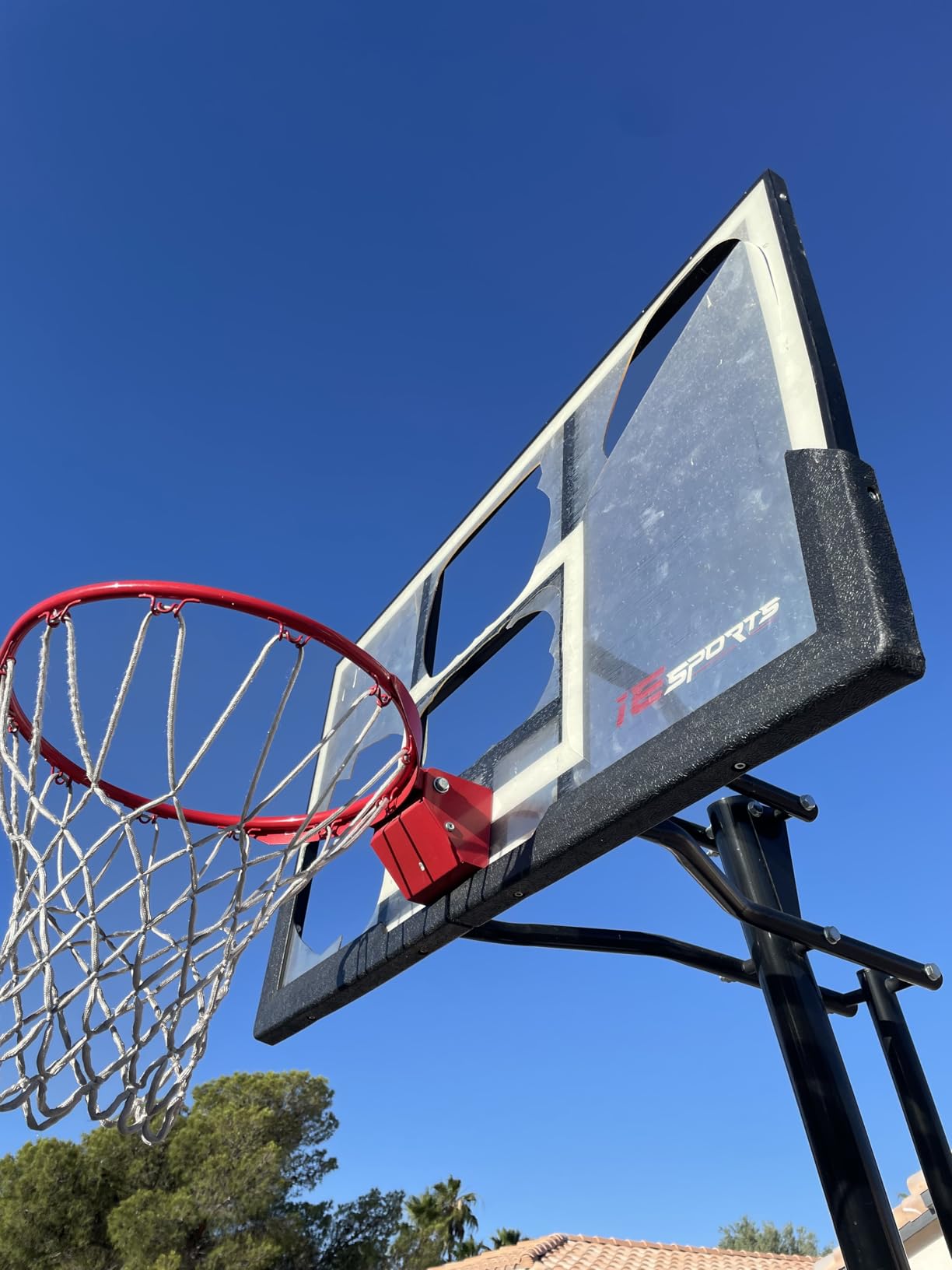
Who this hoop suits
Teens and adults who want to slam dunk safely, and families that want one hoop that works in the garage during winter. The breakaway rim is the deciding feature, and it is the design that separates this system from the fixed-rim hoops at the same size.
It also suits anyone who wants warranty terms beyond a single year at this size.
Who should skip it
Skip it if you have a very young child and want a low rim, since 7.5 feet is the minimum. Anyone building toward competitive play should step up to a larger board and a bigger pole offset instead.
10. TONBUX 44 or 48 Inch — Best for Stability
TONBUX Basketball Hoop Outdoor 44 Inch Shatterproof PC Backboard
Crank adjustment 5.25-10 ft
Base holds 150 lb water or 225 lb sand
78 lb
Pros
- Stated ballast capacity of 150 lb water or 225 lb sand
- Crank is easy enough for a child to operate
- Four support rod triangular frame
- Two sturdy wheels for moving locations
Cons
- Heavy 78 lb frame
- One-year warranty
- Crank takes longer than a lever or button lift
Stability is the whole argument for this system. The 44 by 28 inch base accepts 150 pounds of water or 225 pounds of sand — a large stated capacity — and it sits on a four-support-rod triangular frame with a rebound board for extra rigidity. Buyers cite those ballast numbers as the deciding factor more than anything else.
The crank adjustment covers 5.25 to 10 feet, and owners point out that a child can operate it — which is unusual, since most crank systems are stiff. The 18-inch regulation-size rim uses dual spring shock absorbers to soften rim contact.
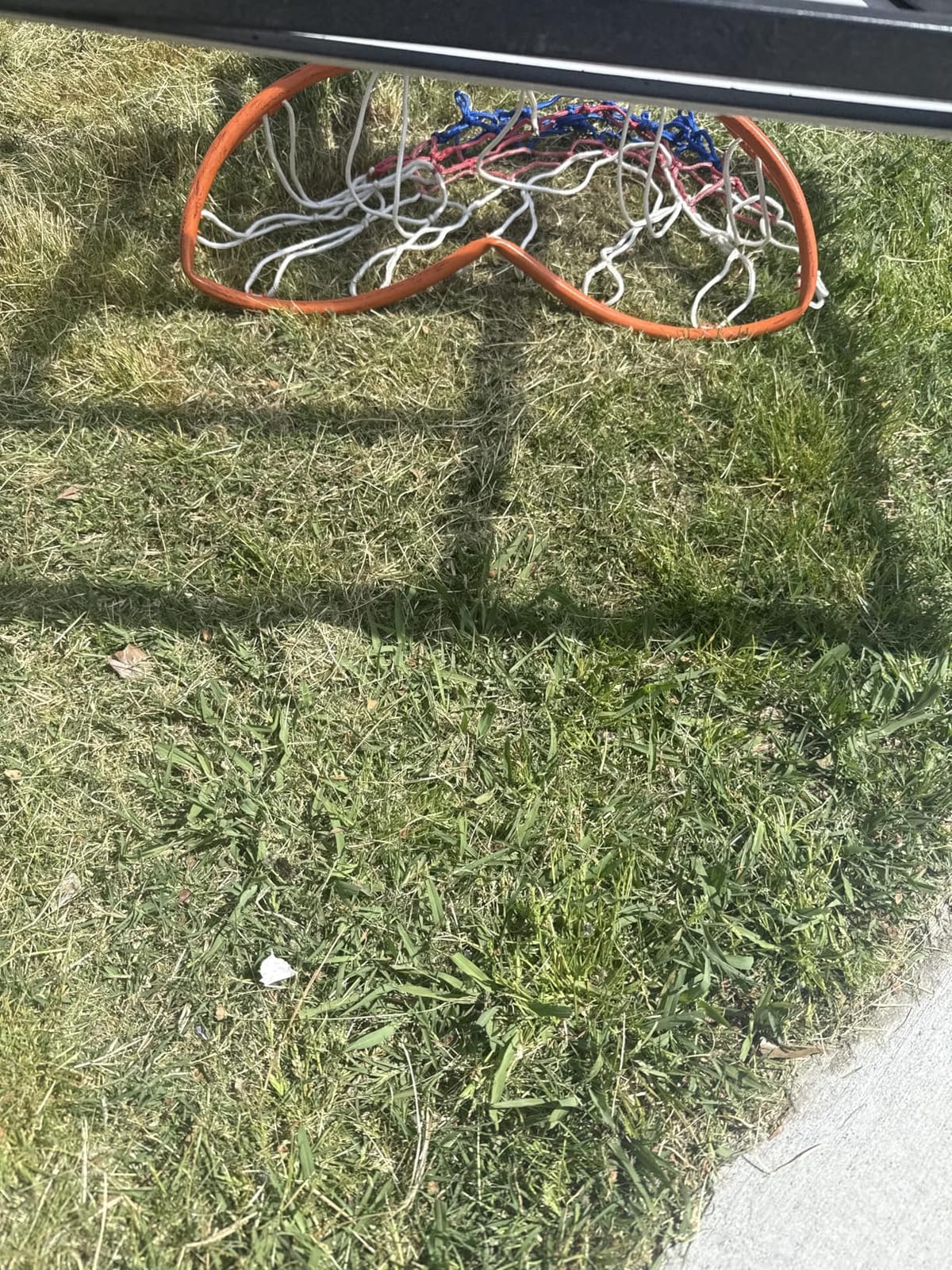
That capacity comes with a real cost in handling. At 78 pounds before you add any ballast, this is a substantial frame to move, and once you load it with 225 pounds of sand, the two wheels are for short flat moves only. Plan where it will live before you fill it.
The one-year warranty matches the budget tier rather than the mid-range systems, and the crank takes longer than a lever or button system, though it is the most precise of the mechanisms here.
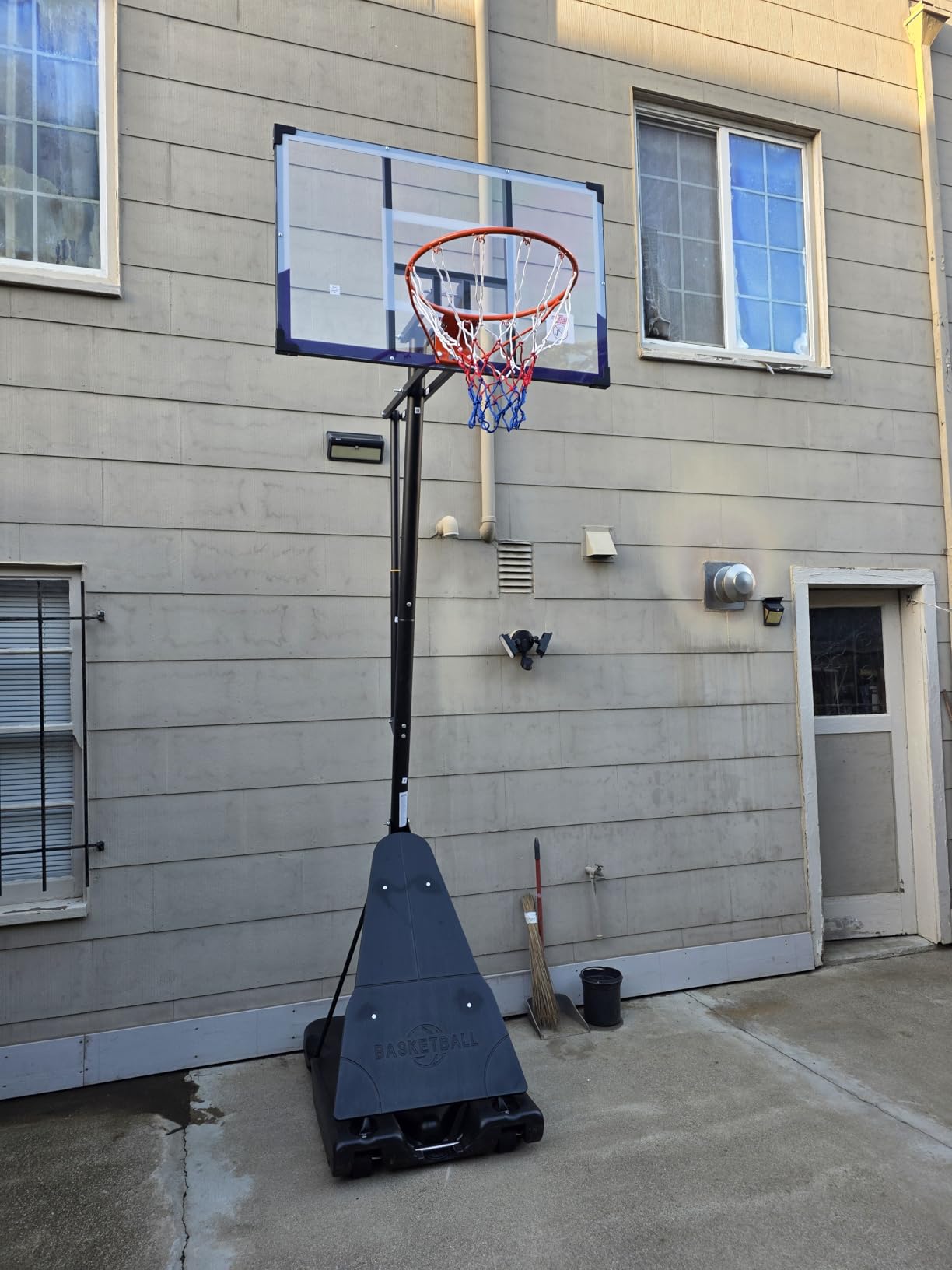
Who this hoop suits
Anyone on an exposed driveway, a coastal yard, or anywhere wind regularly topples lighter hoops. The ballast capacity here is the answer to the most common portable-hoop failure mode.
It also suits families who want a low rim from a crank system, since 5.25 feet works for a young child.
Who should skip it
Skip it if you plan to move the hoop regularly or if you cannot easily get 225 pounds of sand where it lives. Anyone wanting long-term warranty coverage should weigh the one-year term carefully.
What to Look For in a Portable Basketball Hoop
Backboard material is the first decision, and it maps almost directly to durability. Polyethylene and basic polycarbonate are the budget tier: light, shatter-resistant, and cheap, but they flex and dull after a few seasons of direct sun. Acrylic sits in the middle with a firmer rebound, and tempered glass is the only option that matches an in-ground feel — at the cost of weight, price, and shipping damage risk. Every system in this roundup is polycarbonate or polyethylene, which is the correct trade for a portable unit.
Backboard width decides how long the hoop stays useful. A 40- to 44-inch board works for a young child learning a shot, but it cannot support bank shots, and owners consistently regret undersized boards once kids progress. A 48-inch board is the practical minimum for real shooting work, and 52 to 54 inches is where the target size starts to feel like a real goal. If you can only pick one number, take the largest board your driveway and budget allow.
Rim type decides what you can do on the hoop. A fixed rim will tear out of the backboard when a kid hangs on it, and owners report exactly that failure repeatedly. A breakaway rim flexes on springs under load and returns to shape, which is why it is the first thing to check if anyone in the house plans to dunk. Enclosed breakaway designs add weather protection for the springs, which matters in a wet climate.
Pole offset is the dunk-safety number nobody reads. It is the distance between the support pole and the backboard face, and it exists so a dunker does not land on the pole. A 2-foot overhang on a small system is adequate for shooting. It is not adequate for a 6-foot adult at full extension, and no amount of breakaway spring changes that. If dunking is the goal, look for 24 inches or more of offset and treat smaller figures as shooting-hoop clearance only.
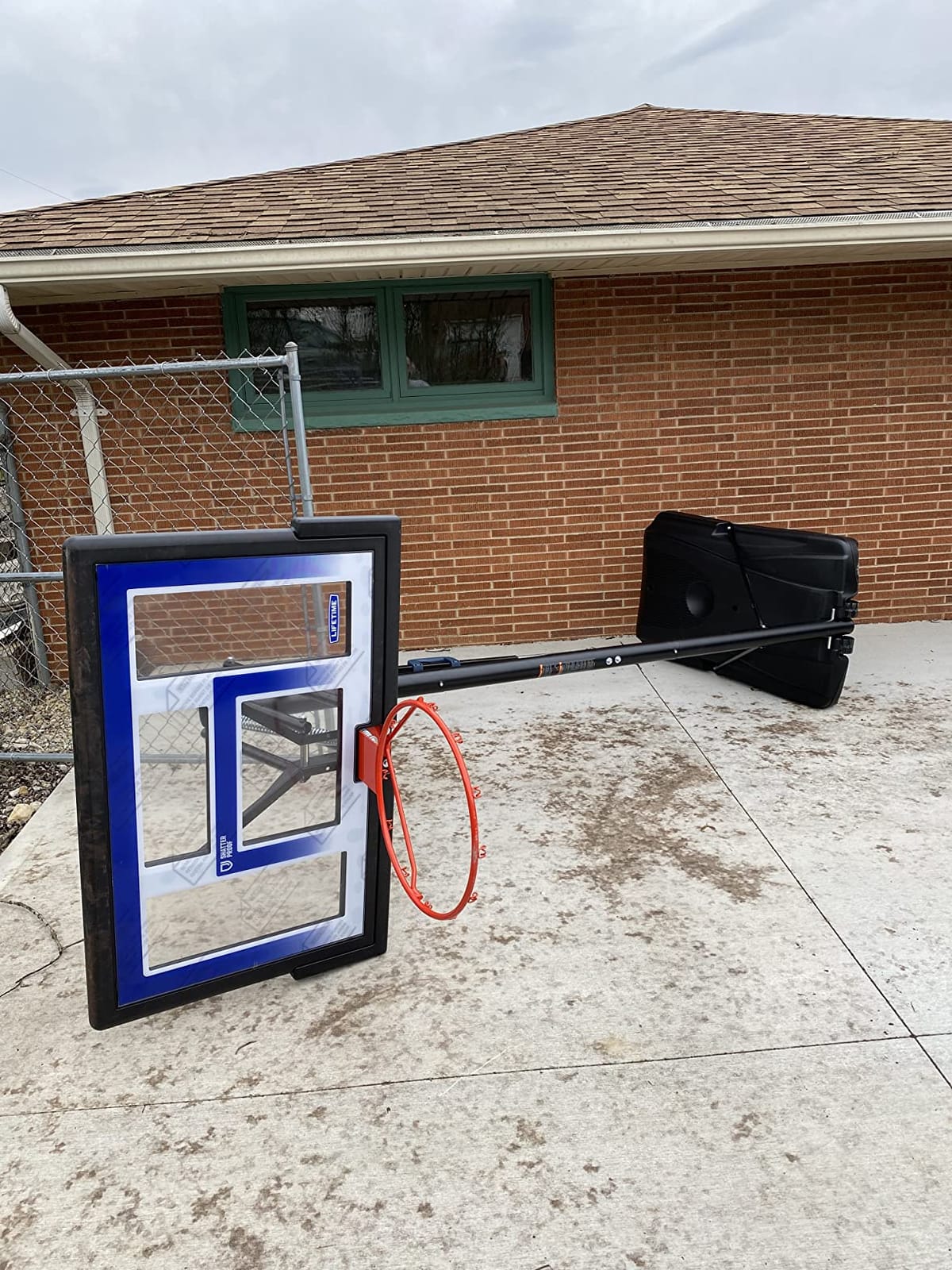
Height adjustment mechanisms break down into a few families, and they differ more than the marketing suggests. Telescoping poles with a pin pull are the simplest and cheapest, and they need the hoop laid on its side and two adults to change. One-button quick lift systems let a single person raise the rim in seconds and are the most convenient. Crank and screw jack systems are the most precise and the slowest. Pneumatic lever and hand-crank designs sit between the two. If one adult will be adjusting the rim on a weekday evening, do not buy a telescoping pole.
Ballast is where most portable hoops fail, and the rule is simple: fill it with sand and treat the system as semi-permanent. Water is lighter and faster, and it is fine in a climate that never freezes — but it freezes, expands, and cracks plastic bases. In a freeze climate, either use sand or a commercial base gel, or drain the base completely before winter. Dry sand also runs roughly thirteen pounds a gallon against about eight for water, so a 31-gallon base holds a genuinely heavy ballast load once filled.
On exposed or coastal driveways, ballast alone is not always enough. Anchor the base with straps or a ground anchor kit at a fixed anchor point, and add a canopy or keep the hoop out of the worst of the storm season. The TONBUX and the IGL both handle wind best here purely because of how much weight their bases accept.
Storage and winterizing matter more than most guides admit. Measure your garage door height against the system height before you buy — a 10-foot hoop is roughly 145 to 150 inches tall, and a standard two-car garage opening is around 80 inches. Most people end up disassembling the pole sections rather than storing the system assembled, which is another reason to check whether the pole breaks down into labeled sections.
Draining and covering the base before winter protects the whole system, not just the base. Remove the sand or water, wipe the pole, and check the rim springs for rust. A tarp over the backboard and rim keeps standing water out of the spring housing, and a light coat of lubricant on the moving adjustment parts means you are not fighting a seized mechanism in the spring.
How to Fix a Wobbling or Rattling Hoop
Wobble is the most common complaint in this entire category, and it is usually fixable rather than a reason to return the hoop. A portable goal is a tall, narrow structure on a single base, so any looseness at the pole-to-backboard connection shows up as movement after a shot.
Start with the hardware. The most common cause is a bolt at the backboard bracket that was finger-tightened during assembly and backed off under vibration. Check every bolt at the backboard connection and the top pole section, and tighten them fully. A ratchet handle on the top bolts makes a visible difference within a day of shooting.
Second, check the base. An under-filled base lets the whole system pivot, which reads as a wobble even when the frame is tight. Fill to the capacity printed on the base, and if the base still moves, weigh it down on the far side. Reviewers also raise the ballast question repeatedly, and the consensus is that sand beats water for exactly this reason.
Third, expect some board movement on the smaller 40- and 44-inch systems, and know when it is a design trait rather than a fault. Polycarbonate boards on a portable frame will give slightly on a hard shot. If the rattle is continuous rather than shot-triggered, that is a fastener or a loose net attachment, not a backboard problem.
Finally, do not ignore unlabeled or missing hardware. If the hardware bag does not match the parts list, stop and contact the manufacturer before improvising with a random bolt — a mismatched fastener at the backboard is how a small rattle turns into a cracked panel. A dedicated DIY thread exists purely for the vibration fix, which tells you how common the rattle is and how solvable it is.
Frequently Asked Questions
Are portable basketball hoops any good?
Yes. The best portable basketball hoops are genuinely good for family shooting practice, and the top-rated models hold a 4.4 to 4.6 average across thousands of owner reviews. You give up two things versus a cemented system: some stability, since a portable unit relies on ballast in its base rather than anchors, and access to a true 72-inch tempered glass board. Fill the base with sand, keep the pole vertical, and a portable hoop will serve a driveway or a backyard for years.
Which portable basketball hoop is the easiest to move?
The lightest systems with tilt-and-roll or wheelbarrow designs are the easiest, because movement is a lift-and-roll action rather than a lift. The IGL weighs 40 pounds empty and uses tilt-and-roll wheels for solo moves, while the Silverback NXT uses an ErgoMove wheelbarrow design at 160 pounds, which is manageable on flat ground and needs two people once filled. In every case the base must be drained or partly emptied before a long move.
Which mini basketball hoop is the strongest?
It depends on whether you mean a weighted freestanding mini system or an over-the-door wall mount. A weighted 3-to-7 foot system with a steel pole and a filled base is stronger than any wall mount, because a door cannot take a 30-pound ball at full force. A wall-mounted hoop is only as strong as the studs and the hardware you use, and it needs a backer board between the studs. For indoor use, our guide to indoor adjustable basketball hoops covers the over-the-door options in detail.
Does Costco sell portable basketball hoops?
Costco does carry portable basketball hoops, but the selection rotates seasonally and specific models come and go quickly, so the exact model you want may not be there when you check. Availability changes often enough that comparing across a general retailer, the manufacturer’s own storefront, and Amazon tends to be more reliable than relying on one rotating selection. Check the current listing before you make the trip.
What is the best budget portable basketball hoop?
Among the systems we compared, the DUMOS 10FT adjustable hoop is the strongest budget entry: a 44-inch shatterproof backboard, 6.1 to 10 feet of height adjustment, a fillable base, and two wheels, holding a 4.5 average across 799 reviews. The compromises are a 44-inch board, a one-year warranty, and a plastic-heavy build. If your budget stretches slightly, the IGL covers 3 to 10 feet and its dual-base design takes more ballast than most systems in its bracket.
Can you dunk on a portable basketball hoop?
Only with the right combination. You need a breakaway rim, because a fixed rim will tear out of the backboard, a backboard of 48 inches or more, and enough pole offset that a falling dunker does not land on the pole. Among the ten systems here, the IE Sports 44-inch is the one built around a breakaway rim. Even then, treat adult dunking on a portable system as a controlled activity, not training.
Should I get a 60 or 72 basketball hoop?
A 60-inch board is the sensible jump for tall players and the sweet spot for most home use. A 72-inch board is the regulation size used on full courts, and it demands a 50-gallon-plus base, a much heavier frame, and a significantly higher price. If your players are over six feet, 60 inches is the minimum that will not frustrate them. Neither size replaces an in-ground system for serious competitive play.
The Best Portable Basketball Hoop for Most Families
The Lifetime 44 Inch Pro Court is the best portable basketball hoop for the widest range of households: a 4.6 average across 5407 reviews, a 7.5-to-10-foot telescoping pole, a polycarbonate board that holds up, and a five-year warranty for the price of a mid-range television. If you need a bigger board, step up to the 48-inch Speed Shift. If you need the lowest rim in the house, look at the IGL.
Whichever you choose, fill the base with sand, tighten the top pole bolts once you are set, and check the hardware list before you start assembly. If you want to keep the practice going indoors or solo, our picks for the best basketball rebounders for solo training and gifts for basketball players are the natural companion pieces.