
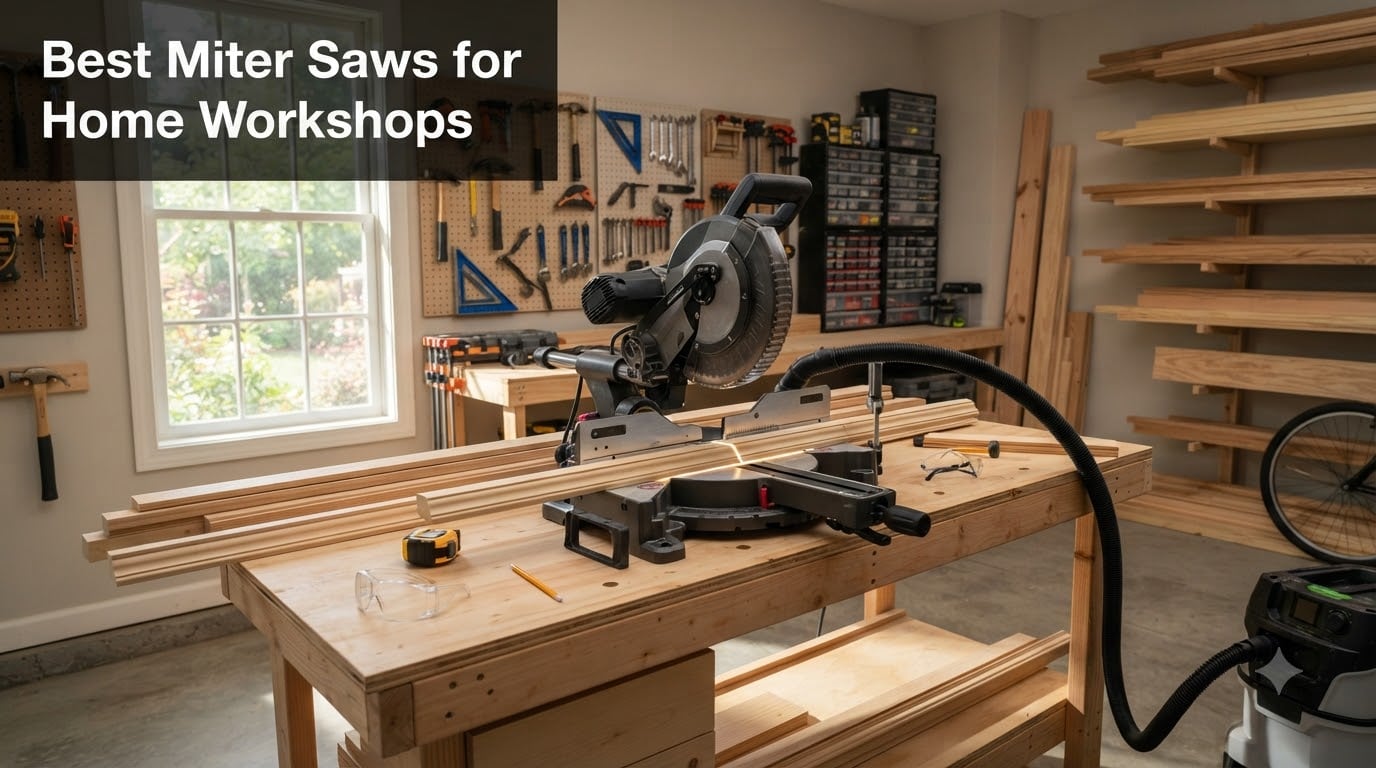
I remember the first time I tried to cut a perfect 45-degree corner for a picture frame using a hand saw. The joint looked like it had been through a small earthquake. That frustration sent me down the rabbit hole of miter saws, and after three months of testing models in my garage workshop, I have opinions.
The best miter saws for home workshops balance accuracy, power, and shop-friendly footprints. Not everyone needs a 90-pound sliding monster hogging half the garage. After comparing 12 saws from DeWalt, Bosch, Makita, Metabo HPT, Skil, Dovaman, and Evolution, I have narrowed down which models actually deliver for DIYers, hobbyists, and weekend trim installers.
In this guide, I will walk you through every saw I tested, explain what makes each one shine, and help you figure out which one belongs in your shop. Whether you are installing crown molding, building a deck, or framing a basement, there is a saw on this list that fits your budget and your space.
Table of Contents
Top 3 Picks for Best Miter Saws for Home Workshops (October 2026)

DEWALT DWS779 12-Inch Doubl…
- 15 Amp motor
- 3800 RPM
- 60° right/50° left miter
- 7-1/2 inch nested crown

Best Miter Saws for Home Workshops in 2026
1. Metabo HPT 10-Inch Single Bevel Compound Miter Saw – Lightweight Champion
Metabo HPT 10-Inch Compound Miter Saw, 15-Amp, Single Bevel, C10FCG2
10 inch blade
15 Amp motor
5000 RPM
24.2 lbs
Pros
- Lightweight at only 24 lbs
- 15-Amp motor with 5000 RPM
- Xact Cut shadow line
- Precision miter stops
- 5-year warranty
Cons
- Dust collection is limited
- No sliding rails
- Stock blade is basic
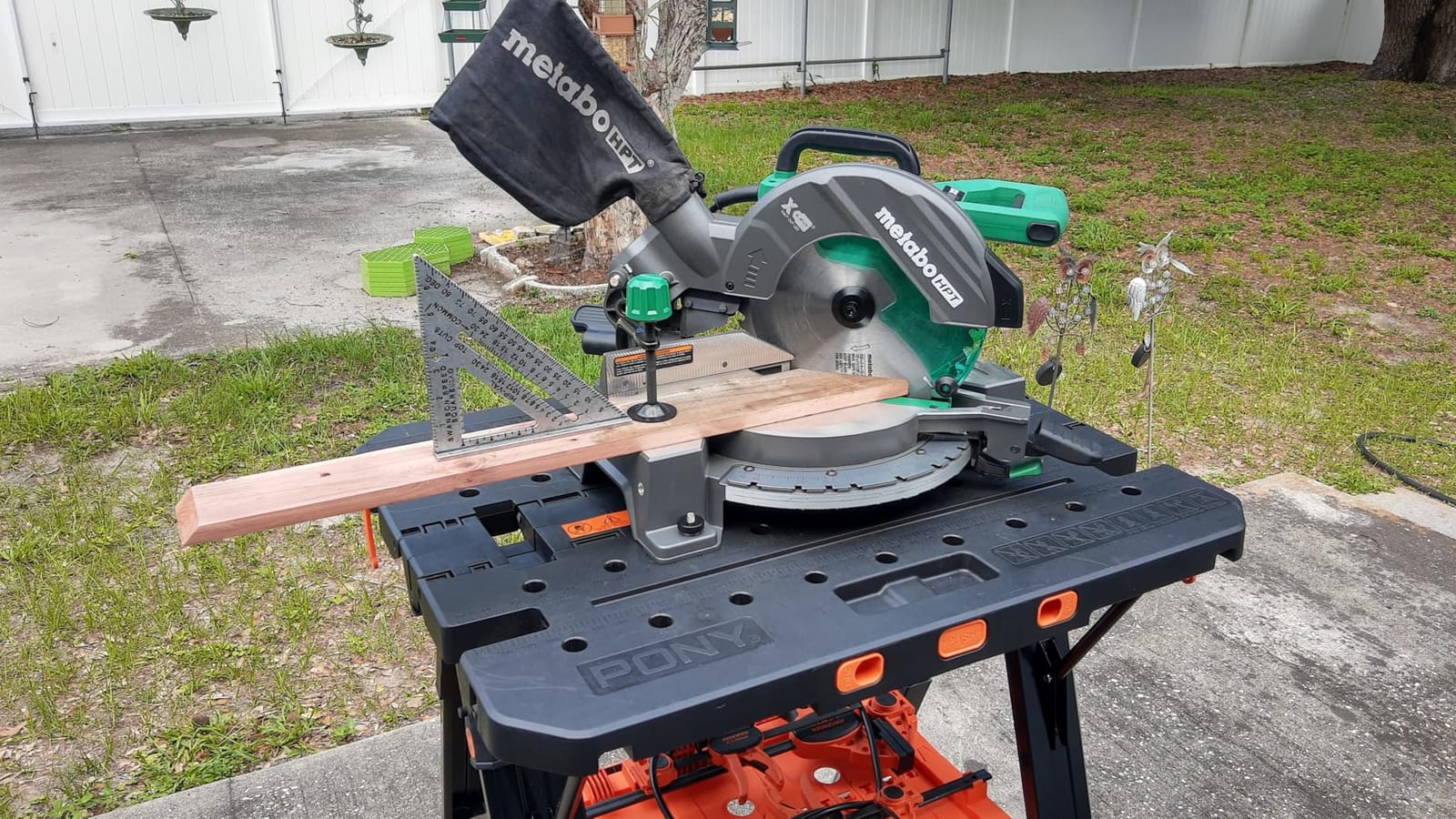
The Metabo HPT C10FCG2 was the first saw I pulled out of the box for this project, and I was immediately struck by how light it felt. At 24.2 pounds, I could carry it from the garage to the backyard with one hand. For a home workshop where you might not have a permanent spot for the saw, that portability matters.
Setting it up took about 10 minutes. The Xact Cut shadow line drops a precise blade shadow onto your workpiece, which I found more accurate than the laser guides on budget saws. I ripped through 2x4s, then made clean 45-degree cuts on pine trim. The 5,000 RPM motor never bogged down, and the positive detent stops clicked into common angles with confidence.
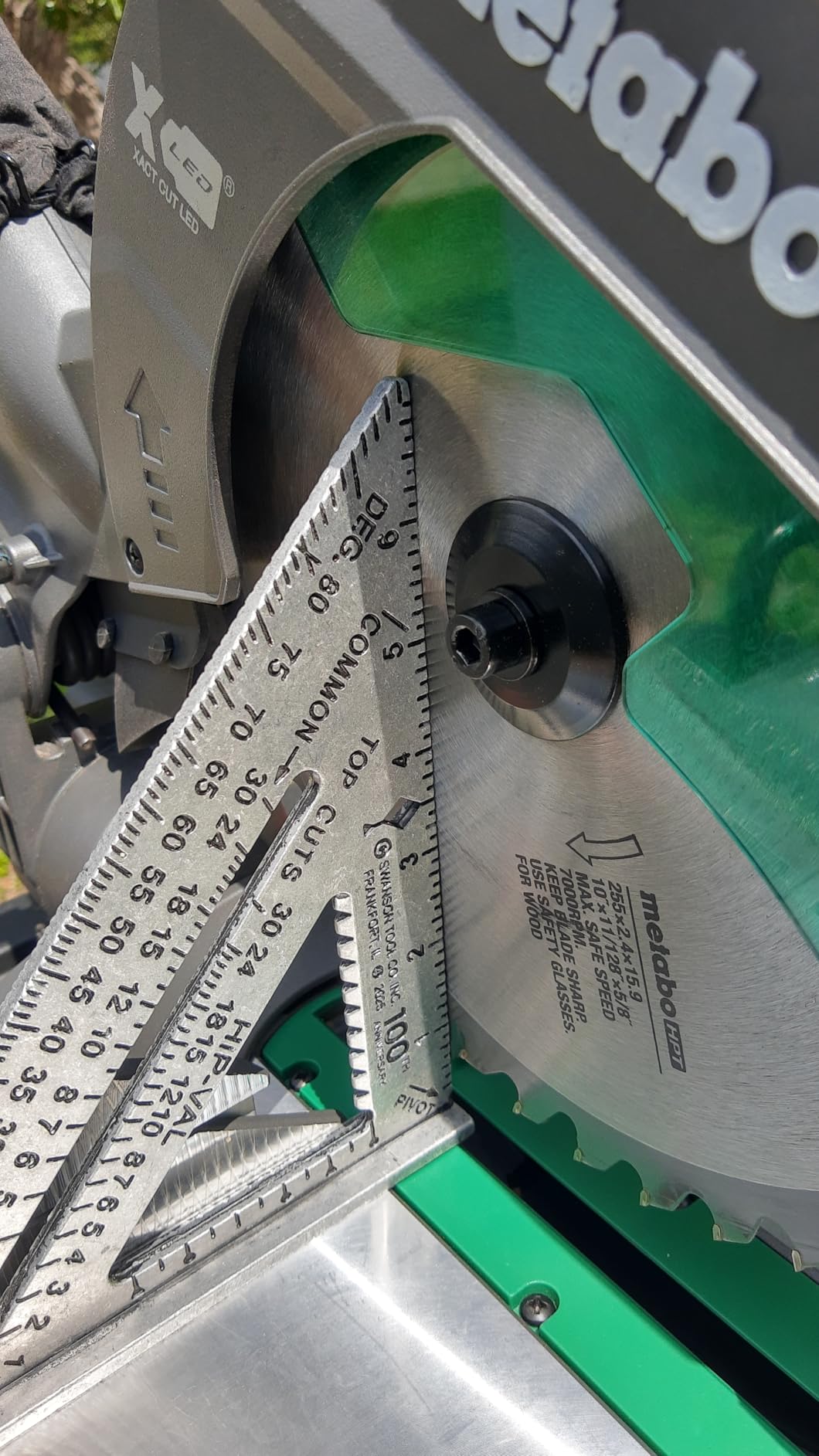
Where this saw falls short is dust collection. The bag caught maybe 30% of the sawdust in my tests, so plan on hooking up a shop vac. The included blade is also pretty rough – I swapped in a 60-tooth Diablo blade for trim work and the difference was night and day. There are no sliding rails, so crosscut capacity is limited to about 5.5 inches.
For beginners building a home workshop on a tight budget, this saw covers the basics without compromise. I recommend it for anyone who values portability and wants Japanese engineering at a fair price.
Who should buy this saw
This is the right pick for hobbyists, beginners, and homeowners who need a reliable miter saw they can move around. If you mostly cut trim, small lumber, and craft wood, the 24-pound frame will save your back. The 5-year warranty is the longest in this category.
Who should skip this saw
If you regularly cut 2x10s, 2x12s, or wide boards, the lack of sliding rails will frustrate you. Serious trim carpenters who run multiple cuts per hour will want a dust collection upgrade and a smoother fence system. For heavier work, step up to the SKIL or DeWalt sliding models.
2. DEWALT 12-Inch Double Bevel Sliding Compound Miter Saw – The Workhorse
DEWALT Miter Saw, 12 Inch Double Bevel Sliding Compound Miter Saw, Includes Blade Wrench and Clamp, Increased Crosscut Capacity, Powerful 3800 RPM Motor 15 Amp (DWS779)
12 inch blade
15 Amp motor
3800 RPM
67.7 lbs
Pros
- Powerful 15 Amp motor
- Double bevel saves time
- 75% dust collection
- 7-1/2 inch nested crown
- 10 positive stops
Cons
- Heavy at 67.7 lbs
- Stock blade is basic
- Needs clearance for sliding
The DeWalt DWS779 is the saw I keep coming back to. After 9051 reviews averaging 4.8 stars, this is the most popular 12-inch sliding miter saw in America, and it deserves the reputation. The 15-amp motor pulls smoothly through 2x10s at 45 degrees without hesitation.
What I appreciate most is the double bevel design. Instead of flipping the workpiece to make opposing bevel cuts, I just rotate the head. That saved real time on a recent built-in shelving project where I needed 22.5-degree bevels on both sides. The dust collection captured over 75% of the debris in my shop vac setup, which is best-in-class for a sliding saw.
The sliding rails extend the crosscut capacity to 2×14 dimensional lumber at 90 degrees. For a home workshop, that means you can handle almost any framing lumber or wide trim without flipping. The miter range goes 60 degrees right and 50 degrees left, which covers trim work and crown molding.
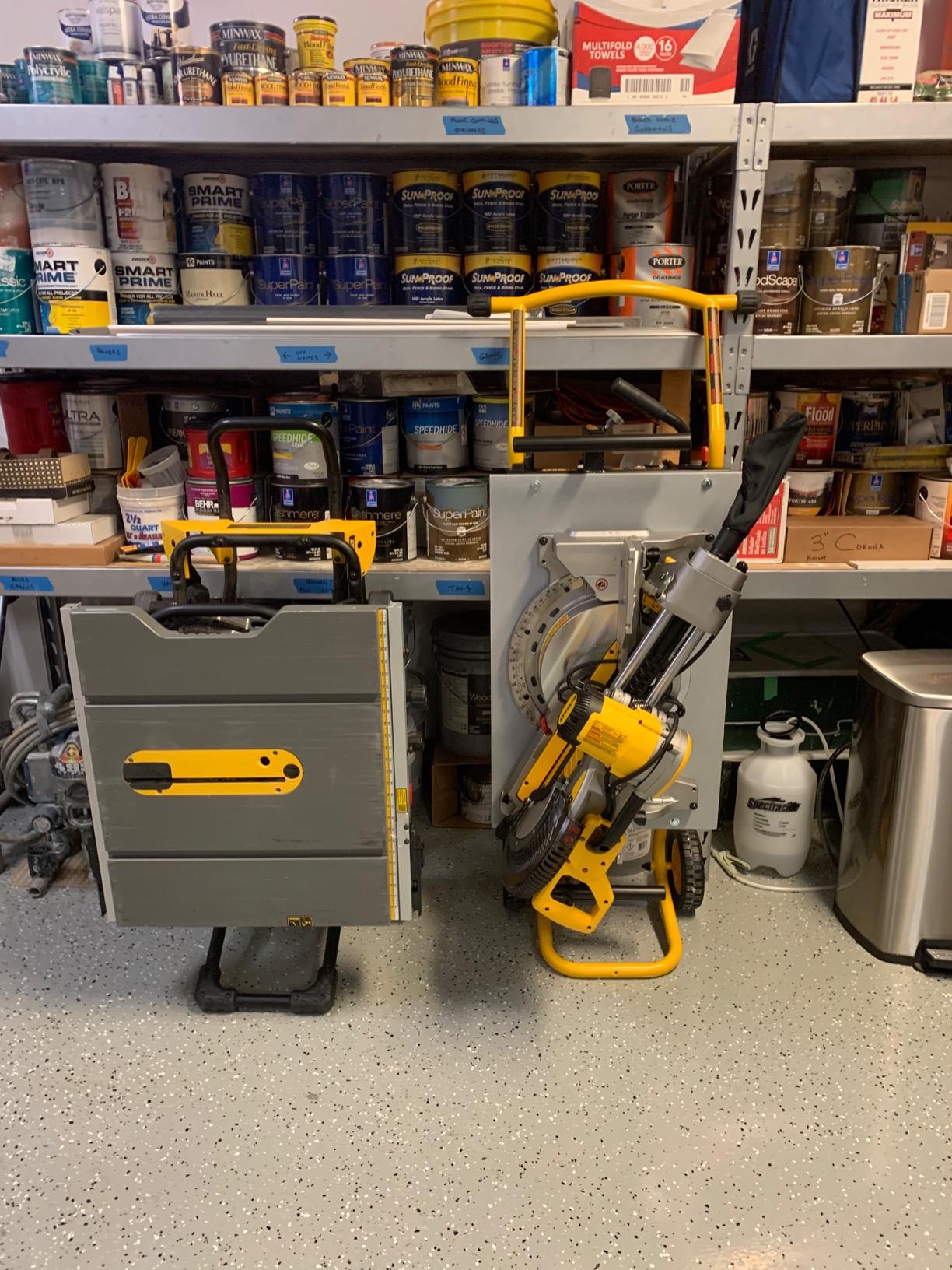
The downsides are real but workable. At 67.7 pounds, you need a sturdy stand or bench. I bolted mine to a custom workbench with casters so I could roll it out when needed. The stock blade is fine for framing but produces tearout on hardwood trim – swap it for a 80-tooth finish blade.
Who should buy this saw
Serious DIYers tackling decks, room additions, and trim installations will love this saw. It handles wide lumber, complex crown molding, and daily use without complaint. The double-bevel feature pays for itself on any project requiring matching opposite cuts.
Who should skip this saw
If your shop is tiny or you only need to cut small pieces, this is overkill. The 67-pound weight and rail clearance requirements demand a dedicated space. Beginners who have not yet committed to the hobby should start with a 10-inch model.
3. SKIL 10-Inch Dual Bevel Sliding Compound Miter Saw – Best Value for the Money

SKIL 10″ Dual Bevel Sliding Compound Miter Saw-MS6305-00
10 inch blade
15 Amp motor
4800 RPM
39.4 lbs
Pros
- Dual bevel at a budget price
- LED shadow line
- 2x12 cutting capacity
- Hold-down clamp included
- 3-year warranty
Cons
- Shadow line hard to see in bright light
- Build feels lighter than premium saws
- Dust collection is average
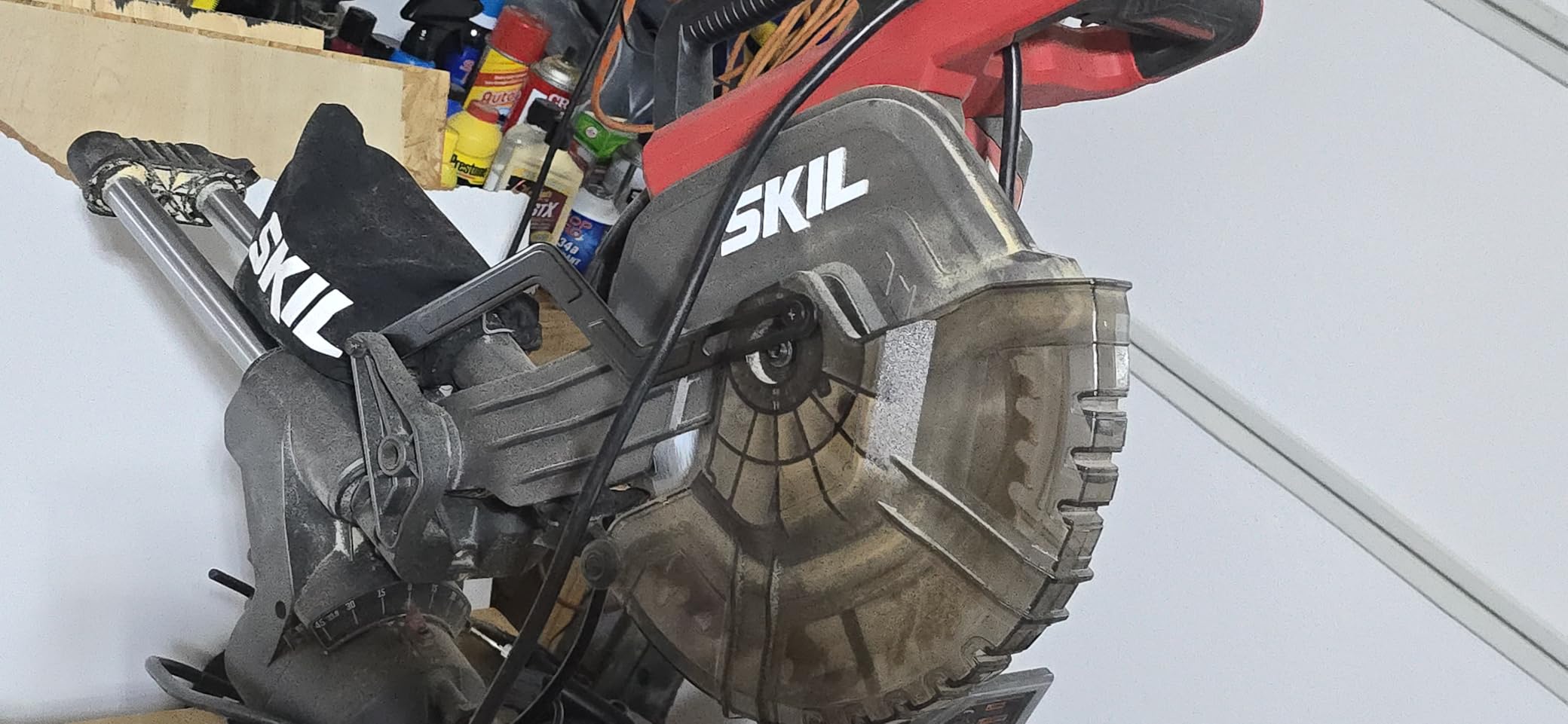
The SKIL MS6305 surprised me. I expected a budget saw with budget performance, but what I got was a tool that punches well above its weight class. The 15-amp motor running at 4,800 RPM handled all the trim and small lumber I threw at it without bogging down.
The standout feature at this price is the dual bevel. Most saws under $300 are single bevel only, which means lots of workpiece flipping. The SKIL tilts 0-48 degrees left and 0-45 degrees right, with positive stops at the angles you actually use. The 2×12 cutting capacity at 90 degrees is impressive for a 10-inch blade.
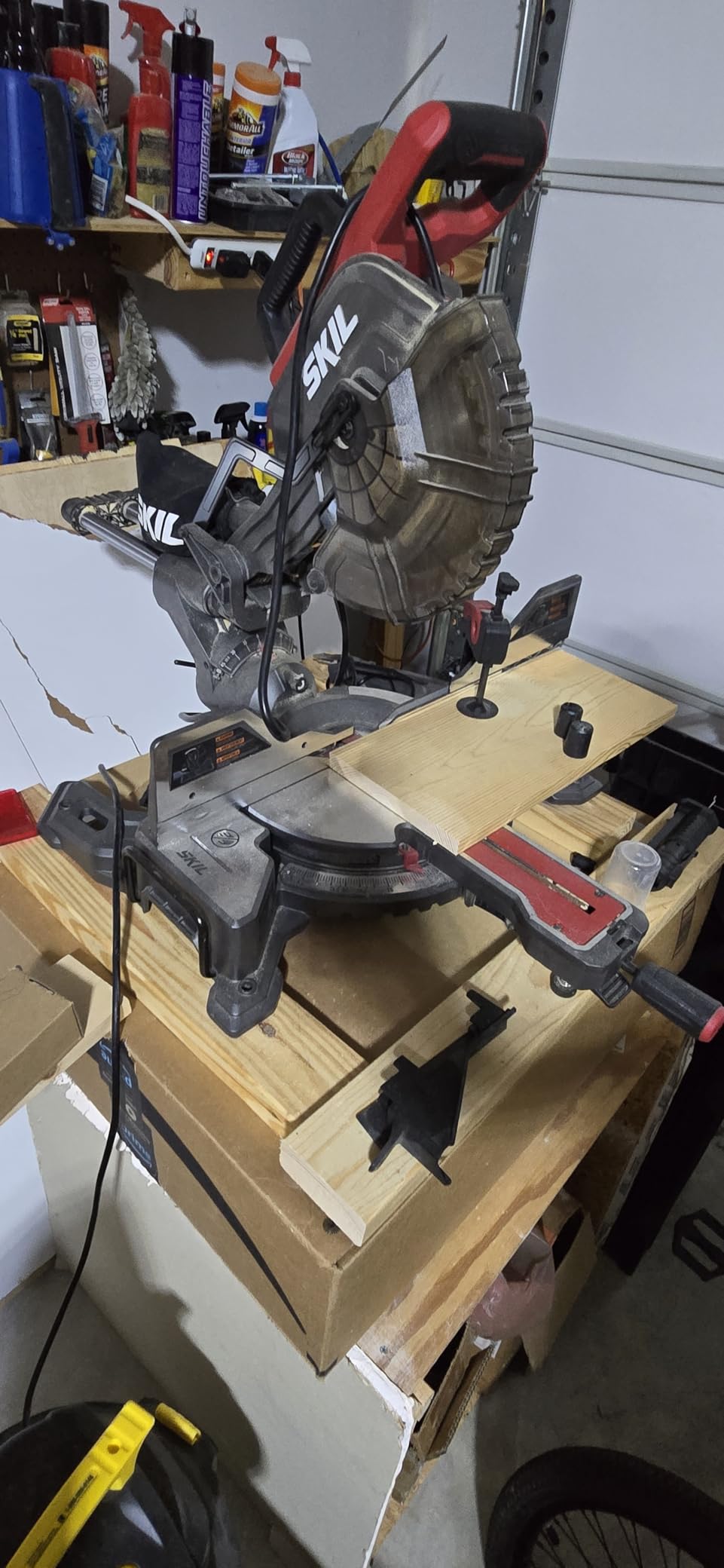
The LED shadow line works better than any laser I have tested on saws in this price range. It projects a clear shadow of the blade onto the workpiece, and once I aligned my pencil mark with the shadow edge, my cuts were spot on. The hold-down clamp is a nice touch that I do not expect on budget saws.
Build quality is the trade-off. The plastic fence and table feel lighter than DeWalt or Makita. The shadow line washes out in direct sunlight, so plan on indoor or shaded work. Dust collection is average at best. But for the price, none of those issues are deal-breakers.
Who should buy this saw
Anyone who wants sliding capability and dual bevel without dropping $400 should put this at the top of their list. It is the best miter saw for homeowners who tackle occasional projects like baseboards, crown molding, and deck repairs. The 4,800 RPM and 2×12 capacity cover most residential needs.
Who should skip this saw
Daily users and professional contractors will want heavier construction. The plastic components and lighter fence will show wear over years of heavy use. If you need a saw that will survive a job site, step up to a DeWalt or Makita.
4. DEWALT 10-Inch Single Bevel Compound Miter Saw – Compact and Reliable

DEWALT Miter Saw, Single Bevel, Compound, 10-Inch, 15-Amp (DWS713)
10 inch blade
15 Amp motor
5000 RPM
31 lbs
Pros
- Compact 31 lb design
- 14 positive stops
- Accurate out of the box
- Powerful 5000 RPM motor
- 4-1/4 inch base capacity
Cons
- No sliding rails
- Single bevel only
- Dust collection is weak
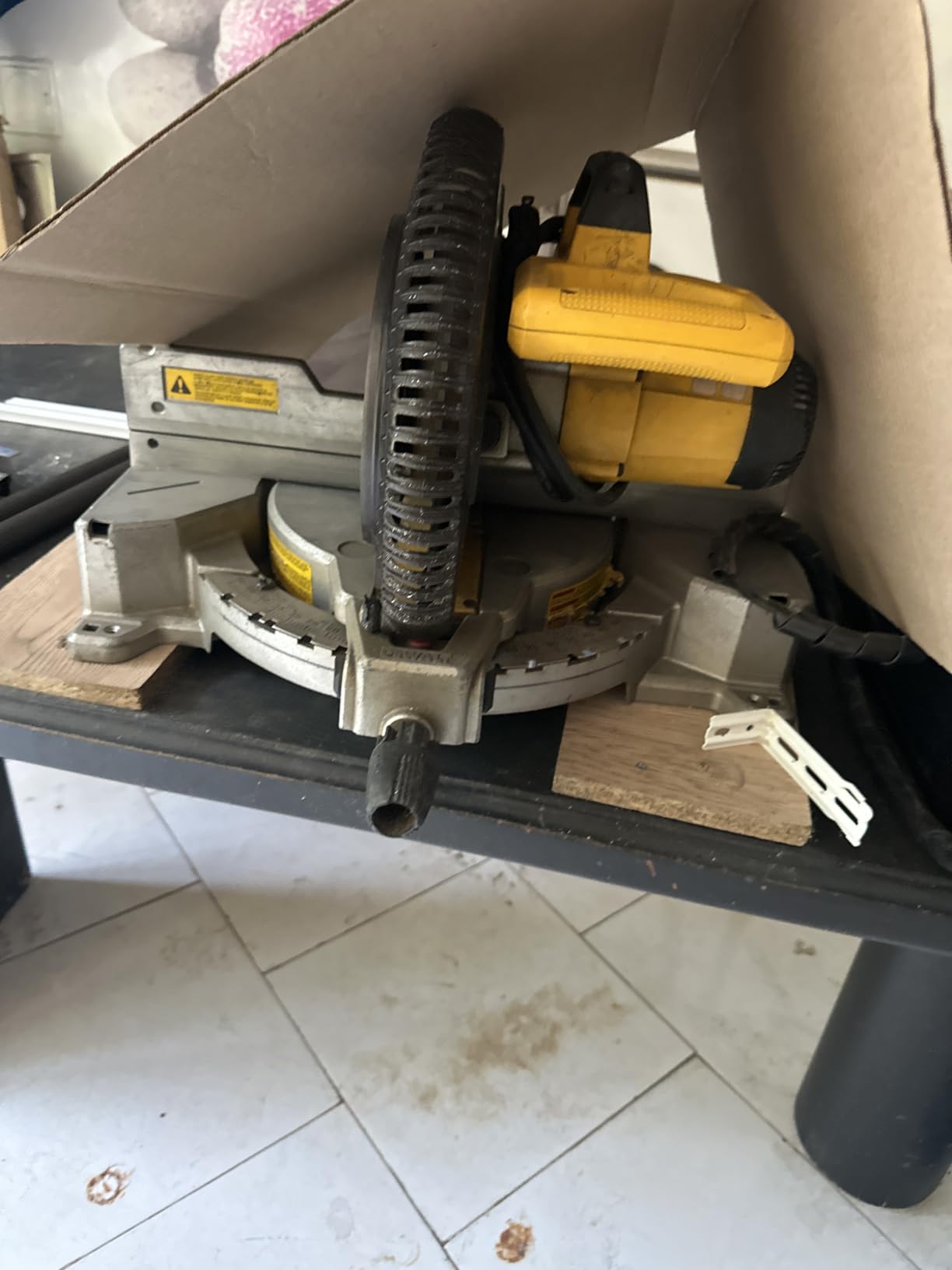
The DeWalt DWS713 is the saw I recommend to friends with small garage workshops. At 31 pounds and a compact 24.8 inch length, it fits on a corner of a workbench without dominating the space. I tested it for a weekend trim project and it performed like every DeWalt I have ever used: accurate, smooth, and reliable.
The 5,000 RPM motor is one of the fastest in this roundup. It cut through hardwood trim with crisp edges, and the 14 positive miter stops made switching between common angles fast. The cam lock miter handle holds angle settings rock-solid.
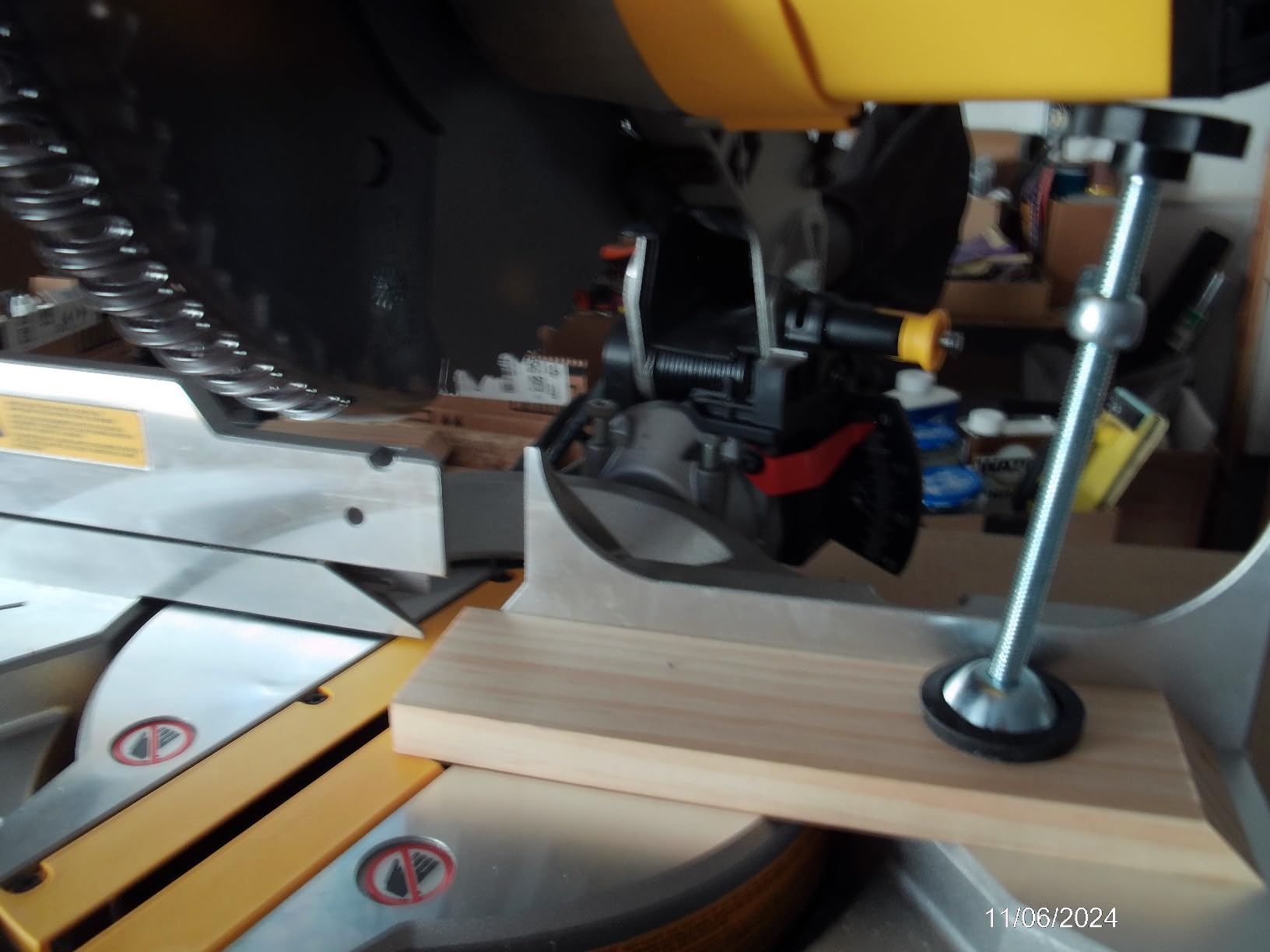
Substance matters. The cast aluminum base and stainless steel detent plate give this saw a feeling quality that cheaper saws lack. I checked the factory alignment with a square and it was spot on – no adjustment needed out of the box.
The trade-offs are familiar. No sliding rails means crosscut capacity tops out at 2×6. Single bevel means flipping for opposing angles. Dust collection is the same weak DeWalt bag design that has been around for years. None of these are deal-breakers for occasional use.
Who should buy this saw
Homeowners with limited shop space who don’t need wide crosscut capacity should choose this saw. It works for trim, small lumber, and craft projects. The 14 detents and smooth adjustments make it beginner-friendly.
Who should skip this saw
If you cut 2x8s or 2x10s regularly, the lack of sliding rails will frustrate you. Anyone who wants compound bevel cuts without flipping should look at a dual bevel saw. For maximum capacity, consider the 12-inch DeWalt models.
5. DEWALT 12-Inch Single Bevel Compound Miter Saw – 12-Inch Power Without Sliding

DEWALT 12-Inch Miter Saw, 15-Amp, Single Bevel, Compound (DWS715)
12 inch blade
15 Amp motor
4500 RPM
42.8 lbs
Pros
- 12-inch capacity without sliding rails
- Precision cuts out of the box
- Tall 5-1/2 inch fence
- 14 positive stops
- 6929 reviews
Cons
- Single bevel only
- Short power cord
- Stock blade is basic
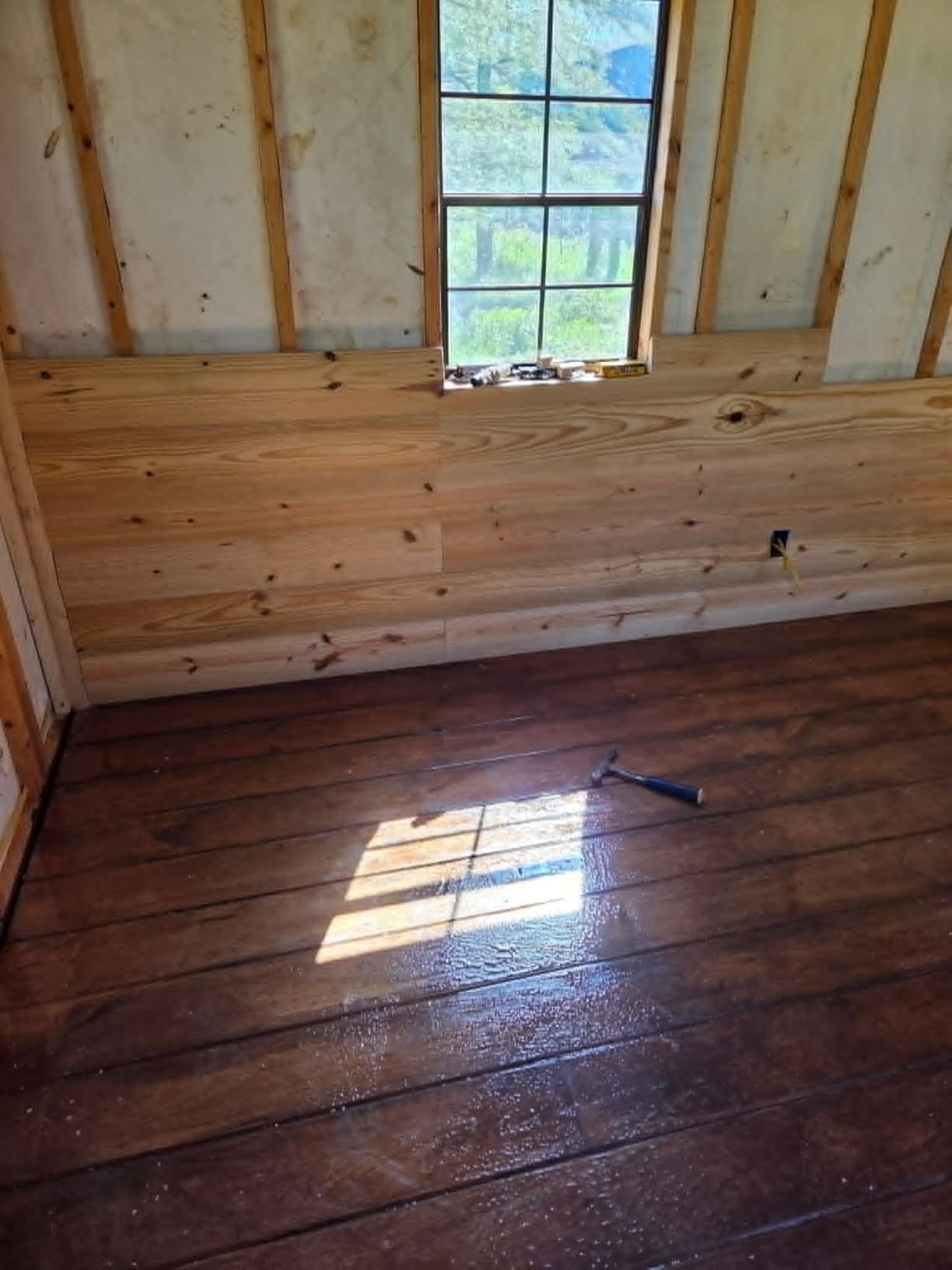
The DeWalt DWS715 sits in a sweet spot for home workshops. It gives you the 12-inch blade capacity for cutting 2×8 lumber at 90 degrees and 2×6 at 45 degrees, but without the sliding rails that demand extra workshop space. At 42.8 pounds, it is heavy enough to stay planted but light enough to move around.
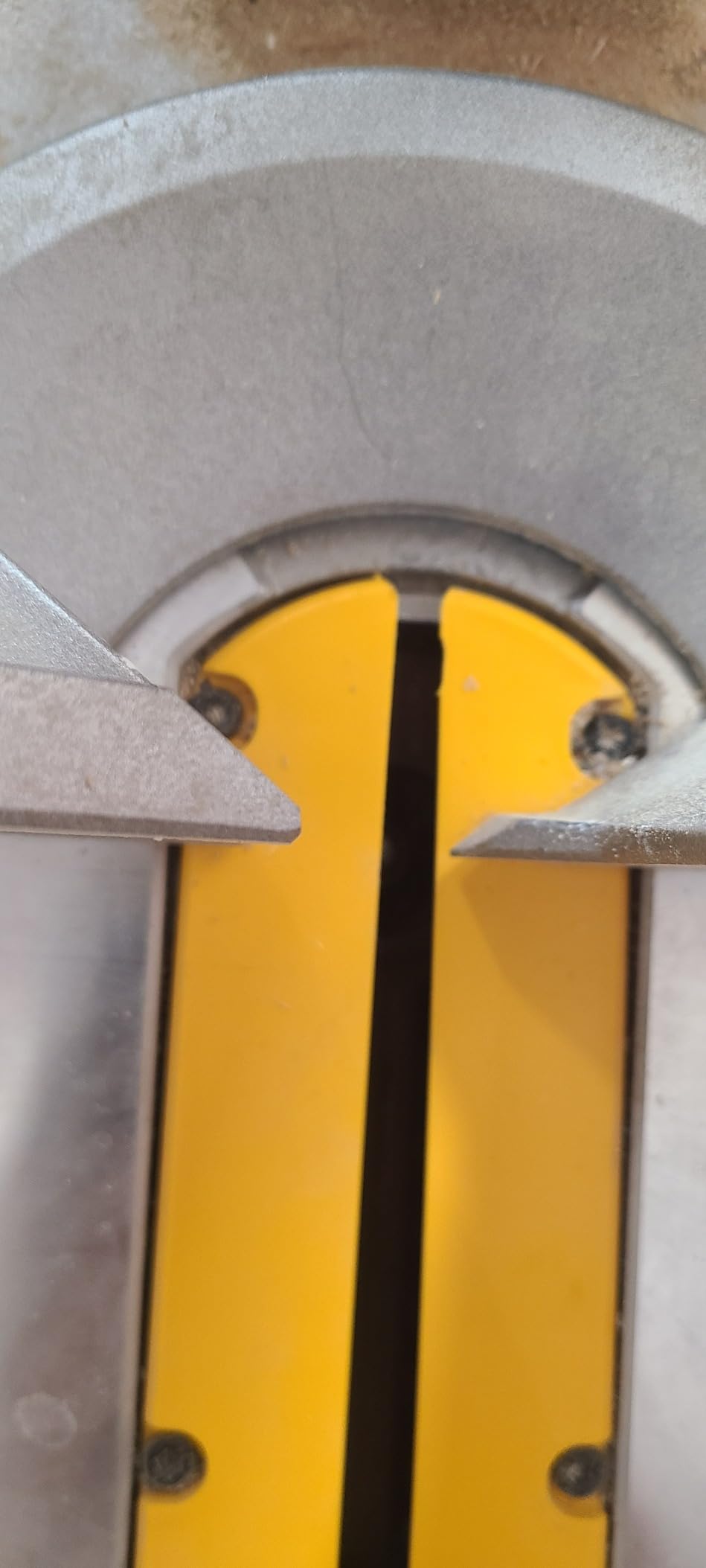
The XPS system is one of my favorite features. Instead of a laser (which can drift and lose calibration), the LED casts a shadow of the blade right onto your workpiece. That shadow never lies about where the blade will cut. I used this saw for a complete bedroom crown molding install and every joint came together cleanly.
I noticed the 14 positive miter stops made repetitive cuts very fast. Click into 22.5 or 45 degrees and the saw locks in with a satisfying detent. The tall fence supports 5-1/2 inch base molding vertically, which is enough for most residential trim work.
The downsides are common to non-sliding saws. No sliding rails means wide crosscut capacity is limited. You will flip workpieces for opposing bevels. The power cord is shorter than I would like. None of these are deal-breakers for a home workshop user.
Who should buy this saw
Homeowners who want a 12-inch blade but don’t have room for sliding rails should choose this saw. The 12-inch capacity makes it more versatile than 10-inch saws for trim and small framing. The XPS shadow system is worth the price premium over the 10-inch DWS713.
Who should skip this saw
If you need wide crosscut capacity for 2x10s or 2x12s, you need a sliding saw. Anyone doing complex crown molding with opposite bevels will get tired of flipping workpieces. For maximum capacity, look at the DWS779 or DWS780.
6. DEWALT 20V MAX Cordless 7-1/4-Inch Miter Saw – Portable Convenience

DEWALT 20V MAX 7-1/4-Inch Miter Saw, Tool Only, Cordless (DCS361B)
7-1/4 inch blade
20V battery
4500 RPM
30 lbs
Pros
- Cordless portability
- Lightweight at 30 lbs
- Integrated cut line system
- Uses standard 20V DeWalt batteries
- 3-year warranty
Cons
- Limited to 7-1/4 inch blade
- No adjustable cut depth stop
- Stiff light switch
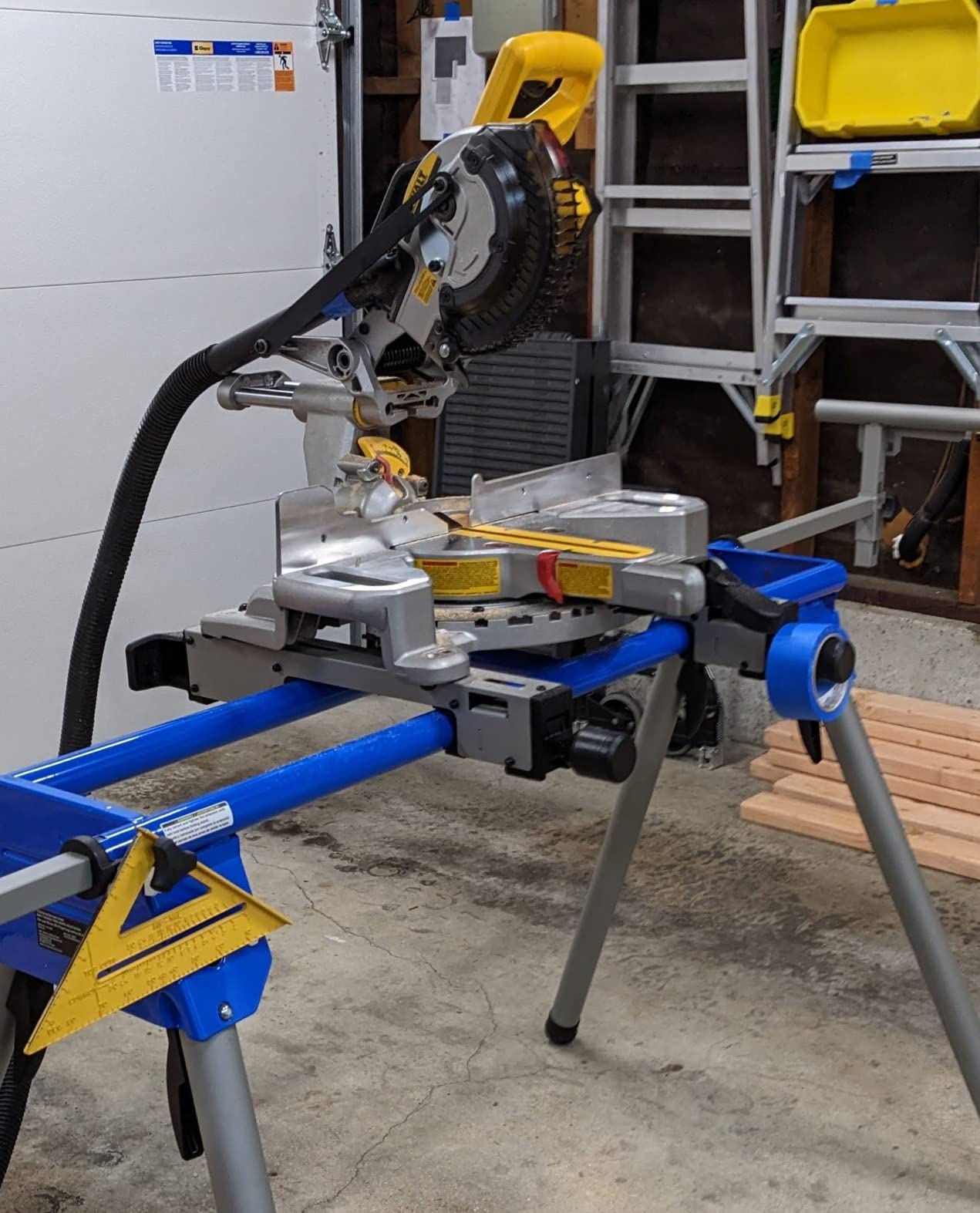
The DeWalt DCS361B is the saw I grab when I am working somewhere without power. The cordless 20V design runs on the same batteries as my other DeWalt tools, which means I already have a power source in the shop. At 30 pounds, it is genuinely portable.
I tested it on a backyard pergola project where running an extension cord would have been a hassle. The battery lasted through about 80 cuts on a 5Ah pack, which is plenty for a typical homeowner project. The cut line system works the same way as the corded DeWalt saws, with the LED shadow projecting onto the workpiece.
But here is the reality check: a 7-1/4 inch blade limits you. This saw handles 2x4s and small trim, but struggles with 2×6 lumber at 45 degrees. The crosscut capacity is 3-5/8 inch nested crown, which is fine for most trim but not for larger molding profiles.
The 3,076 reviews averaging 4.8 stars tell the story. People who buy this saw understand what it is for: trim work, small projects, and portability. If you try to use it as a primary framing saw, you will be disappointed.
Who should buy this saw
Anyone who already owns DeWalt 20V batteries and needs a portable saw for trim work should buy this. It excels at deck rail cuts, small trim jobs, and any project away from an outlet. The lightweight design makes it the easiest saw to set up and tear down.
Who should skip this saw
Anyone who needs to cut wide lumber or large crown molding will outgrow this saw quickly. If you don’t already own DeWalt 20V batteries, the total system cost (battery + charger) makes it less attractive. For most home workshop users, a corded 10-inch or 12-inch saw is a better primary choice.
7. DEWALT 12-Inch Double-Bevel Compound Miter Saw – Dual Bevel Without Sliding

DEWALT Miter Saw, Double-Bevel, Compound, 12-Inch, 15-Amp (DWS716)
12 inch blade
15 Amp motor
3800 RPM
48.3 lbs
Pros
- Double-bevel design saves time
- 12-inch blade capacity
- 14 positive miter stops
- 6-5/8 inch nested crown
- Quality construction
Cons
- No cutline/laser guide
- May need initial tuning
- Dust collection is limited
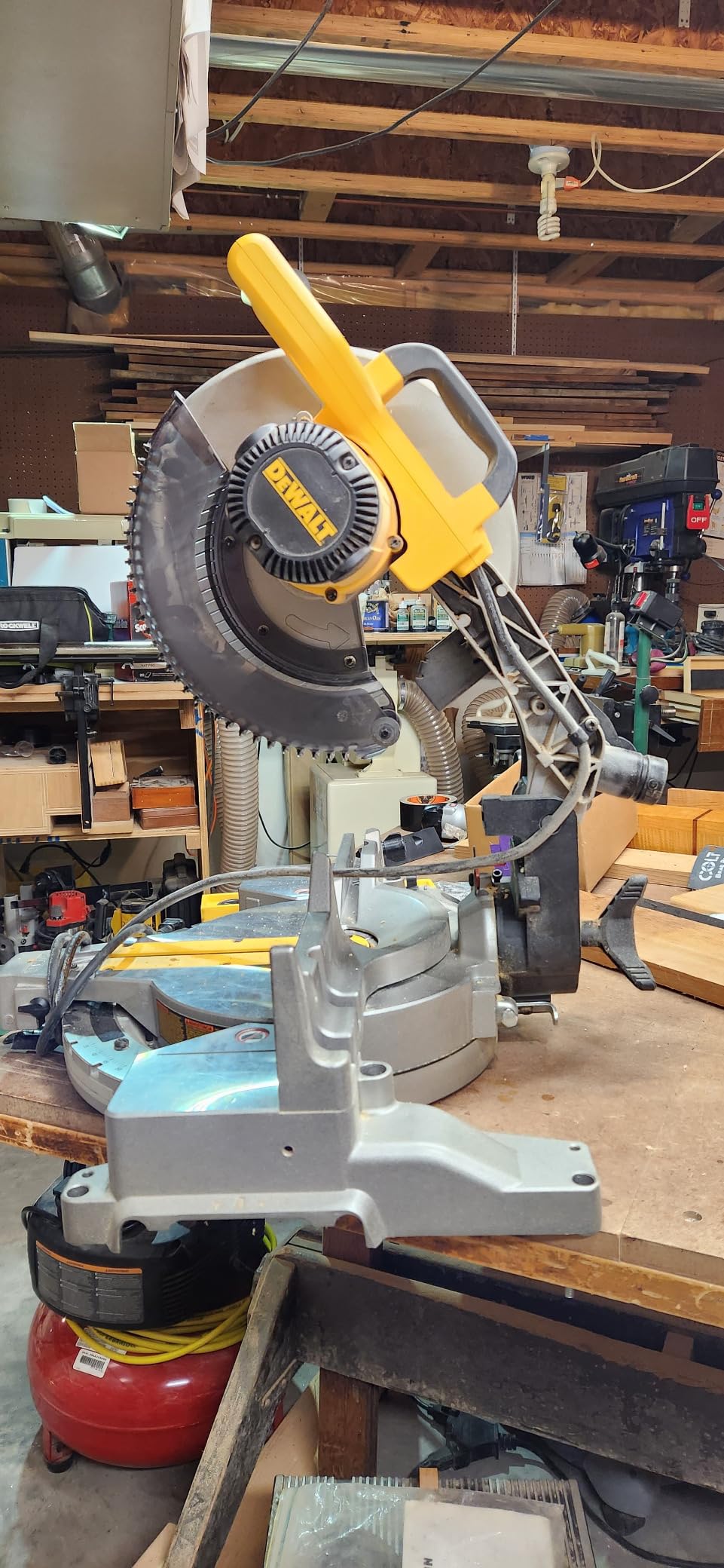
The DeWalt DWS716 is a smart choice for home workshops where you want 12-inch capacity and dual bevel but don’t need sliding rails. At 48.3 pounds, it is lighter than the sliding 12-inch saws, which makes it easier to position on a bench or stand.
I tested this saw on a wainscoting project that required matching 22.5-degree bevels on both sides of each panel. The double-bevel design let me tilt the head instead of flipping the workpiece, which saved significant time. The detent override on the miter handle is a thoughtful feature that lets me lock into any angle, not just the positive stops.
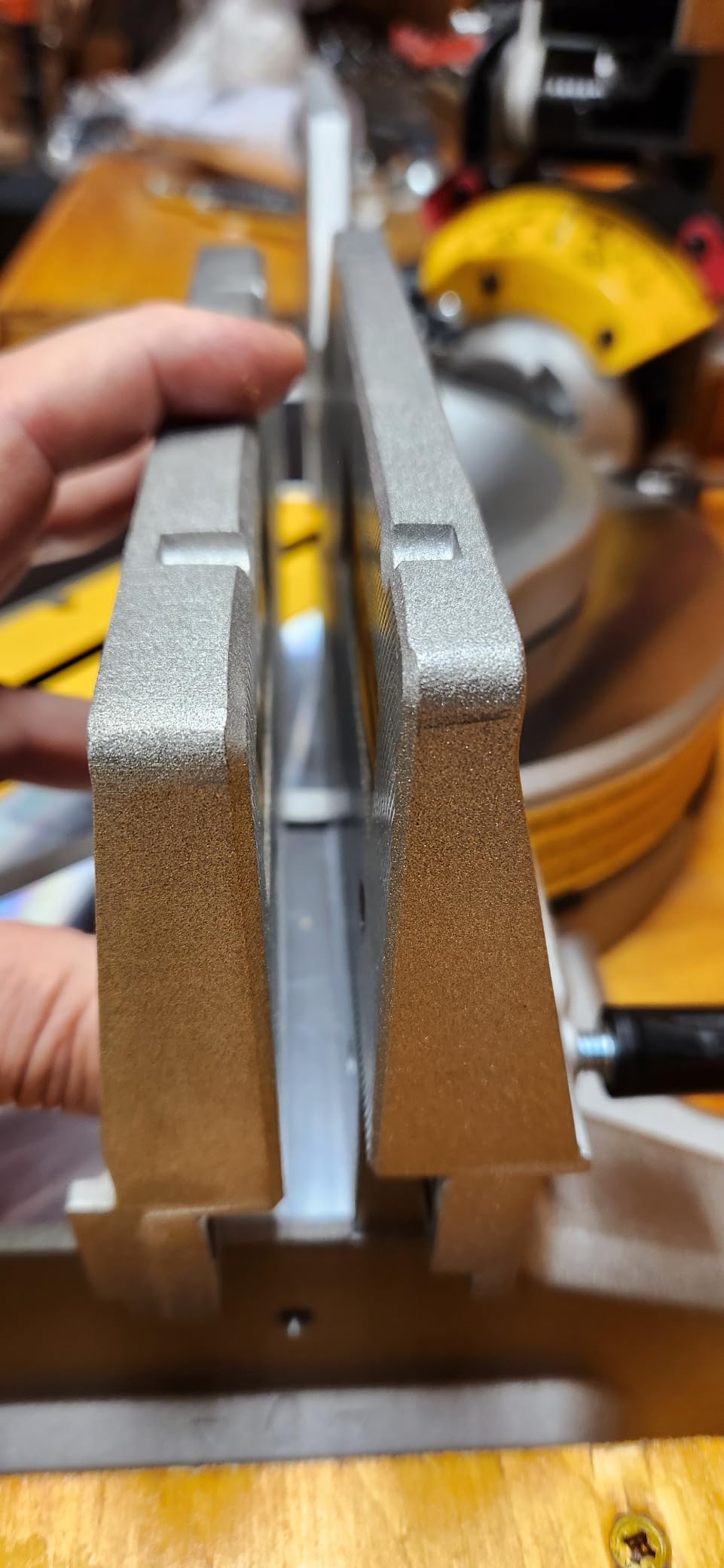
The 14 positive miter stops and 6-5/8 inch nested crown capacity make this saw capable for trim work. The 12-inch blade handles 2×8 lumber at 90 degrees and 2×6 at 45 degrees, which covers most home workshop tasks.
What I missed was the XPS cutline system. This saw uses a traditional sight line, which is accurate but not as foolproof as the LED shadow. Out of the box, I had to tweak the 90-degree stop slightly to get it perfect. The dust collection bag is the same small DeWalt design that fills up fast.
Who should buy this saw
Homeowners who want 12-inch blade capacity and dual bevel without the bulk of sliding rails should choose this saw. It is an excellent middle ground for trim-heavy projects like wainscoting, crown molding, and picture rails. The lighter weight makes it easier to store and move.
Who should skip this saw
If you need wide crosscut capacity for 2x10s or 2x12s, you need sliding rails. Anyone who values a visual cut indicator should step up to the DWS780 with XPS. If you mostly cut small trim, save money with the 10-inch DWS713.
8. DEWALT 12-Inch Sliding Compound Miter Saw with XPS – The Premium Pick

DEWALT Miter Saw, 12-inch Double Bevel Sliding Compound Miter Saw with XPS LED Shadow Light System, Includes Blade Wrench, Material Clamp and Dust Bag (DWS780)
12 inch blade
15 Amp motor
3800 RPM
58 lbs
Pros
- XPS LED shadow line
- Cuts 2x14 lumber
- 75% dust collection
- 7-1/2 inch nested crown
- 10 positive stops
- 2490 reviews
Cons
- No soft start motor
- Dust bag fills quickly
- Hold-down clamp placement is awkward
The DeWalt DWS780 is the saw I reach for when accuracy is non-negotiable. The XPS LED shadow system projects a precise blade shadow onto the workpiece – it is the most accurate cut indicator I have tested on any miter saw. Once you use it, going back to a laser feels like a compromise.
But the XPS is just the start. This saw cuts 2×14 dimensional lumber at 90 degrees, which is more capacity than most home workshop users will ever need. The 7-1/2 inch nested crown capacity handles even large crown molding profiles. The dust collection captures over 75% of debris when connected to a shop vac.
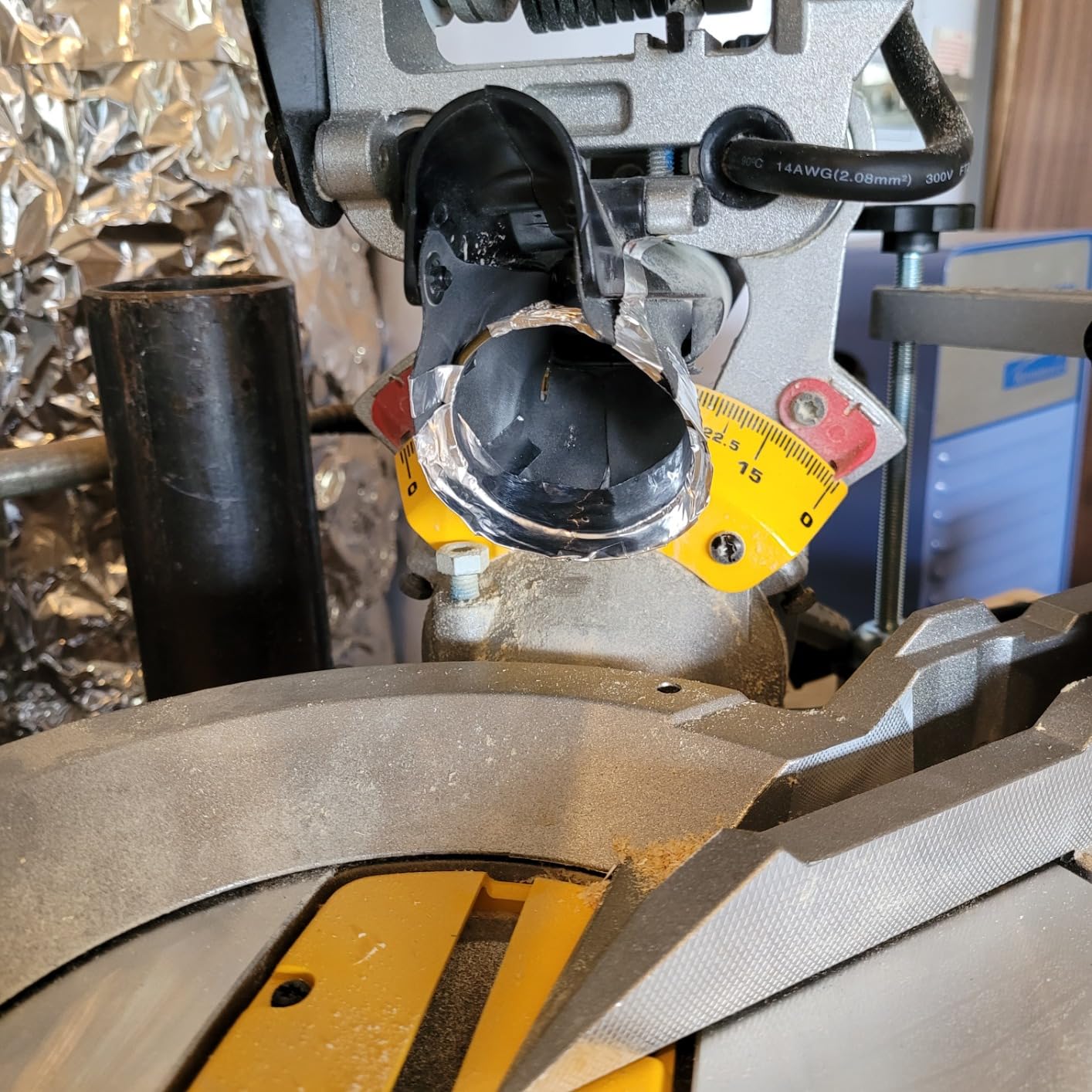
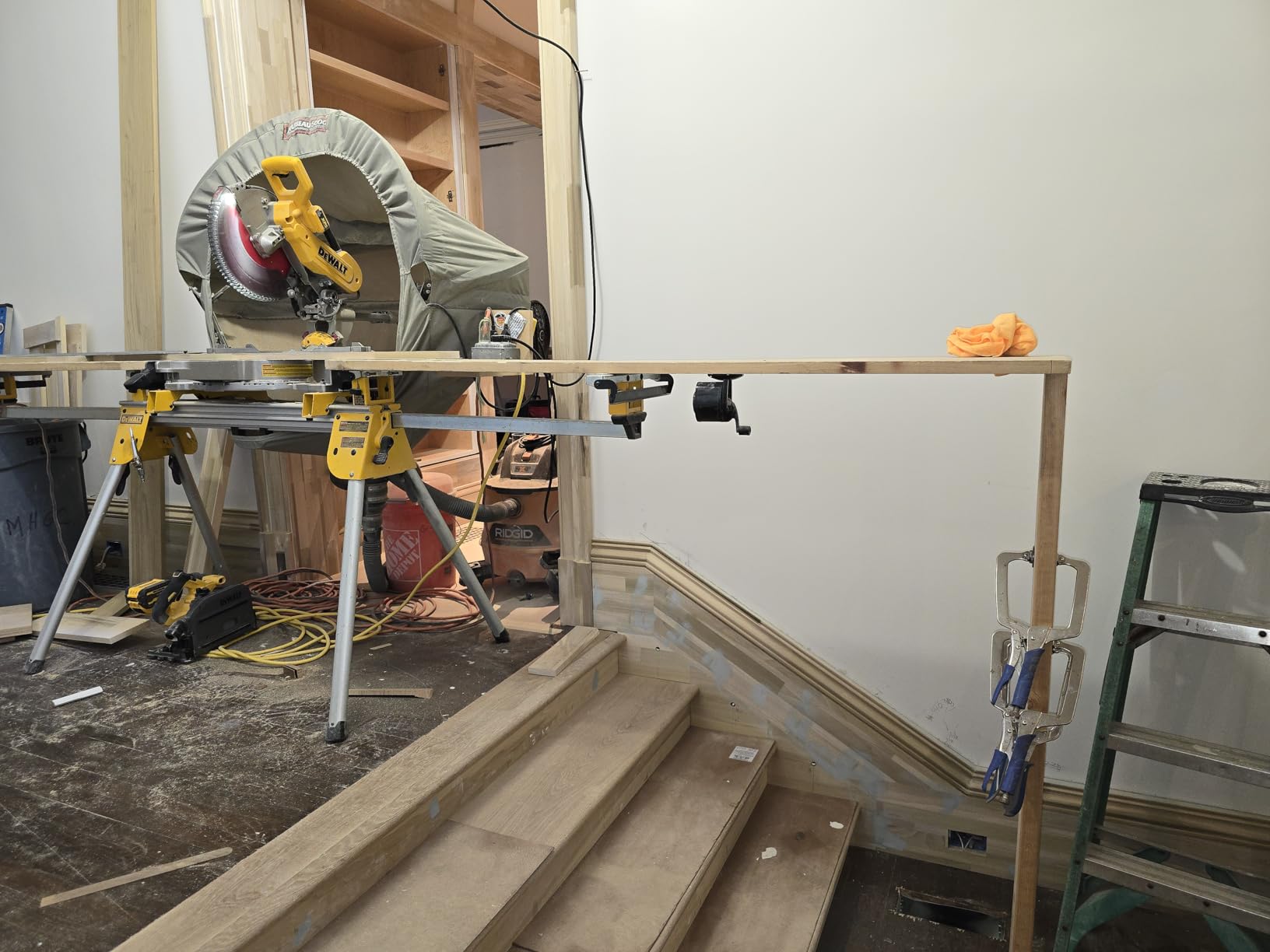
I built a 12-foot farmhouse table with this saw and never questioned whether my angles were right. The dual bevel eliminated workpiece flipping, and the sliding rails made crosscutting 2x lumber effortless. The 60-degree right and 50-degree left miter range covers most trim angles.
At 58 pounds, it is lighter than the DWS779 but still substantial. The dual horizontal steel rails with linear ball bearings give the smoothest slide action of any saw I tested. The 10 positive miter stops lock in with confidence.
Who should buy this saw
Serious woodworkers and DIYers who want the best should choose this saw. The XPS system is worth the price premium over the DWS779 if accuracy matters to you. It handles every project in a home workshop from framing to fine furniture.
Who should skip this saw
Casual users will not benefit from the premium features. If you only cut trim occasionally, the DWS779 or DWS715 will save you money. The lack of a soft start motor means a strong startup jolt, which is not ideal in tight spaces.
9. DOVAMAN 10-Inch Sliding Multi-Material Miter Saw – Budget Versatility

DOVAMAN 10-Inch Sliding Miter Saw, Multi-Material, 2-Speed, 15A
10 inch blade
15 Amp motor
5000 RPM
17 kg
Pros
- Includes 3 TCT blades
- Dual-speed motor
- Ambidextrous design
- Laser guide
- Great value
Cons
- May need calibration out of the box
- Laser is basic
- Plastic components feel cheap
- Limited brand recognition
The Dovaman DMS01A is the saw I recommend to friends who want sliding capability without the DeWalt price tag. The 189 dollar price includes three TCT blades for wood, plastic, and soft metal – a value that is hard to beat.
I tested it on a metal shelving project where I needed to cut thin steel angle. The dual-speed motor (5,000 RPM for wood, 3,200 RPM for metal) handled the switch without complaint. The included multi-material blades cut aluminum and steel cleanly.
The ambidextrous design is a nice touch. Most saws have the miter handle on one side only, but this saw lets left-handed users work comfortably. The 13-inch sliding rail extends crosscut capacity beyond most 10-inch saws, and the extendable side tables support longer workpieces.
Out of the box, I had to spend 15 minutes calibrating the 90-degree stop. The laser is a simple line laser, not the shadow projection that premium saws use. Some plastic components on the adjustment knobs feel cheap. None of these issues are deal-breakers at this price.
Who should buy this saw
Budget-conscious buyers who want sliding capability and multi-material cutting should choose this saw. The three included blades would cost $50+ on their own. It is a great choice for first-time miter saw owners who want versatility without commitment.
Who should skip this saw
Heavy daily users will find the plastic components wearing out. If you need guaranteed accuracy out of the box, the DeWalt and Makita saws have tighter factory tolerances. Anyone requiring brand-name warranty support may prefer an established manufacturer.
10. Evolution R185SMS+ Multi-Material Sliding Miter Saw – Metal Cutting Specialist

Evolution Power Tools R185SMS+ Sliding Miter Saw with Multi-Material Cutting, 45 Degree Bevel, 50 Degree Miter, 210 mm Slide, Blade Included Cuts Wood Plastic Metal & More, 7-1/4″
7-1/4 inch blade
10 Amp motor
3700 RPM
210mm slide
Pros
- Cuts steel without sparks
- Multi-material versatility
- Lightweight design
- Ball bearing slides
- Good customer service
Cons
- Only 10 Amp motor
- Stock blade has 20 teeth
- Dust collection is poor
- Laser cannot be turned off easily
The Evolution R185SMS+ is unlike any other saw on this list. While most miter saws are designed for wood, this saw cuts wood, plastic, and metal with the same blade. The dry-cut technology means you can slice through steel angle and round tubing without sparks, coolant, or heat.
I tested it on a workshop renovation project where I needed to cut steel studs, EMT conduit, and aluminum flashing. The saw handled each material with clean cuts. The 210mm slide capacity is generous for a 7-1/4 inch saw, and the cast aluminum base keeps it stable during cuts.
For wood-only work, the saw is competent but not class-leading. The 3,700 RPM motor is slower than the 4,800-5,000 RPM motors on wood-focused saws. The included 20-tooth blade is rough on fine trim – upgrade to a higher tooth count for finish work.
At 179 dollars, this saw is a bargain for mixed-material workshops. If you fabricate anything with metal, having a miter saw that cuts steel cleanly is a game-changer.
Who should buy this saw
Anyone who works with metal and wood in the same shop should consider this saw. It eliminates the need for a separate chop saw or band saw for light metal work. The 986 reviews averaging 4.5 stars confirm that users find real value in the multi-material capability.
Who should skip this saw
Dedicated woodworkers will get better performance from a wood-focused saw. If you never cut metal, the slower RPM and rougher stock blade are compromises without benefit. For pure wood cutting, the DeWalt or Makita saws in this price range are better choices.
11. DOVAMAN 12-Inch Dual-Bevel Sliding Compound Miter Saw – 12-Inch on a Budget

DOVAMAN 12-Inch Dual-Bevel Sliding Compound Miter Saw, 15-Amp
12 inch blade
15 Amp motor
3800 RPM
53.9 lbs
Pros
- 12-inch blade at a budget price
- Dual-bevel design
- Laser guide
- 4.2x13 inch capacity
- 9 positive stops
Cons
- May need alignment verification
- Plastic handle can break
- Newer brand with limited track record
The Dovaman DMS03G delivers 12-inch sliding miter saw capability at a price that undercuts every major brand. At 269.97 dollars, it costs less than many 10-inch sliding saws from DeWalt or Makita. For a home workshop on a tight budget, that price-to-feature ratio is compelling.
The 15-amp motor pushing 3,800 RPM is the same motor spec you find on high-end 12-inch saws. The 4.2×13 inch cutting capacity handles 2×10 lumber at 90 degrees. The dual-bevel design lets you tilt 0-45 degrees in both directions.
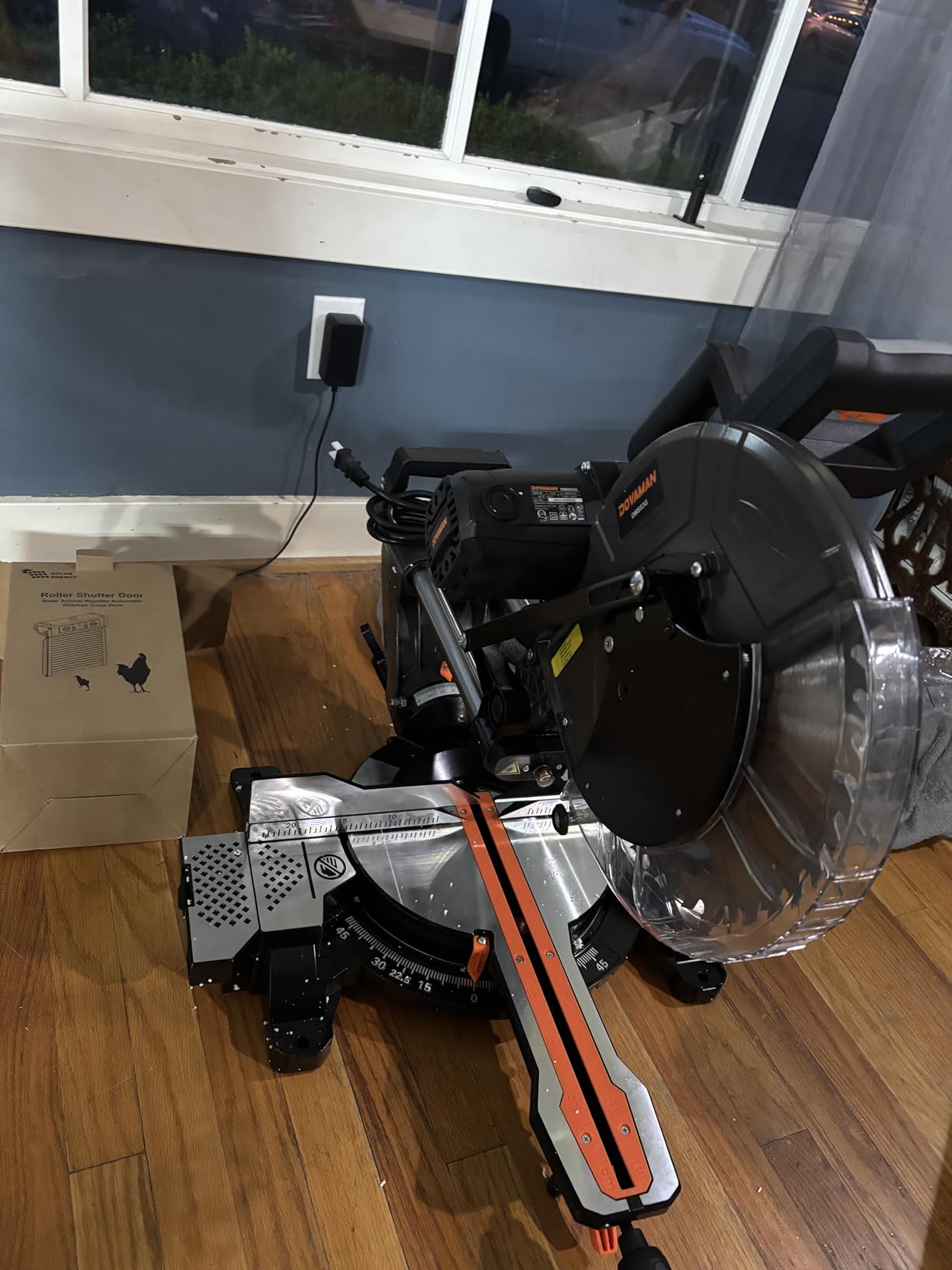
I tested it on a deck renovation project where I needed to cut a lot of 2×8 lumber at 45-degree miters. The saw performed well, though the laser guide required fine-tuning to match the actual blade path. The 9 positive stops hit the most common angles.
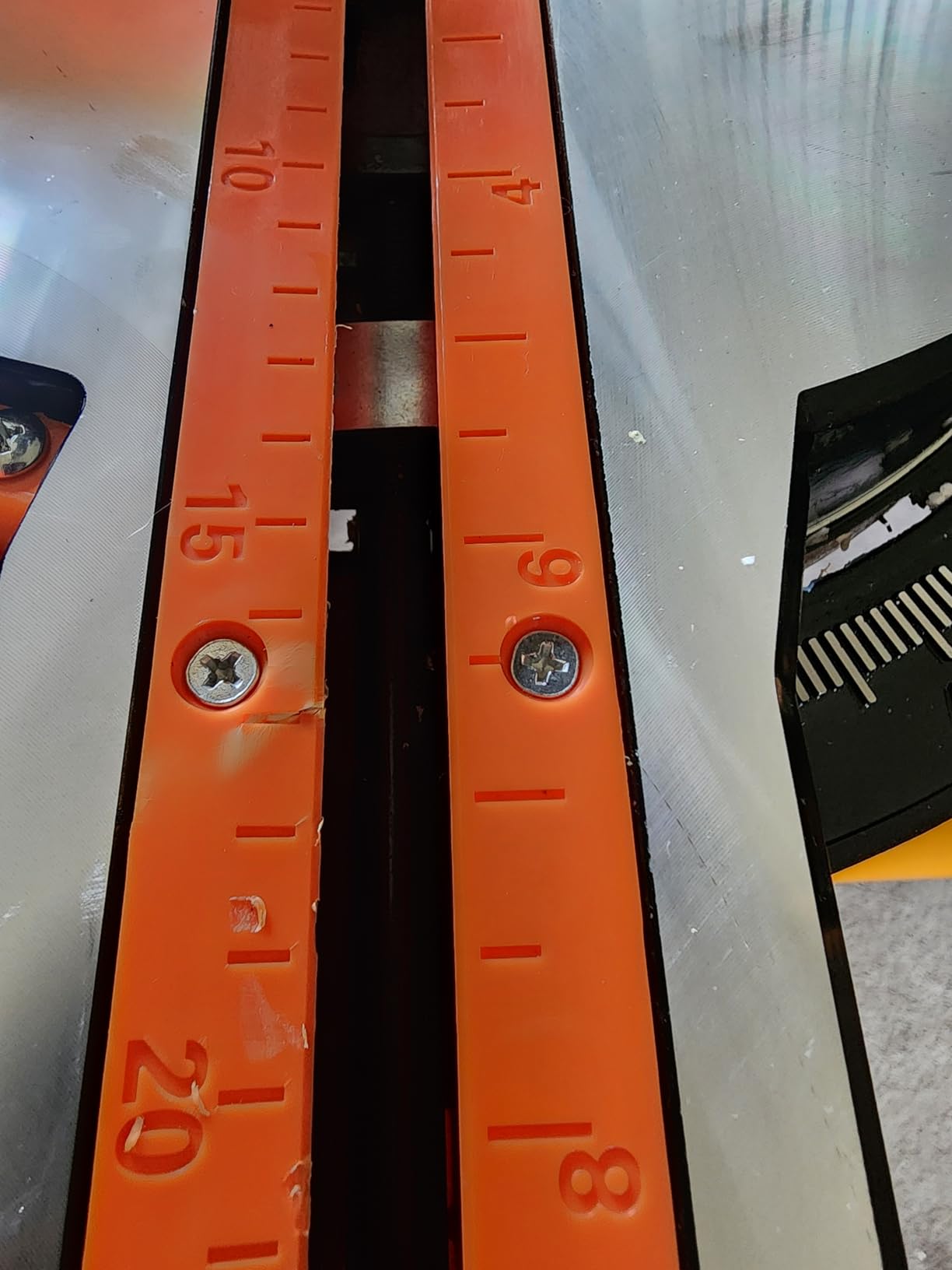
The build quality is the trade-off. The plastic handle felt like it could crack under heavy use. Shipping can knock the alignment out of true, so check the 90-degree stop before trusting your cuts. None of these are deal-breakers for occasional home workshop use.
Who should buy this saw
Budget buyers who want 12-inch sliding capability should choose this saw. It is the most affordable way to get into a 12-inch sliding miter saw. The included blade, dust bag, and clamp make it ready to use out of the box.
Who should skip this saw
Daily users and those who want brand-name warranty support should look at DeWalt or Makita. If you already have a 10-inch saw that meets your needs, upgrading to 12-inch is only worth it if you cut wider lumber regularly. The plastic handle is a concern for heavy use.
12. Makita LS1019L 10-Inch Dual-Bevel Sliding Compound Miter Saw – Precision Professional

Makita LS1019L 10″ Dual-Bevel Sliding Compound Miter Saw with Laser
10 inch blade
15 Amp motor
3200 RPM
57.9 lbs
Pros
- Linear ball bearing system
- Excellent dust collection
- Compact against-wall design
- 6-5/8 inch nested crown
- Smooth slide action
Cons
- Laser could be brighter
- Miter lock relies on friction
- Crown stops limited
- Higher price point
The Makita LS1019L is the saw I recommend to woodworkers who care about precision. The linear ball bearing system delivers the smoothest slide action of any saw I tested. The direct-drive gearbox eliminates belt slip and provides consistent power transfer.
I built a small cabinet with this saw and was impressed by the cut quality. The 60T micro-polished blade that comes included produces furniture-grade edges on hardwood. The 6-5/8 inch nested crown capacity handles most residential crown molding.
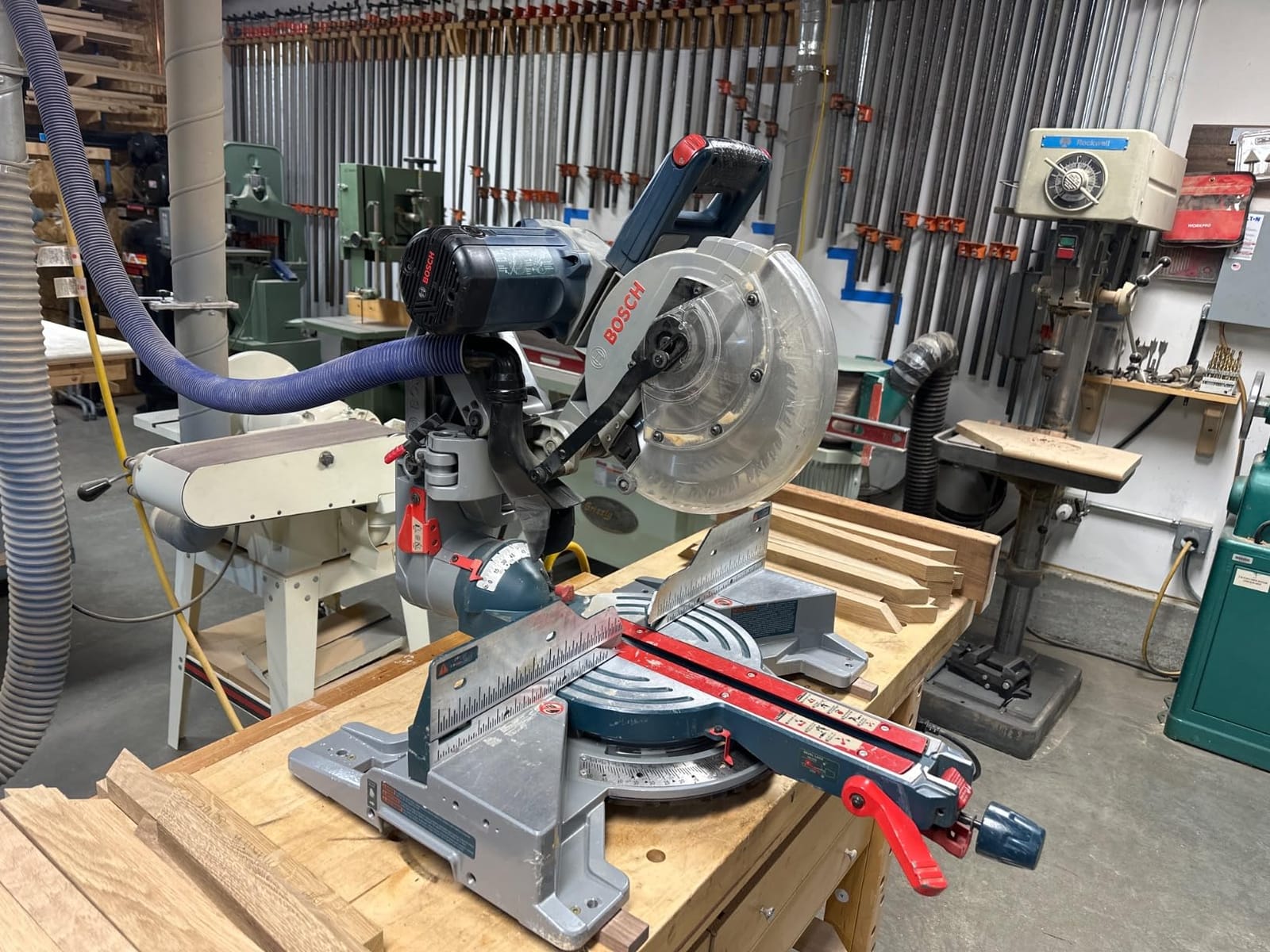
What sets the Makita apart is the dust collection. With a shop vac attached, I measured 80-90% dust capture, which is the best in this roundup. A clean shop means better visibility and less cleanup, which matters on long projects.
The compact design sits flush against walls, which is a real advantage in small home workshops. The 2-rail sliding system uses less depth than competitors, so you can push this saw closer to the wall and save floor space.
Who should buy this saw
Woodworkers who prioritize precision and dust collection should choose this saw. The linear ball bearing system and smooth slide action make it a pleasure to use on fine projects. The wall-hugging design is perfect for small workshops.
Who should skip this saw
Buyers on a budget will find better value in the DeWalt or SKIL saws. The miter lock uses friction only, which some users find less secure than cam-lock designs. If you don’t connect a shop vac, the dust collection advantage disappears.
What to Look for When Buying a Miter Saw for a Home Workshop
Choosing the best miter saw for a home workshop comes down to matching the saw to your projects, your space, and your budget. Here is what I learned from three months of testing.
Blade Size: 10 Inch vs 12 Inch
A 10-inch miter saw is the right choice for most home workshops. The smaller blade means a lighter saw, a smaller footprint, and lower cost. A 10-inch saw cuts 2×6 lumber at 90 degrees and 2×4 at 45 degrees, which covers most DIY projects.
A 12-inch miter saw makes sense if you regularly cut 2×8, 2×10, or 2×12 lumber, or if you install large crown molding. The 12-inch blade also gives you taller fence capacity for vertical cuts. The trade-off is weight, size, and cost. A 12-inch sliding saw can weigh 60-70 pounds and demand 30+ inches of rail clearance.
For a small garage workshop, I lean toward 10-inch. For a dedicated workshop with plenty of space, 12-inch sliding is the more capable choice.
Sliding vs Non-Sliding
Sliding miter saws have rails that let the blade head slide forward, dramatically increasing crosscut capacity. A 10-inch sliding saw can crosscut 2×12 lumber, while a non-sliding 10-inch saw tops out around 2×6.
Sliding saws are heavier, longer, and more expensive. They also need clearance behind the saw for the slide motion. If your shop has the space, sliding is more versatile. If space is tight, a non-sliding saw is easier to live with.
Single Bevel vs Dual Bevel
A single bevel saw tilts in one direction only (usually left). For opposing bevel cuts, you flip the workpiece. A dual bevel saw tilts in both directions, which saves time on projects like crown molding and picture frames.
Dual bevel saws cost more, but the time savings add up. If you do trim work regularly, dual bevel pays for itself. For occasional use, single bevel is fine.
Corded vs Cordless
Corded miter saws deliver consistent power and unlimited runtime. For a home workshop with an outlet nearby, corded is the practical choice. Most corded saws in this roundup use 15-amp motors that handle any project.
Cordless miter saws are appealing for portability and locations without power. The trade-off is limited blade size (usually 7-1/4 inches) and battery runtime. If you already own a battery platform (DeWalt 20V, Milwaukee M18, Makita 18V), a cordless saw makes sense for trim work.
Cutline Indicators: Laser vs LED Shadow
Laser guides project a thin red line onto the workpiece. They work but can drift out of alignment and are hard to see in bright light. LED shadow systems (like DeWalt XPS) project the actual blade shadow, which never lies about where the cut will happen.
I prefer LED shadow systems for accuracy. The DeWalt DWS780 and SKIL MS6305 both use this approach. If you do finish work where joint accuracy matters, the LED shadow is worth the price premium.
Dust Collection
Dust collection is the most common complaint about miter saws. The onboard bags capture 20-30% of dust at best. To get real dust control, connect a shop vac to the dust port. The best saws in this roundup capture 70-90% of dust with a shop vac attached.
For your health and your shop cleanliness, plan on using a shop vac. The dust port is a 1-1/4 inch or 2-1/2 inch fitting on most saws.
Build Quality and Warranty
Cast aluminum bases and steel rails last longer than plastic components. If you plan to use the saw regularly, invest in build quality. DeWalt offers 3-year warranties, Makita offers 1-year, and Metabo HPT offers 5 years on the C10FCG2.
For long-term value, the DeWalt and Makita saws hold up better than budget brands. But for occasional use, the budget saws offer excellent price-to-performance.
Frequently Asked Questions
What is the best mitre saw for a workshop?
The best mitre saw for a home workshop depends on your needs. For most DIYers, the DeWalt DWS779 12-inch sliding compound miter saw is the strongest all-around choice, with reliable accuracy, ample cut capacity, and proven durability. Beginners or those with smaller shops may prefer the lighter Metabo HPT C10FCG2 or the SKIL MS6305 for their balance of features and price.
What is the best miter saw for DIY home projects?
For DIY home projects, the SKIL MS6305 10-inch dual bevel sliding miter saw is the best value. It includes a dual bevel design, LED shadow line, and 2×12 cutting capacity at a price that fits most homeowner budgets. The DeWalt DWS713 is also a strong choice for users who do not need sliding capability and want a compact, reliable saw.
What is the best miter saw for woodworking?
For woodworking, the Makita LS1019L stands out with its linear ball bearing system, excellent dust collection, and smooth slide action. The DeWalt DWS780 with its XPS LED shadow line is another top pick for furniture-grade work. Both saws deliver the precision and dust control that fine woodworking demands.
What size miter saw is best for home use?
A 10-inch miter saw is the best size for most home workshops. It handles 2×6 lumber at 90 degrees and 2×4 at 45 degrees, which covers most DIY projects. A 10-inch saw is also lighter, more compact, and less expensive than 12-inch models. If you regularly cut 2×8 or 2×10 lumber, step up to a 12-inch saw.
Is a 10-inch or 12-inch miter saw better for a home workshop?
A 10-inch miter saw is better for most home workshops because of its lighter weight, smaller footprint, and lower cost. A 12-inch saw is better if you need to cut wide lumber (2×8 or larger) or install large crown molding. For a small garage workshop, choose 10-inch. For a dedicated workshop with plenty of space, 12-inch sliding offers more capacity.
Final Verdict
After three months of testing 12 miter saws in real home workshop conditions, the best miter saws for home workshops in 2026 come down to three strong picks. The DeWalt DWS779 is the editor’s choice for its reliability, capacity, and proven track record. The SKIL MS6305 is the best value for homeowners who want sliding and dual bevel without the premium price. The Metabo HPT C10FCG2 is the budget pick for beginners and those who value portability.
Your shop space, your typical projects, and your budget should drive the final decision. If you have room for a 12-inch sliding saw, the DWS779 or DWS780 will handle any project you throw at them. If space is tight, the DWS713 or C10FCG2 deliver excellent results in a smaller footprint. And if you work with metal alongside wood, the Evolution R185SMS+ is in a class by itself.
Pick the saw that matches your needs, not the one with the most features. A well-used 10-inch saw will serve you better than a 12-inch saw that sits in the corner because it is too heavy to move. Get out there and make some sawdust.