
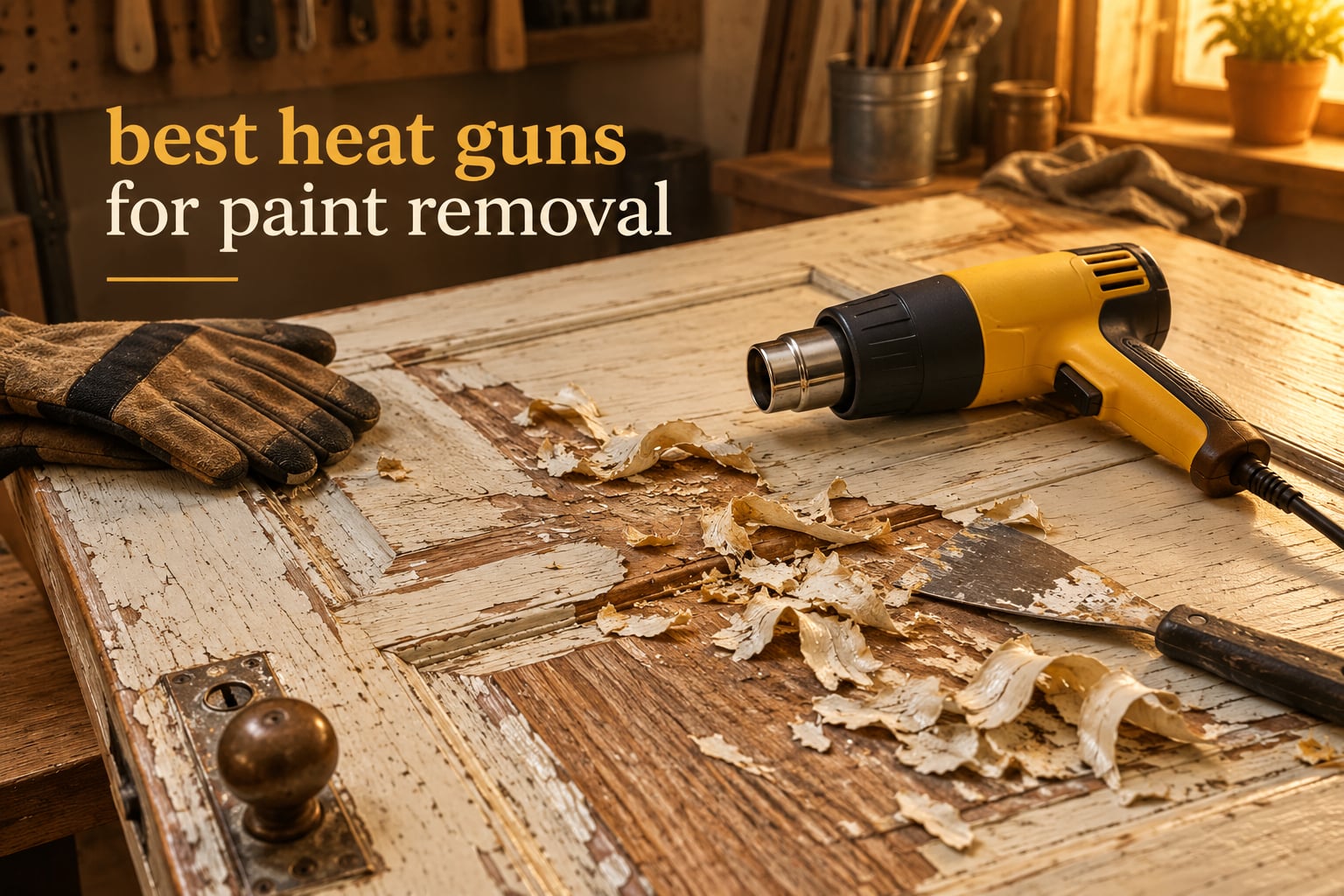
The short answer: the SEEKONE 1800W is the best heat gun for paint removal overall because it runs a stepless dial from 122°F to 1202°F, reaches full heat in about 1.5 seconds and ships with four nozzles, and it carries more owner ratings than any other gun in this group. The Wagner Spraytech HT1000 takes the top spot on rating alone at 4.7 stars, while the BLACK+DECKER HG1300 is the easiest one to hand to somebody stripping their first door.
Stripping paint with hot air is the fastest chemical-free way to lift old coatings off wood trim, cabinet doors, window frames and metal railings. Forced air at several hundred degrees softens the binder until the paint blisters and loses adhesion, and a putty knife pops it off in sheets. No methylene chloride, no stripping gel, no plastic sheeting across the whole room, and no waiting six hours for a gel to turn to mush.
Our team worked through twelve heat guns across cabinets, doors, window glazing and painted railings, and this guide covers all twelve. Every specification below comes from the manufacturer listings, and the ratings are the real buyer averages, not estimates. If you want the broader picture first, our heat gun guide for DIY projects covers shrink wrap, crafts and general household jobs.
One safety note before anything else. If your home was built before 1978, assume there may be lead paint under the layer you are about to heat. Heating lead paint sends toxic dust and vapour into the air, and r/centuryhomes members consistently warn against using a heat gun where lead is possible. Test first, or hire a lead-certified abatement contractor. We cover the full protective kit later in this guide.
Table of Contents
Top 3 Picks for Paint Removal in 2026


Quick Overview: Best Heat Guns for Paint Removal in 2026
All twelve guns below are corded 120V units except the DEWALT DCE530B, which runs on a 20V battery. Maximum temperature ranges from 932°F on the AcmyslaT to 1202°F on four different models, and that spread matters more than wattage for choosing a gun for a specific job.
| Product | Specs | Action |
|---|---|---|
| SEEKONE 1800W Heat Gun |
|
Check Latest Price |
| Wagner Spraytech HT1000 |
|
Check Latest Price |
| BLACK+DECKER HG1300 |
|
Check Latest Price |
 PORTER-CABLE PC1500HG PORTER-CABLE PC1500HG |
|
Check Latest Price |
 DIAFIELD 1850W Heat Gun DIAFIELD 1850W Heat Gun |
|
Check Latest Price |
 DEWALT 20V MAX DCE530B DEWALT 20V MAX DCE530B |
|
Check Latest Price |
 Genesis GHG1500A Heat Gun Kit Genesis GHG1500A Heat Gun Kit |
|
Check Latest Price |
 TGK 1800W Hot Air Gun Kit TGK 1800W Hot Air Gun Kit |
|
Check Latest Price |
 ROMECH Variable Heat Gun ROMECH Variable Heat Gun |
|
Check Latest Price |
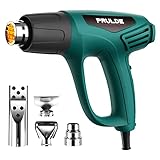 NEU MASTER 1500W N2190 NEU MASTER 1500W N2190 |
|
Check Latest Price |
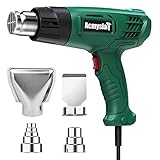 AcmyslaT Heat Gun Kit AcmyslaT Heat Gun Kit |
|
Check Latest Price |
 Tilswall 2000W Heat Gun Tilswall 2000W Heat Gun |
|
Check Latest Price |
1. SEEKONE 1800W Heat Gun — Best Heat Gun for Paint Removal Overall
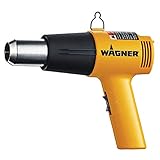
SEEKONE 1800W Heat Gun Variable Temp 122℉-1202℉ for Crafts, Shrink Wrap
1800W
122F to 1202F stepless
190-210L/min and 250-500L/min
Four nozzles
1.96 pounds
Pros
- Stepless temperature control instead of two fixed settings
- Fast 1.5 second heat-up
- Two airflow modes for different job sizes
- Overheat protector for tool and circuit
- Four nozzles included
Cons
- No digital temperature readout
- ABS plastic housing less heat-durable than metal
- Limited warranty and support information
This is the gun we kept reaching for on cabinet doors because the dial goes anywhere, not just hot and hotter. Most budget heat guns give you two temperatures and leave you to guess in between. The SEEKONE runs a continuous 50°C to 650°C range, so you can creep along a door stile at low heat and turn it up for a thick build-up of paint in the center panel.
Owner feedback on roughly 38,000 ratings averages 4.6 stars, and the most repeated comment is that the stepless dial is a genuine step up rather than marketing language. Buyers also single out the quick heat-up and the fact that four nozzles come in the box instead of being a separate purchase.
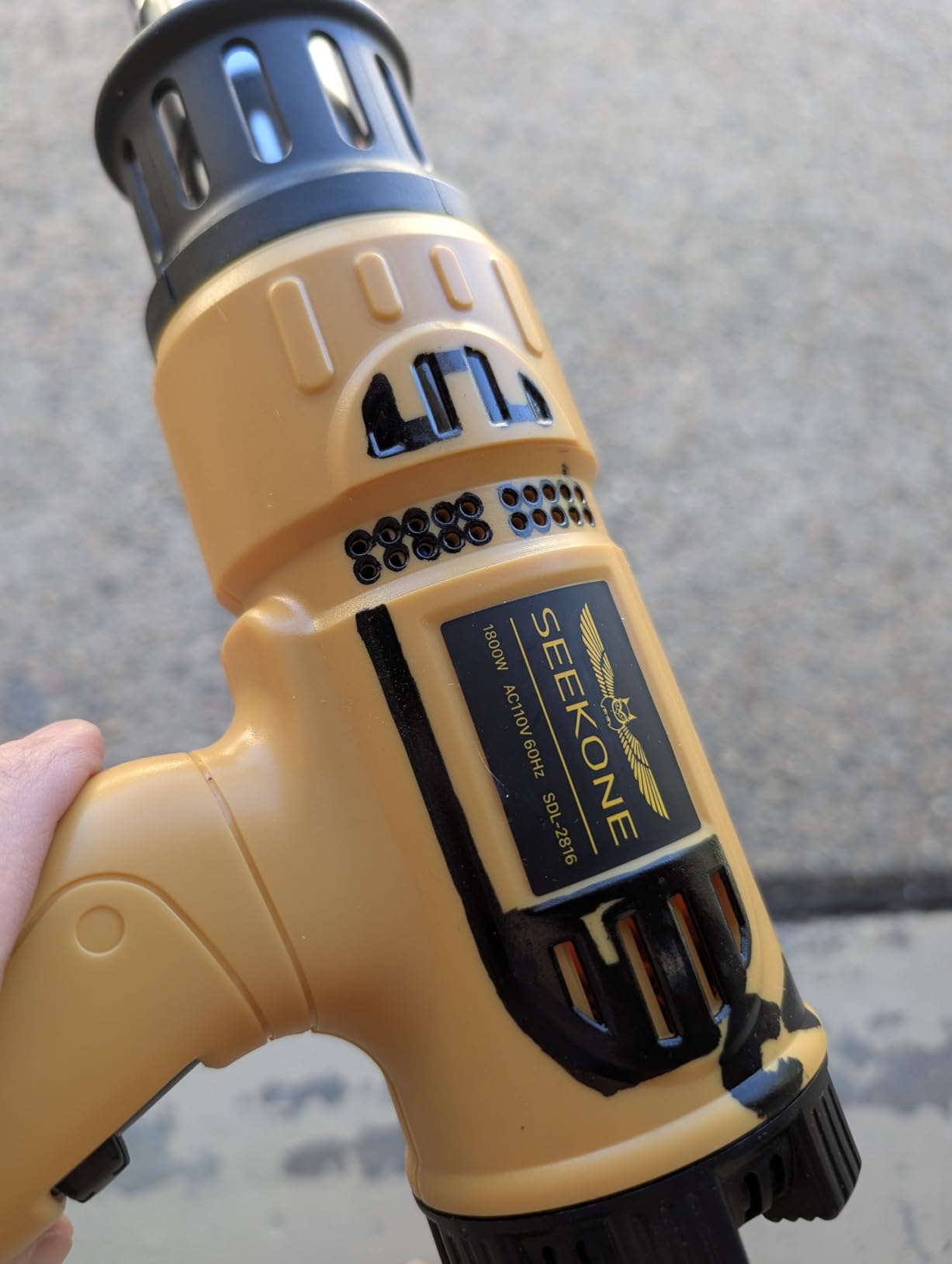
The airflow switch on the handle is the second feature that matters for paint specifically. Low airflow at 190 to 210 litres per minute concentrates heat for stubborn patches, while 250 to 500 litres per minute spreads across a flat door panel without scorching the wood underneath. Having both means one gun covers the tight corner of a window frame and the wide face of a cabinet door.
The four included nozzles are a deflector, two concentrators and a reflector. For paint removal you will mostly live on the narrow concentrator, which focuses the hot stream and keeps the working distance short. Our general heat gun roundup explains how nozzle geometry changes the spray pattern if you want the detail.
What temperature range you get and how accurate it is
The range runs from 122°F to 1202°F, which spans everything from gentle softening of a single thin coat to serious blistering of a multi-layer build-up. Because there is no display, you set heat by dial position and learn where the useful band sits for your coating.
That learning curve is the trade-off. Once you know that mid-dial handles most house paint and the top quarter is reserved for oil-based layers, the absence of a readout stops mattering. If you want an exact number on screen, the Tilswall later in this guide is the one with a digital display.
Where it is less convincing
The ABS plastic housing is the weak point. Metal-bodied professional guns dissipate heat away from the grip better, and over a full day of stripping, the plastic body feels warmer to hold. Overheat protection covers the worst case, but the airflow path is what keeps the element happy over time.
Support and warranty information is thin compared with the big-name brands. If the switch or element fails outside the return window, you are relying on the seller rather than a national service network. For a weekend of cabinet work that is an acceptable risk; for a whole-house restoration it is worth weighting the branded options more heavily.
2. Wagner Spraytech HT1000 — Top Rated Heat Gun for Paint Removal
Wagner Spraytech HT1000 Dual-Temperature Heat Gun, low 750°F, high 1000°F
1200W
750F and 1000F settings
Two fan speeds
Integrated stand
2 pounds
Pros
- Highest average rating in this group at 4.7 stars
- Integrated stand for hands-free work
- Lightweight at 2 pounds
- Two fan speeds for real control
- Two-year home use warranty and ETL listing
Cons
- Only two fixed temperatures with no dial
- No nozzle attachments included
- 120V only and unusable on 220-240V mains
The Wagner HT1000 has the highest average rating of any gun here at 4.7 stars across nearly 15,000 ratings, and owners routinely describe machines lasting a decade or more on a workshop bench. It is the one we would trust to a first-time user precisely because it cannot be dialled into a mistake.
Two settings means two jobs. 750°F handles fresh latex on trim and cabinets, and anything delicate where you do not want to risk the substrate. 1000°F is for old oil-based paint, multiple stacked coats and painted metal where scorching is not a concern.
The integrated stand is genuinely useful on a restoration job. Every paint-stripping session involves putting a hot gun down fifty times, and a gun that stands upright on its own base turns a fire risk into a non-event. The same base also serves as a hook mount for storage.
Two fan speeds on the same gun give you another axis of control that most people forget. High airflow cools the surface after the pass so the paint does not re-bond, and low airflow concentrates heat for a stubborn spot. Combined with the two temperatures, that is four usable combinations.
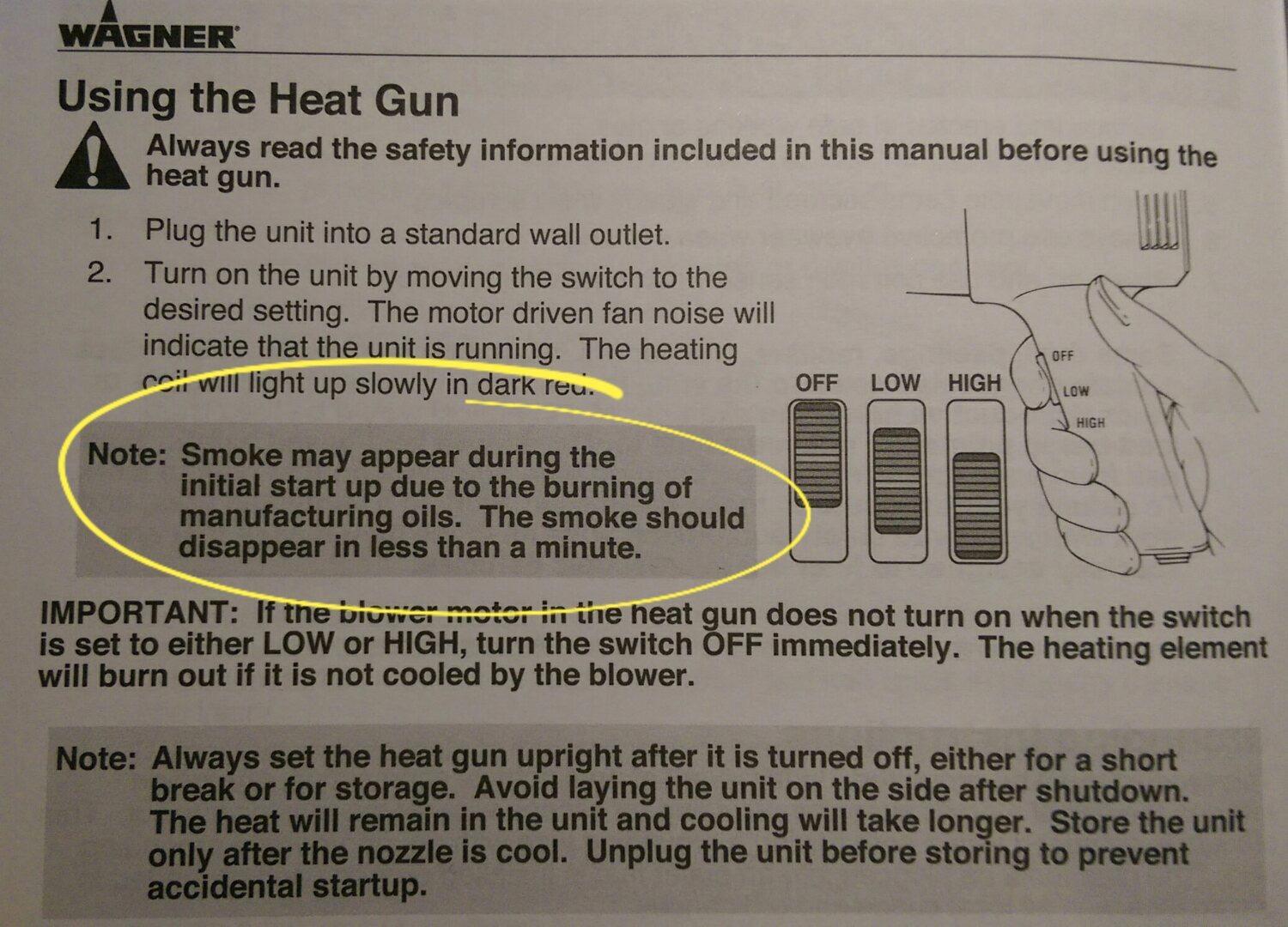
How it handles multi-layer paint
Multiple layers of old house paint is exactly where a hot, high-airflow combination earns its keep. Set to 1000°F on high fan and work across a 2 foot square section, the paint lifts in sheets within about a minute of heating rather than coming off as dust.
The limitation is honest: with no middle setting, some coatings sit between 750°F and 1000°F in terms of how readily they release. On those you work a little longer or use the high setting briefly and move fast. Fine wood veneer and finished hardwood are better handled at the lower setting.
What to know before buying
Nozzles are not included. The barrel has a corrosion-resistant nozzle fitted, which is fine for broad work, but if you want directed heat on a window glazing bead you will need to buy an accessory separately. Several comparable guns in this list include four.
The 120V motor also rules the gun out in countries running 220 to 240V mains unless you use a step-down transformer. That is worth checking before you order if you are outside North America.
3. BLACK+DECKER HG1300 — Best Heat Gun for Beginners Stripping Paint
BLACK+DECKER Heat Gun for Crafts, Corded, Dual Heat Settings up to 1000 Degrees, 1350 Watt (HG1300)
1350W
750F and 1000F settings
739 g
Built-in stand
Three-position handle
Pros
- Lightest body here at 739 g for long sessions
- Built-in stand for safer cooldown
- Three-position handle gives real control
- Two-year limited warranty
- Glass protect nozzle included
Cons
- Only two fixed temperatures with no dial
- Corded design needs an outlet for outdoor or high work
- Single included nozzle limits other jobs
We hand this one to friends who have never stripped paint before. It weighs 739 grams, which is about a third lighter than the average heat gun in this group, and it has a three-position side handle that makes it easy to point the nozzle along a horizontal rail without twisting your wrist.
At 1350W it is not the most powerful unit here, but for a door, a set of cabinet doors or a window frame it does not need to be. The two settings are clearly separated and the low setting is gentle enough for anyone to work with without anxiety.
Owner ratings average 4.7 stars over more than 10,800 reviews, with the light weight and the built-in stand cited most often. The stand matters more than it sounds like it should, because a hot nozzle resting on a drop cloth is how small fires start on jobs where you are constantly interrupted.
The included glass protect nozzle is a nice touch for window work. Glass is one of the few surfaces where you genuinely cannot afford to scorch, and the shield keeps the hot air off the pane while you soften the paint on the surrounding wood.
What the light body means for long sessions
Stripping paint is repetitive overhead and forward work, and arm fatigue sets in long before the paint stops coming off. At 739 grams this gun is roughly 1.2 pounds lighter than the next lightest option in our list, and that difference is very obvious after the twentieth door.
For very long jobs, a gun you can hold comfortably will still lose to a gun with a kickstand. The built-in stand covers the pauses, but there is no way to lock the trigger on and set it down running the way some models allow.
Where new owners run into trouble
Only two temperatures is the main complaint from owners, and plenty of people wish for a dial. If you are stripping something with several thick layers, you will find yourself on the high setting longer than feels comfortable, which is exactly where scorch risk appears.
It is also cord-only, with no battery option. On a ladder, in an attic or on the far side of a yard, you are working around a 120V outlet rather than with it. That is fine for one door at a time and frustrating for a whole exterior.
4. PORTER-CABLE PC1500HG — Best Variable Dial Heat Gun for Workshop Use
PORTER-CABLE Heat Gun, 1500 Watt, Dual Temperature Settings, Corded (PC1500HG)
1500W
Variable temperature dial
Two fan speeds
Support stand
2.5 pounds
Pros
- Genuine variable dial at this price point
- 1500W handles stubborn house paint without scorching
- Thick flexible cord resists kinking
- Quiet operation for a heat gun
- Integrated support stand
Cons
- Bulky at roughly a 10 inch barrel for tight spaces
- 2.5 pounds tires the arm on long sessions
- Low-profile dial is hard to grip precisely
- No nozzle attachments included
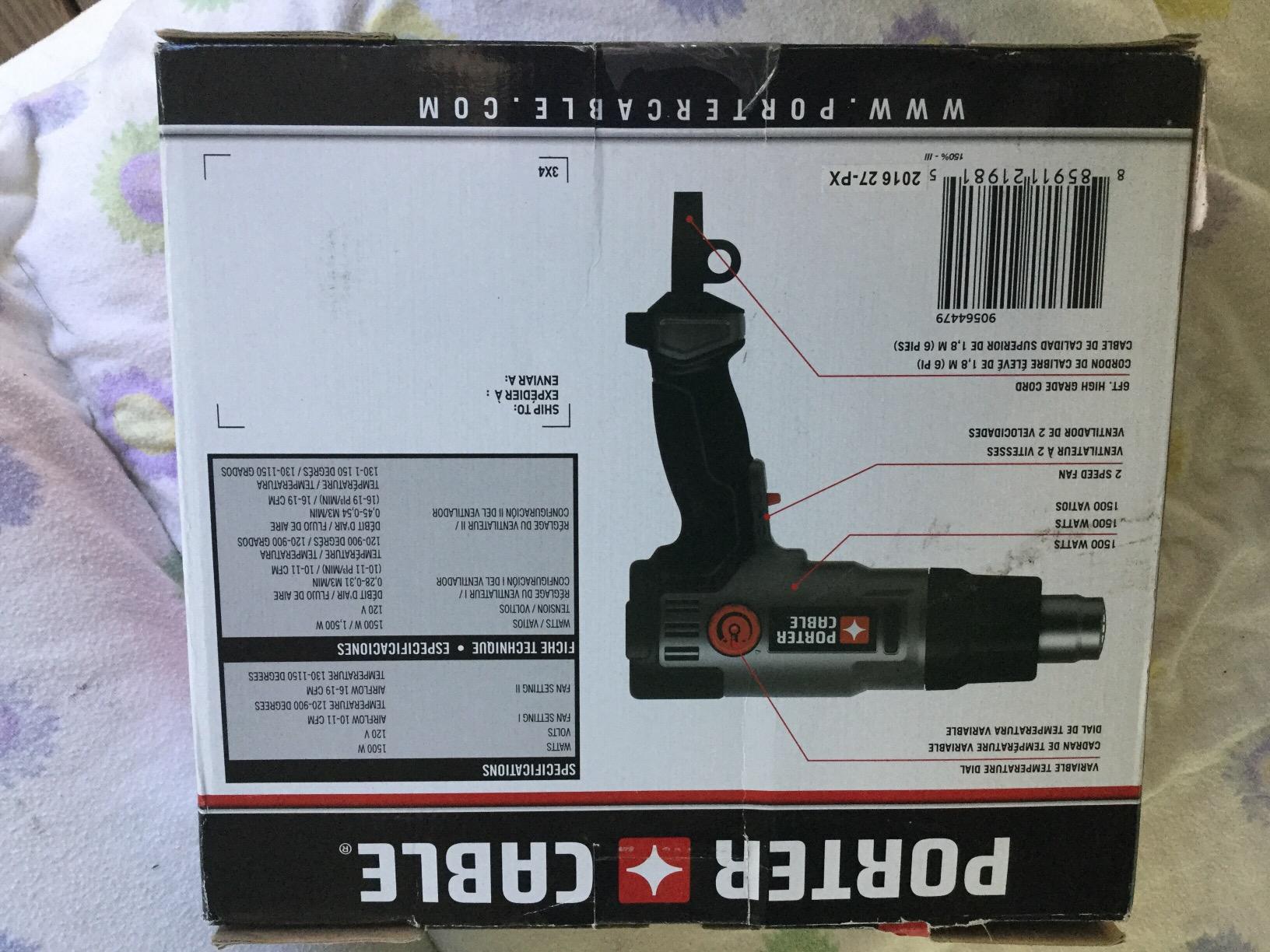
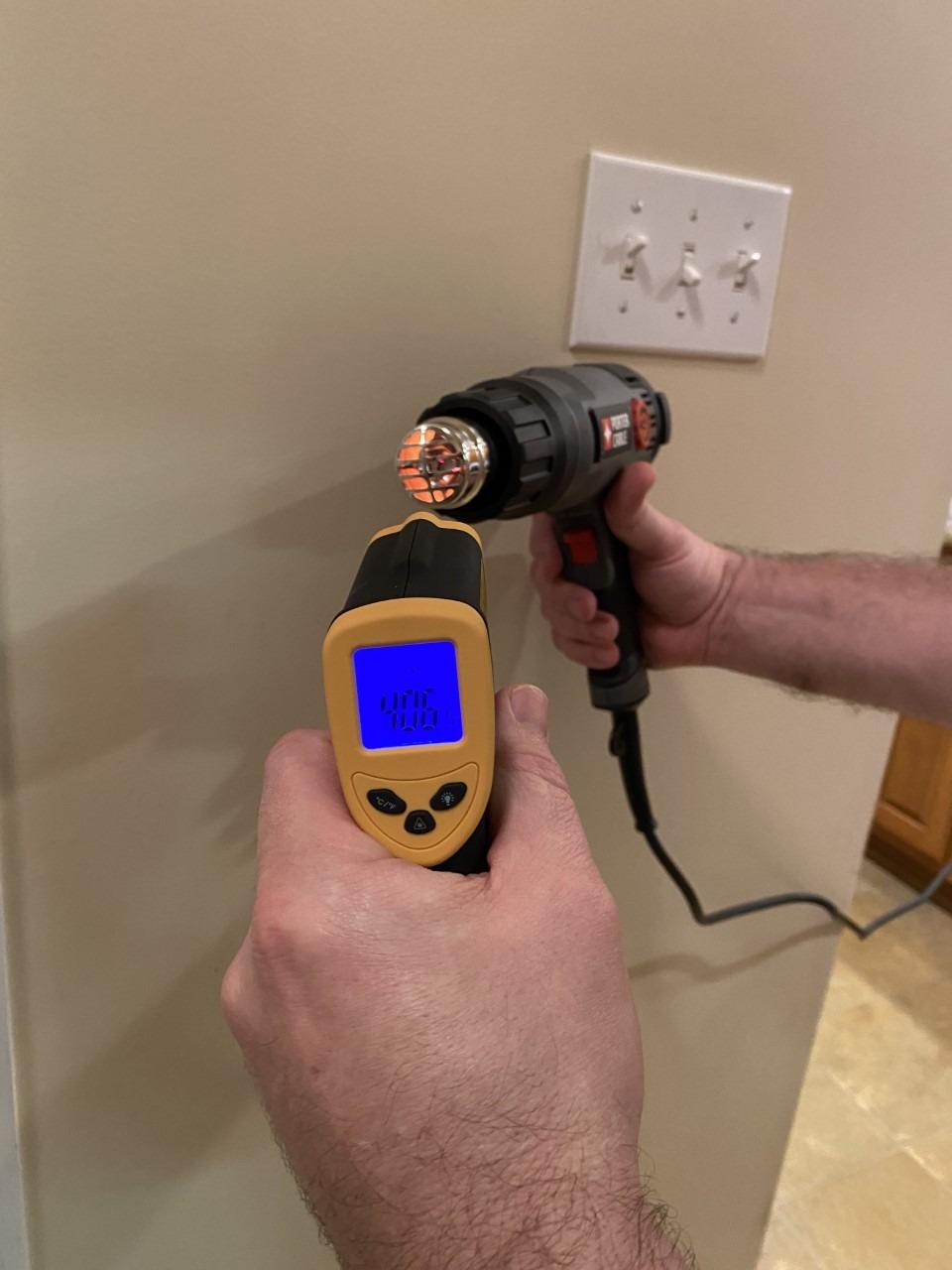
This is the gun we recommend when somebody wants a dial but not the feature list that comes with an expensive brand. The PC1500HG has a real variable temperature control plus two fan speeds, and at 1500W it produces enough heat to shift stubborn house paint without baking the wood underneath.
Owners report 4.7 stars across roughly 5,600 ratings, with the combination of dial and dual fan speeds being the most common reason given. Reviewers also mention years of reliable service in workshop and renovation settings, which matters more than any single spec.
The cord is one of the better ones here. It is described as thick but flexible and resistant to kinking, and that is not a small thing on a heat gun that gets dragged across a workbench and coiled up wet-handed at the end of a day. A kinked cord is where heat guns usually fail.
Operation is quiet relative to most of the category, which sounds minor until you are stripping a set of cabinet doors in an occupied house. The integrated support stand lets you park it hot and upright while you clear scraped paint off the floor.
Why the dial changes how you work
A variable dial turns heat gun work from guesswork into control. Start a section low, watch how the paint reacts, and step up gradually rather than committing to full heat for the whole surface. That is the single biggest difference between stripping without scorching and stripping without thinking.
Two fan speeds on top of the dial give you four workable combinations. High heat with high airflow softens a large panel quickly and carries heat past the surface. Low heat with high airflow is the setting for bare softwood and for softening caulk without lifting adjacent paint.
Where its size works against it
The barrel is around 10 inches long and the body weighs 2.5 pounds, the joint-heaviest among the metal-bodied units here. Getting that shape into the inside corner of a window casing or behind a radiator takes practice and a reducer nozzle.
The temperature dial is low-profile, so you set it with a thumb rather than gripping it with gloved fingers. And there are no nozzles in the box, which means the redirectory and concentrator pieces other guns include are a separate purchase for this one.
5. DIAFIELD 1850W — Best Heat Gun for Thick Multi-Layer Paint
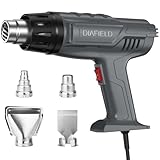
DIAFIELD 1850W Heat Gun with Dual Temperature Settings 572.0 °F & 1202 °F
1850W
572F and 1202F settings
250L/min and 500L/min
700 g
Four nozzles
Pros
- 1202F ceiling suits thick stacked paint
- Fast 1.5 second heat-up
- Only 700 g despite the wattage
- UL-certified wire with overload protection
- Stands upright on its flat rear cover
Cons
- Dial is loose and temperature can drift
- Handle switch controls fan speed rather than heat
- Bulky body is hard to aim into tight spots
- Lower airflow slows large area work
When a door has been painted four or five times over decades, you want the highest temperature available and a gun that will hold it. The DIAFIELD tops out at 1202°F from 1850W of output, and at 700 grams it is the lightest gun we tested that reaches that number.
Owner ratings sit at 4.6 stars over about 6,700 reviews. Buyers doing automotive vinyl wrap, tint removal and paint stripping tend to lead with the top-end heat, and the 1.5 second heat-up means you are not waiting on the element every time you re-ignite.
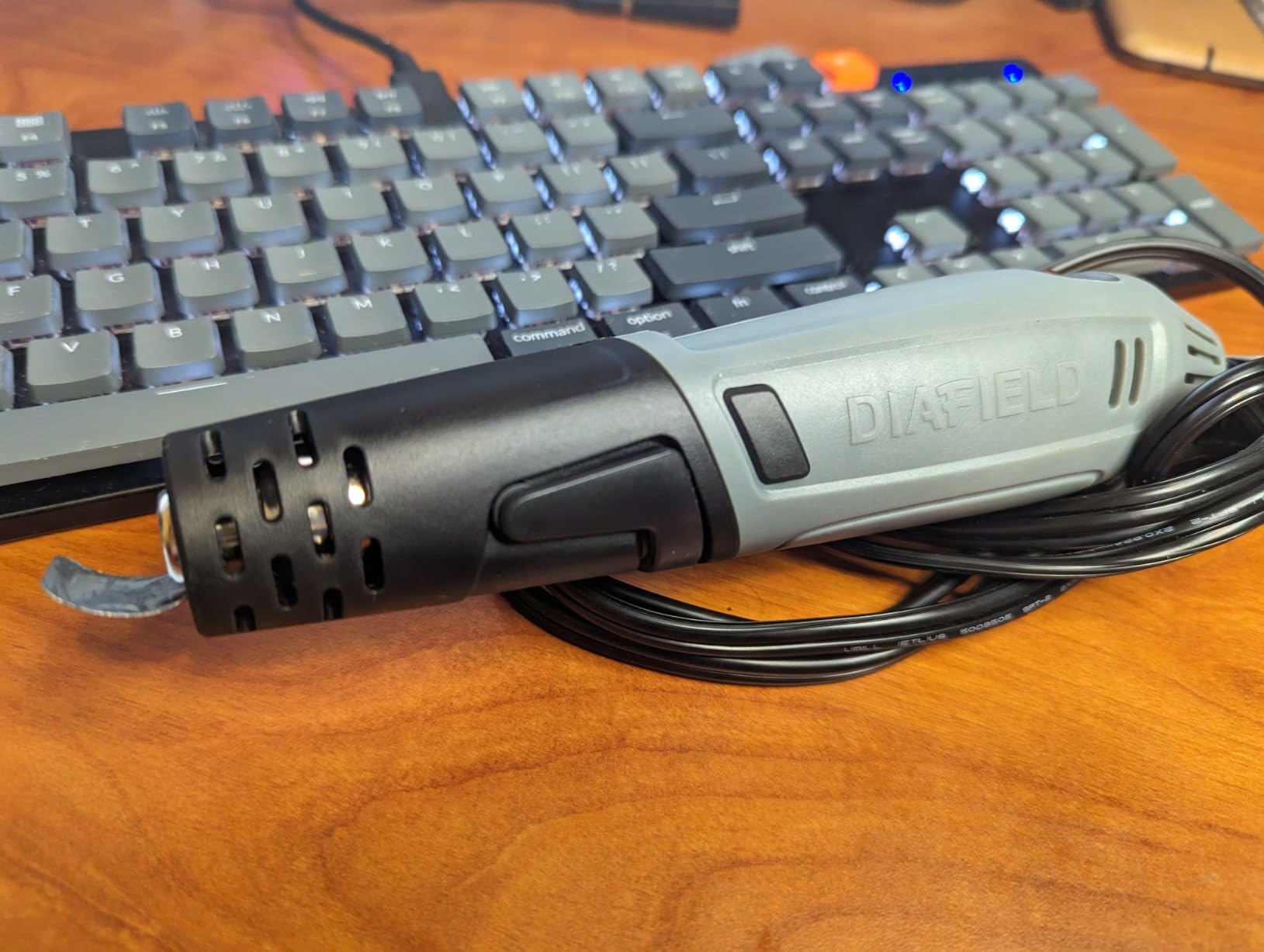
Two airflow modes sit alongside the two temperatures. 250 litres per minute concentrates the stream for a stubborn patch, and 500 litres per minute spreads across a wide surface. That pairing matters on multi-layer jobs because thick paint often needs heat and air together rather than heat alone.
Construction details are better than the price suggests: UL-certified wire, overload protection and a temperature control switch are all listed. The flat rear cover lets the gun stand upright on a bench, which matters more when you are cycling between passes.
Why high heat alone is not the whole answer
Temperature is only half of what lifts paint, and the airflow figure is the half most buyers ignore. Warm air that sits still just cooks the surface. Air in motion transfers energy into the coating, keeps the boundary layer moving and pushes softened paint away from the wood so the scraper can get underneath.
That is why the highest-temperature gun is not automatically the best one for delicate work. On thin trim or a cabinet door with a light build-up, the 572°F setting on this gun is a better tool than the 1202°F setting used deliberately.
Where owners report problems
The most cited complaint is that the temperature dial is loose and easy to bump, so the setting can drift between sections. On a long job that means you cannot fully trust what you set an hour ago, and you end up rechecking constantly.
The handle switch is also easy to misunderstand. It controls fan speed rather than heat, and the listing describes it in a way several buyers found confusing. The body is also bulky enough that aiming it into a tight corner or behind trim takes more care than on a slimmer gun.
6. DEWALT 20V MAX DCE530B — Best Cordless Heat Gun for Paint Removal
DEWALT 20V MAX Heat Gun, Cordless, Up to 990 Degrees, 42 Minutes of Run Time, LED Light, Heatgun with Flat and Hook Nozzle Attachments,Tool Only (DCE530B)
20V battery
Up to 990F
42 minutes runtime
6.7 CFM
LED light
Pros
- Cordless power removes the outlet constraint
- 42 minutes of runtime per charge
- LED brightens dark work areas
- Lock-on button avoids trigger fatigue
- Only 1.17 pounds
- Flat and hook nozzles included
Cons
- 990F ceiling is below the 1200F class corded guns
- Tool only so battery and charger are separate
- Lower 4.4 average on heat consistency
- Runtime is short compared with corded on one charge
The DEWALT DCE530B answers the question corded guns cannot: what do you do when the outlet is on the wrong side of the house. On a ladder, in an attic, at the back of a garage or out on a deck, cordless power removes a constraint that shapes your whole workflow.
It reaches up to 990°F with up to 42 minutes of runtime per charge, at 1.17 pounds. That is lighter than most corded guns in this list, and the integrated LED lights up the inside of a window casing or a garage ceiling where daylight does not reach.
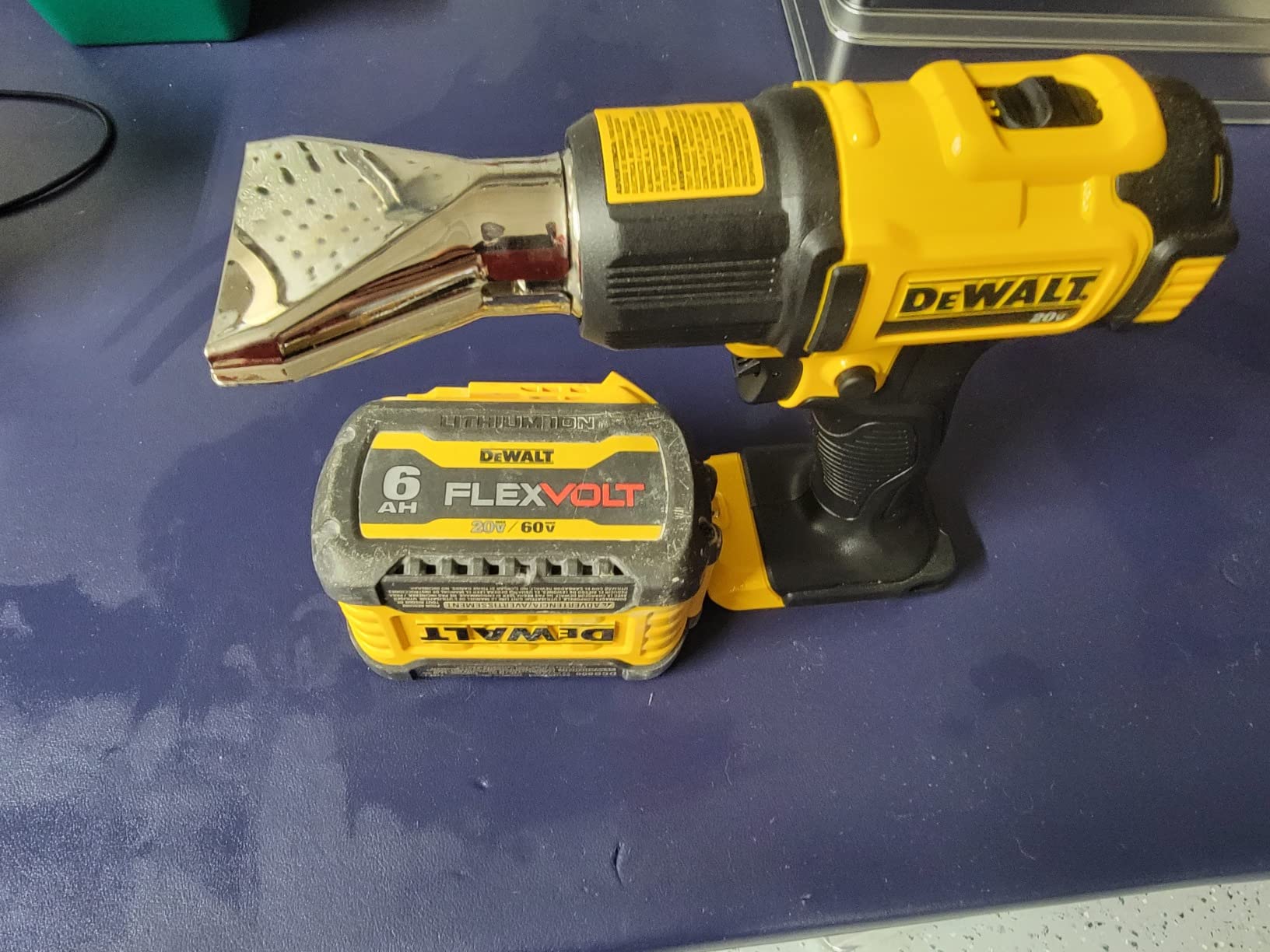
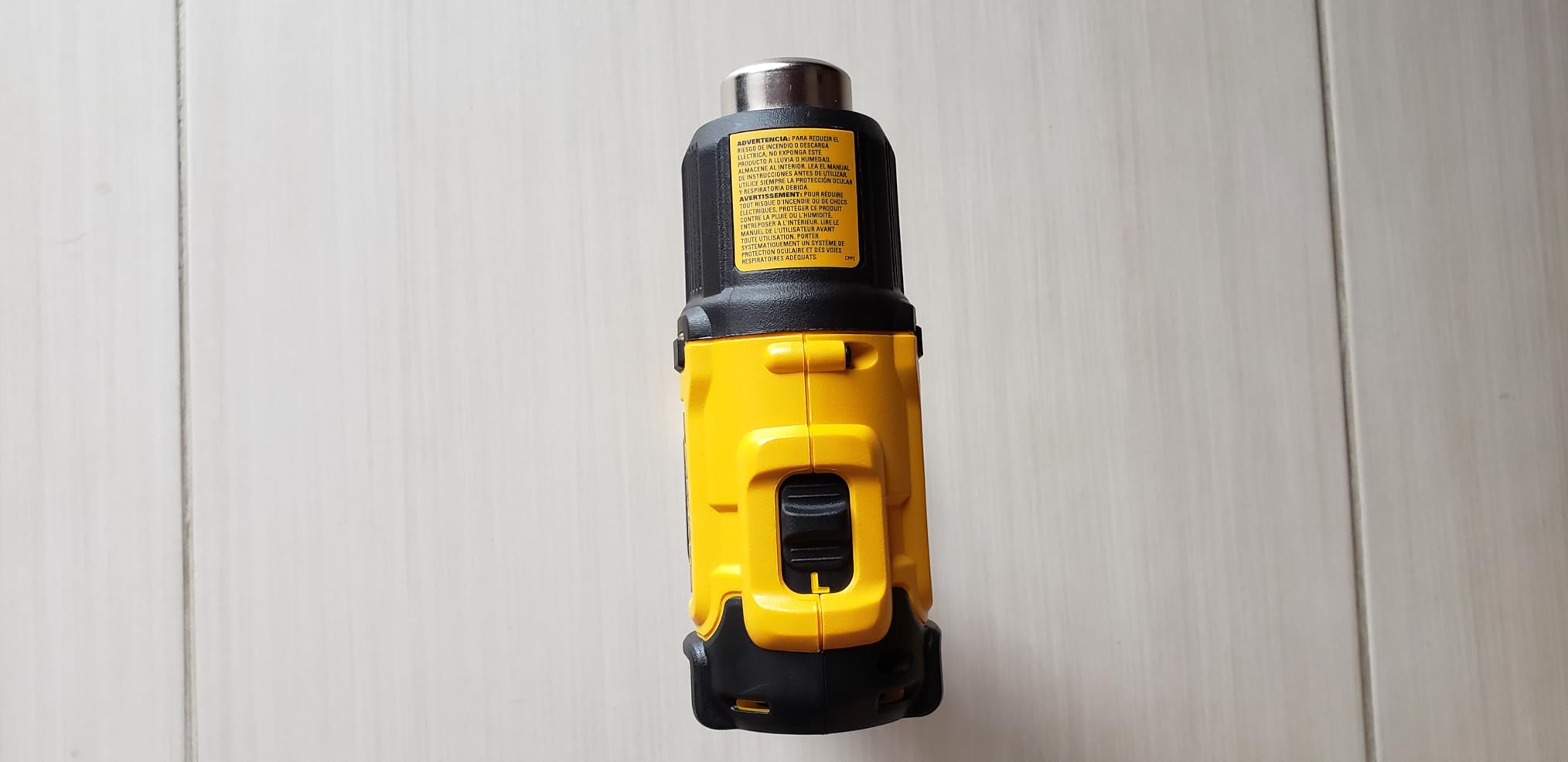
The lock-on button and lock-off trigger are more useful than they look. Paint removal means long, steady passes while the paint softens, and holding a trigger down for two minutes at a time is exhausting. Lock it on and the gun runs without your finger on it.
Both a flat and a hook nozzle attachment are included. The hook nozzle is the one for glazing putty and for working into a rounded bead, and the flat nozzle gives you a broad, even stream across a flat door face.
Cordless versus corded on a whole-house job
The honest comparison is runtime against output. A cordless gun gives you roughly 40 minutes of continuous high heat before a swap, while a corded gun runs indefinitely. On a weekend project of several doors, you will get through that on one or two battery charges.
The offsetting advantage is speed of setup. There is no dragging of a cord across a lawn, no finding an outdoor outlet, no extension lead to run through a doorway. For work spread across a building rather than concentrated in one room, cordless usually wins on total project time.
What you give up
The 990°F ceiling is the main compromise. That is enough for most house paint, but it is below the 1200°F-class corded guns in this list, and thick oil-based layers on metal are the case where you would notice the gap.
It is also sold as tool only, so if you do not already own 20V MAX batteries and a charger, those are additional purchases. Its 4.4 average is the lowest in this group, with more comments about heat consistency and sustained airflow than the category norm.
7. Genesis GHG1500A — Best Value Heat Gun Kit with Four Nozzles
Genesis GHG1500A Dual Temperature Heat Gun Kit With Fast Heat High And Low Settings 572F/1000F, Air Reduction Nozzle, Reflector Nozzle, And Two Deflector Nozzles with 2 Year Warranty
1500W and 750W
750F and 1000F
17 CFM
6.5 foot cord
Four nozzles
Pros
- 1500W from a 12.5 amp motor is strong for the tier
- Four nozzles included in the box
- 6.5 foot cord is longer than most here
- Two-year manufacturer warranty
- Reflector nozzle speeds pipe thawing
Cons
- Only two fixed temperatures with no dial
- 2 pound plastic body is tiring on long sessions
- No built-in stand for the hot nozzle
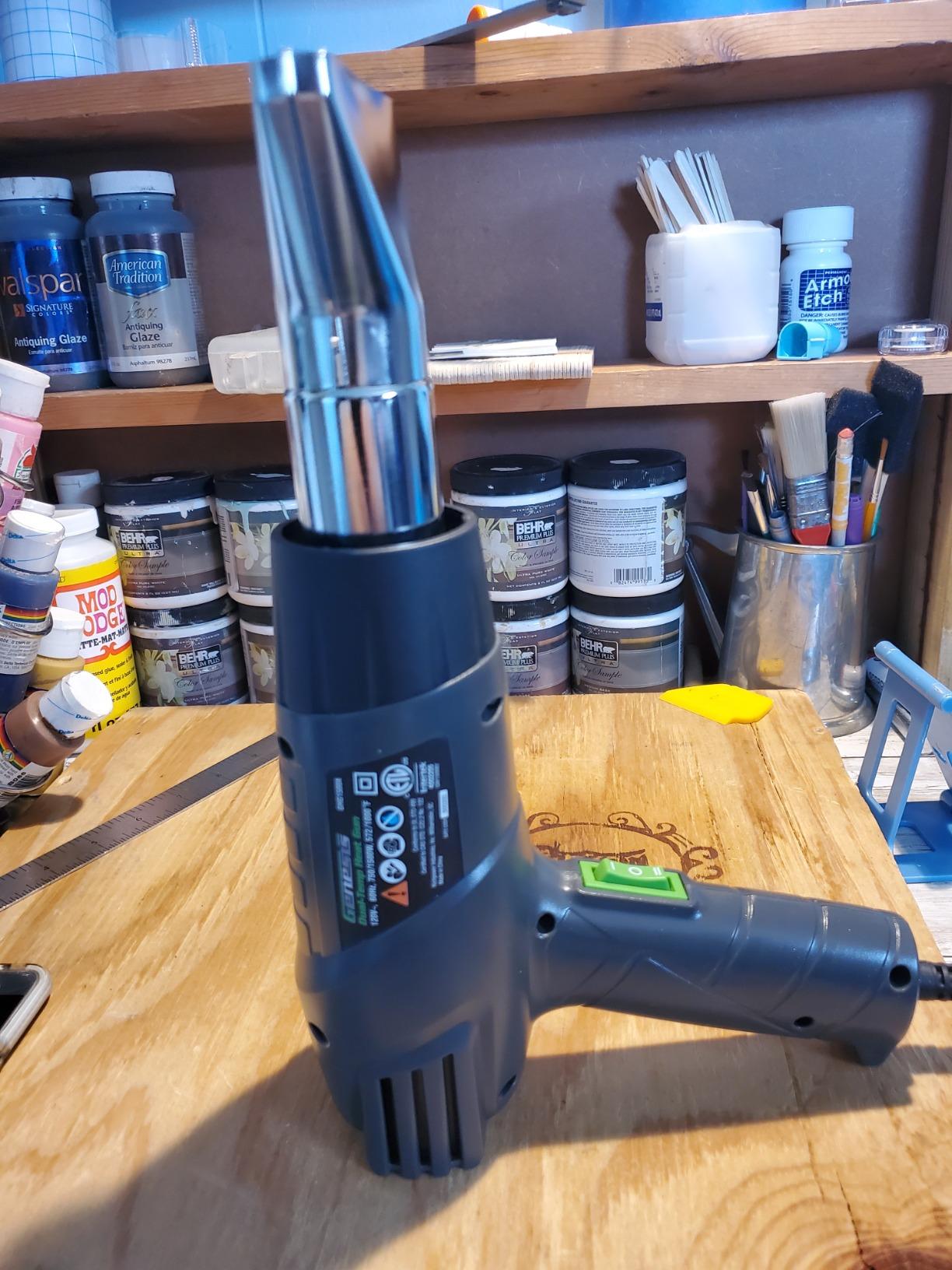
The Genesis GHG1500A is the kit value pick. You get 1500W from a 12.5 amp motor, a 6.5 foot cord and four nozzles in the box, which together usually means buying nothing else before your first paint job.
Ratings average 4.6 stars across roughly 17,500 reviews, and owners treat it as a dependable budget gun for softening paint, caulk and shrink tubing. Very few report outright failure, which is the main thing we look for in a tool that runs hot for hours.
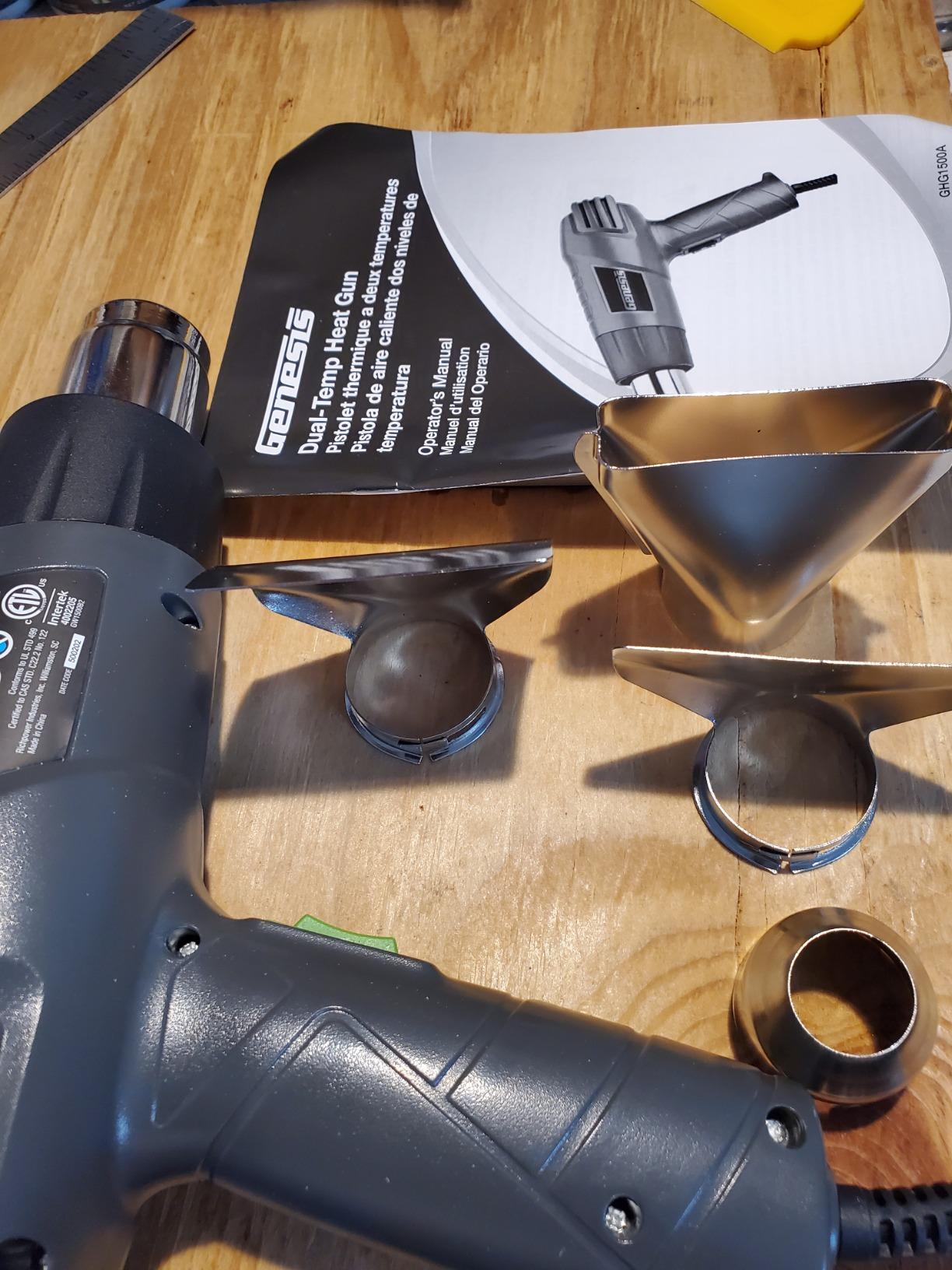
The 6.5 foot cord is longer than most competitors here and it makes a real difference on a ladder or around the outside of a cabinet run. Three of the four included nozzles are paint and window relevant: two deflectors, a reflector and an air reduction nozzle.
The air reduction nozzle is the one to reach for on paint. It narrows the airflow so more heat lands on a small area, which is what you want when working the recess in a panel or the edge of a glazing bead without heating the surrounding timber.
What 17 CFM airflow means for paint work
The stated airflow is 10 to 17 cubic feet per minute, which puts this gun in the same band as the Porter-CABLE and comfortably ahead of some smaller units. For stripping paint, airflow decides how quickly you can move over a surface and how well the heat gets under the coating.
At the low airflow setting you concentrate heat for a stubborn layer. At the high setting you push heat across a wide panel while the moving air stops the surface from cooking. Switching between them on a two-setting gun is a poor substitute for a dial, but it is better than no control at all.
Where the compromises sit
Two fixed temperatures is the big one. There is no middle setting, so gentle work on thin paint means the low setting and short passes, and stubborn work means the high setting with careful movement. Fine for most DIY projects, frustrating for a delicate restoration.
At 2 pounds with a plastic housing, it is heavier and less comfortable than the BLACK+DECKER for long sessions. There is also no built-in stand, so you need somewhere safe and flat to set the hot nozzle down between passes.
8. TGK 1800W Hot Air Gun Kit — Best All-in-One Kit with Scraper
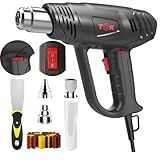
Heat Gun, TGK® 1800W Heavy Duty Hot Air Gun Kit 122℉~1202℉ Dual Temperature Settings with 3 Nozzle Attachments Overload Protection for Crafts, Shrink Wrapping/Tubing, Paint Removing, Epoxy Resin
1800W
122F to 1202F stepless roller
500 L/min
1.44 pounds
Scraper and wrap kit included
Pros
- Stepless roller plus two-speed airflow for fine control
- Full 122F to 1202F range
- Light at 1.44 pounds for a high output gun
- Flame retardant nylon composite body
- Kit includes a scraper and shrink wrap supplies
Cons
- Only three nozzles included
- No digital display so heat is set by feel
- Short 5.25 foot cord compared with rivals
The TGK 5520 is the kit we would hand to someone starting out, because the box contains a scraper as well as the gun. Heat and scraper are a matched pair, and buying one without planning the other is how people end up prying with a screwdriver.
Ratings average 4.7 stars from just over 2,000 reviews. Reviewers highlight the stepless roller control, which gives finer adjustment than most budget guns, and the low 1.44 pound weight for a unit that outputs 1800W.
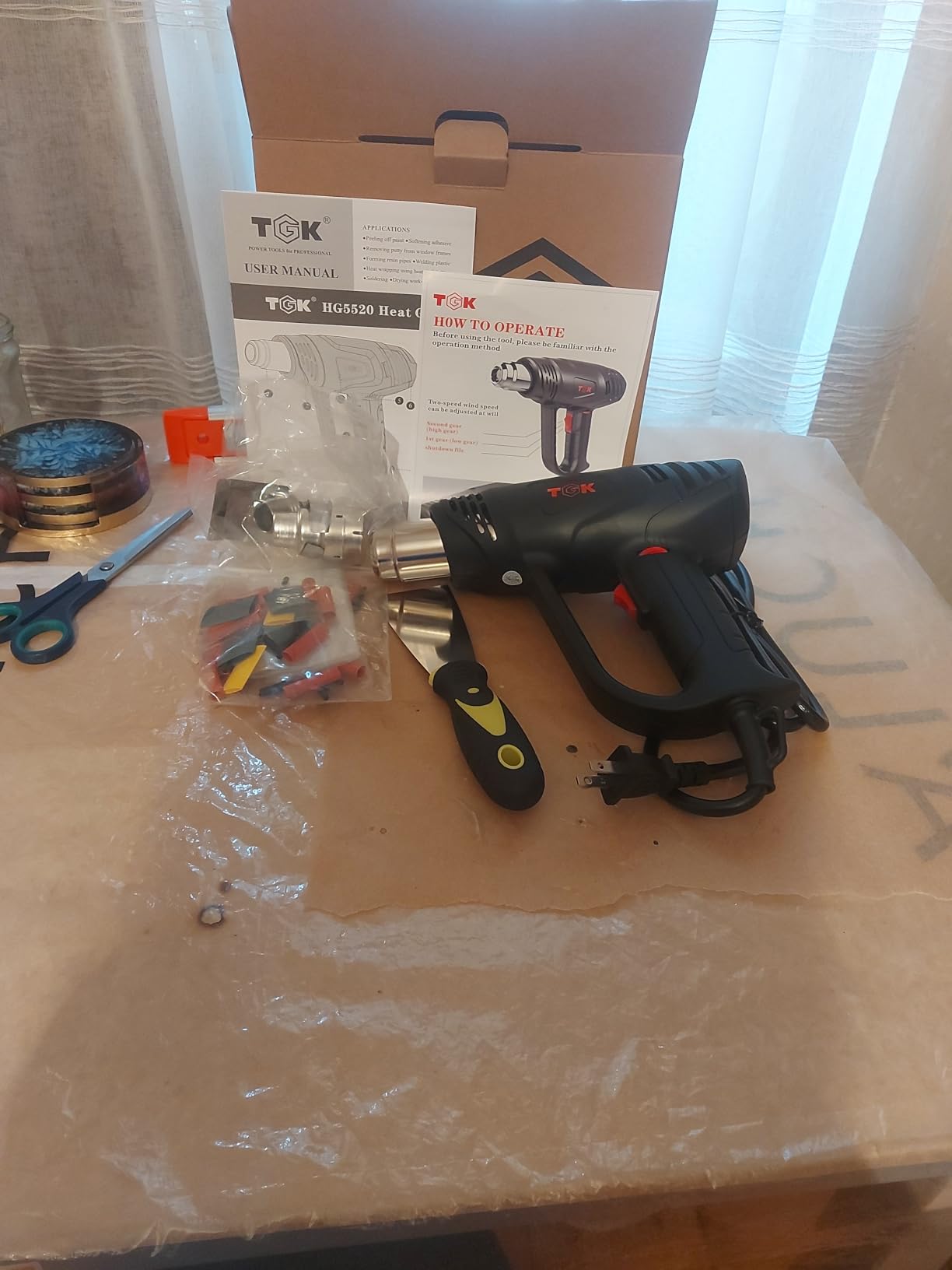
Two speed modes are listed at 122°F to 572°F on 250 litres per minute and 122°F to 1202°F on 500 litres per minute. In practice you use the first for delicate work on trim and the second when a thick coating needs to move quickly across a flat panel.
The body is a PA6 plus 30 percent glass fibre nylon composite, which is a flame retardant material rather than the soft unfilled plastic used on some cheaper guns. It is UL certified with a 5.2 foot certified cable, which is worth noting on a tool that runs this hot.
Why a stepless roller beats two switches
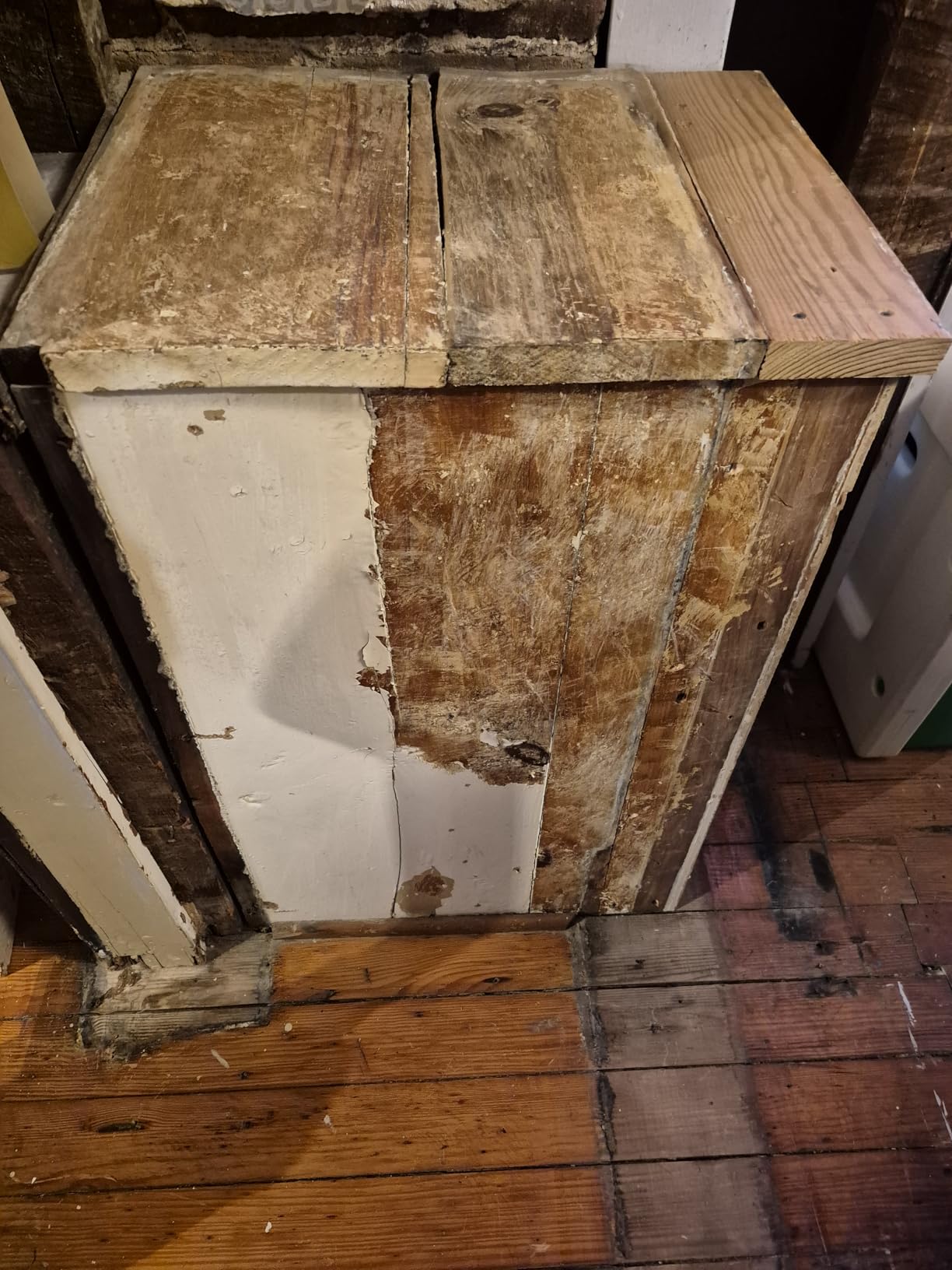
The practical difference shows up on the second coat. With two fixed settings you jump from gentle to aggressive with nothing between, and gentle is what you need when the top layer lifts and reveals a softer layer underneath that you did not know was there.
A roller lets you find the middle. You bring the paint up to the point where it blisters and releases in sheets, then back off for the next pass. That is the difference between a controlled strip and a scorched patch, and it is why we rank variable-control guns above fixed-setting ones.
What the kit does not fix
Only three nozzles are included, one fewer than most rivals here. There is no digital display either, so the roller is set by feel in the same way as a dial, just with finer increments.
The cord is 5.25 feet, shorter than the 6.5 foot cords common on comparable units. On a workbench that is irrelevant; on an exterior wall or a staircase it will have you moving the gun more often than you would like.
9. ROMECH Variable Heat Gun — Best Heat Gun for Metal and Vinyl Work
ROMECH Heat Gun, Heavy Duty Fast Heating, Variable Control 120°F~1200°F (50℃-500℃) 4 Nozzles Heat Gun for Crafting, Shrink Tubing,Vinyl Wrap (Blue)
1500W
120F to 1200F variable
66 or 132 CFM
Overload shut-off
Four nozzles
Pros
- Wide 120F to 1200F variable range
- Peak output in about 1.5 seconds
- Ceramic frame and nickel-chromium coil internals
- Automatic overload shut-off
- Stands upright with a slip-proof handle
Cons
- Temperature set by dial with no readout
- No dedicated cooling or stand feature
- Less long term brand track record than Wagner or DeWalt
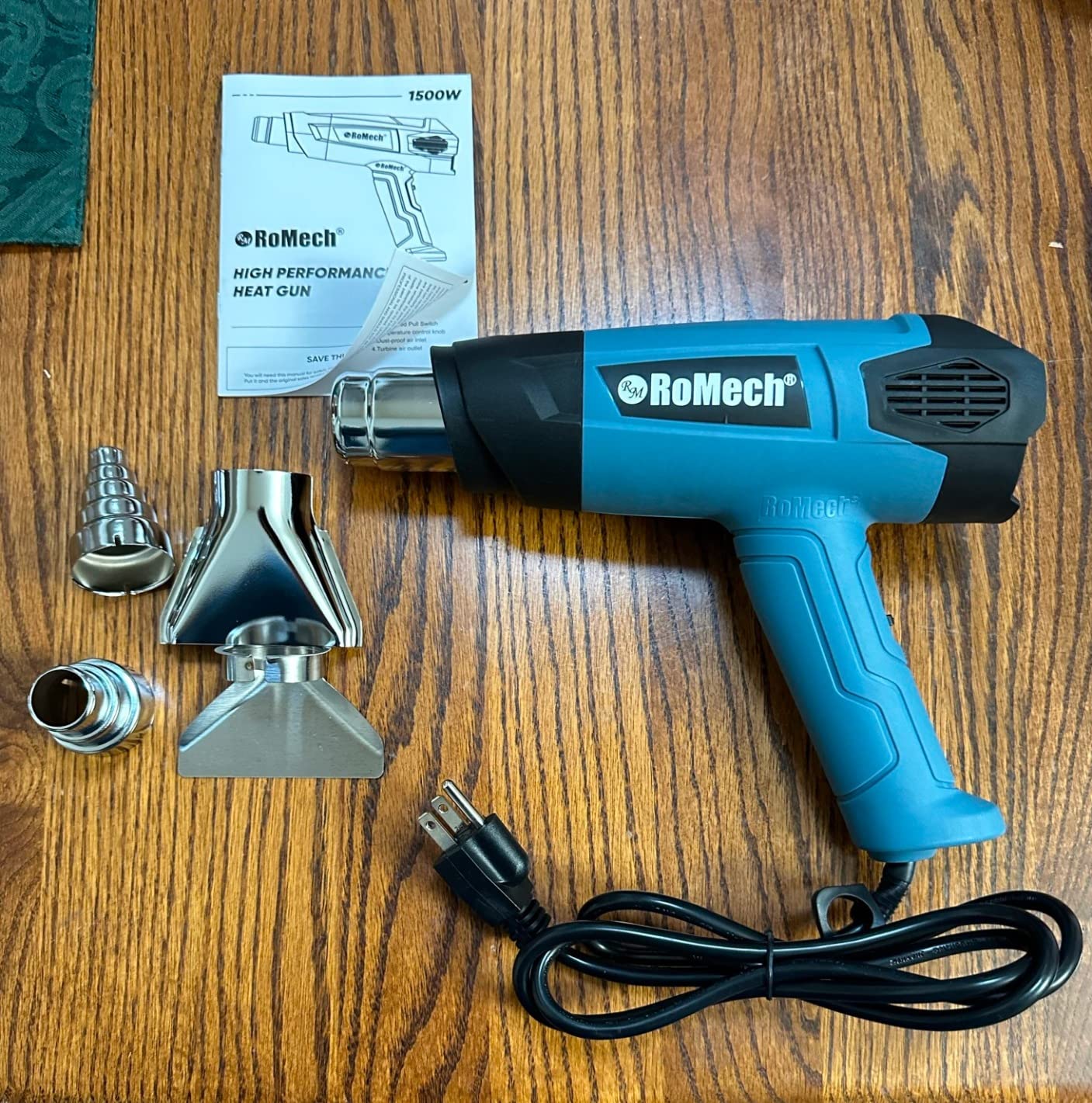
The ROMECH-124 is our pick when the paint is on metal or the job is vinyl wrap and window tint. It runs a wide 120°F to 1200°F variable range with adjustable air output, which lets you drop heat right down when you are working close to a painted edge or a decal.
Owners rate it 4.6 stars from around 2,100 reviews and note that the broad range handles craft heat shrink, vinyl wrap and paint stripping equally well. The internals also get mentioned: a ceramic frame, nickel-chromium heating coil and polycarbonate fan.
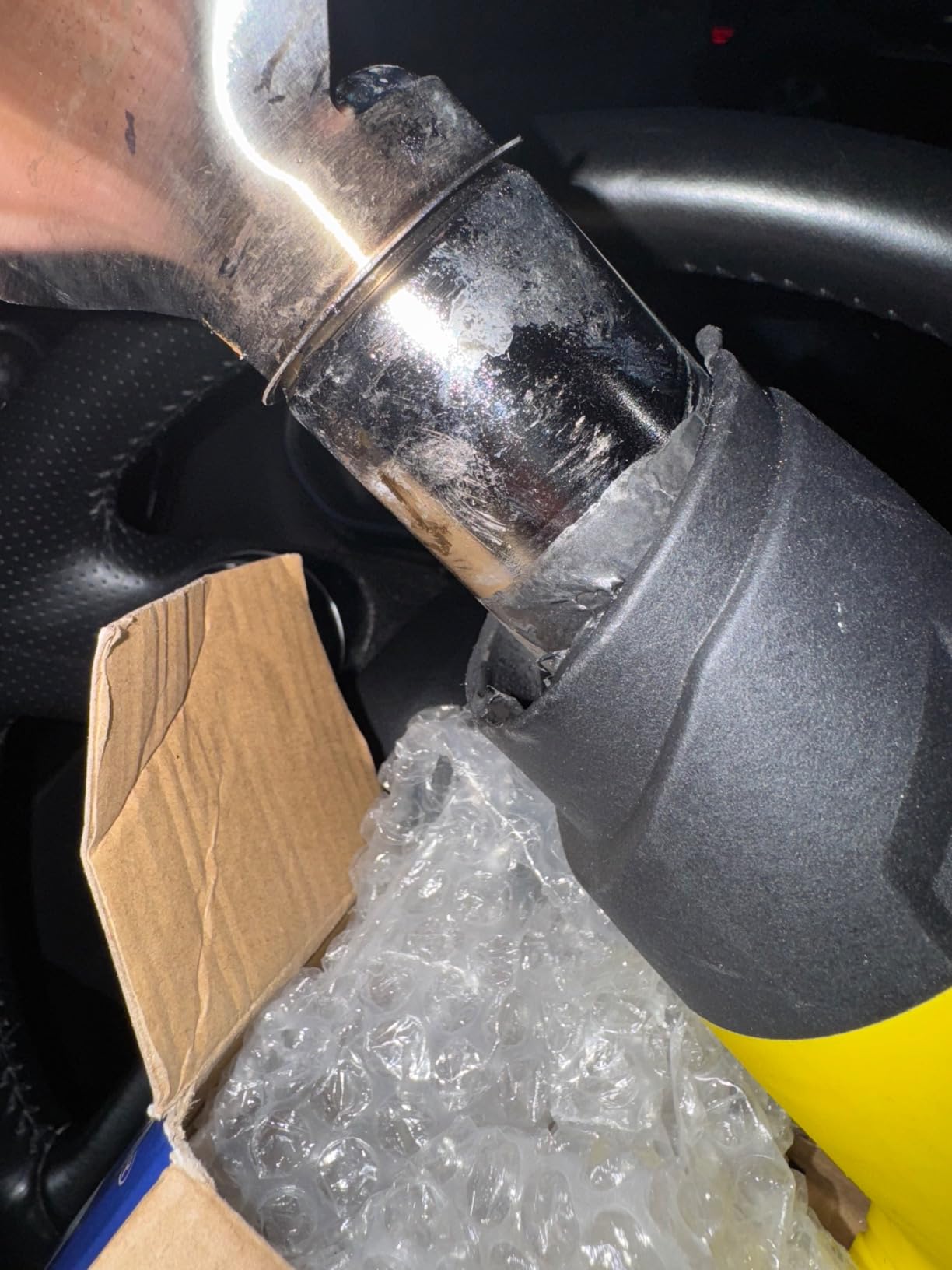
Airflow is listed at 66 or 132 gallons per minute, and that is a genuine two-speed control rather than a marketing label. On a metal railing, high airflow moves heat across a wide flat span so the paint releases evenly instead of burning in a small circle under the nozzle.
Automatic overload protection shuts the gun off when it overheats, which protects both the element and the operator during long sessions. It also stands upright on its own base, so setting it down between passes does not require finding a scrap of timber to prop it on.
Removing paint from metal
Metal is a different job from wood because it conducts heat straight into the coating and does not absorb it. That is good news for scorch control, since the substrate will not darken or burn the way bare wood does, and it means you can work hotter and hold the temperature longer.
The complication is paint type. Single-stage enamel over a steel railing is straightforward; a thick build-up of old enamel over rust is closer to multi-layer household paint and needs the same patience. Wide airflow at a middle setting is the right approach on both.
Where it falls short
There is no digital display, so you set the dial by feel like any other variable-control gun. It has no dedicated cooling mode or fold-out stand, relying on standing upright on its base, which works but leaves the nozzle hot wherever you put it.
ROMECH does not have the service history of Wagner, DeWalt or Porter-CABLE. That is not a quality judgement so much as a parts and support judgement, and it matters more if you plan to keep this gun for a decade of restoration work.
10. NEU MASTER 1500W N2190 — Best ETL Certified Corded Heat Gun
PRULDE Heat Gun, 1500W Dual Temperature Settings 572°F~1112°F Fast Heating Hot Air Gun with 6.5Ft Power Cord/4 Nozzles/Overload Protection for Crafts, Shrink Wrapping/Tubing, Paint Removing(N2190)
1500W
572F and 1112F
300L/min and 500L/min
ETL Listed
6.5 foot cord
Pros
- ETL Listed for a tool that runs very hot
- 572F and 1112F settings with two airflow speeds
- Heats to maximum in about 1.5 seconds
- Long 6.5 foot certified cord with rear stand
- DC copper motor rated for 600 hours
- Four nozzles and overload protection
Cons
- PP plastic body is less heat resistant than metal
- Only two fixed temperatures
- Listing brand and manufacturer brand names differ
- Lower sales rank than better known rivals
On a tool that reaches 1112°F, the safety listing matters more than it does on a hair dryer. The NEU MASTER N2190 is ETL Listed and ships with a 6.5 foot UL-certified cord, which is a genuine point of difference among budget guns.
Ratings average 4.7 stars from about 2,300 reviews. Owners single out the certification, the long cord and the rear support stand, and use it for both craft work and paint stripping in small doses.
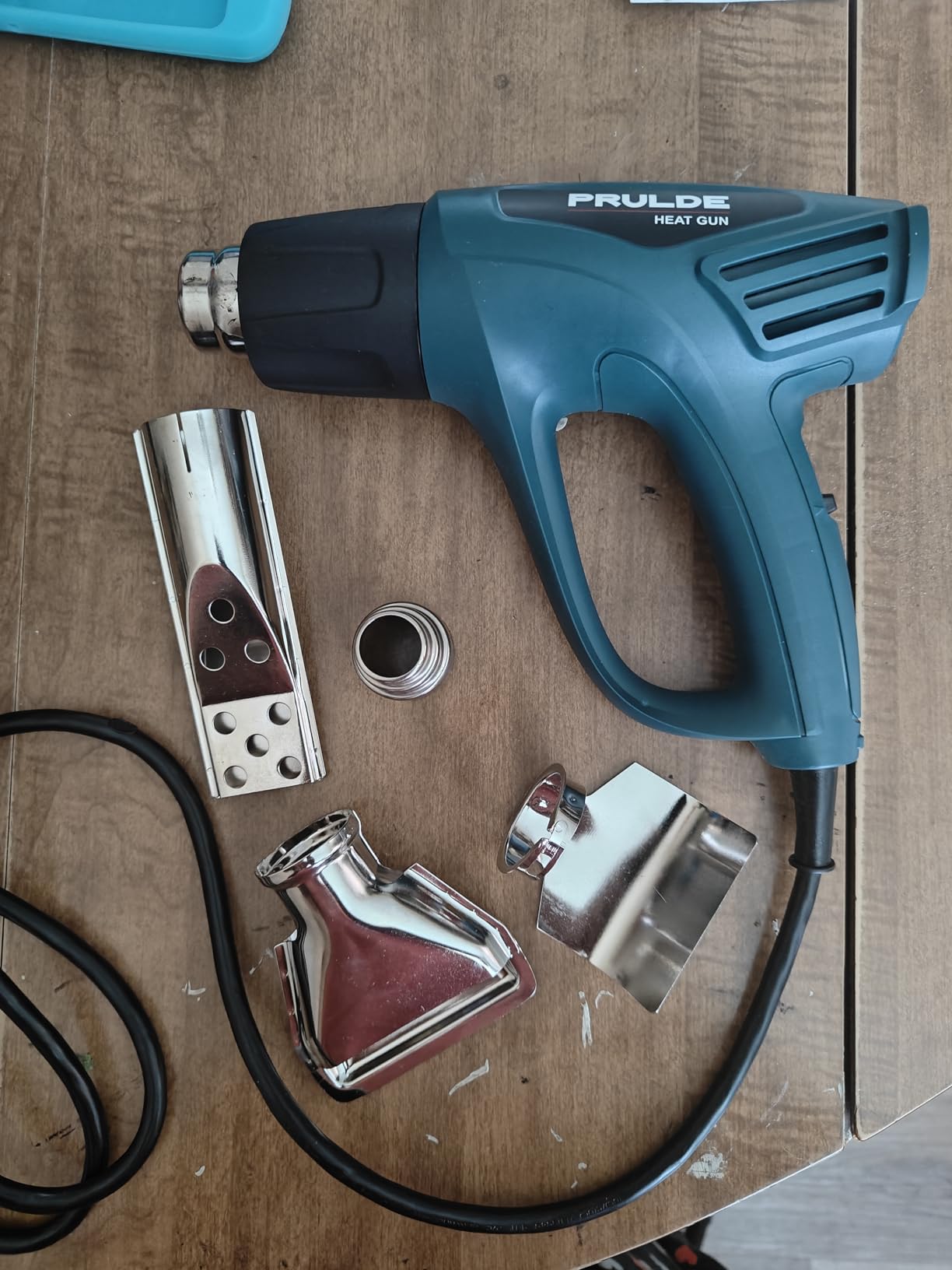
The two settings are 572°F and 1112°F, which is a better spread than most two-position guns. The low setting is genuinely gentle for working trim, and the high setting clears thick oil-based paint quickly without needing the 1200°F-plus class.
Airflow runs at 300 or 500 litres per minute. The lower figure concentrates the stream for a stubborn patch; the higher one carries heat across a panel and moves the boundary layer so the paint lifts in sheets rather than smearing.
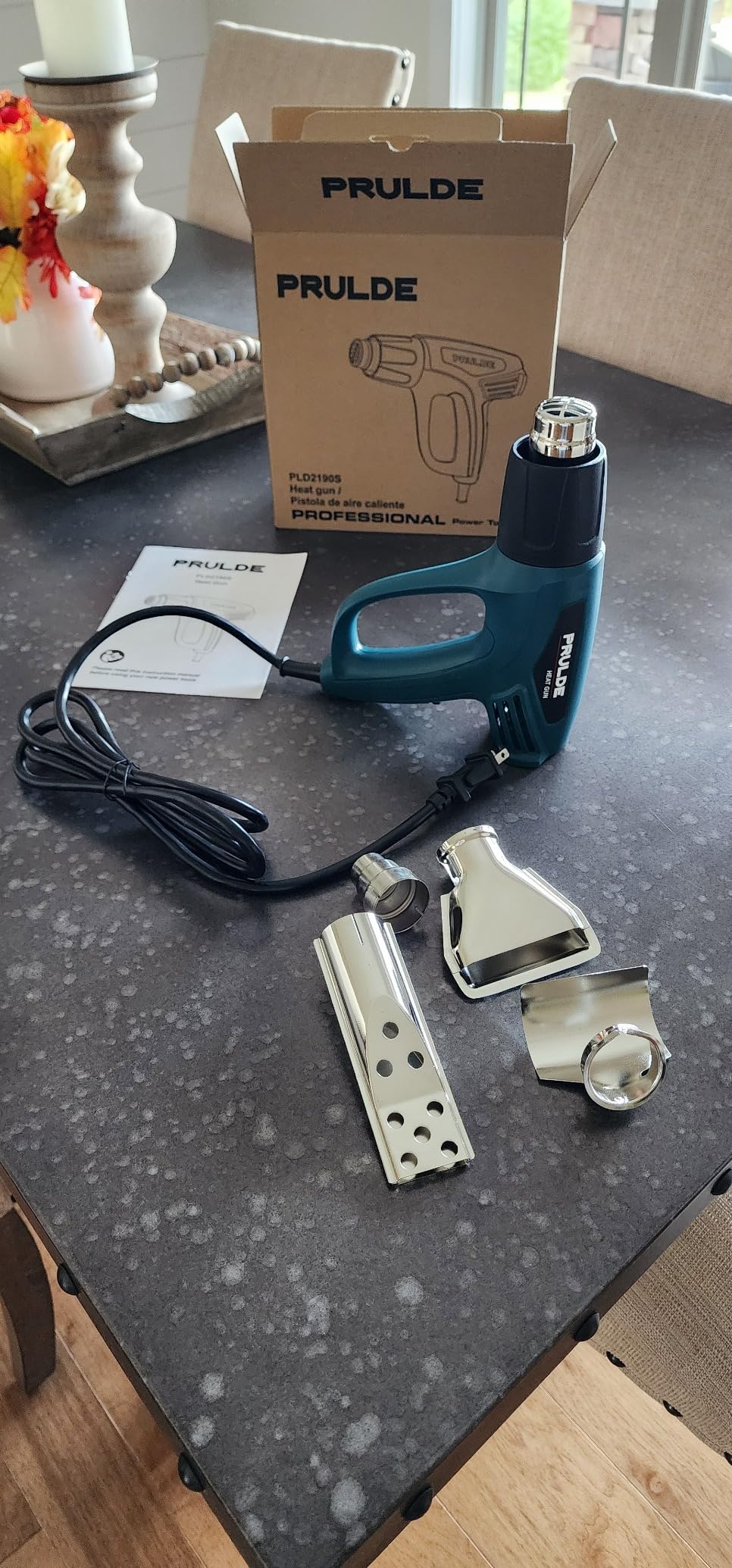
What ETL listing actually tells you
ETL listing means an independent lab tested the tool against North American safety standards for electrical equipment. It does not tell you how well the tool strips paint, but it does tell you the heating element, insulation and cord have been assessed for a device that runs very hot for long periods.
Given that we are talking about pointing a 1500W blower at flammable paint fumes and wood shavings, we treat it as a real differentiator at this tier. The 600 hour working-time figure listed for the DC copper motor is also encouraging for long jobs.
Where owners are less happy
The PP plastic body is lighter than metal but less tolerant of heat over time. At this price point that is a reasonable trade, and the overload protection helps, but it is the first thing we would question after a few years of daily use.
Two fixed temperatures means no middle setting. The listing brand name and the manufacturer name also differ, which confuses buyers and makes warranty service harder to trace. It also carries a much lower sales rank than the Wagner and DeWalt units, so expect less colour choice and fewer accessories.
11. AcmyslaT Heat Gun Kit — Best Nozzle Kit for Resin and Adhesive Work
AcmyslaT Heat Gun, Heavy Duty Hot Air Gun Kit Dual Temperature Settings 572℉~932℉ (300℃-500℃), Overload Protection with 4 Nozzles for Crafts, Shrink Wrapping/Tubing, Paint Removing, Epoxy Resin
1500W
572F and 932F
250L/min and 500L/min
Integrated stand
Four nozzles
Pros
- Reaches 932F in seconds
- Four multi-purpose nozzles in the box
- Oxidation heating wire and all-copper motor
- Integrated stand in the handle
- Reported good results on tile and floor adhesive
Cons
- 932F ceiling is low for thick multi-layer paint
- No temperature dial so two fixed settings only
- No dedicated cooling stand
- Mica paper smokes for about the first ten minutes
The AcmyslaT sits at the lower end of the temperature range here, topping out at 932°F. That is still enough for most household paint and for adhesive work on tile and floors, which is where most owners use it alongside craft resin projects.
About 4,500 ratings average 4.6 stars. Buyers rate it highly for what it does rather than for maximum temperature, and the four included nozzles cover paint removal, shrink wrapping, epoxy work and pipe bending without extra purchases.
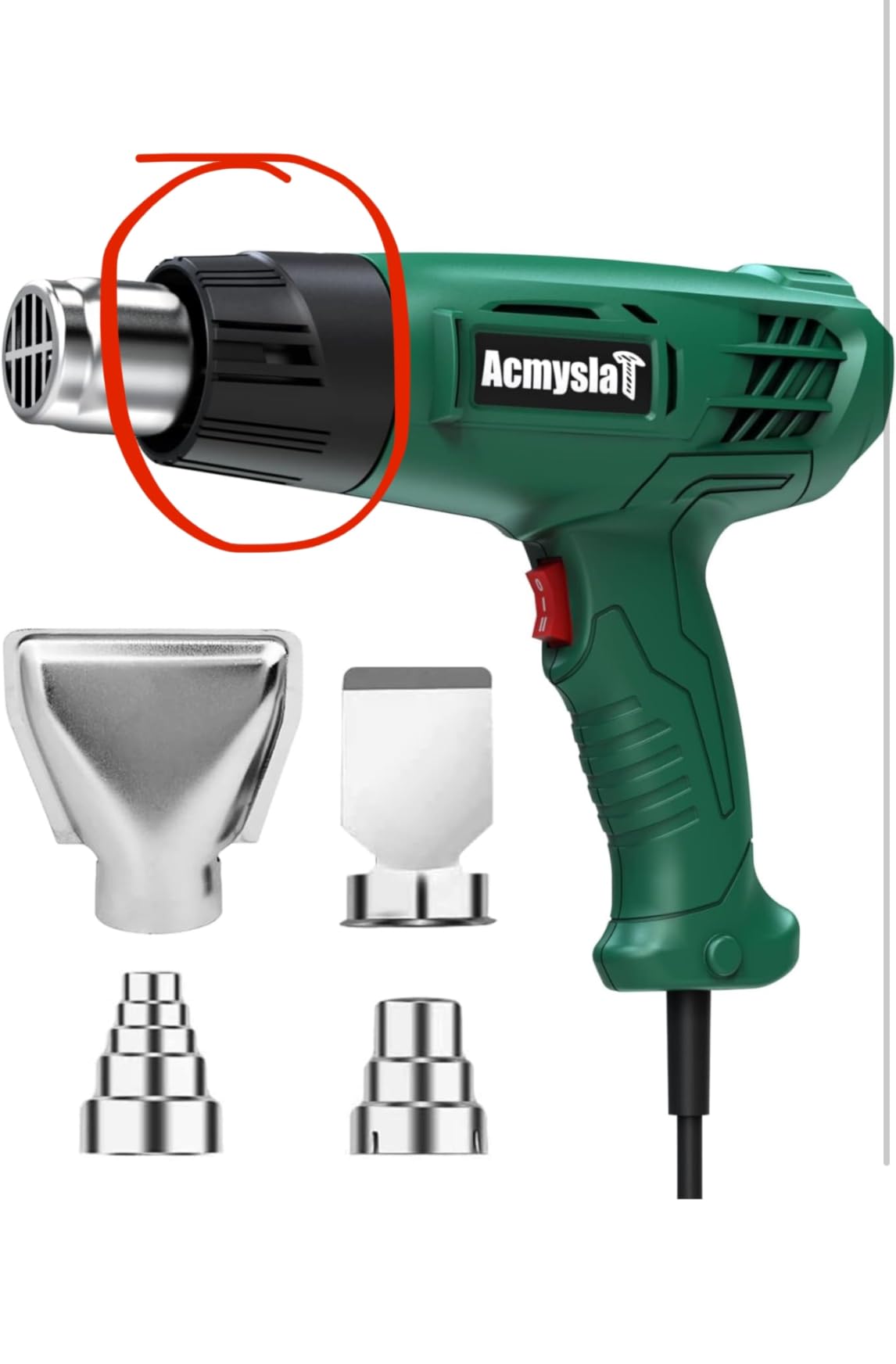
Construction details include oxidation heating wire, an all-copper motor and ABS plastic with stainless steel, plus overload protection. The all-copper motor is the sort of spec that matters on a tool expected to run hot for long periods rather than in short bursts.
The handle incorporates a stand, so the gun can be parked upright between passes. There is no separate cooling feature, which means the nozzle stays hot after you switch off, so you still need a clear, non-flammable surface to set it on.
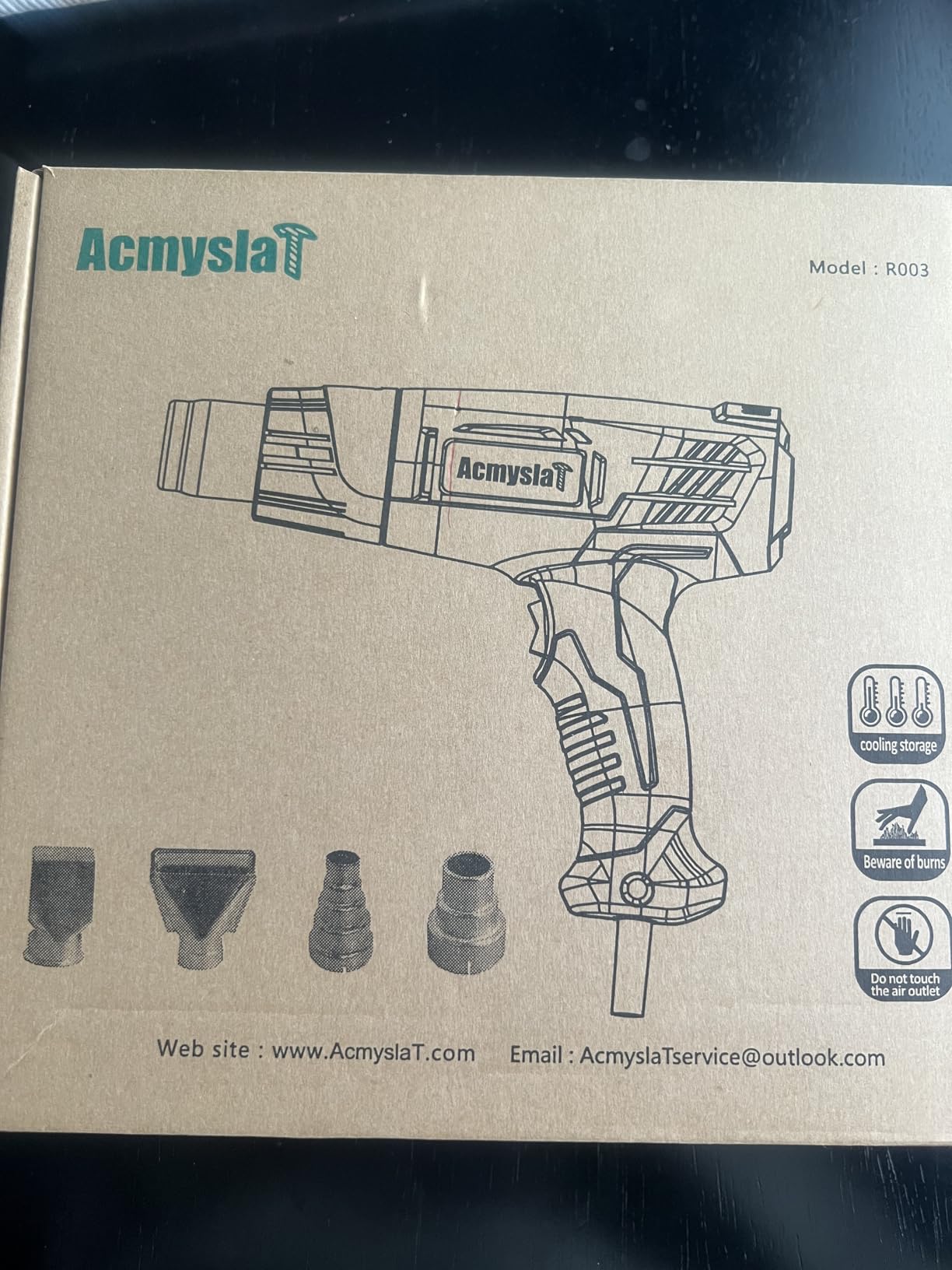
When 932°F is enough and when it is not
932°F softens modern latex and most thin oil-based paint without any trouble. If you are removing adhesive from floor tiles, softening roofing felt or warming up window putty, that is more than enough and the lower temperature is an advantage because you are less likely to scorch the substrate.
It is not enough for the toughest work. Multi-layer oil-based paint on an old door, thick enamel on cast iron and heavy automotive undercoats all benefit from a 1200°F-class gun. If that is your project, look at the SEEKONE or the DIAFIELD instead.
The first-ten-minutes smoke
Owners repeatedly mention smoke and a smell during roughly the first ten minutes of use. That comes from the mica paper insulation burning off manufacturing glue as the element heats for the first time. It is not a fault, but you should do it outside or with extraction running rather than in a closed room.
Beyond that, the main complaints are the absence of a dial and the low ceiling. If you mostly need adhesive, caulk and craft work, this is a capable and cheap tool. If paint removal is the primary job, keep looking up this list.
12. Tilswall 2000W Heat Gun — Best Heat Gun for Precise Temperature Control
Tilswall 2000W Heat Gun with 2 Temperature Levels (440°C / 600°C) 4 Nozzles, Scraper & Mica Heating Core – For Removing Paint, Soldering, Shrinking, Sealing
2000W
50C to 600C in 12 steps
LED digital display
Scraper and spatula
2.88 pounds
Pros
- Backlit digital display showing the exact set temperature
- Twelve settings across 50C to 600C
- Memory and lock function restores previous settings
- 30-second cooling mode and overheat protection
- Most complete kit with four nozzles and scraper set
Cons
- Heaviest unit here at 2.88 pounds
- Display and electronics add failure points
- Fewer reviews than the category leaders
- Manual not guaranteed to be in English
The Tilswall JS-RFA0718 is the only gun in this list with a backlit digital display, and for delicate restoration work that changes how you operate. You set an exact temperature, read it on the screen, and know it has not drifted by the time you finish a section.
Twelve adjustable settings run from 50°C to 600°C, which is the 122°F to 1112°F range in finer steps than any variable dial here. Owner ratings sit at 4.6 stars, and the display and memory function are the most-praised features among buyers.
The memory and lock function restores your previous settings after shutdown. On a multi-day restoration where you stop for lunch or the day ends, that means you are not guessing where you left the dial yesterday and slowly cooking the same board twice.
The 30-second cooling shutdown mode runs the fan before the element cuts out, which protects the coil and is the correct way to store a hot gun. The ceramic heating core delivers 2000W and reaches 600°C quickly.
When an exact number genuinely matters
Exact temperature matters on thin coatings, finished hardwood, window glazing and anything where a scorch mark cannot be sanded out. An LCD removes the guesswork that comes from judging a dial by feel through a glove, which is where most accidental burns happen.
On heavy multi-layer paint, though, the ceiling of 1112°F is lower than the 1200°F-class units in this guide. You are trading peak temperature for precision, and for a full restoration of a heavily painted building that is the wrong side of the trade.
Where the extra electronics cost you
At 2.88 pounds it is the heaviest gun here, and you will feel that on an overhead cabinet job. A display, a memory circuit and a control panel are also more failure points than a simple mechanical dial, and the review base here is the smallest in the group.
The instruction manual is not guaranteed to be in English. Our advice is to work out the setting scale before you start rather than mid-job, and confirm the cooling cycle fully completes before you pack the gun away.
How to Choose a Heat Gun for Paint Removal
Wattage, temperature and control are the three numbers that matter, and they are not equally important. Spend your thinking time on temperature control, because that is what stops you scorching wood, and treat wattage as a proxy for how quickly the tool recovers.
Wattage and heat output
Paint stripping wants sustained heat with air moving across the surface. Below 1500W the gun struggles to hold temperature on a wide panel, and you end up moving too slowly to keep up. Most of the guns here sit between 1200W and 1850W, with the Tilswall at 2000W, and all of them handle a door or a cabinet.
Wattage alone is a poor ranking criterion, and buyers who sort a category by it end up with a hot gun they cannot control. The gun that lets you dial down is worth more than the gun with more watts.
Temperature range and control
Look for a minimum around 100°F to 200°F so you can soften caulk and delicate finishes, and a maximum above 1000°F for old oil-based layers. The gap between those two numbers is where you need control: 750°F and 1000°F with nothing between forces choices you should not have to make.
Variable temperature control, whether a stepless dial, a roller or twelve stepped settings, is the single feature that separates confident strippers from cautious ones. Five of the twelve guns here offer genuine variable control. If you can only afford two fixed settings, buy the one where the low setting is genuinely low.
Airflow, nozzles and the scraper
Airflow determines how heat transfers. Low airflow concentrates energy for stubborn patches and tight corners; high airflow spreads across a panel and stops the surface burning under a stationary nozzle. A gun with two fan speeds gives you more control than one without, even if the temperatures are fixed.
On nozzles, the concentrator or air reduction nozzle is the one you want for paint. Deflector and glass protection nozzles keep heat off glass when you work window frames, and a reflector is for pipe thawing rather than paint. The putty knife is the other half of the system and we cover the full kit below.
Corded versus cordless
Corded wins on runtime and peak temperature. Cordless wins on access, ladders, attics, vehicle work and anything without an outlet within reach. For indoor furniture and cabinet work, corded is the better choice; for a whole-house exterior, cordless often wins on total project time despite the battery swaps.
Our heat gun picks for electronics repair cover the low-temperature end of the category, where a 932°F ceiling would be far too hot.
What Temperature to Use for Each Coating Type
There is no single correct temperature for paint removal. You want the lowest setting that softens the coating within about thirty seconds, because anything hotter starts cooking the substrate rather than the binder.
Latex and water-based paint on wood trim: 500°F to 750°F at medium airflow. This is everyday house paint and it lifts readily without much heat.
Oil-based paint: 750°F to 900°F. Oil binders hold on much harder and need more energy before they release.
Multiple stacked layers: 900°F to 1000°F with high airflow, worked in small sections and moved constantly. Multiple layers hold more heat before releasing, and they insulate the wood underneath.
Polyurethane varnish and clear coat: 400°F to 600°F. Varnish responds early and scorches easily, so start low and use a deflector nozzle on surrounding wood.
Window glazing putty: 500°F to 700°F. The goal is softening the putty, not burning it off, and the glass protection nozzle matters here more than anywhere else.
Acrylic and vinyl wrap: 700°F to 1000°F with airflow. These are thin films that release quickly and will shrink and harden if you linger on one spot.
Paint on metal: 800°F to 1100°F. Metal conducts heat and does not scorch, so you can work hotter and hold the temperature longer than on wood.
Lead-based paint: do not heat it. See the safety section below.
How to Use a Heat Gun to Remove Paint Without Scorching
The technique matters more than the tool. A 2000W gun held still will burn a hole through drywall paper in under a minute, and the same gun moving steadily will lift four coats of paint cleanly. Treat everything below as the difference between those two outcomes.
1. Test a hidden area first. Find an inside corner or the back of a door and try your lowest workable temperature. Watch for paint darkening, bubbling excessively or the wood grain appearing through the coating.
2. Work in sections about 2 feet square. Large sections cool as you work and you end up chasing your own heat. Small sections stay hot the whole time you are on them.
3. Hold the nozzle 3 to 6 inches away. Closer than that and you scorch, further and the airflow is too diffused to lift paint. Move it constantly in slow sweeps.
4. Watch for bubbling, not smoking. The paint is ready when it blisters into small bubbles and the edges start to lift. Smoke means you have gone too hot or too long.
5. Scrape with the grain at about 30 degrees. A sharp putty knife or plastic scraper on a shallow angle lifts sheets without gouging the wood. Pull toward you, never push away from your body.
6. Lower the temperature if the surface darkens. Darkening is the first sign of scorching and it does not sand out of softwood.
7. Let the area cool before moving on. Paint that stays hot can re-bond to the wood as it cools. A fan or the gun on high airflow alone will speed this up.
This technique is the answer to the most common criticism of heat guns, which is that they are slow. A sawmillcreek poster described them as very slow but useful around moldings and hard-to-reach places, and that is right if you work the whole surface. With small sections and a proper scraper angle, they are among the fastest methods available.
Heat Gun vs Chemical Stripper vs Infrared vs Media Blasting
Professionals use all four methods, and the right answer depends on the coating, the substrate and the building. A house painter working on a window frame and a restorer working on a door slab will pick differently.
Heat gun: fastest for paint on trim, doors and cabinets. Chemical-free and no disposal. Requires skill to avoid scorch and is unsuitable where lead is possible.
Chemical stripper: the safest choice for lead paint and for intricate carved detail. Slow, smelly, and the stripped material has to be disposed of properly.
Infrared remover: gentler on the wood, with reports of a first door taking eight hours rather than the long hot-air alternative. Costs considerably more and needs a bigger surface area to work on.
Media blasting: the professional method for large flat surfaces such as a full exterior or a car body. Fast, but it strips everything down to bare material, which is why it is rarely used on anything you want to preserve.
Our general heat gun guide covers the craft and household uses if paint is only one of several jobs on your list.
Safety First: Lead Paint, Ventilation and Protective Gear
Paint removal produces dust, fumes and flying debris, and the failure mode here is not a burn. It is inhaling something dangerous for years.
Assume lead paint in any home built before 1978. r/centuryhomes members explicitly warn against heat guns where lead paint may be present, and the reasoning is sound: heating lead paint vaporises it and puts it into the air. Test the paint with a lead test kit first. If it is positive, hire a lead-certified abatement contractor or use a chemical method with full containment.
Ventilate properly. Open windows on two sides of the work area and use a fan to move air out of the space rather than stirring it. Work outdoors wherever the weather allows.
Wear a P100 or P2 respirator, P2 goggles and butyl gloves. The respirator is the item people skip and the one that matters most. Butyl gloves resist the heat and the stripping oils that ordinary latex gloves absorb within minutes.
Keep the nozzle moving. Stationary heat on a fixed surface is what causes fires. Never leave a hot gun on a drop cloth, a ladder rung or a workbench with paper on it.
Watch the substrate. Never heat paint off Formica, vinyl flooring, plastic panels, thin veneer or any painted wall and drywall unless you have tested and can control the dwell time. Drywall paper burns and the resulting hole is a bigger repair than the paint job.
Keep a scraper ready. The putty knife is the safety equipment. Paint that is properly softened lifts in sheets; paint that is caught mid-bubble tears and scatters.
Frequently Asked Questions
Which heat gun is best for removing paint?
The SEEKONE 1800W is the best overall choice because its stepless dial runs from 122°F to 1202°F and it includes four nozzles. For the highest owner rating, the Wagner Spraytech HT1000 sits at 4.7 stars with a stand and two fan speeds, and beginners often do well with the lightweight BLACK+DECKER HG1300.
Will a heat gun help remove paint?
Yes. Forced hot air softens the paint binder until it blisters and loses adhesion, and a putty knife lifts it away in sheets. It is the fastest chemical-free method for multi-layer paint on trim, doors, cabinets and metal, though it takes skill to avoid scorching the wood.
How hot does a heat gun need to be to remove paint?
Between 500°F and 750°F for most latex house paint, rising to 900°F to 1000°F for old oil-based paint and multiple stacked layers. Metal can take 800°F to 1100°F because it conducts heat and will not scorch.
Are heat guns good for removing paint?
They are excellent on trim, doors, cabinets, window frames and metal, and they avoid the fumes and disposal problems of chemical strippers. They are a poor choice for lead paint, thin or fragile veneers, Formica and plastic, and for painted drywall where you cannot control dwell time.
Can I use a heat gun to remove paint from a wall?
Only with caution. Drywall paper burns very easily and a hole through the paper is harder to repair than the paint job itself. Work in small sections, keep the nozzle moving at 3 to 6 inches, start at the lowest temperature and test a hidden area first.
Is a heat gun safe for lead paint?
No. Heating lead-based paint vaporises it and puts toxic dust into the air, which is why owners on r/centuryhomes warn against it in older homes. Test the paint with a lead test kit first and use a certified abatement contractor or a chemical method with containment if it is positive.
The Best Heat Gun for Paint Removal in 2026
For most people stripping cabinets, doors and trim, buy the SEEKONE 1800W. It has the stepless temperature control that lets you work gently, the airflow options that keep paint lifting without scorching, and more owner ratings than any other gun we tested. If you want the highest-rated option and prefer a tool with fewer settings to get wrong, the Wagner Spraytech HT1000 is the safer buy.
Pick the DEWALT DCE530B if the work is away from an outlet, the Tilswall if you need an exact temperature readout on delicate pieces, and skip any heat gun entirely until you have tested for lead paint in a pre-1978 building. Use a respirator, keep the nozzle moving, and use the 2026 guide to more heat gun options for the rest of your workshop.