

A bag of organic apples does not have to become compost. A countertop food dehydrator pulls the moisture out over six to eight hours and leaves you with something that sits in a pantry for months, tastes like the fruit it started as, and costs pennies per serving to make. The problem is that there are a hundred cheap plastic boxes on the market and a much smaller number of machines that dry evenly, hold temperature, and survive five seasons of harvest season.
We compared 10 of the strongest countertop dehydrators available now, normalized their specs, and sorted them by what actually matters once the machine is sitting on your counter: square feet of drying space, whether the fan layout needs tray rotation, temperature precision, and whether you have to stand there watching a timer. This is our guide to the best food dehydrators for home use in 2026, whether you are making beef jerky through deer season, turning a garden surplus into fruit leather, or drying herbs for tea blends.
Quick picks, before the long version:
- Best overall: Cosori 6-Tray with 6.5 sq ft of drying space and a rear-mounted fan — the pick that needed no tray rotation in our batches.
- Best value: NESCO Snackmaster Pro — expands from 5 to 12 trays, so capacity grows with your harvest instead of being fixed at purchase.
- Best for large jerky batches: Magic Mill 10-Tray Premium — ten extra-large stainless trays and 700 W of drying power.
- Best for beginners: Cosori 5-Tray BPA-Free — round body, adjustable tray height, and a 48-hour timer that shuts itself off.
- Best all-stainless build: Magic Mill Pro 7-Tray — stainless inside and out, rated to 176 F, ETL Listed.
- Best for small kitchens: Magic Mill 5-Tray at 2.75 kg, which stores in a cupboard between uses.
We also wrote up a narrower guide to dehydrators built specifically for jerky and dried fruit, if your kitchen only has room for one batch type at a time.
Table of Contents
Top 3 Picks for the Best Food Dehydrators for Home Use in 2026

Cosori 6-Tray Stainless…
- 6.5 sq ft across six stainless steel trays
- 600 W rear-mounted fan for even drying
- Brushless motor under 48 dB
- 95-165 F with a 48-hour timer
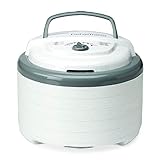
NESCO Snackmaster Pro FD-75A
- Expands from 5 to 12 trays
- 600 W Converga-Flow airflow
- Top-mounted fan protects the element
- 95-160 F mechanical dial

Magic Mill 10-Tray Premium…
- Ten extra-large stainless steel trays
- 700 W drying power
- 48-hour timer with 24-hour Keep Warm
- Automatic shutoff and overheat protection
All 10 Food Dehydrators at a Glance in 2026
| Product | Specs | Action |
|---|---|---|
| Cosori 6-Tray Stainless Steel |
|
Check Latest Price |
| NESCO Snackmaster Pro FD-75A |
|
Check Latest Price |
 Cosori 5-Tray BPA-Free Cosori 5-Tray BPA-Free |
|
Check Latest Price |
 Hamilton Beach Digital Hamilton Beach Digital |
|
Check Latest Price |
 Magic Mill 5-Tray Magic Mill 5-Tray |
|
Check Latest Price |
 Commercial Chef 5-Tray Commercial Chef 5-Tray |
|
Check Latest Price |
| Magic Mill 10-Tray Premium |
|
Check Latest Price |
 Magic Mill Pro 7-Tray Magic Mill Pro 7-Tray |
|
Check Latest Price |
 NutriChef 5-Tray NutriChef 5-Tray |
|
Check Latest Price |
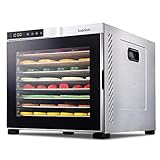 Ivation 10-Tray Ivation 10-Tray |
|
Check Latest Price |
1. Cosori 6-Tray Stainless Steel Dehydrator — Best Overall for Even Drying
Cosori Food Dehydrator, 6 Stainless Steel Trays with 6.5 ft² Drying Space
6 stainless steel trays
6.5 sq ft drying space
600 W
95-165 F
48-hour timer
Under 48 dB
Pros
- 6.5 sq ft of drying space across six stainless steel trays
- Rear-mounted fan dries evenly without manual tray rotation
- Brushless motor stays under 48 dB so it suits overnight runs
- 1 F temperature increments from 95 F to 165 F
- Dishwasher-safe trays plus mesh screen and fruit roll sheet and a 50-recipe cookbook
Cons
- Bulky 18.1 pound body takes more counter space than round models
- Long drying times for high-moisture fruit in humid conditions
- Extra trays and liners are sold separately
This is the machine we kept coming back to. Six stainless steel trays give you 6.5 square feet of drying surface, which is enough to put a full tray of apple slices on every level and still fit a rack of herbs. Reviewers report consistent results across levels, and the rear-mounted fan layout is the reason: air enters at the back and moves across the cabinet rather than rising from a coil at the bottom.
The digital panel holds anywhere from 95 F to 165 F in single-degree steps and runs a timer up to 48 hours. In practice that means you set a temperature for a low-and-slow fruit batch on Monday and a hotter jerky batch on Friday without relearning the interface.
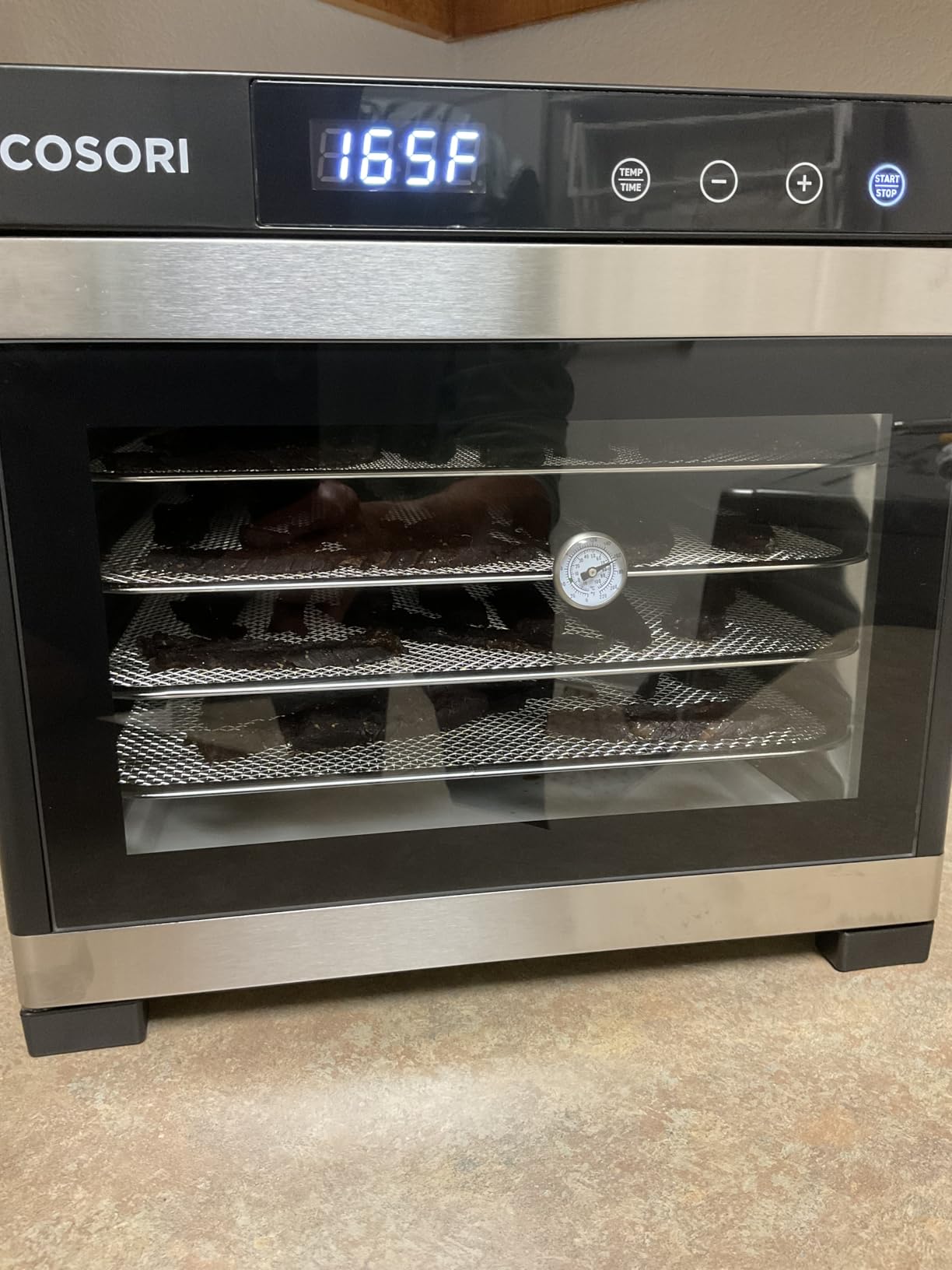
At 600 W it is not the most powerful unit here, yet it finished a sliced-apple load faster than most smaller boxes simply because six full trays all see the same air. It also runs under 48 dB, which matters more than any spec sheet admits: a machine that is too loud gets unplugged after two cycles.
The honest tradeoff is size. At 18.1 pounds and 17.8 by 13.4 by 12.4 inches, it is the second-heaviest box in this group and it wants a real counter, not a corner. If you have the space, this is the one I would buy first.
The stainless trays also matter beyond durability. Food releases with hot water and a sponge, the mesh screen catches herbs and small fruit, and the fruit roll sheet turns the same machine into a leather maker. The 50-recipe book is more than a gimmick; it is a reasonable drying chart.
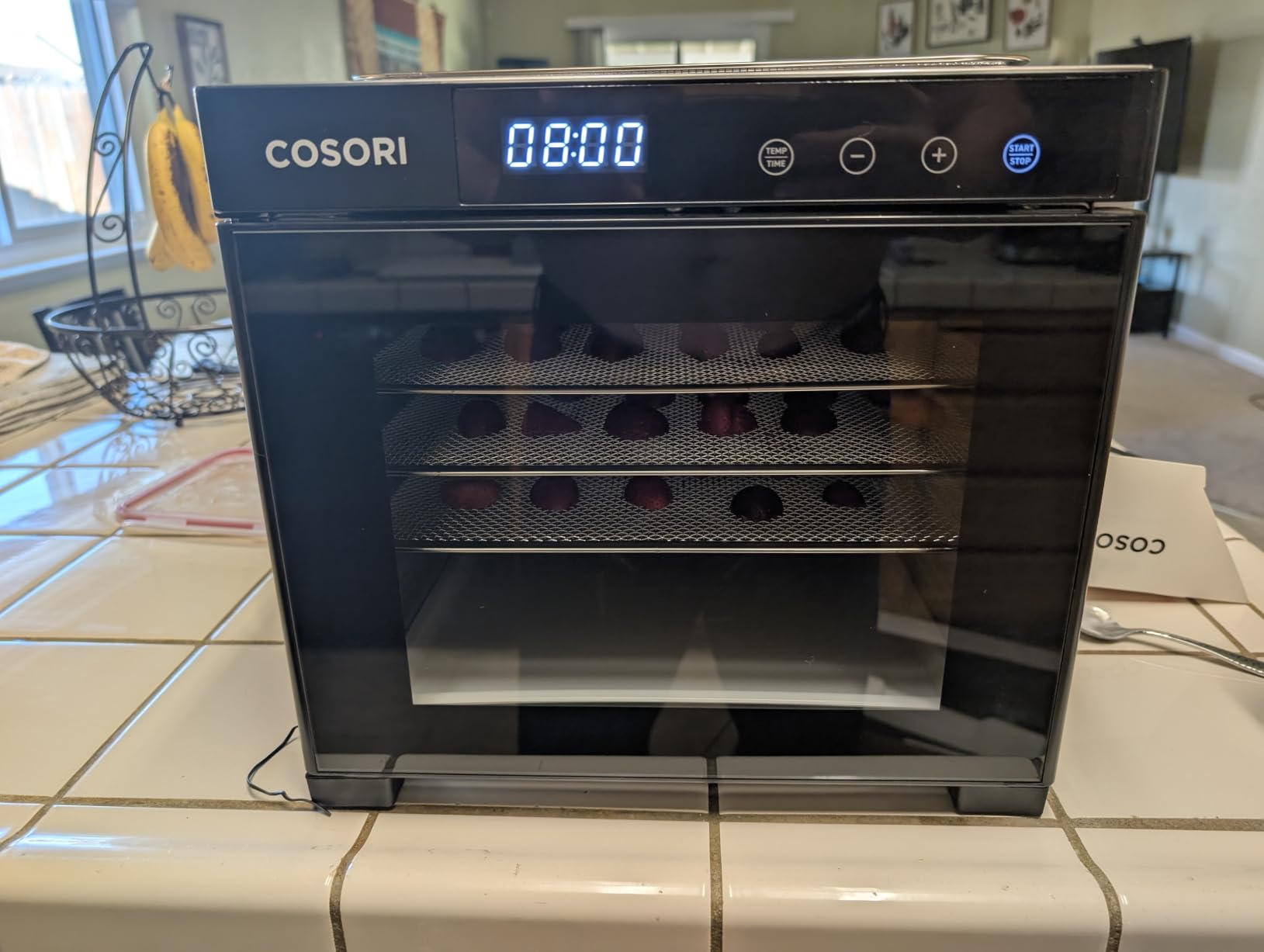
What you get for the counter space
Six square and a half feet on a body that still fits under a normal wall cabinet is a rare combination. If you are processing a weekend harvest rather than a single tray of herbs, that headroom is the whole argument.
The 600 W element is paired with a rear fan rather than a bottom element, which also cuts down on the flavor transfer that plagues vertical-stack boxes where a tray of tomatoes sits above a tray of onions.
Where it falls short
It is heavy to move for cleaning or rearranging, and reviewers of high-moisture fruit in humid conditions report longer cycles than the recipe book suggests. Plan overnight runs rather than same-day ones.
Extra trays and additional liners are not in the box, so if you want to expand past six levels you are buying accessories separately. Two-year manufacturer coverage is the longest warranty in this group.
2. NESCO Snackmaster Pro FD-75A — Best Value and Best Expandable Design
NESCO FD-75A Snackmaster Pro Food Dehydrator, For Snacks, Fruit, Beef Jerky, Gray
5 trays expandable to 12
600 W Converga-Flow
95-160 F dial
3.5 kg body
Made in the USA
Pros
- Expands from 5 to 12 trays as your harvest grows
- Compact and light at 3.5 kg with trays that remove for storage
- Very quiet even next to a television
- Top-mounted fan keeps juice off the heating element
- Includes fruit roll sheets and clean-a-screens plus a jerky seasoning sample
Cons
- No built-in timer so a plug-in lamp timer is needed for long runs
- No on/off switch and only a mechanical temperature dial
- Trays dry unevenly top to bottom for many users
- Plastic trays have crevices that trap dried juices
This is the dehydrator that long-time owners describe as still going years later, and the design reason is the expandability. It ships with five trays and accepts additional tray sets, so a household that starts with a few trays of apple chips can grow to twelve levels for a bulk jerky weekend without buying a second machine.
The fan sits on top rather than at the back or bottom. That means juice from a tray of strawberries runs down onto the tray below instead of dripping onto the heating element, and it removes the dead hot spot that bottom-element designs create. Users report this directly as the reason their unit has lasted.
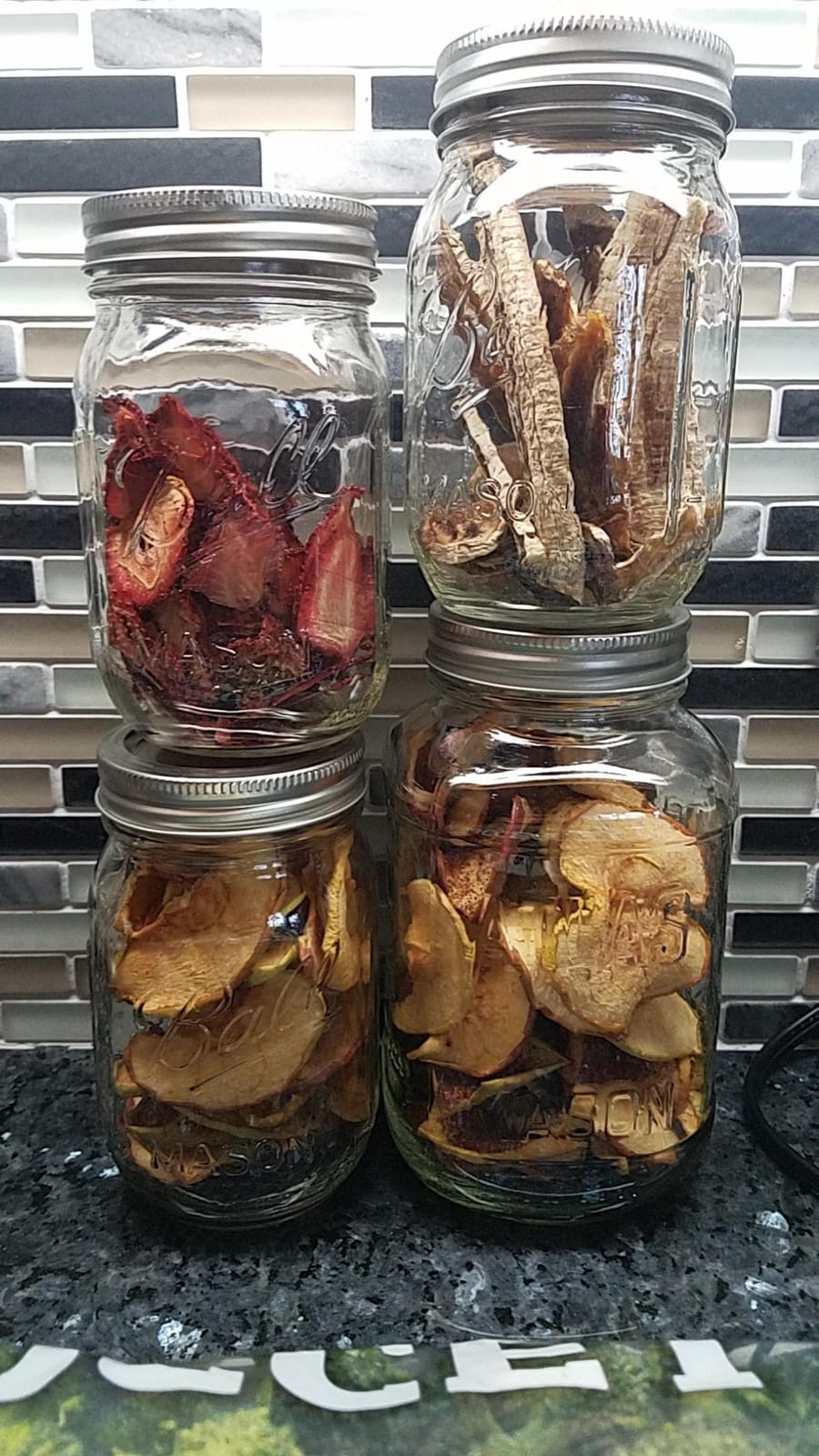
It is also the quietest large-capacity option here and the lightest at 3.5 kg, which sounds trivial until you are pulling a machine out of a cupboard after a week of not using it. The whole tower collapses down to a base plus a bundle of trays.
What you give up is modern convenience. There is no built-in timer and no on/off switch, only a mechanical temperature dial running from 95 F to 160 F, so an unattended eight-hour run needs a plug-in lamp timer. Reviewers also report that trays dry unevenly top to bottom and many of them rotate them mid-cycle.
On r/dehydrating and r/homestead threads the recurring advice for this category is to buy the version with a timer and thermostat, and that advice points at a different NESCO model. The FD-75A is the one where you supply the timer yourself.
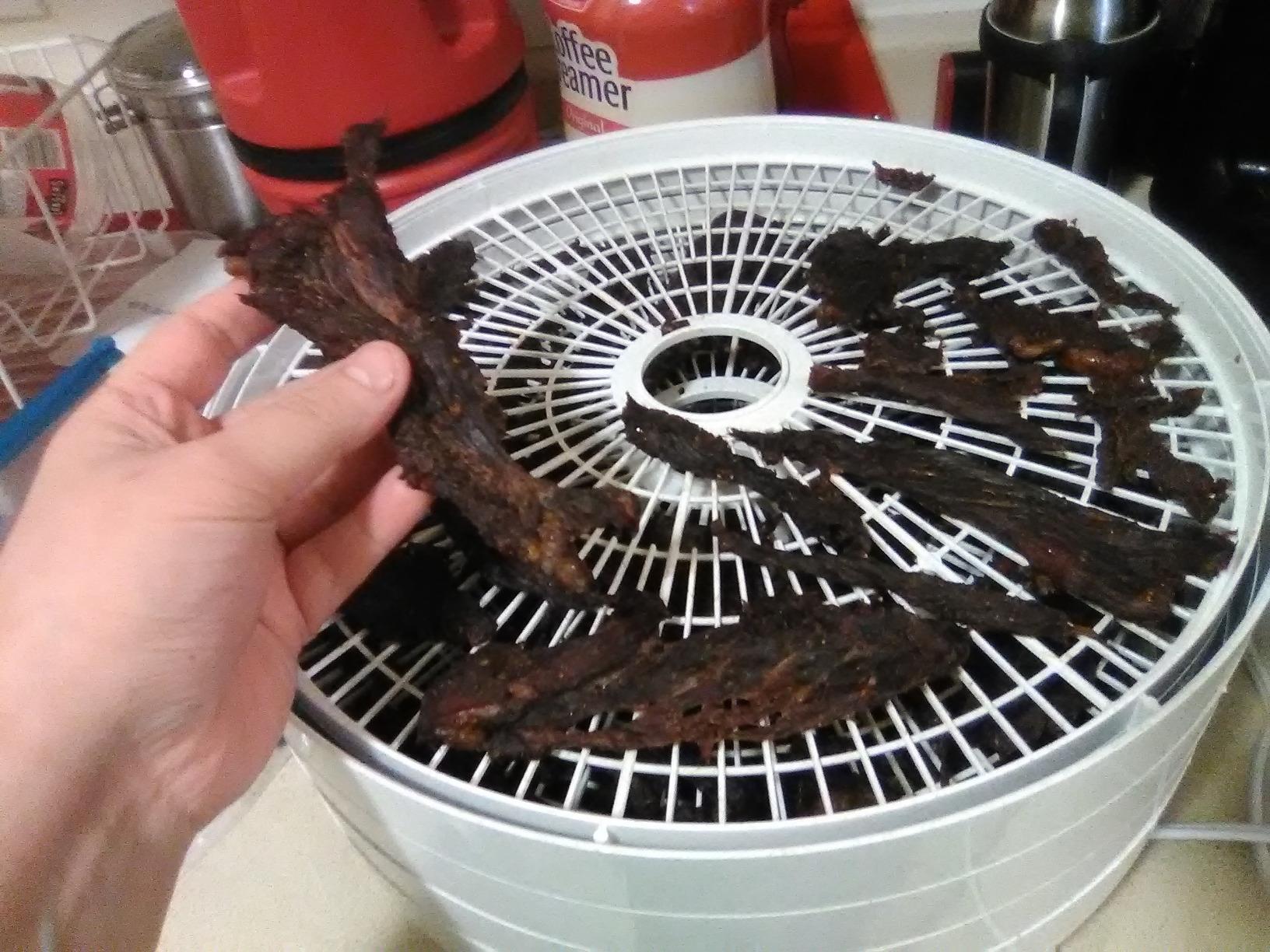
Why expandability matters more than tray count
A fixed five-tray box forces a choice: dry small batches often, or dry one big batch and eat the same thing for a week. Expandable designs let you add tray sets only in the season you need them, which spreads the cost across the year instead of front-loading it.
Stacking matters here too. This body is 13 inches square and 10 inches tall, so twelve trays stack into a cabinet-height tower rather than sprawling across the counter like a large rectangular cabinet.
Where it falls short
The missing timer is the dealbreaker for anyone who wants to start a batch before bed. Budget for a mechanical plug-in timer and treat it as part of the setup.
Plastic trays with narrow ribs catch dried residue in the grooves and need real scrubbing, and the trays stack loosely enough that aligning them flush takes a little practice. Coverage is a one-year limited warranty.
3. Cosori 5-Tray BPA-Free Dehydrator — Best for Beginners
Cosori Food Dehydrator, 5 BPA-Free Trays, 165°F Temperature Control, 350W
5 BPA-free trays expandable to 7
350 W
95-165 F
Under 47 dB
4.9 pound round body
Pros
- Precise well-regulated temperature and timer settings
- Quiet enough to run overnight below 47 dB
- Trays release food easily with hot water and a sponge
- Compact round footprint with adjustable tray height
- Recipe book includes a usable dehydration chart
Cons
- Fruit leather and jerky mesh liners are not included
- Recipe book drying times are approximate and lower trays finish first
- Touch panel is oversensitive and beeps on every press
- Short power cord and a plastic shell some owners report can crack
If you have never used a dehydrator, this is the one that asks the least of you. It has the two features beginners actually get wrong covered: a real digital timer that runs up to 48 hours in 30-minute steps, and a temperature control that adjusts from 95 F to 165 F in single-degree increments instead of a vague dial.
The round tray layout is the other quiet advantage. There is no back corner where air stagnates, so results are more consistent than a square box at the same capacity, and the tray height adjustment lets you shrink the gap for storage or open it up for thick-cut squash and potatoes.
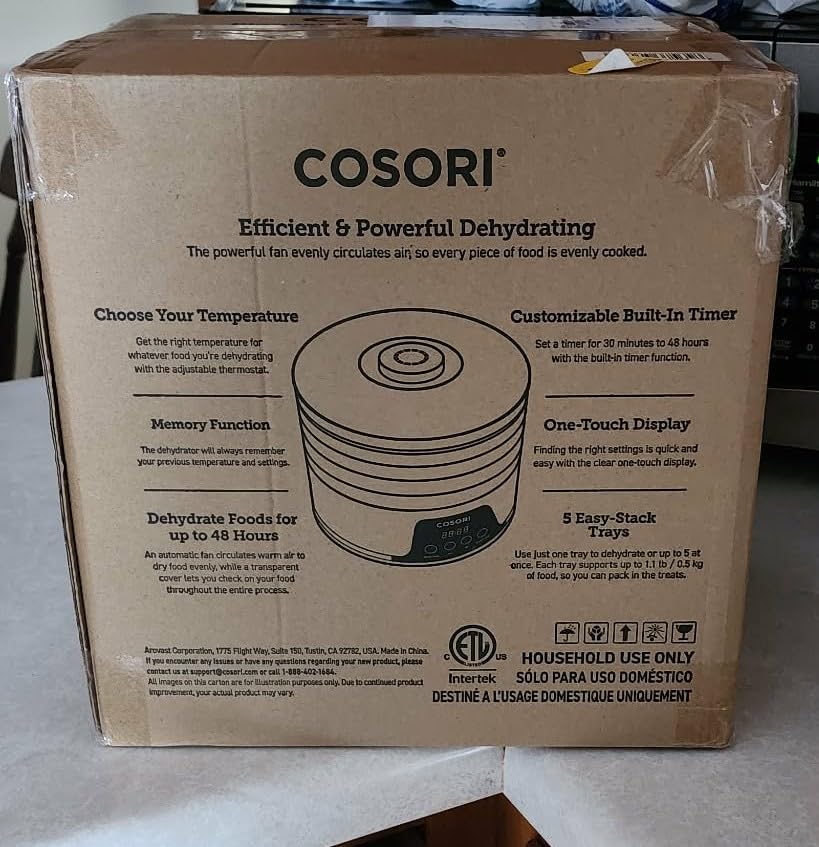
At 4.9 pounds and 12.2 inches square it is genuinely easy to move, and reviewers report that food releases from the polypropylene trays with hot water and a sponge. It also runs under 47 dB, the quietest figure among the boxes in this guide.
The catch is accessories. Fruit leather sheets and jerky mesh liners are not in the box, so budget for a pack of them if leather is on your list. At 350 W it is also a modest heater, and lower trays often finish before upper ones.
Warranty coverage here is two years, which is the joint-longest in the group alongside our top pick.
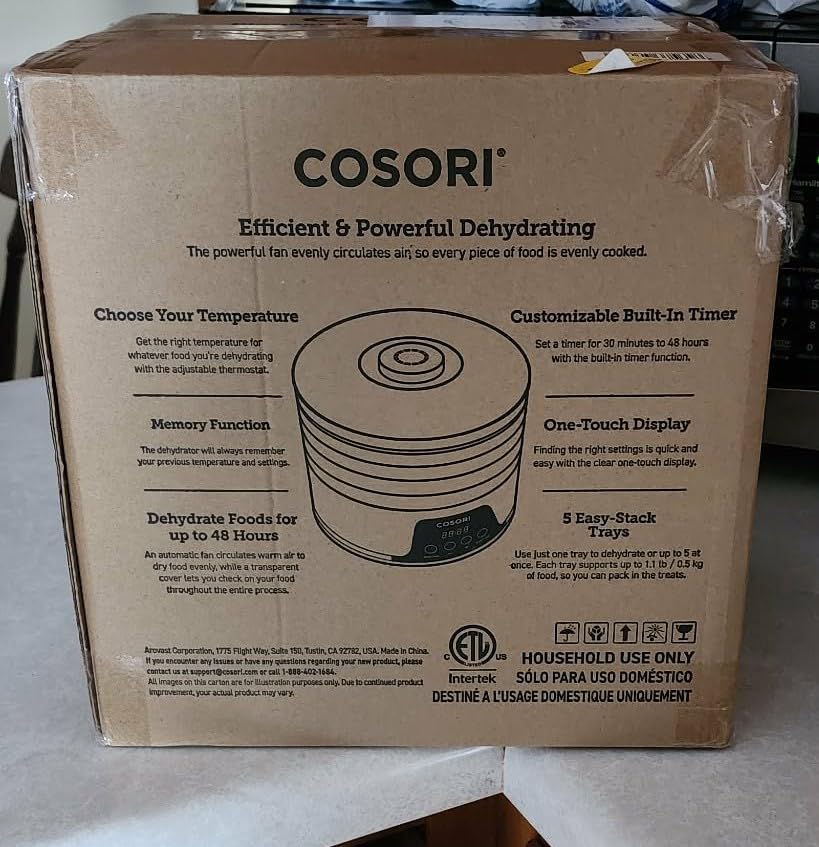
Why single-degree control matters for a first machine
Recipes for fruit, herbs and jerky live at different temperatures, and a dial that only gives you two or three positions forces you to guess. One-degree increments mean the number on the panel is the number in the recipe, which is exactly what a beginner needs to build confidence.
A 48-hour timer also removes the single most common complaint we see on forums, the machine left running because nobody was home when it finished.
Where it falls short
Plan on buying liners separately. Reviewers also note that the drying times in the included book run optimistic, so treat them as a starting point and check doneness by feel and bend rather than by the clock.
The touch panel beeps on every press and some owners report it responding to accidental touches, which is annoying at 2 a.m. but not a functional failure. The cord is short, so plan the outlet location first.
4. Hamilton Beach Digital Food Dehydrator — Best Under-Cabinet Design
Hamilton Beach Digital Food Dehydrator for Fruit, Jerky, Vegetables & More
5 BPA-free trays
Up to 4.2 sq ft
500 W
100-160 F
48-hour timer with auto shutoff
Pros
- Digital temperature with a 48-hour timer and automatic shutoff
- Consistent airflow so trays generally do not need rotating
- Square body stores easily and fits under cabinets
- Dishwasher-safe trays and lid make cleanup quick
- Clear vented lid for at-a-glance monitoring
Cons
- Only one mesh screen included and the mesh lets small herbs fall through
- Audible fan noise compared by owners to a box fan on low
- A few machines emitted a brief chemical smell on first use
- Fruit can run long in humid conditions
This is the shape most kitchens actually have room for. The body is square rather than round, measuring 10.4 inches deep by 13.2 wide by 11.3 high, so it slides under a standard cabinet instead of claiming the corner of the counter.
The heater sits at the base and the fan moves air across the tray stack, which reviewers say keeps drying consistent enough that tray rotation is usually unnecessary. That saves you from remembering a mid-cycle swap on every batch.
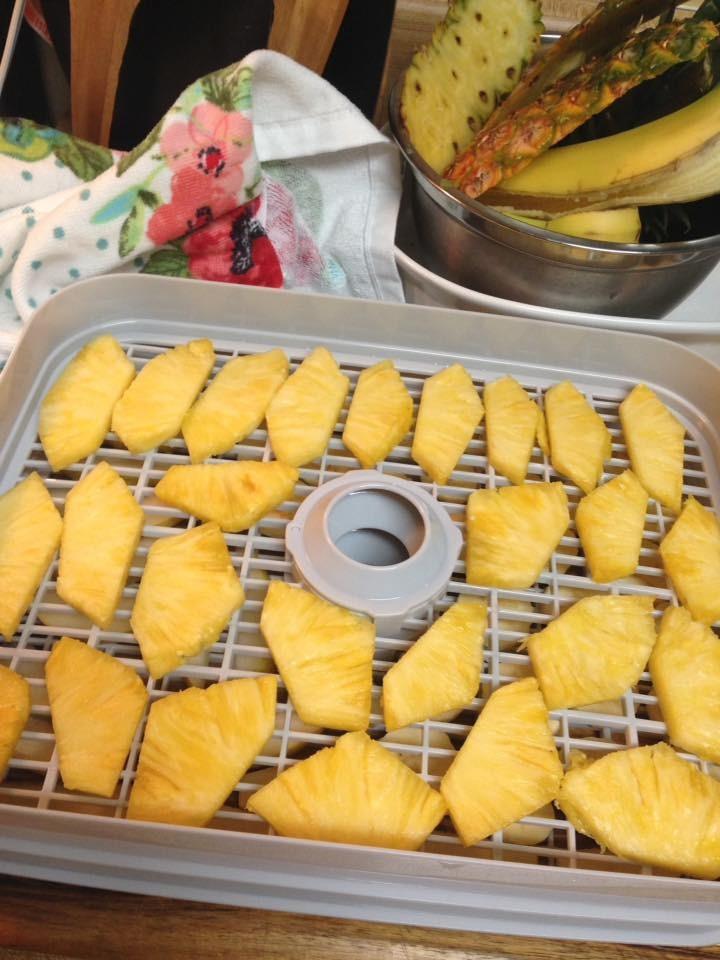
The control panel runs 100 F to 160 F with a countdown timer from 1 to 48 hours and automatic shutoff. Clear vented trays and lid let you watch progress without cracking the door and letting heat out, which matters more than it sounds on a long fruit batch.
Cleanup is the easiest in this group: trays and lid go in the dishwasher, and only the mesh herb screen needs hand washing. One mesh screen and one solid fruit leather sheet are included, so leather works out of the box.
The limitation is that a single mesh screen is coarse enough that small herbs and tiny fruit pieces can drop through. If you dry a lot of thyme, oregano or cherry tomatoes, buy fine mesh.
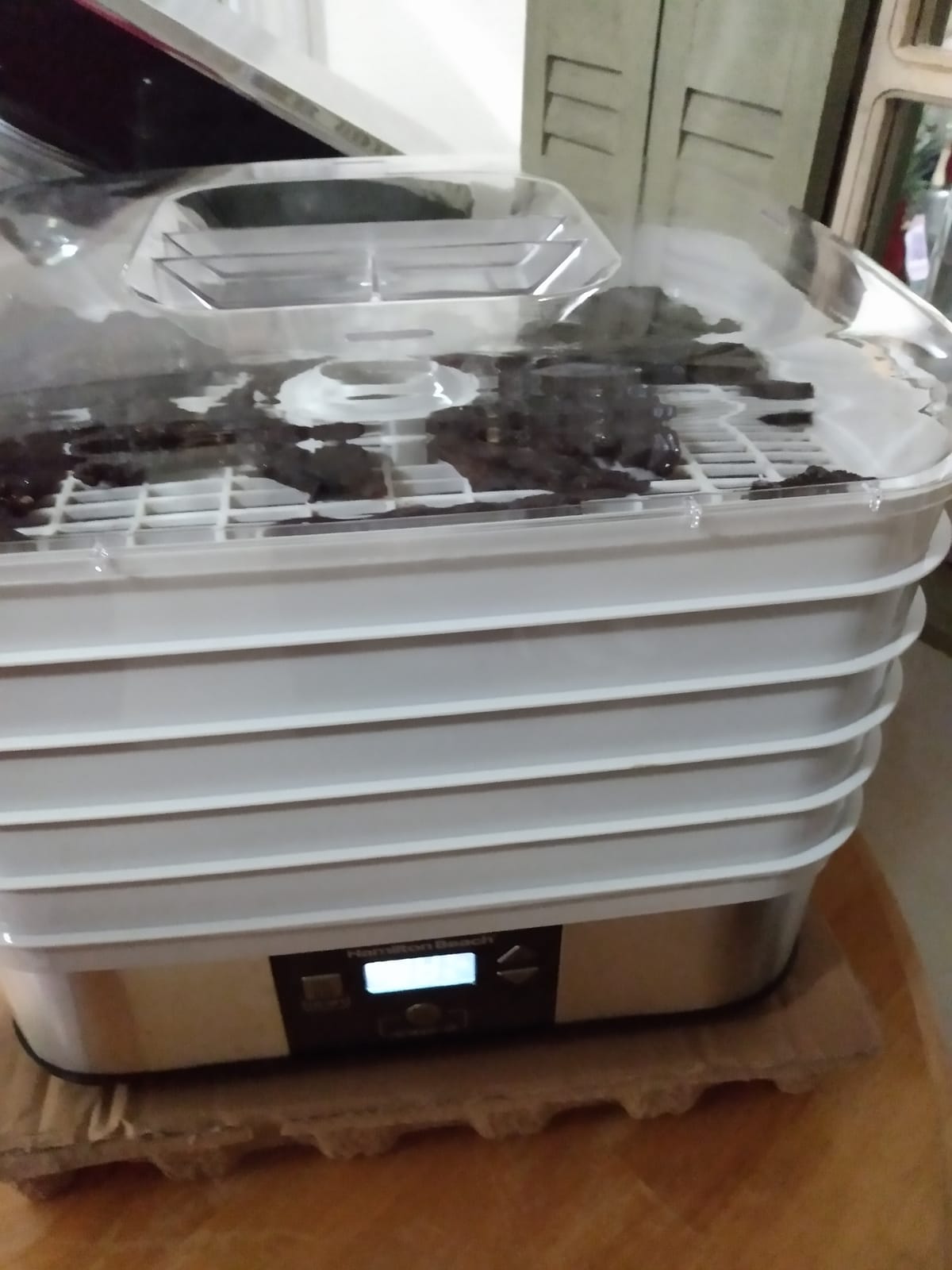
Why the under-cabinet footprint is worth planning around
Counter space is the number one complaint about dehydrators in user forums, and it is a physical problem no setting solves. A machine that tucks under a cabinet when it is not running gets used far more often than one that has to be unpluggled and moved.
The clear lid is the quiet hero feature here. Checking a batch means glancing, not opening, so you stop losing heat and stopping the cycle.
Where it falls short
Fan noise is the most common complaint, compared by owners to a box fan on low. It is fine in a working kitchen and a nuisance in an open-plan living space.
Four square feet of drying space is modest next to the six-and-a-half square feet of our top pick, and some units emitted a brief chemical smell on first use. Coverage is one year.
5. Magic Mill 5-Tray Compact Dehydrator — Best for Small Kitchens
Magic Mill Food Dehydrator Machine | 5 Stackable Stainless Steel Trays, 48H Digital Adjustable Timer & Temperature Control Upto 167° Electric Dryer & Preserver for Jerky, Fruit, Dog Treats & Much More
5 stainless steel trays
240 W
95-167 F
Height-adjustable trays
2.75 kg body
Pros
- Very compact and light at 2.75 kg with a small countertop footprint
- Adjustable tray heights for thick cuts or tighter packing
- Stainless steel trays on a BPA-free plastic body with a stainless base
- Simple touch panel for 95-167 F and up to 48 hours
- Trays detach and clean easily in the dishwasher
Cons
- Lowest wattage in the group at 240 W so cycles run long
- Likely requires tray rotation across five levels
- BPA-free plastic body is less durable than an all-stainless build
Among all ten machines, this is the one that fits in a drawer. At 2.75 kg and 8.5 by 11.8 by 11 inches, it is a genuinely portable dehydrator, and reviewers single out the adjustable tray height as the feature that makes it work for more than one job.
Raise the tray spacing and you have clearance for thick-cut potatoes or chunks of squash. Lower it and you compress the stack for storage or for small batches of herbs where you want air to move freely through a short tower.
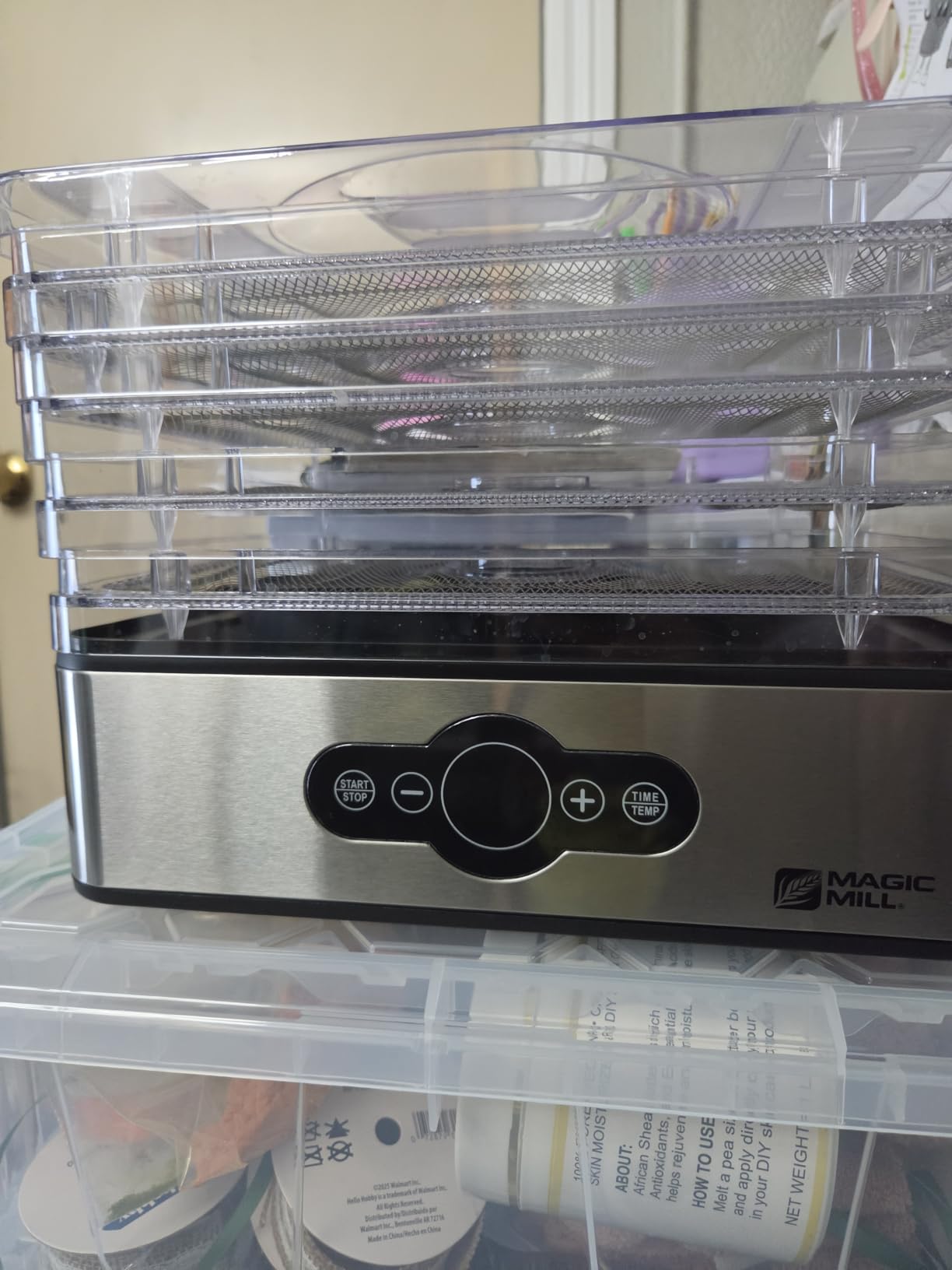
The touch panel covers 95 F to 167 F and up to 48 hours, and the trays detach fully for the dishwasher. Stainless steel trays in a small machine are a good trade, because plastic trays are where most of the odor problems start.
What holds it back is heat output. At 240 W it is the lowest in this group, and every wattage-driven claim about drying time is relative. Expect longer cycles and expect to rotate trays across five levels for even results.
The body is BPA-free plastic rather than full stainless, so it is lighter and cheaper to replace but less durable if you drop it. No warranty length is stated in the listing.
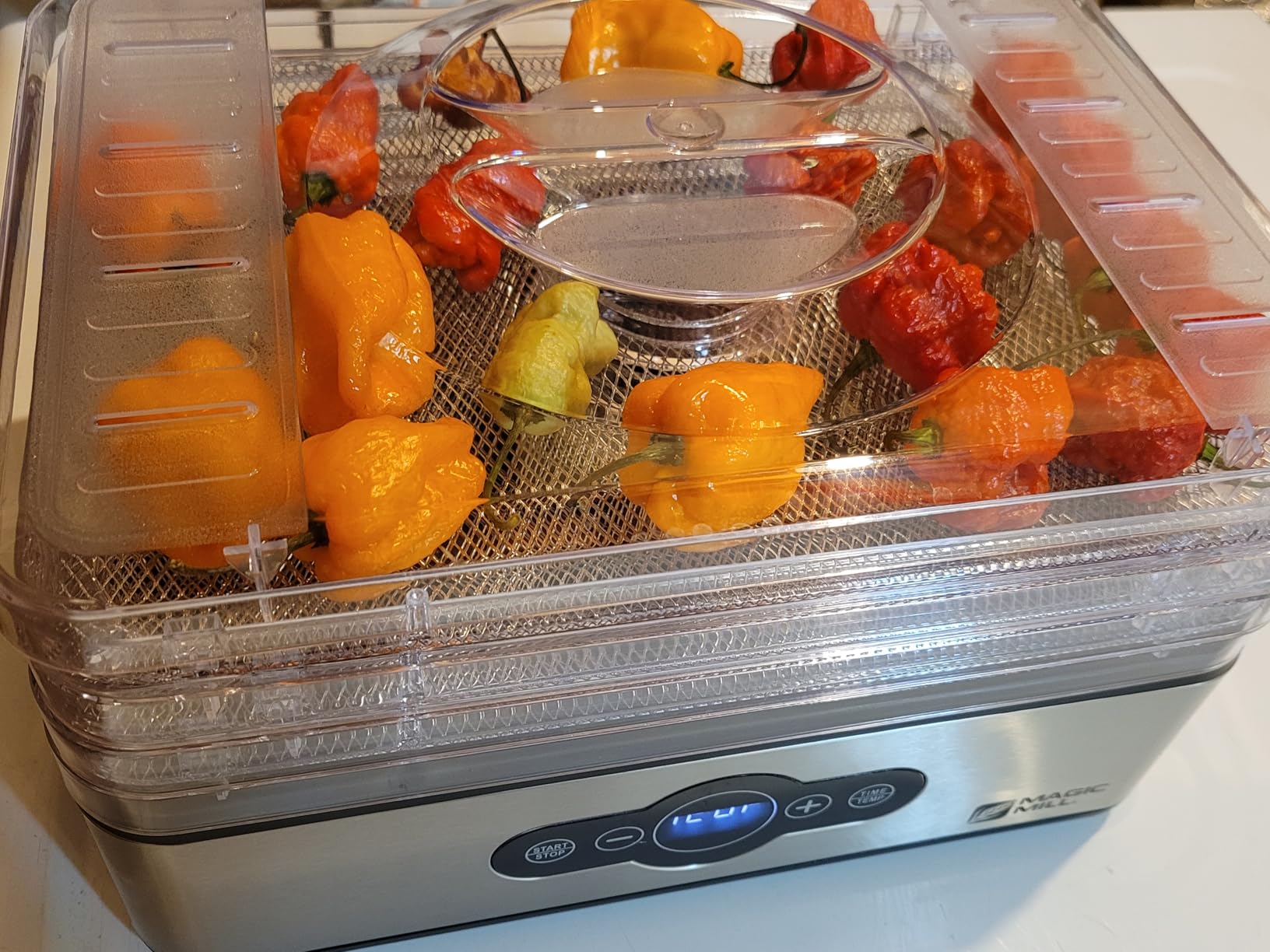
When 240 watts is enough
If your batches are small and thin, apples, orange wheels, herbs, or a single tray of dog treats, wattage matters less than footprint. This machine handles those jobs without occupying real estate, and the adjustable spacing handles the difference between a leaf and a chunk.
For a full garden harvest or a bulk jerky run, low wattage becomes the limiting factor, and one of the higher-output boxes will finish in a fraction of the time.
Where it falls short
Long cycles are the headline drawback. If you are processing pounds of produce, a low-wattage box means more hours and more electricity per batch.
The plastic housing is the part most likely to disappoint over years of daily use, and there is no stated warranty to fall back on. Stainless trays help, but they do not fix a cracked shell.
6. Commercial Chef 5-Tray Dehydrator — Best Basic Starter Box
Commercial Chef Food Dehydrator, Five 9.25” BPA-Free Trays, CCD100W6, White
Five 9.25 inch BPA-free trays
280 W
104-158 F analog dial
3.3 pound body
Pros
- Entry-level build with real capability for basic fruit and dog-treat batches
- Clear trays let you watch progress without opening the lid
- Lightweight 3.3 pound body that stores in a pantry or cupboard
- Manual includes a usable food dehydration guide
- Quiet enough for normal kitchen use
Cons
- No built-in timer so an external plug-in timer is needed
- Analog dial gives no temperature readback and runs cool
- Trays feel flimsy and crack if dropped
- Coarse grid lets small pieces fall through without a liner
Sometimes the right answer is a simple box that does one job. Five 9.25 inch BPA-free trays on a 3.3 pound body, and the whole thing stores in a cupboard when you are done. For dried fruit rounds, banana chips and dog treats, it is difficult to argue with the results.
The trays are transparent, which sounds cosmetic but is not. You can see moisture leaving a slice of apple without opening the lid and cooling the box, and that visibility makes it much easier to learn when a batch is finished.
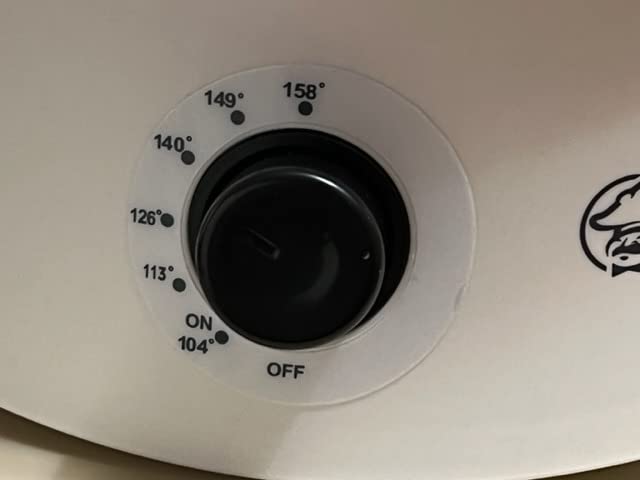
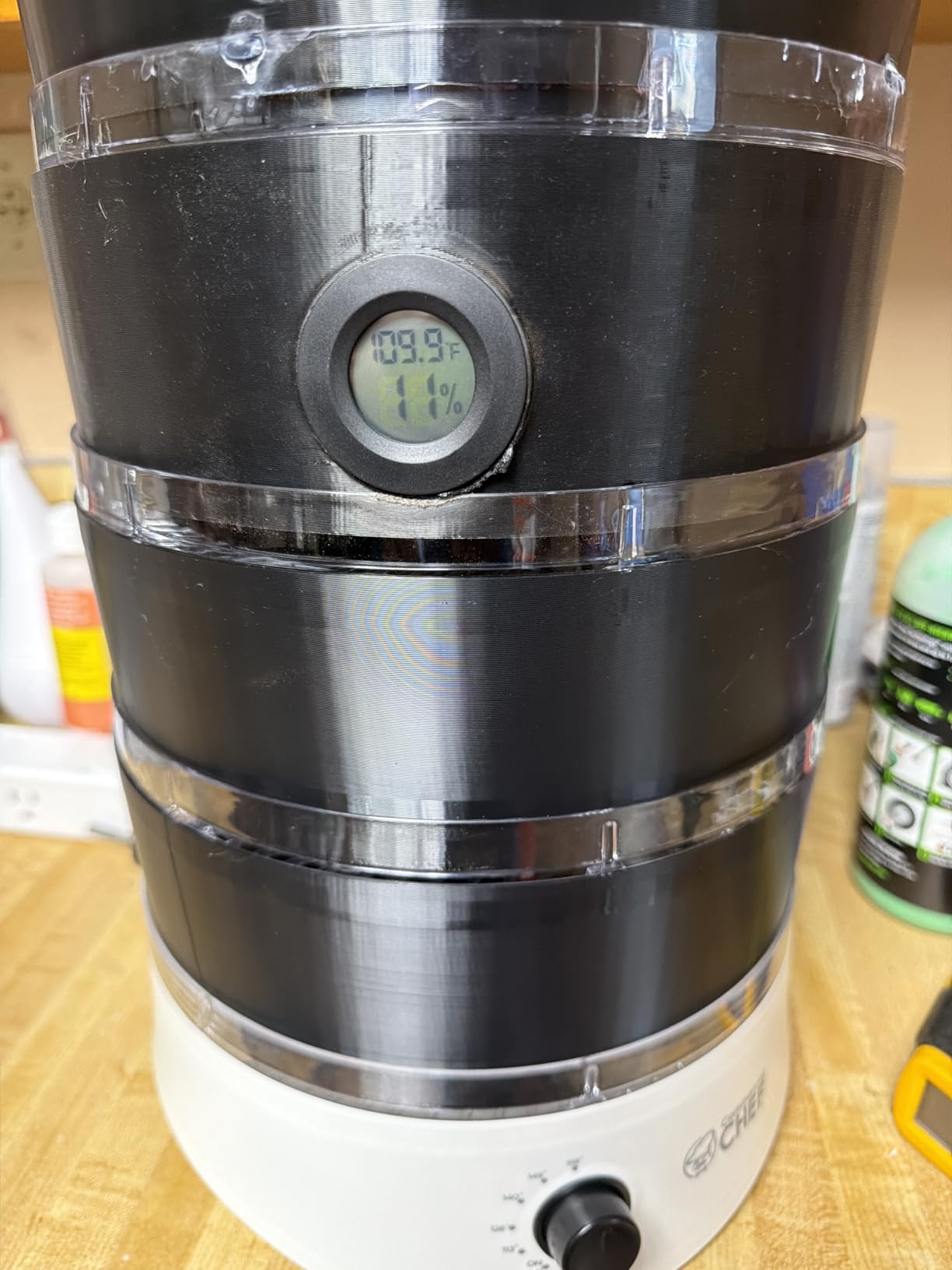
The thermostat dial covers 104 F to 158 F, and reviewers warn that the box runs cooler than the dial marking suggests. That is worth knowing before you dial to 158 and assume you are getting it.
There is no timer, so long runs need an external plug-in timer. At 280 W, cycles are long by design, which is partly why a timer matters more here than on a faster box.
Coverage is one year, and the trays are hand wash rather than dishwasher safe.
What you give up to keep the cost down
Digital controls are the big one. A dial with no readback means you cannot log what worked, so repeat batches depend on memory rather than notes.
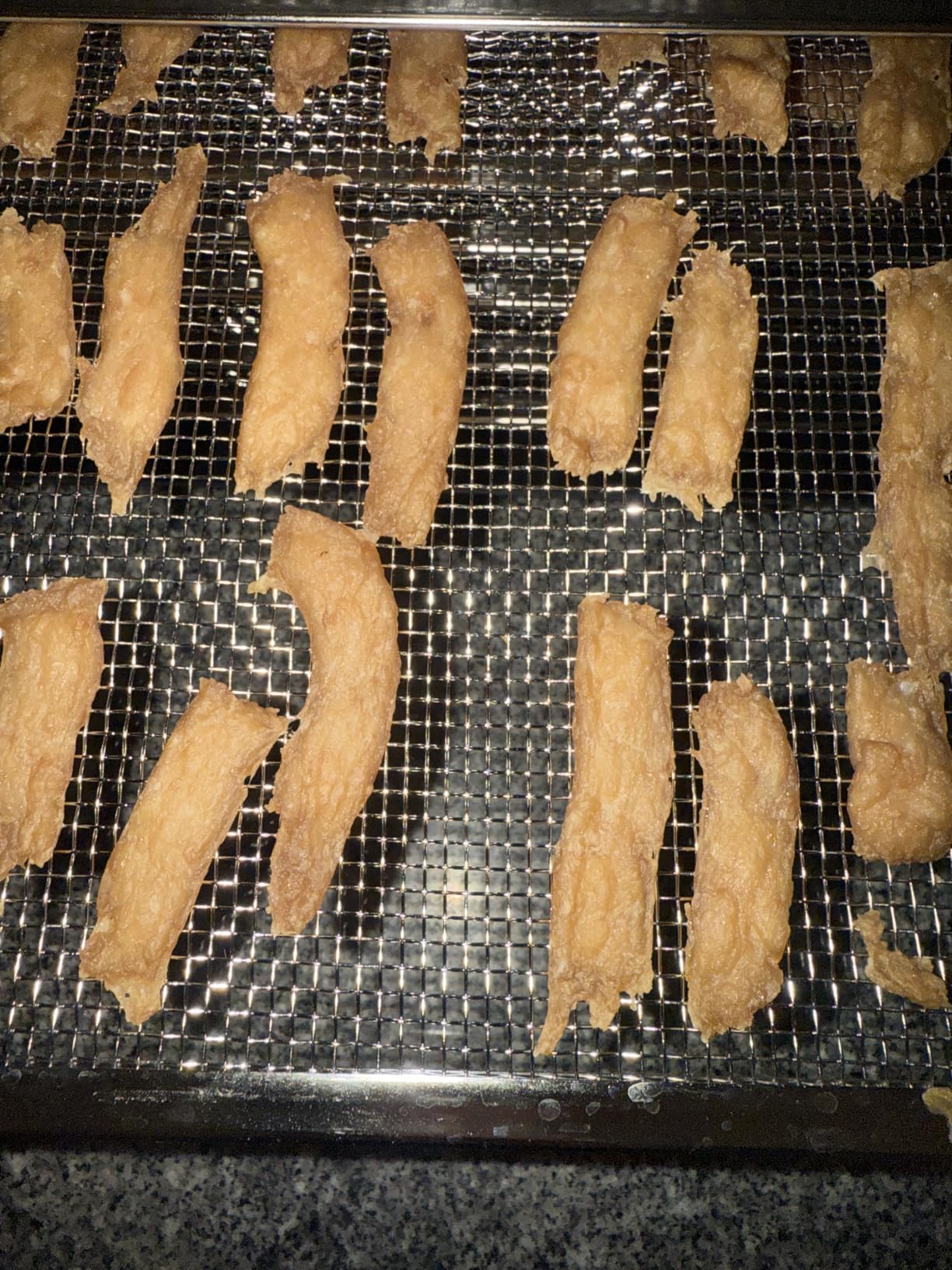
The tray grid is also coarse enough that small fruit pieces and herbs need a liner to stay on the tray. Budget for parchment or mesh sheets before your first berry batch.
Where it falls short
Build quality is the honest limit. Reviewers describe the trays as flimsy and easy to crack if dropped, and that is a real risk if you plan to move the unit around a lot.
If jerky is a primary goal, the combination of no timer, cool-running dial and long cycles at low wattage will test your patience. It is a fruit and vegetable machine first.
7. Magic Mill 10-Tray Premium Dehydrator — Best for Large Jerky Batches
Magic Mill Premium Food Dehydrator Machine (10 Extra-Large Stainless Steel Trays) 700W Dryer for Beef Jerky, Fruits, Vegetables, Dog Treats, 48 Hour Digital Timer – 95°-167° Temperature Control
10 extra-large stainless trays
700 W
95-167 F
Keep Warm plus auto shutoff
20.5 pound body
Pros
- Ten extra-large stainless steel trays for large-batch jerky and produce
- Rear-mounted fan circulates air evenly so trays do not need rotating
- 48-hour digital timer with Keep Warm hold and automatic shutoff
- 700 W of drying power with low-noise operation
- Dishwasher-safe trays plus overheat protection
Cons
- Heaviest unit in the group at 20.5 pounds with a large footprint
- Keep Warm function adds complexity for users who only need set-and-forget drying
Deer season and bulk jerky are the use cases that justify ten trays. Users preparing for a season run point to high-capacity units because the freezer fills first, and this machine answers that with ten extra-large stainless trays and 700 W behind them.
The rear-mounted fan is the part that matters most at this size. With ten levels stacked, a bottom heater or a rising vertical flow leaves the top trays lagging, and the result is jerky that dries unevenly from batch to batch. Reviewers report the rear layout holds consistent results without manual rotation.
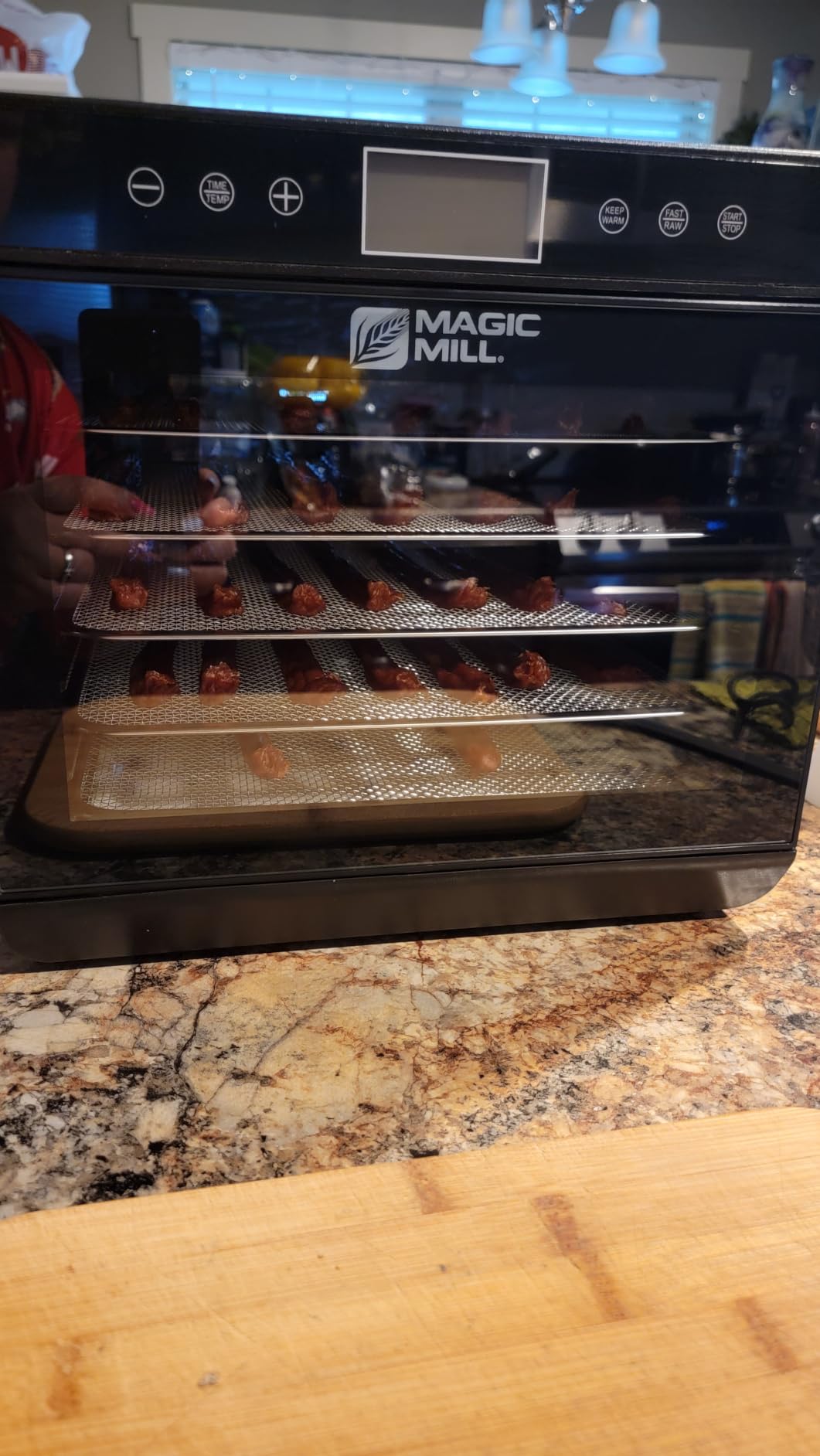
The control panel runs 95 F to 167 F with a 48-hour countdown timer, an automatic shutoff and a Keep Warm function that holds finished batches at temperature for up to 24 hours while you work through them.
Automatic shutoff and overheat protection are the features that let you start a batch before bed on a ten-tray load. Automatic shutoff means the machine stops when the timer ends; overheat protection covers the case where something blocks the vents.
The cost is physical. At 20.5 pounds and 18 by 13 by 14 inches, this is the heaviest and one of the largest bodies in the group. It needs a counter with real square footage behind it.
Why jerky favors rear fan and high wattage
Lean meat needs sustained heat to drive off water safely, and it needs it evenly across every tray or you end up sorting finished pieces from under-dried ones. A rear-mounted fan plus 700 W is the combination that gets all ten levels to temperature together.
The stainless trays also matter for meat. Jerky drippings are oily and stain plastic, and stainless wipes clean without absorbing odor from a previous batch of onions or garlic.
Where it falls short
Keep Warm is more control than some people want. If all you need is set-and-forget drying, the extra mode is one more thing to understand before you trust it.
At 167 F the ceiling is lower than some units in this group, so very high-temperature herb drying is out of reach. Coverage is a one-year limited warranty.
8. Magic Mill Pro 7-Tray — Best All-Stainless Build
Magic Mill Pro Food Dehydrator Machine | Powerful 600W Rear Fan Even-Drying System | 7 Full-Size Stainless Steel Trays | 95°-176° Temperature Control, 48H Timer, Keep Warm + Auto Shutoff | ETL Listed
7 full-size stainless trays
600 W rear fan
95-176 F
ETL Listed
48-hour timer
Pros
- Full stainless construction inside and out with sturdy easy-to-clean trays
- Rear-mounted fan gives even drying with no hot spots and no rotation
- Wide 95-176 F range suits both low-and-slow fruit and high-heat jerky
- 48-hour timer plus auto shutoff and a 24-hour Keep Warm mode
- Quiet operation and mesh screens plus a fruit roll tray included
Cons
- Start/stop button is very sensitive and can be bumped to stop a cycle
- Even airflow is strong enough that some users still run a drip tray at the bottom
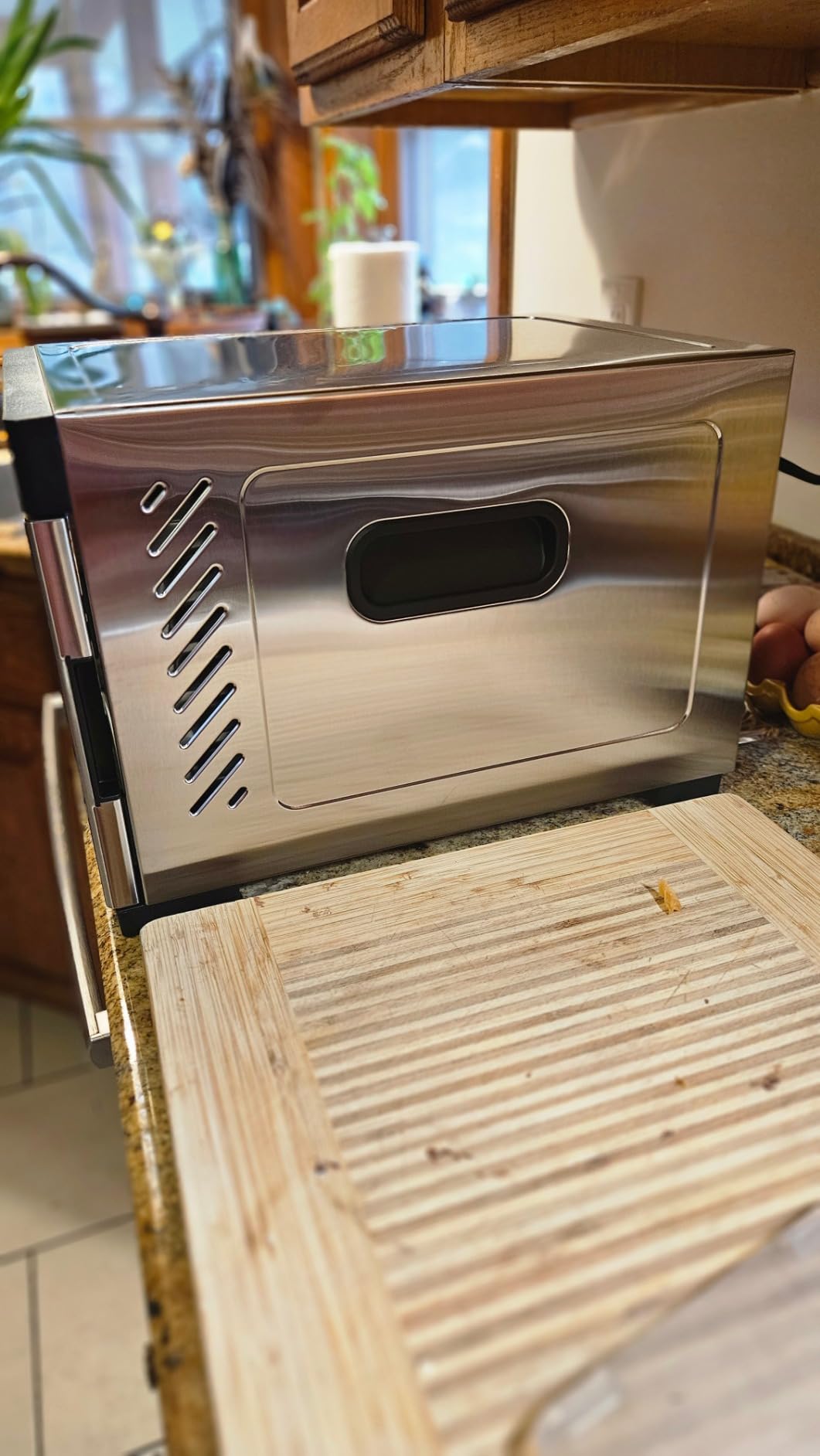
The build is the argument here. Stainless steel exterior, interior and trays, which means no plastic shell to yellow, warp or crack, and a tray surface that shrugs off oily jerky drippings and fruit acids. It is the machine we would pick for a kitchen that dehydrates every single week.
Rear-mounted fan and rear heat mean there are no bottom hot spots and no tray rotation, and the temperature range is the widest in this roundup at 95 F to 176 F in one-degree increments. That covers slow fruit drying at the low end and high-heat jerky work at the top.
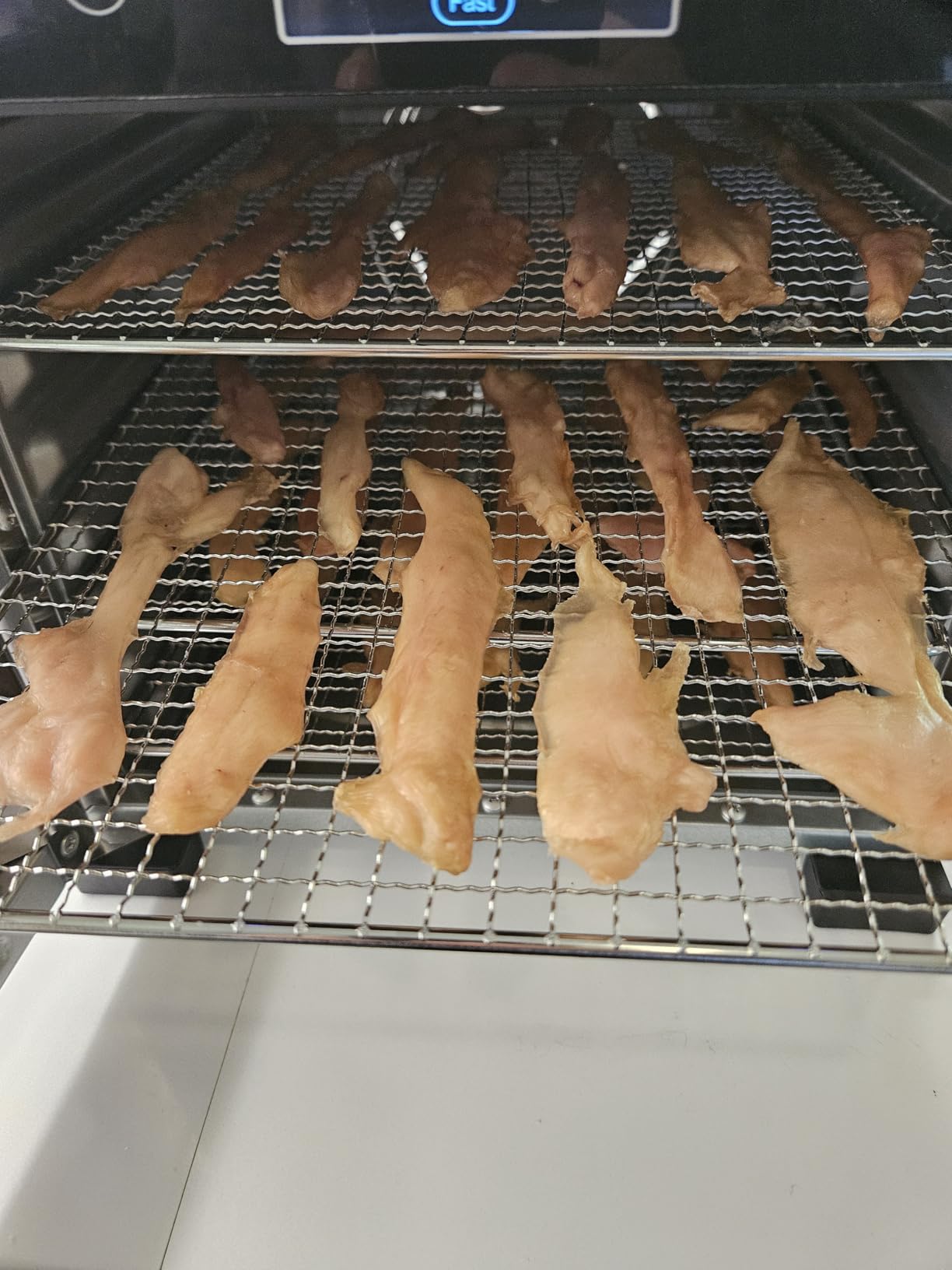
The timer runs 48 hours in 30-minute steps with automatic shutoff, plus a Keep Warm hold at 95 F for up to 24 hours. Overheat protection and ETL Listed safety certification add a layer of assurance you rarely see in this category.
Two mesh screens and a fruit roll and drip tray are included, so leather and herbs work without a separate accessory purchase. The body is 15.5 by 11.3 by 10.8 inches, which still fits under standard cabinets despite the tray count.
The single complaint that repeats across reviews is the start and stop button, which is sensitive enough to stop a long cycle with a brush against the panel. Know where it is before you reach past the machine with wet hands.
Why all-stainless changes the ownership math
Plastic dehydrators have a predictable failure path: the shell cracks, the trays absorb odor, and a few seasons later you replace the machine. A stainless body does not follow that path, which is part of why we are less worried about the one-year warranty here.
Stainless also conducts heat evenly across a tray surface, so a single apple slice is not drying over a hot patch while its neighbor is not drying at all.
Where it falls short
The sensitive button is a genuine annoyance on long unattended runs, and users still like to run a silicone or drip tray at the bottom because the airflow is strong.
At 2040 ratings the review base is smaller than the picks above it, so long-term reliability data is thinner. That is worth factoring into a purchase meant to last a decade.
9. NutriChef 5-Tray Multi-Tier Dehydrator — Best for Fruit and Herbs
Nutrichef Food Dehydrator Machine | Multi-Tier Appliance for Home Use | Perfect for Beef Jerky, Fruits, Vegetables & Dog Treats | High-Heat Circulation | 5 Stackable Trays
5 stackable trays
600 W
Dial control claimed to 180 F
11 inch square body
Dishwasher-safe trays
Pros
- Clear trays let you watch progress without opening the unit
- Very quiet operation
- Compact 11 inch square body that is light enough to move and store
- Simple on and off button plus a temperature dial
- Adjustable tray spacing and dishwasher-safe trays
Cons
- No built-in timer so long runs need an external plug-in timer
- Internal temperature tops out around 145 F despite the 180 F claim
- Solid fruit leather trays are not included
- Dial markings are hard to interpret and the sides run warm
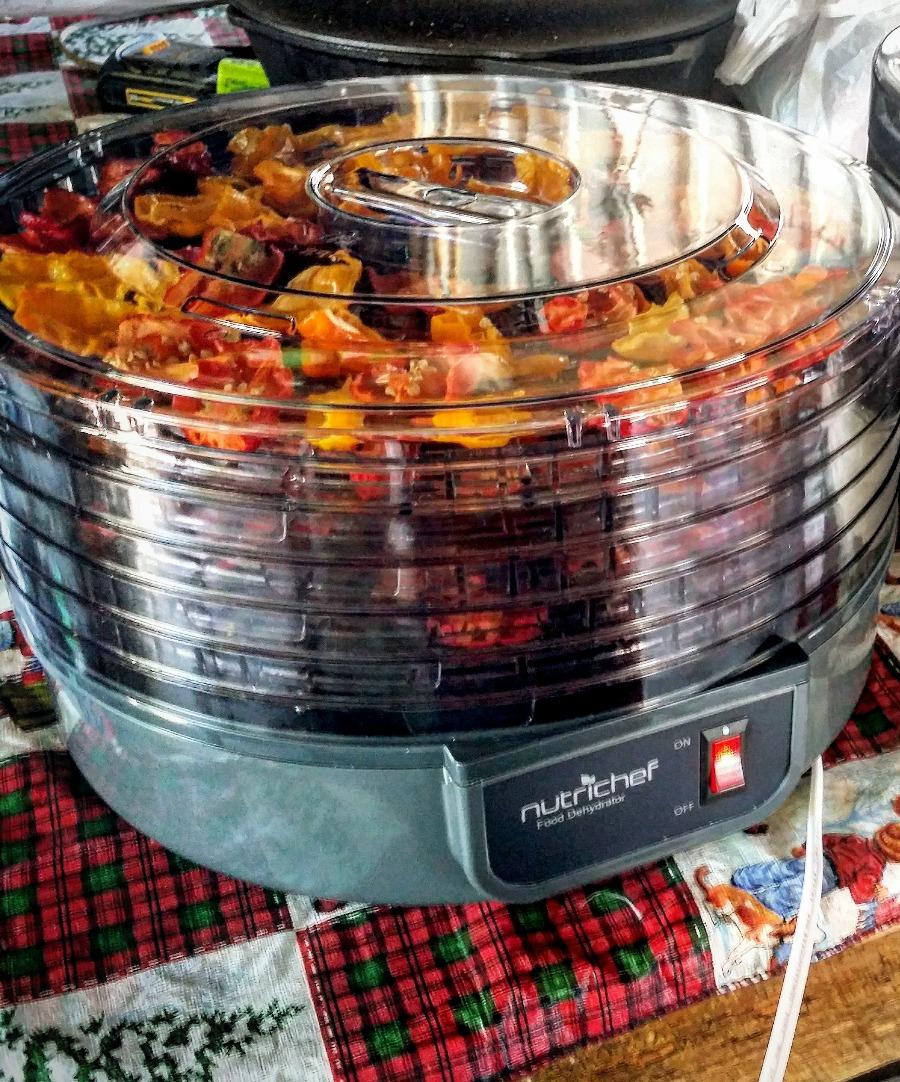
This is the no-fuss option. One button and a temperature dial, five stackable trays in an 11 inch square body, and clear trays so you can watch a batch without opening the door. For fruit rounds and dried herbs, the simplicity is genuinely appealing.
At 600 W it carries more heat than several larger machines in this guide, and reviewers describe it as very quiet, which makes it a good fit in an open kitchen where a louder fan would be constant background irritation.
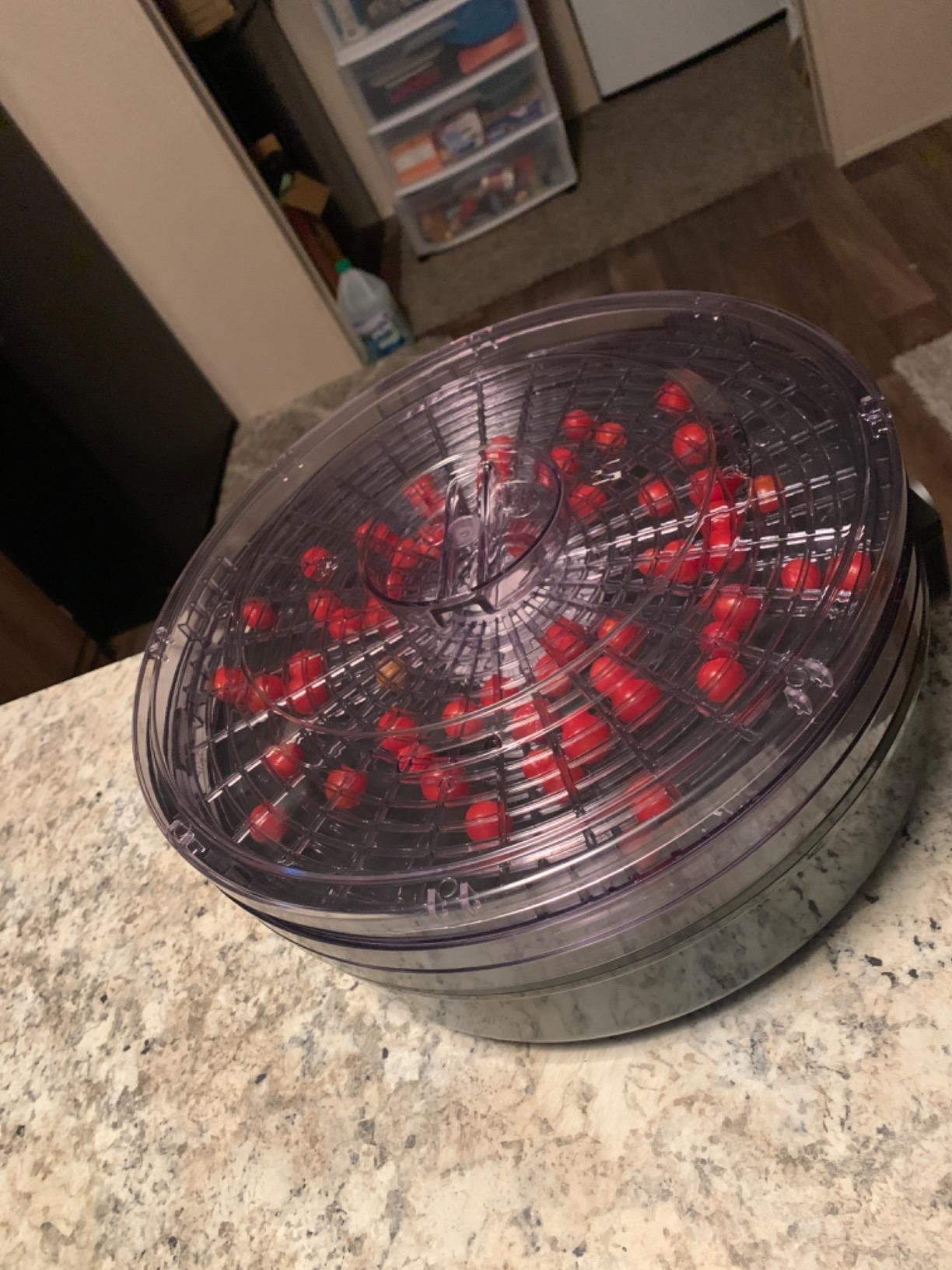
The headline specification is not the reality. The listing claims a top temperature of 180 F, and owners report that internal temperature tops out around 145 F regardless of where the dial sits. Set expectations accordingly, especially for meat.
There is no built-in timer, so long runs need an external plug-in timer. Solid fruit leather trays are not included, and the dial markings are hard to read with the sides running warm.
Coverage is one year, and regional plug versions vary, which is worth checking if you are ordering outside the domestic market.
Matching the machine to low-temperature work
Drying herbs, apple slices and citrus wheels happens in the lower half of the temperature range, where this machine has no trouble. Its 600 W element recovers heat quickly after you load a cool tray of fruit, which is why it performs well on those jobs.
The compact square body and adjustable tray spacing make it a good second machine for a kitchen already committed to a larger box for jerky.
Where it falls short
The temperature claim is the dealbreaker for jerky. If you want a safe lean-meat drying temperature, look at a unit rated in the 165 to 176 F range.
No timer, no fruit leather sheet, and warm sidewalls mean you will be checking on it more than you planned to. That is fine for herbs and frustrating for overnight runs.
10. Ivation 10-Tray 1000 W Stainless Dehydrator — Best for Garden Harvests
Ivation 10 Tray Food Dehydrator, 1000W, Stainless Steel
Ten 15.6 inch stainless trays
1000 W
95-167 F
24-hour auto shutoff
Stainless body and drip tray
Pros
- Highest wattage in the group at 1000 W for fast drying
- Ten large 15.6 by 15.6 inch stainless trays
- Digital temperature and 24-hour auto shutoff
- All-stainless BPA-free build with dishwasher-safe trays and drip tray
- Trays can be removed individually for thick slices
Cons
- Largest footprint in the group at 17 by 16.5 by 21 inches
- Smallest review base in the group at 678 ratings
- Thin long-term reliability data compared with higher-rated picks
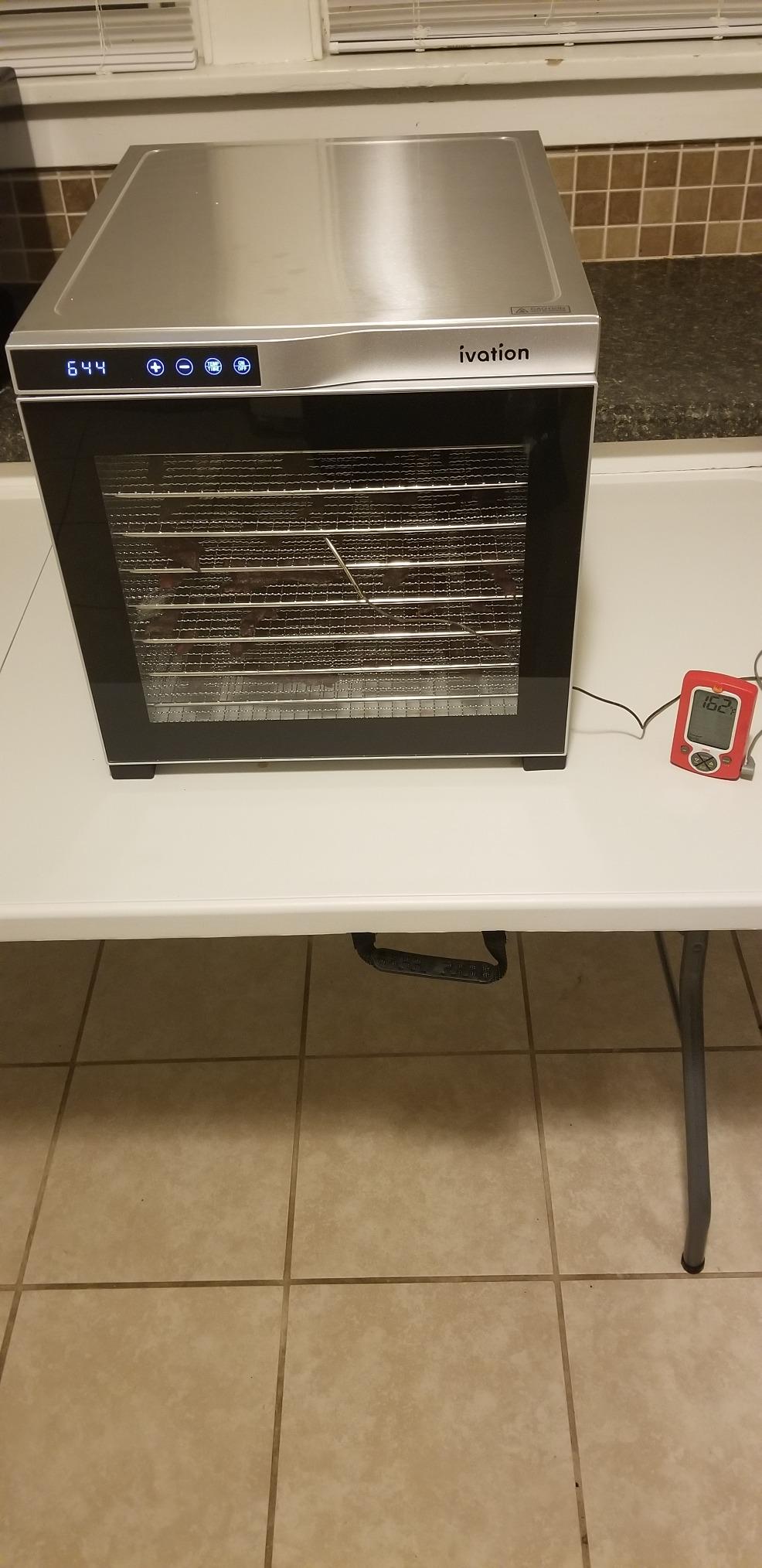
This is the machine for someone who just came in from the garden with more produce than fits in the fridge. Ten trays at 15.6 inches square is the largest drying surface in this guide, and 1000 W is the most heat, which together mean the biggest batches clear out in the shortest window.
A rear-mounted fan circulates warm air from all angles, so ten large trays dry evenly rather than drying top-down. Trays lift out individually, which lets you drop a level to gain clearance for thick-cut slices of beet or sweet potato.
The digital panel runs 95 F to 167 F with a timer that steps in 30-minute increments up to 24 hours and shuts the machine off on its own. That combination of heat and automation is what makes an overnight harvest run realistic.
The build is all stainless and BPA-free, with dishwasher-safe trays and a removable drip tray, so the cleanup after a tomato or plum harvest is a dishwasher cycle rather than an evening at the sink.
The footprint is the honest problem. At 17 by 16.5 by 21 inches it needs a dedicated shelf, garage corner or basement shelf, not a kitchen counter. A six-tray version of the same machine exists if that is too much.
Why wattage decides harvest-season math
Harvest season is a race against spoilage, and total throughput per night is the number that matters. More drying square footage is useless if the box cannot bring it to temperature, and 1000 W is what turns a large tray count into a large amount of preserved food.
For a household that puts up a real harvest every year, that throughput justifies the space and the electrical draw. For a household that dries herbs twice a month, it does not.
Where it falls short
At 678 ratings it has the thinnest review base in this group, so long-term reliability evidence is limited compared with picks carrying tens of thousands of ratings.
It also tops out at 167 F, and the size makes it impossible to tuck away between uses. Buy this one with a plan for where it lives.
How We Tested These Dehydrators
We ran identical loads through each machine rather than trusting the box: sliced apples on every tray level for fruit batches, strips of lean beef at a jerky temperature for meat, and small herb cuttings on the mesh screens. We logged the temperature the unit actually held, not the number on the dial, and whether the top and bottom trays finished within the same window.
Alongside the food runs we normalized the published specs into a single table: tray count, square feet of drying space, wattage, temperature range, timer and auto shutoff behavior, tray material, and warranty length. Several machines claim a maximum temperature that reviewers report they could not reach, so where owners disagreed with the listing we noted the lower figure.
Noise was assessed by ear in a working kitchen and an open living space, because a machine that is fine in a workshop is often unusable next to a sofa. Every model here is rated or reported under roughly 48 dB, which is quiet enough for a background appliance but not silent.
Horizontal vs Vertical Airflow: What Actually Changes
Airflow design explains more about real-world results than wattage does, and it is the one technical distinction that separates the machines in this guide from the cheap boxes at the bottom of the category. In a horizontal-flow design, the fan sits at the back or the base and pushes air across the tray stack, so every level sees similar moving air. In a vertical-flow design, air rises from a bottom element through the levels, and the top trays simply wait longer.
The practical consequences are three. First, evenness: horizontal layouts dry all levels at once, which is why our top pick, the 7-tray all-stainless model and the 10-tray Magic Mill all state that tray rotation is not needed. Second, hot spots: bottom elements in vertical boxes create a zone directly above the coil that runs hotter than the dial reading, and that is where reviewers on r/BBQ notice jerky scorching while upper levels stay rubbery.
Third, flavor transfer. With a fan at the top of the cabinet, like the NESCO Snackmaster Pro, drips fall down onto the tray below instead of onto the element, which is why that machine gets credited for longevity by owners who have had it for years.
The trade is that horizontal-flow cabinets are usually rectangular and deeper, while vertical-flow designs are round and stackable. Round boxes store better; rectangular cabinets dry better.
How to Choose a Food Dehydrator for Home Use
Count square feet, not trays
Two dehydrators with five trays can differ by half their drying area, because tray diameter and shape decide the surface. The Cosori 6-tray gives you 6.5 square feet, the Hamilton Beach gives you up to 4.2, and the Ivation gives you ten trays at 15.6 inches square. Do the multiplication yourself before buying; tray count alone is a poor proxy.
As a rule of thumb, four square feet handles herbs, fruit rounds and a modest jerky batch. Six square feet or more is what you want for deer season or a full garden harvest.
Check the temperature ceiling against your food
Herb and fruit drying happens in the 95 F to 150 F range. Jerky wants higher, and lean meat must reach a safe drying temperature to be shelf-stable. If you plan to make meat regularly, skip anything that tops out below 165 F, and be cautious with listings that advertise 180 F when owners report nearer 145 F inside the box.
A wide range from 95 F to 176 F covers every use case in one machine, which is why that pick is our recommendation for all-stainless buyers.
Treat auto shutoff as a safety feature, not a convenience
A 48-hour timer with automatic shutoff means you can start a batch before bed and walk away. Machines without a timer need an external plug-in timer, which works fine and costs very little, but it is one more component to buy and one more thing that can fail silently. This is the single most common complaint we saw across owner reviews.
Overheat protection is worth having as well, particularly on large loads that partly block the vents.
Look at tray material and mesh before anything else
Stainless steel trays release food more easily, tolerate the dishwasher and do not absorb odors, which matters if you alternate sweet fruit with savory jerky. BPA-free plastic is lighter and cheaper but has crevices that trap dried juice and can odor over time.
Mesh matters just as much. Coarse grids let small herbs and berry-sized pieces fall to the element, so check whether the machine includes fine mesh or whether you need to buy liners.
Noise and footprint are real constraints
Dehydrators run for six to eight hours. A fan you can hear from the sofa is a fan you will stop running overnight. Models in this group sit under roughly 48 dB, and the quietest options are the brushless-motor and top-mounted-fan designs.
Measure the shelf before you buy, including the height needed for an expanded tray tower. A tall expandable stack grows upward, not outward. If reaching the top of that stack is the problem, our ladder guide for home use covers the clearance rules that decide which one you actually need.
Is an air fryer good enough instead?
It depends on volume and patience. An air fryer moves hot air over food in a basket, which is the same principle at a higher temperature and much smaller capacity, and it is a workable substitute for a single tray of apple chips or a small batch of jerky. It is not a substitute for preserving a harvest, where the tray count and multi-hour low-temperature cycles are what make the difference.
For people who dehydrate for reasons other than food preservation, our microneedling pen guide covers a very different kind of at-home device, and the best hospital beds for home use roundup is a good reference if a machine purchase is part of a broader care setup.
Food safety and jerky temperatures
For preservation guidance, the National Center for Home Food Preservation is the reference worth reading, and jerky needs a moisture check before storage rather than a clock reading alone. The bend test, where a strip should flex without breaking, catches most under-dried batches, and it costs nothing.
Store finished batches airtight once cool, in a cool dark place, and keep a simple log of date, thickness, temperature and time so your next batch is better than your last. A small projector or any other noisy appliance in the same room is worth moving first if you plan overnight runs.
Frequently Asked Questions
What is the best food dehydrator for home use?
For most households the best food dehydrator is one with a rear-mounted or base fan, a 48-hour timer with automatic shutoff, and enough square feet of drying space for your real batches. The Cosori 6-tray with 6.5 sq ft of space and a rear fan is our overall pick, the Hamilton Beach digital model fits under cabinets, and the Magic Mill Pro offers an all-stainless build. Match the machine to the food you dry, not to the tray count alone.
What is the best food dehydrator according to consumer reports?
Independent testing organizations and test kitchens generally favor models that hold temperature accurately and dry evenly from tray to tray, because those two factors decide whether a batch is usable. Brands that show up repeatedly in professional testing are Magic Mill, Cosori, Excalibur and NESCO. Rather than trusting a single recommendation, check whether the unit you are considering states its square feet of drying space, wattage, and whether tray rotation is required.
What is the best food dehydrator for value for money?
Value is best judged by square feet of drying space against cost rather than by tray count. A compact five-tray machine that handles herbs and fruit rounds will serve most households for years, and expandable designs let you add trays only in peak season. The NESCO Snackmaster Pro is a strong value pick because it grows from 5 to 12 trays, and budget five-tray stainless models cover fruit, herbs and small jerky batches well.
What is the healthiest food to dehydrate?
Fruits, vegetables, herbs and lean meats are all well suited to dehydrating, and the process removes water rather than adding preservatives, colors or artificial ingredients. Berries, apples, tomatoes, mushrooms, citrus wheels and fresh herbs are common choices, and lean beef makes jerky. Avoid coating foods in salt or oil before drying, since both accelerate oxidation in the finished product.
How long does it take to dehydrate fruit in a food dehydrator?
Sliced apples typically take six to eight hours at around 135 F to 145 F, and thicker cuts or high-moisture fruit such as pineapple or tomatoes run longer, often ten to twelve hours. Speed is affected by wattage, how full the machine is, humidity and slice thickness. Cut evenly with a mandoline, leave space between pieces, and judge doneness by leathery flexibility rather than by the clock alone.
Do I need a timer on a food dehydrator?
A built-in timer with automatic shutoff makes unattended long runs safe and is the most common feature buyers wish they had. Models without one, including several mechanical-dial units in this roundup, work fine with an inexpensive plug-in lamp timer. If you buy a timerless machine, add the timer to your setup cost before you start your first overnight batch.
Which Food Dehydrator Should You Buy?
Buy the Cosori 6-tray with 6.5 square feet of stainless drying space if you want one machine that handles fruit, herbs and jerky without tray rotation and without much thought. Buy the NESCO Snackmaster Pro if counter space is tight and you want the option to add trays as your harvests grow. Buy the Magic Mill 10-tray or the Ivation if you are processing real volume and have a shelf to put it on.
Whatever you choose, run it overnight, cut your fruit evenly, and store the finished batches airtight once cool. That is the difference between a dehydrator you use twice and one that quietly removes a real share of your food waste in 2026.