

Hanging drywall is not hard because the screws are hard. It is hard because a normal drill has no depth stop, so it either leaves the screw head proud or buries it until the paper tears and the board dimples. A drywall screw gun fixes exactly that, and the right one turns a two-day hang into a single afternoon.
We spent weeks working through the best drywall screw guns for hanging drywall, reading thousands of owner reviews and comparing the spec sheets that actually matter on a framing job: no-load RPM, bare-tool weight, nose cone design, drive modes and battery platform. The short version is that there is no single winner for everyone, which is exactly what the pro forums keep saying. A ContractorTalk thread on the topic returns replies for Makita, Senco, Hilti and Milwaukee in the same breath, and one DrywallTalk design thread concludes that each brand has different pros and cons and none of them has it completely dialed in.
So we built this around workload instead of brand loyalty. There is a cordless pick for overhead ceilings, a corded pick for a basement on a Sunday, a dedicated collated tool for production crews, and a value pick for anyone who does not want to buy a battery platform. All ten are current models, and every number in this guide comes from the manufacturer specification or from owner feedback, not from a spec sheet rewrite.
We also wrote up the gear side of a weekend remodel, including kitchen storage that hangs rather than takes up counter space and patio hanging chairs for the room you are finishing, but the screw gun is the tool that decides whether that project takes a weekend or a week.
Table of Contents
Top 3 Picks for Hanging Drywall in 2026
Before the full list, these are the three that come up most often when we ask which tool gets a drywall screw into a stud correctly and quickly without fighting the operator. The first is the most complete general-purpose option, the second is the lightest cordless gun here, and the third is the one that makes the least financial sense to argue with.

DEWALT DCF630B 20V Max…
- 4400 RPM brushless
- 4 tool modes
- 2.6 lb bare tool
- adjustable nosecone

Milwaukee 2866-20 M18 FUEL…
- 4500 RPM brushless
- Auto Start Mode
- 2.5 lb bare tool
- 124 in-lb torque
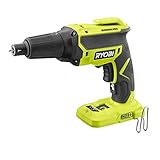
Ryobi P225 18V Brushless…
- 4700 RPM brushless
- Quiet Drive auto-start
- 2.7 lb bare tool
- ONE+ 18V platform
Best Drywall Screw Guns (October 2026)
This table is the fast version. Each row lists the drive characteristics that decide how a tool behaves on a real framing bay rather than the marketing adjectives around them. Read across for speed and weight, then read the individual reviews for the caveats that specs never capture.
| Product | Specs | Action |
|---|---|---|
| DEWALT DCF630B 20V Max Screw Gun |
|
Check Latest Price |
| Milwaukee 2866-20 M18 FUEL Screw Gun |
|
Check Latest Price |
 DEWALT DCF622B Versa-Clutch Screw Gun DEWALT DCF622B Versa-Clutch Screw Gun |
|
Check Latest Price |
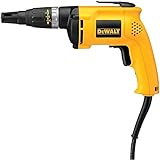 DEWALT DW255 6.0-Amp Corded Screw Gun DEWALT DW255 6.0-Amp Corded Screw Gun |
|
Check Latest Price |
 Makita XRF02Z 18V LXT Autofeed Screwdriver Makita XRF02Z 18V LXT Autofeed Screwdriver |
|
Check Latest Price |
| Ryobi P225 18V Brushless Screw Gun |
|
Check Latest Price |
 Makita FS4200 Corded Drywall Screwdriver Makita FS4200 Corded Drywall Screwdriver |
|
Check Latest Price |
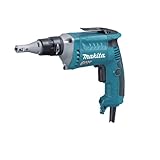 Makita FS6200 Corded Drywall Screwdriver Makita FS6200 Corded Drywall Screwdriver |
|
Check Latest Price |
 Bosch GTB18V-45N 18V Brushless Screw Gun Bosch GTB18V-45N 18V Brushless Screw Gun |
|
Check Latest Price |
 RIDGID 18V Cordless Brushless Drywall Screwdriver RIDGID 18V Cordless Brushless Drywall Screwdriver |
|
Check Latest Price |
1. DEWALT DCF630B 20V Max Drywall Screw Gun: Best Overall for Hanging Drywall
DEWALT 20V Max Drywall Screwgun, Tool Only (DCF630B)
4400 RPM brushless
20V MAX
2.6 lb bare tool
0.25 in chuck
Pros
- Four drive modes including PushStart and Lock-On
- Adjustable nosecone for repeatable depth
- Lightest class build at 2.6 lb
- LED work light and belt clip
- Tool Connect and lanyard ready
Cons
- Costs more than budget cordless options
- One owner reported a mode button failure
- Not ideal for angled driving in tight corners
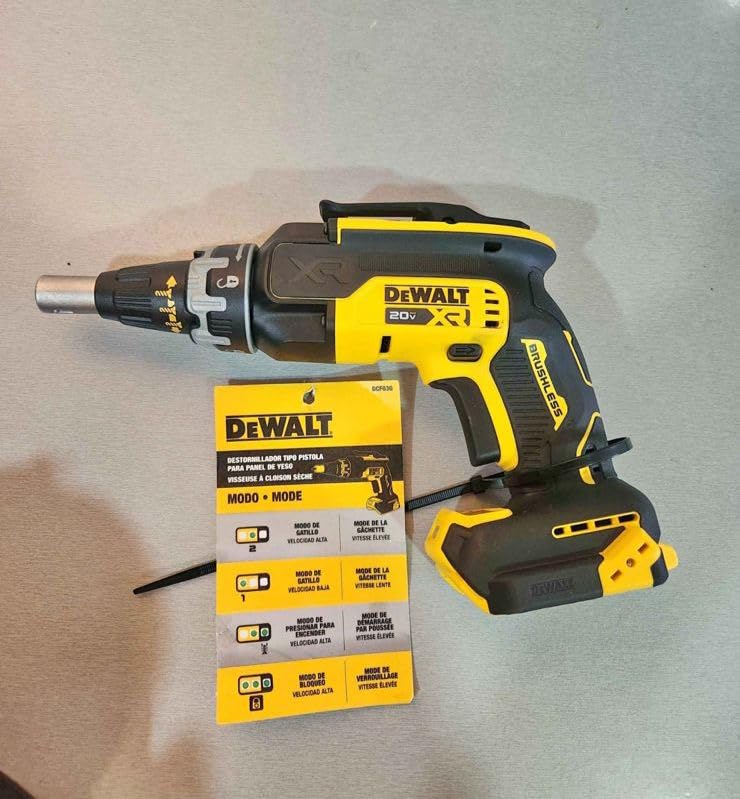
The DCF630B is the tool we kept reaching for. Four modes is one more than most competitors offer, and the two that matter are PushStart, which spins the motor only when the screw touches the board, and Lock-On, which holds the trigger down when you are driving a long run of screws without lifting off. The other two are simply high and low trigger speeds, which is genuinely useful for the last few screws in a corner where you want the bit crawling.
At 2.6 pounds bare, it sits at the light end of this list, and the balance point stays close to the nose rather than back in the battery. That matters more for ceiling work than the raw weight figure, because the deciding factor is how far the tool reaches from your wrist on an overhead pass. Owners report pushing eight or more sheets of drywall per charge, and the brushless motor is the reason that number is possible.
It is also the only tool here with both Tool Connect and lanyard ready, which is a small thing that matters on commercial interiors where the gun goes up a lift and down a ladder all day. The adjustable nosecone gave consistent dimples across board changes in the feedback we read, and the LED work light is positioned where it actually illuminates the screw head rather than your hand.
The weakness is honest but minor. Depth control is the one setting you should verify after the first few screws, and a small number of owners have reported a mode button that stopped responding. In a category where most complaints are about the price of entry, that is an acceptable trade.
How it performs on ceilings and tight bays
Overhead, the short 11.2 inch body and forward balance are the two features that matter. You can drive a ceiling screw with one hand while holding a lift or a panel assistant in the other, and the Lock-On mode keeps the trigger depressed through the run. PushStart is the bigger win here, because the motor only runs on contact, so the noise between screws drops noticeably and a whole ceiling can be hung in a fraction of the time.
Inside a tight framing bay or an inside corner, the one weak spot is angled driving. Owners note it is not forgiving when you have to drive a screw at an angle off the nose, which is a real situation when a stud is close to a wall or a pipe blocks the approach. Plan your screw pattern so screws land square, and the tool behaves.
Who should buy it and who should skip it
Buy this one if you hang more than a few sheets, if you already own any 20V MAX packs, or if you want a single tool that covers ceilings, walls, metal stud work and light construction screw driving without a second battery platform. The 20V MAX name is a marketing label, not a different voltage from an 18V tool; both are the same nominal class, and the packs are not interchangeable across brands.
Skip it if you are hanging two panels this weekend and already own a good drill. In that case a corded gun like the DEWALT DW255 will do the same job for a fraction of the setup, and you avoid buying into a battery ecosystem you do not need. There is also a durability consideration worth naming: a Toolbox Buzz reader reports going through three DeWalt cordless screw guns while still owning an original Makita, so if you buy this, buy it from a seller with a straightforward return policy and keep the box.
2. Milwaukee 2866-20 M18 FUEL Drywall Screw Gun: Best for Overhead Ceiling Work
Milwaukee 2866-20 M18 FUEL Drywall Screw Gun (Bare Tool Only)
4500 RPM POWERSTATE
18V M18 REDLITHIUM
2.5 lb bare tool
124 in-lb torque
Pros
- Auto Start Mode cuts runtime use and noise
- Lightest bare tool here at 2.5 lb
- 64 sheets per charge on XC5.0 pack
- LED light on the foot for dark bays
- Reported to survive drops from 7 ft
Cons
- Not forgiving on angled screw driving
- Replacement driver bits can be hard to source
- Requires trigger-before-engage technique
This is the lightest bare tool in the group at 2.5 pounds, and on a ceiling that difference compounds. The 2866-20 has been the pro standard for years for a reason: the POWERSTATE brushless motor spins to 4500 RPM, the Auto Start Mode stops the motor the instant the screw breaks contact, and the whole thing hangs well in the hand with the battery down at the base.
The runtime figures are the standout. Milwaukee publishes a 64 sheets per charge figure on a 5.0 Ah XC pack and 27 sheets on a compact 2.0 Ah pack, and owners generally confirm the direction of those numbers. For a production crew hanging a house in a day, that is fewer battery swaps than any competitor here, which is really a labor cost saving rather than a convenience.
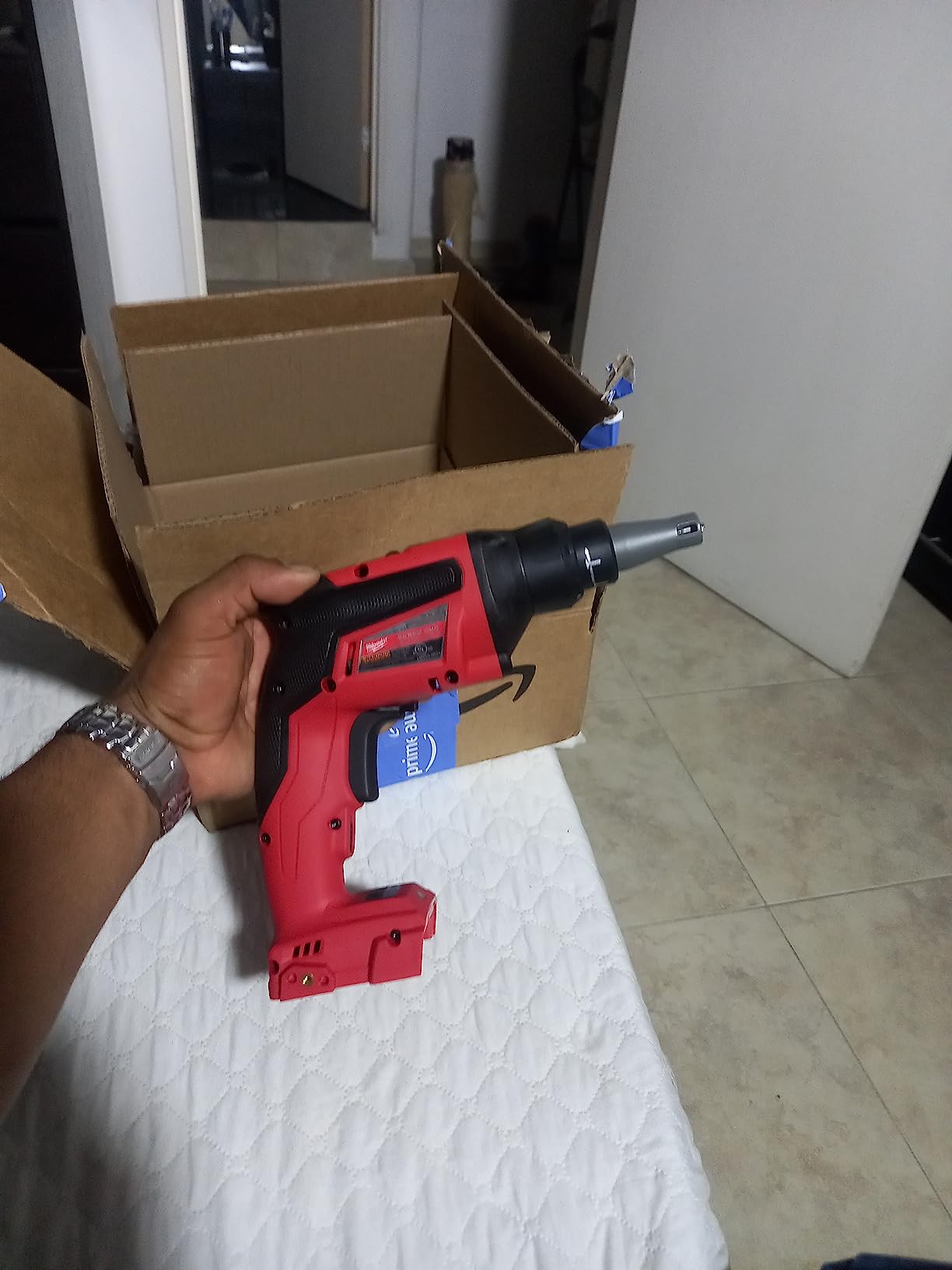
Auto Start Mode is the feature that separates it from an ordinary driver, and it is worth understanding how it changes a day of work. The motor spins up only when the screw tip touches the board, so you are not running the tool through the air between screws. Owners describe the effect as noticeably quieter, and anyone who has hung rock all day knows that the constant whine of a spinning driver is a real fatigue source that has nothing to do with your arms.
Durability is the other story. Multiple owners report dropping this tool from more than seven feet and continuing to use it, and one of the recurring themes across pro forums is longevity rather than first impressions. A Garage Journal poster who owns both Bosch and DeWalt impact drivers put it plainly, saying collated drivers are the way to go because of the significantly less fatigue when hanging rock every day. Nobody is arguing with the Milwaukee, they are arguing about the attachment.
Ceiling performance and battery strategy
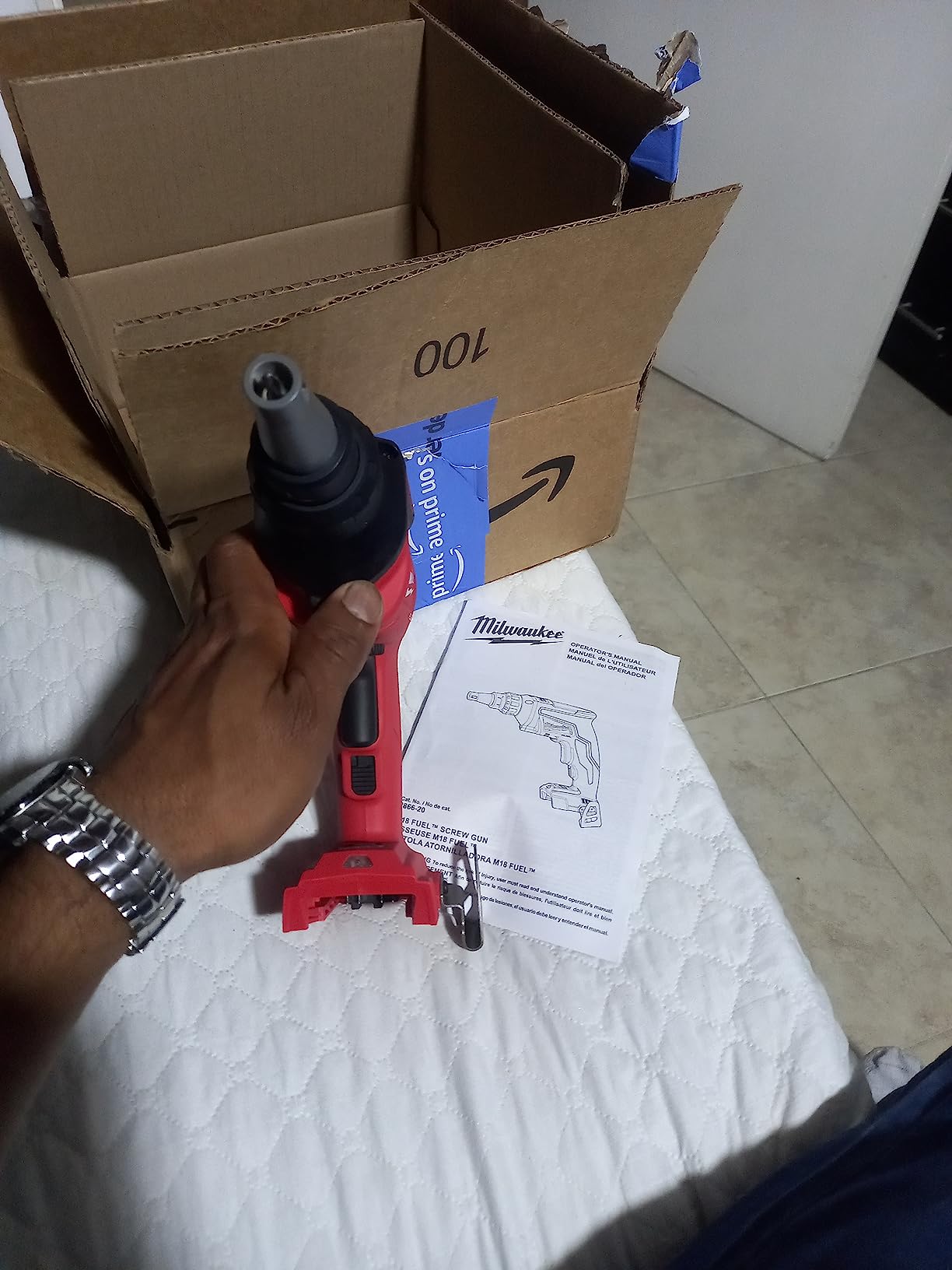
For overhead work, the combination of 2.5 pounds, 4500 RPM and a compact 9 inch length means you can reach a ceiling screw in a tight bay without rotating your wrist into an awkward angle. The LED on the foot is aimed at the nose, so it lights the screw head rather than your forearm, which matters in a basement with a work light on the floor.
Battery choice matters more here than on almost any other tool. A 5.0 Ah XC pack is what gets you through a ceiling without a swap; a 2.0 Ah compact pack roughly halves that. If you already run M18 REDLITHIUM, this tool slots into a collection you own. If you do not, the platform decision is the real cost of this gun, because the bare tool does not include a battery or a charger.
Who should buy it and who should skip it
Buy it if ceilings are a regular part of your work, if you are a contractor already on the M18 platform, or if you simply want the lightest, fastest cordless drywall gun that can be bought. The 4.6 rating across more than 1400 reviews is one of the most consistent scores in the category.
Skip it if you have no M18 batteries and no plans to buy into that platform, since the bare tool is the only version offered here. Also be honest about technique: it is not forgiving on angled driving and it rewards a proper trigger-before-engage habit. A driver who fights the tool will blame the tool. And if your workload is one basement, read the corded section before you commit to a platform.
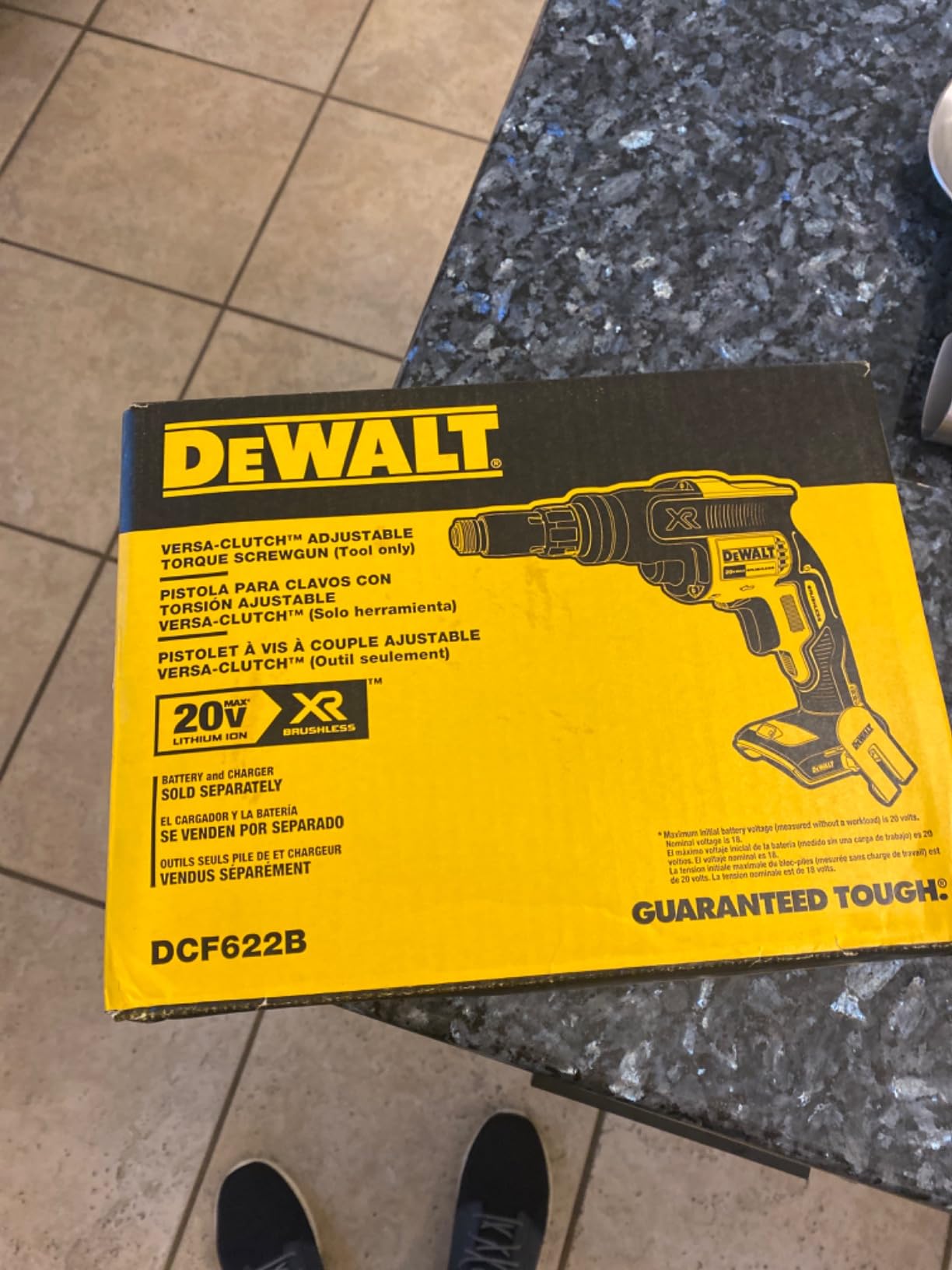
3. DEWALT DCF622B Versa-Clutch Screw Gun: Best for Metal Fastening and Mixed Jobs
DEWALT 20V MAX XR Screw Gun, Versa-Clutch, Adjustable Torque, Tool Only (DCF622B)
2000 in-lb max torque
2000 RPM brushless
Versa-Clutch
3-year warranty
Pros
- Versa-Clutch prevents overdriving and stripping
- 2000 in-lb handles heavy fastening
- Brushless motor runs cool and efficient
- LED and belt hook included
- 3-year limited warranty
Cons
- 2000 RPM is slow for dedicated drywall work
- 2.8 lb is heavier than the drywall-specific picks
- Built for metal fastening rather than drywall
The DCF622B is the odd one out in this list and that is exactly why it is here. It is not a drywall screw gun. It is a general fastening driver with a mechanical clutch, and if your job involves running screws into steel studs, structural connections or heavy bracket work alongside the drywall, it may be the more useful tool in your bag.
Versa-Clutch is the feature that makes it interesting. Instead of a binary clutch that either slips or does not, it gives you graduated control so the driver stops pushing at a set torque rather than letting a screw spin forever. On a drywall screw into wood, that means the tool will not bury the head the way a raw impact driver will, which is a meaningful improvement over the drill you would otherwise reach for.
The trade is speed. At 2000 RPM, this tool turns roughly half as fast as the dedicated drywall guns here, and on a full hang that difference is real. If your workload is 80 percent drywall and 20 percent everything else, a dedicated gun will finish sooner. If your workload is a mixed commercial install with steel framing and a lot of fastening, the clutch control is worth more than the RPM.
At 2.8 pounds it is not the lightest option, though the weight sits reasonably close to the grip. The LED and the belt hook are both included, which is more than some bare-tool listings here manage, and the 3-year limited warranty is a real term rather than a nominal one.
Where this tool beats a dedicated drywall gun
Steel studs are the case for it. Driving 1-5/8 inch screws through 25 gauge or heavier steel into a tool with a fixed nose cone means either stripping the driver or over-driving the screw, because the stopping force varies so much across the steel. A clutch-based driver lets the fastener stop itself. The same logic applies to deck screws, structural screws and any fastening into steel or hardened material.
It is also the tool for a homeowner who already owns a 20V MAX battery and only needs a second driver. Buying a second battery platform to hang a few sheets of drywall is a hard sell when this will cover the drywall and the rest of the garage for one purchase.
Who should buy it and who should skip it
Buy it if you do metal framing work, if you are a general contractor who never meets a job that is only drywall, or if you want one cordless driver for the whole shop rather than two specialized tools. Its 4.6 rating across more than 800 reviews shows the clutch system doing exactly what it claims.
Skip it if your work is purely hanging board. A dedicated drywall gun will drive screws two to three times faster, the nose cone gives you a mechanical guarantee of depth that no clutch can match, and the lighter bare weight will matter on a ceiling. Do not buy this expecting it to replace a drywall screw gun; buy it as the second tool that makes the first one unnecessary on a mixed job.
4. DEWALT DW255 6.0-Amp Corded Drywall Screw Gun: Best Corded Value
DEWALT Drywall Screw Gun, 6.0-Amp (DW255)
5300 RPM motor
6.0 amp corded
Depth-sensitive nosepiece
4.2 lb
Pros
- 5300 RPM high-speed motor
- Set-and-forget depth nosepiece
- Helical-cut heat-treated steel gears
- Works on wood and light gauge metal studs
- Standard reduced-tip Phillips bits
Cons
- Cord restricts you to outlet access
- Depth collar can seize on some examples
- 4.2 lb is heavy against cordless options
The DW255 is the tool a large share of professional hangers still reach for, and after decades on the market it earns that. A 6.0 amp motor spinning to 5300 RPM with helical-cut heat-treated steel gears is a simple, proven design with nothing to fail, and 5300 RPM makes it the quickest of the DEWALT corded machines we cover.
The depth-sensitive nosepiece is the part that separates it from a cheap corded drill. Once you set the collar, it stays where you put it, and owners describe the set-and-forget behavior as the reason they never re-check depth mid-job. The two-finger trigger is an underrated comfort feature on a tool you use for eight hours, and the directional airflow vents keep air moving away from your face on an overhead pass.
It takes standard reduced-tip Phillips bits, which matters more than it sounds. Most drywall guns use the same #2 reduced-tip bit, so if you already own one from another tool you do not need to source anything special. The listed recommended uses cover drywall hanging, light gauge framing, and fastening drywall to both wood and light gauge metal studs, so it is not a wood-only tool.
When a corded gun is genuinely the right answer
There is a real case for this tool that the roundup pages rarely make, and it is the case for a homeowner finishing a single room or a basement. You need no battery, no charger and no new platform. You plug it into an outlet, drive two thousand screws in an afternoon, and put it on a shelf. The old objection, that corded guns are loud, is largely outdated for this class of tool, which is a small 6.0 amp machine rather than a full size hammer drill.
The productivity math genuinely works in its favor for one-time jobs. Above roughly 15 to 20 sheets, the cordless advantage in freedom of movement starts to matter. Below that, the setup friction of a new battery platform is a real cost paid upfront for a convenience you will use once.
Who should buy it and who should skip it
Buy it if you are a dedicated trade hanger who works near power on a job site, if you are a homeowner with a one-room project, or if you want the fastest dedicated motor available without owning any batteries. A large share of the pros in drywalltalk and contractortalk threads still name Makita, Hilti, Senco and Milwaukee cordless tools, but plenty of others quietly keep a corded gun as a second tool precisely because it never fails.
Skip it if your project is in a finished house with few outlets, a basement with a single reachable outlet, or anywhere the cord becomes a trip hazard. Also check the depth collar on any new purchase before the first board, because a portion of owners report it seizing or being difficult to adjust out of the box, and a collar that will not turn is a frustrating way to start a project.
5. Makita XRF02Z 18V LXT Autofeed Screwdriver: Built for Collated Screw Crews
Makita XRF02Z 18V LXT Lithium-Ion Cordless Autofeed Screwdriver Kit
Autofeed for 1 to 2-1/8 in screws
4000 RPM
4-pole motor
4.6 lb
Pros
- True autofeed collated system in one tool
- Folding screw guide reduces strip tangling
- Aluminum dust-proof housing suits job sites
- 18V LXT platform with broad battery availability
- Compact 16-3/4 in length
Cons
- Frequent jamming reported if not held square
- Clearing a jam is difficult in tight access
- 4.6 lb is heavy for overhead work
- Not suited to remodel work with old studs
The XRF02Z is a different category of tool, and if your crew hangs full sheets all day it is the one that changes the economics. It is a dedicated autofeed screwdriver with a built-in collated screw path, not a bare tool with an add-on magazine, and it accepts collated screws from 1 inch to 2-1/8 inch. That range covers essentially every drywall screw you will use on wood framing.
The mechanism is a folding screw guide and an aluminum dust-proof housing rated for the abrasive environment of an active job site. The four-pole Makita-built motor spins to 4000 RPM, which is lower than the loose-screw guns here, but the feed rate is what matters because the driver is doing the feeding. A professional who owns both Bosch and DeWalt impact drivers put the case plainly in a Garage Journal thread, calling collated drivers the way to go because of the significantly less fatigue when hanging rock every day.
The 18V LXT platform is broad, and the kit designation means a battery and charger are typically part of the package rather than an extra purchase, which is a real advantage for someone without an existing Makita collection.
The collated screw tradeoff nobody mentions in the spec sheet
Collated screws cost more per screw than loose screws, and that has been the standing objection to these tools for years. A HouseRepairTalk thread states the pro consensus plainly, noting that pros avoid them because the preloaded screws are significantly more expensive. That objection is accurate on a small job and wrong on a large one, because the labor saving on a production hang usually swamps the fastener cost.
Two other things are worth knowing. First, strip compatibility is broader than most buyers expect. A Toolbox Buzz reader confirmed that the Hilti SMD 50 attachment uses Senco strips, and that the DeWalt and Bosch collated attachments also accept Senco strips, so you are not locked into one tool brand for fasteners. Second, screw length acceptance varies between attachments, and that commenter reported one Hilti attachment taking only 1-1/4 inch screws while others take 2 inch, which is a genuine trap if you assume they are interchangeable.
Who should buy it and who should skip it
Buy it if you hang full houses or commercial interiors every week, if you drive more than 2,000 screws a day, or if you have a helper and the labor saving is worth sharing. Do not buy it for a single room. The cost per screw, the setup and the weight all argue against it below that threshold.
Skip it if you do remodel work with old, inconsistent framing. Jamming is the most common complaint across reviews, and it happens when the tool is not held within a few degrees of square to the surface or when the screw guide is fighting an out-of-spec strip. Holding a 4.6 pound tool perfectly perpendicular to a ceiling for four hours is the hardest part of the whole system, and it is a technique problem as much as a tool problem. The remedy is honest: stand under the sheet, brace the tool, and slow down when a jam develops rather than forcing it.
6. Ryobi P225 18V Brushless Drywall Screw Gun: Best Value
RYOBI ONEAND 18V Cordless BRUSHLESS Drywall Screw Gun Tool ONLY P225
4700 RPM brushless
Quiet Drive auto-start
2.7 lb
ONE+ 18V platform
Pros
- Brushless motor at a budget price point
- 4700 RPM is genuinely fast
- Quiet Drive auto-start on contact
- Magnetized tip holds the screw
- Lightweight 2.7 lb bare tool
- ONE+ batteries widely available
Cons
- Depth control does not lock and can shift
- Weak magnet reported on some examples
- No belt hook included
- Quiet label oversells the noise reduction
The P225 answers a question most roundups ignore: how much of a drywall screw gun do you actually need? At 4700 RPM with a brushless motor, this tool is faster than several premium picks on paper, and owners report pushing through large projects of more than 6,000 screws without drama. The Quiet Drive feature activates the motor on pressure, so the tool is not running between screws.
At 2.7 pounds bare it is right in line with the premium cordless guns, and the 18V ONE+ battery platform is one of the broadest in the industry, which means battery availability is rarely a problem. For a homeowner who already owns ONE+ tools, this is close to a free upgrade.
Where it earns its value is the middle of the market. A brushless motor, auto-start, a magnetized tip and adjustable depth is the whole feature set that matters for hanging board, and there is no premium badge on any of it. You give up a bit of refinement, and that is the trade.
What the depth control issue means in practice
The single most common complaint is that the depth setting does not lock in place and can shift during use. In practice this is a check, not a defect. Set the nose cone, drive five or ten screws, look at the dimple, adjust if needed, and then leave it alone. The dimple you want is the screw head sitting just below the paper with no visible tear.
The second complaint is the magnet, which several owners report as weak. A weak magnet means setting the screw on the bit by hand every time, which on a ceiling with a 4 by 12 sheet is genuinely annoying. The workaround is to load two screws at a time on a strong-enough magnet, or to hold the screw with your other hand until the bit contacts it.
Who should buy it and who should skip it
Buy it if you are a DIYer, if you are a small contractor who does not need a premium badge on the tool, or if you already own ONE+ batteries. The 4.4 rating across more than 350 reviews suggests the tool performs closer to the premium class than the price suggests.
Skip it if you demand a positive depth lock, if you are a production hanger who cannot afford to re-check depth mid-sheet, or if you are sensitive to tool noise in an occupied house. The Quiet name oversells the acoustic improvement, though the auto-start function itself genuinely extends runtime. And note that no belt hook is included, which is a small annoyance on a ladder.
7. Makita FS4200 Corded Drywall Screwdriver: Best for Steel Stud Work
Makita FS4200 4,000 RPM Drywall Screwdriver
6.0 amp motor
Variable 0-4000 RPM
3.1 lb balanced
Built-in LED
Pros
- Highest rated tool in this roundup at 4.7
- Variable speed from 0 to 4000 RPM
- Lightest corded option at 3.1 lb
- Built-in LED and steel belt clip
- Directional vents keep air off your face
Cons
- Cord limits mobility
- Only a 1-year warranty
- 4000 RPM trails the DEWALT corded option
The FS4200 carries a 4.7 rating, the highest in this roundup, and the reason is balance rather than headline speed. At 3.1 pounds it is the lightest corded tool here by a full pound, and Makita’s precision balancing puts the center of mass near the nose so the tool does not pitch forward on an overhead pass. On a long ceiling, that is the difference between a tool you keep using and a tool you dread.
It is also the one specifically listed for driving drywall screws into steel studs, which is a real differentiator for commercial and basement work framed in light gauge steel. Variable speed from 0 to 4000 RPM lets you back the speed off for the last half turn, which reduces the chance of a head bury on hard steel.
The built-in LED is a genuine convenience on an overhead pass, and the steel-reinforced belt clip plus directional airflow vents are the small details that separate a tool meant for daily use from a tool meant for a hardware aisle. It takes standard 0.25 inch hex bits, the same as every other gun here.
Why steel stud work changes the requirements
Metal framing is a different fastening problem. Steel does not give the way wood does, and the torque curve through 25 to 20 gauge steel is far less forgiving than a pine stud. The screw needs to reach the required penetration without spinning out or stripping the driver, and the head needs to sit at a consistent depth without the paper tearing.
This tool handles that better than most because of the variable speed trigger and the balanced mass. You can feather the last portion of the drive on stubborn screws, and the nose cone still governs depth. The only fair criticism is the 1-year warranty, which is shorter than the 3-year terms offered by the cordless picks and materially shorter than the Bosch platform.
Who should buy it and who should skip it
Buy it if you hang ceilings, if you work in light gauge steel, if you want a corded backup that does not fatigue your wrist, or if you prefer Makita build quality without entering the battery platform. The 4.7 rating is not an accident; it is the most consistent owner satisfaction in the category.
Skip it if you need maximum production speed on walls, where the 5300 RPM DEWALT corded gun outruns it. And skip it if a 1-year warranty is a dealbreaker for your business, because that is a real risk difference on a tool you may keep for a decade.
8. Makita FS6200 6,000 RPM Corded Drywall Screwdriver: Best for High-Volume Production
Makita FS6200 6,000 RPM Drywall Screwdriver
6000 RPM motor
Variable 0-6000 RPM
6.0 amp
4 lb
Pros
- Fastest motor in this roundup at 6000 RPM
- Variable speed across the full range
- Built-in LED and steel belt clip
- Reliable 6.0 amp motor
- Simple design with few failure points
Cons
- 4 lb is heavier than the FS4200
- Only a 1-year warranty
- Top-end speed is harder for beginners to control
The FS6200 is the speed pick. Six thousand RPM is the highest no-load speed of any dedicated drywall screw gun in this roundup, and on a flat wall with consistent framing that translates directly into fewer seconds per screw. If your workload is repetitive full-sheet hanging in a commercial interior, that is the number that matters.
Otherwise it is the FS4200 with a faster motor and more weight. The 6.0 amp motor, the variable speed trigger, the built-in LED, the steel-reinforced belt clip and the directional airflow vents are all identical between the two tools, so the decision is a simple trade: 2000 more RPM against roughly 0.9 pounds of additional weight.
That trade is not always worth it. On a ceiling, weight compounds quickly and the variable speed trigger gives you the ability to back off anyway, which means the top-end speed is available without being mandatory. For walls, in a production setting with a crew that knows the tool, the extra speed adds up.
Where the extra RPM actually pays off
High RPM matters most when the screw path is repetitive and the operator is in rhythm. Driving 5/8 inch drywall into wood studs on a flat wall, a trained operator will hold the trigger down and let the tool work, which is exactly the condition where 6000 RPM shortens each cycle. In an uneven basement with pipes and blocking, the operator has to slow down constantly, and the top speed sits unused.
There is also a durability angle worth weighing. A faster motor doing less time under load is not inherently more stressful, but a corded tool running at 6000 RPM for a full day generates heat in the gear housing, and reviews of the class note that depth can drift on some tools as they warm. The FS6200 is simple enough that the answer is simple too: check the dimple after the first ten screws.
Who should buy it and who should skip it
Buy it if you hang sheet after sheet on open walls, if you are a production crew member working alongside someone who does the ceilings, or if you have used a high-speed corded gun before and can control it. It is a specialist tool that is very good at its one job.
Skip it if this is your first drywall gun. A beginner driving at 6000 RPM will bury more heads than they set correctly, and the fix is technique rather than tools. Also skip it for overhead work, where the FS4200 at 3.1 pounds is the better instrument, and consider the 1-year warranty a meaningful downside for a business that keeps tools for a long time.
9. Bosch GTB18V-45N 18V Brushless Screw Gun: Best Warranty Coverage
Bosch GTB18V-45N 18V Brushless 1/4 In. Hex Screwgun (Bare Tool)
4500 RPM brushless
XTEND DRIVE auto-start
Retractable depth gauge
5-year warranty
Pros
- Five-year limited warranty on the platform
- Retractable depth gauge avoids removing the cone
- Compact build keeps the hand near the work
- XTEND DRIVE auto-start saves runtime
- Lock-on switch and LED included
Cons
- Tip magnet reported as weak by several users
- Battery release system is disliked
- No slow reverse for backed-out screws
- Smaller review base than the DeWalt and Milwaukee picks
The Bosch GTB18V-45N is the one to buy if warranty length is a deciding factor. Bosch backs its 18V cordless platform with a five-year limited warranty, which is twice what most competitors offer on a bare tool and is a genuine signal about expected service life. The 4500 RPM brushless motor and the 1/4 inch hex chuck put it in the same performance class as the Milwaukee and DeWalt flagships.
The retractable depth gauge is the feature that gets underused. On most drywall guns, you have to remove the nose cone to reverse a screw or access the bit. Here the gauge retracts, so a backed-out screw can be corrected in seconds without disassembly. On a repair job where a few screws need to come out, that saves real time.
It also works with the Bosch GMA22 auto-feed attachment, which answers the recurring request in r/Construction and r/drywall threads for a one-piece cordless collated solution. Buy the base gun plus the GMA22 and you have a dedicated collated setup on the Bosch platform without changing tool brands.
What the ergonomics are like in a ceiling bay
At 10.2 inches long and 7.6 inches tall, the body is compact and keeps your hand close to the work, which is exactly what you want in a tight bay or an inside corner. The XTEND DRIVE system provides the same auto-start-on-contact behavior as the competing push-drive modes, cutting runtime use and reducing noise between screws, and a lock-on switch handles long runs of fasteners.
The two real complaints both come down to handling small parts. Several owners report a weak tip magnet, which means loading a screw onto the bit takes a second try more often than it should, and the battery release system is disliked by people who work with gloves on. Neither is a dealbreaker, but both show up on a long ceiling.
Who should buy it and who should skip it
Buy it if you want the longest warranty in the category, if you value the retractable depth gauge for repair and remodel work, or if you plan to add the GMA22 auto-feed attachment later. The 4.6 rating is strong for a tool with a smaller review base, which usually means the people who bought it were satisfied.
Skip it if you back out screws often and need a slow reverse, because there is no fine reverse speed and that is a real limitation when correcting an over-driven fastener. Also weigh the smaller review count against the Milwaukee and DeWalt picks, which have several times the volume of owner feedback, if buying an unfamiliar brand is a comfort issue for you.
10. RIDGID 18V Cordless Brushless Drywall Screwdriver with Collated Attachment: Best Bundle with Auto-Feed
RIDGID 18-Volt Cordless Brushless Drywall Screwdriver with Collated Attachment (Tool-Only)
4000 RPM brushless
Collated attachment included
330 in-lb torque
4.2 lb
Pros
- Collated attachment included in the box
- Brushless motor at 4000 RPM
- 330 in-lb torque handles tough fastening
- Well-balanced at 4.2 lb
- Variable speed trigger
Cons
- No Lifetime Service Agreement outside Home Depot
- Drive shank compatibility issues reported
- Missing accessories reported in some packages
- Lowest rating in this roundup at 4.2
This is the only tool in the roundup that ships with a collated screw attachment in the box, and that single fact changes the value equation for a specific buyer. If you want auto-feed capability without buying a separate magazine or a second dedicated tool, this package delivers it as one purchase, which is precisely the unmet demand we kept seeing in the forums.
The base gun is a competent brushless drywall driver at 4000 RPM with 330 in-lb of torque, and at 4.2 pounds it is better balanced than most of the collated setups because you are not carrying a full magazine assembly on the nose. The variable speed trigger handles the corners. A r/Construction poster noted that the DeWalt and Milwaukee collated attachments exist but you still have to buy their drywall screw gun, and this is the answer to that exact complaint, just on a different platform.
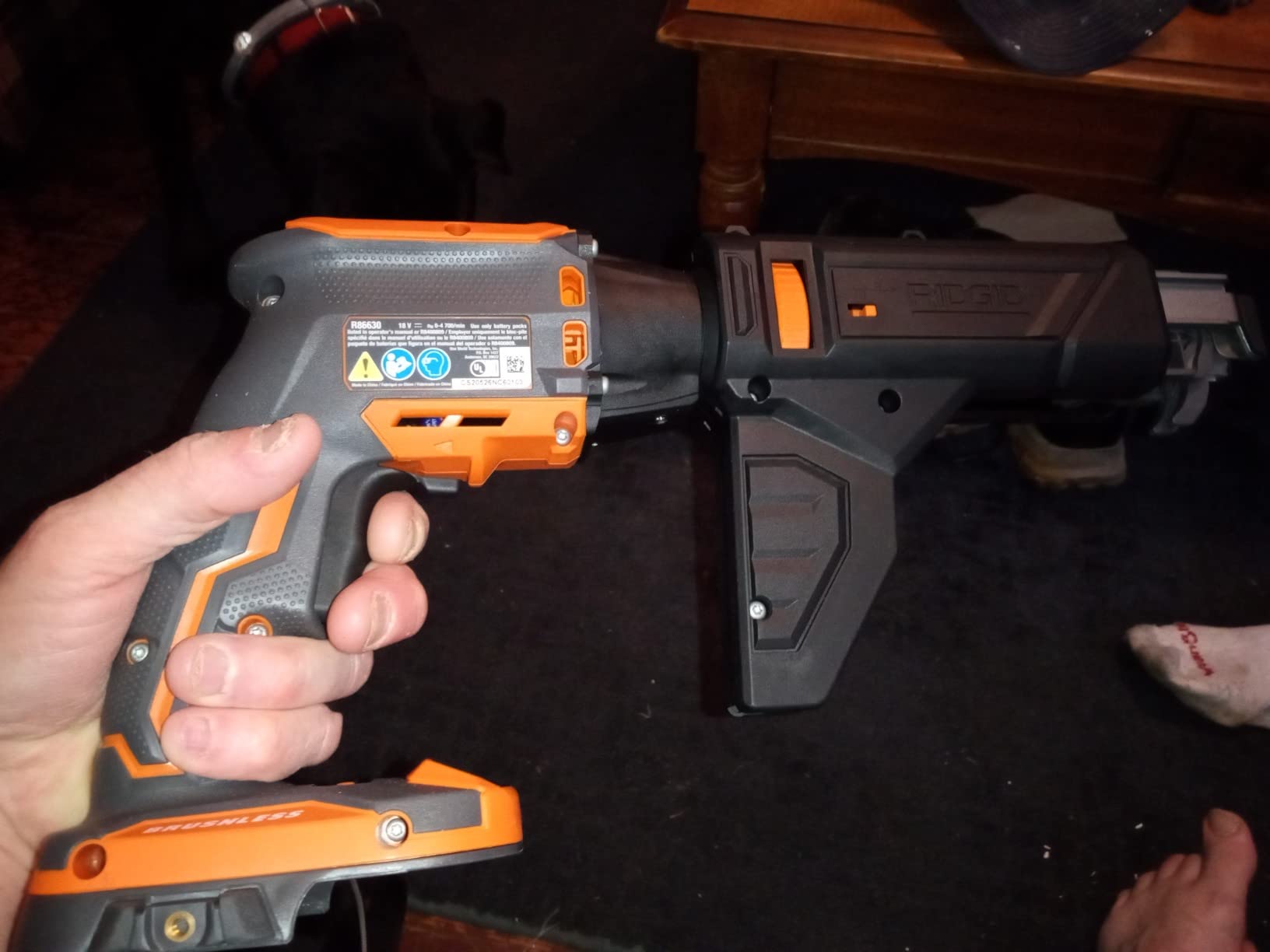
The package includes the tool, the collated attachment and accessories, so the parts list is complete on paper. Verify the contents on arrival, because a small number of owners report missing bit holders or a missing bag.
What the RIDGID service agreement actually means for you
This is the most important caveat in the review and the one buyers skip. RIDGID’s Lifetime Service Agreement, which replaces parts and repairs the tool for the original owner, only applies when the tool is purchased through Home Depot. Bought anywhere else, the coverage drops to a three-year term and the manufacturer customer service is widely reported as unhelpful for unauthorized-channel purchases. That is a real difference in ownership cost over a decade, not a technicality.
The second caveat is compatibility. Owners report drive shank issues with the attachment, and cross-brand collated setups are broadly compatible because the DeWalt, Bosch and Hilti attachments all accept Senco strips, but shank fit is a separate question from strip fit. Check that the attachment and the base tool interface correctly before you start a ceiling.
Who should buy it and who should skip it
Buy it if you want a cordless collated setup as a single purchase, if you are already on the RIDGID 18V platform, or if you want to try collated feeding on a mid-size job before committing to a dedicated autofeed tool. The included attachment is the value here, and the 4.2 rating reflects the package rather than a defect.
Skip it if you buy tools outside Home Depot and intend to rely on the Lifetime Service Agreement, because you will not get it. Also skip it for a production crew, where the 4.2 pound weight and any attachment fit issues add up across a full day, and where a dedicated autofeed tool is the correct instrument. For repairs and remodel work, a loose-screw gun is more versatile than a collated one.
Ceiling Fasteners: Screw Length, Spacing and Pre-Drilling
Tool choice only matters if the fastener is right, and ceiling fasteners are where most hangs go wrong. Get the screw length wrong and you either shoot through the face of the framing or pull the screw back out when you carry the sheet up. Get the spacing wrong and the ceiling sags between screws, which you will feel for years.
Match the screw length to the board thickness, then add about three-quarters of an inch of penetration into the stud. That is the whole rule, and the practical list is short: one-quarter inch board takes a 1 inch to 1-1/4 inch screw, one-half inch board takes a 1-1/4 inch to 1-5/8 inch screw, and five-eighth inch board takes a 1-5/8 inch to 2 inch screw. A ceiling always needs the longer end of that range because it carries more load and vibrates more than a wall.
For spacing, screws go every 8 inches on walls and every 7.5 inches on ceilings, which means two screws per stud on standard 16 inch centers. Stagger the pattern between sheets on a ceiling so the fasteners do not line up, and check the spacing before you mud anything, because pulling a screw after three coats of compound is a miserable job.
Do not pre-drill. Ever, for drywall screws into wood studs. Pre-drilling weakens the hold of the screw, defeats the point of a coarse-thread drywall screw, and roughly doubles your labor. The one narrow exception is very hard steel with a large gauge fastener, where a pilot hole prevents driver walk. For wood, the screw cuts its own path.
One more ceiling-specific note: nails are not an alternative. A drywall screw grips the side of the stud over more than an inch of its length, holds far better under the cyclic loading a ceiling experiences, and will not back out. If you see a hanger recommending nails, the reason is almost always speed on a hidden repair, not performance.
How to Choose a Drywall Screw Gun
Most buying mistakes in this category come from optimizing for the wrong variable. The two questions that actually decide the purchase are how much drywall you will hang and whether you already own a battery platform. Everything else is a preference. Here is how we would think it through.
Corded or cordless: the honest answer
There is no rule that cordless always wins, despite what most roundups imply. A corded gun has no battery, no charger, no platform commitment and no runtime limit, and for a single room or a basement with usable outlets it is the correct and cheaper decision. The cord becomes a problem the moment you are in a finished house with one outlet per room or a large ceiling with no power nearby.
Cordless wins on mobility and on fatigue. You can hang an entire ceiling without routing a cord, and the lighter bare weights here range from 2.5 to 2.7 pounds against 3.1 to 4.2 pounds for the corded tools. Over eight hours of overhead work, that is the argument that decides it. If you are hanging more than roughly 20 sheets, go cordless. If you are hanging four, do not buy a battery platform to do it.
Collated or loose screws: run the numbers
A collated screw is held to a plastic or paper ribbon and fed from a magazine or attachment, which removes the loading step entirely. The cost is per screw, and it is real. The offsetting benefit is that you drive one screw per trigger event with no hand near the bit, which is worth more than most buyers expect on a full hang.
Strip compatibility is the detail that trips people up. The DeWalt, Bosch and Hilti collated attachments generally accept Senco strips, and one confirmed report is that the Hilti SMD 50 attachment uses Senco strips specifically. You are not locked into one brand of fastener, but screw length acceptance varies between attachments, with at least one Hilti attachment reported as taking only 1-1/4 inch screws while others take 2 inch. Verify length before you buy a bulk box of strips.
Nose cone, depth adjustment and the clutch question
The nose cone is the depth stop, and it is the single most important part of the tool. A collar you set and forget, with no drift as the tool heats, is what a set-and-forget design gives you. The competing approach is a clutch, which stops torque rather than depth, and a clutch will not give you a consistent dimple because the wood density changes along a stud.
If the cone drifts, or if the depth control on your tool does not lock, the fix is a five-second check after the first ten screws. Look for a dimple, not a hole. The screw head should sit just below the paper with no tear and no proud edge. Adjust the collar a quarter turn and keep going.
Weight and overhead ergonomics
Bare-tool weight on a spec sheet excludes the battery, so comparing a 2.5 pound cordless gun to a 3.1 pound corded gun is not a fair comparison. The honest comparison is with the pack installed, and for overhead work the more useful number is where the center of mass sits. A tool that balances near the nose lets you drive a ceiling screw with one hand while the other holds a lift.
Two other overhead factors matter. A belt hook or clip matters enormously if you are climbing a ladder, and note that the Ryobi P225 does not include one. And once a collated attachment is fitted, the tool generally requires two hands, which is the core reason a loose-screw gun remains the better choice for one-person ceiling work.
Brushless motors, RPM and battery platform lock-in
Brushless is the default on every cordless pick in this roundup, and it is not a marketing luxury. It runs cooler, wastes less energy as heat, and is the direct reason a pack lasts through multiple sheets. RPM is the next number to read, and it is the only speed metric that means the same thing across brands.
Battery platform is the decision that costs real money. Most cordless tools here are bare-tool only, so a battery and charger are on you, and that is the single most common surprise in owner reviews. Before buying anything, check what packs you already own. On the naming confusion that confuses buyers constantly, 18V and 20V MAX are marketing labels for the same nominal battery class; they are not different voltages, and packs are not interchangeable between brands. The Bosch 18V, Ryobi ONE+ 18V, Makita LXT 18V and Milwaukee M18 platforms are four separate ecosystems, and so are DeWalt 20V MAX and Hilti Nuron.
What goes wrong, and how to fix it
Over-driving, tearing the paper face, is almost always a depth setting rather than a tool fault. Check the cone, back it off a quarter turn, and try again on a scrap. Depth drifting mid-job is the same problem arriving later, so check the dimple at each board change. A jammed collated strip means you were not square to the surface; slow down, hold the tool perpendicular and reload rather than forcing it. Two-handed overhead operation with an attachment is a workflow problem, and the answer is a lift or a panel assistant rather than a different tool.
The last one is not a fixable problem: a bare tool with no battery and no charger is not cheaper than the kit version once you add a pack and a charger, which is why the Makita XRF02Z kit is a more honest entry point for a first-time buyer than any bare tool on this list.
How We Researched These Picks and What We Left Out
We want to be clear about scope, because roundups that blur this line are the reason buyer trust evaporates. Everything here comes from current manufacturer specifications and from owner review patterns, cross-checked against what professional hangers report in the trade forums. We did not strip out framing and hang full houses on all ten tools, and we are not going to pretend otherwise.
What that means in practice is that spec-sheet numbers, such as no-load RPM, weight, torque, chuck size and warranty terms, are stated as manufacturer figures. Owner feedback is used for the things specs cannot capture: whether the depth control drifts, whether the magnet holds, whether jams are frequent, and how the tool feels in a ceiling bay. Where pros disagree, we say so rather than picking a winner, because the ContractorTalk and DrywallTalk threads make it clear that no brand dominates every workload.
Two limits are worth stating plainly. Several of the most useful professional discussions in the drywall forums date from 2008 to 2015, so we use them for what pros care about, not for current product recommendations. And we have not tested on light gauge steel beyond manufacturer guidance, so our steel stud comments draw on published recommended uses and owner reports rather than a controlled comparison. The last category we would want a professional to weigh heavily when making a purchase is long-term durability, because failure rates only show up over years, and owners do report both remarkable durability and repeat failures in the same threads.
Frequently Asked Questions
What does a drywall screw gun do?
A drywall screw gun is a purpose-built driver with a high-RPM brushless motor, an adjustable nose cone that stops the screw at a preset depth, and a pressure-activated trigger that fires the screw only on contact with the board. The result is a consistent dimple just below the paper surface, without tearing the face or burying the head.
Who makes the best drywall screw gun?
The answer depends on the workload. The DEWALT DCF630B is the most complete general-purpose cordless option. The Milwaukee 2866-20 is the best for overhead ceiling work and is the lightest bare tool we cover. The Makita FS4200 is the highest rated option and handles steel studs well. The DEWALT DW255 is the best corded value. The Ryobi P225 is the best budget pick.
What is the best collated screw gun for drywall?
For full-sheet production hanging, the Makita XRF02Z is the dedicated autofeed tool we tested, and the RIDGID 18V model is the best value if you want a collated attachment in the box. On other brands, a bare gun plus an attachment is the usual route, and DeWalt, Bosch and Hilti attachments generally accept Senco strips. Verify screw length acceptance before ordering strips.
Do I need to pre-drill for drywall screws?
No. Never pre-drill for drywall screws into wood studs. Pre-drilling weakens the hold, defeats the purpose of a coarse-thread drywall screw and roughly doubles your labor. The only narrow exception is very hard steel framing with a large gauge fastener, where a small pilot hole prevents the driver from walking.
What size screws should I use for hanging drywall on my ceiling?
Match the screw to the board and allow about three-quarters inch of penetration into the stud. One-quarter inch board takes a 1 to 1-1/4 inch screw, one-half inch board takes 1-1/4 to 1-5/8 inch, and five-eighth inch board takes 1-5/8 to 2 inch. Ceilings always need the longer end of the range.
Is a corded or cordless drywall screw gun better?
Cordless wins on mobility and fatigue, and it is the right call above roughly 20 sheets or anywhere outlets are scarce. Corded is genuinely better for a single room or a basement, because you avoid buying a battery platform you will not use again. Both drive the same screws; the difference is where the power comes from.
What are the common problems with drywall screw guns?
The usual five are over-driving that tears the paper, depth drifting mid-job, jammed collated strips, the battery and charger cost hidden in a tool-only listing, and the two-handed overhead operation that comes with a collated attachment. Four of the five are technique or planning issues rather than tool defects.
Is it worth buying a drywall screw gun?
Yes, once you are hanging more than two or three sheets. The depth stop is what removes the judgment call from every screw, and that is what saves taping and mudding time later. For two accent panels, your existing drill with a Phillips bit is genuinely enough and your money is better spent elsewhere.
Final Verdict
The DEWALT DCF630B is our pick for the best drywall screw guns for hanging drywall in 2026, and the reason is the combination of four drive modes, a brushless motor at 4400 RPM and a 2.6 pound body that stays balanced on an overhead pass. If ceilings are most of your work, the Milwaukee 2866-20 is lighter and holds a charge longer. If money is the deciding factor, the Ryobi P225 gives you a brushless motor and auto-start for less than the premium flagships.
Take a corded tool seriously, too. The DEWALT DW255 at 5300 RPM and the Makita FS4200 at 3.1 pounds are both proven, both cheap to run, and both the right answer for a basement or a single room. Whichever you choose, set the nose cone before the first screw, check the dimple after the first ten, and stay on the longer screw length for ceilings.
Pick your tool, match the fastener to the board, and your hang will go faster than you expected. Our other roundups, including guides to rattan hanging chairs for sunrooms and hanging toiletry bags for travel, follow the same rule, which is to buy the thing that fits the job you are actually doing.