
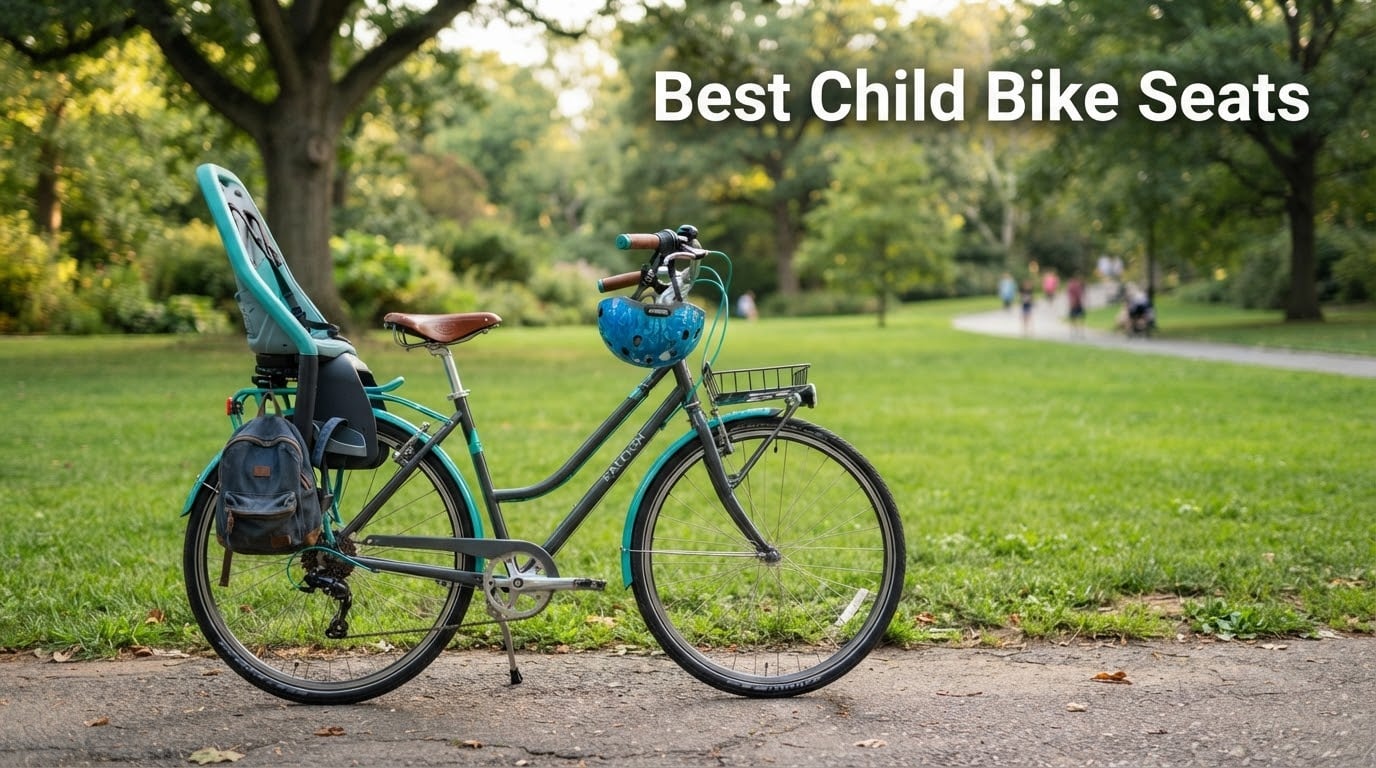
Short answer: the best child bike seat depends on two things nobody mentions until the box is open: whether the mount fits your bike, and whether your child is small enough to be held in properly. Our top pick is the Schwinn Deluxe Child Bike Carrier, a rear frame-mount seat rated to 40 lb with a limited lifetime warranty and more than 5,300 reviews behind it. For bigger kids, the UrRider front seat carries up to 60 lb. For the lowest spend, the Bell Cocoon 300 gives you a 5-point harness and a molded spoke guard for very little money.
There are four families of seat, and everything else is a variation on them. Rear frame-mount seats clamp to the seat tube and sit low behind you. Rear rack-mount seats bolt onto a luggage rack instead. Front-mounted seats attach to the headset or stem so the child sits between your arms. Open mid-mount seats straddle the top tube and skip the harness entirely, letting a larger child hold on.
Our team compared all ten of these on fit, harness security, weight capacity, padding and the complaints that show up again and again in owner reviews. Last updated September 2026. If you are also shopping for a car seat for the same year of parenting, our convertible car seat guide covers the other half of the restraint puzzle.
One thing to know before you read further: compatibility causes more disappointment than any feature. A seat that will not clear your seat post, has no rack eyelets, or collides with your disc brake caliper is simply unusable, and returns on a bulky plastic seat are a hassle. So we state the exact mounting requirement under every review below.
Table of Contents
Top 3 Picks for Best Child Bike Seats in September
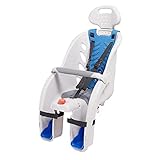
Schwinn Deluxe Child Bike Carrier
- Rear frame-mount
- ages 1+ to 40 lb
- Quick release 3-point harness
- Converts to a rear rack cargo carrier
- Limited lifetime warranty
UrRider Front Mount Child Seat
- Front mount
- ages 2-6 up to 60 lb
- Tool-free install in about 60 seconds
- Foldable aluminum frame at 2.9 lbs

Bell Cocoon 300 Rear Mount Seat
- Rear rack mount
- ages 1+ to 40 lb
- Adjustable 5-point harness
- Molded spoke guard and rear reflector
Best Child Bike Seats at a Glance in 2026
The table below is the fast version. Every seat is listed with the mount type, the age and weight range, and the restraint system, which are the four attributes that decide whether it works in your life. Full detail follows each review.
| Product | Specs | Action |
|---|---|---|
| Schwinn Deluxe Child Bike Carrier |
|
Check Latest Price |
| Bell Cocoon 300 Rear Mount Seat |
|
Check Latest Price |
 iBert Front Mounted Child Seat iBert Front Mounted Child Seat |
|
Check Latest Price |
| UrRider Front Mount Child Seat |
|
Check Latest Price |
 Thule Yepp 2 Mounted Thule Yepp 2 Mounted |
|
Check Latest Price |
 XIEEIX Front Guardrail Mountain Bike Seat XIEEIX Front Guardrail Mountain Bike Seat |
|
Check Latest Price |
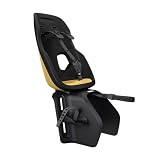 Thule Yepp Nexxt2 Frame Mount Thule Yepp Nexxt2 Frame Mount |
|
Check Latest Price |
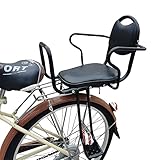 WORAMUK Rear Child Bike Seat WORAMUK Rear Child Bike Seat |
|
Check Latest Price |
 Bwcece Upgraded Rear Child Bike Seat Bwcece Upgraded Rear Child Bike Seat |
|
Check Latest Price |
 OUSEXI Rear Child Bike Seat OUSEXI Rear Child Bike Seat |
|
Check Latest Price |
1. Schwinn Deluxe Child Bike Carrier: The Most Proven Rear Seat You Can Buy
Schwinn Deluxe Child Bike Carrier, Seats one Kid Ages 1+, Frame Mount, 3-Point Safety Harness and Foot Wells, Quick Release Design, Comfortable Padding, Rear-Mounted Child Bike Seat for Toddler
Rear frame-mount
Ages 1+ to 40 lb
3-point quick release harness
Limited lifetime warranty
Pros
- Quick release removes the seat in seconds
- Converts to a rear rack cargo carrier when the child seat comes off
- Padded cross bar with back support and removable headrest
- Adjustable footwells
- Thousands of reviews showing a settled design
Cons
- 3-point harness rather than a 5-point system
- 40 lb ceiling is reached early in some families
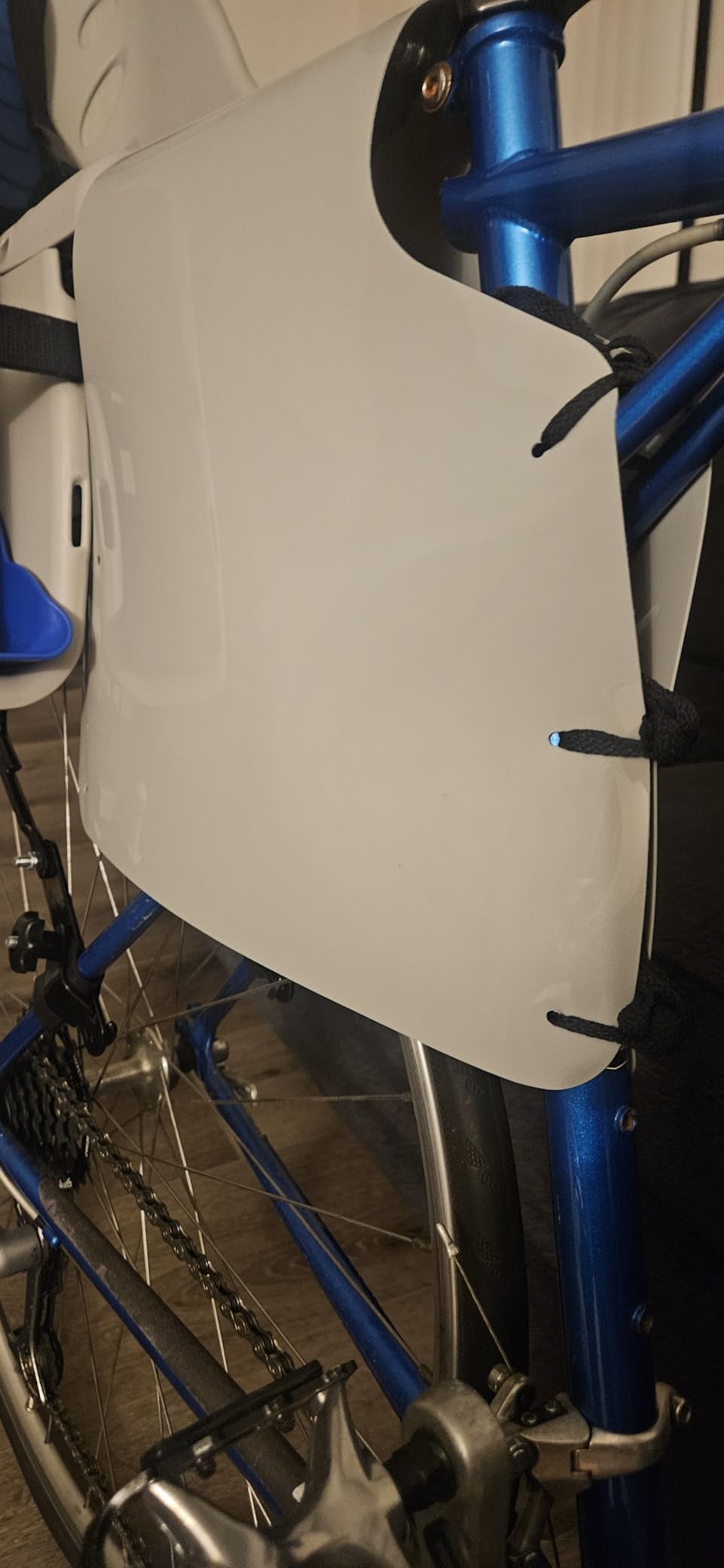
Mounting requirement: a rear frame mount that clamps to the seat tube, and it works with most adult bikes. No rack eyelets needed, no special hardware, and no disc brake or suspension conflict to solve.
The thing that makes this seat stand out is the quick release. You pull the seat off in seconds without unbolting anything, and the same frame stays on the bike as a rear rack cargo carrier. Parents who use the bike for errands without the child end up with a rack platform for free.
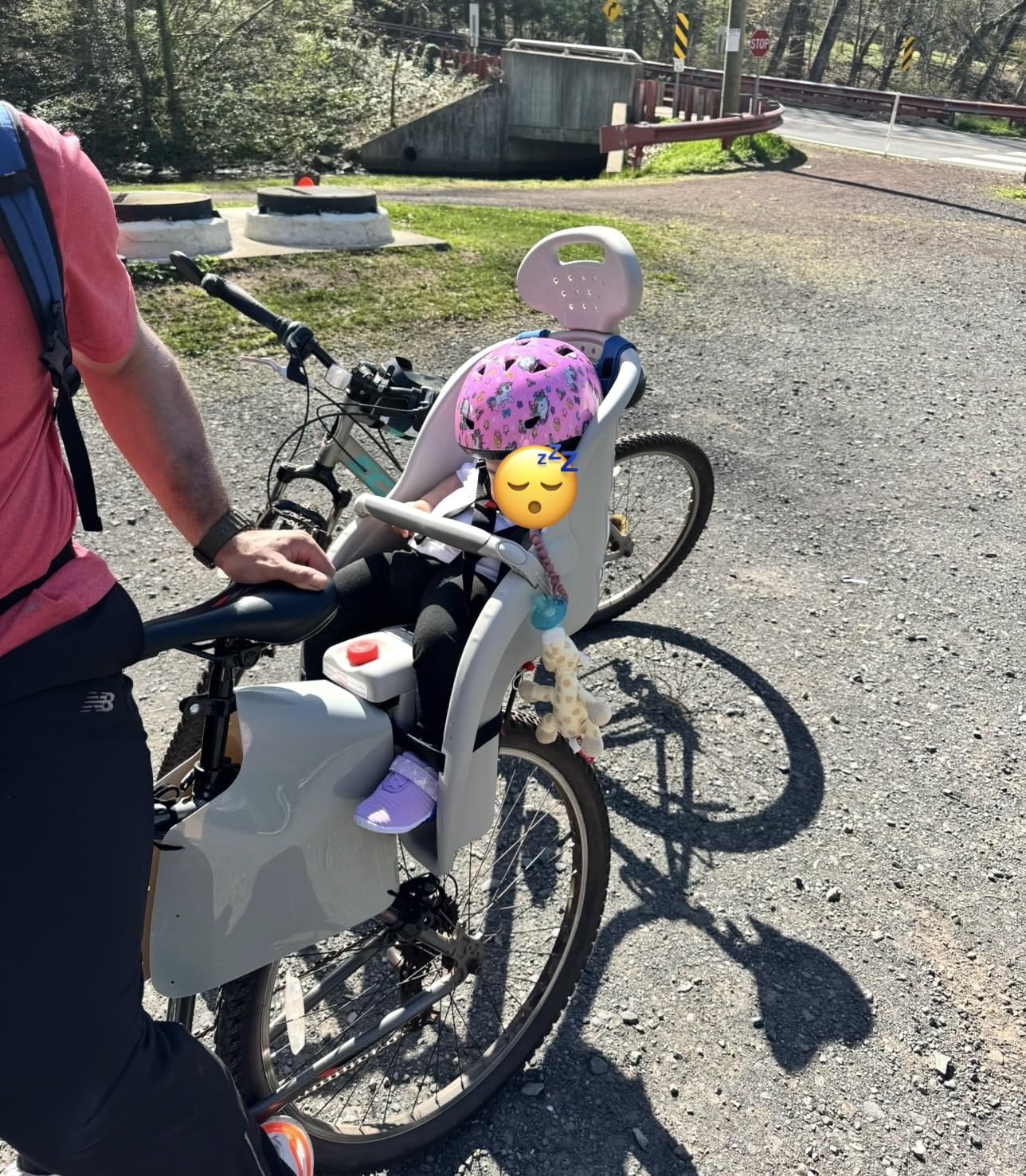
Comfort is a mixed picture. The back has custom padding and a removable headrest, the footwells adjust, and the cross bar is padded, which matters on longer rides. What you do not get is a deep recline, so a toddler who falls asleep on a long ride will slump rather than lie back.
The 3-point harness is the honest weakness here. It is quick to secure and fine for short school-run trips, but it sits higher on the chest and gives a determined three-year-old less to fight against than a 5-point system. Parents on parent forums consistently treat it as adequate rather than excellent.
Who this seat suits
This is the seat to buy if you want one product that covers the full first stage of cycling with a child, from about age one to the 40 lb mark. The limited lifetime warranty is unusual at this level and suggests a company that expects the frame to outlast several children.
It also converts into a rack carrier, which makes it a genuinely two-function purchase for a household that only has one bike.
Where it falls short
At 40 lb it stops early, and the fit band is tight for taller toddlers. If your child is already three and closing in on the limit, you will be replacing this seat within a year or two rather than getting years of service from it.
The 3-point harness is also worth weighing against your local traffic. In low-speed park riding it is fine. On a busy road with a child who has learned to undo buckles, a 5-point harness with a magnetic childproof clip is a better tool.
2. Bell Cocoon 300: A 5-Point Harness and Spoke Guard on a Small Budget
Bell Cocoon 300 Rear Mount Child Bike Seat — 5-Point Harness, Spoke Guard, Fits 26–27 in Bikes, Up to 40 lbs, Ages 1+
Rear rack mount
Ages 1+ to 40 lb
Adjustable 5-point harness
Molded spoke guard
Pros
- Five-point harness rarely seen at this price
- Molded spoke guard blocks small feet from the wheel
- Wrap-around bucket gives side-impact protection
- Rear reflector included
- Fits standard 26 inch and 27 inch bikes
Cons
- Needs a compatible rear rack to exist
- Will not fit bikes with rear suspension
- Less padding than premium seats
Mounting requirement: an existing rear rack, with the included hardware. The seat fits adult 26-inch and 27-inch bikes without rear suspension, so measure your rack top and check your frame before ordering.
For the money, the safety content is genuinely good. A five-point harness on a child seat is uncommon at the low end, where three-point systems are the norm, and the molded spoke guard closes off the single most common injury geometry in rear-mounted seats: a small foot reaching the rear wheel.
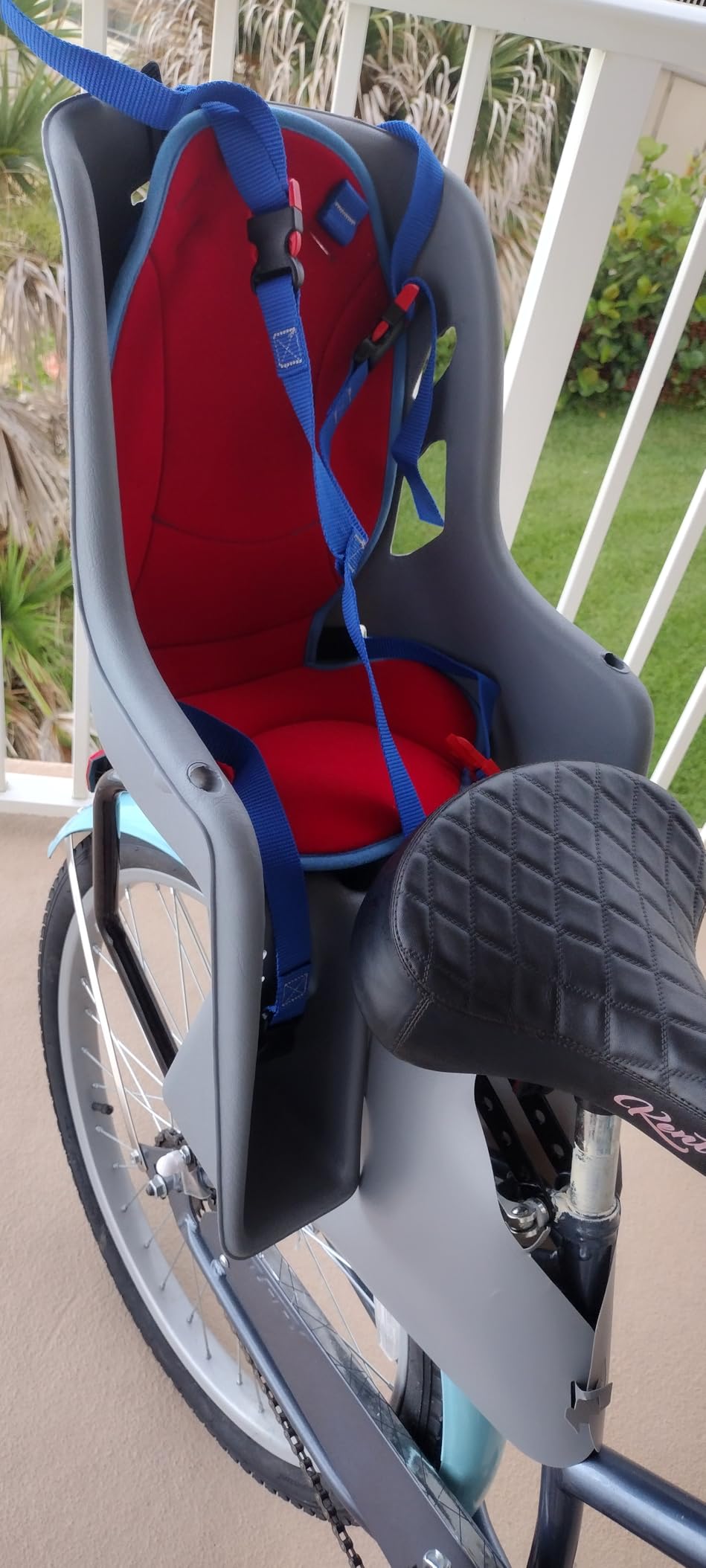
The wrap-around bucket shape adds side-impact protection, which is not a decorative feature. It gives the child a defined boundary rather than a flat bench, and it keeps a sleepy toddler from slumping sideways into the frame.
Owners do point out that the padding is thin compared with the premium seats, so longer rides feel harder on a small child. The reflector and the spoke guard are the two additions that most reviewers single out as the reason the seat works at all.
Who this seat suits
Choose this if you already own a rack-equipped bike without rear suspension and you want proper restraint geometry on a small spend. It is also a good second seat for a grandparent or a second bike, because the mounting requirements are modest.
Families on a tight budget who are nervous about the certification gaps on very cheap seats get more here than they would elsewhere at this level.
Where it falls short
The rack dependency is the real constraint. Plenty of bikes, including many step-through frames, lack eyelets, and fitting one changes the bike’s load situation. Rear-suspension bikes are excluded outright.
Comfort is the other limit. A 4.2-star average across nearly 3,800 reviews reflects a seat that works reliably but does not cushion a long ride as well as a foam seat from a premium brand.
3. iBert Front Mounted Child Seat: The Narrow Front Seat That Fits Awkward Bikes
iBert Front Mounted Child Seat with Patented Mounting for Easy and Secure Installation – Child’s Bike Seat with 3-Point Safety Harness and Adjustable Foot Cups – Durable Plastic Shell, Green
Front mount
Ages 1-3 to 38 lb
3-point harness
Fits 52mm-62mm stem bolt spacing
Pros
- Narrow shell fits bikes with tight bar and stem clearance
- Center mounting changes handling less than expected
- Foot straps keep feet away from the front wheel
- Removable lap bar with a toy steering wheel
- Sturdy mount that has not loosened
Cons
- 3-point harness can slip on smaller children
- Low back support
- Fits depend heavily on stem and bar shape
Mounting requirement: a stem with 52mm to 62mm center-to-center bolt spacing. The full hardware kit and the patented mount are included, so the only thing to verify is that measurement on your bike before you order.
What separates this front seat from most is how narrow the shell is. Reviewers consistently note that it clears bikes with almost no room between handlebars, stem and top tube, which is exactly the geometry that blocks bigger front seats. Folding bikes and track-style frames are frequently mentioned as fits that other brands refuse.
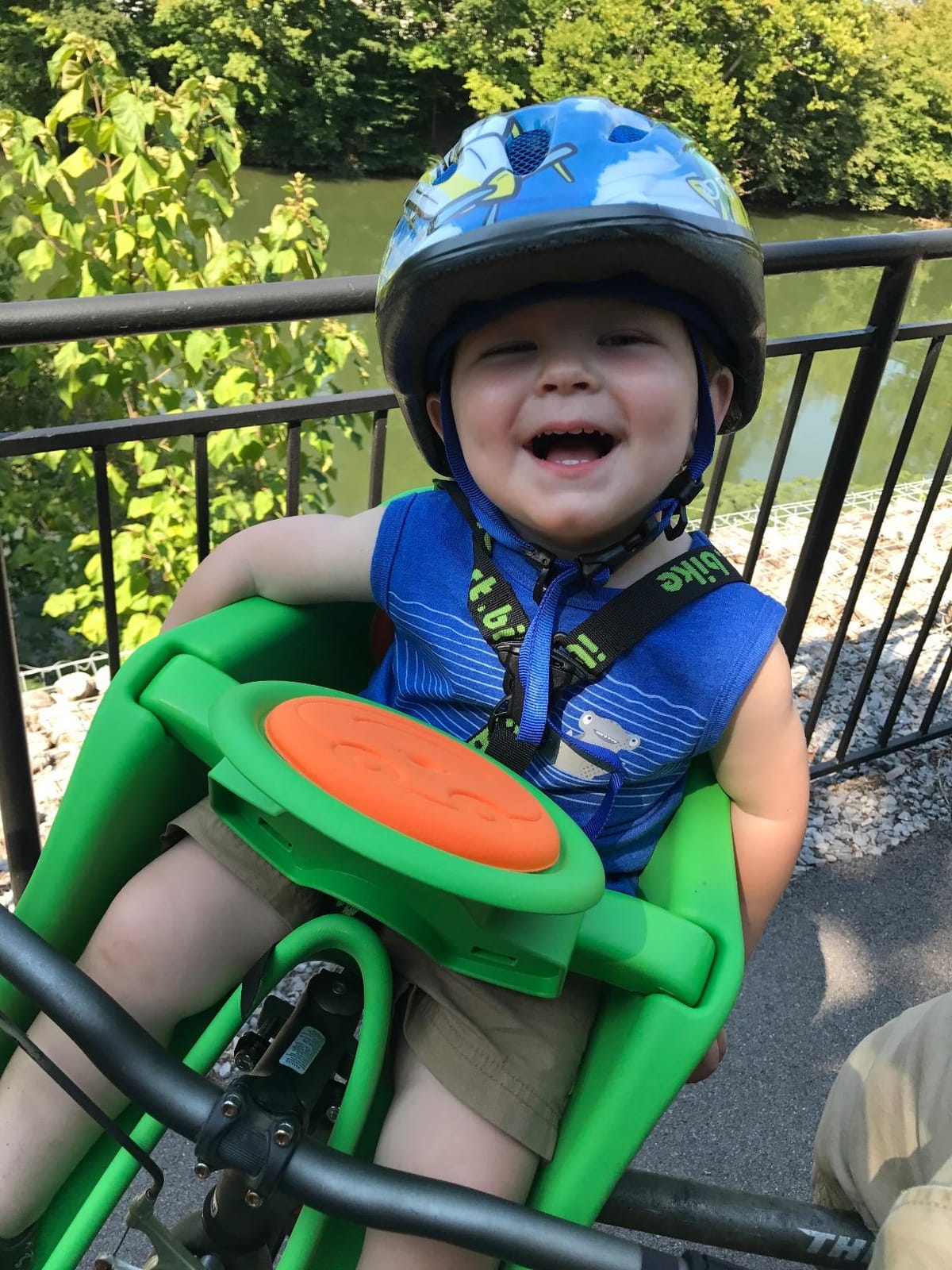
Because the child sits low and central rather than far out in front, the handling change is smaller than most parents expect when they imagine a front seat. The play steering wheel and dashboard on the removable lap bar keep small children occupied on longer trips.
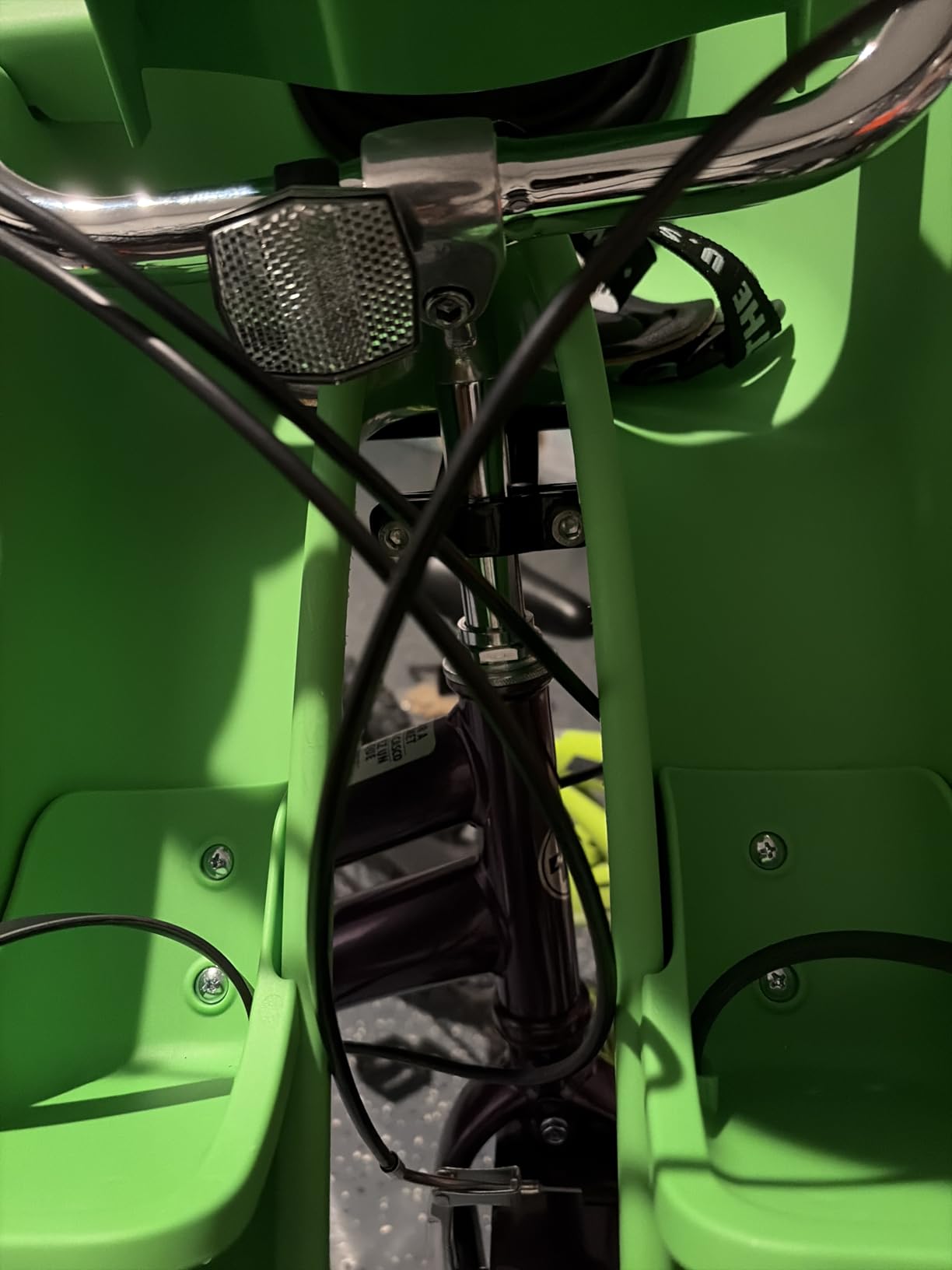
What you give up is back support. Several reviewers describe the backrest as low, which matters most for a child who naps and for a smaller toddler who needs lateral containment. The 3-point harness also draws repeated criticism for slipping down on smaller children until it is adjusted properly.
Adding weight at the front does still change steering and braking, particularly when braking hard. Riders who are new to carrying a child in front report needing a few rides to adapt to the front-heavy feel.
Who this seat suits
This is the front seat for compact bikes, folding bikes and any frame where clearance is tight. It is a strong match for city and cruiser geometry, which is where most front-mounted riding actually happens.
It also suits parents who want eye contact and conversation on the ride, since the child faces you and sits within arm’s reach.
Where it falls short
The 38 lb limit is the lowest in this group, and the age band stops at three. That is the classic front-seat problem: you are buying another seat in a couple of years.
The 3-point harness on a small child, combined with a low back, is the combination that produces the most owner complaints. If your child is on the smaller end, add a strap and check the fit every ride for the first few weeks.
4. UrRider Front Mount Child Seat: The Only Front Seat Here Rated to 60 lb
UrRider Child Bike Seat, Front Mount Kids Bike Seat, Fits Mountain Bikes, Hybrid Bikes, Portable, Tool-Free, Quick-Release, Ultra-Light, Toddler Bike Seat for Children 2-6 Years(up to 60lbs)
Front mount
Ages 2-6 up to 60 lb
Hand-grip open seat
Foldable aluminum at 2.9 lbs
Pros
- 60 lb capacity far above other front seats
- Tool-free install in about 60 seconds
- Folds flat and weighs about 2.9 lbs
- Works on mountain and hybrid bikes
- Well regarded by owners on mountain bikes
Cons
- Not compatible with road bikes or carbon frames
- Needs a battery compartment beam 5.5 cm wide or narrower
- No foot straps
- Young children need close supervision
Mounting requirement: a mountain bike, hybrid, cruiser or folding bike whose battery compartment beam is 5.5 cm wide or narrower. It is explicitly not compatible with road bikes or carbon frames, so check your frame type before buying.
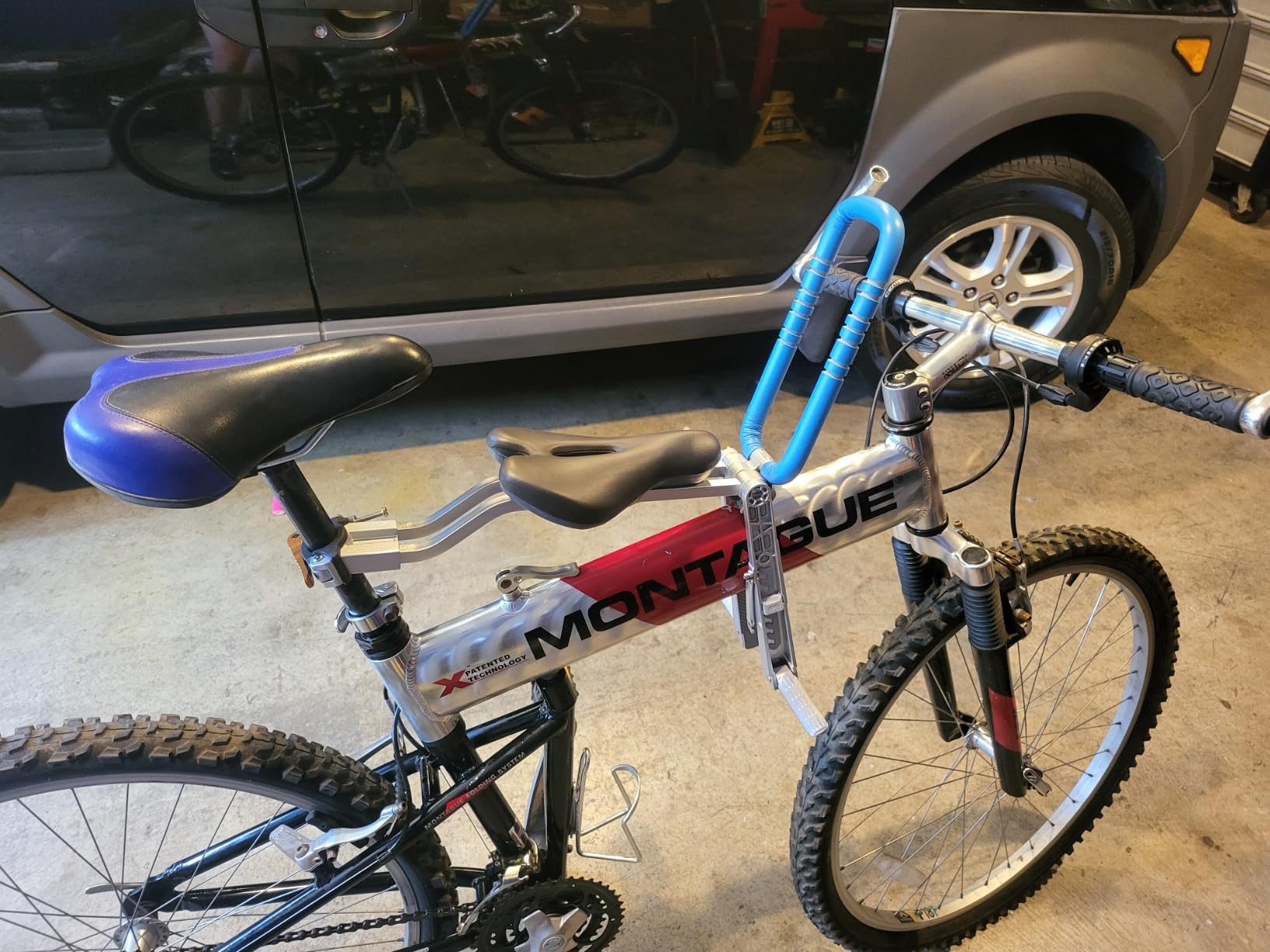
This is the answer to the front-seat outgrowing problem. Where most front seats stop at 38 or 40 lb, this one is rated to 60 lb, which means a child can ride in it from age two to six on paper. In practice, the useful window depends on the child’s leg length, not just weight.
The tool-free quick release installs in about 60 seconds and comes off in 30, and the whole seat folds down to about 2.9 lbs. Parents with more than one bike use that as a swapping feature rather than buying two seats.
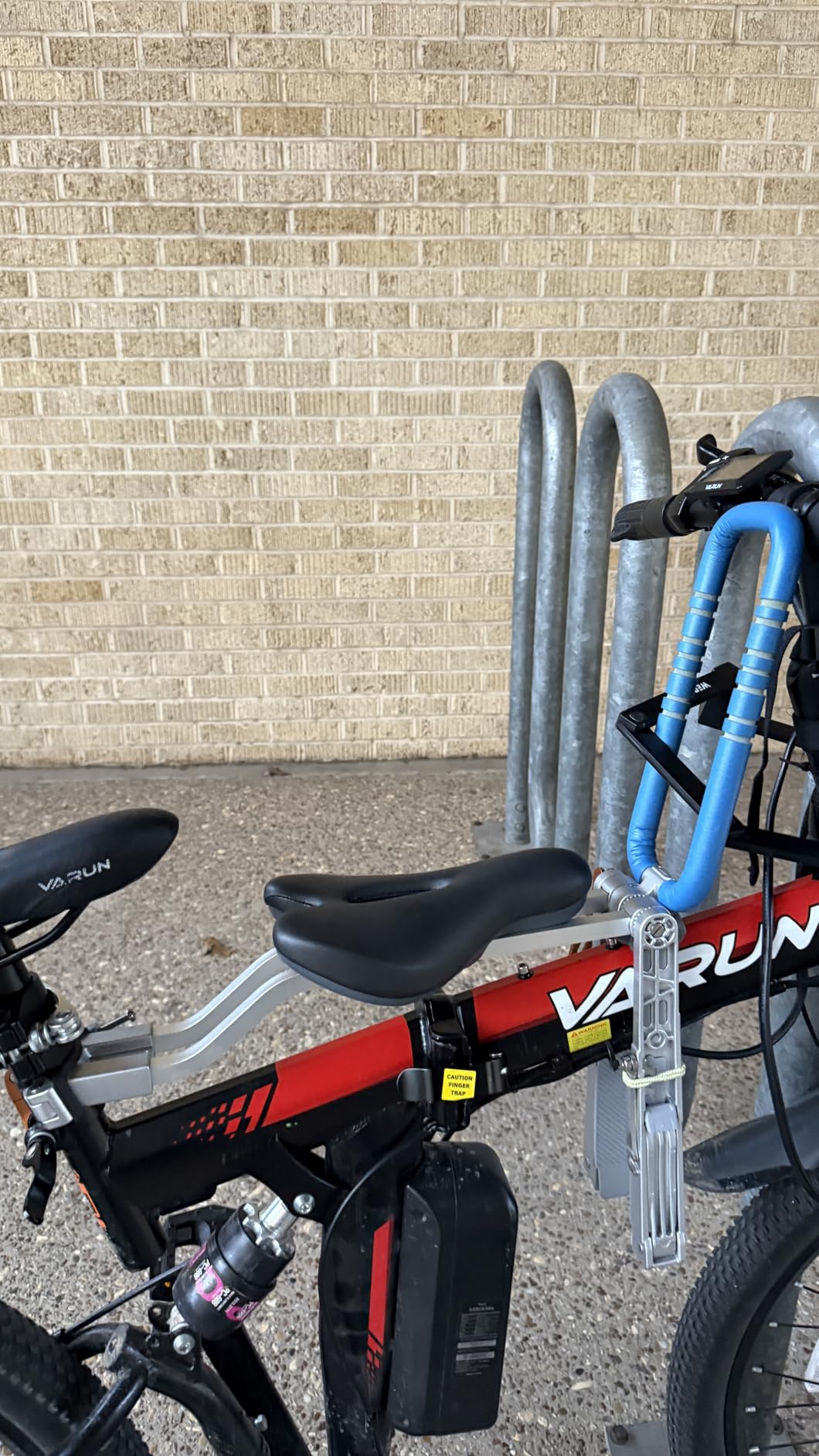
Because it is an open, grip-based design rather than a harness seat, the child holds the hand grips and the seat relies on the shell to keep them contained. That is why the listing specifies adult supervision, and why it is a poor choice as a first seat for a child under two who cannot hold on reliably.
There are no foot straps, so a younger child’s feet can dangle toward the front wheel on some geometries. For a child past four or five, most riders find this a non-issue.
Who this seat suits
It suits the child who has already outgrown a front harness seat and does not want to move to the back yet. It also suits mountain bike families, where an open seat is the more practical choice anyway.
Multi-bike households benefit most from the folding design, since one seat covers several machines.
Where it falls short
Compatibility is the catch. Road bikes and carbon frames are ruled out, and the battery compartment beam measurement is not something everyone knows how to take.
It is also the least forgiving seat for a small child. No harness, no foot straps, and a stated supervision requirement mean the age rating depends on the child’s coordination rather than only their size.
5. Thule Yepp 2 Mounted: The Refined Rack Seat With a Lock Included
Thule Yepp 2 Maxi Rack-Mounted Child Bike Seat, Easy to Mount Design
Rear rack mount
9 months to 5 years, 40 lb
5-point harness, childproof buckle
Metal lock included
Pros
- Childproof buckle reduces escape-artist risk
- Metal lock stops seat theft
- Water-repellent foam seat wipes clean
- Well regarded by owners for e-bike setups
- Works well on e-bikes with integrated racks
Cons
- Harness adjustment is fiddly
- Dark colors get hot in direct sun
- Hard for a sleeping child
- Added rear weight changes handling
Mounting requirement: a universal rack mount system that clamps to a rear luggage rack. The seat weighs about 4.72 kg, so check that your rack is rated well above that number before you fit it.
The childproof buckle is the feature that separates this from the previous Thule generation and from most of the field. Parents of escape-artist toddlers consistently rank it as the deciding factor, because a magnetic clip is much harder to undo one-handed than a standard harness tongue.
A high quality metal lock is included, which almost no competitor includes. On a seat left on a rack in a school yard or at work, that is a real practical saving.
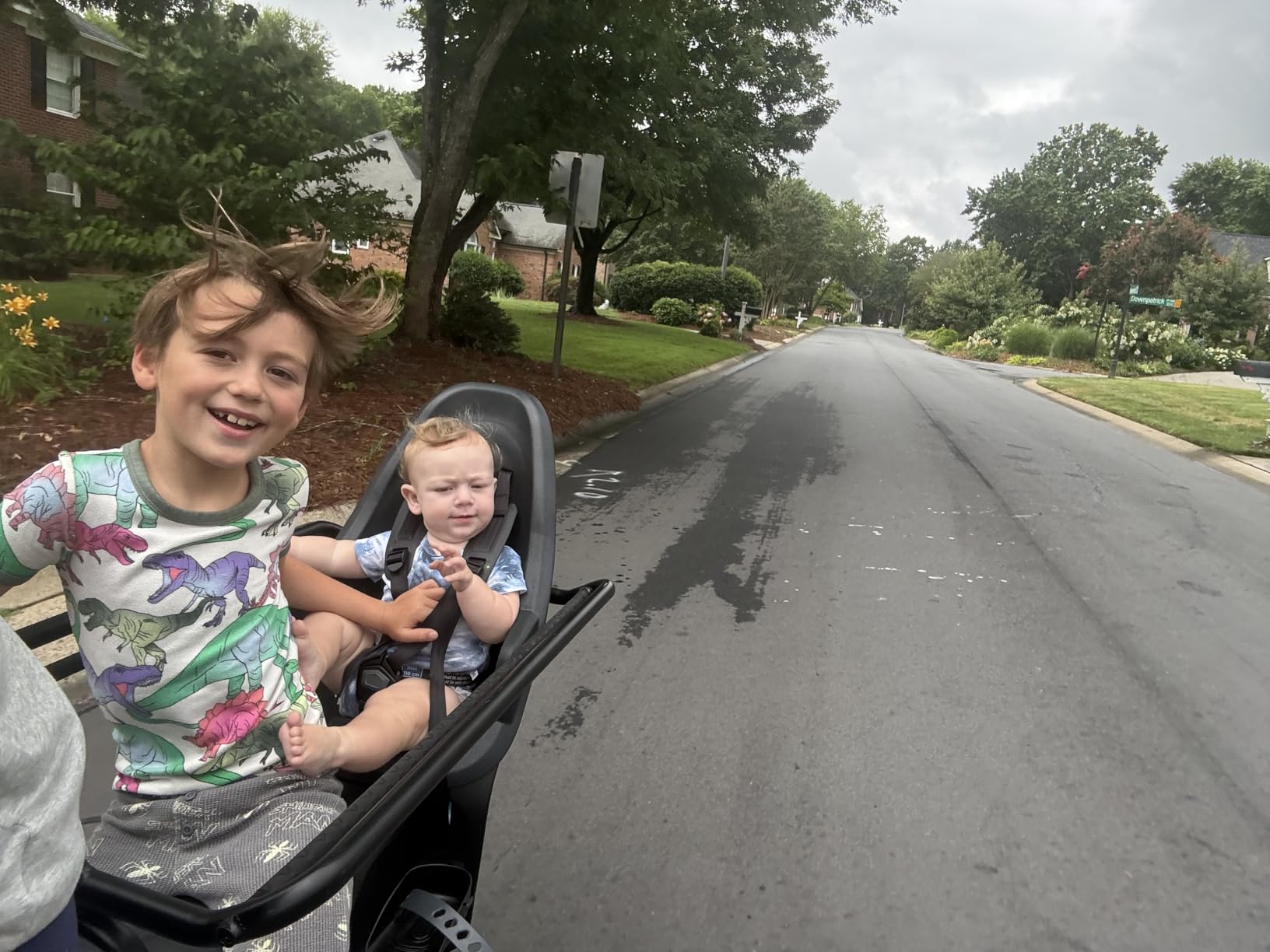
The seat is water-repellent and easy to wipe down, and the shock-absorbing foam base takes the edge off rough pavement. Built-in reflector and a safety light attachment point improve visibility in low light, which matters on winter commutes.
Owners report it stays very secure over long rides and has handled a low-speed spill without injury. Complaints are mostly cosmetic: harness strap adjustment is fiddly, the dark color heats up in direct sun, and the seat is not ideal for a child who falls asleep.
Who this seat suits
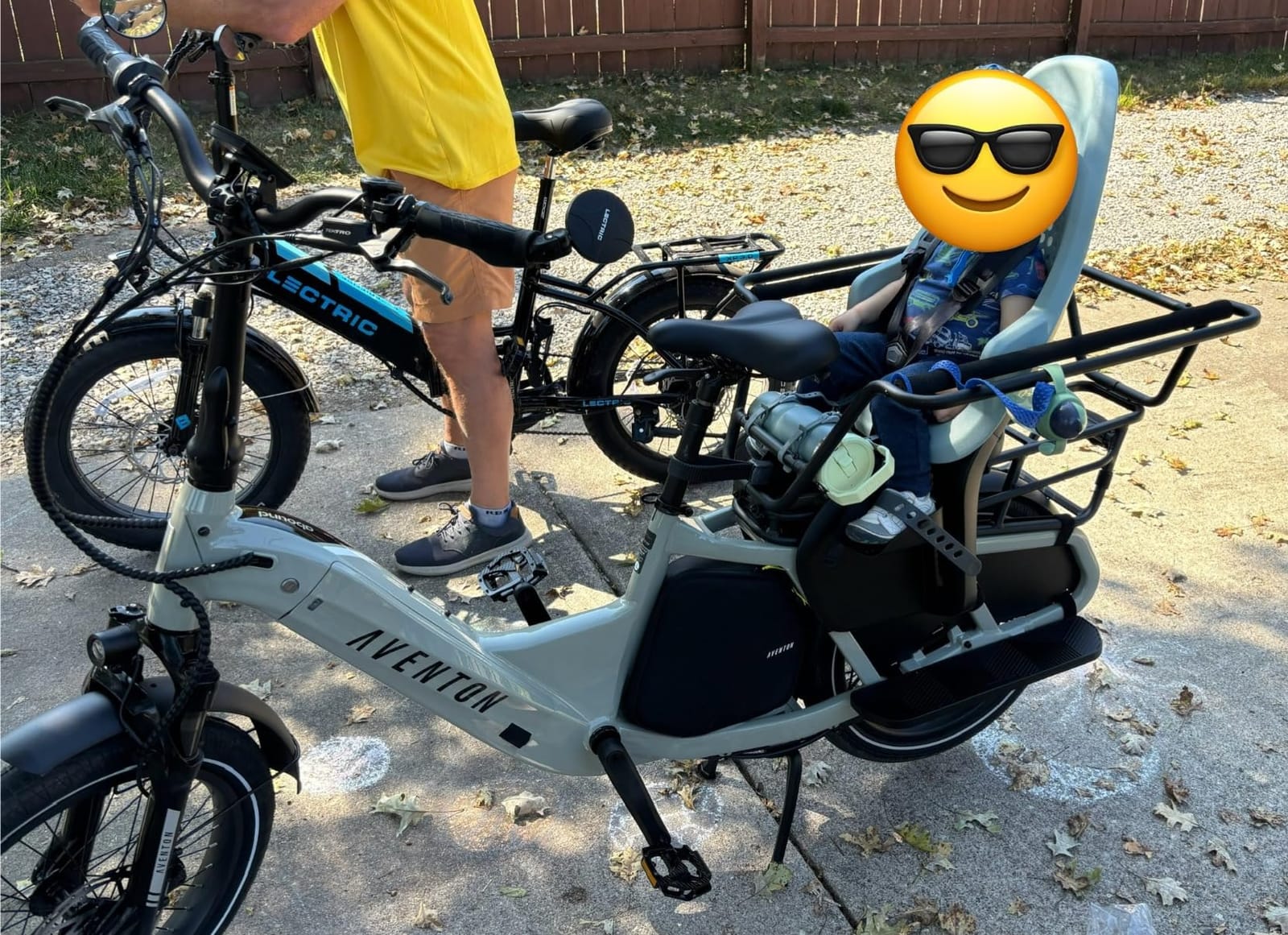
It fits e-bike and integrated-rack setups particularly well, and owners confirm it attaches to an e-bike rack with no wobble. The e-bike torque plus a loaded rear seat is exactly why a solid rack and a torque-checked mount matter.
Families who cycle in mixed weather will like the wipe-clean materials and the reflector, and the included lock suits anyone who leaves the seat on a shared bike.
Where it falls short
The foam seat is firm rather than plush, so it is a poor choice as a napping seat for a toddler under two. If your child sleeps on every ride, a reclining design is a better target.
Added weight at the rear is noticeable on a light adult bike, and a handful of reviews report the harness adjustment taking practice to get right the first few times.
6. XIEEIX Front Guardrail Mountain Bike Seat: Built for Unusual Frames
XIEEIX Front Mounted Child Bike Seat, Kids Bike Seat with Guardrail, High Seat Cushion Backrest Mountain Bike Child Bike Seat, Bicycle Child Safety Seat for Children from 1 to 3 Years Old
Front mount guardrail
Ages 1-3
Telescopic aluminum footrest
Folding handlebar and pedals
Pros
- Folds down for storage and travel
- Telescopic footrest adjusts for child height
- Multi-angle rod fits folding and 29 inch BMX frames
- Integrated cushion and backrest
- Handles taller toddlers well
Cons
- Footrest has no safety strap
- Not suitable for step-through frames
- Hardware can need re-tightening
- Notable share of one-star reviews
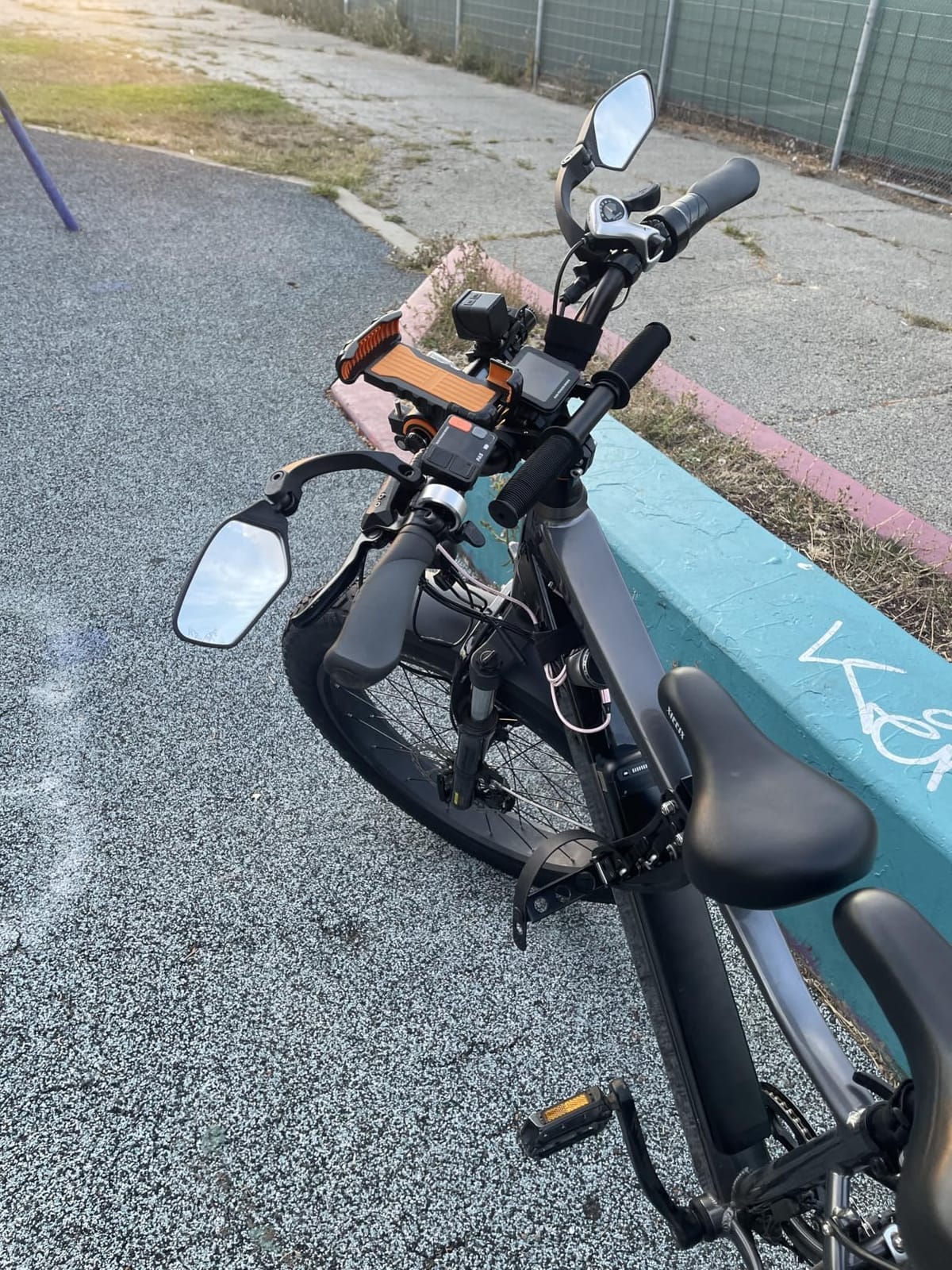
Mounting requirement: a mountain bike or a bike with a crossbar across the top front. The fixing rod adjusts to multiple angles and is locked with four-hole screws, which is what makes it fit frames that defeat other front seats.
The telescopic aluminum footrest adjusts in both length and angle, and owners with unusually tall toddlers report that it handles them well. The integrated one-piece cushion and backrest is more comfortable on rough ground than a flat bench would be.
Folding the handlebar and pedals down means the seat takes up almost no room when it is not in use, which matters if you carry it in a car or store it in a hallway.
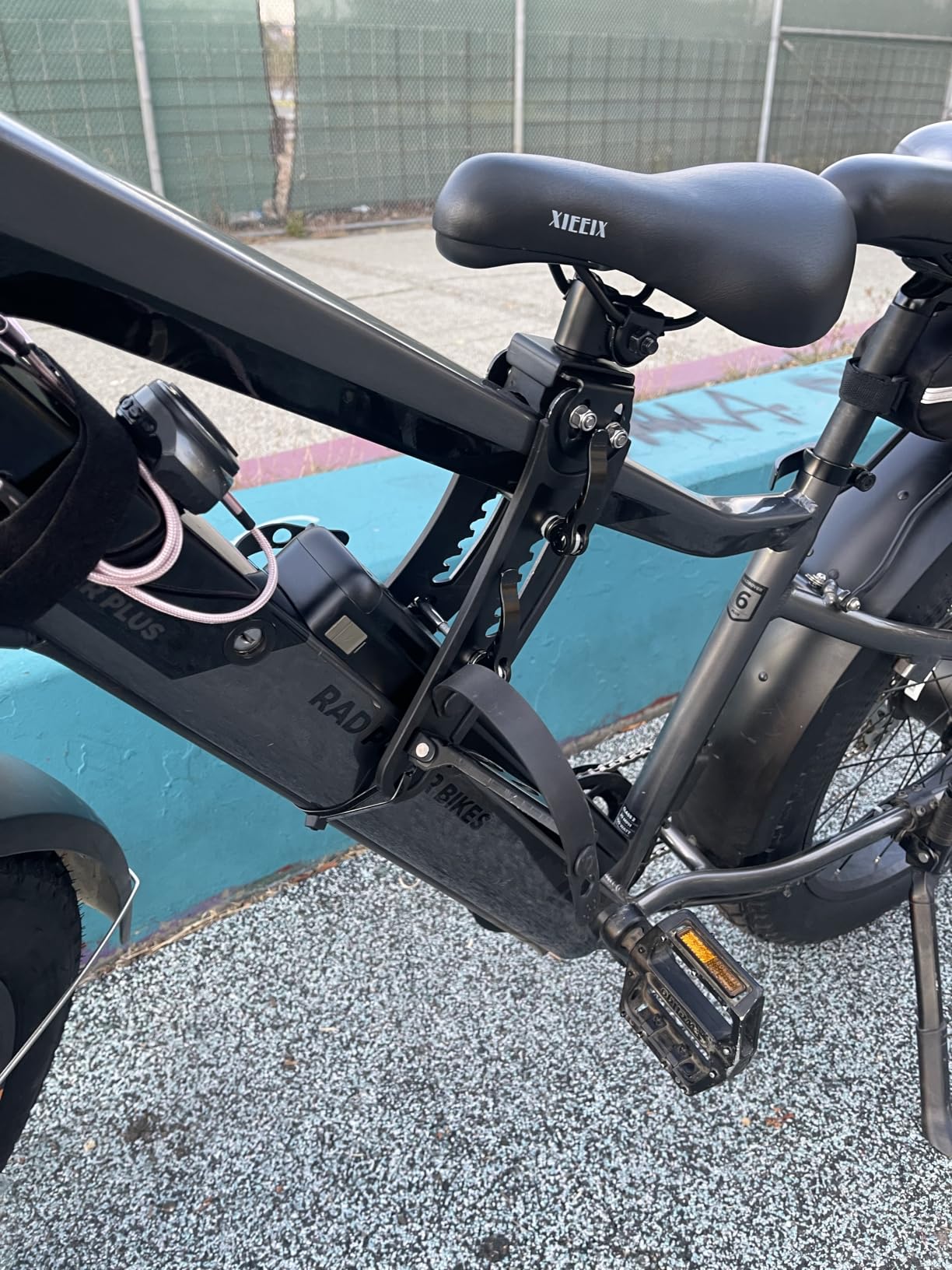
The unstrapped footrest is the serious issue. One reviewer reported a child’s foot slipping into the front wheel spokes, and that geometry is exactly what spoke guards exist to prevent. If you fit this seat to a child under three, treat the foot area as something you check before every ride.
Step-through frames are a further problem despite what some listings imply. The 4.1 average across 553 reviews, with a visible share of one-star ratings, reflects loose hardware and fit frustration as much as comfort.
Who this seat suits
It suits parents whose bike is a mountain bike, folding bike or 29-inch BMX-style frame with a front crossbar, where a conventional front seat simply will not clamp. For those geometries, the multi-angle rod is the reason to consider it at all.
Travel is another good use case. Folding it flat and putting it in a car is something the design does genuinely well.
Where it falls short
No foot strap and a 1-year warranty are both thin protections for the part of the seat closest to a moving wheel. The guardrail and handlebar can feel loose until reinforced with better hardware.
This is also not a seat to buy on brand recognition alone. Read the recent one-star reviews, because the fit complaints are specific and repeatable rather than random.
7. Thule Yepp Nexxt2 Frame Mount: A Magnetic Buckle and a Low Frame Position
Thule Yepp Nexxt 2 Maxi Rack-Mounted Child Bike Seat, Easy to Mount Design
Rear frame mount
9 months to 5 years to 40 lb
Magnetic childproof buckle
2800 g
Pros
- Magnetic buckle is fast to secure and easy to operate
- Hard shell with soft padding holds up over years
- Light enough to carry between bikes
- Large ventilation openings for hot weather
- Fits an e-bike rack firmly
Cons
- Buckle can be hard to release with a wriggling toddler
- Firm shell does not support a sleeping child
- Rider heels can hit the foot guard
- Small review base
Mounting requirement: a rear frame mount to the seat tube, and the same mounting hardware family is used for the rack and front versions of this seat. Item weight is 2,800 g, noticeably lighter than other Thule rear seats in this group.
The magnetic childproof buckle is the reason this seat exists as a distinct product. It secures quickly with one hand and cannot be undone by a small child, which directly answers the most common complaint on parent forums about standard harness buckles.
Reviewers like the hard outer shell with soft padding inside, reporting it has held up over two years of regular use. The large ventilation openings are a genuine benefit in summer heat, and the built-in reflector adds low-light visibility.
There is a fair criticism running the other way on the buckle. A few owners find it hard to release quickly when they are handling a squirming toddler at a kerbside, so the speed advantage only holds if you mostly buckle up and rarely need to undo it in a hurry.
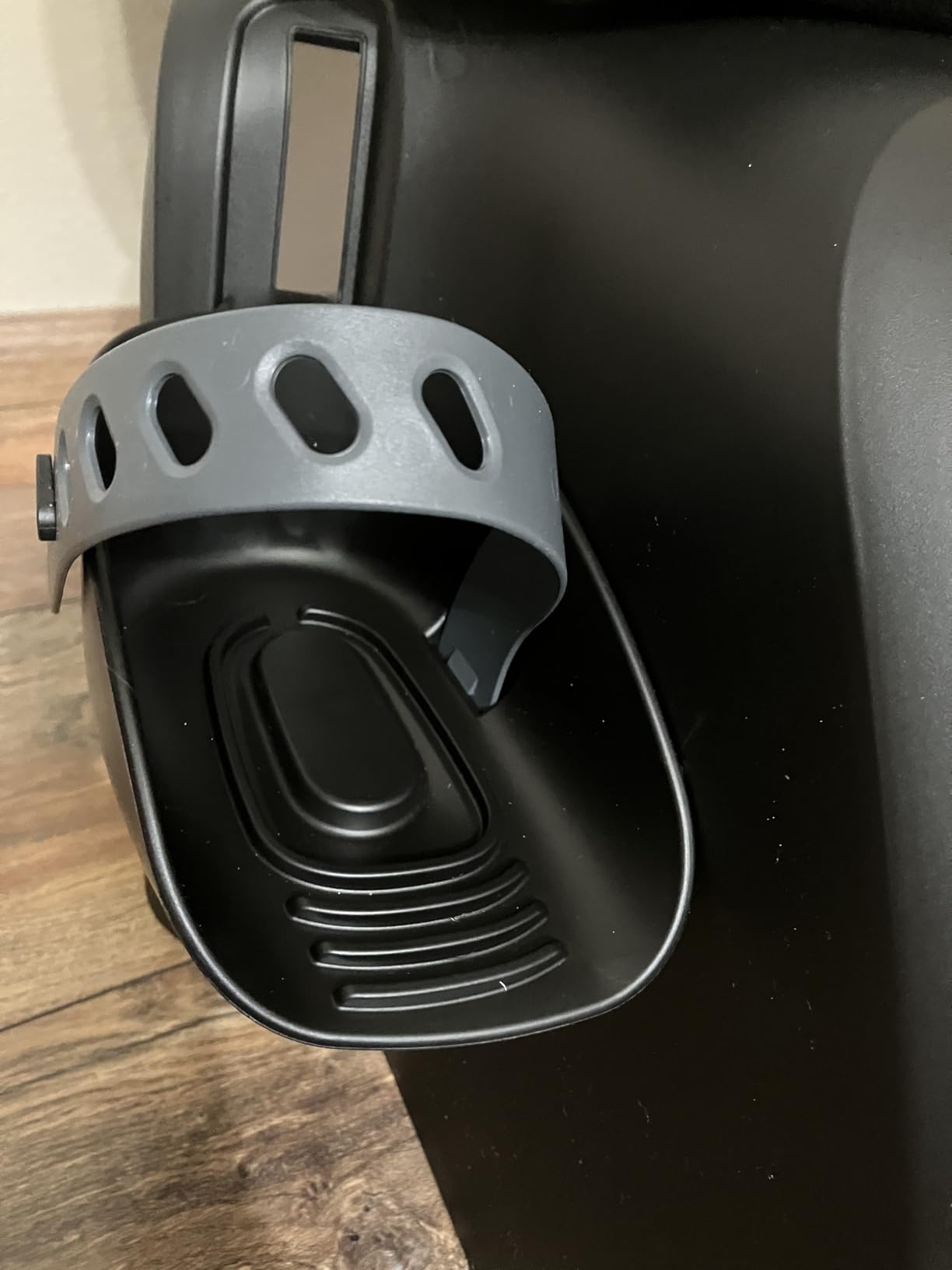
The shell is firm, which means a sleeping child is not well supported. On some frame-mounted setups, the adult rider’s heels can contact the foot guard, so check your pedalling clearance before committing.
Who this seat suits
It suits parents who are tired of re-buckling a child mid-ride and want a restraint that a small child cannot defeat. If you ride near traffic or on busy paths, that is a meaningful upgrade over a standard clip.
It also suits anyone moving between two bikes, because at 2,800 g it is light enough to lift off and carry rather than leave bolted in place.
Where it falls short
Only 131 reviews sit behind this seat, which is a small base compared with the Schwinn and the Bell. The rating is solid at 4.4, but there is less long-term feedback to draw on.
Firm padding and the foot guard clearance issue are the two practical limits. Neither is serious, but both are worth confirming against your own bike and child’s habits.
8. WORAMUK Rear Child Bike Seat: A Steel Rack Seat With a Very High Stated Limit
WORAMUK Rear Kid’s Bike seat,Rear Child Bike seat,Rear Mount Bike seat with Armrests,Pedals and Harness for Most Adult Bike Ages 2 to 8 Years(Up to 110lb)
Rear rack mount
Ages 2-8
Steel frame at 2.5 kg
Stated capacity 50 kg
Pros
- Steel frame feels solid under a heavy child
- Stated 50 kg load rating is far above most seats
- Fits wide racks including wide e-bike racks
- Armrests and side rails plus a front hand bar
- Owners report it stays comfortable with a larger child
Cons
- Weld failures reported after a few months
- Supplied bolts back off without thread locker
- Thin padding
- Flimsy footrests with no straps
Mounting requirement: a rear rack longer than 25 cm and wider than 20 cm inside, with the clip groove facing upwards. Installation can be tedious, and a few owners had to drill new holes for narrower racks.
The steel frame is the headline. At 2.5 kg the seat is heavy, and that mass is what lets it take a large child without flexing. A 50 kg stated load rating is far beyond what most child seats in this list claim, which makes it attractive for a tall five- or six-year-old.
Child containment is handled by a combination of side rails, armrests and a front hand bar rather than a harness alone, and the thick soft cushion is more generous than most steel-frame alternatives.
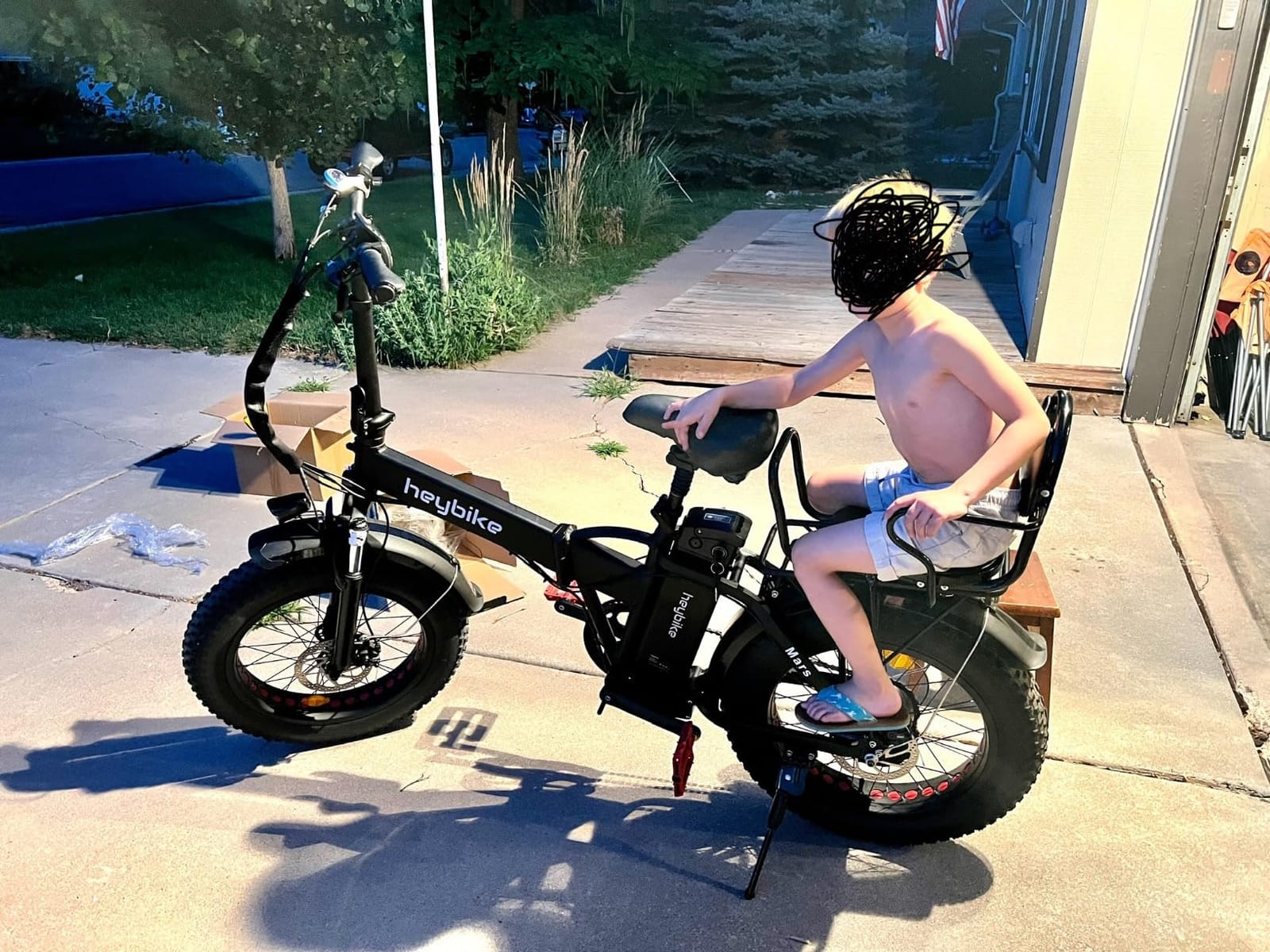
The reviews split sharply here, and the negative half is worth reading. Some owners report weld points at the rear bar breaking within a few months, and the supplied nuts and bolts are frequently described as low quality that backs off without thread locker. A steady minority of one-star ratings reflects that.
Padding is thin across the board, so rough pavement comes through, and the footrests are the most criticized part, with no straps to keep a foot on them. On some bike geometries the front hand bar can pinch fingers.
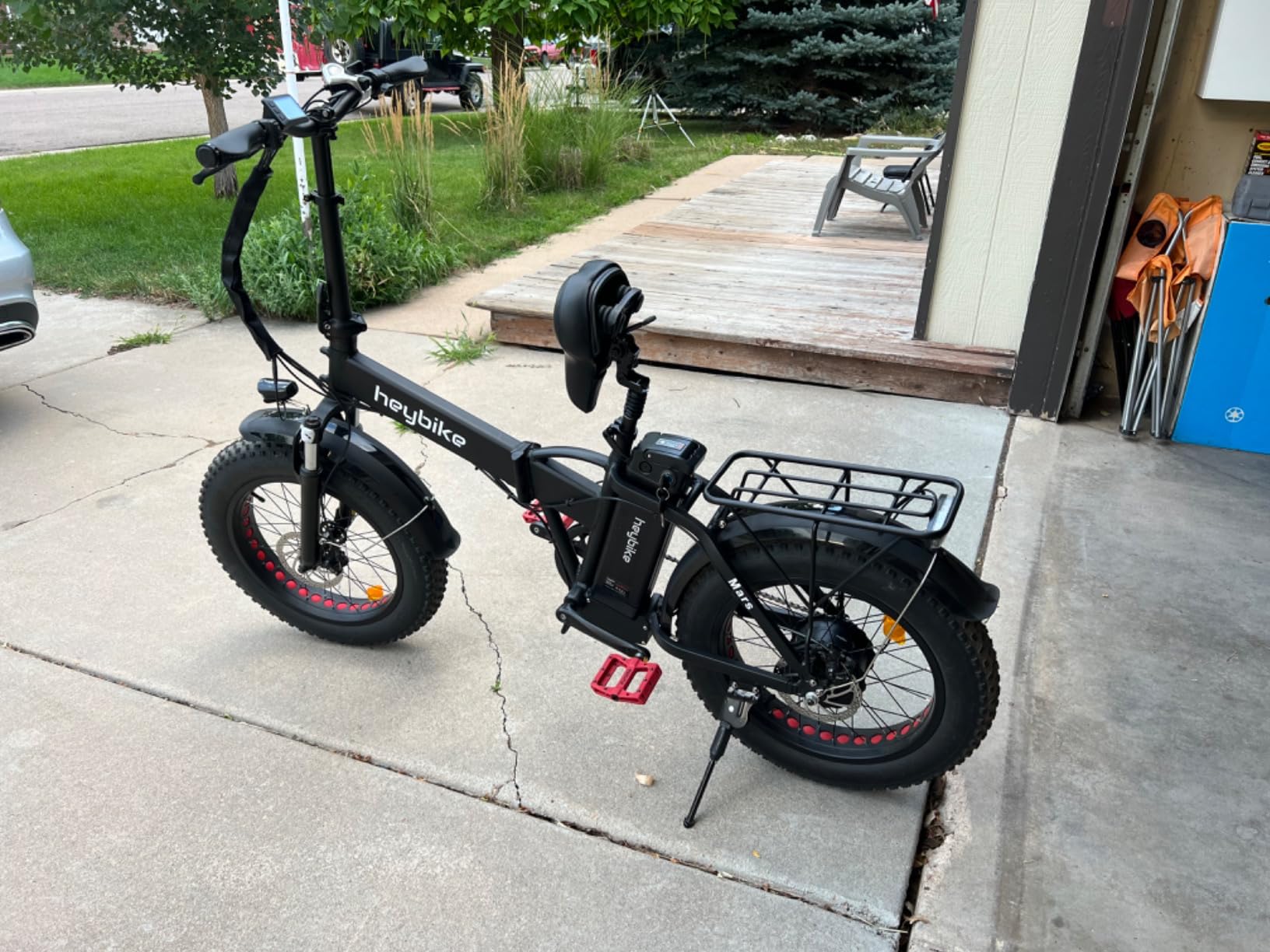
Who this seat suits
It suits a household carrying a genuinely large child on a bike with a wide rack, especially a wide e-bike rack that will not accept a narrower seat. If your child is close to the normal 40 lb limit but not there yet, this is one of the few racks seats that does not force an early upgrade.
Owners who are comfortable adding thread locker and replacing hardware can get a lot of seat for very little spend.
Where it falls short
Build consistency is the real concern. A steel frame that handles a heavy child well is only useful if the welds hold, and the failure reports are specific enough to take seriously.
Thin padding, no foot straps and hardware that loosens make it a poor first seat for a small child on rough roads, which is exactly the use most parents start from.
9. Bwcece Upgraded Rear Child Bike Seat: Strong Satisfaction on a Small Review Base
Bwcece Upgraded Rear Child Bike Seat,Back Mount Kid’s Bike Seat with Foot Pedals Back Rest Handrail, Designed for Children Aged 18 Month to 8 Years Old,Easy Installation (Black)
Rear mount
18 months to 8 years
Alloy frame at 8.4 lbs
Three-step assembly
Pros
- Soft thickened cushion
- Owner feedback skews strongly positive
- Backrest handrail and foot pedals give full support
- Three-step assembly with all hardware included
- Wide 18 months to 8 years range
Cons
- No harness type stated in the listing
- Load capacity depends on the bike
- Small number of reviews to judge by
Mounting requirement: a rear rack mount, with all hardware and tools included and assembly done in three steps. At 8.4 lb the seat is among the heavier ones here, so rack strength matters more than usual.
Across its 122 reviews, the star ratings skew heavily positive and the feedback is unusually consistent, with the thick cushion and the combination of backrest, handrail and foot pedals the most repeated praise points.
Three-step assembly with included tools means no trip to a hardware store, and owners report that one parent can fit it unaided.
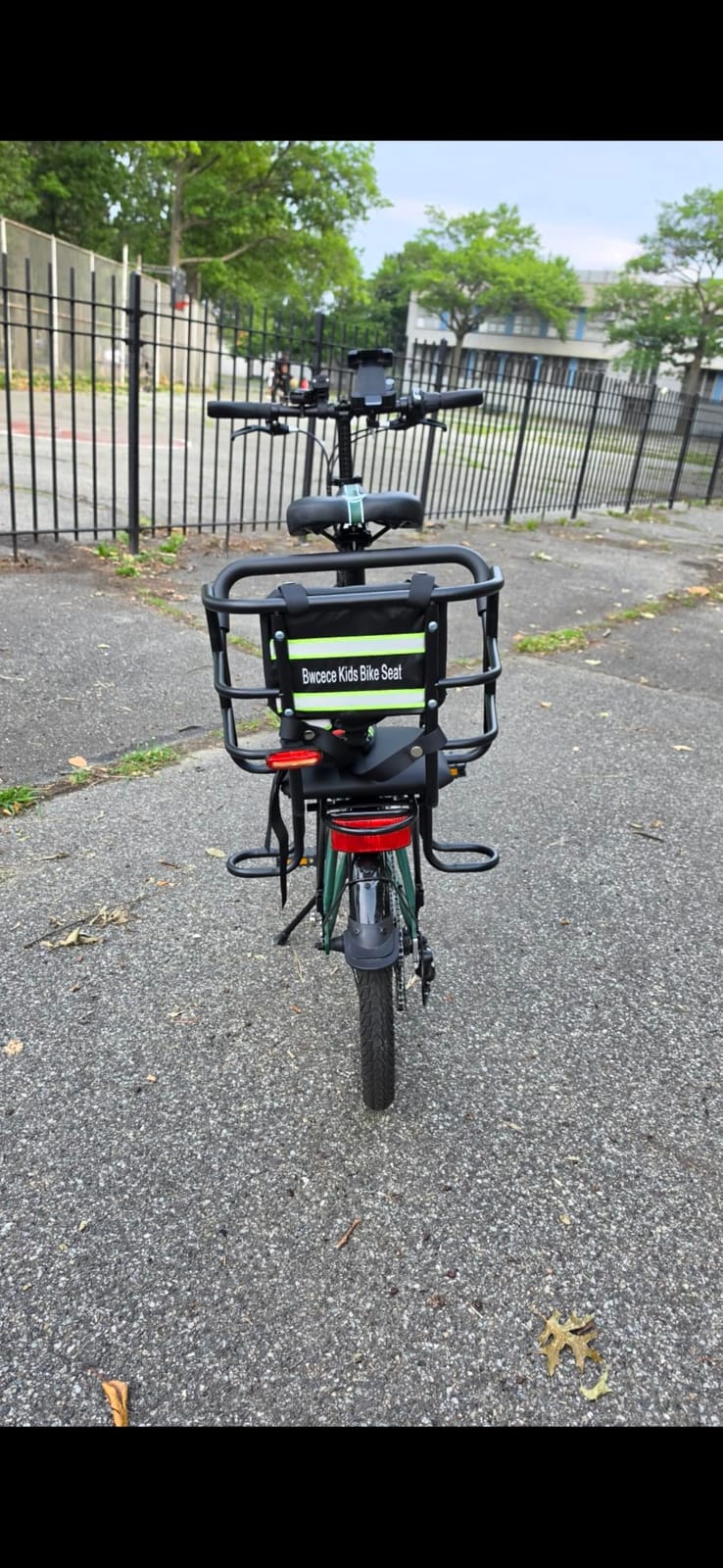
The gap here is information rather than build. The listing does not name a harness type, and with a stated age range that wide, from 18 months to eight years, the restraint system is the part you most need described precisely.
Load capacity is also left entirely to the bike, which means the real ceiling is whatever your rack is rated for. If your rack is marginal, this seat will not tell you so.
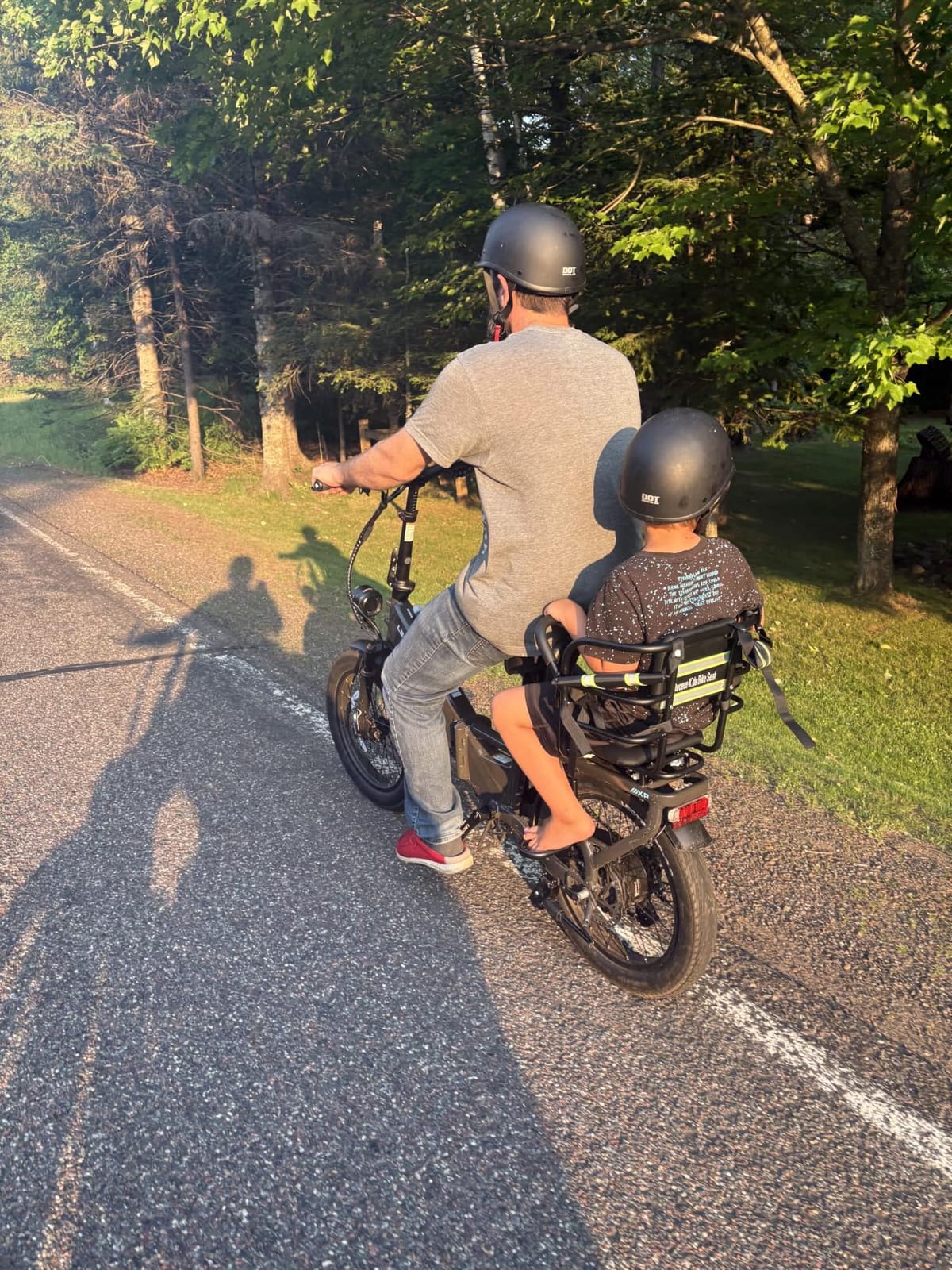
Who this seat suits
It suits a family on a small spend who wants a comfortable seat that a child can stay in for several years rather than a year. The wide age band is the appeal, and the cushion is what makes longer rides bearable.
It is also a reasonable second seat for a different bike, since the mount is a conventional rear rack attachment.
Where it falls short
Ask the seller what the restraint is before you buy. A seat that does not state its harness type should not be your first choice for a child who rides near traffic or who has learned to undo buckles.
Only 122 reviews is a small base, and the alloy frame at 8.4 lb is heavy for a rack-mounted seat. Check your rack rating carefully before committing.
10. OUSEXI Rear Child Bike Seat: Adjustable Armrests That Grow With the Child
OUSEXI Rear Child Bike Seat,Kids Seat for Adult Bike, Toddlers Rear Mount Bike seat Design for Children Aged 2 to 8 Years Old, Rear Frame Mounted Baby Bike Seats Kids Safety (Black)
Rear mount
Ages 2-8
Adjustable side armrests
2-year warranty
Pros
- Side armrests adjust as the child grows
- Waterproof leather-over-sponge padding wipes clean
- Removable sun canopy and lap bar
- Single parent can install it unaided
- Thick steel frame
Cons
- Footrests have no safety straps
- Rack straps and backrest attachment can fail within months
- Some hardware described as low quality
- Rack measurement guidance is inconsistent
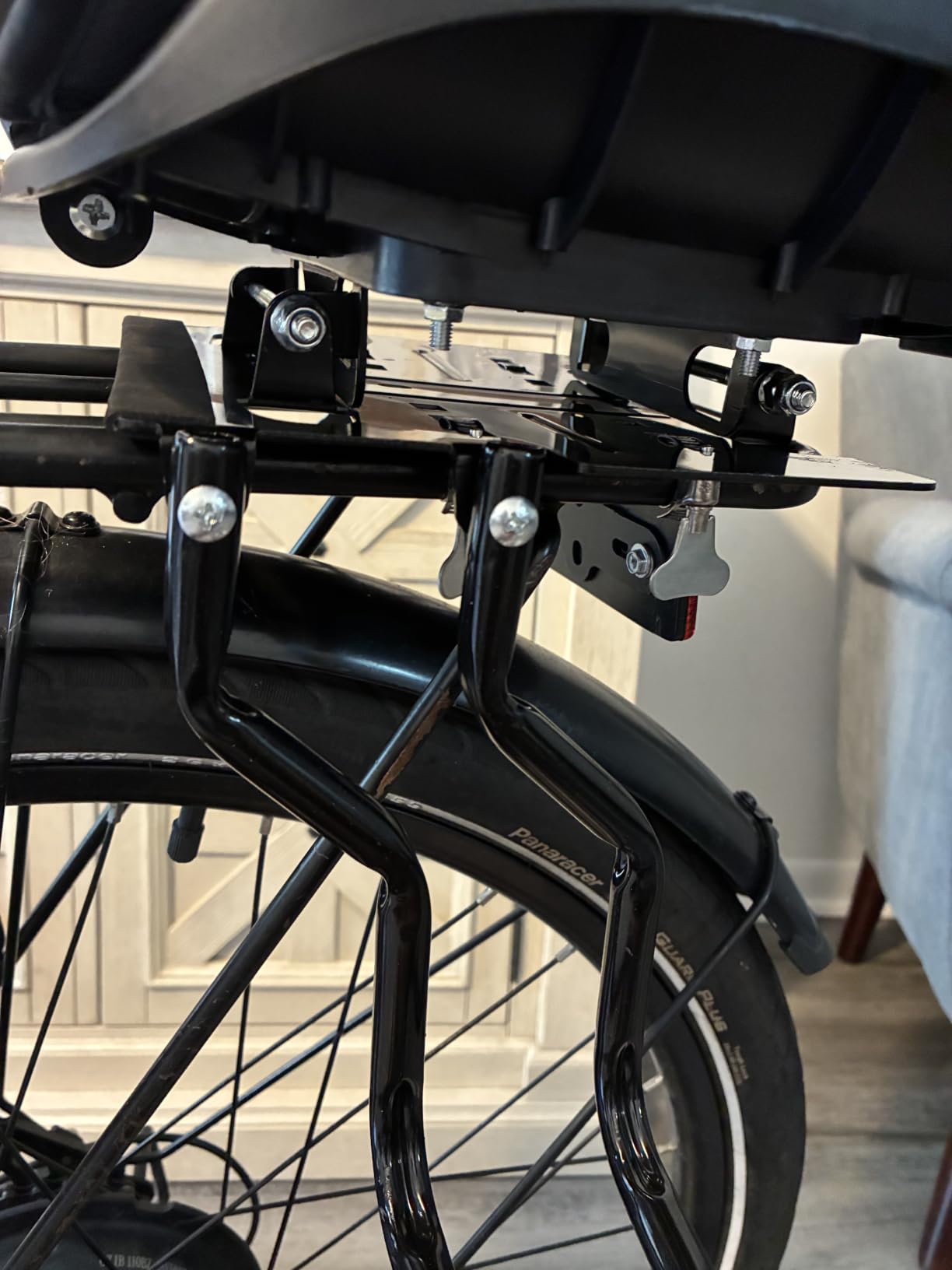
Mounting requirement: a standard rear rack. The listing’s rack guidance is internally inconsistent, giving a length and a width that contradict each other, so measure your rack top yourself rather than relying on those numbers.
The adjustable side armrests are the feature that sets this seat apart. By moving the armrests and the internal space, the seat grows with the child, which is how a product rated for ages two to eight can work across that range at all.
The seat and backrest are covered in smooth leather over thickened sponge, which is waterproof and wipes clean after a wet ride or a spilled drink. A removable sun canopy and lap bar add versatility for longer outings.
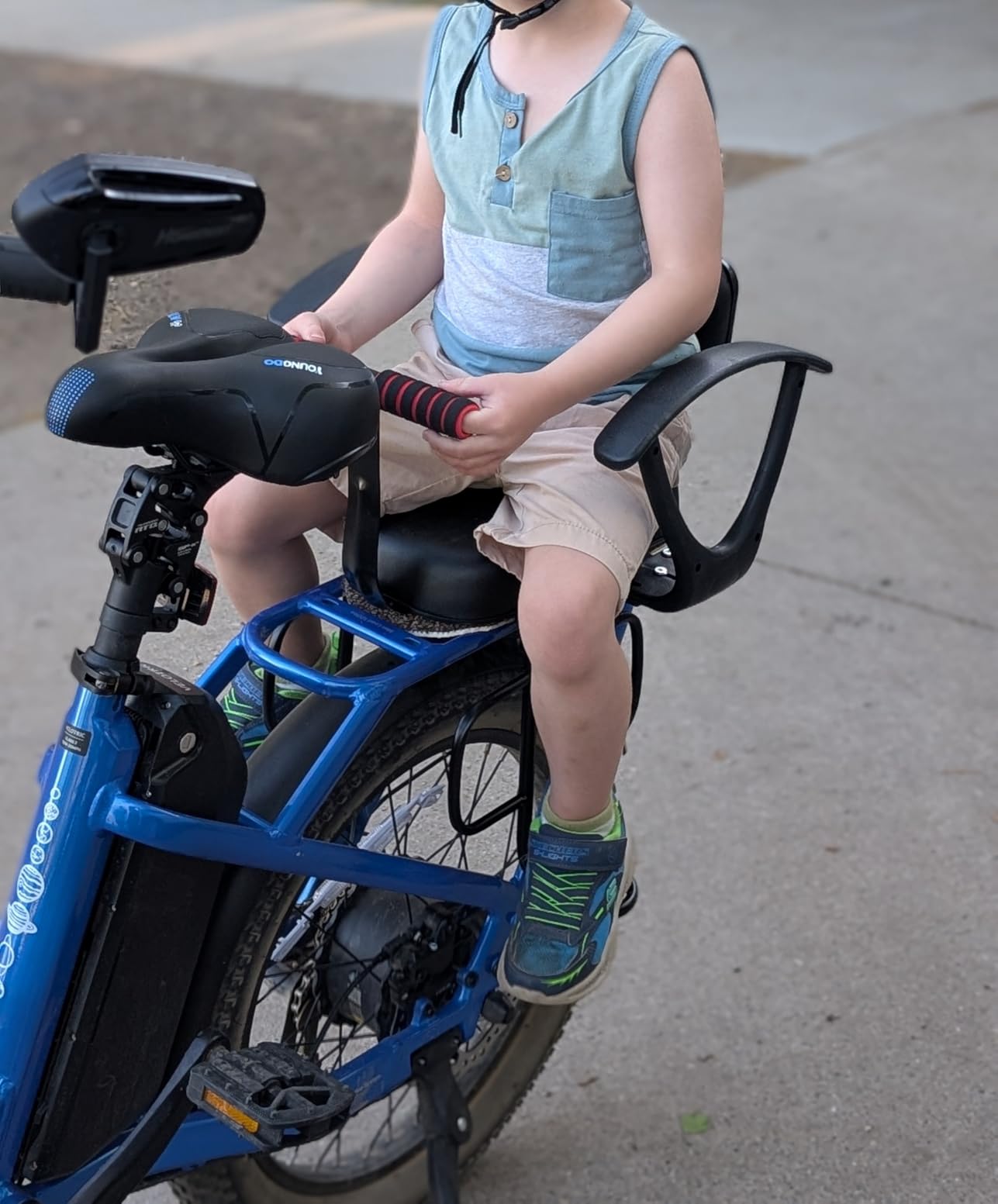
Footrests without safety straps are the most serious complaint in the reviews, with one owner reporting an ankle injury after a child’s foot slipped free. That is a specific, repeatable geometry and it is worth ruling out before you buy.
Attachment quality is the other theme. Rack straps and the backrest attachment have been reported failing within a couple of months, and a steady minority of one-star ratings reflects that pattern more than isolated bad luck.
Who this seat suits
It suits a family whose child is between roughly three and six, where a fixed-width seat would already be too narrow. The adjustable armrests make it a better long-term fit than a fixed-frame steel seat at a similar level of spend.
The waterproof covering is a genuine advantage for year-round use, and the two-year warranty is longer than most in this group.
Where it falls short
The unstrapped footrests are the deal-breaker for younger children, and the hardware complaints suggest you would need to inspect the attachment points regularly rather than once at installation.
It is also a rear rack mount with no stated weight ceiling of its own, so the limits are set by your bike. As always, that is the first thing to verify.
How to Choose: Front, Rear or Mid-Mount
The first decision is where the child sits relative to you, and it shapes everything from handling to how long the seat lasts.
Front mount seats keep your child in view, contained between your arms, and the child sees where you are going. The trade-off is handling: a loaded front end makes steering heavier and braking longer, and the weight limit is usually lower, often 38 or 40 lb. Front seats suit babies and toddlers up to about three, and they are the easiest to talk to.
Rear mount seats are the default choice for most families. A rear frame mount sits low and close, which keeps the center of gravity lower and makes the bike feel more stable than a rack seat. Rear frame mounts suit children from about nine months to five years and a 40 lb ceiling, which is the US certification limit.
Rack mount seats sit higher and further back. They are the easiest to install and swap between bikes, and they suit bikes that cannot take a frame mount, but they raise the center of gravity and put more leverage on your rack.
Open mid-mount seats have no harness. The child grips the handlebar and the seat relies on the shell for containment, which allows much higher weight ratings. They are for children past about four who can hold on reliably, and they are the answer for a child who has outgrown 40 lb.
If you are carrying two children, stop here and buy a trailer. No single seat handles two riders, and a trailer keeps the load low and centered instead of stacking weight on one end of the bike.
Frame Mount vs Rack Mount: The Four Measurements That Decide Fit
Compatibility is where most purchases fail, so run these four measurements before you order anything.
1. Seat tube clearance. A rear frame mount needs roughly 4 to 6 inches of clear seat tube between the clamp and the saddle when the saddle is down. If you ride very small frames, measure before you buy rather than assuming.
2. Rack eyelets and rack rating. A rack mount needs a rear luggage rack with mounting eyelets, and the rack should be rated well above the seat’s own weight. A 60 lb rack rating is a sensible floor. If your bike has no eyelets, a frame mount is your answer.
3. Disc brakes and rear suspension. A rack mount can conflict with disc brake hardware on some frames, and the Bell Cocoon 300 specifically excludes bikes with rear suspension. A frame mount avoids both of these problems entirely, which is why it is the more universally compatible option.
4. Headset and stem type. Front mounts need either a threaded quill stem or a threadless ahead stem with a matching clamp, and often a specific center-to-center bolt spacing. The iBert front seat needs 52mm to 62mm spacing, and open front seats need a battery compartment beam 5.5 cm wide or narrower. Check carbon frames too, where clamping can damage the frame.
On multi-bike households, budget for extra adaptors. A seat that fits one bike often needs a second bracket, and that cost is worth planning for rather than discovering later. If you also carry children by car, a properly fitted convertible car seat is the other restraint decision in most households.
Age, Weight and Certification: What to Buy After 40 lb
In the US, certified child bike seats are tested to ASTM F1625, which caps a child at 40 lb. Seats certified to the European standard EN 14344 are tested to 48.5 lb, and the same physical product can be labelled one way or the other depending on the market it was sold into.
That 40 lb number surprises a lot of parents, because most children reach it at around four or five. It is a hard limit, not a guideline, and exceeding it is the most common reason a seat is outgrown.
So what do you buy when your child passes 40 lb? Three routes exist. Move to an open mid-mount or front seat rated to 60 lb, such as the UrRider, which is the simplest transition. Move to a rack seat with a higher stated load rating, such as the WORAMUK steel seat, though check the build quality claims. Or move to a trailer, which takes children well past the child-seat ceiling.
On age, most paediatric guidance points to waiting until a child has good head and neck control, typically around nine to twelve months, before riding in any seat. Thule’s own testing starts at nine months with a note to consult a paediatrician below one year, and that is a sensible reference point regardless of brand.
One more certification note. Very cheap seats from unbranded sellers often show no standard at all in the listing. If a page does not name ASTM F1625 or EN 14344, ask the seller in writing before buying, and treat a non-answer as a reason to pick a different product.
Installation Checklist and the Pre-Ride Safety Routine
Install the seat following the manufacturer’s instructions, then run this sequence before the first ride.
1. Torque the mount. Work through every bolt on the bracket with a torque driver rather than a hand wrench, especially on carbon frames where overtightening causes damage and undertightening causes noise.
2. Check the harness height. Shoulder straps should sit at or just above the shoulders in a five-point system, and the chest clip should sit at armpit level. Re-check this as your child grows, because straps that are too loose let a child slip sideways.
3. Set the footrests. Adjust so the child’s feet rest flat with knees slightly bent. Check that foot straps, where fitted, are actually doing something.
4. Check the foot-to-wheel gap. On any seat without foot straps, look at the gap between the footrest and the front or rear wheel from a crouching position. If a foot can reach a wheel, that is a problem to solve before riding.
5. Test the buckle against your child. Sit the child in and try to undo the buckle themselves. If they can, you have a harness that will not survive a long ride, and this is the escape-artist problem that shows up over and over on parent forums.
6. Ride in a parking lot first. Ten minutes of low-speed riding gets you used to the weight, the steering and the longer braking distance before traffic is involved.
Then repeat a short version of this every ride: helmet on and properly fitted, harness snug with no twists, nothing loose in the child’s hands, and a check of the mount bolts after the first few rides and periodically after that. A proper helmet is the single most important safety item, in a seat or a trailer.
Frequently Asked Questions
Which child bike seat is the safest?
The safest child bike seat is one that is certified to ASTM F1625 or EN 14344, has a five-point harness with a childproof buckle, and fits your bike securely. Among the seats we compared, the Thule Yepp 2 Mounted and the Thule Yepp Nexxt2 Frame Mount stand out because both use a childproof magnetic-style buckle that a small child cannot release. A helmet, correctly fitted, remains the most important safety item regardless of which seat you choose.
Is there a bike seat that does not hurt?
Comfort problems usually come from three places: leg room, footrest height and harness placement. Seats with adjustable padded footrests, foot straps and an adjustable five-point harness, such as the Thule Yepp 2 Mounted or the Schwinn Deluxe, reduce complaints the most. A reclining seat is the answer for a child under two who falls asleep on every ride. Thin-padded steel-frame seats carry the most complaints about feeling hard over long distances.
At what age can you put a child in a bike seat?
Wait until your child has good head and neck control, which is usually around nine to twelve months. Thule designs and tests its seats from nine months and advises consulting a paediatrician for children under one year old. Until then, a bike trailer with full body support is the safer option. There is no fixed weight minimum, but a child who cannot hold their head up needs a seat with substantial head support rather than a front-mounted design.
Which is better for my child, a frame-mounted or a rack-mounted child bike seat?
A frame mount is usually better because it sits lower and closer to the rider, which keeps the center of gravity down and makes the bike more stable. It also avoids conflicts with disc brake hardware and works on bikes with no rack eyelets. A rack mount is easier to swap between bikes and is the only option on some frames, but it sits higher, loads your rack more heavily, and needs a rack rated well above the seat’s weight.
How do I know if a bike seat will fit my bike?
Measure four things before ordering: the clear seat tube length for a frame mount, the presence of rear rack eyelets and the rack’s weight rating for a rack mount, whether your disc brakes or rear suspension conflict with the mount, and your stem type and bolt spacing for a front mount. A front seat may need 52mm to 62mm center-to-center stem spacing, while an open front seat needs a battery compartment beam 5.5 cm wide or narrower.
What is the weight limit for child bike seats?
US-certified seats tested to ASTM F1625 are rated to 40 lb, and seats tested to the European EN 14344 standard are rated to 48.5 lb. Open seats without a harness, such as the UrRider front mount, are rated as high as 60 lb, and some steel rack seats state load limits well beyond the child-seat standard. Treat 40 lb as a hard limit rather than a guideline, and move to an open seat or a trailer once your child reaches it.
The Best Child Bike Seats in 2026: Final Verdict
The Schwinn Deluxe Child Bike Carrier is the best child bike seat for most families: proven over thousands of reviews, limited lifetime warranty, quick release, and a conversion to a rack carrier. The UrRider front seat is the answer when your child is too big for 40 lb and wants to stay in front. The Bell Cocoon 300 gives you a 5-point harness and a spoke guard for very little spend.
Whatever you choose, measure your bike first and test the buckle against your child before the first real ride. That ten minutes of checking prevents more bad rides than any feature on the spec sheet.