
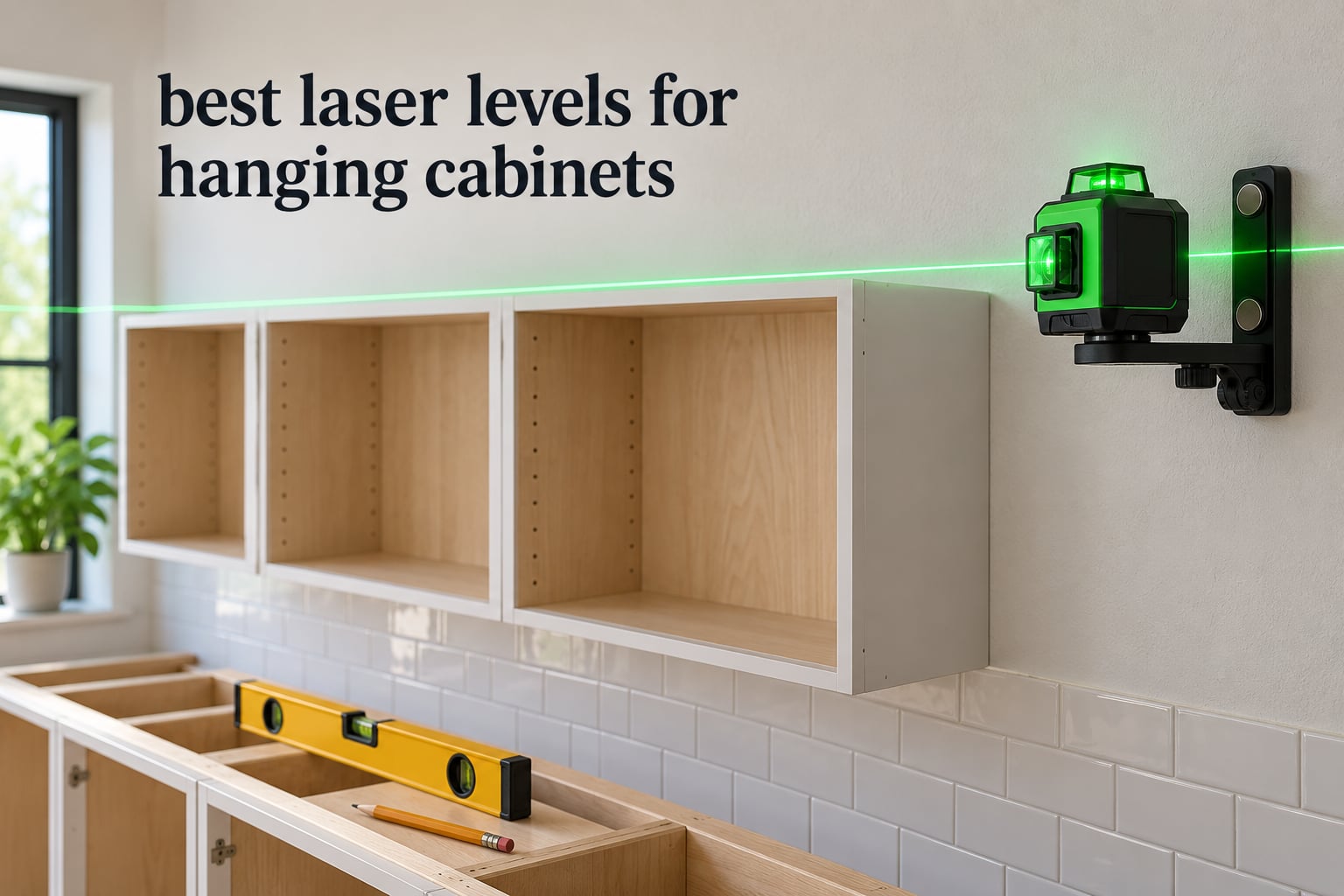
The best laser levels for hanging cabinets are 360-degree green-beam line lasers. A tool like that projects a continuous horizontal line around the whole room, so you can set your reference height once, snap a mark along every stud, and stop re-measuring at each box. Most installers working from the r/cabinetry community make the same jump when they move up from a basic cross-line unit: they want corner visibility and fine adjustment, not more range.
Cabinet installation punishes small errors in a way trim work does not. A reference line that drifts an eighth of an inch over a ten-foot run of upper cabinets reads as a visible downhill run the moment the doors go on, and by then the boxes are already screwed to the wall. A laser does not fix a bowed wall or a bad reveal, but it does stop you from introducing layout error of your own.
We compared twelve line lasers for this roundup, from a proven red cross-line to compact green 3×360 units with rechargeable batteries, and we paid attention to the things that only show up on a cabinet job: line visibility in a sunlit kitchen, whether the tool can be mounted at finished cabinet height rather than waist height, and how well the pendulum holds still when a second person walks past. If you want a broader look at laser levels for home projects, our DIY laser level guide covers general layout work. Once the uppers are up, the same height planning carries over to choosing a hanging pot rack that clears the cabinet line properly.
Table of Contents
Top 3 Picks for Hanging Cabinets

DEWALT DW088K Cross Line
- Red self-leveling cross line
- 1/8 in accuracy at 30 ft
- Integrated magnetic bracket
- 1 meter drop-rated housing

Huepar HM03CG 3×360 Green
- 3x360 green line coverage
- 1/9 in accuracy at 33 ft
- 98 ft working range
- 8 hour rechargeable battery

CIGMAN CM-701 3×360
- 12 green lines with 3x360 coverage
- Self-levels within plus or minus 4 degrees
- 4000mAh rechargeable battery
- Remote control included
The DEWALT DW088K takes the top spot because it has the deepest review history in this group and the most owners confirming it hits its stated accuracy, which is the one thing that matters when a whole run of uppers hangs off a single line. The Huepar HM03CG is the pick when your kitchen is L-shaped or you need a second wall at the same height, because a true 3×360 unit shows you the line around corners without moving the tool. The CIGMAN CM-701 is our choice for a compact, feature-complete unit that a single installer can carry up a ladder easily.
Best Laser Levels for Hanging Cabinets at a Glance (October 2026)
| Product | Specs | Action |
|---|---|---|
| DEWALT DW088K Self-Leveling Cross Line |
|
Check Latest Price |
| Huepar HM03CG 3×360 Green Laser |
|
Check Latest Price |
| CIGMAN CM-701 3×360 Green Laser |
|
Check Latest Price |
 Klein Tools 93LCLS Cross Line Klein Tools 93LCLS Cross Line |
|
Check Latest Price |
 Bosch GCL 2-160 Cross-Line Laser Bosch GCL 2-160 Cross-Line Laser |
|
Check Latest Price |
 IKOVWUK B1-12 3×360 Green Laser IKOVWUK B1-12 3×360 Green Laser |
|
Check Latest Price |
 Fanttik D2 Pocket Green Laser Fanttik D2 Pocket Green Laser |
|
Check Latest Price |
 PREXISO 2-in-1 Laser and Spirit Level PREXISO 2-in-1 Laser and Spirit Level |
|
Check Latest Price |
 PREXISO Multi-Surface Line Laser PREXISO Multi-Surface Line Laser |
|
Check Latest Price |
 RockSeed Cross Line Laser Kit RockSeed Cross Line Laser Kit |
|
Check Latest Price |
 Lusweimi Green Cross Line Kit Lusweimi Green Cross Line Kit |
|
Check Latest Price |
 BLACK+DECKER BDL220S Wall Mount BLACK+DECKER BDL220S Wall Mount |
|
Check Latest Price |
1. DEWALT DW088K – the most proven self-leveling cross line
DEWALT Line Laser, Self-Leveling, Cross Line, Red Beam (DW088K)
Red cross line
1/8 in accuracy at 30 ft
IP54
1/4-20 tripod thread
Pros
- Self-levels in 1-2 seconds and holds stated accuracy
- Integrated magnet grips corner bead and studs
- Over-molded housing rated to a 1 meter drop
- 1/4-20 thread fits a standard camera tripod
Cons
- Red beam is weak in outdoor daylight
- No pendulum transport lock
- Integrated clip grips thin sheet metal only
Over nine thousand reviews, and the pattern in them is remarkably consistent: this laser self-levels in a second or two and puts the line where the spec says it should. For a single straight run of uppers on one wall, that reliability is the whole job. Snap the line, transfer it with a pencil and a level, and fasten at will along it instead of measuring at every stud.
The integrated magnetic bracket is the part that earns its keep on a cabinet job. It grabs metal corner bead and the steel framing behind drywall, which means you can set the tool at the finished cabinet height rather than at waist height and let it hang there hands-free while you mark.
The build is genuinely jobsite-grade. The over-molded housing carries a one-meter drop rating, which matters when the tool lives in a truck bed or gets knocked off a ladder, and the IP54 shell shrugs off sawdust and splash. Accuracy holds at about 1/8 inch at 30 feet, which is comfortably inside what a cabinet run can absorb.
What it does not do is project a vertical line around a room, so a second wall in an L-shaped kitchen means moving and re-leveling the tool. There is also no pendulum lock, so the internal weight clunks around in the case, and the integrated clip is happiest on thin metal rather than the face of a framing stud.
For whom the DEWALT DW088K works well
If you are hanging one run of upper cabinets against a single wall, this is the tool to buy. Owners repeatedly report using it for drywall layout, drop-ceiling grid and deck ledger work as well, and the 1/4-20 tripod thread means any standard camera tripod will put it at the right height.
For whom it is the wrong choice
Skip it if your kitchen is L-shaped or U-shaped and you need to match height around a corner, because a cross-line tool only shows two planes from wherever it stands. A bright sunroom or a glass door that floods the wall with light is also a poor match, since a red beam loses contrast quickly there.
2. Huepar HM03CG – the green-beam pick for multi-wall runs
Huepar Laser Level 360 Self Leveling, Rechargeable Green Laser 3×360° Cross Line Lazer Leveler 3D Level Laser Tool for Construction and Picture Hanging, Strong Magnetic Bracket&Hard Carry Case -HM03CG
3x360 green lines
1/9 in accuracy at 33 ft
98 ft range
8 hours per charge
Pros
- Green lines stay readable in a sunlit kitchen
- 3x360 coverage reaches every wall and corner
- Accuracy checked against hand levels by owners
- Five-year device warranty
Cons
- ABS housing feels light in the hand
- Plastic tripod thread can strip
- Bracket has no height adjustment
This is the unit that answers the question r/cabinetry posters keep asking about moving up from a basic cross line. One horizontal plane and two full vertical planes means you set it once near the middle of the room and the line appears on every wall, including the one behind you, at exactly the same height.
Accuracy is rated at plus or minus 1/9 inch at 33 feet, tighter than most of the red-beam tools here, and multiple owners report checking it against a conventional level and getting matching results. The magnetic bracket offers fine adjustment, which is the micro-adjust feature cabinet installers ask about when matching two non-adjacent walls.
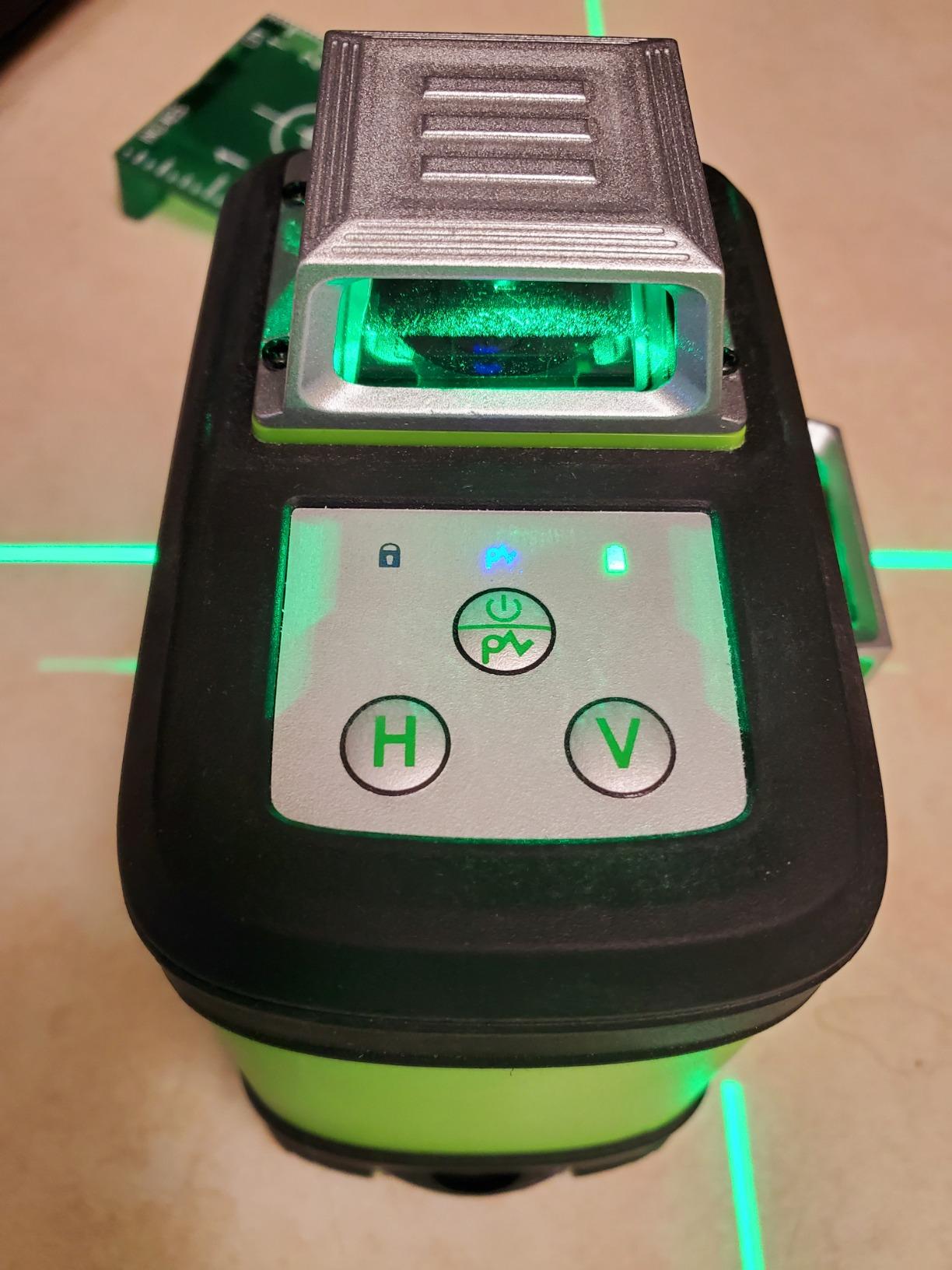
The green beam is the real upgrade for kitchen work. Green lines read as noticeably brighter than red under the same light, which matters when a window or a glass patio door is throwing light across the wall you are marking. Working range is quoted at up to 98 feet, and eight hours of runtime per charge comfortably covers a full install day.
The compromises are honest ones. The body is ABS with a soft rubber overmold rather than a metal housing, and several owners mention that the 1/4-20 tripod thread is molded into plastic and can strip. The bracket mounts solidly but has no height adjustment of its own, so fine positioning comes down to how you place it.
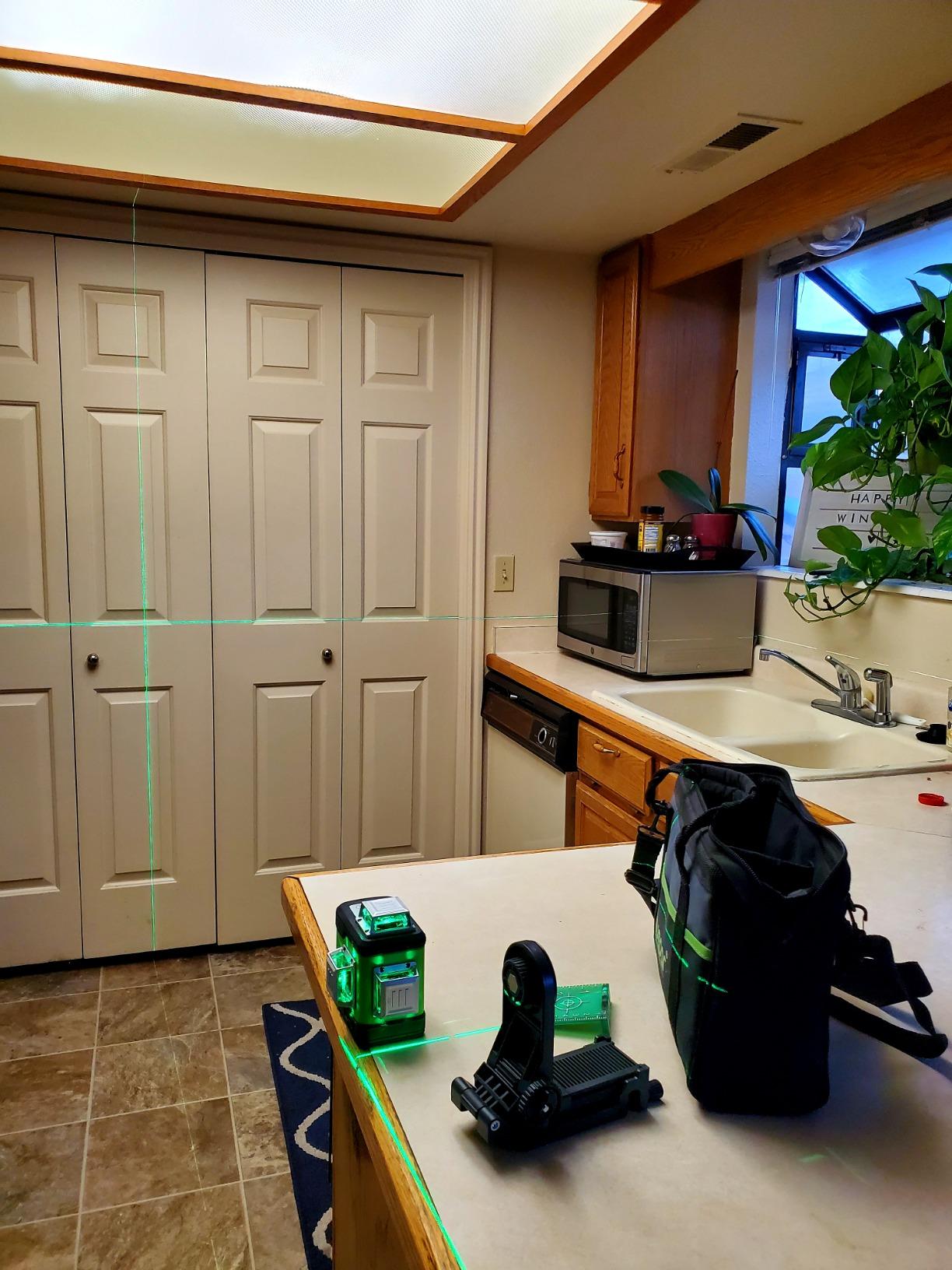
For whom the Huepar HM03CG works well
This suits a full kitchen remodel where cabinets wrap a corner, or any install where you would otherwise re-level the tool at the end of every wall. Pros on WoodWeb and in cabinet installer forums consistently describe the corner visibility as the feature that made them upgrade.
For whom it is the wrong choice
For a single short run, it is more tool than the task needs, and tradespeople rate it as strong value for occasional use rather than for daily site work. Line gaps can appear in the beam, and the small breaks bother people who want one unbroken line to mark along.
3. CIGMAN CM-701 – compact 3×360 coverage with a remote
CIGMAN Laser Level Self Leveling 3×360° for Picture Hanging & Construction
12 green lines, 3x360 coverage
Self-levels within 4 degrees
4000mAh battery, IP54
Pros
- Bright green beams in ambient light
- Full 3x360 coverage for cabinet and wall layout
- Remote control for line and brightness
- Compact at under a meter of body length
Cons
- Small folding mini tripod is hard to position precisely
- Rotating base knob lacks fine adjustment
- Non-replaceable internal battery
The CM-701 is smaller than most 3×360 units, and that matters when the tool has to ride up a ladder to finished cabinet height rather than sit on the floor. The body measures under four inches long and it mounts on a standard 1/4-20 thread, so your own tripod works if the included mini base is too small.
Coverage is the full 3×360 arrangement: one horizontal plane plus two vertical planes, with twelve green lines in total. Owners report verifying the accuracy against professional four-foot levels, which is a stronger claim than most of the green-beam tools in this group make.
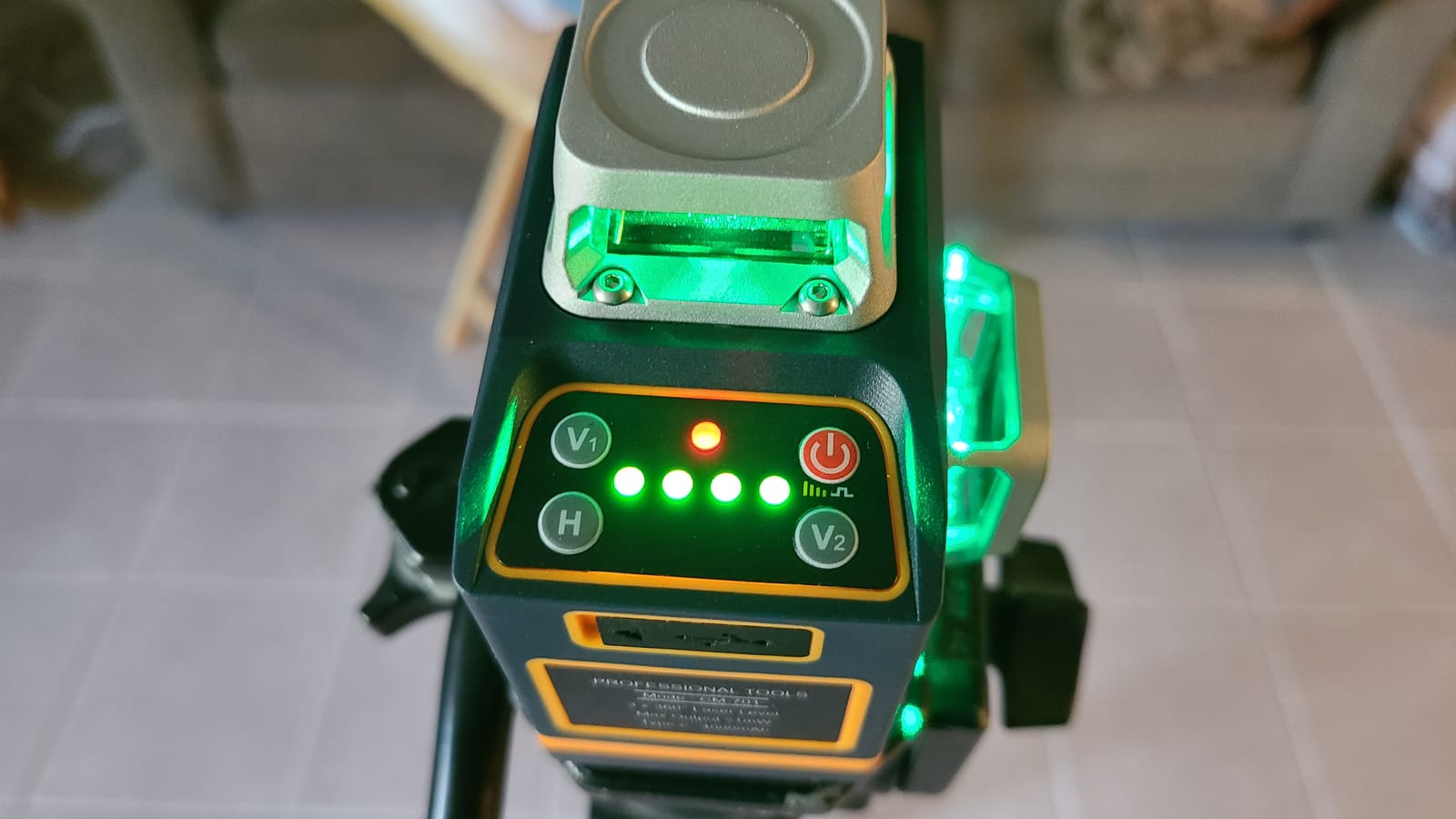
The remote control is a genuinely useful cabinet feature. You can change lines or dim the beam from across the room without touching the tool, which means you stop knocking a set laser out of level every time you only wanted to switch off a vertical line. The 4000mAh rechargeable battery runs through a working day, and the IP54 shell handles the dust of a demolition-to-cabinet project.
There are tradeoffs. The included folding mini tripod is compact but fiddly when you need precise positioning, and the rotating base knob does not have fine adjustment resolution, so matching height on a second wall takes patience. The internal battery is not user-replaceable, which is a problem if the tool lives on a truck for years.
For whom the CIGMAN CM-701 works well
It suits a single installer who wants full room coverage in a package that fits in one hand and lasts a full day on a charge. Several owners describe it as the reason they stopped re-leveling a tool partway down a cabinet run.
For whom it is the wrong choice
If you mark heavy ledger boards or rails where a wide beam spreads out, the three-to-five millimeter line width is a slight disadvantage against a thin, sharp single-line tool. It also does not help at all in direct sunlight, and some owners find it more capability than an occasional weekend project needs.
4. Klein Tools 93LCLS – bold red lines with a plumb spot
Klein Tools 93LCLS Self-Leveling Class II (≤ 1mW) Laser Level with Bright Red Cross Lines and Plumb Spot, Magnetic and Ceiling Clamp Mounting
Red cross line with plumb spot
150 ft indoor range
IP54
360 degree magnetic bracket
Pros
- Bold lines stay readable in bright rooms
- Plumb spot transfers floor and ceiling points
- Accuracy matched conventional bubble levels
- Hard case and ceiling grid clamp included
Cons
- No manual mode
- locking the pendulum kills the beam
- A tripod is needed for comfortable working height
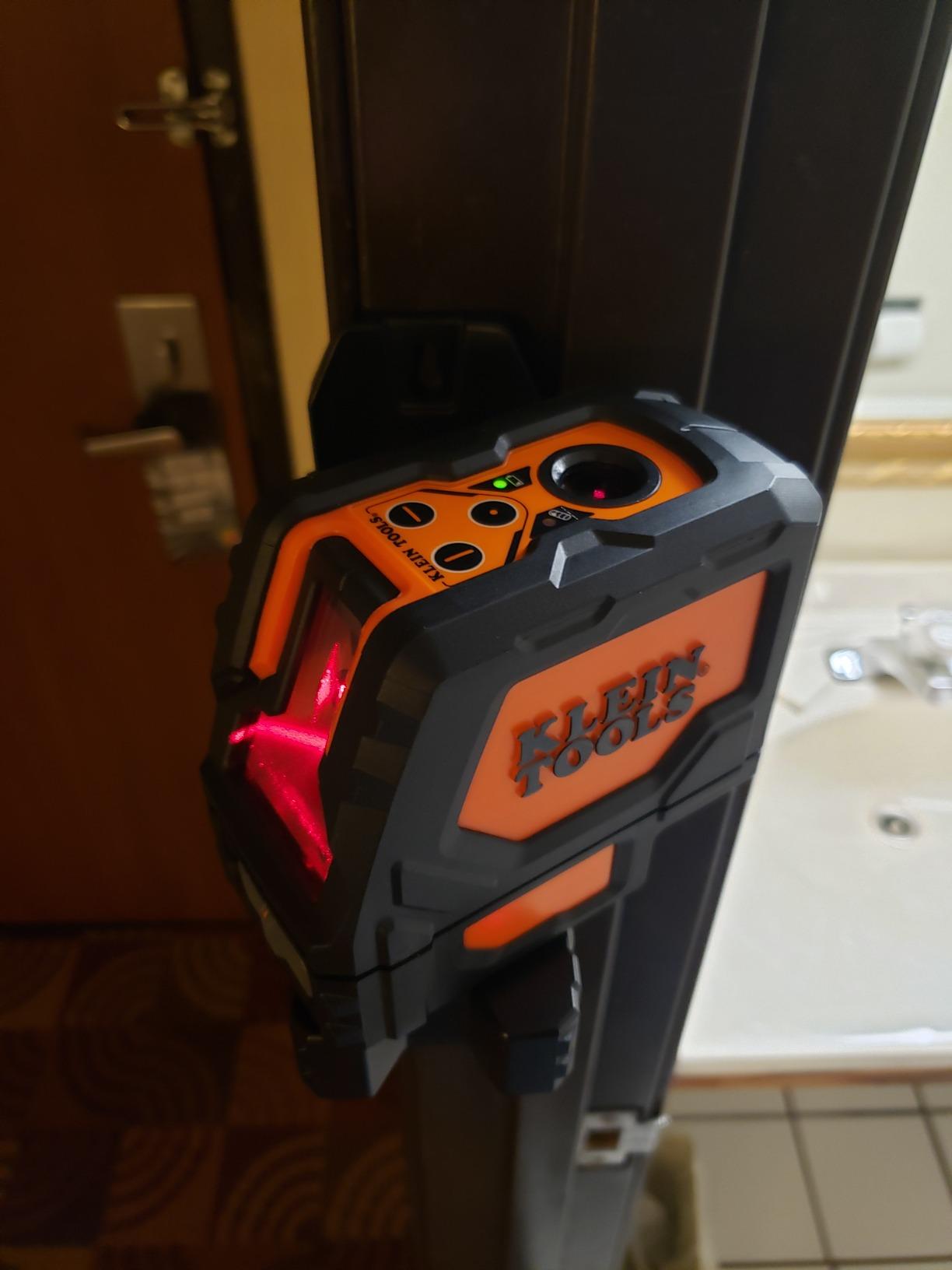
The Klein projects strong, easily read red lines indoors, and owners confirm the accuracy against two conventional bubble levels with matching results. The rare-earth magnetic bracket is integrated into the body with both 1/4 and 5/8 inch threads, so it can sit on steel framing or on a tripod without an adapter.
The plumb spot is the feature cabinet installers use most and reviewers praise most. It lets you mark a point on the floor and transfer it straight up to the ceiling, which is how you locate the wall stud line for a tall pantry or a floor-to-ceiling run.
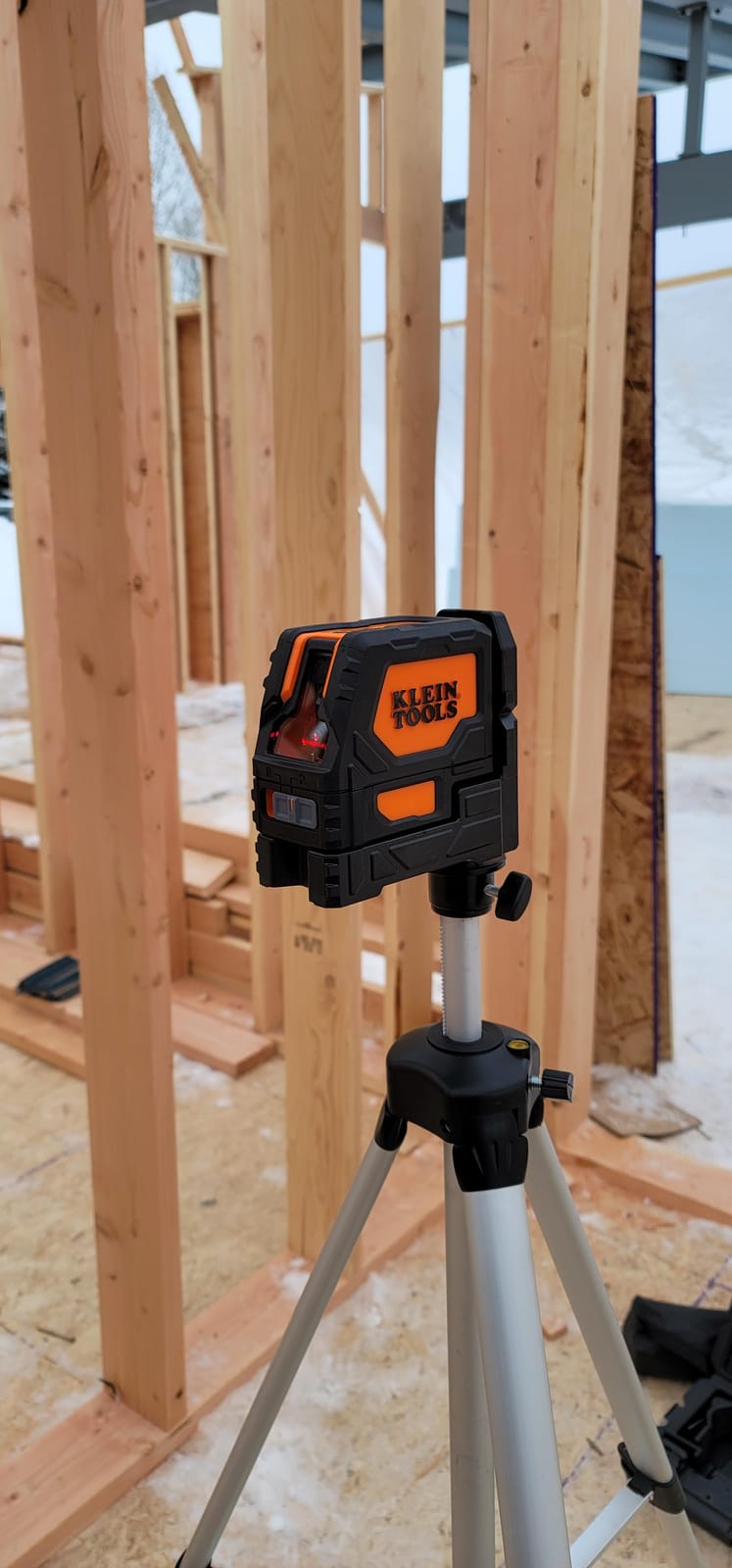
Rated indoor range goes up to 150 feet, more than enough for any kitchen, and the pendulum self-levels quickly to give plumb and level references without manual adjustment. The IP54 body and hard plastic case are noticeably more durable than the soft-pouch kits at the budget end.
The one significant limitation is that it is self-leveling only. Locking the pendulum for angled layout also cuts the beam, so diagonal work needs a different tool. A tripod is also widely recommended, because the integrated bracket is fine for a wall but awkward for holding the tool at the height of a cabinet rail.
For whom the Klein Tools 93LCLS works well
It is a good match for an installer who wants one dependable red tool with a plumb point and does most work indoors. The plumb reference makes tall cabinet runs and floor-to-ceiling pantry placement considerably faster.
For whom it is the wrong choice
Skip it if you need angled or diagonal layout lines from the same tool, since the manual mode cuts power. The magnets are also described as weak on thin drywall corner metal, though they hold on thicker steel framing.
5. Bosch GCL 2-160 – plumb points and a rotating magnetic mount
BOSCH GCL 2-160 Self-Leveling Cross-Line Laser with Plumb Points
Cross line plus plumb points
1/8 in accuracy at 33 ft
RM 1 rotating mount
IP54
Pros
- Bright accurate lines over 65 ft visible range
- RM 1 mount rotates while staying on the plumb point
- Manual mode locks lines at any angle
- Ceiling grid clip and hard case included
Cons
- Red beam visibility drops in strong sunlight
- Receiver sold separately for long range
- Higher tier than generic cross-line models
The Bosch is the most mechanically refined cross-line laser here, and the reason is the RM 1 magnetic rotating mount. It rotates the tool a full 360 degrees while keeping the beam centered on the plumb point, so you can sweep lines around a room from a single mounting point without re-aiming.
Accuracy is rated at 1/8 inch at 33 feet with a 65-foot visible range, and the Smart Pendulum System self-levels while flagging an out-of-level condition up to four degrees. For cabinet work, that warning is genuinely useful, because a slightly off mount is the usual cause of a line that looks wrong on the wall.
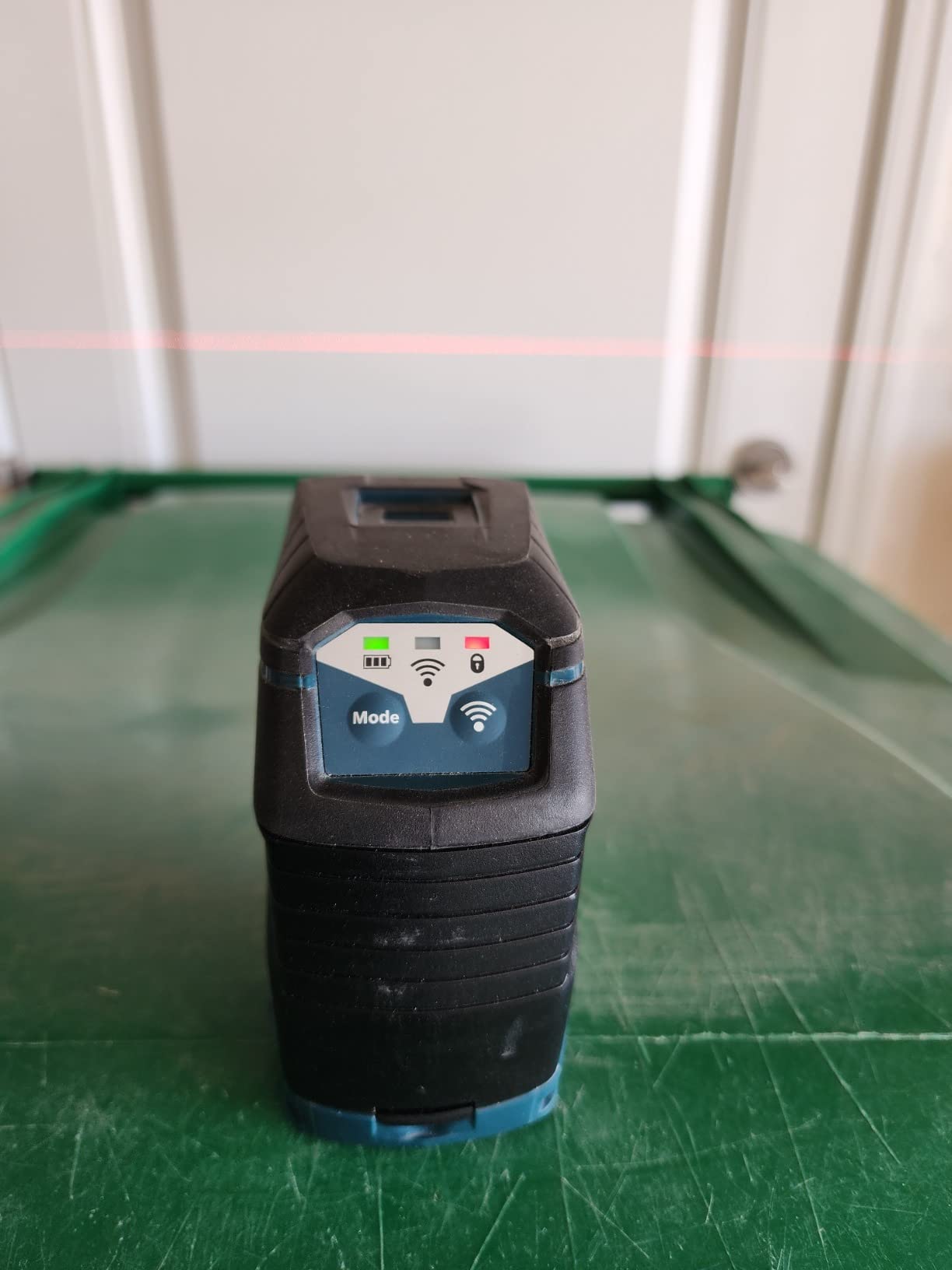
Manual mode locks the lines at any angle, which the Klein cannot do, and VisiMax power monitoring stretches battery life. The over-molded IP54 body, ceiling grid clip and hard carry case make it a kit you can leave in the truck without thinking about it.
Be clear about the tradeoffs. It is a red-beam unit, so brightness drops in strong ambient light, and the optional receiver needed for long-range work is a separate purchase. For a single cabinet run you will not need either, but the line still is not a green-beam line.
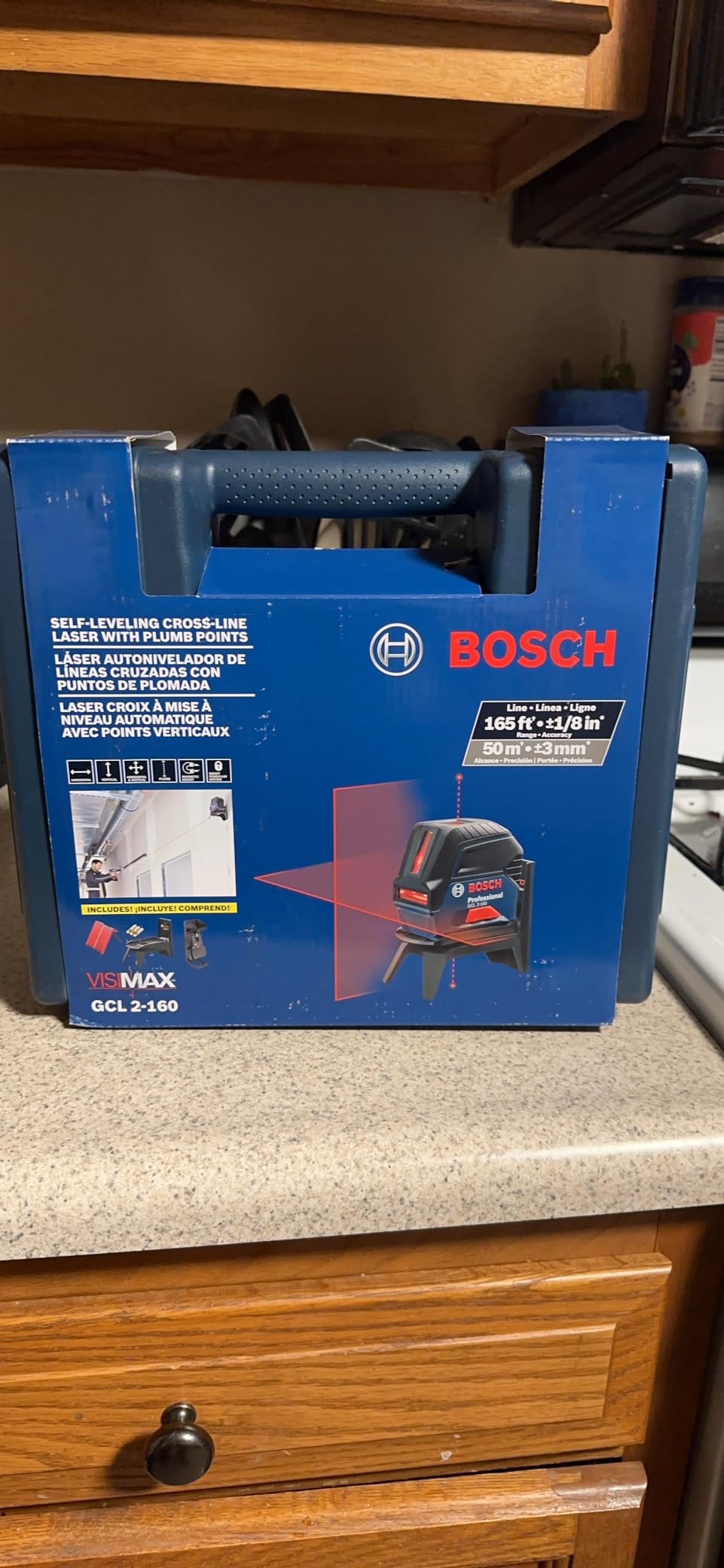
For whom the Bosch GCL 2-160 works well
It suits an installer working in finished rooms who prefers to mount the tool once and mark around it, and it rewards anyone who values a hard case and a real rotating bracket. The plumb points help with ceiling cut-ins and tall pantry positioning.
For whom it is the wrong choice
If your main problem is a sunlit wall, a red beam is the wrong answer regardless of how good the mount is. It also does nothing for matching height on a second, non-adjacent wall, since a cross-line tool only covers two planes from where it stands.
6. IKOVWUK B1-12 – the best value 3×360 green laser
IKOVWUK Laser Level with 12 Green Lines, Built-in 5200 mAh Li-ion Battery
12 green lines, 3x360 coverage
65 ft range
5200mAh battery, 8 hours
Remote to 16 ft
Pros
- Bright green lines in typical indoor light
- 3x360 layout covers the room without repositioning
- 5200mAh battery runs a full day
- Remote works through walls
Cons
- Lines wash out in bright and outdoor light
- Persistent out-of-level beep annoys some users
- Charges with the supplied AC adapter only
The B1-12 does the same core job as the Huepar and the CIGMAN, projecting one horizontal and two vertical 360-degree planes in green, for noticeably less money. If the goal is corner visibility for a multi-wall kitchen and the budget is moderate, that is where the value is.
Owners cite it repeatedly for tile, drywall and ceiling layout, which tells you the line quality holds up for marking. Self-leveling happens within three degrees and an alarm flashes when the tool is out of level, so a crooked mount gets caught immediately rather than quietly.
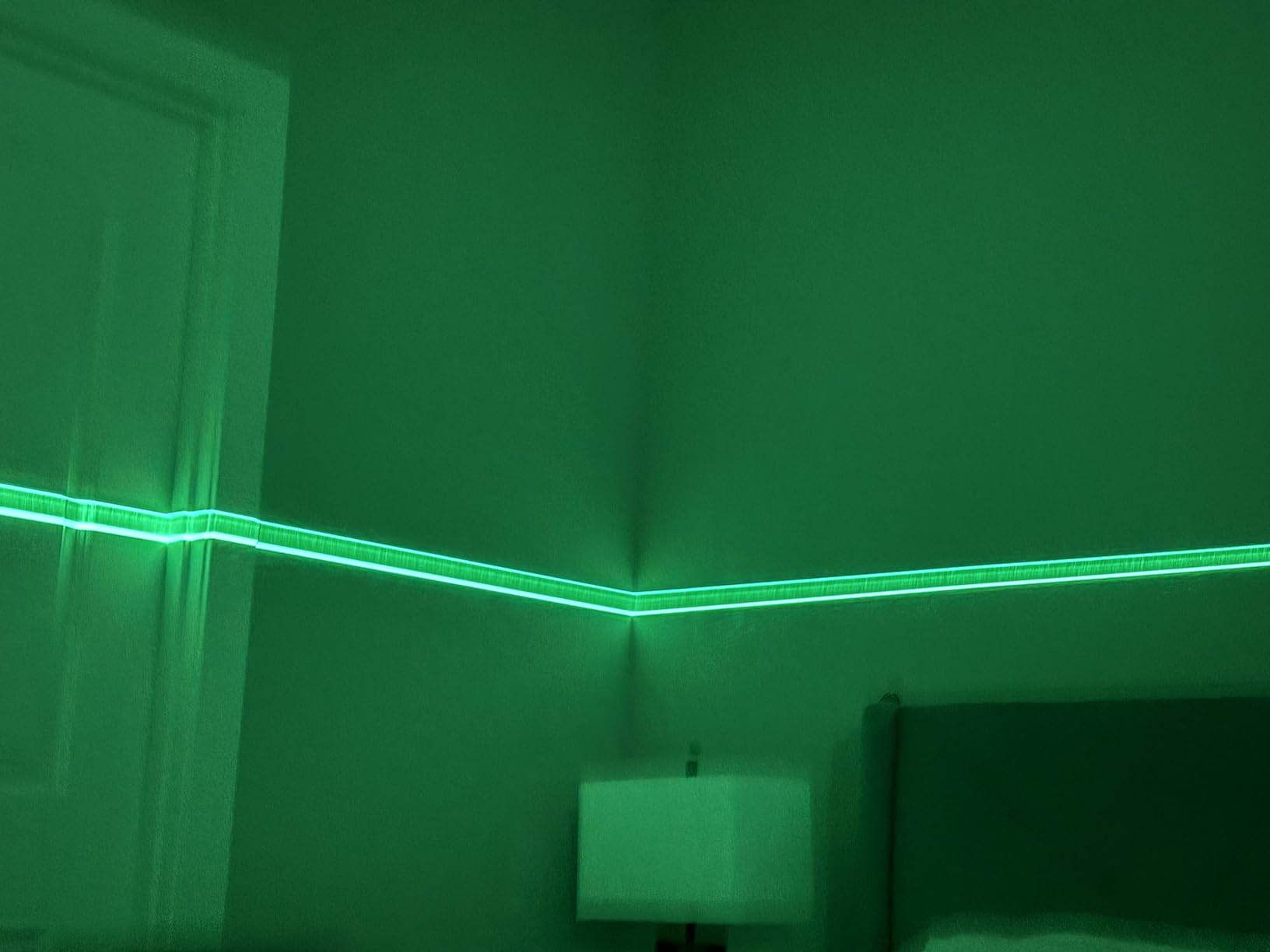
The 5200mAh built-in battery is the largest in this group and runs up to eight hours, so a full cabinet day does not involve a charger. The remote reaches about 16 feet and works through walls, which lets you kill a vertical line without climbing down from the ladder. Brightness is adjustable across two green strengths for darker work areas.
Two practical problems stand out. The unit charges with the included AC adapter block rather than a generic USB-C cable or power bank, which catches people out on site. And the out-of-level beep is persistent enough that some users switch it off mentally, which is not ideal when that warning is the thing telling you your mount moved.
For whom the IKOVWUK B1-12 works well
It is the pick for a homeowner or remodeler who wants a genuine 360-degree layout tool without paying for the premium tier. The L-shaped magnetic bracket, metal target plate and charger are all in the box, so there is nothing extra to hunt down before the first day of install.
For whom it is the wrong choice
It is a poor choice for direct sunlight or an unglazed room, since the green lines wash out. A small number of owners also report the line drifting out of level after pressing the self-level button, so re-check against a hand level before you snap a long reference line.
7. Fanttik D2 – pocketable green laser for one small run
Fanttik D2 Pocket Green Laser Level for Picture Hanging and Home DIY
Green cross line
1/8 in accuracy at 30 ft
10 hour battery
0.56 lb body
Pros
- Green beam roughly four times more visible than red
- Weighs 0.56 lb with rubber drop protection
- Ten hour battery over USB-C charging
- Magnetic bracket rotates 360 degrees on metal
Cons
- Receiver not included for the 164 ft pulse range
- Beam fades in direct sunshine
- Cross lines only with no full 360 coverage
The Fanttik D2 is the smallest capable laser in this roundup at 0.56 pounds, and it is the one we would hand someone hanging a single short run of uppers rather than a whole kitchen. It disappears into a pocket, rides up a ladder one-handed and still projects a green cross line rated accurate to 1/8 inch at 30 feet.
Green brightness is quoted at roughly four times red under the same light source, which for a picture-hanging or single-cabinet job is more than enough. The integrated 2200mAh battery runs about ten hours over USB-C and is rated for more than 500 recharge cycles, so the charging routine is rare.
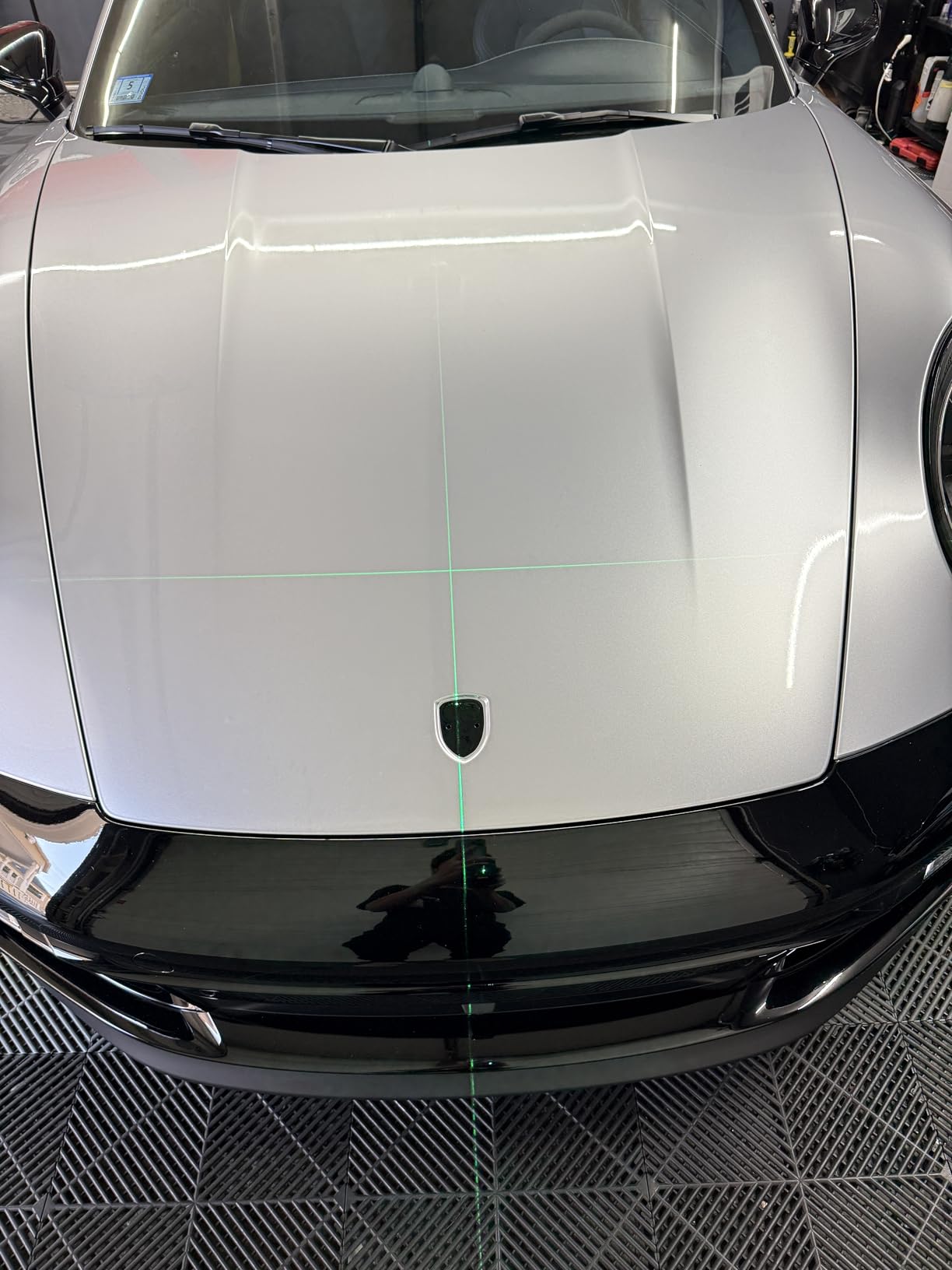
The magnetic bracket stand fastens to metal and rotates 360 degrees, which is enough to set the line at a chosen height on steel framing and step back. Self-leveling works within four degrees, and locking the pendulum gives you manual mode for angled lines that the cross-line-only tools here cannot do.
The limitation is coverage. A cross-line unit shows two planes, so matching height around a corner means moving and re-leveling. Direct sunlight also reduces visibility, and the receiver needed for the full pulse-mode range is not included.
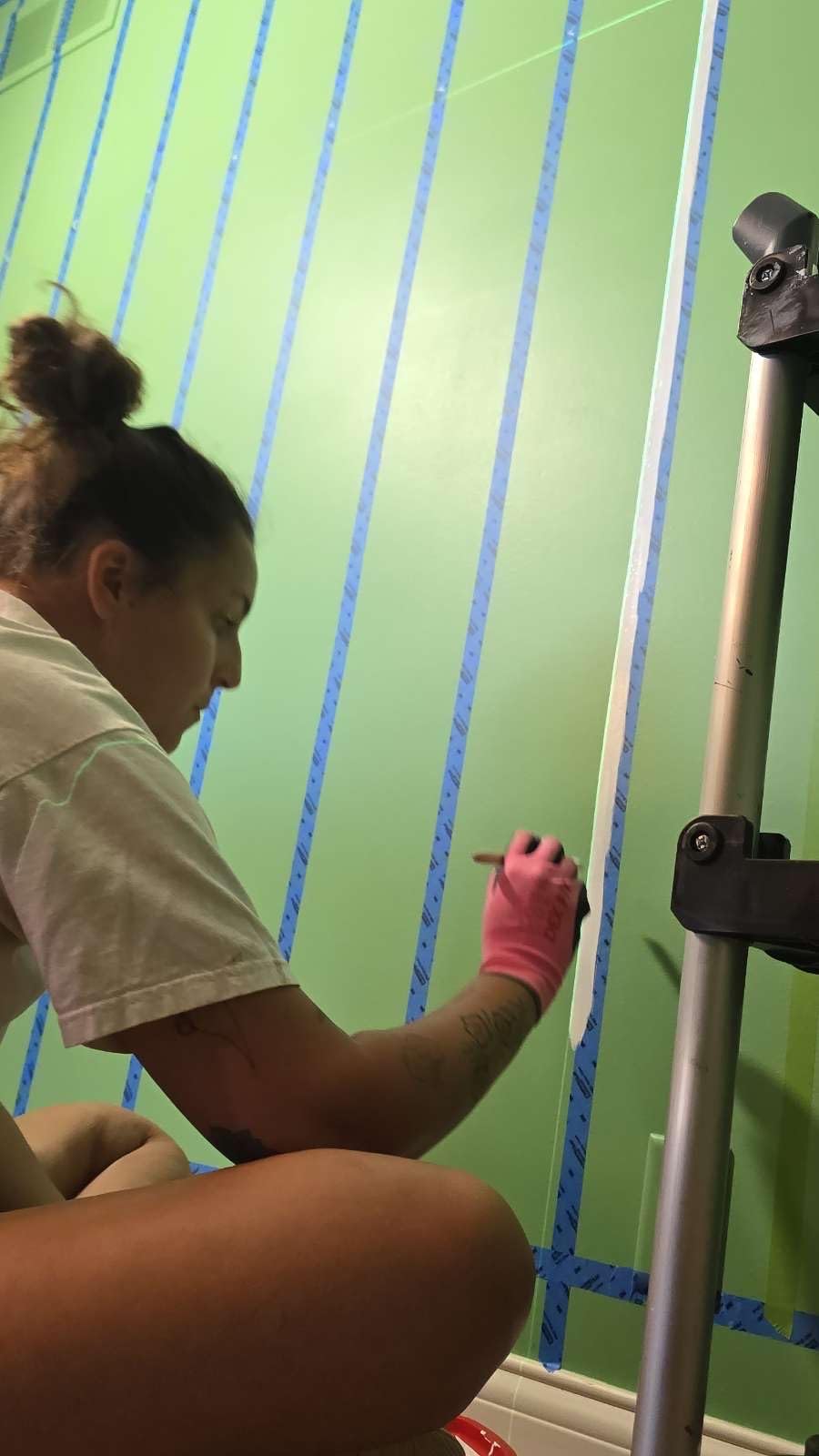
For whom the Fanttik D2 works well
It is a good first laser for a homeowner, or a second tool for an installer who wants something small to carry for trim, shelves and short cabinet runs. The rubber overmold survives the drop that a plastic tool in a toolbox will not.
For whom it is the wrong choice
Any kitchen with a corner in the cabinet plan needs full 360 coverage, and this does not have it. It is also not the tool for a bright sunroom, where the green beam stops competing with the ambient light.
8. PREXISO 2-in-1 laser and spirit level – the budget two-tool combo
PREXISO 2-in-1 Laser Level 100Ft/30Ft, 12″ Magnetic Spirit Level with Light
100 ft alignment point
30 ft leveling line
12 inch aluminum spirit level
Dual magnetic faces
Pros
- Two tools in one body for less than one laser
- 100 ft point useful for marking hanger positions
- LED-lit vials readable in dark rooms
- Magnetic on two milled sides
Cons
- Does not measure distance
- 30 ft line is shorter than a cross-line laser
- Bubble vials are small for fine readings
This is the odd one out in the lineup, and for a first cabinet project it is more capable than the price suggests. The body is a 12 inch heavy-duty aluminum spirit level with two bubble vials, and the same body throws a red alignment point out to 100 feet plus a horizontal leveling line to 30 feet.
Owners use it for marking hanger spacing, leveling cabinets and trim, and the 100 foot point is the part that helps most in that context. Point the end at the wall, walk the run, and mark each hanger or bracket location without moving anything.
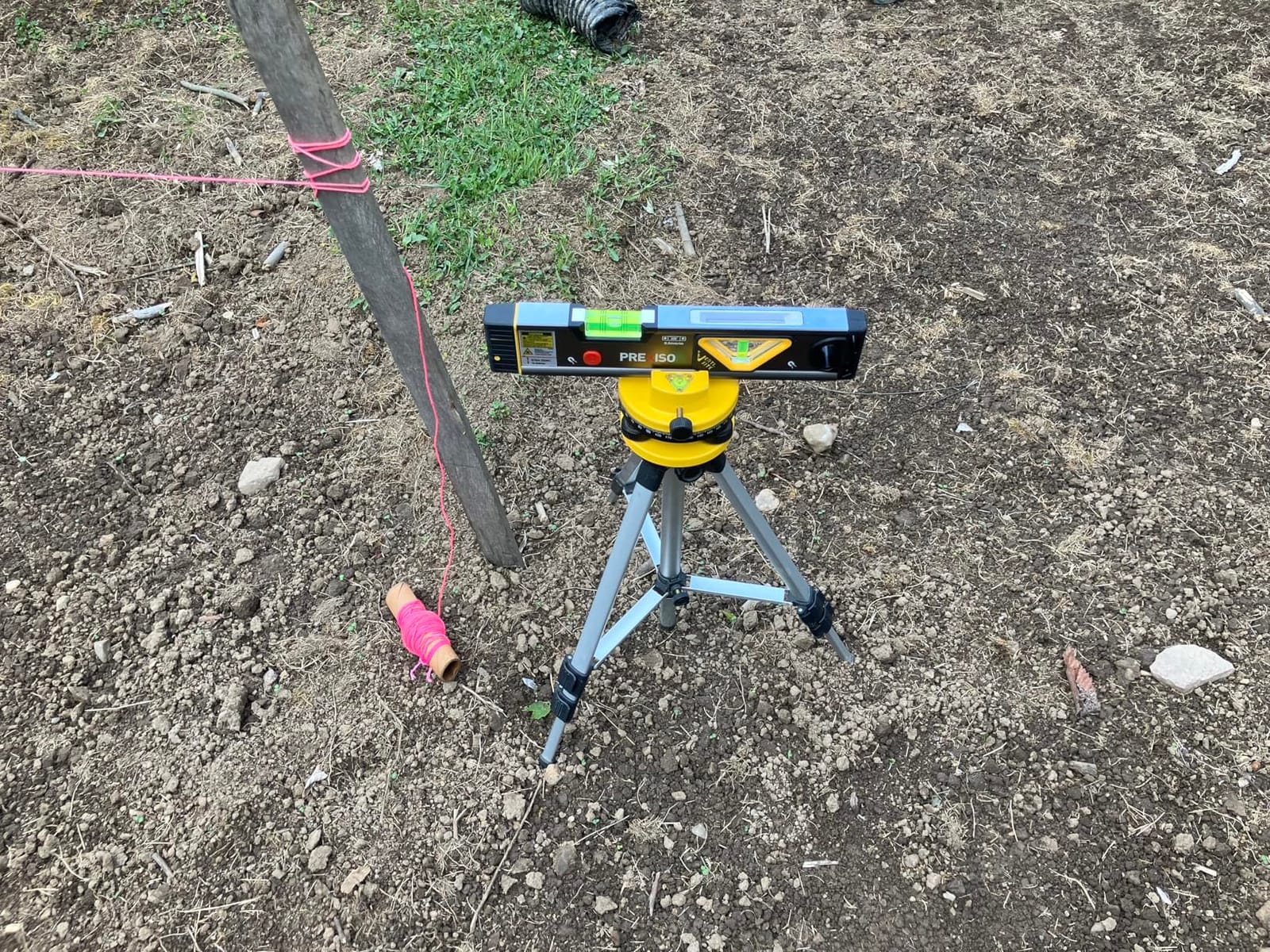
The milled magnetic surfaces on two sides let it stick to steel studs hands-free, which is how it gets to finished cabinet height without a tripod. Two LED-lit bubble vials make it readable in a dark or unfinished space, and a V-shaped groove along the body handles pipe work if you move into a bathroom later.
It is not a distance measurer despite the numbers in the name, and the 30 foot line is noticeably shorter than a dedicated cross-line laser. The vials are also small, so a careful reading takes more attention than a long horizontal line would.
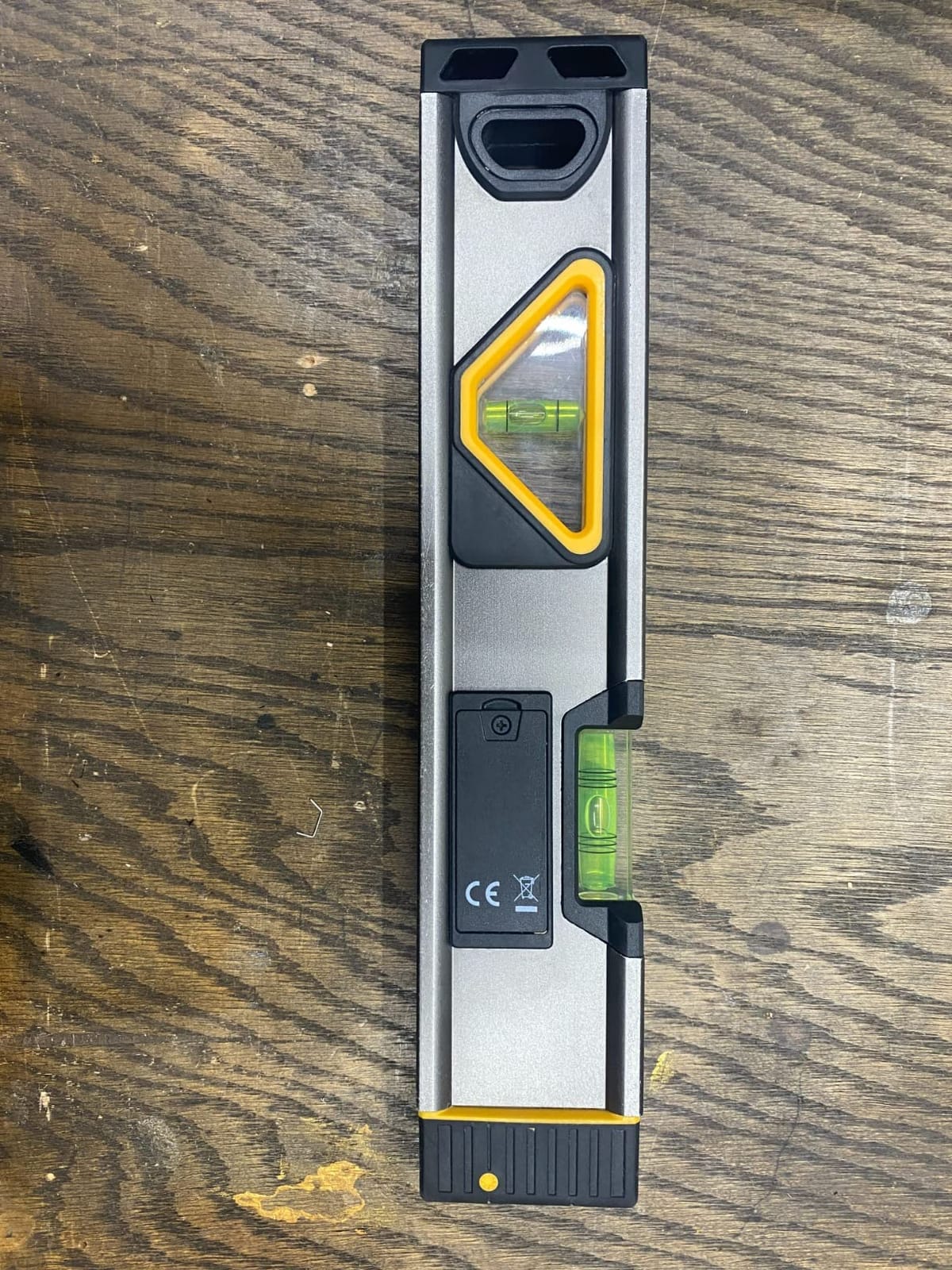
For whom the PREXISO 2-in-1 works well
It suits a first kitchen project on a budget, or anyone who wants a good hand level for trim and cabinet stiles in the same purchase. For a short run of uppers on a steel-framed wall it is genuinely efficient.
For whom it is the wrong choice
A long cabinet run that wraps a corner is out of reach, since you are holding the tool rather than mounting it. Anything needing vertical reference or a plumb point is also outside what this body offers.
9. PREXISO Multi-Surface line laser – the budget tool that mounts to the wall
PREXISO Multi Surface Laser Level LED Light Vial, Cross Line Laser
3 lines up to 30 ft
Exact 90 degree intersection
Angle dial 15 to 75 degrees
Wall mount base
Pros
- Projects lines onto surfaces you cannot mount to
- Wall mount base frees both hands for marking
- LED-lit dial and vial for dark spaces
- Single-switch setup for fast deployment
Cons
- Not a stud finder or magnetic nail finder
- Integrated vial is very small and hard to center
- Adhesive strips can pull paint off walls
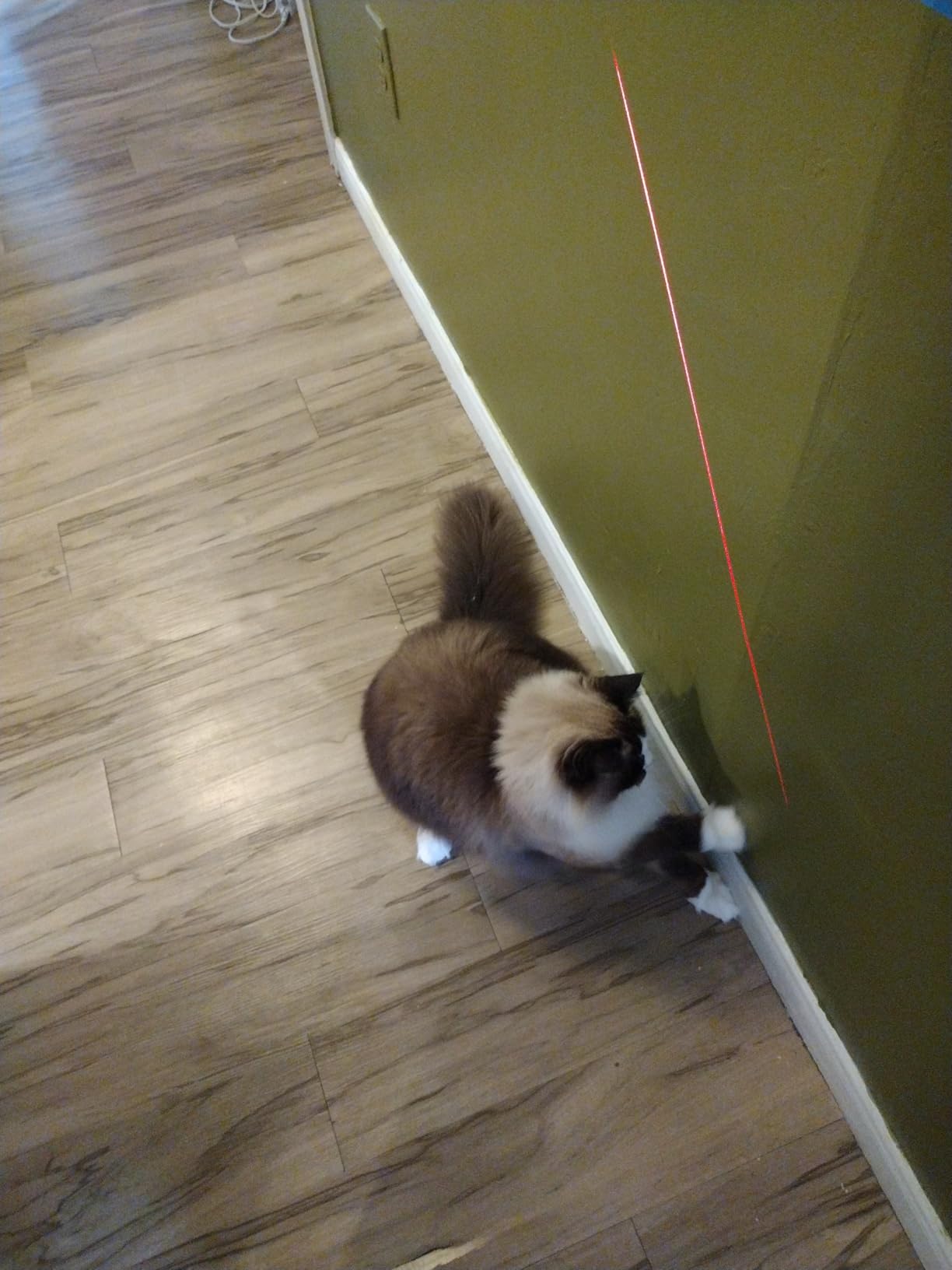
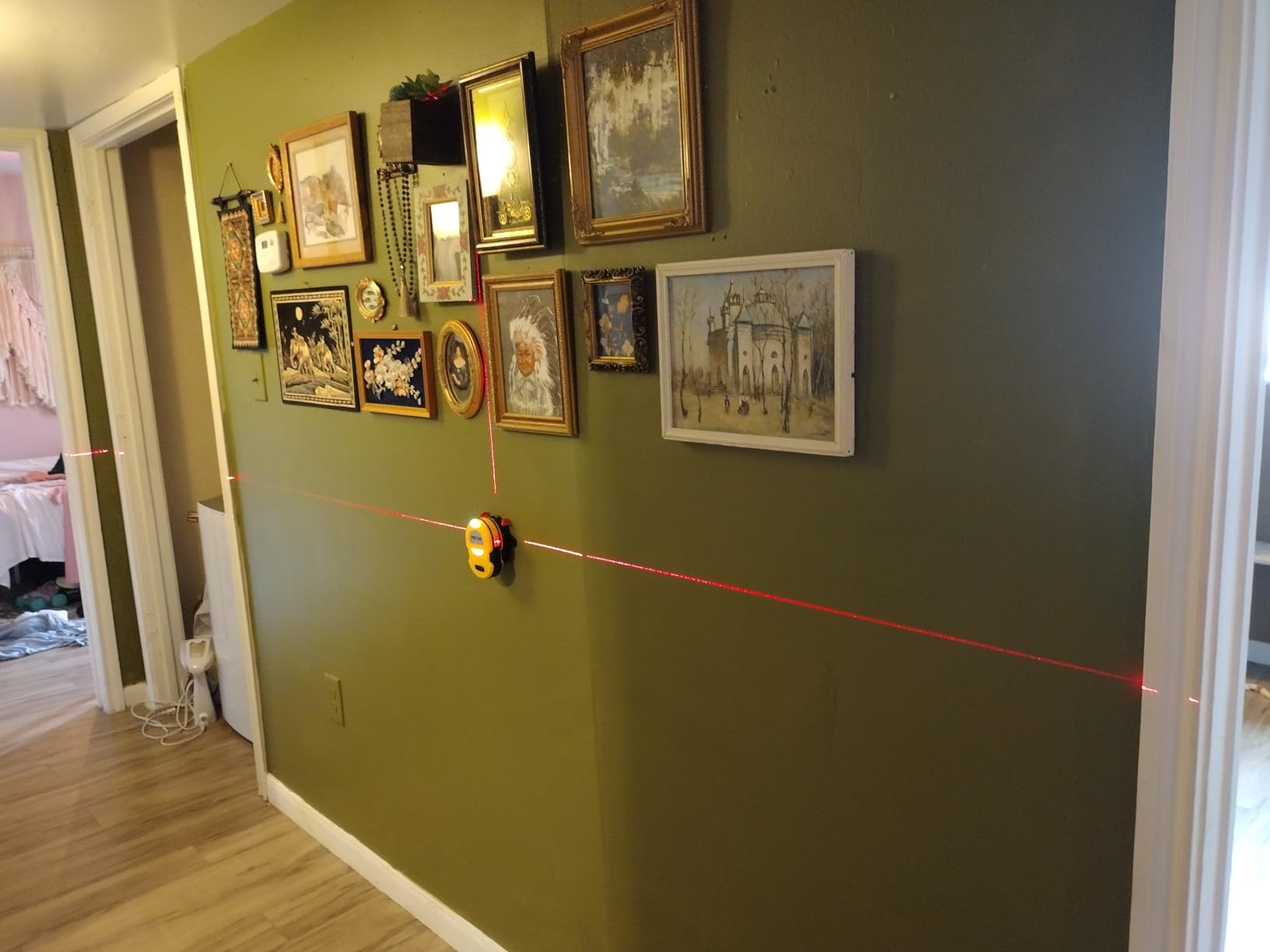
The distinguishing feature is the wall mount base, with three ways to fix it: two pins for rough surfaces, ten self-adhesive strips for smooth ones, and pin holes on top. That is what makes it useful on a cabinet wall where there is no steel to magnet to and no tripod you want to set up.
It projects three lines at an exact 90 degree intersection onto any surface up to 30 feet, so you can lay out a corner, mark the cabinet height, and confirm square without ever touching the tool. The angle dial adjusts from 15 to 75 degrees for stair or angled trim work.
Everything is driven from one switch, which matters when you are climbing down a ladder between marks. The dial and the bubble vial are both LED lit, and the whole thing runs on two AA batteries, so there is no charging to plan around mid-run.
Limitations are real. The integrated bubble vial is tiny, so precise centering takes care, and the dial scale has no zero mark, which makes readings approximate. The self-adhesive strips can lift paint off a finished wall, and the pins bend with no replacements included.
For whom the PREXISO Multi-Surface works well
It is a good choice when you cannot magnet the tool to anything, such as a plaster wall or a freshly taped drywall run. It is also handy for shelf and molding layout, and the number of reviews it has accumulated is a fair signal of how often people reach for it.
For whom it is the wrong choice
It is not a stud finder and not a magnetic nail finder, and anyone buying it for locating framing will be disappointed. The 30 foot reach is short, and the tiny vial makes it a poor reference for a full wall of cabinet boxes.
10. RockSeed cross line laser – a complete kit with a 40 inch tripod
Laser Level, RockSeed Cross Line Laser with Self-Leveling, Vertical and Horizontal Line, Rotatable 360 Degree, Carrying Pouch, Battery Included (40 Inch Tripod)
Green cross line, 110 degree fan
1/8 in accuracy at 30 ft
IP54, 4 ft protection
40 inch tripod included
Pros
- Green cross is easy to see on walls in daylight
- Self-levels in seconds and holds without drift
- Tripod included so nothing else to buy
- Magnetic base for hands-free marking
Cons
- Beam is weak in bright conditions
- Tool must physically sit at line height
- Fixed reference offset from the housing
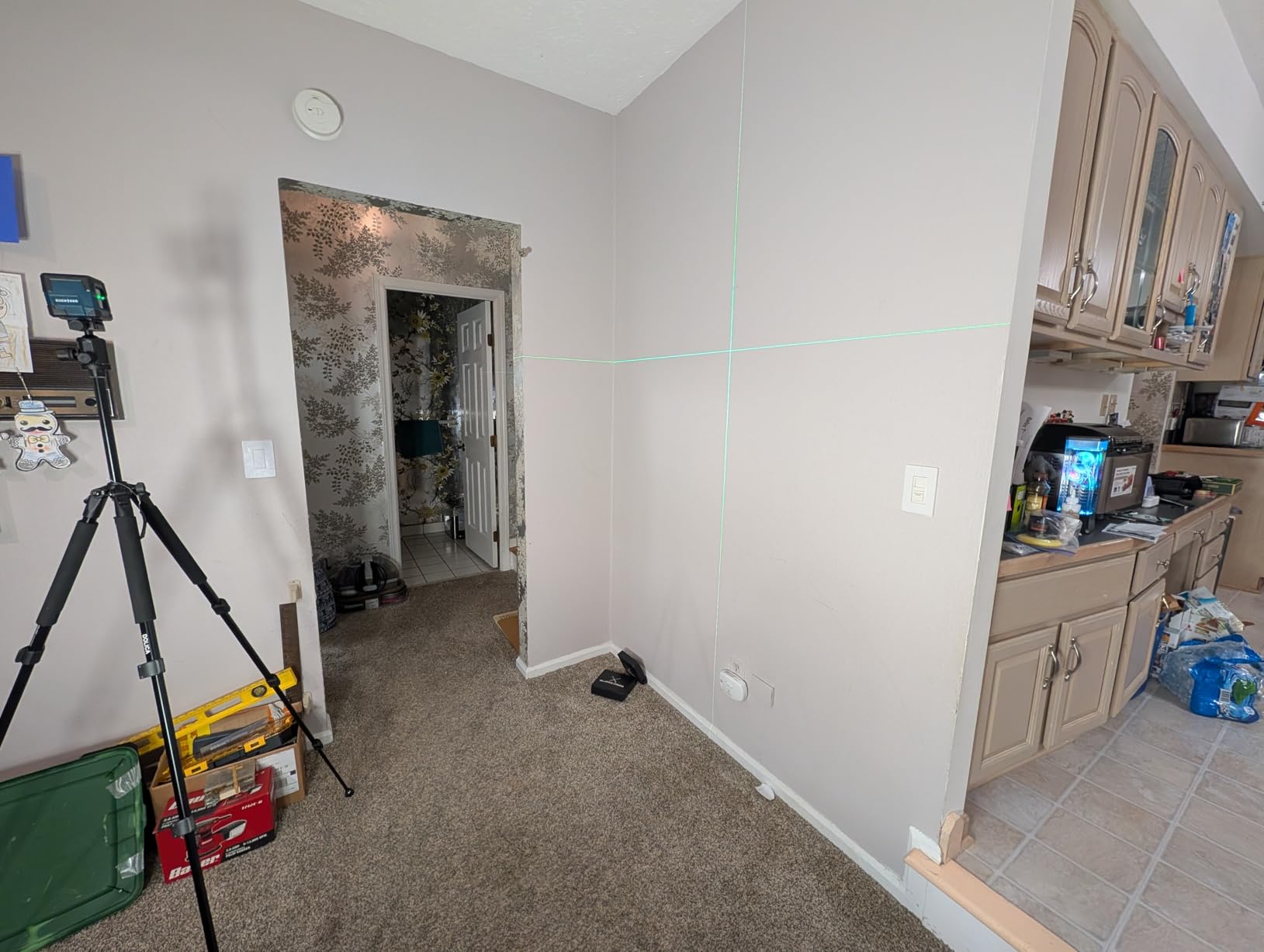
The included 40 inch iron tripod is the reason this kit works for cabinets at all. The tripod extends to 40 inches, folds to 16, carries a dual bubble level and quick-release leg clamps, and it means you can set the tool at the finished cabinet height and step away instead of holding it.
The cross line is green and projects at a wide 110 degree fan, with accuracy of plus or minus 1/8 inch at 30 feet. A slide switch moves between self-leveling and manual mode, and the pendulum covers four degrees plus or minus one before the beam flashes.
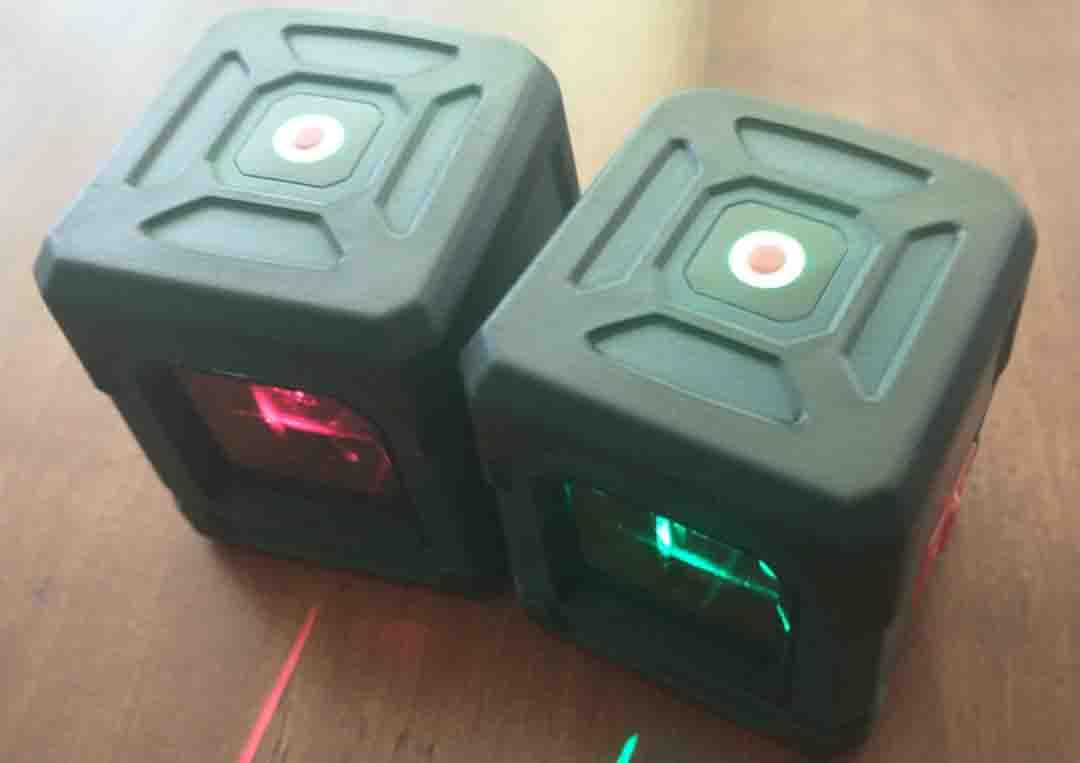
Protection is rated IP54 with four-foot collision protection, which is honest language for a tool that will live in a truck. The magnetic base allows hands-free marking on studs and metal surfaces, and the canvas case, batteries and manual are all in the box.
The recurring complaint is brightness. Owners report the line is clearly visible in a normal room and much weaker in direct sun. Also note the geometry: the tool has to physically sit at the height of the line, and the beam references from a fixed offset off the housing that you have to subtract when measuring.
For whom the RockSeed kit works well
It suits a DIYer who wants a complete setup without hunting for a separate stand, and a tile, cabinet or shelving layout that stays in ordinary indoor light. The iron tripod is far more stable than the plastic ones at this level.
For whom it is the wrong choice
It is a poor match for a bright sunroom or any deck or exterior layout. It also cannot reach around a corner, and the fixed reference offset catches people out the first time they measure to the line rather than the housing.
11. Lusweimi green cross line laser – a light kit with a 50 inch tripod
Laser Level with 50” Tripod, 360° Self Leveling Cross Line Laser Level, Green Beam Horizontal and Vertical Line leveler Tool for Hanging Pictures, Home Renovation with 4 AA Batteries & Carry Pouch
Green cross beams
1/9 in accuracy at 33 ft
50 inch tripod included
IP54, 0.17 kg
Pros
- Bright green beams for home project work
- Self-leveling within plus or minus 4 degrees
- 50 inch tripod makes height positioning easy
- Very light at 0.17 kg with carry pouch
Cons
- Tripod feels flimsy and hard to adjust above five feet
- Less precise for fine adjustment than metal-tripod kits
- Green laser needs replacing after long high-brightness use
The Lusweimi combines a green cross-line laser with a 50 inch tripod, which is the tallest stand in this group and the most useful for a single installer working alone. Setting the tool at rail height without a ladder is the difference between a comfortable install and a bad afternoon.
Accuracy is quoted at plus or minus 1/9 inch at 33 feet, which is the tightest figure in the budget half of this roundup, and the green beam is rated roughly twice as bright as red under the same light source. Self-leveling covers plus or minus four degrees, and manual mode locks the cross at any angle.
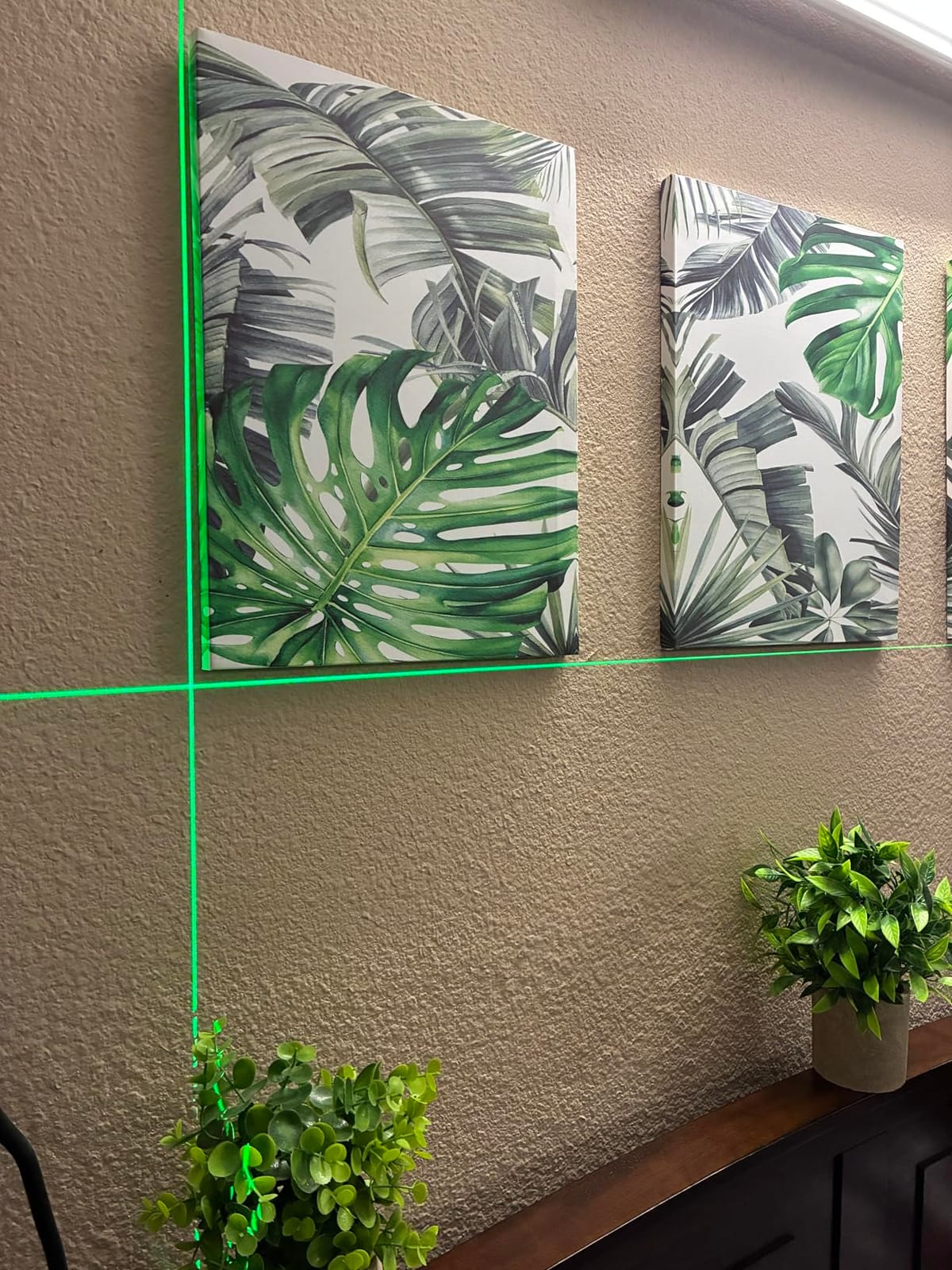
The level itself is tiny at 0.17 kg and measures 49 by 65 by 65 mm, so it is easy to carry between walls and stows in the included pouch. The tripod has a bubble level and a universal 1/4-20 mount, so it can be swapped for a sturdier stand later if you want one.
The tripod is the weak point, and owners say so plainly. It feels flimsy and plastic and is difficult to adjust above about five feet, which is exactly the range an upper cabinet rail occupies. The laser is also described as less precise for fine adjustment than heavier metal-tripod kits.
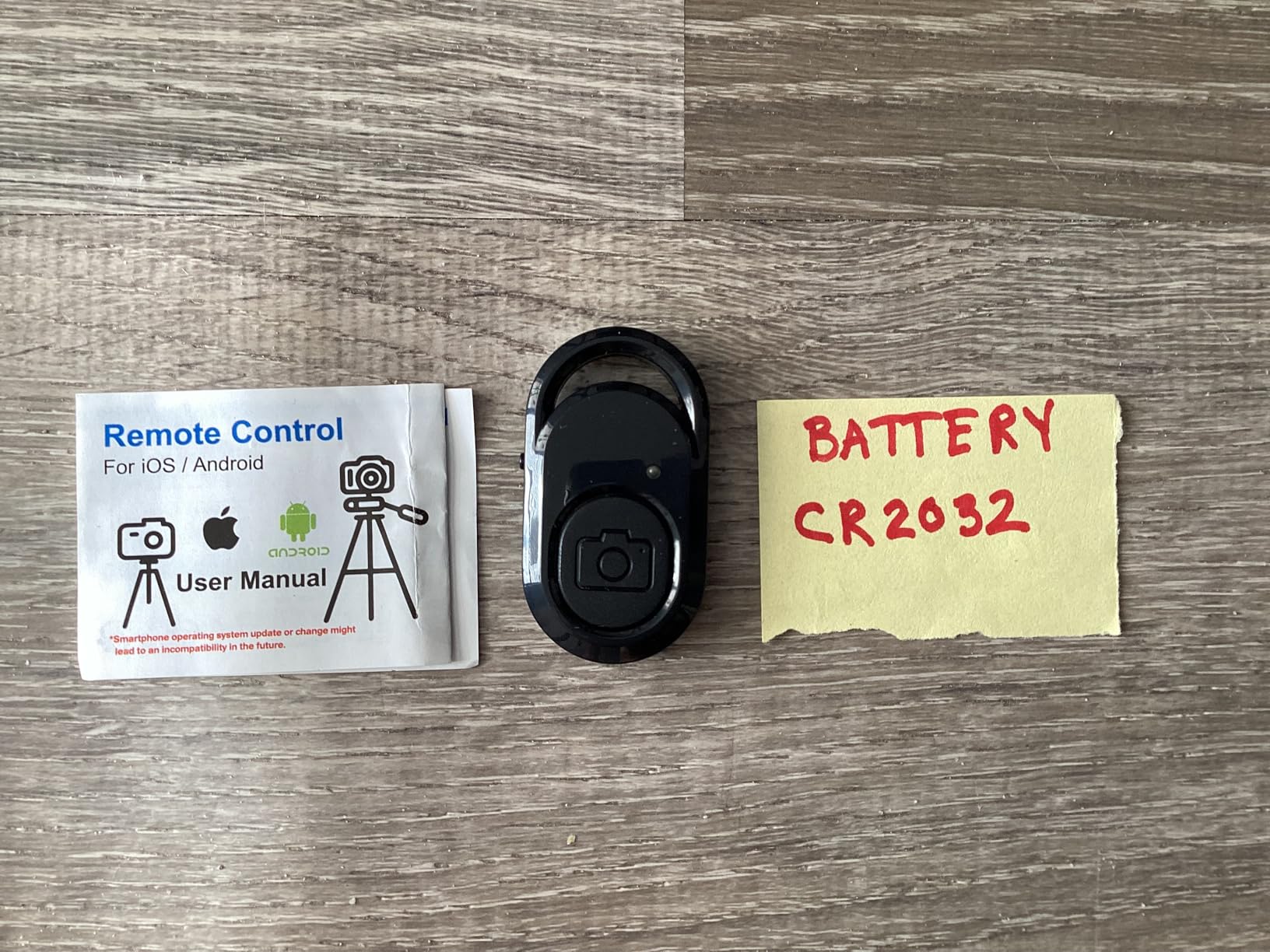
For whom the Lusweimi kit works well
It is a sensible first kit for someone hanging frames, shelves and a short run of uppers in a normal-lit room, and the bundled spare AA batteries mean nothing else is needed on install day. The 1/9 inch accuracy is more than a cabinet run requires.
For whom it is the wrong choice
For a full kitchen where you are at the rail height for hours, the plastic tripod is the limitation to weigh first. Buyers also note the green module needs replacing after extended use at high brightness.
12. BLACK+DECKER BDL220S – a rotating wall attachment for angled layouts
BLACK+DECKER Laser Level, Self-Leveling, 360 Degree Wall Attachment, AA Batteries Included (BDL220S), 7.25 x 7 x 2.5 inches
Rotating wall attachment
Two backlit bubble vials
Class 3R at 5mW or less
0.2 kg body
Pros
- Rotating attachment projects a line at any angle
- Extra large backlit bubble vials are easy to read
- Very light at 0.2 kg for one-handed use
- Long-running design with a two-year warranty
Cons
- Class 3R output is higher than most competitors
- Single-line format covers less layout work
- Adhesive wall attachment can damage paint
This is the most reviewed product in the roundup by a wide margin, and it is built for a specific job: projecting a line at an angle onto a finished wall. The 360-degree rotating attachment lets you set a line for a stairwell, a sloped ceiling or a diagonal run without a separate angle-finding tool.
Two extra large backlit bubble vials give you the reference, and the backlight improves visibility of the angle reference points in low light. At 0.2 kg it is comfortable for one-handed use while you mark with the other.
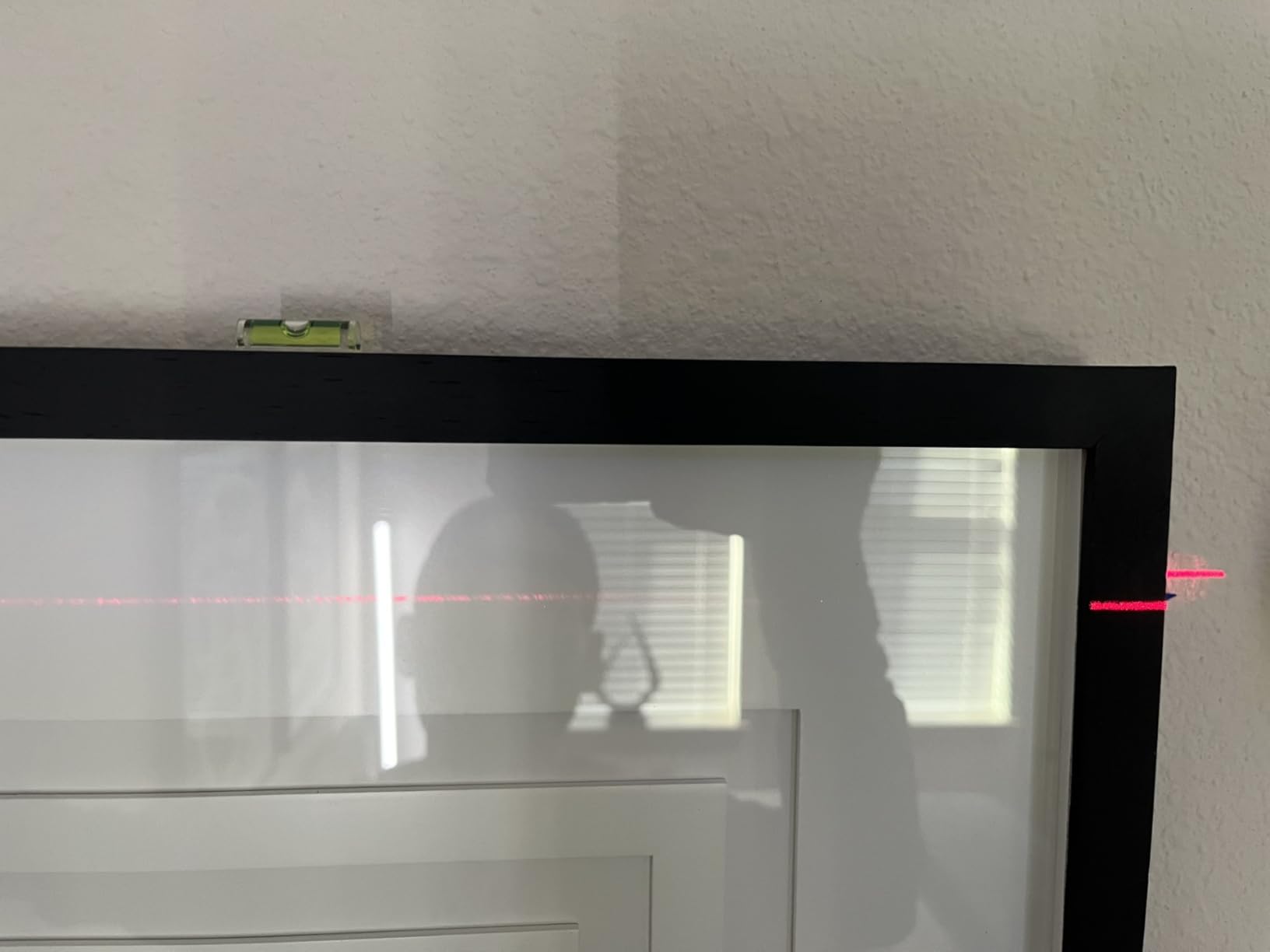
Be aware of the laser class. At 5mW or less this is a Class 3R unit, a step above the Class II output of most of the lasers in this roundup, so eye safety deserves more attention on a two-person crew, particularly when someone is working at beam height. It runs on two AA batteries and carries a two-year warranty.
As a layout tool it is limited. A single projected line does far less than a cross-line or 3×360 arrangement, the adhesive wall attachment can lift paint off a finished wall, and no tripod or case is included. For a kitchen cabinet run, it is a companion to your main tool rather than a replacement for it.
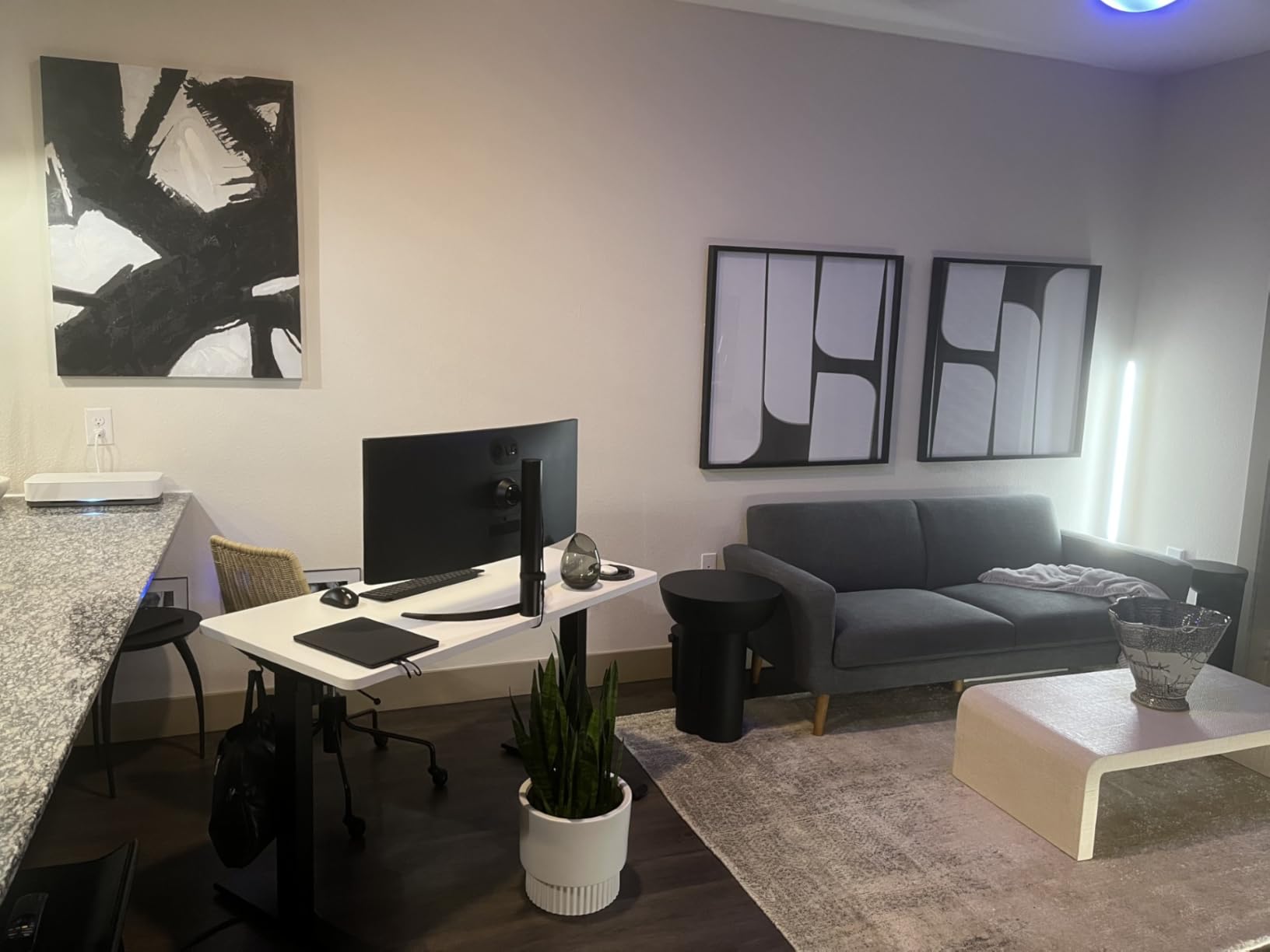
For whom the BLACK+DECKER BDL220S works well
It is the right pick for hanging pictures, mirrors and curtain rods, and for any angled layout where you cannot get a full cross-line tool into position. The vials are large enough to read quickly, which is the whole point of the design.
For whom it is the wrong choice
It cannot handle the core cabinet task. There is no vertical reference, no plumb transfer and no 360 coverage, so matching cabinet height across a run or around a corner is not on the table. The adhesive mount also risks the wall you are trying to protect.
How to Hang Cabinets with a Laser Level
The workflow matters more than the tool. A cabinet laser saves you from re-measuring at every stud, but only if you set the reference height once and mark the entire run from that single line.
Set the finished cabinet height. Measure up from the finished floor to the bottom of the lowest upper you intend to hang and write the number down. Decide whether you are aligning to the top or the bottom of the boxes, and stay with it for the whole run.
Mount the laser at that height. Use the magnetic bracket on steel framing, a ceiling clamp, or a tripod set to the same height. A tripod is the better choice when there is no metal to attach to.
Let it self-level and verify. Give the pendulum a few seconds to settle, then check the projected line against a good hand level at two points before you trust it. This is the step that catches an out-of-level mount.
Snap or mark the line. Run a pencil along the beam across the full run, marking at every stud location you can find. Extend the line past the last cabinet if a perpendicular wall is coming.
Transfer the height around a corner. If the run is L-shaped or U-shaped, keep the tool where it is and read the height off the vertical plane on the second wall, or place a mark at the corner and measure up from it.
Mark the rail or ledger line. Snap the height the mounting rail or ledger board sits at, then mark the full length of the rail in one pass rather than measuring at each stud.
Fasten along the line. Screw every cabinet or cleat to the marks without re-measuring. Any error that remains is in the wall, not in your layout.
One thing to plan for on a two-person crew: a pendulum self-leveling laser reacts to movement, so if someone walks past the tool or bumps the floor, the line can flash and shift. Set the tool on the most stable mount you have, out of foot traffic, and re-check the line with a hand level before you commit a long snap line.
Buying Guide: Choosing a Laser Level for Cabinet Installation
Green or red beam. Red is cheaper to make and lasts longer on a battery, and indoors in a dim room you will barely notice the difference. Green beams are consistently described by installers as roughly four times more visible under the same light, and in a kitchen with a window or a glass door that difference decides whether you can mark cleanly. If the room is bright, buy green. If the run is indoors and shaded, a red cross-line is fine.
Cross line or full 360 degrees. A cross-line tool projects a horizontal and a vertical plane from wherever it stands, which is enough for a single straight run. A 3×360 unit adds a full horizontal plane plus two vertical planes, so the line appears on every wall and every corner without moving the tool. This is the single most important decision for a kitchen, because any cabinet run with a corner in it needs the coverage.
How accurate does it need to be? Accuracy is quoted as a fraction of an inch at a distance, and for cabinetry anything at or under 1/8 inch at 30 feet is workable. Tighter figures such as 1/9 inch at 33 feet give you margin on a long run. A wall that is out of plumb changes what you need: if the wall bows, the top of the run will not be parallel to the bottom no matter how good the laser is, so a tighter tolerance buys you less than shimming the cabinets correctly.
Self-leveling versus manual. A pendulum self-levels within a few degrees and then holds the line true. Most models also let you lock the pendulum, which gives manual mode for angled lines. That lock is worth having, and the Klein 93LCLS is the one tool here where locking the pendulum also cuts the beam.
Mounting at cabinet height. The hardest-working mounts are magnetic brackets that grab steel framing or corner bead, plus a 1/4-20 thread so any tripod works. Check how the tool sits at finished rail height, not at waist height, because that is where it will live during a cabinet job.
Line width and beam quality. For marking cabinet rails, a thin sharp line is easier to follow than a wide one. Some 3×360 units project lines three to five millimeters wide with occasional small breaks, and the housing cage can throw extra shadows. For picture hanging and trim those details do not matter; for a long ledger line they do.
Laser Level Features You Can Skip for Kitchen Uppers
Several premium features earn their price for outdoor survey work and add nothing to a kitchen install. Skipping them is how a mid-tier laser covers a multi-wall run for less money.
A laser receiver or detector. Receivers exist to extend range into sunlight and across long distances. For an 8 to 10 foot run of uppers in a room, the bare line is already the brightest thing on the wall, and the receiver is a separate purchase.
A rotary beam. Rotary lasers project a sweeping plane for grading and large floor layouts. Cabinet height does not move, so a fixed line does the same work.
An IP55 or higher rating. IP54 handles the dust and splash of an indoor remodel. You only need more if the tool lives outside.
A plumb dot. Useful for tall pantry runs and ceiling cut-ins, and the Bosch and Klein both have it, but it is a convenience rather than a requirement for a run of standard uppers.
Overlapping high-mount capabilities. A second wall at the same height needs a 3×360 plane, not a higher mounting thread.
How We Picked These Laser Levels
Our team compared twelve line lasers against a single use case: hanging upper kitchen cabinets. We looked at how much horizontal and vertical coverage the tool projects, the quoted accuracy at 30 feet or beyond, the mount options for setting the tool at finished cabinet height, and how the beam behaves in a bright room.
We also weighted the owner review data heavily, because the failure modes that matter here show up in reviews long before they show up in a spec sheet: pendulum drift, coarse adjustment knobs, line gaps, batteries that will not charge from a standard cable, and tripods that cannot hold position above five feet. Every accuracy figure quoted in this article comes from the manufacturer’s published specification, and every practical observation comes from what owners report.
Frequently Asked Questions
How do I use a laser level to hang cabinets?
Set the laser at your finished cabinet height on a magnetic bracket, tripod or ceiling clamp, then let the pendulum self-level and confirm the line against a hand level. Snap the horizontal line across the whole wall and mark it at every stud, snap the rail or ledger height in the same pass, then fasten along those marks. If the run turns a corner, read the same height off the vertical plane on the second wall instead of moving the tool.
Should I get a green or red laser level?
Green beams are roughly four times more visible than red under the same light, which matters in a kitchen with a window or a glass door throwing light across the wall. Red is fine for a shaded room and costs less to run. For most open-plan kitchens with daylight, green is the safer choice; for a single interior run of uppers, a red cross-line does the job.
Do I need a laser receiver for cabinet installation?
No. A receiver extends range into direct sunlight and across long distances, and for a run of uppers eight to ten feet long the bare line is already clearly visible on the wall. Every unit in this roundup covers that distance without one. Buy a receiver only if you also plan exterior deck work or long-distance layout.
How accurate does a laser level need to be for cabinets?
Anything rated at or under 1/8 inch at 30 feet is fine for hanging cabinets, and 1/9 inch at 33 feet gives extra margin on a long run. Remember that a wall out of plumb will not be fixed by a tighter tolerance, because the top of the run will not sit parallel to the bottom no matter how accurate the line is.
What kind of laser level is best for fitting kitchens?
A 360-degree green-beam line laser is the right tool for a full kitchen, because one horizontal plane and two vertical planes put the reference line on every wall and corner without moving the tool. For a single straight run of uppers on one wall, a self-leveling red cross-line laser with a magnetic bracket is enough and costs considerably less.
Conclusion
For most people hanging kitchen cabinets, the best laser levels for hanging cabinets come down to coverage. If the run is one straight wall, the DEWALT DW088K is the proven choice, with the deepest review history here and owners who confirm it hits its stated 1/8 inch accuracy at 30 feet. If the plan wraps a corner or covers two walls, a 3×360 green-beam tool like the Huepar HM03CG or the CIGMAN CM-701 saves you from re-leveling every few feet.
Match the mount to the job rather than the feature list, and remember that the line is only as good as the level check you do before you snap it. Start at the height you actually want, mark the whole run in one pass, and fasten along the marks.