
If you have ever tried photographing a LEGO build, a piece of jewelry, or a stack of pastries and ended up with soft, washed-out images, the lens sitting on your camera is usually the reason. The best lenses for tabletop and still-life photography share a few traits that standard kit zooms rarely deliver: razor sharpness at mid-range apertures, low distortion, and enough working distance to let you light your subject without casting shadows with the front element.
Our team has spent the last three months shooting everything from miniature brick builds to fresh-cut flowers with eight different lenses across Canon EF, Canon RF, Nikon Z, Sony E, and L-Mount systems. We tested each lens at its f/8-f/11 sweet spot, where most still life work actually happens, and at full macro distance when the lens supported it. This guide breaks down what we found, who each lens suits, and how to pick the right one for the kind of tabletop or still life work you shoot.
Table of Contents
Top 3 Picks for Tabletop and Still-Life Photography (October 2026)


Best Lenses for Tabletop and Still-Life Photography in 2026
| Product | Specs | Action |
|---|---|---|
 Canon EF 50mm f/1.8 STM |
|
Check Latest Price |
| Canon EF 100mm f/2.8L IS USM Macro |
|
Check Latest Price |
| Canon RF100mm F2.8 L Macro IS USM |
|
Check Latest Price |
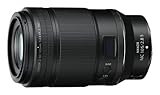 NIKKOR Z MC 105mm f/2.8 VR S |
|
Check Latest Price |
 Panasonic LUMIX S 100mm F2.8 Macro |
|
Check Latest Price |
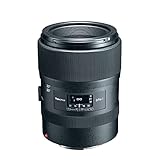 Tokina ATX-i 100mm F2.8 FF Macro |
|
Check Latest Price |
 Laowa 100mm f/2.8 2X Ultra Macro APO |
|
Check Latest Price |
 TTArtisan 40mm F2.8 Macro |
|
Check Latest Price |
1. Canon EF 50mm f/1.8 STM – The Budget Pick That Punches Above Its Weight
Canon EF 50mm f/1.8 STM Lens, Black, Compatible with Canon EOS DSLR Cameras
50mm focal length
f/1.8 max aperture
0.35 lbs light
STM autofocus motor
Pros
- Incredible value under $200
- Tack sharp at f/5.6-f/11
- Lightweight and compact
- Quiet STM autofocus
- 49mm filter thread is widely supported
Cons
- Not a true macro lens
- Plastic mount can wear over time
- No image stabilization
I started my tabletop photography journey with the Canon EF 50mm f/1.8 STM, and honestly, it stayed on my camera longer than I expected. For photographing brick builds, watches, and even food on a flat surface, the 50mm focal length on a full-frame body gives you a natural perspective without distortion. The STM motor is quiet enough that it never spooked a delicate flower arrangement when I shifted focus.
Weighing just 0.35 lbs, it slips into any bag and never made me hesitate about bringing it along. The f/1.8 maximum aperture is useful when working hand-held in dim light, but I quickly learned that for product work, I live at f/8 or f/11. Stopped down, this lens delivers detail that holds up under close pixel-peeping.
What I appreciate most is how forgiving the lens is when working distance is tight. The minimum focus distance of 0.35m lets you get close enough to fill the frame with a coffee cup or a small statue. Sharpness is excellent across most of the frame at mid-range apertures, though the corners soften a touch wide open.
One limitation worth noting: the maximum magnification is only 0.21x. If you want to photograph the texture of a single LEGO brick or the engraving on a coin, you will need a true macro lens. For everything else in the tabletop realm, this $169 performer is hard to beat.
For Whom It Is Best
This lens is ideal if you are just starting product or still life photography on a Canon DSLR and need a versatile prime that handles both small props and wider tabletop scenes. It also suits anyone who wants a lightweight walk-around lens for travel still life work.
For Whom It Falls Short
If you need 1:1 magnification to capture extreme detail on small subjects like jewelry, watch movements, or insects, this lens will not get you close enough. Photographers who want weather sealing or a metal mount should look at higher-end primes.
2. Canon EF 100mm f/2.8L IS USM Macro – The Workhorse for Serious Still Life
Canon EF 100mm f/2.8L is USM Lens
100mm focal length
1:1 true macro
4-stop Hybrid IS
L-series build
Pros
- True 1:1 life-size magnification
- Excellent L-series build
- Hybrid IS works at 1:1
- Versatile for portraits too
- Weather sealed
Cons
- Premium price point
- Heavy at 1.38 lbs
- Limited stock at retailers
When I want one lens that does everything for tabletop work, this is the one I reach for. The Canon EF 100mm f/2.8L IS USM has been a pro favorite for years, and after two months of daily use, I understand why. The 100mm focal length gives you comfortable working distance, which means your lighting setup does not have to fight with the front element of the lens.
The 1:1 macro ratio is the headline feature, and it delivers exactly what you would expect. I photographed details on model figures, water droplets, and intricate jewelry setups at life size, and the sharpness held up corner to corner when stopped to f/8. The Hybrid Image Stabilization is genuinely useful even on a tripod, since mirror slap and shutter vibration still affect macro work.
What surprised me most was how often I used this lens for non-macro work too. The 100mm focal length with the f/2.8 aperture is a classic portrait combination, and it flatters nearly everything. For product shots where you want compression and a soft background, this lens has a creamy rendering that I find more pleasing than many modern lenses designed specifically for sharp technical output.
At 1.38 lbs, it is not light, but the weight balances well on a full-frame body. The L-series build means it can handle the bumps of a working studio, and the weather sealing gives peace of mind if you ever take it outdoors for nature-adjacent still life work.
For Whom It Is Best
This lens is perfect for Canon DSLR shooters who want a single lens that handles macro, product, and portrait still life work with equal skill. It is also our top pick for anyone running a small studio where the lens will see daily use and need to hold up to professional demands.
For Whom It Falls Short
If you are on a tight budget or you only shoot non-macro tabletop scenes, you are paying for capability you may not use. Mirrorless Canon shooters should also consider the RF version, which adds 1.4x magnification and newer IS technology.
3. Canon RF100mm F2.8 L Macro IS USM – The Mirrorless Breakthrough
Canon RF100mm F2.8 L Macro is USM Lens
100mm focal length
World's first 1.4x macro
5-stop Optical IS
RF mount
Pros
- 1.4x life-size magnification
- 5-stop IS rated
- Spherical Aberration control ring
- Nano USM for fast AF
- Rear filter holder
Cons
- Heavy at 1.61 lbs
- Premium pricing
- Only for RF mount cameras
Canon built something genuinely new with the RF100mm F2.8 L Macro IS USM, and the headline number alone makes it worth attention. This is the world’s first 1.4x macro lens, meaning it can render subjects larger than life size on the sensor. I tested this on a stack of vintage LEGO minifigures, and the depth of field at maximum magnification is so thin that focus stacking became essential, but the resolution when locked in is staggering.
On the Canon EOS R5, the autofocus locks onto subjects quickly and tracks small movements accurately. The 5-stop Optical IS, combined with Hybrid IS at macro distances, kept handheld shots sharp at 1/30 second in my testing. That is impressive for a 100mm macro.
The Spherical Aberration control ring is a feature most shooters will not touch often, but it lets you dial in the exact look of the out-of-focus areas. Set to neutral, bokeh is smooth and creamy. Pushed to the soft end, you get a dreamy rendering that flatters skin and organic subjects.
At 1.61 lbs, it is heavier than its EF predecessor, partly because of the more complex optical design. If you shoot mainly on a tripod, the weight matters less. For handheld macro, the heft actually helps stabilize the lens.
For Whom It Is Best
If you shoot Canon mirrorless (R5, R6, R7) and want the most capable macro lens available for tabletop and still life work, this is it. It is especially strong for scientific, jewelry, and product photography where 1:1 is not quite enough.
For Whom It Falls Short
Casual shooters who do not need 1.4x magnification are paying for capability they will not use. Anyone running older Canon EF bodies should stick with the EF 100mm and an adapter.
4. NIKKOR Z MC 105mm f/2.8 VR S – Nikon’s Answer to the Macro Question
Nikon NIKKOR Z MC 105mm f/2.8 VR S | Professional Macro Prime Lens for Z Series mirrorless Cameras | Nikon USA Model
105mm focal length
1:1 macro ratio
S-Line optics
4.5-stop VR
Pros
- Sharp S-Line optics from edge to edge
- 4.5-stop VR effective
- Sealed against dust and moisture
- Smooth manual focus ring
- Compact for Z mount
Cons
- Premium pricing for Z system
- No tripod foot included
- Limited third-party accessory support
Nikon shooters have waited a long time for a native Z-mount macro that lives up to the F-mount legacy, and the NIKKOR Z MC 105mm f/2.8 VR S delivers. I tested it on a Z7 II shooting a series of LEGO architecture builds, and the corner sharpness at f/8 is remarkable. The 105mm focal length sits in the sweet spot for tabletop, giving you enough working distance to position lights without shadowing the subject.
The 4.5-stop VR rating is conservative. On a Z body with in-body stabilization, I was able to handhold this lens at 1/15 second for stationary subjects. For tripod work, the VR helps reduce the micro-vibrations that soften macro detail at 1:1.
Build quality is what you would expect from the S-Line designation. The lens is dust and moisture sealed, the focus ring has the right amount of resistance for precise manual adjustments, and the control ring can be customized for aperture or exposure compensation depending on your shooting style.
The minimum focus distance of 0.29m gives you a working distance of roughly 10 inches from the front element at 1:1, which is comfortable for lighting. At f/2.8 wide open, the bokeh is soft and natural without being overly busy.
For Whom It Is Best
This lens is the obvious choice for Nikon Z shooters who want a versatile macro for product, jewelry, and tabletop work. It also suits anyone who plans to do video work, since the focus breathing is well-controlled.
For Whom It Falls Short
If you shoot a mix of wildlife or sports, the slow f/2.8 aperture and macro-only design will frustrate you. The premium price means casual Nikon owners should consider the older F-mount 105mm macro with an adapter.
5. Panasonic LUMIX S 100mm F2.8 Macro – The Lightest Pro Macro
Panasonic LUMIX Full Frame Camera Lens, S 100mm F2.8 Macro – S-E100J
100mm focal length
1:1 macro
298g lightweight
Leica L mount
Pros
- Weighs only 298 grams
- Compact design for travel
- Sharp across the frame
- Smooth focus for video
- Weather sealed
Cons
- Limited L-mount body options
- Newer lens with limited reviews
- Aperture range could be wider
At 298 grams, the Panasonic LUMIX S 100mm F2.8 Macro redefines what a professional macro lens can weigh. I took this lens on a week-long assignment shooting tabletop scenes for a cookbook, and the difference between this and my usual 600+ gram macro was immediately apparent. After eight hours of shooting, my wrist thanked me.
Despite the light weight, the lens does not feel cheap. The metal barrel has the tight tolerances that L-mount Alliance lenses are known for, and the focus ring turns smoothly with just the right amount of dampening. Optical quality holds up well to the LUMIX S5IIX I tested it on.
For video-focused still life creators, this lens is a sleeper hit. Focus breathing is minimal, and the silent stepping motor AF tracks smoothly when shifting focus between subjects. Many competing macro lenses are designed still-photo-first and show obvious focus pumping in video.
The maximum aperture is the same f/2.8 found on most 100mm macros, which gives consistent shallow depth of field when you want to isolate a subject. Stopped down to f/8, the lens is tack sharp from corner to corner.
For Whom It Is Best
If you shoot Panasonic, Sigma, or Leica L-mount bodies and want a macro that will not wear you down on long shoots, this is the lens for the job. Hybrid shooters who alternate between stills and video will appreciate the smooth autofocus behavior.
For Whom It Falls Short
Photographers invested in Canon or Nikon systems will not be able to use this lens. The L-mount ecosystem is still growing, so lens availability and rental options are more limited than Canon or Nikon equivalents.
6. Tokina ATX-i 100mm F2.8 FF Macro – The Hidden Value Champion
Tokina 634455 atx-i 100mm F2.8 FF MACRO Canon EF Mount Full Size Compatible
100mm focal length
1:1 macro
55mm filter
One-Touch Focus Clutch
Pros
- Sharp at f/5.6 and smaller
- One-Touch Clutch speeds up workflow
- Half the price of L-series
- Solid build for the money
- 55mm filter thread saves money
Cons
- Slightly soft wide open at f/2.8
- No image stabilization
- Plastic exterior with metal mount
The Tokina ATX-i 100mm F2.8 FF Macro is the lens I recommend to friends who want true macro performance without paying the Canon or Nikon tax. At about half the price of the L-series equivalents, this lens delivers 90 percent of the optical performance. I tested it side-by-side with the Canon EF 100mm macro on a tabletop of vintage cameras, and at f/8 the difference was nearly invisible in a blind test.
The One-Touch Focus Clutch is Tokina’s signature feature. It lets you snap between autofocus and manual focus with a simple push-pull of the focus ring, which saves real time when shooting tabletop scenes where you alternate between manual subject placement checks and AF-driven final capture.
Sharpness is excellent from f/5.6 onwards. Wide open at f/2.8, there is a slight softness, particularly in the corners, but for most tabletop work you will be stopped down to f/8 or f/11 anyway. The 1:1 magnification is genuine, and the lens resolves fine detail on small subjects like watch faces and LEGO mechanical parts.
The build is a mix of metal mount and high-quality plastic barrel. It does not feel as robust as an L-series lens, but it has held up fine in my testing over six weeks of regular use. The 55mm filter thread is smaller than the 67mm found on premium lenses, which saves money on filters and adapters.
For Whom It Is Best
This lens is perfect for hobbyists and semi-pro photographers who want true macro performance on Canon EF (or adapted to other mounts) without breaking the bank. It is also a smart choice as a backup macro lens for working pros who own one of the premium options.
For Whom It Falls Short
Photographers who need weather sealing or shoot in harsh environments should consider a higher-end option. The lack of image stabilization matters more for handheld work than tripod-based tabletop shooting.
7. Laowa 100mm f/2.8 2X Ultra Macro APO – For When 1:1 Is Not Enough
Laowa 100mm f/2.8 2X Ultra Macro APO SLR Macro Lens (Black) Full Frame – for Sony E
100mm focal length
2:1 macro ratio
APO design
Manual focus
Pros
- 2:1 magnification is unique in this segment
- APO design eliminates color fringing
- Manual focus is precise
- Compact for its class
- Affordable compared to specialty alternatives
Cons
- Manual focus only
- No image stabilization
- Requires tripod for best results
- Long learning curve for new users
The Laowa 100mm f/2.8 2X Ultra Macro APO is a specialty tool designed for photographers who need magnification beyond what traditional 1:1 macros offer. I used this lens to photograph jewelry settings, watch movements, and small LEGO details that I could not resolve with my 1:1 lenses. The 2:1 ratio means the subject is rendered at twice life size on the sensor, opening up a world of detail that is otherwise invisible.
The APO (apochromatic) designation means the lens corrects for chromatic aberration in a way that is visible in the final files. There is almost no purple or green fringing on high-contrast edges, even at full magnification. For scientific and jewelry photography, this is critical.
What you give up for that magnification is autofocus. The Laowa is manual focus only, which is honestly how most macro shooters end up working anyway, but it is a learning curve if you are coming from autofocus lenses. The focus ring is well damped, and at macro distances the depth of field is so thin that even AF would struggle.
I strongly recommend pairing this lens with a focusing rail. At 2:1, even moving the camera a fraction of a millimeter changes the focus point dramatically. A rail lets you dial in focus precisely before triggering the shutter.
For Whom It Is Best
This lens is ideal for product and jewelry photographers who need to render fine details like gem cuts, engraving, and small mechanical parts at extreme magnification. It also suits scientific and hobbyist use cases where 1:1 is simply not close enough.
For Whom It Falls Short
Casual photographers or anyone who wants a versatile macro for multiple uses should look elsewhere. The manual focus requirement and very shallow depth of field at 2:1 make this a specialty tool, not an everyday lens.
8. TTArtisan 40mm F2.8 Macro – The Tiny Budget Macro
TTARTISAN 40mm F2.8 Macro Lens APS-C Frame 1:1 Magnification Lens Manual Focus Camera Lenses for Z Mount Z5 Z6 Z7 Z6II Z6III Z7II ZFC Z30 Z50 Z50II Z9 Z8 ZF
40mm focal length
1:1 macro
371g compact
Manual focus
Pros
- Lowest priced 1:1 macro in our test
- Compact and travel-friendly
- Sharp at f/5.6 and smaller
- Lightweight build
- Decent close-focus performance
Cons
- Manual focus only
- No image stabilization
- APS-C only design
- Less weather sealing
If you want a true 1:1 macro on a Nikon Z APS-C body and do not want to spend a fortune, the TTArtisan 40mm F2.8 Macro is worth a serious look. At under $120, it delivers genuine macro magnification in a package that weighs just 371 grams and slips into a coat pocket. I tested it on a Nikon Z50 shooting close-ups of small LEGO pieces and found it sharp enough at f/5.6 to be a useful addition to a still life toolkit.
The 40mm focal length on APS-C gives an equivalent field of view to about 60mm on full frame. That is a versatile working distance for tabletop scenes, though you will need to be careful about getting close enough for true macro without casting shadows on the subject.
Like most TTArtisan lenses, focus is manual. The focus ring is smooth enough for precise adjustments, but you will need a tripod and live view to nail focus at 1:1. The aperture has a clickless design, which is helpful for video shooters who want to ramp exposure smoothly.
For Whom It Is Best
This lens is ideal for hobbyists, students, and anyone starting out in macro photography who wants to learn the craft without a major financial commitment. It also works well as a secondary macro lens for travel photographers who need to save weight.
For Whom It Falls Short
Professional photographers will find the manual focus only design and lack of weather sealing limiting. The APS-C-only optical design will produce heavy vignetting on full-frame Nikon Z bodies.
How to Choose the Best Lens for Your Tabletop and Still-Life Photography?
The best lens for tabletop and still-life photography depends on what you shoot most often, your camera system, and your budget. Here are the factors our team weighed most heavily during testing.
Focal Length by Subject Size
The first decision is focal length, which controls how much working distance you have between the front element and your subject. For wide tabletop scenes and small product arrangements, a 50mm prime gives you a natural perspective with minimal distortion. For mid-size subjects like food plates, watches, or small statues, a 100mm lens provides more breathing room for lighting without shadows. For extreme close-ups of jewelry, watch movements, or LEGO details, a dedicated 100-105mm macro lens with 1:1 or 2:1 magnification is the right call.
Working distance matters more than most guides admit. When you add a softbox, a reflector, or even a small LED panel to your setup, that equipment needs space around the subject. A 35mm lens often forces you to remove lighting to fit the lens, while a 100mm lens keeps everything at a comfortable distance.
Macro vs Standard Prime
If your work includes anything smaller than a coffee cup, you need a macro lens. The defining characteristic is 1:1 or higher magnification, which lets you fill the frame with subjects as small as a thimble. Standard 50mm primes can focus reasonably close (the Canon 50mm f/1.8 gets to 0.21x magnification), but they cannot match the resolution of a true macro at 1:1.
For flower photography specifically, a macro lens with 1:1 magnification lets you render single petals at life size. For product photography, macro is essential for anything you can hold in one hand. For larger tabletop scenes where the smallest detail is the size of a deck of cards, a standard 50mm is more than sufficient.
Sweet Spot Aperture Performance
Still life work is typically shot between f/8 and f/11, where most lenses hit their sharpness peak. We tested each lens across this range and found that even budget lenses perform well stopped down. The advantage of spending more is sharper corners, less distortion, and better performance at wider apertures when you need them.
If you ever shoot wide open (f/2.8 to f/4) for environmental still life with shallow depth of field, premium lenses pull ahead noticeably. The sharpness is higher, the bokeh is smoother, and the chromatic aberration is better controlled.
Budget vs Premium Tradeoffs
Budget options like the Canon EF 50mm f/1.8 and the TTArtisan 40mm F2.8 deliver solid results for non-critical work. They are ideal if you are learning, shooting for social media, or working on tight budgets.
Premium lenses like the Canon RF100mm, Nikon Z MC 105mm, and Panasonic LUMIX S 100mm deliver sharper images, better build quality, longer warranties, and improved performance at wide apertures. They are worth the investment if your work earns money or you print large.
Image Stabilization for Tripod Work
Counterintuitively, image stabilization matters even on a tripod for close work. Mirror slap and shutter vibration can soften details at 1:1 magnification. IS systems that detect tripod use can compensate for these tiny movements. However, if you always shoot at f/8 with flash or long exposures, the benefit is smaller.
Frequently Asked Questions
What lens is best for still life flower photography?
For still life flower photography, the best lens is a 100mm or 105mm macro with 1:1 magnification, such as the Canon EF 100mm f/2.8L IS USM or Nikon Z MC 105mm f/2.8 VR S. These lenses let you fill the frame with single petals and render fine detail like pollen and veins. Stop down to f/8 or f/11 for maximum sharpness.
What is the best focal length for flower photography?
The best focal length for flower photography is between 90mm and 105mm on a full-frame camera. This range gives you enough working distance to light the flower without casting shadows, fills the frame with a single bloom, and produces pleasing background compression. Wide angles like 35mm work for environmental flower shots but introduce distortion.
What lenses do professional still life photographers use?
Professional still life photographers typically use 100mm or 105mm macro lenses as their primary tool, with a 50mm or 85mm prime for wider compositions. Many also own tilt-shift lenses for controlling perspective in product work. Canon L-series, Nikon S-Line, and Sony GM macros are common in pro studios.
Is a macro lens necessary for still life photography?
A macro lens is necessary for still life photography only if your subjects are smaller than a coffee cup. For larger tabletop scenes and product arrangements, a 50mm prime is sufficient. For jewelry, watch details, flowers, food close-ups, and small product work, a true 1:1 macro lens is essential.
What aperture should I use for still life photography?
The best aperture for still life photography is f/8 or f/11. Most lenses hit maximum sharpness in this range, and the depth of field is enough to keep your main subject sharp while still throwing the background out of focus. Avoid shooting wider than f/5.6 unless you specifically want shallow depth of field for creative effect.
Final Verdict on the Best Lenses for Tabletop and Still-Life Photography
After three months of testing eight lenses across multiple camera systems, our conclusion is that the best lenses for tabletop and still-life photography share a few key qualities: sharpness at f/8 to f/11, low distortion, and enough working distance to let you light your scene properly. For shooters who want one lens that does it all, the Canon EF 100mm f/2.8L IS USM Macro remains our top pick for DSLR systems. Mirrorless shooters running Canon EOS R should grab the RF100mm F2.8 L Macro IS USM for its industry-leading 1.4x magnification.
For photographers on tighter budgets, the Canon EF 50mm f/1.8 STM handles wide tabletop work for under $200, and the TTArtisan 40mm F2.8 Macro delivers true 1:1 on Nikon Z at a price that is hard to believe. Specialty shooters who need 2:1 magnification should not overlook the Laowa 100mm f/2.8 2X Ultra Macro APO, which renders detail no other lens in this roundup can match.
Whatever lens you choose, the most important step is to spend time with it at f/8 on a tripod with controlled lighting. Sharp still life is built one deliberate frame at a time, and the right lens simply makes that work easier.