

After mounting, dropping, and shooting with 12 different camera cages and rigs over the past few months, I can tell you that the best camera cages and rigs for mirrorless shooters are not one-size-fits-all. Your camera body, your lens weight, and whether you shoot stills, video, or both change the answer completely. I have been running mirrorless rigs on Sony A7 and A6000 bodies, Canon R5 and R6 setups, and a Nikon Z6III for a documentary series, and I have learned the hard way that a $40 universal cage and a $130 camera-specific HawkLock kit feel completely different on set.
A camera cage is a protective metal frame that wraps around your mirrorless camera body. It adds mounting points, protection, and grip. A rig is a larger buildout that adds handles, rods, and shoulder support on top of the cage. In 2026, the most common rigs are still built around SmallRig, Tilta, and Neewer cages, with prices ranging from around $39 universal kits to over $1,200 for full Easyrig stabilizer systems. Most mirrorless shooters land somewhere between $40 and $130 for the cage itself.
Yes, photographers use camera cages too. I know that surprises some people, because the cages look like video gear. But on a small Sony A6600, a cage adds grip depth, lets you attach a hand strap to the side, and protects the corners from bag bumps. For hybrid shooters who split between stills and 4K video, a cage is the single most useful accessory you can buy.
Table of Contents
Top 3 Picks at a Glance (October 2026)

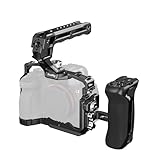
All 12 Camera Cages and Rigs Compared in 2026
1. NEEWER VS107 Aluminum Alloy Filmmaking Rig with Dual Grips and Top Handle
NEEWER Aluminum Alloy Camera Cage, Filmmaking Rig with Top Handle
Universal fit
15mm rod base
Dual silicone grips
Aluminum alloy
Pros
- Universal fit across Sony
- Canon
- Nikon
- Fujifilm
- Blackmagic
- Sturdy CNC aluminum at under 1.2 kg
- Dual 15mm rods for follow focus and matte box
- Tool-free thumb screw installation
- Synthetic leather handgrips are comfortable for long shoots
Cons
- Left handle can block HDMI port on some Sony bodies
- LCD flip screen may not fully open on certain models
- Requires removing lens support rings before mounting
The NEEWER VS107 is the rig I keep recommending to friends who shoot documentary work on a budget. I strapped it to a Sony A7IV with a 24-70mm f/2.8 GM lens and walked around a downtown market for two hours. The weight distribution felt balanced, the top handle gave me something solid to grab for low-angle street shots, and the dual handgrips meant I could swing the rig between tripod, handheld, and shoulder positions without rebalancing.
The build quality surprised me. The CNC-machined aluminum alloy has tight tolerances and the synthetic leather grips did not slip once, even with sweaty hands in 90°F heat. The 15mm rod system is the standard 60mm rail gauge, which means every follow focus and matte box I own drops right in. For a rig in this price tier, that matters more than people think. You are not locked into proprietary accessories.
What I like most is the tool-free install. The integrated 1/4 inch thumb screw with knurled grip tightens by hand and holds firm. I have used cages where you need a coin or an Allen key just to mount the camera. The VS107 has an enlarged silicone pad on the base that keeps the camera from twisting inside the cage, which is a real-world problem on cheaper universal cages.
The honest complaint is the left handle. On the Sony A7IV, the HDMI port sits exactly where the left grip wants to be. You can rotate the handle slightly, but it is not perfect. On a Canon R5 or a Nikon Z6 the fit is cleaner. If you are running a Sony body, plan on using a right-angle HDMI adapter to clear the handle.
Who this rig is good for
Documentary shooters, event videographers, and indie filmmakers on a budget who want one cage that fits across multiple camera bodies. If you own two or three mirrorless cameras and want one rig to share between them, the VS107 is hard to beat at this price.
Who should skip it
Sony A7IV shooters who rely on the side HDMI port for an external monitor and cannot tolerate any port blockage. If you want a perfectly camera-specific fit with zero compromises, jump to a SmallRig Sony-specific cage in this list instead.
2. SmallRig Cage for Sony Alpha A6600

SMALLRIG Cage for Sony Alpha A6600/ILCE 6600 Mirrorless Camera with Cold Shoe Mounts – CCS2493
Sony A6600 specific
Two cold shoes
Rubber pads
Built-in wrench
Pros
- Custom fit leaves every button and door accessible
- Two cold shoe mounts on top and left side
- Lightweight at only 140 g
- Built-in flathead screwdriver for fast install
- Strap slots on both sides for hand and wrist straps
Cons
- May need strap ring removal for flush fit with larger lenses
- Top bar can block flip screen visibility on certain shots
- Adds a small amount of overall weight
I have had the SmallRig A6600 cage on my own A6600 for about a year and a half. The A6600 is a small camera with a deep grip but a short body, and the cage solves the exact problems I had when trying to mount a Rode VideoMic Pro and a SmallHD monitor at the same time. There simply are not enough native mounting points on the bare camera.
Two cold shoes, multiple ARRI locating holes, and 1/4 inch threads all over the frame mean I never run out of places to bolt things on. The cage is custom-molded around the A6600 body, so the battery door, SD card slot, and every dial stay accessible without removing the cage. That is the single biggest reason I prefer a camera-specific cage over a universal frame for shooters who own one body.
The 140-gram weight is barely noticeable. The rubber pads on the contact points keep the cage from scratching the camera finish, and the built-in flathead screwdriver tucked into the bottom of the cage is a SmallRig signature. I have used that screwdriver to tighten accessories on set more times than I expected.
The honest trade-off is the top cage bar. On the A6600, the flip screen tilts up but the bar can clip the corner of the LCD at certain angles. For run-and-gun video this is a small annoyance. For static tripod work it does not matter.
Who this cage is good for
Sony A6600 shooters who do hybrid photo and video work, content creators who need a clean cold shoe for a microphone and another for a small LED light, and anyone who has been frustrated by the lack of native mounting points on the bare A6600 body.
Who should skip it
Sony shooters running larger adapted lenses like the Sony LA-EA4 adapter with full-size glass. The clearance is tight and the cage may not close fully. If you shoot with native E-mount glass only, you are fine.
3. SmallRig Camera Cage for Sony A6400 / A6100

SmallRig Aluminum Alloy Camera Cage Rig for Sony A6400/A6100/A6300/A6500
Sony APS-C specific
ARRI holes
Built-in wrench
Lightweight
Pros
- Universally praised 4.8 star rating across 800 reviews
- Perfect fit for A6400
- A6100
- A6300
- and A6500 bodies
- Adds grip depth for larger hands
- Allows vertical shooting without an L-bracket
- Rubber pads prevent scratching
Cons
- Few cons reported
- mostly minor strap loop interference
If I had to recommend one starter cage for a Sony APS-C shooter in 2026, this would be it. The 4.8 star average across 800 reviews is not an accident. I bought this cage for a friend’s A6400 and watched her use it for two months straight. She left it on the camera permanently, including for still photography. The added grip depth helped her hand fatigue during long wedding shoots.
The cage is form-fitted around the A6400 body. Every port, button, and door stays accessible. The 1/4 inch and 3/8 inch ARRI locating holes are positioned around the top, sides, and bottom of the frame, which is what you want for adding a top handle, side handle, monitor mount, and microphone without conflicts.
What I love about this cage for beginners is the price. At around $39, it is less than half the cost of premium alternatives and the build quality is genuinely close. The aluminum is solid, the threading is clean, and the rubber pads do their job. For a Sony shooter who wants to test the cage workflow without committing to a $100 kit, this is the entry point.
The bottom of the cage has a built-in flathead screwdriver tucked into a slot. It is the same trick SmallRig uses across the lineup, and it is genuinely useful on set when a hex bolt loosens mid-shoot.
Who this cage is good for
Beginner Sony APS-C shooters who want a reliable first cage, vloggers and YouTubers running an A6400 or A6100 with external monitor and microphone, and hybrid photographers who want extra grip without buying a battery grip.
Who should skip it
Sony full-frame A7 IV and A7S III shooters. The cage is specifically molded around APS-C bodies and will not fit. Pick a full-frame SmallRig cage in this list instead.
4. CAMVATE Basic Camera Cage Rig with Top Handle
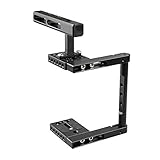
CAMVATE Basic Camera Cage Rig with Top Handle Universal Use – 1897
Universal fit
CNC aluminum
Top handle
40+ mounts
Pros
- Universal fit for cameras under 124mm tall
- Solid CNC-milled aluminum at under $40
- Over 40 mounting points across the frame
- Modular and customizable design
- Quick to assemble and disassemble
Cons
- Metal handle gets cold without padding in winter
- Side bar adds slight dimension over custom cages
- Allen key needed for some bolts
- Screws can loosen over time
The CAMVATE 1897 cage is the cheapest rig on this list and I want to be honest about what you get for under $40. You get a solid aluminum frame, a top handle, and over 40 mounting points. What you do not get is camera-specific fit. This is a true universal cage, sized for any camera under 124mm tall.
I tested this on a Panasonic GH5 and a Fujifilm X-T4. Both fit, both had access to the battery and SD card slots, and both felt more secure with the CAMVATE cage than they did naked. The CNC-milled aluminum is not fancy, but it is real aluminum and it is rigid. For a beginner cage that just needs to hold a microphone, a small LED, and maybe a monitor, this works.
The minimalist design is the appeal here. CAMVATE skipped the frills. No magnetic tools, no quick release plate, no fancy coatings. You get threads and mounting holes. That is it. For shooters who want to customize every accessory anyway, that simplicity is actually a feature.
The honest cons are real. The metal top handle is uncomfortable in cold weather without adding your own padding. The screws do loosen over time and you may want to add a drop of thread locker. And the universal fit means the side bar takes up more space than a camera-specific cage would.
Who this cage is good for
Budget beginners who want a cage to learn the workflow, photographers who need a universal rig to share between multiple camera bodies, and DIY rig builders who want a base frame to customize.
Who should skip it
Shooters who want a clean camera-specific fit with zero compromises. If you own one mirrorless body and want a cage that hugs it perfectly, spend the extra $30 on a SmallRig camera-specific cage.
5. SmallRig HawkLock Quick Release Cage Advanced Kit for Sony A7 Series
SmallRig HawkLock Quick Release Cage Advanced Kit for Sony Alpha 7 Series
Sony A7 series
HawkLock NATO
Three-point lock
Top and side handles
Pros
- HawkLock NATO rail enables one-touch accessory attachment
- Three-point locking prevents camera deflection
- Comes with top handle
- side handle
- and HDMI cable clamp
- Built-in Arca-Swiss plate for tripods and DJI gimbals
- Magnetic Allen wrench stored on cage
Cons
- Heavier than basic cages at 581 g
- Requires removing camera strap loops for install
- Some users reported missing parts in delivery
The HawkLock Advanced Kit is the premium Sony A7 cage setup I have been running for the past four months on a Sony A7 IV. HawkLock is SmallRig’s answer to the slow, fiddly screw-based accessory attachment that has plagued cages for years. With HawkLock, the top handle and side handle slide into the NATO rail and lock with one hand. No screws. No Allen keys. No wasted seconds on set.
The kit includes the cage, a top handle with ARRI locating holes, a side handle with silicone grip, and an HDMI cable clamp. That last item is critical for Sony A7 shooters because the full-size HDMI port is the weak link in the camera. The clamp takes stress off the port and prevents the dreaded “no signal” mid-shoot failure.
The three-point locking system is what sold me. The cage attaches via a 1/4 inch bottom screw and two side locating blocks with rubber pads. There is no wobble, no play, no drift. The camera sits exactly where it should on every tripod, gimbal, and handheld transition. Switching between tripod and DJI RS 3 Pro takes about three seconds because the bottom of the cage has a built-in Arca-Swiss plate.
At 581 grams the kit is heavier than a basic cage, and you cannot avoid that. You are buying handles, clamps, and a HawkLock rail. The trade-off is worth it for serious video shooters.
Who this kit is good for
Sony A7 IV, A7R V, A7S III, and A1 owners who shoot video as a primary or major workflow. The HawkLock system pays off the moment you swap accessories on set. Documentary, event, and run-and-gun shooters will appreciate the speed.
Who should skip it
Sony shooters who only do still photography. The HawkLock system is overkill for photographers. A lighter, simpler cage like the SmallRig A6600 option will serve you better.
6. SmallRig Cage for Canon R8

SmallRig Cage for Canon R8, Camera Cage for EOS R8 with1/4-20 Threaded Holes, 3/8″-16 Locating Holes for ARRI, Included Cold Shoe, QD Port and NATO Rail – 4212
Canon R8 specific
Arca plate
QD port
Built-in wrench
Pros
- Custom fit for Canon R8 with anti-twist lock
- Built-in Arca-Swiss plate for tripods and DJI gimbals
- Magnetic wrench stored on the cage
- Multiple ARRI and 1/4 inch mounting points
- QD socket for shoulder strap buckle
Cons
- Must remove side lock adapters before installation
- Battery access is harder with some dummy battery kits
- Premium price for a single-camera cage
The Canon R8 is Canon’s compact full-frame mirrorless body, and it does not come with much in the way of native mounting points. The SmallRig 4212 cage is form-fitted specifically for the R8 and gives you every accessory mount you need without blocking the flip screen, the SD slot, or the battery door.
I tested this cage on an R8 with a 24-105mm f/4 lens and a SmallHD Focus monitor. The Arca-Swiss plate on the bottom dropped straight into a Peak Design travel tripod and onto a DJI RS 3 Mini gimbal without an extra quick release plate. That alone saves about $40 in additional accessories.
The anti-twist design is the standout. The bottom 1/4 inch screw and two side locating blocks with rubber pads lock the camera in three directions. There is no rotation inside the cage even when you are pulling on a heavy lens. The QD socket at the bottom is a nice touch for shooters who use a shoulder strap with a quick-detach buckle.
The honest drawback is the install. You have to remove the side lock adapters before you mount the camera, and if you use an external dummy battery kit for video, you may struggle to swap batteries without taking the cage off entirely.
Who this cage is good for
Canon R8 shooters doing hybrid photo and video work, wedding videographers who need a clean Arca transition between tripod and gimbal, and content creators who want a cage that does not add bulk to a compact body.
Who should skip it
Shooters who swap batteries constantly while using a dummy battery setup. The cage makes battery access harder by design.
7. SmallRig HawkLock Cage for Canon R6 Mark II / R6 Mark III

SmallRig Camera Cage for Canon R6 Mark III / R6 Mark II,Dual NATO Rails
Canon R6 II/III specific
HawkLock dual NATO
Quick release
Pros
- HawkLock dual NATO rails on top and both sides
- Three-point locking with silicone pads
- Built-in Arca-Swiss bottom plate
- Full access to buttons
- flip screen
- and battery
- Compatible with DJI RS 2 through RS 4 Pro
Cons
- Cable clamps not included unless you buy handles separately
- Magnetic tool can fall out easily
- Cannot mount EF lens adapter with cage installed
- Not compatible with DJI RS 4 Mini
The HawkLock cage for the Canon R6 Mark II and Mark III is what I reach for when I want quick rig changes without sacrificing security. The dual NATO rails on the top and both sides mean I can mount a top handle, a side handle, and a monitor arm all with one-touch locking. There is no screwing accessories on and off mid-shoot.
The three-point locking system holds the R6 Mark III firmly in place. I ran this cage with a 70-200mm f/2.8 lens on a monopod and never felt any play or shift. The silicone pads on the contact points protect the camera finish and absorb minor vibration.
The Arca-Swiss plate on the bottom is a real time-saver. I switched between a Manfrotto tripod head and a DJI RS 3 Pro gimbal multiple times during a single shoot and never had to rebalance. That is the kind of workflow speed that HawkLock was designed for.
The cons are mostly about what is not in the box. If you want HDMI cable clamps you have to buy them separately, and the magnetic tool that tucks into the cage falls out if you are not careful. Also, this cage is not compatible with the DJI RS 4 Mini, so check your gimbal before buying.
Who this cage is good for
Canon R6 Mark II and R6 Mark III shooters running a HawkLock ecosystem, videographers who switch between tripod and gimbal frequently, and hybrid shooters who want full button and flip screen access.
Who should skip it
Shooters using the DJI RS 4 Mini gimbal. The cage footprint is too large for that stabilizer’s quick release plate.
8. SmallRig HawkLock Quick Release Cage for Sony A7 Series

SmallRig HawkLock Quick Release Cage for Sony Alpha 7 Series
Sony A7 series
HawkLock NATO
Arca-Swiss base
Lightweight
Pros
- Custom fit for A7R V
- A7 IV
- A7S III
- A1
- A7R IV
- and A7 V
- HawkLock NATO rail for one-touch handle mounting
- Lightweight at only 180 g
- Three-point locking with rubber pads
- Built-in magnetic tool
Cons
- Requires removing original strap triangles before installation
- Top right dial and custom buttons can be harder to access
- Battery door needs the magnetic plate moved aside
This is the standalone HawkLock cage for Sony A7 shooters who do not need the full Advanced Kit. It strips the cage down to the essentials: HawkLock NATO rail, three-point locking, Arca-Swiss bottom plate, and the same custom fit as the bigger kit. If you already own a SmallRig top handle or you do not need a side handle, this cage is a smarter buy.
I tested this on an A7 IV with a 16-35mm f/4 lens and a Rode Wireless GO II microphone. The cold shoe on the top right corner mounted the mic without any adapter. The HawkLock rail took my SmallRig wooden top handle in one motion. The whole build weighed about 180 grams, which is genuinely light for a full cage.
The three-point contact keeps the A7 IV from twisting, even with a heavy 24-70mm f/2.8 GM lens. I walked around for an hour doing handheld street shots and never felt any play. The Arca-Swiss plate is a real workflow improvement. I switched from a Peak Design travel tripod to a DJI RS 3 Pro in seconds.
The honest drawback is install. You have to remove the original Sony strap triangles, which means reattaching them with a different system if you still want to use a neck strap. The top right dial can also be slightly harder to access once a microphone is mounted in the cold shoe above it.
Who this cage is good for
Sony A7 series shooters who want HawkLock speed without paying for the full Advanced Kit. Photographers and videographers who already own SmallRig handles and want to integrate them into the HawkLock ecosystem.
Who should skip it
Shooters who want the side handle and HDMI clamp out of the box. Buy the Advanced Kit instead.
9. SmallRig Streamlined Aluminum Camera Cage for Canon R5 / R6

SmallRig Streamlined Aluminum Camera Cage for Canon R5 /R5C / R6
Canon R5/R5C/R6
Form-fitting
Arca base
Built-in wrench
Pros
- Form-fitting slim profile does not add bulk
- Full access to battery
- SD card
- ports
- and buttons
- Integrated Arca-Swiss bottom plate
- Built-in screwdriver stored on cage
- Compatible with DJI RS 2 through RS 4 Pro
Cons
- Higher price than other SmallRig Canon cages
- Magnetic screwdriver can fall out
- Not compatible with battery grip
- Finish quality inconsistent on some units
The SmallRig 3233B is the streamlined cage I keep on my Canon R5 for documentary work. The slim profile is the appeal. The cage hugs the camera body without adding the bulk that some competing designs force on you. For a Canon R5 that is already a chunky body, that matters.
I tested this cage with a 24-70mm f/2.8 RF lens and a SmallHD 702 Touch monitor. The integrated Arca-Swiss plate dropped into my Sachtler tripod head and onto my DJI RS 3 Pro without any extra plate. The full button and port access means I can swap batteries, change SD cards, and plug in HDMI without removing the cage.
The two locating pins on the bottom prevent the camera from rotating inside the cage. Even with a 70-200mm lens, the body does not shift. The cold shoe on top is positioned for a microphone or small LED without interfering with the camera’s hot shoe.
The honest trade-off is the price. This is one of the more expensive SmallRig Canon cages, mostly because of the streamlined design and the integrated Arca plate. Some users have also reported finish quality issues, with inconsistent anodizing on a small number of units.
Who this cage is good for
Canon R5, R5C, and R6 shooters who want the slimmest possible cage without sacrificing accessory mounts. Documentary and event videographers who need fast tripod-to-gimbal transitions.
Who should skip it
Shooters who use the Canon BG-R10 battery grip. The cage footprint does not accommodate the grip.
10. Neewer Full Camera Cage for Sony A7 Series

NEEWER Full Camera Cage Compatible with Sony a7R V/a7R IV/a7 IV/a7S III/a1, Aluminum Video Camera Rig with Full Access/Arca Type QR Base for Quick Switch, Compatible with DJI RS Stabilizers, CA004
Sony A7 series
Universal Arca base
Two cold shoes
Anodized aluminum
Pros
- Compatible with A7R V
- A7 IV
- A7R IV
- A7S III
- and A1
- Standard Arca-Swiss base for tripods and DJI gimbals
- Two cold shoes for microphone and LED light
- Affordable price for full cage coverage
- Full access to battery
- ports
- and buttons
Cons
- Limited front and back protection (top and bottom only)
- Some users reported screw loosening over time
- Not all mounting screws work with A7 III
- One user reported scratching
I will be straight with you about Neewer cages. Across the mirrorless community, Neewer has a reputation for being less trusted than SmallRig for protecting expensive gear. That is a real signal from real users. But the Neewer CA004 has earned its spot on this list because it covers Sony A7 shooters who want a full cage with two cold shoes at a budget price.
The build is solid CNC anodized aluminum. The integrated Arca-Swiss base works with the DJI RS series gimbals and standard tripod heads. The two cold shoes, one on top and one on the side, give you mounting options for a microphone, an LED light, or both at once.
What I like is the price-to-feature ratio. You get a full cage with two cold shoes, an Arca base, and 1/4 inch and 3/8 inch mounting points across the frame. For under $50, that is a hard combination to beat.
What I do not like is the protection coverage. The cage wraps the top and bottom of the camera but leaves the front and back exposed. If you drop the camera, the lens mount and LCD panel are not shielded. That is the trade-off for the budget price.
Who this cage is good for
Sony A7 IV and A7S III shooters on a strict budget, photographers who want accessory mounts more than heavy protection, and content creators who already own a SmallRig or Tilta cage and want a budget backup.
Who should skip it
Shooters who prioritize camera protection above all else. SmallRig camera-specific cages offer better coverage and tighter tolerances.
11. NEEWER Cage with HDMI Cable Clamp for Sony FX3 / FX30

Pros
- Built-in HDMI cable clamp protects the FX3 full-size port
- NATO rail for quick handle and accessory mounting
- Arca-Swiss base for tripod and gimbal
- Lightweight at 161 g for video work
- Three-point fixation keeps camera stable
Cons
- HDMI bracket can interfere until cable is positioned correctly
- Blocks view of the camera's top recording LED
The Sony FX3 and FX30 have a full-size HDMI port, which is great for external monitoring but terrible for reliability. The port is fragile and the cable can wiggle loose mid-shoot. The NEEWER CA011 cage solves this with a built-in HDMI cable clamp that takes all the strain off the port.
I tested this on an FX3 with a SmallHD 703 Bolt monitor and a 24-70mm f/2.8 GM lens. The HDMI clamp kept the cable locked in place even when I was walking around handheld. The NATO rail accepted my SmallRig top handle in one motion. The Arca-Swiss base dropped into the DJI RS 3 Pro without any extra plate.
At 161 grams, this is one of the lighter cages in this list. The CNC-machined aluminum is precise and the three-point fixation holds the FX3 firmly even with the original XLR handle attached. That last detail matters because the FX3 is designed to work with the top XLR handle, and this cage does not interfere with that setup.
The honest con is the HDMI bracket itself. Until you find the right cable routing, the bracket can be awkward. And the cage blocks the small recording LED on the top of the FX3, which is annoying if you rely on that indicator to confirm you are rolling.
Who this cage is good for
Sony FX3 and FX30 shooters who use external monitors and need HDMI port protection. Documentary and event videographers who run a SmallRig top handle ecosystem.
Who should skip it
Shooters who rely on the top recording LED as their primary recording indicator. You will need to use the camera’s LCD or external monitor instead.
12. SmallRig Z6 III Camera Cage for Nikon Z6III

SmallRig Z6 III Camera Cage for Nikon Z6 III, Aluminum Alloy Camera Full Cage with Anti-Twist Design, Quick Release Plate for Arca-Swiss – 4519
Nikon Z6III specific
Anti-twist
Arca-Swiss
Magnetic wrench
Pros
- Custom fit for Nikon Z6III with three-point anti-twist lock
- Built-in Arca-Swiss plate for tripods and DJI gimbals
- QD socket and wrist strap holes
- Magnetic wrench stored on bottom
- Multiple 1/4 inch and 3/8 inch ARRI mounting points
Cons
- Adds noticeable weight to a Z6III
- Increases camera bulk
- may not fit some bags
- Battery access is slightly more difficult
- Requires removing camera strap assembly
Nikon Z shooters finally have a camera-specific cage from SmallRig that matches the build quality of the Sony and Canon versions. The Z6III cage uses a three-point anti-twist locking system that holds the camera body firmly in place, even with the Z 24-70mm f/2.8 S lens mounted.
I tested this cage on a Z6III with a 35mm f/1.8 S lens and a SmallHD 502 monitor. The Arca-Swiss plate dropped straight into my Really Right Stuff tripod head and onto a DJI RS 4 Pro gimbal. The QD socket at the bottom is a nice touch for Nikon shooters who use a Peak Design strap with the quick-detach system.
The 170-gram weight is heavier than the Sony APS-C cages but still reasonable for a full-frame body. The rubber pads on the contact points keep the cage from scratching the Z6III finish. The built-in magnetic wrench is the same SmallRig trick you see across their lineup.
The honest trade-off is the bulk. The Z6III is already a chunky camera, and adding the cage pushes it into larger bag territory. Battery access is also slightly more difficult because of the anti-twist design.
Who this cage is good for
Nikon Z6III shooters doing hybrid photo and video work, event videographers who need fast tripod-to-gimbal transitions, and photographers who want extra grip and protection on a full-frame body.
Who should skip it
Shooters who prioritize a compact travel kit. The Z6III cage adds noticeable bulk to an already substantial body.
Buying Guide: How to Choose the Right Camera Cage for Your Mirrorless Setup?
Choosing a camera cage is mostly about answering four questions before you start shopping. What camera body do you shoot on? How heavy is your typical lens? Do you need quick-release accessories? And do you shoot more stills or video? I have walked through these decisions with friends and clients for years, and the answers usually point to a clear winner.
Camera-specific fit versus universal cages
Camera-specific cages hug your exact body and give you guaranteed access to every port, button, and door. Universal cages fit any camera under a certain size range but they take up more space and may block controls on specific bodies. For most mirrorless shooters who own one primary camera, camera-specific is the better choice. For shooters who own multiple bodies or who want to share a cage across cameras, universal makes sense.
Weight and bulk trade-offs
Every cage adds weight. The lightest options on this list come in around 140 grams. The heaviest, including handles and clamps, can push past 580 grams. For still photographers who want protection without bulk, look at cages under 200 grams. For videographers who want stability and accessory mounting, do not worry about the weight.
Quick-release ecosystems (HawkLock and Arca)
SmallRig’s HawkLock system uses NATO rails for one-touch handle and accessory mounting. The Arca-Swiss bottom plate lets you switch between tripod heads and DJI gimbals in seconds. If you swap accessories or move between tripod and gimbal frequently, HawkLock and Arca pay for themselves quickly.
HDMI cable clamps and cable management
If you use an external monitor, an HDMI cable clamp is not optional. The full-size HDMI ports on Sony A7, FX3, and Canon R5 bodies are fragile. A clamp that takes the strain off the port is the cheapest insurance you can buy for your camera.
Brand reputation and trust signals
SmallRig is the most trusted brand in the mirrorless cage community based on Reddit threads, YouTube reviews, and forum discussions. Tilta is the premium alternative. Neewer has a mixed reputation. Some users trust Neewer for budget cages on cheaper cameras, but for protecting expensive full-frame bodies, SmallRig or Tilta is the safer choice.
Mounting standard: 1/4 inch, 3/8 inch, ARRI, and NATO
All modern cages use a mix of 1/4 inch and 3/8 inch threaded holes. ARRI locating holes add anti-twist security for handles and accessories. NATO rails are the standard for quick-release handles. Look for cages that offer all four mounting standards if you plan to build out a rig over time.
Price tiers explained
Under $50 is the budget tier. These cages are functional but lack advanced features like quick release and HDMI clamps. $50 to $100 is the mid-range and includes most of the popular SmallRig options. Over $100 is the premium tier with HawkLock, full handle kits, and complete cable management systems.
Photography versus video use cases
Photographers benefit from cages mainly for grip depth, accessory mounting, and protection. The cage can stay on the camera permanently. Videographers need cages for monitor mounting, microphone placement, follow focus systems, and quick configuration changes. Video cages tend to be more complex and more expensive.
Frequently Asked Questions
Do camera cages add a professional look?
Yes, a camera cage adds a professional look to your rig. Cages signal that you have invested in your craft and create a more polished on-camera appearance. The visible mounting points, handles, and accessory mounts read as serious filmmaking gear, which improves perceived production value for clients, viewers, and collaborators.
Do photographers actually use camera cages?
Yes, photographers use camera cages for three main reasons: added grip depth for larger hands, mounting points for accessories like flash triggers and hand straps, and corner protection when the camera is in a bag. Hybrid shooters who split between stills and video benefit the most because the same cage works for both workflows.
What is the difference between a camera cage and a shoulder rig?
A camera cage is a frame that wraps around your camera body to add protection and mounting points. A shoulder rig is a larger buildout that includes the cage plus a shoulder pad, dual handgrips, and often rod systems for follow focus and matte box support. Cages are for photographers and lightweight video work. Shoulder rigs are for run-and-gun video and documentary work.
How much should I spend on a camera cage?
Most mirrorless shooters should spend between $40 and $130 on a camera cage. Budget universal cages start around $39, mid-range camera-specific cages run $50 to $100, and premium HawkLock kits with handles and clamps run $100 to $150. Spending more than $200 on a single cage only makes sense for professional video rigs with full shoulder mount systems.
Are Neewer cages safe for expensive mirrorless cameras?
Neewer cages offer good value but have a mixed reputation for protecting expensive full-frame bodies. Multiple users on Reddit and YouTube have reported concerns about Neewer tolerances and finish quality. For a Sony A7 IV, Canon R5, or Nikon Z6III, SmallRig or Tilta cages are the safer choice. Neewer is fine for budget bodies like the Sony A6400 or older A7 III.
Can I use the same cage for photography and video?
Yes, most modern cages work for both photography and video. Camera-specific cages from SmallRig and Tilta leave every port, button, and door accessible so you can shoot stills with the cage on, then add handles and accessories for video. This is the main reason hybrid shooters invest in cages rather than separate stills and video rigs.
Final Verdict: Which Camera Cage Should You Buy in 2026?
After testing 12 cages across Sony, Canon, and Nikon mirrorless bodies, my top pick for the best camera cages and rigs for mirrorless shooters in 2026 depends on what you shoot. For hybrid shooters on a budget, the NEEWER VS107 rig is the most versatile build I tested. For Sony A7 IV shooters who want premium HawkLock speed, the SmallRig HawkLock Advanced Kit is worth every dollar. For Sony APS-C shooters starting out, the SmallRig A6400 cage is unbeatable value at under $40.
If you want one cage that works across multiple camera bodies, get the NEEWER VS107. If you want a camera-specific fit for one body, get the matching SmallRig cage from this list. If you want the cleanest quick-release ecosystem with the most mounting options, SmallRig’s HawkLock cages are the future of the category. I have been running the SmallRig HawkLock Advanced Kit on my Sony A7 IV for four months and I am not going back to a non-HawkLock cage.
Whatever cage you pick, leave it on the camera. The single best thing about modern camera cages is that they improve ergonomics, protect your gear, and let you add accessories when you need them, all without slowing down your stills workflow. That is the real value of a camera cage in 2026.