
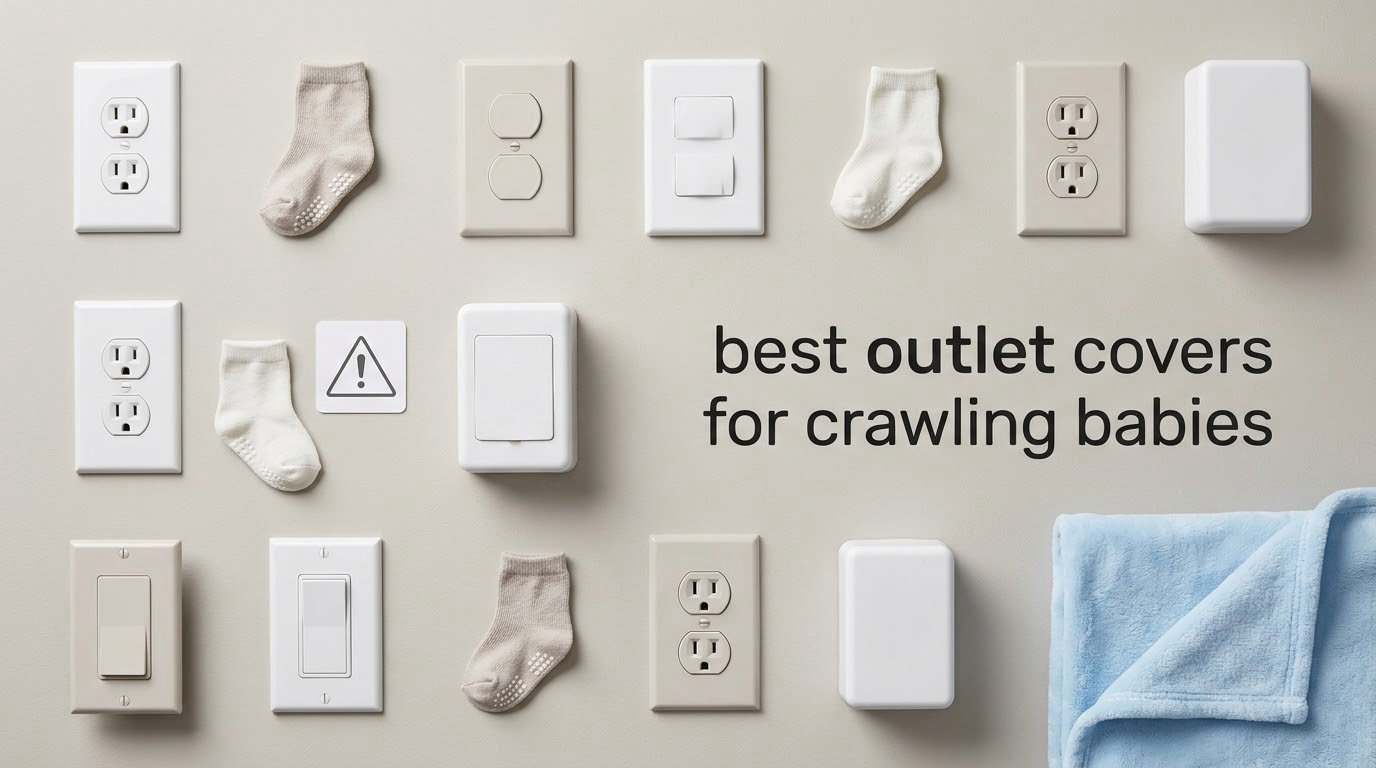
There is a window, somewhere between seven and eleven months, when a baby goes from a stationary lump to a mobile one, and the whole room gets reclassified. The outlet that has always sat there behind the couch becomes reachable. That is the moment the best outlet covers for crawling babies stop being optional and start being urgent, because a crawling baby can now reach a wall socket at exactly the height that adults walk past without thinking.
What most buying guides skip is the type question. There are four distinct families of outlet covers on the market: plug covers that push into an unused socket, self-closing plates that stay on the wall and shut when a cord comes out, sliding-door wall plates, and boxes that enclose the whole outlet so an appliance can stay plugged in. Those four types solve different problems, and the wrong one on a given outlet is either useless or a daily annoyance.
We compared 10 of the most-reviewed outlet covers on the market, read thousands of owner reviews, and sorted them by outlet type, child-resistance mechanism, adult access and pack size. By the end of this guide you should be able to say which type fits your house, how many covers you actually need, and which specific picks are worth buying. If you are also outfitting a nursery, our best crib mattresses for babies guide covers the sleep side of the same room.
Table of Contents
Top 3 Picks for the Best Outlet Covers for Crawling Babies (October 2026)

Safety 1st Outlet Covers…
- Push-in install
- 36-count pack
- Semi-translucent so holes are hidden
These three cover the three genuinely different situations. The Safety 1st 36-pack is the default choice for a house full of unused standard outlets, and it carries more than 26k owner reviews behind it. The Power Gear 30-pack is the same idea with a fully clear finish and a UL listing, which appeals to anyone who does not want visible white plastic on the wall. The Safety Innovations box is a different category entirely: it is the only pick here that lets you keep a charger, a power strip or a baby monitor plugged in.
What Are the Four Types of Outlet Covers?
The safest outlet covers for babies are the ones that cannot be removed and pose no loose-part risk, which in practice means self-closing plates and cover boxes rather than loose plug inserts. The four types below differ on exactly that axis. Understanding the difference before you shop prevents the most common buying mistake, which is a box of plug covers that turns out not to fit a single outlet in the house.
Plug covers are small plastic caps that push into an unused socket and block both prongs. Best for: standard duplex outlets that are never used, in homes with no children needing to unplug anything.
Self-closing covers are replacement wall plates with a spring-loaded door that opens when a plug is pushed in and swings shut on its own when the plug is removed. Best for: outlets that see occasional use, because there is no loose cap to lose or store.
Sliding plate covers are wall plates whose door slides shut and locks over the socket. Best for: decorator and GFCI-style outlets where no plug-shaped cover will seat properly.
Cover boxes are plastic enclosures that screw over the entire outlet, leaving interior room for a bulky plug or power strip. Best for: in-use outlets, oversized adapters, and homes where a baby must not be able to pull a cord out.
One caution that belongs here rather than in a footnote. Plug covers only work on outlets with nothing plugged in, and every cap you install is a small loose object in a home with a baby. A parent on a r/beyondthebump thread put it plainly: sliding outlet covers are better because the little inserts are choking hazards. That concern is legitimate, and it is the strongest argument for the self-closing and box types.
Best Outlet Covers for Crawling Babies in 2026
| Product | Specs | Action |
|---|---|---|
| Safety 1st Electrical Outlet Baby Proof Covers, 36 Count |
|
Check Latest Price |
 Power Gear Electrical Outlet Baby Proof Covers, 30 Pack, Clear Power Gear Electrical Outlet Baby Proof Covers, 30 Pack, Clear |
|
Check Latest Price |
 Wappa Baby Outlet Covers, 50 Pack, White Wappa Baby Outlet Covers, 50 Pack, White |
|
Check Latest Price |
 Wappa Baby Clear Outlet Covers, 50 Pack Wappa Baby Clear Outlet Covers, 50 Pack |
|
Check Latest Price |
 Jool Baby Outlet Covers, 32 Pack, Clear Jool Baby Outlet Covers, 32 Pack, Clear |
|
Check Latest Price |
 HEELALBABY Outlet Covers with Hidden Pull Handle, 45 Pack HEELALBABY Outlet Covers with Hidden Pull Handle, 45 Pack |
|
Check Latest Price |
| Safety Innovations Twin Door Outlet Cover Box |
|
Check Latest Price |
 Wappa Baby Outlet Cover BOX, Patented Dual-Lock Wappa Baby Outlet Cover BOX, Patented Dual-Lock |
|
Check Latest Price |
 Safety Innovations Self-Closing Outlet Covers, 6 Pack Safety Innovations Self-Closing Outlet Covers, 6 Pack |
|
Check Latest Price |
 Dreambaby Plastic Baby Safety Outlet Plug Covers, 12 Pack Dreambaby Plastic Baby Safety Outlet Plug Covers, 12 Pack |
|
Check Latest Price |
How we evaluated: we sorted every pick by outlet compatibility first, because a cover that does not fit is worthless, then looked at the child-resistance mechanism, then adult access, then pack size and how many outlets a single pack realistically covers. We weighted review volume heavily, since a 26k-review listing tells you more about long-term fit than a 10-review listing. We also read the one-star reviews, because that is where the fit problems and the non-US outlet complaints live.
One thing to note about this list: every product here is a real, currently listed item with a large volume of owner feedback behind it. Pricing shifts regularly, so use the buttons to check the current figure rather than working from a remembered number.
1. Safety 1st Electrical Outlet Baby Proof Covers, 36 Count – Best Overall Outlet Cover
Safety 1st Electrical Outlet Baby Proof Covers, Secure Outlet Plugs, Baby Proofing, 36 Count
Tool-free push-in install
36-count pack
Semi-translucent plastic
Item weight 3.21 ounces
Pros
- Takes seconds to install with no tools
- Semi-translucent design hides the outlet holes
- Snug fit that resists toddler pulling
- Adults can remove with the hidden edge indents
- 36-count pack covers a whole home
Cons
- Very secure fit can be hard for adults to remove
- Replacement plugs are easy to misplace once popped out
The first thing to know about this pack is how much owner history sits behind it. At a 4.8 rating across more than 26k reviews, this is one of the most thoroughly battle-tested plug covers in the category, and that matters more than any spec sheet when you are buying something a baby will be pulling on. It ranks as the number one item in its Amazon baby safety category, which is a reasonable proxy for how many people have installed it.
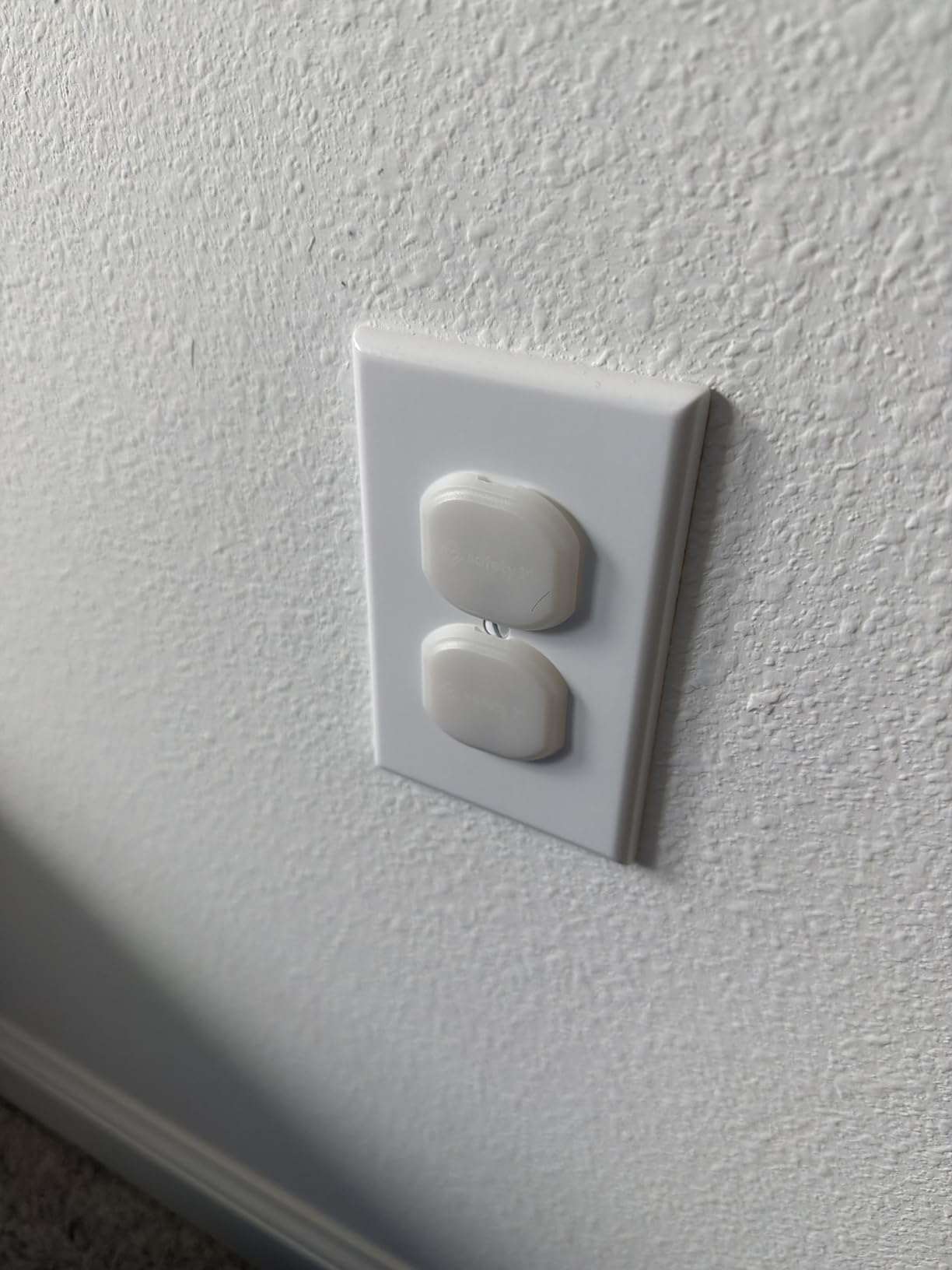
The semi-translucent material is the quietly clever part. A clear or white cap still reads as an object sitting in a socket, and babies are drawn to contrast. This one blurs the outline of the holes so the outlet looks like a wall plate with nothing interesting in it. Several owners specifically call that out as the reason their crawling child never went for that socket in the first place.
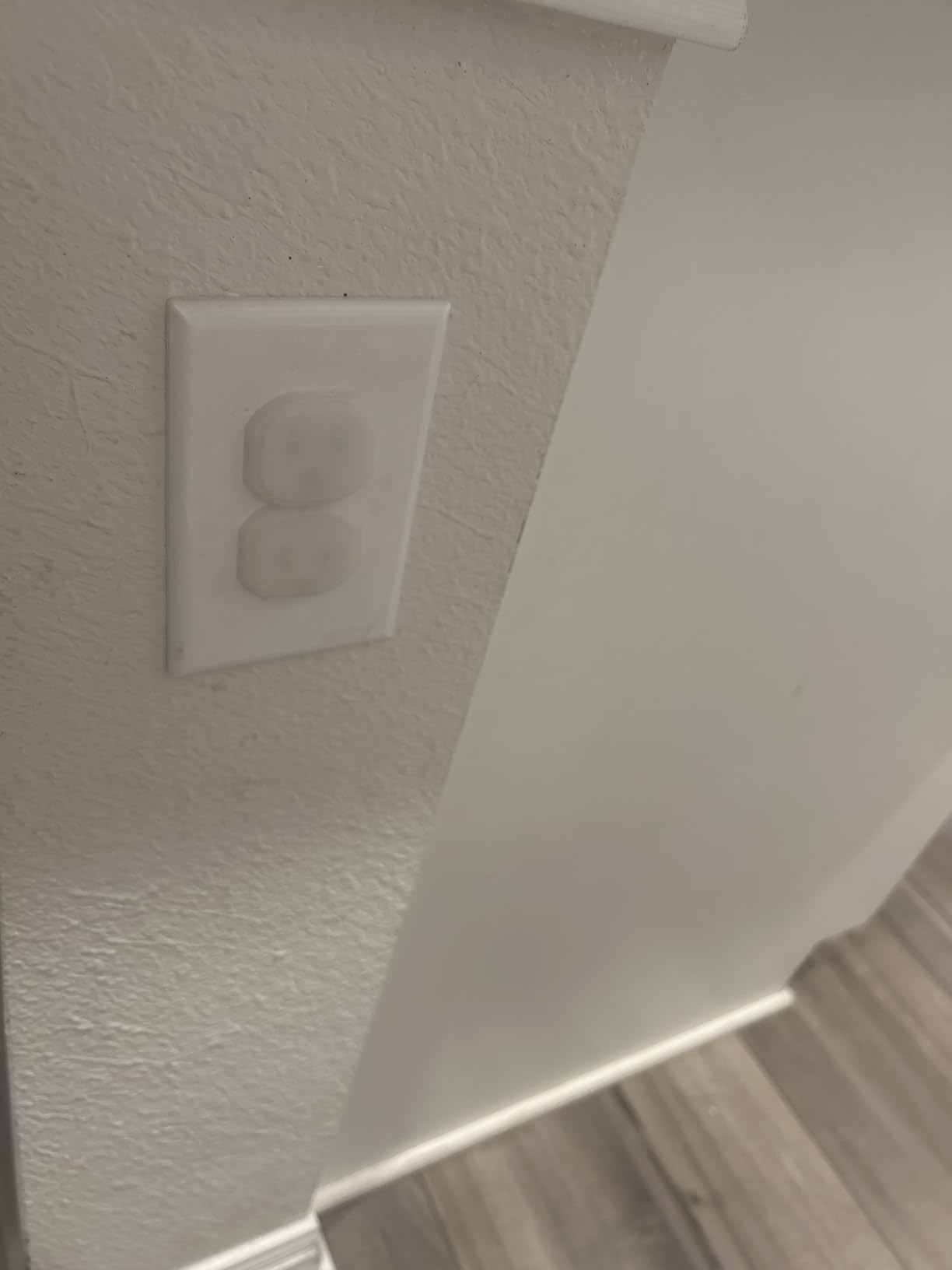
The installation is genuinely tool-free. You press it into the unused socket and it seats with a firm click, and the pack weighs just over three ounces in total, so a single cover is almost weightless on the wall. The dimension of each unit is small enough to sit nearly flush against the faceplate, which keeps it from becoming a shelf for a determined crawler to hang on.
There is a 72-count variant of the same model if your house is large, and 36 is the middle option that covers most three-bedroom homes with a spare cap or two in reserve. Spare caps are worth having on hand, because losing one is a small daily annoyance that has an easy fix.
What you should know before you buy
This is one of the tighter-fitting plug covers on the market, and that is the intended behaviour. Adults removing it for vacuuming or appliance use frequently report needing a thin flat tool rather than just their fingers. The trade is deliberate: the resistance that frustrates you is the same resistance that defeats a nine-month-old.
It fits standard US duplex receptacles, including three-prong sockets. If your house has decorator-style plates, oversized commercial receptacles, or anything non-US, check before buying a full pack.
Who it suits and who it does not
It suits families with a straightforward house full of unused outlets and no need to plug anything in regularly. It is the pick I would put in a nursery, a playroom and a finished basement in one order.
It does not suit anyone with outlets in active use, because pulling a cap out every time you need a plug is exactly the behaviour that makes parents abandon plug covers entirely. It also does not suit a home with tamper-resistant receptacles everywhere, where the residual risk is much smaller.
2. Power Gear Electrical Outlet Baby Proof Covers, 30 Pack, Clear – Best Value Outlet Cover
Power Gear Electrical Outlet Baby Proof Covers, 30 Pack, Clear
Fully clear finish
UL Listed
30-piece pack
Item weight 2.39 ounces
Pros
- Largest review base in this roundup
- Tool-free installation
- One-piece fit for two- and three-prong receptacles
- UL safety certified with a one-year replacement plan
- 30-pack suits home or daycare
Cons
- Difficult to remove from tight-fitting outlets
- Small covers are easy to misplace
This is the one that wins on evidence. More than 30k reviews at a 4.8 rating is the biggest review base of any product we looked at, and the sentiment is unusually consistent: people like the clear finish, they like the tool-free fit, and they like that a toddler cannot pop it out. Jasco has been making it since 2009, which also means replacement plugs from a decade ago are still findable if you need one.
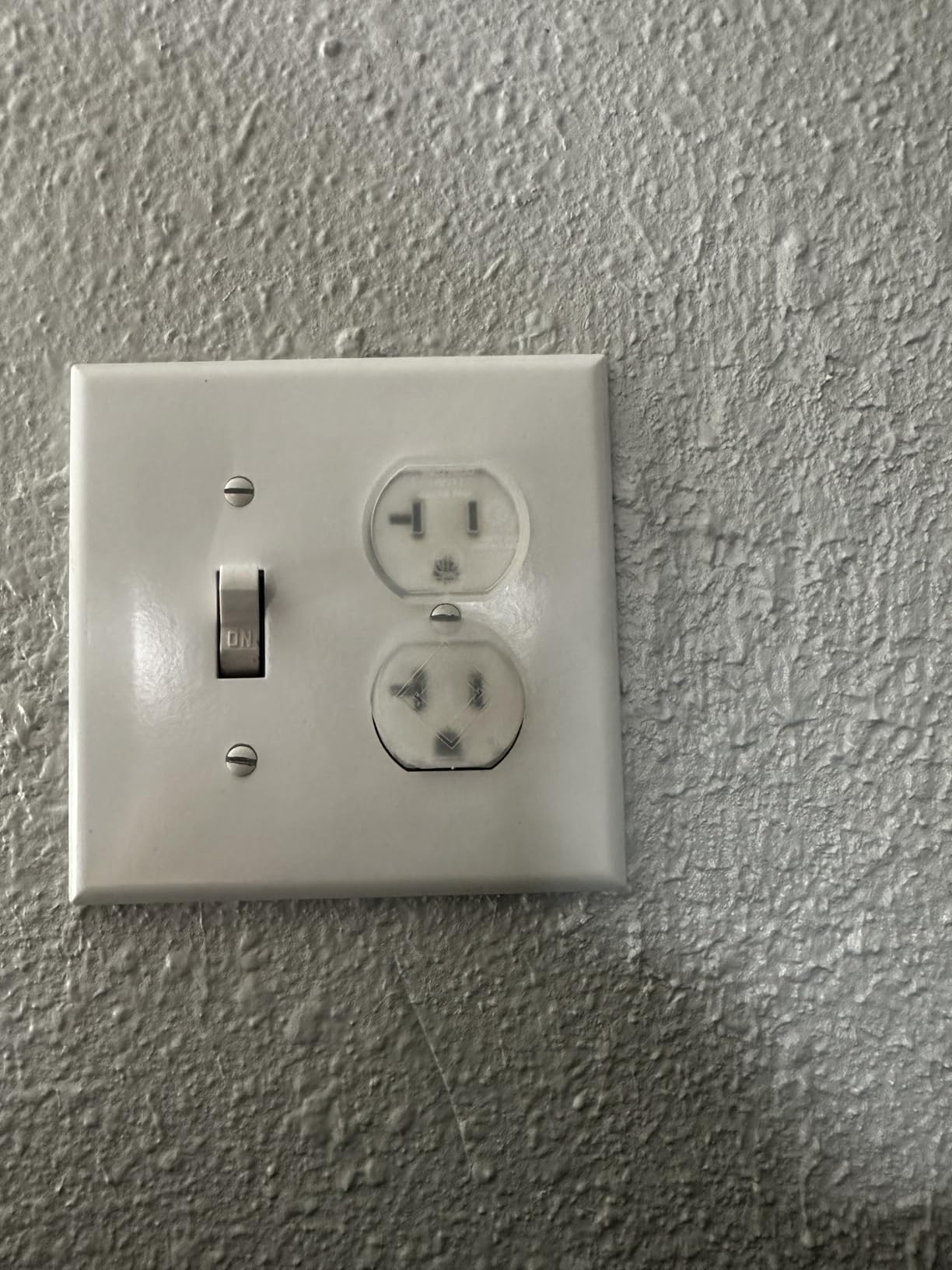
The clear finish is the difference here. Against a white or cream wall plate it effectively disappears, and a number of owners say their child never even registered the outlet as something to investigate. That is the same logic behind the semi-translucent design in our top pick, executed with a fully transparent material.
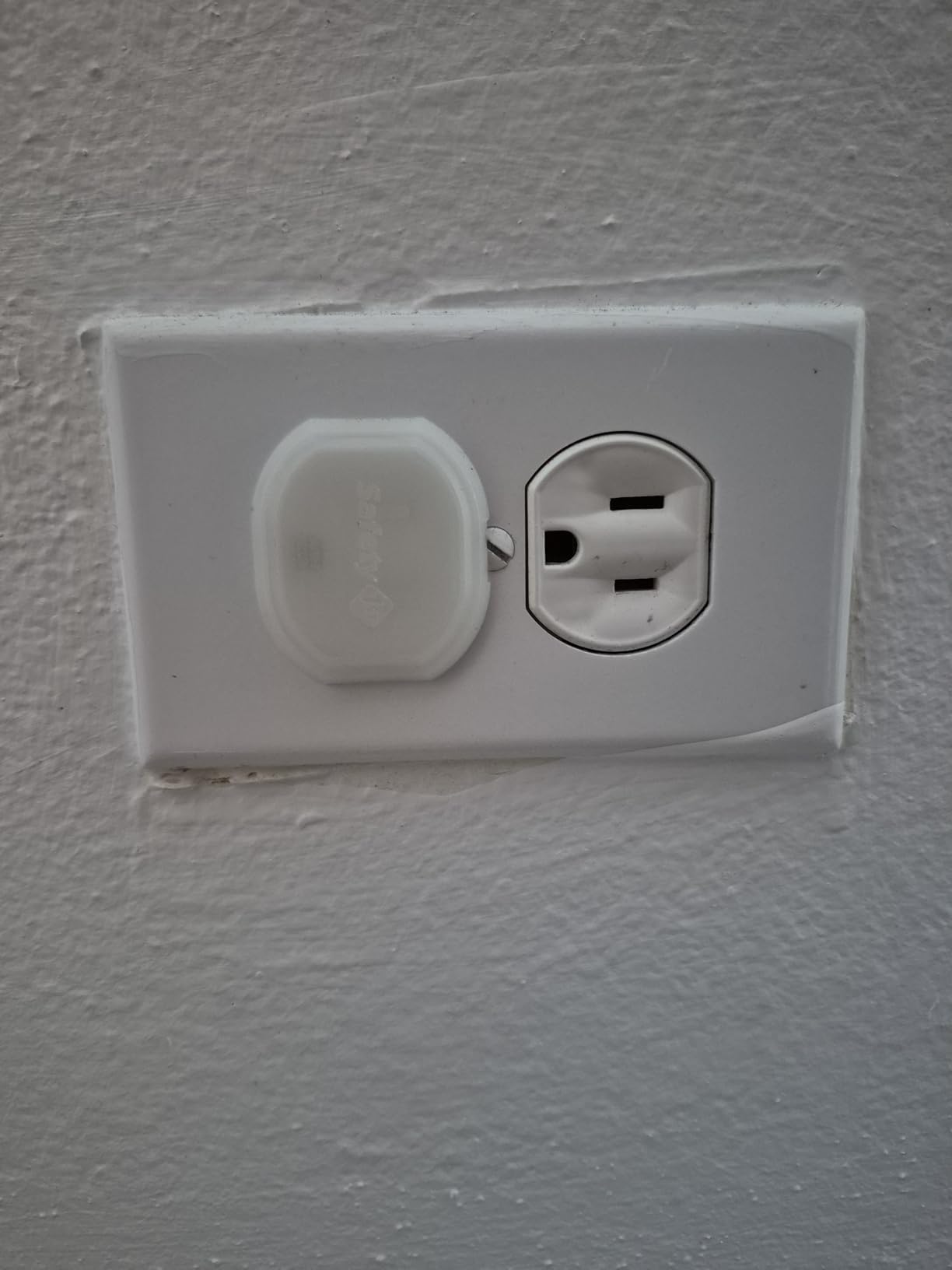
Each cover is a single moulded piece measuring just over three-quarters of an inch across, so there is no assembly and nothing to snap. Installation is press-and-go, and removal is equally quick. It is a one-piece universal fit for standard two-prong and three-prong receptacles, which is the compatibility you want in a rental where you cannot replace plates.
The 30-piece count covers most of a two-bedroom home with a margin, and the same listing scales up for a daycare or classroom. There is a one-year limited warranty behind it, which is more than most products in this category offer.
What you should know before you buy
The clear plastic does one thing a white cover cannot, and it does it well: it removes visual invitation. It also means you can forget where you installed a cover in a hallway or a guest room, which is convenient until you need to find it again. Mark the ones behind furniture with a pencil on the wall plate if that bothers you.
As with the tightest plug covers generally, adults report needing a flat tool to remove them from a snug receptacle. Plan your placement so the ones you use daily are the ones you can reach easily.
Who it suits and who it does not
It suits a rental or a first apartment, where tool-free install and no plate changes matter, and anyone who wants the outlet to look untouched. It is also a strong pick for a home office, where a visible white block would look out of place on a glass desk setup.
It does not suit an outlet you need to use regularly, and it will not fit surge protector slots. If your house uses decorator or Decora-style plates, this is the wrong shape.
3. Wappa Baby Outlet Covers, 50 Pack, White – Best for Whole-Home Coverage
Outlet Covers Baby Proofing (50 Pack) Safe & Secure Electric Plug Protectors | Sturdy Childproof Socket Covers for Home & Office | Easy Installation | Protect Toddlers & Babies | White
50-count pack
White modern finish
Tool-free push-in
Item weight 4.6 ounces
Pros
- Largest count in the roundup
- Snug fit that resists toddler removal
- White finish matches most wall plates
- Sturdy plastic that resists cracking
- Tool-free install in seconds
Cons
- Hard for adults to remove without a flat tool
- No pull tab or handle for quick removal
Fifty covers is the largest count of any plug cover in this roundup, and it is the number that ends the second-buy trip. If you have a house plus a garage, or a duplex, or you want covers for the next room you will be in six months from now, this is the one that gets it done in a single order.
The fit is described across thousands of reviews as genuinely snug, which is the term parents in this category actually want to hear. Multiple owners note that the covers lay flush against the outlet and take real effort to pull out even for them. The white finish matches standard wall plates closely enough that it reads as part of the wall rather than an addition to it.
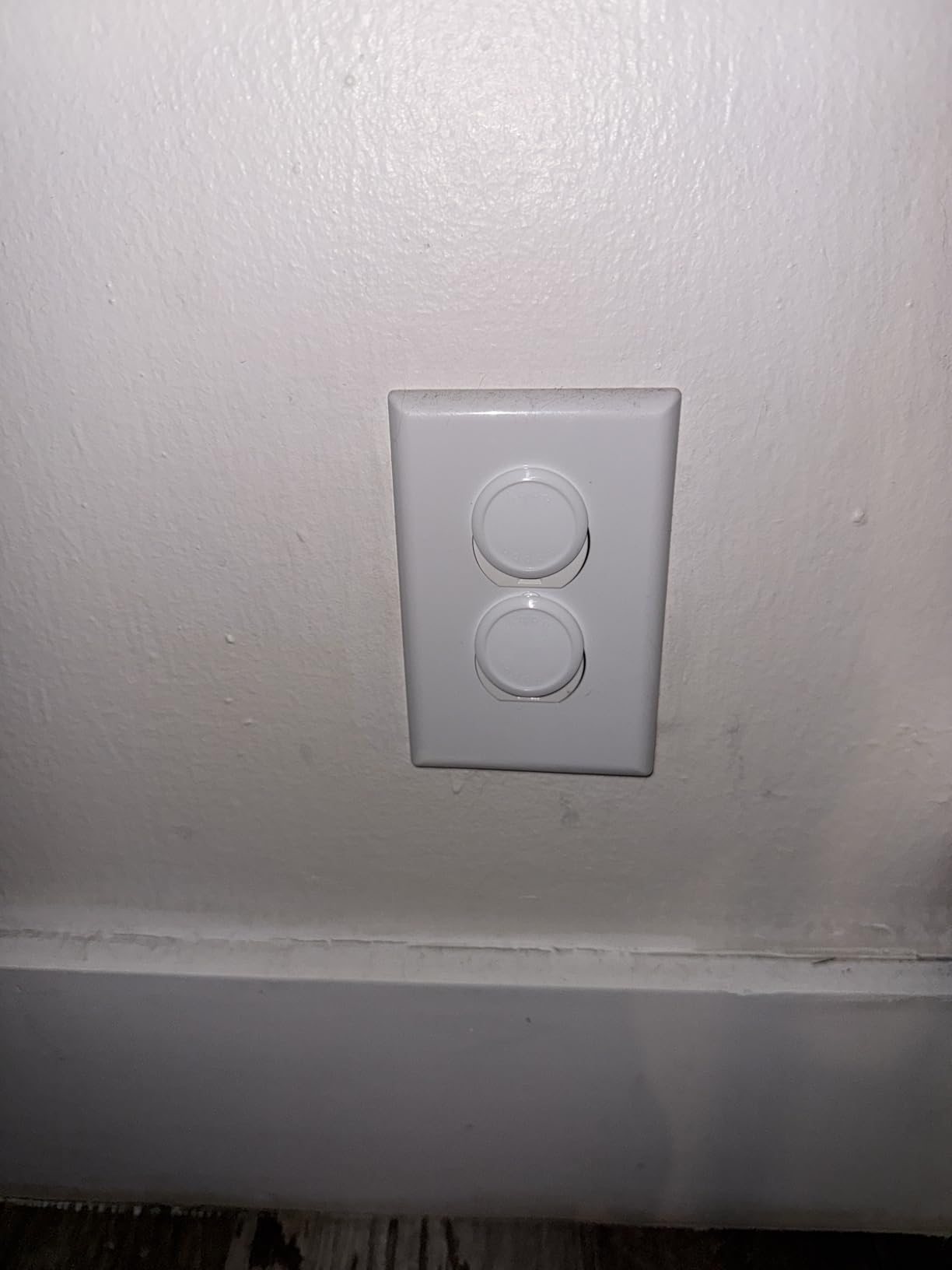
Everything about the physical design is aimed at one goal, which is making the cover hard for small hands to displace. The plastic is thick and resists cracking under repeated handling, and the whole pack weighs under five ounces, so storing fifty of them in one drawer is not a problem. Installation is press-in and takes seconds per outlet.
Variants run from 32 count to 50 count, and a two-pack of the 50 count is available if you are covering a large property. One owner with indoor cats bought them specifically to keep litter dust out of unused sockets, which is a nice secondary use.
What you should know before you buy
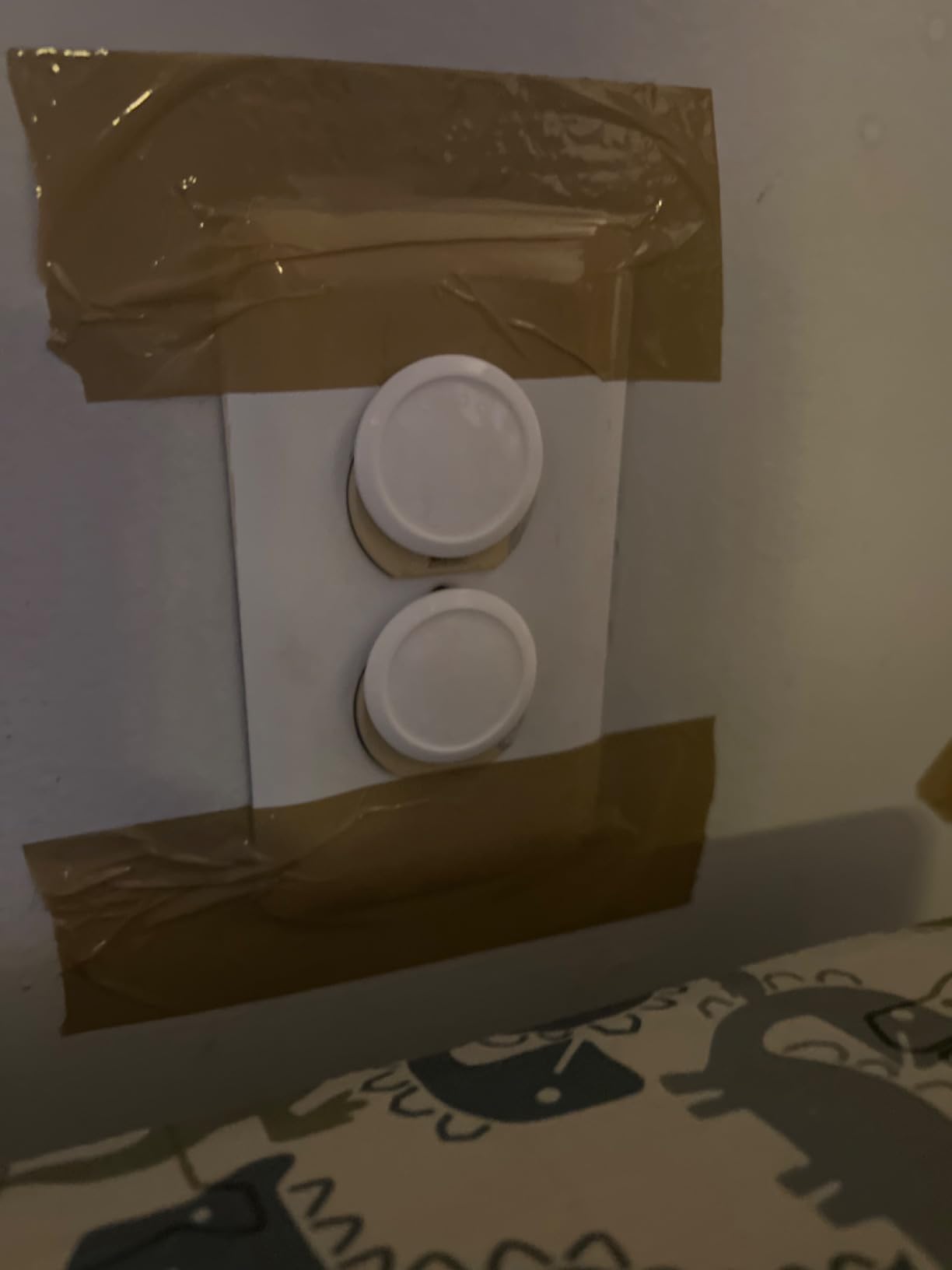
There is no pull tab, no handle and no visible grip. Adults report needing a fingernail, a small flat tool or side-to-side wiggling. For an outlet behind a sofa that you touch once a year, that is a non-issue. For an outlet you use weekly, it is an irritation.
It fits standard US outlets. Decorative plates, USB-equipped receptacles and non-US socket standards are outside what this cover was designed for.
Who it suits and who it does not
It suits a whole-home job on a budget-minded plan, a daycare, a home office full of unused outlets, or anyone who would rather buy once and not think about it again. The neutral white also suits finished rooms where clear plastic would look like a repair.
It does not suit a household where someone needs quick, frequent access to a socket. It also does not address the loose-part question, since every cap here is a removable object.
4. Wappa Baby Clear Outlet Covers, 50 Pack – Best Discreet Outlet Cover
Clear Outlet Covers (50 Pack) Value Pack – Baby Safety Outlet Plug Covers – Durable & Steady – Child Proof Your Outlets Easily
Fully transparent
50-count pack
Compact style
Item weight 4.3 ounces
Pros
- Nearly invisible against the wall plate
- Stays flush without wiggling
- Adult effort needed to remove
- 50-pack with plenty spare
- Durable steady construction
Cons
- Difficult to remove without a flat tool
- Does not fit surge protector slots
- Multi-step removal means placement matters
This is the same brand and count as our previous pick with one change: the material is transparent instead of white, and reviews suggest that single change alters the behaviour of the child more than anything else in this category. Several owners say their toddler went straight past an outlet that had a visible cover on it, which is the outcome you are actually buying.
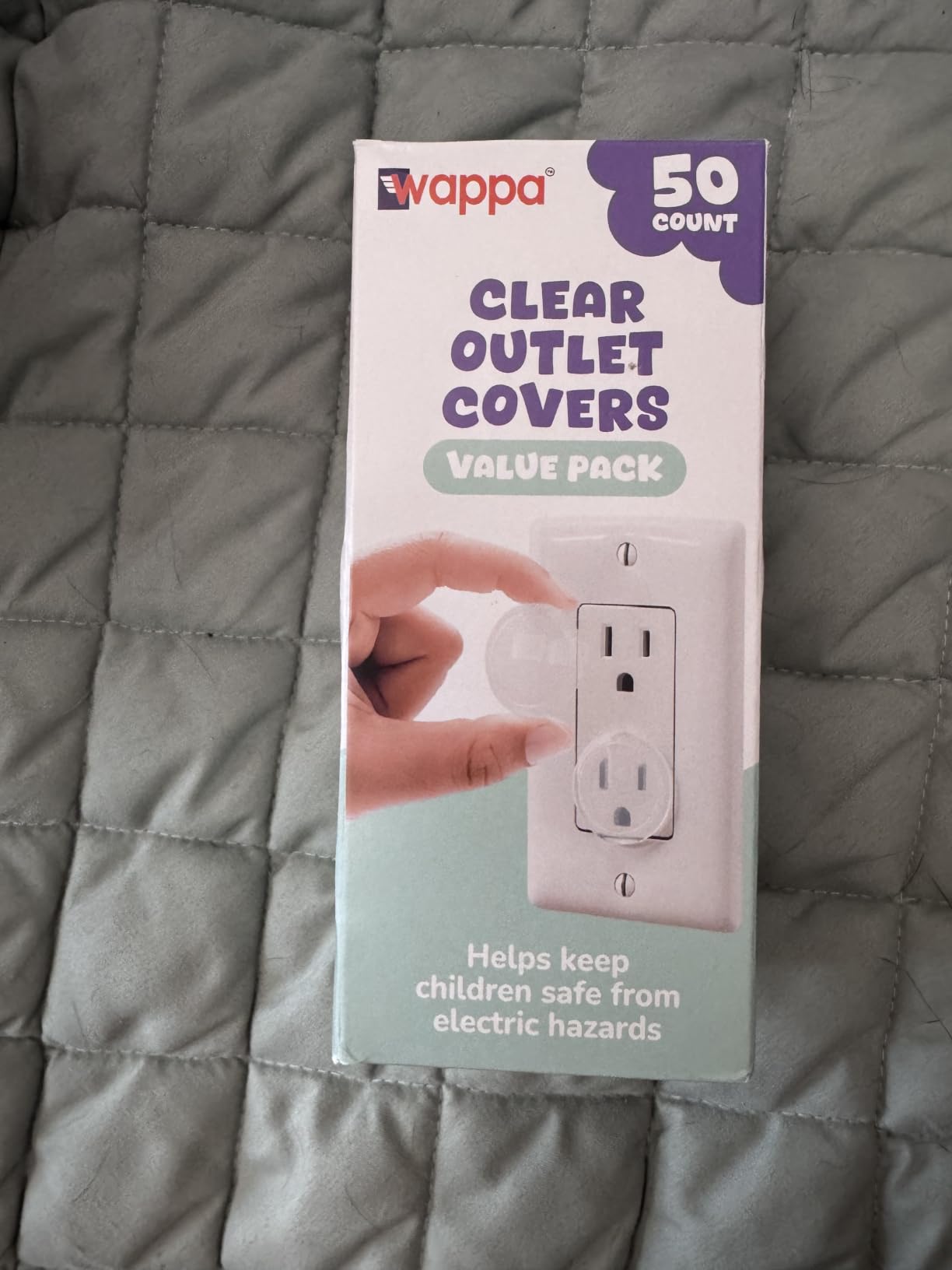
It is ranked in the top handful of its baby safety category, and the 4.8 rating across more than 13k reviews reflects a product that does a simple thing consistently. The style is listed as compact, and the package is a little over six inches on its longest side, so the 50 covers stay flat in a drawer rather than standing up in it.
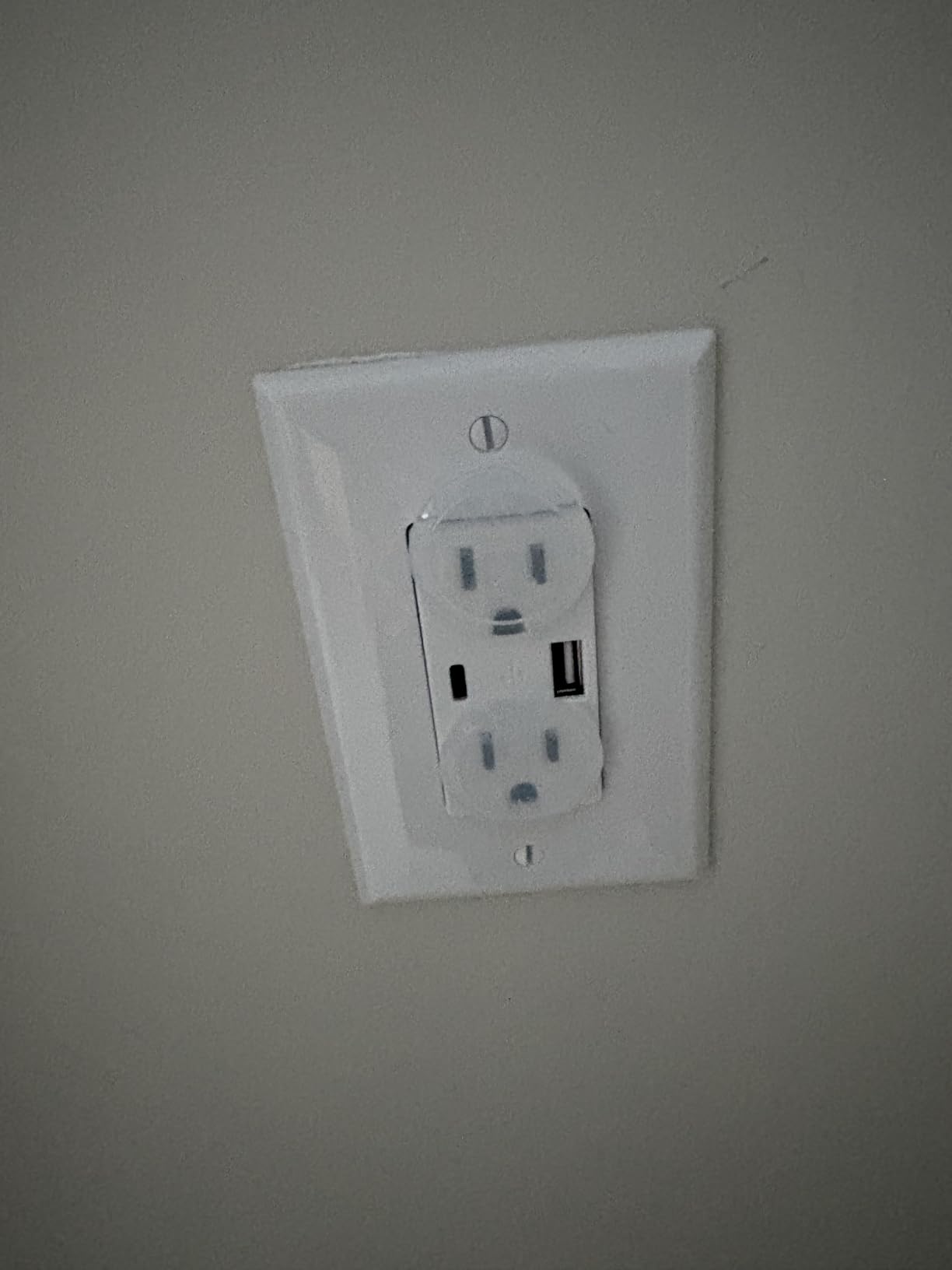
Removal is a genuine multi-step process, and owners are candid about it. Expect to work the cover out with a flat tool rather than pulling straight, and expect to spend a moment on it. The upside of that same design is that a child cannot perform the manoeuvre, because the motion required is not one small hands can execute.
Variants run from 32 to 100 count in the same transparent material, so the count can be matched to a specific outlet audit. One reviewer pointed out that these do not adapt to surge protector slots, which is a fair warning if your plan involves power strips in the same room.
What you should know before you buy
Because removal takes several steps, where you install these matters. Do not put one on the outlet your vacuum plugs into. The people who love this product are the ones who installed it on every outlet they will never use, and it works exactly as intended there.
Count your outlets before ordering. With 32, 50, 64 and 100 count options, you can match the pack to the audit rather than rounding up blindly.
Who it suits and who it does not
It suits a finished room, a hallway, a guest room or a rental where you do not want white plastic on a painted wall. It is also the pick for anyone whose child was drawn to a white cover in a previous attempt.
It does not suit an outlet you use, a surge protector, or a home that needs a solution for in-use appliances. For that, move up to a box cover.
5. Jool Baby Outlet Covers, 32 Pack, Clear – Best for Quick Adult Removal
Jool Baby Outlet Covers (32 Pack) for Child Safety – Easy Adult Removal, Plug Protectors for Baby Proofing Electric Sockets – Transparent Design
Molded notch for adult removal
32-count pack
Clear flexible plastic
Fits standard US outlets
Pros
- Small notch allows adult removal without a tool
- Clear design is barely noticeable
- Slightly flexible plastic fits snugly
- Lightweight at 2.25 ounces
- Also blocks drafts and debris
Cons
- Not designed for non-US outlet standards
- Notch may still need a flat tool for some users
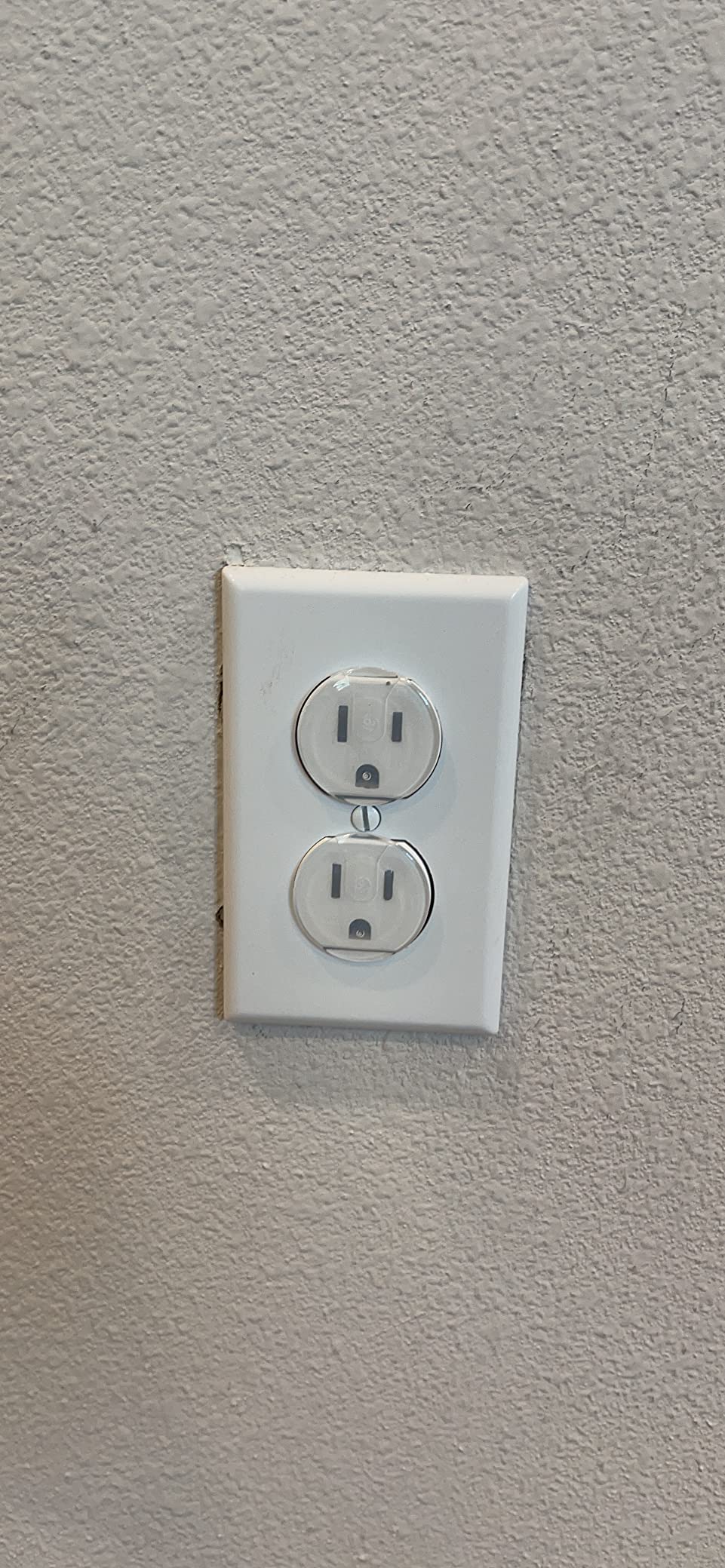
Almost every complaint about plug covers comes down to the same sentence: I could not get it out. This is the pick that answers that complaint head on. The cover has a small moulded notch on its edge, positioned so an adult can hook a fingernail under it and pull the cover straight out, without the wiggling and force the other tight-fitting designs require.
At 4.7 across more than 11.5k reviews, the balance parents describe is consistent. A baby cannot remove it, an adult can, in about five seconds. The plastic is slightly flexible rather than rigid, which is how it gets a snug seal in the first place and also how it releases cleanly.
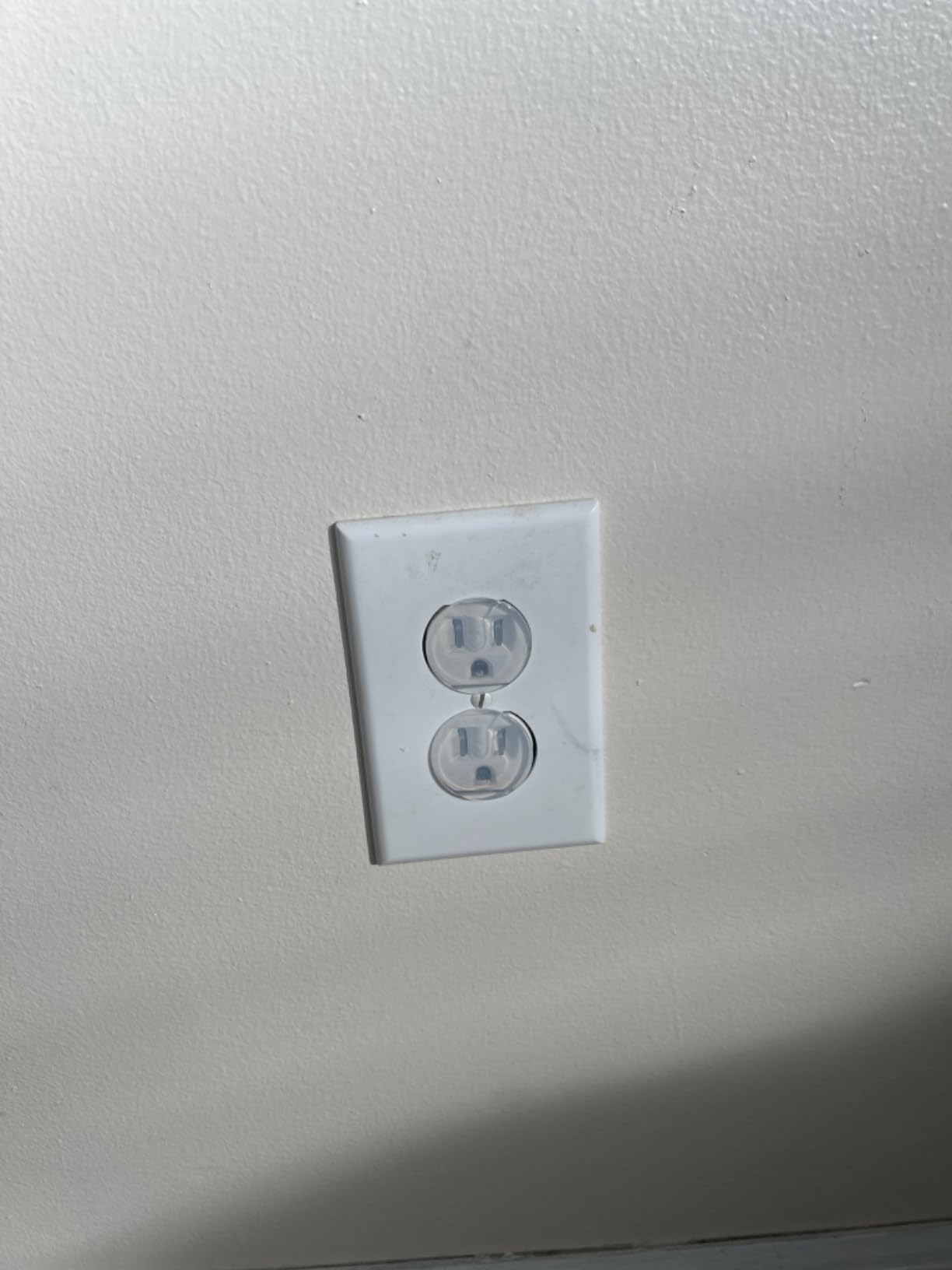
At 32 covers and just over two ounces, this is one of the lighter and more compact packs here, and it is a sensible size for a first apartment or a single floor. The clear design keeps it close to invisible on a white wall, and owners describe it as unobtrusive in finished rooms where a white cap would stand out.
The product listing specifies a fit for standard US outlets, which matters. A small share of the one-star reviews come from international buyers who bought it for an Australian or other non-US socket and found it unusable. If you are outside the US, check your socket standard first.
What you should know before you buy
The notch is the whole feature and it is small, so set your expectations correctly. If you do not have long fingernails, you will still reach for a flat tool. What you will not need is the full two-handed extraction routine that the tightest covers demand.
It is a plug cover, so the same rules apply: unused outlets only, and one loose cap per socket that you are responsible for tracking.
Who it suits and who it does not
It suits a home where you actually use the outlets you cover, such as a living room where you plug and unplug a lamp regularly, or a hallway where you need the vacuum. It is also our pick if you have been frustrated by covers you could not remove.
It does not suit a home needing whole-property coverage from a single order, since 32 will not cover a large house. It also does not suit anyone needing to keep an appliance powered.
6. HEELALBABY Outlet Covers with Hidden Pull Handle, 45 Pack – Best Matching White Finish
Mom’s Choice Gold Awards Winner – Outlet Covers with Hidden Pull Handle Baby Proofing Plug Covers (45 Pack) 3-Prong Child Safety Socket Covers Electrical Outlet Protectors Kid Proof Outlet Cap
Hidden ring-pull handle
45-count pack
ABS insulation resin
Fits three-prong outlets
Pros
- Hidden handle gives tool-free adult removal
- White covers look neater than clear plugs
- Very snug fit children cannot pull out
- ABS construction is durable and reusable
- Works with three-prong outlets and power strips
Cons
- The hidden handle can be stiff and need a tool
- Fit is tight enough to require wiggling
- Not built for non-US outlet standards
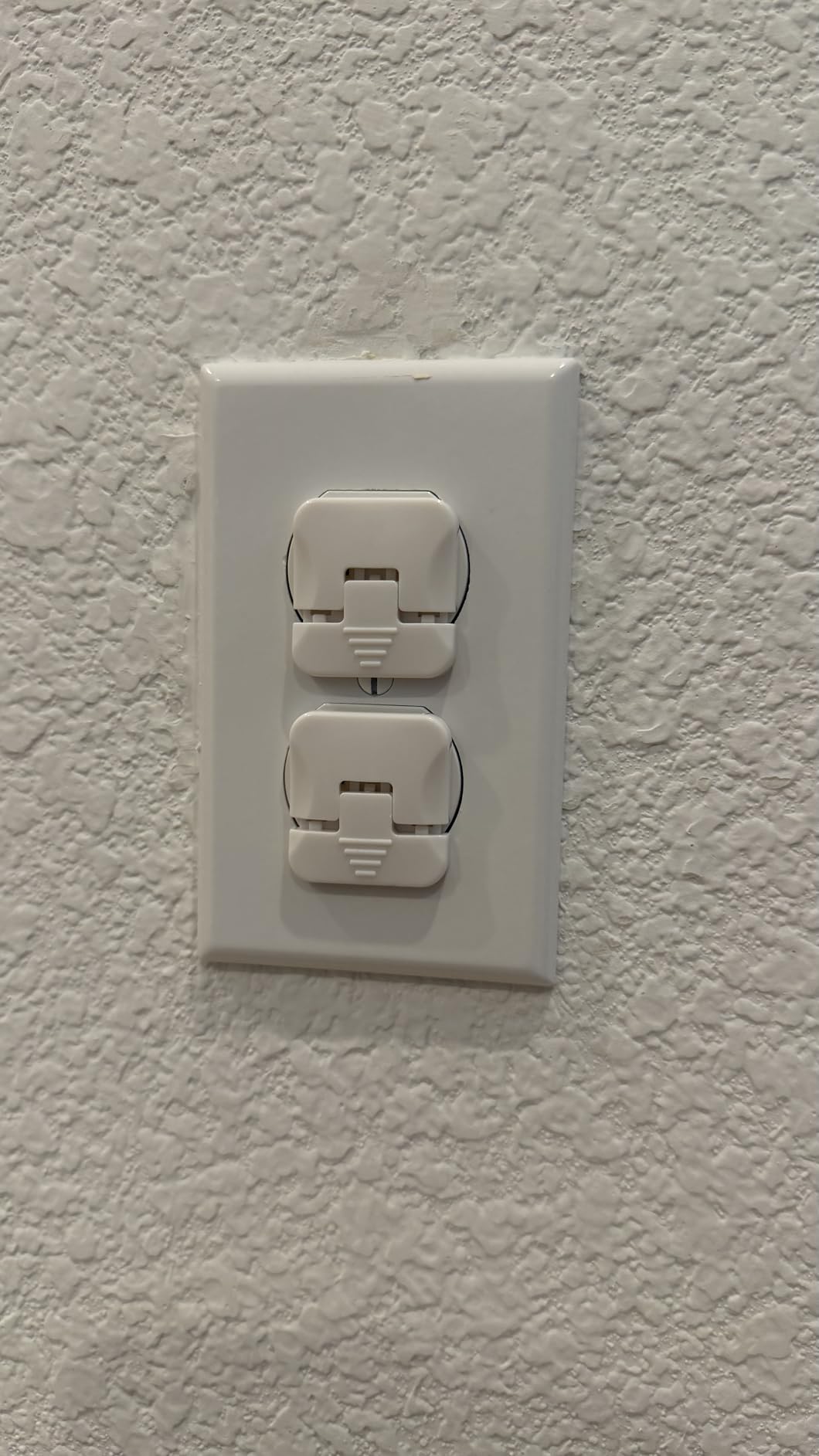
This is the most thoughtfully designed plug cover in the roundup, and the design decision that separates it is the removal method. Instead of a fingernail notch on the edge, there is a ring-pull handle recessed into the top of the cap. It is flush when closed, so there is nothing for a child to grab, and an adult can pull it straight out.
The other thing buyers like is how the white ABS plastic looks. Where a basic plug cover reads as a small white block stuck onto a socket, this one reads as part of the outlet. Several reviewers make the point that it looks deliberate rather than temporary, which matters in a living room rather than a closet.
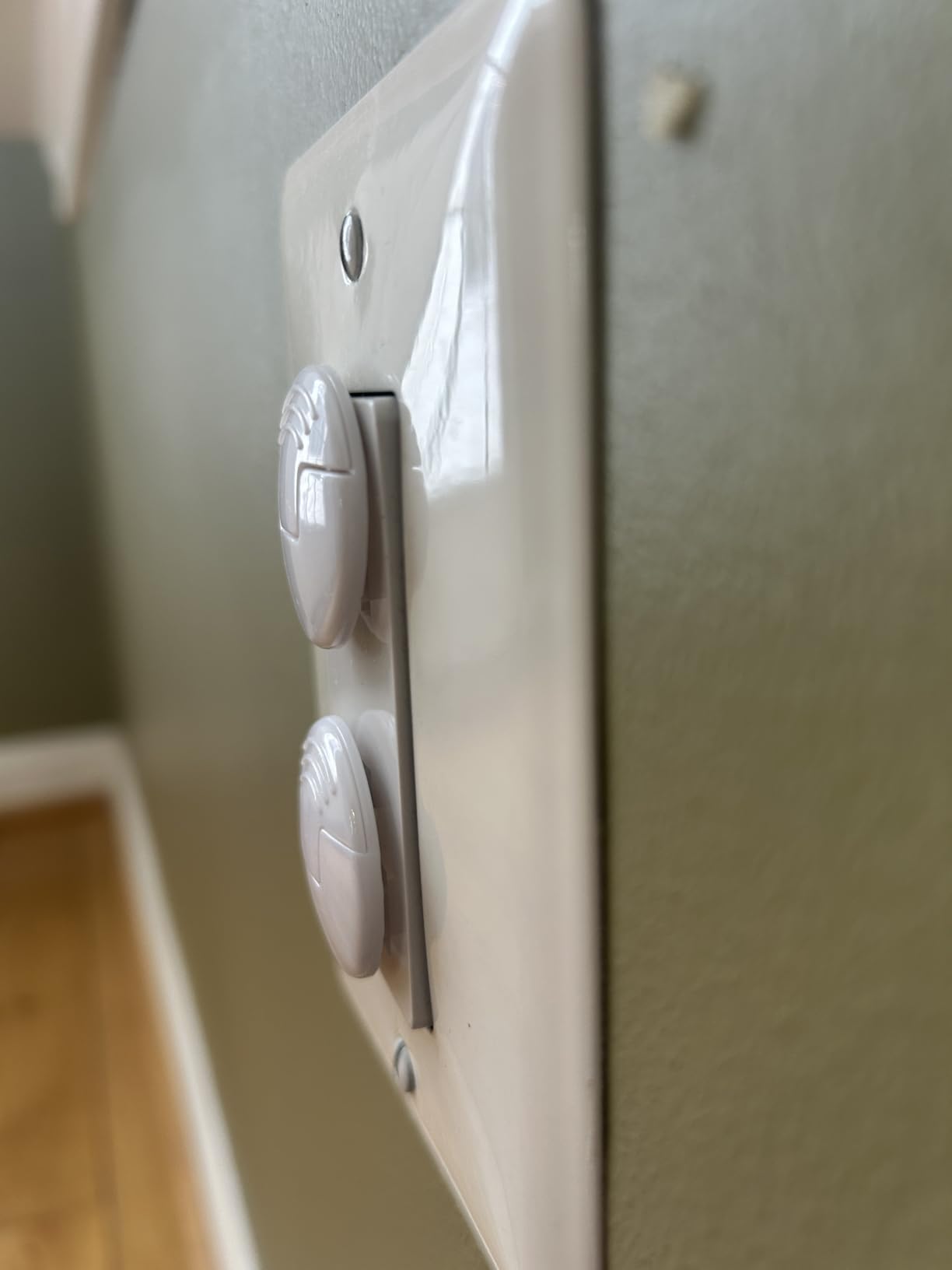
The material is a premium ABS insulation resin rather than the thin plastic used in budget packs, and it is described as wear-resistant and reusable. The 45-count pack sits in the middle of the range, with 32, 42, 45 and 55 count variants available, so you can match a specific outlet audit instead of overshooting.
Fit is specified for standard three-prong outlets, and reviews confirm it also works with power strips. The item weighs just over six ounces, so a full pack is still light to handle.
What you should know before you buy
The handle is stiff. Owners who bought these specifically for easy removal report that it sometimes still needs a tool, and that the tight fit means wiggling side to side. It is easier than the average plug cover, not effortless.
It is a US three-prong design and does not work on UK or Australian sockets. A noticeable group of international reviews reflect exactly that purchase mistake.
Who it suits and who it does not
It suits a finished room where appearance matters as much as function, and anyone who wants a cover they can remove without a fight but a child cannot. It is a good fit for a nursery with painted walls and matching plates.
It does not suit international outlets, and it is not the right answer for an outlet you need to use several times a day, since you still have to remove the cover to reach the plug.
7. Safety Innovations Twin Door Outlet Cover Box – Best for Bulky Plugs
Safety Innovations Twin Door Baby Safety Outlet Cover Box for Babyproofing Outlets – More Interior Space for Extra Large Electrical Plugs and Adapters – Easy to Install – Easy to Use, (1-Pack)
Twin doors with dual lock
Deep interior for large plugs
Two faceplates included
Item weight 5.6 ounces
Pros
- Deep interior holds large plugs and power strips
- Dual top-and-bottom lock needs two hands
- Quick install with two included faceplates
- Stays attached and does not fall off
- Also hides cords and blocks drafts
Cons
- Bulky and protrudes from the wall
- Room gets tight with two deep plugs
- Takes a screwdriver and a plate swap to fit
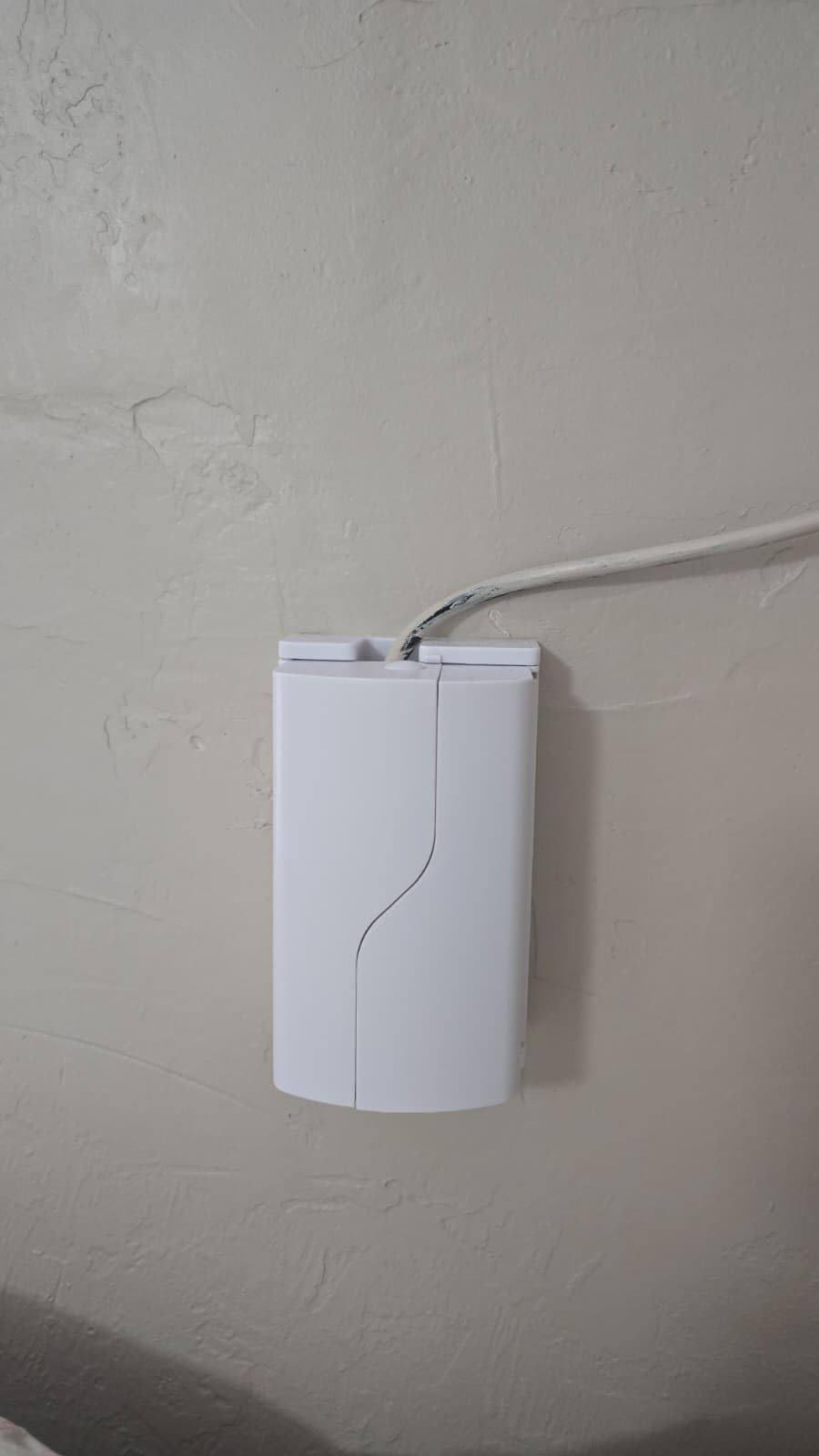
This one is a genuine box-style cover, and it solves a problem no other product here can. The interior measures just over five inches tall, three inches wide and nearly three inches deep, which is enough to swallow a power brick, a baby monitor adapter, a USB charging block or a surge protector while still allowing a plug to stay connected.
The lock is the other reason parents choose it. It uses buttons on the top and the bottom of the door, and releasing both at once requires two hands, which stops a child who can only work one lever at a time. Reviews describe the mechanism as genuinely difficult for a determined child to defeat, and as a higher bar than most of this category reaches.
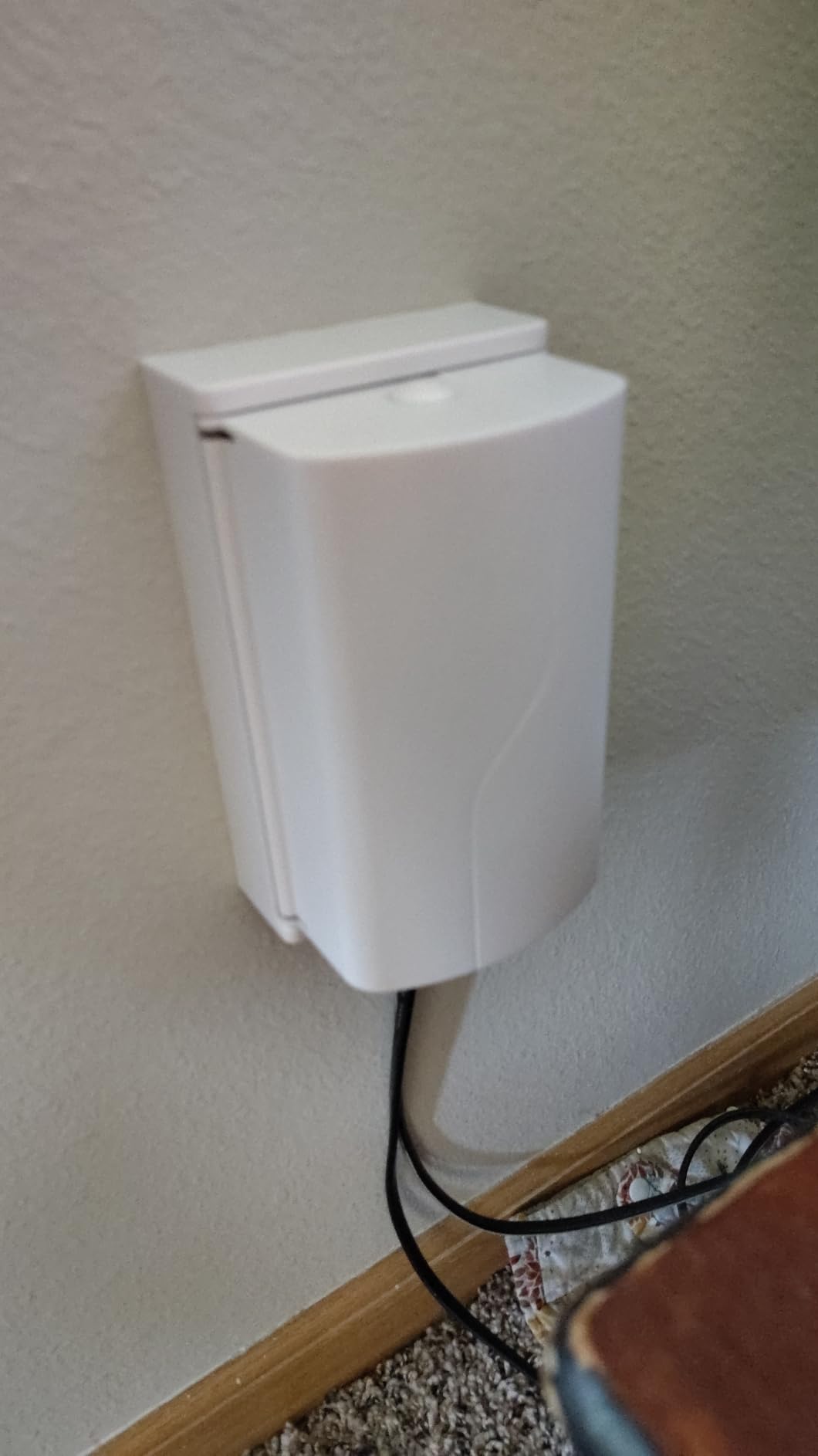
Installation is a screwdriver job and takes a few minutes. Screws and two faceplates are included, one for standard single centre-screw outlets and one for Decora and two-screw styles, which is the compatibility detail that trips people up on other box covers. You shut off the breaker, remove the existing plate, and screw this in its place.
Owners also use it for secondary reasons: hiding the cable clutter behind the outlet, improving the look of an old plate, and blocking drafts. One of the more valuable functions in a nursery is keeping a monitor or a night light powered without an exposed cord running across the room.
What you should know before you buy
It is bulky. The box stands proud of the wall by nearly three inches, and it is visible from across a room. If a clean, flush look is the priority, this is the wrong product and the self-closing plate is the right one.
One reviewer raised a fair point that few others mention: a child can use the protruding box as a handhold and pull on it. The screw fix is solid, but it is worth checking after a few months of use in a high-traffic play area.
Who it suits and who it does not
It suits any household with an in-use outlet that a baby should not be able to reach, especially one holding a large adapter, a power strip, or a router. It is the answer to the parent complaint that plug covers make plugged-in appliances impossible.
It does not suit a bare wall or a low-traffic unused socket, where a simple plug cover is quicker and neater. It is also a one-at-a-time product, so covering a whole house this way is not realistic.
8. Wappa Baby Outlet Cover BOX, Patented Dual-Lock – Best for Determined Toddlers
Outlet Cover BOX Baby Proofing (1-Pack) Patented Dual-Lock for Much Better Toddler Proofing, Easy Operation, Simple 3 Step Install with Included Screws. Provides Extra Space Inside for Plugs,Adapters
Patented dual-lock release
Roomy interior for large plugs
All hardware included
Item weight 10 ounces
Pros
- Multi-step lock defeats determined toddlers
- Parents report it holds against other failed locks
- Roomy interior fits block chargers
- Sturdy box resists pulling and leaning
- Installs in under five minutes
Cons
- Some very large laptop chargers still do not fit
- Not built for non-US outlet standards
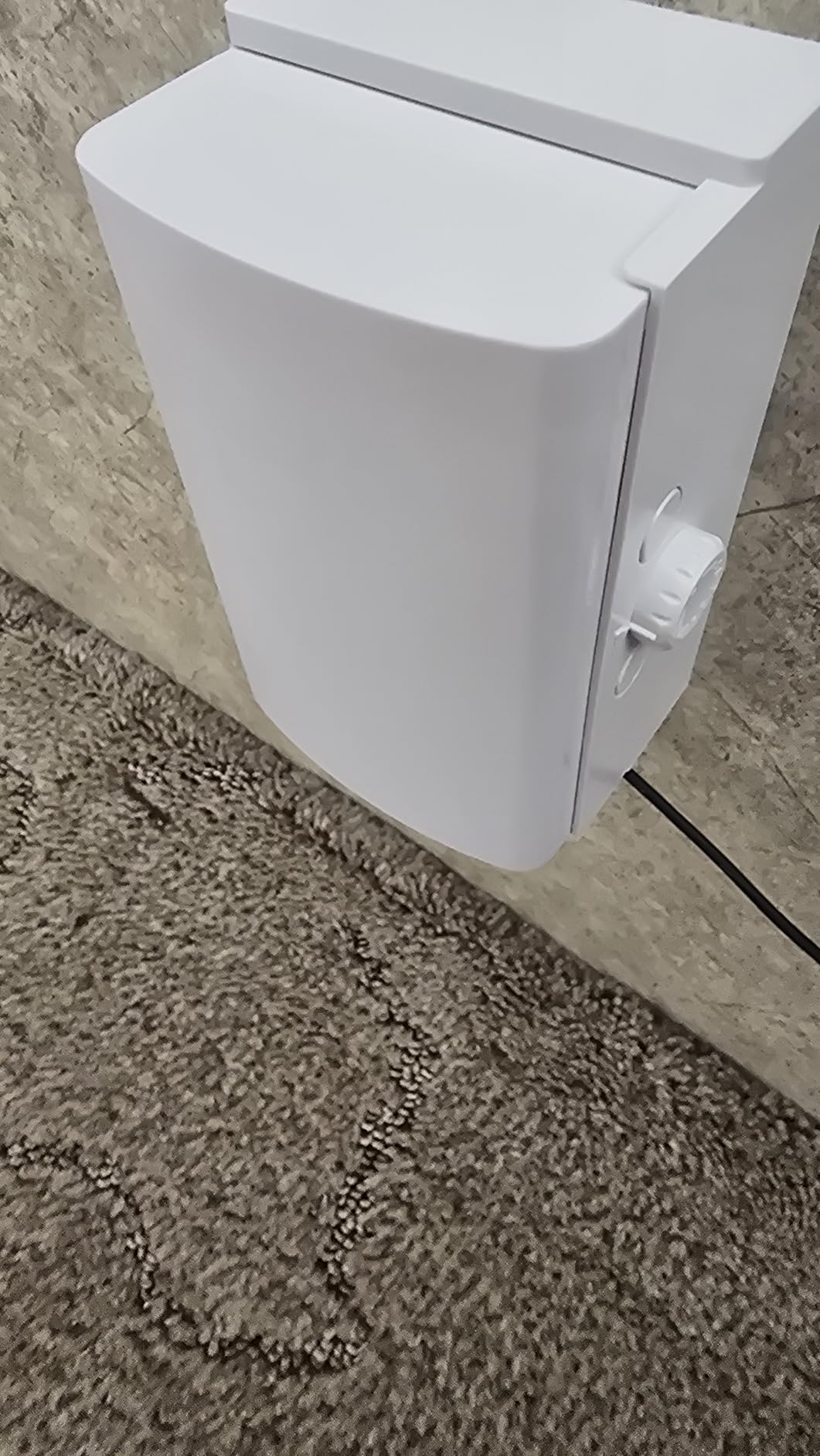
The recurring theme in reviews of this box is not the plastic, it is the lock. Parents write in with variations of the same story: their child had already defeated every other childproofing product in the house, and this is the one that held. The mechanism is a dial that has to be aligned to a position and then a two-finger press, a sequence a toddler cannot reverse-engineer through random pulling.
The interior is listed at 5.6 inches tall, 3.1 inches wide and 2.6 inches deep, which is roomier than most boxes and is specifically the answer to oversized adapters. Everything you need is in the box: the enclosure, screws, a standard plate and a decorative plate.
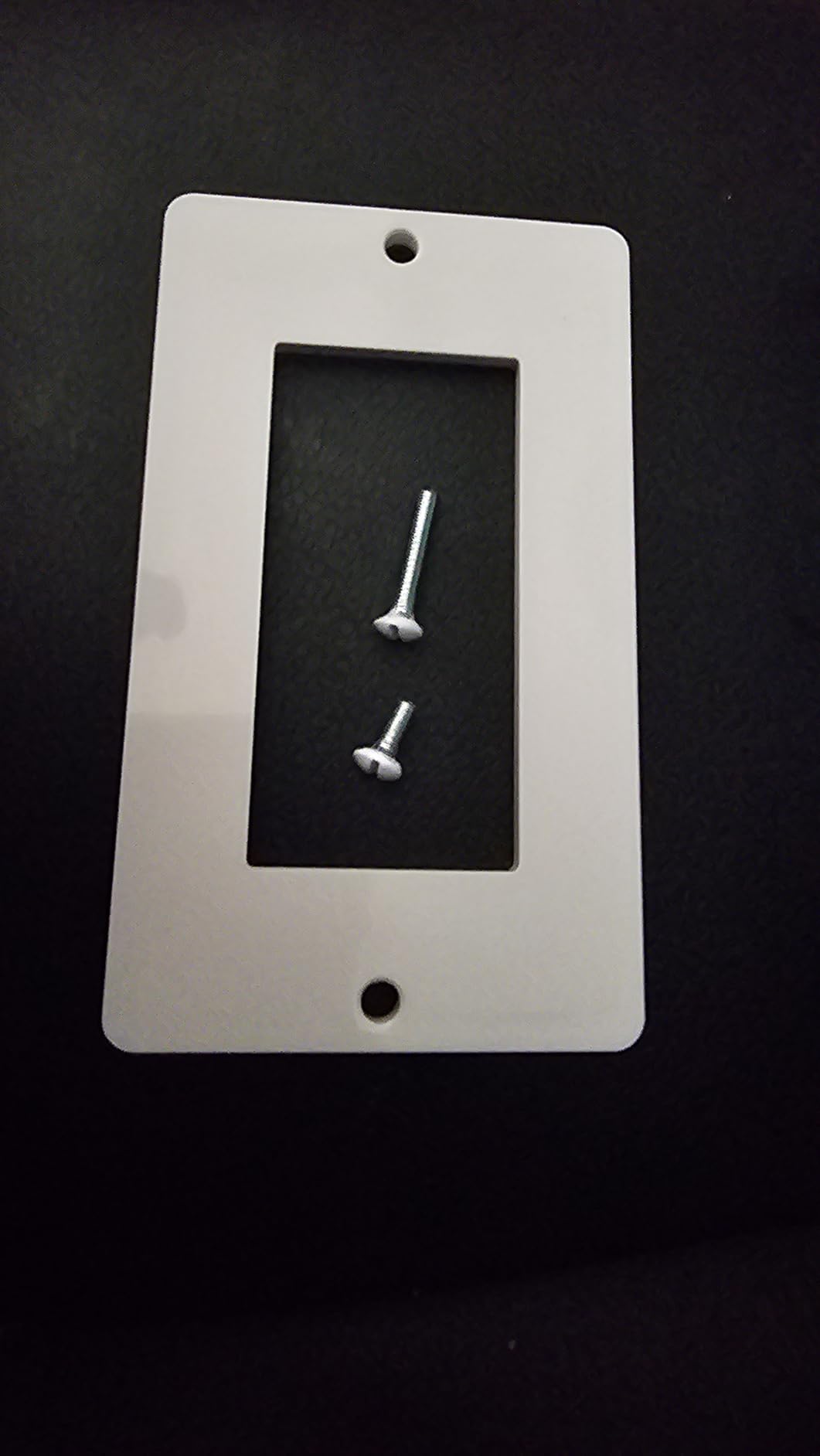
Installation is described as a simple three-step process after shutting off power and removing the existing plate. The whole unit weighs ten ounces, which is heavier than a plug cover and much lighter than it looks, so it stays attached to the wall box rather than sagging.
Reviewers describe the shell as sturdy enough to withstand a child pulling on it, leaning on it and bumping into it. At 4.7 across nearly 8k reviews, the feedback on the lock is consistent enough that we trust it as a category-leading mechanism.
What you should know before you buy
It is still not universal with respect to chargers. A small number of owners report that the largest laptop-style power bricks still do not sit inside. Measure the depth of your bulkiest adapter against the interior depth before committing.
It is a US outlet design and does not fit Australian or other non-US sockets, which accounts for a portion of the critical reviews.
Who it suits and who it does not
It suits a family with an older crawler or a toddler who is already defeating other safety products, and a household with power bricks and monitor chargers to contain. It is the pick for a baby who pulls, tugs and leans on everything.
It does not suit an unused outlet on a blank wall, where a box is more hardware than the job needs, or a house that needs dozens of units.
9. Safety Innovations Self-Closing Outlet Covers, 6 Pack – Best for Permanent Coverage
6-Pack Safety Innovations Self-Closing Outlet Covers (For Center Screw Outlets Only) – Measures 3″Wide x 4.75″High-An Alternative To Wall Socket Plugs for Child Proofing Outlets, (1-Screw), (White)
Sliding doors close automatically
One-screw replacement wall plate
Replaces existing plate
Foam air barrier backing
Pros
- Doors close the moment a cord is unplugged
- Removes the loose plug cap problem entirely
- Slightly oversized plate hides scuffed paint
- Still usable by adults when power is needed
- Blocks insertion even if a cord is yanked
Cons
- Only fits single centre-screw outlets
- Will not fit outlets with built-in USB ports
- Doors can be tricky to line up
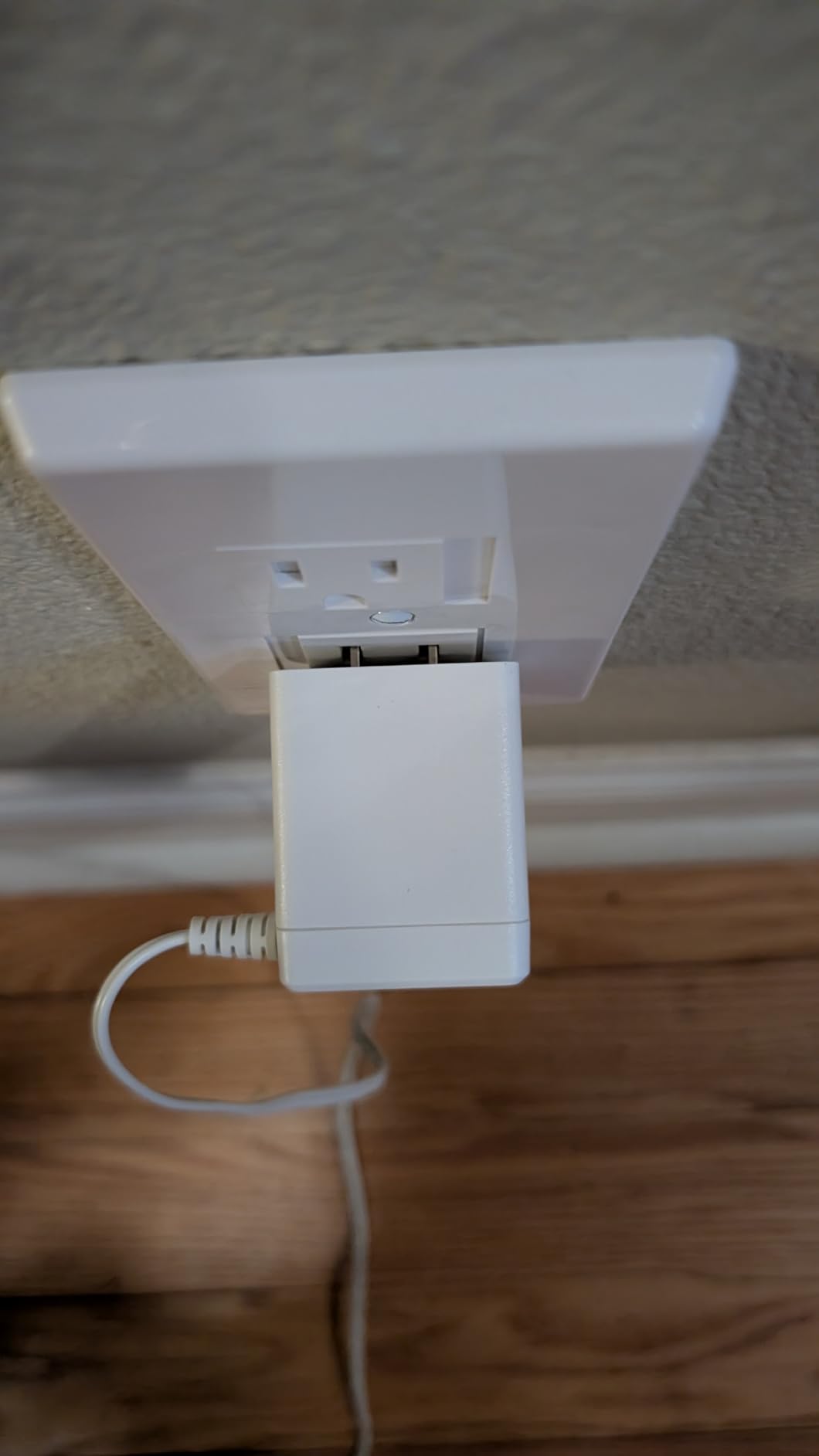
This is the product the r/beyondthebump parent was describing, and it is a genuinely different philosophy. Nothing gets inserted and nothing gets stored. The cover is a replacement wall plate with two sliding doors, and a spring returns them to closed the moment a plug is removed. If your child yanks a cord out, the outlet closes itself.
That removes the failure mode that worries people about plug covers. There is no small object to lose, no cap to find in a drawer, and nothing a baby can put in their mouth. Parents moving from removable caps describe it as safer and more convenient in the same breath.
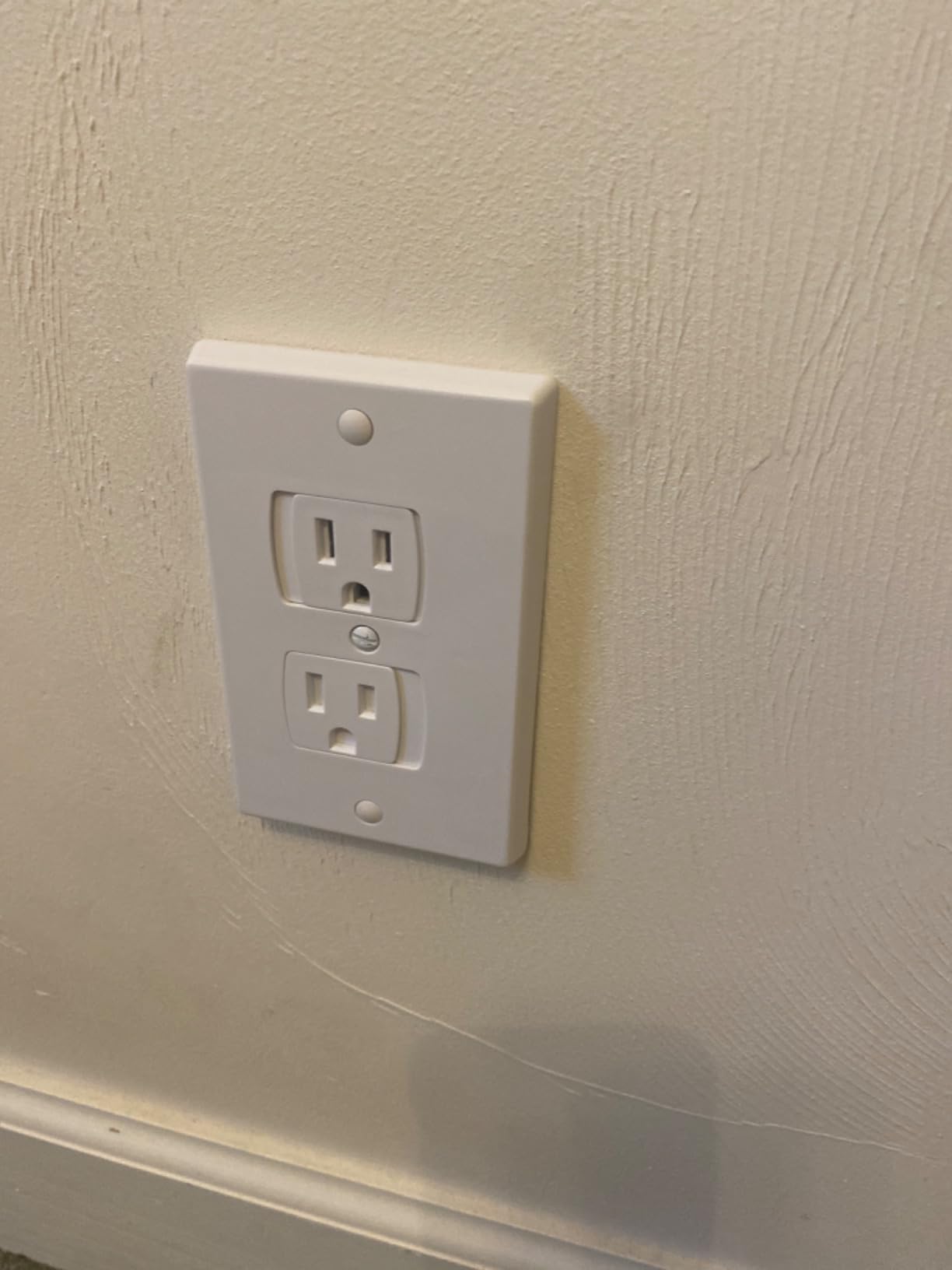
The plate measures 3 inches wide by 4.75 inches high, which is deliberately slightly oversized. One of the secondary benefits reviewers mention is that the larger plate covers scuffed paint and dents around the outlet, tidying up a wall at the same time. A foam air barrier on the back helps block drafts, which matters more in an older house than it sounds.
Installation is a screwdriver swap. You turn off the breaker, remove your existing plate and screw this one in its place, and you now have permanent coverage with no consumable parts to track.
What you should know before you buy
The fit limitation is the important detail. This style suits standard outlets with a single centre screw only, and a separate style is needed for Decora or two-screw plates. Count your outlet types before ordering a multi-pack, or you will end up with covers for the wrong wall.
It also will not fit outlets with built-in USB or phone charging ports, which are increasingly common in newer homes. And the doors can be fiddly to line up, so they are not quite self-closing every single time.
Who it suits and who it does not
It suits an owner-occupied home with standard centre-screw outlets who wants the loose-part problem gone for good. It is the pick for a playroom where cords get yanked regularly.
It does not suit a renter who cannot change plates, a house with decorator outlets, or anyone wanting a quick reversible install. It is a permanent plate swap rather than a press-in fix, which matters across a large house.
10. Dreambaby Plastic Baby Safety Outlet Plug Covers, 12 Pack – Best Budget Outlet Cover
Dreambaby Plastic Baby Safety Outlet Plug Covers – 12 Pack – Outlet Covers Baby Proofing
Tool-free press-in install
12-count pack
Non-toxic BPA-free plastic
Type A two-pin fit
Pros
- Fast tool-free press-in install
- Easily removed by adults
- Non-toxic BPA-free plastic resists cracking
- Clear discreet design
- Good fit for most standard outlets
Cons
- Only 12 per pack
- the smallest bundle here
- Basic single-colour design with no removal tab
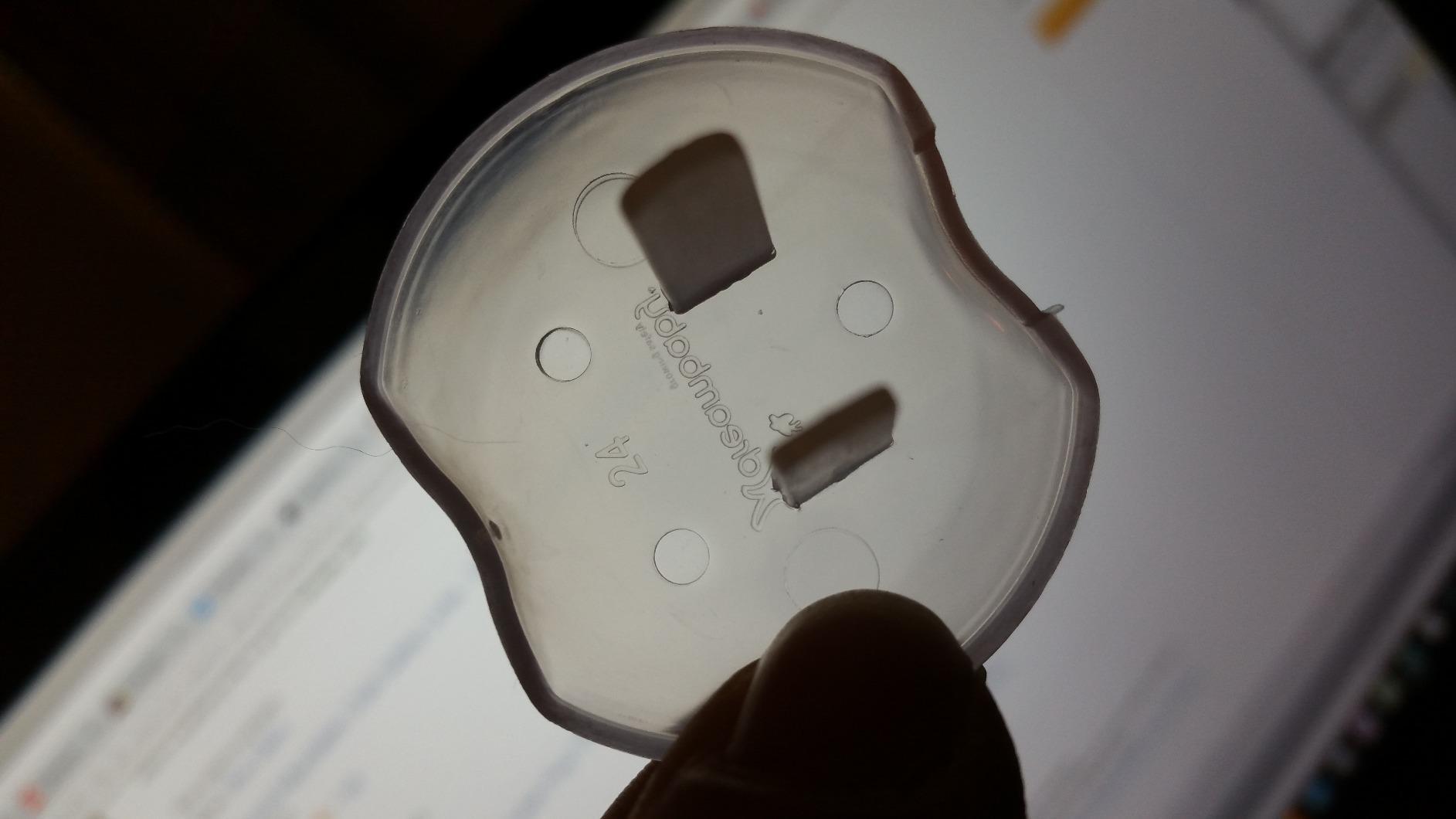
Not every home needs fifty covers. If you are covering one room, a small apartment, or the handful of outlets a nursery actually has, this twelve-pack does the job at the smallest commitment in the roundup. It presses in, it blocks the socket, and it comes out when an adult needs it.
The material is described as non-toxic BPA-free plastic that resists cracking under impact, and at 4.7 across more than 4.4k reviews the feedback is straightforwardly positive. Owners highlight quick installation, easy adult removal and the clear minimalist look compared with bulkier safety products.
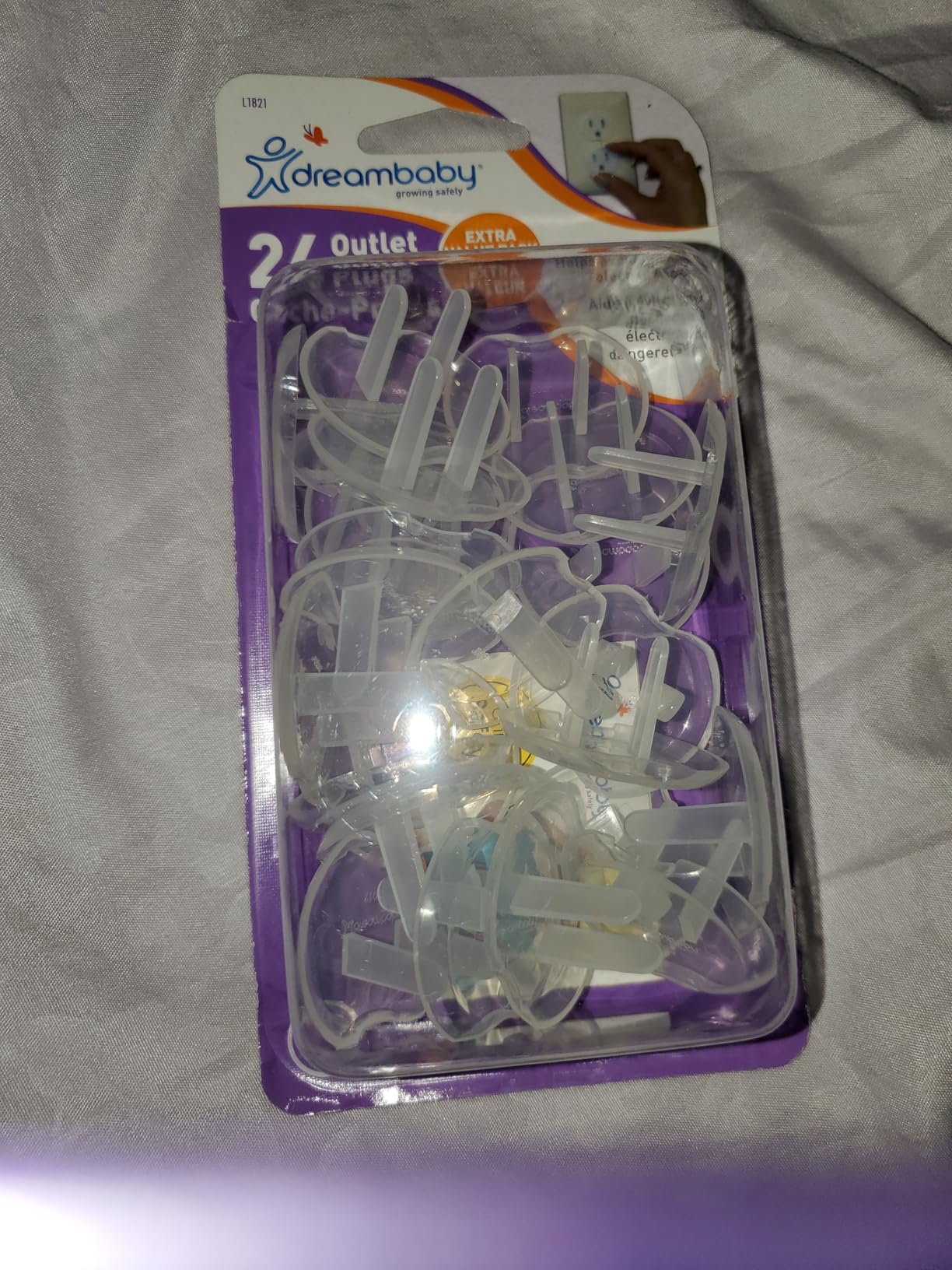
The listed connector is a Type A two-pin North American plug-in design, and the fit is described as working in most standard outlets in homes, apartments and offices. The whole pack weighs under an ounce, so it is easy to carry room to room while you work through a house.
Twenty-four and 48 count variants exist if you find you need more, which makes this a reasonable entry point rather than a dead end.
What you should know before you buy
Twelve covers is the smallest bundle here, so a two-bedroom house will likely need a second order. The design is basic, with no tab or handle for removal, which means adult access depends on fingernails or a small tool, as with most entry-level plug covers.
It is a plug cover, and that means it works on unused outlets only. If you need to keep a lamp or a monitor powered, this is the wrong category entirely.
Who it suits and who it does not
It suits a first-time parent covering a single room, a rental where you want a complete solution in one small purchase, or anyone who prefers to test one pack before committing to a bulk order.
It does not suit a whole-home project, and it does not address the loose-part choking concern. For a house with a determined toddler, spend the effort on a box or a self-closing plate instead.
How to Choose the Best Outlet Covers for Crawling Babies
Choose the cover type before you choose the brand. The most common mistake in this category is buying a bulk pack of plug covers and then discovering that half the outlets in the house are decorator plates, or that the outlets you actually needed covered were the ones with something plugged into them. Work through these five factors in order and the product choice mostly makes itself.
1. Match the cover to the outlet type
Duplex versus decorator, or Decora, is the single compatibility fact that most often causes a cover not to fit. Standard US outlets have one screw in the centre, while decorator plates have two. Plug covers care about neither, because they fit into the socket itself, but any product that replaces a wall plate cares very much. Check the plate on the outlet you care about before ordering, and count how many of each style you have.
Also check whether any outlet has built-in USB or phone charging ports. Several plate-style covers simply will not fit over them, and you will find that out at install time rather than at order time.
2. Decide how adult access has to work
Ask one question: will anything be plugged into this outlet after you install the cover? If nothing will ever be plugged in, a plug cover is the simplest correct answer. If something is plugged in occasionally, a self-closing plate or a box is better, because the cover stays on the wall and re-secures itself.
If something stays plugged in permanently, a box cover is the only one of the four types that works. That is the decision framework most guides skip, and it is the difference between a purchase you use daily and one you install and forget.
3. Weigh the child-resistance mechanism honestly
Mechanisms rank roughly in this order: a dual-button or dial lock on a box is the hardest to defeat, a hidden pull handle on a plug cover is next, a snug press-in plug is next again, and a sliding plate door on a self-closing cover is at the bottom, because an older child can learn the sliding motion.
Match the mechanism to the child. A seven-month-old who has just started crawling does not need the strongest option on the market. A fourteen-month-old who pulls on everything and has already defeated a cabinet lock does.
4. Count your outlets before you buy
Count in four steps. Walk the rooms your baby will use, including the ones you do not think of as living space, and count only outlets at or below about three feet from the floor, since those are the ones a crawler can reach. Note the type of each one as standard or decorator. Then separate them into unused and in-use, because those two groups need different products.
Add ten per cent for the outlets you will forget, and for the replacements you will inevitably lose. A typical three-bedroom house lands somewhere in the forty to sixty range, which is why the 30 and 50 count packs are so popular.
5. Check whether you need covers at all
Homes built after 2008 in the US are generally required to have tamper-resistant receptacles, which have a spring-loaded shutter inside each slot that opens only when a plug pushes the prongs in simultaneously. If your outlets are labelled TR, the exposure is already much lower and you may need covers only on the handful of outlets a baby can reach and use.
TR outlets reduce the risk rather than removing it. They do not stop a child from pulling an already-inserted plug out and chewing on it, which is why a box cover on an in-use outlet still makes sense. If you are unsure what you have, look for the TR mark on the receptacle face or check the build year of the house.
What outlet covers do not fix
Outlet covers address one hazard. The other avoidable home electrical risks in the same rooms are cord-related, and a cover will not touch any of them. Space heater cords, lamp cords and blind cords need cord covers, cord shorteners or wall-mounted routing hardware, and the short version is that no outlet cover keeps a child away from a taut cord.
Outlets near water need their own attention, and an outlet in a bathroom or kitchen carries a different risk profile than one in a playroom. Water and electricity are a poor combination for reasons that no cover addresses. Stairs, furniture tip-overs and unsecured cabinets sit in the same category of avoidable injury, and a parent who has covered every outlet but left a bookcase unanchored has not finished the job.
Covers reduce risk, and they do not replace supervision. No product on this list makes it safe to leave a baby alone in a room you have not checked.
How to Babyproof Power Outlets Step by Step
Babyproofing power outlets takes about an afternoon for a typical house. The order matters: audit first, then match the type to each outlet, then install, then test. Installing first and auditing afterwards is how people end up with fifty covers and three unprotected outlets.
Walk the rooms the baby uses and count every outlet at or below three feet from the floor.
Record the type of each outlet as standard centre-screw or decorator, and mark it unused or in use.
Choose a cover type per group: plug covers for unused standard outlets, self-closing plates for occasional use, box covers for anything that stays powered.
Turn off the breaker before touching any plate, and test with a plug rather than your hand.
Fit the covers. Plug covers press in by hand; plate and box covers need a screwdriver and a faceplate matched to your outlet type.
Test child resistance yourself. Try to pull, wiggle and pry at each cover the way a toddler would, and replace anything that comes out with a fingernail.
Count your loose plug inserts, keep them in a fixed place, and schedule a re-check at each new developmental stage.
The re-check in the last step is the one parents skip. The right cover for a seven-month-old is often wrong for a fourteen-month-old, and a cap that passed a pull test in month seven may not in month twelve. Put a reminder in your calendar for the stages: crawling, pulling to stand, and walking.
If you are equipping other rooms at the same time, our guides to high chairs for babies and to patio heater covers cover the furniture and the areas just outside your main babyproofing perimeter.
Frequently Asked Questions
What are the safest outlet covers for babies?
The safest outlet covers for babies are the ones that cannot be removed and leave no loose parts: self-closing plates and box covers with a two-hand lock. A loose plug insert is a small object a crawling baby can put in their mouth, so covers that stay permanently on the wall remove that risk entirely. For unused standard outlets, a snug press-in plug cover is still safe if you can keep track of the caps.
Are outlet covers necessary for babies?
They are necessary once a baby can crawl or pull to stand and reach a wall outlet, which is usually between seven and eleven months. They are not needed on outlets hidden behind furniture, and homes built after 2008 in the US usually have tamper-resistant receptacles, which lower the risk considerably. TR outlets protect the slots but do not stop a child pulling out an inserted plug.
Are plug covers safe, or are they a choking hazard?
There are two failure modes. A child can pull a loose plug insert out and put it in their mouth, and a poorly fitting cover can be pried off with a fingernail. Both are avoidable: count and store every loose cap, replace anything a child can remove, and use a self-closing plate or box cover wherever the cap would be removed frequently.
Are self-closing outlet covers safe?
Yes. A self-closing cover is a spring-loaded plate whose door shuts automatically when a plug is removed, so there is no loose insert to lose. Check two things: that the door fully seats every time, and that the plate actually fits your outlet box. This style suits standard single centre-screw outlets, and a different style is needed for Decora plates.
Do outlet covers fit all outlets?
No. Plug covers fit standard US duplex receptacles, both two-prong and three-prong, but not decorator or oversized commercial plates. Plate-style and box covers must match your outlet type, and many will not fit over outlets with built-in USB ports. Check each outlet’s style and count how many of each before ordering.
How many outlet covers do I need for my house?
Count every outlet within about three feet of the floor in the rooms your baby uses, separate them into unused and in use, and add ten per cent for spares. A typical three-bedroom house lands in the forty to sixty range, which is why 30 and 50 count packs are the most common sizes. In-use outlets need one box cover each, and unused standard outlets need one plug cover each.
Conclusion
Start with the type, not the brand. Unused standard outlets take a snug press-in plug cover, and the Safety 1st 36-pack is the safest all-round buy we found. For outlets that see occasional use, a self-closing plate removes the loose-part problem entirely. For anything that stays plugged in, a box cover is the only correct answer, and the Wappa Baby dual-lock box handled the toughest child-resistance reports in our research.
Install during the crawling window rather than the walking one, and re-check at every new stage. The best outlet covers for crawling babies are the ones that match your outlet types, sit tight enough to defeat small hands, and leave you an easy way back in when you need the socket.