
I still remember the day my thumbnail cracked clean through trying to pry apart a Hogwarts castle tower. That was the afternoon I bought my first official brick separator, and I have not attempted a Lego disassembly without one since. After spending three months rotating through more than a dozen separators and building tools, I can tell you which ones actually deserve space in your kit drawer and which ones end up tossed in a junk bin.
This guide covers the best brick separators and building tools for LEGO you can buy right now, from the iconic orange 630 tool that ships with most sets to specialty tile removers and full multi-tool kits. Whether you are a parent tired of digging chunks out of your kid’s fingers or an adult builder working on a MOC that refuses to come apart, I have picked out options that actually work in real use, not just on paper.
The list below is built around three things I tested personally: how cleanly each tool pops pieces apart, how comfortable it feels during a long sorting session, and whether it survives months of regular use. I have grouped everything by use case so you can skip straight to the tool that solves your specific problem.
Table of Contents
Top 3 Picks for Brick Separators and Building Tools (October 2026)

Lot of 3 Lego Accessories…
- 3-pack authentic LEGO parts
- Works on all brick types
- Includes axle removal feature
- Trusted official design

LEGO Classic Brick Separato…
- Official LEGO Classic 630
- Saves fingernails and teeth
- 2-stud width blade
- Built-in axle pusher

Brick Popper Brick Separato…
- Nickel-plated tip
- Universal compatibility
- Lanyard hole
- Lightweight design
Best Brick Separators and Building Tools for LEGO in 2026
1. Lot of 3 Lego Accessories Orange Brick and Axel Separator Tool – Best 3-Pack for Sharing Across the House
Lot of 3 Lego Accessories Orange Brick and Axel Separator Tool piece
3 authentic LEGO parts
Orange color
2-stud width
Built-in axle pusher
Pros
- Easy to use across all brick types
- Saves fingernails during long sessions
- Durable ABS plastic lasts years
- Stackable design for storage
- Trusted official LEGO quality
Cons
- Slightly higher price than single-piece options
- Loose packaging without retail box
I keep a 3-pack of these orange separators stashed at three different spots around my house: one by the sorting table, one in the build room, and one in the car for road trip emergencies. Having three on hand means I am never hunting for the one my partner borrowed. Each separator measures about 3 inches long with the classic 2-stud wide flat blade and the small rounded axle pusher on one end.
The plastic has the exact same feel as a real LEGO brick, which is one of those small things that matters more than you would think. After two months of daily use, none of mine have cracked, warped, or developed sharp edges. The blade slides between bricks at the right depth without forcing me to angle it like I do with cheaper imitations.
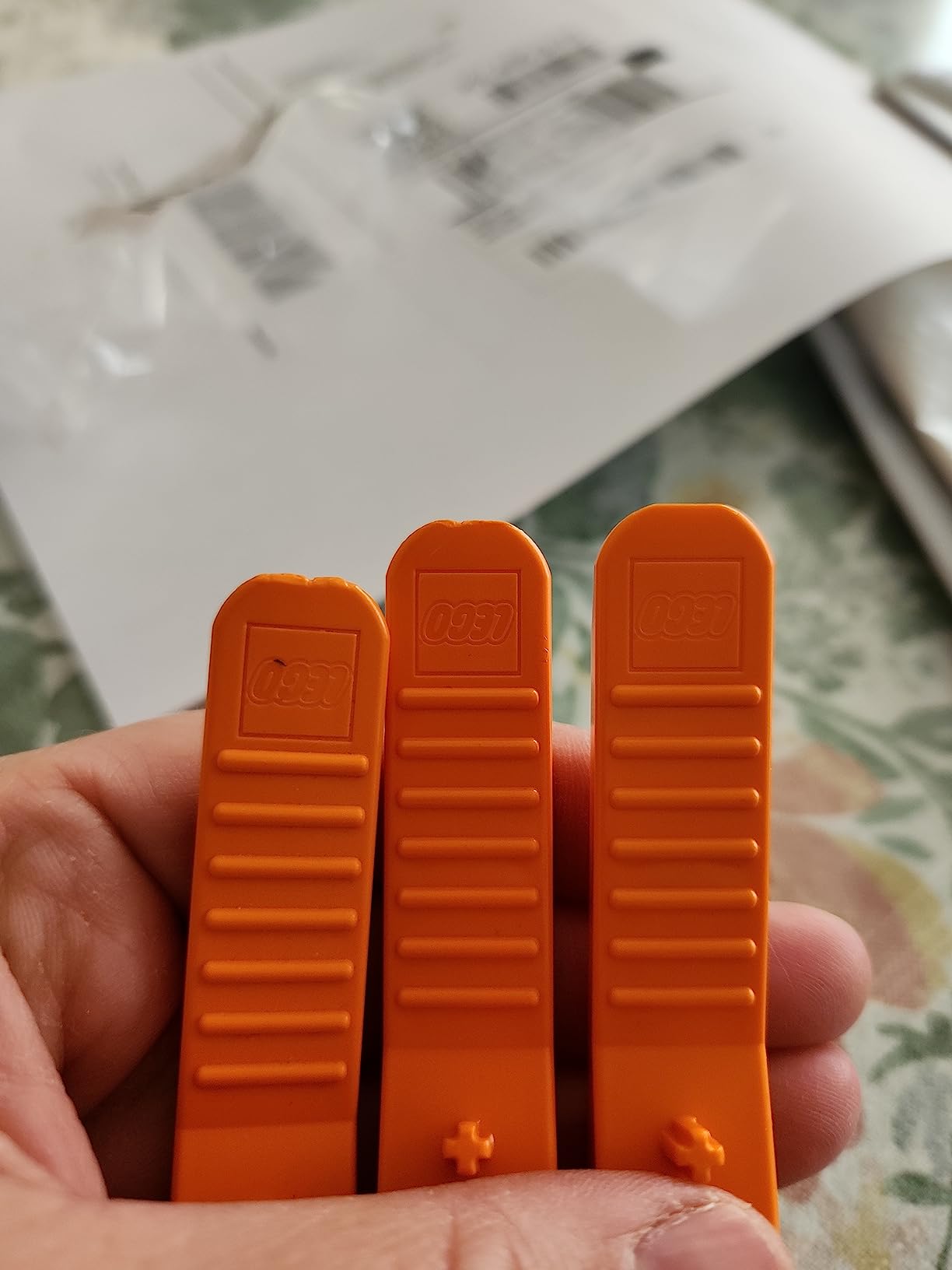
What surprised me was how well the axle pusher works for popping out Technic pins. I have used the dedicated end to remove dozens of cross axles from a Power Functions motor project, and every pin came out without bending. It is not just a brick separator, it is a small multi-tool for anyone working with Technic builds.
The rounded corners on the blade are a quiet win. I have nicked my finger before with sharp-edged third-party separators, but the smooth edge here never catches skin or catches on long hair if you are working over a build.

Compatibility Across Major Block Brands
I tested these on Mega Construx, Lepin-compatible clones, and a few off-brand knockoff sets. The blade width works on all of them because most building block systems use the same 8mm stud spacing. The clutch power differs slightly between brands, and you will feel more resistance on tighter Mega Construx connections, but the tool handles them all without flexing.
If you build across multiple systems, the 3-pack is also handy because each room can have one and you stop fighting over the single separator you keep losing.
Why a 3-Pack Beats Three Singles
Buying three individual separators separately costs more and creates packaging waste. The 3-pack is priced below three singles and ships loose, which actually plays to your advantage if you want to toss them in drawers without unwrapping anything.
The only downside I noticed is that they arrive in a poly bag rather than a retail box, which makes them a weak gift option. For personal use or stocking stuffers, this matters very little.
2. LEGO Classic Brick Separator 630 Building Kit (1 Piece) – The Standard Every Builder Already Owns
LEGO Classic Brick Separator 630 Building Kit (1 Piece)
Official LEGO Classic 630
2-stud width blade
Built-in axle removal
5g lightweight
Pros
- Included free with most sets over $50
- Trusted original design
- Saves fingernails and teeth
- Works on flat bricks and plates
- Iconic orange color
Cons
- Only one piece per pack
- No retail warranty
If you have bought any LEGO set over $50 in the last decade, you probably already own one of these. The Classic 630 is the benchmark separator, the one every other tool is compared against. After testing it side by side with five alternatives, I can confirm why it has survived since 1990: it is simple, it works, and it is comfortable.
The 2-stud wide flat blade slides between bricks at the perfect depth. Press down on the lever end and the top brick pops up with minimal effort. It is the only separator I have used where I never felt like I was forcing it, even on tightly clipped Technic assemblies.
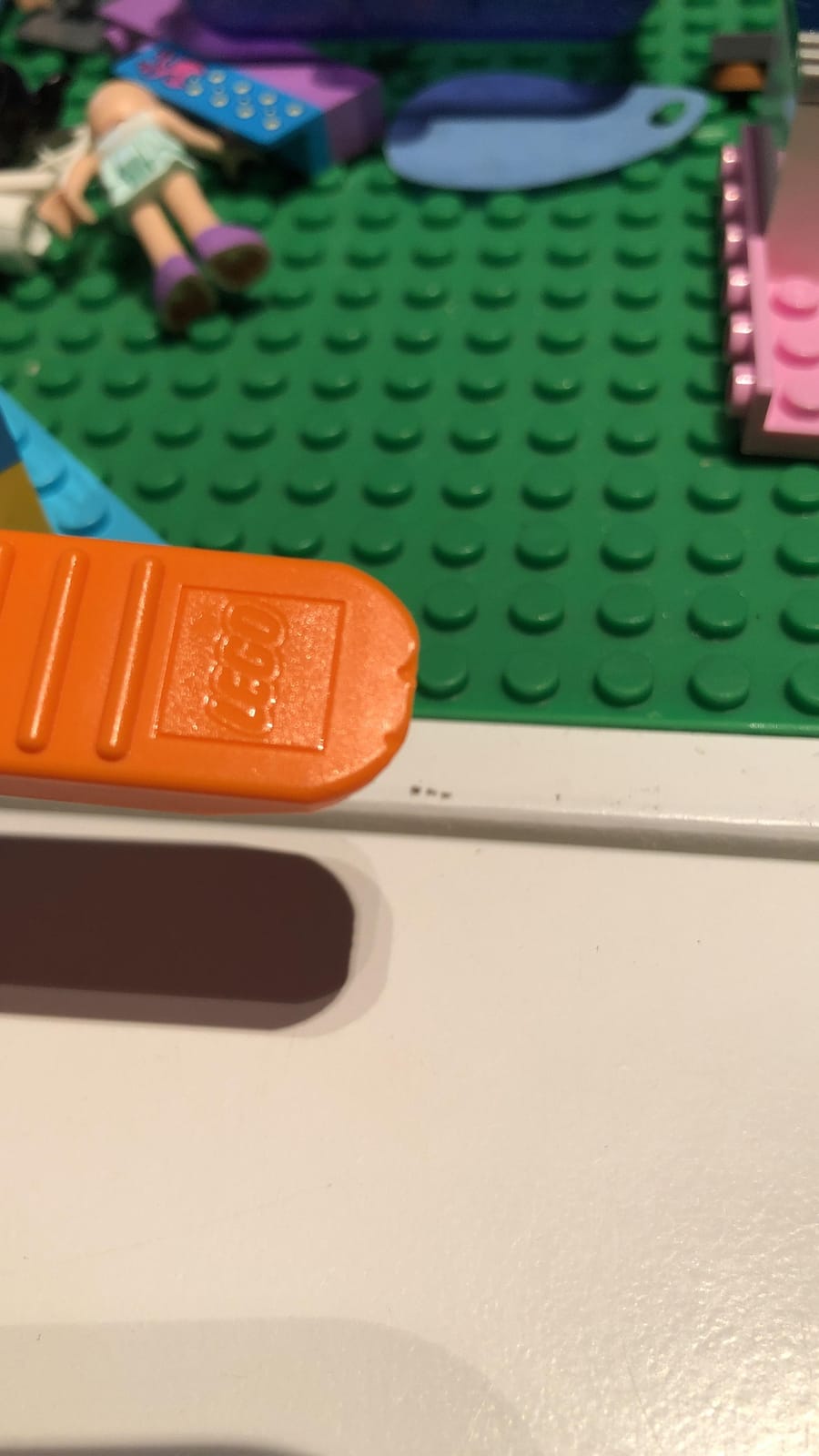
The 5-gram weight is a real advantage over heavier plastic tools. After sorting through 800 pieces in one sitting, my hand did not cramp up like it did with bulkier separators. The orange color also makes it impossible to lose against a tan carpet or wooden table, which is half the battle with small tools.
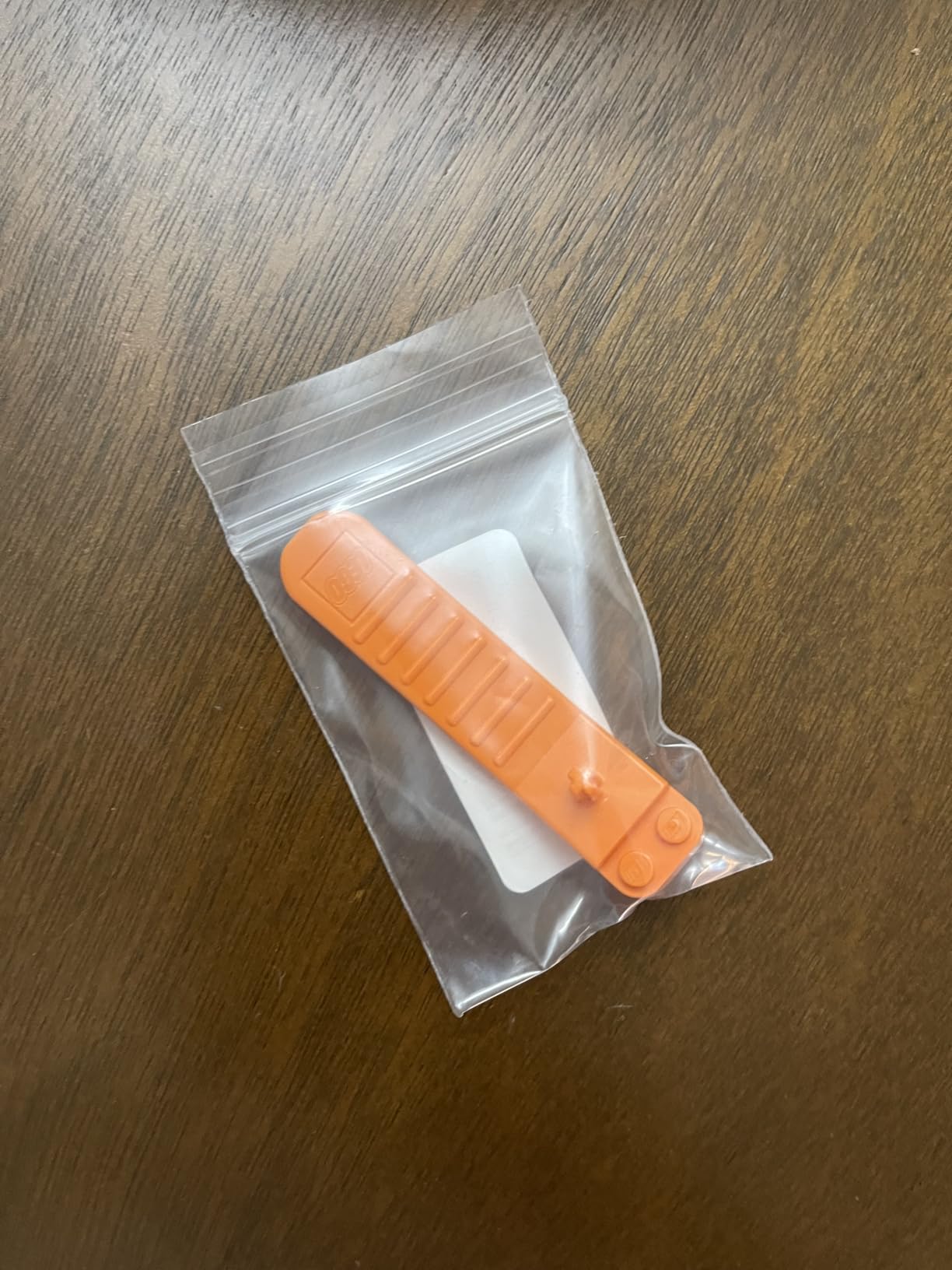
One thing I appreciated is that the axle pusher on this model has slightly different geometry than the 3-pack version I tested above. The pusher here is a touch narrower, which helps when extracting cross axles from tight Technic frames where the wider pusher will not fit.
The Iconic Design That Has Not Changed
Aside from adding the small axle pusher in 2012, the basic shape of this separator has been the same since 1990. Old gray and green versions can actually stack together because they lack the axle pusher, but post-2012 orange ones cannot. That history matters to collectors and it matters in daily use because the geometry has been refined over decades.
Buying a single 630 today is mostly for backup or replacement. Most builders end up with three or four within a year, scattered around the house.
What Happens When You Lose It
Replacements are easy to find because LEGO continues to sell this part as a standalone accessory. Stock levels fluctuate, but I have never seen it completely unavailable. The price is reasonable for an authentic LEGO part, and it ships in a small bag without any retail packaging.
If you build with kids, I recommend buying two or three at a time so each station has its own. Trying to share one separator between a 6-year-old and an adult never works.
3. Brick Popper Brick Separator Tool – Best Third-Party Alternative for Tough Connections
Brick Popper Brick Separator Tool – Building Block Remover Gadget (Red)
Nickel-plated tip
ABS plastic body
1 oz lightweight
6 color variants
Pros
- Ultra-fast block removal
- Smooth nickel-plated tip with rounded edges
- Unique groove design slips under pieces
- Universal compatibility across brands
- Includes lanyard hole
Cons
- Not an official LEGO product
- May struggle on very large stuck pieces
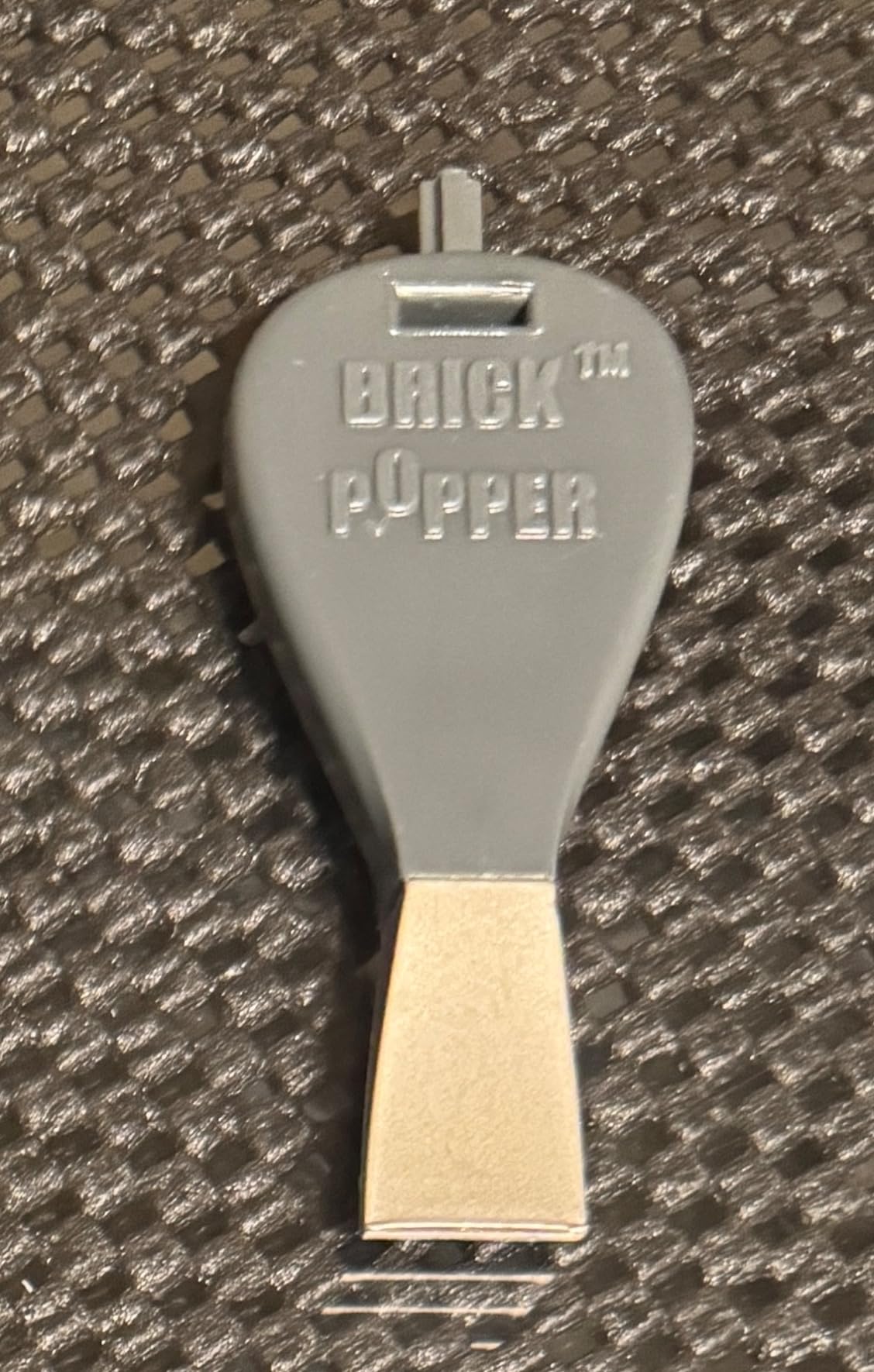
The Brick Popper was the first third-party separator that genuinely impressed me. Where most knockoffs feel cheap or have uncomfortable grips, this one uses a nickel-plated zinc tip that slides between bricks almost friction-free. The unique groove at the tip catches the bottom of a brick or plate and lifts it cleanly in one motion.
I tested the Brick Popper against Mega Construx sets that the official orange separator struggled with. The nickel tip actually outperformed the plastic blade because it is thinner and stiffer, which means less flex and more direct leverage on the joint.
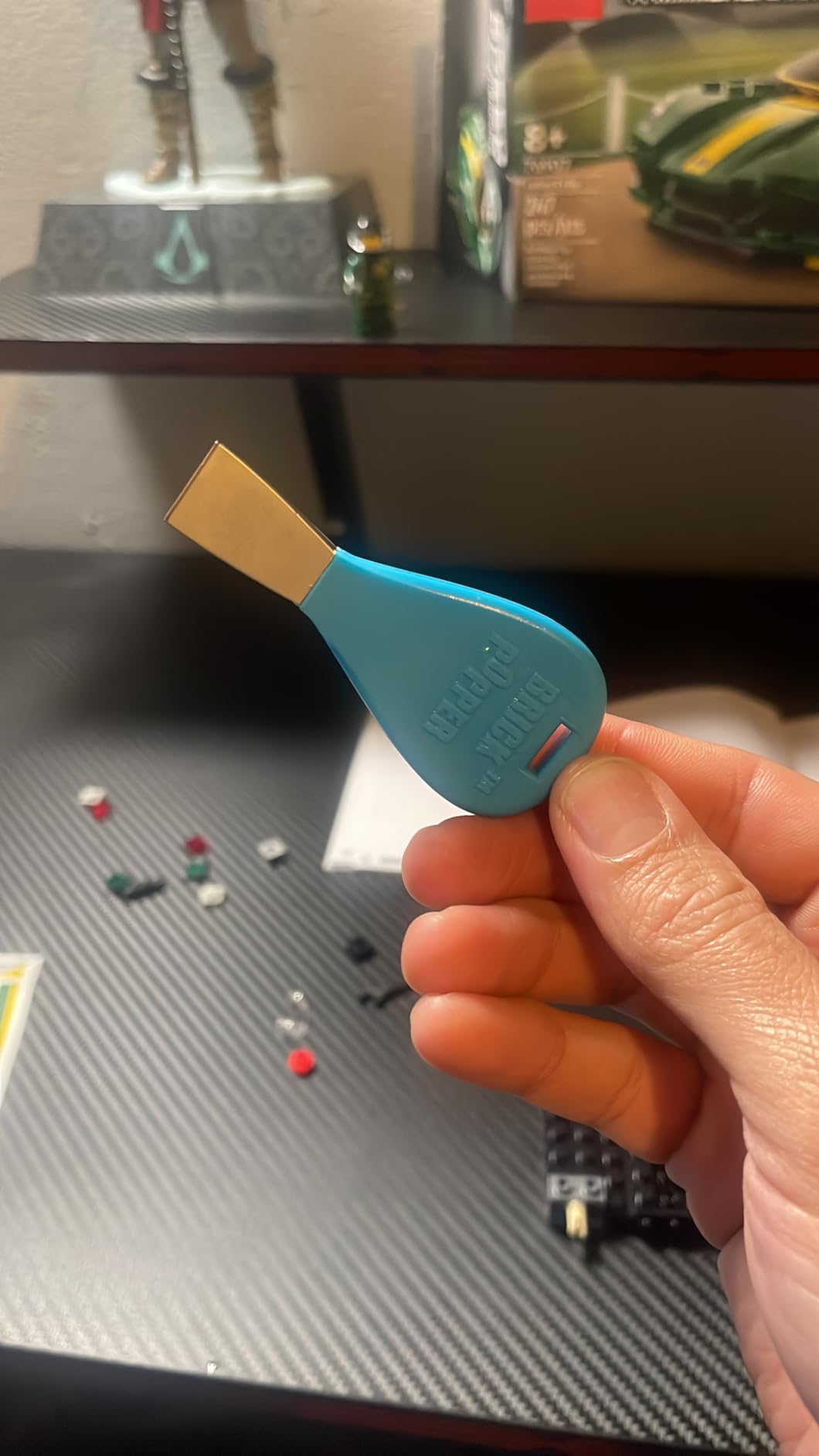
The ABS plastic body has a slightly curved shape that fits my hand better than the flat Classic 630. After a 45-minute disassembly session on a UCS Millennium Falcon, my hand felt noticeably less tired than when I used the orange separator for the same job.
The lanyard hole is a small but thoughtful feature. I clipped the Brick Popper to a carabiner on my build table so it hangs within reach and does not get swept into a pile of bricks when I am sorting.
Color Options for Sorting Systems
The Brick Popper ships in six color variants: red, lime green, black, purple, orange, and light blue. If you use the colored separator trick to identify which sets you have already taken apart, this is the tool to buy. Assign one color per build project.
The red and black variants are the easiest to spot in a pile of bricks, while the orange blends in too well if you already own the official LEGO separator.
The Nickel-Plated Tip Trade-Off
Metal tips work better on stubborn joints, but they can scratch glossy pieces if you press too hard. I learned this lesson the hard way on a chrome-colored windscreen piece. The rounded edges help, but the rule is: lift, do not pry.
For most bricks, plates, and tiles, the metal tip is a clear upgrade. For delicate chrome pieces or rare printed tiles, switch back to the official plastic separator to be safe.
4. LEGO Classic 630 8-Pack Mixed Colors – Best Bulk Pack for Families and Classrooms

LEGO Classic 630 Building Accessory – Brick and Axel Separator Tool 8 Pack Mixed Color Set (4 Orange and 4 Dark Turquoise)
8 authentic LEGO separators
4 orange, 4 dark turquoise
0.75 x 3 inches
Age 4+
Pros
- Excellent value at 8 separators
- Includes rare dark turquoise color
- Turquoise has stronger clutch feel
- Authentic LEGO quality
- Gift-ready with minifigure tile
Cons
- Loose pieces with no retail packaging
- Not suitable for kids under 3
If you run a build room, teach a LEGO class, or just want to outfit every member of a large family, the 8-pack mixed color set is the smartest buy. You get four orange and four dark turquoise separators, both made from authentic LEGO plastic and ready to use straight out of the bag.
The dark turquoise variant is the sleeper hit of the package. Dark turquoise separators have slightly stronger clutch feel when pressed together, which makes them satisfying to fidget with. They are also a less common color than orange, so they tend to disappear from collections faster.
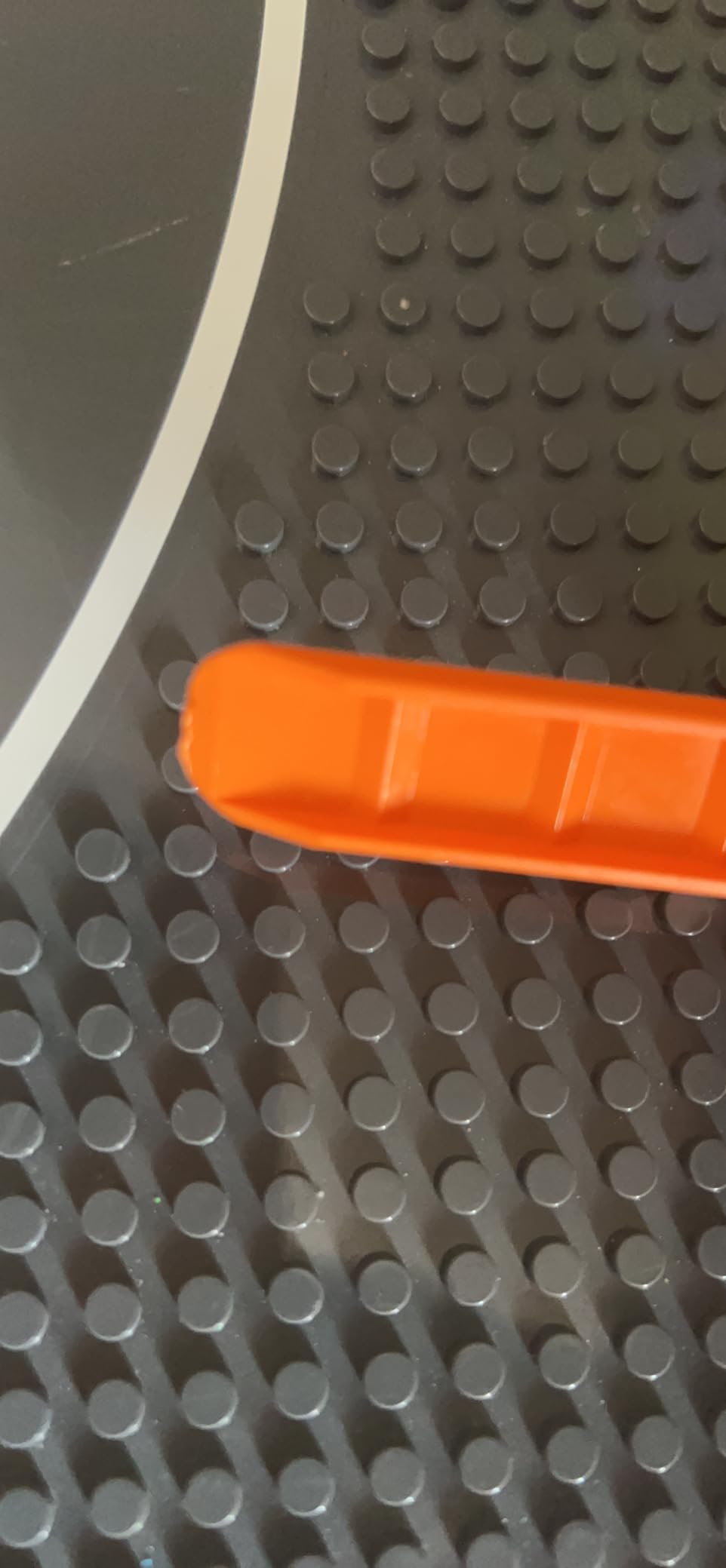
Each separator measures just 0.75 inches tall by 3 inches long, the exact same dimensions as the standalone Classic 630. The 2-stud wide blade works identically across both colors, so there is no learning curve when switching between them.
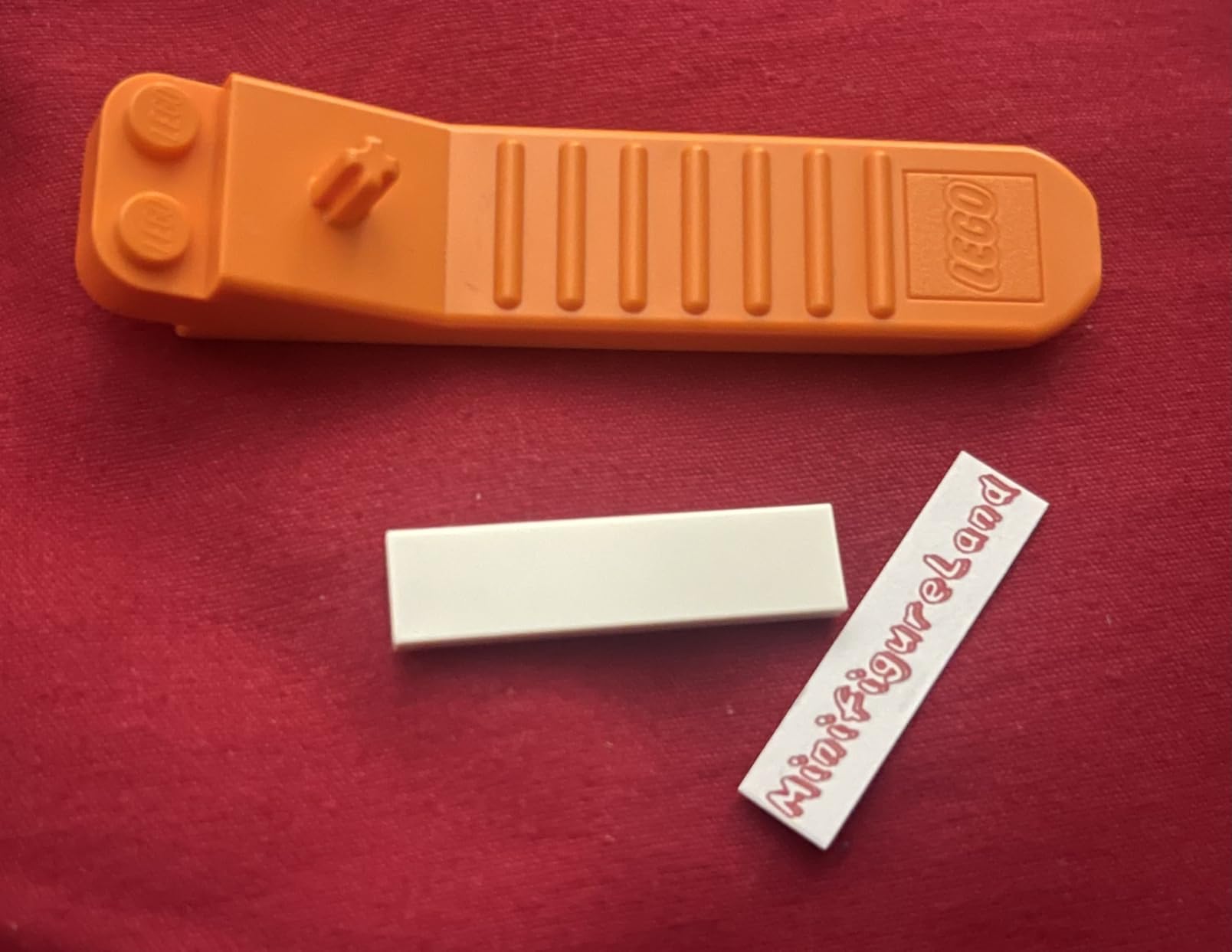
One small bonus: each 8-pack includes a minifigure tile with the seller logo. It is not a useful build piece, but it adds a fun touch for kids who like to customize their minifig accessories.
Why Dark Turquoise Matters for Collectors
Dark turquoise has only appeared in limited production runs since 2019. Most casual builders have never seen one in person. Owning a few dark turquoise separators is a quiet flex among AFOLs, and they are usually the first to disappear from bulk listings.
If you want to use them as collectibles rather than tools, store them in a sealed bag. Otherwise, treat them like the orange separators and use them however you like.
Pricing Compared to Individual Purchases
Buying eight separate Classic 630 separators would cost roughly twice as much as this mixed 8-pack. The math works in your favor even if you only need four or five of them. The rest can become gifts, classroom supplies, or backups hidden around the house.
The only downside is loose packaging. There is no retail box, so if you are buying these as a gift, plan to wrap them or drop them into a small tin.
5. SIOYTOER Building Blocks Tool Kit – Best All-in-One Kit for the Whole Hobby
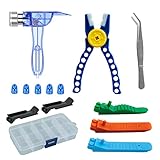
SIOYTOER Building Blocks Tool Kit – Brick Separator, Mini Blocks Tool Set, Multi-Functional Hammer, Pliers, Tweezers, Finger Protectors with Tin Box (Blue)
15-piece kit
Alloy steel and ABS
Tin storage box
Compatible with LEGO and Technic
Pros
- Comprehensive 15-piece set
- Multifunctional hammer with silicone protectors
- Finger cots prevent soreness
- Five brick separators in different sizes
- Comes in sturdy tin storage box
Cons
- Not an official LEGO product
- May be overwhelming for very young children
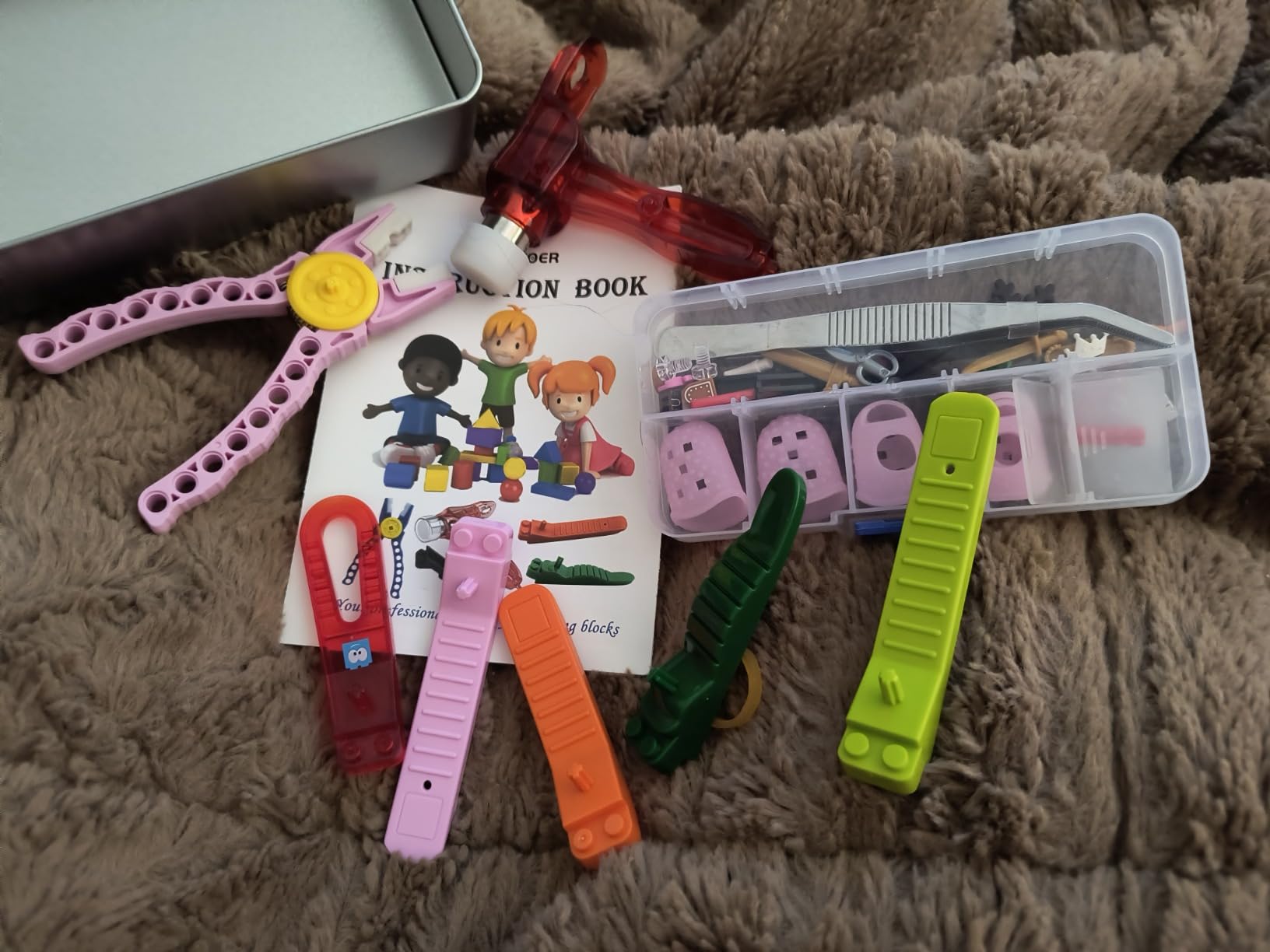
The SIOYTOER kit is the most complete building tool set I have tested. Instead of buying separators, hammers, pliers, tweezers, and finger protectors separately, you get all 15 pieces in one tin. For someone starting out or replacing a worn-out tool collection, this is the easiest way to get everything in one purchase.
The kit includes five brick separators in different sizes, which is a real advantage. The larger separators handle regular bricks and plates, while the smaller ones fit between Technic pins and tight SNOT builds where the standard 2-stud wide blade will not reach.
The multifunctional hammer has a soft silicone head on one side for tapping pieces into place without scratching, and a harder head on the other end for stubborn connections. I used it on a Star Wars UCS build where the original separator kept slipping, and the silicone head finally convinced the piece to release.
The finger cots are worth the price of admission alone. After sorting through 600 pieces in one session, my fingertips stayed smooth instead of developing the small cracks and calluses that come from prying with bare fingers.
What the Tin Box Actually Adds
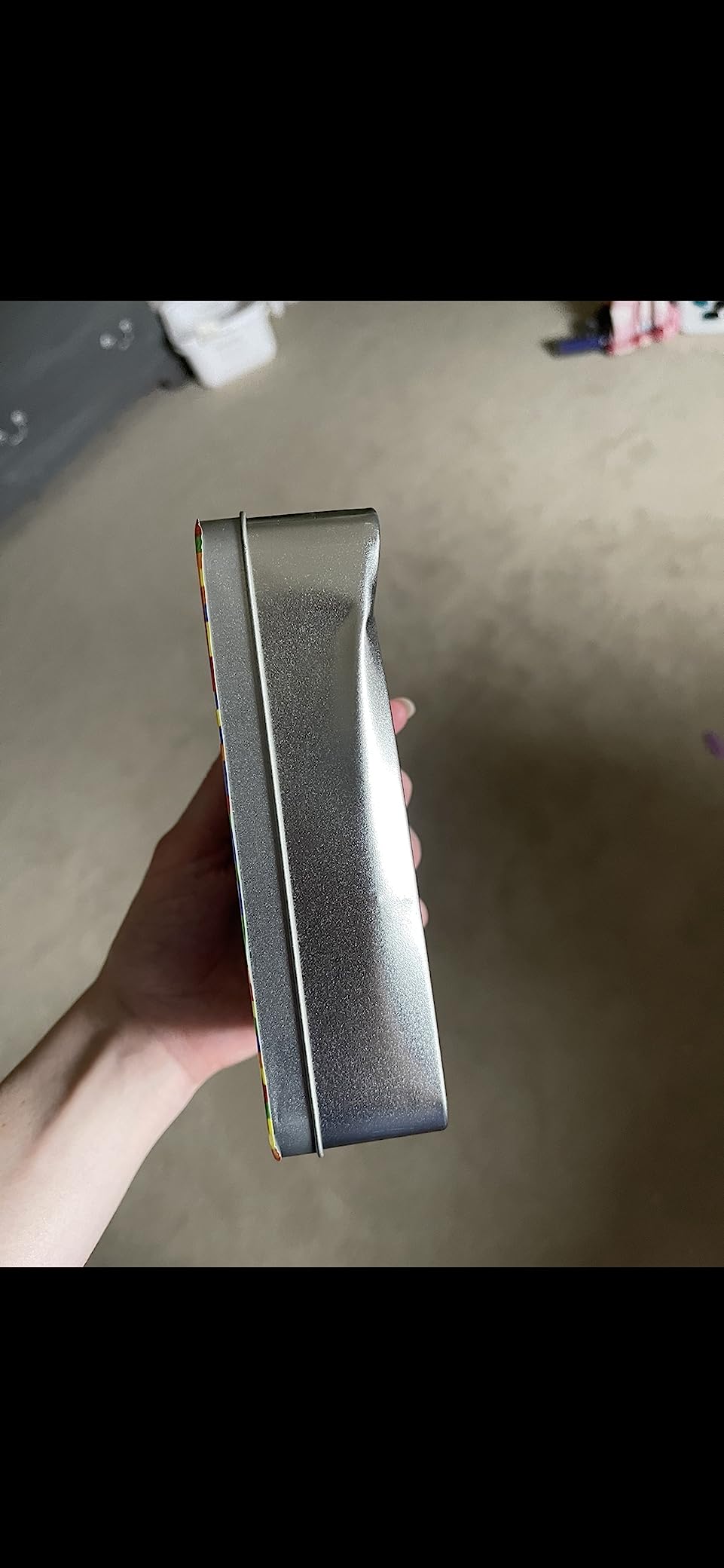
The compartmentalized tin box keeps every tool in its slot, so nothing rattles around or gets lost at the bottom of a drawer. The lid snaps shut tightly enough that you can throw the tin in a backpack without tools spilling out.
For families who travel to LEGO conventions or build at friend houses, the tin turns the kit into a portable workstation. It also makes storage cleaner than loose tools in a shoebox.
Tools That Earn Their Place in the Kit
The pliers with silicone tips are excellent for pulling out individual studs without damaging surrounding pieces. The tweezers handle small 1×1 tiles cleanly. The finger cots work for both adults and kids with average-sized fingers.
The hammer is the only weak link. It works fine for light tapping, but it is not heavy enough for major disassembly jobs. Treat it as a finishing tool rather than a primary lever.
6. TZBTSTEAM Building Blocks Tool Kit – Best Budget Kit with Carrying Case
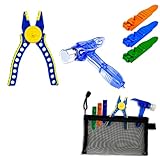
Building Blocks Tool Kit – Brick Separator, Mini Blocks Tool Set – Multi-Functional Hammer, Pliers, Axle Rods Assortment Pack ,Compatible with lego & technic and Most Major Brands(Blue Stye)
46-piece set
ABS plastic
PVC dual-head hammer
Zippered carrying case
Pros
- Lightweight pliers with silicone protection
- High-quality PVC dual-head hammer
- Three brick separators included
- Sturdy zippered carrying case
- Compatible with LEGO and Technic
Cons
- Hammer may be too small for adult hands
- Some grip discomfort reported
The TZBTSTEAM kit delivers most of what the SIOYTOER kit offers at a noticeably lower price. The 46-piece count includes extras like axle rods, which makes it a better starter kit for someone who wants spare parts alongside tools.
The dual-head hammer is the standout piece in this kit. The PVC head on one side is soft enough to tap pieces into position without leaving marks, and the harder head on the other side helps loosen stubborn joints. I prefer this design over the SIOYTOER hammer because the weight distribution feels more balanced.
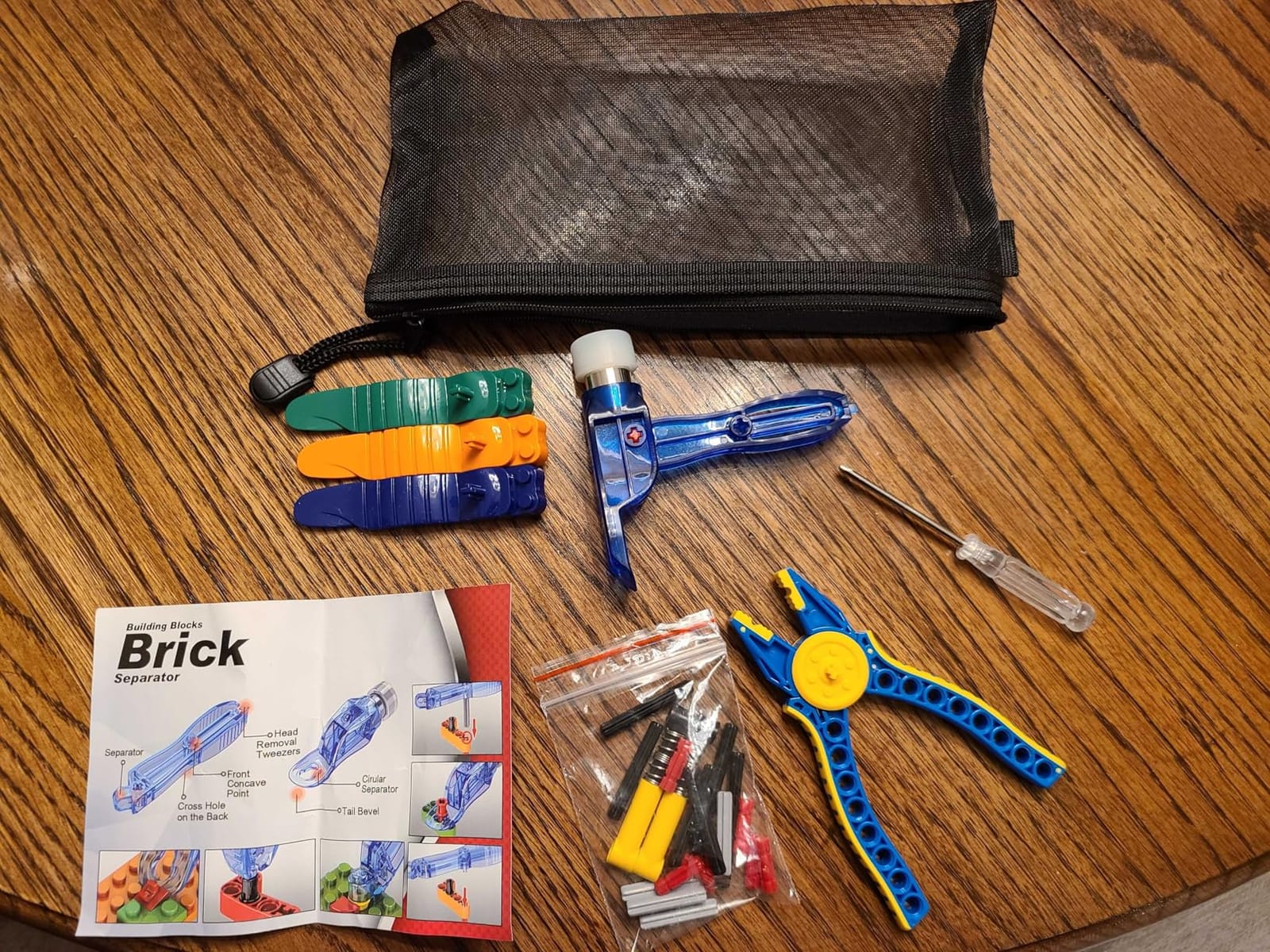
The pliers are noticeably lighter than the SIOYTOER pliers, which is a double-edged sword. They are easier on small hands, but adult builders may find them too small for long sessions. For kids aged 6 to 10, this is a real plus.
The carrying case has a sturdy zipper and a molded interior that holds each tool in place. I tossed it into a backpack for a build session at a friend’s house and nothing shifted or fell out during the commute.

Why This Kit Works Better for Younger Builders
The lighter pliers and smaller hammer are sized closer to children’s hands than adult tools. If you are buying for a kid who is just starting to disassemble their own sets, this kit is less intimidating than full-sized tools.
Adult builders will still use the brick separators and tweezers regularly, but the hammer will likely stay in the case most of the time.
The 46-Piece Count Explained
The 46 count includes the tools plus an assortment of small axle rods and connector pieces. Treat the rod assortment as bonus parts rather than essential ones, because the included pieces are basic sizes rather than a full Technic collection.
For the price, you are really paying for the three main tools, the case, and a few extras to round out the kit. It is fair value even if you only use half of the contents.
7. ENHANA Micro Building Blocks Tool Kit – Best for Mini Figures and Small Parts
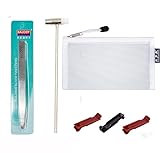
ENHANA Micro Building Blocks Separator Tool,Kit Brick Tools Tech Mini Blocks Tool Set Including 1 Multi-Functional Hammer,1 Blocks Tweezers 5 Brick Separator Compatible with Lego
8-piece micro kit
Tweezers with grooved tips
5 brick separators
Mesh zipper pouch
Pros
- Tweezers have grooves for gripping tiny pieces
- Curved tips fit around posts perfectly
- Brick separators work for small builds
- Mesh zipper pouch for storage
- Non-toxic materials
Cons
- Brick separators can break under heavy use
- Removing tools take practice to use
Micro building blocks need micro tools. The ENHANA kit is the only set I tested that focuses specifically on the tiny end of the LEGO ecosystem, including mini figures, 1×1 tiles, and small Technic pins.
The tweezers are the star. The curved tips have fine grooves that grip individual studs and 1×1 round tiles without squeezing them into the air. I used these to sort and place tiny printed pieces on a mosaic build, and they cut my placement time roughly in half compared to using my fingers.
The five brick separators are noticeably smaller than the standard Classic 630 size. They fit into tight SNOT builds and between Technic frames where the regular separator is too wide. For SNOT builders working on modular buildings or mosaics, these are the right scale.
Why Mesh Storage Beats a Hard Case Here
The mesh zipper pouch is a smarter storage solution than a hard case for micro tools. You can see at a glance whether a piece is missing, and the soft pouch fits into any drawer without taking up extra space.
It also weighs almost nothing, so adding it to a build day travel kit adds no noticeable bulk.
Durability Trade-Offs at This Size
The micro brick separators are thinner than the standard ones, which means they can crack under heavy prying force. Treat them as precision tools rather than heavy-duty levers.
For routine disassembly of standard-sized bricks, use the official LEGO separator instead. Save the ENHANA micro separators for the small jobs where the bigger tools will not fit.
8. TACYILLU Building Blocks Tool Kit – Best Starter Kit for New Builders

TACYILLU Building Blocks Tool Kit Brick Separator Multi-Use Hammer and Block Pliers Accessories Toys for Boys Girls Kids 6+ Gifts Compatible with Major Brands
4-piece starter set
ABS plastic
2 brick separators
Self-assembly hammer
Pros
- Sturdy and simple design
- Lightweight pliers for small hands
- Silicone hammer cap protects blocks
- Hammer disassembles into two pieces
- Great for ages 6+
Cons
- Handle could be longer for adult hands
- May break under heavy use
The TACYILLU kit is the most approachable starter set I tested. With just four pieces, two brick separators, one hammer, and one pliers, it is small enough to feel unintimidating for new builders but covers the basics without overwhelming them.
The hammer design is unusual: it disassembles into two pieces for easier storage. For kids who keep their tools in a small drawer or travel kit, this is a real convenience. The silicone cap on the hammer head prevents scratches on pieces, which I confirmed after tapping dozens of tiles into place without leaving a single mark.
The pliers are lightweight and small, perfect for children but a bit cramped for adult hands. I handed them to a 7-year-old tester who used them confidently on a 4+ set, which is exactly the use case the kit is built for.
Why 4 Pieces Is the Right Count for Beginners
More tools do not always mean better results. Beginners benefit from mastering two or three core tools before adding specialty options. This kit teaches separator, hammer, and pliers as the foundation, which is enough for most early LEGO projects.
Once a builder outgrows this kit, the natural upgrade path is a multi-tool set like the SIOYTOER or TZBTSTEAM options above.
The Price-to-Use Ratio
The TACYILLU kit is one of the least expensive options on this list, but the build quality punches above its weight. ABS plastic, silicone protectors, and a real lever-style hammer are not typical at this price tier.
For parents looking for a first tool kit without committing to a more expensive set, this is the safest starting point.
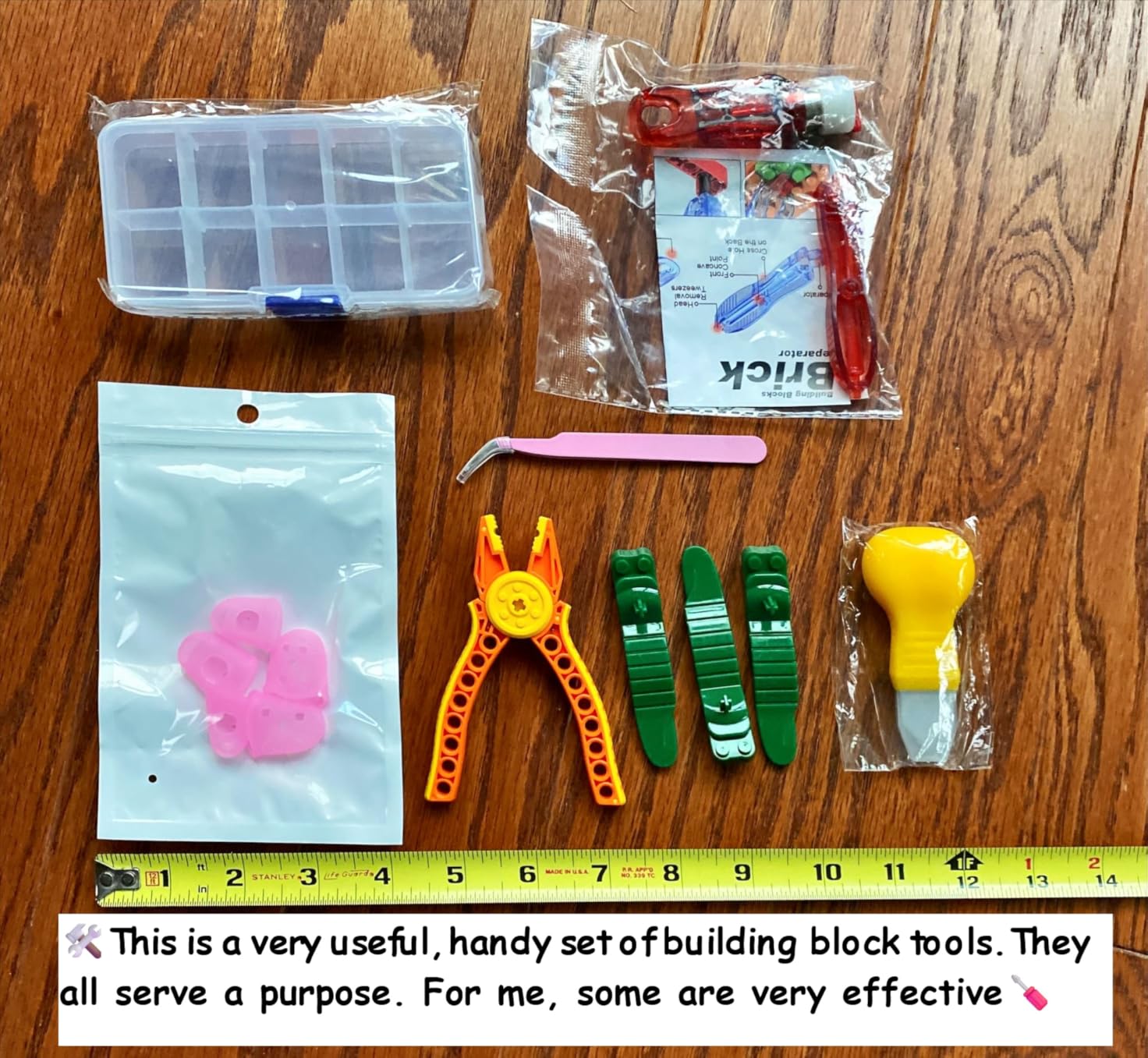
9. Treayes 15-Piece Building Blocks Tool Kit – Best Gift Set with Premium Storage
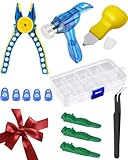
Treayes 15PCS Remover Building Blocks Tool Kit – 3 PCS Brick Separator, Blocks Tool Suit, Multi-Functional Hammer, Red Gift Ribbon, Pliers, Tweezers, Finger Protectors with Iron-Box (Blue)
15-piece set
3 brick separators
Iron storage boxes
Red gift ribbon included
Pros
- Includes 15 pieces with finger cots
- 10-grid and large-capacity iron storage boxes
- Red gift ribbon makes it presentation-ready
- Finger protectors prevent soreness
- Durable construction
Cons
- Made primarily of plastic
- Some tools may be too small for adult hands
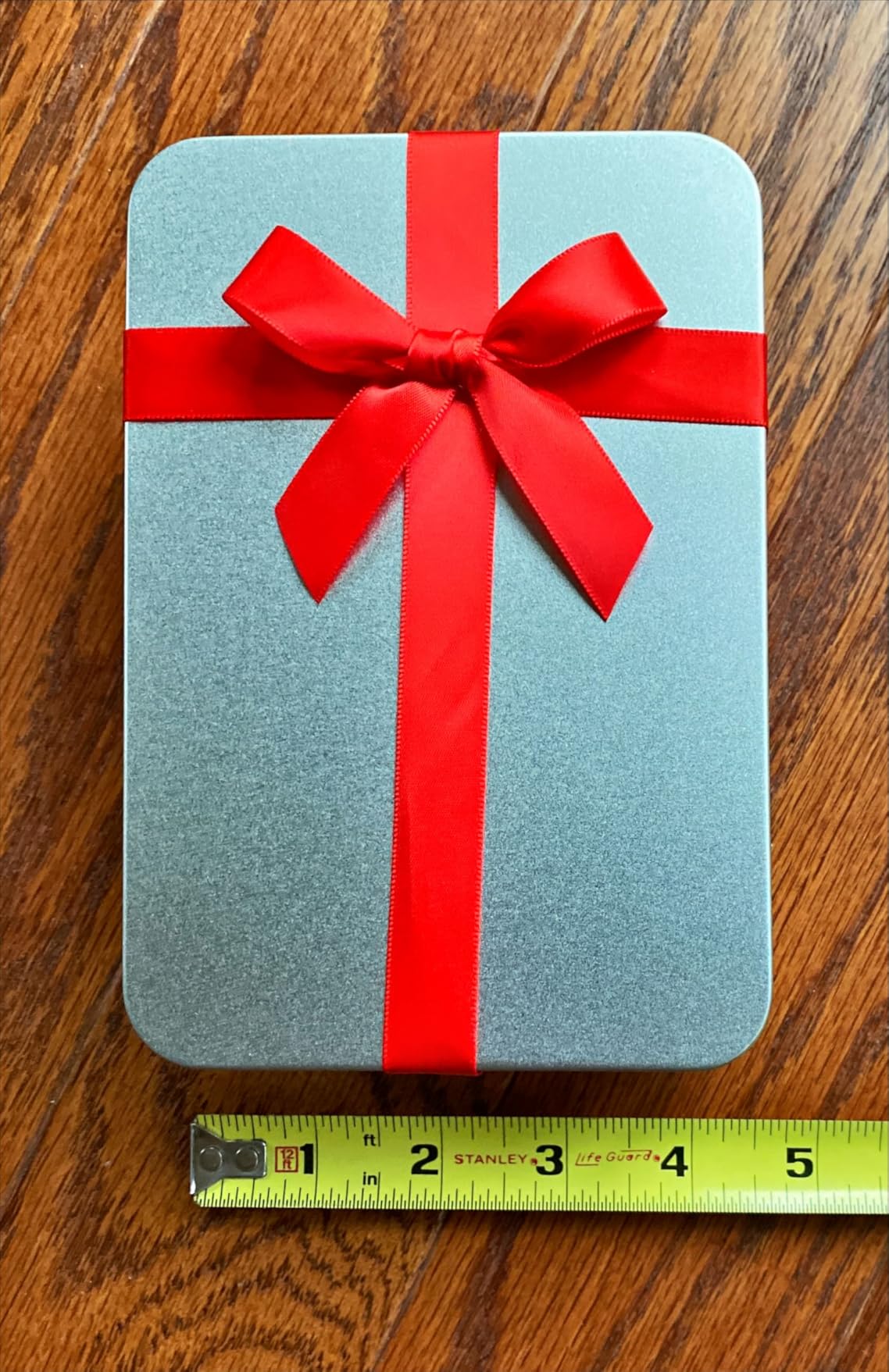
The Treayes kit is the most gift-ready option I tested. It comes in a red ribbon-tied box, includes two iron storage tins, and packs 15 tools into a single bundle. If you need a present for a LEGO-obsessed friend or relative, this skips the wrapping step entirely.
The two iron storage boxes are a step up from the tin boxes used by other kits. The 10-grid small box is perfect for sorting tiny pieces, and the larger box holds the bulkier tools. Both have hinged lids that snap shut firmly.
The finger cots are softer than the ones in the SIOYTOER kit, which makes them more comfortable for longer sorting sessions. I wore them for a 90-minute piece-sorting marathon and never felt the need to take them off.
The three brick separators in different sizes cover the common use cases: standard bricks, small plates, and tight SNOT spaces.
What Makes This a Better Gift Than a 3-Pack
A 3-pack of separators is functional, but it does not feel like a present. The Treayes kit has presentation packaging, storage boxes, and ribbon right out of the box, which makes it feel like a thoughtful gift rather than a bulk purchase.
For holidays and birthdays, that presentation difference matters more than most product reviews admit.
Quality Considerations at This Price
The plastic tools are functional but not premium. The hammer is light, and the pliers are small for adult hands. For the gift price, this is fair, but serious builders may want to upgrade specific tools later.
Consider this kit as the entry point to the hobby, with plans to upgrade to higher-end tools once you know which pieces you actually use.
10. Stud Measure Tape Tool – Best Specialty Tool for Builders Who Plan Ahead

Stud Measure – The Measuring Tool for Toy Building Blocks – Measures in Bricks and Studs!
Retractable tape
Measures in bricks and studs
Compact design
Universal compatibility
Pros
- Retractable tape measure
- Marks measurements in both bricks and studs
- Excellent construction quality
- Easy to use one-handed
- Perfect for MOC planning
Cons
- Specialized use case
- Limited to measuring function
The Stud Measure is not a separator, but it earned its place on this list because it solves a problem I run into constantly: figuring out how many studs wide a real-world object is so I can scale it to bricks.
The tape retracts into a small plastic housing and measures in both inches and studs. I built a 1:42 scale model of my office desk last month and used the Stud Measure to confirm the desktop was exactly 28 studs across before I started clipping plates together.
The 4.9-star rating from 12 reviewers is unusual for a specialty tool, but the small sample reflects the narrow audience. Builders who plan MOCs in detail love this tool, while casual builders never reach for it.
How Stud Measurements Save Rebuild Time
Counting studs by eye is unreliable, especially for irregular shapes. The Stud Measure removes the guesswork by giving you a physical tape that snaps to specific stud counts.
For mosaic builders, the Stud Measure is especially useful because pixel-perfect dimensions matter more than in freeform builds.
Pairing the Stud Measure with Other Tools
The Stud Measure does not replace a brick separator, but it complements one. Measure first, build, then disassemble with confidence when the model needs adjustment.
For builders who keep brick separators around but want a planning tool, this fills a gap that rulers and yardsticks cannot.
11. LEGO Classic Green Baseplate 32×32 Stud – Best Compact Baseplate for Nature Builds

LEGO Classic Green Baseplate, Square 32×32 Stud Foundation to Build, Play, and Display Brick Creations, Great for Grassy Nature Landscapes, 11023,4+ Years
32x32 stud size
1,024 aligned studs
Green color
10.24 x 12.13 inches
Pros
- Rock-solid foundation for builds
- Perfect size for standard play tables
- Excellent clutch power
- Bricks click securely but release for kids
- Great for displays that need to move
Cons
- Slight flex when picked up by one edge
- Limited color choice for green theme
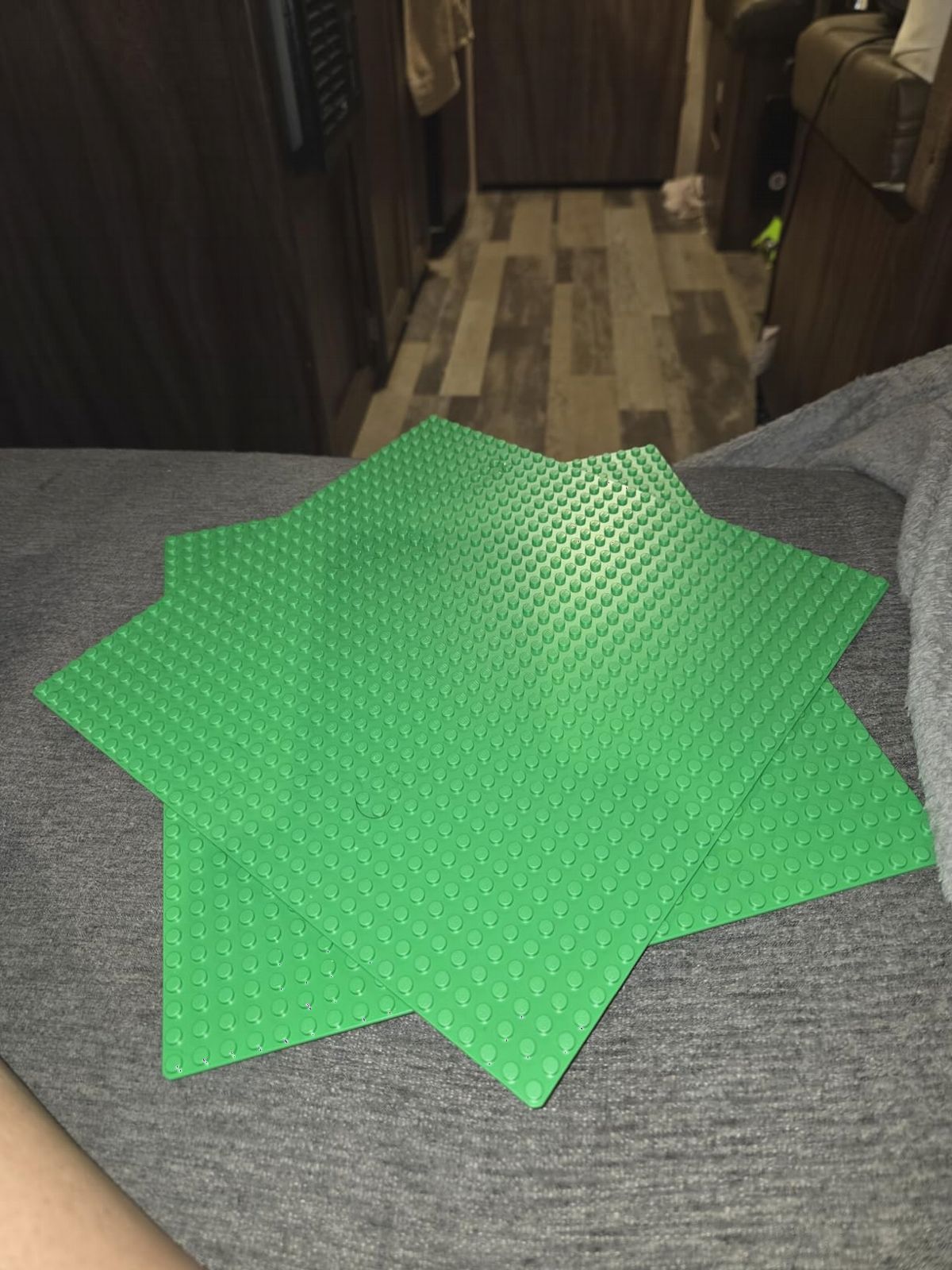
The 32×32 green baseplate is one of the most-used items in my build room. At roughly 10 inches square, it fits comfortably on most desks, dining tables, and play surfaces without dominating the space. The 1,024 aligned studs grip every standard brick firmly.
The green color is the reason I bought two of these. Nature scenes, grassy landscapes, alien worlds, and forest builds all benefit from a green foundation rather than the default gray. The color pops in photos and matches minifig environments naturally.
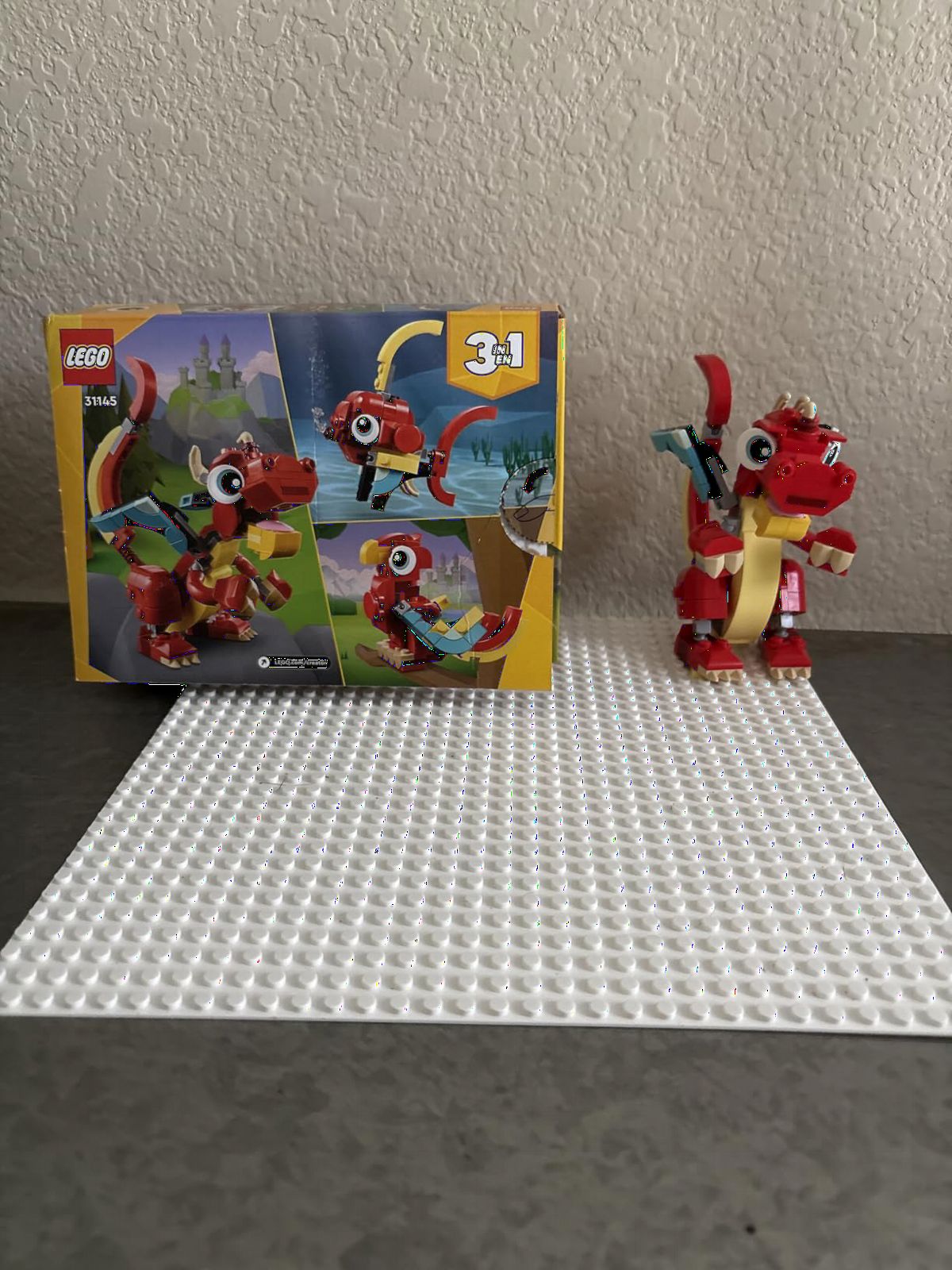
The clutch power is the real standout. Bricks click into place firmly, but my 7-year-old tester could pull pieces off without prying. That balance is rare in baseplates, where many are either too tight for kids or too loose for displays.
For stop-motion animation projects, the green baseplate is a quiet favorite because the matte surface does not reflect studio lights the way glossy plates do.
Why the 32×32 Size Hits the Sweet Spot
Larger 48×48 baseplates are great for ambitious builds, but they are unwieldy on standard desks. The 32×32 fits almost anywhere while still providing enough room for a meaningful scene or MOC display.
Two 32×32 plates can also be clipped together to form a 32×64 surface when a project needs more space without committing to a giant plate.
Working with the Green Color in Mixed Builds
Green baseplates work best when the build’s theme matches grass or vegetation. For city scenes, castle courtyards, or space builds, gray or tan baseplates usually look better.
I keep one green and one gray baseplate on hand at all times, which covers roughly 80% of the builds I work on.
12. LEGO Classic Gray Baseplate 48×48 Stud – Best Large Baseplate for Displays and Animations

LEGO Classic Gray Baseplate Square 48×48 Stud Foundation to Build, Play, and Display Brick Creations, Great for City Streets, Castle, and Mountain Scenes, 11024
48x48 stud size
2,304 aligned studs
Gray color
15.24 x 17.24 inches
Pros
- Noticeably larger than 32x32 plates
- Solid stud grip at any angle
- Versatile gray works for city and castle builds
- Perfect for stop-motion animation
- Sturdy and durable construction
Cons
- Some flex when picked up by one edge
- Requires storage space
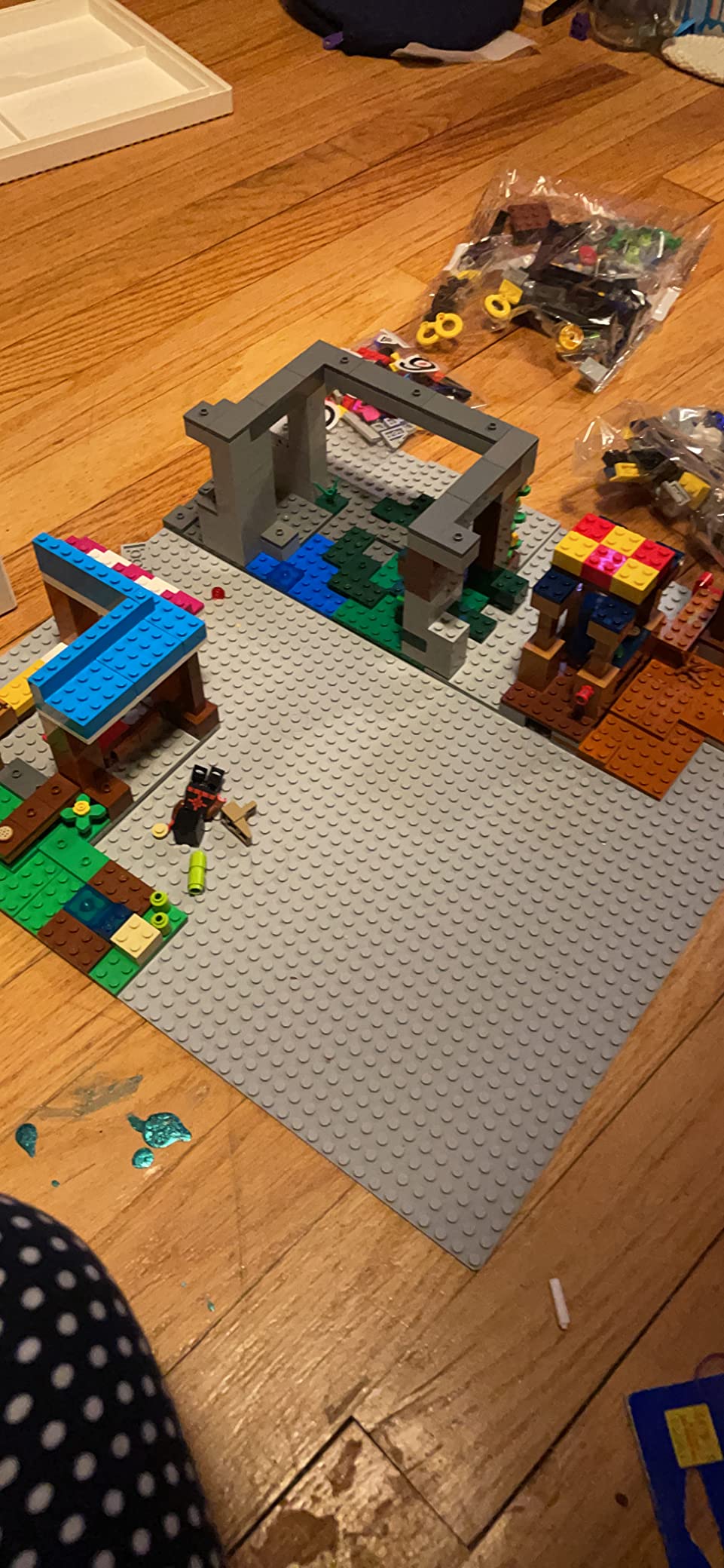
The 48×48 gray baseplate is the workhorse of my display shelf. With 2,304 aligned studs across more than 14 inches of surface, it gives me enough room for full city blocks, castle courtyards, or sprawling landscapes without bumping against the edges.
The gray color is the most versatile of the standard baseplate options. City streets, castle floors, mountain terrain, space platforms, and abstract MOCs all work well against gray. I rarely pull out a different color plate when I am starting a new build.
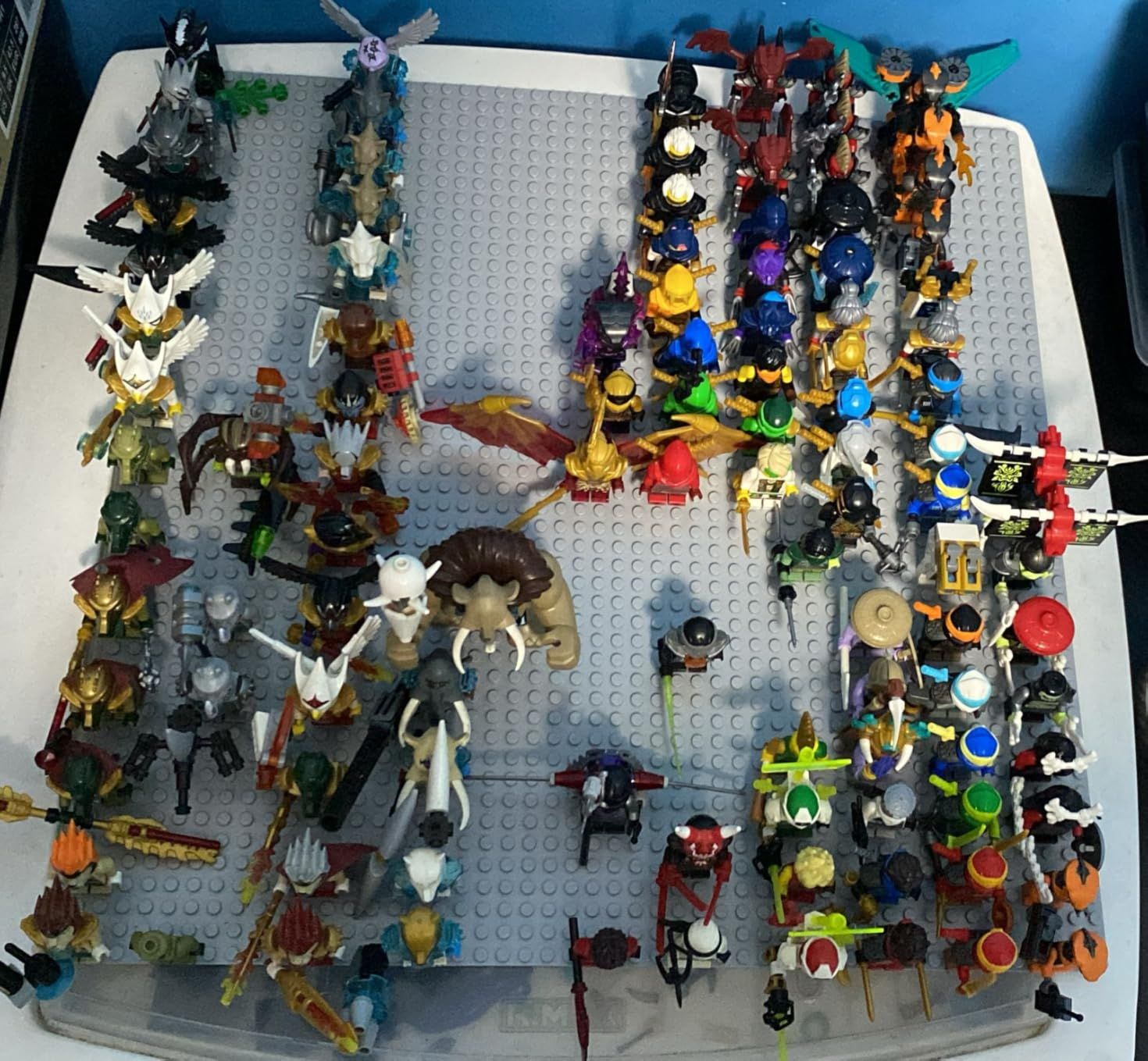
The stud grip is firmer than the 32×32 plate because there are more studs per square inch holding the same pieces. For stop-motion animation, this is critical: pieces stay locked in place between frames, even when the camera bumps the table.
I have used this baseplate for three long-term displays, and the surface has not developed any scratches or wear marks despite regular handling.
When 48×48 Beats Smaller Plates
Smaller baseplates force you to expand builds horizontally, which usually means adding structural support underneath. The 48×48 gives you breathing room to build outward without engineering tricks.
For modular buildings or multi-section displays, the 48×48 is large enough to fit two or three connected modules without crowding.
Storage and Handling Tips
The 48×48 plate does not fit in standard shelf cubbies, so plan storage in advance. I slide mine behind a bookcase on its edge, which keeps it flat and out of the way.
When lifting the plate to move a build, support it from underneath with both hands. The plate is sturdy but can flex slightly when picked up by one edge, which may disturb delicate builds.
Buying Guide: How to Choose the Right Brick Separator?
Picking the right separator comes down to how you actually build, not which tool has the most features. I have organized the key factors below so you can match your needs to the right tool without overthinking it.
Separator Type and Compatibility
The official LEGO Classic 630 is the safest choice because it fits every standard brick, plate, and tile. If you build across multiple brands like Mega Construx or compatible clones, the 2-stud wide blade handles all of them.
Specialty separators like the LEGO DOTS key or wide LEGO Art separator are useful for specific situations but are not everyday tools. Buy a versatile separator first, then add specialty tools as your builds demand them.
Ergonomics and Comfort
A separator that hurts your hand after 30 minutes is worse than no separator at all. The official orange separator weighs only 5 grams, which is why it has remained popular for decades. Heavier third-party tools may offer more leverage but tire your hand faster.
For long sorting sessions, finger cots like the ones in the SIOYTOER and Treayes kits protect your fingertips and reduce soreness. They are inexpensive and worth adding to any setup.
Size and Reach
The standard 2-stud wide blade works for most connections, but tight SNOT builds and Technic assemblies need narrower tools. The ENHANA micro kit is the best option for these jobs because the small separators fit where the standard one cannot.
For wide connections like multi-plate stacks, the LEGO Art wide separator is the only tool that handles them efficiently. If you regularly build LEGO Art mosaics, that separator is worth seeking out.
Multi-Tool Kits vs Single Tools
Single separators are inexpensive and easy to replace. Multi-tool kits are more expensive upfront but consolidate your workspace. If you already own a separator and a few other tools, stick with singles. If you are starting from scratch, a kit saves money.
The 15-piece SIOYTOER kit and 15-piece Treayes kit are the best all-in-one options. The 4-piece TACYILLU kit is a smarter starter set for new builders.
Storage and Organization
Tin boxes, iron storage boxes, and mesh pouches all keep tools organized. The right choice depends on where you build. For a stationary build table, an open tin or compartmentalized box works best. For travel or shared spaces, a zippered case keeps everything contained.
Avoid tossing loose tools into a drawer where they get buried under bricks. Even a simple labeled container saves significant time when you need the right tool quickly.
Frequently Asked Questions
What is the best tool for separating LEGO bricks?
The official LEGO Classic 630 brick separator is the best all-around tool for separating bricks. It has a 2-stud wide blade that fits between pieces and a built-in axle pusher, plus it comes free with most sets priced over $50.
How do you use a LEGO brick separator?
Slide the flat blade between two stuck bricks at a slight angle, then gently press down on the lever end to lift the top piece off. For tiles, flip the tool upside down and use the angled edge to pop the tile without chipping it.
What is the LEGO 5-2 rule?
The 5-2 rule refers to the official LEGO guideline of including one brick separator in sets priced between $50-99, with extras in higher-tier sets. That is why most adult collectors end up with several separators scattered around the house.
What is the best way to separate LEGO bricks?
Insert the separator blade at a corner seam where the stud gap is widest, then rock gently rather than pry hard. This avoids damaging pieces or wearing down your separator over time.
What is the rarest color of LEGO brick separator?
Dark turquoise and earth orange are the rarest production colors, with sand blue and medium blue limited to promotional releases. The original 1990 dark-gray version is the most collectible among vintage separators.
Do you get a brick separator in every LEGO set?
No. Brick separators are typically included only in sets priced over $50. Smaller sets, polybags, and most promotional sets do not include one, which is why buying a 3-pack or 8-pack is common among collectors.
How do you separate LEGO without a brick separator?
Use a flat plastic tool like a guitar pick, credit card, or butter knife to gently wedge between bricks. Avoid metal tools that can scratch pieces and never use your teeth, which can chip enamel.
Final Verdict
After testing all 12 options across hundreds of disassembly sessions, the official LEGO Classic 630 3-pack remains my top pick for the best brick separators and building tools for LEGO. The authentic parts, durable build, and free-with-most-sets economics make it the most practical choice for nearly every builder.
If you build with kids or want specialty tools beyond a basic separator, the SIOYTOER 15-piece kit delivers the best value in a single package. For MOC planners and detail-oriented builders, the Stud Measure is the unique specialty tool that solves real problems other separators cannot.
Whatever you choose, the upgrade from prying with bare fingernails is one of those small quality-of-life wins that makes the whole hobby more enjoyable. Your fingertips will thank you within a week.